Hezbollah vs Israel 2006: Who has upper hand 14 years on?
Middle East Observer | August 14, 2020
Senior Lebanese political analyst Nasser Qandil explores what has changed between Hezbollah and Israel over the last 14 years since the ‘July War’ or ‘The Second Lebanon War’ in 2006.
After tracing the major changes and transformations in the military balance of power between the two sides over the last 14 years, Qandil then explores the current challenges facing Hezbollah inside Lebanon, particularly regarding the deepening economic and political crises in the country.
Note: we have added our own sub-headings in the below transcript to make for easier reading
Source: Al Mayadeen News
Date: July 12, 2020
Transcript:
Hezbollah 14 years on from the July War
Nasser Qandil:
Actually, regarding (Hezbollah’s) achievement of liberation (in the year 2000) free from any conditions or negotiations, any analyst can figure out that after the year 2000, the region was involved in a race between the Resistance and (Israeli) Army of occupation in which both (sides) tried to reinforce the reality that they wanted to reflect on May 24, 2000 (i.e. just before the liberation).
Israel wanted to say that it has positioned itself on the borders with the purpose of protecting the interior (of Israel); that the era of (the war of) attrition has ended; and that it is moving into a stage where it is able to direct (its) deterrent capacity at will. In contrast, the Resistance wanted to say that Israel has humiliatingly and forcefully withdrawn (from Lebanon); and that this withdrawal is not only the beginning of a countdown of the (Israeli) entity’s capacity to hold onto (occupied) land, but also (its capacity) to go to any (new) war again as well.
Israel’s withdrawal from Gaza in 2005 and the Al Aqsa Uprising (“Al Aqsa Intifada”) certified what the Resistance was saying. (Israel’s) 2006 war on Lebanon was the contest that had to settle the previous contests and the (side) who wins this round, cements what it has said. Israel has worked on a plan, theory, mechanisms and appraisals, that is, it didn’t go haphazardly to war (in 2006). In short, Israel counted on “air warfare” theory and put it into practice in the (2006) war. However, the Resistance was aware of that, so it opted to strengthen its power on land, in order to cancel out the theory of air warfare, and to bring the enemy to the land to fight, engage in (battles) of attrition, and (ultimately) defeat it.
The Resistance was the victor. This was the outcome (of the war), because when we talk about ‘victory’ we are not referring to the historic and final defeat. Rather, we are just discussing this war (in 2006) in which the Resistance achieved victory and Israel was defeated again. As in the Lebanon war of the year 2000, or (more accurately) as reflected by the liberation in the (year) 2000, Israel lost its first pillar, that is, its ability to occupy (Lebanon) and remain in it. It also lost its second pillar in the 2006 war, which is its ability to wage war and achieve the goals (that it sets) as it wills.
After the 2006 war, the issue (between both sides) persisted. They entered a totally new and different race. The entity of the (Israeli) occupation is fighting to restore its honor and rehabilitate its image, whereas the Resistance is fighting the battle of becoming a regional power able to make the deterrence weapon (itself as) the policymaker. Since the year 2006, America put its weight behind (Israel’s goals) since Israel is not able to survive any longer without American protection and support. America went to Iraq after realizing that Israel superiority is (gradually) being eroded, and that it is important to rehabilitate its power and control through the American military presence to compensate for the deficiency in Israel’s ability that came about after Lebanon’s liberation in the year 2000 and the Al Aqsa intifada.
Host:
We all remember Condoleezza Rice and the ‘New Middle East Project’.
Nasser Qandil:
Exactly, and this was at the heart of the 2006 war. However, before this (war), America went to Iraq in order to redress the imbalance occurred after Lebanon’s liberation in 2000 and the Al Aqsa intifada, but they failed. The “July War” (2006) came as a second rehabilitation supported by American pressure, calculations and backing. It was a new failure that was added to the accumulated record of failures.
The only available alternative (choice) then was going to a great war, i.e. to topple Syria. This was like Armageddon. Nevertheless, other different battles, the Yemen war and the battle over the future of Iraq, occurred alongside the war (in Syria). They were no less important than the (war in Syria). Today, 14 years after the July War (in 2006), we can talk about facts and not about general trends only. The resistance (movements) transformed from being a resistance force into an Axis of Resistance. This becomes a fact; it is not just words. Today, when his eminence Sayyed (Hassan Nasrallah) speaks and says “I will kill you” – we’ll discuss this later – this (statement) reflects the (powerful reality) of the Axis of Resistance, from Beirut, to Palestine, to Iraq, to Yemen, to Iran and to Syria. This is the first major transformation that occurred between the years 2006 to 2020 during the heat of the several wars that raged over the map of the region.
The second (major transformation during these years): the ‘missile belt’ is now able to strike – from any point (within the Axis of Resistance) – any target in occupied Palestine (i.e. Israel). This means that as the resistance in Palestine is able to target all (areas of Israel) north of Gaza, the resistance in south Lebanon can target the entire (area of Israel) south (of Lebanon); the resistance from Iraq is even able to reach the (Mediterranean) sea; the resistance in Yemen can cover the whole territory of Palestine; and that’s besides (the missiles capabilities of) Syria and Iran.
The Host:
The entire Israeli intelligence efforts have lately been centered on the missile capabilities of the resistance.
Nasser Qandil:
This ‘(missile) belt’ has been completed; it is not a subject of discussion anymore.
The third (major) development is the entrance of the drones (UAVs). The use of this weapon is not restricted to the Lebanese front line. Israel has evidence that confirms that. How many times were drones sent by the resistance from Lebanon? How many times were the Israelis lost because they failed to track the drones sent from Gaza? (Further evidence lies in) the drones in Yemen, and the achievement of the Aramco attack (in Saudi Arabia) that the godfather of the Dimona (Israeli nuclear program) and Thomas Friedman wrote about it an important article in the New York Times. The article states that what happened in Aramco (can be) repeated on all American military bases in the Middle East, and can be repeated (in a strike) on Dimona. Moreover, one of the Israeli generals quoted by Thomas Friedman during a telephone conversation says that it seems that we must now relinquish the status of being the number one technicians in the Middle East, (and cede that status) to Hezbollah and its allies, and (we ought to) call upon our people to carry hand rifles in any coming wars in which drones are used. Henceforth, the third factor is the drones.
The fourth (major) new factor is the precision-guided missiles which formed the center of the struggle during the last two or three years of the Syrian war. The Israeli (air) raids which initially aimed at stopping the supply of weapons to the resistance (from Syria to Lebanon) turned into a specific goal (during these years) which became ‘preventing the resistance from the possibility of transforming their missiles into precision-guided ones’. Today, the Israelis speak about precision-guided missile factories and this signifies that they have surrendered to this fact.
The last issue we are ignorant of was revealed by the video published (recently) by (Hezbollah’s) military media which says “Mission accomplished”. Certainly, it is not referring to the precision-guided missiles because his eminence Sayyed (Hassan Nasrallah) has already announced clearly and publicly that ‘yes, we have enough precision-guided missiles to hit any vital Israeli military installation in occupied Palestine’. But we still don’t know what is meant by “Mission accomplished”. This will stay one of the resistance’s surprises in the coming wars.
Israel 14 years on from the July War
Nasser Qandil:
What have Israel and America achieved in return? Their situation now is similar to that in the July War (2006); they go to war today on one foot only. It was the air force in (the) July (War) that they relied upon, and it is the financial sanctions (that they rely upon) today. Did the Resistance succeed in breaking this foot? I say “Yes, and we will expand on this discussion later.
Host:
We will continue discussing why the resistance succeeded…
Nasser Qandil:
In the first section we talked about the progress achieved by the resistance (Hezbollah) from 2006 to 2020. Israel also worked (on building its power) during these 14 years. Let us see what it did.
Host: … and of course (Israel) was given a green light by the US.
Nasser Qandil:
First of all, Israel focused on the home front. Its main aim was not to draw up a plan to seize the initiative, but to face the fallout of the July War. The resistance (Hezbollah) has risen higher and higher in its level of readiness, its networking capabilities (i.e. greater integration of the Resistance Axis across the region), and its ability to wage war. Meanwhile, what did the (Israeli) entity do?
(First), the Iron Dome that (Israel) was preparing (in order to intercept) Katyusha missiles is now threatened by precision-guided missiles and drones. (The Israelis) went back to saying that they will shoot down missiles with hunting rifles!
(Second), the (Israeli) home front has further collapsed, and now in the time of Corona, it is even worse.
Third, political fragmentation, which is one of the repercussions of the July War. Since the July War, the (Israeli) entity has been mired in its inability to reestablish a historical (political) bloc capable of leading the entity politically. This fragmentation reached its peak with three (consecutive) repeats of the election.
The last point that (Israel) has discovered (over the last 14 years) is that there is no solution to is broken spirit, because we are not only talking about equipment, armies, weapons and logistical plans, we are talking about human beings, about their mental condition. The resistance (Hezbollah) is now becoming more and more confident that it can bring down the (Israeli) entity. When his eminence Sayyed (Nasrallah) comes out and says in one of his recent appearances that there is a real possibility that the (Israeli) entity will collapse without war, and that this generation is going to witness the liberation of Jerusalem… On the other hand, we find the (Israeli) entity in a state of frustration. No matter how many (Israeli) generals say “We will win. Victory is ours in the coming war. We are waiting for the right opportunity to wage war”… what are you (Israelis) waiting for? You and the Americans said: “Time is not in our favor. Yesterday’s war is better than a war today, and a war today is better than a war tomorrow.”
Host:
Who is going to achieve Israel’s goals today? Who is the principal agent? The US? Because, as you said in one of your articles, Sayyed Nasrallah’s recent speech on 7/7/2020, presents the most vivid example of the (resistance’s) ability to defeat the Israeli occupation and American hegemony. But how is he (Nasrallah) able today to combine this (military) resistance with economic resistance?
Nasser Qandil:
What I want to get to is that in one of his appearances, his eminence Sayyed Nasrallah cut to the chase and said: “The resistance (Hezbollah) has already overtaken Israel. Israel is still standing thanks to US protection.” In 1996, the Resistance discovered – and this was the secret behind the liberation in the year 2000 – that the Israelis remained (in Lebanon) because they were under the illusion that the border buffer zone (that Israel established within Lebanese territory) protects the (Israeli) entity from the missiles of the resistance. So if (Israel) realizes that the border (buffer zone) is pointless and that the entity will be targeted no matter what, it will withdraw. And this is what happened (in the year 2000).
Today, his eminence Sayyed (Nasrallah) tells us that the resistance is certain that the (Israeli) entity continues to survive only because of the American presence (in the region), and that the decisive battle with the entity is a battle to expel the Americans from the region.
Whoever analyses the (American) sanctions and the logic behind them will discover that they are not aimed at escalating the situation such that it provokes a full-scale confrontation. This is nothing but propaganda. In fact, these sanctions have direct political goals. I mean, (Lebanese) parties affiliated to the US (in Lebanon) are proposing (very high demands such as) the disarmament (of Hezbollah) and the implementation of Resolution 1559 because this is the American approach. Just as they (Americans) did in 1983 with (Lebanese) President Amine Gemayel when they told him that they were (about to attack) Syria at the same time in which they were engaged in negotiations with (Syria). Two months later, McFarlane) the special US envoy to the Middle East) was asked: “why did you back out (of the attack)? You would have put (Gemayel) in big trouble.” McFarlane answered: “if we told (Gemayel) that we were (negotiating) with Damascus, he would have beat us to it. We trick our allies to make them think that we are escalating for the sake of imposing stronger terms in the negotiations.”
What do Americans want from the Caesar Act? Why are the Americans putting pressure on Lebanon, blocking access to US dollars in the (Lebanese) market, preventing the transfer of dollars to the country, and closing lines of credit – via the Central Bank of Lebanon’s accounts -for the purchase of fuel? What do they want? The Americans are not hiding (their intentions). They told us what they want. James Jeffrey (US Special Representative for Syria Engagement) told us. Why the Caesar Act? He said in the live appearance he made in which he spoke about the Act. He said ‘we wish to go back to (the balance of power) that existed before 2011. What does he mean by “before 2011”? He means the time when “we (Americans) will acknowledge the victory of President Assad. We were not present (in Syria before 2011), but Hezbollah and Iran were not there either. We leave (Syria), but (Hezbollah and Iran must) leave too.”
So he (Jeffrey) wants to ensure the security of the (Israeli) occupying entity in southern Syria by hinting at sanctions against Russia as the main target of the Caesar Act. Syria will be hit by sanctions anyway and Iran is drowning in a sea of sanctions. Therefore, these sanctions are actually against Russia. The Caesar Act was introduced originally at the beginning of 2016 in order to reach a compromise with Russia in relation to the battle in Aleppo. However, (the Caesar Act) now aims at reaching an agreement with Russia over the terms of the withdrawal of US forces from Syria and is not aimed at (prolonging) their stay.
Second, regarding Lebanon, David Schenker (US Assistant Secretary of State for Near Eastern Affairs) publicly appeared on TV and said that Hezbollah is involved in ‘corruption, smuggling, money laundering, causing devastation, and that it is the cause of the crisis (in Lebanon)’ etc. Give it to me directly (Schenker), what do you want? He (Schenker) told us directly that “you are suffering greatly (due to the economic crisis). You have promising gas reserves in the (Mediterranean) sea, but they are in a region that is the subject of a dispute with Israel. We (the US) presented you with a plan, so accept it! So the US wants an exit strategy that provides the (Israeli) occupying entity with a security belt on the Syrian and the Lebanese fronts, and (the US seeks to achieve this) by exerting “maximum pressure on the resistance”.
———
Nasser Qandil:
This is the third pillar of the power of the Resistance. The first pillar is military capability. The second pillar is the political front, meaning the Axis of Resistance. The third pillar is economic reconstruction. Without a resistance economy, the resistance cannot speak of an ability to maintain a level of cohesion within its support base and environment. What I want to say here is that the measures and steps taken by the resistance are not new. It is not true that the resistance, being under pressure at the moment, is now discovering or searching (for solutions). This was in fact its original program. Its original program was and is ‘Openness to the East’, that (Lebanon) have multiple sources (for economic, financial, and political relations). Its original program is aimed at breaking the borders (created by) Sykes-Picot between the countries of the region to form a single (economic) market. Its original program is aimed at relying on industry, agriculture and the national currency for exchange with neighboring countries and where possible. This is the original plan of the resistance. But this plan is now being put into action. It is not a negotiating weapon to lure Americans into easing conditions. If the Americans want to cooperate they are welcome, but if they don’t we will proceed (with this plan). Either way, this plan is not subject to review. Industry and agriculture are objective needs (of Lebanon).
In terms of industry and agriculture, Lebanon … Lebanon, by the way – in the year 1960, the Iraqi market was running 60% of the Port of Beirut and 30% of Lebanese industrial production. Today, Lebanon, which used to export milk, cheese, juice, clothing and shoes to the Gulf, imports 200 million dollars worth of milk and cheese only! Thus, the revival of the agricultural and manufacturing sectors, which were destroyed by the rentier economy, was and is the original plan. We are not talking about a knee-jerk reaction.
Host:
Has the goal (behind the sanctions) become counter-productive? Because the Lebanese internal consensus over the economic resistance that Sayyed Nasrallah called for was remarkable. I want you to comment briefly because we exceeded the time allocated for this file. The Patriarch (Bechara Boutros) al-Rahi said today: “The Lebanese people today do not want any majority (group in Lebanon) to tamper with the constitution and to keep them away from (Lebanon’s) brothers and friends.” This is noteworthy as well Mr. Nasser, is it not?
Nasser Qandil:
The truth is, the speech of his Beatitude (al- Rahi), at certain points, was vague and unclear. It seemed like he was targeting the resistance by talking about neutrality and keeping Lebanon out of conflicts. However, today there may be another direction. I think the Lebanese people know that when we talk about buying oil products in Lebanese pounds… if you don’t want to buy them from Iran, then buy them from Saudi Arabia. Aren’t you friends with Saudi Arabia and the UAE? Let these countries sell us oil products in Lebanese pounds. Half of the demand for dollars in the Lebanese market is because of oil imports. We are depleting the reserves of the Central Bank of Lebanon. They will last us for five years instead of ten if we keep using them for oil imports.
His eminence Sayyed Nasrallah announced that Iran is ready to help, and since oil imports are consuming half of the budget, the resistance is proposing to remove half of the pressure on the US dollar, meaning (that the exchange rate) would return to 3000 or 4000 (Lebanese pounds per dollar) if we buy these oil products in Lebanese pounds. We are not bound to (importing) from Iran exclusively. Bring any offer from any other country.
Host:
True… for the Americans, the (economic) war was aimed at Hezbollah. However, the entirety of Lebanon is suffering the consequences of this war.
Nasser Qandil:
Here, I want to say something so we can put things in the right perspective. When the uprising began in October (2019), Pompeo and his team went beyond warnings. (Jeffery) Feltman (Former Assistant Secretary of State for Near Eastern Affairs) said before the American Congress: “Do not overestimate the influence of this uprising. Let’s not allow Lebanon to become prey for China and Russia.” He said frankly that China wants Lebanon to be a base for its 5G (technology) in the Middle East.
The Americans are backtracking from this (maximum economic pressure) approach not only because of economic (considerations). Do not be mistaken. This is because a highly powerful security message was delivered to the Americans about what the resistance might do if the situation (in Lebanon) deteriorated further.
—————
Nasser Qandil:
When someone with the great prominence, status, and figure of Sayyed Nasrallah comes out and says: “I will kill you, I will kill you, I will kill you” … These words were written down (on paper). He did not say them out of anger during his speech. He was establishing a (new) equation. He said: “You are making me choose between hunger or death. My answer is: I will kill you, I will kill you, I will kill you.” Mediators received questions asking them “what is going on? (what does Nasrallah mean here by ‘I will kill you’)” Then they got the answer. The answer might be – I do not know the answer, only the resistance knows it – but it might be in the form of strong military strike that the US and Israel would never expect. Is it the announcement of the zero hour for the expulsion of US forces from Iraq and Syria? Maybe. Is it a precision guided missile attack on the Dimona (nuclear reactor in Israel), for example? Maybe. Is it a (codeword) for opening up the (military) front in the south of Lebanon, and the Golan Heights front (from Syria) under the title of liberating the Shebaa Farms and the Golan Heights in one go? Maybe. This is the level and size (of the warning that Nasrallah directed).
The resistance will not stand idly by while its people suffer (from the deteriorating economic crisis). It will fight hunger by establishing the foundations of economic reconstruction because this is its project. This (economic reconstruction) has nothing to do with merely fighting (US) sanctions. (The resistance) found an opportunity to launch this project. Other (Lebanese parties) did not accept these proposals (before). Now it is the chance (to put them forward).
Do we want to change Lebanon’s identity by (economically) cooperating with China and giving rise eastern totalitarianism and who knows what, as some (in Lebanon) claimed? No. But does it make sense that the NATO (member) Turkey dares to go to Russia and buy S400 (missile systems), while we (Lebanese) don’t dare to buy Kalashnikov bullets that former Prime Minister Saad Hariri pledged to buy but did not dare to allocate funds for? We have 10 billion dollars’ worth of offers from China to build power plants, factories and tunnels under BOT (Build–operate–transfer) contracts, but we don’t have the courage to accept these offers because we are afraid that the US might be upset with us!
Host:
Saudi Arabia itself is now negotiating with China over avenues of cooperation…
Nasser Qandil:
Everyone is turning to China. (Check) the Boston Harbor now, all the equipment for loading, operating, and unloading are Chinese!
Host:
This all goes back to the American-Israeli concerns, Mr. Nasser.
Nasser Qandil:
This is the economic vision of the resistance. The (military) dimension (of this whole picture) is something else. The (military) dimension is the following: when they raise the bar of the financial threat, we raise the bar of the military-security threat.
Please help us keep producing independent translations for you by contributing as little as $1/month here
After Beirut blast, Israel revives tales of Hezbollah ammonium nitrate terror plots
By Gareth Porter | The Grayzone | August 26, 2020
Israeli officials have exploited the massive explosion at the Port of Beirut this August to revive a dormant propaganda campaign that had accused the Lebanese militia and political party Hezbollah of storing ammonium nitrate in several countries to wage terror attacks on Israelis.
The Israeli intelligence apparatus had planted a series of stories from 2012 to 2019 claiming Hezbollah sought out ammonium nitrate as the explosive of choice for terrorist operations. According to the narrative, Hezbollah planned to covertly store the explosive substance in locations from Southeast Asia to Europe and the US — only to be foiled repeatedly by Mossad. In each one of those cases, however, the factual record either contradicted the Israeli claims or revealed a complete dearth of evidence.
The narrative first debuted in the Israeli press after a June 2019 story in the British pro-Israel daily The Telegraph on alleged Hezbollah storage of the explosive around London. The Times of Israel introduced for the first time the much broader theme that Hezbollah planned to use the explosive for “huge, game-changing attacks on Israeli targets globally.”
Next, “new details” appeared in the Hebrew daily Yedioth Ahronoth from “unnamed Israeli intelligence officials,” disclosing how Israel had supposedly stymied ammonium nitrate-based terror plots by Hezbollah in London, Cyprus and Thailand.
Following the calamity of the Beirut explosion, the narrative story was opportunistically revived in the Israeli media, with The Times of Israel summarizing an Israeli Channel 13 report citing an “unsourced assessment” that Hezbollah “apparently planned to use the ammonium nitrate stockpile that caused a massive blast at Beirut’s port this week against Israel in a ‘Third Lebanon War’.”
A review of the supposedly open-and-shut cases in both Thailand and Cyprus, however, reveals serious questions about the evidence used to accuse Hezbollah suspects and the role of the Mossad in those cases. It also shows that an alleged Hezbollah plot involving ammonium nitrate in New York City was contrived by the FBI and Justice Department without any real evidence.
Thailand: Muddling the Issue, Bending the Law
The arrest of Hussein Atris, a dual Swedish-Lebanese citizen, in Bangkok on January 13, 2012 occurred after the Mossad received a report that a terrorist attack was due to occur in the middle of that month. The Israeli intelligence agency had given the Thai police a list of 14 or 15 suspects — all Iranian or Lebanese — to be placed under surveillance, including Atris.
But it was Atris who received the bulk of attention. After his arrest, he told police about goods he had stored in a commercial building in Bangkok. Shortly after his arrest, he was taken out of his cell to a house where he was interrogated by three Mossad agents, as was typical of Mossad operations in countries where Israel cultivated close relations with law enforcement. On January 17, Thai police visited the commercial building near Bangkok and reportedly found 4.8 tons of urea fertilizer and 40 liters (100 pounds) of ammonium nitrate.
Atris was immediately charged by the police with “possession of prohibited substances.” But in fact, the ammonium nitrate that Atris had stored in the building was not illegal; it was merely a component of frozen gel packs for sore muscles commonly bought and sold wholesale and retail all over the world.
The boxes of gel packs were stored along with electric fans, slippers and copy paper on the second floor of the building. And as Atris explained to his interrogators and to a reporter from the Swedish dailyAftonbladet who interviewed him in jail, he had been purchasing various goods in Asia and exporting them to other countries like Liberia. He had already arranged for a freighter to ship the goods he had stored there, as the chief of Bangkok metropolitan police confirmed in an interview with the New York Times.
The Mossad interrogators refused to accept the explanation by Atris and accused him of lying about his business. Further clouding the picture, police found two tons of urea fertilizer in bags labeled as cat litter on the same floor as the cold packs. But Atris told an interviewer he had never dealt with fertilizer in his business, and that he believed “it must have been placed in our storage facility by someone, probably Mossad.”
Mossad and its Thai allies were committed to the idea that Atris was a Hezbollah operative from the beginning, even though they apparently had no actual hard evidence to back it up. The claim of Hezbollah membership was nevertheless sold successfully to cooperative local and national news media. A Reuters story headlined “Thailand: Hezbollah man arrested in terror scare.” When he was brought to trial in 2013, Atris firmly denied any links to Hezbollah, and the court ultimately found that there was no evidence to support the contention by the police and Mossad that he was in any way involved with the Lebanese movement.
International press coverage of the case blurred details in a way that incorrectly suggested terrorist intent. When Atris’s case went to trial in July 2013, Agence-France Presse falsely reported that he and “unidentified accomplices” had “packed more than six tons of ammonium nitrate into bags,” thus confusing the already commercially-packaged cold packs with the urea fertilizer, which was not an illegal substance under Thai law and which he specifically denied owning. Time magazine distorted the case more seriously by referring to the bags of urea fertilizer as “chemicals being assembled into explosives… in bags labeled as kitty litter.”
In the end, Atris was convicted of “illegal possession” of ammonium nitrate, which was a banned substance under Thai law. However, the country had not intended for the provision to apply to frozen gel packs for pain relief, which are commonly traded in bulk internationally.
Despite the absence of any evidence that Atris was either a Hezbollah agent or a terrorist, the US State Department bowed to its Israeli allies and declared him to be “a member of Hezbollah’s overseas terrorist unit.”
Cyprus: The mysterious appearance of ammonium nitrate
In 2015, the Cypriot government’s prosecuted Canadian-Lebanese Hussein Bassam Abdallah for allegedly being part of a Hezbollah ammonium nitrate terrorist plot after police found 420 boxes of the fertilizer in the house where he was staying. Yet virtually no details about the case were ever released because the entire legal process took place behind closed doors. What’s more, Abdallah’s defense was never made public.
Furthermore, information from the Kuwaiti daily Al-Jarida, which Israelis have often used to disseminate propaganda into the Arab Middle East, raises serious questions about the origin of the ammonium nitrate found in the house where Abdallah was staying. The newspaper published a story citing a “private source” who said that Mossad agents had been tracking Abdallah, following his every movement and intercepting all his phone calls from Cyprus. The Mossad surveillance continued, according to the story, “until he obtained the materials and fertilizer, after which Cypriot authorities were informed [and] raided his place of residence and arrested him and seized two tons of [ammonium nitrate].…”
By reporting an apparent Mossad account that the ammonium nitrate was not at the house until just before Mossad tipped off the police, the Al-Jarida account obviously suggested that the timing of its appearance was not merely coincidental.
This was not the first time that Mossad-related evidence against one of its targets turned out to be highly suspect. Two Iranian men who were visiting Mombasa, Kenya in 2012 were charged with having buried 15 kg of the explosive RDX on a golf course. However, they had been interrogated — and one of them allegedly drugged — by three Mossad agents. Though Kenyan police had supposedly been carrying out constant surveillance on them for the entire length of their stay, no direct evidence of the Iranians ever possessing RDX came to light. That anomaly resulted in the case against the Iranians being thrown out by Kenya’s Court of Appeal , and suggested that Mossad itself had planted the explosive on the golf course.
In Abdallah’s case, the evidence also indicated the use of a classical prosecution tactic was employed to force him to admit to a Hezbollah ammonium nitrate terrorism plot: forcing a plea bargain on him by the threat of a much longer sentence if he refused to plead guilty.
After the first week of interrogation, a Cypriot security official told a journalist that Abdallah denied all charges against him and was not “cooperating” — meaning he was not admitting what both Israel and Cyprus wanted him to. Weeks later, however, following a trial closed to the public, Abdallah admitted to all eight charges against him. The semi-official Cyprus News Agency reported he had given the police a statement that the ammonium nitrate was to have been used for terrorist attacks against Jewish or Israeli interests in Cyprus. In return he was given a six-year sentence instead of the 14 years he would have received without the deal.
Abdallah’s defense lawyer, Savvas A. Angelides, pressed his client to accept the plea bargain, advancing the political interests of Cyprus as a close ally of Israel. For his part, Angelides had his eyes on a high-level national security posting in his country’s government. Sure enough, in early 2018, the lawyer was appointed Defense Minister of Cyprus.
The idea that Hezbollah obtained ammonium nitrate for use in New York City – another Israeli contention – was not supported by any evidence whatsoever. In this case, a Lebanese-American named Ali Kourani stood accused of hatching a Hezbollah terror plot. But the closest the US Justice Department could come to linking to ammonium nitrate was a statement in its criminal complaint against him.
It claimed that in May 2009, Kourani “entered China at an airport in Guangzhou, the location of Guangzhou Company-1, i.e., the manufacturer of the ammonium nitrate-based First Aid ice packs sized in connection with thwarted IJO attacks in Thailand and Cyprus.” The suggestion that a trip to Quangzhou somehow counted as evidence of an effort to procure ammonium nitrate for Hezbollah terrorism was patently absurd.
London and Germany: Mossad’s phantom Hezbollah explosives
The next apparent Israeli intel dump arrived in the form of a June 2019 story in the Telegraph UK, a right-wing Murdoch-owned daily which loyally follows Israeli propaganda lines. According to the report, in 2015, the UK MI5 intelligence service and London’s Metropolitan Police were tipped off by the Mossad about thousands of ice packs containing three tons of ammonium nitrate in warehouses in Northwest London. The Telegraph revealed that London police had arrested one man “on suspicion of plotting terrorism” but had eventually released him without charges. That detail was the giveaway that the British had come to realize that they had no evidence linking cold packs or their owner to any Hezbollah terrorist plot — contrary to the Israel narrative.
The Telegraph’s suggestion that MI5 decided not to prosecute to disrupt the threat isn’t credible, because no one was ever prosecuted. And its implication that the British government kept quiet about the episode because it was protecting the Iran nuclear deal did not apply once Trump tore up the agreement in 2018. The British government, which banned Hezbollah in February 2020, has never suggested that the Lebanese militia had been plotting to use ammonium nitrate from warehouses in the UK to carry out terrorist attacks.
According to a report this May by Israel’s Channel 12, days before Germany announced its banning of Hezbollah from the country, Mossad had gathered information on alleged Hezbollah terrorism-related activities in Germany. The supposed plotting consisted of the identification of warehouses in southern Germany where the Mossad said Hezbollah was storing ‘hundreds of kilograms” of ammonium nitrate.
After the information was presented to German intelligence and law enforcement agencies, according to the report, the German Interior Ministry announced in April 2020 that it was banning Hezbollah. It simultaneously raided four mosque associations accused of being close to Hezbollah. But German law enforcement never announced any action regarding warehouses supposedly holding ammonium nitrate, indicating that the German government found nothing that backed up the claims by Mossad.
Hoping to seize the Beirut explosion as a historic propaganda opportunity, the Israelis clearly believe they can fashion a new and more powerful narrative by knitting together false claims related to these episodes. Their objective is to achieve their longtime objective of forcing Hezbollah out of the Lebanese government by implicating it in the calamitous blast. So far, Western corporate media appears inclined to accept the baseless Israeli claims on face value. The day after the blast in Beirut, the Washington Post reported that Hezbollah “has long shown an interest in acquiring [ammonium nitrate] for use in a variety of terrorist plots.”
Lebanon to complain to UNSC about Israel border escalation
Press TV – August 2020
Lebanon says it will file a complaint with the United Nations Security Council about a recent Israeli attempt at escalation that saw the regime fire dozens of flares over the country’s border.
The country’s Supreme Defense Council announced the plan during a meeting chaired by Lebanese President Michel Aoun on Wednesday, Lebanon’s official National News Agency (NNA) reported.
Early in the day, Israel’s Channel 12 said the regime had fired more than 30 of the projectiles into Lebanon.
Lebanon’s al-Manar television network, however, described the projectiles as phosphorous shells and identified the targeted areas as the southern Lebanese towns of Houla and Mays al-Jabal.
The regime described the development as a “security-related incident.”
Israeli media initially said the firing came amid concerns over what they called a possible infiltration near Kibbutz Menara in the Upper Galilee area, located near the Lebanese border and the Israeli-occupied Syrian territory of the Golan Heights.
Neither the Lebanese army nor the country’s resistance movement of Hezbollah has, however, reported carrying out any such operation into the occupied territories.
Netanyahu’s threat
The escalation was followed by a vocal threat, with Israeli Prime Minister Benjamin Netanyahu saying in a statement, “We shall react forcefully to any attack against us.”
“I advise Hezbollah not to test Israel’s strength,” it added, alleging, “Hezbollah is once again endangering Lebanon due to its aggression.”
Hezbollah became an integral part of the Lebanese defensive structure after forcing the occupying regime into a retreat during two wars that Tel Aviv waged against Lebanon in the 2000s.
The Israeli military adventurism came as the occupied territories have been on alert over the possibility of a retaliatory attack by Hezbollah after one of its members was martyred in an Israeli act of aggression on the Syrian soil last month.
Ali Kamel Mohsen was killed during an Israeli attack near the Syrian capital of Damascus on July 20, according to a statement by Hezbollah.
Hezbollah said at the time that a response to the deadly aggression was “inevitable,” which led to the deployment of more troops by the Israeli regime to the north of the occupied territories.
Israel claimed a week later that the regime’s forces had thwarted an effort by Hezbollah resistance fighters to infiltrate into the occupied territories through Lebanon’s Tel Aviv-occupied Shebaa Farms.
The movement denied the claim. It said all Israeli reports about border clashes with the movement’s fighters were fake and served to boost the morale of Israeli forces by fabricating fictitious victories.
Iranian Axis Of Resistance Falls Victim To US-Israeli Covert Campaign
South Front | August 25, 2020
A large explosion rocked the Arab Gas Pipeline in Syria on August 24 causing a blackout in the country’s capital Damascus and multiple other cities and towns.
The explosion occurred between the towns of Ad Dumayr and Adra the a result of a ‘terrorist attack’, according to Minister of Petroleum and Mineral Resources Ali Ghanem. The incident led to a pressure drop and cascading shutdowns of the country’s power stations. Authorities almost immediately extinguished the fire, but as of August 25 morning blackouts were still seen in many towns and even in the capital, with some power restored to hospitals and government buildings.
This is the sixth time that stretch of the gas pipeline has been hit by an explosion over the course of the Syrian conflict, Kharboutli added, refusing to speculate about possible causes of the latest blast. The US envoy for Syrian affairs James Jeffrey insisted that the explosion was likely an attack by ISIS.
Earlier, ISIS claimed responsibility for several drone and rocket attacks on Syria’s oil and gas infrastructure in the Homs desert. In April, a mysterious explosion also erupted on a natural gas pipeline near al-Shadadi in the province of al-Hasakah. This area is in the hands of the Kurdish-dominated Syrian Democratic Forces and the US-led coalition. Then, some sources also accused ISIS cells operating in the area. However, there are many more than just one suspect.
In January, Damascus said divers had planted explosives on offshore pipelines belonging to the Banias refinery on the Mediterranean coast, but the damage had not halted operations. This attack was likely conducted by Israeli forces.
The terrorist attack in Syria took place two days after a top Iranian nuclear official has for the first time described the July 2nd fire at the Natanz nuclear facility as sabotage.
“The explosion at the Natanz nuclear facility was a result of sabotage operations,” Behrouz Kamalvandi, a spokesman for Iran’s Atomic Energy Organization said adding that “Security authorities will reveal in due time the reason behind the blast.”
The fire at Natanz caused severe damage, setting back the development of advanced uranium enrichment centrifuges. On top of this, Iran was targeted by a series of strange explosions and fires at various military and industrial sites across the country.
These developments together with the attacks in Syria and the blast in the Lebanese capital, Beirut, raise more and more concerns that Iran and countries from the Iranian-led Axis of Resistance became a target of a major Israeli-led or even US covert destabilization campaign.
Hezbollah shoots down intruding Israeli drone
Press TV – August 23, 2020
The Lebanese resistance group Hezbollah says it has shot down an Israeli drone that had violated the country’s airspace.
The drone was downed near the border town of Aita al-Shaab, Hezbollah said in a statement.
It also said that the drone is currently in the possession of the resistance group.
The Israeli military later confirmed that the drone fell in the Lebanese territory, but added that there was no concern of information being leaked.
The shoot-down of the Israeli drone came one day after Hezbollah Deputy Secretary General Sheikh Naim Qassem said the Lebanese resistance movement will neither allow Israel nor its sponsors the chance to launch an aggression against Lebanon, warning the Tel Aviv regime and its allies of a heavy price.
“We will neither give Israel nor anyone who recognizes it the opportunity to launch an attack without paying the price. We will not capitulate to those who wish to rob us of our honor and victory… We want to protect Lebanon, its sovereignty and independence, whereas they [those who recognize Israel] do not care if Israel is still occupying our lands,” Sheikh Qassem said during a ceremony in the Lebanese capital Beirut late on Friday.
Lebanon’s government, Hezbollah and the UN Interim Force in Lebanon (UNIFIL) have repeatedly condemned Israel’s overflights, saying they are in clear violation of UN Security Council Resolution 1701 and the country’s sovereignty.
UN Security Council Resolution 1701, which brokered a ceasefire in the war of aggression Israel launched against Lebanon in 2006, calls on Tel Aviv to respect Beirut’s sovereignty and territorial integrity.
In 2009, Lebanon filed a complaint with the UN, presenting over 7,000 documents pertaining to Israeli violations of Lebanese territory.
The Hezbollah-France Twist
By Ghassan Kadi for the Saker Blog | August 20, 2020
The intriguing twists and turns following the catastrophic explosion at Beirut’s Sea Port have thus far had international repercussions, beginning with the visit of French President Marcon to Beirut just three days after the disaster; a visit that could hardly be classified as a visit of a foreign head of state to another country.
Marcon did not go to Lebanon just to meet with Lebanese President Aoun, even though the two did meet.
Macron met with the political leaders of Lebanon; aka the traditional power brokers, including the heads of militia who have steered Lebanon into the 1975-1989 civil war, destroyed the state that was once called the Switzerland of the East, and continued to rule Lebanon thereafter, leading to its almost total demise.
Macron’s visit left behind major pointers:
- With the arrogance of a returning colonial head, he literally told the Mafia leaders that he does not trust them. He announced that foreign aid will not be handed to Lebanese authorities and that they all benefited from the collapse of the Central Bank and that they know that he knows that.
- He shunned the Lebanese President Aoun at his news conference that followed his meeting with him and had him literally pushed away. This humiliation is forever etched on film.
- He promised to return to Lebanon on the 1st of September, the centennial anniversary of Lebanon in its current political and geographical form. He gave the leaders until that date to resolve the endemic problem of corruption otherwise he would bring in a new pact.
- What was least reported about his visit was his insistence that Hezbollah was represented in his meeting with Lebanon’s political leaders.
According to international law, French President Macron has no business interfering with Lebanese politics. Reality stipulates otherwise. What Marcon said to Lebanese leaders on the August 7 visit is tantamount to saying that France created Lebanon a hundred years ago, then left it later in Lebanese hands, but the Lebanese failed, and that the leaders have until the 1st of September 2020 (the centenary of the State) to fix it. Either way, Marcon will be back on the 1st of September to recreate Lebanon with or without them.
A few days after his departure, Western frigates steamed into Beirut’s devastated Sea Port and without any coordination with what is left of the Lebanese authorities.
With the military vessels came aid, medical aid in the form of field hospitals, medicines, as well as food and fuel aid, all of which are most welcome and needed by Lebanon. Of note was the ‘miraculous’ international attention and focus on a country and people who have been robbed by their own leaders and punished by the West for having Hezbollah involved in the political process of administering the country.
It would be foolhardy to assume that the Beirut Sea Port disaster and the decision for the UAE and Israel to formally establish a diplomatic relationship a few days later were events that were connected and deliberately planned and timed. Such initiatives take much time to develop. That said, the Beirut disaster might have lubricated some rusty deadlocks and facilitated some movements, decisions, and possibly generated some unforeseeable domino effects.
Whichever way seen, the situation in Lebanon reached a breaking point, perhaps only salvageable by way of radical measures including steps to save its people from certain famine.
As a secular Syrian/Lebanese Levantine who is patriotic and endeavours to see the Levant united, strong and in a position of self-determination, I cannot see a more important political objective to pursue other than achieving the ability of self-determination. After all, this is what all self-respecting people demand and expect.
In the following few paragraphs, I am stating historical facts that do not necessarily reflect my point of view.
Egypt took upon itself the slogan of ‘total liberation of Palestine’ during the era of Egyptian President Nasser from 1952 to 1970. But his successor, Sadat, was the first to sign a peace treaty with Israel in 1978. Nearly a decade earlier however, Jordan expelled the PLO from its territory, inadvertently sending its fighters to Lebanon. In 1969, and after a number of clashes between the Lebanese Army and the PLO, a deal was brokered by Egyptian President Nasser between the Lebanese Government and the PLO and which allowed the PLO to use Lebanese soil to launch attacks on Israel. That was known as the Cairo Accord.
For better or for worse, the Cairo Accord marked the end of Lebanon as a neutral state and put it in the forefront of confrontation with Israel.
If we apply the above to the politics and political positions within Lebanon, please allow me to put on the hat of the devil’s advocate and speak on behalf of the anti-Axis of Resistance sector.
As other Arab states have walked away from their roles in being defendants of the Palestinian cause and sold out to the Western Road Map one way or another, many Lebanese who have lived and were brought up with the concept that Lebanon was/is the Switzerland of East, neither accept nor understand why it suddenly became the spearhead of resistance against the Israeli/American/NATO-based influence of hegemony.
If we add to this predicament the modus operandi of Israel and its Western backers, where adversaries and potential ones are given ultimatums to comply to their agendas or face decimation, then Lebanon has been placed in a very dangerous position, and in reality, it was.
Prior to this, after two decades of Arab-Israeli wars, Lebanon remained neutral. Even during the 1967 so-called Six-Days-War, Lebanon maintained its neutral stance and did not partake. With Egypt signing a peace treaty with Israel, and Jordan following, the Axis-of-Resistance was transformed and reduced to the North-East borders of Israel; ie the Syrian/Lebanese-Israeli borders.
Many Syria haters condemn Syria for not opening its borders for direct confrontation with Israel since 1967. What those critics fail to understand is that Syria was not equipped sufficiently to fight a conventional war with Israel; especially after the dismantling of the USSR. Syria however did everything within her power to provide the Axis-of-Resistance forces in Lebanon with all support possible to engage in asymmetric wars with Israel, and the investment paid dividends; the most impressive of which was the liberation of South Lebanon from Israeli forces in May 2000.
Many Lebanese will disagree with the above and proclaim that Lebanon was left alone. In more ways than one, they are right given that, notwithstanding Syria’s support, all of the military confrontations actually took place on Lebanese soil. This ultimately meant that the entire onus of the Arab cause of confrontation with Israel has been thrown on the shoulders of the little state of Lebanon.
Many Lebanese are supportive of this view, including pro Axis-Of-Resistance Lebanese who feel that they have been sold out by Arab complacency and treachery.
In reality, Arabs have to make up their minds and do this collectively. They must either decide to resist the American/Israeli Road Map or agree to endorse it. Neither stand is being taken where instead they stand on a half-way mark; a mark that does not hurt them, but is devastating Lebanon.
Recently, the Arabian Gulf states publicly made direct and indirect indications of desiring peace with Israel. However, they lacked the fortitude to sign peace agreements despite often working together covertly and at times overtly. In the last few days, the United Arab Emirates decided to break the mould and establish reciprocal diplomatic relationships with Israel. This came as no surprise.
Of interest is that Lebanese President Aoun appears to be capitalizing on this event in order to extract himself out of the corner he painted himself in.
Beaten, abandoned and shunned, in a recent address, Aoun hinted to the possibility of negotiating peace with Israel.
Aoun has a long history of a revolving door when it comes to changing allies and enemies. As Army Chief in the early 1980’s, he was an ally of the Christian Militia (Lebanese Forces) and jointly fought the Syrian Army presence in Lebanon. Later that decade, he turned against the ‘Lebanese Forces’ and, in the midst of a sectarian civil war, engaged himself in a bitter Lebanese Christian Maronite versus Christian Maronite battle, causing much devastation to an already shattered Beirut and neighbouring areas. This was just before he was forced into exile in France by the Syrian Army, only to return to Lebanon fifteen years later as an ally of Syria and Hezbollah in 2005.
In his ascendance to the Presidency in 2016, an achievement finally reached at the age of 80, unlike others who virtually inherited the position from their elders, Aoun displayed, at least publicly, a spark which many interpreted as coming from the fact that he, independently, built his own political career.
Senile as he may appear, and under the influence of his highly corrupt son-in-law, Gebran Bassil, he is possibly still capable of finding alternative ways to survive, at least for the continuation of his legacy that could see his son-in-law at the presidential helm.
According to a private political source from a friend who is well connected, away from the public eye, some negotiations are underway between France and Hezbollah. The insistence of France to have Hezbollah represented in the wider meeting of Lebanese leaders with Marcon was only meant to be an introduction for further talks, and specifically to more bilateral talks that involve France and Hezbollah. According to the friend, Macron is trying to push for a French initiative that breaks the deadlock between Hezbollah and the West. The details of such talks are not clear yet, but all parties to be involved will be asked to accept certain concessions.
As a matter of fact, it has been reported recently that Macron has told Trump that the American sanctions on Lebanon are counterproductive. This makes one wonder if this is an attempt on the part of Macron to bolster his initiative with credibility and support from Hezbollah. With this said, Macron will have to take a very long shot to be trusted by Hezbollah, if this is achievable at all.
In the meantime, President Aoun is quite aware of this and is feeling excluded and abandoned, even by Lebanon’s traditional ‘mother’; ie France. He is in desperate need to resurrect his position.
In touting peace talks with Israel, Aoun seems to be making three pertinent statements. He is signaling to Hezbollah that he is prepared to sever his political alliance with them, but more importantly, he is signaling to the whole West, primarily to the USA, that he is a viable negotiation partner, desirous to sign a peace treaty with Israel. He knows how such words resonate to American foreign policy architects. Most importantly perhaps, Aoun is signaling to Macron that it is pay-back time. He is showing Marcon the finger and reciprocating his ‘undiplomatic’ demeanour, presenting to him that he is prepared to marginalize Marcon and France as a whole by directly talking to America, leaving France out of a new historic Middle East peace deal.
Such a desperate attempt may lure America to sit at the negotiating table with Aoun, but it will not resolve the anger and agitation against the leadership regarding the numerous domestic problems leading up to the Sea Port disaster and what followed.
Will the USA swallow Aoun’s bait and go out of its way to save his hide? No one knows. What seems inevitable is that, with or without any warming up of relations between France and Hezbollah, Hezbollah is undertaking much restructuring and reinvention. Hezbollah leadership is quite aware that the time of its political alliance with Aoun is over one way or another, and is currently considering the implementation of many changes, albeit their details remain unclear.
The events of the next few weeks, especially following the upcoming second visit of Macron on the 1st of September, will be pivotal in deciding the fate and roles of all stakeholders and entities that have held the fate of Lebanon in their hands.
The Hariri Assassination Verdict: A Billion Dollar Trial Ended after 15 Years
By Soraya Sepahpour-Ulrich | American Herald Tribune | August 19, 2020
On February 14, 2005, an explosion rocked Beirut killing and injuring hundreds of people chief among them the former Prime Minister of Lebanon, Rafik al-Hariri. The West was quick to blame Hezbollah and Syria. In 2006, Israel and its tanks rolled into Lebanon.
15 years later, on August 4th, another explosion rocked Lebanon. This time, the fingers were again pointed at Hezbollah and its ‘Iran backers’. And once again, Israeli tanks crossed into Lebanon.
After years of investigating the first incident, on Tuesday, August 18, 2020, Syria and Hezbollah were evicted of involvement in the 2005 explosion. Judges at a U.N.-backed tribunal said Tuesday that there was no evidence the leadership of the Hezbollah militant group and Syria were involved in the 2005 suicide truck bomb assassination of former Lebanese Prime Minister Rafik Hariri.”
Yet reading the Western media headlines, one would think that the judge had found Hezbollah guilty. Just as the most recent explosion was blamed on Hezbollah. But what would Hezbollah gain from such horrific acts? If not Hezbollah, ‘cui bono’? The answer is simple. Proving it is not.
The 1967 war resulted in the exponential expansion of Israeli water sources including the control of the Golan “Heights” (also referred to as the Syrian Golan). For decades, Syrian Golan and the return of its control to Syria had posed a major obstacle to the Israeli-Syrian peace negotiations. Israel’s water demands make it virtually impossible to accommodate this process. In fact, even with full control of the Golan, Israel’s water crisis in 2000 was so acute that it prompted Israel to turn to Turkey for water purchase.
Importantly, Syria’s presence in Lebanon since the outbreak of the Lebanese civil war in 1975 played a crucial role in hindering Israel’s never-ending water demands. Although the 1955 Johnston Plan (under the auspices of the Eisenhower administration) proposed diverting water from Lebanon’s Litani River into Lake Kinneret, it was not officially formulated, though it remained an attractive prospect. In 1982, Israeli forces established the frontline of their security zone in Lebanon along the Litani. Numerous reports alleged that Israel was diverting large quantities of Litani water.
On June 6, 1982, Israel advanced into Lebanon. However, the Syrian army halted the Israeli army advance in the battle of Sultan Yakub and the battle of Ain Zahalta. Sharon’s plan to conquer all of Lebanon and destroy Syria as a military power was thwarted. In reviewing the book and the battles, the famous scholar and activist, Israel Shahak, opined that “the principal purpose of the Israeli invasion of Lebanon was destruction of the Syrian Army” [1].
A 1987 book by Col. Emmanuel Wald of the Israeli General Staff entitled “The Ruse of the Broken Vessels: The Twilight of Israeli Military Might (1967-1982) reveals the aims of the 1982 invasion of Lebanon and the month of pre-planning that had gone into it. Wald writes that Ariel Sharon’s master plan codenamed “Oranim” was to defeat the Syrian troops deployed in the Bekaa Valley all the way to the district of Baalbek in North of Lebanon. According to Wald, “during the first days, it was quietly approved by the U.S.”.
Sharon’s plans were put in the backburner. Though the urgency of the successful implantation of the plan was not lost on Israelis; perhaps made even more urgent in the face of the 1991 Lebanese-Syrian Treaty of Brotherhood, Cooperation and Coordination. The treaty was a challenge to Israel and its diversion of water and annexation. When Syria replaced Israel as the dominant power in southern Lebanon in May 2000, Israeli fears grew that Syrian success in controlling the Golan and by extension, Lake Kinneret, would have a devastating effect on Israel.
Washington, always ready to serve Israel, passed the Syrian Accountability Act and the Lebanon Sovereignty Restoration Act. Without any hesitation to investigate the explosion, Washington and the West did not hesitate to place the blame on Syria and Hezbollah. Much to the delight of The Washington Institute, the pro-Israel think tank, the United States implemented the Act which in addition to sanctions, called for the withdrawal of Syrian troops from Lebanon. In 2006, the deck was cleared for Israel to attack Lebanon.
Although the Tribunal found no ties to Syria or Hezbollah leadership, it did convict Salim Ayyash – a Hezbollah member. The question is, was Ayyash a rogue member acting on his own or was he a member of Israel’s “Arab Platoon” (Ronen Bergman, 2018) [2].
The Arab Platoon a clandestine commando unit whose members operated disguised as Arabs, were trained fighters who could operate inside ‘enemy’ lines, gather information, and carry out sabotage and targeted killings. Their training included commando tactics and explosives, but also intensive study of Islam and Arab customs. Nicknamed the “Mistaravim” (the name by which the Jews went in some Arab countries), they practiced Judaism but in all other aspects were Arabs.
It is not clear to this writer if Ayyash was a Hezbollah member or a Mistaravim. However, it is evident that neither Syria, Lebanon, nor Hezbollah benefited from the attack.
Curiously, the initial tribunal date coincided with the Lebanon port explosion which devasted the country, even making it appear as if the explosion and the delay in the hearing would benefit Hezbollah. Undoubtedly, the findings of the Tribunal must have been very disappointing for Israel and its backers who had placed the blame on Hezbollah and Syrian leadership. It may be reassuring for some and worrying for others that the FBI is in Beirut investigating. The FBI has managed to build quite a reputation for cover ups.
Beirut has been devastated. And as with 2006, every foe is out to grab a part of this beautiful country. During the 2006 war, while Israel bombed Lebanon, Carlyle profited greatly – as did the Saudis, the U.S., and of course, Israelis. The systematic destruction of Lebanon translated into a significant opportunity for the Carlyle Group and with the ‘crisis, they announced a $1.3 billion fund for investment in the region. They were not alone. The rush was on. The big investment banks — Morgan Stanley, Goldman Sachs, and Lehman Brothers – all increased their presence in the region. Israel, the perpetrator as the benefactor, received an increase of USD 500 million additional in aid package from the U.S. in September of the same year (Ynet News).
With millions of funds from CIA/NED spent in Lebanon over the past few years (NED 2018, etc.), the country is ripe for its enemies to bend it to their will. Clearly, this would not benefit Hezbollah, Iran, or Lebanon. Fingers have also been pointed at Israel for being the culprit. It may take several years for the truth to come out – and be proven. At the end of the day though, cui bono?
Endnotes
[1] Sahak, Israel. Israel Considers War With Syria as It Ponders 1982 Invasion of Lebanon, The Washington Report on Middle East Affairs (September 30, 1992).
[12] Ronen Bergman. Rise And Kill First; The Secret History of Israel’s Targeted Assassinations. P. 24. Random House 2018
Hariri tribunal: Hezbollah, Syria had no link with 2005 blast
Press TV – August 18, 2020
A UN-backed tribunal says it has not been able to establish any link between a 2005 blast in Beirut that killed Lebanon’s former prime minister Rafiq Hariri and the Hezbollah resistance movement or the Syrian government.
The so-called Special Tribunal for Lebanon (SDL) read out a summary of the 2,600-page verdict at The Hague on Tuesday after trying for 15 years and spending some $1 billion to prove allegations of association between the explosion and the Lebanese resistance movement or Damascus.
“There is no evidence that the Hezbollah leadership had any involvement in Mr. Hariri’s murder and there is no direct evidence of Syrian involvement,” said Judge David Re.
Lebanon’s an-Nahar daily ran the headline, “International Justice Defeats Intimidation” even before the decision was announced, referring to extensive attempts by certain parties within and outside the country to implicate the resistance group in the crime.
Hezbollah’s Secretary-General Seyyed Hassan Nasrallah had also said on Friday that he was not concerned about the proceedings, and that if any members of the resistance movement were claimed to be guilty, Hezbollah would stand by their innocence.
The tribunal, however, did not stop short of echoing those who have been trying to make the unfounded allegations against the resistance group and Damascus.
“The trial chamber is of the view that Syria and Hezbollah may have had motives to eliminate Mr. Hariri and his political allies,” the judge said.
Observers said the latter part of the verdict showed that the countries that forced the United Nations Security Council into forming the tribunal in the first place — based on unproven hypotheses, without any legal basis, and in violation of Lebanon’s sovereignty — were still influencing the verdicts that it issues.
Hezbollah — which has rejected the jurisdiction and independence of the court — has denied any link to or interest in the atrocity.
The group has invariably proven itself as a unifying factor in the country, including by forcing Israel into retreat in the occupying regime’s 2000 and 2006 wars on the country.
Israel’s Channel 1 once alleged an association between four people with alleged links to Hezbollah and the 2005 explosion.
The tribunal considered the allegations worthy of its consideration and convicted one of the four, whom it identified as “the main defendant.”
Even with regard to the four, lawyers appointed by the tribunal itself said there was no physical evidence linking them to the crime and that they had to be acquitted.
Hezbollah has condemned the tribunal for serving as an opportunity for Tel Aviv to achieve its “unachieved” goals in Lebanon.
Lebanon: Pearl on the New Silk Road or Zone of Dark Age Chaos
By Matthew Ehret | Strategic Culture Foundation | August 16, 2020
Many voices have been quick to enter the chorus of commentators hypothesizing the manifold possible causes of the devastating explosions which occurred on the afternoon of August 4 in Beirut which has led to mass anarchy and the surprising resignation of the government on August 11th.
While I have no great novel contribution to offer in that growing array of hypotheses (which are slowly turning into noise), I would like to share an insight which addresses a too-often-overlooked aspect of the role of Lebanon in the Great Game. Before proceeding, it is useful to hold in the mind several points of certainty:
1) The official narrative of a chance mishap of Turkish fireworks instigating the detonation of the 2700 tons of ammonium nitrate which had been sitting at the Port of Beirut for six years is entirely unbelievable.
2) This event should not beconsidered in any way separated from the anomalously large pattern of explosions and arson which have spread across the Arab and African worlds in recent weeks.
3) This pattern of chaos must itself be seen in the context of the clash between two systems: The collapsing NATO unipolar alliance on the one side and the New Silk Road-led multipolar alliance on the other.
The Matter of Causality
The Middle East has been labelled the “geopolitical pivot” of the world island by devout adherents to the Hobbesian worldview of Halford Mackinder such as Zbigniew Brzezinski, Henry Kissinger and Bernard Lewis. Today it is understood that whomever can either stabilize or destabilize this region can control the levers for the “world island” (Africa, Europe, and Eurasia)… and as Mackinder once said “who controls the world island, controls the world.”
In the case of Lebanon, the role that this region plays as “Pearl on the New Silk Road”, and intersection of all major civilizations of the globe, has shaped global policy considerations in Washington, London and Israel for the past several years. The destructive events underway Lebanon cannot be separated from the breathtaking spread of Belt and Road projects across Iraq, Iran, Syria and other Arab nations.
More than Coincidence
In the weeks surrounding the Lebanon disaster, Iran found herself the target of a vicious sequence of attacks as arson and explosions were unleashed beginning with the June 26 explosion at the Khojir Missile production complex, the June 30 explosion at a medical clinic killing 19, a July 2 explosion at the Natanz nuclear facility which set Iran’s centrifuge production schedule back by months and the July 15 fires at the Bushehr Aluminum plant. Additionally, and the UAE experienced its own anomalous fires which ravaged one of the most important markets in Dubai (luckily empty due to Covid-19) on August 5.
If any of these anomalies were taken individually, “chance” could always be blamed as culprit. However when one takes them all together and recognizes the revolutionary BRI-connected agreements currently being finalized between both China and Russia with Iran one gets a solid idea of the deeper causality underlying these apparently separate situations of chaos.
Iran and the New Silk Road
The fact is that the long awaited $400 billion China-Iran economic and security pact which is in its final stages of negotiation includes not only important oil for infrastructure agreements which will extend advanced rail and new energy grids to Iran. This program also includes an important military/security partnership which will dramatically transform the “rules of the game” in the middle east for generations. Elements of this pact include not only defense and intelligence sharing infrastructure, but also bolster China’s new digital currency the e-RMB which will circumvent western controls on trade.
Meanwhile Russia’s announced extension of the 20 year security/economic partnership agreement first signed in 2001 by Presidents Rouhani and Putin will certainly be finalized in the coming months. Iran has also made it’s interests in acquiring Russia’s S400 system well known and all geopoliticians understand well that this system which is spreading fast across all of Eurasia from Turkey to South Korea renders America’s F-35s and THAAD missile systems impotent and obsolete.
If the China-Russia-Iran triangle can be firmly established, then not only does America’s sanctions regime policy disintegrate, but a vital platform of Middle Eastern development will be established to better spearhead the growth of transport and advanced development corridors from China to the east (and Africa) along the New Silk Road. Since November 2018 an Iran-Iraq-Syria railway has taken great strides towards implementation as part of middle east reconstruction funded by Iran and ultimately connecting to Syria’s Lattakia Port as a hub to the Mediterranean and a 32km Shalamcheh-Bashra railway is in an advanced phase of development with Iran’s Minister of Roads and Urban Development Abbas Ahmad stating:
“Iran’s railway system is linked to railways of central Asia, China and Russia and if the 32 km Shalamcheh-Basra railway will be constructed, Iraq can transfer goods and passengers to Russia and China and vice versa.”
While the 32 km rail line would be phase one, the 2nd phase is scheduled to be a 1,545 km rail and highway to the Syrian Port.
The Iran-Iraq-Syria regional participation in the broader New Silk Road is incredibly important, especially since Iraq signed a September 2019 Memorandum of Understanding to join the BRI under a new infrastructure-for-oil program. This plan involves China’s reconstruction of the war-torn region under a multiphase program of hard infrastructure (rail, roads, energy and water projects), and soft infrastructure (hospitals, schools and cultural centers).
Similarly, China has made its intention to bring real reconstruction programs to Syria are also well known and President Bashar Al Assad’s long overdue Four Seas Strategy first announced in 2004 (and sabotaged with the Arab Spring) is finally coming back on line. President Assad had won 7 countries over to sign onto it’s construction by 2010 and entailed connecting all four major water systems (Mediterranean, Caspian, Black Sea, and Persian Gulf) together via rail and infrastructure corridors as a driver for win-win cooperation and regional modernization. Assad had said of the project in 2009 “once we link these four seas, we become the unavoidable intersection of the whole world in investment, transport and more.”
A video of this important project can be viewed here:
Lebanon: Pearl of the New Silk Road
Lebanon’s participation in this long-awaited process should be obvious to all, sharing as it does a major border with Syria, hosting 1.5 million Syrian refugees and also a vital port to the Mediterranean making it a keystone of east-west development. Connecting this emerging zone of development to Africa where the Belt and Road has emerged as a leading force of change and hope in recent years, Lebanon finds itself among the most strategic keystones.
Designs for rail connecting Lebanon’s Port of Tripoli through Jordan and thence through Egypt would create a new positive field of prosperity which could dramatically change the rules of the Middle East and Africa forever.
On June 17, 2020 the Chinese Embassy publicized an offer to extend BRI projects to Lebanon featuring a modern railway connecting coastal cities in the north with Tripoli through Beirut to Naquora in the south. China’s National Machinery IMP/EXP Corporation also offered the construction of three new power plants of 700 MW each, a new national energy grid and port modernization. The Embassy’s press release stated:
“The Chinese side is ready to carry out practical cooperation actively with the Lebanese side on the basis of equality and mutual benefit in the framework of joint work to build the Belt and Road… China is committed to cooperation with other nations mainly through the role of its companies, the leading role of the market, and the catalytic role of government and commercial operation. Chinese companies continue to follow with interest the opportunities of cooperation in infrastructure and other fields in Lebanon.”
These offers were applauded by Hassan Nasrallah (leader of Lebanon’s Hezbollah and partner in the coalition government) who had been an outspoken advocate of Lebanon’s participation in the BRI for years. Nasrallah has also advocated liberating Lebanon from the IMF whose structural adjustments and conditionality-laden investments have resulted in the small country’s debt exploding to over 170% of its GDP with nothing to show for it.
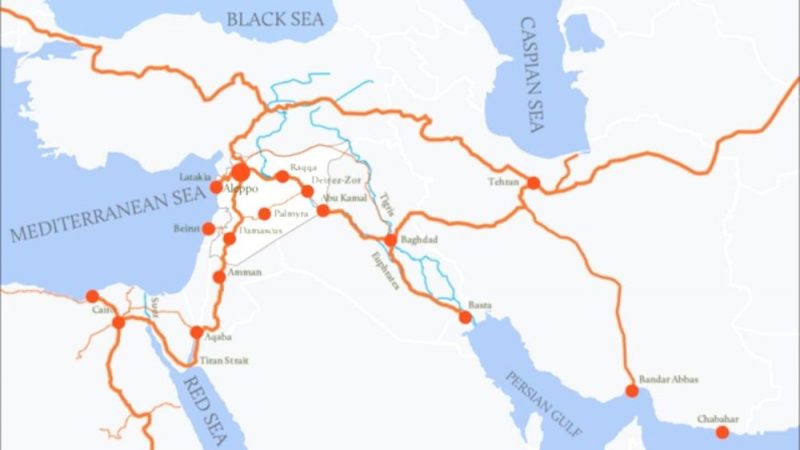
It is noteworthy that the same day China made its offers known publicly, Washington imposed the Caesar Syria Civilian Protection Act to punish all who wish to trade with Syria which itself has not only further crushed Syria’s cries for economic reconstruction, but had taken direct aim at Lebanon which sees 90% of Syrian goods flow through its borders to the Mediterranean.
When Chinese delegations first made their vision for the BRI’s extension to Lebanon known in March 2019 where the Arab Highway from Beirut to Damascus and rail to China was floated, western stooge Saad Al Hariri said no, preferring instead to sign onto a $10 billion IMF plan. Over a year later, not one iota of infrastructure was built. Secretary of State Pompeo played a major role at keeping Lebanon from “going east” as Nasrallah and even President Aoun had desired when he stated in a March 2019 press conference “Lebanon and the Lebanese people face a choice: bravely move forward as an independent and proud nation or allow the dark ambitions of Iran and Hezbollah to dictate your future.”
Pompeo’s obsessive drive to eliminate Hezbollah and especially the influence of Nasrallah in Lebanon has less to do with any perceived threat Israel claims to its existence and everything with Hezbollah and Iran’s embrace of China’s Belt and Road Initiative.
When Chinese offers were renewed in June 2020, Pompeo’s stooge David Schenker (Assistant Secretary of State for Near East Affairs) gave a June 23 interview stating that Hezbollah “is not an organization that seeks reform, but rather one that lives on corruption”. Schenker warned Lebanon from falling into the “China Trap” and said that Nasrallah’s demands that Lebanon “look east” was “shocking”.
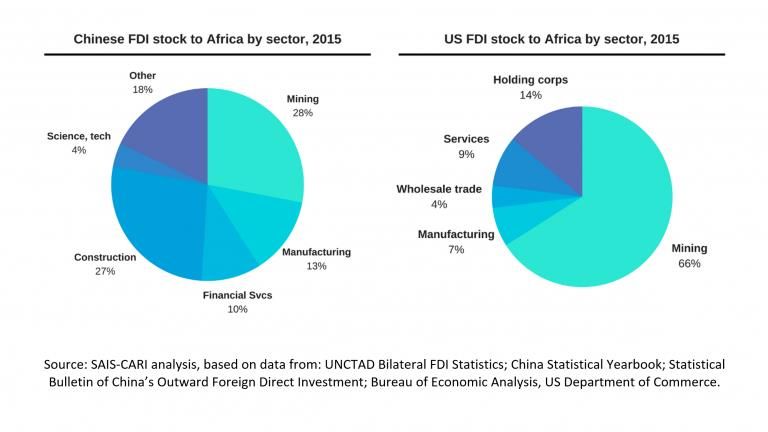
Without going into a lengthy refutation of the “China debt trap” argument (which is really just the effect of western imperialists projecting their own dirty practices onto China’s BRI), it is sufficient to say that it is a 100% myth. A summary overview of Chinese investments in Africa which are numerically similar to American investments demonstrates that the difference is found entirely in QUALITY as China uniquely invests in real construction, manufacturing and even African banking which are verboten by all imperialists who only wish to use Africa as a looting ground for cheap resources and cheaper labor.
Speaking to this issue, and the hope for Lebanon more broadly the BRIX Sweden’s Hussein Askary stated:
“It is becoming obvious that a tiny country like Lebanon, but fully sovereign and independent can break the back of a global empire by opting to follow the path of progress, national sovereignty and international cooperation according to the win-win model offered by China. This does not mean cutting all bridges to the west. It is necessary to keep those that are in the true interest of Lebanon and its people. If the U.S. and Europe wish to change their policies and join China in offering Lebanon power, transport, water and agro-industrial investments, the Lebanese people and leadership would take them with open arms”.
INTERVIEW: Dr Marandi on Beirut Blast Aftermath & Lebanon’s Future
21stCenturyWireTV | August 11, 2020
SUNDAY WIRE show, host Patrick Henningsen is joined by global affairs analyst Mohammad Marandi from the University of Tehran, to discuss the recent developments in Beirut, Lebanon in the aftermath of the tragic explosion which destroyed the city’s port area and resulted in many dead and injured, as well as 300,000 made homeless due to ancillary damages.
Dr Marandi explains some of the legacy issues in Lebanese politics, as well as the true aims of US and its allies in the region, the geopolitical motivation behind punishing economic sanctions by Washington, and how these policies actually prevent delivery of regional aid, cooperation and prosperity among neighboring states. Listen:
Lebanon’s Hariri demands freedom to form upcoming government
MEMO | August 14, 2020
Lebanon’s former Prime Minister Saad Hariri demanded freedom to select his own cabinet ministers to become the country’s prime minister for a third term, Lebanese Al-Akhbar newspaper reported.
According to the paper, Hariri has demanded that all Lebanese forces grant him freedom to select his ministers, noting that his only external concern is to obtain the approval of Saudi Arabia which he has not yet received.
France has given its support for Hariri to become prime minister for a third time, but Paris wants a general consensus on his candidacy.
However, senior sources in the Free Patriotic Movement party, founded by Lebanese President Michel Aoun, stressed that experience has shown that Saad Hariri is neither a reformist nor productive.
The paper quoted unnamed sources as saying that Aoun is also not enthusiastic about naming Hariri as prime minister.
According to the sources, Hariri is not in a position to set conditions, but is rather someone to set conditions for.
Last week, Lebanese Prime Minister, Hassan Diab, resigned in the aftermath of a massive explosion that hit Beirut port killing nearly 200 people and wounding more than 6,000 others.
New York: Lebanese Government Defends Intellectual Freedom of Diplomat Against Zionist Intimidation Campaign
By Eric Striker – National Justice – August 14, 2020
 The Lebanese consul in New York City refused to cower to a Jewish-led mob demanding the firing of Abir Taha, a Lebanese intellectual and career diplomat who serves as the consul general.
Taha, whose books have been published by Arktos, has written academic books about Nationalsocialism, geopolitics and Nietzschean philosophy, as well as novels influenced by Eastern spirituality. Jewish groups are calling her Nazi and anti-Semite.
A group called Outlive Them NYC, who describe themselves as “antifascist Jews in occupied NYC organizing to defend all our communities,” led a mob that blocked the entrance of the Lebanese consul demanding Taha’s resignation just two days after the tragic August 4th explosion in Beirut that killed 178 people and leveled a large portion of the city.
According to the consulate’s website, the Jews and leftists flooded their system with emails and almost collapsed their network as retaliation for their decision to defend Taha’s intellectual freedom. The result of this action is that thousands of Lebanese citizens who required both conventional services as well as information on the status of loved ones potentially impacted by the explosion were significantly delayed by the callous haters.
The Lebanese have doubled down on defending Taha’s free speech and professionalism. In a public statement, they declared that “[Abir Taha] is a career diplomat (من الملاك) who has joined the diplomatic corps and who will remain in this corps until she retires, because she is part of the administration, not a political class or group. Indeed, she is politically independent, with no political affiliation or loyalty to any party or politician. She only strives to serve Lebanon and its people, her only pride, loyalty and duty.”
In a shocking display of arrogance, the foreign emissaries were subjected to an ultimatum by the mob of New York Jews and “antifa” members demanding that Taha be fired by August 10th “or else.” The release concludes that, “What is currently happening to the Consul General : harassment, threats, insults, blaming her for all of our country’s woes, insulting the Consulate staff members, and lastly, giving her an “ultimatum” to resign until August 10, 2020 “or else” (…) … all of this is really sad and unfair since she and the entire staff of the Consulate General of Lebanon have been tirelessly serving our community, even during these difficult times, without any interruption or delay. She certainly doesn’t deserve this. The entire staff of the Consulate certainly doesn’t deserve this.”
By taking a principled stance, the Lebanese state breaths a breath of fresh air into the American police state, where citizens live in fear of their opinions being known and are arbitrarily blacklisted from employment for questioning the narratives of the elite.
The disgusting act of trying to leverage access to embassy services right after a tragedy to enforce US-style political correctness was celebrated by Al Arabiya, a media company owned by Saudis, which reported that the consul had to close its doors on August 12th in response to the protests.
There is no evidence of this being true. The consul appears to be open during its usual hours and Taha is still listed as its head.
Featured Video
Seyed M. Marandi: Negotiations Collapsed – Return to War
or go to
Aletho News Archives – Video-Images
From the Archives
The US-Iran Scenario That Most Scares Israel
By Ali Haydar | Al-Akhbar | October 9, 2013
Israeli Prime Minister Benjamin Netanyahu issued a series of threats toward Iran and its interlocutors in the West, including the US, as serious negotiations on Iran’s nuclear program seem more plausible.
As a possible rapprochement looms between the US and Iran, Netanyahu has attempted to impose impossible Israeli conditions on the negotiators, such as the full dismantling of Iran’s nuclear program, not to mention threatening military force.
Whatever the deal that could materialize between Iran and the West, Israel is going to find itself before an open-ended path. One can foresee three possible scenarios… continue
Blog Roll
 Aletho News
- Most Israelis oppose Iran ceasefire, reject talks: Poll
- Iran to charge ships from ‘hostile’ nations to cross Hormuz – security chief
- UK, Spain reject Trump’s new scheme to blockade Hormuz Strait
- Russian frigate ‘resurfaces’, chases off NATO pirates days after Kiev ‘sank’ it
- Ukraine Targets Russian Merchant Fleet With NATO Intel Support – Presidential Aide
- Russia’s ‘shadow fleet’ makes mockery of UK naval power
- Ukraine plans to attack Russian ships with Norwegian support
- US’s ‘Very Foolish’ Double Blockade of Hormuz Strait Makes Absolutely No Sense: Here’s Why
- China issues rules on countermeasures against foreign states’ unlawful extraterritorial jurisdiction
- Seyed M. Marandi: Negotiations Collapsed – Return to War
- If Americans Knew
- Israeli prison authorities are blocking hundreds of solidarity postcards being sent to female Palestinian prisoners
- ‘I wished for death’: Sexual violence in Israel’s prisons is an ‘organized state policy’
- Israeli army shoots, kills 9-year-old girl in her Gaza classroom
- Israel is attacking Lebanon to sabotage the Iran ceasefire, but the media is hiding its true motivation
- Israel’s restriction of aid into Gaza leads to critical shortages in bread, baby formula, and water
- Critical shortages in Gaza, Lebanon in ruins, “piracy” in Iran – Daily Update
- US-Iran ceasefire negotiations make zero progress – Daily Update
- Pro-Israel ‘Thinktanks’ and Individuals who Influence U.S. Foreign Policy
- Mearsheimer reveals how Israel dictates US policies on Iran, Gaza – video
- After killing 350+, Israel still has a “score to settle” with Lebanon before ceasefire – Daily Update
- No Tricks Zone
- Cave Discovery Reveals Today’s Desert Climates Were Recently Far Warmer, Wetter, Teeming With Life
- German Expert: Heat Dome Led To Record Temps In Western USA…Warmer In 1934, 1936
- New Study: No Linear Warming Or Glacier Retreat Along Northern Antarctic Peninsula Since 1980s
- An Inconvenient Tree: Uncovered In Alps… Europe Much Warmer Than Today 6000 Years Ago
- New Study Reports A 60% Slowdown In Greenland’s Ice Loss Rate In The Last Decade
- Low Intensity Tornado Wrecks Major Solar Farm, Creating A Potential Toxic Dump
- New Study Finds Warming Saves Lives…Cold Temperatures 12 Times More Deadly Than Excess Heat
- German Science Blog Accuses PIK Climate Institute Of Hallucinating Climate Tipping Points
- Devastating Assessment Of Comirnaty Vaccine By Former Senior Pfizer Europe Toxicologist
- New Study: CO2 Is ‘Effectively Negligible’ As An Explanatory Climate Change Factor Since 2000
 Aletho News