Why marijuana isn’t at the bottom of the list
By Pete Guither | Drug War Rant | March 17, 2015
“Let’s put it in perspective,” Obama said in response. “Young people, I understand this is important to you, but you should be thinking about climate change, the economy, jobs, war and peace, maybe way at the bottom you should be thinking about marijuana.”
That, of course, completely misses the point regarding what “thinking about marijuana” actually is about.
Tom Angell:
“But he should think again about how important this issue is. On average, there’s a marijuana possession arrest in the U.S. about every minute. Billions of dollars are wasted on enforcing prohibition laws that don’t stop anyone from using marijuana but do ruin people’s lives with damaging criminal records.”
Lee Rosenberg (via Twitter):
No, marijuana legalization is not the most important issue for young people to care about, but government incompetence on the issue has a very negative and very real impact on the perception that government is capable of solving more serious problems.
“Thinking about marijuana” is about more than getting high.
It’s about systemic police corruption. It’s about a failed criminal justice system that fuels situations like Ferguson. It’s about tens of thousands dead in Mexico. It’s about failed foreign policy. It’s about using bad laws to control a population and deny them basic rights. It’s about perversion of our Constitution. It’s about financial self-interest trumping science and reason.
Marijuana most definitely isn’t at the bottom of the list.
The CIA Against Latin America, the Special Case of Ecuador
teleSUR | March 6, 2015
Imprisoned on various occasions and subjected to numerous interrogations, Dr. Jaime Galarza Zavala is one of the estimated 120 direct victims of the CIA’s record in Ecuador.
Persecuted by the CIA for his political organizing, Galarza described to teleSUR English that “they told me that I was working as a guerrilla in the Dominican Republic. I, to this day, have never visited the Dominican Republic. But they accused me of being a guerrilla leader in the Dominican Republic. And this was a common theme with various interrogations.”
He added that, “while they interrogated me, there was somebody that called every now and then from another room. Afterward, they told me that this person they were talking with was a gringo, a North American, who never presented himself to me. But he gave them instructions as to how to continue the interrogation,” said Galarza.
A fierce critic of U.S foreign policy in the region, Galarza recently published a book titled, “The CIA Against Latin America, the Special Case of Ecuador,” co-authored by Francisco Herrera Arauz.
In an interview with teleSUR English on CIA actions in Ecuador, Herrera said,“First, they destroyed our democracy. Second, they worked with undivided attention against our citizens. They persecuted our citizens for thinking differently. People were killed, injured, there are victims of this violence, there are families that were harmed, there are exiles, the honor of some people has been ruined, there are destroyed families, and all of this was caused by the CIA’s actions.”
Both authors have previously interviewed Philip Agee, the ex-CIA operations officer whose name became internationally known when he wrote the book “Inside the Company: CIA Diary” in 1975, detailing his time working in Ecuador, Uruguay, and Mexico from 1960 to 1968 and denouncing actions undertaken by the CIA during this period.
In his testimonies of that period, Agee said that when he operated in Ecuador from 1960 to 1963, the CIA oversaw: the overthrow of two presidents; the infiltration of various political parties and organizations; and the planting of bombs in front of churches and other emblematic sites to frame leftist groups; among other actions.
At an event celebrating the new book, Ecuador’s Foreign Minister Ricardo Patiño said, “These secret policies continue in Latin America today. Nothing that Philip Agee denounced as CIA actions in the past have been discarded by the espionage seen in the present.”
To raise public awareness of the atrocities committed within Ecuador and the long-term damage caused by CIA interventions throughout Latin America, Ecuador’s Foreign Ministry has printed and widely distributed copies of the book in Spanish and English.
UN: Torture by Mexican State is Widespread
teleSUR | March 8, 2015
A report by the U.N. Human Rights Council, set to be released on Monday, states that torture by the Mexican state has become a regular occurrence.
The 22-page report by the U.N. Special Rapporteur Juan Mendez was leaked to Mexican weekly magazine, Proceso. The report is the product of an investigation conducted by Mendez in Mexico in April and May of last year.
“Torture and abuse are widespread in Mexico,” states Mendez’ report.
Proceso states that the U.N. report includes allegations of physical violence, electric shock, suffocation, sexual assault, and psychological abuse. Mendez reveals that multiple elements of the state are guilty of utilizing torture, from local police, to state and federal police, as well as the armed forces.
“The majority of the victims (of torture) are detained for their alleged links with organized crime,” adds the report. As a result of their alleged ties to organized crime, these detainees are not offered the same legal protections as other suspected criminals.
Apart from being tortured, Mendez alleges that these detainees are held in preventative detention for lengthy periods without being afforded the right to appear before a judge.
The U.N. special rapporteur also states that it is difficult to know how many cases of torture there may actually be in Mexico, as a federal record is not maintained. Mendez also claims that many victims do not come forward for fear of reprisals.
Mendez’ report harshly criticizes the Mexican state for failing to put in place measures to prevent the use of torture and makes a series of recommendations to the Mexican government.
Suspects connected to the case of the missing 43 students are also suspected to have been tortured in order to coerce statements from them that would match the government’s version of events.
The U.N. also recently criticized the Mexican government regarding forced disappearances in the country.
Peña Nieto Wants to Keep Oil Privatization Deals Secret
teleSUR | February 14, 2015
The government of Mexican President Enrique Peña Nieto has proposed changing a key transparency law that would allow the state to keep key information secret over controversial energy reform plans.
According to a document presented before the Congress by the ruling party PRI and its ally the Ecological Green Party of Mexico (PVEM), there would be 82 changes to the Federal Law of Transparency and Access to Public Government Information.
The recommendations made by the legal adviser to the Presidency of the Republic propose removing the requirement to disclose contracts, permits, alliances and partnerships that the State signed with national and foreign companies on oil exploration.
Last year President Enrique Peña Nieto signed a package of so-called secondary laws to the country’s controversial energy reform approved in 2013. The reform opens Mexico’s public energy sector to private competition for the first time in 76 years after the former populist president, Lazaro Cardenas, nationalized the sector in 1938.
Opposition senators Dolores Padierna and Alejandro Encinas, from the Revolutionary Democratic Party (PRD), rejected the proposal saying Mexicans deserve to know what will happen with hydrocarbons, a key economic sector, especially as the reforms will see profits going to foreign oil companies.
Padierna added that the energy sector should be forced to provide information about its operation and activity, and that decisions taken during the process of liberalization and privatization should respond to the transparency law.
150 People Reported Disappeared in Piedras Negras, Mexico
teleSUR | February 7, 2015
Over 150 people have been reported disappeared in the small city of Piedras Negras in the northern border Mexican state of Coahuila in the last 18 months, of which at least 60 have been attributed to elite police forces, according to a lawyer overseeing the cases.
Families of victims and their lawyers accused state government of creating special forces that have carried out arbitrary detentions, tortures and enforced disappearances across Coahuila during the last six years.
The creation of elite police forces, which in the past have been sent to the U.S. for special training by the FBI, is not new in Mexico. These types of forces have been accused of acting as death squads for the government and have sometimes carried out assassinations ordered by organized crime gangs.
“Special units of the army and navy, assassins trained by armed forces deserters and civilians trained by foreign security forces operate in Mexico as death squad,” Proceso published in June of 2013. The Mexican magazine based this assertion on a book published by 0federal lawmaker Ricardo Monreal Avila, which was edited by the congress’ lower house.
Influential newspaper Excelsior in November of last year wrote that, “The special forces created in the states (of Mexico) are under scrutiny due to human rights issues.”
The daily based in Mexico City added that, “these elite police groups have been accused of carrying out enforced disappearances, kidnappings, extortion and torture.”
Excelsior said that “it should be noted that in spite of the negative reputation of these forces in various states, which sometimes receive special training by U.S., Colombian or Israeli elite groups, more states and Mexico City are in the process of integrating elite groups to (allegedly) fight organized crime.”
The newspaper went on to say that the United Nations has questioned the work of special intelligence units in Baja California and Tamaulipas, due to the high number of crimes they have committed against innocent people.
On Friday, the La Jornada newspaper reported that attorney Denise Garcia told reporters that the non-governmental organization United Families has documented 150 cases of disappearances in the last 18 months in Piedras Negras alone.
“In at least 60 of those cases there is evidence that the Special Arms and Tactics Group (GATE) participated in them, as well as other similar types police units that were created by the former Governor Humberto Moreira and which still exist today under the governorship of his brother Ruben,” she said.
Garcia said the 51 people that were disappeared by GATE were later found alive, but all of them, she added, were tortured to confess crimes they did not commit, including drug trafficking, and today they remain jailed under false charges.
These groups have no accountability, Garcia explained, and they don’t report their operations nor their arrests, which is a clear violation of human rights.
“GATE and other special police units work under the recognition and support of the government, despite that many of them are [not] even legally constituted,” she said.
García said they act as illegal death squads, they travel in unmarked vehicles with no license plates, they are masked and commit many other irregularities.
The worst thing, she added, is that “we have denounced these issues to the federal government and the National Human Rights Commission (CNDH), which respond with indifference.”
See also:
World’s Richest 1 Percent to Own Half of Global Wealth by 2016: Oxfam
Al-Akhbar | January 19, 2015
The world’s wealthiest 1 percent are expected to own more than 50 percent of the world’s wealth by 2016, the UK-based charity Oxfam International reported Monday.
“The richest people in the world have seen their share of global wealth increase to 48 percent in 2014 from 44 per cent in 2009,” Oxfam said in the 12-page report entitled “Wealth: Having it all, and wanting more.”
The average wealth per adult in this group is $2.7 million (2.3 million euros), Oxfam said.
“At this rate, it will be more than 50 percent in 2016,” the report read.
The majority of the remaining 52 percent of global wealth shared between the other 99 percent is owned by the richest 20 percent, leaving just 5.5 percent for the remaining 80 percent of people in the world — the equivalent of $3,851 (3,330 euros) per adult.
“Do we really want to live in a world where the 1 percent own more than the rest of us combined? The scale of global inequality is quite simply staggering,” Winnie Byanyima, Executive Director of Oxfam International, warned.
In 2010, the richest 80 people in the world had a net wealth of $1.3 trillion, according to the report. By 2014, the 80 people who top the Forbes rich list had a collective wealth of $1.9 trillion, an increase of $600 billion in just 4 years.
Byanyima said failure to tackle inequality will set the fight against poverty back decades.
“The poor are hurt twice by rising inequality — they get a smaller share of the economic pie and because extreme inequality hurts growth, there is less pie to be shared around.”
Economists say extreme income inequality has consequences for economic growth and on development.
“Income inequality has a negative and statistically significant impact on subsequent growth. In particular, what matters most is the gap between low income households and the rest of the population,” economist Federico Cingano wrote in a study published by the Organization for Economic Co-operation and Development in June 2014.
Rising inequality is estimated to have knocked more than 10 percentage points off growth in Mexico and New Zealand. In the United States, the United Kingdom, Sweden, Finland and Norway, the growth rate would have been more than one fifth higher had income disparities not widened, the study shows.
“On the other hand, greater equality helped increase GDP per capita in Spain, France and Ireland prior to the crisis,” Cingano wrote.
It also has an effect on human capital: “Increased income disparities depress skills development among individuals with poorer parental education backgrounds, both in terms of the quantity of education attained (e.g. years of schooling), and in terms of its quality (i.e. skill proficiency),” Cingano said.
Laureate economist Joseph Stiglitz agreed.
“The extreme inequalities in incomes and assets we see in much of the world today harms our economies, our societies, and undermines our politics. Whilst we should all worry about this it is of course the poorest who suffer most, experiencing not just vastly unequal outcomes in their lives, but vastly unequal opportunities too,” Stiglitz said on Oxfam’s website.
Oxfam called upon states to tackle tax evasion, improve public services, tax capital rather than labor, and introduce living minimum wages, among other measures, in a bid to ensure a more equitable distribution of wealth.
The consequences of policies to reduce income inequality could be significant, the Oxfam report said. If India stopped inequality from rising, 90 million more men and women could be lifted out of extreme poverty by 2019, according to the report.
(Anadolu, Al-Akhbar, AFP)
97 Journalists Killed in Mexico in Past 4 Years
teleSUR | January 7, 2015
According to a new study released by the National Commission on Human Rights (CNDH) Wednesday, 97 journalists have been killed in Mexico in connection with their work since 2010.
The new research also revealed 22 cases of disappearances and 433 attacks against journalists and media offices since 2005. Investigations into the crimes have been carried out in very few cases.
The CNHD has criticized the Mexican government for their lack of action regarding violence against journalists in the country. It also emphasized the importance of guaranteeing freedom of expression in the country to ensure the free flow of news and information, which means guaranteeing the right of journalists to work in a safe environment.
“The state is first required to become a guarantor of freedom of expression, since the institutions must assume their primary responsibility and give validity to democracy in our country,” said the organization.
Mexican Journalist Kidnapped in Veracruz State
teleSUR | January 3, 2015
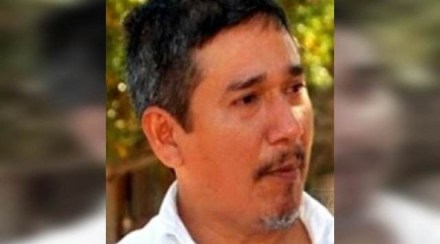
Mexican photojournalist and social activist, Moises Sanchez Cerezo, was reportedly kidnapped by an armed group at his home in the community of Medellin de Bravo in the turbulent state of Veracruz on Friday.
According to local media reports, Cerezo was taken at gunpoint along with his computer, camera and cell phone. Neighbor testimony outlined that the incident took place at 7:30 in the evening. They affirmed that three cars arrived with several armed men who entered the home of Cerezo then drove off with him in their custody.
Although the neighbors notified police, law enforcement showed up hours later.
Cerezo contributes to the local weekly La Union as well as participated in neighborhood security and watch groups to try to confront the widespread insecurity resulting from the presence of organized crime and corrupt local police officials.
Media rights watchdog groups have raised alarm over the number of journalists and media workers killed or targeted during the current administration of Enrique Peña Nieto. According to the International Center for Journalists (ICFJ), 13 journalists have been killed in Mexico in the past two years.
Mexico remains one of the most dangerous places in the world to practice journalism. Nearly 100 media workers have lost their lives or gone missing since the year 2000, and most of these cases are still unsolved, insufficiently probed, and few perpetrators arrested or convicted, according to the PEN American Center.
The Committee to Protect Journalists reported that since 1992, 73 percent of journalists killings in Mexico involved criminal groups with 8 percent involving the military.
Interview: Mexico Gov’t Claims on Disappeared Students Exposed
teleSUR | December 16, 2014
Explosive allegations were published in Proceso, one of Mexico’s leading news weeklies, this past Sunday, revealing strong evidence pointing to direct participation by federal authorities in the presumed killings of dozens of education students from the drug war-torn state of Guerrero.
The investigation also revealed that Mexican federal, state and municipal authorities were tracking the exact movements of the students on the same night of the massacre in question this past September 26 and that according to the government’s own documents, and in at least five clear instances, key testimony obtained by officials to sustain their version of the events was actually induced via illegal interrogation techniques that amounted to torture, which included electric shocks to testicles and extreme beatings.
The investigation’s revelations are not only a stark contrast with what has been officially maintained by the Peña Nieto administration, but also contradict most of what most mainstream news has reported from Mexico and beyond.
The Official Version
The official version of what happened on September 26, the night of the disappearance , largely emanates from a press conference that has by now become widely known and has even served as a reference point for a nation-wide movement that has been ongoing since soon after the presumed massacre occurred. That is because the Attorney General leading the press conference, Jesus Murillo Karam, mentioned that he was “tired” at the end of the hour-long conference. The #YaMeCanse Twitter hashtag arose almost as soon as the conference itself ended, and has actually served as the battle-cry for a nation-wide movement that has attracted international support and attention, including a day of protests which featured over 200 actions across the globe and cross-border protests, as previously reported by teleSUR English.
During the press conference, and reiterated through a variety of official accounts since that time, authorities have claimed that Iguala Mayor José Luis Abarca and his wife ordered local municipal police to attack several buses of the “normalistas” (students training to become teachers) on several occasions. The attacks wound up killing at least three people and disappearing 43 students. The Guerreros Unidos (Warriors United) drug gang was then given the 43 kidnapped students which went on to brutally assassinate, dismember, torture and burn the victims to death, again, according to official accounts, but disputed by the parents.
The ex-Mayor and his wife have since been detained in connection to the presumed massacre. Acting on a tip from the couple’s landlord in Itzapalapa, the “imperial couple,” as local media dubbed them, were considered by federal officials to be the main culprits behind the crime. The official allegation was that the couple acted in cahoots with a gang that had long suspected, close ties to the Mayor and his wife.
State Version Undermined
The investigation, which was penned by acclaimed Mexican investigative journalist Anabel Hernandez and the University of California at Berkeley-based journalist Steve Fisher, blows the lid off of official accounting in a number of ways, in alleging that: federal, state and local officials closely tracked, monitored and were quite aware of the whereabouts of both the killed, disappeared and presumably murdered education students; key testimonies obtained by officials were garnered through illegal torture techniques; federal police and soldiers from the military were present at the scene of the killings; the government has deliberately withheld this information in an attempt to maintain their own official accounting of the events in question.
The allegations also come during a time in which the government’s version of the events was already being questioned by other sources. A research team headed by a group of scientists from the National Autonomous University of Mexico, argued that the government claims that the Guerreros Unidos gang incinerated to death all 43 students lacked any “scientific explanation.”
In an extended interview via a three-way telephone call with the authors of the investigation with teleSUR English, Anabel Hernandez and Steve Fisher discussed and detailed their findings.
Journalists Discuss Disturbing Findings
The ever-passionate and expressive Hernandez is no stranger to explosive investigations and allegations, so much so that her home was raided by official authorities late last year. The award-winning and internationally acclaimed journalist has also been subjected to harrowing threatening acts, such as having found animal body parts at the doorstep of her home. In her latest investigation, however, Hernandez made the case that her co-authored findings starkly revealed that governmental responsibility for the presumed massacre is much higher than what has been previously admitted.
“The point is that we know that the federal police were there, we know that they knew when the students [were] abducted and we know that many of the testimonies that the PGR [Mexico’s Attorney General’s office] were obtained and acquired through torture techniques. But in Mexico, evidence obtained through torture is illegal,” Hernandez told teleSUR.
In contrast to the official version, which maintains that the federal government was unaware of the massacre, Hernandez and Fisher allege that federal police and military soldiers directly participated in the presumed massacre itself and were one of three levels of government closely monitoring the students whereabouts throughout the night of the presumed massacre.
According to Hernandez and Fisher’s accounting of the unedited Guerrero state report they obtained, which was drawn up for the Interior Ministry (SEGOB) and obtained by the magazine about a month and a half ago, students were monitored as soon as they left their school grounds at 5:59pm. Both federal and state police were monitoring the students while they traveled from the Chilpancingo-based Control, Computational and Communications Center (C4).
The article goes into further detail, noting that at 8pm, the federal and state police arrived to the highway where the students were fielding donations; at 9:21pm, a federal police chief – Luis Antonio Dorantes – was advised of the student’s arrival; and at 9:40pm the C4 center reported the first gunshots.
The report was also based on 12 videos recorded by surviving students on their cell phones, whereby one now publicly released video has audio clearly noting a surviving student yelling in distress: “The police are now coming, the federales are staying and they are going to want to screw us over!”
In sum, various levels of government were much more aware of the students and more present at key points throughout the evening in question, than what has been previously admitted.
Hernandez made it clear to teleSUR, however, that their investigation didn’t reveal whether or not the United Warriors gang were involved with the massacre. Fisher elaborated on this point: “We cannot say whether or not Guerreros Unidos was ultimately involved with this, or not, but we can say that the evidence we have acquired was that they were tortured [before their testimonies were given]. It is thus suspect that they could actually get proper testimonies considering the fact that they were tortured brutally, including electric shocks to testicles and extreme beatings.”
Hernandez added that other telltale signs of torture were uncovered in their investigation, including bruised ribs, blackened eyes and black-and-blue marks on the neck. Such findings were especially damning, Hernandez pointed out, considering that, “the attorney general’s version was based solely on testimony by presumed drug traffickers.”
Fisher spoke to this point, telling teleSUR that, “I would say that in any case where there is torture involved, it brings into question the entire investigation. It would be interesting to know why the PGR would base this very important investigation on, according to their own documents, information obtained through people that were brutally beaten and tortured.”
Hernandez and Fisher wrote that the Peña Nieto administration has withheld the information they reported on.
Soon after the disappearance of the education students, the Guerrero Attorney General’s office requested that the Mexican Federal Police, their investigation notes, hand over extensive documentation related to the potential participation of federal police agents, including the exact registries of when agents clocked in and out while on the job the night of the attack. However, the investigation added that since the Peña Nieto administration took over the investigation this past October 4, the requested documentation was never handed over to the Guerrero office.
“It is clear that the PGR has been manipulating the case, that the federal government has been manipulating the case, and that now, the official version of the case has been shown to not be trustworthy,” Hernandez passionately asserted during the extensive interview, adding that in subsequent conversations with government officials, none of their allegations were officially denied to either of the reporters.
Investigation Points to a Number of Implications
Considering the many contradictions between the investigation and official accounts , many questions can be asked. Since Mexican officials have long claimed that Warriors United was the group which took custody of the students from local police authorities who had initially detained them, have there been any false arrests among the 74-some people that have been rounded up since September 26?
The accused leader of Warriors United, Sidronio Casarrubias, is among the many detained, which include an array of local law enforcement officials. Casarrubias has since revealed to officials the kind of relationship he had with Abarca while he was mayor, but it is not clear whether or not he was among the five people tortured in Herandez and Fisher’s account.
“Warriors United has sewn a web of complicity with several mayors and above all with security officials,” Murillo previously told the press. “In Iguala, the complicity was between the authorities, the local police and the Warriors United,” Murillo added.
If there is one official acknowledgment which Hernandez and Fisher do not dispute, it is the systematic relationship that exists between drug cartels and the Mexican state. It is that very relationship which has served as a spark plug to a nation that has undertaken a significant amount of resistance since September 26.
Nation-wide Movement Continues to Wage Protest
The revelations by Herandez and Fisher come at a time that the nation’s ire was already raised to a feverish boiling point. In one of the largest countries and economies of Latin America. Mexico has witnessed near daily and nation-wide actions of resistance.
Since the disappearance of the “normalistas” on September 26, the country has been brimming with mass marches, candle-light vigils, university-campus and labor-union-led strikes, occupations of official and university buildings, riot police-led arrests of demonstrators, property destruction of official buildings, sit-ins, panels ruminating over the ills of narco-state violence and international bridge closings.
Most recently, at least 22 people were injured this past Sunday during protests in Chilpancingo, Guerrero which featured police opening fire on demonstrators. TeleSUR English reported that three parents of the forcibly disappeared, a journalist, a student from the National Autonomous University of Mexico, and a member of an education union were among those injured.
The violent law enforcement response to the protests, specifically that of Sunday’s occurrences, prompted the National Human rights Commission to demand that authorities conduct themselves within the law.
The disappearance clearly served as the catalyst for the movement’s inception, much of the country has long been weary of the systematic problem of disappearances and the eerie official impunity which has often surrounded them. Nothing less than some 22,000 disappearances, over the course of the last three years alone, account for official estimates. Other analysts estimate the actual total as being higher than that.
Mass Graves Point to Narco-State Crimes
The disappearances of the normalistas are emblematic of a long-running problem in Mexico: thousands upon thousands of cases of disappearances, many of whose investigations were found ‘inconclusive’ and long ago closed, exist throughout the country. Some estimates range as high as 24,000 disappearances having occurred since 2011 alone, the overwhelming amount of which were “unsolved” and/or “closed” cases.
In another case of official law enforcement involvement in a crime, 22 alleged kidnappers were summarily executed by Mexican soldiers in Tlatlaya in June 2014. A federal judge recently charged three soldiers with murder and four others with abuse of authority and other charges in relation to the massacre.
At least a dozen mass grave sites have been discovered since the time of the Ayatzinapa disappearances. Meanwhile, movement activists and organizers alike have alleged that many more mass grave sites exist than what has been officially acknowledged.
Regardless of the actual total of mass grave sites, their undisputed existence still point to a problem more familiar to locals and residents of the area: Guerrero is not only a drug war-torn state, but a complex nexus of corruption and corroboration between local, regional and state authorities and their allies in street gangs and powerful drug cartels. Even federal officials have since admitted that the disappeared students pointed to a larger, narco-state reality.
While the troubles of living under a narco-state is one which local residents of Guerrero have long been familiar, in the wake of what seemingly is a never-ending case of the disappearances of the Guerrero students, it has now become a reality with which the whole nation of Mexico, and well beyond, are becoming familiar with as well.
But now, in light of the explosive allegations revealed by Hernandez and Fisher, it will become yet a more complex reality with which the nation will have to come to grips and to which the government may have to provide yet more answers during tiring press conferences.
Gap between rich and poor worst in decades: OECD
Press TV – December 9, 2014
The Organization for Economic Cooperation and Development (OECD) says the gap between rich and poor in most of its member countries has reached its highest level in 30 years.
The organization released a report on Tuesday saying most of its 34 member states have seen a widening inequality gap.
Among its members are both developed and developing nations, including countries from the European Union, the US, Turkey, Mexico and Japan. However, China, Brazil and India are not members of the OECD.
According to the report, the richest 10 percent of people in the OECD area earn 9.5 times the income of the poorest 10 percent. The ratio stood at 7:1 in the 1980s.
The finding also showed that in the couple of decades leading up to the global financial crisis which erupted in 2007, the average household income increased for all OECD member states by around 1.6 percent annually.
However, in recent years, the average household income has stagnated or fell in most OECD member states.
The organization said the expanding inequality gap has negatively affected member states’ economies, with estimates showing that it has slashed more than 10 percentage points off growth in Mexico and New Zealand.
This is while growth rates in the US, UK, Sweden, Finland and Norway would have been more than a fifth higher if there had not been widening inequality.
The organization called for a number of measures to tackle the widening gap, including anti-poverty programs and increased access to high-quality education, training and healthcare.
US Military’s Training of Mexican Security Forces Continues As Human-Rights Abuses Mount In Mexico
DoD Officials Claim Training is Part of the Solution, Not the Problem
By Bill Conroy | narcosphere | December 3, 2014
The U.S. government has spent more than $62 million since fiscal year 2010 providing highly specialized training to Mexican security forces, including some $16.3 million in fiscal 2013, as part of an effort to help Mexico better prosecute its war on drugs, records made public under the U.S. Foreign Assistance Act show.
The spending has continued even as Mexico’s military and police forces continue to face accusations of pervasive human-rights abuses committed against Mexican citizens, leading some experts to question whether the U.S.-funded training is resulting in some deadly unintended consequences.
The news of the disappearance in late September of 43 students who attended a rural teachers college in Ayotzinapa, located in the southern Mexican state of Guerrero, has sparked massive protests in Mexico. The students were allegedly turned over to a criminal gang after being abducted by Mexican police and they remain missing. The police fired on the three buses transporting the students along a stretch of road near Iguala, about 130 kilometers north of Ayotiznapa, and the abduction was carried out near a Mexican military base, according to Human Rights Watch.
The Ayotzinapa incident was preceded by a lesser-known attack this past June during which Mexican soldiers killed 22 people inside a warehouse in Tlatlaya, 238 kilometers southwest of Mexico City. At least 12 of those homicides were deemed extrajudicial executions, according to Mexico’s National Human Rights Commission [CNDH in its Spanish initials].
Last year, the Mexican government conceded that at least 26,000 people had gone missing, or been disappeared, in Mexico since 2006 — the year the war on the “cartels” in that nation was launched. Over that same period, INEGI (the Mexican State Statistics Agency) reports, there were some 155,000 homicides in Mexico, most with a nexus to the drug war.
The U.S. Department of Defense insists that the relationship it has with Mexican security forces is based on “trust and confidence and mutual respect” and is critical to helping to reduce the violence sparked by criminal organizations in Mexico.
The U.S. training, funded through the DoD and to a lesser extent the U.S. Department of State, encompasses a wide range of military strategy and tactics and is carried out at locations in the United States and inside Mexico. Among the course topics on the menu are asymmetrical conflict, counter intelligence, international counterterrorism, psychological operations, counter-drug operations and urban operations. The training is being provided to a broad spectrum of Mexican security forces, including the Army, Navy and the federal police, according to data provided to Congress under the requirements of the Foreign Assistance Act and is current through fiscal year 2013.
Adam Isacson, senior associate for regional security policy with the Washington Office on Latin America, a nongovernmental organization promoting human rights and democracy in Latin America, says there is a lack of reliable public data on the fate of Mexican security forces after they receive U.S. military training.
“What happens to these trainees a year or two down the road after they are placed in areas dominated by organized crime?” Isacson asks. “We simply don’t have good after-training tracking of these people, and the amount they are paid can’t compete with the drug money. Plus, the risk of getting caught is small. The biggest risk for them isn’t jail, but rather running afoul of the drug organizations.”
From fiscal 2010 through 2013, U.S. military training was provided to some 8,300 members of Mexico’s security forces, according to Foreign Assistance Act data. That training is overseen by U.S Northern Command (Northcom), a Department of Defense branch created in 2002 that is responsible for U.S. homeland defense as well as security cooperation efforts with the Bahamas, Canada and Mexico.
Northcom officials contend that all Mexican security forces receiving U.S. training are well vetted and that data is maintained on all participants. The training is designed to compliment Mexico’s existing efforts to maintain security and stability in the country.
“We do not believe that U.S. military training enables corruption and human rights violations,” Air Force Master Sgt. Chuck Marsh, spokesman for Northcom, says. “On the contrary, U.S. military members who provide training serve as positive role models, displaying professional values for foreign security forces to emulate. They conduct this training in strict accordance with the Leahy Law, which requires us to ensure individuals and units with whom we work are not involved in human rights violations.”
Still, in a country where fewer than 13 percent of crimes are even reported, according to a recent Congressional Research Service report, and where tens of thousands of murders and cases of disappeared individuals remain unresolved, it’s difficult to accept with certainty that the data maintained on U.S.-trained Mexican security forces is of much use in monitoring corruption. If human-rights abuses are not reported, much less investigated, then there’s nothing to track.
And even when abuses are probed, the conviction rates are anemic.
Mexico’s Military Prosecutor’s Office between 2007 and mid-2013 opened 5,600 cases into alleged human-rights abuses by soldiers, Human Rights Watch reports. Yet, as of October 2012, only 38 cases had resulted in convictions and sentences from military judges.
Mexico’s CNDH reported last year that Mexican security forces were suspected of playing a role in at least 2,443 cases in which people were disappeared. Human Rights Watch, in a study released last year, said it “found evidence that members of all branches of the [Mexican] security forces carried out enforced disappearances.”
“Virtually none of the victims have been found or those responsible brought to justice,” Human Rights Watch reports.
WOLA’s Isacson says there is no evidence at this point directly linking human-rights abuses by Mexican security-forces to U.S. military training, but adds that “the risk is huge.”
“Congress a few years ago required DoD to keep more records on trainees, but that information is classified,” he adds.
What’s lacking is quantifiable public data that can be used to assess the effectiveness of U.S. training of Mexico’s security forces or the human-rights track record of trainees after the training is finished. “That evaluation has to now be based mostly on blind faith,” Isacson says.
And in yet another wrinkle to the military-training issue, Isacson points out that the U.S. military is helping to fund Colombia’s export of military training to other nations as part of its security coordination with the South American nation. Colombia provided military and police training to more than 10,310 members of Mexico’s security forces between 2009 and 2013, according to a recent WOLA report that uses figures provided by the Colombian National Police.
“Some of this training was U.S. funded, although Colombia carried out many activities using its own resources, or that of other donors such as Canada,” the WOLA report states.“… Beyond official advertisements of the strategy and occasional, anecdotal press reports, little information is available about the extent and nature of Colombia’s training.
“While foreign aid law requires the United States to report to Congress in some detail about its own overseas training, these reports include no mention of U.S.-funded activities carried out by Colombian forces.”
The nature and sources of funding for Colombia’s exported military training may be opaque. But what is clear is that U.S. military training was provided to 4,486 members of Colombia’s security forces in fiscal 2013 at a cost to taxpayers of $32.9 million, according to the most recently available Foreign Assistance Act data. A good share of that training was in areas consistent with regional security operations, including courses in international counter-terrorism, advanced security cooperation, joint operations and international tactical communications.
The Colombian military and police training provided to Mexico’s security forces, Isacson says, is essentially a proxy arrangement, given the United States’ role in helping to fund and coordinate that training.
“Colombians trained 10,000 Mexicans with the help of U.S. money,” he adds. “Our main concern is the lack of transparency and controls.”
Featured Video

The Most Important Bet You’ve Never Heard Of
or go to
Aletho News Archives – Video-Images
From the Archives
Wars for Israel: A reminder of who’s giving the marching orders
By Damian Lataan | February 7, 2012
As the West prepares to march off to yet another war in the Middle East, we should perhaps remind ourselves of who is giving the West their marching orders.
In February 2003, just weeks before the US and their allies launched their attack on Iraq and her peoples, a delegation of US congressmen, together with the US Ambassador to the United Nations, John Bolton, a well known pro-Zionist and neoconservative war-hawk, were in Israel at the invitation of the Israeli government then led by Israeli Prime Minister Ariel Sharon.
Addressing the congressmen, Sharon told them ‘that Iran, Libya and Syria should be stripped of weapons of mass destruction after Iraq’. Later, Sharon told John Bolton ‘that Israel was concerned about the security threat posed by Iran, and stressed that it was important to deal with Iran even while American attention was focused on Iraq’. … continue
Blog Roll
 Aletho News
- UAE rejects report claiming it is ready to join war on Iran to reopen Hormuz
- A New Resistance Front: How Does Syria Factor into the Regional War?
- Gulf states weigh pipeline expansion plans, hoping to bypass Hormuz
- Iran sets up ‘tollbooth’ system in Strait of Hormuz
- Wave 90: IRGC strikes US-linked industrial sites in Gulf
- Iran Says US-Israeli Claims of Its Military Strength Are Wrong
- Trump’s April Fools’ Address to the nation
- The Most Important Bet You’ve Never Heard Of
- The killing of three Indonesian soldiers in Lebanon should remind Jakarta that Israel does not want peace
- Defeated and delusional: Netanyahu’s remarks reveal $80bn war failure, says analyst
- If Americans Knew
- 7 Ways Israel Is Turning Lebanon Into Gaza
- World’s Leading Football Bodies Under Fire Over Israel Policies
- Experts warn of possible use of nukes against Iran
- Israeli invasion of Lebanon could be worse than 1982, warn European officials
- Passover: Liberation and collective punishment
- Trump says the quiet part out loud: (Israel’s) war on Iran > Americans’ health – Daily Update
- Gaza families reunite years after babies evacuated amid Israel’s war
- International Rescue Committee warns Gaza’s children face grave protection risks
- Iran’s Alleged 47-Year War on America: Debunking the 1,050 American Deaths Canard
- Israel wants US to bomb more of Iran’s civilian structures (113,000 is not enough) – Not a ceasefire Day 173
- No Tricks Zone
- Low Intensity Tornado Wrecks Major Solar Farm, Creating A Potential Toxic Dump
- New Study Finds Warming Saves Lives…Cold Temperatures 12 Times More Deadly Than Excess Heat
- German Science Blog Accuses PIK Climate Institute Of Hallucinating Climate Tipping Points
- Devastating Assessment Of Comirnaty Vaccine By Former Senior Pfizer Europe Toxicologist
- New Study: CO2 Is ‘Effectively Negligible’ As An Explanatory Climate Change Factor Since 2000
- Former Pfizer Toxicologist Dr. Helmut Sterz Tells Bundestag Hearing Pfizer Vaccine Should Have Never Been Approved
- Energy Expert: Germany’s Nuclear Phaseout Was A “500 Billion Euro Mistake”
- New Research: South Australia’s Mid-Holocene Sea Surface Temperatures Were 4°C Warmer Than Today
- Storing Green Energy To Last Germany 10 Days Would Require A 60-Million Tonne Battery
- New Studies: UK Sea Levels Were 4 Meters Higher Than Today During The Mid-Holocene
 Aletho News