Early last month, the forces of the ‘new’ Syrian army flooded across north and east Syria. The troops seized key cities and major oil fields, effectively ending a decade of US-backed Kurdish autonomy – with Washington’s blessing.
One of those cities was Raqqa, the former capital of ISIS’s self-proclaimed ‘caliphate’ in Syria and a symbol of sectarianism, bloodshed, and iron-fist rule.
Raqqa remembers
It was in Raqqa where scores of soldiers from the now-dismantled Syrian Arab Army (SAA) were executed in cold blood by ISIS militants. Many of these soldiers had their severed heads impaled on pikes on the city’s outskirts.
It was also in Raqqa where countless young girls and women, many of them Yezidis abducted from Iraq in 2014, were sold into slavery in what ISIS called Souq al-Sabaya – the ‘market of female captives.’
As Syrian President Ahmad al-Sharaa’s (formerly known as Abu Mohammad al-Julani) armed forces entered the city in early 2026, his soldiers were gleeful, excited, and reminiscent. Many of them had been there before.
A closer look at the officers leading this offensive reveals a stark reality: ISIS has not been defeated. It has been absorbed, rebranded, and redeployed across Syria, reclaiming its ‘caliphate.’
ISIS reborn under Turkiye’s shadow
The Violations Documentation Center in Northern Syria (VDCNY), a Manbij-based human rights organization that monitors abuses against Kurds, released a report in August 2024 identifying dozens of extremist militants formerly affiliated with ISIS who were later incorporated into the Turkiye-backed Syrian National Army (SNA).
The SNA was formed by Ankara in 2017 and for years served as the Turkish military’s arm in northern Syria. Turkish forces had invaded Syria in 2016 to carry out an operation against the US-backed Kurdish-led Syrian Democratic Forces (SDF), whose dominant component is the People’s Protection Units (YPG) – which Ankara regards as the Syrian extension of the Kurdistan Workers Party (PKK). Turkiye went on to occupy swathes of Syrian territory and maintains that presence today.
Free Syrian Army (FSA) factions that assisted Turkiye’s 2016 intervention were reorganized into what became the SNA. After Raqqa fell to the SDF in 2017, this coalition absorbed scores of fleeing ISIS members. Over time, the SNA continued integrating former ISIS fighters into its ranks.
The ISIS ‘caliphate’ seemed defeated at a certain point. In reality, much of the heavy fighting against ISIS across Syria had been carried out by the former Syrian army, Lebanon’s Hezbollah, allied Iran-backed factions, and the Russian air force. The credit, however, went to Washington and the SDF – which today has been abandoned once again by the US military.
But ISIS was regrouping and reestablishing itself under a new name, with direct Turkish backing and under the watchful eye of US forces.
As VDCNY bluntly stated: “ISIS grew on the shoulders of the Free Syrian Army.”
Below is a partial list of former ISIS figures who were later absorbed into the SNA:
Abu Mohammad al-Jazrawi
According to the August 2024 VDCNY report, Abu Mohammad al-Jazrawi – born Abdullah Mohammad al-Anzi – is a Saudi national who joined ISIS in 2015 after arriving in Syria illegally via Turkiye – like tens of thousands of others from various parts of the world who did the same.
During his time with ISIS, he participated in battles against the Syrian army in the Syrian Desert and Homs countryside. He ended up becoming a military commander in Ahrar al-Sham, a notorious, sectarian extremist group responsible for many war crimes and atrocities.
Ahrar al-Sham had previously fought alongside Al-Qaeda’s Nusra Front before eventually being embedded into the SNA. The extremist group is responsible for numerous war crimes, including the deadly shelling of civilians in the Shia-majority towns of Nubul and Zahraa in Aleppo, during the early years of the war.
Bashar Smeid
Nicknamed Abu Islam al-Qalamouni, Smeid joined ISIS in 2014 and participated in fighting in the Palmyra desert, Damascus countryside, and near Al-Tanf Base – where US forces were training extremist militants.
In 2016, he took command of a security detachment that oversaw the infiltration of three car bombs into Damascus’s Sayyida Zaynab area. He ended up moving to northern Syria’s Idlib in 2017 and worked with his group to funnel ISIS leaders into Turkiye.
A year later, he joined the SNA’s Ahrar al-Sharqiya faction – another criminal sectarian organization that was happy to take in ISIS leaders. In March 2023, members of Ahrar al-Sharqiya murdered four Kurdish civilians celebrating Newroz (Kurdish New Year).
Sabahi al-Ibrahim al-Muslih
Known as Abu Hamza al-Suhail, Muslih was a leader in ISIS’s Shura Council and oversaw trials on charges of apostasy and blasphemy that resulted in dozens of executions. He ended up joining the SNA’s 20th Division. While reports said he was killed in a US drone strike a few years ago, he remains a prime example of the type of characters who were joining the SNA.
Awad Jamal al-Jarad
Jarad joined ISIS in 2015 and commanded a battalion within the organization. He later entered the SNA’s Hamza Division in 2018, participated in Turkish offensives in Afrin, and subsequently joined Ahrar al-Sharqiya.
By August 2024, he was leading a unit of 30 men and had transformed the city of Tal Abyad’s post office into his personal headquarters and command center, according to VDCNY. The Hamza Division is responsible for sectarian violence, sexual assault, and other war crimes.
Majid al-Khalid
Khalid, nicknamed Hajj Abu Omar al-Ansari, formed Liwa al-Haq in Hama during the early years of the war, before incorporating his organization into ISIS in 2014. He was considered one of the founders of ISIS in Hama city.
He ended up becoming the Emir of Hama during his time with ISIS and took command of the suicide (‘Inghimassi’) battalions – which sent thousands of young men to blow themselves up in holy sites and civilian areas. In 2017, he joined the Hamza Division and became a battalion commander in the group.
Salem Turki al-Antari
Antari, nicknamed Abu Saddam al-Ansari, joined ISIS in 2014 in the Badia desert region, where he served as a commander and led extremists in battle against the former Syrian army in Palmyra and near Al-Tanf Base.
He went on to become the Emir of Palmyra. Antari later joined Ahrar al-Sharqiya in 2017 and took part in Turkish-backed assaults against Afrin, Tal Rifaat, and Ras al-Ain. He was also implicated in the roadside execution of Kurdish politician Hevrin Khalaf in 2019. In 2024, the ex-ISIS chief was appointed as the commander of the US-backed Syria Free Army (SFA), which was formed by Washington in 2022 and trained in the Al-Tanf Base.
SFA now operates under the Syrian Defense Ministry. Between 2015 and 2017, Antari took part in the ISIS takeover of Palmyra and the battles with the Syrian army that ensued. The terrorist organization’s assault on Palmyra destroyed some of Syria’s most cherished cultural heritage. In 2015, ISIS notoriously publicly beheaded renowned 83-year-old Syrian archeologist Khaled al-Asaad for refusing to reveal the locations of hidden antiquities.
Raad Issa al-Barghash
Also known as Abu Zainab, Barghash pledged allegiance to ISIS in 2013. He fought with the group in Ain al-Arab (Kobane) and elsewhere, and was responsible for the killing of many civilians. In 2017, he fled to Aleppo and entered the ranks of Ahrar al-Sharqiya, eventually becoming a top security chief in the group.
Thamer Nasser al-Iraqi
An Iraqi citizen, he joined ISIS in 2013 in Homs and then served as the military fortifications Emir in the Al-Shaddadi area until 2015. In 2016, he became the Emir of the armaments department in Raqqa, and then an advisor to the ISIS Security Office No. 011 in Raqqa.
Iraqi participated in the Battle of Mosul in 2014. Three years later, he fled towards the city of Jarablus, east of Aleppo. In November 2017, he joined Ahrar al-Sharqiya and participated in Operation Olive Branch and Operation Peace Spring, launched by the Turkish army in 2018 and 2019. He also participated in bombings and summary executions of Kurdish civilians in the Jindires district of Afrin.
Sayf Boulad Abu Bakr
Abu Bakr, now a dual Syrian-Turkish citizen, had defected from the old Syrian military to join the FSA in 2012. These defections were encouraged by foreign intervention and funding. The FSA never maintained the status of a unified opposition force, quickly splintering into different factions that aligned themselves with extremist groups.
He joined ISIS in 2013 and was appointed governor of Al-Bab during the organization’s control over the city. A few years later, he ended up as commander in the Hamza Division, taking part in several Turkish-backed offensives against Kurdish forces.
During his time with ISIS, he appeared in a propaganda video where another member of the group is heard demanding “repentance” from around a dozen prisoners kneeling before them. The prisoners are identified in the video as members of the PKK.
Abu Bakr was also associated with Abdul Jabbar al-Okaidi, an FSA commander who publicly praised ISIS following the capture of Menagh Air Base in 2013.
Abu Bakr is now a senior commander in the Syrian army. In May 2025, the EU imposed sanctions on him, including asset freezes and a travel ban, citing “serious human rights abuses in Syria, including torture and arbitrary killings of civilians.”
Washington’s ‘partner’ in fighting ISIS
These are only select examples.
In 2025, the entire Turkish-backed SNA was formally integrated into the Syrian Defense Ministry. Following the fall of former Syrian president Bashar al-Assad, the SNA – effectively ISIS in new attire – became a core pillar of the current Syrian army, alongside Hayat Tahrir al-Sham (HTS), previously the Nusra Front. HTS itself contains numerous former ISIS members and has a long record of war crimes.
After the SDF was thrown under the bus by Washington in early 2026, Syrian forces swept across the north and captured key oil fields and cities. Soldiers were jubilant upon their entry into Raqqa, charged with nostalgia for ISIS’s glory days.
During the assault on northern Syria, tens of thousands of ISIS militants and their families were set free as troops entered Al-Hawl Prison Camp, which was previously run by the SDF.
Videos on social media showed government troops arriving at Al-Hawl and allowing the prisoners to leave. During the fighting days earlier, hundreds of ISIS prisoners escaped from Al-Shaddadi Prison. The SDF lost control of the facility and accused the US of ignoring its calls for help. Two kilometers away from the prison is a US coalition military base.
🇸🇾 Total chaos in Syria. Circulating footage of thousands of ISIS terrorists and their family fleeing from the Al-Hol camp in the Hasakah countryside after attacks by Jolani's gangs on areas controlled by the SDF.
“The Islamic State of Iraq and Syria [ISIS], we are proud of this,” video footage showed one Iraqi woman, dressed in a niqab, saying as she was leaving Al-Hawl.
The new Syrian army is saturated with former ISIS commanders and fighters – yet Washington now describes it as a “partner” in combating ISIS.
This is the same army that massacred Alawites and Druze in March and July of 2025, and committed heinous war crimes against Kurds during attacks against the SDF in January 2026.
President Sharaa, the former ISIS and Al-Qaeda leader behind deadly sectarian suicide bombings in both Iraq and Syria, (as well deadly attacks in Lebanon and the occupation of the country’s border with Syria) has vowed to protect minorities, and claims he is leading a campaign to rid Syria of extremism.
This is impossible with an army made up of ISIS and a political leadership made up of violent warlords.
An investigation released by The Cradle last year reveals that since Sharaa came to power, Syria has witnessed a government-linked campaign of mass abduction and sexual enslavement targeting young Alawite women. Syrian government forces also committed massacres targeting minorities, including Druze and Alawites.
In a new video from the assault on the north, a Syrian soldier films two female Kurdish fighters captured during battle. As he drives around with the two women in the back of his vehicle, he brags about how they will make a “perfect gift” for his commander.
HTŞ terrorists have captured two Kurdish women and vilely said, “Ebu Mujahid, here’s your greatest gift.”
It appears the main topic of discussion at Wednesday’s meeting between Donald Trump and Bibi Netanyahu was Iran’s ballistic missile program. It really was not a discussion… Instead it was Bibi, with his advisers, trying to sell Trump and his team on the necessity of ending Iran’s ballistic missile capability. Why the emphasis on those missiles when, until recently, the big concern was whether Iran could build a nuclear bomb? The US and Israeli narrative about Iran’s missile and drone strikes in Israel during the 12-day war in June 2025 insists that Iran did little damage and that the combined might of US and Israeli air-defense systems knocked down 90% of the Iranian ballistic missiles. If that was true, why is Netanyahu pressing Trump touting on the need for Iran to eliminate its ballistic missile force?
I have the answer… We need only look at the damage Iran’s ballistic missiles caused in Israel during the 12-day war in June 2025 — based on reporting and independent analyses of the conflict (much of the detailed damage was initially censored or not fully disclosed by Israeli authorities, but independent and foreign sources have provided information).
Iran launched more than 1,000 ballistic missiles toward Israel over the 12 days, often in large salvos that overwhelmed the Israeli and US air defenses. Israel’s multilayered missile defense systems intercepted some, but a significant number still penetrated and struck targets. Hundreds of buildings in major cities such as Tel Aviv suburbs (Bat Yam, Ramat Gan) were damaged — with some buildings so badly hit they were later demolished. In Tel Aviv alone, analysts mapped damage to around 480 buildings across multiple strike sites.
Iranian missiles damaged key public facilities, such as the Soroka Medical Center in Be’er Sheva, which was hit by an Iranian missile, causing structural damage and chemical leaks; the affected wing was evacuated. Power and water infrastructure also were hit, contributing to service disruptions.
Iran’s ballistic strikes hit high-value facilities as well. The Weizmann Institute of Science (a major research institution in Rehovot) was severely damaged — with an estimated 90% of structures affected, destruction of dozens of labs, and suspension of about 25% of its operations.
Independent radar data and reporting showed that Iranian missiles directly hit around five Israeli Defense Forces (IDF) facilities, including an air base, intelligence center, and logistics base. Israeli authorities did not publicly confirm these hits at the time, due to military censorship. Israeli oil refining infrastructure — especially in Haifa Bay — also suffered direct hits and damage from Iranian missiles, including to critical units and pipelines at the Bazan refinery and associated casualties. The strike on the Bazan oil refinery complex in Haifa Bay, one of Israel’s most important energy facilities, heavily damaged the power generation unit and other infrastructure critical for operation.
Wednesday’s meeting between Trump and Netanyahu lasted nearly three hours (longer than scheduled) and, according to Israeli media, also included US Secretary of State Marco Rubio, Defense Secretary Pete Hegseth, US Special Envoy Steve Witkoff, Jared Kushner, US Ambassador to Israel Mike Huckabee, Israel’s ambassador to the US Yechiel Leiter, Military Secretary Maj.-Gen. Roman Gofman, acting director of the National Security Council Gil Reich, Michael Eisenberg, Ziv Agmon, and advisor Ofir Falk.
So what did President Trump and Bibi talk about on Wednesday. According to the Jerusalem Post :
[T]he prime minister presented intelligence on Iran’s military buildup, including developments related to its ballistic missile program. He also conveyed the message that if Trump decides to strike Iran, the operation should include targeting the ballistic missile project as well.
Haaretz echoed the Jerusalem Post’s report, but also noted that Netanyahu is worried that Trump will strike a deal with Iran that ensures Iran does not and will not have a nuke. Netanyahu thinks that would be bad for Israel:
Messages from the Prime Minister’s Office indicate that such a deal would be bad not only for Israel but for the entire Middle East. Netanyahu was expected to attempt to thwart an agreement that does not include significant restrictions on ballistic missile production in Iran, while at the same time avoiding being perceived as encouraging the United States to go to war with unpredictable outcomes.
Remember all the times that Bibi showed up at the UN and the US Congress with pictures of an imaginary Iranian nuclear bomb? The bomb is no longer the Israeli priority… Eliminating Iran’s ballistic missiles is now number one on the hit list because Israel took a severe beating last June and Netanyhu fears what Iran could do if Iran makes good on its threats to unleash its missile force if attacked.
Trump tried to placate Bibi by announcing that he has ordered the Navy to PREPARE to deploy another carrier strike group to the Arabian Sea. The key word is PREPARE… Preparing is not the same as a Deployment Order. I am happy to say that I was wrong about the US launching an attack this week. Based on Trump’s account of the session with Bibi, there is going to be at least one more round of talks in Oman between the US and Iran before a new attack on Iran is unleashed.
Despite Trump’s constant boasting about the mighty prowess of the US military, the US lacks the capability to destroy Iran’s ballistic missile force. For starters, the Iranian missiles are stored below ground in hardened tunnels that are scattered across Iran. The US military embarrassed itself last March when it failed to destroy the Houthi ballistic missiles during the seven weeks of Operation Rough Rider… Finding and destroying a mobile missile launcher is damn hard. Unlike Yemen, which did not have an integrated air-defense system or an air force, Iran has both. The lack of air supremacy by the US complicates the task of locating and destroying ballistic missiles in Iran. And that is assuming that Iran is not also using decoys in order to deplete the US inventory of missiles it would use to destroy the Iranian capability.
Iran is willing and ready to make a deal that will assure Trump that it is not building a nuke. And, based on Rick Sanchez’s recent interview with Iran’s Foreign Minister Araghchi, Iran is willing to make concessions on the enrichment of uranium. While Trump will be loathe to admit it, if he accepts Iran’s offer then he is in effect reviving the JCPOA.
Israel says it will attack Iran if Tehran does not agree to a deal that includes restricting the range of its missiles to 300 kilometers (186 miles).
According to Ynet, Israel is demanding that any deal the US makes with Iran include Tehran eliminating its uranium enrichment program, limiting the range of its ballistic missiles to 300 kilometers, and cutting ties with its allies in the region.
President Donald Trump has suggested he will order an attack on Iran if Tehran does not make a deal with the US. Tel Aviv says any deal between Washington and Tehran must include missile range restrictions or Israel will attack Iran.
Iranian officials have stated that Tehran is unwilling to place restrictions on its missile program. Limiting the range of its missiles to 300 kilometers would prevent Iran from having a meaningful retaliatory capability.
Israeli officials, according to Ynet, do not believe that Iran will accept limitations on its missile program.
Trump met with Prime Minister Benjamin Netanyahu on Wednesday about Iran. Officials said that Washington and Tel Aviv would continue to prepare for war with Iran, and an immediate attack is unlikely.
On Wednesday, the Wall Street Journal reported that Trump had ordered a second aircraft carrier strike group to prepare for deployment to the Middle East.
Nouri al-Maliki, the leader of Iraq’s State of Law Coalition and a frontrunner for premiership, has quelled speculation regarding the future of the Popular Mobilization Forces (PMF), saying rumors of their dissolution are “unfounded.”
In an official statement on Wednesday, Maliki clarified his vision for Iraq’s security landscape. He said the PMF, known locally as Hashd al-Shaabi, is an “inseparable part of the Iraqi security system.”
Maliki’s remarks follow a period of speculation triggered by his earlier calls for restricting weapons to the hands of the state.
Clarifying his position, the candidate said the priority of the current phase is to consolidate state authority and unify security decision-making.
“The Hashd is an official institution established by law and approved by Parliament,” Maliki said. “Any talk of dissolution or merger must occur exclusively within the framework of the constitution and the law, not through rumors.”
The security debate is unfolding against a backdrop of severe diplomatic tension.
US President Donald Trump issued a blunt ultimatum in January, labeling Maliki a “very bad choice” and warning that the United States would “no longer help Iraq” if he were elected.
Responding to these threats, in a televised interview with al-Sharqiya, Maliki struck a defiant tone.
He said withdrawing his candidacy under foreign pressure would “jeopardize Iraqi sovereignty.”
“I am proceeding with this nomination until the end,” Maliki said, though he left a small window for change, noting he would only step aside if the Coordination Framework, the Shia alliance that nominated him, officially requested it.
Maliki, who served as Prime Minister from 2006 to 2014, remains a powerful figure in Iraqi politics.
The Coordination Framework has reiterated its support for him despite Trump’s comments.
While many nations occasionally resort to a “state of exception” to deal with temporary crises, Israel exists in a permanent state of exception. This Israeli exceptionalism is the very essence of the instability that plagues the Middle East.
The concept of the state of exception dates back to the Roman justitium, a legal mechanism for suspending law during times of civil unrest. However, the modern understanding was shaped by the German jurist Carl Schmitt, who famously wrote that the “sovereign is he who decides on the exception.” While Schmitt’s own history as a jurist for the Third Reich serves as a chilling reminder of where such theories can lead, his work provides an undeniably accurate anatomy of raw power: it reveals how a ruler who institutes laws also holds the power to dismiss them, under the pretext that no constitution can foresee every possible crisis.
It is often argued that Israel, a self-described democracy, still lacks a formal constitution because such a document would force it to define its borders—a problematic prospect for a settler-colonial regime with an insatiable appetite for expansion.
But there is another explanation: by operating on “Basic Laws” rather than a constitution, Israel avoids a comprehensive legal system that would align it with the globally accepted foundations of international law. Without a constitution, Israel exists in a legal vacuum where the “exception” is the rule. In this space, racial laws, territorial expansion, and even genocide are permitted so long as they fit the state’s immediate agenda.
Isolating specific examples to illustrate this point is a daunting task, primarily because nearly every relevant pronouncement from Israeli officials—particularly during the genocide in Gaza—is a textbook study in Israeli exceptionalism.
Consider Israel’s relentless assault on UNRWA, the UN-mandated body responsible for the survival of millions of Palestinian refugees. For decades, Israel has sought the dismantling of UNRWA for one reason: it is the only global institution that prevents the total erasure of Palestinian refugee rights.
These rights are not mere grievances; they are firmly anchored in international law, most notably via UN Resolution 194.
While UNRWA is not a political organization in a functional sense, its very existence is profoundly political. First, it stands as the institutional legacy of a specific political history; second, and more crucially, its presence ensures the Palestinian refugee remains a recognized political entity. By existing, UNRWA preserves the status of the refugee as a subject with the legal right to demand a return to historic Palestine—a demand that the “state of exception” seeks to permanently silence.
In October 2024, Israel unilaterally legislated the closure of UNRWA, once more asserting its “exception” over the entire framework of the United Nations. “It is time the international community (…) realizes that UNRWA’s mission must end,” Prime Minister Benjamin Netanyahu had already declared on January 31, 2024, signaling the coming erasure. This rhetoric reached its physical conclusion on January 20, when the UNRWA headquarters in occupied Jerusalem were demolished by the Israeli military in the presence of National Security Minister Itamar Ben-Gvir.
“A historic day!” Ben-Gvir announced on that same date. “Today these supporters of terror are being driven out.” This horrific act was met with bashful responses, mute concerns, or total silence by the very powers tasked with preventing states from positioning themselves above the law.
By allowing this Israeli “exception” to stand unchallenged, the international community has effectively sanctioned the demolition of its own legal foundations.
In the past, Israeli leaders masked their true intentions with the language of a “light unto the nations,” projecting a beacon of morality while practicing violence, ethnic cleansing, and military occupation on the ground. The genocide in Gaza, however, has stripped away these pretenses. For the first time, Israeli rhetoric fully reflects a state of exception where the law is not just ignored, but structurally suspended.
“No one in the world will let us starve two million citizens, even though it may be justified and moral until they return the hostages to us,” Finance Minister Bezalel Smotrich admitted on August 5, 2024. This “justified and moral” stance reveals a localized morality that permits the extermination of a population as an ethically defensible act. Yet Smotrich also lied; the world has done nothing practical to dissuade Israel from its savage pulverization of Gaza.
The global community remained idle even when Smotrich declared on May 6, 2025, that Gaza would be “entirely destroyed” and the population “concentrated in a narrow strip.” Today, that vision is a reality: a genocide-fatigued population is confined to roughly 45% of the territory, while the remainder stays empty under Israeli military control.
Netanyahu himself, who has stretched the state of exception beyond any predecessor, defined this new reality during a cabinet meeting on October 26, 2025: “Israel is a sovereign state… Our security policy is in our own hands. Israel does not seek anyone’s approval for that.” Here, Netanyahu defines sovereignty as the raw power to act—genocide included—without regard for international law or human rights.
If all states adopted this, the world would fall into a lawless frenzy. In his seminal State of Exception, Giorgio Agamben diagnosed this “void”—a space where law is suspended but “force of law” remains as pure violence. While his recent stances have divided the academic community, his critique of the exception as a permanent tool of governance remains an indispensable lens for understanding the erasure of Palestinian life.
Israel has already created that void. In the hands of a genocidal settler-colonial society, the state of exception is a relentless nightmare that will not stop at the borders of Palestine. If this “exception” is allowed to become the permanent regional rule, no nation in the Middle East will be spared. Time is of the essence.
The US is considering seizing tankers carrying Iranian oil in a bid to push Tehran toward a deal on its nuclear program, the Wall Street Journal has reported, citing American officials.
Washington has long accused Iran of seeking nuclear weapons, while Tehran has maintained that its program is strictly civilian. The US has seized several vessels transporting Iranian oil in recent months as part of a broader campaign targeting sanctioned tankers linked to Venezuela. The ships are part of an alleged ‘shadow fleet’ used to move crude from heavily sanctioned countries to China and other buyers.
Senior officials in the administration of US President Donald Trump have debated whether to confiscate Iranian vessels but have stopped short of acting, wary of retaliation from Tehran and potential disruption to global oil markets, the WSJ reported on Tuesday. The option, one of several under discussion at the White House to pressure Tehran into agreeing to limits on its nuclear program, faces significant hurdles, US officials told the outlet.
Iran would likely retaliate against any stepped-up US enforcement campaign by seizing tankers carrying oil from American allies in the region, which could send oil prices sharply higher, posing political risks for the White House, the WSJ said. The US Treasury Department has sanctioned more than 20 vessels allegedly involved in transporting Iranian oil this year, potentially making them candidates for seizure.
When asked about the possibility of the US boarding tankers linked to Iran, a White House official told the outlet that Trump favors diplomacy but has a range of options available if negotiations fail.
The report comes amid rising tensions between Tehran and Washington, with the US recently deploying additional naval and air assets to the region. Washington has demanded that Iran accept a “zero enrichment” policy and has repeatedly suggested it could resort to military action if diplomacy fails, while Tehran insists that enrichment is its legal right, grounded in sovereignty and national dignity.
Speaking to RT’s Rick Sanchez on Tuesday, Iranian Foreign Minister Abbas Araghchi said Tehran is fully committed to a diplomatic settlement with the US while simultaneously bracing for the possibility of renewed conflict. However, he argued that “there is no solution but a diplomatic solution,” stating that technology and progress cannot be destroyed through bombings and military threats.
There is a lot of talk about getting rid of the massive agreement that guarantees Israel billions of dollars in military aid each year. And it’s not just critics of Israel: Prime Minister Benjamin Netanyahu and Senator Lindsey Graham have even said they want to “taper off” the money because Israel is ready to stand on its own two feet.
But while a debate over the annual package would be a most welcome one given the enormous sums of American taxpayer money that has flowed to Israel’s wars in recent years, it is important to keep an eye on what might be a bait and switch: trading one guarantee for a set of others that might be less transparent and more expensive than what’s on the books today.
When President Bill Clinton announced the first Memorandum of Agreement, a 10-year, $26.7 billion military and economic aid package to Israel, he expressed hope that it would complement the advancement of the Oslo Accords, the peace process he had shepherded between the Israelis and Palestinians earlier in his term.
The peace process tied to Oslo pretty much fell apart after expected Israeli withdrawals from the West Bank as outlined in the Wye River Agreement in 1998 never happened; today Israeli settlements considered illegal under international law have exploded, with more than 700,000 settlers living there today and Israelis controlling security in most of the territory. But the 10-year MOU lived on.
Not only has it been renewed through the Bush and Obama administrations; the total outlays have increased. The current one, signed in 2016, pledged $38 billion over the decade, just under $4 billion a year and now all of it military aid. According to the Council on Foreign Relations, Israel is by far the biggest recipient of U.S. aid in history, some $300 billion since its founding, with the greatest proportion coming from those MOUs.
Supporters of the aid say it comes with military and strategic partnerships that are supposed to help keep the neighborhood safe for the U.S., Israel, and its “allies” (there are no treaty allies in the region), but the last 40 years have been pockmarked with wars and waves of human displacement and misery. Beyond financially and militarily supporting Israel’s wars, the U.S. has been bombing, regime-changing, occupying, and fending off terrorist insurgencies created by its own policies in Central Asia, the Horn of Africa, and the Middle East since 1999. Today, with Israel’s encouragement, President Donald Trump is poised to bomb Iran for the second time in his current term in office.
On February 3 the Congress passed the latest installment of the current MOU—$3.3 billion. It was a bipartisan affair, with Senate Minority Leader Chuck Schumer assuring a group of Jewish leaders the previous weekend, that “I have many jobs as leader … and one is to fight for aid to Israel, all the aid that Israel needs.”
But not everyone is on board with the open spigot. And a spigot it is. According to CFR, the U.S. gave $16.3 billion (which included its annual $3.8 billion outlays) to Israel after the Oct. 7, 2023 attacks. Israel’s retaliation for those attacks, which killed 1,200 Israelis, has resulted in more than 71,000 recorded Palestinian deaths in Gaza so far, a blockade that has left the 2 million population there largely homeless, starving, sick, and unsafe. Americans have reacted by rejecting the prospects of further aid, with a plurality now—42 percent—saying they want to decrease if not stop aid altogether. That is up from the mid-20 percent range in October 2023.
Beyond Americans’ aversion to funding the slaughter of civilians in Gaza, a conservative fissure over continued, unconditional support for Israel has opened wide over the last year, exposing another rationale for discontinuing the aid: It is not “America First.” It not only siphons off aid from much needed renewal at home, but forces Washington to aid and abet another country’s foreign policy, which is increasingly counterproductive and contrary to our own politics and values.
The region is not safer, and moreover, it has not allowed for the United States to reduce its military footprint as guarantor of security there.
One then-congresswoman, Marjorie Taylor Greene (R-GA), was vocal in her opposition to this aid. Israel, she pointed out, has nuclear weapons and is “quite capable of defending itself.” She has pointed out Israel’s universal health care and subsidized college tuition for its citizens, “yet here in America we’re 37 trillion dollars in debt.”
Rep. Thomas Massie (R-KY.) posted on X that he voted against the spending bill on February 3 in part to deny Israel the $3.3 billion in aid. He has said the aid takes money out of Americans’ pockets and proliferates human suffering in our name. “Nothing can justify the number of civilian casualties (tens of thousands of women and children) inflicted by Israel in Gaza in the last two years. We should end all U.S. military aid to Israel now,” he said in May of last year.
In an interview with The American Conservative last week, he said he is speaking for his Kentucky district and despite a retaliatory 2026 primary challenge driven largely by Trump and donors linked to the American Israel Political Affairs Committee (AIPAC), he will continue to raise the issue in Congress. He said he has asked his GOP constituents every year whether to maintain, increase, or cut Israel annual aid since 2012.
“I’ve polled that every election cycle in my congressional district among likely Republican voters, and this was the first year that a majority of people answered nothing [no aid] at all, or less,” said Massie. “It’s not a third rail back home. It’s a third rail inside of the Beltway.”
According to reports last month, Israel is “preparing for talks” with the Trump administration to renew the MOU for another 10 years. One might be flummoxed to hear, however, that Netanyahu is giving interviews in which he says he wants to “taper off” American aid in that decade “to zero.” Israel has “come of age” and “we’ve developed incredible capacities,” he said in January.
Immediately after, Graham, who seems to spend more time in Israel than Washington these days, said he heartily agreed and hoped to end the aid sooner. “I’m going to work on expediting the wind down of the aid and recommend we plow the money back into our own military,” he said. “As an American, you’re always appreciating allies that can be more self-sufficient.”
The idea of self-sufficiency and furthermore the concept of Israel releasing itself from any “ties” that might come from the aid is not a new one among supporters here and especially the hardline right in Israel. “Cut the US aid, and Israel becomes fully sovereign,” Laura Loomer charged on X in November. In March of last year, the Heritage Foundation called for gradually reducing the direct grants in the next MOUs starting in 2029 and transitioning gradually to more military cooperation and then finally arms transfers through the Foreign Military Sales by 2047.
Israel, the report concludes, should be “elevated to strategic partner for the benefit of Israel, the United States, and the Middle East. Transforming the U.S.–Israel relationship requires changing the regional paradigm, specifically advancing new security and commercial architectures.” The plan also leans heavily on future Abraham Accords ensuring trade and military pacts with Arab countries in the neighborhood.
Therein lies the fix, say critics. The reason these staunch advocates of Israel including Netanyahu, the most demanding of its leaders over the last 30 years by far, is willing to forgo MOUaid, is that they envision it will come from somewhere else, less politically charged.
“The emerging plan is to substitute formal military funding—known as Foreign Military Financing—with greater U.S. taxpayer-funded co-development and co-production of weapons with Israel,” says the Institute for Middle East Understanding, which adds that instead of extricating from Israel’s messes, the U.S. will be further “enmeshed” in them.
The think tank points out that the Foundation for the Defense of Democracies (FDD), the most unreconstructed pro-Israel organ in the United States, came out with its own report on the aid, and surprise, also advocated phasing out the MOU. In addition to a commitment by Israel to spend more of its GDP on defense and other co-investments with the U.S. on research and development, the U.S. would “provide Israel $5 billion each year through what would be known as a Partnership Investment Incentive—or PII. This PII would provide funding via existing foreign military financing (FMF) mechanisms that Israel would use to procure American military hardware.” The difference would be that it would have to be spent entirely in U.S. industry and on cooperative partnerships in the region, all while maintaining Israel’s “Qualitative Military Edge.”
Geoff Aronson, longtime Middle East analyst and occasional TAC contributor, said the aid has been “an important if not vital component in ensuring American and Israeli hegemony in the region” and is linked intrinsically to balancing U.S. strategic relations and normative Israeli peace with Egypt and Jordan, which gets billions in military aid (not as much) from the U.S. too. None of this is going to go away, he surmised to TAC.
“The question that is being posed is how can we continue to support Israel’s ability to work its will in the region without committing ourself to X, Y, Z or committing to a new partnership, a new agreement,” he said. “Watch what you wish for, because it might come true.”
As argued in last week’s article, economic coercion is never an end in itself, it is the prelude. When sanctions fail, when financial pressure cannot bend reality to the satisfaction of Washington’s Israel-first demands, the next instrument is always the same: war. The US has fallen into this trap repeatedly, ignoring the lesson every time, especially when Israel’s interest sits at the core.
Promoted as counterterrorism and the export of democracy, US interventions in Iraq, Syria, Iran, Libya, Yemen, and beyond were nothing but proxy wars waged to secure Israel’s regional military supremacy, cement its occupation of Palestine, and preserve and expand a system of Jewish apartheid. The result was predictable and perverse: mushrooming terrorism, new dictators, pulverized states, endless wars, and a region locked into engineered chaos and permanent instability.
These were not failures of execution but successes of design. It was the precise prescription of the Israel-first ideologues in Washington. Wars that were marketed by an Israeli-managed media and paid for in American life and money. Israel-first Zionists, in coordination with Israeli operatives, manufactured the “Weapons of Mass Deception,” transforming the US military into Israel’s hired muscle, leaving US soldiers marooned in Israel-made-swamps for more than twenty years, and still counting.
The Israeli leader who testified to Congress in 2002, claiming that a US invasion of Iraq will have “enormous positive reverberation,” is hard at work. Benjamin Netanyahu’s prediction was partially correct; it was “enormous (negative) reverberation.” His intentional deception came at a massive cost to US taxpayers, $3.9 trillion, and the lives of American soldiers. Notwithstanding, Israel succeeded in destroying its supposed enemy, and got what it wanted without losing the life of one single Israeli soldier, or one cent.
Israel-first loyalists in Washington weren’t done, yet. Iran was always on Netanyahu’s list for America’s saber. Today, the parading US armada near or around Iran, follows the same trajectory of the Israel-first strategy to drag America into another Iraq-style war. As with Iraq, Netanyahu’s objective is not to prevent weapons of mass destruction—but along with Israel-first Zionists in the US to deploy “Weapons of Mass Deception” to drive the US into a new foreign war against Iran.
For this scheme to advance, however, American opposition to foreign wars would have to be neutralised, particularly on the right, where scepticism toward yet another foreign adventure had been gaining traction. According to Candace Owens, Charlie Kirk received a threatening text just 48 hours before his murder. Kirk had actively lobbied Trump against getting entangled into yet another overseas war.
The American Israel-firsters’ strategy is parasitic genius. It latches onto American power, drains it to destroy rivals, fracture neighboring states, and sow permanent chaos. The weaker the region becomes, the fatter the parasite grows, while the U.S. continues to bleed.
What America paid in Iraq may one day be remembered as a mere down payment compared to the devastation an Iran war would inflict on the region, the global order, and cost at home.
Here, American leaders would do well to revisit the sages of the founding father. In his Farewell Address, George Washington—as if he was contemporaneously addressing the ills of Israel-first and AIPAC—warned against “unnatural connections” with foreign powers, cautioning that excessive attachment could cloud judgment, corrupt independence, and subordinate the republic’s interests to those of another state. He urged against foreign entanglements and warned explicitly of outside influence that would “mislead public opinion” or “influence the public councils.”
Alas, foreign influence now shapes U.S. policy and what Americans hear and read in the media. Jewish billionaires, and lobby organizations such as AIPAC discipline political influencers, US lawmakers through funding threats and primary challenges. Political careers rise or fall on donor loyalty. Criticizing Israel is labeled anti-sematic, and dissent is criminalized as disloyalty. Journalists like Candece Own and Tucker Carlson, or even Megyn Kelly who rightly question the irrational Israeli influence, are labeled as haters and anti-Jews. In the Israel-first managed media, moral clarity is treated as treason.
America is possibly the only country in the world that borrows close to $5 billion every year, not counting special military appropriations, to give it away to a foreign state. Along with that, in the last two years, the US gave Israel more than $25 billion (annual aid + additional military aid). These are funds that could have been used to avoid healthcare cuts, or repair aging infrastructures across the United States.
The above is a living example of the “unnatural connection with any foreign Power…” George Washington warned against. Today, that forewarning reads like a prophecy.
In 2025, interest payments on the national debt alone consumed 1/5 of all federal revenue, $970 billion, or 13.8 per cent of the total US budget. Yet both parties continue to borrow more, not to rebuild the American economy, but to fund Israel and to wage wars against Israel’s enemies.
These are not abstract numbers. They are resources diverted from making America healthier, and productive investment like financial aid for college education where the money would circulate back into the economy by raising the incomes, productivity, and tax contributions of future US workers. Tariffs will not retire the debt. Trade barriers shield corporations, not consumers. Sanctions and wars weaken the economy, strain the dollar, and leave ordinary Americans footing the bill through higher taxes and inflated prices at the checkout counter for years to come.
Empires fall when they overspend, overextend, and allow corruption to auction their sovereignty to foreign powers, corporations, and oligarchs. Palestine has exposed the fatal flaw at the heart of this corruption. A government that claims to uphold international law punishes judges who apply it.
A state that lectures on human rights criminalizes those who document the crimes. A nation that boasts its humanitarian virtue enables the starvation of 2.3 million people; a state that allows rich foreign loyalists to dominate its political structure loses its sovereignty.
America’s moral redemption lies in heeding George Washington’s farewell speech, relearning the lessons of history, restoring American moral values, and reclaiming a foreign policy anchored in US interest, not outsourced to Israel-first American Zionists who are ready to drag America into a new Made-for-Israel War.
Iran’s Foreign Minister Abbas Araghchi said on 8 February that the Islamic Republic will not give up uranium enrichment, as Israel and the US are demanding – stressing that Tehran will continue to pursue a peaceful nuclear program even at the cost of war.
Araghchi also reiterated that talks with the US will not focus on anything except the nuclear issue, as Israel continues to push Washington to double down on demands for curtailing the Iranian missile program and halting support for regional resistance groups.
“Iran has paid a very heavy price for its peaceful nuclear program and for uranium enrichment,” the foreign minister said on Sunday.
“Why do we insist so much on enrichment and refuse to give it up even if a war is imposed on us? Because no one has the right to dictate our behavior,” he added.
Iran will never abandon enrichment even “if war is imposed” on the country. “Their military deployment in the region does not scare us.”
“There was no direct meeting, we had a diplomatic courtesy meeting, which amounted to a handshake. This has been done in the past, this is common,” Araghchi went on to say, referring to the recent talks, which were the first since Iran was attacked by Israel in the middle of negotiations last year.
“The place and time of the next meeting will be determined in the next consultations. It may be another place, but the form of negotiations will be indirect.”
“We will only negotiate on nuclear issues. If it is to continue, it will continue in the same way,” Araghchi affirmed.
Reports said that, as the talks began, the US CENTCOM chief would attend the negotiations.
“The US delegation in Muscat had asked if the CENTCOM commander could participate in a diplomatic greeting with us. We rejected the request, saying we do not accept the presence of a military person within the negotiation,” Araghchi clarified.
He also said the “future of negotiations is unclear,” adding: “We neither trust them nor rule out the possibility of deception and trickery. In fact, we fully anticipate it.”
The foreign minister’s comments come as Israeli Prime Minister Benjamin Netanyahu is due to visit the US in the coming days for talks with Donald Trump.
The premier is expected to push Washington not to give up on the demand that Iran abandon the Resistance Axis, as well as its missile and nuclear program.
“The Prime Minister believes that any negotiations must include limiting ballistic missiles and halting support for the Iranian axis,” Netanyahu’s office said on 7 February.
Israeli news site Ynet reported that Netanyahu’s goal for the US visit is “to ensure that Israeli interests are safeguarded in the negotiations.”
The report says Tel Aviv wants Iran’s missiles to be limited to 300 kilometers only, making them incapable of targeting Israel.
“Israel also wants the agreement to stipulate that Iran will no longer be able to provide support to its proxies in the region, including Hezbollah in Lebanon and the Houthis in Yemen.”
A senior political source is cited by the outlet as saying that [Netanyahu] “urgently advanced” his visit to the US “to influence the acceptance of Israel’s conditions in the negotiations, with an emphasis on ballistic missiles.”
The report adds that Israel is demanding a return of surprise inspections and “high-quality” monitoring by the International Atomic Energy Agency (IAEA), which Tehran accuses of serving Tel Aviv’s interests.
Additionally, Israel wants Iran’s stockpile of enriched uranium to be removed from the country’s territory.
Ynet also confirms other reports that Washington expects significant Iranian concessions in the next round of talks.
Iran has signaled a willingness to potentially limit enrichment in previous negotiations, as it agreed to in the 2015 deal, which Trump scrapped during his first term.
Yet the Islamic Republic refuses to give up support for its allies and says its missile program – a major part of the country’s defense – is non-negotiable.
The negotiations nearly fell apart over Iran’s insistence on discussing only the nuclear issue.
Axios reported last week that the US agreed to meet the Iranians only “out of respect” for its Arab allies who had lobbied to save the talks from cancellation.
Right after the talks, the US imposed new sanctions on Iran’s oil industry.
The last time Tehran negotiated with Washington, it was attacked by Israel in the middle of the talks.
Trump had pretended to be in favor of diplomacy for months prior to the attack, while secretly plotting the 12-day war with Israel.
The talks coincide with a massive US military buildup across the region, and follow numerous threats against Iran made publicly by Trump. Iran has vowed to confront any attack by striking back at Israel and US bases across West Asia.
In 1964, Ayn Rand told Playboy magazine that any free nation had the moral right to invade Soviet Russia or Cuba. “Correct. A dictatorship — a country that violates the rights of its own citizens — is an outlaw and can claim no rights.” Instead, she preferred waging economic warfare against these rogue governments. “I would advocate that which the Soviet Union fears above all else, economic boycott. I would advocate a blockade of Cuba and an economic boycott of Soviet Russia, and you would see both those regimes collapse without the loss of a single American life.”
Six decades later, her disciples are advocates of a ground invasion of Iran, crushing Palestinian society, and not ruling out the use of nuclear weapons to bring the Islamic Republic of Iran to heel. A secular ideology devoted to laissez faire capitalism now sounds indistinguishable from the most hawkish neoconservatives and aligns with religious nationalist movements in Israel that openly advocate territorial expansion and Palestinian expulsion.
Rand, who is of Russian Jewish extraction, set the tone in her 1979 appearance on the Phil Donahue Show. “If you mean whose side should we be on, Israel or the Arabs? I would certainly say Israel because it’s the advanced, technological, civilized country amidst a group of almost totally primitive savages who have not changed for years and who are racist and who resent Israel because it’s bringing industry, intelligence, and modern technology into their stagnation,” Rand stated.
She doubled down. “The Arabs are one of the least developed cultures. They are typically nomads. Their culture is primitive, and they resent Israel because it’s the sole beachhead of modern science and civilization on their continent. When you have civilized men fighting savages, you support the civilized men, no matter who they are.”
Leonard Peikoff, Rand’s designated heir and also of Russian Jewish extraction, continued his predecessor’s hawkish legacy. published a full page advertisement in The New York Times on October 2, 2001. “Fifty years of increasing American appeasement in the Mideast have led to fifty years of increasing contempt in the Muslim world for the U.S. The climax was September 11, 2001.”
He identified Iran as the central threat. “The first country to nationalize Western oil, in 1951, was Iran.” Iran “is the most active state sponsor of terrorism, training and arming groups from all over the Mideast.” His analogy was stark. “What Germany was to Nazism in the 1940s, Iran is to terrorism today. Whatever else it does, therefore, the U.S. can put an end to the Jihad mongers only by taking out Iran.”
Peikoff demanded total war to address the issue of Iran. “Eliminating Iran’s terrorist sanctuaries and military capability is not enough. We must do the equivalent of de-Nazifying the country, by expelling every official and bringing down every branch of its government. This goal cannot be achieved painlessly, by weaponry alone. It requires invasion by ground troops, who will be at serious risk, and perhaps a period of occupation.”
The potential for mass civilian casualties was of no concern to Peikoff, who firmly believed that only full-fledged military force could put Iran in its place. “A proper war in self-defense is one fought without self-crippling restrictions placed on our commanders in the field. It must be fought with the most effective weapons we possess [a few weeks ago, Rumsfeld refused, correctly, to rule out nuclear weapons]. And it must be fought in a manner that secures victory as quickly as possible and with the fewest U.S. casualties, regardless of the countless innocents caught in the line of fire.”
In a 2006 podcast, Peikoff advocated using nuclear weapons against Iran if necessary. On Israel and Palestine, Peikoff’s 1996 essay dismissed Palestinian territorial claims entirely. “Land was not stolen from the nomadic tribes meandering across the terrain, any more than the early Americans stole this country from the primitive, warring Indians.” He called land for peace “a repugnant formula for Israel’s self-immolation.”
Yaron Brook, the current Ayn Rand Institute board chairman, extended these radical Zionist principles to the 21st century. After October 7, 2023, he called for Hamas’s total destruction. “Israel must destroy Hamas, everything about it. Its political leaders, wherever they are hiding must be assassinated, their entire military infrastructure destroyed, its supporters, brought to their knees.”
At a January 2024 event, Brook argued Israel should see “the Palestinian population at large as an enemy” and called for “a fundamental shift in Palestinian culture.” Such a scenario can only be achievable when Palestinians “have lost every ounce of hope that they can beat Israel.”
Brook would not allow aid, electricity, or internet into Gaza. He argued Israel shows excessive restraint despite death tolls exceeding 70,000, which includes at least 20,000 children. “So many Israeli soldiers are dying on the field because Israel refrains from defending them and places the lives of civilians on the other side as more valuable than its own soldiers: He described Gaza as “a primitive society” requiring fundamental transformation like Germany and Japan after World War II.
On Iran, Brook advocated for regime change as the only solution to this geopolitical dilemma. “Israel cannot take out the Iranian nuclear facility. So what is the only other way to stop the Iranians from getting a bomb? The only other way is regime change.” He specified acceptable outcomes for Israel in a confrontation against Iran. “It has to go for an internal revolution in Iran taking out the current mullahs, whether with more moderates who are committed to doing away with the nuclear program or whether it’s all out, you know, liberal democracy-type revolution but or whether it’s the shah coming back. Right the son of the shah, but it has to be regime change.”
Objectivists are a quirky bunch when it comes to their ideology, which may appear critical of mainstream political currents. Brook’s 2007 essay “Neoconservative Foreign Policy: An Autopsy” condemned neoconservatives for advocating democracy promotion rather than rational self-interest. Yet on Israel and Iran, Objectivists and neoconservatives find common ground. Both support unlimited Israeli military action, Iranian regime change, opposition to Palestinian statehood, and framing the conflict as civilization versus barbarism.
Israel Prime Minister Benjamin Netanyahu recently declared “absolute” support for Greater Israel, Jewish sovereignty from the Jordan River to the Mediterranean. Such a Jewish supremacist vision is suffused with religious rhetoric. At first glance, one would think that Objectivism’s atheistic nature would dismiss such religious appeals. But yet again, the Ayn Rand Institute’s positions end up aligning with the Greater Israel framework through the rejection of Palestinian statehood and framing Palestinian aspirations as illegitimate.
Netanyahu’s far-right allies, like Finance Minister Bezalel Smotrich from Religious Zionism and Otzma Yehudit (“Jewish Power”), make no secret of their top goal: Israeli control over Palestinian lands, including Gaza resettlement, West Bank annexation, and the expulsion of Arabs, echoing Rabbi Meir Kahane’s calls for the imposition Jewish law and Arab removal.
Many observers scratch their heads at this odd alliance between Objectivism—an atheistic, free-market creed that Ayn Rand branded as anti-mystical—and religious Zionists appealing to biblical land promises. But when one grasps the Jewish question and how Jews maneuver politically across divides, it all snaps into focus: the Jewish racial will to power drives Jews of all political stripes. Objectivists and religious Zionists clash on faith and domestic policy yet unite to subjugate gentiles like Palestinians and seize their territory.
Objectivism preaches against initiating force and upholds individual rights, yet Leonard Peikoff pushes for invading Iran and Yaron Brook calls for pulverizing Palestinian society to kill their hope. Strip away the lofty appeals to reason and rights, and Objectivism emerges as intellectual camouflage for Jewish racial dominance—a political vehicle that harmonizes Rand’s heirs with Smotrich’s zealots, prioritizing gentile dispossession over any philosophical consistency.
The United States has been pushing for a renewed set of negotiations, aimed at reaching a deal over Iran’s nuclear program, the very same move that was used to set up an Israeli surprise attack last year. This is not a serious effort and appears more than anything to be aimed at stalling.
In mid-January, it appeared as if a US attack on Iran was imminent, as some reports even suggested he was planning to launch airstrikes before backing out. The reason for the absence of any military action can be put down to a series of evolving factors at play, including the security concerns of Israel.
Considering that an enormous amount of the reports published in both the US and Israeli media are drip-fed from their CIA, Mossad, and government contacts, it is reasonable to assume that most of what we are hearing “leaked” from anonymous sources is part of a deliberate disinformation campaign.
Prior to Israel’s surprise attack on Iran in June of 2025, a similar deception campaign was implemented throughout both the Western and Israeli media. In addition to the constant mixed messages regarding Israeli-US intentions, there was also an effort to build the narrative of a feud between Israeli PM Benjamin Netanyahu and US President Donald Trump. Soon after the 12-day war began, Israeli media outlets admitted as such.
Therefore, it is safe to assume that most of what we are being fed through the “anonymous” sourcing of the corporate media is false. Nowhere is this more evident than in the outlandish claims being published, as a means of manufacturing consent for a regime change war, than with the outrageous Iran protester death toll statistics being peddled without any evidence at all.
Disinformation aside, the current attempt to revive US-Iran nuclear negotiations is already being premised on non-starters. Not only are the US going back to their maximalist demands, which prevented any serious progress through multiple rounds of discussions last year, but they are also actively threatening war on a near-daily basis, as more American military assets continue to flood into the region.
In addition to this, the Israelis have demanded the exact same prerequisite conditions they always do, that being the end of Iran’s ballistic missile program, no nuclear enrichment on Iranian soil, and a halt to all of Tehran’s regional alliances with resistance groups. Evidently, none of these conditions is even going to be entertained by the Iranians.
Unless by some miracle the Trump administration decides to totally defy Israel and its top donors, choosing to negotiate a reasonable deal that, at least in part, replicates the 2015 Joint Comprehensive Plan of Action (JCPOA), there will be nothing achieved. Instead, if negotiations are to even proceed, they will simply be designed to stall the inevitable: a military confrontation.
Donald Trump, since his first term in office, has been the most aggressive US president toward the Islamic Republic, unilaterally pulling out of the nuclear deal, implementing a criminal sanctions regime, bowing to every Israeli demand, and even assassinating Iran’s most prominent general at the time, Qassem Soleimani.
This time around, the Trump administration decided to go all the way in its support of Israel’s demands. The US came to Israel’s aid in the 12-day war and directly struck Iran, doing damage to three nuclear sites. More recently, the entirety of the collective West has stood behind a regime change attempt, led by Israeli intelligence agents on the ground. Not a single Western mainstream media outlet has even been critical of the narrative they have been fed on the issue, with some openly advocating military intervention.
Why is the US Stalling?
Unlike during the previous buildups to confrontation between the US-Israeli alliance and Iran, this time appears much more consequential. We are now far closer to an all-out regional war, which was avoided last June. Iran’s leader, Ayatollah Seyyed Ali Khamenei, has made it clear that any attack on Iran will result in a total war, something that was not previously threatened in this way.
What happened last month was an Israeli-led attempt to drag Iran into a bloody civil war, an attack using agents that targeted cultural sites, places of worship, the nation’s emergency services, banks, and resulted in the murder of around 300 police officers and security force members. If this ground campaign had proven successful, a series of US strikes—while still a gamble—may have proven a serious threat to the stability of Iran.
In the thinking of US and Israeli military strategists, they hoped that an American strike package could have inspired an even greater uprising against the government. Even if this led to a long and bloody civil war, like what occurred in Syria, the idea would be that over time it would cripple the nation as a whole, effectively eliminating the Iranian challenge posed to Israel for the foreseeable future.
However, Iran swiftly cracked down on the failed operation within two days, totally eliminating the ground threat posed to it. Without a ground component against the Islamic Republic, any US-Israeli air campaign—however costly—will ultimately fail to effect regime change.
The best possible outcome for Tel Aviv and Washington is an attack that will work to cripple the nation’s civil infrastructure. Although easier said than done, especially given the fact that Iran’s infrastructure was built with wartime damage in mind, the tactic would be to inflict such a significant blow that, over time, combined with the “maximum pressure” sanctions campaign, the Iranian government will fall, similar to how Syria did.
Standing in the way of such an option are a myriad of issues. There is the anxiety of the Arab regimes, such as Jordan, the UAE, Saudi Arabia, and beyond, who understand the potential earthshattering implications of an all-out war with Iran. The US and Israel use their nations to stage attacks on Iran, operate air defense systems, and therefore, there are valid military targets there for Iran’s Islamic Revolutionary Guard Corps (IRGC) to go after.
In addition to this, the threats that have been coming out of Iraq are of major concern to the US, Israel, and the Arab regimes alike. The Hasd al-Shaabi, or Popular Mobilization Forces, number around 250,000 men strong. Kataeb Hezbollah, the strongest faction within the Hashd, has vowed to defend Iran. We have also heard threats that, in the event Ayatollah Khamenei is targeted, this will trigger fatwas (religious declarations) ordering jihad.
Khamenei is not only the leader of Iran, but a major Shia religious and spiritual leader who is central to the belief system of Shia Muslims worldwide. Assassinating him could therefore trigger uprisings and the mobilization of millions of Shia Muslims throughout the entire region and beyond.
Total war with Iran means significant strikes on US bases all throughout the region, a halt to the flow of oil through the strategic Strait of Hormuz. It also means the kind of firepower directed at Israel will much more likely be heavier than what we saw in June of 2025, missile attacks that could be combined with strikes from Hezbollah in Lebanon and Ansarallah in Yemen.
Keeping all of this in mind, the Israelis are clearly attempting to secure the best possible air defense strategy in order to help minimize the damage that will inevitably be inflicted upon them. Tel Aviv still has not rebuilt its infrastructure that was struck last year by Iranian ballistic missiles.
No analyst can truly predict the outcomes of a total regional war, especially if Ayatollah Khamenei is assassinated. There are simply too many factors at play. Such a war could even inspire revolution in Bahrain, Jordan, and an Iraqi war with forces inside Syria. It could bring about regime change in the UAE, even if only by an internal coup. While none of this is certain, it is nonetheless well known. Nobody is truly safe.
In addition to this, even the pro-Western Arab nations do not favor either side in such a conflict. It may work in their favor to see a weakened Iran, for instance, but not a regime change that destroys the country and places Israel as the uncontested regional hegemon. In other words, they thrive off a multipolar West Asia. In the event that Iran wins and Israel is destroyed, they also realize that this could result in their own regimes falling.
Another major question mark hangs over the roles of China and Russia in all of this. As it seems, Beijing views Tehran as an essential partner and even vowed to provide all the necessary support to Iran during the foreign-backed riots. Moscow’s stance at the time was much more neutral. Both maintain relations with Iran and have sold military equipment.
There is no difference between the opinions of the Trump administration and the Israelis on Iran, which means that no deal will be reached without war. The best possible outcome that the US could hope for is a limited conflict, one that can be managed, even if it drags on for over a month. Then, following such a war, they attempt to further weaken Iran, and due to the costly nature of the conflict, neither side seeks direct confrontation for some time.
– Robert Inlakesh is a journalist, writer, and documentary filmmaker. He focuses on the Middle East, specializing in Palestine.
Between January 27 and January 29, 2026, something carefully orchestrated unfolded across Western capitals. Within this forty-eight hour window, the USS Abraham Lincoln carrier group arrived in the Persian Gulf, President Donald Trump declared “time is running out,” the European Union unanimously designated Iran’s Revolutionary Guard as terrorists, German Chancellor Friedrich Merz announced “Iran’s days are numbered,” and oil surged 5%. This was not a spontaneous crisis but methodical preparation for military action.
Analysis of 235 news headlines from eleven countries1 reveals a coordinated information operation mirroring Iraq and Libya’s preparatory phases. The pattern: synchronized political statements, expanding legal justifications, managed market reactions, and systematic absence of dissenting voices. What emerges is not diplomacy exhausted but deliberately sidelined.
Forty-seven headlines—twenty percent of the dataset spanning back to 2021—appeared within those two days. This clustering is inconsistent with organic news flow. News organizations covering genuine crises do not synchronize attention with such precision across multiple countries unless events themselves were coordinated to generate exactly this response. The headlines did not drive events; events were staged to generate headlines.
Military deployments require weeks of planning. Carrier groups do not sail on presidential whim. The Abraham Lincoln‘s Gulf presence represented logistical preparation that necessarily preceded public rhetoric by considerable time. Yet political messaging was timed to coincide with arrival, creating the impression of responsive crisis management when reality was long-planned positioning. Iranian protests provided convenient moral framing for plans already in motion.
The European Union’s unanimous Revolutionary Guard terror designation demonstrates similar coordination. Achieving consensus among twenty-seven member states typically requires months of negotiation. Yet this designation moved with remarkable speed, arriving at unanimous approval precisely when it would provide maximum legal cover for military action. International legal frameworks precede military operations in the modern interventionist playbook. The terror designation creates legal architecture for strikes against Revolutionary Guard targets anywhere, transforming acts of war into counterterrorism operations under existing agreements.
Chancellor Merz’s “Iran’s days are numbered” represents an unprecedented declaration from a German leader on Middle East military matters. That Merz made this pronouncement within hours of the EU designation and Trump’s escalating rhetoric points to coordinated messaging at the highest levels. When pressed about advocating military action, Merz offered calculated non-denial: “I am describing reality.” The phrasing reveals purpose—presumes outcome while disclaiming responsibility for advocating it.
Meanwhile, according to multiple reports, Israeli military intelligence officials were sharing targeting data with Pentagon planners. This intelligence sharing represents not consultation among allies but active participation in operational planning. Israeli defense analysts have identified approximately three hundred sites linked to the Revolutionary Guard’s command structure and weapons programs. The message conveyed through these leaks is transparent: if American strikes occur, Israel is already integrated into the campaign. The question is not whether Israel will be involved but whether the United States will join an operation in which Israeli interests are clearly paramount.
Yet behind this public coordination lies a revealing contradiction. According to University of Chicago political scientist John Mearsheimer and multiple Israeli sources, Israeli Prime Minister Benjamin Netanyahu privately asked Donald Trump around January 14 not to launch strikes against Iran because Israeli air defenses were insufficiently prepared to handle the inevitable counterattack. After absorbing approximately eight hundred Iranian ballistic missiles throughout 2024 and 2025, along with hundreds more from Hezbollah and Houthi forces, Israel’s Arrow interceptor stockpiles had been severely depleted. The Jerusalem Post confirmed that despite reducing Iran’s pre-war missile arsenal by roughly half, Netanyahu feared the Islamic Republic retained enough firepower to overwhelm Israeli defenses in their current degraded state. The public posture of coordinated operational planning contradicted the private reality of Israeli vulnerability.
This creates an impossible position for the Trump administration. Carrier strike groups cannot maintain forward deployment indefinitely—the logistical burden and operational costs make extended positioning unsustainable without clear objectives. Yet backing down after deploying what Trump himself called a “massive armada” risks appearing weak, undermining American credibility precisely when the administration seeks to project strength. The machinery of escalation, once assembled and publicly announced, develops its own momentum. Political costs of retreat can exceed strategic costs of engagement, even when engagement serves no clear national interest.
The situation grew more complex in late January as Iran responded to American military positioning with its own demonstrations of capability. On January 30 and 31, the Revolutionary Guard conducted live-fire naval exercises in the Strait of Hormuz, prompting sharp warnings from U.S. Central Command about “unsafe and unprofessional behavior” near American forces. Iran’s military spokesman reminded audiences that “numerous U.S. military assets in the Gulf region are within range of our medium-range missiles”—a statement of fact rather than mere bluster given Iranian capabilities demonstrated repeatedly over the previous year.
Regional powers, meanwhile, moved to constrain American options. Saudi Arabia’s Crown Prince Mohammed bin Salman and UAE officials both announced their territories and airspace would not be available for strikes against Iran. Turkey offered to serve as mediator between Washington and Tehran. Egypt engaged in intensive diplomatic consultations with Iranian, Turkish, Omani, and American officials. The architecture of constraint was being constructed even as military assets concentrated. By January 31, both American and Iranian officials were signaling that talks might commence, though with contradictory preconditions: Trump demanding Iran abandon nuclear weapons [no nuclear program, no ballistic missile program, and no support to armed proxy groups] development entirely, Iranian Foreign Minister Abbas Araghchi insisting defense capabilities remain off the table. Trump told reporters Iran was “seriously talking to us,” while Ali Larijani, head of Iran’s Supreme National Security Council, acknowledged that “structural arrangements for negotiations are progressing.”
The question is whether these diplomatic signals represent genuine off-ramps or merely tactical pauses in an escalation that has acquired its own logic. Netanyahu’s private request that Trump delay strikes suggests even the most hawkish regional actor recognizes the costs of actually executing the plans being prepared. Yet the very existence of those plans, the deployment of assets, the public threats, and the coordinated messaging create pressures that constrain diplomatic flexibility. Leaders who threaten military action and then negotiate without delivering on threats risk domestic political consequences. The machinery assembled for coercion can become difficult to dismantle without appearing to capitulate.
The multiplication of justifications over seven days reveals strategic hedging rather than clarifying purpose. Nuclear negotiations, humanitarian intervention for protesters, counterterrorism via the EU designation, and finally explicit regime change language—four distinct rationales in one week. This pattern has precedent. The George W. Bush administration cycled through weapons of mass destruction, democracy promotion, and humanitarian intervention as rationales for Iraq. Paul Wolfowitz later acknowledged that WMDs were selected not because evidence was strongest but because “it was the one reason everyone could agree on”—a marketing decision, not an intelligence assessment.
When governments offer multiple expanding rationales, it indicates the decision to strike preceded the search for justification. A principled case for intervention would stand on a single foundation. The proliferation reveals a predetermined conclusion seeking retrospective legitimization. Each rationale serves a distinct constituency, constructing a coalition no single justification could achieve.
What remains absent from the 235 headlines reveals as much as what appears. Chinese state media produced zero articles captured in Western aggregation despite China’s strategic partnership with Iran and opposition to American intervention. Russian media produced only four headlines—less than 2%—despite Moscow’s regional involvement. Turkish, Saudi, and Arab League perspectives were similarly absent, despite these nations facing direct consequences from regional war. The Iranian perspective itself was reduced to threatening rhetoric with no diplomatic proposals or policy statements beyond deterrence. Western audiences encounter an information environment that presents military action as responding to Iranian aggression rather than initiating it.
This selective amplification follows established patterns. Before Iraq, weapons inspector Scott Ritter’s detailed assessments that Iraq had been disarmed received minimal coverage while administration officials making evidence-free claims dominated news cycles. Millions protesting the war globally in February 2003 generated less coverage than Secretary of State Colin Powell’s fabricated United Nations presentation. The pattern is refined through repetition.
Financial markets, often more honest in their assessments than political rhetoric, sent contradictory signals that warrant attention. Oil prices surged as expected when supply disruption from the Strait of Hormuz closure became possible—20-30% of global oil supply transits this waterway, and Iran possesses the anti-ship missiles and naval mine capability to close it for extended periods. Yet gold, the traditional safe-haven asset that rallies sharply during genuine geopolitical crisis, fell 10% during the same period. Institutional traders with billions of dollars at stake and access to the same intelligence briefings as government officials apparently viewed the escalation as a pressure campaign rather than certain prelude to war. The gold crash suggests sophisticated market participants believe the military posturing serves primarily coercive diplomatic purposes, not inevitable preparation for strikes.
This market divergence creates an interpretive dilemma. Either traders are badly misreading signals—unlikely given the sophistication of institutional risk assessment—or the public escalation deliberately overstates the probability of military action to maximize pressure on Tehran. Yet history demonstrates that pressure campaigns can transform into actual wars when escalation momentum becomes impossible to reverse without political cost. The machinery assembled for coercive purposes can be activated for actual strikes if diplomatic face-saving becomes impossible or if domestic political calculations shift. The invasion of Iraq began as a pressure campaign to force weapons inspections and compliance; it became regime change when backing down appeared politically untenable.
The costs of military action against Iran dwarf previous Middle Eastern interventions yet receive minimal discussion. Iran fields ballistic missiles capable of striking American bases and Israeli cities, anti-ship missiles threatening carrier groups, and proxy forces across Lebanon, Syria, Iraq, and Yemen. Hezbollah alone possesses 150,000 rockets—enough to overwhelm Israeli defenses. This is not Iraq 2003 with degraded capabilities.
The financial burden would exceed the six trillion dollars already spent on Iraq and Afghanistan. Iran’s population is three times Iraq’s, its military more capable, its geographic position more strategic. Regional destabilization would be immediate. Strait of Hormuz closure for two weeks would drive oil above $150 per barrel, triggering global recession. Every Gulf nation would face impossible choices. Humanitarian consequences measured in hundreds of thousands.
The blowback from intervention would generate more terrorism. The CIA’s own assessments confirm military action creates enemies faster than it eliminates them. The Islamic Republic’s proxy network exists precisely to impose costs on adversaries with conventional superiority. Strike Iran, face attacks throughout the region for years. The presumption that Tehran would absorb strikes without major retaliation contradicts both Iranian doctrine and rational assessment of their capabilities.
What is being assembled is not simply military capability but political momentum. The forty-eight hour window represented orchestrated escalation designed to create facts—legal, political, military, psychological—that constrain future options. Each element reinforces others: assets positioned, consensus constructed, frameworks established, markets reacting, attention concentrated. The machinery operates through accumulation of decisions that individually appear reasonable but collectively narrow space for alternatives.
This is how wars begin in the twenty-first century—not through sudden attacks but through gradual construction of inevitability. Diplomatic options are not explored and exhausted; they are marginalized. Intelligence is curated to support predetermined conclusions. Public opinion is manufactured through coordinated messaging and selective information. And when bombs fall, the question asked is not whether war was necessary but only whether it can be prosecuted successfully.
The next seven to fourteen days will reveal whether coordination produces strikes or sustained coercion. Carrier positioning, intelligence preparation timelines, and rhetorical escalation pace suggest decision point approaching. But whether the outcome is strikes or coercion, the pattern revealed in these 235 headlines demonstrates how consent is manufactured—not through lies alone but through timing, framing, omission, and construction of false consensus that makes dissent appear isolated. Understanding these patterns is essential not merely for analyzing this crisis but for recognizing how power operates when information warfare precedes military action.
Donald Trump is mulling whether or not to join Israel’s aggression against Iran as Tel Aviv faces problems sustaining its defenses against growing counterstrikes, and apparently lacks a realistic game plan for an end to hostilities after failing to achieve its goals. Analysts told Sputnik how the US could be ‘nudged’ into the conflict.
“The US is already assisting Israel with supplies, intel, refueling support, etc. One of the many US posts in the region could be attacked for a casus belli,” former Pentagon analyst Karen Kwiatkowski explained.
“If Trump doesn’t comply with Israel’s demand” and join its aggression voluntarily, “a false flag may be needed” to drag the US in, Kwiatkowski, retired US Air Force Lt. Col.-turned Iraq War whistleblower, fears.
Netanyahu has a diverse array of options at his disposal, according to the observer, including:
a false flag against US assets abroad blamed on Iran or one of its Axis of Resistance allies, like the Houthis
a US domestic attack or assassination blamed on Iran
Iranian air defenses ‘accidentally’ hitting a civilian jetliner carrying Americans
use of a dirty bomb or nuclear contamination somewhere in the region blamed on Iran
even blackmailing by threatening to use nukes against Iran if the US doesn’t join the fight
Kwiatkowski estimates that Israel probably has “enough blackmail power” against President Trump and Congress to avoid the necessity of a false flag operation, but a “USS Liberty-style” attack, targeting the soon-to-be-retired USS Nimitz supercarrier that’s heading to the Middle East, for example, nevertheless cannot be ruled out entirely, she says. … continue
This site is provided as a research and reference tool. Although we make every reasonable effort to ensure that the information and data provided at this site are useful, accurate, and current, we cannot guarantee that the information and data provided here will be error-free. By using this site, you assume all responsibility for and risk arising from your use of and reliance upon the contents of this site.
This site and the information available through it do not, and are not intended to constitute legal advice. Should you require legal advice, you should consult your own attorney.
Nothing within this site or linked to by this site constitutes investment advice or medical advice.
Materials accessible from or added to this site by third parties, such as comments posted, are strictly the responsibility of the third party who added such materials or made them accessible and we neither endorse nor undertake to control, monitor, edit or assume responsibility for any such third-party material.
The posting of stories, commentaries, reports, documents and links (embedded or otherwise) on this site does not in any way, shape or form, implied or otherwise, necessarily express or suggest endorsement or support of any of such posted material or parts therein.
The word “alleged” is deemed to occur before the word “fraud.” Since the rule of law still applies. To peasants, at least.
Fair Use
This site contains copyrighted material the use of which has not always been specifically authorized by the copyright owner. We are making such material available in our efforts to advance understanding of environmental, political, human rights, economic, democracy, scientific, and social justice issues, etc. We believe this constitutes a ‘fair use’ of any such copyrighted material as provided for in section 107 of the US Copyright Law. In accordance with Title 17 U.S.C. Section 107, the material on this site is distributed without profit to those who have expressed a prior interest in receiving the included information for research and educational purposes. For more info go to: http://www.law.cornell.edu/uscode/17/107.shtml. If you wish to use copyrighted material from this site for purposes of your own that go beyond ‘fair use’, you must obtain permission from the copyright owner.
DMCA Contact
This is information for anyone that wishes to challenge our “fair use” of copyrighted material.
If you are a legal copyright holder or a designated agent for such and you believe that content residing on or accessible through our website infringes a copyright and falls outside the boundaries of “Fair Use”, please send a notice of infringement by contacting atheonews@gmail.com.
We will respond and take necessary action immediately.
If notice is given of an alleged copyright violation we will act expeditiously to remove or disable access to the material(s) in question.
All 3rd party material posted on this website is copyright the respective owners / authors. Aletho News makes no claim of copyright on such material.
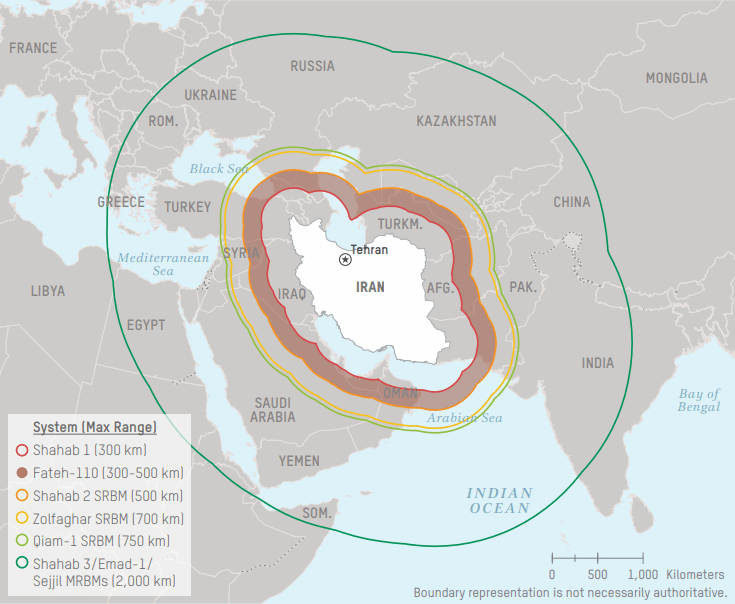


 Aletho News