Riyadh realigns: Tehran over Tel Aviv
The Cradle | July 8, 2025
The recent confrontation between Iran and Israel marked a decisive shift in regional power equations, particularly in the Persian Gulf. Iran’s direct and calibrated military response – executed through the Islamic Revolutionary Guard Corps (IRGC) – exposed the strategic vulnerabilities of Tel Aviv and forced Gulf capitals, chiefly Riyadh, to reassess long-standing assumptions about regional security.
The Saudi-led recalibration did not emerge in isolation. Years of cumulative political, military, and diplomatic failures under the umbrella of US-Israeli tutelage have pushed Persian Gulf states to seek more viable, non-confrontational security arrangements. What we are witnessing is the slow dismantling of obsolete alliances and the opening of pragmatic, interest-driven channels with Tehran.
Iran’s war strategy resets Gulf expectations
Tehran’s handling of the latest military clash – with its reliance on precision strikes, regional alliances, and calibrated escalation – demonstrated a new level of deterrence. Using its regional networks, missile bases, and sophisticated drones, Tehran managed the confrontation very carefully, avoiding being drawn into all-out war, but at the same time sending clear messages to the enemy about its ability to deter and expand engagement if necessary.
The message to the Gulf was clear: Iran is neither isolated nor vulnerable. It is capable of shaping outcomes across multiple fronts without falling into full-scale war.
Speaking to The Cradle, a well-informed Arab diplomat says:
“This war was a turning point in the Saudi thinking. Riyadh now understands Iran is a mature military power, immune to coercion. Traditional pressure no longer works. Saudi security now depends on direct engagement with Iran – not on Israel, and certainly not under the receding American security umbrella.”
At the heart of Saudi discontent lies Tel Aviv’s escalating aggression against the Palestinians and its outright dismissal of Arab peace initiatives, including the Riyadh-led 2002 Arab Peace Initiative. Israeli Prime Minister Benjamin Netanyahu’s intransigence – particularly the aggressive expansion of settlements in Jerusalem and the occupied West Bank – has alarmed the Saudis.
These provocations not only sabotage diplomatic efforts but strike at the kingdom’s pan-Islamic legitimacy, forcing a reassessment of Israel’s utility as a strategic partner. As the diplomatic source notes:
“This Israeli political stalemate pushes Saudi Arabia to reconsider its regional bets and view Iran as a regional power factor that cannot be ignored.”
Riyadh turns to Tehran: containment over confrontation
Behind closed doors, Saudi Arabia is advancing a strategy of “positive containment” with Iran. This marks a clear departure from the era of proxy wars and ideological hostility. Riyadh is no longer seeking confrontation – it is seeking coordination, particularly on issues of regional security and energy.
Diplomatic sources inform The Cradle that the reopening of embassies and stepped-up security coordination are not mere side effects of Chinese mediation. They reflect a deeper Saudi conviction: that normalization with Israel yields no meaningful security dividends, especially after Tel Aviv’s exposed vulnerabilities in the last war.
Riyadh’s new path also signals its growing appetite for regional solutions away from Washington – a position increasingly shared by other Persian Gulf states.
For its part, the Islamic Republic is moving swiftly to convert military leverage into political capital. Beyond showcasing its missile and drone capabilities, Iran is now actively courting Arab states of the Persian Gulf with proposals for economic cooperation, regional integration, and the construction of an indigenous security architecture.
Informed sources reveal to The Cradle that Iran is pursuing comprehensive engagement with Saudi Arabia, the UAE, Qatar, and Oman. This includes economic partnerships and alignment on key regional files, from Yemen to Syria and Iraq.
Tehran’s position is consistent with its long-stated view: The Persian Gulf’s security must be decided by its littoral states and peoples – not by foreign agendas.
A new Gulf alliance is taking shape
This is no longer a Saudi story alone. The UAE is expanding economic cooperation with Tehran, while maintaining open security channels. Qatar sustains a solid diplomatic line with Iran, using its credibility to broker key regional talks. Oman remains the region’s trusted bridge and discreet mediator.
An Arab diplomat briefed on recent developments tells The Cradle :
“Upcoming Gulf–Iran meetings will address navigation in the Strait of Hormuz, energy coordination, and broader regional files. There is consensus building that understanding with Iran [will] open the door to a more stable phase in the Gulf.”
Amid these realignments, Israel finds itself regionally sidelined – its project to forge an anti-Iran axis has crumbled. The US-brokered Abraham Accords – once trumpeted as a strategic triumph – now elicit little more than polite disinterest across the Gulf, with even existing Arab signatories walking back their engagement.
Riyadh’s political elite now openly question the utility of normalization. As Tel Aviv continues its war on Gaza, Gulf populations grow more vocal and Saudi leaders more cautious.
The Saudi position is unspoken but unmistakable: Tel Aviv can no longer guarantee security, nor can it be viewed as the gatekeeper to regional stability any longer.
Pragmatism trumps ideology
This Saudi–Iranian thaw is not ideological – it is hard-nosed realpolitik. As another senior Arab diplomat tells The Cradle :
“Riyadh is discarding illusions. Dialogue with neighbors – not alliance with Washington and Tel Aviv – is now the route to safeguarding Saudi interests. This is now about facts, not old loyalties. Iran is now a fixed component of the Gulf’s security equation.”
The binary of “Gulf versus Iran” is fading. The last war accelerated a trend long in motion: the collapse of Pax Americana and the emergence of multipolar regionalism. The Gulf is charting a new course – one less beholden to US-Israeli diktats.
Today, Saudi Arabia sees Tehran not as a threat to be neutralized, but as a power to be engaged. Regional security frameworks are being built from within. Israel, meanwhile, despite its many pontifications about a Tel Aviv-led, Arab-aligned “Middle East,” is struggling to stay relevant.
If these dynamics hold, we are on the cusp of a historic transition – one that may finally allow the Persian Gulf to define its own security and sovereignty, on its own terms.
This is not an ideal future. But it is a strategic upgrade from decades of subservience. Saudi Arabia is turning toward Iran – not out of love, but out of logic.
US must rebuild trust for diplomacy to resume, says Iran’s FM
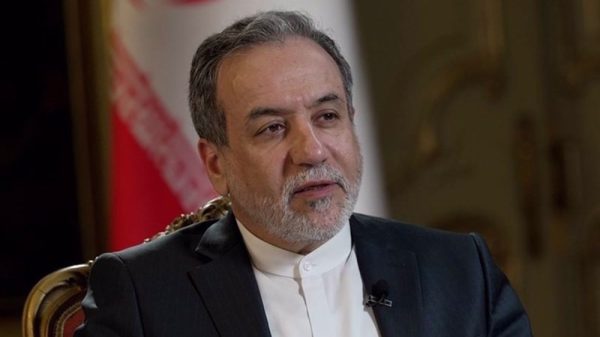
Iranian Foreign Minister Abbas Araghchi
Press TV – July 8, 2025
Iran’s foreign minister has issued a call for the United States to revive diplomacy following a breakdown in indirect talks, warning that further engagement will only be possible if Washington demonstrates a genuine commitment to a fair resolution.
“Iran remains interested in diplomacy, but we have good reason to have doubts about further dialogue,” Abbas Araghchi wrote in an article published by the Financial Times. “If there is a desire to resolve this amicably, the US should show genuine readiness for an equitable accord.”
The foreign minister referred to his five rounds of talks with US special envoy Steve Witkoff, saying that the two sides had made progress in those meetings.
According to Araghchi, discussions covered sensitive issues, including Iran’s uranium enrichment program and a potential end to US sanctions, with proposals from both sides and mediation by Oman.
The talks, he suggested, could have laid the foundation for an economic partnership potentially worth trillions, offering Iran development opportunities while addressing US President Donald Trump’s ambitions to revive struggling US industries.
But, Araghchi said, hopes for a breakthrough were shattered when Israel launched an unprovoked assault on Iran just 48 hours before a planned sixth round of talks in a move to derail diplomatic progress.
“Israel prefers conflict over resolution,” he wrote, arguing that the bombardment was not about stopping Iran from developing nuclear weapons but about sabotaging dialogue.
Araghchi reaffirmed that Iran remains committed to the Nuclear Non-Proliferation Treaty (NPT) and operates under UN monitoring.
He warned that while Iran seeks to prevent a wider regional war, its restraint should not be mistaken for weakness.
“We will defeat any future attack on our people,” he said, cautioning that Iran would reveal its true defensive capabilities if provoked again.
Araghchi placed the blame for the collapse of the talks on “an ostensible ally of America” and on Washington for its “fateful decision” to join in the strikes, thereby violating international law and the NPT framework.
While noting recent messages from US intermediaries suggesting a possible return to the table, Araghchi questioned whether Tehran could trust any future American overtures, citing the US withdrawal from the 2015 nuclear deal and Iran’s experience of being attacked during active negotiations.
“Negotiations held under the shadow of war are inherently unstable, and dialogue pursued amid threats is never genuine,” he wrote.
Still, Araghchi stopped short of closing the door entirely.
Iran, he insisted, remains interested in diplomacy, but only if it is based on mutual respect and free from external sabotage.
The top diplomat warned that Washington’s continued alignment with Israel risks dragging the US into another costly and avoidable conflict in the region.
“The American people deserve to know that their country is being pushed towards a wholly avoidable and unwarranted war by a foreign regime that does not share their interests,” Araghchi wrote, in reference to Israeli influence in Washington.
He ended with a stark choice for the United States: “Will the US finally choose diplomacy? Or will it remain ensnared in someone else’s war?”
Benjamin Netanyahu Is Coming to Town Again
Will Donald Trump surrender or will Bibi resort to a false flag?
By Philip Giraldi • Unz Review • July 4, 2025
Benjamin Netanyahu is on his way for his third visit to Washington during the first six months of the second term of President Donald Trump. Bibi requested the visit because he clearly wants something and he never likes to hear anyone tell him “No!” The American Jewish community and the state of Israel working together are already mustering their substantial resources to give the Prime Minister anything he wants, whatever that might be. If necessary, the so-called Israel Lobby, which controls many aspects of what is referred to colloquially as the United States Government, has a unique ability to lay down a serious guilt trip on anyone who tries to interfere with their prerogatives. Their ability to persuade is frequently based on repeated invocations of a semi-mythical event called the “holocaust,” which has been and will continue to be a burden on all the rest of humanity forever.
Many Jews have consequently successfully turned themselves into something like caricatures, where they are always the victims of an irrational hatred and therefore are entitled to extraordinary measures to protect themselves. Indeed, it all means that whatever happens that involves either Jews or Israel will ipso facto grant a “license to kill” in response to ensure that there will be “never again.” South African journalist Ilana Mercer describes the current process succinctly: “Israel’s ‘strategic perspective’ requires everywhere and always an enemy. This designated enemy will be tarnished by a blood libel, an abstraction: he, she or they will be said to be antisemitic, baying for Jewish blood. This blood libel ignores the truth, because when facts and reality are scrutinized, it’s Arabs that are being exterminated daily en masse, with western grants of government privilege, not Israelis. You have to hand it to Israel. It has positioned itself as the world’s cross, a curse that every individual not Jewish-Israeli is born into and must carry like an albatross.”
It is too bad that Netanyahu will be landing in Washington, where his arrival will no doubt be protected by the battalions of soldiers brought into the Capital two weeks ago to march down Constitution Avenue in their celebration of Vietnam War draft dodger Donald Trump’s birthday. If Bibi were to land in New York he just might be arrested on the warrant issued by the International Criminal Court. The Democratic candidate for New York mayor Zohran Mamdani has the Israeli Lobby and assorted Jewish identity groups hounding him relentlessly in part because he is a Muslim but also because he declared that if he is elected mayor he would arrest Netanyahu if/when he showed up in the city. The declaration had me and others cheering but we also wished that there were some mechanism for also arresting Genocide Joe Biden and Antony Blinken. Presumably Donald Trump, another genocide enabler, is untouchable except by impeachment as he is in office, which is a shame as he and his own batch of war criminals to match those around Biden richly deserve a bit of hard time.
Some journalists are speculating that while at the White House, Trump will pressure Netanyahu to agree to a new sixty day truce in Gaza, but Bibi is unlikely to have asked for the meeting if he thought he might be trapped into stopping the killing of Palestinians. I have my own theory about why Netanyahu will be in Washington and apart from the part where he has his butt kissed by Trump and four hundred bought-and-paid-for congressmen, it won’t be pretty. You see, Bibi wants to establish Israeli hegemony “from the rivers to the sea,” which means from the Euphrates, Litani and Nile rivers and all along the seafront with the Mediterranean. That will require regime change in Iran eliminating that nation as an adversary but the recent short war against the Iranians has made it clear that Israel cannot do it alone unless it goes nuclear, which would do possibly fatal damage to Tel Aviv’s ability to deal with the rest of the world and could easily mean the de facto end of the Jewish state. So he has to convince a gullible Donald Trump to do it for him and is prepared to lie effusively about the threat posed by Iran to make that happen.
Obviously, the problem confronting Netanyahu is that Iran really does not pose any threat to the United States or, indeed, even to Israel if the Israelis were willing to cease their quest for dominance and regional expansion. So he will have to make something up, which admittedly he has a great deal of experience in doing. But what will happen if Trump does not take the bait, whatever that will turn out to be? Will Trump Riviera Resort Gaza be enough to sway the New York Real Estate man who is pretending to be the President of the United States? I rather think that Netanyahu will have several possible schemes in reserve if he runs into a wall in Washington, including false flag operations plausibly blamed on Iran that will kill a lot of Americans to get across the message that the Iranians pose a real danger to the United States.
To be sure, Israel has demonstrated that it is not shy and will not hesitate to kill Americans when its own interests suggest a need for extreme measures, witness the deliberate killing of 34 US Navy sailors on the USS Liberty in 1967 and the recent deaths of US citizens in Gaza which the American government has done nothing about. Israel knows it can get away with murder, both figuratively and literally, and even though the American people might be sick of the slaughter of Palestinians the Israel Lobby knows that it has the support of both Congress and the media no matter what it does.
I rather think that what Israel will do will rely on the White House’s apparent belief that renewing war with Iran will result in attacks on some of the many US bases in the Persian Gulf region. As Iran is not likely to want to carry out that kind of escalation, Israel might decide to do the job itself but leaving evidence behind that it was Iran or an Iranian proxy that carried it out. Israel has many active agents run by Mossad throughout the region, as was evident in the assassinations of senior Iranian government officials and scientists together with their entire families back when the first phase of the so-called “twelve day war” began with an Israeli attack back a month ago. So Israel will blow up an American base or two and then loudly proclaim that the deed was done by Iran to get revenge for the US bombing of the Natanz, Isfahan and Fordow nuclear facilities.
Or if one really wants to explore options on the dark side, Israel might decide to really float the false flag, so it just might use one of its own nukes to do the job, embellishing the tale by pointing out that the blast was clear evidence of the claim that Iran had and still has a secret nuclear weapons program. Clowns in congress like Lindsey Graham, Tom Cotton and Ted Cruz will immediately take up the cry and loudly call for revenge. Trump will be unable to resist, or at least that is what Netanyahu will be thinking, and if a nuke was used on an American base the willingness to reciprocate in kind will be overwhelming in Washington. As both Bibi and the Donald have several times recommended that the 10 million plus folks living in Iran’s capital Tehran should evacuate their homes, it is, in my opinion, quite possible that both Israel and the US have in any event been thinking of going nuke for some time. So, if all goes well for Bibi they will get what they want, i.e. regime change in a devastated Iran and the end of the Iranian challenge to Israel. Let us hope that instead of that outcome, Trump will be listening to his better angel, if he has one, and Netanyahu will be rebuffed and will go home with his tail between his legs next week!
Philip M. Giraldi, Ph.D., is Executive Director of the Council for the National Interest, a 501(c)3 tax deductible educational foundation (Federal ID Number #52-1739023) that seeks a more interests-based U.S. foreign policy in the Middle East. Website is councilforthenationalinterest.org, address is P.O. Box 2157, Purcellville VA 20134 and its email is inform@cnionline.org.
Rep. Marjorie Taylor Greene is fed up with U.S. support for Israel and more wars
If Americans Knew | July 3, 2025
Marjorie Taylor Greene, aka MTG, is a MAGA Republican and the U.S. representative for Georgia’s 14th congressional district since 2021.
Excerpts taken from Rep. Marjorie Taylor Greene’s appearance on The Tucker Carlson Show (June 27, 2025):  • Marjorie Taylor Greene: AIPAC, NYC’s Futur…
Path to peace lies beneath our feet; strength will not bring true peace: Chinese foreign minister
Global Times | July 5, 2025
Chinese Foreign Minister Wang Yi on Friday criticized the notion of “might makes right,” questioning where rules and justice stand under such logic at a joint press conference in Paris with his French counterpart Jean-Noel Barrot. “Strength will not bring true peace; it may well open ‘Pandora’s box’. How should countries lacking strength, especially small and medium-sized ones, find their place? Are they to be laid out on the table, left at the mercy of others?” said Wang.
Wang, also a member of the Political Bureau of the CPC Central Committee, is visiting Europe from June 30 to July 6, at the invitation of High Representative for Foreign Affairs and Security Policy of the EU Kaja Kallas, Federal Foreign Minister of Germany Johann Wadephul, and Minister for Europe and Foreign Affairs of France Jean-Noel Barrot.
Responding to questions about China’s stance on the Iran nuclear issue and the current situation in the Middle East, Wang said that the Iran nuclear issue could have been a model for resolving international disputes through dialogue and negotiation. However, it has now triggered a new round of crisis in the Middle East. Despite hearing the knock of peace, the door to peace remains shut. China deeply regrets this outcome and believes there are profound lessons to be learned.
Wang reiterated China’s clear and consistent position on the Iran nuclear issue. “We value the repeated public commitments made by Iranian Supreme Leader that Iran will not develop nuclear weapons, and we also respect Iran’s right, as a signatory to the Treaty on the Non-Proliferation of Nuclear Weapons (NPT), to the peaceful use of nuclear energy,” he said.
Based on this, relevant parties should accelerate negotiations to reach a new international agreement on resolving the Iran nuclear issue, placing Iran’s nuclear activities fully under the strict supervision and safeguards of the International Atomic Energy Agency, Wang said.
He emphasized that the path to peace lies beneath our feet, and history will question the sincerity of all parties involved.
The Chinese foreign minister said that military conflicts between Israel and Iran should not be repeated as war cannot resolve the Iran nuclear issue, and preemptive strikes lack legitimacy. The excessive use of force will only escalate conflict and breed more animosity, warning that the US’s brazen bombing of a sovereign country’s nuclear facilities has set a dangerous precedent and if it leads to a nuclear disaster, the entire world will bear the consequences.
Wang also emphasized that the genuine resolution of the Iran nuclear issue cannot ignore the core issue in the Middle East, which is the Palestinian question. The humanitarian disaster in Gaza must not be allowed to continue. The Palestinian issue must no longer be marginalized. The legitimate aspirations of the Arab nation should be fulfilled as soon as possible, and the just voices of the broader Islamic world must be given due attention.
The “two-state solution” remains the only realistic path to resolving the chaos in the Middle East, and the international community should take more concrete and effective action to support this goal, Wang said.
Wang called for China and France, both as permanent members of the UN Security Council, to uphold justice and take responsibility by supporting conflict resolution through dialogue and negotiation, opposing double standards, and basing their positions on the merits of the matter itself. The UN and its Security Council should play their due role in promoting peace. China is willing to work with France to make unremitting efforts toward these goals.
Russia warns of Israeli ‘war party’ seeking to reignite aggression against Iran
Press TV – July 4, 2025
Russia has warned about various Israeli officials’ efforts to trigger the resumption of aggression against Iran.
Foreign Minister Sergei Lavrov made the remarks during a press conference alongside his visiting Saudi counterpart Faisal bin Farhan in Moscow on Friday.
“We sincerely hope that the so-called 12-day war is indeed over,” the Russian top diplomat said.
He was referring to the Israeli regime’s launching attacks against the Islamic Republic’s nuclear, military, and civilian targets on June 13. The assaults claimed the lives of at least 935 Iranians, including senior military officials and nuclear scientists, the latter group being targeted inside their residential buildings.
The Islamic Republic responded with decisive defensive maneuvers and counterstrikes, hitting critically sensitive nuclear, military, and industrial infrastructure across the occupied Palestinian territories. The retaliation forced the regime to request a ceasefire.
Lavrov, however, warned, “We intend to stay vigilant, as the ‘war party’ remains highly active in the Middle East.”
“We keep hearing a variety of statements from some representatives of the Israeli leadership,” he added, suggesting that those officials were persistently agitating for the resumption of aggression against the Islamic Republic.
Iran has, on many occasions since the cessation of the attacks, cautioned that its next reprisal against potential renewed aggression would be of far more intensity and magnitude to the extent that it would take Tel Aviv and its allies by surprise.
‘European states role in war’
Elsewhere in his remarks, Lavrov criticized some European states’ “aggressive” anti-Iranian efforts, which saw them force the International Atomic Energy Agency (IAEA)’s Board of Governors to issue its most recent anti-Iranian resolution.
He pointed out how the European countries “unnecessarily and aggressively pushed through anti-Iranian resolutions, which did nothing to ease tensions or advance negotiations, but instead created a pretext for forceful measures.”
The Israeli regime used the resolution as a pretext to launch the war. The resolution was also used by the United States, the regime’s biggest ally, as a plea to join it in attacking Iran towards the end of the warfare.
“I sincerely hope that European nations will come to recognize their responsibility and their share of the blame,” Lavrov said.
For his part, the Saudi foreign minister also underlined that differences with the Islamic Republic had to be resolved through diplomatic processes.
‘Israel’ establishes 10th military outpost in Syria
Al Mayadeen | July 3, 2025
“Israel’s” occupation forces have constructed a new forward military outpost within Syrian territory, marking the tenth such site since the fall of then-President Bashar al-Assad’s control, according to Israeli media outlet i24.
The i24 report states that these outposts are distributed between two positions on Mount Hermon and eight across the occupied Syrian Golan Heights. The latest position was reportedly completed on Tuesday.
The 7006th Battalion of the Israeli military is responsible for building and maintaining this latest outpost, as part of broader efforts to entrench “Israel’s” military presence in the occupied territories.
Consistent Israeli-Syrian engagement
According to a report by Axios, “Israel” is engaging with Syria through at least four communication channels. These include Tzachi Hanegbi, the national security advisor to Prime Minister Benjamin Netanyahu; David Barnea, director of the Mossad; Foreign Minister Gideon Sa’ar; and ongoing military coordination through the Israeli army.
Al-Sharaa reportedly held a covert meeting with senior Israeli intelligence officials in the United Arab Emirates earlier this year, marking a dramatic departure from Syria’s historic rejection and refusal to submit to “Israel”.
Moreover, a source cited by i24NEWS reported that the April 13 meeting in Abu Dhabi was mediated by the UAE and attended by top Israeli representatives from the Mossad, National Security Council, and IOF intelligence.
Additionally, previous reports have indicated that Netanyahu is interested in initiating negotiations for a broader security agreement with Syria, which could serve as a preliminary step toward a comprehensive “peace” accord.
New outposts signal long-term Israeli occupation
On a related note, earlier in March this year, The New York Times reported that the Zionist regime is entrenching its military presence in Syria and Lebanon by building a network of outposts and infrastructure that signaled a potential long-term occupation of neighboring lands.
Satellite imagery, eyewitness accounts, and UN sources confirm the establishment of fortified positions, roads, surveillance towers, and military housing in illegally occupied lands. In the Syrian town of Jubata al-Khashab, heavy machinery has been spotted alongside new barriers and defensive walls, underscoring the scale of the ongoing land grab.
The Israelis moved aggressively to fortify their hold in Syria, establishing at least nine outposts across the south. Citing distrust in Syria’s newly formed government, Tel Aviv expanded its reach into formerly demilitarized zones, backed by continued airstrikes.
Even though Al-Sharaa reaffirmed Damascus’ commitment to the 1974 cease-fire, Netanyahu dismissed the agreement, declaring it void and calling for the “complete demilitarization” of southern Syria.
Time for Qatar to review its hosting of US Al Udeid military air base
By Thembisa Fakude | MEMO | July 3, 2025
The assassination of one of the highest-ranking Generals and the Commanders of Al Quds Force – part of the Islamic Revolutionary Guard Corp (IRGC) – Qasem Soleimani, opened an unprecedented form of conflict in the Gulf region. Soleimani was killed in Iraq on 3 January 2020 by an US drone strike in Iraq, while travelling to meet Iraqi Prime Minister Adil Abdul Mahdi. Iran retaliated by targeting the US military facilities in Iraq, it fired more than a dozen ballistic missiles at two Iraqi air bases housing US forces days after the assassination. According to The Times of Israel, Israel helped the US in that operation.
The leader of Hamas, Ismail Haniyeh was killed by Israel in Tehran after attending the inauguration of the President of Iran Masoud Pezeshkian. Another pure violation of the sovereignty of Iran and international law. The killing of Haniyeh in July 2024 came on the heels of the attack and killing of a number of Iranian diplomats at the embassy of Iran in Damascus, Syria on 01 April 2024. Israel – with the support of the US – has continued to assassinate Iranian officials at will inside Iran.
Qatar had joint military operations with the US during the Operation Desert Storm in Iraq in 1991. After the operation, Qatar and the US signed a Defence Cooperation Agreement. The agreement was expanded in 1996 to include the building of Al Udeid Military Air Base at a cost of more than $1 billion. The Al Udeid Military Air Base is the largest US military base in the Middle East. Iran attacked Al Udeid in retaliation to the US’s attacks of Iranian nuclear sites in Fordo, Natanz and Esfahan in Iran in June 2025. Although the retaliation strikes were downplayed by the US and Qatar, the attacks seemed to have been carefully choreographed, exposing a new fault line in US-Qatar military cooperation.
The question in the minds of most Qataris is; what will happen next time when the US decides to attack Iran, will Iran retaliate by attacking Qatar again? Notwithstanding the repeated mantra of “a friendly, brotherly love and appreciation” between Qatar and Iran, the biggest threat to Qatar’s security and political stability now and in the near future is a possible war between Israel and the US against Iran. The targeting of Iran by Israel and the US presents a new security threat in the region.
Al Udeid has served as “a symbol of protection for the State of Qatar against potential attacks and other forms of hostilities”. However, when put to the test, Al Udeid has failed to meet those expectations. Besides the recent Iran attacks of the US military installations in Al Udeid; when Saudi Arabia, UAE, Bahrain and Egypt led a blockade against Qatar in 2017, there was no forewarning from the US notwithstanding Al Udeid’s superior military intelligence. According to the Qatari Defence Minister, Khalid al Attiyah, “Actually it was not a mere intention. There was a plan to invade Qatar”. The “plan was set into two phases, imposing the siege with the aim of creating an overall state of panic, which would have a direct impact on the Qatari street, then executing a military invasion”.
The possible future conflicts involving the US and Iran have raised serious concerns about the safety of US assets and personnel in the region. It has also triggered a debate, particularly within the US media, of the viability and rationale of the country’s continued involvement in Israel’s wars in the region. The Make America Great Again (MEGA) leading supporters such as the executive chairman of Breitbart News, Stephen Banon and right-wing journalist and social media influencer Tucker Carlson have questioned “the US continuing blind support Israel’s wars in the Middle East”. Tucker Carlson a known Trump supporter and a right-wing voice has been the loudest. He has been “urging the US to stay out of Israel’s war with Iran”. Bannon and Carlson are part of a broader effort to overturn the “GOP’s hawkish consensus on Israel”. Notwithstanding his unwavering support of Israel, Trump has been critical of Benjamin Netanyahu war mongering strategy in the region. Trump has entered into lucrative business relationships with countries in the Arab/Persian Gulf recently; Netanyahu stands to disturb that relationship. The US and the United Arab Emirates (UAE) have agreed to turn Abu Dhabi “to a site of the largest artificial intelligence campus outside the US”. The US will allow “the UAE to import half a million Nvidia semiconductor chips, considered the most advanced in the world in the artificial intelligence products”. According to The Guardian, Saudi Arabia struck a similar deal of semiconductors, obtaining the promise of the sale of hundreds of thousands of Nvidia Blackwell chips to Humain, an AI start-up owned by the Saudi Sovereign Wealth Fund. Indeed, given these interests and the strengthening relationship between the US and the Gulf countries, the US has much more to lose if it continues to blindly support Israel’s wars.
The relationship between Iran and the State of Qatar is very strong, both countries share gas exploration sites in the South Pars/North Dome. They are the gas condensate fields located in the Arabian/Persian Gulf. They are by far the world’s largest natural gas fields. There is also the people to people relationship between Qatar and Iran dating back to time immemorial. The next attack of Iran by the US or Israel could escalate and spread the war to Qatar. Although the US managed to move its assets from Al Udeid to other locations in Qatar before Iran’s attacks last month, the question remains. What guarantees do Qatar have that in future Iran would not target those locations? There is a possibility that if attacked Iran will once again retaliate. What will happen then? The retaliatory attacks could go beyond a mere violation of Qatar’s airspace and sovereignty; it could also cost Qatari lives. The State of Qatar has to take serious decisions regarding Al Udeid if it wants to maintain its future relationship with Iran and other countries in the region. It must close Al Udeid. It has more valid reasons to do that now. The threat has morphed in the region. Consequently, new defence infrastructure needs to be considered by Qatar. Al Udeid presents more political and diplomatic challenges than opportunities.
Iran unity foils West plans for regime change: Responsible Statecraft

Al Mayadeen | July 1, 2025
Washington is now looking into dividing Iran, with neo-conservative think tanks openly promoting the Balkanization of Iran, a strategy that is bound to destabilize Iran and the region, according to Responsible Statecraft on Tuesday.
United States foreign policy has a troubling tendency to promote the fragmentation of nations it deems adversarial.
Now, neoconservative think tanks like the Foundation for Defense of Democracies (FDD) and their allies in the European Parliament are openly pushing for Iran’s disintegration, a reckless strategy that would further destabilize the Middle East, trigger catastrophic humanitarian crises, and provoke fierce resistance not only from Iranians but also from US partners in the region.
Think tanks push for fragmentation based on ethnicity
Amid the war “Israel” waged on Iran in mid-June, FDD analyst Brenda Shaffer posited that Iran’s ethnically diverse population structure presented an exploitable strategic weakness.
According to Responsible Statecraft, Shaffer advocated for the disintegration of Iran along ethnic divisions, drawing parallels to the breakup of Yugoslavia, while concentrating significant efforts on fostering separatist movements in Iranian Azerbaijan, home to Iran’s largest ethnic minority group, the Azeris. However, she consistently failed to acknowledge her ties to the Azeri state oil company SOCAR.
Her position mirrors a recent Jerusalem Post editorial that, during the initial wave of triumphalism following “Israel’s” strikes in this month’s war on Iran, urged Trump to publicly endorse the dismemberment of Iran.
The editorial specifically advocated for forming a “Middle East coalition for Iran’s partition” while proposing “security guarantees for Sunni, Kurdish and Balochi minority regions seeking independence,” in addition to previously endorsing US and Israeli support for the secession of northwestern Iran’s Azeri-majority areas referred to as “South Azerbaijan” from Iran.
Popular uprising or scenarios for regime change?
Meanwhile, a foreign affairs spokesperson representing a centrist liberal faction within the European Parliament organized a discussion forum titled “The Future of Iran,” which while framed as an examination of potential pathways for what they termed a “successful” uprising against the current Iranian government, appeared to focus primarily on scenarios for regime change.
The panel’s composition featured only two Iranian speakers, both ethnic separatists from Azerbaijan and Ahwaz, revealing the organizer’s true agenda: promoting regime change.
Since unilaterally cutting ties with Iran’s official institutions in 2022, the European Parliament has become a platform for fringe exiled groups. These include monarchists, the controversial MEK (Mujahedin-e Khalq), and ethnic separatists, all of whom now operate with growing visibility in EU political spaces.
Delusions of division
What these think tanks and organizations forget, Responsible Statecraft highlighted, is that Iran is not a fragile country on the brink of collapse; it is a 90-million-strong country with a deep sense of historical and cultural identity.
While the proponents of the Balkanization of Iran focus on the ethnicities in Iran, they underestimate the unifying effect of Iranian nationalism on these diverse groups.
Shervin Malekzadeh, a scholar who recently wrote in the Los Angeles Times, observed that academic research overwhelmingly recognizes Iranian politics as fundamentally rooted in a profound, enduring national identity.
This identity transcends the country’s internal ideological divides, which means Iran’s political dynamics unfold within this unifying framework of nationalism, which has shaped all major factions, from monarchists to Islamists to leftists.
Foreign pressure only made Iran more united
Moreover, decades of foreign pressure, sanctions, covert ops, and war have only hardened Iran’s unity, making the separatist approach dangerously naive; this approach, pushed heavily by pro-“Israel” neocons, already failed in Iraq and Syria, leaving chaos instead of victory.
This approach further demonstrates its advocates’ glaring disregard for actual conditions, as seen with Shaffer, a leading proponent of Azerbaijani irredentism, who even applauded Israeli strikes on Tabriz, the cultural and economic center of Iranian Azerbaijan.
Beyond being morally reprehensible, this strategy fundamentally misreads Iran’s domestic realities, with Shaffer and like-minded advocates operating under the flawed assumption that increased external pressure on Tehran would spark rebellions among Azeris and other minority groups against the central government.
Contrary to separatist expectations, “Israel’s” recent attack produced the same rally-around-the-flag effect seen across Iran, demonstrating how deeply Iranian Azerbaijanis are woven into the national fabric, as evidenced by the fact that both the country’s highest officials, Iranian Leader Sayyed Ali Khamenei and President Massoud Pezeshkian, are of Azeri heritage.
From the War of the Cities to True Promise 3: Iran’s ballistic program and the path to networked deterrence
By Abbas Al-Zein | The Cradle | June 28, 2025
Under a regional sky long dominated by US and Israeli air and intelligence superiority, Iran made a fateful decision decades ago. It would not attempt to match its adversaries tank-for-tank or plane-for-plane, but would instead build an asymmetric deterrent from scratch.
Rather than chase the mirage of classical military parity, Tehran developed an indigenous ballistic missile arsenal that is now the largest and most formidable in West Asia. This was no short-term, tactical gambit. Iran’s missile doctrine was forged in an existential struggle, refined over war and siege, and ultimately transformed into a cornerstone of national defense policy.
The War of the Cities: Birth under siege (1980–1988)
The first phase of Iran’s missile journey began in the crucible of the devastating Iran–Iraq War, specifically during the infamous “War of the Cities.” As the Baathist government in Baghdad launched Soviet-supplied Scud-B missiles deep into Iranian urban centers, it did so under the protective umbrella of western intelligence and funding from Arab states of the Persian Gulf. The intent was clear: to break Iranian civilian morale through systematic terror from the sky.
Caught without a missile deterrent of its own, besieged diplomatically, and encircled by western-aligned forces, Iran turned to whatever resources it could muster. It secured limited quantities of Scud-B missiles from Libya, Syria, and North Korea. These early acquisitions, modest as they were, formed the embryonic core of a deterrent force placed under the direct command of the Islamic Revolutionary Guard Corps (IRGC).
But these were more than mere missiles. They were weapons of national dignity in a war for survival for the nascent Islamic Republic. Iran’s leadership came to view missile capability not simply as a tactical asset, but as a psychological and political necessity.
Military historian Pierre Razoux notes in The Iran-Iraq War (2014) that it was during this phase that Iran’s leadership came to the unshakable conclusion: without a retaliatory missile force, no psychological or strategic deterrence was possible.
The Iranian response was neither ad hoc nor passive. Alongside importing missiles, Iranian engineers began dismantling, studying, and maintaining the systems. They built smuggling networks, circumvented embargoes, and reverse-engineered technology.
North Korea emerged as a critical partner, acting as a conduit for Soviet missile know-how. A 2010 RAND Corporation report titled Iran’s Ballistic Missile Capabilities: A Net Assessment noted that Iran had become capable not only of replicating but also of redesigning and expanding missile technology independently. Between 2000 and 2010, Iran pivoted from mass production to innovation, prioritizing accuracy, range, and operational readiness.
The foundations of Iran’s ballistic doctrine were thus laid: sovereignty through technological independence, and defense through deterrence.
From imitation to innovation (1989–2009)
With the Imposed War over, Iran’s military establishment—spearheaded by the IRGC—began restructuring its defense priorities. The goal was no longer just to have missiles but to produce them independently and on a large scale.
At the heart of this transformation was the late martyred Brigadier General Hassan Tehrani Moghaddam, a strategic thinker and technical mastermind hailed as the ‘father of Iran’s missile program.’ He understood that deterrence was not about launching missiles, but about mastering their lifecycle: production, concealment, deployment, and precision.
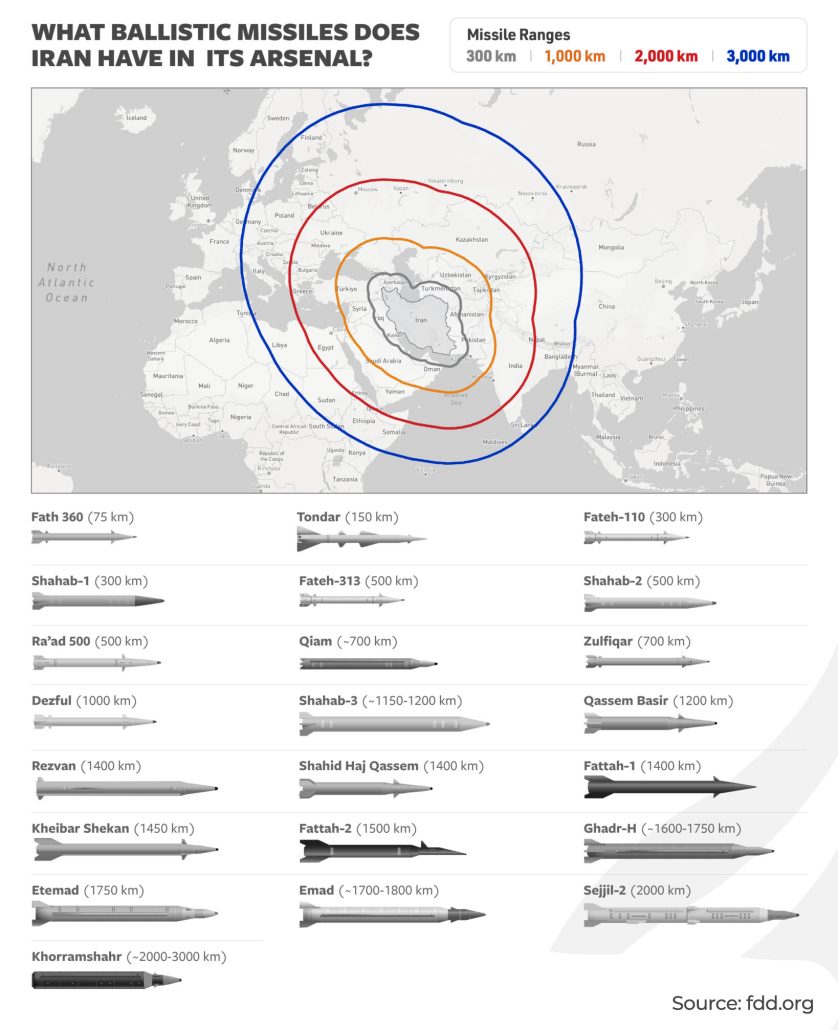
Under his leadership, Iran transitioned from a user to a manufacturer. The Shahab-1 and Shahab-2 were enhanced variants of the Scud-B and Scud-C. But the real breakthrough came in 2003 with the Shahab-3, boasting a range exceeding 1,300 kilometers—a capability that placed US bases in the Persian Gulf and occupied Palestine within striking distance. The Shahab lineage would later give way to the Ghadr class, with better range and multiple warhead capabilities.
The most significant leap, however, came with the adoption of solid-fuel propulsion. The Sejjil missile (2,000–2,500 km range), unveiled by the end of the 2000s, was Iran’s first medium-to-long-range system not reliant on Scud technology. It signaled a new era of technological self-sufficiency and rapid-launch capability.
During this phase, Iran undertook sweeping strategic steps: adopting solid-fuel for easier storage and rapid deployment, establishing underground and mobile launch facilities to avoid detection, building decentralized manufacturing to reduce vulnerability to strikes, and integrating missile research into academic institutions to develop a domestic cadre of experts.
A 2010 report by the International Institute for Strategic Studies (IISS) titled Iran’s Ballistic Missile Capabilities: A Net Assessment noted that by this stage, Iran had moved beyond simply replicating foreign missile systems and had begun designing its own through local R&D and systematic redesign, including the establishment of underground manufacturing. From 2000 to 2010, Iran’s program pivoted decisively from quantity to quality, enhancing range, precision, and operational readiness.
When Moghaddam was killed in a suspicious explosion at the “Defenders of the Sky” base in November 2011, Iran declared it a national loss. While Israel neither confirmed nor denied responsibility, the Yediot Aharonot newspaper reported that “some assessments” indicated that the blast was “the result of a military operation based on intelligence information.”
Nevertheless, his legacy endured. He had not merely built a weapons system; he had established a sustainable missile doctrine rooted in adaptability and local expertise. His death marked the end of one era, but it also catalyzed the birth of Iran’s next missile generation.
Smart missiles and precision strikes (2010–2020)
By the 2010s, Iran’s goal had shifted from mass deterrence to precision deterrence. Engineers focused on guidance systems using inertial navigation paired with domestic GPS and anti-jamming technologies. The result was a suite of short- and medium-range guided missiles with enhanced tactical utility.
This generation included the Zolfaghar (750 km), the highly precise and compact Fateh-313 designed for preemptive strikes, and the Qiam—Iran’s first finless missile, engineered for stealth and maneuverability.
Iran also entered the low-altitude cruise missile domain, developing systems such as the Soumar (with a range of over 2,000 km) and Hoveizeh (with a range of 1,350 km), both capable of evading conventional radar and penetrating advanced air defenses.
These weapons were not theoretical. In June 2017, Iran launched six medium-range missiles from its territory targeting ISIS command centers in Deir Ezzor, Syria—its first operational cross-border use since the 1980s.
In January 2020, in direct retaliation for the US assassination of IRGC Quds Force General Qassem Soleimani, Iran struck the Ain al-Asad base in Iraq with Qiam and Fateh missiles. Satellite imagery showed sub-five-meter accuracy, hitting aircraft hangars and troop shelters. The New York Times described it as one of the most accurate missile strikes on a US facility in modern history.
This decade marked Iran’s shift from “deterrent” missiles to “executive” missiles—systems where political power was expressed through precision. It was no longer about maximum range, but maximum effect. The missile became a scalpel, not a hammer, paving the way for Iran’s most advanced deterrent doctrine yet.
The rise of networked deterrence (2021–2023)
By the 2020s, Iranian missiles were no longer stand-alone assets. They had become the final phase of a broader, integrated offensive system. Missiles now worked in tandem with kamikaze drones, electronic warfare units, cyber surveillance, and decentralized command structures. This was networked deterrence: a synchronized, multi-domain approach designed to penetrate and paralyze advanced air defense systems.
Under this doctrine, Iran developed new missiles tailored for layered operations. The Kheibar Shekan hypersonic missile (1,450 km, 500 kg warhead), most recently deployed in a multi-warhead configuration during Operation True Promise III against the occupation state, exemplifies this evolution.
Other critical systems include the Khorramshahr-4 (over 2,000 km), Raad-500 (solid-fuel, rapid launch), Zolfaghar Basir (optically guided, 1,000+ km), and Haj Qassem (1,400 km, 500 kg warhead)—all integral to Iran’s expanding offensive architecture.
By 2023, Iran fielded around 30 missile systems with ranges spanning 200 to 2,500 km. These systems, guided by jam-resistant platforms and launched from mobile or underground sites, were designed to render preemptive strikes both difficult and strategically ineffective.
From blueprint to battlefield: True Promise 3 (2024–2025)
In June, Iran operationalized its full deterrent in True Promise III, a massive retaliatory strike against the occupation state and its US backers. Triggered by Israeli aggression and building on limited predecessors, the operation was a turning point. It marked the battlefield culmination of four decades of Iranian missile doctrine.
What distinguished True Promise III was not just the firepower but the integration. Iran coordinated ballistic strikes, drone swarms, and electronic attacks into a single operational framework. For the first time, the world witnessed the seamless fusion of Iran’s missile and drone capabilities in a real war scenario.
The outcome upended assumptions in Washington and Tel Aviv. The missiles that struck deep into Israeli territory were not just instruments of reprisal. They were shields for the program itself—offensive deterrents capable of defending Iran’s retaliatory power by disabling enemy assets before they could act. The strike was not just a response; it was a preemption of the enemy’s preemption.
None of this can be divorced from Iran’s nuclear posture. The ballistic and nuclear programs may appear distinct, but they operate on the same doctrinal axis. The nuclear program symbolizes sovereignty; the missile program enforces it. Together, they dismantled the western fantasy that Israel could neutralize Iran’s deterrent capacities in a single blow.
That era is over. Iran’s missile shield is no longer just a threat. It is a reality, already in motion.
Who Destroyed Four World Trade Center Buildings?
Tales of the American Empire | June 19, 2025
On September 11 2001, FOUR World Trade center buildings in New York were suddenly destroyed. We are told that no one could imagine that terrorists could knock down the two World Trade Center towers, even though Israeli prime minister Benjamin Netanyahu predicted this in his 1995 book. He warned the U.S. Congress this may happened unless the United States joined a war to expand Israel by destroying what he called terror states. Even before the smoke cleared on 9-11, the plotters blamed Osama bin Laden to block investigations into their weak official story.
Note: YouTube demonetized this video claiming “violence throughout”, even though there is no graphic violence, just some collapsing buildings often shown on television.
_____________________________________________________
“Bin Laden says he wasn’t behind attacks”; CNN; September 17, 2001; https://edition.cnn.com/2001/US/09/16…
Related Tale: “The Empire’s Fake War on Terror”; • The Empire’s Fake War on Terror
Related Tale: “Osama Bin Laden WAS NOT Responsible for 9/11”; • Osama Bin Laden WAS NOT Responsible for 9/11
“U.S. Military Knows Israel Did 9/11 – Dr. Alan Sabrosky”; Augustus Berg; Bitchute; June 30, 2023; https://www.bitchute.com/video/Vsf4v1…
“9/9 and 9/11, 20 Years Later”; Pepe Escobar; Unz.com; September 9, 2021; https://www.unz.com/pescobar/9-9-and-…
Related Tale: “The 1993 FBI Bombing in New York; • The 1993 FBI Bombing in New York
“9/11 Conspiracy Theory Explained in 5 Minutes”; James Corbett; 2022; • 9/11 Conspiracy Theory Explained in 5 Minutes
“”The 9/11 Commission Was A FRAUD” – Curt Weldon EXPOSES CIA Cover-Up, Able Danger & Deleted Evidence”; PBD Podcast; YouTube; May 14, 2025; • “The 9/11 Commission Was A FRAUD” – Curt W…
“Rep. Curt Weldon: It’s Time to Finally Tell the Truth About 9-11”; Tucker Carlson; YouTube; April 14, 2025; • Rep. Curt Weldon: It’s Time to Finally Tel…
Featured Video

Israelis SUDDENLY Mass Deported From Many Countries
or go to
Aletho News Archives – Video-Images
From the Archives
Elite Western universities are a corrupt, parasitic empire
Instead of high-quality education, these institutions are fostering a global neo-feudal system reminiscent of the British Raj
By Dr. Mathew Maavak | RT | May 30, 2025
In a move that has ignited a global uproar, US President Donald Trump banned international students from Harvard University, citing “national security” and ideological infiltration. The decision, which has been widely condemned by academics and foreign governments alike, apparently threatens to undermine America’s “intellectual leadership and soft power.” At stake is not just Harvard’s global appeal, but the very premise of open academic exchange that has long defined elite higher education in the US.
But exactly how ‘open’ is Harvard’s admissions process? Every year, highly qualified students – many with top-tier SAT or GMAT test scores – are rejected, often with little explanation. Critics argue that behind the prestigious Ivy League brand lies an opaque system shaped by legacy preferences, DEI imperatives, geopolitical interests, and outright bribes. George Soros, for instance, once pledged $1 billion to open up elite university admissions to drones who would read from his Open Society script.
China’s swift condemnation of Trump’s policy added a layer of geopolitical irony to the debate. Why would Beijing feign concern for “America’s international standing” amid a bitter trade war? The international standing of US universities has long been tarnished by a woke psychosis which spread like cancer to all branches of the government.
So, what was behind China’s latest gripe? ... continue
Blog Roll
Recent Comments
seversonebcfb985d9 on Villains of Judea: Philip Esfo… loongtip on Report warns that ‘Jewish terr… Craig Nelms on New study shows that toxic gas… loongtip on A Funny Thing Happened on the… loongtip on EU free trade pact on hold as… John Edward Kendrick on Regime Change In Iran Is The F… Bill Francis on Australia Passes New Hate Spee… seversonebcfb985d9 on Australia Passes New Hate Spee… Bill Francis on Britain’s AI Policing Plan Tur… loongtip on Miami Beach Resident Questione… loongtip on Israeli agricultural export co… loongtip on The War On Free Speech In Aust…


 Aletho News
- American Academy of Pediatrics Hit With Federal RICO Lawsuit for Vaccine Safety Fraud
- Mom Tells Trump: Dumping Sewage Sludge on Farmland Won’t Make America Healthy Again
- NIAID Funds Gain-of-Function Study Engineering Novel Influenza Viruses
- Villains of Judea: Philip Esformes and the Largest Healthcare Fraud in American History
- US sanctions Popular Conference for Palestinians Abroad over alleged Hamas links
- You reap what you sow: Ukraine’s blackout is Zelensky’s failure
- Ukraine Blackouts Caused by Zelensky’s Terrorist Attacks on Russia
- Orban Hits Out at EU Green Light for $1.5 Trillion Ukraine Aid
- World has had enough of confused clowns: Araghchi to Zelensky
- Jordan using Israeli software to monitor journalists, rights defenders: Report
- If Americans Knew
- Oppose Israel’s Abuses While You Still Can
- UNRWA Heads Tell Ha’aretz: ‘We Don’t Radicalize Palestinians – Their Lived Existence Does’
- Plans Call for “New Rafah” Built in Israel’s Image — Without Palestinians
- Posing as priest, reporter is spat at many times, highlighting anti-Christian sentiment in Israel
- Leaked Documents: “Planned Community” in Rafah Would Force Palestinians Into Israeli Panopticon
- ‘Permits of Humiliation’: How Israel Strangles Christian Education in Jerusalem
- “The world sees death, destruction and injustice – and they see dollar signs” – Not a ceasefire Day 105
- War criminal Netanyahu kills 11 in Gaza, joins Board of Peace – Not a ceasefire Day 104
- Another baby dies of cold in Gaza, as Rafah crossing remains locked down – Not a ceasefire Day 103
- Brutal Beatings, Arson, and Impunity: A Palestinian Plant Nursery Becomes a Target for Settler Pogroms
- No Tricks Zone
- New Study: Sea Levels Rose 20 Times The Modern Rate During The Roman Warm Period
- As German Gas Storage Dips Dangerously Low…Shortage Hardly Avoidable
- New Study: Brazil’s Relative Sea Level Was 2+ Meters Higher And SSTs 3-4°C Warmer 6000 Years Ago
- Philosopher Schopenhauer: Climate Science Certainty Stems From Stupidity, Ignorance
- New Study: Species Extinction Rates Declining Since 1980 – ‘Climate Change Is Not An Important Threat’
- Denmark Places Climate Protection Above Animal Welfare, Poisoning And Culling Cows
- New Study: Greenland Was 3-7°C Warmer And Far Less Glaciated Than Today 6000-8000 Years Ago
- German Media Report That Current Frigid Weather Can Be Explained By Arctic Warming!
- Berlin Blackout Shows Germany’s $5 Trillion Green Scheme Is “Left-Green Ideological Pipe Dream”
- Modeling Error In Estimating How Clouds Affect Climate Is 8700% Larger Than Alleged CO2 Forcing
 Aletho News