The UK government has added the political and military branches of Lebanese Hezbollah to its terrorist list following a decision initiated by Home Secretary Sajid Javid and approved by Parliament. Hezbollah, or the “Party of God” is now one of the 74 foreign groups and 14 other groups related to Northern Ireland on the list. Any support to this organisation falls under the Terrorism Act of 2000. In the same act, under the rubric of fund-raising, offences, article 15, it clearly states that any person commits an offence if he invites others to provide money or other property to a proscribed group. Since the General Secretary of Hezbollah Sayed Hassan Nasrallah and the government of Iran both overtly acknowledge the financial, military, technical, intelligence and other social services support that Iran provides to the organisation, a clear question arises for the UK government: Will the Iranian government be included on its terrorism list, or is the UK government ready to violate its own law? What is the real purpose behind the UK decision?
The point is not to identify Hezbollah as a terrorist group. The goal is rather to prevent donations from reaching Hezbollah at a time when Iran is under heavy sanctions meant to limit its cash flow and, consequently, impede its financial support to groups like Hezbollah in Lebanon, the Syrian government, and other groups in Iraq and Yemen. This is what the UK Home Secretary Sajid Javid meant by “secret intelligence” during his last intervention at the House of Commons. Time will tell if this secret intelligence has been correctly understood and will serve the UK’s desired objectives.
The Terrorism Act of 2000, under funding arrangements, article 17 (a) and (b), states as follows: “A person commits an offence if he enters into or becomes concerned in an arrangement as a result of which money or other property is made available or is to be made available to another… that will or may be used for the purposes of terrorism”.
Article 12, under the rubric “Support”, is explicit: “A person commits an offence if he invites support, provision of money for a proscribed organisation, and arranges a meeting to support or encourage support for a proscribed organisation, or participates in a private meeting…”
The text of the articles is unambiguous: anyone who supports or meets with Hezbollah individuals or commanders is subject to a maximum of 10 years of prison. These clauses cannot but apply to Iran, the first and utmost supporter of Hezbollah.
Iranian officials, beginning with Foreign Minister Jawad Zarif, can no longer visitSayed Nasrallah and then go to the UK or meet UK officials without risk of imprisonment, now that the UK officially classifies Hezbollah as a terrorist organisation.
Hezbollah’s yearly budget to operate in Syria and Lebanon and to support any other group with weapons or transfer of expertise is provided by the Iranian government, together with additional funds that Sayed Ali Khamenei provides from donations to the Imam Reza shrine. Thus, in accordance with the 2000 legislation, the UK can be expected to cut its relationship with Iran at once.
Politically speaking, Hezbollah meets in private and overtly with all political leaders of Lebanon. These meetings begin with the Christian President Michel Aoun, the Sunni Prime Minister Saad Hariri, the Shia Speaker Nabih Berri, and the Ministers of Foreign affairs Joubran Basil, Defence Elias bu Saab, Health Jamil Jabq and Finance Ali Hasan Khalil, and most political leaders of the country. This imposes – theoretically – on the UK government the obligation to reject any entry visa to all these politicians and to prevent any meetings with their diplomats after March the 3d, 2019.
What if the UK breaks its own laws and its officials meet with Hezbollah officials or those who hold private meetings with its leaders, in defiance of the UK Terrorism Act of 2000? If this happens, it will be difficult for any UK court to uphold a solid case against any Hezbollah supporter since UK officials regularly meet with their Iranian counterparts, who are responsible for funding Hezbollah.
The “Party of God” has no offices or representatives in any city around the world, even among the millions in the Lebanese community living abroad. Of course, there are thousands of Hezbollah supporters in the Lebanese Diaspora, notably Christians from the Tayyar al-Watani party led by President Aoun and his son-in-law the Foreign Minister Basil. And there are many more supporters among Shia in the diaspora who originate from the south of Lebanon, the Bekaa Valley, Beirut and its suburbs. They have family members or cousins who operate within Hezbollah or at least support the organisation; some of these “Diaspora Shia” have adopted overtly Hezbollah’s cause on their own personal initiative.
Most of these Lebanese consider the cause of Hezbollah as their own because the group defended their Christian villages and cities from al-Qaeda and ISIS when these groups were based on the borders with Lebanon and in the Lebanese city of Arsal, with plans to expand into Lebanon. They consider Hezbollah the only force capable of protecting their homes in the south of Lebanon from any future Israeli aggression, in the face of daily Israeli violations of Lebanese sea, air and ground sovereignty.
There is no doubt that these enthusiastic Lebanese will be the favourite targets of Britain’s domestic security forces who are looking to register “a security achievement” of any kind. The problem was on the table in many cities around the world when Lebanese Shia sought to fulfil their Islamic tithing duty by donating 20% of their year-end profits. According to some Fatwas (Shia are free to follow the highest religious authority in accordance with their understanding of Islam), this 20% can be donated to the “Islamic Resistance”, i.e. Hezbollah. From now on anyone sending money for this Islamic purpose that ends up in Hezbollah coffers must be considered a financer of a terrorist organisation.
This same issue was a serious problem for Lebanese in the USA who were obliged to stop sending money back to Lebanon except for family members. Lebanese communities in many countries voluntarily observed the same restrictions in order to avoid severe penalties or jail in the west, causing a reduction in donations to Hezbollah. Thus, Hezbollah today relies exclusively on Iranian support.
The new measures in the UK do not aim to interfere with Hezbollah’s “non-existent” presence in the West and equally non-existent bank accounts abroad, nor do they aim to close Hezbollah offices that do not exist abroad. The new measures have the goal of tightening the noose around the neck of the community that supports Hezbollah.
The West began this process inside Lebanon by going after Lebanese banks and the accounts of wealthy Shia. Even exchange offices who change Hezbollah’s euros into dollars were included on the terrorist list. Wealthy Shia businessmen who sympathise with Hezbollah and who were involved in projects in Iraq saw their assets frozen by Iraq’s former Prime Minister Haidar Abadi in response to an official US request.
The western measures may succeed in making life more difficult for pro-Hezbollah Christians and Shia around the world. Nevertheless, the majority of Lebanese cannot renounce Hezbollah any more than they can renounce their own families, because Hezbollah is integral to their existence; nor is it confined to their homes and family members. Its ideology of Resistance informs their creed and world view, and this is the case whether or not they believe in Islam.
March 7, 2019
Posted by aletho |
Wars for Israel | Hezbollah, Iran, Lebanon, Middle East, UK |
Leave a comment
I was recently asked to participate and give a presentation at a closed, and invitation-only, conference in Washington, DC, on February 6th, 2019. The topic was: “Strategic Implications of Recent US Decisions on Syria”. I attended the conference and gave a presentation. The following is a summary of some of the things I said.
Upon my introduction, I informed the audience that I hold dual nationality, Syrian by birth and American by choice. In over five decades of academic work, I was always plagued by a nightmare of a war between the US and Syria, my two countries; unfortunately, this eventually become a reality. However, I should qualify; the ongoing war in Syria is not between the US and Syria, for there is no conflict between the Syrians and the Americans. It is a war waged by Washington against Syria in the service of Israel and some regional powers; Washington is waging a proxy war on Syria.
I briefly introduced Syria and its historic and religious importance. Syria is the cradle of civilization and home of the three monotheistic religions, where they started or flourished. I also reminded the audience that Syria is an archeological treasure; of the five oldest and continually inhabited cities, three are in Syria: Aleppo, the oldest, Damascus, the third and Latakia, the fifth. Following this introduction, I moved to the subject of the conference, dividing it into two sub topics:
- Trump Decisions to serve American interests in Syria; and
- Strategic Implications for Syria.
1. Trump’s Decisions
The first important decision taken by Trump was the establishment of the Zionist band in his administration made of five senior officials responsible for the formulation of American foreign policy. At no time in American history has there been such a concentration of Zionist power in the top echelon of a presidential administration. At the top of the Zionist band is Trump, the Commander-in-Chief; followed by Jared Kushner, his son in law and senior advisor; then comes John Bolton, national security advisor, Mike Pompeo, the Secretary of State, David Friedman, US Ambassador to Israel and lastly, the recently departed US Ambassador to the UN, ‘Nikki’ Haley. The formation of this Zionist band has had an adverse effect on Syria with further negative implications for Arabs and Muslims.
As for decisions to serve specific American interests in Syria, the White House, and a variety of American officials, have emphasized four American interests in the ongoing crisis in Syria: fight terrorism, protect the Kurds, roll back and contain Iran and Israel’s security.
Regarding the American ‘War on Terrorism’; people worldwide are skeptical of the American contention of waging a war on terrorism. When the uprising began in Syria in March 2011, America, and its regional allies, activated their many sleeper cells and opened their borders for swarms of tens of thousands of terrorists from all over the world to descend upon Syria. Once in, they were organized, equipped and financed to start their mission of rampage for ‘Regime Change’ and to render Syria a failed state. The plan failed and the terrorists became superfluous and a burden. They had to be eliminated and thus the American War on Terrorism in Syria which will conclude soon, says Trump.
As for the Kurds, they are Syrian citizens, who may have been discriminated against at one time or another. With the Syrian uprising, some of the Kurds were seduced by Washington. Unfortunately for them, and for Syria, they took the American bait. Washington will eventually drop them; it has already started the process with Israeli acquiescence. Israel originally supported the Kurdish plan to establish an autonomous state in the Arab region which would legitimize the existence of a Jewish state in the region. However, in view of the ongoing normalization process between Israel and some Arab states, a Kurdish state has become superfluous. Ultimately, Kurds will return to the Syrian fold where they belong. The modern history of the Kurds is victimization, partly due to their own doing; they are divided, prone to making bad decisions and ‘bit more than they can chew’. I recall a meeting I had with a politically active Kurdish group at the start of the Syrian uprising. After a brief introduction, the leader of the group unfolded a map of Kurdistan and put it on the table. I looked at the map and I was shocked at its contents. The western part of Kurdistan on the map, the Syrian Hasakah province, a northeastern province of Syria, in which the Kurds are a minority, was renamed ‘West Kurdistan’. I remember remarking that West Kurdistan is Syria’s Hasakah province, Syrian territory. The leader’s answer was “it is no more Syrian”. The Kurds, some of whom are relatively newcomers to Syria escaping Turkish mistreatment during the early decades of the last century, are a component of the Syrian society. For the Kurds to have special consideration in a united and unitary Syria may be possible, but secession or autonomy are fantasies.
The last two presumed American interests in Syria, rolling back and containing Iran and securing Israel, are interconnected. As for rolling back and containing Iran, it is to prevent Iran from establishing a land corridor connecting Iran with Iraq, Syria and Lebanon. In 2004 King Abdullah of Jordan warned the Arabs of the development of such a corridor and dubbed it a ‘Shiite Crescent’, a rather unfortunate provocative sectarian concept. It should be noted that most of this land corridor is known since ancient times as the Fertile Crescent. An appropriate name for the Shiite Crescent could have been the Levant Crescent or better yet, the Levant Cooperation Council, similar to the Gulf Cooperation Council, a pact of four states, Iran, Iraq, Syria and Lebanon facing common domestic, regional and international threats.
While the misnamed Shiite Crescent has been well covered and debated among Western intellectual, political, and military circles, another developing crescent, the Zionist Crescent, has escaped conversation and debate. The essence of the Zionist Crescent is the neutralization of Egypt to the West of Israel, Syria to the North and Iraq to the East, the three major historic Arab centers of power, which form a crescent around Israel and constitute the thrust of security threats to Israel. Egypt, the first segment of the Zionist Crescent, was neutralized in the 1979 peace treaty with Israel. Iraq, the second segment, was neutralized during the American invasion in 2003. Israel hoped Syria, the last segment of the Crescent, will be neutralized during the uprising in Syria; it was not to be.
Washington claims that rolling back and containing Iran and Israeli security constitute essential American interests; they are not – they are, essentially, Israeli interests. Washington is merely an instrument to serve Israeli interests and even potentially wage a war against Iran in the service of Israel, a la the invasion of Iraq in 2003. Iran is not a threat to America but could conceivably be a threat to Israel. However, Israel and behind it Washington, constitute a clear and present danger to Iran.
2. Strategic Implications for Syria
The original plan Washington and its allies sought was regime change and if successful, Syria a mosaic of religious, sectarian, and ethnic components, would become a failed state divided into Sunni, Alawite, Druse and Kurdish substates fighting continuous wars. Thus, the completion of the third and last segment of the Zionist Crescent. The plan failed, thanks to the persistence of the Syrian leadership, the Syrian people, and the help of genuine allies, Russia and Iran. Syria lives and the third segment of the Zionist Crescent is void, for the time being.
March 5, 2019
Posted by aletho |
Ethnic Cleansing, Racism, Zionism, Timeless or most popular, Wars for Israel | Israel, Middle East, Syria, United States, Zionism |
Leave a comment
The Palestinian Authority described last week’s Warsaw Summit as a US-Israeli conspiracy; US Secretary of State Mike Pompeo claimed that the Palestinians are “worse off” because of their absence. This prompted the Secretary General of the Palestine Liberation Organisation to ask if anyone could explain how the people of Palestine are “worse off” by not going to Warsaw.
“Can someone explain this to me?” asked Saed Erekat. “Is the art of negotiations to put the other side in a position where they have nothing to lose?”
Meanwhile, in an opinion piece published yesterday, Erekat penned some notable falsehoods, including this: “Despite the imperialist fantasies of the Trump team, the whole of Palestine remains close in the heart of every Arab, and is not going to fade away.”
The normalisation of relations between Arab countries and Israel was, of course, implicit in the summit and clear for all to see. Did the veteran PLO official not notice that? Why is he squandering Palestine away by stressing its importance to external actors rather than to the Palestinians themselves?
It is not possible to describe the summit as a US-Israeli conspiracy while excluding those countries which did participate — Arab states amongst them — from criticism and scrutiny simply so that you can write an opinion piece replete with statements that do not reflect the politics of the Palestinian Authority. Erekat has claimed that Arab countries will continue to prioritise Palestine, yet there is nothing to substantiate his argument. The Arab Peace Initiative actually includes normalising relations with Israel if the two-state compromise is achieved. It does not demand an end to the colonisation of Palestine; hence, its implementation holds more prospects for Israel than it does for the Palestinians.
The PA’s decision to refrain from participating in Warsaw was not a principled stance but a retaliatory action after the Trump administration implemented measures that exposed its inherent limitations. It is only now that it finds itself verging on political non-existence that the PA is attempting to connect its rhetoric to Palestinian collective memory. However, it is doing so from a compromised existence and framework that jeopardises Palestinian lives. The PA’s decisions which led to further loss of territory and displacement will not be cancelled out just because it is now important, in order to safeguard itself, for it to display a facade of being at one with the Palestinians it has tortured, imprisoned and exploited, while collaborating with the international community over the elusive two-state paradigm.
Refusing to partake in compromise due to not having any other option does not eliminate the PA’s compromised existence. PA leader Mahmoud Abbas stated recently that he will continue security coordination with Israel as it is a “joint agreement to fight terrorism.” If that obligation is eliminated, he insisted, “nothing will remain.” In upholding Israel’s security narrative against legitimate Palestinian resistance, Abbas is extending his “sacred” compromise with Israel and the US.
The PA has no foundation upon which it can differentiate between one compromise and another. Palestinians have not “lost” anything with the PA’s decision to boycott Warsaw. However, this is just one conference that stands out due to US President Donald Trump’s overt support for Israel, as well as Israeli Prime Minister Benjamin Netanyahu’s apparently welcome overtures to Arab states. The damage created by Oslo unravelled any possibilities for Palestinian autonomy and the PA’s insistence on seeking international support while lacking consensus among Palestinians due to marginalising the people from the political process must be counted as a loss, though, and one which the PA is not willing to even attempt to rectify.
March 4, 2019
Posted by aletho |
Ethnic Cleansing, Racism, Zionism | Israel, Middle East, Palestine, Zionism |
Leave a comment
WASHINGTON – The United States military deployed a Terminal High Altitude Area Defense (THAAD) anti-ballistic missile battery to Israel, European Command (EUCOM) said in a statement on Monday.
“At the direction of the Secretary of Defense, US European Command deployed a THAAD system to Israel in early March,” the statement said.
The move is intended to demonstrate the United States’ ongoing commitment to Israel’s security, the statement added.
As part of the deployment, US service members will work in different locations in Israel to help local military forces align their existing air and missile defence architecture with the THAAD system.
The exercise will allow the US military to incorporate key capabilities stationed in the country and Europe with its partners in the Israeli military, EUCOM said.
The THAAD system, considered one of the most advanced in the world, will be added to the existing Israeli air defence. The latter currently includes the Iron Dome, designed to shoot down short-range rockets and the Arrow system.
Commenting on the exercise, IDF Spokesperson Brig.-Gen. Ronen Manelis specified the US anti-ballistic missile battery would be deployed in the south of the country and that about 200 American servicemen would participate in the drills.
March 4, 2019
Posted by aletho |
Ethnic Cleansing, Racism, Zionism, Militarism | Israel, Middle East, Palestine, United States |
Leave a comment
This is a slightly revised version of essay that originally appeared in CounterPunch in December 2002.
Since the long-forgotten days when the State Department’s Middle East policy was run by a group of so-called Arabists, U.S. policy on Israel and the Arab world has increasingly become the purview of officials well known for tilting toward Israel. From the 1920s roughly to 1990, Arabists, who had a personal history and an educational background in the Arab world and were accused by supporters of Israel of being totally biased toward Arab interests, held sway at the State Department and, despite having limited power in the policymaking circles of any administration, helped maintain some semblance of U.S. balance by keeping policy from tipping over totally toward Israel. But Arabists have been steadily replaced by their exact opposites, what some observers are calling Israelists, and policymaking circles throughout government now no longer even make a pretense of exhibiting balance between Israeli and Arab, particularly Palestinian, interests.
In the Clinton administration, the three most senior State Department officials dealing with the Palestinian-Israeli peace process were all partisans of Israel to one degree or another. All had lived at least for brief periods in Israel and maintained ties with Israel while in office, occasionally vacationing there. One of these officials had worked both as a pro-Israel lobbyist and as director of a pro-Israel think tank in Washington before taking a position in the Clinton administration from which he helped make policy on Palestinian-Israeli issues. Another has headed the pro-Israel think tank since leaving government.
The link between active promoters of Israeli interests and policymaking circles is stronger by several orders of magnitude in the Bush administration, which is peppered with people who have long records of activism on behalf of Israel in the United States, of policy advocacy in Israel, and of promoting an agenda for Israel often at odds with existing U.S. policy. These people, who can fairly be called Israeli loyalists, are now at all levels of government, from desk officers at the Defense Department to the deputy secretary level at both State and Defense, as well as on the National Security Council staff and in the vice president’s office.
We still tiptoe around putting a name to this phenomenon. We write articles about the neo-conservatives’ agenda on U.S.-Israeli relations and imply that in the neo-con universe there is little light between the two countries. We talk openly about the Israeli bias in the U.S. media. We make wry jokes about Congress being “Israeli-occupied territory.” Jason Vest in The Nation magazine reported forthrightly that some of the think tanks that hold sway over Bush administration thinking see no difference between U.S. and Israeli national security interests. But we never pronounce the particular words that best describe the real meaning of those observations and wry remarks. It’s time, however, that we say the words out loud and deal with what they really signify.
Dual loyalties. The issue we are dealing with in the Bush administration is dual loyalties — the double allegiance of those myriad officials at high and middle levels who cannot distinguish U.S. interests from Israeli interests, who baldly promote the supposed identity of interests between the United States and Israel, who spent their early careers giving policy advice to right-wing Israeli governments and now give the identical advice to a right-wing U.S. government, and who, one suspects, are so wrapped up in their concern for the fate of Israel that they honestly do not know whether their own passion about advancing the U.S. imperium is motivated primarily by America-first patriotism or is governed first and foremost by a desire to secure Israel’s safety and predominance in the Middle East through the advancement of the U.S. imperium.
“Dual loyalties” has always been one of those red flags posted around the subject of Israel and the Arab-Israeli conflict, something that induces horrified gasps and rapid heartbeats because of its implication of Jewish disloyalty to the United States and the common assumption that anyone who would speak such a canard is ipso facto an anti-Semite. (We have a Jewish friend who is not bothered by the term in the least, who believes that U.S. and Israeli interests should be identical and sees it as perfectly natural for American Jews to feel as much loyalty to Israel as they do to the United States. But this is clearly not the usual reaction when the subject of dual loyalties arises.)
Although much has been written about the neo-cons who dot the Bush administration, the treatment of the their ties to Israel has generally been very gingerly. Although much has come to light recently about the fact that ridding Iraq both of its leader and of its weapons inventory has been on the neo-con agenda since long before there was a Bush administration, little has been said about the link between this goal and the neo-cons’ overriding desire to provide greater security for Israel. But an examination of the cast of characters in Bush administration policymaking circles reveals a startlingly pervasive network of pro-Israel activists, and an examination of the neo-cons’ voluminous written record shows that Israel comes up constantly as a neo-con reference point, always mentioned with the United States as the beneficiary of a recommended policy, always linked with the United States when national interests are at issue.
The Begats
First to the cast of characters. Beneath cabinet level, the list of pro-Israel neo-cons who are either policy functionaries themselves or advise policymakers from perches just on the edges of government reads like the old biblical “begats.” Deputy Secretary of Defense Paul Wolfowitz leads the pack. He was a protégé of Richard Perle, who heads the prominent Pentagon advisory body, the Defense Policy Board. Many of today’s neo-cons, including Perle, are the intellectual progeny of the late Senator Henry “Scoop” Jackson, a strong defense hawk and one of Israel’s most strident congressional supporters in the 1970s.
Wolfowitz in turn is the mentor of Lewis “Scooter” Libby, now Vice President Cheney’s chief of staff who was first a student of Wolfowitz and later a subordinate during the 1980s in both the State and the Defense Departments. Another Perle protégé is Douglas Feith, who is currently undersecretary of defense for policy, the department’s number-three man, and has worked closely with Perle both as a lobbyist for Turkey and in co-authoring strategy papers for right-wing Israeli governments. Assistant Secretaries Peter Rodman and Dov Zackheim, old hands from the Reagan administration when the neo-cons first flourished, fill out the subcabinet ranks at Defense. At lower levels, the Israel and the Syria/Lebanon desk officers at Defense are imports from the Washington Institute for Near East Policy, a think tank spun off from the pro-Israel lobby organization, AIPAC.
Neo-cons have not made many inroads at the State Department, except for John Bolton, an American Enterprise Institute hawk and Israeli proponent who is said to have been forced on a reluctant Colin Powell as undersecretary for arms control. Bolton’s special assistant is David Wurmser, who wrote and/or co-authored with Perle and Feith at least two strategy papers for Israeli Prime Minister Netanyahu in 1996. Wurmser’s wife, Meyrav Wurmser, is a co-founder of the media-watch website MEMRI (Middle East Media Research Institute), which is run by retired Israeli military and intelligence officers and specializes in translating and widely circulating Arab media and statements by Arab leaders. A recent investigation by the Guardian of London found that MEMRI’s translations are skewed by being highly selective. Although it inevitably translates and circulates the most extreme of Arab statements, it ignores moderate Arab commentary and extremist Hebrew statements.
In the vice president’s office, Cheney has established his own personal national security staff, run by aides known to be very pro-Israel. The deputy director of the staff, John Hannah, is a former fellow of the Israeli-oriented Washington Institute. On the National Security Council staff, the newly appointed director of Middle East affairs is Elliott Abrams, who came to prominence after pleading guilty to withholding information from Congress during the Iran-contra scandal (and was pardoned by President Bush the elder) and who has long been a vocal proponent of right-wing Israeli positions. Putting him in a key policymaking position on the Palestinian-Israeli conflict is like entrusting the henhouse to a fox.
Pro-Israel activists with close links to the administration are also busy in the information arena inside and outside government. The head of Radio Liberty, a Cold War propaganda holdover now converted to service in the “war on terror,” is Thomas Dine, who was the very active head of AIPAC throughout most of the Reagan and the Bush-41 administrations. Elsewhere on the periphery, William Kristol, son of neo-con originals Irving Kristol and Gertrude Himmelfarb, is closely linked to the administration’s pro-Israel coterie and serves as its cheerleader through the Rupert Murdoch-owned magazine that he edits, The Weekly Standard. Some of Bush’s speechwriters — including David Frum, who coined the term “axis of evil” for Bush’s state-of-the-union address but was forced to resign when his wife publicly bragged about his linguistic prowess — have come from The Weekly Standard. Frank Gaffney, another Jackson and Perle protégé and Reagan administration defense official, puts his pro-Israel oar in from his think tank, the Center for Security Policy, and through frequent media appearances and regular columns in the Washington Times.
The incestuous nature of the proliferating boards and think tanks, whose membership lists are more or less identical and totally interchangeable, is frighteningly insidious. Several scholars at the American Enterprise Institute, including former Reagan UN ambassador and long-time supporter of the Israeli right wing Jeane Kirkpatrick, make their pro-Israel views known vocally from the sidelines and occupy positions on other boards. Probably the most important organization, in terms of its influence on Bush administration policy formulation, is the Jewish Institute for National Security Affairs (JINSA). Formed after the 1973 Arab-Israeli war specifically to bring Israel’s security concerns to the attention of U.S. policymakers and concentrating also on broad defense issues, the extremely hawkish, right-wing JINSA has always had a high-powered board able to place its members inside conservative U.S. administrations. Cheney, Bolton, and Feith were members until they entered the Bush administration. Several lower level JINSA functionaries are now working in the Defense Department. Perle is still a member, as are Kirkpatrick, former CIA director and leading Iraq-war hawk James Woolsey, and old-time rabid pro-Israel types like Eugene Rostow and Michael Ledeen. Both JINSA and Gaffney’s Center for Security Policy are heavily underwritten by Irving Moskowitz, a right-wing American Zionist, California business magnate (his money comes from bingo parlors), and JINSA board member who has lavishly financed the establishment of several religious settlements in Arab East Jerusalem.
By Their Own Testimony
Most of the neo-cons now in government have left a long paper trail giving clear evidence of their fervently right-wing pro-Israel, and fervently anti-Palestinian, sentiments. Whether being pro-Israel, even pro right-wing Israel, constitutes having dual loyalties — that is, a desire to further Israel’s interests that equals or exceeds the desire to further U.S. interests — is obviously not easy to determine, but the record gives some clues.
Wolfowitz himself has been circumspect in public, writing primarily about broader strategic issues rather than about Israel specifically or even the Middle East, but it is clear that at bottom Israel is a major interest and may be the principal reason for his near obsession with the effort, of which he is the primary spearhead, to dump Saddam Hussein, remake the Iraqi government in an American image, and then further redraw the Middle East map by accomplishing the same goals in Syria, Iran, and perhaps other countries. Profiles of Wolfowitz paint him as having two distinct aspects: one obsessively bent on advancing U.S. dominance throughout the world, ruthless and uncompromising, seriously prepared to “end states,” as he once put it, that support terrorism in any way, a velociraptor in the words of one former colleague cited in the Economist; the other a softer aspect, which shows him to be a soft-spoken political moralist, an ardent democrat, even a bleeding heart on social issues, and desirous for purely moral and humanitarian reasons of modernizing and democratizing the Islamic world.
But his interest in Israel always crops up. Even profiles that downplay his attachment to Israel nonetheless always mention the influence the Holocaust, in which several of his family perished, has had on his thinking. One source inside the administration has described him frankly as “over-the-top crazy when it comes to Israel.” Although this probably accurately describes most of the rest of the neo-con coterie, and Wolfowitz is guilty at least by association, he is actually more complex and nuanced than this. A recent New York Times Magazine profile by the Times’ Bill Keller cites critics who say that “Israel exercises a powerful gravitational pull on the man” and notes that as a teenager Wolfowitz lived in Israel during his mathematician father’s sabbatical semester there. His sister is married to an Israeli. Keller even somewhat reluctantly acknowledges the accuracy of one characterization of Wolfowitz as “Israel-centric.” But Keller goes through considerable contortions to shun what he calls “the offensive suggestion of dual loyalty” and in the process makes one wonder if he is protesting too much. Keller concludes that Wolfowitz is less animated by the security of Israel than by the promise of a more moderate Islam. He cites as evidence Wolfowitz’s admiration for Egyptian President Anwar Sadat for making peace with Israel and also draws on a former Wolfowitz subordinate who says that “as a moral man, he might have found Israel the heart of the Middle East story. But as a policy maker, Turkey and the gulf and Egypt didn’t loom any less large for him.”
These remarks are revealing. Anyone not so fearful of broaching the issue of dual loyalties might at least have raised the suggestion that Wolfowitz’s real concern may indeed be to ensure Israel’s security. Otherwise, why do his overriding interests seem to be reinventing Anwar Sadats throughout the Middle East by transforming the Arab and Muslim worlds and thereby making life safer for Israel, and a passion for fighting a pre-emptive war against Iraq — when there are critical areas totally apart from the Middle East and myriad other broad strategic issues that any deputy secretary of defense should be thinking about just as much? His current interest in Turkey, which is shared by the other neo-cons, some of whom have served as lobbyists for Turkey, seems also to be directed at securing Israel’s place in the region; there seems little reason for particular interest in this moderate Islamic, non-Arab country, other than that it is a moderate Islamic but non-Arab neighbor of Israel. Furthermore, the notion suggested by the Wolfowitz subordinate that any moral man would obviously look to Israel as the “heart of the Middle East story” is itself an Israel-centered idea: the assumption that Israel is a moral state, always pursuing moral policies, and that any moral person would naturally attach himself to Israel automatically presumes that there is an identity of interests between the United States and Israel; only those who assume such a complete coincidence of interests accept the notion that Israel is, across the board, a moral state.
Others among the neo-con policymakers have been more direct and open in expressing their pro-Israel views. Douglas Feith has been the most prolific of the group, with a two-decade-long record of policy papers, many co-authored with Perle, propounding a strongly anti-Palestinian, pro-Likud view. He views the Palestinians as not constituting a legitimate national group, believes that the West Bank and Gaza belong to Israel by right, and has long advocated that the U.S. abandon any mediating effort altogether and particularly foreswear the land-for-peace formula.
In 1996, Feith, Perle, and both David and Meyrav Wurmser were among the authors of a policy paper issued by an Israeli think tank and written for newly elected Israeli Prime Minister Netanyahu that urged Israel to make a “clean break” from pursuit of the peace process, particularly its land-for-peace aspects, which the authors regarded as a prescription for Israel’s annihilation. Arabs must rather accept a “peace-for-peace” formula through unconditional acceptance of Israel’s rights, including its territorial rights in the occupied territories. The paper advocated that Israel “engage every possible energy on rebuilding Zionism” by disengaging from economic and political dependence on the U.S. while maintaining a more “mature,” self-reliant partnership with the U.S. not focused “narrowly on territorial disputes.” Greater self-reliance would, these freelance policymakers told Netanyahu, give Israel “greater freedom of action and remove a significant lever of pressure [i.e., U.S. pressure] used against it in the past.”
The paper advocated, even as far back as 1996, containment of the threat against Israel by working closely with — guess who? — Turkey, as well as with Jordan, apparently regarded as the only reliably moderate Arab regime. Jordan had become attractive for these strategists because it was at the time working with opposition elements in Iraq to reestablish a Hashemite monarchy there that would have been allied by blood lines and political leanings to the Hashemite throne in Jordan. The paper’s authors saw the principal threat to Israel coming, we should not be surprised to discover now, from Iraq and Syria and advised that focusing on the removal of Saddam Hussein would kill two birds with one stone by also thwarting Syria’s regional ambitions. In what amounts to a prelude to the neo-cons’ principal policy thrust in the Bush administration, the paper spoke frankly of Israel’s interest in overturning the Iraqi leadership and replacing it with a malleable monarchy. Referring to Saddam Hussein’s ouster as “an important Israeli strategic objective,” the paper observed that “Iraq’s future could affect the strategic balance in the Middle East profoundly” — meaning give Israel unquestioned predominance in the region. The authors urged therefore that Israel support the Hashemites in their “efforts to redefine Iraq.”
In a much longer policy document written at about the same time for the same Israeli think tank, David Wurmser repeatedly linked the U.S. and Israel when talking about national interests in the Middle East. The “battle to dominate and define Iraq,” he wrote “is, by extension, the battle to dominate the balance of power in the Levant over the long run,” and “the United States and Israel” can fight this battle together. Repeated references to U.S. and Israeli strategic policy, pitted against a “Saudi-Iraqi-Syrian-Iranian-PLO axis,” and to strategic moves that establish a balance of power in which the United States and Israel are ascendant, in alliance with Turkey and Jordan, betray a thought process that cannot separate U.S. from Israeli interests.
Perle gave further impetus to this thrust when six years later, in September 2002, he gave a briefing for Pentagon officials that included a slide depicting a recommended strategic goal for the U.S. in the Middle East: all of Palestine as Israel, Jordan as Palestine, and Iraq as the Hashemite kingdom. Secretary of Defense Rumsfeld seems to have taken this aboard, since he spoke at about the same time of the West Bank and Gaza as the “so-called occupied territories” — effectively turning all of Palestine into Israel.
Elliott Abrams is another unabashed supporter of the Israeli right, now bringing his links with Israel into the service of U.S. policymaking on Palestinian-Israeli issues. The neo-con community is crowing about Abrams’ appointment as Middle East director on the NSC staff (where this Iran-contra criminal has already been working since mid-2001, badly miscast as the director for, of all things, democracy and human rights). The Weekly Standard’s Fred Barnes has hailed his appointment as a decisive move that neatly cocks a snook at the pro-Palestinian wimps at the State Department. Accurately characterizing Abrams as “more pro-Israel, less solicitous of Palestinians” than the State Department and strongly opposed to the Palestinian-Israeli peace process, Barnes gloats that the Abrams triumph signals that the White House will not cede control of Middle East policy to Colin Powell and the “foreign service bureaucrats.” Abrams comes to the post after a year in which it had effectively been left vacant. His predecessor, Zalmay Khalilzad, has been serving concurrently as Bush’s personal representative to Afghanistan since the fall of the Taliban and has devoted little time to the NSC job, but several attempts to appoint a successor early this year were vetoed by neo-con hawks who felt the appointees were not devoted enough to Israel.
Although Abrams has no particular Middle East expertise, he has managed to insert himself in the Middle East debate repeatedly over the years. He has a family interest in propounding a pro-Israel view; he is the son-in-law of Norman Podhoretz, one of the original neo-cons and a long-time strident supporter of right-wing Israeli causes as editor of Commentary magazine, and Midge Decter, a frequent right-wing commentator. Abrams has written a good deal on the Palestinian-Israeli conflict, opposing U.S. mediation and any effort to press for Israeli concessions. In an article published in advance of the 2000 elections, he propounded a rationale for a U.S. missile defense system, and a foreign policy agenda in general, geared almost entirely toward ensuring Israel’s security. “It is a simple fact,” he wrote, that the possession of missiles and weapons of mass destruction by Iraq and Iran vastly increases Israel’s vulnerability, and this threat would be greatly diminished if the U.S. provided a missile shield and brought about the demise of Saddam Hussein. He concluded with a wholehearted assertion of the identity of U.S. and Israeli interests: “The next decade will present enormous opportunities to advance American interests in the Middle East [by] boldly asserting our support of our friends” — that is, of course, Israel. Many of the fundamental negotiating issues critical to Israel, he said, are also critical to U.S. policy in the region and “require the United States to defend its interests and allies” rather than giving in to Palestinian demands.
Neo-cons in the Henhouse
The neo-con strategy papers half a dozen years ago were dotted with concepts like “redefining Iraq,” “redrawing the map of the Middle East,” “nurturing alternatives to Arafat,” all of which have in recent months become familiar parts of the Bush administration’s diplomatic lingo. Objectives laid out in these papers as important strategic goals for Israel — including the ouster of Saddam Hussein, the strategic transformation of the entire Middle East, the death of the Palestinian-Israeli peace process, regime change wherever the U.S. and Israel don’t happen to like the existing government, the abandonment of any effort to forge a comprehensive Arab-Israeli peace or even a narrower Palestinian-Israeli peace — have now become, under the guidance of this group of pro-Israel neo-cons, important strategic goals for the United States. The enthusiasm with which senior administration officials like Bush himself, Cheney, and Rumsfeld have adopted strategic themes originally defined for Israel’s guidance — and did so in many cases well before September 11 and the so-called war on terror — testifies to the persuasiveness of a neo-con philosophy focused narrowly on Israel and the pervasiveness of the network throughout policymaking councils.
Does all this add up to dual loyalties to Israel and the United States? Many would still contend indignantly that it does not, and that it is anti-Semitic to suggest such a thing. In fact, zealous advocacy of Israel’s causes may be just that — zealotry, an emotional connection to Israel that still leaves room for primary loyalty to the United States — and affection for Israel is not in any case a sentiment limited to Jews. But passion and emotion — and, as George Washington wisely advised, a passionate attachment to any country — have no place in foreign policy formulation, and it is mere hair-splitting to suggest that a passionate attachment to another country is not loyalty to that country. Zealotry clouds judgment, and emotion should never be the basis for policymaking.
Zealotry can lead to extreme actions to sustain policies, as is apparently occurring in the Rumsfeld-Wolfowitz-Feith Defense Department. People knowledgeable of the intelligence community have said, according to a recent article in The American Prospect, that the CIA is under tremendous pressure to produce intelligence more supportive of war with Iraq — as one former CIA official put it, “to support policies that have already been adopted.” Key Defense Department officials, including Feith, are said to be attempting to make the case for pre-emptive war by producing their own unverified intelligence. Wolfowitz betrayed his lack of concern for real evidence when, in answer to a recent question about where the evidence is for Iraq’s possession of weapons of mass destruction, he replied, “It’s like the judge said about pornography. I can’t define it, but I will know it when I see it.”
Zealotry can also lead to a myopic focus on the wrong issues in a conflict or crisis, as is occurring among all Bush policymakers with regard to the Palestinian-Israeli conflict. The administration’s obsessive focus on deposing Yasir Arafat, a policy suggested by the neo-cons years before Bush came to office, is a dodge and a diversion that merely perpetuates the conflict by failing to address its real roots. Advocates of this policy fail or refuse to see that, however unappealing the Palestinian leadership, it is not the cause of the conflict, and “regime change” among the Palestinians will do nothing to end the violence. The administration’s utter refusal to engage in any mediation process that might produce a stable, equitable peace, also a neo-con strategy based on the paranoid belief that any peace involving territorial compromise will spell the annihilation of Israel, will also merely prolong the violence. Zealotry produces blindness: the zealous effort to pursue Israel’s right-wing agenda has blinded the dual loyalists in the administration to the true face of Israel as occupier, to any concern for justice or equity and any consideration that interests other than Israel’s are involved, and indeed to any pragmatic consideration that continued unquestioning accommodation of Israel, far from bringing an end to violence, will actually lead to its tragic escalation and to increased terrorism against both the United States and Israel.
What does it matter, in the end, if these men split their loyalties between the United States and Israel? Apart from the evidence of the policy distortions that arise from zealotry, one need only ask whether it can be mere coincidence that those in the Bush administration who most strongly promote “regime change” in Iraq are also those who most strongly support the policies of the Israeli right wing. And would it bother most Americans to know that the United States is planning a war against Iraq for the benefit of Israel? Can it be mere coincidence, for example, that Vice President Cheney, now the leading senior-level proponent of war with Iraq, repudiated just this option for all the right reasons in the immediate aftermath of the Gulf War in 1991? He was defense secretary at the time, and in an interview with the New York Times on April 13, 1991, he said:
“If you’re going to go in and try to topple Saddam Hussein, you have to go to Baghdad. Once you’ve got Baghdad, it’s not clear what you will do with it. It’s not clear what kind of government you would put in place of the one that’s currently there now. Is it going to be a Shia regime, a Sunni regime or a Kurdish regime? Or one that tilts toward the Ba’athists, or one that tilts toward the Islamic fundamentalists. How much credibility is that government going to have if it’s set up by the United States military when it’s there? How long does the United States military have to stay to protect the people that sign on for the government, and what happens to it once we leave?”
Since Cheney clearly changed his mind between 1991 and today, is it not legitimate to ask why, and whether Israel might have a greater influence over U.S. foreign policy now than it had in 1991? After all, notwithstanding his wisdom in rejecting an expansion of the war on Iraq a decade ago, Cheney was just as interested in promoting U.S. imperialism and was at that same moment in the early 1990s outlining a plan for world domination by the United States, one that did not include conquering Iraq at any point along the way. The only new ingredient in the mix today that is inducing Cheney to begin the march to U.S. world domination by conquering Iraq is the presence in the Bush-Cheney administration of a bevy of aggressive right-wing neo-con hawks who have long backed the Jewish fundamentalists of Israel’s own right wing and who have been advocating some move on Iraq for at least the last half dozen years.
The suggestion that the war with Iraq is being planned at Israel’s behest, or at the instigation of policymakers whose main motivation is trying to create a secure environment for Israel, is strong. Many Israeli analysts believe this. The Israeli commentator Akiva Eldar recently observed frankly in a Ha’aretz column that Perle, Feith, and their fellow strategists “are walking a fine line between their loyalty to American governments and Israeli interests.” The suggestion of dual loyalties is not a verboten subject in the Israeli press, as it is in the United States. Peace activist Uri Avnery, who knows Israeli Prime Minister Sharon well, has written that Sharon has long planned grandiose schemes for restructuring the Middle East and that “the winds blowing now in Washington remind me of Sharon. I have absolutely no proof that the Bushies got their ideas from him . But the style is the same.”
The dual loyalists in the Bush administration have given added impetus to the growth of a messianic strain of Christian fundamentalism that has allied itself with Israel in preparation for the so-called End of Days. These crazed fundamentalists see Israel’s domination over all of Palestine as a necessary step toward fulfillment of the biblical Millennium, consider any Israeli relinquishment of territory in Palestine as a sacrilege, and view warfare between Jews and Arabs as a divinely ordained prelude to Armageddon. These right-wing Christian extremists have a profound influence on Bush and his administration, with the result that the Jewish fundamentalists working for the perpetuation of Israel’s domination in Palestine and the Christian fundamentalists working for the Millennium strengthen and reinforce each other’s policies in administration councils. The Armageddon that Christian Zionists seem to be actively promoting and that Israeli loyalists inside the administration have tactically allied themselves with raises the horrifying but very real prospect of an apocalyptic Christian-Islamic war. The neo-cons seem unconcerned, and Bush’s occasional pro forma remonstrations against blaming all Islam for the sins of Islamic extremists do nothing to make this prospect less likely.
These two strains of Jewish and Christian fundamentalism have dovetailed into an agenda for a vast imperial project to restructure the Middle East, all further reinforced by the happy coincidence of great oil resources up for grabs and a president and vice president heavily invested in oil. All of these factors — the dual loyalties of an extensive network of policymakers allied with Israel, the influence of a fanatical wing of Christian fundamentalists, and oil — probably factor in more or less equally to the administration’s calculations on the Palestinian-Israeli situation and on war with Iraq. But the most critical factor directing U.S. policymaking is the group of Israeli loyalists: neither Christian fundamentalist support for Israel nor oil calculations would carry the weight in administration councils that they do without the pivotal input of those loyalists, who clearly know how to play to the Christian fanatics and undoubtedly also know that their own and Israel’s bread is buttered by the oil interests of people like Bush and Cheney. This is where loyalty to Israel by government officials colors and influences U.S. policymaking in ways that are extremely dangerous.
Bill Christison was a senior official of the CIA. He served as a National Intelligence Officer and as Director of the CIA’s Office of Regional and Political Analysis. He is a contributor to Imperial Crusades, CounterPunch’s new history of the wars on Iraq and Afghanistan.
Kathleen Christison, a former CIA political analyst, is the author of Perceptions of Palestine: Their Influence on U.S. Middle East Policy and Wound of Dispossession: Telling the Palestinian Story.
March 3, 2019
Posted by aletho |
Ethnic Cleansing, Racism, Zionism, Timeless or most popular, Wars for Israel | Middle East, United States, Zionism |
Leave a comment
The leader of the Houthi Ansarullah revolutionary movement, Sayyed Abdul Malik al- Houthi, on Sunday stressed that the Warsaw conference was a mere announcement of normalizing ties between some Arab regimes and the Zionist entity at the expense of the Palestinian cause.
Sayyed Houthi stressed rejection of this normalization, considering that the Zionist occupation in any Arab area targets the entire Umma.
The Zion-American schemes aim at creating a new enemy for the Arabs he said, adding that media campaigns launched by some Arab regimes against Hezbollah and the Palestinian resistance is the direct result of normalizing ties with the Israeli entity.
Stressing that the Zionist entity is directly involved in the aggression on Yemen, Sayyed Al-Houthi reiterated the Yemeni’s support to the major causes of the Umma.
Yemen has been since March 25, 2015 under aggression by the Saudi-led coalition, which also includes UAE, Bahrain, Egypt, Morocco, Jordan, Sudan and Kuwait, in a bid to restore power to fugitive former president Abdrabbuh Mansour Hadi.
Tens of thousands of Yemenis have been injured and martyred in Saudi-led strikes, with the vast majority of them being civilians.
However, the allied forces of the Yemeni Army and popular committees established by Ansarullah revolutionaries have been heroically confronting the aggression with all means.
March 3, 2019
Posted by aletho |
Ethnic Cleansing, Racism, Zionism | Bahrain, Egypt, Israel, Middle East, Palestine, Saudi Arabia, UAE, Yemen, Zionism |
Leave a comment
In the middle of February 2019, one of the main Israeli newspapers, Haaretz, published an article, which reported that, according to official Israeli statistics, 6.7 million Jews and 6.7 million Arabs lived in Israeli territories (including the occupied Palestinians lands) at the beginning of 2019.
In the eyes of the opposition forces in Israel, these numbers yet again highlight the intensity of the Arab-Israeli conflict, and underscore the need to resolve this issue as quickly as possible using a two-State solution, described in numerous UN documents. It is worth noting at this point that the nation state of Israel itself was born of the decision made by the United Nations Organization, which over the past 70 years has adopted more than 3,000 resolutions on creating two states, an Arab one and a Jewish one in the former Palestinian territory.
Leftist forces in Israel have consistently supported the idea of demography being a key factor, which should compel the Israeli government to find such means of resolving the conflict that will be acceptable to the Palestinian population. Otherwise Israel will embark on a path towards establishing a system of apartheid to control those who live in the Israeli-occupied territories in Palestine.
Another common argument is that birth rates among Palestinians are higher than those in Israel, hence it will become difficult to maintain a Jewish majority in the state in the future.
The situation in Israel ahead of its upcoming legislative elections is far from simple. For instance, Benjamin Netanyahu was even forced to reschedule his visit to Moscow since his political opponents were making serious efforts to ally together in order to weaken his position. But, at the very beginning of the year it seemed that Netanyahu’s victory was assured.
Accordingly, there has been a lot of talk about the so-called deal of the century, meant to resolve the Middle East situation, that the U.S. President Donald Trump promised to publicize in the next few months.
Based on the already available leaks, Palestinians have already, by and large, rejected this plan, as it does not include any mention of East Jerusalem being the capital of the potential Palestinian state, and it almost completely ignores the refugee problem. According to Palestinian sources, Americans would only like to discuss the issue of approximately 40,000 refugees, who have survived the war in 1948, and do not plan on taking into account the fact that the overall number of refugees has increased to 5 million over these years.
It is common knowledge that Donald Trump’s recognition of Jerusalem as the capital of Israel, and the transfer of the American Embassy to this city have caused outrage in the Muslim world.
In light of these developments, on 14 February 2019, the Jerusalem Post reported that the Al-Aqsa Mosque and the Old City of Jerusalem were “too symbolic, holy and sacred for Muslims to allow their leaders to agree to allow Israel to receive legitimization for their control.”
The world today is becoming more and more interdependent and is widely recognized as multi-focal. Although the United States has a prominent place in the international community, it cannot enforce many of its decisions. Paradoxically, Washington’s allies, even if often not very consistently, yet more and more actively, are attempting to defend their own interests and follow their own policies.
The stance taken by a number of nations towards the UN Relief and Works Agency for Palestine Refugees (UNRWA) is noteworthy in this regard. When Americans refused to make a contribution to support the work of this organization, some Asian and European nations compensated for the lacking funds on request from Palestinians.
However, the USA is still striving to marginalize the Palestinian issue to the sidelines of history, by announcing that the key problem facing the Middle East is the fight against Iran. But, the fact that an attempt to unite Israel and several other Arab nations into an alliance against Tehran at the Middle East conference in Warsaw failed makes it reminiscent of an endeavor to portray wishful thinking as reality as, according to our literary giant, “You cannot hitch a trembling doe and horse up to a single carriage”.
Veniamin Popov, Director of the Center for Partnership of Civilizations at MGIMO (Moscow State Institute of International Relations) of the Russian Ministry of Foreign Affairs, Ambassador Extraordinary and Plenipotentiary.
March 3, 2019
Posted by aletho |
Ethnic Cleansing, Racism, Zionism | Israel, Jerusalem, Middle East, Palestine, Zionism |
Leave a comment
Fake news about a terrorist connection could serve as a pretext for war
Observers of developments in the Middle East have long taken it as a given that the United States and Israel are seeking for an excuse to attack Iran. The recently terminated conference in Warsaw had that objective, which was clearly expressed by Israeli Prime Minister Benjamin Netanyahu, but it failed to rally European and Middle Eastern states to support the cause. On the contrary, there was strong sentiment coming from Europe in particular that normalizing relations with Iran within the context of the 2015 multi party nuclear agreement is the preferred way to go both to avoid a major war and to prevent nuclear weapons proliferation.
There are foundations in Washington, all closely linked to Israel and its lobby in the U.S., that are wholly dedicated to making the case for war against Iran. They seek pretexts in various dark corners, including claims that Iran is cheating on its nuclear program, that it is developing ballistic missiles that will enable it to deliver its secret nuclear warheads onto targets in Europe and even the United States, that it is an oppressive, dictatorial government that must be subjected to regime change to liberate the Iranian people and give them democracy, and, most stridently, that it is provoking and supporting wars and threats against U.S. allies all throughout the Middle East.
Dissecting the claims about Iran, one might reasonably counter that rigorous inspections by the United Nations International Atomic Energy Agency (IAEA) confirm that Tehran has no nuclear weapons program, a view that is supported by the U.S. intelligence community in its recent Worldwide Threat Assessment. Beyond that, Iran’s limited missile program can be regarded as largely defensive given the constant threats from Israel and the U.S. and one might well accept that the removal of the Iranian government is a task best suited for the Iranian people, not delivered through military intervention by a foreign power that has been starving the country through economic warfare. And as for provoking wars in the Middle East, look to the United States and Israel, not Iran.
So the hawks in Washington, by which one means National Security Adviser John Bolton, Secretary of State Mike Pompeo and, apparently President Donald Trump himself when the subject is Iran, have been somewhat frustrated by the lack of a clear casus belli to hang their war on. No doubt prodded by Netanyahu, they have apparently revived an old story to give them what they want, even going so far as to develop an argument that would justify an attack on Iran without a declaration of war while also lacking any imminent threat from Tehran to justify a preemptive strike.
What may be the new Iran policy was recently outlined in a Washington Times article, which unfortunately has received relatively little attention from either the media, the punditry or from the few policymakers themselves who have intermittently been mildly critical of Washington’s propensity to strike first and think about it afterwards.
The article is entitled “Exclusive: Iran-al Qaeda alliance May Provide Legal Rationale for U.S. military strikes.” The article’s main points should be taken seriously by anyone concerned over what is about to unfold in the Persian Gulf because it is not just the usual fluff emanating from the hubris-induced meanderings of some think tank, though it does include some of that. It also cites government officials by name and others who are not named but are clearly in the administration.
As an ex-CIA case officer who worked on the Iran target for a number of years, I was shocked when I read the Times’ article, primarily because it sounded like a repeat of the fabricated intelligence that was used against both Iraq and Iran in 2001 through 2003. It is based on the premise that war with Iran is desirable for the United States and, acting behind the scenes, Israel, so it is therefore necessary to come up with an excuse to start it. As the threat of terrorism is always a good tactic to convince the American public that something must be done, that is what the article tries to do and it is particularly discouraging to read as it appears to reflect opinion in the White House.
As I have been writing quite critically about the CIA and the Middle East for a number of years, I am accustomed to considerable push-back from former colleagues. But in this case, the calls and emails I received from former intelligence officers who shared my experience of the Middle East and had read the article went strongly the other way, condemning the use of both fake and contrived intelligence to start another unnecessary war.
The article states that Iran is supporting al Qaeda by providing money, weapons and sanctuary across the Middle East to enable it to undertake new terrorist attacks. It is doing so in spite of ideological differences because of a common enemy: the United States. Per the article and its sources, this connivance has now “evolved into an unacceptable global security threat” with the White House intent on “establishing a potential legal justification for military strikes against Iran or its proxies.”
One might reasonably ask why the United States cares if Iran is helping al Qaeda as both are already enemies who are lying on the Made in U.S.A. chopping block waiting for the ax to fall. The reason lies in the Authorization to Use Military Force, originally drafted post 9/11 to provide a legal fig leaf to pursue al Qaeda worldwide, but since modified to permit also going after “associated groups.” If Iran is plausibly an associated group then President Trump and his band of self-righteous maniacs egged on by Netanyahu can declare “bombs away Mr. Ayatollah.” And if Israel is involved, there will be a full benediction coming from Congress and the media. So is this administration both capable and willing to start a major war based on bullshit? You betcha!
The Times suggests how it all works as follows: “Congressional and legal sources say the law may now provide a legal rationale for striking Iranian territory or proxies should President Trump decide that Tehran poses a looming threat to the U.S. or Israel and that economic sanctions are not strong enough to neutralize the threat.” The paper does not bother to explain what might constitute a “looming threat” to the United States from puny Iran but it is enough to note that Israel, as usual, is right in the middle of everything and, exercising its option of perpetual victim-hood, it is apparently threatened in spite of its nuclear arsenal and overwhelming regional military superiority guaranteed by act of the U.S. Congress.
Curiously, though several cited administration officials wedded to the hard-line against Iran because it is alleged to be the “world’s leading state sponsor of terrorism” were willing to provide their opinions on the Iran-al Qaeda axis, the authors of the recent Worldwide Threat Assessment issued by the intelligence community apparently have never heard of it. The State Department meanwhile sees an Iranian pipeline moving al Qaeda’s men and money to targets in central and south Asia, though that assessment hardly jives with the fact that the only recent major attack attributed to al Qaeda was carried out on February 13th in southeastern Iran against the Iranian Revolutionary Guard, a bombing that killed 27 guardsmen.
The State annual threat assessment also particularly condemns Iran for funding groups like Hezbollah and Hamas, both of which are, not coincidentally, enemies of Israel who would care less about “threatening” the United States but for the fact that it is constantly meddling in the Middle East on behalf of the Jewish state.
And when in doubt, the authors of the article went to “old reliable,” the leading neocon think tank the Foundation for the Defense of Democracies, which, by the way, works closely with the Israeli government and never, ever has criticized the state of democracy in Israel. One of its spokesmen was quick off the mark: “The Trump administration is right to focus on Tehran’s full range of malign activities, and that should include a focus on Tehran’s long-standing support for al Qaeda.”
Indeed, the one expert cited in the Times story who actually is an expert and examined original documents rather than reeling off approved government and think tank talking points contradicted the Iran-al Qaeda narrative. “Nelly Lahoud, a former terrorism analyst at the U.S. Military Academy and now a New America Foundation fellow, was one of the first to review documents seized from bin Laden’s hideout in Abbottabad, Pakistan. She wrote in an analysis for the Atlantic Council this fall that the bin Laden files revealed a deep strain of skepticism and hostility toward the Iranian regime, mixed with a recognition by al Qaeda leaders of the need to avoid a complete break with Tehran. In none of the documents, which date from 2004 to just days before bin Laden’s death, ‘did I find references pointing to collaboration between al Qaeda and Iran to carry out terrorism,’ she concluded.”
So going after Iran is the name of the game even if the al Qaeda story is basically untrue. The stakes are high and whatever has to be produced, deduced or fabricated to justify a war is fair game. Iran and terrorism? Perfect. Let’s try that one out because, after all, invading Iran will be a cakewalk and the people will be in the streets cheering our tanks as they roll by. What could possibly go wrong?
Philip M. Giraldi, Ph.D., is Executive Director of the Council for the National Interest, a 501(c)3 tax deductible educational foundation that seeks a more interests-based U.S. foreign policy in the Middle East. Website is www.councilforthenationalinterest.org, address is P.O. Box 2157, Purcellville VA 20134 and its email is inform@cnionline.org.
February 26, 2019
Posted by aletho |
Deception, Fake News, Mainstream Media, Warmongering, Timeless or most popular, Wars for Israel | Iran, Israel, Middle East, United States, Zionism |
Leave a comment
The Wall Street Journal has an article whose very title – Ambitions for an ‘Arab NATO’ Fade, Amid Discord – more or less, says it all. No surprise there at all. Even Antony Zinni, the retired Marine General who was to spearhead the project (but who has now resigned), said it was clear from early on that the idea of creating an “Arab NATO” was too ambitious. “There was no way that anybody was ready to jump into a NATO-type alliance,” he said. “One of the things I tried to do was kill that idea of a Gulf NATO or a Middle East NATO.” Instead, the planning has focused on ‘more realistic expectations’, the WSJ article concludes.
Apparently, “not all Middle Eastern nations working on the proposal, want to make Iran a central focus – a concern that has forced the US to frame the alliance as a broader coalition”, the WSJ recounts. No surprise there either: Gulf preoccupations have turned to a more direct anxiety – which is that Turkey intends to unloose (in association with Qatar) the Muslim Brotherhood – whose leadership is already gathering in Istanbul – against Turkey’s nemesis: Mohammad bin Zaid and the UAE (whom Turkish leadership believes, together with MbS, inspired the recent moves to surround the southern borders of Turkey with a cordon of hostile Kurdish statelets).
Even the Gulf leaders understand that if they want to ‘roll-back’ Turkish influence in the Levant, they cannot be explicitly anti-Iranian. It just not viable in the Levant.
So, Iran then is off the hook? Well, no. Absolutely not. MESA (Middle East Security Alliance) maybe the new bland vehicle for a seemingly gentler Arab NATO, but its covert sub-layer is, under Mr Bolton’s guidance, as fixated on Iran, as was ‘Arab NATO’ at the outset. How would it be otherwise (given Team Trump’s obsession with Iran)?
So, what do we see? Until just recently, Pakistan was ‘on the ropes’ economically. It seemed that it would have to resort to the IMF (yet again), and that it was clear that the proximate IMF experience – if approved – would be extremely painful (Secretary Pompeo, in mid-last year, was saying that the US probably would not support an IMF programme, as some of the IMF grant might be used to repay earlier Chinese loans to Pakistan). The US too had punished Pakistan by severely cutting US financial assistance to the Pakistani military for combatting terrorism. Pakistan, in short, was sliding inevitably towards debt default – with only the Chinese as a possible saviour.
And then, unexpectedly, up pops ‘goldilocks’ in the shape of a visiting MbS, promising a $20 billion investment plan as “first phase” of a profound programme to resuscitate the Pakistani economy. And that is on top of a $3 billion cash bailout, and another $3 billion deferred payment facility for supply of Saudi oil. Fairy godmothers don’t come much better than that. And this benevolence comes in the wake of the $6.2 billion, promised last month, by UAE, to address Pakistan’s balance of payments difficulties.
The US wants something badly – It wants Pakistan urgently to deliver a Taliban ‘peace agreement’ in Afghanistan with the US which allows for US troops to be permanently based there (something that the Taliban not only has consistently refused, but rather, has always put the withdrawal of foreign forces as its top priority).
But two telling events have occurred: The first was on 13 February when a suicide attacker drove an explosives-laden vehicle into a bus that was transporting IRGC troops in the Sistan-Baluchistan province of Iran. Iran’s parliamentary Speaker has said that the attack that killed 27 members of Iran’s elite Islamic Revolutionary Guards Corps (IRGC) was “planned and carried out, from inside Pakistan”. Of course, such a provocative disruption into Iran’s most ethnically sensitive province may mean ‘nothing’, but perhaps the renewed inflow of Gulf money, fertilizing a new crop of Wahhabi madrasa in Pakistan’s Baluch province, may be connected – as IRCG Commander, General Sulemani’s stark warning to Pakistan suggests.
In any event, reports suggest that Pakistan, indeed, is placing now intense pressure on the Afghan Taliban leaders to accede to Washington’s demand for permanent military bases in Afghanistan.
The US, it seems, after earlier chastising Pakistan (for not doing enough to curb the Taliban) has done a major U-turn: Washington is now embracing Pakistan (with Saudi Arabia and UAE writing the cheques). And Washington looks to Pakistan rather, not so much to contain and disrupt the Taliban, but to co-opt it through a ‘peace accord’ into accepting to be another US military ‘hub’ to match America’s revamped military ‘hub’ in Erbil (the Kurdish part of Iraq, which borders the Kurdish provinces of Iran). As a former Indian Ambassador, MK Bhadrakumar explains:
“What the Saudis and Emiratis are expecting as follow-up in the near future is a certain “rebooting” of the traditional Afghan-Islamist ideology of the Taliban and its quintessentially nationalistic “Afghan-centric” outlook with a significant dosage of Wahhabi indoctrination … [so as to] make it possible [to] integrate the Taliban into the global jihadi network and co-habitate it with extremist organisations such as the variants of Islamic State or al-Qaeda … so that geopolitical projects can be undertaken in regions such as Central Asia and the Caucasus or Iran from the Afghan soil, under a comprador Taliban leadership”.
General Votel, the head of Centcom told the US Senate Armed forces Committee on 11 February, “If Pakistan plays a positive role in achieving a settlement to the conflict in Afghanistan, the US will have opportunity and motive to help Pakistan fulfill that role, as peace in the region is the most important mutual priority for the US and Pakistan.” MESA is quietly proceeding, but under the table.
And what of that second, telling occurrence? It is that there are credible reports that ISIS fighters in the Deir a-Zoor area of Syria are being ‘facilitated’ to leave East Syria (reports suggest with significant qualities of gold and gemstones) in a move to Afghanistan.
Iran has long been vulnerable in its Sistan-Baluchistan province to ostensibly, secessionist factions (supported over the years by external states), but Iran is vulnerable, too, from neighbouring Afghanistan. Iran has relations with the Taliban, but it was Islamabad that firstly ‘invented’ (i.e. created) the Deobandi (an orientation of Wahhabism) Taliban, and which traditionally has exercised the primordial influence over this mainly Pashtoon grouping (whilst Iran’s influence rested more with the Tajiks of northern Afghanistan). Saudi Arabia of course, has had a decades long connection with the Pashtoon mujahidin of Afghanistan.
During the Afghan war of the 1980s and later, Afghanistan always was the path for Islamic fundamentalism to reach up into Central Asia. In other words, America’s anxiety to achieve a permanent presence in Afghanistan – plus the arrival of militants from Syria – may somehow link to suggest a second motive to US thinking: the potential to curb Russia and China’s evolution of a Central Asian trading sphere and supply corridor.
Putting this all together, what does this mean? Well, firstly, Mr Bolton was arguing for a US military ‘hub’ in Iraq – to put pressure on Iran – as early as 2003. Now, he has it. US Special Forces, (mostly) withdrawn from Syria, are deploying into this new Iraq military ‘hub’ in order, Trump said, to “watch Iran”. (Trump rather inadvertently ‘let the cat out of the bag’ with that comment).
The detail of the US ‘hub encirclement’ of Iran, however, rather gives the rest of Mr Bolton’s plan away: The ‘hubs’ are positioned precisely adjacent to Sunni, Kurdish, Baluch or other Iranian ethnic minorities (some with a history of insurgency). And why is it that US special forces are being assembled in the Iraqi hub? Well, these are the specialists of ‘train and assist’ programmes. These forces are attached to insurgent groups to ‘train and assist’ them to confront a sitting government. Eventually, such programmes end with safe-zone enclaves that protect American ‘companion forces’ (Bengahazi in Libya was one such example, al-Tanaf in Syria another).
The covert element to the MESA programme, targeting Iran, is ambitious, but it will be supplemented in the next months with new rounds of economic squeeze intended to sever Iran’s oil sales (as waivers expire), and with diplomatic action, aimed at disrupting Iran’s links in Syria, Lebanon and Iraq.
Will it succeed? It may not. The Taliban pointedly cancelled their last scheduled meeting with Pakistani officials at which renewed pressure was expected to be exerted on them to come to an agreement with Washington; the Taliban have a proud history of repulsing foreign occupiers; Iraq has no wish to become ‘pig-in-the middle’ of a new US-Iran struggle; the Iraqi government may withdraw ‘the invitation’ for American forces to remain in Iraq; and Russia (which has its own peace process with the Taliban), would not want to be forced into choosing sides in any escalating conflict between the US, Israel and Iran. Russia and China do not want to see this region disrupted.
More particularly, India will be disconcerted by the sight of the MESA ‘tipping’ toward Pakistan as its preferred ally – the more so as India, likely will view (rightly or wrongly), the 14 February, vehicle-borne, suicide attack in Jammu-Kashmir that resulted in the deaths of 40 Indian police, as signaling the Pakistan military recovering sufficient confidence to pursue their historic territorial dispute with India over Jammu-Kashmir (perhaps the world’s most militarised zone, and the locus of three earlier wars between India and Pakistan). It would make sense now, for India to join with Iran, to avoid its isolation.
But these real political constraints notwithstanding, this patterning of events does suggest a US ‘mood for confrontation’ with Iran is crystalizing in Washington.
February 26, 2019
Posted by aletho |
Militarism | Iran, Middle East, Pakistan, Saudi Arabia, Turkey, UAE, United States |
Leave a comment
A recent CNN report about U.S. military materiel finding its way into Al Qaeda hands in Yemen might have been a valuable addition to Americans’ knowledge of terrorism.
Entitled “Sold to an ally, lost to an enemy,” the 10-minute segment, broadcast on Feb. 4, featured rising CNN star Nima Elbagir cruising past sand-colored “Mine-Resistant Ambush Protected” armored vehicles, or MRAPs, lining a Yemeni highway.
“It’s absolutely incredible,” she says. “And this is not under the control of [Saudi-led] coalition forces. This is in the command of militias, which is expressly forbidden by the arms sales agreements with the U.S.”
“That’s just the tip of the iceberg,” she adds. “CNN was told by coalition sources that a deadlier U.S. weapons system, the TOW missile, was airdropped in 2015 by Saudi Arabia to Yemeni fighters, an air drop that was proudly proclaimed across Saudi backed media channels.” The TOWs were dropped into Al Qaeda-controlled territory, according to CNN. But when Elbagir tries to find out more, the local coalition-backed government chases her and her crew out of town.
U.S.-made TOWs in the hands of Al Qaeda? Elbagir is an effective on-screen presence. But this is an old story, which the cable network has long soft-pedaled.
In the early days of the Syrian War, Western media was reluctant to acknowledge that the forces arrayed against the Assad regime included Al Qaeda. In those days, the opposition was widely portrayed as a belated ripple effect of the Arab Spring pro-democracy uprisings elsewhere in the region.
However, in April-May 2015, right around the time that the Saudis were air-dropping TOWs into Yemen, they were also supplying the same optically-guided, high-tech missiles to pro-Al Qaeda forces in Syria’s northern Idlib province. Rebel leaders were exultant as they drove back Syrian government troops. TOWs “flipped the balance,” one said, while another declared: “I would put the advances down to one word – TOW.”
CNN reported that story very differently. From rebel-held territory, CNN’s Nick Paton Walsh described the missiles as a “possible game-changer … that may finally be wearing down the less popular side of the Shia-Sunni divide.” He conceded it wasn’t all good news: “A major downside for Washington at least, is that the often-victorious rebels, the Nusra Front, are Al Qaeda. But while the winners for now are America’s enemies, the fast-changing ground in Syria may cause to happen what the Obama administration has long sought and preached, and that’s changing the calculus of the Assad regime.”
Foreign Policy, The Washington Post, The Guardian, and The New York Times all reacted the same way, furrowing their brows at the news that Al Qaeda was gaining, but expressing measured relief that Syrian President Bashar al-Assad was at last on the ropes.
But now that Elbagir is sounding the alarm about TOWs in Yemen, CNN would do well to acknowledge that it has been distinctly more blasé in the past about TOWs in the hands of al Qaeda.
The network appears unwilling to go where Washington’s pro-war foreign-policy establishment doesn’t want it to go. Elbagir shouldn’t be shocked to learn that U.S. allies are consorting with Yemeni terrorists.
U.S. History with Holy Warriors
What CNN producers and correspondents either don’t know or fail to mention is that Washington has a long history of supporting jihad. As Ian Johnson notes in “A Mosque in Munich” (2010), the policy was mentioned by President Dwight Eisenhower, who was eager, according to White House memos, “to stress the ‘holy war’ aspect” in his talks with Muslim leaders about the Cold War Communist menace.” [See “How U.S. Allies Aid Al Qaeda in Syria,” Consortium News, Aug. 4, 2015.]
Britain had been involved with Islamists at least as far back as 1925 when it helped establish the Muslim Brotherhood in Egypt, and both the U.S. and Britain worked with Islamists in the 1953 coup in Iran, according to Robert Dreyfus in “Devil’s Game” (2006).
By the 1980s a growing Islamist revolt against a left-leaning, pro-Soviet government in Afghanistan brought U.S. support. In mid-1979, President Jimmy Carter and his national security adviser, Zbigniew Brzezinski, armed the Afghan mujahideen — not at first to drive the Soviets out, but to lure them in. Brzezinski intended to deal Moscow a Vietnam-sized blow, as he put it in a 1998 interview.
Meanwhile, a few months after the U.S. armed the mujahideen, the Saudis were deeply shaken when Islamist extremists seized the Grand Mosque in Mecca and called for the overthrow of the royal family. While Saudi Arabia has been keen to repress jihadism at home, it has been a major supporter of Sunni extremists in the region, particularly to battle the Shi‘ite regime that came to power in Tehran, also in 1979.
Since then, the U.S. has made use of jihad, either directly or indirectly, with the Gulf oil monarchies or Pakistan’s notoriously pro-Islamist Inter-Services Intelligence agency. U.S. backing for the Afghan mujahideen helped turn Osama bin Laden into a hero for some young Saudis and other Sunnis, while the training camp he established in the Afghan countryside drew jihadists from across the region.
U.S. backing for Alija Izetbegovic’s Islamist government in Bosnia-Herzegovina brought al-Qaeda to the Balkans, while U.S.-Saudi support for Islamist militants in the Second Chechen War of 1999-2000 enabled it to establish a base of operations there.
Downplaying Al Qaeda
Just six years after 9/11, according to investigative reporter Seymour Hersh, the U.S. downplayed the fight against Al Qaeda to rein in Iran – a policy, Hersh wrote, that had the effect of “bolstering … Sunni extremist groups that espouse a militant vision of Islam and are hostile to America and sympathetic to Al Qaeda.”
Under Secretary of State Hillary Clinton, policy toward Al-Qaeda turned even more curious. In March 2011, she devoted nearly two weeks to persuading Qatar, the UAE and Jordan to join the air war against Libya’s Muammar Gaddafi, only to stand by and watch as Qatar then poured hundreds of millions of dollars of aid into the hands of Islamist militias that were spreading anarchy from one end of the country to the other. The Obama administration thought of remonstrating with Qatar, but didn’t in the end.
Much the same happened in Syria where, by early 2012, Clinton was organizing a “Friends of Syria” group that soon began channeling military aid to Islamist forces waging war against Christians, Alawites, secularists and others backing Assad. By August 2012, the Defense Intelligence Agency reported that “the Salafist, the Muslim Brotherhood, and AQI [Al Qaeda in Iraq] are the major forces driving the [anti-Assad] insurgency”; that the West, Turkey, and the Gulf states supported it regardless; that the rebels’ goal was to establish “a declared or undeclared Salafist principality in eastern Syria,” and that “this is exactly what the supporting powers want in order to isolate the Syrian regime….”
Biden Speaks Out
Two years after that, Vice President Joe Biden declared at Harvard’s Kennedy School:
“Our allies in the region were our largest problem in Syria… The Saudis, the Emiratis, etc. what were they doing? They were so determined to take down Assad and essentially have a proxy Sunni-Shia war, what did they do? They poured hundreds of millions of dollars and tens of thousands of tons of military weapons into anyone who would fight against Assad, except the people who were being supplied were al Nusra and al Qaeda and the extremist elements of jihadis coming from other parts of the world.” (Quote starts at 53:25.)
The fact that Obama ordered the vice president to apologize to the Saudis, the UAE and Turkey for his comments provided back-handed confirmation that they were true. When TOWs turned up in the hands of pro-Qaeda rebels in Syria the following spring, all a senior administration official would say was: “It’s not something we would refrain from raising with our partners.”
It was obvious that Al Qaeda would be a prime beneficiary of Saudi intervention in Yemen from the start. Tying down the Houthis — “Al Qaeda’s most determined foe,” according to the Times — gave it space to blossom and grow. Where the State Department said it had up to 4,000 members as of 2015, a UN report put its membership at between 6,000 and 7,000 three years later, an increase of 50 to 75 percent or more.
In early 2017, the International Crisis Group found that Al Qaeda was “thriving in an environment of state collapse, growing sectarianism, shifting alliances, security vacuums and a burgeoning war economy.”
In Yemen, Al Qaeda “has regularly fought alongside Saudi-led coalition forces in … Aden and other parts of the south, including Taiz, indirectly obtaining weapons from them,” the ICG added. “… In northern Yemen … the [Saudi-led] coalition has engaged in tacit alliances with AQAP fighters, or at least turned a blind eye to them, as long as they have assisted in attacking the common enemy.”
In May 2016, a PBS documentary showed Al Qaeda members fighting side by side with UAE forces near Taiz. (See “The Secret Behind the Yemen War,” Consortium News, May 7, 2016.)
Last August, an Associated Press investigative team found that the Saudi-led coalition had cut secret deals with Al Qaeda fighters, “paying some to leave key cities and towns and letting others retreat with weapons, equipment, and wads of looted cash.” Saudi-backed militias “actively recruit Al Qaeda militants,” the AP team added, “… because they’re considered exceptional fighters” and also supply them with armored trucks.
If it’s not news that U.S. allies are providing pro-Al Qaeda forces with U.S.-made equipment, why is CNN pretending that it is? One reason is that it feels free to criticize the war and all that goes with it now that the growing human catastrophe in Yemen is turning into a major embarrassment for the U.S. Another is that criticizing the U.S. for failing to rein in its allies earns it points with viewers by making it seem tough and independent, even though the opposite is the case.
Then there’s Trump, with whom CNN has been at war since the moment he was elected. Trump’s Dec. 19 decision to withdraw U.S. troops from Syria thus presented the network with a double win because it allowed it to rail against the pullout as “bizarre” and a “win for Moscow” while complaining at the same time about administration policy in Yemen. Trump is at fault, it seems, when he pulls out and when he stays in.
In either instance, CNN gets to ride the high horse as it blasts away at the chief executive that corporate outlets most love to hate. Maybe Elbagir should have given her exposé a different title: “Why arming homicidal maniacs is bad news in one country but OK in another.”
February 22, 2019
Posted by aletho |
Aletho News | al-Qaeda, CNN, Hillary Clinton, Middle East, Obama, Saudi Arabia, Syria, UAE, United States, Yemen |
Leave a comment
The humiliation of United States Secretary of State Mike Pompeo in Warsaw last week was a good thing. The ancient Greeks, exercising their demonstrated ability to synthesize defining characteristics, had a word for it: hubris. Hubris is when one develops an extreme and unreasonable feeling of confidence in a certain course of action that inevitably leads to one’s downfall when that conceit proves to be based on false principles.
Pompeo was in Warsaw for a “summit” arranged by the US State Department in partnership with the Polish government to discuss with representatives of sixty nations what to do about the fractious situation in the Middle East. In advance, he promised that the meeting would “deliver really good outcomes.” The gathering was initially conceived as a “war against Iran” precursor, intended to pull together a coalition against the Persians, but when it became clear that many of the potential participants would balk at such a designation, it assumed a broader agenda concerning “Peace and Security in the Middle East.”
Iran, Iraq, Lebanon, Palestine and Syria were not, not surprisingly, invited as some of them were the expected targets of whatever remedial action the conference might recommend. Israel’s Benjamin Netanyahu was, of course, present, tweeting in advance of the gathering that it would be all about “war against Iran.” He also characteristically delivered a warning that Iran was planning a “second holocaust” for his country.
Many countries, including regional power Turkey, and global powers Russia and China refused to participate at all. The European Union, the French and the Germans all sent career diplomats to the meeting rather than their Foreign Ministers while Britain’s Foreign Minister Jeremy Hunt only agreed to attend at the last minute after he was granted his wish to head a discussion session on Yemen.
The meeting was overshadowed by the context in which it took place, something that Pompeo was apparently too tone deaf to appreciate. The Europeans, to include close allies Britain, France and Germany have all been openly opposed to the White House’s completely irrational decision last year to exit from the 2015 Joint Comprehensive Plan of Action (JCPOA), which placed limits verified by intrusive inspections on Iran’s nuclear program. America’s closest allies made clear that they object to being told how and with whom they are permitted to do business, and they were finally doing something about it. Even US intelligence confirms that Iran has been fully compliant with the nuclear agreement, but the dunces in the White House are too blinded by hubris to change course.
The week before the conference opened the British, French and Germans also, perhaps deliberately, declared their intention to launch a “special purpose vehicle” barter system that would enable purchases of Iranian oil after the May 5th deadline which the United States had unilaterally declared for the initiation of sanctions prohibiting such activity. Washington has declared that any countries disregarding its sanctions against Iran would be themselves subject to secondary sanctions implemented through the US Treasury’s ability to both control and restrict access to the dollar denominated financial markets. Nevertheless, the action by the Europeans served as confirmation that much of the world wants to do business with Iran even if the White House says “no.”
Present with the US delegation in Warsaw were Pompeo, Vice President Mike Pence, National Security Adviser John Bolton, Special Adviser Jared Kushner, and President Trump’s personal attorney Rudy Giuliani. “America’s Rabbi” Shmuley Boteach also appeared in an unofficial capacity. All of the Administration officials took the stage at one point or another to denounce Iran as the “world’s greatest sponsor of terrorism,” which appeared to resonate with Netanyahu but hardly anyone else. There was also considerable spontaneous theater provided by the American cast of characters in the lead-up to the conference itself.
In an interview with CBS News before the meetings, Pompeo indicated his pleasure over the impact of the existing sanctions on Iran. When asked if there had been any sign “… that this pressure is pushing Iran to negotiate with the US?” he responded that “Things are much worse for the Iranian people, and we’re convinced that will lead the Iranian people to rise up and change the behavior of the regime.” The suggestion that Washington believes in starving the very people it is claiming to want to help to bring about a violent uprising clearly did not disturb Pompeo in the least. And he exhibited no appreciation of the fact that pressuring Iran’s government is actually the best way to strengthen it as the Iranian people have been rallying against the economic warfare being waged by the United States.
Not to be upstaged by Pompeo, John Bolton, in a video released on the Monday before the conference opened on Wednesday, celebrated in his own unique fashion the 40th anniversary of the Iranian revolution, which the people of Iran have recently been commemorating. Bolton called Iran “the central banker of international terrorism” and declared it guilty of “tyrannizing its own people and terrorizing the world.” The video concluded with a direct threat to Iranian Supreme Leader Ayatollah Ali Khamenei: “I don’t think you’ll have many more anniversaries to enjoy.”
Also during the lead-up to the conference, Rudy Giuliani was featured at a pep rally in downtown Warsaw for the “cult-like” terrorist group Mujahedin-e-Khalq (MEK), an organization for which he has served as a paid lobbyist. He told a crowd of MEK supporters that “If we don’t have a peaceful, democratic Iran then no matter what we do we’ll have turmoil, difficulties, problems in the Middle East. Everyone agrees that Iran is the No. 1 state sponsor of terrorism in the world. That has to tell you something: Iran is a country you can’t rely on, do business with, can’t trust.” He added that their government consists of “assassins, they are murderers and they should be out of power.” Afterwards, Rudy would not disclose how much he had been paid to make the speech.
But it was Vice President Pence who took the prize for unmitigated gall in his address to the conferees in which he accused the Europeans of something close to treason: “They call this scheme a ‘Special Purpose Vehicle.’ We call it an effort to break American sanctions against Iran’s murderous revolutionary regime.’’ He insisted that “The time has come for our European partners to withdraw from the Iran nuclear deal and join with us as we bring the economic and diplomatic pressure necessary to give the Iranian people, the region and the world the peace, security and freedom they deserve.” Pence might just as well have said “my way or the highway” or quoted George W. Bush’s line, “you’re either with us or against us.” The audience, including a large number of Washington-sycophants, responded with silence, unimpressed by Pence’s fulminations and his demands.
The Warsaw Summit did not produce the results envisioned by the White House, which were to pull together a group willing to escalate pressure on Iran before attacking it, while simultaneously generating support for Jared Kushner’s much discussed Israel/Palestine peace plan, due to be unveiled in April. The American plan will basically give Netanyahu everything he wants while relegating the Palestinians to the status of a non-people. As a result of the lukewarm reception in Warsaw, even from Arab states that truly hate Iran, Washington is now weaker in the Middle East than ever before. That is a good thing as the policies being embraced by Trump, Bolton, Pompeo, Giuliani and Kushner are not only an embarrassment, they are a potential disaster for everyone in the region as well as for the United States.
February 21, 2019
Posted by aletho |
Militarism, Timeless or most popular, Wars for Israel | Israel, Middle East, Sanctions against Iran, United States |
Leave a comment

Pompeo leaving Warsaw. (State Department photo by Ron Przysucha)
What a job Vice President Mike Pence and Secretary of State Mike Pompeo did in Europe last week. If the objective was to worsen an already critical trans–Atlantic rift and further isolate the U.S., they could not have returned to Washington with a better result.
We might have to mark down this foray as among the clumsiest and most abject foreign policy failures since President Donald Trump took office two years ago.
Pence and Pompeo both spoke last Thursday at a U.S.–sponsored gathering in Warsaw supposedly focused on “peace and security in the Middle East.” That turned out to be a euphemism for recruiting the 60–plus nations in attendance into an anti–Iran alliance.
“You can’t achieve peace and stability in the Middle East without confronting Iran,” Pompeo said flatly. The only delegates this idea pleased were Benjamin Netanyahu, the Israeli prime minister, and officials from Gulf Arab nations who share an obsession with subverting the Islamic Republic.
Pence went on to the annual security conference in Munich, where he elaborated further on a few of the Trump administration’s favored themes. Among them: The Europeans should ditch the nuclear accord with Iran, the Europeans should cut off trade with Russia, the Europeans should keep components made by Huawei and other Chinese companies out of their communications networks. The Europeans, in short, should recognize America’s global dominance and do as it does; as if it were still, say, 1954.
It is hard to imagine how an American administration can prove time and again so out of step with 21stcentury realities. How could a vice-president and a secretary of state expect to sell such messages to nations plainly opposed to them?
Pounding the Anti-Iran Theme
Pompeo, who started an “Iran Action Group” after the Trump administration withdrew last year from the 2015 nuclear accord, returned repeatedly to a single theme in his Warsaw presentations. The Iranians, he said, “are a malign influence in Lebanon, in Yemen, and Syria and Iraq. The three H’s—Houthis, Hamas, and Hezbollah—these are real threats.”
Pence ran a mile with this thought. “At the outset of this historic conference,” he said, “leaders from across the region agreed that the greatest threat to peace and security in the Middle East is the Islamic Republic of Iran.” To be noted: all the “leaders from across the region” in attendance were Sunnis, except for Netanyahu. The major European allies, still furious that Washington has withdrawn from the nuclear accord, sent low-level officials and made no speeches.
The European signatories to the Iran accord knew what was coming, surely. While Pence insisted that Britain, France and Germany withdraw from the nuclear pact—“the time has come,” he said—he also criticized the financing mechanism the three set up last month to circumvent the Trump administration’s trade sanctions against Iran. “They call this scheme a ‘special purpose vehicle,’ ” Pence said. “We call it an effort to break American sanctions against Iran’s murderous revolutionary regime.”
There were plenty of European leaders at the security conference last weekend in Munich, where Pence used the occasion to consolidate what is beginning to look like an irreparable escalation of trans–Atlantic alienation. After renewing his attack on the Iran agreement’s European signatories, he shifted criticism to the Nord Stream 2 gas pipeline. Now under construction, this will be the second undersea pipeline connecting Gazprom, the Russian energy company, to Germany and other European markets. Last month the U.S. renewed threats to sanction German companies working on the $11 billion project. “We cannot strengthen the West by becoming dependent on the East,” Pence said at the security conference Saturday.
These and other remarks in Munich were enough to get Angela Merkel out of her chair to deliver an unusually impassioned speech in defense of the nuclear accord, multilateral cooperation and Europe’s extensive economic relations with Russia. “Geo-strategically,” the German chancellor asserted, “Europe can’t have an interest in cutting off all relations with Russia.”
US Primacy V. Europe’s Future
Merkel’s speech goes to the core of what was most fundamentally at issue as Pompeo and Pence blundered through Europe last week. There are three questions to consider.
The most obvious of these is Washington’s continued insistence on U.S. primacy in the face of full-frontal resistance even from longstanding allies. “Since day one, President Trump has restored American leadership on the world stage,” Pence declared in Warsaw. And in Munich: “America is stronger than ever before and America is leading on the world stage once again.” His speeches in both cities are filled with hollow assertions such as these—each one underscoring precisely the opposite point: America is fated to continue isolating itself, a little at a time, so long as its leaders remain lost in such clouds of nostalgia.
The other two questions concern Europe and its future. Depending on how these are resolved, a more distant trans–Atlantic alliance will prove inevitable.
First, Europe must soon come to terms with its position on the western flank of the Euro–Asian landmass. Merkel was right: The European powers cannot realistically pretend that an ever-deepening interdependence with Russia is a choice. There is no choice. China’s Belt and Road Initiative, as it progresses westward, will make this clearer still.
Second, Europe must develop working accommodations with its periphery, meaning the Middle East and North Africa, for the sake of long-term stability in its neighborhood. The mass migrations from Syria, Libya and elsewhere have made this evident in the most tragic fashion possible. It is to Germany’s and France’s credit that they are now negotiating with Turkey and Russia to develop reconstruction plans for Syria that include a comprehensive political settlement.
As they do so, Washington shows no sign of lifting sanctions against Syria that have been in place for more than eight years. It may, indeed, impose new sanctions on companies participating in reconstruction projects. In effect, this could criminalize Syria’s reconstruction—making the nation another case wherein Europe and the U.S. find themselves at cross purposes.
Patrick Lawrence, a correspondent abroad for many years, chiefly for the International Herald Tribune, is a columnist, essayist, author, and lecturer. His most recent book is “Time No Longer: Americans After the American Century” (Yale). Follow him @thefloutist. His web site is http://www.patricklawrence.us.
February 20, 2019
Posted by aletho |
Aletho News | European Union, Middle East, Russia, Sanctions against Iran, United States |
Leave a comment
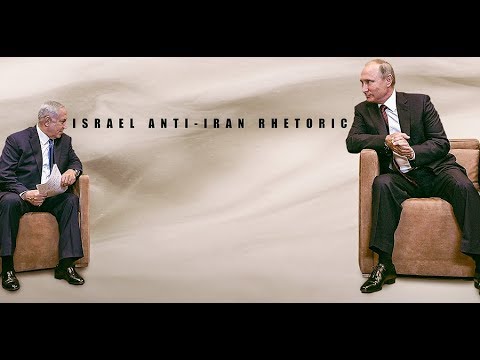
 Aletho News
 Aletho News