Saudi Arabia exempts Western arms purchases from austerity plan: FT
Press TV – June 7, 2020
Saudi Arabia is reportedly continuing to import weapons from Western countries, especially the United States, despite austerity measures taken recently to handle the kingdom’s worst financial crisis in decades.
Saudi Arabia posted a $9 billion budget deficit in the first quarter of 2020 due to plummeting oil prices and the novel coronavirus (COVID-19) pandemic.
Riyadh announced last month that it will suspend the cost of living allowance for state workers and raise the value added tax threefold in a bid to boost state finances.
However, the Financial Times reported on Sunday that the kingdom’s military expenditure emerged unscathed from the tough austerity measures, citing military contracts signed with American arms giants.
A Western arms industry executive based in the Persian Gulf quoted top Saudi officials as saying that there would be no military cuts.
“I was fully expecting there to be a cut, but the information from very senior levels and princes is ‘no, we’re not going to do it. In fact, don’t come and ask me if your program is going to slip, keep working hard at it, because we are just carrying ahead,’” the executive said.
“We’ve got a large number of requirements popping in through the door.”
The report cited the Pentagon’s contracts worth more than $2.6 billion for the delivery of more than 1,000 air-to-surface and anti-ship missiles to Saudi Arabia.
The US arms manufacturer Lockheed Martin, which supplies THAAD missiles to Riyadh, also told the Financial Times that it had “not seen a backing off of expenditures on defense” by any of its main Middle Eastern customers.
Robert Harward, chief executive of Lockheed’s Middle East unit, said although it was too early to judge, he expected that customers, including Saudi Arabia, “will continue with their procurement”.
“Regional threats are not receding and are more unpredictable than ever,” he said. “Countries will have to make choices on budgets, as countries always have to do.”
Another Persian Gulf-based military executive confirmed that his company had not witnessed “any shift in attitudes from the customers,” but suggested that it could still change, the FT added.
Meanwhile, the Saudi Finance Ministry stressed that the kingdom would “continue to support our military needs.”
The ministry said it had been working to rationalize spending to ensure the country got military equipment “for the right cost for the right quantity with the right specification”.
Saudi Arabia was the world’s largest weapons importer in 2015–19, according to the Stockholm International Peace Research Institute (SIPRI). The regime’s imports of major arms increased by 130 percent compared with the previous five-year period.
The kingdom is stuck in a costly war on Yemen it launched in March 2015 in a bid to reinstall the former Saudi-backed regime and crush the popular Houthi Ansarullah movement.
However, over five years into the Western-sponsored war, Saudi Arabia has achieved neither of its objectives and instead plunged Yemen into what the UN says is the world’s worst humanitarian crisis.
Riyadh is the largest buyer of American-made weaponry. US President Donald Trump signed an arms deal worth $110 billion with Saudi Arabia in May 2017 on his first foreign trip since becoming president.
Before his presidency, he had described the kingdom as “a milk cow” which would be slaughtered when its milk ran out.
Tony Blair: Ties between Gulf and Israel are ‘game changer’
MEMO | June 3, 2020
Tony Blair has cast doubt over the chance of a Palestinian state ever emerging in an interview with a Rabbi from the United Synagogue, a union of British Orthodox Jewish synagogues, representing the central Orthodox movement in Judaism.
During the online interview reported in the Jewish Chronicle the former British prime minister spoke gushingly about relations between Israel and the Gulf states. “That is the single biggest game-changer for the Middle East”, Blair is reported saying while describing the relationship as ”the biggest reason for hope in the Middle East.”
His optimistic reading of the region’s future however did not extend to the Palestinians. Blair, who was appointed special envoy of the Quartet – a foursome of nations and international and supranational entities involved in mediating the Israeli-Palestinian peace process – all but gave up on any hope of a Palestinian state emerging with Israel’s ongoing annexation.
”It was very difficult to see how a Palestinian state survives that,” said Blair in reference to Israel’s planned annexation of the occupied West Bank and the Jordan Valley in contravention of international law.
During the interview Blair said that he had spent the last few years working on strengthening ties between Israel and the Gulf states, which he said was not purely a “security relationship”.
“Yes it’s true they both have security interests in common. They are both worried about Iran,” said Blair before explaining a new, emerging leadership in the region found common alliance with Israel. “That is the single biggest game-changer for the Middle East,” Blair argued.
Blair’s term as the Middle East envoy has been heavily criticised, and this latest remark is likely to be further confirmation that the former prime minister, who many consider to be a war criminal over his role in the invasion of Iraq, was never interested in seeking justice for the Palestinians.
Critics accuse Blair of constantly pandering to the wishes of Israel. In one instance Palestinian officials said: “Tony Blair shouldn’t take it personally, but he should pack up his desk at the Office of the Quartet Representative in Jerusalem and go home,” adding his job, and the body he represents, are “useless, useless, useless”.
Annexation, War, Liberation
By Taxi | Plato’s Guns | June 3, 2020
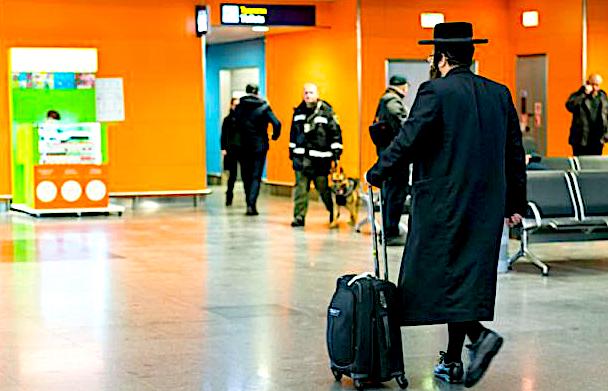
Nothing sends chills down the spine of Israel more than the mere mention of the name ‘Hezbollah’. Nothing, no superpower nor hurtling supernova petrifies Israel more than the existence of Hezbollah’s muscle and missile at its doorstep. Israel does not fear Egypt; it does not fear Jordan or Syria or even faraway Iran, but, it is indeed absolutely and positively petrified of little Lebanon with its uncontested resistance army: the Hezbollah. And this deep-seated pathological fear has found much gory and exuberant expression since the Israeli military was soundly defeated by Hezbollah back in 2006. Every single Israeli military project right across the Middle East since 2006 has been about defeating Hezbollah and stopping the spread of its popular resistor-culture. And evidently, every Israeli attempt to achieve this for the past decade and a half has flatly failed.
Unable to best Hezbollah’s spectacular performance on the battlefield, unable to also access any consequential Intel on Hezbollah’s brains and brawn, and moreover, unable to ignite a sectarian civil war in Lebanon after numerous attempts over the years, a humiliated Israel resorted to engineering, through American hands and influence, the unleashing of an army of terrorist Takfiris on Syria: Damascus being the main artery of support from Tehran to Hezbollah in Lebanon. One could say that Syria was attacked by an army of head-choppers because Hezbophobic Israel could not directly retaliate against a victorious Hezbollah in Lebanon. The Israeli master plan here was to cut off Hezbollah from Syria, thereby from its Iranian sponsor, and to flood both Levantean nations with Takfiri terrorists, thus specifically busying Hezbollah’s hands while the Israeli military “attacked it from the back”. Yet, alas for the Israelis, this diabolical plan to defeat or weaken the Hezbollah has only produced the opposite results for Tel Aviv. Syria, though severely damaged, still stands and remains a main artery of Iranian support to Hezbollah, and Hezbollah itself has increased its wholesale military and geopolitical powers even further. Now Hezbollah possesses an even larger stockpile of sophisticated missiles pointing at Tel Aviv and at everywhere else of vital value in Israel proper. Presently, there is not a single inch of Israel that’s not in Hezbollah’s cross-hairs. The Israeli military’s top brass know only too well that Hezbollah will most certainly use these missiles on Israel if provoked, or, indeed when a wider regional war is ignited. And this is precisely what is causing an incurable insomnia to both Israel’s military architects, as well as to all its Judeo-centric allies in the West: all flaccidly scrambling to find ways to assist a geopolitically cornered Israel.
But, dear reader, there is also another issue that Israel equally fears and loses much sleep over. A fear that has rattled Israel’s shadowy bones since the Palestinian Nakba back in 1948. An old, old fear. A terrorizing fear that Tel Aviv has somewhat succeeded at camouflaging and suppressing from the public eye and ear with the help of its propaganda arm in Western media.
This primordial Israeli fear, this mortifying bugaboo is known as the Palestinian ‘Right of Return’.
If Israel were to describe its perpetual nightmare, it would be one where Palestinian refugees are at the three land borders of the Holy land and pouring back into their ancestral territory in their millions.
This is your standard Israeli tableau of horror.
This is the very scenario that Israel fears the most. This, and of course, Hezbollah’s missiles raining on Tel Aviv and Haifa and Eilat and Dimona and every single illegal Israeli settlement and post.
Realistically, it is impossible to imagine Palestinian refugees returning to their homelands without Resistance missiles first clearing the path for them. And this, dear reader, this very combination of missiles raining and refugees returning is THE absolute and ultimate Israeli tableau of horror.
Presently finding itself in an intractable geopolitical pit of despair, and with all its plans against its Resistor enemies having thus failed since 2006, all that Israel can now achieve is easy land-grabs and annexations inside of occupied Palestinian neighborhoods in Jerusalem, in the West Bank and in the Jordan Valley: all areas already under Israeli control. Considered criminal and illegal by International Law, these imminent annexation maneuvers are justified by Tel Aviv as part and parcel of the dictates and content of the Deal of the Century: a unilateral Israeli-centric deal that not a single Palestinian the world over has accepted – not one! In fact, it appears to be the case that the rejection of the Deal of the Century is the only issue that all Palestinians agree on. This is because fundamentally, the Deal demands the total cancellation of the Right of Return of Palestinian war refugees back to their ancestral villages and lands. No Palestinian would ever accept this condition.
Moreover, the Palestinians see an existential threat that’s writ in invisible ink between the lines of the Deal. They see Tel Aviv’s nefarious second stage of the Deal: they see the illegal mass transfer of all Palestinians out of Historic Palestine, including the eviction of the Palestinian ’48-ers who hold Israeli passports, should the Palestinians break out into a Third Intifada and physically rebel against the Deal when it’s actually being implemented on the ground. Presently, the visible parts of the Deal of the Century are being promoted by Israel and her global media agents and politicians. The invisible part of the Deal will undoubtedly follow because the Israelis already know that the Deal will be rejected by the Palestinians and they have already prepared for this rebellion: mass and total ethnic cleansing of Palestinians from Historic Palestine. The big move. The breathtaking move. The wettest dream for the terrorist invader Jews currently occupying Historic Palestine. The ruling Ashkenazim Jews of Europe have long been dreaming of this – nay they have orchestrated numerous wars including WWI, WWII, the Bolshevik Revolution and numerous wars against the Arabs just to realize this blood-splattered Jewish dream. Engineered the mass murder of some 170 million non-Jews just to enable them entrance into Historic Palestine, which they achieved in 1948. And since then, Israel’s Jews have been on the final leg of their grand mission of taking over the whole of Historic Palestine: using inhumane and incessant brutality, periodical mass murder and expulsion of the native Palestinians. In effect, a full-on genocide committed sneakily and incrementally for some 72 years now.
In other words, the Deal of the Century is but a massive land-grab facilitator and the prelude to Israel’s ‘Final Solution’ to their Palestinian problem: atrocious mass murders and absolute ethnic cleansing right across the board.
We all already know that Palestinians are not waiting on Abbas to rescue them from the lethal Deal, despite him recently cancelling Oslo as well as all security cooperation with the Jewish state. Palestinians are not waiting on any specific Arab state either, or on the international community to rescue them and their rich heritage and history. But Palestinians presently are indeed en mass looking to the Axis of Resistance for salvage and liberation.
So what can the Axis of Resistance do for them? How will it react to the Deal? What does it have planned to counter the implementation of the Deal that Netanyahu has promised to begin applying on July 1st, 2020?
The answer to this must be the closest held secret in the universe. But, let us, however, look at their options – and they do have several options, bar one: surrender. There will be no surrender to the Deal of the Century.
Obviously, non-surrender implies war. And so it is. The only question remaining therefore is ‘when’. Who controls the timing of an imminent war? Here, consider if you may, that the side that’s positively ready for war and sacrifice is not concerned with who fires the first bullet and at what hour of day, but how to go to war and win it with least casualties to their side. With this firmly in mind, let us then look at the options available to the Axis of Resistance and their assured response to Israel’s imminent annexation plans.
Option one: Upon Israel’s implementation of the first stage of annexation, the Resistance could conceivably go into immediate war with the state of Israel and its allies. A war where Israel will have to simultaneously defend itself on multiple fronts. Defend itself within against Palestinians in Gaza AND the West Bank: both sectors now fully armed by Iran and trained by Hezbollah. And defend itself without against its closest neighbors of Syria and Lebanon – and very plausibly against an incensed-by-Israel Jordan and Egypt too – as well as with Israel’s faraway regional enemies of Iran, Iraq and Yemen (including hundreds of thousands of trained volunteer fighters from Pakistan, Afghanistan and Malaysia). This means a regional war which the USA, UK and France (possibly other NATO nations too) will all jump into, either directly or indirectly, thus dragging Russia and China, either directly or indirectly, into a massive Mideastern power-grab confrontation: the eastern rising giants of China and Russia here geostrategically compelled and obliged to assist their mega assets-hosting nations of Syria and Iran. This option is a turbulent and bloody one that would lead to untold human and material losses, as well as needing much time and conferencing to negotiate a post-war disentanglement between a multitude of nations, all gridlocked in a foreign territory. Yet, despite the hectic burdens of this option, the Axis of Resistance’s sacrifices will still lead to victory for the Resistance as they have all the needed weapons to completely destroy a tiny Israel in a handful of days, and this despite the destructive hits they may suffer from Tel Aviv and its powerful allies. It’s a brutal ‘sooner than later’ liberation of Palestine and the eviction of Israeli and Western colonialists projects in the region. In this regard, we could say that the price for ‘instant liberation’ is the highest.
Option two: Wait for the Israelis to commit their usual and predictable atrocities against the rebelling Palestinian civilians – wait for massive global outrage then enter into warfare while riding the moral high ground and the coattails of massive global support for justice for the Palestinians. This option probably has the best optics: a war to save six million long-suffering Palestinian civilians from a rabidly racist, sadistic and genocidal occupier. A righteous war that aims to bring justice and freedom to the archetypal victim. The global masses will resonate with such an emotive narrative, and Western nations under the spell of Zionism would be hindered here from giving full or prolonged support to Israel on account of public opinion at home being massively against it. This option is costly on both civilian and armed Resistor, but not as costly as the first one.
Option three: Knowing that Israel is a coward who tiptoes hunchbacked in the shadows; knowing too that Israel would not dare implement ALL its annexation plans at once and overnight, but instead, it will implement them incrementally and with unsteady hands: knowing all this, the Axis of Resistance may very well decide to hold back on any immediate explosive reaction to the annexation; let time pass and remain coiled and ready: hold back and just wait for the US Empire to weaken even further before entering into a direct liberation war with Israel. The equation here being a weakened US equals a severely, nay fatally handicapped Israel. And let us all be very clear here that it is the United States’ military protection of Israel that puts oxygen into Israel’s lungs. Without America’s military support to Israel, the Resistance could easily take on the Israeli army and defeat it and liberate the whole of Palestine today: right this very second, in fact. This is not bravado, but sourced information. It is only American military power and this alone that stands in the way of liberating Palestine. Simply, Israel is currently incapable of defending itself against the Axis of Resistance, despite its stockpile of illegal nukes and its hi-tech American defensive weaponry, gifted to Tel Aviv through the corrupt fleecing of the American taxpayer by DC politicians. This option will cost less lives than the two above.
Option four: Post-annexation, allow for Jewish Apartheid to massively flourish for several years, thus allowing for Israeli society itself to further disintegrate its democracy internally and become an abhorrent and much hated racist, rogue nation in the eyes of the globe, with barely any support for it possible even by its traditional European allies. This method is known as ‘forcing the snake to eat its own tail’, thus eventually, through a self-defeating Apartheid system, swallowing up its own deflated shekel and body politik: eventually strangling itself with its own masticating mouth; leading thus to its political disintegration a-la the South African model in the 1980’s – a model that saw the natives overnight reclaiming their rightful territories without having to resort to mass bloodshed and all out war with the tyrannical ruling colonialists. This option will cost less lives for Resistance fighters but needs much civilian sacrifice, as indeed, the punitive Jewish occupiers will in the meantime unleash horrendous levels of violence against the increasingly restless native civilians.
Option five: Now, this here is an interesting option, an option that Hassan Nasrallah spoke of only last week. In a two and a half hour interview he gave to Al-Nour Radio, Nasrallah parsed various war issues and suggested for the first time ever the plausibility that Israelis, upon realizing in the near future that their American Empire protector is too weakened internally and externally and therefore unable to war any further on their behalf, and Tel Aviv also already knowing that an existential war with the Axis of Resistance would lead to a mass death of Jews and the utter destruction of Tel Aviv: these two sobering realizations will force it into radical withdrawal from the holy land altogether. In other words, facing sure material devastation and mass loss of Jewish life in the coming war, Israeli state architects would have no other smart option but to pack up suitcases and simply leave the holy land in peace before a lethal war is imposed on them by the Resistance. Indeed, the Axis of Resistance would most certainly take full advantage of America’s incapacitation and inability to protect Tel Aviv and activate thus their Liberation War. Just up and leave sans war is what Nasrallah is suggesting here. An astonishing yet plausible scenario. A scenario that is suddenly made more plausible by the rapid and palpable decline of American hegemony around the world, as well as the current disintegration of America’s society that we’ve all recently witnessed on the streets of half the existing American states: violent protests that the belligerent American security apparatus will find impossible to contain and control 100% and indefinitely, regardless of who is president. Protests that will keep waxing and waning till either the corrupt bi-partisan Status Quo itself surrenders and a new and more humane and equitable one takes its place, or, all out civil war breaks out in the United States of America: thus bringing with it proof positive that the American Empire has indeed fallen and its Republic now drowns in blood and chaos. That aside, the devastating affects of COVID-19 on the American military cannot be understated here either. Many of its bases are under COVID-19 restraints and presently, the US Navy has 26 of its navy warships under Covid-19 quarantine, thus leaving only two war-ready ships in the Middle East. And this, dear reader, is the major reason why the US did not, in fact could not challenge the Iranian vessels transporting fuel to Venezuela, despite an aggressive naval blockade against Caracas. This ‘suitcase’ option that Nasrallah spoke of is, of course, the most desired by the Axis of Resistance as it will be the least costly to its civilians and fighters. Of course, the death of an Empire does not occur overnight and this option requires extreme vigilance and exceptional patience on behalf of the Axis of Resistance. Two attributes that fortunately the Axis of Resistance is well-practiced in. And by the gauge of recent headlines on America’s speedy decline internally and externally, it would seem to be the case that the Empire’s fall will not occur in faraway decades, but in the near to medium future, meaning: inside of half a decade.
Dear reader, any of the above options will work to liberate Palestine and the region from all foreign control and abuse. There is not even the slightest glimmer of doubt about this in the minds of the Resistance strategists whatsoever. It is the cost of various options and paths to liberation that the leaders of the Resistance currently pontificate upon, not their military readiness or capability. This is the current status of the Axis of Resistance. And the option that will eventually be chosen will be dependent on the challenges that the US and Israel will throw at it in the meantime. Not forgetting here of course that the Masada-ists in Israel may very well panic in the meantime and reflexively and foolishly play a wild card out of dire, pathological fright: out of profound morbid fear of Resistance missiles clearing the way for the Right of Return. Their desperate fear and terror may very well drive them to miscalculate and choose a fight-to-death ‘today instead of tomorrow’, knowing that tomorrow Israel will be weaker than today. This would be the worst option for Israel as this will guarantee massive loss of life for them.
Whichever way the future wind blows in the Levant, all options and wild cards will lead to the liberation of Palestine. This we can be certain of: the death of Israel. Death at the heels of the fall of the American Empire.
The world will be forever changed with the coming momentous victory for the Axis of Resistance. And the countdown to victory begins… with Israel’s intended annexation on the 1st July, 2020.
US military presence in Iraq aimed at protecting Israel’s security, interests: PMU leader
Press TV – May 25, 2020
A high-ranking official with Iraq’s Popular Mobilization Units (PMU), better known by the Arabic name Hashd al-Sha’abi, has strongly denounced US military presence in his country, saying such a deployment is meant to safeguard the security and interests of the Israeli regime.
“There is a national and courageous will, which rejects the presence of any foreign troops on Iraqi soil. There have been talks of US intentions to withdraw from Iraq, but we doubt them,” Qais al-Khazali, leader of Asa’ib Ahl al-Haq, which is part of the PMU, was quoted as saying by the Lebanon-based and Arabic-language al-Ahed news website on Monday.
He added, “The US [military] presence in Iraq is meant to protect the security and interests of the Israeli regime. Neither are we warlords nor thirsty for blood, but rather patriots looking for the dignity and sovereignty of the Iraqi nation.”
“If the withdrawal [of US troops] does not take place, the foreign occupier must know that Iraqis will not accept the presence of its forces. The Americans, who will open negotiations [on the extension of their presence] in June, must remember the centenary of the Great Iraqi Revolution of 1920 against British forces,” Khazali pointed out.
He also praised the sacrifices made by Lieutenant General Qassem Soleimani, the commander of the Quds Force of Iran’s Islamic Revolution Guards Corps, and Abu Mahdi al-Muhandis, the deputy head of PMU, who were assassinated along with their companions in a US airstrike authorized by President Donald Trump near Baghdad International Airport early on January 3.
Iraqi lawmakers unanimously approved a bill two days later, demanding the withdrawal of all foreign military forces led by the United States from the country following the targeted killings.
Later on January 9, former Iraqi prime minister Adel Abdul-Mahdi called on the United States to dispatch a delegation to Baghdad tasked with formulating a mechanism for the move.
The 78-year-old politician said Iraq rejected any violation of its sovereignty, particularly the US military’s violation of Iraqi airspace in the assassination airstrike.
Iranian Supreme Leader Tweets Country Will Support Any Nation That Fights Israel
Sputnik – 20.05.2020
Iran’s Supreme Leader announced on Wednesday his country would “support and assist any nation or any group anywhere” in its struggles against Israel. His comments follow a Palestinian withdrawal from agreements with Israel over its proposed annexation of the West Bank.
“The Zionist regime has proven it won’t abide by any treaty & understands no logic except force,” Iranian Supreme Leader Ali Khamenei wrote in a Wednesday statement posted on Twitter as a series of tweets. “The nature of the Zionist regime is incompatible with peace, because the Zionists seek to expand their territories & will certainly not be limited to what they have already occupied.”
“Eliminating the Zionist regime doesn’t mean eliminating Jews. We aren’t against Jews. It means abolishing the imposed regime & Muslim, Christian & Jewish Palestinians choose their own govt & expel thugs like Netanyahu. This is ‘Eliminating Israel’ & it will happen,” the Shiite religious leader explained. “A proposal for a referendum to choose the type of govt for the historical country of #Palestine was registered with the UN as offered by Iran. We say the true Palestinians with Palestinian roots of at least 100 years, and Palestinians living abroad, choose the govt of Palestine.”
“Comprehensive struggles by the Palestinian nation – political, military & cultural – should continue till the usurpers submit to the referendum for the Palestinian nation. This nation should determine what political system should rule there; struggle must continue until then,” Khamenei continued. “We will support and assist any nation or any group anywhere who opposes and fights the Zionist regime, and we do not hesitate to say this.”
Khamenei’s comments follow an announcement by the Palestinian Authority on Tuesday that it would cease to abide by any of its agreements with either Israel or the United States – a move itself in response to an announcement by the newly formed Israeli government to begin annexing one-third of the West Bank as soon as July. […]
The area Tel Aviv seeks to annex is part of what is known as “Zone C” under the Second Oslo Accords in 1995, a part of the West Bank subjected to Israel military control. However, the area Prime Minister Benjamin Netanyahu has proposed annexing is roughly 30% of the West Bank and not all of Area C, but mostly the Jordan River valley. As Sputnik has reported, the Israel Defense Forces have used this control to systematically evict Palestinian villages from the fertile land along the River Jordan for decades, later turning the land over to Israeli settlers who now number close to 400,000 in the zone.
Washington’s tall tale of Iranian-Al Qaeda alliance based on questionably sourced book ‘The Exile’
A disinformation campaign aimed to justify the assassination of Qassem Soleimani by painting him and Iran as willing enablers of al-Qaeda. The propaganda operation relied heavily on a shoddily sourced book, “The Exile.”
By Gareth Porter | The Grayzone | May 19, 2020
The U.S. assassination of Qassem Soleimani in January touched off a new wave of disinformation about the top Iranian major general, with Trump administration allies branding him a global terrorist while painting Iran as the world’s worst state sponsor of terrorism. Much of the propaganda about Soleimani related to his alleged responsibility for the killing of American troops in Iraq, along with Iran’s role in Syria, Lebanon, and Yemen.
But a second theme in the disinformation campaign, which has been picked up by mainstream outlets like the Wall Street Journal and National Public Radio, was the claim that Soleimani deliberately unleashed al-Qaeda terrorist Abu Musab al-Zarqawi’s campaign to kill Shiites in Iraq. That element of the propaganda offensive was the result of the 2017 publication of “The Exile,” a book by British journalists Adrian Levy and Cathy Scott-Clark, which spun a new version of the familiar U.S. propaganda line of a supposed Iranian terror alliance with al-Qaeda.
Levy and Scott-Clark introduced the theme of secret collusion between the two open adversaries with an article in the The Sunday Times in early 2018, dramatically entitled “Tehran in devil’s pact to rebuild al‑Qaeda.” Soleimani, they claimed, “first offered sanctuary to bin Laden’s family and al-Qaeda military leaders,” then proceeded to “build them a residential compound at the heart of a military training center in Tehran.”
But those two sentences represented a grotesque distortion of Iran’s policy toward the al-Qaeda personnel fleeing from Afghanistan into Iran. Virtually every piece of concrete evidence, including an internal al-Qaeda document written in 2007, showed that Iran agreed to take in a group of al-Qaeda refugees with legal passports that included members of bin Laden’s family and some fighters and middle- and lower-ranking military cadres – but not Zarqawi and other al-Qaeda military leaders — and only temporarily and under strict rules forbidding political activity.
The crucial fact that Levy and Scott-Clark conveniently failed to mention, moreover, was that Iranian officials were well aware that al-Qaeda’s leadership figures, including military commanders and with their troops, were also slipping into Iran from Afghanistan, but Iranian security forces had not yet located them.
Keeping the legal arrivals under closer surveillance and watching for any contacts with those illegally in the country, therefore, was a prudent policy for Iranian security under the circumstances.
In addition, having bin Laden’s family and other al-Qaeda cadres under their surveillance gave Iran potential bargaining chips it could use to counter hostile actions by both al-Qaeda and the United States.
Al-Qaeda documents undermine narrative of cooperation with Iran
Careful study of the enormous cache of internal al-Qaeda documents released by the U.S. government in 2017 further discredited the tall tale of Iranian facilitation of al-Qaeda terrorism.
Nelly Lahoud, a senior fellow at the New American Foundation and former senior research associate at the West Point Combating Terrorism Center, translated and analyzed 303 of the newly available documents and found nothing indicating Iranian cooperation with, or even knowledge about the whereabouts of Zarqawi or other al-Qaeda military leaders prior to their detentions of April 2003.
Lahoud explained in a September 2018 lecture that all actions by al-Qaeda operatives in Iran had been “conducted in a clandestine manner.” She even discovered from one of the documents that al-Qaeda had considered the clandestine presence of those officials and fighters so dangerous that they had been instructed on how to commit suicide if they were caught by the Iranians.
Adrian Levy and Cathy Scott-Clark were well aware that those al-Qaeda operatives living in Tehran’s military training center were under severe constraints, akin to a prison. Meanwhile, senior figures like Zarqawi and Saif al-Adel, the head of the al-Qaeda shura council, were far away from Tehran, planning new operations in the region amid friendly Sunni contacts. These plans included Zarqawi’s campaign Iraq, which he began organizing in early 2002.
Nevertheless the authors declared, “From [the Iranian training center], al-Qaeda organized, trained and established funding networks with the help of Iran, co-ordinated multiple terrorist atrocities and supported the bloodbath against Shi’ites by al-Qaeda in Iraq….”
Anti-Iran think tanker Sadjadpour jumps on the conspiracy bandwagon
Karim Sadjadpour of the Carnegie Endowment for International Peace, a reliable fount of anti-Iran spin, responded within days of the Soleimani assassination with an article in the Wall Street Journal’s right-wing editorial section that reinforced the budding disinformation campaign.
Entitled “The Sinister Genius of Qassem Soleimani,” Sadjadpour’s op-ed argued that in March 2003, before the U.S. invasion of Iraq, “Soleimani’s Quds Force freed many Sunni jihadists that Iran had been holding captive, unleashing them against the U.S.” He cited “The Exile” as his source.
Levy and Scott-Clark did indeed spin a tale in the book of Zarqawi’s troops — and Zarqawi himself — being rounded up and locked to the same prison as those al-Qaeda members who entered with passports in March 2003. The authors claimed they were released within days. But the only sources they cite to support their claims were two people they interviewed in Amman, Jordan in 2016.
So who were these insider sources? The only identifying characteristics Levy and Scott-Clark offer is that they were “in Zarqawi’s group at the time.” Furthermore, neither of these sources is quoted to substantiate the claim that Zarqawi was arrested and then released from prison, and they are mentioned only in a footnote on the number of Zarqawi’s troops that had been sent to the prison.
Sadjadpour offered his own explanation — without the slightest suggestion of any evidence to support it — of why Soleimani would support an anti-Shiite jihadist to kill his own Iraqi Shiite allies. “By targeting Shiite shrines and civilians, killing thousands of Iran’s fellow Shiites,” he wrote, “Zarqawi helped to radicalize Iraq’s Shiite majority and pushed them closer to Iran—and to Soleimani, who could offer them protection.”
In late January, on National Public Radio’s weekly program “Throughline,” Sadjadpour pushed his dubiously sourced argument, opining that Soleimani had figured out how to “use the al Qaeda jihadists of Zarqawi … to simply unleash them into Iraq with the understanding that you guys do what you do.”
The BBC promotes “The Exile” as the book’s narrative crumbles
In a BBC radio documentary broadcasted in late April, titled “Iran’s Long Game” (an allusion to Iran’s alleged long-term plan for domination of the entire Middle East), Cathy Scott-Clark told a story intended to clinch the case that Iran had helped Zarqawi: Other prisoners “heard conversations in the corridors” in which Iranian authorities allegedly assured Zarqawi, “You can do whatever you want to do … in Iraq.”
That story does not appear in her book, however. Instead, Adrian Levy and Scott-Clark related a comment by Abu Hafs al-Mauritani, a spiritual adviser to bin Laden, on hearing about the arrest and subsequent release of Zarqawi from another prisoner who eavesdropped by tapping the pipes leading into his room.
That narrative had already been definitively contradicted long before, however, in an account provided by Saif al-Adl, the most senior member of the al-Qaeda top leadership in Iran. Al-Adl had fled with Zarqawi from Afghanistan across the border into Iran illegally in late 2001 or early 2002 and was apprehended in April 2003 — weeks after the alleged events portrayed in al-Mauritani’s story.
In a memoir smuggled out of Iran to Jordanian journalist Fouad Hussein, which Husayn published in 2005 in an Arabic-language book (but available online in an English-language translation), Saif al-Adl described an Iranian crackdown in March 2003 that captured 80 percent of Zarqawi’s fighters and “confused us and aborted 75 percent of our plan”.
Because of that round-up, al-Adl wrote, “[T]here was a need for the departure of Abu-Mus’ab and the brothers who remained free.” Al-Adl described his final meeting with Zarqawi before his departure, confirming that Zarqawi had not been caught prior to his own apprehension on April 23, 2003.
Levy and Scott-Clark cited Saif al-Adl’s memoir on other matters in “The Exile,” but when this writer queried Scott-Clark about al-Adl’s testimony – which contradicted the narrative that underpinned her book – Scott-Clark responded, “I know Fuad Hussein well. Most of his information is third hand and not well sourced.”
She did not address the substance of al-Adl’s recollections about Zarqawi, however. When asked in a follow-up email whether she challenged the authenticity of Saif al-Adl’s testimony, Scott-Clark did not respond.
Gareth Porter is an independent investigative journalist who has covered national security policy since 2005 and was the recipient of Gellhorn Prize for Journalism in 2012. His most recent book is The CIA Insider’s Guide to the Iran Crisis co-authored with John Kiriakou, just published in February.
Israel strikes Syria to keep the USA in the Levant
By Elijah J. Magnier – 19/05/2020
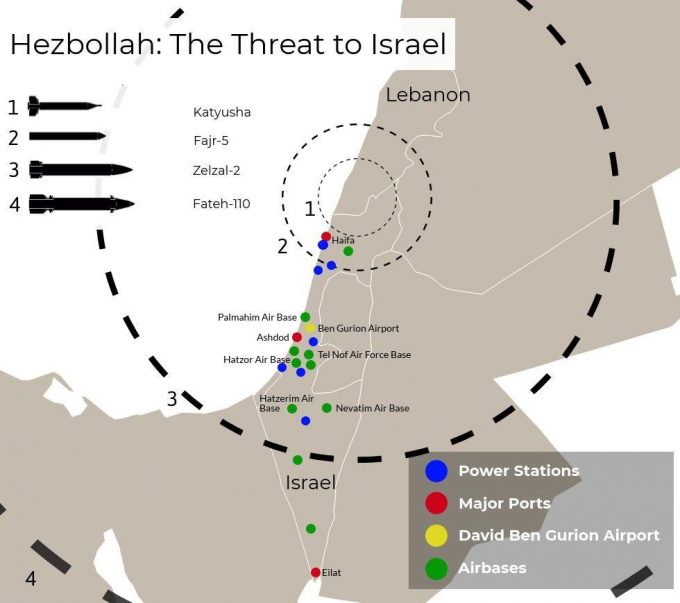
Following its defeat in the second war on Lebanon, Israel discovered that its only way to suppress Hezbollah would be to close the supply line between Lebanon and Syria. That could only be achieved by removing President Bashar al-Assad from power, disrupting the “Axis of the Resistance” that extends from Tehran to Baghdad, Damascus, Beirut and Gaza. But Israel and the US, supported by Saudi Arabia, Qatar, the Emirates, Turkey, Europe and many other countries all failed to achieve their goal of making Syria a failed state. President Assad called upon his allies whose own national security was in jeopardy. If Syria were to fall, jihadists of al-Qaeda and the “Islamic State” would be fighting in the streets of Beirut, Baghdad and Tehran. The jihadists would also be powerful enough to remove Russia from its Syrian naval base and to export the war beyond the Levant’s borders. So, Israel and the US failed to destroy Syria and to corner Hezbollah. On the contrary, Hezbollah has become stronger than ever. The Resistance has reaped the harvest of its victory. It has become the decision-maker with key institutions in Lebanon.
Israel sought to destroy Hezbollah because it is an obstacle to Israel’s expansionist plans in Lebanon, namely to steal Lebanon’s water and some of its territories, to force a peace deal of unconditional surrender, to break Lebanon’s alliance with Iran and deprive Tehran of its strongest ally in the Middle East. For the last forty years, since the victory of the “Islamic Republic” in 1979 led by Imam Ruhollah Khomeini which unseated the US proxy ruler, the Shah of Iran, Washington has imposed sanctions, because Iran has refused to submit to US power and because it supports its allies in the Middle East, mainly Palestine, Lebanon and Syria, to stand against Israel.
In 2006, the US was involved in the planning of Israel’s war on Lebanon. At the 2006 G8 Summit, President George W. Bush described the relationship between Hezbollah, Iran and Syria as one of the root causes of “instability”: “The World must deal with Hezbollah, with Syria, and continue to work to isolate Iran.” (Roshandel J. & Lean C.N. (2011) Iran, Israel and the United States, ABC-CLIO, CA, p. 109).
US Secretary Condoleezza Rice refused to mediate a ceasefire unless “the conditions are conducive”, thinking Israel would win the war. Hezbollah was not only left on its own to face the US and Israel, but Lebanese US-Saudi proxies (Prime Minister Fouad Siniora and Druse leader Walid Jumblat) supported the position of the US and Israel, and argued that there was “no point in a ceasefire.” (Wilkins H. (2013). The Making Of Lebanese Foreign Policy: understanding the 2006 Hezbollah-Israeli War, Routledge, Introduction).
When Israel failed to achieve its objectives, the US agreed to mediate an end to the war. Negotiations concentrated on ceasing all hostilities (not a ceasefire) between the two countries. Tel Aviv and Washington failed to obtain the deployment of United Nations Forces in Lebanon, UNIFIL, on the borders with Syria. The US sought to accommodate Israel in its attempt to gain by negotiation what it failed to achieve using its huge war machine in 33 days of the war in 2006. “Israel’s objective was never realistic”, said Israeli Foreign Minister Tzipi Livni.
When its attempt to control the Lebanese-Syrian borders failed after its defeat in the 2006 war, Israel had one remaining option with which to counter Hezbollah: close the road via Damascus and find a way to curb Hezbollah’s supply line. This required war on Syria.
Since confronting Hezbollah face-face was no longer an option, Syria became the next target in the campaign to isolate Iran, as President Bush declared. The motives behind the war in Syria have been erroneously described by many researchers and analysts around the globe, who have depicted the war as the outcome of an “Arab Spring” against a dictatorial regime. Yet Saudi Arabia, Bahrein and other Gulf countries have been ruled by dictatorships and the same family members for decades and indeed are considered by the west as its closest- oil-rich- partners!
Actually, the war on Syria started just after the al-Qaeda 9/11 attack on the US. Four-star US general Wesley Clark disclosed Washington’s plan as he learned of it in the days after 9/11: “occupy Iraq, Syria, Lebanon, Libya, Somalia, Sudan and finish with Iran.” Just a few months after the US invasion of Iraq, US Secretary of State Colin Powell visited President Bashar al-Assad and warned him that the US would invade Syria if he refused to interrupt his support for the anti-Israel organisations, Hezbollah and the Palestinian groups: the Syrian president would share the same fate as the Iraqi President Saddam Hussein.
The 2003 invasion of Iraq was far from being a piece of cake. The US occupation generated new resistance among both Sunni and the Shia. This encouraged President Assad to rebuff the US threat, unaware of what the future held for Syria. Dozens of states, including Saudi Arabia, Qatar, Jordan, Turkey, the Emirates, Europe and the US all supported a regime change operation via Takfiri proxies. But the consequences of destabilising Syria gave a unique opportunity for al-Qaeda to blossom in Syria and a more lethal group emerged, the “Islamic State” ISIS. President Assad called upon his few allies, Iran, Russia and Hezbollah, to stand against the massive coalition gathered to create this failed state in Syria. The Syrian war which ensued offered unprecedented experience to the Syrian army, gave birth to a new Syrian resistance and offered unique warfare knowledge to Hezbollah, with a base for Iran that Tehran could never before have dreamed of having in the Levant.
Hezbollah had forced unconditional Israeli withdrawal from Lebanon in the year 2000 and challenged all those Israeli-US plans for a “new Middle East” after the second Israeli war on Lebanon in 2006. And the long nine years of war in Syria forced Hezbollah to refine its tactics and armaments and provided Hezbollah with an unprecedented victory. Just as Israel had boosted the creation of Hezbollah, it taught this quasi-state actor all manner of skills and forced it to acquire more training and weapons to repel wars and dismantle the enemy’s objectives. Israel’s former Chief of Staff and Prime Ministerial candidate Benny Gantz believed that Hezbollah had become one of the strongest irregular-organised armies in the Middle East, capable of imposing its rules of engagement and its “balance of deterrence” on the strongest classical army in the Middle East.

“Show me four or five states with more firepower than Hezbollah: they are the US, China, Russia, Israel, France, & the UK,” Gantz said when speaking at the 2014 Herzliya Conference.
That was Israel’s assessment in 2014. Six years later, last February, Israel’s minister of defence Naftali Bennet said: “For every convoy you hit, you miss five convoys and slowly Hezbollah accumulates the critical mass of rockets [missiles] that threaten us.”
Hezbollah has become stronger than many armies in the Middle East. Hezbollah is no longer the organisation that clashes with the Israelis on a hill or site or ambushes a patrol behind an alley. Rather, in Syria and Iraq, it has successfully experienced different warfare scenarios. It has acquired many advanced weapons and became a strategic threat to Israel if it ever contemplated waging outright war on Lebanon and Syria.
Israel set as its goal bringing down Assad in Syria and separating Syria from the “Axis of Resistance.” Israeli defence minister Moshe Ya’alon said that “Israel prefers ISIS on its borders over Assad.” But Israel, America, Europe, Saudi Arabia, Qatar and the Emirates have lost the war. Israel has now chosen to maintain the conflict because it fears that America would let go. This is why Israel is hitting hundreds of targets in Syria, – most of the time without no strategic value whatsoever.
Sources in the “Axis of Resistance” in Syria say that:
“Israel targeted the Iranian HQ at Damascus airport (a building with green glass where Israel destroyed two floors). The following day, Iran restored it and it is back in operation. Israel has repeatedly targeted warehouses with Iranian weapons but also an abandoned training centre in the Kiswa area that has been empty for years. Their aim is to signal to the US that Israel is threatened and that the departure of the US forces would constitute a threat to Israel’s national security. It is indeed too late for Israeli jets to make any difference to Syria’s capabilities. Iran is not exporting weapons but manufacturing them. If it took Israel 9 years and 300 bombing raids to destroy Iranian warehouses in Syria, it took Iran only one year to refill and equip the Syrian army with much more sophisticated precision missiles – and all strategic missiles are in underground warehouses.”
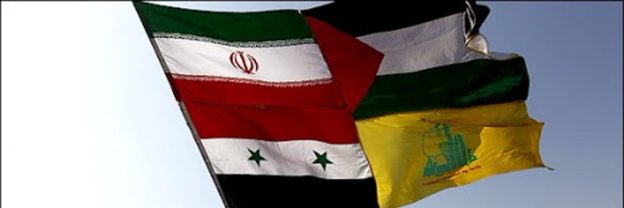
Iran has only a few hundred advisers and officers in Syria, but it leads some tens of thousands of allies from Lebanon, Iraq, Pakistan, Afghanistan, and auxiliary Syrian forces that resemble irregular-organised military formations.
In Syria, Hezbollah was able to operate in an area ten times the size of Lebanon, which gave it a unique experience any army in the world would have wished to have. It was also subjected to attacks by a NATO member, Turkey, which used armed drones on the battlefield. That provided Hezbollah with a wealth of experience and taught them lessons that have become integrated into curricula at military schools and colleges in Iran with Hezbollah and their allies.
President Assad does not say that it is time for his allies (especially Hezbollah) to leave Syria. Rather, he says – according to this source – that “Syria has a debt to Hezbollah. Wherever Hezbollah wants to be, it will be also Syria’s wishes.” America and Israel created an unbreakable alliance between Syria, Iran and Hezbollah.
In Lebanon, Hezbollah has started to harvest its gains. Hezbollah was able to impose the name of the President of the Republic, General Michel Aoun, despite repeated opposition from Saudi Arabia and the US, the losers in the Syrian war. Lebanon remained without a president for several months until General Aoun assumed the presidency.
Hezbollah rejected multiple offers from different countries by giving the Presidency of the Parliament to anyone other than President Nabih Berri, leader of the Amal movement, who has been on this throne for decades. Hezbollah holds the real power – though not all of it – in Lebanon to call for the appointment of the President of the Republic and the Speaker of the Parliament.
As for the premiership, it cannot be assumed without Hezbollah’s approval of the candidate. Hezbollah has sufficient political weight within the House of Representatives and the Presidency of the Republic to nominate or accept the nomination or direct the appointing of a prime minister. Former prime minister Saad Hariri is making sure his daily friendly contacts with Hezbollah are maintained because he would very much like to return to power. Hariri knows that the door to the premiership goes through one gate: Hezbollah.
This does not mean that Hezbollah wants to take control of Lebanon as a whole. Hezbollah leaders are aware that the Druse leader Kamal Jumblatt, Sunni leader Rafic Hariri, the Maronite Christian leader Bashir Gemayel and the Palestinians have all failed in controlling Lebanon and seizing the country. Hezbollah does not want to succumb to the same mistakes and doesn’t wish to control all of Lebanon. This means that the counter influence of other countries exists and is well-rooted in Lebanon. For example, the US ambassador in Beirut is threatening the Lebanese government with a warning not to remove the Central Bank Governor Riad Salama. Also, the US removed a Lebanese-Israeli agent, Amer Al-Fakhouri, via a plane which landed him at the US embassy without taking into consideration Lebanese sovereignty. The US supports the Lebanese army and internal security forces to maintain its dominance over certain key figures.
Syria has given the Secretary-General of Hezbollah, Sayyed Hassan Nasrallah, powers in Lebanon that he would not have obtained without the intervention of Israel and the allies in Syria. Hezbollah has managed to preserve its military pipeline via Syria by defeating the Takfiris (al-Qaeda and ISIS) and has prevented them from establishing an “Islamic emirate” in Lebanon and Syria.
Hezbollah’s victory comes at a price: thousands of martyrs and thousands of wounded. However, the resulting harvest is so abundant and strategic that the Lebanese Shiites now enjoy more power in Lebanon and Bilad al-Sham than they have since the year 661 when the fourth caliphate’s Imam Ali bin Abi Talib was killed.
Proofread by: C.G.B. and Maurice Brasher
This article is translated free to many languages by volunteers so readers can enjoy the content. It shall not be masked by Paywall. I’d like to thank my followers and readers for their confidence and support. If you liked it, please don’t feel embarrassed to contribute and help fund it, for as little as 1 Euro. Your contribution, however small, will help ensure its continuity. Thank you.
Copyright © https://ejmagnier.com 2020
How Israel Instructed Its Worst Nightmare in the Art of War
A woman mocks an Israeli tank left behind when withdrawing from south of Lebanon in the year 2000, using it as a hanger to dry cloths. Credit: Younes Zaatari
By Elijah J. Magnier | American Herlad Tribune | May 17, 2020
“We were Hezbollah trainers. It is an organization that learns quickly. The Hezbollah we met at the beginning (1982) is different from the one we left behind in 2000”. This is what the former Chief of Staff and former Minister of Foreign Affairs, Gabi Ashkenazi, said twenty years after the Israeli unconditional withdrawal from Lebanon.
“For the first time we met a non-conventional army, but also an ideological organization with deep faith: and this faith triumphed over us. We were more powerful, more technologically advanced and better armed but not possessing the fighting spirit …They were stronger than us”. This is what Brigadier General Effi Eitam, Commander of the 91st Division in counter-guerrilla operation in south Lebanon said.
Alon Ben-David, senior defense correspondent for Israel’s Channel 13, specialized in defense and military issues, said: “Hezbollah stood up and defeated the powerful Israeli Army”.
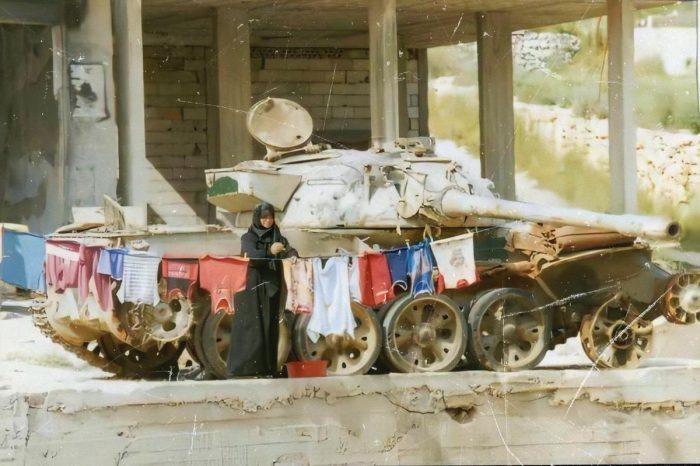
Former Prime Minister Ehud Barak, the architect of the Israeli withdrawal from Lebanon, said: “The withdrawal didn’t go as planned. The deterrence of Hezbollah and its capability increased greatly. We withdrew from a nightmare”. Barak meant he had planned to leave behind him a buffer zone under the control of his Israeli proxies led by the “South Lebanon Army” (SLA) commander Antoine Lahad. However, his plans were dismantled and the resistance forced Lahad’s men to run towards the borders, freeing the occupied buffer zone. As they left Lebanon, the Israeli soldiers said: “Thank God we are leaving: no one in Israel wants to return”.
In 1982, Israel believed the time had come to invade Lebanon and force it to sign a peace agreement after eliminating the various Palestinian organizations. These groups had deviated from the Palestinian compass and had become embroiled in sectarian conflict with the Lebanese Phalange, believing that “the road to Jerusalem passed through Jounieh” (the Maronite stronghold on Mt. Lebanon, northwest of Beirut, a slogan used by Abu Iyad). Israel intended Lebanon to become the domicile of its Palestinian conflict. It failed to realize that in so doing it was letting the Shiite genie out of the bottle. Signs of this genie began to appear after the arrival of Sayyed Musa al-Sadr in Lebanon and the return of students of Sayyed Muhammad Baqir al-Sadr from Najaf to their home country and residency in the Lebanese Bekaa. Also, the victory of Imam Khomeini and the “Islamic revolution” in Iran in 1979 was not taken into consideration by Israel, and the potential consequences for the Lebanese Shia were overlooked.
The 1982 Israeli invasion triggered the emergence of the “Islamic resistance in Lebanon”, which later became known as “Hezbollah”, and it forced Israel to leave Lebanon unconditionally in 2000. This made Lebanon the first country to humiliate the Israeli army. Following their victory over the Arabs in 1949, 1956, 1967 and 1973, Israeli officials had come to believe they could occupy any Arab country “with a brass band”.
Israeli soldiers exited through the “Fatima Gate” (on the Lebanese border, also known as Good Fence, HaGader HaTova) under the watchful eyes of Suzanne Goldenberg on the other side of the border. She wrote:
After two decades and the loss of more than 1000 men, the chaotic Israeli withdrawal from southern Lebanon leaves its northern flank dangerously exposed, with Hezbollah guerrillas sitting directly on its border. The scale of the Israeli fiasco was beginning to unfold… After the Israelis pulled out of Bint Jubayl in the middle of the night, their SLA allies, already in a state of collapse in the center of the strip, simply gave up. Branded collaborators, they and their families headed for exile. Behind them, they left tanks and other heavy equipment donated by their patrons. Shlomo Hayun, an Israeli farmer who lives on Shaar Yeshuv farm, said of the withdrawal, “This was the first time I have been ashamed to be Israeli. It was chaotic and disorganized.”
What did Israel and its allies in the Middle East achieve?
In 1978, Israel occupied a part of southern Lebanon and in 1982, for the first time, it occupied an Arab capital, Beirut. During its presence as an occupation force, Israel was responsible for several massacres amounting to war crimes. In 1992, Israel thought that it could strike a death blow to Hezbollah by assassinating its leader, Sayyed Abbas Al-Mousawi. He was replaced by his student, the charismatic leader, Sayyed Hassan Nasrallah. Nasrallah has proved to be more truthful than the Israeli leaders, and thus capable of affecting the Israeli public through his speeches, as Israeli colonel Ronen, chief Intelligence officer for the Central Command of Israel Defence Forces, has said.
The new Hezbollah leader showed his potential for standing up to and confronting Israel through TV appearances. He mastered the psychological aspects of warfare, just as he mastered the art of guerrilla war. He leads a non-conventional but organized army of militants “stronger than several armies in the Middle East,” according to Lieutenant General Gadi Eisenkot, the former Israeli Chief of Staff.
The Israeli doctrine relies on the principle of pre-emptively striking what is considered as a potential threat, in order to extinguish it in its cradle. Israel first annexed Jerusalem by declaring it in 1980 an integral part of the so-called “capital of the state of Israel”. In June 1981, it attacked and destroyed the Iraqi nuclear reactor that France had helped build. In 2007, Israel struck a building in Deir Ezzor, Syria, before it was completed, claiming that the government had been building a nuclear reactor.
6 years after its withdrawal, Israel declared war on Lebanon in 2006, with the aim of eradicating Hezbollah from the south and destroying its military capacity. Avi Kober, a member of the department of political studies at Bar Ilan University and researcher at the Israeli BESA center said:
“The war was conducted under unprecedented and favorable conditions the like which Israel has never enjoyed – internal consensus, broad international support (including tacit support on the part of moderate Arab States), and a sense of having almost unlimited time to achieve the war objectives. The IDF’s performance during this war was unsatisfactory, reflecting flawed military conceptions and poor professionalism and generalship. Not only the IDF fail in achieving battlefield decisions against Hezbollah, that is, denying the enemy’s ability to carry on the fight, despite some tactical achievements, throughout the war, it played into Hizballah’s hands.”
Israel withdrew from the battle without achieving its goals: it was surprised by Hezbollah’s military equipment and fighting capabilities. Hezbollah had managed to hide its advanced weapons from the eyes of Israeli intelligence and its allies, who are present in every country including Lebanon. The result was 121 Israeli soldiers killed, 2,000 wounded, and the pride of the Israeli army and industry destroyed in the Merkava Cemetery in southern Lebanon where the Israeli advance into Wadi al-Hujeir was thwarted.
Hezbollah hit the most advanced class Israeli destroyer, the INS Spear saar-5, opposite the Lebanese coast. In the last 72 hours of the war, Israel fired 2.7 million bomblets, or cluster bombs, to cause long-term pain for Lebanon’s population, either through impeding their return or disrupting cultivation and harvest once they did return. “An unjustified degree of vindictiveness and an effort to punish the population as a whole”, said the report of the UN commission of inquiry conducted in November 2006 (Arkin M. W. (2007), Divining Victory: Airpower in the 2006 Israel-Hezbollah War, Air University Press, Alabama, pp 67-71).
The battle ended, Israel withdrew again, closed the doors behind its army, raised a fence on the Lebanese borders, and installed electronic devices and cameras to prevent any possible Hezbollah crossing into Palestine.
When Israel’s chief of staff Gabi Ashkenazi said “Israel instructed Hezbollah in the art of war”, he was right. Hezbollah has learned from the wars that Israel has waged over the years. In every war, Hezbollah saw the necessity of developing its weapons and training to match and overcome the Israeli army (which is outnumbered) and which enjoys the tacit support of Middle Eastern regimes and the most powerful western countries. Hezbollah developed its special forces’ training and armed itself with precision missiles to impose new rules of engagement, posing a real threat to the continuity of the permanent Israeli violations of Lebanon’s sovereignty.
Today, Hezbollah has sophisticated weapons, including the armed drones that it used in Syria in its war against the Takfirists, and precision missiles that can reach every region, city and airport in Israel. It has anti-ship missiles to neutralize the Israeli navy in any future attack or war on Lebanon and to hit any harbor or oil platform. It is also equipped with missiles that prevent helicopters from being involved in any future battle. The balance of deterrence has been achieved. Hezbollah can take Israel back to the Stone Age just as easily as Israel envisages returning Lebanon to the Stone Age.
Hezbollah is Israel’s worst nightmare, and it was largely created by the Israeli attempt to overthrow the regime in Lebanon, occupy Lebanon, and impose an agreement that Israel could then mold to its own liking. But the tables were turned: a very small force emerged in Lebanon to become a regional power whose powerful support was then extended to the neighboring countries of Syria and Iraq. The harvest journey has begun.
Iranian Official Denies Rumors about Agreement on Assad’s Resignation
Tasnim | May, 17, 2020
TEHRAN – A senior adviser to Iran’s parliament speaker categorically denied reports about Tehran and Moscow agreeing on the resignation of Syrian President Bashar al-Assad.
In a post on his Twitter account, senior adviser to the Iranian parliament speaker for international affairs Hossein Amir Abdollahian dismissed as “a big lie” the rumors about a plan for the resignation of Syria’s president.
“Dr. Bashar al-Assad is the legitimate president of Syria and the great leader of the fight against Takfiri terrorism in the Arab world,” he said.
“The rumor of an agreement between Iran and Russia on his (Assad’s) resignation is a big lie and a plot from the American-Zionist media,” the Iranian official added.
“Tehran strongly supports the sovereignty, national unity and territorial integrity of Syria,” Amir Abdollahian underlined.
His comments came in response to media speculations that Iran, Russia and Turkey may reach a consensus to remove the Syrian president and establish a ceasefire in exchange for forming a transitional government that includes the opposition, members of the Syrian government and the so-called Syrian Democratic Forces (SDF).
Bahraini officials discontinue virtual debate against normalization with Israel: Report
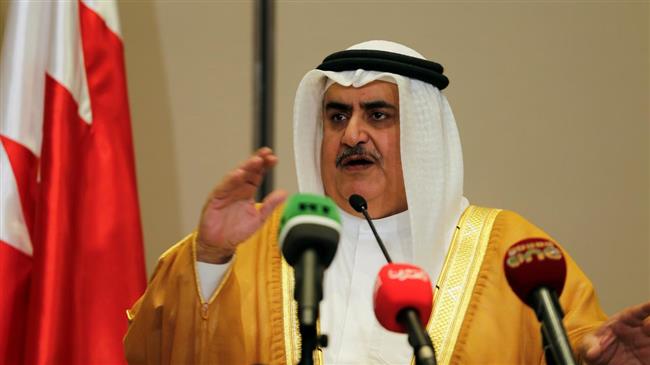
Bahraini FM calls for normalization with Israel
Press TV – May 10, 2020
Bahraini authorities have reportedly cut off an online debate dedicated to the condemnation of attempts by a number of Arab countries to normalize diplomatic relations with Israel.
On Saturday evening, Bahrain Democratic Youth Society organized a virtual event in cooperation with Bahraini Society against Normalization with Zionist Enemy to discuss the matter, the Arabic-language Bahrain Mirror news website reported.
The organizers, however, received phone calls from officials at the Bahraini Ministry of Labor and Social Development as the live broadcast of the seminar started, ordering them to cut it off immediately without providing any explanations.
The presenter of the session surprised the viewership by informing them of the decision and saying, “We received a call from authorities few minutes ago, asking us to cancel this dialogue. We apologize to you all.”
Omani activist Mohammed al-Shehri, one of the participants in the debate, told the London-based al-Araby al-Jadeed media outlet that the decision reflects the fear of Persian Gulf states of any event in condemnation of such normalization.
“Bahraini authorities proved that pressure on activities against normalization with the Zionist enemy is part of preparations for comprehensive normalization, and that the process is being planned in full swing,” he said.
A foreign-based Bahraini activist, requesting not to be named, also said, “What happened delivers a clear message to the world about how Bahraini authorities transform the country into a base from which the Zionists reach out to the rest of (Persian) Gulf countries.”
Last December, Shlomo Amar, the chief rabbi of Jerusalem al-Quds, paid a rare visit to Bahrain at the invitation of King Hamad bin Isa Al Khalifah.
He attended a conference featuring religious leaders from Lebanon, Qatar, Kuwait, Jordan, Egypt, Russia, the United States, Italy, India, and Thailand.
Addressing the event, Amar expressed hope that the Israelis and Bahrainis would be able to visit the occupying territories and the Persian Gulf island without special coordination.
The Israeli rabbi further met with the Bahraini king and conveyed to him what he called “a blessing from Jerusalem that will lead to a solid relationship” with Tel Aviv.
The visit was organized by American officials acting as intermediaries, Israel’s Kan news agency reported.
Separately, Bahraini Foreign Minister Sheikh Khalid bin Ahmed Al Khalifah recognized Israel’s “right to existence” in an interview with English-language The Times of Israel daily newspaper on the sidelines of the US-led economic workshop in Manama on June 26 last year, saying the regime was “there to stay, of course.”
“Who did we offer peace to [with] the [Arab] Peace Initiative? We offered it to … Israel…. We want better relations with it, and we want peace with it,” the top Bahraini diplomat added.
He pointed to the Arab Peace Initiative as the blueprint for normalization of diplomatic relations with Israel, terming the Tel Aviv regime’s rejection of the plan as a “missed opportunity.”
The Arab Peace Initiative, proposed by Saudi Arabia in 2002, calls on Israel to agree to a two-state solution along the 1967 lines and a “just” solution to the Palestinian refugee issue. The initiative has been repeatedly endorsed by the Arab League in 2002, 2007, and 2017.
The Bahraini Foreign Minister also encouraged Israel to approach Arab leaders about issues of concern regarding the proposal.
“Come and talk to us. Talk to us about it. Say, guys, you have a good initiative, but we have one thing that worries us,” he said.
The so-called Peace to Prosperity workshop opened in Bahrain on June 25 and ran through June 26.
US lowers threat perception on Iran
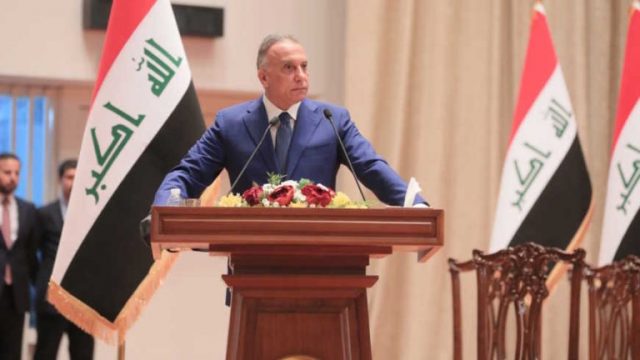
Iraq’s new Prime Minister Mustafa al-Kadhimi won vote of confidence in the parliament in Baghdad on May 7, 2020
By M. K. BHADRAKUMAR | Indian Punchline | May 9, 2020
The drawdown of US military presence in the Middle East, especially from Saudi Arabia, may not be an automatic open sesame — to borrow the magical phrase in the story of “Ali Baba and the Forty Thieves”— leading to the hidden treasure of regional peace and stability, but it does open up a tantalising vista that is seamless in its possibilities.
Speculations are galore about the Pentagon announcement Thursday that the US military will withdraw two Patriot batteries, which have been deployed to protect Saudi oil facilities, along with two jet fighter squadrons.
US President Donald Trump added an ambiguous explanation: “We’re making a lot of moves in the Middle East and elsewhere. We do a lot of things all over the world, militarily we’ve been taken advantage of all over the world… This has nothing to do with Saudi Arabia.” Trump seems to suggest there is a ‘big picture’.
Nonetheless, the move is seen as a showdown between the US and Saudi Arabia, where Washington says to Riyadh that if you do not follow our oil advice, we will throw you under the bus. The fluctuations in the oil market have put strains on the ties binding the two staunch allies and the US oil industry has been hit doubly hard, since even after the recent OPEC+ deal, oil prices continue to fluctuate at the expense of American producers even as Saudi oil tankers reach the US, selling their commodity at lower prices to American buyers, which Washington’s oil industry cannot possibly compete with.
With the storage capacity in the US industry dwindling, the highest ever number of Saudi oil tankers in years are on their way to American shores. Riyadh appears to be flooding the market to drown the shale industry. The mood in Washington has turned ugly, as Trump’s allies in the Congress whose states have been hurt by the price crash, sought a mitigation measure — the Strained Partnership Act — which threatened to punish the Saudis by way of pulling troops and reducing other military commitments unless Riyadh reduced its oil output.
Without doubt, the American oil crash in the wake of the pandemic has taken its toll on US-Saudi relations. But, having said that, Trump cannot be unaware that any US-Saudi friction at this juncture can only work to Iran’s advantage insofar as the coronavirus pandemic is providing an opening to challenge the US presence in Iraq and other places in the Middle East. Top Iranian military officials have openly said in recent weeks that they see the US at its weakest in a while.
Tehran seems to settle for a ‘wait-and-see’ approach until the November election in the US is over, refraining from escalating tensions. Tehran can afford to wait, since the US’ Gulf allies — the UAE, Kuwait, Oman, Qatar — are no longer pushing the US into a confrontationist policy but instead engaging with Iran. There is growing disenchantment in the region regarding the consistency of the US policies.
What lends enchantment to the view is that some easing of US-Iran confrontation is also discernible. Most certainly, the establishment of a new government in Baghdad under Prime Minister Mustafa al-Kadhimi harks back to a priori history of tacit US-Iranian co-habitation in Iraq.
Al-Kadhimi is a secular-minded figure who does not belong to any of the Shi’ite political parties and yet he won with the votes of the Fateh Coalition, the second largest in the Parliament, made up of Shiite political parties that have close ties to Iran.
He briefly lived in Iran as a dissident but moved on to life in exile in UK and the US — and yet, he’s an acceptable choice to Tehran. He is close to the Washington establishment, which is open to making deals with him, and also enjoys personal rapport with the Saudi Crown Prince Mohammed bin Salman, but Tehran is unperturbed and seems to estimate that he is both pragmatic and can also be tough with the US in a way that no Iranian-backed candidate can be.
Above all, Al-Kadhimi is smart enough know Iran’s support is vital if his government is to perform effectively. The hugely sensitive post of Interior Minister in his cabinet has gone to Othman Ali Farhood Musheer Al Ghanimi, an ally of Iran, while the key post of Finance Minister will be held by Ali Allawi, a pro-western figure and nephew of late Ahmed Chalabi. (Chalabi helped the Bush administration to topple Saddam Hussein in 2003.)
Significantly, no sooner than Al-Kadhimi’s government got parliamentary approval on May 7, Washington announced yet another waiver of sanctions against Tehran by allowing Iraq to continue to buy electricity from Iran. Now, unlike previous monthly waivers, Washington has given a 120-day waiver up to September. Tehran is sure to take note.
And this has happened while Washington and Tehran are working out arrangements for another ‘win-win’ prisoner swap. There are four Americans imprisoned in Iran, while Tehran claims “around 20” Iranians are in US custody. Then, there is also the case of a fifth American often thought to be imprisoned in Iran — Robert Levinson, a former FBI and CIA contractor.
Prisoner swaps are a low-cost way of easing tension and Trump places high priority on winning the freedom of Americans imprisoned abroad, and is quick to boast that he is doing better than Barack Obama.
Clearly, neither the US nor Iran is spoiling for a fight. Tensions will spike if the US presses ahead to get the UN Security Council to extend the arms embargo on Iran beyond October (failing which to invoke the ‘snapback’ clause of the 2015 nuclear deal to reimpose UN sanctions against Iran.)
But then, for want of support from the EU or UK, Britain and Germany — and Russia and China’s opposition — Washington may not press ahead. Trump may discuss Iran with Russian President Vladimir Putin, if the frequency of their phone conversations — six times in as many weeks already — is kept up and the range of topics broadens.
Moscow is counselling Tehran to show strategic patience in the face of US provocations. In the final lap of Trump’s term, Russia is keenly seeking an improvement of relations with the US and a showdown over Iran would spoil the climate.
Thus, there is a lull in the fighting in Syria and Iraq. A pause is noticeable in militia attacks on US troops in Iraq in recent weeks. Talks are due in June in Baghdad between Pentagon and Iraqi government regarding US deployments. Israeli officials speak of signs of an Iranian retrenchment in Syria.
Some US officials have also openly acknowledged that Tehran no longer poses an immediate threat to US strategic interests. In this backdrop, the partial drawdown of US forces in Saudi Arabia can also be regarded as a trimming of the US belligerence toward Iran.
Ansarullah slams Saudi Arabia, UAE for using television programs to promote Israel
Press TV – May 8, 2020
The leader of Yemen’s popular Houthi Ansarullah movement has slammed Saudi Arabia and the United Arab Emirates for using certain television programs to promote relations with Israel and demean the Palestinian struggle against occupation.
“Those who are directly coordinated with Israel, or through intermediaries allied with Israel, are partners in their crime,” Abdul-Malik Badreddin al-Houthi said in a speech on Thursday, according to Yemen’s al-Masirah television network.
Al-Houthi added that colluding in crimes committed by the Israeli regime was amongst “the most dangerous” of acts.
“The evils committed by the Zionists are the most significant. This is because the scope of their crimes extends to all of humanity given the large scope of Zionist influence over major countries,” he said.
“People have to avoid providing any assistance to Israel, the United States or their supporters,” al-Houthi added.
Riyadh’s pro-Israel programming
Al-Houthi’s remarks come in response to the airing of a string of media productions by certain Persian Gulf countries promoting ties with Israel.
The new “Umm Haroun” television series is one of such programs produced by the Dubai-based Saudi-owned Middle East Broadcasting Center (MBC).
The series directed by Egypt’s Ahmed Gamal el-Adl in the United Arab Emirates stars a Kuwaiti actress who plays the role of a Jewish midwife of Turkish origin living in the Persian Gulf country before settling in the occupied Palestinian territories.
Hebrew-language outlet N12 reported on Sunday that many believe Saudi Crown Prince Mohammed bin Salman is involved in the series as he is interested in closer relations between the kingdom and Israel.
The Palestinian resistance movement Hamas in Gaza denounced the TV series as a “political and cultural attempt to introduce the Zionist project to Persian Gulf society.”
Critics regard the show as an invitation to normalized ties with Israel. The show has consequentially provoked a storm in the Arab world.
The airing of the series has taken place as Riyadh, along with certain other Persian Gulf states such as the UAE, have moved to embrace relations with the Israeli regime, specifically in the past year.
Numerous Israeli delegations have consequently visited certain Persian Gulf states in recent months. Arab delegations from Persian Gulf states have also visited Israel.
No Arab country has formal relations with the Israeli regime, with the exception of Jordan and Egypt.
“Exit 7”: Yet another pro-Israel production
The “Umm Haroun” series is not the only MBC production seeking to promote ties with Israel to the Arab public.
“Exit 7” is another series currently being aired by the Saudi company.
According to Asia Times, the program seeks to promote various western values alongside breaking taboos regarding Israel.
Characters in the series promote “doing business with Israel” and argue against Saudi aid being sent to Palestine.
The program also disseminates blatantly anti-Palestinian themes, such as claiming that Palestinians “attack Saudi Arabia” whenever an opportunity arises.
Characters in the series also seek to legitimize Israeli occupation of Palestinian land by claiming that Palestinians “sold their land” to Jewish settlers.
Egypt, which signed a peace treaty with Israel in 1979, has disseminated similar claims of Palestinians selling their lands to Jewish settler to legitimize its ties with the Israeli regime.
According to Persian Gulf states analyst Nabeel Nowairah, MBC’s pro-Israel themes clearly “came from the high levels of the government”.
“You cannot talk about these things unless they’re approved by some agency or another. So it has the blessing of Saudi Crown Prince Mohammad bin Salman in some way,” he said.
The Arab-Israeli attempts to normalize ties come as Tel Aviv and Washington have stepped up attempts to legitimize Israeli occupation as part of US President Donald Trump’s so-called “deal of the century” initiative unveiled earlier this year.
Al-Houthi’s remarks on Thursday also come as Tel Aviv has mulled military intervention against Sana’a following the failure of the Saudi war on Yemen seeking to crush the popular Ansarullah, according to reports.
Saudi Arabia and a number of its regional allies launched the devastating war on Yemen in March 2015 in order to bring the country’s former president Abd Rabbuh Mansur Hadi back to power and defeat Ansarullah.
The Saudi-led attempt has, however, been brought to a standstill by the Yemeni resistance.
The US-based Armed Conflict Location and Event Data Project (ACLED), a nonprofit conflict-research organization, estimates that the war has claimed more than 100,000 lives over the past five years.
The UN says over 24 million Yemenis are in dire need of humanitarian aid, including 10 million suffering from extreme levels of hunger.
Riyadh makes inroads into Hollywood
The push to normalize ties with Israel comes as bin Salman has also sought to greatly westernize the kingdom ever since being appointed crown prince in 2017.
According to The Hollywood Reporter, many major US entertainment brands are bracing themselves for large Saudi investment opportunities in the near future.
Last month, Saudi Arabia was disclosed to have bought a 5.7 percent stake in the American events operator Live Nation.
According to the report, Saudi Arabia’s public investment fund has also specifically made an offer to buy the Warner Music Group, one of the three major music moguls in the US.
Many major Hollywood stars have also visited and performed in the oil-rich kingdom in the last year.
The report highlighted that Hollywood companies seeks to overlook the brutal murder of dissident journalist Jamal Khashoggi under the orders of the Saudi state in 2018 – which caused major international uproar – as they step up cooperation with the Saudi regime.
See also:
Featured Video

HE SAVED LIVES. NOW HE FACES PRISON.
or go to
Aletho News Archives – Video-Images
From the Archives
NATO Sanctions and the Coming Global Diesel Fuel Disaster
By F. William Engdahl – New Eastern Outlook – 11.04.2022
Amid the ongoing global inflation crisis, NATO heads of state and mainstream media repeat a mantra that high energy prices are a direct result of Putin’s actions in Ukraine since end of February. The reality is that it is the western sanctions that are responsible. Those sanctions including cutting SWIFT interbank access for key Russian banks and some of the most severe sanctions ever imposed, are hardly having an impact on the military actions in Ukraine. What many overlook is the fact that they are increasingly impacting the economies of the West, especially the EU and USA. A closer look at the state of the global supply of diesel fuel is alarming. But Western sanctions planners at the US Treasury and the EU know fully well what they are doing. And it bodes ill for the world economy.
While most of us rarely think about diesel fuel as anything other than a pollutant, in fact it is essential to the entire world economy in a way few energy sources are. The director general of Fuels Europe, part of the European Petroleum Refiners Association, stated recently, “… there is a clear link between diesel and GDP, because almost everything that goes into and out of a factory goes using diesel.” … continue
Blog Roll
 Aletho News
- Trita Parsi: Middle East Unraveling — Are We on the Path to World War?
- Iran FM meets with US envoy on UN meeting’s sidelines at American side’s insistence: Report
- Qatar PM calls for Gulf security framework with Iran, says war must be ‘wake-up call’
- China condemns US extortion of Iranian airlines, rejects Washington’s ‘illegal’ sanctions threats
- Italy to move military personnel from Taif base after missile strike
- Finland’s Stubb tells European leaders to calm down
- Defeating Russia on battlefield impossible – Fico
- Finland’s Gender Clinic Reversal
- Massachusetts Wants Mental Health Visits, Why Does Government Use ‘Health’ to Enter Our Homes & Families?
- US lawmaker admits American people footing bill for Trump’s failed aggression against Iran
- If Americans Knew
- Sanctions are collective punishment: immoral and self-defeating
- Phosphorus Munitions Fired by Israel Burn Groves, Orchards in Southern Lebanon
- Israel Carries Out New Ceasefire Violations Across Gaza
- AI – Emphasis on the ‘I’: Israel Is Funding AI Chatbot Propaganda
- Israel Blocking Hundreds of Wheelchairs for Injured Children From Entering Gaza
- Israel Is Expanding and Upgrading Compounds for Palestinian Militias in Gaza
- The Palestinian-American Residents of This West Bank Town Are Wondering: Where Is Trump?
- Gaza desperately needs tents, wheelchairs, fuel… and everything else (Israel blocks it all) – Daily Update
- Israeli Attacks in Gaza Kill at Least Seven Palestinians Over Three Days, including Woman and Child
- Trump’s militarization of Washington DC as he pursues Israel’s war against Iran
- No Tricks Zone
- New Study: Earth And Venus Surface Warmth Largely Explained By Convection And Lapse Rate, Not CO2 Or Radiation
- 2025 Nature Paper Claiming Worsening Global Drought Gets RETRACTED …Heavily Flawed
- New Study: ‘Global Drought Shows No Detectable Recent Acceleration Under Climate Warming’
- Economic Masterminds: German Socialists Suggest Taxing Productivity Gains Stemming From Using AI
- The South China Sea Has Not Been Cooperating With The Climate Change Narrative
- Energy Crisis: Germany Enters Heating Season With Historically Low Gas Reserve Fill Levels
- New Study: The Antarctic Ice Sheet Gained Mass From 2020-2024 Due To Staggering Snow And Ice Accumulation
- Study: Ocean Heating Rates From Thousands Of Years Ago ‘Dwarf’ Modern Ocean Heating Rates
- Climate Extremists Target, Attack Large-Scale Power Grid Infrastructure In Germany!
- New Study: Antarctic Ice Melt Has Contributed Less Than 1 Centimeter To Sea Level Rise In The Last 30 Years

