Israel seeking Africa foothold with renewed Chad ties
Press TV – January 21, 2019
Israel has for some time been trying to expand its influence across the African continent. Prime Minister Benjamin Netanyahu’s recent visit to Chad is being viewed as a step in this direction. The two sides have now announced the normalization of their diplomatic ties amid reports of Israel supplying the Central African state with weapons.
Netanyahu, and Chadian President Idriss Deby have “announced the renewal of diplomatic relations between Chad and Israel,” a statement from Netanyahu’s office said Sunday.
Relations between Tel Aviv and the Muslim-majority country were cut in 1972.
Speaking at a joint press conference in N’Djamena on Sunday, Deby told Netanyahu that the purpose of the visit was to bring the two sides closer and to cooperate.
For his part, Netanyahu said that Israel was announcing “a renewal of diplomatic ties with Chad and making a breakthrough for the Arab and Muslim world.”
He said the restoration of diplomatic ties was “a result of strenuous work of recent years.”
Deby, who won a disputed fifth term in April 2016, visited the occupied Palestinian territories and met with Netanyahu in November, becoming the first Chadian leader to visit Israel, 47 years after the two sides severed ties.
Back then, Israeli media cited sources in N’Djamena as saying that Deby’s visit was focused on “security” and that Tel Aviv had already been supplying weapons and other military equipment to Chad.
Over the past two years, Netanyahu has been seeking to secure a foothold in Africa. He has traveled to several African states in a bid to convince them to stop voting against the Israeli regime at the United Nations in favor of Palestinians.
Amid warming relations with Chad, Israel is seeking to normalize relations with Sudan, among other African states.
Israel is also said to be seeking to take advantage of insurgency and Takfiri militancy gripping parts of Africa to sell advanced military equipment to conflict-ridden states in the continent.
Tel Aviv and the Persian Gulf Arab governments have also taken further steps towards normalization.
Only two Arab states, Egypt and Jordan, have open diplomatic relations with Israel. Tel Aviv has recently stepped up its push to make clandestine ties with other Arab governments public and establish formal relations with them.
Pompeo the Warmonger Supports Authoritarian Regimes
By Brian CLOUGHLEY | Strategic Culture Foundation | 20.01.2019
On January 2 US Secretary of State Mike Pompeo visited Brazil, and his Department noted that in discussions with Foreign Minister Ernesto Araujo they “highlighted the importance of working together to address regional and global challenges, including supporting the people of Venezuela, Cuba, and Nicaragua in restoring their democratic governance and their human rights.” Pompeo declared that the US and Brazil “have an opportunity to work alongside each other against authoritarian regimes.”
From this we gather that Pompeo is a strong advocate of democratic governance and will always make it clear that the United States supports unfortunate people living in countries having “authoritarian regimes.” It is apparent he must believe in the Universal Declaration of Human Rights which states that “everyone has the right to freedom of thought, conscience and religion.”
Unfortunately it transpired that Pompeo is a selective supporter of democracy and freedom of religion, because after he left Brazil and went to the Middle East he voiced vigorous support for despots who rule countries in a manner that is undeniably authoritarian.
In a speech in Cairo on January 10 Pompeo threatened Iran and declared that “Nations are rallying to our side to confront the regime like never before. Egypt, Oman, Kuwait, and Jordan have all been instrumental in thwarting Iran’s efforts to evade sanctions.” It must be gratifying for him that these nations have joined the US in its crusade against Iran, three of them being hereditary monarchies and one run by a non-regal martinet.
Oman, for example, is “an absolute monarchy by male primogeniture. The Sultan, Qaboos bin Said al Said, has been the hereditary leader of the country since 1970.” Freedom House notes that “The regime restricts virtually all political rights and civil liberties, and imposes criminal penalties for criticism and dissent… Political parties are not permitted, and the authorities do not tolerate other forms of organized political opposition.”
In Jordan “the monarch holds wide executive and legislative powers, including the appointment of the prime minister and all seats of the senate. The monarch approves and dismisses judges; signs, executes or vetoes all laws; and can suspend or dissolve parliament.”
The leader of Kuwait, the Amir, according to the CIA Factbook, is “chosen from within the ruling family, confirmed by the National Assembly; the prime minister and deputy prime ministers are appointed by the Amir.” In this autocracy, according to Human Rights Watch, there are “no laws prohibiting domestic violence or marital rape… a man who finds his mother, wife, sister or daughter in the act of adultery and kills them is punished by either a small fine or no more than three years in prison.”
Pompeo wants “democratic governance and human rights” in Venezuela, Cuba, and Nicaragua. Why not in Oman, Jordan and Kuwait?
The only one of Pompeo’s countries not ruled by a supreme monarch is Egypt, whose president is Field Marshal Abdel Fattah al-Sisi who “was elected in May 2014, almost a year after he removed his elected predecessor, the Muslim Brotherhood’s Mohammed Morsi, from office in a coup.” Sisi “won a second four-year-term in March 2018 against a sole minor opposition candidate. Human rights lawyer Khalid Ali and former prime minister Ahmad Shafiq withdrew from the race, and the former armed forces chief of staff Sami Anan was arrested.”
In his warmongering anti-Iran, anti-Syria speech Pompeo announced that his visit to Egypt was “especially meaningful for me as an evangelical Christian, coming so soon after the Coptic Church’s Christmas celebrations” and visited the Cathedral of the Nativity of Christ and the Al-Fattah Al-Alim mosque where he praised Egypt’s “freedoms here in this houses [sic] of worship, these big, beautiful, gorgeous buildings where the Lord is clearly at work.”
He ignored Amnesty International’s statement that in Egypt “the authorities continued to violate the right to freedom of religion by discriminating against Christians.” His own Department recorded that last year “Irrespective of religion, authorities also did not apply equal protection to all citizens and sometimes closed churches, in violation of the law, according to multiple sources.”
The bigotry of the Egyptian regime and its clerics was epitomised on January 13 when Al Azhar University which is responsible for “a national network of schools with approximately two million students” expelled a female student for being hugged by a male friend. The scandal was revealed in a video clip which “showed a young man carrying a bouquet of flowers kneeling before a young woman and then hugging her in what appeared to be a marriage proposal.” According to a University spokesman this violates “the values and principles of society”. There was not a word from Pompeo, that self-declared admirer of Egyptian places of worship where “the Lord is clearly at work.”
Pompeo continued his tour of the region, and next day, as he landed in Saudi Arabia, the Egyptian regime announced that for the seventh time it had extended its state of emergency which “allows authorities to take exceptional security measures, including the referral of terrorism suspects to state security courts, the imposition of curfews and the confiscation of newspapers.” This would be supported in Saudi Arabia where, as chronicled by Freedom House, the “absolute monarchy restricts almost all political rights and civil liberties. No officials at the national level are elected. The regime relies on extensive surveillance, the criminalization of dissent, appeals to sectarianism, and public spending supported by oil revenues to maintain power. Women and religious minorities face extensive discrimination in law and in practice.”
This discrimination was highlighted by the New York Times on January 13 when it published an Op-Ed by Alia al-Houthlal that implored Pompeo to ask Saudi Prince Mohammad bin Salman to release her sister, the women’s rights activist, Loujain al-Houthlal, who is imprisoned in Riyadh. Ms Alia al-Houthlal wrote that her sister had been tortured in prison, and that a close associate of bin Salman, Saud al-Qahtani, who has been named in connection with the murder of Mr Jamal Khashoggi [brutally killed in the Saudi consulate in Istanbul on October 2 last year], was present at several torture sessions.
The Times reported that Pompeo began his conversation with bin Salman, the de facto ruler of Saudi Arabia, by saying “I want to talk to you about a couple of places we’ve been. We think we learned a lot along the way that will be important going forward.” There was no mention of the torture of Loujain al-Houthlal or any other gross violations of human rights in Saudi Arabia where the regime continues to “repress peaceful activists and dissidents, harassing writers, online commentators and others who exercised their right to freedom of expression by expressing views against government policies.”
There was none of that embarrassing stuff. It was all skated over, with Pompeo saying only that “we spoke about human rights issues here in Saudi Arabia – women activists. We spoke about the accountability that – and the expectations that we have. The Saudis are friends, and when friends have conversations, you tell them what your expectations are.”
Pompeo’s expectations include joint action with the Saudi regime and other Middle East autocracies to “counter Iranian malign influence,” which he regards as an even higher priority than “working against authoritarian regimes” in Latin America, which Washington is determined to dominate. Pompeo’s objections to authoritarianism are highly selective, for in his Cairo speech he confined himself to describing Iran “malevolent,” and “oppressive” while denouncing “Iranian expansion” and “regional destruction,” which is a trifle ironic, coming from a Secretary of State whose military devastated Iran’s neighbours, Iraq and Afghanistan.
Pompeo’s ethical approach is decidedly ambiguous and his moral flexibility would attract the admiration of a trampoline gymnast. His Cairo speech was titled “A Force for Good: America’s Reinvigorated Role in the Middle East,” but it is apparent that reinvigoration is confined to plans for destruction of Iran, in which Washington will be assisted by Pompeo’s friends — the Middle East’s authoritarian regimes.
Final Steps in Syria’s Successful Struggle for Peace and Sovereignty
By Federico PIERACCINI | Strategic Culture Foundation | 17.01.2019
The situation in Syria evolves daily and sees two situations very closely linked to each other, with the US withdrawal from Syria and the consequent expansionist ambitions of Erdogan in Syria and the Hay’at Tahrir al-Sham (HTS) takeover in Idlib that frees the Syrian Arab Army (SAA) and Russian aviation to liberate the de-escalation zone.
Trump has promised to destroy Turkey economically if he attacks the Kurds, reinforcing his claim that Erdogan will not target the Syrian Democratic Forces (SDF) once the US withdraws from the area. One of the strongest accusations made against Trump’s withdrawal by his opponents is that no Middle Eastern force will ever trust the US again if they abandon the SDF to its fate, that is, to its annihilation at the hands of the Turkish army and its FSA proxies. This, however, is not possible; not so much because of Trump’s economic threats, but because of Damascus and Moscow being strongly opposed to any Turkish military action in the northeast of Syria.
This is a red line drawn by Putin and Assad, and the Turkish president likely understands the consequences of any wrong moves. It is no coincidence that he stated several times that he had no problems with the “Syrians or Syrian-Kurdish brothers”, and repeated that if the area under the SDF were to come under the control of Damascus, Turkey would have no need to intervene in Syria. Trump’s request that Ankara have a buffer zone of 20 kilometers separating the Kurdish and Turkish forces seems to complement the desire of Damascus and Moscow to avoid a clash between the Turkish Armed Forces (TAF) and the SDF.
The only party that seems to be secretly encouraging a clash between the SDF and Turkish forces is Israel, criticizing Ankara and singing the praises of the SDF, in order to try and accentuate the tensions between the two sides, though naturally without success. Israel’s continued raids in Syria, though almost constantly failing due to Syrian air defense, and the divide-and-rule policy used against Turkey and the SDF, show that Tel Aviv is now weakened and mostly irrelevant in the Syrian conflict.
In Idlib, the situation seems to be becoming less complicated and difficult to decipher. Russia, Iran and Syria had asked Erdogan to take control of the province through its “moderate jihadists”, sit down at the negotiating table, and resolve the matter through a diplomatic solution. Exactly the opposite happened. The HTS (formerly al-Nusra/al-Qaeda in Syria) has in recent weeks conquered practically the whole province of Idlib, with numerous forces linked to Turkey (Ahrar al-Sham and Nour al-Din al-Zenki) dissolving and merging into HTS. This development puts even more pressure on Erdogan, who is likely to see his influence in Idlib fade away permanently. Moreover, this evolution represents a unique opportunity for Damascus and Moscow to start operations in Idlib with the genuine justification of combating terrorism. It is a repeat of what happened in other de-escalation areas. Moscow and Damascus have repeatedly requested the moderates be separated from the terrorists, so as to approach the situation with a diplomatic negotiation.
In the absence of an effective division of combatants, all are considered terrorists, with the military option replacing the diplomatic. This remains the only feasible option to free the area from terrorists who are not willing to give back territory to the legitimate government in Damascus and are keeping civilians hostages. The Idlib province seems to have experienced the same playbook applied in other de-escalation zones, this time with a clear contrast between Turkey and Saudi Arabia that shows how the struggle between the two countries is much deeper than it appears. The reasons behind the Khashoggi case and the diplomatic confrontation between Qatar and Saudi Arabia were laid bare in the actions of the HTS in Idlib, which has taken control of all the areas previously held by Ankara’s proxies.
It remains to be seen whether Moscow and Damascus would like to encourage Erdogan to recover Idlib through its proxies, trying to encourage jihadists to fight each other as much as possible in order to lighten the task of the SAA, or whether they would prefer to press the advantage themselves and attack while the terrorist front is experiencing internal confusion.
In terms of occupied territory and accounts to be settled, two areas of great importance for the future of Syria remain unresolved, namely al-Tanf, occupied by US forces on the Syrian-Jordanian border, and the area in the north of Syria occupied by Turkish forces and their FSA proxies. It is too early to approach a solution militarily, it being easier for Damascus and Moscow to complete the work to free Syria from the remaining terrorists. Once this has been done, the presence of US or Turkish forces in Syria, whether directly or indirectly, would become all the more difficult to justify. Driving away the US and, above all, Turkey from Syrian territory will be the natural next step in the Syrian conflict.
This is an unequivocal sign that the war of aggression against Syria is winding up, and this can be observed by the opening of a series of new embassies in Damascus. Several countries — including Italy in the near future — will reopen their embassies in Syria to demonstrate that the war, even if not completely over, is effectively won by Damascus and her allies.
For this reason, several countries that were previously opposed to Damascus, like the United Arab Emirates, are understood to have some kind of contact with the government of Damascus. If they intend to become involved in the reconstruction process and any future investment, they will quite naturally need to re-establish diplomatic relations with Damascus. The Arab League is also looking to welcome Syria back into the fold.
Such are signs that Syria is returning to normality, without forgetting which and how many countries have conspired and acted directly against the Syrians for over seven years. An invitation to the Arab League or some embassy being reopened will not be enough to compensate for the damage done over years, but Assad does not preclude any option, and is in the meantime demonstrating to the Israelis, Saudis and the US Deep State that their war has failed and that even their most loyal allies are resuming diplomatic relations with Damascus, a double whammy against the neocons, Wahhabis and Zionists.
The moral travesty of Israel seeking Arab, Iranian money for its alleged Nakba
By Ramzy Baroud | Ma’an | January 15, 2019
The game is afoot. Israel, believe it or not, is demanding that seven Arab countries and Iran pay $250 billion as compensation for what it claims was the forceful exodus of Jews from Arab countries during the late 1940s.
The events that Israel is citing allegedly occurred at a time when Zionist Jewish militias were actively uprooting nearly one million Palestinian Arabs and systematically destroying their homes, villages and towns throughout Palestine.
The Israeli announcement, which reportedly followed “18 months of secret research” conducted by the Israeli government’s Ministry of Social Equality, should not be filed under the ever-expanding folder of shameless Israeli misrepresentations of history.
It is part of a calculated effort by the Israeli government, and namely by Minister Gila Gamliel, to create a counter-narrative to the rightful demand for the ‘Right of Return’ for Palestinian refugees ethnically cleansed by Jewish militias between 1947-1948.
But there is a reason behind the Israeli urgency to reveal such questionable research: the relentless US-Israeli attempt in the last two years to dismiss the rights of Palestinian refugee rights, to question their numbers and to marginalize their grievances. It is all part and parcel of the ongoing plot disguised as the ‘Deal of the Century’, with the clear aim of removing from the table all major issues that are central to the Palestinian struggle for freedom.
“The time has come to correct the historic injustice of the pogroms (against Jews) in seven Arab countries and Iran, and to restore, to hundreds of thousands of Jews who lost their property, what is rightfully theirs,” said Gamliel.
The language – “.. to correct the historic injustice” – is no different from language used by Palestinians who have for 70 years and counting been demanding the restoration of their rights per United Nations Resolution 194.
The deliberate conflating between the Palestinian narrative and the Zionist narrative is aimed at creating parallels, with the hope that a future political agreement would resolve to having both grievances cancel each other out.
Contrary to what Israeli historians want us to believe, there was no mass exodus of Jews from Arab countries and Iran, but rather a massive campaign orchestrated by Zionist leaders at the time to replace the Palestine Arab population with Jewish immigrants from all over the world. The ways through which such a mission was achieved often involved violent Zionist plots – especially in Iraq.
In fact, the call on Jews to gather in Israel from all corners of the world remains the rally cry for Israeli leaders and their Christian Evangelical supporters – the former wants to ensure a Jewish majority in the state, while the latter is seeking to fulfill a biblical condition for their long-awaited Armageddon.
To hold Arabs and Iran responsible for this bizarre and irresponsible behavior is a transgression on the true history in which neither Gamliel nor her ministry are interested.
On the other hand, and unlike what Israeli military historians often claim, the ethnic cleansing of Palestine in 1947- 48 (and the subsequent purges of the native population that followed in 1967) was a premeditated act of ethnic cleansing and genocide. It has been part of a long-drawn and carefully calculated campaign that, from the very start, served as the main strategy at the heart of the Zionist movement’s ‘vision’ for the Palestinian people.
“We must expel the Arabs and take their place,” wrote Israel’s founder, military leader and first prime minister, David Ben Gurion in a letter to his son, Amos in October 5, 1937. That was over a decade before Plan D – which saw the destruction of the Palestinian homeland at the hands of Ben Gurion’s militias – went into effect.
Palestine “contains vast colonization potential,” he also wrote, “which the Arabs neither need nor are qualified to exploit.”
This clear declaration of a colonial project in Palestine, communicated with the same kind of unmistakable racist insinuations and language that accompanied all western colonial experiences throughout the centuries was not unique to Ben Gurion. He was merely paraphrasing what was, by then, understood to be the crux of the Zionist enterprise in Palestine at the time.
As Palestinian professor Nur Masalha concluded in his book, the ‘Expulsion of the Palestinians’, the idea of the ‘transfer’ – the Zionist term for “ethnic cleansing’ of the Palestinian people – was, and remains, fundamental in the realization of Zionist ambitions in Palestine.
Palestinian Arab “villages inside the Jewish state that resist ‘should be destroyed .. and their inhabitants expelled beyond the borders of the Jewish state,” Masalha wrote quoting the ‘History of the Haganah’ by Yehuda Slutsky. .
What this meant in practice, as delineated by Palestinian historian, Walid Khalidi was the joint targeting by various Jewish militias to systematically attack all population centers in Palestine, without exception.
“By the end of April (1948), the combined Haganah-Irgun offensive had completely encircled (the Palestinian city of) Jaffa, forcing most of the remaining civilians to flee by sea to Gaza or Egypt; many drowned in the process, ” Khalidi wrote in ‘Before Their Diaspora’.
This tragedy has eventually grown to affect all Palestinians, everywhere within the borders of their historic homeland. Tens of thousands of refugees joined up with hundreds of thousands more at various dusty trails throughout the country, growing in numbers as they walked further, to finally pitch their tents in areas that, then were meant to be ‘temporary’ refugee encampments. Alas, these became the Palestinian refugee camps of today, starting some 70 years ago.
None of this was accidental. The determination of the early Zionists to establish a ‘national home’ for Jews at the expense of the country’s Palestinian Arab nation was communicated, openly, clearly and repeatedly throughout the formation of early Zionist thoughts, and the translation of those well-articulated ideas into physical reality.
70 years have passed since the Nakba’ – the ‘Catastrophe’ of 1948 – and neither Israel took responsibility for its action, nor Palestinian refugees received any measure of justice, however small or symbolic.
For Israel to be seeking compensation from Arab countries and Iran is a moral travesty, especially as Palestinians refugees continue to languish in refugee camps across Palestine and the Middle East.
Yes, indeed “the time has come to correct the historic injustice,” not of Israel’s alleged ‘pogroms’ carried out by Arabs and Iranians, but the real and most tragic destruction of Palestine and its people.
A Clinton Memo That Killed Half a Million People
By Daniel Lazare | Consortium News | January 11, 2019
A Hillary Clinton memo that Wikileaks made public in 2016 has not gotten the attention it deserves.
It takes us back to 2012 and the early phase of the Syrian war.
At that point, it was largely an internal affair, although Saudi arms shipments were playing a greater and greater role in bolstering rebel forces. But once the Obama administration decided in favor of intervention, the conflict was quickly internationalized as thousands of holy warriors flooded in from as far away as western China.
The 1,200-word memo by then-Secretary of State Clinton begins with the subject of Iran, an important patron of Syria.
She dismisses any notion that nuclear talks will stop Iran “from improving the crucial part of any nuclear weapons program—the capability to enrich uranium.” If it does get the bomb, it goes on, Israel will suffer a strategic setback since it will no longer be able to “respond to provocations with conventional military strikes on Syria and Lebanon, as it can today.” Denied the ability to bomb at will, Israel might leave off secondary targets and strike at the main enemy instead.
Consequently, Clinton argues that the U.S. should topple the Assad regime so as to weaken Iran and allay the fears of Israel, which has long regarded the Islamic republic as its primary enemy. As the memo puts it:
“Bringing down Assad would not only be a massive boon to Israel’s security, it would also ease Israel’s understandable fear of losing its nuclear monopoly. Then, Israel and the United States might be able to develop a common view of when the Iranian program is so dangerous that military action could be warranted.”
This document making the case to arm Syrian rebels may have been largely overlooked because of the dates, which appear to be inaccurate.
One line gives the time as “2001-01-01 03:00” even though Clinton was still a New York senator-elect at that point. That date is also out of synch with the timeline of nuclear diplomacy with Iran.
Another contains a State Department case and document number and a date of Nov. 30, 2015. But that’s incorrect as well since it postdates Clinton’s resignation as secretary of state by better than two and a half years.
Central to the Great Debate
Consequently, anyone stumbling across the memo in the Wikileaks archives would have no idea of how its rather loopy logic figures in the great debate about whether to use force to bring down Syrian President Bashir al-Assad. But textual clues provide an answer. The second paragraph refers to nuclear talks with Iran “that began in Istanbul this April and will continue in Baghdad in May,” events that took place in 2012. The sixth invokes an interview with CNN’s Christiane Amanpour conducted with then-Israeli Defense Minister Ehud Barak “last week.” Since the interview took place on April 19, 2012, the memo can therefore be dated to the fourth week in April. This is shortly before Clinton joined forces with then-CIA Director David Petraeus to push for an aggressive program of rebel military aid.
Needless to say, Clinton’s skepticism about negotiating with Iran proved to be unwarranted since Iran eventually agreed to shut down its nuclear program. The memo thus illustrates her hawkishness along with her conviction that Israeli security trumps all other considerations even if it means setting fire to a region that’s been burned over more than once.
But the memo illustrates much else besides: Clinton’s recklessness, her lack of realism and her almost mystical belief that everything will fall neatly into place once the United States flexes its muscle. Overthrowing Assad would be nothing less than “transformative,” she writes:
“… Iran would be strategically isolated, unable to exert its influence in the Middle East. The resulting regime in Syria will see the United States as a friend, not an enemy. Washington would gain substantial recognition as fighting for the people in the Arab world, not the corrupt regimes. For Israel, the rationale for a bolt from the blue attack on Iran’s nuclear facilities would be eased. And a new Syrian regime might well be open to early action on the frozen peace talks with Israel. Hezbollah in Lebanon would be cut off from its Iranian sponsor since Syria would no longer be a transit point for Iranian training, assistance and missiles.”
It was “a low-cost high-payoff approach,” she writes, that would eliminate one enemy, weaken two more, and generate such joy among ordinary Syrians that peace talks between Damascus and Tel Aviv will spring back to life. The risks were nil. Since “the Libyan operation had no long-lasting consequences for the region,” the memo says, referring to the overthrow of strongman Muammer Gaddafi six months earlier, the Syrian operation wouldn’t either:
“Some argue that U.S. involvement risks a wider war with Russia. But the Kosovo example [in which NATO bombed Russian-ally Serbia] shows otherwise. In that case, Russia had genuine ethnic and political ties to the Serbs, which don’t exist between Russia and Syria, and even then Russia did little more than complain. Russian officials have already acknowledged they won’t stand in the way if intervention comes.”
So, there was nothing to worry about. Sixty-five years of Arab-Israeli conflict would fall by the wayside while Russia remains safely marginalized.
How it Turned Out
Needless to say, that’s not how things turned out. At that moment, Libya seemed under control. But three or four months later, it would explode as Western-backed Islamist militias blasted away at one another, imposing strict Sharia law, re-instituting slavery and rolling back decades of social progress. Once President Barack Obama approved a modified version of the Clinton-Petraeus plan, Syria would plunge into the same abyss as jihadis funded by Saudi Arabia and the other oil monarchies spread sectarian violence and fear.
Clinton’s assumption that the U.S. could neatly and cleanly decapitate the Syrian government without having to worry about broader consequences was little short of deluded.
The notion that ordinary Syrians would fall to their knees in gratitude was ludicrous while her disregard for the intricacies of Syrian politics was astonishing.
Then there’s the memo’s blithe suggestion that Washington “work with regional allies like Turkey, Saudi Arabia, and Qatar to organize, train, and arm Syrian rebel forces.”
In late 2009, Clinton wrote in another diplomatic memo made public by Wikileaks that “donors in Saudi Arabia constitute the most significant source of funding to Sunni terrorist groups worldwide.” So what made her think two years later that the kingdom would not fund Syrian jihadis of precisely the same ilk?
The 2009 memo slammed Qatar for allowing Al Qaeda, the Taliban and other terrorist groups to use the sheikdom “as a fundraising locale.” So what made her think that a pro-Al Qaeda autocracy would now help Syrians “fight for their freedom,” as the memo puts it? Wouldn’t Qatar be more likely to remove what little freedom Syrians had left? Of course, it would.
There is a remarkable continuity between the Syria policy that Clinton was proposing and earlier policies in Afghanistan and Libya. In the first, U.S. military aid wound up flowing to the notorious warlord Gulbuddin Hekmatyar, a religious sectarian and raging anti-western xenophobe who nonetheless was “the most efficient at killing Soviets,” as Steve Coll put it in “Ghost Wars,” his bestselling 2004 account of the CIA’s love affair with jihad.
Hekmatyar’s cutthroats wound up with the lion’s share of American arms. More or less the same thing happened in Libya once Clinton persuaded Qatar to join the anti-Gaddafi coalition. The sheikhdom seized the opportunity to distribute some $400 million to various rebel militias, many of them Islamist. The Obama administration said nothing in response.
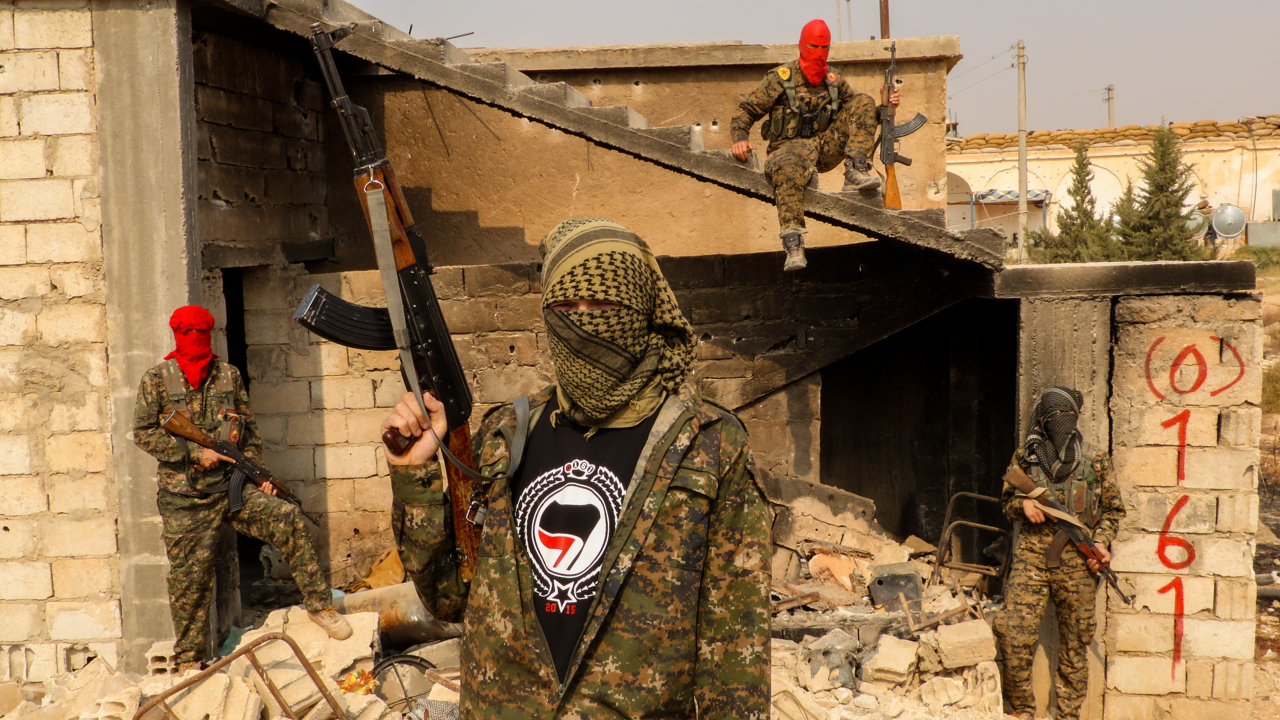
British Fighters with International Freedom Battalion in northern Iraq. (Wikimedia)
Once again, U.S. arms and materiel flowed to the most reactionary elements. The same would happen in Syria where U.S. and Saudi arms went to the local Al Qaeda affiliate, known as Jabhat al-Nusra, and even to ISIS, as a meticulous report by Conflict Armament Research, a Swiss and EU-funded study group in London, has shown. (See “Did Obama Arm Islamic State Killers?” Consortium News, Dec. 21, 2017.)
Insurgency Mix
By August 2012, a secret Defense Intelligence Agency report found that Salafists, the Muslim Brotherhood, and Al Qaeda were already “the major forces driving the insurgency” and that the U.S. and Gulf states backed them regardless. Speechwriter Ben Rhodes summed up the problem of “moderate” rebels who were indistinguishable from Al Qaeda in his White House memoir, “The World As It Is.” In that, he writes that “Al Nusra was probably the strongest fighting force within the opposition, and while there were extremist elements in the group, it was also clear that the more moderate opposition was fighting side by side with al Nusra. I argued that labeling al Nusra as terrorists would alienate the same people we want to help, while giving al Nusra less incentive to avoid extremist affiliations.”
The problem was how to separate the “good” Al Qaeda fighters from the “bad.” Rhodes later complained when Russian President Vladimir Putin said that he and his fellow Obama officials were “trying to climb a spruce tree naked without scratching our ass.” This was “smug,” Rhodes says. But Putin was merely using a colorful expression to say that the policy made no sense; which it didn’t.
The cost, half a dozen years after the Clinton email, is staggering. As many as 560,000 people have died, half the population has been displaced, while the World Bank has estimated total war damage at $226 billion, roughly six years’ income for every Syrian man, woman, and child. A cockeyed memo thus unleashed a real-life catastrophe that refuses to go away. It’s a nightmare from which President Donald Trump is struggling to escape in his confused and deluded way and that the Deep State – everyone from arch-neocon John Bolton to “liberal” Nancy Pelosi– is determined to renew.
Making Sense of Trump’s Foreign Policy
By Federico PIERACCINI | Strategic Culture Foundation | 11.01.2019
As was to be expected, the announcement that the US was withdrawing troops from Syria has served to provoke numerous reactions in the Middle East and beyond. Following the removal of Mattis, Pompeo and Bolton embarked on a whirlwind Middle Eastern tour of Israel, Jordan, Egypt, Bahrain, the United Arab Emirates, Qatar, Saudi Arabia, Oman, and Kuwait to reassure regional allies.
The idea of withdrawing US troops from Syria was based on Trump wishing to fulfil one of his most important electoral promises. Trump knows that he needs to demonstrate to his electoral base that he has kept the most significant promises he made during his 2016 election campaign in order to have any chance of being reelected in 2020. People voted for change, and that includes preventing new wars and getting out of the ones the US is already embroiled in, especially in the Middle East.
If Trump betrays his constituents by not delivering on his campaign promises, then he would simply be like any other politician who, upon being elected, soon forgets about those who put him in office. Trump is aware that such a perception would cost him the possibility of a second term.
We live in a time where Western elites completely ignore the consequences of their actions, manipulate information, lie to their citizens and spread fake news. While we may not always believe what Trumps says in his bombastic remarks, we can rest assured that MSNBC/CNN are even less reliable in terms of facts and unbiased news. Keeping oneself correctly informed is a difficult and demanding task, involving the constant comparison and weighing up of a lot of different sources and constantly researching and learning through the process. Most people do not have the time for this and usually do not care, preferring to rely instead on the mainstream media. This obviously exposes such people to manipulation, lies and distorted facts, clouding the truth and making it difficult to distinguish between what is real and what is fake. Alternative media — the real media — are riding to the rescue, but the overhauling process will require a full generation or even two.
This is why it little matters whether the wall will really built or whether it will only start to be built as a PR stunt or whether it even makes sense in the first place to build it or not. Democrats watching MSNBC/CNN will agree that it is a dumb idea and should not be funded. Republicans watching Fox News will call it a brilliant idea and demand a government shutdown (as Trumps is doing) to force the Democrats to concede. The point is that Democrats or Trump supporters, feeding on news sources based on propaganda and lies, will only have their respective biases confirmed without the need for any real debate.
What is important for us to understand is how Trump operates in order to gain the support of his base. That is what guides him in domestic, foreign and economic affairs. In the case of the wall, Trump’s battle is against the Democrats, and the actions he has taken to fight his opponents is by using the government shutdown to provide himself with a win-win outcome. If the Democrats fund the wall, they lose in the eyes of their voters, as Trump ends up getting his wall. If the Democrats do not fund the wall, Trump will blame them and point to the government shutdown to demonstrate how he valiantly struggled against the Democrats in an effort to keep his promises.
The same is the case with the economic warfare employing the US dollar and imposing tariffs and duties on allies and enemies alike. MSNBC/CNN will tell you that this is damaging the American economy. The Democrats will say that it is a failed strategy, without admitting that they hate Trump’s “economic war” because it undermines US dollar hegemony and thereby their ability to prosecute the neoliberal imperialism to which they are so addicted.
Fox News, on the other hand, will spin the news to show how Trump is battling against Xi Jinping and China in the interests of American farmers. Self-proclaimed experts will go on about the success of the White House’s economic strategy, declaring it a brilliant idea. Trump voters will enjoy the coverage of Fox News and accordingly praise the “commercial war”. Democrats will love the coverage of MSNBC/CNN and will worry about how various policies will either restore or further diminish US global leadership.
The announcement of the withdrawal from Syria follows the same logic as the examples given above. Trump announced the withdrawal only in order to keep an electoral promise. The entire Washington foreign-policy establishment is opposed to Trump’s decision. The purpose of the announcement was to convey to his voters a simple but clear message: I am trying to do what I promised you, but I have everyone against me in Washington as well as in the media.
The same logic is employed with the government shutdown in order to fund the wall. Whenever Democrats, Republicans or talking heads condemn Trump’s withdrawal from Syria/Afghanistan, his effort to build the wall, his imposition of tariffs and duties, his sanctions on Iran, they reinforce the beliefs of Trump’s supporters, showing that Trump is really trying to keep his promises in the face of tremendous opposition.
Every time they bash him they provide free advertisement for Trump and his political line, and this has been going on from the first time he announced he would run in the primaries in 2015. It is a win-win situation for him, even if he does not really build the wall, pull out of Syria, or effectively reduce the trade imbalance between China and the US. If he succeeds, he can declare that he has kept his promises. If he fails, then he can lay be blame squarely at the feet of his political opponents. People elected him on the basis of his words and promises. If he can demonstrate that he at least tried to keep his promises (even if he never actually does), then that should be enough to give him a second term.
Trump understands very well how the media works and how much Washington detests him. He does not want to change the status quo and revolutionize Washington. He does not want to openly challenge the foreign-policy establishment by following a realist-isolationist policy. That was what he said in 2015/16 during the campaign trail, but his presidency has been much different from what he promised, especially in foreign policy. Nevertheless, Trump seeks re-election, and he cannot entirely break with the Washington establishment if he hopes to succeed. Indeed in 2016 he demonstrated this by appointing a staff of generals whose credo over the span of several decades has been that of American exceptionalism, the governing religion of Washington. He used the military to protect himself from the media-intelligence community, shielding himself with four generals (Kelly, McMaster, Mattis and Flynn), in the full knowledge that none of them would support a realist-isolationist policy.
For this reason, the ructions that have followed the announcement of the withdrawal from Syria are part of normal US political theater, such as was the case with the resignation/dismissal of Mattis. It is no surprise that the deep state immediately dispatched Bolton and Pompeo to sooth the concerns of dozens of US allies, in particular Israel and the Arab states. It was a PR exercise to reassure them of the real intentions of the US in the area (i.e., enduring imperialism).
In practice, it makes little difference whether the US has 2,000 or 200 men in Syria. They will not be able to change the course of the war of aggression against Damascus in their favor. It is therefore not surprising that Bolton was not fired for publicly contradicting Trump on the question of withdrawing troops from Syria. Such contradictions play in Trump’s favor. His supporters will say that Trump is so anti-establishment that even his closest collaborators are against him.
If Trump were to fire Bolton as he did Mattis, none of his faithful voters will remember the ill-considered choice to appoint him in the first place, and will be struck instead by Trump’s determination to stick to his guns and rid himself of internal saboteurs who stand in the way of his electoral mandate. As long as Trump, in our scenario, were not to name someone worse than Bolton, the imperialist wheel will continue to turn.
Just look at North Korea as an example. Trump threatened to destroy Pyongyang, even knowing the US could not really do so. Then he meet with Kim, did an epic PR exercise that presented Trump as solving a major international problem that had eluded all his predecessors. After conveying this triumph to his base, he simply forgot all about Kim, Pyongyang and Seoul. In the meantime, the two Koreas are nonetheless speaking, advancing reconciliation and preparing for historical changes. As for Trump, he has already moved on, North Korea no longer holding his interest, the drama having served its purpose for a certain time but no longer being of relevance. (This, thankfully, is to the benefit of the Korean people.)
It seems the same playbook is being employed in Syria. Trump announced the withdrawal, while leaving a few hundred soldiers behind who continue to be unable to change the situation on the ground; Bolton and Pompeo are dispatched to reassure allies/financiers, though Trump cannot wait to forget about Syria, proclaiming the falsehood that US, under his leadership, defeated ISIS (thereby fulfilling one of his electoral promises).
As I wrote following Trump’s election, The Donald’s victory only served to accelerate the transition to a multipolar world, as we saw in the first two years of his presidency, with Trump’s focus on his base translating into a perennial electoral campaign that uses all the tools at his disposal (domestic, foreign, economic, financial, and currency policy). This creates distrust and concern amongst historical allies and pushes Washington’s enemies closer together, serving in the process to smooth out any tensions that may have hitherto existed between these countries.
Just think of the Astana format of Turkey, Iran and Russia concerning Syria, Inter-Korean talks in Asia, a peace treaty to be signed between Russia and Japan, Indian-Iranian cooperation on trade in oil, a European stance against Iranian and Russian sanctions, and, to top it off, coordination between the Russians and the Chinese on almost everything. All this is in the name of opposing US imperialist policies or trying to directly score a political win against Donald Trump and his policies.
Trump’s enemies have learned to ignore US decisions, which have now become irrelevant in certain parts of the globe. America’s historical allies cling hopefully to the words of Bolton and Pompeo, well aware that the US will not soon change their basic neoliberal and imperialist approach towards the world. Nevertheless, Washington is losing military and economic influence due to the transition into a multipolar world order, where power is shared among multiple countries (China, Russia, Iran, India). The unipolar moment is over and is not coming back, especially not with Donald Trump as president. And that is a good thing for the rest of the world.
Lebanon president warns of the consequences of Israel threats
MEMO | January 10, 2019
Lebanese President Michel Aoun yesterday warned of the “Israeli threats” which could lead to new wars, displacement and ethnic cleansing.
Speaking before members of the diplomatic corps accredited to Lebanon in the capital Beirut, Aoun said that “peace does not take place while deals are made at the expense of the refugee who was expelled from his land and his identity was stolen”.
“Peace does not come at the expense of manipulating demography and changing the geographical and social parameters of countries. Peace does not result from deepening racism and rejecting the other.”
The Lebanese president was referring to US President Donald Trump’s proposed Middle East peace plan dubbed the “deal of the century”.
In regards Syrian refugees in Lebanon, Aoun said the international community’s position is not clear about whether they should return to their country, warning that the proposed positions which link the refugees’ return to finding a political solution to the Syrian crisis is “worrying” because a solution could take a long time.
More than 1.2 million Syrian refugees live in Lebanon, a majority of them in areas that experience economic, political and security crises.
Featured Video
Seyed M. Marandi: U.S. Military DIVIDED? Iran’s Secret Defense EXPOSED
or go to
Aletho News Archives – Video-Images
From the Archives
‘Israel sees Iran as obstacle to its policies’
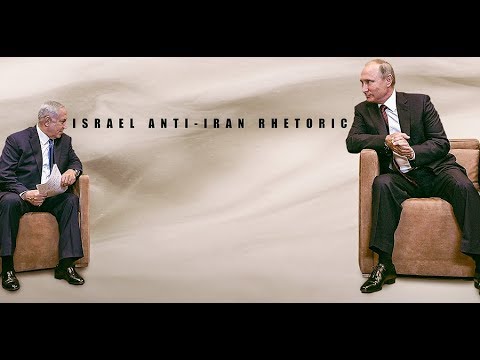
Press TV – August 25, 2017
Prime Minister Benjamin Netanyahu has said that Israel felt threatened by Iran’s growing influence in the Middle East. Netanyahu expressed his Iranophobic view in a meeting with Russian President Vladimir Putin in Russia’s Black Sea resort of Sochi on Wednesday. Press TV has asked Scott Rickard, former American intelligence linguist from Tampa, Florida, and Brent Budowsky, a columnist at The Hill from Washington, to give their thoughts on the issue.
Rickard said Tel Aviv is concerned about the fact that the regime could not carry out its old project to spread sectarian divisions and pave the way for dismemberment of the countries in the Middle East region because of the Iranian-led resistance against Israeli policies, not only in the occupied territories of Palestine but also in the whole region.
“Iran is not a threat to Israel whatsoever. The threat that Israel sees is the fact that their Oded Yinon Plan is being put to a hold by Iran,” the intelligence linguist said on Thursday night.
“They (the Israelis) look at Iran as a threat only because they have no influence on their governments and Iran is autonomous and is not under the Zionist influence,” he added.
Since the victory of the Islamic Republic of Iran in 1979, Tehran has been critical of Israel’s policies in the region, whereas “no leaders [of other states] even dared to speak out against Zionism,” Rickard argued. … continue
Blog Roll
 Aletho News
- Evidence points to Ukraine being behind TurkStream attempted sabotage, but that should come as no surprise
- Sri Lanka secures supplies of Russia oil – minister
- Nations across Asia strike direct deals with Iran for Hormuz passage
- IRGC commander declares ‘new phase’ of reprisal attacks against aggressors
- Israel’s air defenses overwhelmed by cluster-warhead Iranian missiles: Reports
- Striking Iran’s Infrastructure Would Have Little Military Impact – Report
- What’s Behind U.S./Israeli Strikes On Iranian Pistachio Factories?
- Seyed M. Marandi: U.S. Military DIVIDED? Iran’s Secret Defense EXPOSED
- How I fell foul of the BBC thought police
- The End of NATO
- If Americans Knew
- Trump says Iranians appreciate bombs, WHO warns of nuclear risks – Daily Update
- U.N. experts demand Israel release prominent Gaza doctor after reports of ‘severe torture’
- Israel’s Latest Genocide Is Against the Shias of Lebanon. Why Is the World Silent?
- How Eliot Cohen’s influence over U.S. war-making paved the way for Trump’s war crimes in Iran
- Israelis don’t pay for the weapons we ‘sell’ to them — US taxpayers do
- While Distancing from AIPAC, Most 2028 Democratic Hopefuls Are Still Embracing Israel
- A brief history of the Israeli nuclear program, the open secret at the heart of the Iran war
- Israeli Settlers Killed a Palestinian Farmer on His Own Land, in Front of His Father. Yes, Again
- The US-Israeli War on Science is an Assault on our Future
- 100+ International Law Experts Say US Strikes on Iran Violate UN Charter, Could Be War Crimes
- No Tricks Zone
- An Inconvenient Tree: Uncovered In Alps… Europe Much Warmer Than Today 6000 Years Ago
- New Study Reports A 60% Slowdown In Greenland’s Ice Loss Rate In The Last Decade
- Low Intensity Tornado Wrecks Major Solar Farm, Creating A Potential Toxic Dump
- New Study Finds Warming Saves Lives…Cold Temperatures 12 Times More Deadly Than Excess Heat
- German Science Blog Accuses PIK Climate Institute Of Hallucinating Climate Tipping Points
- Devastating Assessment Of Comirnaty Vaccine By Former Senior Pfizer Europe Toxicologist
- New Study: CO2 Is ‘Effectively Negligible’ As An Explanatory Climate Change Factor Since 2000
- Former Pfizer Toxicologist Dr. Helmut Sterz Tells Bundestag Hearing Pfizer Vaccine Should Have Never Been Approved
- Energy Expert: Germany’s Nuclear Phaseout Was A “500 Billion Euro Mistake”
- New Research: South Australia’s Mid-Holocene Sea Surface Temperatures Were 4°C Warmer Than Today
 Aletho News