Oman rejects mediating between Israelis, Palestinians
Press TV – October 27, 2018
Oman says it will not act as a “mediator” between Israelis and Palestinians, playing down an earlier visit by Israeli Prime Minister Benjamin Netanyahu.
The sultanate was only offering ideas to help Israel and Palestinians to come together, Omani Foreign Minister Yousuf bin Alawi bin Abdullah told a security summit in Bahrain’s capital Manama on Saturday.
The remarks came a day after Netanyahu visited Oman in a rare visit, while accompanied by other senior Israeli officials, including the head of the Israeli spy agency Mossad.
“We are not saying road is now easy and paved with flowers, but our priority is to put an end to the conflict and move to a new world,” Reuters cited Abdullah as saying.
Despite apparently trying to sound impartial, Abdullah said Oman relied on the United States and efforts by US President Donald Trump in working towards the “deal of the century.”
The Trump administration has targeted the plan at the situation in the Palestinian territories.
Details are yet to emerge, but reports say it envisages a Palestinian state with limited sovereignty across about half of Israel-occupied West Bank and all the Gaza Strip. The deal also reportedly foresees potential disarming of the Palestinian resistance movement Hamas, and does not find Palestinians entitled to the eastern part of Jerusalem al-Quds as their capital.
This is while Abbas, who visited Oman before Netanyahu for three days, has renounced the plan, saying it has been devised without consulting the Palestinians. He also spurned any intermediary role by the US late last year after Washington recognized Jerusalem al-Quds as Israel’s “capital.”
In June, however, Saudi Arabia, the United Arab Emirates, Egypt, and Jordan assured the US of their support for the plan during visits to those countries by Trump’s senior adviser and son-in-law Jared Kushner, and Jason Greenblatt, the US envoy to the region.
Saudi Arabia’s Foreign Minister Adel al-Jubeir told the Manama gathering on Saturday that the kingdom believed the key to “normalizing” relations with Israel was the “peace process.”
The Omani minister also claimed Israel was “present in the region, and we all understand this, the world is also aware of this fact and maybe it is time for Israel to be treated the same and also bear the same obligations.”
Observers say Muscat has come to accommodate the US plan under pressure from Washington and Riyadh, the strongest US ally in the Persian Gulf region, which has been inching towards Tel Aviv over the past years.
Palestinian groups, however, condemned the Israeli prime minister’s visit to Oman, urging Arab countries to support the oppressed people of Palestine, instead.
Hamas warned about the dangerous consequences of Netanyahu’s visit for the people of Palestine. The Islamic Jihad movement also censured the visit, saying Oman acquitted Netanyahu of the crimes committed against innocent Palestinians by welcoming him to the country.
Commenting on Netanyahu’s visit, Paul Larudee, with the Free Palestine Movement, told PressTV, “What in the world would Netanyahu know about peace and stability, when his objectives and objectives of Israel have always been war and instability?”
“The importance is what their objectives are not. They are not about Arab unity, not about solidarity with Arabs who are suffering namely the Palestinians,” he said.
“These other countries realize that sooner or later they are potential targets of Israel… that they can be in the same place that the Palestinians are now,” Larudee said.
Israel Culture Minister arrives in UAE
MEMO | October 26, 2018
In first, Israel’s Culture and Sports Minister Miri Regev today arrived in the United Arab Emirates (UAE) to attend the Abu Dhabi Grand Slam Judo tournament.
Regev was invited to attend the event earlier this month to accompany Israel’s national judo team as they compete in the Emirati capital. President of the International Judo Federation (IJF), Marius Vizer, wrote to Regev on 2 October to invite her to the tournament and promised to “make all the necessary arrangements for [her] visit”.
The invitation came after the IJF demanded that the UAE allow the Israeli team to play its national anthem and fly its flag during the tournament. The event had previously been threatened with cancellation after the IJF stripped the UAE of the right to host the tournament due to its failure to guarantee “equal treatment” for Israeli athletes. In September, the UAE accepted the IJF’s conditions and allowed the Israeli judoists to sport their national insignia.
Regev’s attendance at the event – which is taking place from 25-27 October – will be seen as controversial in light of the lack of official relations between Israel and the UAE. In addition, Israeli passports are not valid for travel to the UAE.
However, the UAE has recently been pursuing a policy of normalisation with Israel. In September, it hosted secret backchannel talks between Israel and Turkey in an attempt to mend strained Israeli-Turkish relations. Envoys from the two countries flew into Abu Dhabi via Amman, Jordan, though neither government would confirm the purpose of the talks.
In August, an Israeli journalist claimed that an Emirati pilot participated in the bombing of Palestinian targets in the Gaza Strip during his training on Israeli Air Force F-35 fighters. Cohen, the journalist who made the claims, also accused Dubai’s Deputy Chairman of Police and Public Security, General Dhahi Khalfan, of being complicit in assassinating Hamas leader Mahmoud Mabhouh in Dubai in 2010.
In June, an exposé by the New Yorker revealed that Israel and the UAE have been engaged in secret normalisation talks since the 1990s. The report disclosed that “the secret relationship between Israel and the UAE can be traced back to a series of meetings in a nondescript office in Washington D.C. after the signing of the Oslo Accords”. These meetings discussed the possibility of the UAE purchasing F-16 fighter jets from the US which are known to be comprised of Israeli technology. The Crown Prince of Abu Dhabi, Mohammed Bin Zayed, also gave his blessing for delegations of influential American Jews to be brought to Abu Dhabi to meet with Emirati officials and establish an intelligence-sharing relationship.
Turkey seeks to ‘blackmail’ Saudi over Khashoggi’s case: Analyst
Press TV – October 26, 2018
The United States and Turkey are seeking to manipulate the crisis over the murder of Saudi dissident journalist Jamal Khashoggi in an attempt to change the equilibrium in the Middle East, says a political analyst.
“I think the Turkish intelligence have so many information but they want to blackmail the Saudis and they push a little part after little part of the information that they have to press and blackmail the Saudi government,” Hadi Kobaysi told Press TV in an interview on Friday.
“I think that from the beginning why [did] Khashoggi go to Turkey, there is a Saudi consulate in Washington … I think that there is a game from the beginning to put the Saudi government under pressure … So from the beginning there is a game and the manipulation was from Turkey and the United States and the goal was to change the game in the Middle East,” he added.
Khashoggi – a US resident, Washington Post columnist, and a leading critic of Crown Prince Mohammed bin Salman — entered the Saudi consulate in Istanbul on October 2 to obtain a document certifying he had divorced his ex-wife, but he did not leave the building.
Saudi officials originally insisted that Khashoggi had left the diplomatic mission after his paperwork was finished, but they finally admitted several days later that he had in fact been killed inside the building during “an altercation.”
Several countries, including European ones, Turkey and the US, a major ally of Riyadh, have called for clarifications on the murder.
The reduction of Israel’s reliance on Bin Salman
MEMO | October 18, 2018
There have been remarks in Israel recently expressing disappointment at Saudi Crown Prince Mohammad Bin Salman’s performance regarding the disappearance of journalist Jamal Khashoggi. This does not stem from his bloody repression of his opponents, but from the fact that this policy has reduced Israel’s ability to rely on him to draw a new map of the Middle East or to push US President Donald Trump’s plan for the Palestinian cause in a manner that serves the policies of the occupation. Reading between the lines, we can also see more of Israel’s hidden aspirations for Bin Salman.
A comment in Yedioth Ahronoth newspaper yesterday is a case in point. An Israeli journalist specialising in Arab affairs noted that the regional strategy adopted by the Trump administration and the government of Benjamin Netanyahu for the Arab region depends on two things: a close alliance with Abdel Fattah Al-Sisi’s Egypt and the anti-Iran axis in the Gulf, led by Saudi Arabia. In the journalist’s opinion, the Israel-Saudi axis was supposed to completely change the status quo in the region regarding the anti-Tehran front by achieving comprehensive open normalisation with Israel. At the same time, she stressed that many Israelis and Jews who have met with Bin Salman said that he gave them a strong impression of being “the Arab leader” capable of bringing about such change. She noted that unlike many other Arab leaders who agree with the Israelis on everything behind closed doors and then attack it publically, Bin Salman’s discourse regarding Israel in the Saudi media and social media is very positive.
In this regard, we must note that Israeli research centres have warned in the past against relying on Arab states defined as moderate by Israel to force the Palestinians to accept Trump’s plan. One institute described this assumption as “a dangerous illusion.”
This is not due to the Israeli conviction that these Arab states are keen on the Palestinian cause, but because of the Arab leaders’ limited willingness to deviate from the prevailing positions held by the general public in their countries on this issue, especially in the wake of the Arab Spring revolutions. This has been noted by the same Israeli writers.
The current remarks about Bin Salman are reminiscent of those made about the Arabs by the founder of the Zionist movement, Theodor Herzl, in his novel Altneuland (The Old-New Land). Herzl’s character, Reschid Bey, was an intellectual educated in Germany who gladly agreed with the Jews coming to Palestine, believing that they would bring blessings and civilisation and save it from underdevelopment. The author described Bey’s father as “among the first to understand the beneficent character of the Jewish immigration, and enriched himself, because he kept pace with our economic progress. Reschid himself is a member of our New Society.” Herzl also put submissive words in the character’s mouth: “Our profits have grown considerably. Our orange transport has multiplied tenfold since we have had good transportation facilities to connect us with the whole world. Everything here has increased in value since your immigration.” Furthermore, “The Jews have enriched us. Why should we be angry with them? They dwell among us like brothers. Why should we not love them?”
While Herzl did not mention the Arab issue in his novel and deliberately chose to ignore it completely, along with the indigenous Arab people, he did portray the Jews as the masters and guardians who will bring civilisation and culture with them, while portraying the Arabs as the submissive and lowly side of the equation who promote the benefits of Jewish immigration.
It is no exaggeration to say that the general Zionist view of the Arabs is still attached to this vision. Moreover, it seems that some of the Arabs have internalised it about themselves.
This article first appeared in Arabic on Al-Araby Al-Jadeed on 17 October 2018
Khashoggi Was No Critic of Saudi Regime
By As`ad AbuKhalil | Consortium News | October 15, 2018
The disappearance of Jamal Khashoggi, the Saudi journalist, in the Saudi consulate in Istanbul last week has generated huge international publicity, but unsurprisingly, little in Saudi-controlled, Arab media. The Washington Post, for whom Khashoggi wrote, and other Western media, have kept the story alive, increasing the pressure on Riyadh to explain its role in the affair.
It’s been odd to read about Khashoggi in Western media. David Hirst in The Guardian claimed Khashoggi merely cared about absolutes such as “truth, democracy, and freedom”. Human Rights Watch’s director described him as representing “outspoken and critical journalism.”
But did he pursue those absolutes while working for Saudi princes?
Khashoggi was a loyal member of the Saudi propaganda apparatus. There is no journalism allowed in the kingdom: there have been courageous Saudi women and men who attempted to crack the wall of rigid political conformity and were persecuted and punished for their views. Khashoggi was not among them.
Some writers suffered while Khashoggi was their boss at Al-Watan newspaper. Khashoggi—contrary to what is being written—was never punished by the regime, except lightly two years ago, when Saudi Crown Prince Mohammed bin Salman (MbS) banned him from tweeting and writing for Al-Hayat, the London-based, pan-Arab newspaper owned by Saudi Prince Khalid bin Sultan.
By historical contrast, Nasir As-Sa`id was a courageous secular Arab Nationalist writer who fled the kingdom in 1956 and settled in Cairo, and then Beirut. He authored a massive (though tabloid-like) volume about the history of the House of Saud. He was unrelenting in his attacks against the Saudi royal family.
For this, the Saudi regime paid a corrupt PLO leader in Beirut (Abu Az-Za`im, tied to Jordanian intelligence) to get rid of As-Sa`id. He kidnapped As-Sa`id from a crowded Beirut street in 1979 and delivered him to the Saudi embassy there. He was presumably tortured and killed (some say his body was tossed from a plane over the “empty quarter” desert in Saudi Arabia). Such is the track record of the regime.
Finding the Right Prince
Khashoggi was an ambitious young reporter who knew that to rise in Saudi journalism you don’t need professionalism, courage, or ethics. In Saudi Arabia, you need to attach yourself to the right prince. Early on, Khashoggi became close to two of them: Prince Turki Al-Faysal (who headed Saudi intelligence) and his brother, Prince Khalid Al-Faysal, who owned Al-Watan (The Motherland) where Khashoggi had his first (Arabic) editing job.
Khashoggi distinguished himself with an eagerness to please and an uncanny ability to adjust his views to those of the prevailing government. In the era of anti-Communism and the promotion of fanatical jihad in Afghanistan and elsewhere, Khashoggi was a true believer. He fought with Osama bin Laden and promoted the cause of the Mujahideen.
The Washington Post‘s David Ignatius and others want to embellish this by implying that he was an “embedded” reporter—as if bin Laden’s army would invite independent journalists to report on their war efforts. The entire project of covering the Afghan Mujahideen and promoting them in the Saudi press was the work of the chief of Saudi intelligence, Prince Turki, Khashoggi’s principal patron-prince.
Western media coverage of Khashoggi’s career (by people who don’t know Arabic) presents a picture far from reality. They portray a courageous investigative journalist upsetting the Saudi regime. Nothing is further from the truth: there is no journalism in Saudi Arabia; there is only crude and naked propaganda.
Editors are trusted individuals who have demonstrated long-time loyalty. Khashoggi admitted to an Arab reporter last year in an interview from Istanbul that in Saudi Arabia he had been both editor and censor. Editors of Saudi regime papers (mouthpieces of princes and kings) enforce government rules and eliminate objectionable material.
Khashoggi never spoke out for Saudis in distress. He ran into trouble in two stints as Al-Watan editor because of articles he published by other writers, not by himself, that were mildly critical of the conservative religious establishment—which he at times supported. He was relocated to another government media job— to shield him from the religious authorities.
Khashoggi was the go-to man for Western journalists covering the kingdom, appointed to do so by the regime. He may have been pleasant in conversation with reporters but he never questioned the royal legitimacy. And that goes for his brief one-year stint in Washington writing for the Post.
A Reactionary
Khashoggi was a reactionary: he supported all monarchies and sultanates in the region and contended they were “reformable.” To him, only the secular republics, in tense relations with the Saudis, such as Iraq, Syria and Libya, defied reform and needed to be overthrown. He favored Islamization of Arab politics along Muslim Brotherhood lines.
Khashoggi’s vision was an “Arab uprising” led by the Saudi regime. In his Arabic writings he backed MbS’s “reforms” and even his “war on corruption,” derided in the region and beyond. He thought that MbS’s arrests of the princes in the Ritz were legitimate (though he mildly criticized them in a Post column) even as his last sponsoring prince, Al-Walid bin Talal, was locked up in the luxury hotel. Khashoggi even wanted to be an advisor to MbS, who did not trust him and turned him down.
Writing in the Post (with an Arabic version) Khashoggi came across as a liberal Democrat favoring democracy and reform. But he didn’t challenge Saudi regime legitimacy or Western Mideast policy. Mainstream journalists were enamored with him. They saw him as an agreeable Arab who didn’t criticize their coverage of the region, but praised it, considering the mainstream U.S. press the epitome of professional journalism. Khashoggi was essentially a token Arab writing for a paper with a regrettable record of misrepresenting Arabs.
In Arabic, his Islamist sympathies with Turkey and the Muslim Brotherhood (Ikhwan) were unmistakable. Forgotten or little known in the West is that during the Cold War the Saudis sponsored, funded, and nurtured the Muslim Brotherhood as a weapon against the progressive, secular camp led by Egypt’s Gamal Abdel Nasser. Ikhwan controlled the Saudi educational system raising Saudi students to admire the Brotherhood. But Sep. 11 changed the Saudi calculus: the rulers wanted a scapegoat for their role in sponsoring Islamist fanaticism and the Ikhwan was the perfect target. That made Khashoggi suspect too.
Hints Against Him
Recent articles in the Saudi press hinted that the regime might move against him. He had lost his patrons but the notion that Khashoggi was about to launch an Arab opposition party was not credible. The real crime was that Khashoggi was backed alone by Ikhwan supporters, namely the Qatari regime and the Turkish government.
A writer in Okaz, a daily in Jeddah, accused him of meeting with the Emir of Qatar at the Four Seasons Hotel in New York and of having ties to “regional and international intelligence services.” If true it may have sealed his fate. Qatar is now the number one enemy of the Saudi regime—arguably worse than Iran.
Khashoggi was treated as a defector and one isn’t allowed to defect from the Saudi Establishment. The last senior defections were back in 1962, when Prince Talal and Prince Badr joined Nasser’s Arab nationalist movement in Egypt.
Khashoggi had to be punished in a way that would send shivers down the spine of other would-be defectors.
As’ad AbuKhalil is a Lebanese-American professor of political science at California State University, Stanislaus. He is the author of the Historical Dictionary of Lebanon (1998), Bin Laden, Islam and America’s New “War on Terrorism” (2002), and The Battle for Saudi Arabia (2004). He also runs the popular blog The Angry Arab News Service.
US-Saudi alliance in twilight zone
By M. K. BHADRAKUMAR | Indian Punchline | October 15, 2018
President Donald Trump’s remarks about the Jamal Khashoggi affair in the interview with CBS 60 Minutes turned out to be nothing earthshaking. Basically, he said three things: a) Son-in-law Jared Kushner spoke to Crown Prince but latter denied; b) Saudi culpability is yet to be established and if it gets proven, US will be “very upset and angry” and “there will be severe punishment”; and, c) Sanctioning Saudi Arabia is problematic, given deep business interests and “There are other ways of punishing” Saudi Arabia – if it indeed comes to that.
Trump didn’t elaborate what could be the “other ways”. But Saudi Arabia has posted the warning that there will be dire consequences – “any action against the kingdom will be responded to with greater reaction” – if the US dared to proceed on any such track of “economic sanctions, using political pressure or repeating false accusations.” Interestingly, Saudis alluded to “the support of allies” in countering the “organized campaign” against it.
An influential Saudi establishment figure subsequently dilated on the likely retaliation in the event of US sanctions, claiming Riyadh has drawn up a list of 30 “potential measures”:
- Saudis will not accede to Trump’s requests to boost oil production (to make up for shortfall due to Iran sanction) and instead let oil prices rise to “$100, or $200, or even double that figure.”
- Saudis will stop using dollars for oil trade and may instead switch to a “different currency, Chinese yuan, perhaps.”
- Saudi-Iranian rapprochement may ensue, with Russian help.
- Saudis may end intelligence cooperation over terrorist threat to western countries.
- Saudis may turn to Russia and China to source weapons.
- Saudis may allow a Russian base in the northwestern province of Tabuk situated “in the heated four corners of Syria, Israel, Lebanon and Iraq.”
- Saudis will revive links with Hamas and Hezbollah.
- Saudi will pull out of investments in the US, estimated at $800 billion.
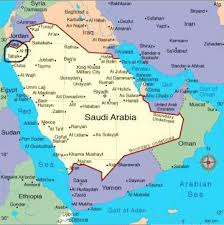
In sum, Saudi Arabia will make a strategic shift toward the Russia-China-Iran axis. In immediate terms, Saudis can hit the US hard by leveraging its status as energy superpower. A dramatic jump in oil prices will boost Saudi income but create difficulties for oil consuming countries, especially EU, China or India. It will boost Russia’s income and make western sanctions even more ineffectual. Again, it will undermine the US’ game plan to bring down Iranian economy to its knees.
On the other hand, any Saudi move to dump dollar in oil trade may significantly galvanise the nascent moves to dethrone dollar as world currency, but its impact can only be in a medium-term scenario.
In geopolitical terms, Saudi Arabia has been a pivotal ally of the US during the past 7 decades. A breakdown in the US-Saudi alliance will unravel the entire American strategy in the Middle East. A US retrenchment from the region may become inevitable.
On the other hand, the ascendancy of Russian and Chinese influence will hurt western interests. Indeed, Israel’s overall security position gets weakened, too.
The bottom line, of course, is that Iran’s rise as regional power will become irreversible – although Iran-Saudi rapprochement is easier said than done. Interestingly, the Iranian reaction to the Khashoggi affair echoes how Tehran took advantage of the overthrow of Saddam Hussein in Iraq.
How far will Russia (and China) want to get entangled in the Saudi standoff with the US? Moscow and Beijing are seeking better relations with the US and may hope that a chastened America would make a more reasonable interlocutor. After all, they’d assess that a US retrenchment in the Middle East will inexorably bring the curtain down on America’s global hegemony. Which in turn will accelerate the trends toward multipolarity. It is improbable that Russia or China will join hands with Saudi Arabia to destabilize the world economy.
The Saudi prognosis that the “if Washington imposes sanctions on Riyadh, it will stab its own economy to death” is plain hyperbole. Then, there is a fundamental contradiction insofar as the survival of the archaic Saudi regime is critically dependent on American support. Trump wasn’t exaggerating when he recently said that if the US support is withdrawn, Saudi regime would pack up in two weeks. There are historical forces swirling around Saudi Arabia, which have been kept at bay due to the sheer US presence. For example, the eastern Shi’te provinces of Saudi Arabia are restive; the Houthis of Yemen will seek revenge.
Above all, the Saudi regime has been exporting radical forces as geopolitical tool for the Americans. These forces may come to haunt Saudi internal security. The Muslim Brotherhood, al-Qaeda, etc. are waiting in the wings. Islamism, paradoxically, poses an existential threat to the Saudi regime.
Succinctly put, the sins of the past will come to wreak vengeance on the Saudi regime with a demonic fury sooner than one may think once America’s protective shield is withdrawn. In fact, the possibility of the disintegration of the Kingdom of Saudi Arabia, which is after all an arbitrary creation of British imperialism in the early 20th century, is very real.
What complicates the situation today is that the US is a badly divided house and the Saudis are used to dealing with the Washington establishment in an idiom that is no longer in vogue. Left to himself, Trump would have handled the Khashoggi affair much as his predecessors in the White House might have done. But that is not going to be possible with the Deep State and the US Congress arm-twisting him. On the other hand, Crown Prince Mohammed bin Salman represents a new type of Saudi leadership that is not shy of a faceoff and seeks a reset of the relationship with the US.
Britain on the Leash with the United States – but at Which End?
By James George JATRAS | Strategic Culture Foundation | 13.10.2018
The “special relationship” between the United States and the United Kingdom is often assumed to be one where the once-great, sophisticated Brits are subordinate to the upstart, uncouth Yanks.
Iconic of this assumption is the mocking of former prime minister Tony Blair as George W. Bush’s “poodle” for his riding shotgun on the ill-advised American stagecoach blundering into Iraq in 2003. Blair was in good practice, having served as Bill Clinton’s dogsbody in the no less criminal NATO aggression against Serbia over Kosovo in 1999.
On the surface, the UK may seem just one more vassal state on par with Germany, Japan, South Korea, and so many other useless so-called allies. We control their intelligence services, their military commands, their think tanks, and much of their media. We can sink their financial systems and economies at will. Emblematic is German Chancellor Angela Merkel’s impotent ire at discovering the Obama administration had listened in on her cell phone, about which she – did precisely nothing. Global hegemony means never having to say you’re sorry.
These countries know on which end of the leash they are: the one attached to the collar around their necks. The hand unmistakably is in Washington. These semi-sovereign countries answer to the US with the same servility as member states of the Warsaw Pact once heeded the USSR’s Politburo. (Sometimes more. Communist Romania, though then a member of the Warsaw Pact refused to participate in the 1968 invasion of Czechoslovakia or even allow Soviet or other Pact forces to cross its territory. By contrast, during NATO’s 1999 assault on Serbia, Bucharest allowed NATO military aircraft access to its airspace, even though not yet a member of that alliance and despite most Romanians’ opposition to the campaign.)
But the widespread perception of Britain as just another satellite may be misleading.
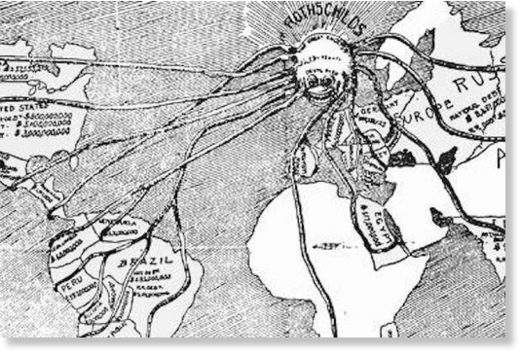
To start with, there are some relationships where it seems the US is the vassal dancing to the tune of the foreign capital, not the other way around. Israel is the unchallenged champion in this weight class, with Saudi Arabia a runner up. The alliance between Prime Minister Bibi Netanyahu and Saudi Crown Prince Mohammad bin Salman (MbS) – the ultimate Washington “power couple” – to get the Trump administration to destroy Iran for them has American politicos listening for instructions with all the rapt attention of the terrier Nipper on the RCA Victor logo. (Or did, until the recent disappearance of Saudi journalist Jamal Khashoggi. Whether this portends a real shift in American attitudes toward Riyadh remains questionable. Saudi cash still speaks loudly and will continue to do so whether or not MbS stays in charge.)
Specifics of the peculiar US-UK relationship stem from the period of flux at the end of World War II. The United States emerged from the war in a commanding position economically and financially, eclipsing Britannia’s declining empire that simply no longer had the resources to play the leading role. That didn’t mean, however, that London trusted the Americans’ ability to manage things without their astute guidance. As Tony Judt describes in Postwar, the British attitude of “superiority towards the country that had displaced them at the imperial apex” was “nicely captured” in a scribble during negotiations regarding the UK’s postwar loan:
In Washington Lord HalifaxOnce whispered to Lord Keynes:“It’s true they have the moneybagsBut we have all the brains.”
Even in its diminished condition London found it could punch well above its weight by exerting its influence on its stronger but (it was confident) dumber cousins across the Pond. It helped that as the Cold War unfolded following former Prime Minister Winston Churchill’s 1946 Iron Curtain speech there were very close ties between sister agencies like MI6 (founded 1909) and the newer wartime OSS (1942), then the CIA (1947); likewise the Government Communications Headquarters (GCHQ, 1919) and the National Security Administration (NSA, 1952). Comparable sister agencies – perhaps more properly termed daughters of their UK mothers – were set up in Canada, Australia, and New Zealand. This became the so-called “Five Eyes” of the tight Anglosphere spook community,infamous for spying on each others’ citizens to avoid pesky legal prohibitions on domestic surveillance.
Despite not having two farthings to rub together, impoverished Britain – where wartime rationing wasn’t fully ended until 1954 – had a prime seat at the table fashioning the world’s postwar financial structure. The 1944 Bretton Woods conference was largely an Anglo-American affair, of which the aforementioned Lord John Maynard Keynes was a prominent architect along with Harry Dexter White, Special Assistant to the US Secretary of the Treasury and Soviet agent.
American and British agendas also dovetailed in the Middle East. While the US didn’t have much of a presence in the region before the 1945 meeting between US President Franklin Delano Roosevelt and Saudi King ibn Saud, founder of the third and current (and hopefully last) Saudi state – and didn’t assume a dominant role until the humiliation inflicted on Britain, France, and Israel by President Dwight Eisenhower during the 1956 Suez Crisis – London has long considered much of the region within its sphere of influence. After World War I under the Sykes-Picot agreement with France, the UK had expanded her holdings on the ruins of the Ottoman Empire, including taking a decisive role in consolidating Saudi Arabia under ibn Saud. While in the 1950s the US largely stepped into Britain’s role managing the “East of Suez,” the former suzerain was by no means dealt out. The UK was a founding member with the US of the now-defunct Central Treaty Organization (CENTO) in 1955.
CENTO – like NATO and their one-time eastern counterpart, the Southeast Asia Treaty Organization (SEATO) – was designed as a counter to the USSR. But in the case of Britain, the history of hostility to Russia under tsar or commissar alike has much deeper and longer roots, going back at least to the Crimean War in the 1850s. The reasons for the longstanding British vendetta against Russia are not entirely clear and seem to have disparate roots: the desire to ensure that no one power is dominant on the European mainland (directed first against France, then Russia, then Germany, then the USSR and again Russia); maintaining supremacy on the seas by denying Russia warm-waters ports, above all the Dardanelles; and making sure territories of a dissolving Ottoman empire would be taken under the wing of London, not Saint Petersburg. As described by Andrew Lambert, professor of naval history at King’s College London, the Crimean War still echoes today:
“In the 1840s, 1850s, Britain and America are not the chief rivals; it’s Britain and Russia. Britain and Russia are rivals for world power, and Turkey, the Ottoman Empire, which is much larger than modern Turkey — it includes modern Romania, Bulgaria, parts of Serbia, and also Egypt and Arabia — is a declining empire. But it’s the bulwark between Russia, which is advancing south and west, and Britain, which is advancing east and is looking to open its connections up through the Mediterranean into its empire in India and the Pacific. And it’s really about who is running Turkey. Is it going to be a Russian satellite, a bit like the Eastern Bloc was in the Cold War, or is it going to be a British satellite, really run by British capital, a market for British goods? And the Crimean War is going to be the fulcrum for this cold war to actually go hot for a couple of years, and Sevastopol is going to be the fulcrum for that fighting.”
Control of the Middle East – and opposing the Russians – became a British obsession, first to sustain the lifeline to India, the Jewel in the Crown of the empire, then for control of petroleum, the life’s blood of modern economies. In the context of the 19th and early 20th century Great Game of empire, that was understandable. Much later, similar considerations might even support Jimmy Carter’s taking up much the same position, declaring in 1980 that “outside force to gain control of the Persian Gulf region will be regarded as an assault on the vital interests of the United States of America, and such an assault will be repelled by any means necessary, including military force.” The USSR was then a superpower and we were dependent on energy from the Gulf region.
But what’s our reason for maintaining that posture almost four decades later when the Soviet Union is gone and the US doesn’t need Middle Eastern oil? There are no reasonable national interests, only corporate interests and those of the Arab monarchies we laughably claim as allies. Add to that the bureaucracies and habits of mind that link the US and UK establishments, including their intelligence and financial components.
In view of all the foregoing, what then would policymakers in the United Kingdom think about an aspirant to the American presidency who not only disparages the value of existing alliances – without which Britain is a bit player – but openly pledges to improve relations with Moscow? To what lengths would they go to stop him?
Say ‘hello’ to Russiagate!
One can argue whether or not the phony claim of the Trump campaign’s “collusion” with Moscow was hatched in London or whether the British just lent some “hands across the water” to an effort concocted by the Democratic National Committee, the Hillary Clinton presidential campaign, the Clinton Foundation, and their collaborators at Fusion GPS and inside the Obama administration. Either way, it’s clear that while evidence of Russian connection is nonexistent that of British agencies is unmistakable, as is the UK’s hand in a sustained campaign of demonization and isolation to sink any possible rapprochement between the US and Russia.
As for Russiagate itself, just try to find anyone involved who’s actually Russian. The only basis for the widespread assumption that any material in the Dirty Dossier that underlies the whole operationoriginated with Russia is the claim of Christopher Steele, the British “ex” spy who wrote it, evidently in collaboration with people at the US State Department and Fusion GPS. (The notion that Steele, who hadn’t been in Russia for years, would have Kremlin personal contacts is absurd. How chummy are the heads of the American section of Chinese or Russian intelligence with White House staff?)
While there are no obvious Russians in Russiagate there’s no shortage of Brits. These include (details at the link):
- Stefan Halper, a dual US-UK citizen.
- Ex-MI6 Director Richard Dearlove.
- Robert Hannigan, former director of GCHQ; there is reason to think surveillance of Trump was conducted by GCHQ as well as by US agencies under FISA warrants. Hannigan abruptly resigned from GCHQ soon after the British government denied the agency had engaged in such spying.
- Alexander Downer, Australian diplomat (well, not British but remember the Five Eyes!).
- Joseph Mifsud, Maltese academic and suspected British agent.
At present, the full role played by those listed above is not known. Release of unredacted FISA warrant requests by the Justice Department, which President Trump ordered weeks ago, would shed light on a number of details. Implementation of that order was derailed after a request by – no surprise – British Prime Minister Theresa May. Was she seeking to conceal Russian perfidy, or her own underlings’?
It would be bad enough if Russiagate were the sum of British meddling in American affairs with the aim of torpedoing relations with Moscow. (And to be fair, it wasn’t just the UK and Australia. Also implicated are Estonia, Israel, and Ukraine.) But there is also reason to suspect the same motive in false accusations against Russia with respect to the supposed Novichok poisonings in England has a connection to Russiagate via a business associate of Steele’s, one Pablo Miller, Sergei Skripal’s MI6 recruiter. (So if it turns out there is any Russian connection to the dossier, it could be from Skripal or another dubious expat source, not from the Russian government.) Skripal and his daughter Yulia have disappeared in British custody. Moscow flatly accuses MI6 of poisoning them as a false flag to blame it on Russia.
A similar pattern can be seen with claims of chemical weapons use in Syria: “We have irrefutable evidence that the special services of a state which is in the forefront of the Russophobic campaign had a hand in the staging” of a faked chemical weapons attack in Douma in April 2018. Ambassador Aleksandr Yakovenko pointed to the so-called White Helmets, which is closely associated with al-Qaeda elements and considered by some their PR arm: “I am naming them because they have done things like this before. They are famous for staging attacks in Syria and they receive UK money.” Moscow warned for weeks before the now-postponed Syrian government offensive in Idlib that the same ruse was being prepared again with direct British intelligence involvement, even having prepared in advance a video showing victims of an attack that had not yet occurred.
The campaign to demonize Russia shifted into high gear recently with the UK, together with the US and the Netherlands, accusing Russian military intelligence of a smorgasbord of cyberattacks against the World Anti Doping Agency (WADA) and other sports organizations, the Organization for the Prohibition of Chemical Weapons (OPCW), the Dutch investigation into the downing of MH-17 over Ukraine, and a Swiss lab involved with the Skripal case, plus assorted election interference. In case anyone didn’t get the point, British Defense Secretary Gavin Williamson declared: “This is not the actions of a great power. This is the actions of a pariah state, and we will continue working with allies to isolate them.”
To the extent that the goal of Williamson and his ilk is to ensure isolation and further threats against Russia, it’s been a smashing success. More sanctions are on the way. The UK is sending additional troops to the Arctic to counter Russian “aggression.” The US threatens to use naval power to block Russian energy exports and to strike Russian weapons disputed under a treaty governing intermediate range nuclear forces. What could possibly go wrong?
In sum, we are seeing a massive, coordinated hybrid campaign of psy-ops and political warfare conducted not by Russia but against Russia, concocted by the UK and its Deep State collaborators in the United States. But it’s not only aimed at Russia, it’s an attack on the United States by the government of a foreign country that’s supposed to be one of our closest allies, a country with which we share many venerable traditions of language, law, and culture.
But for far too long, largely for reasons of historical inertia and elite corruption, we’ve allowed that government to exercise undue influence on our global policies in a manner not conducive to our own national interests. Now that government, employing every foul deception that earned it the moniker Perfidious Albion, seeks to embroil us in a quarrel with the only country on the planet that can destroy us if things get out of control.
This must stop. A thorough reappraisal of our “special relationship” with the United Kingdom and exposure of its activities to the detriment of the US is imperative.
Best Government Money Can Buy

By Philip M. GIRALDI | Strategic Culture Foundation | 04.10.2018
Very few Americans know who Sheldon Adelson is and fewer still appreciate that, as America’s leading political donor, when he speaks the Republican Party listens. By virtue of his largesse, he has been able to direct GOP policy in the Middle East in favor of Israel, which might well be regarded as his true home while the United States exists more as a faithful friend that can be produced at intervals whenever Israel finds itself in need of a bit of cash or political cover.
Adelson’s recent successes in translating his political donations into policy favorable to Israel have included shifting the US Embassy to Jerusalem, cutting aid to Palestinians, ending the Iranian nuclear monitoring agreement and closing the Palestine Liberation Organization’s diplomatic office in Washington. All those Trump Administration measures were reportedly worked out privately by Adelson speaking directly with the president.
Adelson’s activities in buying politicians reflect what he believes, he reportedly having said that “there’s no such thing as a Palestinian.” Nor does his world view include much concern for the country that has sheltered him and made him wealthy. He served in the US Army in World War 2 and has said that he regrets having done so, as he would rather have worn an Israeli army uniform. He also expressed his desire that his son might become an Israeli Army sniper.
Adelson benefits from his exceptional access to the White House to the detriment of actual American interests. A New York Times article “Sheldon Adelson Sees a Lot to Like in Trump’s Washington,” states that he “enjoys a direct line to the president” and meets the president monthly “in private in-person meetings and phone conversations.” He has been delighted with the openly expressed threats emanating from the Administration’s key foreign and national security policy spokesmen regarding Iran. He would like to see the United States go to war with the Iranians to destroy their government and bring about some kind of regime change, and, judging from recent developments, he just might get what he seeks, which could easily have catastrophic consequences for the entire region and beyond.
Adelson is somewhat unhinged on the issue of Iran and has even called for dropping a nuclear bomb on a desert region of the country as a negotiating tactic to show “we mean business” so Washington could then “impose its demands [on Iran] from a position of strength.” If Iran continued to resist, Adelson would to drop the next one on Tehran. If Tehran were to be nuked millions of Iranians would die, which doesn’t bother Adelson one bit. Such a development would, in Adelson’s opinion, be good for Israel, which is his primary concern.
Adelson’s power over policy makers is also evident in what the White House does not do. Israeli snipers have shot dead at least 143 unarmed Arab demonstrators in Gaza without so much as a word of condemnation coming out of Washington. Indeed, the Donald Trump Ambassador to Israel David Friedman has gone out of his way to defend the killings and also to support the expansion of the illegal Israeli settlements on the West Bank.
Adelson is also widely believed to have had a hand in personnel changes in the White House. He has used his money and influence to advance the careers of United Nations Ambassador Nikki Haley, National Security Advisor John Bolton, and Secretary of State Mike Pompeo while also arranging the removal of H.R. McMaster and Rex Tillerson for “being anti-Israeli” and not sufficiently willing to go to war with Iran. Defense Secretary James Mattis, the only actual adult remaining in the room when foreign policy is discussed, is believed to be the next target for removal.
How does Adelson do it? Money talks. He is worth an estimated $35 billion. His fortune came from casinos both in the US and in China, which some might consider to be promotion of vice. To buy and maintain the Republican support for right wing Zionist policies he has donated what is for him pocket change, $55 million so far this year in support of GOP candidates in the Midterm elections. In 2016, he gave large sums to the Trump campaign and to other Republicans, donating $35 million to the former and $55 million to two top Republican PACs — the Congressional Leadership Fund and the Senate Leadership Fund.
In America’s corrupt political culture, a monster like Sheldon Adelson can buy both a White House and Congress on behalf of a foreign government for a paltry $150 million or so. It is a reasonable investment for him given his views, as through him Israel is able to control a large slice of American foreign policy while also receiving billions of dollars each year from the US Treasury. And for those who think it would be different if the Democrats were in charge, think again. The Democrats have their own Adelson. His name is Haim Saban, an Israeli-American media magnate who has said he is a “one issue guy and my issue is Israel.” He is also the largest individual contributor to the Democratic Party.
Photo: Flickr
Showdown at Tanf
Sic Semper Tyrannus | October 3, 2018
The reconciliation process initiated by the Russians in Syria has saved countless lives of soldiers, civilians and even jihadists. It also preserved SAA fighting strength, brought a lot of Syrian territory back under the control of Damascus. It brought former jihadists back into the fight on the side of the SAA. This process may appear to be tedious and without the glorious satisfaction of annihilating jihadis in a costly series of rapid offensives, but I firmly believe the reconciliation process is the right way for Syria. This strategy is now being brought to bear at Tanf.
The first evidence of this was the mid-September agreement for the removal of the US trained and backed al-Qaryatayn Martyrs Brigade and 5,000 civilians from the Rukban refugee camp to the Euphrates Shield-held area in northern Aleppo. This was the work of the Russian Reconciliation Center. More recently, tribal leaders from Damascus have met tribal leaders at the refugee camp to discuss their situation. A list of refugees wanting to engage in the reconciliation process is being prepared. Many of those not reconciling with Damascus will be shipped north to join the al-Qaryatayn Martyrs Brigade and their families. The camp evacuations are already underway. Next week the Russians will escort a UN aid convoy into the Rukban Refugee Camp.
Although the US has apparently acquiesced to the Russian plan to depopulate the Rukban Refugee Camp, I believe Russia has cleverly outmaneuvered the US. The SAA is steadily destroying the remaining jihadis on the al-Safa plateau. I believe the US forces at Tanf will soon be left alone without jihadis to control, or even any remaining jihadis to fight. The “fighting ISIS” rationale will disappear and the real reason for remaining at Tanf will become clear. At Israel’s behest, we are blocking the Teheran-Baghdad-Damascus highway.
TTG
https://southfront.org/us-backed-militant-group-in-al-tanaf-accepts-evacuation-agreement-report/
Featured Video
Seyed M. Marandi: U.S. Military DIVIDED? Iran’s Secret Defense EXPOSED
or go to
Aletho News Archives – Video-Images
From the Archives
‘Israel sees Iran as obstacle to its policies’
Press TV – August 25, 2017
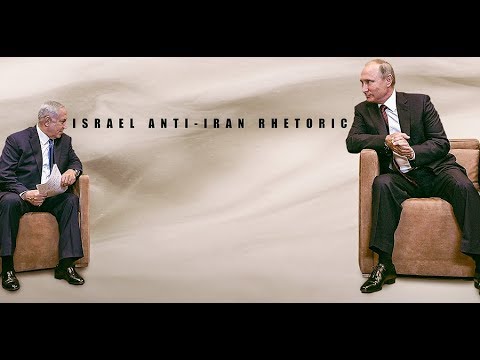
Prime Minister Benjamin Netanyahu has said that Israel felt threatened by Iran’s growing influence in the Middle East. Netanyahu expressed his Iranophobic view in a meeting with Russian President Vladimir Putin in Russia’s Black Sea resort of Sochi on Wednesday. Press TV has asked Scott Rickard, former American intelligence linguist from Tampa, Florida, and Brent Budowsky, a columnist at The Hill from Washington, to give their thoughts on the issue.
Rickard said Tel Aviv is concerned about the fact that the regime could not carry out its old project to spread sectarian divisions and pave the way for dismemberment of the countries in the Middle East region because of the Iranian-led resistance against Israeli policies, not only in the occupied territories of Palestine but also in the whole region.
“Iran is not a threat to Israel whatsoever. The threat that Israel sees is the fact that their Oded Yinon Plan is being put to a hold by Iran,” the intelligence linguist said on Thursday night.
“They (the Israelis) look at Iran as a threat only because they have no influence on their governments and Iran is autonomous and is not under the Zionist influence,” he added.
Since the victory of the Islamic Republic of Iran in 1979, Tehran has been critical of Israel’s policies in the region, whereas “no leaders [of other states] even dared to speak out against Zionism,” Rickard argued. … continue
Blog Roll
 Aletho News
- Trump Claims Ceasefire, Reopening of Strait of Hormuz Agreement with Iran
- Israeli tank fire killed UN peacekeeper in Lebanon, UNIFIL investigation finds
- Russia, China block Bahrain-sponsored UN resolution on Strait of Hormuz
- The US-Israeli War on Science is an Assault on our Future
- Trump’s Promise to Bomb Iran ‘Like Never Before’ Faces Brutal Logistics — Expert
- Germany seeks to restrict stays abroad for men of fighting age – Berliner Zeitung
- Evidence points to Ukraine being behind TurkStream attempted sabotage, but that should come as no surprise
- Sri Lanka secures supplies of Russia oil – minister
- Nations across Asia strike direct deals with Iran for Hormuz passage
- IRGC commander declares ‘new phase’ of reprisal attacks against aggressors
- If Americans Knew
- Thousands dead and neighborhoods razed to the ground: Aid agencies fear southern Lebanon is becoming the new Gaza
- The war the US is fighting for Israel could cost trillions
- ‘Cigarette Burns, Nail Wounds’: Toddler Tortured in Gaza to Coerce Father
- Trump Says US Sent ‘a Lot of Guns’ to Protesters in Iran
- Israeli forces destroy 17 UN peacekeeper cameras in south Lebanon
- US-Israeli strikes ‘completely destroy’ synagogue in Tehran
- Archbishop for US Military Says Iran War Is Unjust Under Catholic Teaching
- Iranian leaders’ Open Letters to the American People
- Trump says Iranians appreciate bombs, WHO warns of nuclear risks – Daily Update
- U.N. experts demand Israel release prominent Gaza doctor after reports of ‘severe torture’
- No Tricks Zone
- An Inconvenient Tree: Uncovered In Alps… Europe Much Warmer Than Today 6000 Years Ago
- New Study Reports A 60% Slowdown In Greenland’s Ice Loss Rate In The Last Decade
- Low Intensity Tornado Wrecks Major Solar Farm, Creating A Potential Toxic Dump
- New Study Finds Warming Saves Lives…Cold Temperatures 12 Times More Deadly Than Excess Heat
- German Science Blog Accuses PIK Climate Institute Of Hallucinating Climate Tipping Points
- Devastating Assessment Of Comirnaty Vaccine By Former Senior Pfizer Europe Toxicologist
- New Study: CO2 Is ‘Effectively Negligible’ As An Explanatory Climate Change Factor Since 2000
- Former Pfizer Toxicologist Dr. Helmut Sterz Tells Bundestag Hearing Pfizer Vaccine Should Have Never Been Approved
- Energy Expert: Germany’s Nuclear Phaseout Was A “500 Billion Euro Mistake”
- New Research: South Australia’s Mid-Holocene Sea Surface Temperatures Were 4°C Warmer Than Today
 Aletho News