Reddit Identifies A New Threat: The Truth – #PropagandaWatch
corbettreport | September 3, 2018
Reddit is a controlled propaganda platform. Shocking, I know. Join James for this week’s edition of #PropagandaWatch where he breaks down self-proclaimed homepage of the internet’s war on truth.
SHOW NOTES: https://www.corbettreport.com/?p=27990
Bizarre Israeli Analyses of Syrian Curriculum Circulate in the Middle East
By Andre Vltchek – New Eastern Outlook – 30.08.2018
My friend, a senior UN official based in Amman, Jordan, recently received a newsletter from an Israeli institution – “IMPACT-se”. Their report was called, ‘modestly’, “Reformulating School Textbooks During the Civil War”.
It is full of analyses of the Syrian curriculum.
Interesting stuff, without any doubt: Manipulative, negative, but interesting. It made it to many other places in the Middle East; to Lebanon, for instance, where even the word “Israel” is hardly ever pronounced.
Predictably, being compiled in Israel, the report trashes Syria, its ideology, and the determined anti-imperialist stand of President al-Assad.
However, that may backfire. Excerpts that are quoted from the Syrian curriculum would impress both education experts, as well as the general public, if they were to get their hands and eyes on them. And I am trying to facilitate precisely that, in this essay.
What the report found outrageous and deplorable, others could find very reasonable and positive. Let’s read, here is what the “IMPACT-se” is quoting, while ringing alarm bells:
“Saddam Hussein took power, and his period witnessed a number of wars in the Arab Gulf area. The first was with Iran, called the First Gulf War (1980–88), which occurred through incitement by the US, in order to weaken both countries. History, Grade 12, 2017–18, p. 105.”
Well put, isn’t it? But it gets much better, philosophically. Imagine, this brilliant intellectual stuff is actually served to all Syrian children in their public schools, while in Europe and North America; kids are fed with neo-colonialist mainstream propaganda. No wonder that Syrian children are much better versed in what is happening in the world. No wonder that millions of Syrian refugees are now ready to return home, after the abuse they received abroad, and after realizing how indoctrinated and brainwashed by Western propaganda, the people all over the world are.
“IMPACT-se” continues quoting the Syrian curriculum, naively thinking that the words engraved there, will terrify the entire world:
“This competition and struggle worsened as the capitalist system developed and new occupying forces such as the US, took control over international politics. It exploited its scientific, technological, economic and military supremacy in order to expand its influence and [gain] control over the capabilities of the peoples of the world. This was done in cooperation with its allies, to increase its presence in the international arena as the only undisputed superpower. National Education, Grade 8, 2017–18, p. 81.(The US) strives to maintain its supremacy by monopolizing developing technology, controlling wealth and energy sources in the world, most importantly oil, and forcing its hegemony on the international community. National Education, Grade 8, 2017–18, p. 82.
This could be easily written by the progressive economist Peter Koenig, by the international lawyer Christopher Black, or, why not, by myself.
The people, who worked on the Syrian curriculum, combined two things brilliantly: 1) indisputable facts, 2) elegant simplicity! Actually, this curriculum should be offered not only to the Middle East kids, but all over the world.
Look how skillfully and honestly it summarizes modern history:
“After the disappearance of international balance and unipolar hegemony took control of the world, the US began searching for excuses to justify its intervention in other countries. It occupied Afghanistan in 2002, under the pretext of fighting against “terrorism” in order to realize its political and economic goals. One of the goals was to build an advanced military base close to countries which the US considers to be dangerous (Russia, China, India, Iran and North Korea). In addition, Afghanistan had many assets (such as iron ore and gas). In 2003, the US—helped by a group of countries—declared war on Iraq under the pretext that Iraq was holding weapons of mass destruction and aiding terrorism. The occupation came after an unjust siege and air strikes over Iraqi cities and institutions, without authorization from the UN general assembly and the Security Council. National Education, Grade 8, 2017–18, p. 82
Making the world become one form, one structure and one model, which is the most powerful model now controlling the world, economically and militarily—the American model. The hegemony of the capitalist system . . . turning the world into a consumer market for Western products and ideas, while stripping the nation of its principles, customs and traditions, abolishing its personality and identity, first diluting and then gradually eliminating nations and cultures. National Education, Grade 12, 2017–18, p. 31.”
According to “IMPACT-se”, this is supposed to scare random readers, providing proof how evil the ‘regime in Damascus’ is!
The opposite is true.
An international (non-Western) educator, who is presently based in the Middle East, explained to me over a cup of coffee. I think that this statement is actually a good summary of what many others that are studying the Syrian curriculum really feel:
“Education reflects the vision of a given society. The heart of what a society expects from its citizens is in the curriculum. Having carefully read the analysis of the new Syrian curriculum and textbooks reinforces my strong conviction of how great a society Syria really is.”
*
Let us see the ‘other side’; those who are critical of Syrian education, those who are making a living from such criticism and from antagonizing the system.
ESCWA (United Nations Economic and Social Commission for Western Asia), based in Beirut, Lebanon, has an initiative defined as ‘the future of Syria for the peace-building phase’. This ‘process’ involves Syrian experts from all walks of life.
But who are these experts? In 2018, during the expert’s meeting on education, the list included these specialists:
– Former professors (education and law) of Aleppo University
– Former professor of Damascus University
– Head of an education NGO in Lebanon
– Academics and researchers now based in Turkey and Germany
– Independent consultants
Clearly, if at this meeting any participants were Syrians, they were ‘former some things’. Meaning exiles, anti-government cadres, and mostly pegged to some Western organization (predominantly the organizations based in France or Germany). Not one person from the legitimate government of Syria was invited! A typical Western approach: “about them, without them”.
And these people who are serving Western interests, are supposed to help to define a component on education which is considered vital to “reconciliation and social cohesion in post-war Syria”.
Predictably, instead of promoting reconciliation, the speeches were full of hate, bitter and aggressive, anti-Syrian and pro-Western. ‘Experts’ used terminology such as: ‘Hegemony of the Syrian regime’, ‘The Ba’ath Party is only concerned about ideology, never giving Syrians an identity’ (they were actually demanding that religions would serve as ‘identity’, replacing the presently secular Syrian state), ‘We need to talk about the truth of what happened in 2011, what led to the war in 2011. Without that nothing makes sense’ (but the ‘truth about 2011’ in their minds has definitely nothing to do with the fact that the West encouraged the anti-government rebellion, injected jihadi cadres and triggered the brutal civil war aimed at overthrowing a social state).
Their main point seems to be: ‘The war has strengthened the culture of hatred’.
Correct, but not because of the Syrian state, but, because of people like those ‘experts’!
What do they really want? Religion instead of secularism, capitalism instead of socialism, and of course, the Western perception of ‘democracy’, instead of a patriotic and pan-Arab independent vision of the state.
*
No matter how one turns it, the Syrian education system, including its curriculum, appears to be greatly superior to those in the neighboring countries. Perhaps that is why it is being placed under scrutiny and under attack.
After all, wasn’t the main goal of the West, in 2011 and after, to destroy yet another socialist, internationalist state that was primarily serving its people?
And the state of Israel? What is “IMPACT-se” mainly complaining about? What is irking it most, in the Syrian curriculum? Perhaps this, in its own words and analyses:
“The Syrian curriculum bases Syrian national identity on the principles of a continued struggle to realize one Arab Nation that includes all Arab states, constituting one country, the “Arab Homeland.” The textbooks present the borders dividing the Arab states as artificial, having been imposed by European colonialism.”
For most of us, this is actually, not bad, is it?
Or possibly this:
“The current borders are political ones, drawn through the policy of the colonial powers that had controlled the region, especially France and Britain. They do not overlap the natural borders that used to separate the Arab Homeland from the neighboring countries. So, important changes took place in these borders to the benefit of those countries and to the detriment of the Arab land. Geography of the Arab Homeland and the World, Grade 12, 2017–2018, p. 13.”
What is incredibly impressive, is, how the Syrian curriculum addresses the Soviet period of its close ally – Russia:
“We shall become acquainted with the reality of Russia prior to the Communist Revolution, and the causes which led to its political, economic, social and intellectual renaissance, from World War I until the dissolution of the Soviet Union and the establishment of the Russian Federation in 1991. History, Grade 8, 2017–18, p. 98.
The Socialist Revolution in Russia broke out in order to confront the imperial regime. It declared the establishment of the first socialist country in 1917. [The Revolution] was based on the rule of the workers and the peasants, and it had a global impact, as it supported national liberation movements. History of the Modern and Contemporary World, Grade 11, 2017–18, p. 168.
Gorbachev took over the leadership of the state and party in 1988, and aspired to implement a plan of economic, social and ideological reconstruction. However, the imperialistic countries conspired against the destiny of the Soviet Union and took advantage of the administrative corruption and the circumstances of multiple nationalities, leading to its dissolution in 1991 and the establishment of the Russian Federation in its place. History, Grade 8, 2017–18, pp. 99–100”
Actually, if I could, if I were to be allowed to, I’d love my publishing house (Badak Merah) to publish the Syrian curriculum, or at least its part on history and politics, for everyone outside Syria to read.
What the Israeli “IMPACT-se” sees as alarming or negative, most of people all over the world and particularly in the Arab region, would definitely perceive as truthful, optimistic and worth fighting for.
Are the experts from “IMPACT-se” so naïve that they do not realize it? Or is there something else going on? Perhaps we will never find out.
No matter what: thank you for reminding us of the great Syrian curriculum! It clearly shows how great a nation Syria is!
Andre Vltchek is philosopher, novelist, filmmaker and investigative journalist. He’s a creator of Vltchek’s World in Word and Images, and a writer that penned a number of books, including Revolutionary Optimism, Western Nihilism.
5 timely reminders that the media think you are an idiot…

By Kit | OffGuardian | August 28, 2018
The corporate media think we are stupid. All of us. They have as much respect for our intellect or ability to reason as they do for the truth. This is displayed, in size 20 font, on the front page of every newspaper every single day. They paint a picture of an absurd world, and expect us all to nod along with it, blithely accepting their stories as true, no matter what laws of reason – or even physics – they bend to suit their purpose.
The world in the newspaper and on the television is not real in any true sense of the word. Merely a crazy fun-house mirror reflection of the truth. Important features shrunk to nothing, tiny flaws blown up out of proportion. Apparently solid shapes that – on inspection – are nothing but strange plays of light and shadow.
With that in mind, let’s remind ourselves of the kind of completely bonkers things we’re all expected to believe.
1. The Inherent silliness of “ISIS”
This section was going to be more specific, but as I looked back over recent history, there was no single absurdity that highlighted how stupid the ISIS story was.
ISIS was, and is, silly. A few bullet points to demonstrate this – and a reminder that these are not exaggerated in any way. These are, supposedly, facts:
- They were making $1-$3 million PER DAY smuggling oil out of Syria, in convoys kilometres long that the US air force either couldn’t find or wouldn’t bomb because of “risks to civilians”. How they had the technical expertise to extract and process this oil was never explained.
- They minted their own currency.
- They published end-of-year reports, like a business, and kept detailed accounts on flash drives and USB sticks. Despite this, no ISIS bank accounts were ever seized, monitored or shut down.
- They had multiple social media accounts, YouTube channels – often described as “ISIS linked social media accounts” – these accounts weren’t locked, blocked or deleted. The registered owners weren’t arrested. They had their own twitter app which was impossible to block and created their own social network.
- They had their own TV channel, with an animated logo, a waving flag, in the corner of their videos. Think on this – somebody, somewhere, made that logo.
- They had fleets of Toyotas, which we’re supposed to believe they just sort of… acquired. They are all clean, new and undamaged. They are all colour-matched too, of course. There are red ones, white ones, black ones and tan ones. With and without logos painted on the hood. They deployed these trucks in photo-shoots and “viral” videos, the theoretical production of which simply boggles the mind. A bunch of black Toyota’s crossing the desert doesn’t look like much, but think about the actual logistics of making the video. They had to drive up to this spot, drop off the camera crew and equipment, drive back over the horizon, properly time their entrance by synchronizing all the driving and spacing the trucks out evenly, drive past the camera crew waving their flags… then drive back and pick up the camera men and equipment. All of this in the middle of a war zone.
- Of course all their videos had the same music, the ISIS theme, which was Arabic voices singing in close harmony. We’re supposed to believe that – somewhere in the heart of their war-torn empire – a bunch of crazy zealots gathered round a microphone to sing a capella melodies about “death to the west”, while a frustrated technician muttered to himself about “levels” and how Muhammad is flat on the high note. This spawned their own genre of music, which NME did a story on.
It’s so… stupid. And yet the media says it, and expects us to believe it.
ISIS – the all-powerful death cult, the existential threat to Western democracy, on the verge of “regional dominance”. There was a map and everything – world domination by 2020.
Despite all this, ISIS – the untouchable hydra of evil – completely fell apart as a force in the region just months after Russia and Iran got involved in the Syrian war.
Why was this?
Could it be that ISIS were just a media creation – the PR arm of the CIA’s jihadist proxy army – and, in truth, barely existed as fighting force? Existing, rather, to give Western powers an excuse to conduct air strikes on Syrian territory?
Or could it be that the MSM realised that 10,000 insane, bloodthirsty zealots taking time out of their devout holy war to have design meetings about coinage, or shoot music videos in Dune buggies, rings rather hollow?
It’s all a bit silly isn’t it?
2. The Syrian government Is collectively suicidal
Several times, in the last couple of years, Western leaders have made remarkably prescient statements – something along the lines of “We will not tolerate the use of chemical weapons on civilians”, or “We will act if chemical weapons are used”. In fact, in just the last few days both the US and France have reissued these warnings.
Despite these warnings, and though it offers him literally zero strategic advantages of any kind, Assad keeps deploying his super-secret chemical weapons against civilians… just because. He’s winning the war, it’s pretty much over, the only thing that could swing it against him is NATO, and he keeps deliberately inciting them to attack him.
There’s only 2 explanations for that – either he, and his government, are low-key suicidal, or it never happened, and the propagandists in the media truly believe we are completely stupid.
Then there’s the photographs.
Syria knows they have been in America’s crosshairs for years, since well before the start of the Arab spring. They are aware of Israel’s designs on Syrian land, and more than familiar with the US modus operandi re: “humanitarianism”. They KNOW the worst thing they could do is give America, and their NATO allies, even the whisper of a war crime to get indignant about.
… and yet we’re supposed to believe, not only that the regime tortured and executed tens of thousands of “peaceful protestors” for absolutely no reason, but they also kept a carefully photographed and catalogued record of their crimes.
This was brought up in the Guardian today, the famous “Caesar Photographs”, photos of 11,000 people the Assad government tortured and killed, all properly catalogued and numbered and then – conveniently – leaked by some unknown “former guard” and displayed in London like some morbid art exhibition.
The identity of the “leaker” remains a mystery, and there is literally zero evidence the photographs are a) from Syria or b) real.
Does this version of events sound even slightly reasonable?
3. Amnesty International used echolocation to recreate a Syrian prison
They really did. They have some guys claiming to be Syrian resistance members who were held in one of Assad’s “torture prisons”, but they were either blindfolded or in darkness the whole time, so in order to map out the interior of the prison… Amnesty International played sounds to them, to see if they sounded the same. I truly wish I was joking:
Inmates were constantly blindfolded or forced to kneel and cover their eyes when guards entered their cells, so sound became the key sense by which they navigated and measured their environment – and therefore one of the chief tools with which the Forensic team could reconstruct the prison layout. Using a technique of “echo profiling”, sound artist Lawrence Abu Hamdan was able to determine the size of cells, stairwells and corridors by playing different reverberations and asking witnesses to match them with sounds they remembered hearing in the prison.
There’s no reports as to why exactly the men were locked up, how they got away, why they were released and not executed like everyone else OR – indeed – where they acquired their bat-like super hearing.
… But we do now have a 3D model of Assad’s “torture prison”. We even know which room is the crematorium too, because it looked like the snow on the roof had melted in one satellite photo… and the only thing that makes a roof hot is the burning corpses of dissidents.
The whole process is part of a completely made up recently developed field known as “forensic architecture”. In simple terms, it seems “forensic architecture” is looking at the outside of a building – or indeed a photograph of the outside of a building – and guessing what’s inside. While this might seem difficult, pointless, or even insane to most people… to the mainstream media it is worth of thousands of words of coverage and, indeed, winning media awards.
Does any of that really make any sense to you?
4. Jeremy Corbyn hates the Jews
Jeremy Corbyn is soft – maybe, arguably – too soft for the job that history has violently hoisted on to his shoulders, but soft none the less. He rides his bike to work, wears cardigans, is a vegetarian. He has campaigned for peace and against war his entire life. He was arrested for protesting apartheid whilst Margaret Thatcher was calling Nelson Mandela a terrorist, he spoke out against Pinochet while the General was a darling on both sides of the Atlantic.
He has won two international peace prizes.
The idea that, during a public career dedicated to the socialist ideals of decency and fairness, he was secretly thinking “Bloody Jews!” the whole time is completely absurd. Insultingly absurd, and there is not a single piece of evidence to suggest otherwise. There is nothing more to be said on the matter.
5. Russiagate
This is the big one, currently. The grand-daddy of the nothingburgers. Russiagate never happened. There was no collusion, no cheating or vote hacking or pay-offs. They have found literally zero evidence anything ever took place, seizing upon tiny anecdotal scraps and blaring them out in FULL CAPS HEADLINES to make a case in the court of public opinion that would never stand in an actual court.
Where “Russiagate” is different from most invented media schlock however, is the sheer weight of counter evidence. For most media fiction you can say “Well, there’s very little evidence to support that” (see Corbyn = anti-Semite as a classic example). With Russiagate you can go even further: There is a ton – A TON – of evidence to the contrary, clear-cut evidence that Russia (and Putin) have nothing to do with Trump being President. The media refuse to acknowledge this evidence, directly and contemptuously challenging the public’s ability to reason.
Below is a list of unchallenged, non-controversial facts about Russiagate:
- The only proven, admitted, wrong-doing in the 2016 Presidential election was carried out by the DNC, who rigged the primaries so Clinton would be the democratic candidate. This was later admitted to by members of the DNC.
- The e-mails which first brought this to light were published by WikiLeaks, there is no proven link between WikiLeaks and the Russian government.
- Julian Assange, founder of WikiLeaks claimed the e-mails were from an internal leak, not the result of a hack.
- The “Trump-Russia” dossier, a collection of (possibly fabricated) dirt put together by British ex-spy Christopher Steele, was paid for by the DNC and Clinton’s campaign.
These facts, alone, should bring Russiagate down… but there’s more. Since becoming President, Donald Trump has:
- Armed the Ukrainian coup government.
- Bombed Syria.
- Torn up the Iran deal.
- Sanctioned Russia over the Skripal case.
- Sanctioned Russia over “election interference”.
- Expelled Russian diplomats.
- Killed over 200 Russian “mercenaries” in Syria.
These are policies that not only run counter to ALL of Russia’s interests, but very nearly brought us to the brink of World War 3.
And yet we’re told, over and over, to ignore our own logical minds and believe that Trump is Putin’s “puppet”. That Trump is “soft” on Russia.
Why would a product of Russian collusion pursue policies harmful to Russia? How many Russians need to die before we accept that Trump is anything but soft?
The media line on this issue is insane, and dangerous. In refusing to acknowledge the actual truth – that the US Deep State is pushing for conflict with Russia – the media are dragging us toward apocalypse, smiling happily to themselves as they go.
They are either all delusional morons, think WE are all delusional morons, or – most probably – both.
The inmates are running the asylum, declaring the rest of us insane because none of us are hearing voices.
This is why the media is in decline, why the BBC is losing its audience and the newspapers have plummeting readership, because people are tired of being treated like idiots and herded like cattle. We’ve made a collective decision to cut the bullshit out of our lives. The world is heading towards a split, two parallel universes running together – the real world, where reasonable pragmatic people get on with the struggles of life, and the media world, where fake people write about pretend events in newspapers nobody reads.
The media has become that manipulative spouse who lies and cheats and tells you it’s all your fault. A narcissistic gaslighter who just will not change.
It’s time to make a clean break.
About Half of Syrian Al-Diabiya Residents Return Home After City Liberation
Sputnik – 27.08.2018
AL-DIABIYA About half of the residents of the Syrian city of Al-Diabiya in Damascus province have returned to their homes after the city was freed from the militants, the local administration said on Monday.
“Before the war, there were 70,000 people living in Al-Diabiya. Now 35,000 have already returned,” Abdullah Ahmad, the head of the city administration, said.
The official added that the authorities were restoring the infrastructure in order to facilitate the residents’ return.
“Our task is to restore everything for the normal life and to improve living conditions here as soon as possible. People should understand that they are not asked to return to the debris. Electricity is already supplied and we are also working on distributing food,” Ahmad said.
Syria has been devastated by years of violent civil war which had prompted millions of people to flee hostilities from the areas where they lived to other locations in Syria and outside the country. The United Nations estimates, there are over 5.6 million Syrian refugees abroad and about 6.6 million displaced across the crisis-torn country.
Israeli military can’t avoid defeat in spite of advanced weapons: Nasrallah
Press TV – August 26, 2018
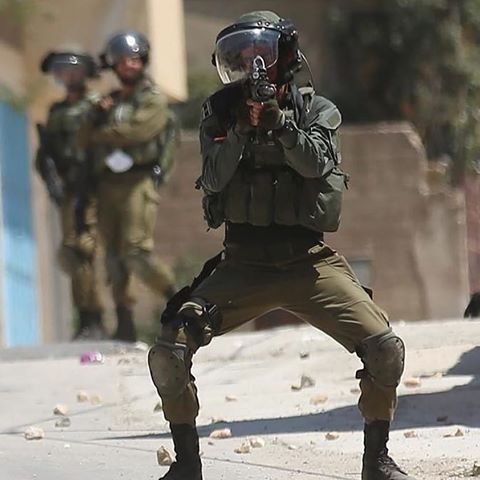
The secretary general of the Lebanese Hezbollah resistance movement says the Israeli military cannot escape defeat despite its apparent capabilities, stressing that thousands of Israeli troops are now seeking mental health treatment.
Addressing his supporters via a televised speech broadcast from the Lebanese capital city of Beirut on Sunday evening, Sayyed Hassan Nasrallah stated that even though Israel has greatly developed its arsenal and acquired state-of-the-art missiles and military hardware, it cannot yet escape defeat in any possible military confrontation.
“The Israeli army is incapable of recruiting a new generation of soldiers as the draftees lack any sense of motivation to fight. According to Israeli media reports, 44,000 Israeli soldiers sought help from psychiatrists last year. Israel cannot change the spirit of the defeat that is with its military personnel,” he pointed out.
Nasrallah then praised Lebanese youths for the outstanding courage they demonstrated in battles to purge the country’s border regions of Daesh Takfiri terrorists.
“Foreign media outlets are seeking to intimidate our nation by over-counting the number of our martyrs. Those who think they can overawe our people are delusional. We achieved full liberation of our border lands through sustained efforts made by Lebanese army soldiers and resistance fighters,” the Hezbollah chief commented.
Nasrallah underlined that the United States has always offered financial support and funneled weapons to Daesh militants, saying, “US forces intervened to stop Lebanese army from launching a military operation against Daesh in Joroud al-Jarajeer area (in western Qalamoun region). On one occasion, US military helicopters even airlifted Daesh commanders from an area in Syria, when the terrorists had been besieged.”
The Hezbollah secretary general noted that the US does not care at all about the interests of regional states in the Middle East, emphasizing that Washington never stands by its allies and simply views them as tools in order to attain its own goals.
Nasrallah also warned against a false flag chemical attack in Syria’s northern province of Idlib as a pretext for airstrikes against the Damascus government.
“While the West is looking for an excuse to launch a military aggression on Syria, it is turning a blind eye to the crimes being committed against Yemeni children. Nobody knows into what abyss [Saudi Crown Prince] Mohammed bin Salman is plunging Saudi Arabia and its nation,” he pointed out.
Turning to Lebanon’s internal affairs, Nasrallah stated that the inflammatory rhetoric against Hezbollah has intensified ever since parliamentary elections were held in Lebanon on May 6.
“The goal of the plot against Lebanon is to hold it responsible at all levels for the deteriorating situation in the country. We are modestly the largest party in Lebanon, but we have the least representation in the political arena. We bet on intra-Lebanese dialogue for the formation of the new government as the time is ticking away,” he concluded.
Saudis want Imran Khan to back ‘anti-terror alliance’
By Kunwar Khuldune Shahid | Asia Times | August 24, 2018
Riyadh wants Imran Khan to openly support the Saudi-led Islamic Military Counter-Terrorism Coalition, after formally taking over as Prime Minister of Pakistan last week. Well-placed diplomatic sources say the Saudi rulers conveyed their desire in recent communications with the new Pakistani leadership.
The latest among these came on Tuesday, when Saudi Crown Prince Mohammad bin Salman met Pakistan Chief of Army Staff General Qamar Javed Bajwa in Mina. The Inter-Services Public Relations chief Maj Gen Asif Ghafoor tweeted that Crown Prince Salman helped General Bajwa to perform the Hajj ritual, and expressed support for the new government in Islamabad.
Senior military officials confirmed that Pakistan’s cooperation with Saudi Arabia on multiple fronts was discussed, including the security of the kingdom. Among these was the Islamic Military Counter-Terrorism Coalition (IMCTC), headed by former Pakistan Army Chief General Raheel Sharif, as Riyadh would like the new Pakistani government to be more involved.
“The Saudi leadership wants Prime Minister Imran Khan to publicly back the coalition because they see the benefit of someone with his global reputation to provide more credence to the alliance, which has been accused of having a sectarian tinge,” a senior diplomat told Asia Times. “The Saudis want to maintain that the absence of Iran and Iraq from the Islamic military coalition is because of political differences rather than religious or ideological [factors], and they believe Pakistan’s vocal support would help in this regard, especially given recent diplomatic developments.”
Anti-terror alliance or anti-Iran?
Saudi Arabia announced the anti-terror alliance in December 2015, when it described the Islamic State as a disease tarnishing the Muslim faith. However, critics have said the alliance, which has about 40 members, appears to be aimed at Iran as much as terrorists.
Earlier this month, Saudi Arabia expelled the Canadian ambassador after the Government of Canada called for the release of human rights activists. That was followed by an immediate message of support by the government of Pakistan, which said it stood with Saudi Arabia over its row with Canada. The caretaker government issued that statement, but Riyadh is hoping for similar vocal support from the Imran Khan-led administration sworn in last week.
Prince Muhammad Bin Salman called Khan last week to congratulate him on winning the election, and invited him to Saudi Arabia, an offer which the Pakistani premier accepted. The trip is likely to take place early next month. Bilateral ties between Riyadh and Islamabad will be discussed in detail, along with Pakistan’s role in the IMCTC.
Khan has previously opposed Pakistan getting involved in the Saudi war on Yemen, which is aided by the kingdom’s ties with the Pakistani military. “After the meeting in September [Khan] will say that Pakistan is very supportive of Saudi Arabia and is willing to do everything to safeguard the holy places from any attacks, which is usually interpreted as an intent of maintaining neutrality, but is accepted by the Saudis as Pakistan being willing to provide all kinds of military cooperation,” a retired military officer said to Asia Times. “However, it’s Pakistan’s support for the military coalition that will determine how many billion dollars the Saudis give us,” he said.
Pakistan is eying a $4-billion loan from the Saudi-backed Islamic Development Bank to address its balance of payments crisis. Riyadh could provide further economic favors as well, depending on how much Islamabad toes the Saudi line, as was the case for Khan’s predecessors.
Sharif prioritized ties with Saudi royals
Nawaz Sharif felt indebted to the Saudi leaders due to their support for the former premier in exile when he was ousted in a coup by former Army Chief General Pervez Musharraf, and critics have long noted how Sharif prioritized Islamabad’s relations with Riyadh over others, which helped alienate Pakistan’s neighbors in Iran.
Sharif’s pro-Saudi stance and his party’s alliances with sectarian groups in Punjab meant that Khan’s PTI had wide backing from the country’s Shia population, which forms around a fifth of Pakistan’s Muslim population. “Unlike Nawaz Sharif, Imran Khan is much better placed to balance relations between Iran and Saudi Arabia, which has been a long-held – but perpetually unfulfilled – goal of Pakistani foreign policy,” says Shameem Akhtar, a veteran foreign policy analyst, columnist and former dean of International Relations at Karachi University.
“Imran Khan doesn’t feel personally obliged towards the Saudis, who have long bought Pakistan and considered it their satellite state. If there’s anything that could push his hand it’s the economic support provided by Riyadh, given Pakistan’s fiscal needs.”
The first indication of the new government’s position on the IMCTC will come if it provides a No Objection Certificate for General Raheel Sharif to continue to command the coalition, after the Supreme Court noted earlier this month that the previous federal cabinet had not done so.
In court proceedings, Defense Secretary Lieutenant General Zamirul Hassan (Retired) said the defense ministry had granted a No Objection notice to Gen Sharif, but the Chief Justice of Pakistan underscored that the law required approval from the cabinet.
Lieutenant General Talat Masood, a former secretary of Pakistan’s Ministry of Defense Production, said he expects a No Objection Certificate to be granted to Gen Sharif. He also confirmed that a lot of Pakistan’s current support to the IMCTC is tacit, but “getting vocal” would be problematic for the new PM.
“The Saudi demand for open backing of the Islamic military coalition puts Imran Khan in a difficult position. I don’t think he would like to openly back the coalition, even though we support it in many ways, but not quite as openly,” Masood told Asia Times.
However, the Lieutenant General maintained that Khan would not have much of a say in the matter given the military leadership’s control over foreign policy. “I don’t think there will be much difference between the policy that Nawaz Sharif was pursuing vis-a-vis Saudi Arabia to what Imran Khan will pursue. Because it all depends on what the military feels and the policy that it decides,” he said.
Which War for Mesopotamia? Iraq Must Choose Between Iran and the US

By Elijah J. Magnier | American Herald Tribune | August 21, 2018
In the coming month, following Eid al-Adha (August 21st), Iraq will be on the horns of a dilemma. The Federal Court has confirmed the results of the manual recount of the May parliamentary elections with insignificant changes to the previously announced results. After the holiday the Iraqi coalition that can assemble more than 165 parliamentary seats will have to choose the new ruler of the country. Whoever is selected as Prime Minister, whether he is pro-US, pro-Iran or even a neutral personality, will not save Iraq from serious consequences and difficult years ahead. If the new government implements the sanctions on Iran announced by interim PM Abadi, internal unrest and insecurity can be expected in the country. Many Iraqis, including some armed groups, will refuse what is perceived as US interference, and US forces themselves will likely come under fire. If the sanctions are not implemented, Iraq will face serious US sanctions in turn, international companies will pull out, and the return of the terrorist group ISIS (ISIL, Daesh) cannot be excluded. Any decision will certainly have a major effect on the economy of Mesopotamia, and perhaps even on its security.
The Iraqi government is normally formed following an agreement between one or more groups with the largest number of MPs, with several Iraqi parties (Shia, Sunni, Kurds and other minorities) holding a smaller representation in the Parliament joining in. The largest coalition is then eligible to select the future Prime Minister within one month of forming a governing coalition. Members of the coalition decide amongst themselves the distribution of power and posts including not only that of Prime Minister, but also Speaker, President and all the other key positions (Vice-Presidents, vice ministers, and the various ministerial positions in the government).
The latest formation to be officially announced is the coalition of Sayroon (Moqtada al-Sadr), al-Nasr (Haidar Abadi), al-Hikma (Ammar al-Hakim) and al-Wataniya (Saleh al—Mutkaq). These groups are still far from reaching the number of MPs necessary to form a government. And this means Iraq risks waiting for several months before seeing a new Prime Minister take power.
The Iraq-Iran borders run for 1,458 km from Shatt al-Arab in the Persian Gulf to Kuh e-Dalanper. Long borders and the large commercial and trade exchange between the two countries (over $12 billion per year) impose a special strategic relationship between Tehran and Baghdad. Moreover, the volume of religious tourism (for pilgrims visiting Imam Reda in Iran and many other shrines of prophets and Imams in Iraq) imposes itself on the countries’ leaders despite political differences. Although the majority in Iraq and Iran are Shia, religious ties do not inhibit the political independence of Iraqi Shia, who are Arabs; their patriotic interests prevail over any shared religious identity.
The Marjaiya in Najaf, led by the highest religious authority in Mesopotamia (and the whole of the Shia world), the Iranian national Grand Ayatollah Sayyed Ali al-Sistani, does not tolerate Iranian interference in Iraqi politics. Some analysts attribute this refusal to differences between the rival theological schools of Najaf (Iraq) and Qom (Iran), but other factors are more important, notably the Marjaiya’s desire for independence and Iran’s heavy hand in dealing with Iraqis. The Marjaiya in Iraq stood firm against Iran’s choice of Prime Minister in 2014, refusing to renew Nuri al-Maliki’s tenure, although the constitution gave him the legal right to become the leader of Iraq since he sat at the head of the largest Parliamentary coalition.
Al-Maliki was called by some “the Shia dictator of Iraq;” he refused to share strategic decision-making with his government and the parties who had helped him remain in power, as had been agreed before his second nomination by all Shia groups. Al-Malki was wrongly accused of being responsible for the emergence of ISIS and its occupation of a third of Iraq in 2014. In fact, neighbouring countries Turkey and Saudi Arabia, and also the leader of Kurdistan Masood Barzani who called ISIS a “Sunni revolution,” supported the group with the aim of partitioning Iraq into three states. In 2014, the US decided to watch ISIS expand and was very slow to intervene in support of the government of Baghdad, unlike Iran who offered arms and advisors to both Baghdad and Kurdistan. The US intervened only when ISIS didn’t stop at the limits of Kurdistan and headed for the oil-rich city of Kirkuk.
I was in Baghdad and Najaf at the time when the Iranian General Qassem Soleimani tried hard to impose first al-Maliki and then the ex-Premier Ibrahim al-Jaafari, but without success. It was not a religious but a political conflict, in which Sayyed Sistani stood firm in opposing Iranian efforts to decide the leadership of the country.
Iraq finds itself in a bind due to the US sanctions on Iran. Any Prime Minister who accepts the unilateral sanctions on Iran will be vilified as an American puppet and will face opposition from both pro- and anti-Iran forces and political groups in Mesopotamia. In fact, the US’s unwise political move of announcing that it is staying in the country “as long as needed,” despite the request of Baghdad that it reduces the number of its 5000 servicemen in the country, is a direct challenge to all Iraqis. It is interpreted by the people in the street I spoke to, and by decision-makers in both Baghdad and Najaf, as an expression of the US will to impose a Prime Minister by force, notably Haidar Abadi.
Iraq finds itself in a bind due to the US sanctions on Iran. Any Prime Minister who accepts the unilateral sanctions on Iran will be vilified as an American puppet and will face opposition from both pro- and anti-Iran forces and political groups in Mesopotamia.
The Iranian leadership needs to sit still, watching from afar the Iraqi internal reaction to the US decision to impose Abadi for a second term before reacting through its domestic allies.
Sources in the Iraqi government say “the Prime Minister ad interim tried to convince political leaders to accept the presence of the US forces in Iraq till an undisclosed date.” Iraqis understand this to mean that there is an agreement between Abadi – eager to stay in power for the second term – and the US – eager to see Abadi remain in power to stand against Iran – that US forces will stay in Iraq even if ISIS no longer controls any city or village in Iraq (vestiges of ISIS remain as insurgents, and outlaws in hiding.)
Both Abadi and the US forces seem unaware of the presence of a strong popular movement among the population. These forces fought against ISIS for over four years and are ready to fight a long insurgency war against the US forces in Iraq, without even asking for Iran’s support, help or guidance. There are many groups who fought against ISIS and among the ranks of the Popular Mobilisation Units (PMU) but returned to their own parties once the war ended and refused to be integrated within the Ministries of Defence or Interior.
The wrong-headed US policy (and not only in Iraq) is even calling for a coalition between Sayyed Moqtada al-Sadr and Haidar Abadi to form a coalition with the largest number of MPs, sufficient to select a new Prime Minister. Some analysts go even further, asking Washington to invite Moqtada al-Sadr to the White House to keep Iraq away from Iran. They seem not to realize that Sayyed Moqtada will be at the head of the first group called upon to fight the US forces in Iraq if these decide to stay longer in Mesopotamia and to impose a leader of Iraq. Moreover, Abadi is incapable of controlling Moqtada who did not hesitate to send his horde to the “Green Zone”, invading various ministries to “pull Abadi’s ears” and call him back in line. Moreover, Moqtada locked the Vice Speaker, a member of the al-Sadr group, and other members of his inner circle in a lavatory at al-Hannnah (Moqtada’s HQ) in Najaf for two days.
Sources within Sayyed Moqtada’s inner circle told me:
“Sayyed Moqtada rejects the implementation of any sanctions against Iran agreed by Abadi and will not accept a new Prime Minister riding into the green zone on a US tank”.
Other forces in Iraq are said to be “watching closely the US forces movement in all the military bases in Iraq”. “If they have bad intentions (to stay in the country) we shall intervene to convince these forces to leave”, said a high-ranking Iraqi source within the popular armed forces-who fought against ISIS over most of the Iraqi territory.
No Iraqi official has explained to the people the advantages and disadvantages of implementing the US unilateral sanctions on Iran. No one has explained what are the risks, what would be the reaction to the US steps and what would be Plan B, if any. Who would compensate the enormous damage to Iraq’s economy that will follow, whether sanctions are accepted or rejected? Iraqis have suffered for more than 11 years of US sanctions during Saddam Hussein’s era and may not be willing to go through this again. But it is their choice, not that of a single person, Abadi–who in fact did not win a majority during the parliamentary election in any Iraqi province.
In Iraq, there is no political consensus over strategic decisions: the unilateral decision on Iran sanctions taken by interim Prime Minister Haidar Abadi needs parliamentary approval so that the representative of the Iraqi people can assume responsibility for taking the country into an unknown future. The Iraqi Foreign Ministry has rejected Abadi’s unilateral decision, and so did most Iraqi political groups with Ministers in the government. The Iraqi Vice President Nouri al-Maliki, Abadi’s Da’wa party, and many others rejected the Prime Minister’s action against Iran and in favor of the US. Many said overtly that “Iraq will certainly not be part of the US plan to hit Iran.”
The Shia groups are not in harmony – many reject Abadi for a second term. Nor are the Sunni groups agreed on a new Speaker (Anbar Governor Mohammad al-Halbusi versus the vice President Usama al-Nujeifi). The Kurds are waiting to see who will form the largest coalition before joining in and imposing their conditions because they will be the ones who tip the political balance for or against Abadi.
The bras de fer between Iran and the US is playing out over the entire Middle East and particularly in Syria, Lebanon, and Iraq. Today, the Iranian General Qassem Soleimani and the US Special Presidential envoy Brett MacGurk are both visiting all Iraqi officials and heads of groups to attempt to influence the Iraqi decisions. It is crucial for both Iran and the US to see a Premier on their side and both seem indifferent to the consequences for the Iraqis of the choice of one side or the other.
It is not so much a question of having a leader with vision but a leader ready to assume almost impossible responsibilities. A choice of wars is knocking at the door of Mesopotamia: another war in Iraq (against the US forces) or an economic war (against Iran.)
Senior Political Risk Analyst, Elijah J. Magnier, is a veteran war correspondent with over 35 years’ experience covering Europe, Africa & the Middle East.
Professor Mohammad Marandi on BBC HARDtalk
August 14, 2018
HARDtalk’s Stephen Sackur speaks to Iranian political analyst and erstwhile nuclear talks adviser Mohamed Marandi.
Is Israel planning for something world is unaware of?
PressTV – August 18, 2018
It’s one thing for a military budget to increase for the coming year, but for every year through the next two decades? Such is the case with Israel’s military budget. One obvious question: why does Israel want to increase its military budget so dramatically?
Saudi writer critical of UAE’s regional policies sentenced to 5 years in prison
Press TV – Aug 18, 2018
Saudi authorities have handed down prison sentence to a writer in the conservative oil-rich kingdom as part of a widening crackdown led by Crown Prince Mohammed bin Salman against Muslim preachers, members of the press and intellectuals.
The rights group Prisoners of Conscience, which is an independent non-governmental organization advocating human rights in Saudi Arabia, announced in a post on its official Twitter page that Mohammed al-Hudhaif was sentenced to five years in jail after being found guilty of “ insulting a friendly country.”
The post added that Saudi officials passed the ruling against Hudhaif at the end of a “secret trial” in late May.
The writer had reportedly published posts on his Twitter page, warning about the threats the neighboring United Arab Emirates poses to the Riyadh regime, and the fiendish plans that Emirati officials have for the Middle East region.
The report came only a few days after human rights activists said prominent Saudi Muslim preacher and political dissident Salman al-Odah, who has been in prison since September 2016, has been transferred from Dhahban Central Prison in the Red Sea port city of Jeddah to al-Ha’ir Prison in the capital Riyadh, and is about to stand a secret trial.
Earlier this week, Prisoners of Consciousness also reported that political dissident and Muslim preacher Sheikh Suleiman al-Doweesh had lost his life due to severe torture he was subjected to during criminal investigations.
Saudi Arabia has recently stepped up politically-motivated arrests, prosecution and conviction of peaceful dissident writers and human rights campaigners.
Saudi officials have also intensified security measures in the Shia-populated and oil-rich Eastern Province.
Eastern Province has been the scene of peaceful demonstrations since February 2011. Protesters have been demanding reforms, freedom of expression, release of political prisoners, and an end to economic and religious discrimination against the oil-rich region.
The protests have been met with a heavy-handed crackdown by the regime, with regime forces increasing security measures across the province.
Over the past years, Riyadh has also redefined its anti-terrorism laws to target activism.
In January 2016, Saudi authorities executed Shia cleric Sheikh Nimr Baqir al-Nimr, an outspoken critic of the policies of the Riyadh regime. Nimr had been arrested in Qatif in 2012.
Featured Video
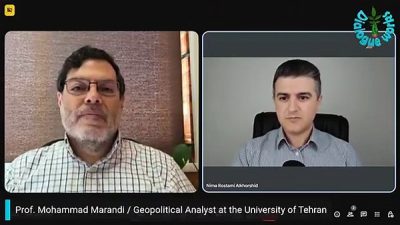
Seyed M. Marandi: U.S. Military DIVIDED? Iran’s Secret Defense EXPOSED
or go to
Aletho News Archives – Video-Images
From the Archives
‘Israel sees Iran as obstacle to its policies’
Press TV – August 25, 2017
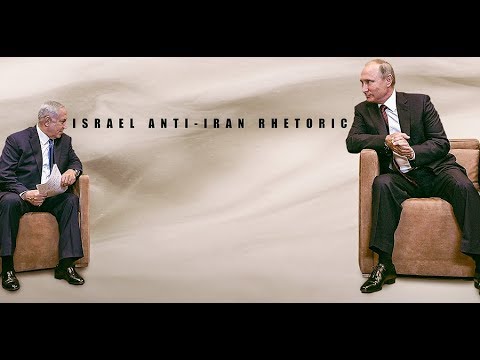
Prime Minister Benjamin Netanyahu has said that Israel felt threatened by Iran’s growing influence in the Middle East. Netanyahu expressed his Iranophobic view in a meeting with Russian President Vladimir Putin in Russia’s Black Sea resort of Sochi on Wednesday. Press TV has asked Scott Rickard, former American intelligence linguist from Tampa, Florida, and Brent Budowsky, a columnist at The Hill from Washington, to give their thoughts on the issue.
Rickard said Tel Aviv is concerned about the fact that the regime could not carry out its old project to spread sectarian divisions and pave the way for dismemberment of the countries in the Middle East region because of the Iranian-led resistance against Israeli policies, not only in the occupied territories of Palestine but also in the whole region.
“Iran is not a threat to Israel whatsoever. The threat that Israel sees is the fact that their Oded Yinon Plan is being put to a hold by Iran,” the intelligence linguist said on Thursday night.
“They (the Israelis) look at Iran as a threat only because they have no influence on their governments and Iran is autonomous and is not under the Zionist influence,” he added.
Since the victory of the Islamic Republic of Iran in 1979, Tehran has been critical of Israel’s policies in the region, whereas “no leaders [of other states] even dared to speak out against Zionism,” Rickard argued. … continue
Blog Roll
 Aletho News
- Iran declares ‘historic victory’ over US, says enemy forced to accept its proposal
- Trump Claims Ceasefire, Reopening of Strait of Hormuz Agreement with Iran
- Israeli tank fire killed UN peacekeeper in Lebanon, UNIFIL investigation finds
- Russia, China block Bahrain-sponsored UN resolution on Strait of Hormuz
- The US-Israeli War on Science is an Assault on our Future
- Trump’s Promise to Bomb Iran ‘Like Never Before’ Faces Brutal Logistics — Expert
- Germany seeks to restrict stays abroad for men of fighting age – Berliner Zeitung
- Evidence points to Ukraine being behind TurkStream attempted sabotage, but that should come as no surprise
- Sri Lanka secures supplies of Russia oil – minister
- Nations across Asia strike direct deals with Iran for Hormuz passage
- If Americans Knew
- Thousands dead and neighborhoods razed to the ground: Aid agencies fear southern Lebanon is becoming the new Gaza
- The war the US is fighting for Israel could cost trillions
- ‘Cigarette Burns, Nail Wounds’: Toddler Tortured in Gaza to Coerce Father
- Trump Says US Sent ‘a Lot of Guns’ to Protesters in Iran
- Israeli forces destroy 17 UN peacekeeper cameras in south Lebanon
- US-Israeli strikes ‘completely destroy’ synagogue in Tehran
- Archbishop for US Military Says Iran War Is Unjust Under Catholic Teaching
- Iranian leaders’ Open Letters to the American People
- Trump says Iranians appreciate bombs, WHO warns of nuclear risks – Daily Update
- U.N. experts demand Israel release prominent Gaza doctor after reports of ‘severe torture’
- No Tricks Zone
- An Inconvenient Tree: Uncovered In Alps… Europe Much Warmer Than Today 6000 Years Ago
- New Study Reports A 60% Slowdown In Greenland’s Ice Loss Rate In The Last Decade
- Low Intensity Tornado Wrecks Major Solar Farm, Creating A Potential Toxic Dump
- New Study Finds Warming Saves Lives…Cold Temperatures 12 Times More Deadly Than Excess Heat
- German Science Blog Accuses PIK Climate Institute Of Hallucinating Climate Tipping Points
- Devastating Assessment Of Comirnaty Vaccine By Former Senior Pfizer Europe Toxicologist
- New Study: CO2 Is ‘Effectively Negligible’ As An Explanatory Climate Change Factor Since 2000
- Former Pfizer Toxicologist Dr. Helmut Sterz Tells Bundestag Hearing Pfizer Vaccine Should Have Never Been Approved
- Energy Expert: Germany’s Nuclear Phaseout Was A “500 Billion Euro Mistake”
- New Research: South Australia’s Mid-Holocene Sea Surface Temperatures Were 4°C Warmer Than Today
 Aletho News