The United States has rejected a request by the United Arab Emirates to purchase the F-35 Stealth Fighters, Israeli Channel 13 reported.
According to the news station Pentagon officials said they would not allow the sale of F-35 Stealth Fighters to the UAE in order to preserve Israel’s qualitative military edge (QME).
According to the channel, the UAE has been seeking to purchase the stealth fighters for more than six years without success.
The US, Channel 13 continued, has a long held policy of upholding Israel’s qualitative military edge, whereby Israel maintains a technological advantage in the region when it comes to defence capabilities.
Israel has recently received two additional F-35 fighter jets amid escalating tensions with Iran in the region.
A political analyst says the latest move by the US to call on social media networks to block the accounts of Iran’s leaders is part of Washington’s usual pattern of “harassing Iran on behalf of Israel.”
Brian Hook, special US representative for Iran, has recently urged Facebook, Instagram and Twitter to block the accounts of Iranian government leaders over an Internet blackout that began in the country following riots over fuel price hikes.
Tehran says it had to restrict access to the Internet to prevent “saboteurs” from using online services like navigation and maps to coordinate their activities in large cities across the country.
The government nevertheless has begun reestablishing Internet connectivity after around 100 of the ringleaders of the riots were apprehended.
In an interview with Press TV on Sunday, Walt Peretto said “this latest move by the State Department follows the usual pattern of the US harassing Iran on behalf of Israel and their New World Order overlords and the rest of global organized psychopathy.”
He said the US cannot invade “a nation like Iran that remains strong and independent,” so “instead, they harass them with rhetoric and propaganda, sanctions, nuclear agreements that they renege on.”
He went on to say that “hypocrisy and lies are as common as breathing with the officials in the State Department and White House.”
“On one hand the US has a mainstream media that is completely Zionist run, while independent sources of information particularly on social media and YouTube are harassed and often censored when truthful information becomes an irritant to the globalist overlords.”
“In the minds of the general public that receives its news and information from mainstream sources, the US is actually fighting censorship by reprimanding Iran for reacting in the way it chose in order to quell destructive protests, when in fact censorship is standard everyday practice in the US mainstream media and now harassment and censorship is increasingly becoming a problem with independent media based mostly on the internet. There is nothing that the globalist psychopaths fear more than the dissemination of the truth,” he stated.
The dichotomy between the regime policy and public opinion is nowhere near as sharp as in the world of diplomacy. And nowhere in the contemporary situation is this maxim so sharply visible as in the dalliance of the West Asian oligarchies with Israel. The romance began at least a decade ago — perhaps, more — but it still remains an illicit affair.
Israel would have liked an open relationship. It has a lot to gain thereby. But that’s possible only when pigs fly. The reason is that the authoritarian rulers of Muslim Middle East are acutely conscious of the so-called ‘Arab Street’. This may seem a paradox — that oligarchies need to be mindful of popular opinion — but, in actuality, they do not enjoy such a big leeway as one imagines to trample upon public opinion to the extent that strong elected leadership would have.
When they defy or ignore public opinion, it must be for weighty reasons — mostly, when existential issues are involved such as the regime’s survival, for instance. Israel doesn’t fall into that exceptional category — it is not as if without a relationship with Israel, the Arab oligarchies would face extinction. The dalliance between the Arab regimes and Israel is characterised by pragmatism rather than principles or critical imperatives. So long as Israel lacks any ‘soft power’ in its Arab neighbourhood and the ‘Arab Street’ views it negatively, the hands of the authoritarian rulers are tied. They can go only thus far, and no further. In turn, it severely limited the relationship.
The Indian leadership should realise the limitations of pragmatic external relations in diplomacy. There is no gainsaying the fact that India’s ‘soft power’ is depleting at an alarming rate. The acolytes of the Modi government do not seem to care and even those amongst the few amongst them who are erudite enough to comprehend the significance of what is happening tend to put on an air of defiance or studied indifference — or worse still, become polemical.
The External Affairs Minister S. Jaishankar’s recent remark that Imperial Britain divested India of $44 trillion is a typical remark. Faced with the quandary of searing criticism in Britain regarding the J&K situation, he takes a de tour to malign Britain. (How this round figure of $44 trillion has been arrived at is another matter — even if one doesn’t want to get into the modernisation of India under British rule that made the evolution of the Indian state as a political entity possible.)
Today, ‘soft power’ is no longer in vogue in the Indian diplomatic toolbox. The obsession with ‘macho’ image is so overpowering. Under the Modi government, the accent on ‘soft power’ began with a bang in 2014 and is quite visibly ending after five years with a whimper.
A number of mistakes have been made during the past 5-year period that dented India’s ‘soft power’ (which one doesn’t want to go into there). But it is the appalling situation in the Kashmir Valley that dealt a body blow to India’s image.
An opinion is steadily gaining ground in the Muslim countries in India’s ‘extended neighbourhood’ that the Modi government is adopting state policies that are decidedly ‘anti-Muslim’. Even the elites in friendly countries such as Bangladesh, Malaysia, Indonesia or Turkey, who are by no means ‘Islamist’ tend to see Kashmir as a ‘Muslim issue.’
A recent opinion piece in the influential US magazine Foreign Policy is entitled Kashmir Could Wreck India’s Reputation Among Afghans. It is a nuanced analysis — by no means ‘anti-Indian’ — of how Afghan public opinion, which is traditionally friendly, is discernibly getting disenchanted with India’s repression of Kashmiri Muslims.
This is a depressing scenario, because ‘soft power’ has been historically the bedrock of India-Afghan relations, and for that reason, Delhi under successive governments right from 1947, placed great emphasis on people-to-people relations between the two countries.
Certainly, our diplomacy will be by far diminished if the Afghans perceive us as no different from Pakistan — pursuing cold, pitiless geopolitical objectives in their country. It is small comfort that Afghans will probably continue to view India as a ‘stabilising factor’.
To quote Hari Prasad, the author of the article, “The positions of political actors in Afghanistan have ranged from neutral to explicitly pro-India, primarily for India’s support for the Afghan government as well as anti-Pakistan animus. But our discussions with journalists and Afghans in the region show the popular reaction is decidedly more nuanced. Many working-class Afghans, drawing from their own experiences of conflict and oppression, identify with Kashmir’s Muslims.”
The analysis makes the foreboding conclusion: “Afghans are closely watching the actions of Indian Prime Minister Narendra Modi’s government in Kashmir and throughout the region. That should be a reality check for New Delhi; its courting of Afghan opinion can only go so far. India may have the funding and power to shape public opinion and support in Afghanistan, but it will take much more to overcome growing mistrust.”
If the changing perceptions regarding India are such in Afghanistan, can it be any different in the Central Asian region? The people in the steppes are, if anything, far more deeply immersed in Islamic culture, ethos and identity than Afghans, given the historical reality that their region was also the cradle of Islam in its golden era.
The Uzbeks, for instance, take great pride that Babur set out from Fergana, which, incidentally, has a museum dedicated to Babur. One of the most evocative historical monuments in Kabul is the Bagh-e Babur (Garden of Babur), the final resting place that the great emperor chose for himself — rather than Agra.
Even if Delhi were to build half a dozen parliament buildings in Kabul, Afghans will continue to treasure the Bagh-e Babur as the living monument to their abiding links with India.
What’s behind the most recent violent protests in Iran? Is it really all about a gasoline price increase? Why is US Secretary of State Mike Pompeo so enthusiastic about the protests, telling them that the US stands with them against their government? What’s the role of the CIA and the notorious “Ayatollah Mike” in fanning the flames? RPI’s Daniel McAdams joins PressTV’s Debate program to discuss Iran unrest:
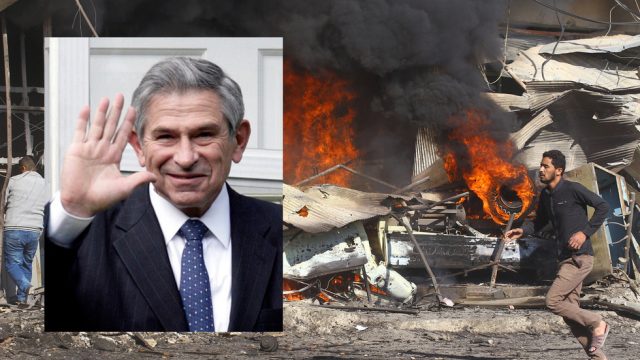
Unreconstructed neocon Paul Wolfowitz has slammed President Donald Trump for ‘abandoning’ the Kurds, insisting the US will need them next time there’s a war in Syria. Trump’s blunder, then, is thinking wars can “end.”
The man once described by CNN as “the heart and soul of the Iraq war” points out in an op-ed in the New York Times on Thursday that decades of meddling in the Middle East have made the US some friends in the region – namely, the Kurds. Casting them aside, he says, will make future meddling much more difficult.
The failed war’s mastermind reminds Trump that because the US’ Kurdish and Arab allies were gracious enough to serve as cannon fodder in the fight against the Islamic State (IS, formerly ISIS/ISIL) in Syria and Iraq, the US lost just six soldiers, compared to 11,000 from the US-backed opposition. A less belligerent mind might see this as exploitation, rather than alliance – but friendship means never having to say “sorry I turned your homeland into a hotbed of sectarian conflict.”
When the next war comes around – and Wolfowitz assures us there will be a next war – the US will be sorry it spurned its Kurdish friends, he warns. The inveterate warmonger calls Trump short-sighted for viewing all engagement in the Middle East through the lens of the Iraq and Afghanistan quagmires, and holds up a failed Shiite uprising against Iraqi leader Saddam Hussein as a cautionary tale of what happens when the US isn’t lurking in the shadows ready to play World Police at the drop of a shell – but glosses over the fact that every war Wolfowitz has backed in his lengthy career has ended with the “liberated” country all but turned to dust.
In Wolfowitz’s view, there is no “right” way to leave a war. “Walking away from [the Middle East] has a way of sucking America back in,” he warns – as if the power vacuum he warns will develop in the absence of a firm American hand to guide backward local politicos is an actual literal vacuum, capable of sucking American troops through space. The only way to prevent this is to prop up US “allies” at the helm of these countries and surround them with American “advisers” so they don’t make the mistake of listening to their people.
But even as he warns against allowing power vacuums to develop, he tears into former President Barack Obama for not backing the Syrian opposition’s efforts to overthrow President Bashar al-Assad, lamenting that a bit of support in the right place could have “toppled the regime… with little risk to Americans.” Apparently, some power vacuums are more dangerous than others.
Wolfowitz admitted in 2013 that the Iraq War was a disaster, but insisted this was only because he wasn’t actually its “architect,” all CNN plaudits aside – he had wanted Iraqi leadership from the start, rather than the embarrassingly colonialist look of having American “viceroy” Paul Bremer running the show. Americans would still be behind the scenes pulling the strings, however – he has bemoaned the lack of “leadership qualities” in Iraqi politicians as recently as 2017, insisting the US must maintain a presence in the country to keep it from “going to hell literally.” For a man who spends so much time mouthing platitudes about democracy, he is wildly allergic to self-rule by Middle Eastern peoples. Had the Bush Administration simply done things according to his plan – adopted the properly colonialist model of backing one group of Iraqis against the others – everything would have been peachy.
That complete lack of insight has made Wolfowitz one of the loudest cheerleaders for any and all wars since his tenure. He was a big fan of invading Libya, and wrote an op-ed in the Wall Street Journal begging Trump to bomb Syria (which Trump did). It’s astonishing that any serious politician still listens to the man who infamously promised in 2003 that the Iraqi people “would greet [American troops] as liberators,” obviating the need for a heavy troop presence in the country. Trump’s repeated attempts at leaving Syria have all crumbled in the face of opposition from the entrenched interests that Wolfowitz represents. But if he stops even trying to pull Americans out of the region, Wolfowitz will be right – these wars will keep happening.
The UAE has said it is interested in de-escalating the tension in the Gulf region and is studying Russian proposals in this regard, TASS reported.
In an interview the Russian Ambassador to the UAE Sergei Kuznetsov said: “Our Emirati friends are interested with us in easing the tensions in the Persian Gulf.”
He added: “They are carefully studying the corresponding Russian proposals as part of our strategy aimed at establishing a framework to launch equal dialogue between countries in order to ensure stability and security in this region of strategic importance.”
Kuznetsov stated that the main point is that Russia’s partners in the UAE “understand the dangers of artificially instigating tensions in the Persian Gulf fraught with unpredictable ramifications.”
Last month it was reported that the US was planning to send “thousands” of additional troops to bolster its military presence in Saudi in the wake of the Aramco attacks, which Washington and Riyadh blamed on Iran despite Yemen’s Houthi movement claiming responsibility.
I once had an animated conversation with the Middle East correspondent of a leading Indian newspaper regarding the resilience of the Iranian political system. The year was 2001. The conversation took place in the backdrop of mass protests and clashes between hard-liners and reformists on the the 22nd anniversary of the Islamic revolution in Iran. My friend forecast that the Iranian regime was in meltdown under the combined weight of US sanctions and a dysfunctional repressive regime. He point blank rejected my dissent that the stability of the Iranian system was not in doubt.
When it comes to Iran, everything depends on what prism you are holding. If you live in Dubai or visit Israel too often, you get one vision; if you live in Turkey, you get a vastly different view.
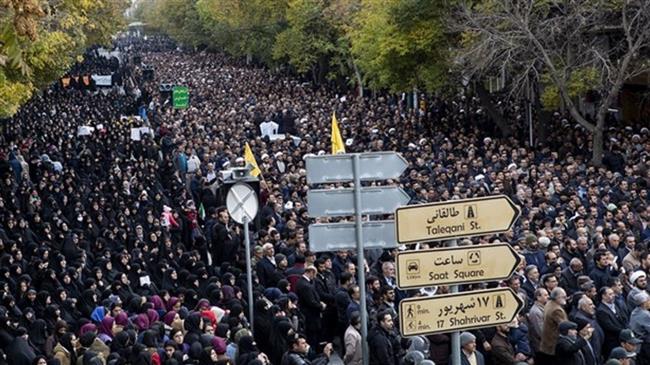
The recent days’ happenings fell into that familiar pattern. The protests were played up by the western media and American think tanks in apocalyptic terms, but when counter-demonstrations began appearing, supportive of the government, they have fallen silent. Life is returning to normal in Iran.
Two striking features must be noted. One, anti-government protests are possible to be staged in Iran; two, the regime enjoys a substantial social base. Unsurprisingly, when protests appear in Iran, democratic Turkey takes a balanced view while the repressive Saudi regime gleefully joins the western camp of ‘liberal democracies’ to pelt stones at the Iranian regime.
Isn’t there social and political discontent in Iran and Turkey? Indeed, there is. But representative rule provides safety valves and the political leaderships in Tehran or Ankara are receptive to popular opinion. Who would dispute that Hassan Rouhani and Recep Erdogan secured their mandates in hotly contested elections?
Can it be a coincidence that when the Iranian protests were raging in the past week, the US and Israel tested the waters, so to speak? The US aircraft carrier strike group Abraham Lincoln sailed through the strategic Strait of Hormuz on Tuesday. And Israel hit “dozens of targets” in Syria — in and around Damascus in Kiswa, Saasaa, Mezzeh military airport, Jdaidat Artouz, Qudsaya and Sahnaya — which it claimed were aimed at thwarting what Tel Aviv called Iran’s “military entrenchment” there and to block shipments of Iranian weapons to Lebanon’s Hezbollah movement.
Conceivably, these military operations would have needed some advance planning, especially the freedom of navigation exercised by the US aircraft carrier strike group through the narrow straits where Iran controls many of the shipping lanes. Yet, it happened just when the Iranian regime was preoccupied with the domestic unrest!
Again, President Trump notified the US Congress of his intention to step up military deployments in Saudi Arabia in the middle of the unrest in Iran. In the normal course, Tehran’s reaction would have been robust but, again, the US got away with it — for the time being, at least — as the Iranian regime and leadership has its hands full with internal developments. (Russia has warned that Washington’s plan for additional deployments of thousands of US troops to Saudi Arabia will only add to already simmering tensions in the Middle East region.)
The western narrative is that the unrest in Iran stemmed from economic factors at work triggered by the US sanctions. But, interestingly, the leading Israeli newspaper Haaretz has commented that “In the case of Iran, the headline figures about economic distress are misleading in critical ways. Iran is not quite the oil economy that, say, Saudi Arabia and the Gulf emirates are. Petroleum hasn’t accounted for more than a fifth of GDP and half of exports in the past, and it doesn’t employ a lot of people. So, while oil sanctions can inflict a lot of pain when they are first imposed, they don’t bring economic activity to a standstill.”
Haaretz points out, “Ironically, the non-oil sanctions may be giving the Iranian economy a small boost. Apart from oil, pistachios and carpets, Iran is not a globally competitive economy, but it does have a manufacturing and agricultural base… Iranian industry has the local market and is expanding output. As a result, manufacturing has been growing as has employment while the rial has stabilised… Media reports say there are plenty of ‘Made in Iran’ consumer goods on store shelves. The “resistance economy” may not be quite the miracle Tehran leaders tout, but it could be enough to stabilise the situation after the initial shock over oil sanctions have passed.
“Forecasts for the Iran going forward point in that direction. The World Bank, for instance, agrees with the IMF that Iranian GDP will contract sharply in 2019-2020 but afterwards start growing again.”
This analysis contradicts the western narrative that the Iranian people are up in revolt. Suffice to say, there is merit in the allegation by Iran’s top security officials that the protests have been actively orchestrated from abroad.
While addressing a cabinet meeting in Tehran on Wednesday, President Rouhani was explicit. The Iranian foreign ministry made a demarche with the Swiss embassy in Tehran, which represents Washington’s Interest Section, regarding US interference in the country’s internal affairs.
An ‘internal memo’ that was intentionally leaked has blasted U.S. President Donald Trump’s decision for the U.S. military to withdraw from Syria, or more accurately, relocate from northern Syria to the oilfields in the east, as well as his complacency as Turkey commits “war crimes and ethnic cleansing” against the Kurdish minority.
The author of the memo, diplomat and former ambassador to Bahrain, William V. Roebuck, took every opportunity to lambast Trump as he faces impeachment 12 months before the next U.S. presidential elections. Roebuck questioned whether the U.S. could have prevented the Turkish military operation in northern Syria by increasing military patrols, sanctions and threats, but conceded that “the answer is probably not,” citing Turkey’s membership in NATO and its large army against the small American presence in the region. “But we won’t know because we didn’t try,” Roebuck added.
The New York Times claims that Roebuck’s memo was delivered to the State Department’s special envoy on Syria, James F. Jeffrey, and to dozens of officials focusing on Syria in the State Department, White House and Pentagon. However, the entirety of the 3,200-word memo failed to mention Ankara’s motivation in conducting this operation.
The Syrian perspective is that this is part of a project for a Greater Turkey. Turkish Foreign Minister Mevlüt Çavuşoğlu emphasized in an October interview that Turkey is not interested in territorial expansionism, stating “Russia is concerned about some sensitive issues, such as territorial integrity and the unity of the country [Syria]. We are also worried. If we look at all the joint statements of Turkey, Russia and Iran, we emphasize it.”
Although it may sound conspiratorial, this statement would have done little to alleviate this fear as Turkey has controlled large swathes of northern Syria since 2016 without any process to negotiate the return of these regions to Syrian government administration. In conjunction, Damascus would also remember the 1939 Turkish annexation of its Hatay province, Turkey’s invasion of neighboring Cyprus in 1974, and Turkish President Recep Tayyip Erdoğan invoking an early 20th-century irredentist document that claims northern Syria, northern Iraq, most of Armenia, the entirety of Cyprus, much of Bulgaria and Greece’s northern and eastern Aegean islands as under Turkish sovereignty.
Although territorial expansionism may be a motivating factor for many in the Turkish political and military leadership, it would be a secondary motivating factor. What Roebuck’s memo failed to mention is that Turkey’s Syria policy today is motivated by security concerns.
In an academic article titled “Turkey’s interests in the Syrian war: from neo-Ottomanism to counterinsurgency,” I first made the argument that Turkey’s initial interests in Syria was to expand its influence, and perhaps territory. What was not envisioned by the Turkish leadership was the re-emergence of the Kurdistan Workers Party (PKK) in Syria, recognized as a terrorist organization by Turkey, Syria and the U.S., but not by Russia. The PKK in Syria fight under the banner of the People’s Protection Units (YPG), who comprise the majority of the Syrian Democratic Forces (SDF).
Washington confusingly recognizes the PKK as a terrorist organization, but has directly funded, armed and supported the YPG in Syria. Ankara makes no distinction between the PKK and the YPG, and this has been a primary source of recent hostilities between Turkey and the U.S. Although Syria once supported the PKK against Turkey, it has recognized the group as a terrorist organization since 1998, initially easing the tense relations between Damascus and Ankara, with Erdoğan even describing his Syrian counterpart Bashar al-Assad as his “brother.”
Former Turkish Foreign Minister (2009–2014), Ahmet Davutoglu, adopted a “zero problems with neighbors” policy that saw his country strengthen economic and political ties with the Islamic World by lifting visa restrictions and taking a larger active role in critical Islamic issues like the fallout between the Palestinian Hamas and Fatah groups, Afghanistan and Pakistan, and Syria and Israel. However, this new doctrine was taken to the test when the Syrian war began in 2011, with Ankara immediately contradicting the “zero problems with the neighbours” policy by supporting terrorist organizations and getting itself into disputes and hostilities with not only Syria, but also Iraq, Greece, Cyprus and Armenia.
The Arab Spring changed the status quo in the Middle East and provided an opportunity for Turkey to engage in power projections within a new regional order where Ankara would be the center of power. However, what Ankara had not calculated is that by abandoning the “zero problems with neighbors” policy and flooding Syria with tens thousands of terrorists, it was creating the very conditions for the PKK to return to Syria after a more than 20-year hiatus under the guise of protecting Syria’s Kurds.
Essentially, the project for a Greater Turkey has become secondary in the case of Syria, with Ankara’s current focus on what it calls a counterterrorist operation against the PKK/YPG, after they created the very conditions for them to return to Syria. Although Trump has whole teams dedicated to Syria, it appears that Washington refuses to acknowledge Turkey’s security concerns, just as Roebuck’s memo demonstrates.
The rise of the YPG brought questions of Kurdish independence or autonomy in northern Syria, which can also find justification for an autonomous or independent Kurdish state in eastern Turkey as the PKK, militarily and politically, has struggled for decades to achieve this. A Kurdish push for independence or autonomy in northern Syria not only threatens Turkey’s desire to illegally annex this region, but destabilizes Turkey as the Kurds can make a greater push for independence or autonomy in eastern Anatolia.
As Turkey strengthens its relations with Russia, the question remains whether the country will formally leave NATO or not. It is unlikely that the U.S. will push for Turkey’s expulsion from NATO as it has the second largest military in the alliance and occupies one of the most strategic spots on the planet.
Although the U.S. has turned to Greece as its Plan B to contain Russia in the Black Sea in any hypothetical war, Washington would know there is a great possibility that the next general election in Turkey could see Erdoğan out of power and replaced by a more Washington-friendly leader. Not only is Erdoğan’s popularity diminishing because of the economic crisis and his unpopular Syria policy, but the highly popular ex-economy minister Ali Babacan and ex-Prime Minister Ahmet Davutoğlu have both recently left Erdoğan’s Justice and Development Party (AKP) to establish their own respective political parties, which will only further weaken AKP who have lost over 840,000 members in one year alone.
The U.S. would be hoping that by continuing to apply military, diplomatic and economic pressure against Turkey, the tense situation in Turkey will see Erdoğan’s popularity diminish, and the return of a pro-U.S. leader. The difficult economic situation, the millions of refugees and the increased terror attacks in Turkey can all be directly attributed to Erdoğan’s Syria policy, and the U.S. will continue to use these means to pressure Turkey until it conforms to Washington’s desires and reverse its strengthened ties with Russia.
Many within Washington are unsatisfied with Trump’s Turkey policy and feel that they are not utilizing their advantages to pressure Erdoğan. Roebuck’s memo however appears to be a potential gamechanger as it has critically expressed opposition to Trump’s policy at a formal, and now public, level.
Roebuck publicly revealed that Turkey’s military operation in northern Syria is “spearheaded by armed Islamist groups on its payroll” who are committing what can “only be described as war crimes and ethnic cleansing.” The same jihadist forces utilized by Turkey are no different to the ones the U.S. supported against Assad, who not only ethnically cleansed Kurds, but also Shi’ites, Alawites, Antiochian Greeks, Assyrians and Armenians.
Roebuck also suggested that the U.S. must maintain relations with Turkey. As Turkey is at a crossroads with its political leadership, Washington knows there is a strong possibility that Erdoğan might not be around by the time the next general election is scheduled in 2023, although it appears likely that these elections will take place years earlier. With Roebuck’s ‘leak,’ it is likely that Trump will start receiving stronger domestic political pressure to deal with Turkey in a much tougher way and continue to make every destabilizing effort to remove Erdoğan and have him replaced with a pro-U.S. leader.
Paul Antonopoulos is a Research Fellow at the Center for Syncretic Studies.
President Donald Trump’s lack of any precision when he speaks or tweets sometimes means that multiple meanings can be construed from what he chooses to say or write. At a private gathering last week in which he was wooing potential Orthodox Jewish donors, he responded to a blessing from a rabbi with what he thought to be a joke. Fighting for his political life in the middle of an impeachment process, he observed that if things do no go well in the United States, he could always move to Israel and run for office, saying “if anything happens here, I’m taking a trip over to Israel. I’ll be prime minister.”
The fund-raiser at the Intercontinental Hotel in Manhattan was arranged by the America First Super PAC. Trump’s son-in-law and principal adviser Jared Kushner and his special representative for international negotiations Avi Berkowitz, both Orthodox Jews, also were in attendance. Numerous Trump supporters were present in the ballroom and began shouting out “Four more years!” when the president rose to speak. Rabbi Y.Y. Jacobson offered a blessing, saying “Blessed are you, our Lord, King of the universe, that you have shared of your glory and love and compassion with a human being who maintains the honor of every innocent person and Jew. Thank you, amen.”
The Trump joke appeared to be based on media reports that he enjoys an approval rating of 98% among Jewish voters in Israel, the only country in the world where he has a favorable rating. And he was also presumably referring to the fact that Israel has had two deadlocked elections and may be heading for a third due to the fact that neither Benjamin Netanyahu nor his opponent Benny Gantz seems able to pull together a governing coalition. Trump quipped in his usual self-serving fashion, “What kind of a system is it over there, right, with Bibi? They’re all fighting and fighting. We have different kinds of fights, but at least we know who the boss is. They keep having elections, and nobody’s elected.”
The president also spent some time affirming his complete support for the Jewish state, citing how it was at that moment defending itself from missile attacks coming from the Palestinian Islamic Jihad group and Hamas in Gaza. He also recalled for the potential donors his unilateral (and illegal) recognition of Israeli sovereignty over the occupied Golan Heights and his decision to withdraw from the Joint Comprehensive Plan of Action (JCPOA) agreement limiting Iran’s nuclear program. As expected, the audience cheered.
Also, in a statement that should offend and serve as a wake-up call for all of America’s remaining Arab friends, Trump described how he was able to move the U.S. Embassy from Tel Aviv to Jerusalem. He claimed that when he received calls from Arab leaders objecting to the proposed shift, he refused to speak to them, saying to his aides “Just tell them I’m very busy, I’ll call them back. And then I did it, we got it done, it’s done. And then I announced it, and then I went into the office, I made about 25 calls…. I said, ‘Don’t worry about it, it’s done already; there’s nothing I could do about it.’ It’s much easier. I say, ‘I’m sorry, I wish I could have gotten back to you sooner.’”
So, on the surface it was a complete rah-rah evening among friends, saying wonderful things about Israel and dumb things about Arabs while also bringing in $4 million in donations from the Orthodox Jewish businessmen who made up most of the audience. But at the same time, the Trump remark about moving to Israel and being elected prime minister can be construed as having a darker meaning as Israel is, in fact, a settler state that illegally has dispossessed the original residents of the country and replaced them. Foreign Jews can move to Israel and become citizens automatically under the “law of return” but the people who used to live on that land cannot go to their homes. Trump, who joked about moving and becoming Israeli, described in his usual caustic, off-hand fashion the racist reality of the Jewish state.
Donald Trump might not have been in such a humorous mood if he had considered the fact that while he is wildly popular in Israel because he gives the Israeli Jews everything they want, he continues to be mistrusted and not very well received by American Jews, who continue to vote for and provide most of the funding for the Democratic Party. Some Israelis and many American Zionists have even come to the conclusion that Trump is not to be relied upon when he pledges total support for the Jewish state. They point to the recent White House decision to pull out of Syria, which was made in consultation with Turkey, which the Israelis regard as a hostile power, and without any input from Israel. The fact that Trump then reversed himself also has been noted as characteristic of his basic unreliability.
Some Israelis and their think tank associates in the United States have also expressed particular concern over the fact that Trump and Netanyahu, who still heads the interim government, have not even spoken over the phone in weeks. As Trump’s policy making style is best described as impulsive, there is concern that he will make bad decisions from the Israeli perspective. It is often noted that the Administration’s desire to confront Iran appears to have waned and will probably be even less evident as the 2020 election approaches. Some observers have also cited the example of the betrayal of the Kurds, suggesting that Trump might be inclined to abandon Israel and its other allies in the Middle East in the same fashion.
To be sure, Donald Trump has done everything possible to pander to American Zionists and to Israelis and it is clear that he considers Jews to be a group that has to be courted, if only due to their influence over the media and their willingness to donate large sums to political causes. Israeli concerns that he will pull the plug on them are overstated to put it mildly given their control over Congress and the media. As long as casino magnate Sheldon Adelson continues to be willing to donate $100 million to the GOP every two years, the status quo is guaranteed. But there remains a long-term problem due to the fact that American Jews are overwhelmingly politically liberal and they do not like Trump, no matter what he does for Israel. And Adelson is reported to be in poor health. If he dies and the cash flow dies with him, Trump’s view of Israel just might change dramatically.
From November 3 to November 14, Israeli, U.S., German, Italian and Greek war jets participated in the “Blue Flag 2019” military exercises out of the Ovda Air Base in Israel’s Negev Desert. The timing of these exercises corresponds with Turkey and a whole host of other countries conducting their own naval exercises in the Aegean and Mediterranean Seas.
Lines are certainly being drawn in the Eastern Mediterranean between pro-U.S. forces and states seeking their own sovereignty away from U.S. hegemony, especially Turkey. Greece proves to be a curious country at the moment, since one of its warships participated in the Turkish-led naval exercises, even though Pakistan twice violated Greek airspace during these exercises and a war of words continues to ensue between Turkish and Greek political leaders over the maritime waters of Cyprus and the Eastern Aegean.
Although Greece was involved in both exercises, there can be no doubt that the Blue Flag 2019 exercises were aimed against Russia, Turkey and Iran. Part of the Blue Flag 2019 was the process and execution of aerial scripts to neutralize Russia’s S-400 Triumph missile defense system. However, since none of the participating countries have an S-400, the Israeli military had deployed U.S.-made Patriot missiles in specific locations to try to simulate the capabilities of the Russian-made systems during the military exercises that occurred near the Gaza Strip.
The simulation of the S-400 rocket launcher demonstrates for the first time that Israel is actively preparing to deal with such a system that exists only in Syrian and Turkish territory. In Syria, the powerful Russian defense system was deployed to protect Russian forces exactly four years ago, ironically because Turkey blew out a Russian jet from Syrian airspace in November 2015.
Meanwhile, the S-300V4 missiles will also be deployed in Egypt. The S-300V4 uses almost similar technology to the S-400 and has great capabilities in handling stealth aircraft. The S-400 has recently been shipped to Turkey, but is not yet operational, while Iran and Saudi Arabia have also shown interest in these systems.
The oldest and least capable S-300PMU-2 was deployed by the Syrian armed forces in late 2018, reducing the frequency of Israeli attacks in the country, but not stopping them. It is unclear what exact development led to Israel’s implementation of the S-400 neutralization training, however it is likely that these systems will also begin appearing elsewhere in the Middle East, putting Israel in a compromised military position.
Whatever the case, a big game is being played in the area with the possession and potential use of strategic weapons, such as Russian missiles and 5th generation American fighter jets.
Turkey, Greece, Israel, the U.S. and Syria have been embroiled in a meltdown of developments over who will eventually have the upper hand in the Eastern Mediterranean, but it is also seen that alliances are forming in the region. Although Greece was involved in both exercises taking place in the Eastern Mediterranean, its warship participating in the Turkish-led exercises took a more observatory position ensuring that its maritime waters were not violated, while it took a very active role in Israel, even winning the war games against the other participants of the exercises, which is unsurprising since Greece has the best pilots in NATO.
While Greece also participated in the Turkish-led naval exercises, it was actively training its pilots alongside the U.S. and conducting drills with Patriot missile batteries modified to imitate the Russian-made systems. However, the Russian systems hit targets twice as fast as the Patriots, and at a longer distance and higher altitude – essentially, attempting to use Patriots to simulate the S-400 would not have been very accurate.
It cannot be forgotten that Saudi Arabia, the world’s largest exporter of oil in the world, on September 14 had its daily supply cut by nearly 50 percent because of drone and missile attacks against state-owned oil company by the Yemeni Houthi-led Ansarullah resistance movement. With Saudi Arabia investing billions of dollars into the Patriot system, it would have been expected that they would have a near 100% success rate in hitting all the missiles launched by the Ansarullah Movement.
It is for this reason that Russian Senate Security and Defense Committee member Franz Klintsevich, in a comedic manner, stated that “if Saudi Arabia had installed the Russian anti-aircraft systems, this would not have happened. The S-300 and S-400 missile systems, supported by the Pantsir S-1 would not have allowed any of the drones and missiles to hit their target. The Saudis should think about it.” Therefore, there is a huge doubt that the modified Patriots could successfully mimic the S-400.
Whether the training against “the S-400” in Israel was successful for the participating countries, it more importantly demonstrates an intent by these countries to be able to overcome the Russian missile defense system. For Israel, it is crucial so that it knows how to respond to any hypothetical war with Iran or Turkey, while for the U.S. it would also be against Russia.
With Russia selling the S-400 system, announcing its intent to also sell fighter jets, and conducting patrols with Turkey in Syria, their ties are becoming much more integrated. It also appears that the U.S., Greece and Israel are strengthening their military coordination in the Eastern Mediterranean. Although Israel is not against Russia, it certainly has an adversarial political and military relationship with Turkey despite their close economic ties, just as Greece does with Turkey. And although Greece might not be against Russia, they certainly are against Turkey. The U.S. intentions for the Blue Flag 2019 exercise are to coordinate an alliance against Russia, and potentially Turkey, while training against the S-400.
Paul Antonopoulos is a Research Fellow at the Center for Syncretic Studies.
“Two years, three years, five years’ maximum from now, you will not recognize the same Middle East”, says the former Egyptian FM, Arab League Secretary General and Presidential Candidate, Amr Moussa, in an interview with Al-Monitor.
Mousa made some unexpected points, beyond warning of major change ahead (“the thing now is that the simple Arab man follows everything” – all the events). And in reference to the protests in Iraq, Moussa says that Iraq is in “a preparatory stage for them to choose their way as Iraqis — emphasizing that “the discord between Sunni and Shia is about to fade away.”
The present regional turbulence, he suggests, is [essentially] a reaction to the US playing the sectarian card – manipulating “the issues of sect and religion, et cetera, was not only a dangerous, but a sinister kind of policy”. He added however, “I don’t say that it will happen tomorrow, but [the discord between Sunnis and the Shi’a fading away], will certainly happen in the foreseeable future, which will reflect on Lebanon too.”
What we are witnessing in Iraq and Lebanon, he adds, “are these things correcting themselves. It will take time, but they will correct themselves. Iraq is a big country in the region, no less than Iran, no less than Turkey. Iraq is a country to reckon with. I don’t know whether this was the reason why it had to be destroyed. Could be. But there are forces in Iraq that are being rebuilt … Iraq will come back. And this phase – what we see today, perhaps this is the — what can I say? A preparatory stage?”
Of course, these comments – coming from a leading Establishment Sunni figure – will appear stunningly counter-intuitive to those living outside the region, where the MSM narrative – from Colombia to Gulf States – is that the current protests are sectarian, and directed predominantly at Hizbullah and Iran. Certainly there is a thread of iconoclasm to this global ‘Age of Anger’, targeting all leaderships, everywhere. In these tempestuous times, of course, the world reads into events what it hopes and expects to see. Moussa calls such sectarian ‘framing’ both dangerous and “sinister”.
But look rather, at the core issue on which practically all Lebanese demonstrators concur: It is that the cast-iron sectarian ‘cage’ (decreed initially by France, and subsequently ‘corrected’ by Saudi Arabia at Taif, to shift economic power into the hands of the Sunnis), is the root cause to the institutionalised, semi-hereditary corruption and mal-governance that has infected Lebanon.
Is this not precisely articulated in the demand for a ‘technocratic government’ – that is to say in the demand for the ousting of all these hereditary sectarian Zaim in a non-sectarian articulation of national interests. Of course, being Lebanon, one tribe will always be keener for one, rather than another, sectarian leader to be cast as villain to the piece. The reality is, however, that technocratic government exactly is a break from Taif – even if the next PM is nominally Sunni (but yet not partisan Sunni)?
And just for clarity’s sake: An end to the compartmentalised sectarian constitution is in Hizbullah’s interest. The Shi’i – the largest minority in Lebanon – were always given the smallest slice of the national cake, under the sectarian divide.
What is driving this sudden focus on ‘the flawed system’ in Lebanon – more plausibly – is simply, hardreality. Most Lebanese understand that they no longer possess a functional economy. Its erstwhile ‘business model’ is bust.
Lebanon used to have real exports – agricultural produce exported to Syria and Iraq, but that avenue was closed by the war in Syria. Lebanon’s (legal) exports today effectively are ‘zilch’, but it imports hugely (thanks to having an artificially high Lebanese pound). All this – i.e. the resulting trade, and government budget deficit – used to be balanced out by the large inward flow of dollars.
Inward remittances from the 8 – 9 million Lebanese living overseas was one key part – and dollar deposits arriving in Lebanon’s once ‘safe-haven’ banking system was the other. But that ‘business model’ effectively is bust. The remittances have been fading for years, and the Banking system has the US Treasury crawling all over it (looking for sanctionable Hizbullah accounts).
Which brings us back to that other key point made by Moussa, namely, that the Iraqi disturbances are, in his view, “a preparatory stage for them to choose their way as Iraqis … and that will reflect on Lebanon too”.
If the ‘model’ – either economically or politically – is systemically bust, then tinkering will not do. A new direction is required.
Look at it this way: Sayyed Nasrallah has noted in recent days that other alternatives for Lebanon to a US alignment are possible, but have not yet consolidated into a definitive alternative. That option, in essence, is to ‘look East’: to Russia and China.
It makes sense: At one level, an arrangement with Moscow might untie a number of ‘knots’: It could lead to a re-opening of trade, through Syria, into Iraq for Lebanon’s agricultural produce; it could lead to a return of Syrian refugees out from Lebanon, back to their homes; China could shoulder the Economic Development plan, at a fraction of its projected $20 billion cost – and, above all it could avoid the ‘poison pill’ of a wholesale privatisation of Lebanese state assets on which the French are insisting. In the longer term, Lebanon could participate in the trade and ‘energy corridor’ plans that Russia and China have in mind for the norther tier of the Middle East and Turkey. At least, this alternative seems to offer a real ‘vision’ for the future. Of course, America is threatening Lebanon with horrible consequences – for even thinking of ‘looking East’.
On the other hand, at a donors’ conference at Paris in April, donors pledged to give Lebanon $11bn in loans and grants – but only if it implements certain ‘reforms’. The conditions include a commitment to direct $7 bn towards privatising government assets and state property – as well as austerity measures such as raising taxes, cutting public sector wages and reducing social services.
Great! But how will this correct Lebanon’s broken ‘business model’? Answer: It would not. Devaluation of the Lebanese pound (almost inevitable, and implying big price rises) and further austerity will not either make Lebanon a financial safe-haven again, nor boost income from remittances. It is the classic misery recipe, and one which leaves Lebanon in the hands of external creditors.
Paris has taken on the role of advancing this austerity agenda by emphasising that only a cabinet acceptable to the creditors will do, to release crucial funds. It seems that France believes that it is sufficient to introduce reforms, impose the rule of law and build the institutions – in order to Gulliverise Hizbullah. This premise of US or Israeli acquiescence to this Gulliverisation plan – seems questionable.
The issue for Aoun must be the potential costs that the US might impose – extending even to the possible exclusion of Lebanese banks from the dollar clearing system (i.e. the infamous US Treasury neutron bomb). Washington is intent more on pushing Lebanon to the financial brink, as hostage to its (i.e. Israel’s) demand that Hizbullah be disarmed, and its missiles destroyed. It might misjudge, however, and send Lebanon over the brink into the abyss.
But President Aoun, or any new government, cannot disarm Hizbullah. Israel’s newly ambiguous strategic situation (post – Abqaiq), will likely hike the pressures on Lebanon to act against Hizbullah, through one means or another. Were Aoun or his government to try to mitigate the US pressures through acquiescence to the ‘reform’ package, would that be the end to it? Where would it all end, for Lebanon?
And it is a similar conundrum in Iraq: The economic situation though, is quite different. Iraq has one-fifth of the population of neighbouring Iran, but five times the daily oil sales. Yet the infrastructure of its cities, following the two wars, is still a picture of ruination and poverty. The wealth of Iraq is stolen, and sits in bank accounts abroad. In Iraq, it is primarily the political model that is bust, and needs to be re-cast.
Is this Moussa’s point – that Iraq presently is in the preparatory stage of choosing a new path ahead? He describes it as a self-correcting process leading out from the fissures of sectarianism. Conventional Washington thinking however, is that Iran seeks only a Shi’i hegemony for Iraq. But that is a misreading: Iran’s policy is much more nuanced. It is not some sectarian hegemony that is its objective, but the more limited aim to have the strategic edge across the region – in an amorphous, ambiguous, and not easily defined way – so that a fully sovereign Iraq becomes able to push-back against Israel and the US – deniably, and well short of all-out war.
This is the point: the end to sectarianism is an Iranian interest, and not sectarian hegemony.
Washington’s latest attempt to dissuade an ally from making arms deals with Russia came in the form of a letter sent on last Wednesday to Egyptian officials warning them that they could face sanctions if they continued with their $2 billion dollar Su-35 fighter jets contract.
In addition to sanctions, Secretary of State Mike Pompeo and Secretary of Defense Mark Esper warned Egyptian Defense Minister Mohamed Ahmed Zaki in Wednesday’s letter that “Major new arms deals with Russia would — at a minimum — complicate future U.S. defense transactions with and security assistance to Egypt.” The United States sends Egypt $1.3 billion annually in military assistance.
Russia has become one of Egypt’s major arms suppliers. This particular arms between Egypt and Russia for ten fighter jets was signed at the end of 2018, with delivery of the Su-35 Flanker-E air superiority fighter aircraft as well as weapons for the planes starting in 2020-2021.
In order to counter Russia’s expanding military influence in the Middle East and dissuade countries from buying Russian-made arms, the Countering America’s Adversaries Through Sanctions Act (CAATSA) was signed by President Donald Trump in August 2017. Countries that are trading with Russia’s defense or intelligence sectors could face secondary sanctions.
Russia estimates that since 2014 it has lost $760 million dollars in potential weapons sales due to the international sanctions sealing off the U.S. market.
However, the CAATSA is not limited to sanctioning Russia and those who purchase Russian-made weapons, this U.S. Federal law also imposes economic sanctions on Iran and North Korea.
The first case for secondary sanctions under CAATSA took place in September 2018 when sanctions were imposed by the Trump administration on the Chinese military for purchasing 10 Su-35 aircraft and S-400’s from Russia, also 33 people and entities were blacklisted due to links to Russian military and intelligence.
The second case would be Turkey’s purchase of Russia’s S-400 air defense system with the first delivery of its components having taken place in July of this year. As a result of going through with their purchase and delivery, Turkey was also suspended from participating in the F-35 program and the F-35 air systems it had already purchased are now under U.S. control.
Although requirements have been met for CAATSA to be enforced there is a gray area as to how, and to what extent the sanctions should be applied. A waiver is also in place that the president can use. Also, both the U.S. executive and legislative branches play a role in determining the action that would be taken against Turkey for doing business with Russian personnel targeted by sanctions.
India is paying close attention to how the US is reacting to Turkey’s purchase as they too have purchased Russia’s S-400 SAMS system which would put them in conflict with the CAATSA as well. However, relations between India and the United States are strong and the likelihood that a waiver will be used to avoid making India suffer collateral damage is likely.
For the past decade Russia has been expanding its military influence in the Middle East, much to the dissatisfaction of the United States. Russia and Egypt’s military and technical cooperation has been deepening and expanding for years. Both nations have repeatedly held joint naval and airborne counterterrorism exercises since 2015. From October 27th till November 7th of this year the Egyptian air force’s tactical training center near Cairo hosted joint Russian/Egyptian military drills dubbed Arrow of Friendship-1.
There’s even been speculation about the prospect of Russia setting up a military base in Egypt, due to the increase of Russian activity on Egyptian grounds. Just two years ago a draft agreement which would “allow each side to use the other’s airspace and air bases” was approved by Moscow and Cairo. Even though it didn’t specify setting up a military base it did set the ground for significant expansion in military cooperation between the two countries.
While the US fumbles around in the Middle East leaving death and destruction in its tracks, Russia has become the main peace broker. While maintaining good relations with all the major players in the region, Russia intervened militarily in Syria at the request of Syrian President Bashar Al Assad to fight terrorism and derail a strong regime-change plan by the Obama administration. Relations and business with Iran and Turkey have also increased.
Moscow knows that security in neighboring countries directly impacts its own and standing by allies will only help grow its influence and positive image in the Middle East and beyond.
Media interest in Saudi Arabian connections to the crimes of 9/11 has centered on calls for the release of the 28 missing pages from the Joint Congressional Inquiry’s report. However, those calls focus on the question of hijacker financing and omit the most interesting links between the 9/11 attacks and Saudi Arabia—links that implicate powerful people in the United States. Here are twenty examples. … continue
This site is provided as a research and reference tool. Although we make every reasonable effort to ensure that the information and data provided at this site are useful, accurate, and current, we cannot guarantee that the information and data provided here will be error-free. By using this site, you assume all responsibility for and risk arising from your use of and reliance upon the contents of this site.
This site and the information available through it do not, and are not intended to constitute legal advice. Should you require legal advice, you should consult your own attorney.
Nothing within this site or linked to by this site constitutes investment advice or medical advice.
Materials accessible from or added to this site by third parties, such as comments posted, are strictly the responsibility of the third party who added such materials or made them accessible and we neither endorse nor undertake to control, monitor, edit or assume responsibility for any such third-party material.
The posting of stories, commentaries, reports, documents and links (embedded or otherwise) on this site does not in any way, shape or form, implied or otherwise, necessarily express or suggest endorsement or support of any of such posted material or parts therein.
The word “alleged” is deemed to occur before the word “fraud.” Since the rule of law still applies. To peasants, at least.
Fair Use
This site contains copyrighted material the use of which has not always been specifically authorized by the copyright owner. We are making such material available in our efforts to advance understanding of environmental, political, human rights, economic, democracy, scientific, and social justice issues, etc. We believe this constitutes a ‘fair use’ of any such copyrighted material as provided for in section 107 of the US Copyright Law. In accordance with Title 17 U.S.C. Section 107, the material on this site is distributed without profit to those who have expressed a prior interest in receiving the included information for research and educational purposes. For more info go to: http://www.law.cornell.edu/uscode/17/107.shtml. If you wish to use copyrighted material from this site for purposes of your own that go beyond ‘fair use’, you must obtain permission from the copyright owner.
DMCA Contact
This is information for anyone that wishes to challenge our “fair use” of copyrighted material.
If you are a legal copyright holder or a designated agent for such and you believe that content residing on or accessible through our website infringes a copyright and falls outside the boundaries of “Fair Use”, please send a notice of infringement by contacting atheonews@gmail.com.
We will respond and take necessary action immediately.
If notice is given of an alleged copyright violation we will act expeditiously to remove or disable access to the material(s) in question.
All 3rd party material posted on this website is copyright the respective owners / authors. Aletho News makes no claim of copyright on such material.