Israel praises ‘record’ $705mn missile defense funding from Washington

© Nancy Pelosi / Twitter
RT | March 27, 2018
The Israeli defense minister hailed the US’ hefty contribution to the missile defense program, thanking Washington for its $705 million in aid – $558 million more than Israel’s initial request.
“I am pleased to announce that the US Congress has approved a record amount for missile defense: $705 million in 2018,” Avigdor Liberman tweeted. “We will continue to develop the multi-layered missile defense system. Our enemies who try to hurt us will be surprised by the capabilities we have developed.”
On Tuesday, Liberman met with a US Congress delegation headed by Nancy Pelosi, the minority leader in the House of Representatives (D-CA), thanking the US for its support.
The “highest aid budget ever” will go to the mass production of the Iron Dome, Magic Wand and Arrow 3 interceptors and defense system development to respond against “future threats,” according to the defense ministry. Liberman praised “our great friend the United States of America” for investing $6.5 billion in “protecting the skies of Israel.”
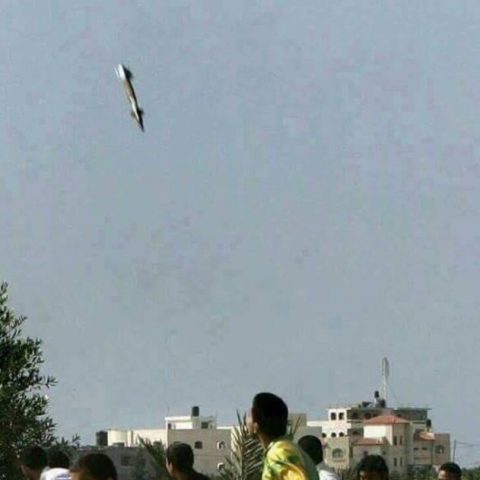
Liberman’s statement followed the IDF sending missile interceptors after sirens went off late Sunday. The Iron Dome system was mistakenly activated in response to gun fire during a [previously announced] Hamas military exercise in Gaza. Ten Tamir missiles, each costing $50,000, were fired as a result.
In 2016, the US pledged $38 billion in military assistance to Israel under a 10-year arrangement, which will start in FY2019. Israel is already the largest recipient of American foreign aid since World War 2.
READ MORE:
Israel fires volley of Iron Dome defensive missiles after false alarm over gunfire in Gaza
Is Trump Assembling a War Cabinet?
By Pat Buchanan • Unz Review • March 27, 2018
The last man standing between the U.S. and war with Iran may be a four-star general affectionately known to his Marines as “Mad Dog.”
Gen. James Mattis, the secretary of defense, appears to be the last man in the Situation Room who believes the Iran nuclear deal may be worth preserving and that war with Iran is a dreadful idea.
Yet, other than Mattis, President Donald Trump seems to be creating a war cabinet.
Trump himself has pledged to walk away from the Iran nuclear deal — “the worst deal ever” — and reimpose sanctions in May.
His new national security adviser John Bolton, who wrote an op-ed titled “To Stop Iran’s Bomb, Bomb Iran,” has called for preemptive strikes and “regime change.”
Secretary of State-designate Mike Pompeo calls Iran “a thuggish police state,” a “despotic theocracy,” and “the vanguard of a pernicious empire that is expanding its power and influence across the Middle East.”
Trump’s favorite Arab ruler, 32-year-old Saudi Prince Mohammed bin Salman, calls Iran’s Ayatollah Khamenei “the Hitler of the Middle East.”
Bibi Netanyahu is monomaniacal on Iran, calling the nuclear deal a threat to Israel’s survival and Iran “the greatest threat to our world.”
U.N. Ambassador Nikki Haley echoes them all.
Yet Iran appears not to want a war. U.N. inspectors routinely confirm that Iran is strictly abiding by the terms of the nuclear deal.
While U.S. warships in the Persian Gulf often encountered Iranian “fast attack” boats and drones between January 2016 and August 2017, that has stopped. Vessels of both nations have operated virtually without incident.
What would be the result of Trump’s trashing of the nuclear deal?
First would be the isolation of the United States.
China and Russia would not abrogate the deal but would welcome Iran into their camp. England, France and Germany would have to choose between the deal and the U.S. And if Airbus were obligated to spurn Iran’s orders for hundreds of new planes, how would that sit with the Europeans?
How would North Korea react if the U.S. trashed a deal where Iran, after accepting severe restrictions on its nuclear program and allowing intrusive inspections, were cheated of the benefits the Americans promised?
Why would Pyongyang, having seen us attack Iraq, which had no WMD, and Libya, which had given up its WMD to mollify us, ever consider giving up its nuclear weapons — especially after seeing the leaders of both nations executed?
And, should the five other signatories to the Iran deal continue with it despite us, and Iran agree to abide by its terms, what do we do then?
Find a casus belli to go to war? Why? How does Iran threaten us?
A war, which would involve U.S. warships against swarms of Iranian torpedo boats could shut down the Persian Gulf to oil traffic and produce a crisis in the global economy. Anti-American Shiite jihadists in Beirut, Baghdad and Bahrain could attack U.S. civilian and military personnel.
As the Army and Marine Corps do not have the troops to invade and occupy Iran, would we have to reinstate the draft?
And if we decided to blockade and bomb Iran, we would have to take out all its anti-ship missiles, submarines, navy, air force, ballistic missiles and air defense system.
And would not a pre-emptive strike on Iran unite its people in hatred of us, just as Japan’s pre-emptive strike on Pearl Harbor united us in a determination to annihilate her empire?
What would the Dow Jones average look like after an attack on Iran?
Trump was nominated because he promised to keep us out of stupid wars like those into which folks like John Bolton and the Bush Republicans plunged us.
After 17 years, we are still mired in Afghanistan, trying to keep the Taliban we overthrew in 2001 from returning to Kabul. Following our 2003 invasion, Iraq, once a bulwark against Iran, became a Shiite ally of Iran.
The rebels we supported in Syria have been routed. And Bashar Assad — thanks to backing from Russia, Iran, Hezbollah and Shiite militias from the Middle East and Central Asia — has secured his throne.
The Kurds who trusted us have been hammered by our NATO ally Turkey in Syria, and by the Iraqi Army we trained in Iraq.
What is Trump, who assured us there would be no more stupid wars, thinking? Truman and LBJ got us into wars they could not end, and both lost their presidencies. Eisenhower and Nixon ended those wars and were rewarded with landslides.
After his smashing victory in Desert Storm, Bush I was denied a second term. After invading Iraq, Bush II lost both houses of Congress in 2006, and his party lost the presidency in 2008 to the antiwar Barack Obama.
Once Trump seemed to understand this history.
Copyright 2018 Creators.com.
“Why 55 U.S. Senators Voted for Genocide in Yemen”
By Michael S. Rozeff | LewRockwell.com | March 24, 2108
That’s the headline of a blog. It’s a good question. There are six factors involved: Iran, sales of arms, Israel, the CIA, indifferent cruelty, and the system of empire. These are all bad reasons that shouldn’t persuade right-thinking and honorable U.S. senators, but votes for genocide do not come from right-thinking and honorable senators.
Iran. The idea is that Saudi Arabia is thwarting Iran in Yemen. The evidence for this is very, very thin, but even if the Saudis want to thwart Iran somehow in Yemen, that doesn’t justify either a war initiated by Saudi Arabia, a war of the type and scale being waged by the U.S. and Saudi Arabia, and a U.S. presence in that war.
Sales of arms. Huge sales to the Saudis are being made by U.S. companies who influence senators.
Israel. Israel is anti-Iran and in league with Saudi Arabia. Senators are influenced by the Israel lobby.
Notice that in none of these factors or those to follow does the American public play a part. The Senate is only remotely under the control of Americans on this issue, and why would it be? Americans are little affected by what their government does in Yemen, and the U.S. role is kept quite hidden. The visible and well-heeled Israel lobby is more influential than the invisible “pro-American public” lobby.
The CIA. The CIA operates an anti-al Qaeda operation inside Yemen. The war has allowed al-Qaeda to expand. This justifies an expanded CIA presence there. This benefits the CIA.
Indifferent cruelty. The lives of Yemenis count for little to those who vote for genocide. This is a characteristic of fallen man that is sometimes ameliorated by moral teachings and the threat of punishments or worse blowback, but only now and then. The institutional customs and mechanisms to control this trait are not strong enough to stop genocides.
The system of empire. Habitual cruelty is a feature of the U.S. empire. Empires enforce “order”, actually control and dominance, over broad domains that they seek to extend. They use killing to accomplish their expansion in most cases. Their victims are not counted as costs.
Trump replaces national security adviser McMaster with John Bolton
Sputnik – March 22, 2018
HR McMaster will exit the role of National Security Adviser to United States President Donald Trump. Former UN Ambassador John Bolton, a prominent war hawk, will replace McMaster, Trump announced on Twitter Thursday evening.
It had been reported for weeks that McMaster and Trump were butting heads and that the US Army lieutenant general was on the brink of being removed. McMaster is the most recent of more than two dozen officials to be fired or resign from the Trump administration since the president took office 14 months ago.
“After thirty-four years of service to our nation, I am requesting retirement from the US Army effective this summer,” McMaster said in a Thursday statement, adding, “I am thankful to President Donald J. Trump for the opportunity to serve him and our nation as National Security Adviser.” McMaster will leave public service after retiring from the military.
Bolton will be Trump’s third national security adviser, following the very brief tenure of Iran hawk Michael Flynn and now McMaster.
Bolton was a major proponent of the US’ 2003 invasion of Iraq and an advocate for the overthrow of leader Saddam Hussein, positions he still defends more than a decade later.
He wrote an op-ed in the Wall Street Journal in late February outlining “the legal case for striking North Korea first.” Historian Gareth Porter told Radio Sputnik’s Loud & Clear last week that Bolton’s nomination would likely lead to a White House that is more eager to pursue a war with Iran. “During the [George W.] Bush administration,” when Bolton was the US ambassador to the UN, “there was a plan for war with Iran,” Porter said.
Like Trump, Bolton opposes the multilateral 2015 Joint Comprehensive Plan of Action, the milestone agreement intended to provide limits to and transparency on Iran’s nuclear program in exchange for sanctions relief. Trump in January recertified the deal for what he said would be the last 120-day period without major changes.
Speaking to reporters at the White House while Saudi Crown Prince Mohammad bin Salman was visiting this week, Trump stated, “The Iran deal is coming up. It’s probably another month or so, and you’re going to see what I do.” Former Secretary of State Rex Tillerson, one of the voices said to have counseled Trump that scrapping the JCPOA was a bad idea, was recently dismissed from his position in favor of former CIA Director Mike Pompeo.
Since his time in the Bush administration, Bolton has worked as a foreign policy fellow at the American Enterprise Institute. He is a Fox News contributor and frequently appears on TV as a conservative pundit.
The Russian Military Warns: a Major War in Syria Is Imminent
By Arkady SAVITSKY | Strategic Culture Foundation | 21.03.2018
On March 17, the Russian General Staff warned about an imminent attack on Syria. The statement did not elaborate. Of course, some information is classified but an independent and impartial analysis of publicly available information leads one to the same conclusion. Let’s look at the facts.
There are warships deployed by US Navy in the Red Sea, the Mediterranean, and the Persian Gulf. They are ready to launch roughly 400 long-range Tomahawks against a target in the Middle East on any given day. Sea-launched cruise missiles were used to strike Syria in April. Anything that is at all related to the military operations on the island of Diego Garcia in the Indian Ocean is hush-hush information, but it’s an open secret that the strategic bombers based there can launch at least a hundred cruise missiles and then use other high-precision munitions in a follow-up attack. On average, one bomber carries 20 AGM-86 ALCMs. Five bombers are believed to be normally stationed on this island that is off-limits to inquisitive outsiders. This means that at least 500 cruise missiles can be fired on short notice.
On March 17, Russian Foreign Minister Sergey Lavrov declared that Great Britain, France, and some additional countries besides the US had special forces operating in Syria that were engaging the Syrian Army directly. But it’s not just commandos.
It was reported on March 16 that the UK would be stationing a significant number of troops at the US-controlled Al-Tanf military base, adjacent to the Iraqi border. This facility is prominently featured in NATO’s war planning in Syria. It blocks the corridor linking Iran to Lebanon via Syria and Iraq. The size of the deployment — about 2,300 troops accompanied by tanks and helicopters — is too significant just to be intended to fight Islamic State militants who are already on the run.
Before that, the US had already sent 600 troops with armored vehicles to the base. And American reinforcements have also been sent to the Omar oil field.
On March 12, US Ambassador to the UN Nikki Haley threatened military action against Syria. Experience has shown that the US will strike first and think about explanations later. It’ll no doubt “invent” some pretext to justify its actions.
Tensions have risen since last week. For instance, the mainstream media raised a ruckus over a mysterious “large underground” North Korean military base in Syria! This story about Pyongyang helping Syria to rebuild its chemical stockpiles and other urban legends are going viral.
The escalation coincided with the March 16 meeting between the Russian, Iranian, and Turkish foreign ministers in Astana to discuss further plans to bring peace to Syria, including expanding the concept of the de-escalation zones. That meeting laid the ground for a summit in Istanbul on April 4. There are about two weeks still to go. This top-level event could produce landmark decisions that might foil the West’s plans in Syria. Not much time is left. From the American perspective, this calls for urgent action to stymie that process.
Washington’s plan includes the goal of partitioning Syria in such a way that a large chunk of it would remain under the control of the US-led coalition. The Americans are already assembling municipal councils on the lands east of the Euphrates River. This area must be retained at any cost in order to ensure that Washington has a say in the future settlement of this war-torn country, otherwise all the hard work put in so far will go down the drain, undercutting America’s global standing and diminishing its clout in the Middle East. Losing Syria would be tantamount to suffering a major defeat in its confrontation with Iran, which it considers its arch-enemy. The plans include a rollback of Russian forces. Syria is the right place to do that. If the Russian military is openly warning the world of an imminent strike, that is a serious threat. And it does not look like a one-strike operation. This time we’re in for something much more serious — a large-scale operation to “contain” Russia, beat back Iran, win the support of the rich oil-exporting Arab nations and make them pay huge sums for American weapons, and show the world the US is omnipresent and adamant in its desire to dictate its will.
US War Plans: Kurdish land bridge to Israel?
By Petri Krohn | The Duran | March 19, 2018
Russia, Turkey and the United States have come to a tacit agreement that the final settlement of the Syrian civil war will include population transfers, where isolated problem populations are “ethnically cleansed” and moved to larger, economically and logistically more viable larger enclaves.
The relationship of these “cantons” to each other and to the Syrian state will be a matter for the political peace negotiations.
The United States did not protest the ethnic cleansing of Afrin of its almost exclusively Kurdish population. These Kurds are needed to strengthen the US occupation zone east of the Euphrates. America nor Israel has any use for Afrin, especially since dreams of a Kurdish or ISIS corridor to the Mediterranean have permanently been curtailed.
On the other hand, the US has shown its willingness to massacre hundreds of Syrians and Russians to demonstrate its ownership of some key points of Syrian geography. The locations of these points of contention might reveal a grand geopolitical scheme of the US and its allies.
The points:
- Everything east of the Euphrates, including the eastern bank of Deir ez-Zor.
- The oilfields east of Deir ez-Zor.
- Al Tanf border crossing and surrounding area on the main road from Damascus to Baghdad.
- The Daraa border crossing, just south of Daraa.
Several key places are held by ISIS, possibly with the tacit support of US.
- The desert area between the T3 and T2 pumping stations along the abandoned Kirkuk–Tripoli pipeline (Now Kirkuk–Baniyas pipeline)
- East bank of the Euphrates south of Deir ez-Zor.
It is claimed that the reason the U.S. needs to occupy the Al Tanf border crossing is to block the land corridor between Iran and Lebanon and thus prevent Iran from supplying Hezbollah. The real reason may be different. If pro-U.S. and pro-Israel forces managed to take control of the Syrian side of the Jordan–Syria and the Iraq–Syria borders then it would enable Israel to supply a Kurdish protectorate in eastern Syria.
The area from the rebel enclave around Daraa to Abu Kemal on the Euphrates is mainly desert. If pipelines could be built on this strip of land then Israel could steal oil from “Kurdish” oilfields and even water from the Euphrates.
The United States may be about to start a land invasion of Syria. The offensive would start from the US base at the Al Tanf border crossing and extend through Abu Kemal to the American and Kurdish-held areas on the eastern bank of the Euphrates. The troops would be supplied through Jordan. It is possible that Britain would also take part in this operation.
The 2,400 man strong U.S. 26th Marine Expeditionary Unit arrived in Haifa in Israel on March 14, 2018 aboard the three US Navy ships of the Iwo Jima amphibious ready group. The Marines may be on their way to the Al Tanf base through Jordan. Another 200 U.S. troops are said to have arrived in Al Tanf the previous week. Unconfirmed rumors claim that an additional 2,300 British troops also arrived at the base along with Challenger tanks and Cobra and Black Hawk helicopters.
The attack would start with with a massive cruise missile launch on Damascus from NATO warships. The ships are said to be assembling in the eastern Mediterranean, the Persian Gulf and the Red Sea. Russia has promised to retaliate against any ships launching missiles at Syria.
This warning was first stated by the Russian General Staff on March 13 and again on March 17. The missile attack would however be only the first part of a NATO attack. It would be quickly followed by a land invasion from Al Tanf. As I am writing this, I hear talk of even larger attack plans.
Attacks by the U.S. and U.S. proxies have the tendency to coincide with ISIS attacks in the same area. ISIS has recently launched massive attacks along the Euphrates river and more may be planned.
Any Western aggression on Syria would have to be preceded by a false-flag provocation by Syrian opposition forces. Britain pays lip service to international law and it could not launch a war of aggression without an effective propaganda campaign. Russia claims to have information that a staged chemical weapons attack is being prepared. The March 17th warning specifically says that the preparations are happening in southern Syria near the Jordanian border under U.S. supervision.
It now seems evident that to real reason for the poisoning of Sergei Skripal was to drum up British support for a war against Syria and Russia. One must must thus ask who would most gains from such a war. If the above analysis is correct, then the answer would be Israel.
Iraq +15: Accumulated Evil of the Whole
By Nat Parry | Consortium News | March 19, 2018
Robert Jackson, the Chief United States Prosecutor at the Nuremberg Trials of Nazi war criminals, once denounced aggressive war as “the greatest menace of our time.” With much of Europe laying in smoldering ruin, he said in 1945 that “to initiate a war of aggression … is not only an international crime: it is the supreme international crime differing only from other war crimes in that it contains within itself the accumulated evil of whole.”
When it comes to the U.S. invasion of Iraq 15 years ago today, the accumulated evil of the whole is difficult to fully comprehend. Estimates of the war’s costs vary, but commonly cited figures put the financial cost for U.S. taxpayers at upwards of a trillion dollars, the cost in Iraqi lives in the hundreds of thousands, and U.S. soldier deaths at nearly 5,000. Another 100,000 Americans have been wounded and four million Iraqis driven from their homes as refugees.
As staggering as those numbers may be, they don’t come close to describing the true cost of the war, or the magnitude of the crime that was committed by launching it on March 19-20, 2003. Besides the cost in blood and treasure, the cost to basic principles of international justice, long-term geopolitical stability, and the impacts on the U.S. political system are equally profound.
Lessons Learned and Forgotten
Although for a time, it seemed that the lessons of the war were widely understood and had tangible effects on American politics – with Democrats, for example, taking control of Congress in the midterm elections of 2006 based primarily on growing antiwar sentiment around the country and Barack Obama defeating Hillary Clinton in the 2008 primaries based largely on the two candidates’ opposing views on the Iraq War – the political establishment has, since then, effectively swept these lessons under the rug.
One of those lessons, of course, was that proclamations of the intelligence community should be treated with huge grain of salt. In the build-up to war with Iraq a decade and a half ago, there were those who pushed back on the politicized and “cherry-picked” intelligence that the Bush administration was using to convince the American people of the need to go to war, but for the most part, the media and political establishment parroted these claims without showing the due diligence of independently confirming the claims or even applying basic principles of logic.
For example, even as United Nations weapons inspectors, led by Swedish diplomat Hans Blix, were coming up empty-handed when acting on tips from the U.S. intelligence community, few within the mainstream media were willing to draw the logical conclusion that the intelligence was wrong (or that the Bush administration was lying). Instead, they assumed that the UN inspectors were simply incompetent or that Saddam Hussein was just really good at hiding his weapons of mass destruction.
Yet, despite being misled so thoroughly back in 2002 and 2003, today Americans show the same credulousness to the intelligence community when it claims that “Russia hacked the 2016 election,” without offering proof. Liberals, in particular, have hitched their wagons to the investigation being led by Special Counsel Robert Mueller, who is widely hailed as a paragon of virtue, while the truth is, as FBI Director during the Bush administration, he was a key enabler of the WMD narrative used to launch an illegal war.
Mueller testified to Congress that “Iraq has moved to the top of my list” of threats to the domestic security of the United States. “As we previously briefed this Committee,” Mueller said on February 11, 2003, “Iraq’s WMD program poses a clear threat to our national security.” He warned that Baghdad might provide WMDs to al-Qaeda to carry out a catastrophic attack in the United States.
Mueller drew criticism at the time, including from FBI whistleblower Coleen Rowley, for conflating Iraq and al-Qaeda, with demands that the FBI produce whatever evidence it had on this supposed connection.
Today, of course, Mueller is celebrated by Democrats as the best hope for bringing down the presidency of Donald Trump. George W. Bush has also enjoyed a revival of his image thanks largely to his public criticisms of Trump, with a majority of Democrats now viewing the 43rd president favorably. Many Democrats have also embraced aggressive war – often couched in the rhetoric of “humanitarian interventionism” – as their preferred option to deal with foreign policy challenges such as the Syrian conflict.
When the Democratic Party chose Clinton as its nominee in 2016, it appeared that Democrats had also embraced her willingness to use military force to achieve “regime change” in countries that are seen as a threat to U.S. interests – whether Iraq, Iran or Syria.
As a senator from New York during the build-up for military action against Iraq, Clinton not only voted to authorize the U.S. invasion, but fervently supported the war – which she backed with or without UN Security Council authorization. Her speech on the floor of the Senate on Oct. 10, 2002 arguing for military action promoted the same falsehoods that were being used by the Bush administration to build support for the war, claiming for example that Saddam Hussein had “given aid, comfort, and sanctuary to terrorists, including al-Qaeda members.”
“If left unchecked,” she said, “Saddam Hussein will continue to increase his capacity to wage biological and chemical warfare, and will keep trying to develop nuclear weapons. Should he succeed in that endeavor, he could alter the political and security landscape of the Middle East, which as we know all too well affects American security.”
Clinton maintained support for the war even as it became obvious that Iraq in fact had no weapons of mass destruction – the primary casus belli for the war – only cooling her enthusiasm in 2006 when it became clear that the Democratic base had turned decisively against the war and her hawkish position endangered her chances for the 2008 presidential nomination. But eight years later, the Democrats had apparently moved on, and her support for the war was no longer considered a disqualification for the presidency.
One of the lessons that should be recalled today, especially as the U.S. gears up today for possible confrontations with countries including North Korea and Russia, is how easy it was in 2002-2003 for the Bush administration to convince Americans that they were under threat from the regime of Saddam Hussein some 7,000 miles away. The claims about Iraq’s WMDs were untrue, with many saying so in real time – including by the newly formed group Veteran Intelligence Professionals for Sanity, which was regularly issuing memoranda to the president and to the American people debunking the falsehoods that were being promoted by the U.S. intelligence community.
But even if the claims about Iraq’s alleged stockpiles were true, there was still no reason to assume that Saddam Hussein was on the verge of launching a surprise attack against the United States. Indeed, while Americans were all but convinced that Iraq threatened their safety and security, it was actually the U.S. government that was threatening Iraqis.
Far from posing an imminent threat to the United States, in 2003, Iraq was a country that had already been devastated by a U.S.-led war a decade earlier and crippling economic sanctions that caused the deaths of 1.5 million Iraqis (leading to the resignation of two UN humanitarian coordinators who called the sanctions genocidal).
Threats and Bluster
Although the invasion didn’t officially begin until March 20, 2003 (still the 19th in Washington), the United States had been explicitly threatening to attack the country as early as January 2003, with the Pentagon publicizing plans for a so-called “shock and awe” bombing campaign.
“If the Pentagon sticks to its current war plan,” CBS News reported on January 24, “one day in March the Air Force and Navy will launch between 300 and 400 cruise missiles at targets in Iraq. … [T]his is more than the number that were launched during the entire 40 days of the first Gulf War. On the second day, the plan calls for launching another 300 to 400 cruise missiles.”
A Pentagon official warned: “There will not be a safe place in Baghdad.”
These public threats appeared to be a form of intimidation and psychological warfare, and were almost certainly in violation of the UN Charter, which states: “All Members shall refrain in their international relations from the threat or use of force against the territorial integrity or political independence of any state, or in any other manner inconsistent with the Purposes of the United Nations.”
The Pentagon’s vaunted “shock and awe” attack began with limited bombing on March 19-20, as U.S. forces unsuccessfully attempted to kill Hussein. Attacks continued against a small number of targets until March 21, when the main bombing campaign began. U.S.-led forces launched approximately 1,700 air sorties, with 504 using cruise missiles.
During the invasion, the U.S. also dropped some 10,800 cluster bombs on Iraq despite claiming that only a fraction of that number had been used.
“The Pentagon presented a misleading picture during the war of the extent to which cluster weapons were being used and of the civilian casualties they were causing,” reported USA Today in late 2003. Despite claims that only 1,500 cluster weapons had been used resulting in just one civilian casualty, “in fact, the United States used 10,782 cluster weapons,” including many that were fired into urban areas from late March to early April 2003.
The cluster bombs killed hundreds of Iraqi civilians and left behind thousands of unexploded bomblets that continued to kill and injure civilians weeks after the fighting stopped.
(Because of the indiscriminate effect of these weapons, their use is banned by the international Convention on Cluster Munitions, which the United States has refused to sign.)
Attempting to kill Hussein, Bush ordered the bombing of an Iraqi residential restaurant on April 7. A single B-1B bomber dropped four precision-guided 2,000-pound bombs. The four bunker-penetrating bombs destroyed the target building, the al Saa restaurant block and several surrounding structures, leaving a 60-foot crater and unknown casualties.
Diners, including children, were ripped apart by the bombs. One mother found her daughter’s torso and then her severed head. U.S. intelligence later confirmed that Hussein wasn’t there.
Resistance and Torture
It was evident within weeks of the initial invasion that the Bush administration had misjudged the critical question of whether Iraqis would fight. They put up stiffer than expected resistance even in southern Iraqi cities such as Umm Qasr, Basra and Nasiriya where Hussein’s support was considered weak, and soon after the fall of the regime on April 9, when the Bush administration decided to disband the Iraqi army, it helped spark an anti-U.S. insurgency led by many former Iraqi military figures.
Despite Bush’s triumphant May 1 landing on an aircraft carrier and his speech in front of a giant “Mission Accomplished” banner, it looked as though the collapse of the Baathist government had been just the first stage in what would become a long-running war of attrition. After the Iraqi conventional forces had been disbanded, the U.S. military began to notice in May 2003 a steadily increasing flurry of attacks on U.S. occupiers in various regions of the so-called “Sunni Triangle.”
These included groups of insurgents firing assault rifles and rocket-propelled grenades at U.S. occupation troops, as well as increasing use of improvised explosive devices on U.S. convoys.
Possibly anticipating a long, drawn-out occupation and counter-insurgency campaign, in a March 2003 memorandum Bush administration lawyers devised legal doctrines to justify certain torture techniques, offering legal rationales “that could render specific conduct, otherwise criminal, not unlawful.”
They argued that the president or anyone acting on the president’s orders were not bound by U.S. laws or international treaties prohibiting torture, asserting that the need for “obtaining intelligence vital to the protection of untold thousands of American citizens” superseded any obligations the administration had under domestic or international law.
“In order to respect the President’s inherent constitutional authority to manage a military campaign,” the memo stated, U.S. prohibitions against torture “must be construed as inapplicable to interrogations undertaken pursuant to his Commander-in-Chief authority.”
Over the course of the next year, disclosures emerged that torture had been used extensively in Iraq for “intelligence gathering.” Investigative journalist Seymour Hersh disclosed in The New Yorker in May 2004 that a 53-page classified Army report written by Gen. Antonio Taguba concluded that Abu Ghraib prison’s military police were urged on by intelligence officers seeking to break down the Iraqis before interrogation.
“Numerous incidents of sadistic, blatant and wanton criminal abuses were inflicted on several detainees,” wrote Taguba.
These actions, authorized at the highest levels, constituted serious breaches of international and domestic law, including the Convention Against Torture, the Geneva Convention relative to the treatment of Prisoners of War, as well as the U.S. War Crimes Act and the Torture Statute.
They also may have played a role in the rise of the ISIS terror group, the origins of which were subsequently traced to an American prison in Iraq dubbed Camp Bucca. This camp was the site of rampant abuse of prisoners, one of whom, Abu Bakr al-Baghdadi, later became the leader of ISIS. Al-Baghdadi spent four years as a prisoner at Bucca, where he started recruiting others to his cause.
America’s Weapons of Mass Destruction
Besides torture and the use of cluster bombs, the crimes against the Iraqi people over the years included wholesale massacres, long-term poisoning and the destruction of cities.
There was the 2004 assault on Fallujah in which white phosphorus – banned under international law – was used against civilians. There was the 2005 Haditha massacre, in which 24 unarmed civilians were systematically murdered by U.S. marines. There was the 2007 “Collateral Murder” massacre revealed by WikiLeaks in 2010, depicting the indiscriminate killing of more than a dozen civilians in the Iraqi suburb of New Baghdad – including two Reuters news staff.
There is also the tragic legacy of cancer and birth defects caused by the U.S. military’s extensive use of depleted uranium and white phosphorus. In Fallujah the use of depleted uranium led to birth defects in infants 14 times higher than in the Japanese cities targeted by U.S. atomic bombs at close of World War II, Hiroshima and Nagasaki. Noting the birth defects in Fallujah, Al Jazeera journalist Dahr Jamail told Democracy Now! in 2013:
“And going on to Fallujah, because I wrote about this a year ago, and then I returned to the city again this trip, we are seeing an absolute crisis of congenital malformations of newborn. … I mean, these are extremely hard to look at. They’re extremely hard to bear witness to. But it’s something that we all need to pay attention to, because of the amount of depleted uranium used by the U.S. military during both of their brutal attacks on the city of 2004, as well as other toxic munitions like white phosphorus, among other things.”
A report sent to the UN General Assembly by Dr. Nawal Majeed Al-Sammarai, Iraq’s Minister of Women’s Affairs, stated that in September 2009, Fallujah General Hospital had 170 babies born, 75 percent of whom were deformed. A quarter of them died within their first week of life.
The military’s use of depleted uranium also caused a sharp increase in Leukemia and birth defects in the city of Najaf, which saw one of the most severe military actions during the 2003 invasion, with cancer becoming more common than the flu according to local doctors.
By the end of the war, a number of Iraq’s major cities, including Fallujah, Ramadi, and Mosul, had been reduced to rubble and by 2014, a former CIA director conceded that the nation of Iraq had basically been destroyed.
“I think Iraq has pretty much ceased to exist,” said Michael Hayden, noting that it was fragmented into multiple parts which he didn’t see “getting back together.” In other words, the United States, using its own extensive arsenal of actual weapons of mass destruction, had completely destroyed a sovereign nation.
Predictable Consequences
The effects of these policies included the predictable growth of Islamic extremism, with a National Intelligence Estimate – representing the consensus view of the 16 spy services inside the U.S. government – warning in 2006 that a whole new generation of Islamic radicalism was being spawned by the U.S. occupation of Iraq. According to one American intelligence official, the consensus was that “the Iraq war has made the overall terrorism problem worse.”
The assessment noted that several underlying factors were “fueling the spread of the jihadist movement,” including “entrenched grievances, such as corruption, injustice, and fear of Western domination, leading to anger, humiliation, and a sense of powerlessness,” and “pervasive anti-U.S. sentiment among most Muslims all of which jihadists exploit.”
But rather than leading to substantive changes or reversals in U.S. policies, the strategy agreed upon in Washington seemed to be to double down on the failed policies that had given rise to radical jihadist groups. In fact, instead of withdrawing from Iraq, the U.S. decided to send a surge of 20,000 troops in 2007. This is despite the fact that public opinion was decidedly against the war.
A Newsweek poll in early 2007 found that 68 percent of Americans opposed the surge, and in another poll conducted just after Bush’s 2007 State of the Union Address, 64 percent said Congress was not being assertive enough in challenging the Bush administration over its conduct of the war.
An estimated half-million people marched on Washington on Jan. 27, 2007, with messages for the newly sworn in 110th Congress to “Stand up to Bush,” urging Congress to cut the war funding with the slogan, “Not one more dollar, not one more death.” A growing combativeness was also on display in the antiwar movement with this demonstration marked by hundreds of protesters breaking through police lines and charging Capitol Hill.
Although there were additional large-scale protests a couple months later to mark the sixth anniversary of the invasion, including a march on the Pentagon led by Iraq War veterans, over the next year the antiwar movement’s activities steadily declined. While fatigue might explain some of the waning support for mass mobilizations, much of the decline can also surely be explained by the rise of Barack Obama’s candidacy. Millions of people channeled their energies into his campaign, including many motivated by a hope that he represented real change from the Bush years.
One of Obama’s advantages over Clinton in the Democratic primary was that he had been an early opponent of the Iraq War while she had been one of its most vocal supporters. This led many American voters to believe in 2008 that they had elected someone who might rein in some of the U.S. military adventurism and quickly end U.S. involvement in Iraq. But this wasn’t to be the case. The combat mission dragged on well into President Obama’s first term.
War, War and More War
After its well-publicized failures in Iraq, the U.S. turned its attention to Libya, overthrowing the government of Muammar Gaddafi in 2011 utilizing armed militias implicated in war crimes and backed with NATO air power. Following Gaddafi’s ouster, his caches of weapons ended up being shuttled to rebels in Syria, fueling the civil war[sic] there. The Obama administration also took a keen interest in destabilizing the Syrian government and to do so began providing arms that often fell into the hands of extremists.
The CIA trained and armed so-called “moderate” rebel units in Syria, only to watch these groups switch sides by joining forces with Islamist brigades such as ISIS and Al Qaeda’s affiliate the Nusra Front. Others surrendered to Sunni extremist groups with the U.S.-provided weapons presumably ending up in the arsenals of jihadists or sometimes just quit or went missing altogether.
Beyond Syria and Libya, Obama also expanded U.S. military engagements in countries including Yemen, Somalia, Pakistan, and sent a surge of troops to Afghanistan in 2009. And despite belatedly withdrawing U.S. forces from Iraq, with the last U.S. troops finally leaving on December 18, 2011, Obama also presided over a major increase in the use of drone strikes and conventional air wars.
In his first term, Obama dropped 20,000 bombs and missiles, a number that shot up to over 100,000 bombs and missiles dropped in his second term. In 2016, the final year of Obama’s presidency, the U.S. dropped nearly three bombs every hour, 24 hours a day.
Obama also had the distinction of becoming the fourth U.S. president in a row to bomb the nation of Iraq. Under criticism for allowing the rise of ISIS in the country, Obama decided to reverse his earlier decision to disengage with Iraq, and in 2014 started bombing the country again. Addressing the American people on Sept. 10, 2014, President Obama said that “ISIL poses a threat to the people of Iraq and Syria, and the broader Middle East including American citizens, personnel and facilities.”
“If left unchecked,” he continued, “these terrorists could pose a growing threat beyond that region, including to the United States. While we have not yet detected specific plotting against our homeland, ISIL leaders have threatened America and our allies.”
Of course, this is precisely the result that many voices of caution had warned about back in 2002 and 2003, when millions of Americans were taking to the streets in protest of the looming invasion of Iraq. And, to be clear, it wasn’t just the antiwar left urging restraint – establishment figures and paleoconservatives were also voicing concern.
Retired Gen. Anthony Zinni, for example, who served as a Middle East envoy for George W. Bush, warned in October 2002 that by invading Iraq, “we are about to do something that will ignite a fuse in this region that we will rue the day we ever started.” Brent Scowcroft, national security adviser in the first Bush administration, said a strike on Iraq “could unleash an Armageddon in the Middle East.”
No matter, Bush was a gut player who had made up his mind, so those warnings were brushed aside and the invasion proceeded.
Campaign 2016
When presidential candidate Donald Trump began slamming Bush for the Iraq War during the Republican primary campaign in 2015 and 2016, calling the decision to invade Iraq a “big fat mistake,” he not only won over some of the antiwar libertarian vote, but also helped solidify his image as a political outsider who “tells it like it is.”
And after Hillary Clinton emerged as the Democratic nominee, with her track record as an enthusiastic backer of virtually all U.S. interventions and an advocate of deeper involvement in countries such as Syria, voters could have been forgiven for getting the impression that the Republican Party was now the antiwar party and the Democrats were the hawks.
As the late Robert Parry observed in June 2016, “Amid the celebrations about picking the first woman as a major party’s presumptive nominee, Democrats appear to have given little thought to the fact that they have abandoned a near half-century standing as the party more skeptical about the use of military force. Clinton is an unabashed war hawk who has shown no inclination to rethink her pro-war attitudes.”
The antiwar faction within the Democratic Party was further marginalized during the Democratic National Convention when chants of “No More War” broke out during former Defense Secretary Leon Panetta’s speech. The Democratic establishment responded with chants of “USA!” to drown out the voices for peace and they even turned the lights out on the antiwar section of the crowd. The message was clear: there is no room for the antiwar movement inside the Democratic Party.
While there were numerous factors that played a role in Trump’s stunning victory over Clinton in November 2016, it is no stretch of the imagination to speculate that one of those factors was lingering antiwar sentiment from the Iraq debacle and other engagements of the U.S. military. Many of those fed up with U.S. military adventurism may have fallen for Trump’s quasi-anti-interventionist rhetoric while others may have opted to vote for an alternative party such as the Libertarians or the Greens, both of which took strong stances against U.S. interventionism.
But despite Trump’s occasional statements questioning the wisdom of committing the military to far-off lands such as Iraq or Afghanistan, he was also an advocate for war crimes such as “taking out [the] families” of suspected terrorists. He urged that the U.S. stop being “politically correct” in its waging of war.
So, ultimately, Americans were confronted with choosing between an unreconstructed regime-changing neoconservative Democratic hawk, and a reluctant interventionist who nevertheless wanted to teach terrorists a lesson by killing their children. Although ultimately the neocon won the popular vote, the war crimes advocate carried the Electoral College.

Nawar al-Awlaki, 8, killed by US drone 1/29/17
Following the election it turned out that Trump was a man of his word when it came to killing children. In one of his first military actions as president, Trump ordered an attack on a village in Yemen on Jan. 29, 2017, which claimed the lives of as many as 23 civilians, including a newborn baby and an eight-year-old girl, Nawar al-Awlaki.
Nawar was the daughter of the al-Qaeda propagandist and American citizen Anwar al-Awlaki, who was killed in a September 2011 U.S. drone strike in Yemen.
Normalized Aggression
2017, Trump’s first year in office, turned out to be the deadliest year for civilians in Iraq and Syria since U.S. airstrikes began on the two countries in 2014. The U.S. killed between 3,923 and 6,102 civilians during the year, according to a tally by the monitoring group Airwars. “Non-combatant deaths from Coalition air and artillery strikes rose by more than 200 per cent compared to 2016,” Airwars noted.
While this spike in civilian deaths did make some headlines, including in the Washington Post, for the most part, the thousands of innocents killed by U.S. airstrikes are dismissed as “collateral damage.” The ongoing carnage is considered perfectly normal, barely even eliciting a comment from the pundit class.
This is arguably one of the most enduring legacies of the 2003 invasion of Iraq – an act of military aggression that was based on false pretenses, which brushed aside warnings of caution, and blatantly violated international law. With no one in the media or the Bush administration ever held accountable for promoting this war or for launching it, what we have seen is the normalization of military aggression to a level that would have been unimaginable 20 years ago.
Indeed, I remember well the bombing of Iraq that took place in 1998 as part of Bill Clinton’s Operation Desert Fox. Although this was a very limited bombing campaign, lasting only four days, there were sizable protests in opposition to the military action. I joined a picket of a couple hundred people in front of the White House holding a hand-made sign reading “IMPEACH HIM FOR WAR CRIMES” – a reference to the fact that Congress was at the time impeaching him for lying about a blowjob.
Compare that to what we see today – or, more accurately what we don’t see today – in regards to antiwar advocacy. Despite the fact that the U.S. is now engaged in at least seven military conflicts, there is little in the way of peace activism or even much of a national debate over the wisdom, legality or morality of waging war. Few even raise objections to its significant financial cost to U.S. taxpayers, for example the fact that one day of spending on these wars amounts to about $200 million.
Fifteen years ago, one of the arguments of the antiwar movement was that the war on terror was morphing into a perpetual war without boundaries, without rules, and without any end game. The U.S., in other words, was in danger of finding itself in a state of endless war.
We are now clearly embroiled in that endless war, which is a reality that even Senate war hawk Lindsey Graham acknowledged last year when four U.S. troops were killed in Niger. Claiming that he didn’t know that the U.S. had a military presence in Niger, Graham – who chairs the Senate Subcommittee on State, Foreign Operations, and Related Programs – stated that “this is an endless war without boundaries, no limitation on time or geography.”
Although it wasn’t clear whether he was lamenting or celebrating this endless and borderless war, his words should be taken as a warning of where the U.S. stands on this 15th anniversary of the U.S. invasion of Iraq – in a war without end, without boundaries, without limits on time or geography.
Featured Video
The Source of America’s Wars – Kristol Clear
or go to
Aletho News Archives – Video-Images
From the Archives
Is Israel to blame for the Iraq War?
American Goy | March 10, 2008
I am so tired of this old canard that “Israel had nothing to do with USA’s war with Iraq – in fact, it officially advised America against it”.
Bullshit. … continue
Blog Roll
 Aletho News
- Israel’s priority lies in destroying chances of peace between Iran, US: Ex-UN nuclear chief
- Ceasefire for all or for none: Iran shuts Hormuz over Lebanon attacks
- Strait of Hormuz is Iran’s ‘nuclear weapon’ that forced US retreat: Medvedev
- Energy crisis will last for months – Kremlin envoy
- Europe’s quiet role in the war on Iran
- Forty days that shook the Empire: How Iran turned the tables on US and prevailed
- Netanyahu unilaterally declares Lebanon outside of ceasefire deal
- Israeli leaders: ‘Not a single goal’ achieved in war with Iran
- What on earth just happened? Trump, Iran, and the unlikely ceasefire
- Alberta Bill Would Fine Political Deepfakes $10,000 Without Satire Exemptions
- If Americans Knew
- Gazans face a triple crisis: severe shortages of water and bread, healthcare in tatters
- NY Times reports how Netanyahu took the US into Iran War
- A sigh of relief over Iran, but Gaza and Lebanon in dire straits – Daily Update
- Thousands dead and neighborhoods razed to the ground: Aid agencies fear southern Lebanon is becoming the new Gaza
- The war the US is fighting for Israel could cost trillions
- ‘Cigarette Burns, Nail Wounds’: Toddler Tortured in Gaza to Coerce Father
- Trump Says US Sent ‘a Lot of Guns’ to Protesters in Iran
- Israeli forces destroy 17 UN peacekeeper cameras in south Lebanon
- US-Israeli strikes ‘completely destroy’ synagogue in Tehran
- Archbishop for US Military Says Iran War Is Unjust Under Catholic Teaching
- No Tricks Zone
- An Inconvenient Tree: Uncovered In Alps… Europe Much Warmer Than Today 6000 Years Ago
- New Study Reports A 60% Slowdown In Greenland’s Ice Loss Rate In The Last Decade
- Low Intensity Tornado Wrecks Major Solar Farm, Creating A Potential Toxic Dump
- New Study Finds Warming Saves Lives…Cold Temperatures 12 Times More Deadly Than Excess Heat
- German Science Blog Accuses PIK Climate Institute Of Hallucinating Climate Tipping Points
- Devastating Assessment Of Comirnaty Vaccine By Former Senior Pfizer Europe Toxicologist
- New Study: CO2 Is ‘Effectively Negligible’ As An Explanatory Climate Change Factor Since 2000
- Former Pfizer Toxicologist Dr. Helmut Sterz Tells Bundestag Hearing Pfizer Vaccine Should Have Never Been Approved
- Energy Expert: Germany’s Nuclear Phaseout Was A “500 Billion Euro Mistake”
- New Research: South Australia’s Mid-Holocene Sea Surface Temperatures Were 4°C Warmer Than Today
 Aletho News