Latest attempt to prosecute President Assad at the ICC is further criminalisation of “international justice”

Toby Cadman. Co-founder of Guernica Chambers 37, one of legal entities bringing latest case against President Assad at the ICC. (Photo: The ICC and our politics)
By Vanessa Beeley | 21st Century Wire | May 28, 2019
In March 2019 two law firms filed cases at the ICC against Syria’s President Bashar Al Assad and unnamed members of the Syrian government. Toby Cadman of Guernica Chambers and Rodney Dixon of Temple Garden Chambers were the protagonists in this latest attempt to criminalise the Syrian President and government.
These law firms are basing their case upon the testimony of 28 “refugees” from Syria who claim they were “forced” to flee to Jordan during the war that has been waged against Syria by a collective of interventionist mafia states that form the U.S coalition, determined to achieve regime change in Syria.
Syria is not a signatory to the ICC in the Hague but precedent was set by the ICC when a preliminary investigation was opened into military leaders of Myanmar for alleged crimes against humanity involving deportation of Rohingya people. Refugees fled to Bangladesh which is party to the Rome statute that established the ICC, as is Jordan where more than 1 million Syrian refugees now reside. Guernica Chambers and Rodney Dixon are clearly hoping that the Rohingya precedent will open up the legal avenue for their case.
Both legal firms are claiming the intended deportation of Syrian civillians by the Syrian government as part of their cases.
However, even some members of the legal profession, have already remarked upon possible holes in the case being presented by both legal entities. Kevin John Heller is Associate Professor of Public International Law at Amsterdam University. According to Heller, there is a vital element of the Syrian situation that distinguishes it from the Myanmar situation. Heller argues that in Myanmar, it is evident that the government “intended to drive the Rohingya into Bangladesh” while in Syria it is not evident that the Syrian government intended (in the legal sense) that their civilians end up in other countries. Heller points out that without sufficient evidence, the Syrian government may only be accused of “forcible transfer” but not “deportation”. “Forcible transfer” falls outside the ICC’s jurisdiction because it takes place uniquely on Syrian territory.
“In other words: for the Court to investigate the forcible displacement of Syrian civilians proprio motu, it is deportation or bust.” ~ Kevin John Heller
This is not the first time that Guernica Chambers (GC) have attempted such a legal attack against the Syrian government. In March 2017, the Madrid offices of GC tried to bring a case against eight members of the Syrian security and intelligence services. The case was based upon the testimony of a Syrian national’s sister who had Spanish citizenship. Spain is party to the Rome Statute of the ICC. The woman allegedly identified the body of her brother among the photos that were “smuggled out of Syria” and formed part of the Caesar Report which I will discuss later in this article.
Who is really behind the legal war being waged against Syria?
I asked Peter Ford, former UK Ambassador to Syria and outspoken critic of the UK government’s role in the eight year regime change campaign in Syria, to comment on the timing of this legal initiative. Ford told me:
Nothing could be more likely to bring the ICC into disrepute than this attempted action by actors transparently serving the political agenda of the British and Qatari governments. Having failed in attempted regime change via miltant proxies Syria’s enemies are now embarked on an enterprise to secure the same result by waging economic war which must be justified by constant demonizing of Assad. That is the game being played here.
“if the ICC goes along with it, that will provide more justification for those who accuse the ICC of being a tool of the rich and powerful, and an incentive to Assad to halt any move towards elections in Syria which might see him removed from power. This is just a cheap trick designed to make political capital out of the remaining credibility of the ICC, such as it is.”
Ford pinpointed the drivers behind these legal cases and the UK Government and intelligence services must be considered as primary players. The UK/US-led intervention alliance have seen their terrorist-proxy-military-campaign fail dismally after hitting the brick wall of the axis of resistance -Syria, Hezbollah, Iran and Russia with China offering diplomatic and technological support.
What will follow is perhaps an even more destructive economic warfare campaign that will capitalise upon the post war dissonance in Syria to pressurise the Syrian state and to further foment discontent among civilians now struggling to cope with life in a Syria that has been severely impacted by 8 years of terrorist occupation and destruction of infrastructure.
“I believe that the reason why this attempt is being made to circumvent the fact that the International Criminal Court has no jurisdiction over Syria, is to remove Assad from power and to de-legitimise him as part of the future of Syria. This has been the goal of the jihadists from the very beginning.”
Historian and analyst, Dr Marcus Papadopoulos, further expanded upon the timing of the legal case:
Well, talk of war crimes cases being brought against President Assad, at the International Criminal Court, has been in the air for some years now. Indeed, I remember how such talk was emanating from Western capitals in 2012. However, there is no doubt that the today’s timing of lawyers, acting on behalf of Syrian refugees in Jordan, submitting lawsuits against the Syrian president at the ICC, is not coincidental. Because today, the Syrian people have all but won the war against Western-backed terrorism and so by submitting cases now to the ICC is a way of Western governments subtly informing President Assad that whilst the military war against him has been lost, the legal, media and communications war against him will continue.
Furthermore, I suspect that by initiating ICC proceedings against the Syrian leader – which will only increase in volume and go on indefinitely – may be a way of the Americans and the British maintaining their military presence in Syria, as well as their sanctions on the Arab country, on the pretext that the region has a leader in power who ‘waged war against his own people, destabilising not just his country but the wider region’ hence the presence of American and British forces in Syria is a means to limiting any future ‘carnage’ that the Syrian ‘strongman’ (a favoured word from the West’s lexicon to describe leaders whom it disapproves of) can inflict on both Syria and the region.” (Emphasis added)
International criminal lawyer, Christopher C. Black, pointed out the importance of the NATO and UK government links of the legal firms:
“The answer is revealed in the lawyers who are behind this scheme to try to drag the ICC into the picture. Rodney Dixon and Toby Cadman, and, it seems, from your information, Geoffrey Nice. All of them have links to the British governent and NATO through acting for them in various capacities.”
Links to UK Foreign Office, NATO and the CIA
Guernica Chambers – offices in London, Spain and Washington.

Toby Cadman. (Photo: Guernica 37 website)
Toby Cadman is the Co-founder and Head of Guernica 37 International Justice Chambers in London. According to the International Forum for Democracy and Human Rights (IFDHR), Cadman was hired by the UK Foreign Office in 2012 to “head a team to investigate crimes committed in the Syrian Arab Republic“.
I would challenge Cadman to demonstrate any serious investigation by Guernica into the ongoing crimes committed by the terrorist/extremist groups in Syria, armed and financed by the U.S Coalition. The fact that Cadman is a hired legal hand of one of the central players in the international campaign to reduce Syria to another Libya-style failed state, should immediately raise the alarm.
Doctors Under Fire – cluster of anti-Syria medical, legal and chemical “experts”
Cadman is also on the board of directors of Doctors Under Fire (formerly Medics Under Fire). Alongside him are Hamish De Bretton Gordon, Dr David Nott (Nott Foundation) and Dr Saleyha Ahsan.

Dr David Nott. (Photo: Nott Foundation website)
Nott has run UK Government-endorsed training courses for Syrian doctors in Gaziantep, Turkey – the hub of UK intelligence training for Syrian “opposition”, with a reputation for being the centre of ISIS organ and human trafficking operations. The flight from Istanbul to Gaziantep was known as the Jihad Express. The town itself was reported to be the area where new ISIS recruits from around the world would gather before being transported into Syria. The UK FCO-midwived and financed White Helmet propaganda construct also have their base in Gaziantep, established in 2013 by former MI6-turned-private-security expert, James Le Mesurier.
In 2013, Nott was largely responsible for the rumours that Syrian Arab Army snipers were targeting pregnant women in East Aleppo, which was freshly under control of the armed extremist gangs that included Al Qaeda in Syria, Nusra Front. The photo of a bullet lodged in an alleged foetal brain was published by most mainstream media outlets in the West without any expert second opinion regarding the credibility of such an image. Nott has operated on ISIS fighters during his forays (exclusively) into terrorist held territory of Syria.

Nott also amplified the discredited narrative surrounding Omran Daqneesh during the final moments before liberations of East Aleppo from terrorist rule. This story is now known to be another of the fraudulent campaigns to criminalise the Syrian government. This article by journalist, Steven Sahiounie, goes into depth about the bias and misprepresentation of reality by Nott during his time in the terrorist-held enclaves of Aleppo and Idlib.

Dr Saleyha Ahsan’s contradictory accounts of alleged chemical attack, showcased in BBC Panorama’s Saving Syria’s Children – forensically investigated by researcher, Robert Stuart.
Dr Saleyha Ahsan’s role in the BBC Panorama documentary, Saving Syria’s Children, has been exposed as potentially fraudulent by independent researcher, Robert Stuart. Actor and director Keith Allen is fronting a new crowdfunding campaign for a documentary examining the 2013 BBC Panorama programme Saving Syria’s Children. The project is in collaboration with British film, TV and radio producer, Victor Lewis-Smith. In 2017 Lewis-Smith challenged the BBC Panorama office over the issue. Failing to get satisfactory answers, Victor tore up a contract for a forthcoming comedy pilot with BBC Radio 4.

Hamish de Bretton Gordon. The media establishment go-to expert on chemical weapons.
Hamish de Bretton Gordon has been the go-to expert for the majority of corporate media outlets, particularly with regard to the alleged chemical weapon attacks in Syria that BG invariably blames upon the Syrian government. David Miller, Professor of Political Sociology at the University of Bristol and a member of the Academic-established Working Group on Syria, Propaganda and Media, stated very clearly in a recent interview that HBG:
“is an operative for MI6. He’s not a staff member of MI6 but he works very closely with MI6 in Syria trying to create evidence of chemical and biological weapons’ attacks.”
The full briefing note by the WGSPM can be found at this link: The alleged chemical attack in Douma on 7 April 2018, and other alleged chlorine attacks in Syria since 2014.
Doctors Under Fire appears to be another compromised organisation with a focus on misleading the British public into approving further military intervention in Syria under a familiar “humanitarian” pretext. Its ties to state media and intelligence services should be examined closely before their “expert” opinions be given serious consideration.
Toby Cadman – Ibrahim Olabi – White Helmets

Ibrahim Olabi. Joined Guernica Chambers in November 2018 as a pupil barrister. (Photo: Guernica Chambers website)
The Guernica inks to UK Government intellligence operations in Syria continue. Ibrahim Olabi joined Guernica Chambers in November 2018 as a pupil barrister. According to his bio on the GC website, Ibrahim Olabi “has worked extensively on international legal matters related to the Syrian conflict, including international humanitarian law, international criminal law and international human rights law” for the last five years.
Olabi is UK educated, having completed his LLB and LLM (Security and International Law) at the University of Manchester. Olabi is the director of the Syrian Legal Development Programme (SLDP). According to the GC website:
SLDP has provided legal expertise to Syrian NGOs, including training that Ibrahim delivered to more than 550 trainees on a range of complex legal surrounding forced displacement, torture, UN mechanisms, facilitation of humanitarian aid and other matters. He has trained both in Syria, near the front lines, and in neighbouring countries.
SLDP has received funding from the Swiss Ministry of Foreign Affairs and the Dutch Ministry. What seems extraordinary for a “pupil barrister” who only joined GC in November 2018, Olabi has an impressive track record of influencing major global institutions and state-linked think tanks on the Syrian conflict:
Ibrahim has also advocated in Geneva, Brussels, Washington and London on human rights issues relevant to Syria. He received personal invitations from the Heads of States such as Germany and The United Kingdom, and from the UN Secretary General. Ibrahim has spoken and chaired panels in forums such as Chatham House and Amnesty International, and delivered presentations at UK universities such as UCL, SOAS, Nottingham and Manchester amongst others. He also spoken on TV channels such as the CNN and the BBC.

Training the White Helmets. (Photo from SLDP website)
Among those trained by the SLDP are the primarily UK FCO-cultivated White Helmets who are exposed as terrorist group-auxiliaries and stand accused of committing crimes against the Syrian people that include child abduction and running organ trafficking operations from inside the terrorist-occupied territories.
The White Helmets have also been instrumental in producing the Syrian “chemical weapon” narratives supported by Cadman and his associate directors at Doctors Under Fire – designed to criminalise the Syrian government, often during the closing stages of military campaigns to liberate areas under control of the Western-sponsored armed groups.
The most recent White Helmet chemical attack narrative was in Douma, Eastern Ghouta, April 2018 – an alleged attack that precipitated the French, UK, US unlawful bombing of Syria before an investigation had been carried out by the OPCW (Organisation for the Prohibition of Chemical Weapons).
Since this event, it has been demonstrated that the White Helmets had staged the hospital scenes that were widely published by western media to support the shaky narrative. Furthermore, a leaked engineers report, omitted from the OPCW final report, has raised alarming questions over OPCW’s impartiality and independence. The revelatory engineers report was sent to the aforementioned Working Group on Syria, Propaganda and Media who produced the briefing note which can be found here.
Guernica Chambers Advisory Board – Steve Rapp – CIA

Ambassador Stephen J. Rapp. (Photo: Guernica Chambers)
A look at the Guernica Chambers Advisory Board members reveals that Ambassador Stephen J. Rapp is listed as a board member. International criminal lawyer, Christopher Black, had clashed with Rapp during the Rwanda tribunal when Rapp was in charge of prosecutions:
“Stephen Rapp-well, there is your link to the CIA, US government. Rapp was at one time the guy in charge of prosecutions at the Rwanda tribunal. During his tenure, 2 of his henchmen-“investigators” began interviewing a former Rwandan cabinet minister in Lille, France. The investigators were two ex Montreal cops kicked off the force for corruption. There were rumours when I was there they had murdered witnesses.
Well at some point their interview of this guy became too heavy and he wrote a letter to the President of the tribunal stating that Rapp and his men were pressuring him to give false testimony against accused before the tribunal and that if he did not they were threatening to kill him and cut his body into pieces.
Two weeks later he disappeared after going to a final interview. We raised this letter in court. Two weeks after that his body was found in a canal in Brussels naked with his hands cut off. I asked that Rapp and his men be detained pending an investigation into that murder as they were the prime suspects.” ~ Christopher Black

Stephen Rapp with Mouaz Moustafa of the Syrian Emergency Task Force (SETF) responsible for bringing John McCain into Syria illegally in 2013. (Photo: Zoom info)
Rapp is included in an index of contact profiles for the Syrian Emergency Task Force (SETF) whose executive director is Mouaz Moustafa. Moustafa is probably best known for his role in bringing neocon warhawk, John McCain, into Syria illegally in 2013. McCain’s trip was dogged with controversy after he met with recognised militant kidnappers:
“US Senator John McCain was photographed with a known affiliate of the rebel group responsible for the kidnapping of 11 Lebanese Shiite pilgrims one year ago, during a brief and highly publicized visit inside Syria this week.” ~ Daily Star

Salim Idris, chief of the Supreme Military Council of the Free Syrian Army and Mouaz Moustafa on right with John McCain.
Rapp and Moustafa were both heavily involved in the promotion of the Caesar report – Caesar is a codename for an alleged Syrian police photographer who apparently smuggled 53,275 photographs out of Syria implicating the Syrian government in a campaign of torture. This story has been investigated and discredited by independent researcher and journalist, Rick Sterling, his findings can be read here. Prof. Tim Hayward also analysed the credibility of the Caesar report in his more recent article in April 2019.

Caesar with Mouaz Moustafa in Washington DC. (Photo: Syrian American Council)
Having taken into account the glaring anomalies in Caesar’s accounts and in the identification of the photographs of “tortured” corpses attributed exclusively and erroneously to alleged victims of the Syrian government – Hayward drew the following conclusions:
“To put bluntly this contextualised concern about Operation Caesar: not only may it already have altered the historical record, and not only may its effects have served to alter somewhat the course of history to date, but in serving to influence decision makers, it may contribute more indelibly to shifting the baseline of normative consensus in a direction favourable to ousting non-compliant leaders of sovereign states. That is effectively to bestow legitimacy on imperialist regime change projects.”
The FBI conducted its investigations into the Caesar report at Rapp’s request. The FBI carried out standard authentification analysis of 27,000 of the photographs and concluded that it could not “definitively rule out the possibility of tampering“. The report emerged at a crucial juncture in the dirty war being waged against Syria – just as members of Congress were pushing for increased “aid” for “rebels” and the creation of No-Fly-Zones and safe-zones for the U.S terrorist proxies disguised as “moderates”. Those members — including House Foreign Affairs Committee Chairman Rep. Ed Royce and ranking minority member Rep. Eliot Engelwere sponsor and co-sponsor of the subsequent Caesar bill, introduced in March 2017.
The bill had previously hit obstacles within the Obama administration in October 2016, when it was perceived that Obama was effectively trying to weaken the bill in favour of maintaining the ceasefire agreement with Moscow that was still active at that time.
The Caesar bill – Caesar Syria Civilian Protection Act of 2017/2018 was a means of increasing economic sanctions against Syria – never anything more than collective punishment for the Syrian people who have resisted eight years of regime change war that has decimated their infrastructure and severely affected their ability to survive economically.
Rapp defended the Caesar bill:
“It’s important to send the signal that those who engage in war crimes and those who aid and abet them are held to account with tools that are effective, and in the short term the most effective is sanctions”
Historically, sanctions are never effective as leverage against a target government, they are always “effective” against the people of a nation that is struggling to resist the machinations of U.S neo-colonialism. Sanctions are economic terrorism, designed to increase the pressure on those most affected by war and the associated poverty and homelessness. They amount to abject cruelty, compounding an already desperate situation brought about by the military adventurism of globalist nations.
So, Rapp alongside Cadman, has a clear intention to criminalise the Syrian government and to weaken the Syrian nation in preparation for a U.S-friendly regime change operation.
As Peter Ford has remarked – the latest attempt to prosecute President Assad and members of the Syrian government in the ICC is another element in the long running and insidious economic war that has been waged alongside the (failed) miliary campaign to destabilise Syria:
“Having failed in attempted regime change via miltant proxies Syria’s enemies are now embarked on an enterprise to secure the same result by waging economic war which must be justified by constant demonizing of Assad. That is the game being played here.”
Rodney Dixon – Qatar – Rwanda – Former Yugoslavia

Rodney Dixon, lawyer acting for Temple Garden Chambers.
Rodney Dixon is lawyer acting for Temple Garden Chambers who have also submitted a case against President Assad and the Syrian government at the ICC. According to his biography at Legal 500, Dixon appears to have had a long career protecting NATO interests, including:
He has prosecuted and defended before the International Criminal Tribunal for the former Yugoslavia (ICTY) including as defence counsel on behalf of the former Prime Minister of Kosovo in protracted trial, appellate and retrial proceedings. He acted on behalf of the government of Rwanda before the International Criminal Tribunal for Rwanda (ICTR).
Christopher Black interpreted this career path as follows:
“So Dixon acted for mass muderer and KLA leader, Hashim Thaci, in a staged trial the ICTY, arranged so that Thaci could be charged but aquitted-a game to give the ICTY some credibility. Thaci is a NATO asset. Dixon also acted as agent for mass murderer Paul Kagame the dictator of Rwanda put in power by the US, UK, Canada etc. and was his agent at the Rwanda tribunal (ICTR) which framed all the accused there as scapegoats for the crimes of Kagame and his western allies.
So, Dixon has been used by the NATO powers to protect their interests and that is his role in the scheme regarding Syria. Looking back on events, if he was at the ICTR in 2007 then he may have been behind the Rwandan government’s demand to have me arrested during my defence of General Nindiliyimana (Chief of Staff, Rwanda Gendarmerie, acquitted on all counts in 2014) when I demanded Kagame be charged with war crimes.”
Dixon has a history of working for Qatari clients. In 2017 Dixon represented three prominent Qatari nationals – who were unlawfully detained and tortured in the UAE between 2013 and 2015 by UAE security officials. In 2018, Dixon chaired a panel of experts calling for an end to the blockade of Qatar by Saudi Arabia, Bahrain, Egypt and the UAE. The event was organised by the Arab Organisation for Human Rights in the UK and was held at University College, London.
Qatar has been one of the primary financiers of the terrorist forces that have invaded and occupied areas of Syria during the eight year conflict. The Caesar report was commissioned by London law firm, Carter-Ruck on contract to Qatar. Guy Martin, a specialist in sanctions in international law and partner at Carter Ruck Solicitors was also speaking on the panel protesting the sanctions against Qatar, chaired by Dixon.
According to French investigative journalist, Thierry Meyssan, Dixon had already declared an interest in pursuing the Syrian goverment for alleged war crimes, based upon the Carter Ruck-orchestrated Caesar Report:
“Mr. Dixon had already declared that he intended to pursue the Syrian leaders for « crimes against humanity ». He based his case on the Caesar Report; a document made public by Qatar, via the London cabinet Carter-Ruck, on 20 January 2014, two days before the peace negotiations of Geneva 2.”
The only conclusion to be drawn after examining the origins and motives of the cases being brought against President Assad at the ICC – is that the driver behind them is not international justice but regime change which is the ultimate goal of the U.S alliance in Syria. This renders any “humanitarian” outrage expressed by the legal entities involved nothing more than hollow rhetoric, a marketing ploy to elicit sympathy for the further persecution of a nation that has refused to submit to an unprecedented level of military pressure by terrorist proxy.
Expert opinions
I asked John Laughland how this case, if accepted by the ICC, reflects the nature and state of “international justice” in our world today. Laughland replied:
“International justice is political justice. Typically, heads of state are judged by international courts for acts of state. They are never judged as actual perpetrators and therefore the acts adjudicated are state acts for which they have state responsibility. The trials are therefore not criminal trials in the proper sense of the word because state acts cannot be compared to private crimes, as they often are by the ideologues of international justice. I have explained this at length in the final chapter of the second edition of my book, “A History of Political Trials from Charles I to Charles Taylor” (Oxford: Peter Lang, 2016).
Much of what I have been warning about for over a decade has now been proved true. For instance, Laurent Gbagbo, the former president of Ivory Coast, was the subject of a political indictment in 2011, the same year as Gaddafi, and this indictment was used to get him out of his home country (just as Charles Taylor was removed from Liberia for explicitly political reasons – again, see my book). Yet earlier this year, more than eight years later, he was found innocent and released. A court which imprisons and innocent man for eight years should be immediately closed down.”
Like Ford, Laughland argued that if the case is accepted “the re-integration of Syria into the international or regional system will be impeded. Some states will back off from building bridges with Damascus” – another example of the weaponisation of “international justice” to punish an independent nation for protecting its interests and refusing to comply with U.S demands for ultimate control over their internal and external affairs.
Laughland did not believe that Syria could succeed with a positive engagement with the ICC, he believes that Damascus should ignore any proceedings at the ICC, “especially as they would be clearly illegal under international law”. Laughland cited the case of President Al-Bashir of Sudan:
“Ignoring the ICC was what President Al-Bashir of Sudan has done, and it has worked very well. Other states have ignored the warrant against him too, notably South Africa, which refused to arrest him on a visit there. This is one of the reasons why the ICC is in such spectacular crisis.”
Christopher Black also referred to the case of Laurent Gbagbo:
“If the prosecutor accepted the case on clearly trumped up evidence as it did with regard to President Gbagbo of Ivory Coast then it would confirm once again that the ICC is not an organ of international justice but a propaganda organ of US and British and EU imperialism.”
Black also concurred that there would be negative implications for President Assad and the Syrian government should the case be accepted by the ICC:
“President Assad can expect that he will be labeled in the western mass media as a war criminal in a mass propaganda campaign, and that this propaganda will bombard the Syrian people to undermine the Syrian government. To try to overcome that I suggest the formation of an international committee for his defence as we formed for President Milosevic to include not only international lawyers who support Syria but also artists, intellectuals, poets, etc who can try to counter this propaganda because Syrian denials will just be dismissed.”
Dr Marcus Papadopoulos had a more optimistic viewpoint:
“From the time I began giving television interviews on Syria, beginning in 2011, I have said that most Syrians, either actively or passively, support President Assad. And I hold the view that even more Syrians support their leader today. There are numerous factors in accounting for the Syrian people’s support of their president, and a key one is that Mr Assad guarantees Syria’s traditional status as a secular, multi-confessional country.
In light of their support, together with how they repelled Western, Turkish, Israeli and Saudi aggression, I do not believe that the Syrian people will pay any notice to what happens at the ICC regarding President Assad. Indeed, I know that Syrians are asking – demanding, in fact – for Barack Obama, Erdogan and Mohammad bin Salman to be tried for crimes against Syrian civilians and Syrian prisoners of war by Islamist terrorists, such as the so-called Free Syrian Army, who all three leaders were supporting in Syria.”
Papadopoulos drew parallels between the politically motivated case against former Yugoslav leader, President Slobadan Milosevic and the threat of an equally politically motivated case against President Assad and members of the Syrian government:
“There are most certainly precedents, most notably the unfounded and politically-motivated case against President Slobodan Milosevic. That case against the former Yugoslav leader laid the foundation for what may very well transpire at the ICC against President Assad. But, Mr Milosevic faced Western aggression on his own, at a time when Russia was incapable of finding fuel for its tanks so that they could parade on Red Square. Conversely, Mr Assad faced Western aggression with Russia by his side, with Moscow capable of finding fuel for its aircraft so that they could fly all the way to Syria and take part in the fight against Wahhabi terrorism there.
So if the ICC does indict the Syrian president, it will not alter the reality on the ground in Syria – namely, that the Syrian people have prevailed over the hordes of Al-Qaeda and ISIS. Turning to whether the ICC will proceed to hear the case against President Assad, this probably will happen. But consider this: America, Britain, France, Turkey and Saudi Arabia are keen to start doing business with Syria again. In light of that, dropping the case against President Assad might be in the interests of the aforementioned countries.”
Conclusions – the U.S is riding roughshod over international justice
In April 2019, President Trump and the U.S administration revoked the visa of the ICC’s chief prosecutor, Fatou Bensouda. The U.S warned that they would take action against anyone from the ICC who dared to investigate allegations of war crimes levied against U.S personnel in Afghanistan.
Ironically the U.S claimed its citizens and military personnel are outside the ICC’s jurisdiction – the ICC claims that Afghanistan is within its purview because the country had ratified the Rome Statute which established the court in 2003. A prime example of the perversion of “international justice” to serve the powerful global hegemons.
Shortly after, Israeli media reported that Trump had decreed that Israel should be exempt from prosecution at the ICC. One exceptionalist nation protecting another while both are guilty of violations of international law, human rights law and have committed a catalogue of war crimes and violated UN resolutions throughout their history. The United States and Israel are effectively exploiting the ICC without any intention of recognising its jurisdiction in relation to their own transparent criminality.
So, while the U.S legal machinery is determined to crush the Syrian government under the weight of its global tyranny, the same entity will not entertain any investigation into its bloody record of military interference abroad nor will it permit any legal pursuance of its allies for the human rights crimes they are persistently committing. This renders the entire concept of “international justice” a travesty and nothing more than a rogue state protectionist racket.
The campaign to prosecute President Assad at the ICC is a misdirection away from the real criminals in the UK/U.S Coalition who have violated every related element of international law in their campaign to destabilise Syria and the region. Without international law we are living in a world of the utmost insecurity where the most powerful can denigrate human rights in their surge to dominance and resource plundering at will from weaker and less supported nations.
The case against Syria at the ICC is the weaponisation of “international justice” to pressurise a militarily undefeated nation into submitting to and complying with U.S geopolitical doctrine. This process will benefit those within the interventionist alliance whose goal is regime change in Syria, it will not benefit the more rational political players who do, perhaps, accept that working with President Assad is the only way to re-establish bilateral economic relations with Syria.
As always, this is all about propaganda and the mobilisation of bias and not about “justice”. It is a colossal act of misdirection. Those countries and individuals who have armed, financed and promoted the terrorist extremism and savagery that has ravaged Syria and her people for eight years should be in the dock.
While the ICC is effectively controlled by the US/UK criminal ruling classes, there will be no true “international justice” only the facade of justice meted out against nations that are deliberately deprived of the opportunity to defend themselves.
Israel’s Mossad liaising with UAE ahead of Dubai Expo
MEMO | May 28, 2019
The director of Israel’s national intelligence agency Mossad is liaising with high profile officials from the United Arab Emirates (UAE) to arrange Israel’s participation in the Dubai Expo 2020.
Israel’s public broadcaster Kan yesterday reported that Mossad chief Yossi Cohen is in “direct contact” with Emirati officials to arrange the visit, which will see an Israeli delegation visit the Emirati city in October next year. Kan’s political correspondent, Gili Cohen, noted that “the Mossad chief discussed all the arrangements with the UAE side, including technical matters relating to the arrival of the Israeli mission and its place of residence in Dubai.”
Israel’s Foreign Ministry announced in April that it would participate in the event, saying it “welcomed the opportunity to share our spirit of innovation and entrepreneurship and to present Israeli innovations and trailblazing technology in various fields such as water, medicine and information technology.”
“Expos are meeting places where people all over the world come together and take advantage of each other’s talents to face joint challenges and advance society,” the ministry added.
For his part, Israeli Prime Minister Benjamin Netanyahu lauded the announcement, writing on Twitter that Israel’s participation represented “another expression of Israel’s rising status in the world and the region”.
That Cohen has been working with high profile Emirati ministers will be seen as yet further evidence of the close cooperation between Mossad and the Gulf state.
These relations were thrust into the spotlight following the assassination of Hamas leader Mahmoud Al-Mabhouh in the UAE in 2010. Al-Mabhouh had been staying in Dubai’s Al-Bustan hotel when, on 20 January, a hit squad seemingly waited for its victim in his hotel room. It is thought that this assassination squad was overseen by Mossad and used European passports to enter the UAE.
![Normalisation with Israel -Cartoon [Arabi21News]](https://i0.wp.com/www.middleeastmonitor.com/wp-content/uploads/2019/02/Normalisation-e1550487985834-500x300.jpg?resize=500%2C300&quality=75&strip=all&ssl=1)
Normalisation with Israel -Cartoon [Arabi21News]
Israeli journalist Edy Cohen has since accused Dubai’s Deputy Chairman of Police and Public Security, General Dhahi Khalfan, of being complicit in Al-Mabhouh’s murder. Al-Mahbouh’s family have echoed these suspicions, submitting a complaint to the UK-based Arab Organisation for Human Rights (AOHR) in which they argued the Emirati authorities had covered up their alleged involvement in the assassination.
The family argued that “the recordings of the assassination broadcast by Dubai Police Chief Dhahi Khalfan resemble a movie designed to absolve the authorities and deny rumours regarding the UAE’s involvement in the assassination”. They added: “Then the case was buried and the UAE authorities did not take any serious action to arrest the accused or bring those who were arrested to justice. This is what is suspicious about their behaviour.”
Since Al-Mahbouh’s assassination, relations between Israel and the UAE have increasingly been conducted in the open as part of Israel’s normalisation drive.
This has taken many forms, including the visit of high profile Israeli officials to the UAE and visits by Emirati military delegations to Israel. In addition, last week human rights organisation Amnesty International released a report detailing Israeli arms sales to the UAE. This has included the purchase of Israeli spyware firm NSO Group’s Pegasus software, a tool which has been used to hack into the iPhones of prominent activists, journalists and Amnesty International staff.
In January it emerged that the UAE had used Pegasus spyware to spy on the Emir of Qatar, Tamim Bin Hamad Al-Thani, and Qatari Foreign Minister Mohammed Bin Abdulrahman Al-Thani. Head of NSO Group, Shalev Hulio, explained that the Israeli Defence Export Control Agency (DECA) had authorised three deals with the UAE for the sale of NSO software, which were allegedly mediated by former Israeli defence officials with close ties to a senior Emirati official. The deals are thought to have been worth $80 million.
This was not the first time the UAE was found to have used Israeli spyware. In 2016, Canada-based research institute Citizen Lab and Apple revealed there were attempts to infect an iPhone owned by the Emirati human rights activist Ahmed Mansoor. Mansoor had raised the alarm after receiving suspicious text intended to “bait to get him to click on a link, which would have led to the infection of his Apple iPhone 6 and control of the device through a spy software created by the NSO Group”.
Iran Ready for Talks with Regional States, No Such Prospect for US
Al-Manar | May 28, 2019
Noting Iran’s proposal for signing a non-aggression pact with regional countries, FM spokesman Mousavi said there is currently no prospect for talks with US.
“The Persian Gulf littoral states are among the most important neighboring countries for Iran; therefore, what foreign minister Zarif has put forward- i.e. the non-aggression pact- is not a new topic,” Sayyed Abbas Mousavi said in a news conference on Tuesday.
“Iran does not want to be in an insecure and stressful region,” he underlined.
Iran, in the past years, has always reiterated its readiness to sign a non-aggression pact with regional countries in a bid to build trust and confidence, and help eliminate concerns originating from other countries’ fear-inducing tactics. Most recently, Foreign Minister Zarif in a meeting with Iraqi President Barham Salih in Baghdad on Saturday repeated the suggestion to Persian Gulf states to sign a non-aggression pact. The move was praised by Russian FM Sergey Lavrov as the first step to reduce regional tensions.
Addressing Trump’s recent claims that the US is “not looking for regime change” in Iran, rather all pressures are aimed at preventing Iran from achieving nuclear weapons, Mousavi said that “Iran is not interested in empty rhetoric and pays more attention to behaviors and will decide and act upon them.”
“We do not have any talks with the US, and our basis is on respecting international pacts to which the US can return,” Mousavi said.
The US’ illegitimate withdrawal [from the nuclear deal] and some of its illusions have ruined any chance for negotiations, he said, adding that currently there is no prospect for talks with Washington. “We should wait for new developments,” he added.
Elsewhere, he noted Zarif’s recent regional tour to India, Turkmenistan, Syria, Japan, Pakistan and Iraq, saying the visits have been in line with clarifying Iran’s stance. He also voiced hope that a new round of talks would commence with Iran’s northern neighbors at the ministerial and even head of state levels.
Mousavi then criticized European’s flimsy commitment to implementing JCPOA, saying that Iran always gives diplomacy a chance, but that does not mean pinning its hope on Europe.
He added that Iran expects Europeans to act within the set 60-day deadline by Iran and if they do not do so Iran will take the next step regarding its reduction of commitments to the JCPOA.
Addressing the latest situation of EU’s trade mechanism INSTEX, Mousavi said that the first transaction between Iran and Europe has been done. Some Iranian INSTEX-experts have traveled to Europe and have conducted some negotiations. A group of European INSTEX managers will travel to Iran in future to continue talks, he added.
About other countries proposing to mediate between Iran and US amid heightened tensions, Mousavi said that “we are not at that level yet, since having other countries to mediate needs some requirements. It is vital to pay attention to the roots of Iran-US tensions, which are in the reinforcement of sanctions on Iran, US’ illegal withdrawal form JCPOA and its economic terrorism.”
He also noted that Zarif’s meetings with US senators cannot be translated as holding talks with the US since Congress members are not considered as US government officials.
Iran proposes ‘non-aggression pact’ to Gulf neighbors as regional tensions soar
RT | May 26, 2019
Iran has proposed signing a non-aggression pact to its neighbors, Foreign Minister Mohammad Javad Zarif said. At the same time, the country is ready to defend itself from any attack, be it “an economic war or a military one.”
“Tehran has offered to sign a non-aggression pact with its neighbors in the Gulf,” Zarif said on Sunday during a joint press conference in Baghdad with his Iraqi counterpart Mohamed al-Hakim.
Iran’s top diplomat did not name an exact list of the countries eyed in the document, yet stressed that Tehran seeks to “build balanced relations” with all Gulf states. At the same time, Zarif cautioned that the country is ready to defend itself if attacked, by any means necessary.
We will defend against any war efforts against Iran, whether it be an economic war or a military one, and we will face these efforts with strength.
Tensions have been high in the region over the past weeks, as the ongoing standoff between the US and Iran got even more heated. Washington has ramped up its warlike rhetoric against Tehran, accusing it – but providing no hard evidence – of plotting attacks on US citizens in neighboring countries.
Apart from that, several Saudi tankers were damaged under shady circumstances at a UAE port – and the blame was squarely put on Iran. Tehran maintained it was not involved in inflicting the minor damage on the vessels, blaming the incident on some sort of “Israeli mischief” instead.
Following the incident with the tankers and a drone attack on a Saudi pipeline, attributed to Yemen’s Houthi rebels, Riyadh accused Iran of seeking to destabilize the whole region and vowed to confront it with “all strength and determination” if attacked.
Tehran, on its part, has repeatedly stated that it’s not plotting to attack anyone, yet is more than capable of retaliating and even “defeating” the US and its allies in the Middle East.
The Money in the Trump-Kushner Peace Plan
Dean Baker | Beat the Press | May 20, 2019
The New York Times had an article on the Middle East peace plan being developed by Donald Trump and his son-in-law Jared Kushner. The piece tells readers:
“The idea is to secure financial commitments from wealthy Persian Gulf states as well as donors in Europe and Asia to induce the Palestinians and their allies to make political concessions to resolve the decades-old conflict with Israel. The White House has indicated that it is seeking tens of billions of dollars but would not identify a precise figure; diplomats and lawmakers have been told the goal is about $68 billion for the Palestinians, Egypt, Jordan, and Lebanon.”
This is obviously quite vague, but it might be helpful to readers to put this $68 billion figure in context. First, it is a bit more than half of the estimated fortune of Jeff Bezos.
More importantly, if we take the total population of the four groups listed, it comes to roughly 120 million. This means that the sum that Trump and Kushner hope to raise to induce a commitment to their peace plan comes to $560 per person. This seems to be a one-time figure rather than any ongoing commitment of aid.
Dean Baker is the senior economist at the Center for Economic and Policy Research in Washington, DC.
Israel’s influence on US foreign policy leads to increased tensions with Iran
By Sarah Abed | InfoRos | May 22, 2019
In order to understand the role that Israel plays in the increased tensions between Washington and Tehran, I reached out to Press TV Correspondent, Ali Musawi.
Sarah Abed: What role, if any, does Israel play in the increased tensions between the United States and Iran?
Ali Musawi: We don’t need to go far to see Israeli fingerprints over a US war in the region. Leading up to the 2003 US invasion of Iraq, Israel and more specifically its current Prime Minister Netanyahu led the choir about Iraq’s WMD and threat to peace and security.
Now, if we look at Netanyahu’s antics concerning Iran, we will see a similar pattern, whether it was the bomb sketch at the UN General Assembly, his almost regular videos about the Iranian threat and the push by Netanyahu to end the “bad deal” between P5+1 and Iran over its nuclear program. Israel doesn’t play a role; Israel clearly orchestrates US war policies.
Sarah: To your knowledge has Israeli intelligence provided any information to the United States that supports the idea of an increased “Iranian threat”?
Ali: As of this moment, no one knows what this sudden “threat” posed by Iran is. We can speculate about anything, from increased Iranian war drills in the Persian Gulf to its military commanders’ typical aggressive tone when addressing the US and allies’ behavior towards the Islamic Republic. And I think before we even try to address any kind of “Iranian threat” we should acknowledge the boy who cried wolf. Is the US administration being truthful? We need evidence, where is Washington’s proof? We should always remember the non-existent WMD used to rally the world against Iraq.
Sarah: Is Israel advocating for a military response by the United States against Iran?
Ali: It is in Israel’s best interest that the US engages in a direct war with Iran. Israel has been threatening attacks against Iran for years simply because Tehran’s support for resistance movements in Palestine and elsewhere threatens the Zionists’ plan to control the region. Israel with all their access to weapons and blank cheques provided by the US and allies, is simply not a match to Iran. By using the US and the excessively armed Gulf countries, Israel is hoping that, at best, a war will weaken Iran, or at worst, a buffer of countries who will sever Iranian support for the resistance movements.
Sarah: What impact would a war between United States and Iran have on Israel?
Ali: Such a war will impact, not only the countries in the region, but the rest of the world. But from a military prospective, if there is a war between the US and Iran, those resistance movements, from Iraq to Palestine, through Yemen and Syria will respond. They will either attack US and allies’ bases in the region or directly attack Israel. We can say that having such resistance movements has been the real deterrent against what can only be a hugely destructive conflict, probably the worst in our lives.
Sarah: Is a full-fledged military confrontation between Israel and Iran likely?
Ali: This is a definite no. While Israel still plays the role of a superpower in the region, it has not been so in over a decade. The 2006 defeat against Hezbollah in Lebanon and the bravery we see from the Palestinians in Gaza, whenever Israel launches wars on the besieged strip, have destroyed its invincibility myth and shown that Israel and its supposed advanced weaponry are only so on paper.
Sarah: How would that scenario play out and what do you suppose would be the outcome?
Ali: Only if the US is directly involved against Iran, will there be a war.
Sarah: What impact could a war between Israel and Iran have on the neighboring countries, primarily Lebanon, Syria, and Iraq?
Ali: If the US is involved of course. All these three countries have been directly impacted by US/Israeli wars over the past few decades. So, the people as well as politicians are aware of the devastation of such conflicts. This is why they will back Iran and even fight alongside Iran simply because the majority of people in these countries oppose US hegemony. The Middle East is divided. There are countries who are controlled by the US/Israel and there are those who are not. No one will sit idly by if a war breaks out. Everyone has something to lose and gain. Such wars don’t usually have winners and will be very expensive to all sides. This is why we are seeing the US backtracking on some of its threats and will continue to do so because the US has become a bully who is afraid of being hurt.
Sarah: Ali, makes some great points that should put the wheels in motion in everyone’s mind, and in particular those who live in the United States. I will pose one more question to our readers, are we willing to go to war with Iran to benefit Israel?
Has OPCW Become a Four-Letter Word?
By Martin Jay | Strategic Culture Foundation | May 21, 2019
The information war between those who believe that OPCW investigations in Syria over the chemical attack of Douma in 2018 was staged – verses those who choose to believe the West’s blithe claim that Assad poisoned his own people – is more or less over.
In recent months a number of curious elements of the investigation have been questioned by cynics who don’t swallow the West’s assertion that President Assad was dropping chemicals – sarin or chlorine – on his own people, such as the delay in the reaction of the OPCW itself in getting investigators there on the ground, through to the obvious bias of the way the investigation was handled. There was always a whiff of something quite unsavoury about the probe into the Douma chemical attack, which we should not forget resulted in air strikes being carried out in April of 2018 by France, the US and the UK.
And now we know what it is and a great deal of the mystery around the OPCW and its investigation can now be revealed.
The report was doctored.
Evidence which has emerged this week shows how, critically, engineers who were commissioned to carry out studies more or less immediately after the attack, had their findings blocked from making it into the final report, which was an opaque dossier which failed to really nail Assad, but also carefully avoided any suggestion that the West had set up the whole thing, using its Al Qaeda mercenaries in the region, which had been actually seen a couple of weeks earlier being trained by UK special forces in how to go about using chlorine.
Originally many skeptics such as myself were astounded that so much time had passed before the OPCW seemed to move – given that western figures like the then UK foreign minister Boris Johnson spoke about “evidence” and being “certain” that Assad had carried out the attack.
We now know though why it appeared that they hadn’t sent investigators there on the ground immediately. They had. But their findings proved controversial and didn’t support the West’s narrative that Assad had done the deed.
According to an incendiary report just published by a mostly British academic Assad-leaning group, the engineers’ findings – that the cylinder tanks were almost certainly not dropped from the air – were completely left out of the final report. Crucially, if this element had been put into it, the West would have had to admit that it had really got it wrong on Assad and that its own governments were faking the theatre of war, not to mention the fake news which is fed to MSM outlets in the days after. Who could, after all, forget the BBC report from the hospital showing the victims in agony, which finally was revealed to be staged video footage handed to the BBC who took it hook, line and sinker.
But now the cat is fully out of the bag. The OCPW report itself was also heavily redacted.
“It is hard to overstate the significance of this revelation. The war-machine has now been caught red-handed in a staged chemical weapons attack for the purposes of deceiving our democracies into what could have turned into a full-scale war amongst the great-powers” says firebrand maverick politico George Galloway on twitter.
But if this report is correct in its assertions, then we can be sure that most of what is being reported by western media is entirely false and part of a longer term strategy to build the case against Iran to carry out a strike “defending” the West. Just in the last few days there are reports of John Bolton planning to send 120,000 US troops to the region to intimidate Iran into accepting the demands of Trump over its weapons program. This coincides with an elaborate series of minor fake news stories over Iran presenting itself as a “threat” to the US, justifying a US aircraft carrier being sent to the Persian Gulf amidst tensions from reports of Iran moving troops to prepare itself to be on the receiving end of a strike. And then the oil tankers attacked off the UAE shores which the same fake news machine is hinting was done by Iran – which most seasoned hacks know could have easily been staged by the Saudis or Emiratis [or Mossad]. It’s interesting how no one was hurt in the so-called attacks.
But if the OPCW can get away with this report and its false assertion, then it’s hard to see how we can expect to understand what is really happening in the middle east if we are to rely on reporters working for western agencies who are happy to play their role in this nefarious ruse of Trump’s. If the truth about Douma is as ghastly as we are led to believe – i.e staged by the West so as to build the case against Iran and its proxies – then we shouldn’t be remotely surprised by the histrionics of tankers being attacked in the same region, with no casualties and Iran being accused, with no evidence. It’s hard to not be shocked by the implications of the doctored report and harder to understand how biased and poor western newsrooms have become over reporting on the region, with the BBC continuing to plummet in terms of standards of fact checking. The lack of on air corrections is also hardly edifying. We’re living in a new era, with a new syndrome. And it’s called O.P.C.W.
US Lawmakers Urge More Pressure, Full CAATSA Sanctions Against Russia, Iran
Sputnik – 21.05.2019
WASHINGTON US President Donald Trump should fully implement sanctions under the Countering America’s Adversaries Through Sanctions Act as a result of the activities of Iran and Russia in Syria, 400 US lawmakers said in a letter to the US president.
“Increase pressure on Iran and Russia with respect to activities in Syria”, the letter said. “America must continue economic and diplomatic efforts to counter Iran’s support for Hezbollah and other terrorist groups as well as Russia’s support for the brutal Assad regime. We encourage full implementation of sanctions authorized in the Countering America’s Adversaries Through Sanctions Act (CAATSA), a broadly supported bipartisan bill that you signed into law”.
The lawmakers expressed concern by the threat posed by terrorists and US adversaries in Syria and recommended steps the United States can take to limit the terrorists’ presence, counter adversaries as well as strengthen Israel’s security and continue to oppose international efforts to isolate and weaken the Jewish state.
“With the region in flux, it remains critical that we reiterate to both friend and foe in the region that we continue to support Israel’s right to defend itself”, the letter said. “We must also look for ways to augment our support in the context of the current ten-year Memorandum of Understanding between the United States and Israel and to ensure that Israel has access to the resources and materiel it needs to defend itself against the threats it faces on its northern border”.
The lawmakers also urged increasing pressure on Hezbollah by fully implementing the 2015 and 2018 sanctions against the organization and those who fund it.
“Additionally, we must continue to press UNIFIL to carry out its UN Security Council mandate, including investigating and reporting the presence of arms and tunnels on Israel’s border”, the letter said.
On 29 January 2018, the United States began imposing sanctions on foreign companies under CAATSA Section 231 on all major transactions made with the Russian defence or intelligence sector.
The US Congress passed CAATSA in response to allegations that Russia attempted to influence the 2016 US presidential election.
Russia has repeatedly denied involvement in the US political system.
Palestinian cabinet not consulted on US-led Bahrain summit, PM says
Press TV – May 20, 2019
Palestinian Prime Minister Mohammad Shtayyeh says his government has not been consulted about an economic conference that the United States will hold in Bahrain next month.
The White House announced on Sunday that the first part of President Donald Trump’s so-called “peace plan,” which is spearheaded by his son-in-law Jared Kushner, will be unveiled in Bahrain’s capital, Manama.
The US will host the economic conference on June 25 and 26 to purportedly encourage investment in the West Bank, and the Gaza Strip.
“The cabinet wasn’t consulted about the reported workshop, neither over the content, nor the outcome, nor timing,” Shtayyed told Palestinian ministers in the presence of reporters on Monday.
Relations between the Palestinian Authority and the US took an unprecedented dip in late 2017, when Washington recognized Jerusalem al-Quds as Israel’s “capital.”
The Trump administration has said that its secret plan, which has been dismissed by Palestinian authorities even before being unveiled, would require compromise by both sides.
‘We don’t trade our political rights’
The Palestinian Authority is facing steep aid cuts. Since being shunned by Palestinians, Trump’s administration has slashed hundreds of millions of dollars to humanitarian organizations.
“The financial crisis the Palestinian Authority is living through today is a result of the financial war that is being launched against us in order to win political concessions,” Shtayyeh said.
“We do not submit to blackmail and we don’t trade our political rights for money,” he added.
Palestinians want the West Bank as part of a future independent Palestinian state with East Jerusalem al-Quds as its capital. However, Israel insist on maintaining the occupation of Palestinian territories.
‘High treason’
Also reacting to news of the upcoming conference, Bahrain’s main opposition group, the al-Wefaq National Islamic Society, has described the US “deal of the century” as a plan to sell Jerusalem al-Quds and Palestine, slamming it as “high treason,” the Arabic-language Lualua television network reported.
The group criticized the ruling Al Khalifah regime for hosting the conference, saying that is a departure from all national, Islamic and humanitarian principles.
Al-Wefaq further said the Bahraini people are opposed to the “desecration” of their country and efforts for converting it into a “station” to sign a new version of the Balfour Declaration – the document that led to Israel’s creation.
The group noted that the Al Khalifah regime’s move to host the “disastrous project” is no surprise, adding Manama’s recent rapprochement with the Israeli regime comes as it “lacks popular legitimacy” and seeks international support in an attempt to sustain its legitimacy.
Al-Wefaq called on all Bahrains and “free governments” to reject the initiative and stop the “dangerous development” from proceeding.
Saudi Arabia playing ‘Trojan horse’ for US amid tensions: Al Akhbar
Press TV – May 20, 2019
Saudi Arabia is fanning the flames of war between Iran and the US while both countries are against a confrontation, a Lebanese newspaper has said, accusing Riyadh of playing America’s “Trojan horse.”
In an article on Monday, Al Akhbar criticized Saudi Arabian King Salman for calling emergency meetings of the Arab League and the Persian Gulf Cooperation Council (GCC).
The paper warned Riyadh’s rulers that with their “subservience” to US President Donald Trump, they were essentially entering the kingdom into a conflict masterminded by Israel and America.
Saudi officials, it said, are only “adding fuel to the fire” of war that is aimed at partitioning the Middle East and destroying its heritage.
The official Saudi Press Agency (SPA) reported on Saturday that Salman had invited Arab leaders to convene urgent summits in the city of Mecca on May 30 to discuss ways to “enhance the security and stability in the region.”
Days before the invitation, four oil tankers, including two Saudi ones, were purportedly targeted near the port of Fujairah on May 12, in what the United Arab Emirates described as “sabotage” attacks.
The invitation came at a time when hawks within Trump’s administration are actively trying to tip the scale in favor of a major confrontation in the Middle East.
Over the past few days, the US has put its political staff in its Baghdad embassy as well as in the American consulate in the Iraqi city of Erbil on high alert about what it insists are possible threats from neighboring Iran.
Washington also sent a carrier strike group as well as strategic B-52 bombers to the region in a “clear warning” to Tehran.
Saudi attitude spells doom
Al Akhbar wrote that the tensions have divided the region. It said Al Saud will not use these meetings to discuss Trump’s so-called “deal of the century” for Palestine — which is expected to be unveiled in early June.
Rather, the meetings will fan the flames of war to serve American and Israeli interests, because that is what they think would ultimately save them their crown, the paper wrote.
The article added that King Salman had decided to once again let aggressors use the Saudi airspace and territorial waters to wage war but this would only lead to his own demise and impose a great price upon Persian Gulf sheikhdoms which have tied their economy and security to America’s demands.
When North Korea’s Air Force Fought Israel
The Beginnings of Pyongyang’s Military Involvement in the Middle East and its Evolution Over Half a Century
Military Watch Magazine | October 7, 2018
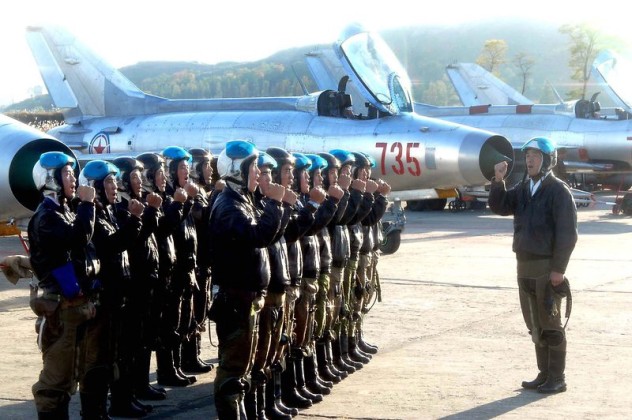
While the Yom Kippur War is a well known Cold War engagement between Soviet and Western aligned forces which took place in the midst of the Vietnam War, pitting the forces of a number of Arab states including Egypt, Syria, Iraq and Algeria against their longstanding adversary Israel, the role played by personnel deployed from external powers remains less well known. One party which played a significant role in the conflict, the beginnings of its extensive involvement in the Middle East to undermine the Western Bloc’s regional interests which continues to this day, was the Korean People’s Army (KPA) – the armed forces of North Korea. Having waged an intensive and brutal war with the Untied States and its allies in the 1950s, where an estimated 20-30% of its population was lost primarily due to the American bombing campaign, North Korea well understood the importance of air superiority and set about rebuilding its air and air defence forces with the most capable Soviet made weapons systems available. North Korean pilots and air defence crews were tasked not only with guarding the country’s airspace in the event of a future war with the Untied States, but also of contributing to the war efforts of a number of friendly countries – which they continue to do to this day. North Korean pilots played a considerable role in the Vietnam War, and according to Korean sources downed several U.S. fighter jets over the country. As the air war over Vietnam neared its end in the early 1970s, the KPA Air Force dispatched pilots to Egypt to aid the Soviet aligned country’s own war effort.
North Korean pilots had been stationed to aid Egyptian forces in defending their airspace months before the outbreak of the Yom Kippur War, and according to the Egyptian Military’s Chief of Staff Saad Al Shazly, Korean assistance provided critical assistance at a time of great need. Recalling that personnel from the USSR had been flying approximately 30% of the Egyptian MiG-21 fleet and operating about 20% of the country’s surface to air missile batteries, he noted that following the departure of Soviet forces under the decree of Egyptian President Anwar Sadat the Egyptian Air Force had struggled with a significant shortage of trained MiG pilots. Regarding North Korea’s role in solving this issue, the General stated in his memoirs:
“The solution occurred to me in March 1973, during the visit to Egypt of the Vice President of the Democratic (People’s) Republic of Korea (official name of North Korea.) On March 6, while escorting their Vice Minister of War, General Zang Song, on a tour of the Suez front, I asked if they could support us – and give their pilots useful combat training – but sending even a squadron of men. I knew at that time that his country flew MiG-21s. After much political discussion, in April I went on an official visit to president Kim Il Sung to finalise the plan. My fascinating ten day tour of that extraordinary republic, an inspiring an example of what a small nation of the so called Third World can achieve with its own resources is, alas, rather outside the scope of this memoir, as is my stopover in Peking (former English name for Beijing.)
Korean pilots – all highly experienced, many with more than 2,000 hours, arrived in Egypt in June and were operating by July. Israel or her ally ( the United States) soon monitored their communications, of course, and on August 15 announced their presence. To my regret, our leadership would never confirm it. The Korean s were probably the smallest international military reinforcement in history: only 20 pilots, eight controllers, give interpreters, three administrative men, a political advisor, a doctor and a cook. Bu their effect was disproportionate. They had two or three encounters with the Israelis in August and September and about the same number in the war. Their arrival was a heartwarming gesture. I mention the story here mainly to pay tribute to them and to apologise for the churlishness of our leadership in not also doing so.”
While Egyptian forces had long claimed that the MiG-21 was poorly suited to engage the F-4E, Israel’s prime air superiority fighter, and that the Soviet jet lacked the necessary survivability against the heavier American made platform, they were proven wrong not only by the successes of North Vietnamese pilots against the United States – but also by North Korean pilots operating against Israeli Phantoms over Egyptian airspace itself. According to Israeli sources, reporting on an engagement between North Korean piloted MiGs and their own Phantoms, the Korean pilots demonstrated considerable skill and were effectively untouchable in close range engagements – taking full advantage of the MiG-21’s superior manoeuvrability to evade multiple Israeli strikes with impunity. Whether North Korean pilots downed any Israeli fighters remains unknown, though reports indicate that no Koreans were shot down by Israeli jets. A number of reports do indicate however that the poorly trained Egyptian surface to air missile (SAM) crews mistook returning Korean MIG-21 fighters for Israeli jets, and proceeded to fire upon them. This was a common error made by Egyptian SAM crews, one which cost the country a number of fighter jets.
North Korean pilots’ participation in the Yom Kippur War represented only the beginning of the country’s military involvement in the Middle East, nor the last time the country would aid Arab states at war with Israel. While Egypt pivoted towards the Western Bloc in the war’s aftermath, abandoning the Soviet Union and its Arab allies, the country would pursue a number of joint weapons projects with North Korea and continues to import significant quantities of arms from the country. The Egyptian ballistic missile arsenal has North Korean origins, and the Korean Rodong-1 remains the country’s most capable platform in service today. North Korean assistance was also commissioned to construct a war museum in Egypt commemorating the Yom Kippur War, which was based heavily on the larger Fatherland Liberation War Museum in Pyongyang commemorating the Korean War. North Korean forces have since the Yom Kippur War also formed close ties to Syria and Yemen, and the KPA is involved in wars against Western aligned forces in both countries.
Korean assistance has been key to upgrading Syria’s surface to air missile network, while special forces have reportedly been deployed for ground operations. KPA personnel were also reportedly involved in the Lebanon War in alongside their Syrian allies, and were later responsible for aiding the Lebanese militia Hezbollah to construct underground fortifications key to its military success against Israel in 2006. A number of key figures in Hezbollah’s leadership, including its leader Hassan Nasraallah, reportedly travelled to Korea for military training in the 1980s. Korean assistance has been key to strengthening the missile capabilities of Libya, Syria and Yemen, as well as Iran and Hezbollah, with all these parties relying heavily on a wide variety of the country’s missile designs until today. The East Asian state has since the Yom Kippur War played a considerable role in supporting regional forces against the Western Bloc and their allies, and is set to continue to do so for the foreseeable future.
Featured Video
Integrity Initiative: UK-funded network framed dissent as Russian disinformation for years
or go to
Aletho News Archives – Video-Images
From the Archives
Why Saudi Ties to 9/11 Mean U.S. Ties to 9/11
By Kevin Ryan | Dig Within | September 27, 2015
Media interest in Saudi Arabian connections to the crimes of 9/11 has centered on calls for the release of the 28 missing pages from the Joint Congressional Inquiry’s report. However, those calls focus on the question of hijacker financing and omit the most interesting links between the 9/11 attacks and Saudi Arabia—links that implicate powerful people in the United States. Here are twenty examples. … continue
Blog Roll
 Aletho News
- IAEA inspectors cannot return to Iran amid US threats: Russia
- Senate Rejects Iran War Powers Resolution Passed By House
- ‘We did not attack Pakistan with drones’: Afghan sources
- Iraqi Resistance faction links arms to sovereignty, questions US exit
- Cannon fodder no more… South Korea rejects Trump’s pressure to join his criminal war on Iran
- Neria Leiter Was A Legitimate Military Target
- Integrity Initiative: UK-funded network framed dissent as Russian disinformation for years
- ‘We don’t seek permission to defend our country’: Snippets from President Pezeshkian’s UNGA address
- NATO chief wants Europeans to fight American wars [for Israel]
- German chemicals giant reveals details of downsizing
- If Americans Knew
- Israel displaces hundreds of Palestinians amid wave of demolitions in West Bank
- Aid, reconstruction, and Israel’s history of obstruction in Gaza
- Trump administration digs an ever-deeper hole of complicity in genocide – Daily Update
- US-Israel $2.8 Billion Arms Deal, 40,000-Bomb Supply Faces New Gaza Complicity Accusations
- Caught on Tape: AIPAC CEO Boasted of Controlling Trump’s National Security Officials
- Why Hamas Attacked Israel in October 2023 – Israeli professor Ilan Pappé
- They see them, then kill them: Israeli quadcopters track, deliberately target civilians in Gaza
- Winter could turn Gaza’s treacherous, war-damaged buildings into deathtraps
- Majority of Democratic Voters Want to Prosecute Both Biden and Trump Administration Officials Over Gaza
- As Gaza languishes, world leaders gather at the UN – Daily Update
- No Tricks Zone
- New Study: Earth And Venus Surface Warmth Largely Explained By Convection And Lapse Rate, Not CO2 Or Radiation
- 2025 Nature Paper Claiming Worsening Global Drought Gets RETRACTED …Heavily Flawed
- New Study: ‘Global Drought Shows No Detectable Recent Acceleration Under Climate Warming’
- Economic Masterminds: German Socialists Suggest Taxing Productivity Gains Stemming From Using AI
- The South China Sea Has Not Been Cooperating With The Climate Change Narrative
- Energy Crisis: Germany Enters Heating Season With Historically Low Gas Reserve Fill Levels
- New Study: The Antarctic Ice Sheet Gained Mass From 2020-2024 Due To Staggering Snow And Ice Accumulation
- Study: Ocean Heating Rates From Thousands Of Years Ago ‘Dwarf’ Modern Ocean Heating Rates
- Climate Extremists Target, Attack Large-Scale Power Grid Infrastructure In Germany!
- New Study: Antarctic Ice Melt Has Contributed Less Than 1 Centimeter To Sea Level Rise In The Last 30 Years

