Imagine There Was A Violent Cult Committing Atrocities with Impunity

By Caitlin Johnstone | September 20, 2025
Imagine there was a violent cult that used scriptures from an ancient religion to convince its followers to do evil things.
Imagine the cult was given its own state.
Imagine the cult was given machine guns, tanks and war planes.
Imagine the cult obtained nuclear weapons.
Imagine the cult started committing genocide against the indigenous people who’d been living in the area where the cult’s state was established.
Imagine the cult had huge branches in the most powerful nation on earth, and the powerful nation defended the cult no matter what it did.
Imagine the cult flipped out and started relentlessly attacking and invading the surrounding nations.
Imagine the cult had so much influence and support in western society that western governments and institutions would censor, silence, fire, marginalize and deport anyone who criticized the cult’s actions.
Imagine the western media sympathized highly with the cult and spent the entire time framing its atrocities as entirely reasonable defensive actions, and framing critics of the cult as malicious bigots.
Imagine the cult kept getting crazier and crazier and more and more violent, but nobody could find a way to stop it because its actions were backed by this giant western power structure.
That’d suck, huh?
I think that’d be just about the most bat shit insane situation anyone could possibly imagine.
A nuclear-armed death cult just murdering and massacring mountains of human beings with total impunity, backed by the most powerful people on earth? That would be an unfathomable madness.
If someone made a movie about such a thing I’d stop watching halfway through, because I would find it too unbelievable.
I’d be like, come on man. Come up with a more realistic plot line. And come up with a more believable antagonist; nobody is that evil.
I’d be like come on Hollywood, you seriously expect me to maintain my suspension of disbelief when you’re putting out a movie about these cartoonishly evil bad guys who blow up hospitals and assassinate journalists and murder humanitarian workers and deliberately massacre starving civilians seeking food?
I’d be like, you really expect me to believe a violent cult could get all this power and do all these evil things and get away with it, just by lying about it all the time? Eventually people would stop believing their lies!
I’d be like, somebody would stop them. Not only does this movie have unbelievable antagonists, it also lacks any believable protagonists. Basic human decency would compel the world to stop all these atrocities being committed right out in the open. Where are the heroes in this story?
And then I’d storm out of the movie theater, glad to be outside that horrible fictional world where such freakish absurdities were taking place.
And then I’d stand in the parking lot and look up at the sky, and thank God I’m back in reality again.
Pakistan says ‘door open’ for more Arab states to join mutual-defense pact
The Cradle | September 20, 2025
Pakistan’s Defense Minister Khawaja Asif said on 18 September that “the doors are not closed” for other Arab states to join the new defense pact signed with Saudi Arabia.
Asif emphasized that there was no clause preventing Pakistan from extending similar arrangements to other nations.
The agreement was signed in Riyadh by Pakistani Prime Minister Shehbaz Sharif and Saudi Crown Prince Mohammed bin Salman (MbS) during Sharif’s day-long visit, and declares that aggression against one country will be considered aggression against both.
A joint statement said the deal “reflects the shared commitment of both nations to enhance their security and to achieve security and peace in the region and the world.”
Asif also confirmed that Pakistan’s nuclear arsenal is included within the framework of the pact, describing it as a joint shield that leaves “no doubt” either side would respond if attacked.
“What we have, our capabilities, will absolutely be available under this pact,” Asif told Pakistani broadcaster Geo News.
He stressed that Pakistan had always placed its nuclear facilities under inspection and had “never committed any violation.”
“This agreement will not be a hegemonic arrangement but a defensive arrangement,” Asif emphasized.
“We don’t have any plans to conquer territory or attack anyone. But our fundamental right can’t be denied to us and we exercised that yesterday,” he added.
The minister drew comparisons with NATO, saying Muslim states had the same right to collective defense. “I think it is a fundamental right of the countries and people here, particularly the Muslim population, to together defend their region, countries, and nations.”
Pakistan has long stationed troops and air force units in Saudi Arabia, training Saudi forces and providing advisory support.
“I think that relationship has been more defined now and that understanding has been given the form of a defense agreement,” Asif explained.
Pakistani External Affairs Ministry spokesperson Randhir Jaiswal said India would assess the implications for its national security, adding that the government remained committed to “ensuring comprehensive national security in all domains.”
Asif also tied the pact to Pakistan’s longstanding role in protecting Islamic holy sites in the kingdom, describing it as a “sacred duty.”
Trump Is Preparing a $6 Billion Arms Package for Israel
By Kyle Anzalone | The Libertarian Institute | September 19, 2025
The White House informed Congress that it is preparing a massive arms sale to Israel, including attack helicopters and military vehicles. The weapons will be paid for with US military aid.
According to the Wall Street Journal, the total value of the weapons deal is $6 billion. The sale is $3.8 billion for 30 AH-64 Apache helicopters and $1.9 billion deal for 3,250 infantry assault vehicles.
Washington will pay for the arms with foreign military financing. The US provides Israel with at least $3.8 billion in military aid annually. Washington boosted assistance to Tel Aviv following the October 7 Hamas attack. In the first year of the Israeli onslaught in Gaza, the US sent Israel nearly $18 billion in aid. The weapons will begin arriving in Israel in two to three years.
The report of the package follows Israel’s attempt to assassinate Hamas leadership in Qatar. The strikes angered Doha, a major non-NATO US ally. Qatar has also committed to investing $1 trillion in the US economy and gifted Trump a luxury aircraft.
Additionally, the assassination attempt prevented Trump from initiating talks to end the war in Gaza and free the Israeli hostages. The strike occurred as the Hamas leadership was meeting to discuss a proposal sent by Trump. Qatar said the attempted assassination ended any chances of reaching a hostage agreement.
The White House has pushed Congressional leadership to endorse the sale even after the Israeli strike in Qatar.
Israel is in the process of ethnically cleansing Palestinians from Gaza. The onslaught has primarily been conducted by Israel using American weapons. A large number of civilians have been killed by Israeli forces. Additionally, an Israeli siege of Gaza has created a famine, and hundreds of Palestinians have starved to death.
Since taking office, Trump has approved multiple arms sales to Israel, including a sale of $3 billion in bombs.
Israel Wants ‘Aerial Corridor’ Over Syria to Strike Iran
By Kyle Anzalone | The Libertarian Institute | September 17, 2025
Tel Aviv’s primary objective in discussions with Damascus is to establish an aerial corridor over Syria so Israel can restart its war against Iran.
Axios reports that Israel presented the Syrian government, led by Ahmed al-Sharaa, with a maximalist agreement that would establish a no-fly zone over Syria. Additionally, Tel Aviv wants a large swath of Syria, from the Israeli border to Damascus, to become a demilitarized zone.
An Israeli source told the outlet that an essential part of the agreement will be maintaining the ability to use Syrian airspace to attack Iran. “A central principle of the Israeli proposal is maintaining an aerial corridor to Iran via Syria, which would allow for potential future Israeli strikes in Iran,” they said.
Israeli Prime Minister Benjamin Netanyahu started an unprovoked war with Iran in June. Tel Aviv targeted leadership in Tehran, nuclear facilities, and scientists. President Donald Trump joined the war by striking three Iranian nuclear sites that Israel lacked the military capability to destroy.
Israeli forces currently occupy southern Syria. Israel promised to withdraw its troops from Syria if Damascus accepted the agreement. On Wednesday, Sharaa said a deal with Israel was possible “in the coming days.”
Tel Aviv made a similar agreement with Hezbollah, where Israeli soldiers were scheduled to withdraw from South Lebanon after Hezbollah moved its forces out of the region. However, after the Hezbollah withdrawal, Tel Aviv maintained its occupation. Israel is now demanding that Hezbollah entirely disarm.
The Israeli invasion of Syria began after President Bashar al-Assad was overthrown by al-Sharaa last year. Al-Sharaa, formerly Abu Mohammad al-Jolani, is the founder of al-Qaeda’s Syria affiliate. President Donald Trump has met with Sharaa and lifted some sanctions on Syria in a push to get Damascus to make a deal with Tel Aviv.
Iran clarifies stance after joint Doha statement, rejects ‘two-state’ solution to Palestinian issue
Press TV – September 16, 2025
Iran has clarified its stance on a joint statement from a Doha summit held in the wake of the Israeli regime’s assault on Qatar, rejecting the “two-state” solution concerning the Palestinian issue and and US’s self-proclaimed “peace” efforts.
The Foreign Ministry issued the remarks on Tuesday, distancing the Islamic Republic from references made in the statement to the so-called “two-state solution,” reiterating support for Palestinians’ right to resistance, and ruling out any prospect of recognition of the regime.
It also dismissed the existence of any genuine intention on the part of Washington to resolve the situation created by the regime’s barbarity throughout the West Asia region, including across the occupied Palestinian territories.
‘Two-state solution’ a non-starter
Reasserting the Islamic Republic’s continued unwavering support for the Palestinian cause of liberation from Israeli occupation and aggression, the ministry said the country would under no circumstances abandon its staunch belief that Palestinians were absolutely entitled to exercise their inherent right to self-determination.
Therefore, Tehran keeps holding fast to its principled position that the only “true and sustainable” solution to the Palestinian issue rests in the creation of a “unified democratic government” in the occupied territories.
Such a government should receive its mandate from the outcome of a referendum partaken by all Palestinians inside the territories as well as the Palestinian diaspora, and, hence, end up representing “all Palestinians,” the ministry said.
Therefore, it said, Tehran utterly dismisses the “two-state solution,” supported by the United States and its allies, and the concepts proposed as part of such “solution,” including those mentioned in the Doha statement.
It named one of those concepts as “establishment of the State of Palestine along the lines of June 4, 1967,” which ignores the vast Palestinian territories that the regime had already occupied in 1948 and continues to occupy.
Also, the Islamic Republic spurns the idea that Palestinians’ future capital should be confined to just the eastern part of the holy occupied city of al-Quds, the ministry added.
“The so-called ‘two-state’ solution would not resolve the Palestinian issue,” it specified.
‘Israeli barbarity necessitates resistance’
Iran, meanwhile, continues to uphold Palestinians’ entitlement to employ “whatever necessary vehicle” towards realizing their inalienable right to self-determination and ridding themselves of foreign colonialism, the ministry stated.
Those rights that are enjoyed by “any peaceable nation” include the right to resist, it noted, adding, “Given the barbarity exercised by the occupying regime’s forces, nothing should serve to restrict this right.”
“It is also our shared duty under international law to support this aspiration,” it said, and also repeated Tehran’s categorical rejection of any potential recognition of the regime.
‘US no ‘peace’ partner’
Finally, the ministry underlined that the policies and actions of the United States have contributed to the continuation and backing of the Israeli regime’s aggression against the Palestinian people, rather than subduing it.
“In light of this reality, the Islamic Republic holds that the United States cannot be recognized or regarded as a credible or impartial party in advancing a just and lasting peace in this conflict.”
“We request the summit’s secretariat to include the Iranian delegation’s reservations in its final report.”
The emergency Arab-Islamic summit was held in the Qatari capital on Monday to address the regime’s recent deadly attacks on the city, which targeted the Palestinian resistance movement Hamas’ leadership, among Tel Aviv’s other atrocities throughout the West Asia region.
Russia, Iraq Ramp Up Contacts, With Focus on Military Cooperation
Sputnik – 16.09.2025
Russian Security Council Secretary Sergei Shoigu arrived in Baghdad on a working visit.
Contacts between Russia and Iraq are becoming increasingly intensive, with business, economic, transport, military and defense industry cooperation issues being discussed, Russian Security Council Secretary Sergei Shoigu said.
“Contacts are becoming more intense and multidirectional. This concerns business, economics, and transport, military and defense industry cooperation,” Shoigu said during a brief conversation with the deputy advisor to the prime minister of Iraq for national security in Baghdad.
Russian Security Council Secretary Sergei Shoigu touched down in Baghdad on a working visit, during which he will hold meetings with the highest political and military leadership of Iraq, the Russian Security Council said.
“During the upcoming meetings, it is expected to convey the Russian side’s intention to further strengthen and expand cooperation in the security sphere,” it said.
The council added that, besides the current aspects of Russian-Iraqi bilateral cooperation, regional issues will also be addressed during the talks in Baghdad.
The myth of Israel’s isolation: the reality of Arab collaboration with Zionism
By Lucas Leiroz | Strategic Culture Foundation | September 15, 2025
The narrative construction of Zionism fundamentally depends on two premises: historical victimization and alleged regional isolation. Both are rhetorical weapons designed to justify Israel’s systematic brutality against Palestinians and other native populations of the Middle East. But neither of these narratives holds up under even a minimally honest analysis of the region’s current geopolitical reality. The myth of the “tiny State of Israel surrounded by enemies” is one of the greatest fabrications of contemporary Western propaganda.
The idea that Israel is a solitary bastion in a sea of Arab hostility is, today, completely baseless. With few exceptions, countries in the region not only tolerate Israel but actively collaborate with the Zionist regime — including militarily and diplomatically. The supposed regional resistance has evaporated in recent decades, giving way to a policy of normalization and, in many cases, direct submission to Israeli interests.
The most emblematic case is Syria. The fall of Assad became an obsession for the West, enabled by Islamist militias with logistical and military support from the West, Israel, and the Gulf petro-monarchies. After Al-Qaeda’s victory, the terrorist regime almost immediately engaged in negotiations with Israel, despite ongoing Zionist bombings of Syrian territory. Today, the so-called “Free Syria” is functionally an ally of Israel. Fragmented and destabilized, the country has lost its national capacity for resistance.
In Lebanon, the scenario is equally ambiguous. Despite Hezbollah’s firmly anti-Israeli stance, the Lebanese government follows a path of conciliation with Tel Aviv. The recent ceasefire agreement, signed without Hezbollah’s consent, makes it clear that the Lebanese elites prioritize accommodation with Israel over national sovereignty. Government pressure for Hezbollah’s disarmament is another indicator of veiled collaboration.
Even the Palestinian Authority — supposedly the legitimate representative of the Palestinian people in the West Bank — has acted as a silent partner of the Zionist regime. Its role is increasingly that of a submissive mediator, suppressing popular resistance and ensuring the stability of illegal Israeli settlements. Local authorities in the West Bank seem entirely incapable of challenging the colonial status quo, abandoning any real project of liberation.
Jordan, with its puppet monarchy, is another blatant example of collaboration. While official rhetoric often speaks of “justice for Palestinians,” in practice Amman functions as a key piece in the architecture of regional containment, facilitating Israeli intelligence and surveillance operations. The Jordanian monarchy is essentially an extension of Anglo-American policy in the region and, by extension, an objective ally of Tel Aviv.
In the Gulf, the situation is even more obvious. The United Arab Emirates, Bahrain, Saudi Arabia, and Qatar maintain close relations with Israel, both economically and militarily — even if many of them do not formally recognize the Zionist entity. As Brazilian analyst Rodolfo Laterza correctly observed, the effectiveness of Israel’s air defense is not due solely to systems like the Iron Dome, but to a regionally integrated infrastructure supported by Gulf monarchies. These countries not only allow American military presence and overflights but also share intelligence and threat tracking — giving Israel a significant strategic advantage.
Israel’s recent bombing of Qatar reignited talk of a possible “Arab awakening,” but until concrete developments occur, such “Arab solidarity” remains fiction and empty rhetoric. The Gulf regimes — utterly dependent on Western military support and fearful of internal destabilization — are among Zionism’s most useful agents in the Middle East. This is combined with the region’s typical strategic ambiguity, where governments believe they can maintain multiple alignments simultaneously without paying the price.
In the end, the only full-fledged state actor opposing Israel is Iran — which, ironically, is not even Arab. Isolated, blockaded, demonized, Iran continues to take a confrontational stance toward Israeli apartheid and remains the main supporter of resistance movements like Hezbollah and Hamas. Alongside war-torn and divided Yemen, it is the only state actor on the board that openly challenges Israel’s expansionist agenda.
Tel Aviv’s propaganda, amplified by the Western media, insists on portraying Israel as a victim. But the truth is that Zionism has co-opted and bought off nearly all its neighbors. The so-called “Israeli isolation” is a fiction — a lie repeated endlessly to justify the unjustifiable: the continuation of a colonial, supremacist, and genocidal project.
Iraqi PM Calls For Islamic Military Alliance Against Israel
Sputnik – 14.09.2025
Iraqi Prime Minister Mohammed Shia al-Sudani urged Arab and Muslim nations to form a joint security force in response to Israel’s recent strikes in Gaza and Qatar.
He said Tuesday’s Israeli attack on Doha, which killed Hamas members and a Qatari officer, was a “shocking breach of international law” and a threat to regional security.
Sudani stressed that the Islamic world has “numerous levers” to deter Israel, warning that aggression “will not stop at Qatar.”
His remarks came ahead of the Arab-Islamic emergency summit in Doha on Sept 15–16, amid Israeli strikes on Qatar, where leaders are expected to discuss activating the long-proposed joint Arab military force.
Iranian Supreme National Security Council chairman Ali Larijani has also called on Islamic nations to create a “joint operations room” against Israel.
Egypt, meanwhile, is pushing for a NATO-style Arab military force for rapid defense in case of attacks, with Cairo seeking regional backing for the plan ahead of the summit.
The Israeli strike on Doha hit a residential compound where Hamas politburo members were meeting to discuss a US proposal to end the Gaza war, which has already claimed more than 64,800 Palestinian lives since October 2023.
Israel’s ‘Holy War’ falters: Seven fronts, Zero victory
Netanyahu’s ‘historic and spiritual mission’ is bleeding international support, turning short-term military gains into an imminent strategic defeat.
By Mohamad Hasan Sweidan | The Cradle | September 11, 2025
For nearly two years, Israel has been waging what Netanyahu calls a “multi-front war.” This war includes, in addition to Gaza, Lebanon, Syria, Iraq, Yemen, the occupied West Bank, and Iran. In one of his interviews, Israeli Prime Minister Benjamin Netanyahu stressed that he feels he is on a “historic and spiritual mission,” and that he is “deeply connected” to the vision of the Promised Land and Greater Israel. With these words, Netanyahu confirms that what he calls a “multi-front war” is driven by both religious and political motives.
The danger lies in Netanyahu and the radical religious Zionist right believing that the world must approach the brink of a great war “for the Messiah to descend and save it”. For this reason, they encourage continuing and expanding the violence in Gaza to Lebanon, Iran, and beyond, seeing this as the “age of the Messiah.”
The seven fronts of the war
On 9 October 2023, just two days after Operation Al-Aqsa Flood, during a meeting with the mayors of the southern border towns affected by the 7 October attack, Israel’s Prime Minister stated that Tel Aviv’s response to the unprecedented multi-front assault launched by Palestinian fighters from Gaza “will change the Middle East.” From that moment, it became clear that the war would not remain confined to Gaza, but that Israel would expand it to achieve its main goal, which is a new regional order where the balance of power favors Tel Aviv.
Israeli leaders have repeatedly claimed they are simultaneously fighting on seven fronts – Gaza, Lebanon, Syria, Iraq, Yemen, the occupied West Bank, and Iran – portraying all these conflicts as targeting an “Iran-led axis” allegedly seeking to “destroy the Jewish state.”
To achieve this goal, Israel pursues two main paths: weakening its enemies and enforcing compliance by force on the rest of the region’s states, including US allies. On the first path, Israel has relied on direct military strikes, framing them as “multi-front wars” under a “defensive” rationale.
As for the second path, enforcing compliance by force, Israel repeatedly attacked the “new Syria,” a state no longer hostile to Israel or the US, and has occupied portions of its territory. Syria’s consistently positive overtures toward Tel Aviv did not deter Israel, which persisted in its strikes and continued occupation.
Meanwhile, Israel’s recent strike on Qatar on 9 September fits within two parallel tracks of its policy. The first is aimed directly at Hamas’s political leaders, signaling that there is no safe haven for them anywhere in the world. The second conveys a clear message to Qatar and other US allies in the region; Israel’s approach is not based on shared interests but on fear of consequences. Alliances based on mutual interests are one thing, and compliance enforced through fear is another. At this stage, this is precisely the message Trump seeks to send to the region’s states: “Obey me, or I cannot guarantee that Israel will remain distant from you.” Fundamentally, this warning is addressed to all states in the region, without exception.
Regional states must understand that what once shielded their capitals from Israeli-American aggression was the presence of the Axis of Resistance that maintained a regional deterrence balance for years. Once this axis weakened, Israel was liberated from constraints and began operating without limits. It should not be noted that Qatar is officially designated a “Major Non-NATO Ally” of the US, a status conferred by the Biden administration since March 2022. In addition, Qatar hosts the Al-Udeid Air Base, which is far more than a conventional military base, but serves as the headquarters of US Central Command (CENTCOM) in the region, making it one of Washington’s most strategically significant hubs worldwide. Yet none of this prevented Tel Aviv from attacking it.
What has Israel achieved?
We must begin by defining strategic achievement. In international relations, a strategic achievement can be defined as attaining long-term goals that reshape the balance of power, enhance state security, or expand influence in the international system. Strategic achievement differs from short-term tactical or operational gains in that it “produces changes in the fundamental structures of interaction between states and non-state actors.” This means that strategic achievement must consolidate a lasting advantage in the geopolitical arena.
From this perspective, Israel has so far failed to achieve any strategic accomplishments in West Asia. Instead, over the past two years, it has accumulated a series of tactical gains that it seeks to transform into strategic advantages. In Gaza, Tel Aviv remains unable to eliminate the Hamas, and in Lebanon, it has likewise failed to dismantle Hezbollah – despite managing to weaken both resistance movements. In Iran, its attempts to change the regime or dissuade Tehran from supporting resistance movements have failed. In Yemen, its actions did not stop Sanaa’s support for Gaza.
Therefore, the core of the current battle is to prevent Tel Aviv from transforming its tactical gains into entrenched strategic ones. If Israel fails to eliminate the Palestinian resistance, fails to isolate and disarm Hezbollah in Lebanon, sees Iran continue to support resistance movements and anti-hegemony discourse, and if the Yemeni support front remains steady, then Israel will have exhausted the maximum of its power to impose a regional reality that grants it temporary superiority, neutralizing resistance for a period, but remaining fragile and unsustainable in the medium and long term.
The outcome of this struggle ultimately depends on Tel Aviv’s opponents overcoming the multiple challenges created by its wars in West Asia. Either the resistance forces succeed in thwarting Tel Aviv’s attempts to turn temporary gains into a long-term strategic achievement, or Tel Aviv and Washington succeed in leveraging these tactical gains to impose a new strategic reality that serves their interests.
A critical question then arises: What price has Israel paid to achieve its current ‘accomplishments’?
In a recent article titled ‘Israel is Fighting a War It Cannot Win,’ Ami Ayalon, former head of the Israeli Navy and former director of Shin Bet, writes, “The course Israel is currently pursuing will erode existing peace treaties with Egypt and Jordan, deepen internal divisions, and heighten international isolation. It will fuel greater extremism across the region, escalate religious-nationalist violence by global jihadist groups thriving on chaos, weaken support from US policymakers and citizens, and drive a rise in anti-Semitism worldwide.”
He concludes by saying, “Israel’s military deterrence has been restored, demonstrating its ability to defend itself and deter its enemies. But force alone cannot dismantle Iran’s network of proxies nor secure lasting peace and stability for Israel for generations to come.”
Additionally, as a result of Israeli crimes in Gaza, responsibility for the humanitarian catastrophe there has shifted from Hamas to Israel. For a long time, Tel Aviv sought to portray Hamas as primarily responsible for Gaza’s difficult humanitarian reality. However, Israel’s unlimited aggressiveness undermined this effort.
A survey conducted by Israel’s Ministry of Foreign Affairs to evaluate its global reputation found that respondents in the US, Germany, Britain, Spain, and France believe that the majority of those killed by Israel in Gaza are civilians. The survey also revealed that Europeans, in particular, “agree with characterizing Israel as a state of practicing genocide and apartheid, despite their opposition to Hamas and Iran.” Moreover, a recent Quinnipiac University poll indicated that 37 percent of US voters support Palestinians, compared to 36 percent who support Israelis. The danger of these figures is that they show Israel is losing western public opinion, which may make support for Tel Aviv a key issue in future western elections.
Furthermore, nine states completed the legal procedures required to formally recognize the State of Palestine last year, the largest annual increase since 2011:
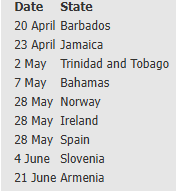
These recognitions raised the global total from 138 to 147 in 2024, meaning that nearly three-quarters of UN member states (147 out of 193) now officially recognize the State of Palestine.
In addition, three of the US’s key allies – France, the UK, and Canada – announced their intention to recognize a Palestinian state, while several other countries are considering the same step. This marks a significant shift that further isolates Israel amid growing international concern over Gaza’s humanitarian crisis. These three countries will become the first G7 members to formally recognize a Palestinian state, posing a clear challenge to Israel. Should they proceed, the US would remain the sole permanent UN Security Council member not to recognize Palestine.
A new combat doctrine
There is no doubt that 7 October marked a turning point in Israel’s military strategy. From that date onward, Israel abandoned for the first time the combat doctrine established by David Ben Gurion, Israel’s first prime minister. Blitz wars were no longer its preferred option, the issue of recovering prisoners was no longer a central priority, and its threshold for human and material losses in any military confrontation rose significantly. This shift compels all regional states to recalibrate their strategies to match Tel Aviv’s new combat doctrine.
It is important to stress that Ben Gurion designed Israel’s combat doctrine to suit its geographic and demographic realities. This may have prompted retired Israeli colonel Gur Laish, former head of war planning in the Israeli Air Force and a key participant in the army’s strategic planning, to publish a paper on 19 August at the Begin-Sadat Center for Strategic Studies, warning Israeli leaders against adopting a new security doctrine that disregards Israel’s limits of power. Yet, the following crucial question remains: Will Netanyahu succeed in proving the effectiveness of Israel’s new approach, or will abandoning Ben Gurion’s doctrine mark the beginning of Israel’s end?
Israel’s strike on Qatar exposes the collapse of Arab security assumptions
By Dr Sania Faisal El-Husseini | MEMO | September 12, 2025
The thunder of Israeli warplanes over Doha this week was more than just a military operation, it was a shattering moment for the region. Missiles aimed at residential neighbourhoods in Qatar’s capital, as an attempt to assassinate Hamas leaders, sent a shockwave across the Gulf. The United States, caught between its alliance with Israel and its defence commitments to Qatar and other Arab Gulf states, sought refuge in manoeuvering, distancing itself from the strike while tacitly enabling it. For Arab national security, particularly in the Gulf, the implications are sobering.
The paradox is glaring, Qatar, host to the vast Al-Udeid Air Base, America’s forward headquarters in the region, and dependent on US military systems for its defence, finds itself exposed. The strike underscored what many Arab analysts have long warned, Washington’s strategic loyalty lies firmly with Israel, while Arab allies are seen as expendable partners.
This attack, the first of its kind on Qatari soil, is unlikely to be the last in the region. While framed as part of Israel’s campaign against Hamas, its significance extends far beyond Gaza.
For years, Qatar has hosted indirect negotiations between Hamas and Israel, offering itself as a diplomatic broker. But Israel, it now appears, used those talks as cover, buying time while pursuing unchanged objectives, the conquest of Gaza, the dismantling of Hamas, and the displacement of its population. As Israel intensified its push into Gaza City, it simultaneously targeted the Hamas delegation in Doha, an unmistakable signal that diplomacy was never the true endgame.
The operation reflects a broader Israeli strategy, expand military dominance step by step, strike beyond borders, and erase red lines that once constrained its reach.
Qatar’s own relationship with Israel has always been a delicate balance. From the opening of an Israeli trade office in Doha in 1996, to intelligence meetings hosted in recent years, to participation in joint air exercises in Greece, the two states have maintained limited yet functional ties. Still, Israel’s decision to strike inside Qatar amounts to a message to the entire Arab Gulf, no country is immune, and restraint will only embolden further violations.
This reality stretches well beyond the Palestinian question. Israel’s ambitions are no longer confined to blocking Palestinian statehood. The Netanyahu government, driven by the most hardline coalition in Israel’s history, has laid bare its intent, redraw the regional map through force, not diplomacy. Its declared expansion goals in the region, military reach backed by nuclear superiority, unmatched intelligence networks, and unwavering US support positions it as a major security threat to the regional countries. From assassinations in Iran to operations in Lebanon, Syria, Yemen, Iraq, and now Qatar, Israel acts with impunity. The Gulf, it seems, is simply no longer far from its attacks and ambitions.
The position of the American adminstration towrds the Israeli attack on Qatar has revealed a pivotal thorny issue. Qatar’s partnership with Washington was supposed to offer military and security safeguards. The two countries signed a Defence Cooperation Agreement in 1992, renewed in 2013, and Qatar was designated a Major Non-NATO Ally in 2022. Billions have been invested in Al-Udeid, now central to US operations across the region and Central Asia. Yet when Israel violated Qatari sovereignty, the US response revealed the harsh truth, strategic guarantees for Arab states collapse the moment they clash with Israel’s interests.
For Qatar and for every Arab state relying on US military systems, the lesson is stark. Dependence on Washington offers no shield when it matters most.
Many Arab states, particularly in the Gulf, have built their national defense almost entirely on Western military and security systems. In addition to Qatar, Saudi Arabia relies heavily on U.S. made F15 fighter jets and Patriot missile defence systems, the United Arab Emirates has invested billions in advanced American and French aircraft, as well as the THAAD missile shield, Bahrain hosts the US Fifth Fleet, and Kuwait depends on American logistical and intelligence support. These examples reflect a broader regional reality, the very foundations of Arab security are tied to Western supply chains, training, and decision making structures. Yet the Israeli strike on Qatar laid bare the danger of this dependency. When the interests of Washington and Tel Aviv converge, as they so often do, the security of Arab allies becomes secondary. Israel’s declared ambitions to project power beyond Palestine, coupled with the US’s unambiguous tilt toward Israel, mean that the entire architecture of Arab national security now stands on precarious ground.
Silence now would be perilous. If Arab governments allow this strike on Doha to pass without response, Israel will take it as a green light to extend its reach even further. The moment demands more than statements of concern. It requires a collective Arab reckoning, not only with Israel’s unchecked aggression, but with the illusion that the US security umbrella offers reliable protection.
The question is simple, if uncomfortable, will Arab states finally learn from experience, or will they continue to build their security on foundations that crumble when tested?
Geopolitical Ripple Effect: How Doha Attack Undermines US Credibility in the Gulf, Empowers BRICS
Sputnik – 12.09.2025
Israel’s aggression against one of America’s key allies in the oil-rich Persian Gulf is a wake-up call for the region’s nations about the hollowness of US security guarantees. The question now is whether they’ll answer, military and regional experts tell Sputnik.
Security
The failure of US and European-made equipment to stop Israel’s assault leaves only one option open: Russia, says defense analyst Igor Korotchenko.
Russian specialists could build Qatar a system that would give the emirate “the keys” to its skies, leaving “no country able to strike with impunity without the risk of losing both the carriers and strike systems” used in the aggression.
A pivot to Russia is fully realistic, given Moscow’s sale of Pantsir-S1s to the UAE, Qatar’s maritime neighbor.
To reliably close the skies to the enemy, Qatar could complement its defenses with Pantsirs, Buk-M3s, and Tor-M2s.
Commerce & Trade
“The Gulf is already engaged with the multipolar world” on economic matters, says Dr. Tamer Qarmout of the Doha Institute for Graduate Studies.
If the political will exists, not just Qatar but the region could “diversify their alliances and engage more with multipolarity.”
The UAE is already in BRICS, and Saudi Arabia has been invited. Gulf states also enjoy strong bilateral economic links with key BRICS powers including Russia (agriculture, IT), India (labor and trade) and China (trade and strategic initiatives like BRI).
Old Chains of Bondage Could Be Hard to Break
For most of their existence, Gulf powers “have never been truly sovereign,” says veteran Mideast expert Isa Blumi. “They’ve always been dependent on the British and the Americans,” and “internal struggles and rivalries” have made them ripe for manipulation.
That means “strategically and from a security and political perspective,” Gulf powers’ “interests are still largely embedded with, or aligned with, the US as a strategic partner,” Qarmout says.
Time for Strategic Self-Reflection
Israel’s attack “introduced significant uncertainties and major questions for Gulf nations regarding the future” of economic, political and military partnerships with the US.
The “difficult and existential” question is whether Gulf nations will “intensify” links to BRICS “to include new sectors like security and defense,” given the US’s abject failure to protect its “ally” “in such a blatant manner,” Qarmout summed up.
Qatar: an ambiguous agent in the Zionist architecture for the Middle East
By Lucas Leiroz | Strategic Culture Foundation | September 11, 2025
The recent Israeli attacks on Qatar have brought to public debate an issue long overlooked by analysts during the current Middle East conflict: Qatar’s ambiguous role in the regional security architecture.
In the geopolitical theater of the Middle East, Qatar has played a profoundly ambiguous role—at times portrayed as a regional mediator, at others as a strategic collaborator with the Washington-Tel Aviv axis. This ambivalence is neither accidental nor merely tactical. It is rooted in the very foundations of Gulf monarchies’ foreign policy, notoriously driven by a commercial mentality that prioritizes stability, survival, and diplomatic gains over any consistent ideological alignment. However, in light of the current stage of the Israeli-Palestinian conflict, this self-interested neutrality has increasingly morphed into active complicity with the Zionist occupation regime.
Despite hosting the political leadership of Hamas in Doha, Qatar does not finance its military wing—which, in fact, is supported by Iran. The hospitality extended to the political branch of the Palestinian movement serves, in reality, as a diplomatic tool to increase Qatari influence over the resistance and steer it toward behavior less hostile to Israeli and American interests. This strategy has been employed for years under the pretense of “mediation,” but in practice, it functions as a containment mechanism for the Palestinian national movement.
For years, the Al Jazeera network, controlled by Doha, had authorized access to the Gaza Strip, even under the strict control of Israeli security forces. This privilege was not granted out of goodwill by Tel Aviv but was the result of a strategic arrangement: Al Jazeera promoted anti-Iran rhetoric within the occupied territories, reinforcing the sectarian divide between Sunnis and Shiites and distracting Palestinians from their real source of military support. In return, Israel allowed the ideological diffusion of Wahhabism in Gaza, calculating that this doctrine would weaken Palestinian nationalism and inter-Muslim solidarity, replacing them with religious divisions and fractured loyalties.
This pact began to decline as Al Jazeera became a major outlet for exposing the brutal reality of the genocide in Gaza. Once Qatar’s media presence in occupied Palestine started to generate more costs than benefits for Israel, the Zionist regime enacted a censorship law banning Al Jazeera and assassinated several of its journalists during the criminal airstrikes on Gaza.
Qatar is also home to the largest U.S. military base in the Middle East—Al Udeid Air Base. This facility not only houses American equipment and troops but also serves as an operational platform for Israeli assets in joint missions against Gaza, Hezbollah, and potentially Iran. The Israeli presence on Qatari soil is an open secret and illustrates just how much Qatar has functioned as a logistical hub for the regional security architecture coordinated by Washington and Tel Aviv.
In June, Iran launched precision strikes against this base during its brief direct war with Israel. The message was unequivocal: by allowing its territory to be used by powers hostile to the Axis of Resistance, Qatar had crossed the limits of neutrality. Doha’s response, however, was to remain in a position of complicit silence, ignoring internal protests and maintaining its alignment with Western allies.
This posture exposes the fundamental paradox of Gulf foreign policy: even with populations broadly sympathetic to the Palestinian cause, the Wahhabi bloc has repeatedly chosen to accommodate Israeli and American projects, as long as doing so ensures dynastic survival and economic stability. This reflects a deeply rooted rationality in the political culture of desert nations—one shaped by centuries of pragmatic adaptation to scarcity and existential threats. In an environment where taking sides can mean ruin, ambiguity becomes a way of life.
However, in the current context of conflict radicalization, this ambiguity is no longer perceived as strategy but as betrayal. By refusing to break with the occupying powers, Qatar risks being dragged into an escalation it helped to ignite. The Israeli bombs falling on Gaza today do so, directly or indirectly, with American logistical support originating from Qatari territory. This undeniable fact—under any serious analysis—undermines Doha’s attempt to present itself as both bridge and wall, as arbiter and accomplice.
The recent Israeli strikes on Doha have made one thing painfully clear: befriending the Zionists is a deadly mistake.
Featured Video

More Iran War fallout: Maritime insurance industry shifts from London to China
or go to
Aletho News Archives – Video-Images
From the Archives
Allies Don’t Need Lobbies
By Jay Knott | Dissident Voice | September 24, 2013
In a recent article on Counterpunch, Rob Urie defended the traditional Marxist analysis of US policy in the Middle East. He argues that support for Israel is driven primarily by economic interest, not the Jewish lobby.
He starts by paying tribute to the idea that Western societies are uniquely racist. He says that the “Western narrative” claims there is an “Arab character”, and that this is “antique racist blather”. He gives no definition of these terms. Further, he establishes his credentials as part of the dominant current in the American left by claiming that “over a million people in Iraq died so ‘we’ in the West can drive SUVs.”1
When he tries to criticize bourgeois economics, he makes it clear he doesn’t understand the developments it has made since Marx’s day, using the mathematical discipline known as “game theory”. He dismisses the basic abstraction of economic theory, the idea of the rational individual, on the grounds that it is “devoid of history, culture and political context”. But abstractions are always devoid of something.
He defends a more concrete economic theory, mostly Marxist, with some input from another theorist of capitalist crisis, Hyman Minsky. This concrete theory leads him to the view that US activity in the Middle East is primarily driven by rational capitalist motives, the need to secure a supply of oil.
“Taking the totality of circumstance — former oil company executives launching war on an oil rich nation on a pretext they publicly proclaimed they didn’t believe shortly before taking office — and that upon launching their war proved to be non-existent, requires a willingness to overlook the obvious — that the war on Iraq was for oil, that is difficult to support.”1
Perhaps I’ve misunderstood him, but based on what he says in the rest of the article, this convoluted sentence seems to argue that, because president Bush and vice-president Cheney attacked Iraq on false premises, and they also said it was all about oil, and they are former oil executives, and Iraq has a lot of oil, it’s difficult to deny US attacks on Iraq are all about oil.
In fact, it’s not hard at all. As Urie points out, at times Bush and co. said that attacking Iraq was “protecting the world’s supply of oil.”1 But, as he also points out, they are congenital liars. Why should we believe them when they say they are trying to “protect” the oil supply? Protect it against what? When politicians “admit” attacks on Middle Eastern countries are wars for oil, they are parroting the neo-con party line, feeding the public, both left and right, with a plausible-sounding pretext. For right-wingers, “it’s a war for oil” is a reason to support war, and for leftists, it’s a way to feel better by complaining impotently about corporate greed. Both approaches help the war drive. … continue
Blog Roll
 Aletho News
- More Iran War fallout: Maritime insurance industry shifts from London to China
- US-Israeli aggression on Iran triggers review of GCC countries’ investment pledges to Washington
- Russia slams UK plan to seize tankers suspected of carrying its oil
- Pakistan ramps up food exports to Persian Gulf nations as war deepens food insecurity
- Iran submits response to US plan, sets terms for war’s end: Tasnim
- US vs Iran: Kharg Island Talk — Bluff or Escalation? Ex-Military Officer Weighs In
- Zelensky unnecessarily involves Ukraine in the Middle East crisis
- Turkish tanker blacklisted by Ukraine hit in drone attack – media
- Canada, the U.S., and NATO: the inescapable trap
- Villains of Judea: Leonid Radvinsky
- If Americans Knew
- ‘No Innocent Children’: Far-right Israeli Lawmaker Defends Killing of Palestinian Family
- Mossad’s promises helped Netanyahu convince Trump that Iran could be toppled
- US Arms Control Official Refuses To Comment When Asked If Israel Has Nuclear Weapons
- Veterans warn US landing could be ‘more Gallipoli than Vietnam’
- Israel may be committing war crimes in Lebanon – Not a ceasefire Day 167
- In the West Bank, life is a constant battle – 3 articles
- Jacob Reses, one of the most powerful pro-Israel operatives in Trump’s Washington
- Israeli-US assaults kill or injure 87 children a day – Not a ceasefire Day 166
- ‘Forever live by the sword’: Understanding Israelis’ massive support for Iran war
- UN’s special rapporteur on human rights says Israel is systematically torturing Palestinians
- No Tricks Zone
- Devastating Assessment Of Comirnaty Vaccine By Former Senior Pfizer Europe Toxicologist
- New Study: CO2 Is ‘Effectively Negligible’ As An Explanatory Climate Change Factor Since 2000
- Former Pfizer Toxicologist Dr. Helmut Sterz Tells Bundestag Hearing Pfizer Vaccine Should Have Never Been Approved
- Energy Expert: Germany’s Nuclear Phaseout Was A “500 Billion Euro Mistake”
- New Research: South Australia’s Mid-Holocene Sea Surface Temperatures Were 4°C Warmer Than Today
- Storing Green Energy To Last Germany 10 Days Would Require A 60-Million Tonne Battery
- New Studies: UK Sea Levels Were 4 Meters Higher Than Today During The Mid-Holocene
- Destructive Green New Deal: German Energy And Metal Group Warns Of Drastic Crisis
- New Study Documents A 20-Year Pause In Arctic Sea Ice Decline – Driven By Internal Variability
- Wake-up Call: Survey Shows Majority Of Germans Now Favor Postponing Climate Targets!
 Aletho News