Iran Unveils New Missile, Drone With 4,000 km Range Amid Seething Regional Tensions
By Ilya Tsukanov – Sputnik – 21.09.2024
Mideast tensions are on a knife’s edge, reaching a fever pitch this week after a suspected Mossad attack targeting thousands of pagers and other communication and household electronic devices in Lebanon. The escalation comes as the bloody war in Gaza approaches its one-year anniversary.
Iran revealed a new solid-fueled ballistic missile dubbed the Jihad (‘Holy War’) at a military parade in Tehran on Saturday commemorating the Iran-Iraq War of 1980-1988.
Dubbed the Jihad (lit. ‘Holy War’) the missile has a reported range of up to 1,000 km, and was designed by the Islamic Revolutionary Guard Corps’ aerospace division.
The missile one of nearly two dozen Iranian-made long-range strike weapons appearing at the parade, among them the Kheibar Shekan (‘Castle Buster’ or ‘Fortress Buster’), which was fired at terror targets in Syria earlier this year, and the Khorramshahr, named after the Iranian city of the same name, which has a range up to 2,000 km and has a 1.8 ton warhead.
Also making its debut at Saturday’s parade was the Shahed-136B – the latest modification of Iran’s mainstay piston engine-powered Shahed-136 kamikaze drone. The upgraded drone touts a range of over 4,000 km – enough to reach anywhere in the Middle East and most of continental Europe.
Manufactured by the Iran Aircraft Manufacturing Industrial Company (HESA) and Shahed Aviation Industries, hundreds of base model Shahed-136s were used to keep Israeli, US, French, British and Jordanian aircraft and air defenses busy while Iran slipped missiles past them to strike an aerodrome and intel base in April. The base 200 kg drones are equipped with a 50 kg warhead, and have a 2,500 km range.
The weight and warhead characteristics of the new, upgraded model have yet to be revealed, but based on its appearance, modifications are significant, with the new drone featuring a completely different wing configuration, and more bulbous fuselage.
Iran is a regional superpower in the development, production and fielding of drones, missiles, and other advanced weapons, possessing dozens of indigenous designs developed by local companies. The Islamic Republic’s arms industry was grown from the ground up beginning in the 1980s after its traditional weapons sellers slapped the country with an embargo during Iraq’s US-backed war of aggression, and got a major shot in the arm thanks to Iran’s hard-earned status as one of the top scientific powers in the world.
What is Known About US Private Military Companies?
By Svetlana Ekimenko – Sputnik – 21.09.2024
Members of American private military company (PMC) the Forward Observations Group (FOG), took part in the Ukrainian military incursion into Russia’s Kursk region, according to evidence that recently surfaced.
The FOG PMC has also delivered weapons to Ukraine and allegedly assisted the country’s forces in coordinating the delivery of toxic chemicals to the Donetsk People’s Republic for potential sabotage.
Sputnik has looked into how US PMCs are operating.
- PMCs are often led by high-ranking Pentagon, CIA, and State Department retirees.
- Units are comprised of ex-servicemen, former special forces officers, graduates of military academies, and foreign mercenaries.
- The Pentagon’s facilities in San Diego (California), Mount Carroll (Illinois), and Moyock (North Carolina) are used for training.
- Salaries reportedly range from $400 to $600 a day (some operatives get $1,000 daily).
The Defense Department, State Department, and intelligence agencies are the main customers of PMCs, with contracts worth over $50 million requiring approval from Congress.
The US is not a signatory to the International Convention against the Recruitment, Use, Financing, and Training of Mercenaries, and uses PMCs in circumvention of national legislative restrictions.
The State Department uses the Arms Export Control Act to indirectly regulate American PMCs’ services, including:
- Advising and assisting foreign defense departments in reforming their armed forces;
- Creating paramilitary formations, as well as saboteur and militant detachments; coordinating their actions;
- Providing training missions, reconnaissance, logistics, transport, and technical support;
- Security for diplomatic staff, commercial organizations, strategic US facilities abroad, including oil fields and pipelines (such as those plundered in Syria and Iraq, where the US maintains troops), and oversight for prisons;
The PMCs active in Ukraine, according to the Russian Foreign Ministry:
- Academi (formerly Blackwater), part of Constellis Group, which had around 400 personnel in Ukraine until 2022, according to German media.
- DynCorp International, which offers sabotage and sniper training.
- Cubic Corporation, providing reconnaissance assistance using satellites and drones, opened an office in Ukraine in 2015.
According to existing data, some 3,000 mercenaries are fighting on the side of the Kiev regime, with at least 300 of them employees of US PMCs.
Pentagon says tens of thousands of troops across West Asia ‘enough to protect Israel’
The Cradle | September 20, 2024
The US is confident in its ability to defend Israel given its current force levels in West Asia, Pentagon spokeswoman Sabrina Singh said on 19 September, amid heightened fears of a wider war between Lebanese Hezbollah and Israel.
“We’re confident in the ability that we have there right now to protect our forces and should we need to come to the defense of Israel as well,” Pentagon spokeswoman Sabrina Singh said in a press briefing Thursday.
The possibility of full-scale war increased following Israel’s terror attacks in Lebanon, which targeted Hezbollah cadre and civilians with exploding pagers earlier this week. The attacks killed 37 Lebanese and injured thousands more.
US military officials began sending additional forces to the region in July. Tensions escalated after Israel’s assassination of Hezbollah commander Fuad Shakr in Beirut and Hamas leader Ismail Haniyeh in Tehran at the end of that month.
While US officials say they will help defend Israel, they claim they will not help it in an offensive war against Iran or Hezbollah.
“We are there in the defense of Israel, should we need to come to their defense. We’re not going in and supporting offensive ground operations in what they do, whether it be in the north or in Gaza,” Singh stated in the press briefing.
US officials speaking on condition of anonymity told the AP that additional resources sent to the region since July have helped as the US forces carry out operations targeting Axis of Resistance groups in Syria, Iraq, and Yemen.
In addition to Hezbollah, the Islamic Resistance in Iraq (IRI) and the Ansarallah-led government of Yemen have hit US and Israeli targets in the region in an effort to oppose Israel’s genocide of Palestinians in Gaza.
The AP reported that about 34,000 US troops have traditionally been deployed to West Asia. The number grew to about 40,000 in October last year as additional ships and aircraft were sent in after the start of the war on Gaza.
Several weeks ago, the total temporarily spiked to nearly 50,000 when US Secretary of Defense Lloyd Austin ordered two aircraft carriers and their accompanying warships to stay in the region.
One aircraft carrier has since left, but US navy warships remain scattered across the region, from the eastern Mediterranean Sea to the Gulf of Oman. Air force and navy fighter jets are strategically based at several locations.
The USS Abraham Lincoln and its three destroyers are in the Gulf of Oman. Two US navy destroyers are in the Red Sea.
There are six US warships and three naval destroyers in the eastern Mediterranean Sea.
Six F/A-18 fighter jets and the USS Georgia guided missile submarine are in the region, but US officials refuse to say where.
The air force has four land-based fighter squadrons in West Asia, which include a squadron of A-10 Thunderbolt II ground attack aircraft, F-15E Strike Eagles, and F-16 fighter jets. US officials also declined to say where the planes are based.
Should the US join Israel in fighting a war against Iran, the air force can also launch attacks from bases within the US itself.
In February, two B-1 bombers flew more than 30 hours from Dyess Air Force Base in Texas and back to strike 85 Islamic Revolutionary Guards Corps (IRGC) targets in Iraq and Syria.
The US has allowed Israel’s attack on Lebanon, and now war may follow
By Robert Inlakesh | RT | September 18, 2024
On Tuesday, Israel was accused of detonating hundreds of wireless communication devices that were primarily being used in a civilian capacity, injuring upwards of 4,000 people. Although the details are still being ironed out, this attack will now force Hezbollah to make major decisions in retaliation.
Less than a day after the Israeli security cabinet officially adopted a new war goal of returning their displaced residents to areas close to the Lebanese border, an indiscriminate attack was carried out throughout Lebanon. This indicates that the war in Gaza has now expanded in the eyes of the Israeli political and military leadership to include Lebanon. However, there are question marks surrounding how such an escalation will take shape.
The US role
Commenting on the issue to reporters, US State Department spokesperson Matthew Miller said that “the US was not involved in it, the US was not aware of this incident in advance and, at this point, we’re gathering information.” He then even went as far as suggesting that the US government was gathering information just as journalists around the world are.
While this was Washington distancing itself from the incident, it is almost comical for an American official to inform the media that the Biden administration has no special information from its ally on the incident. Taking this at face value, it is an embarrassing admission that the ally to which the US has provided tens of billions of dollars worth of weapons and aid over the past 11 months does not even have channels of dialogue to discuss an attack which could lead to a regional war.
Even if we are to assume that the US had no idea about the attack, which is doubtful, the mere fact that American bipartisan support for Israel throughout the course of its war on Gaza has not buckled under immense international condemnation is telling. Every single organ of the United Nations has been ringing the alarm bells, accusing Israel of committing war crimes, and even the United Kingdom has decided to cancel 30 of some 350 weapons-licensing contracts over violations of international law.
While the US has continually stated that it seeks to de-escalate tensions and that it disapproves of an Israel-Lebanon war, at best it is doing nothing to stop it. If the US government were truly so out of the loop with Israel’s escalatory steps and really wanted to stop a regional war, the wake-up call should have come at the end of July.
When Israel bombed a civilian apartment building in Beirut’s southern suburb of Dahiyeh, killing Hezbollah commander Fouad Shukr, then only hours later assassinated the leader of Hamas, Ismail Hanniyeh, in Tehran, this would have been the time when the Americans put pressure on the Israelis to stop. Instead, the US government decided to do the very opposite. At the United Nations Security Council (UNSC) session called to discuss the issue, they condemned Iran. On top of this, just under two weeks later, the US decided to approve a $20-billion weapons package for Israel.
Israeli terrorism
There can be no doubt that the act of sabotage carried out on Tuesday was done using terrorist tactics and its intended goals are important to analyze. While all the precise details remain hidden as to how Israel managed to detonate hundreds of pagers, the impacts are crystal clear and we have enough information to render a judgment.
Firstly, the fact that this occurred across Lebanon and its victims were not just confined to those in the rank-and-file of Hezbollah has now left a lingering feeling of anxiety among the general public. The question cannot help but be posed: If the Israelis can blow up pagers, can they also detonate phones, laptops and other devices, and how many other plots of this nature do they have up their sleeves? This also impacts Hezbollah itself, because there has been a clear breach in the group’s security on one level or another, which directly caused a temporary issue with the means of communication used by the group’s military personnel.
According to the information we have so far, it appears that Israeli intelligence operatives managed to rig a batch of pagers with small amounts of highly explosive material. While the scale is unique in history, this tactic is nothing new. In fact, in 1996, Mossad assassinated a leader of Hamas’ al-Qassam Brigades named Yahya Ayyash, by planting explosive material inside his phone and detonating it remotely. In the 1980s the Israelis even operated a group called the Front for the Liberation of Lebanon from Foreigners (FLLF) to carry out acts of terrorism while posing as a Christian fascist organization, one of its operations attempted to assassinate the US former ambassador to Lebanon, John Gunther Dean.
If this action was carried out as a means of impacting Hezbollah’s communications, prior to Israel launching a larger-scale military operation, then it would have made sense as a tactic that would on some level degrade the capabilities of the group and force them to find alternative means of issuing orders to certain cadres. Yet, this is not what happened, they gave the Lebanese group the time to recover from this blow and so it must be seen within a different context, one of point scoring.
It now puts Lebanese Hezbollah in a tough position. The group must mount some kind of response to this attack, one that is designed to deter the Israelis from carrying out similar attacks in the future. However, the secretary general of Hezbollah, Seyyed Hassan Nasrallah, has made clear that, while his party is prepared for war, it is only interested in continuing to maintain a support front for the Palestinian groups fighting Israel from Gaza.
Since October 8, Hezbollah has carried out thousands of targeted attacks against Israeli military facilities, primarily targeting surveillance, air defense and espionage equipment, but also striking army personnel too. On top of this, the Lebanese armed group has also been targeting specific populated areas that are located along the border region, with rocket barrages, forcing around 100,000 Israelis to flee.
On the other hand, roughly 110,000 Lebanese have been forced to flee their homes in southern Lebanon due to Israeli bombing attacks that have been much more devastating on the nation’s civilian infrastructure than Hezbollah’s has been on Israel’s. In fact, while Hezbollah attacks have only resulted in a handful of Israeli civilian deaths, nearly 200 civilians have been killed by Israeli strikes on Lebanon. This being said, there can be no denying the success of Hezbollah’s operations in conducting a war of attrition that is burdening Israel psychologically, militarily, and economically.
What comes next
Israel has carried out this operation in an attempt to score points against Hezbollah, primarily in the propaganda war, and the alternative goal is to drag the group into opening up a shooting war. The Israelis do not want to be seen as starting the war against Lebanon, both because they seek the support of the collective West and know that the conflict will result in a stalemate at best.
If Hezbollah does not mount a considerable defensive counter operation, it will signal weakness to the Israelis and likely encourage them to continue carrying out similar offensive operations throughout Lebanon. While, on the other hand, if the Hezbollah response is too severe, it may give Israeli Prime Minister Benjamin Netanyahu the perfect excuse to launch the war that he has been threatening to wage for months now.
This moment requires Hezbollah to step up and take risks militarily, at a time when they now have a popular mandate inside Lebanon to respond in self defense. It is clear that the strategy of the Lebanese group has been to continue its daily operations in support of the Gaza Strip, and Israel is determined to end this, which is why it is now attempting to transform the nature of the war and expand it outwards. Unfortunately, due to the US providing full and unconditional support to the Israeli government as it expands the war, we are no longer looking at a war which is isolated to Gaza. Unless there is a ceasefire deal signed with Hamas soon, it appears inevitable that we are heading towards a Lebanon-Israel war that will drag in the entire region.
Robert Inlakesh is a political analyst, journalist and documentary filmmaker currently based in London, UK. He has reported from and lived in the Palestinian territories and currently works with Quds News. Director of ‘Steal of the Century: Trump’s Palestine-Israel Catastrophe’.
Washington, Baghdad clinch deal on US troop withdrawal from Iraq: Report
Press TV – September 6, 2024
The US and Iraq have reached an agreement for the withdrawal of US-led coalition forces from Iraq, which would see hundreds of troops leave by September 2025 and the remainder by the end of 2026, according to a Western media report.
The Reuters news agency, quoting multiple unnamed sources within the governments of the US, Iraq, and other countries, said the withdrawal plan “has been broadly agreed but requires a final go-ahead from both capitals and an announcement date.”
“We have an agreement, it’s now just a question of when to announce it,” Reuters quoted a senior US official.
An official announcement was initially scheduled for weeks ago but was postponed due to regional escalation related to Israel’s genocidal onslaught on Gaza and to iron out some remaining details, the report quoted the sources as saying.
Farhad Alaaldin, foreign affairs adviser to the Iraqi prime minister, told the news agency that technical talks with Washington on the coalition drawdown had concluded.
“We are now on the brink of transitioning the relationship between Iraq and members of the international coalition to a new level, focusing on bilateral relations in military, security, economic, and cultural areas,” he said.
According to the agency, the US and Iraq are also seeking to establish a new advisory relationship that could see some US troops remain in Iraq after the drawdown.
The agreement comes six months after Baghdad initiated talks with Washington on the withdrawal of US forces stationed at Iraqi bases.
Those talks began after a wave of rocket and drone attacks on American forces in Iraq and Syria in retaliation for Washington’s support for the Israeli genocide in Gaza and its atrocities against the Iraqi people.
The Iraqi resistance groups have been pressing for an end to the presence of foreign forces in Iraq for more than a decade after a US-led coalition invaded the country in violation of international law based on false claims of it owning weapons of mass destruction.
There are nearly 2,500 American troops in Iraq and some 900 in Syria as part of what Washington claims to be a fighting force against Daesh.
The US has maintained its presence even after the Arab country and its allies, including Iran, vanquished the Takfiri terrorist group in late 2017.
In 2020, the Iraqi parliament voted for the expulsion of US forces. The vote came after Iran’s top anti-terror commander, martyr General Qassem Soleimani, and deputy PMU commander Abu Mahdi Al-Muhandis were assassinated in a cowardly drone strike ordered by then-US president Donald Trump outside of the Baghdad airport.
On January 8, 2020, Iran’s Islamic Revolution Guards Corps (IRGC) targeted the US-run Ain al-Asad air base in Iraq after launching a wave of attacks to retaliate for the assassination of the two top anti-terror commanders.
Turkish protestors demand expulsion of US warship docking in Izmir Port
Press TV – September 3, 2024
Turkish citizens have taken to the streets in Izmir to demonstrate against the docking of an American warship, expressing solidarity with Palestinians and their opposition to US all-out military support for Israel amid the Gaza genocide.
Turkish parties on Monday night gathered at the Izmir port entrance to voice their opposition to the USS Wasp anchoring, one of the ships sent to the region by the US to support the Israeli regime.
Waving the Palestinian flag, protesters held banners reading “Our country’s ports cannot be supply and logistics points for murderers” and “We do not want the US ship that brings war and death to Palestine in Izmir.”
They chanted slogans such as “Down with Israel,” “Down with NATO” and “Down with USA,” demanding the immediate departure of the American ship from the Port of Izmir, as they honored the memory of Palestinians killed in Israel’s US-backed war in Gaza.
The USS Wasp, carrying nearly 1,500 US soldiers, anchored at the port of Izmir on Sunday after participating in bilateral at-sea training with Turkish Navy ships in August. The vessel, along with its accompanying ships, the USS Oak Hill and the USS New York, has been positioned in the region since June as part of deterrence efforts against possible threats to Israel amid high tensions in the region.
Protesters issued a stern warning to the Izmir Governorship, declaring they will not leave the port until the ship departs.
The protesters condemned the United States for its role in causing suffering and violence in Iraq, Syria, the West Asia region, and globally.
“It has been almost a year. Israel is carrying out a brutal massacre in Gaza. By killing tens of thousands of people, Israel is not only committing a great crime against humanity. It is also persistently continuing an unlawful and unscrupulous incitement to drag our region into a bloody war,” the protesters said in their statement.
The statement emphasized that the United States openly backs Israel and its military actions, and questioned its occasional ceasefire calls.
They also called on the Turkish government to remove the American soldiers from the streets of Izmir, after two US Marines from the USS Wasp were assaulted during a port visit in Izmir on Monday, as part of a protest against Israeli actions in Gaza and decades-long “US imperialism.”
“US soldiers who have the blood of our soldiers and thousands of Palestinians on their hands cannot tarnish our country. Every step you take on these lands will be met with the response you deserve,” the Turkey Youth Union (TGB), which carried out the attack said in its statement on Monday.
Fifteen individuals involved in the incident were detained by Turkey’s police.
The US has ramped up its military presence in the region as the Israel war on Gaza rages on.
Washington has sent 50,000 tons of arms and ammunition to Israel since October 7 when the regime launched its genocidal war on Gaza.
Late last month, the US completed the air delivery of its 500th consignment of weapons and munitions to Israel since it launched its genocidal war in October.
Point of No Return in Middle East & Ukraine
Odysee
John Mearsheimer, Alexander Mercouris & Glenn Diesen | August 30, 2024
I had a discussion with Professor John Mearsheimer and Alexander Mercouris about the political West being on the brink of two major wars. Both Israel and Ukraine are fighting wars they cannot win, both are doubling down through reckless escalation, and neither is pursuing a diplomatic path to a peaceful resolution.
Consequently, both Israel and Ukraine are desperately seeking to drag the US into a wider war as the only solution. With incremental escalation, no diplomacy and the absence of serious discussions about the deep trouble we are now in – both Israel and Ukraine are successfully getting the US increasingly involved.
Masochistic Naivete: Another Great Danger
NewZealandDoc | August 28, 2024
Long covid may or not be a chimera, but the long reach of covid certainly isn’t, as I have learned from an unexpected situation that involved the gratuitous remarks of a covidian doctor here that created difficulties for me. I am hopeful, however, of a positive resolution to this unnecessary development.
This incident merely strengthened my belief that the enemy we are up against, large and small, local and global, is unprincipled, lawless, low, and, given the measures unleashed against the world in the name of protecting us from a danger they created in the first place — dangers heaped upon dangers! — murderous.
If ever I believed in the trustworthy authority of the major media, having grown up on Time, Life, Newsweek, ABC, CBS, NBC in my early youth, and, later, on The New Yorker, The New York Review of Books et al. in my later years, that belief has been smashed into a thousand pieces as I watched all of them drop the veneer and flash the biceps of complete and utter fraudulence in our faces, day in, day out, relentlessly. I now ignore them completely.
If ever I believed in fair play and the rule of law, the inconstant application of justice has shaken some sense into me. What kind of system inveigles a Reiner Fuellmich into an arrest and incarceration, or deceptively seduces the founder of Telegram into an apprehension? Need I mention the numerous illegitimate legal attacks against a former President of the United States, still ongoing? Need I mention the attempt to murder him in the cold light of day? Should I hark back yet again to New Zealand’s use of stormtroopers to invade and disperse the Parliament Protests of 2022?
Should I mention the UK arrests for social media expressions of free speech, or the many and multifarious ways that Big Social Media have censored those whose political inclinations or opinions had been targeted by the governments they had a right to criticize? It has become nearly comic to listen to and watch presenters on YouTube who resort to code words to evade algorithms that would punish their channels?
Dare I refer to the unnecessary wars and the horrific numbers of the dead in the Ukraine and the Middle East, promoted so enthusiastically by the ‘liberal’ so-called democratic Left in the United States, not to mention the openly authoritarian EU?
By the strange contorted logic of our ‘now’, universal inoculation, active armed conflict, and perpetual fear of pandemics mark the road to … to the well-regulated world ordained by some occult globalist racketeers for their own benefit.
Given all of the above, one would think that any vestiges of naivete would be gone as we figure out a way to save ourselves. It’s an interesting word, ‘naive’ — coming as it does from the Latin nativus, and meaning, essentially, being innocent or artless as a newborn babe in the corrupt and devious system devised by humankind to regulate itself. When we use the phrase ‘I wasn’t born yesterday’ we’re saying we’re not naive.
Yet I can’t count how many times so many friends have expressed astonishment at each new depredation and each miscarriage of justice, and how so many still have faith in a legal system that has been commandeered by our enemies. I can’t count how many times people will say, about the latest jab-implicated adverse event, ‘this will turn the tide!’ Or how many game-changers there have been that have only resulted in the game going on with even more ferocity against our cause.
While I believe that it is very important for us to continue to report truth, it is equally important for us to know what we are up against. To know that facts are hardly guaranteed to change the minds of the sleepwalkers around us.
It is destructively naive to believe that simply by being virtuous we will win the day, or that the courts will come to our rescue because of our well-prepared evidence, or that martyrdom will be glorious.
General Patton is reputed to have said that ‘no dumb bastard ever won a war by going out and dying for his country.’
As Irregulars against Established Power we must fight smart, and fight to live, and we by no means can count on the System to assist us. We must recognize the murderous intensity of our enemy, the rigged judicial system, the coopted media, and adjust our strategies.
Or else.
Emanuel E. Garcia, M.D.
August 2024
Why the US is failing in the Red Sea: Responsible Statecraft
Al Mayadeen | August 30, 2024
When Yemen’s Ansar Allah declared the Red Sea as part of the support fronts backing the Palestinian people and their Resistance, the United States announced that it would try to subvert its operations to protect Israeli ships and shipments, trapping itself in an indefinite and congressionally uncertified military conflict in the region.
Coined “the most intense running sea battle” the US has seen since World War II, Washington’s decision to enter the Red Sea rapidly transpired into “the epitome of strategic malpractice“, an op-ed published by Responsible Statecraft said.
According to authors Jonathan Hoffman and Benjamin Giltner, the US military conquest in the Red Sea is not only failing but also exposing US military personnel in the region to extreme danger to protect foreign vessels, as well as risking escalation and the destabilization of not only Yemen but the entire region.
Hoffman and Giltner expand on the reasons for the US failure in the Red Sea and explain that they stem primarily from Washington’s willful ignorance and refusal to acknowledge the main motive behind Ansar Allah’s operations [that being the Israeli genocide in Gaza], clearing all hopes it has for triumphing in the region.
A vain costly conquest
The United States deployed its forces in the Red Sea, firstly to counter the Yemeni ban on Israeli-affiliated or Israeli ships under Operation Prosperity Guardian, and secondly to launch its joint aggression with the United Kingdom against Yemen under Operation Poseidon Archer. The goal, allegedly, is to restore its deterrence in the region.
However, the US has now spent millions in American taxpayer funds and over a billion dollars to shoot down homegrown Yemeni drones, only to fail in deterring the Yemenis. In detail, the US has claimed that its forces shot down 150 Yemeni drones, each costing $2,000 at most, using missiles and weapon systems that cost more than one billion dollars.
The authors also note that Yemen escalated its operations only after the US and its partners launched their aggression to “restore deterrence”, further proving that their mission in the Red Sea failed.
This is due to the Yemeni military niche as a result of a decade-long conflict with Saudi Arabia and the United Arab Emirates, which enabled the country to develop its “shoot and scoot” guerrilla tactic. The Yemenis have proven to be skilled in producing highly versatile drones that carry out their attacks and retreat rapidly, at relatively extremely low costs.
Ironically, the US acknowledges the detachment between the US military campaign and its goals in the Red Sea, as well as its ineffectiveness in either deterring Yemen or restoring the maritime supply chain, but still expresses its determination to maintain its presence in the region and prolong the conflict further.
On the contrary, the US, according to the authors, has worsened the situation in the Red Sea.
US presence could destabilize Yemen
The second reason why the American strategy continues failing is because it risks destabilizing a war-torn Yemen following a decade of war against the Kingdom of Saudi Arabia.
The Saudi war against Yemen has not only left almost 400,000 casualties, but also created one of the worst modern-day humanitarian crises the world has seen. Despite the disastrous consequences of the war, Yemen’s Ansar Allah still emerged victorious.
The UN was able to mediate and establish a two-month ceasefire back in April 2022, which has extended to the current day. Saudi Arabia has been trying to pull out from the war it lost, while Ansar Allah maintained and fortified their positions in Yemen.
In the aftermath of October 7, Yemen emerged as a support front to back the Palestinian Resistance and the people of Gaza, further synthesizing Ansar Allah’s resistive front with the Yemeni government, in the face of any aggression that targets the country or its affiliations.
However, the escalating US-led aggression risks fracturing the UN-established ceasefire, further risking the destabilization of Yemen.
Risk of regional war
Lastly, the ongoing conflict between the United States and Ansar Allah risks escalating already mounting regional tensions, potentially pushing the Middle East closer to an all-out war. In the nearly 11 months since “Israel’s” war in Gaza began, military escalations have increased throughout the region, with the current clashes between Ansar Allah and the US military emerging as a result.
In a sequence of successes for the Axis of Resistance, the “deterrence” the US sought to impose against Yemen was further asserted as a failure when Ansar Allah successfully struck a site located near the US embassy in Tel Aviv.
“Israel”, backed by the United States, then bombed Hodeidah, killing six civilians and injuring dozens more.
With no resolution in sight for the war in Gaza and increasing concerns of a regional conflict, Yemen could become a key flashpoint, the authors wrote. If the US aims to prevent further Yemeni attacks and avoid being drawn into a larger regional war, military force is unlikely to accomplish these goals.
There are no critical US national interests in Yemen that warrant the current level of American military involvement or the waste of billions in taxpayer dollars. Rather than continuing its tit-for-tat conflict with Ansar Allah, Washington should acknowledge that its unwavering support for “Israel’s” war in Gaza is destabilizing the region and harming US interests.
The authors called for a ceasefire in Gaza, which would offer the most promising opportunity to halt, or at least significantly reduce Yemeni attacks, and ease growing tensions across the Middle East.
Iran dismisses ‘unreasonable’ joint statement by Australia, New Zealand
Press TV – August 21, 2024
Iran has dismissed a joint statement by Australia and New Zealand calling on the Islamic Republic not to retaliate the recent crimes of Israel.
Foreign Ministry Spokesman Nasser Kana’ani said on Wednesday that such a move once again demonstrates the double standards these countries employ when it comes to fundamental human rights, international law, and regional developments.
Kana’ani said the “unreasonable request” in the joint statement undermines Iran’s inherent right to punish the attacker and deter future attacks.
The Iranian official was referring to the assassination of Ismail Haniyeh, the political bureau chief of the Palestinian resistance movement Hamas, in Tehran on July 31.
“In a situation where the United Nations Security Council, due to the unconditional support of the United States for the Zionist regime, could not even issue a statement condemning the terrorist act of the regime in assassinating Haniyeh … the unreasonable request of Australia and New Zealand means ignoring Iran’s inherent right to punish the aggressor and create deterrence against Israel’s adventures.”
In the joint statement, Australia and New Zealand expressed “grave concern about the prospect of further escalation across the region” and called on Iran to “refrain from further destabilizing actions in the Middle East, and cease its ongoing threats of a military attack against Israel.”
Kana’ani said the statement is a real example of turning a blind eye to the facts and misleading global public opinion. He said the main source of threat to regional and international peace and security is the “racist Zionist regime,” which enjoys broad Western support.
He said the crimes of the Israeli regime in Palestine and the region are taking on new dimensions every day, and now the regional stability is under grave threat due to the criminal behavior of the Zionist regime, which violates the United Nations Charter and international law.
“The approach of Australia and New Zealand in selectively choosing international norms not only does not help reduce tensions in the region but also encourages the rogue Israeli regime and its destabilizing actions in the region.”
US embassy played intelligence role in Yemen: Source to Al Mayadeen
Al Mayadeen | August 17, 2024
Confessions made by the US-Israeli spy network revealed Washington’s strategic goal of fragmenting Yemen geographically, sowing divisions, and creating instability in the country, a Yemeni source told Al Mayadeen on Saturday.
In mid-June, the Yemeni Security Forces in Sanaa uncovered a large espionage network operated by American and Israeli intelligence agencies. Officials revealed that the network had been active within various institutions in Yemen since 2015.
The source said that the confessions revealed significant infiltration into the former state leadership and parliament with an aim to influence its decisions and operations.
The confessions exposed “American conspiracies on the political level through reproducing crises and escalating them in Yemen.”
US turned previous Yemeni government into “a puppet”
The spy network admitted that Washington turned the previous Yemeni government into “a puppet under its control.” It also exposed the reality of the US conspiratorial role against the 2011 revolution.
According to the source, the network admitted that the aim was for the Yemeni national dialogue to be merely superficial, allowing Washington to push through its dangerous projects regarding the state structure and constitution.
If it were not for the role of the Ansar Allah movement, Yemen would be in a much worse situation today, the source stressed.
The spy network’s confessions further revealed that all the wars waged on Saada and the assassinations carried out were orchestrated by the United States, with local collaborators serving merely as tools. These efforts aimed to pressure Ansar Allah into accepting regionalization and division.
Washington behind aggression on Yemen
The confessions emphasized that Washington is behind the aggression against Yemen and that all efforts it presents under the guise of political peace initiatives are nothing more than conspiracies and plots within the same context.
In the same vein, one of the network’s members revealed that the so-called “democracy sector” within the US embassy worked to control the Supreme Elections Committee to determine who governs Yemen.
The US embassy’s “election program” played an intelligence role by recruiting party leaders interested in election-related matters, the spy indicated, adding that the embassy and other US intelligence agencies sought to obtain the voter registry of Yemeni citizens.
Another member of the spy network admitted that USAID projects, UN initiatives, and others presented under the guise of providing aid to Yemen, contain hidden and dangerous elements related to intelligence activities.
As part of the US-Israeli spy network’s confessions, a security source told Al Mayadeen in late June that the Cultural Attaché at the US embassy in Yemen targeted all segments of Yemeni society, through which cells were lured and recruited to collect information.
The source pointed out that the spy network’s confessions revealed that the US embassy was nothing more than a den of espionage and a tool for sabotage and that the Cultural Attaché at the US embassy in Yemen was linked to the US intelligence agency, the CIA.
On June 22, the Yemeni security services published extensive confessions from members of the US-Israeli espionage network, revealing that their operations were aimed at undermining Yemen’s economic sector by collecting data to support US presence and advance its agendas.
Bibi’s War of Terror Agenda
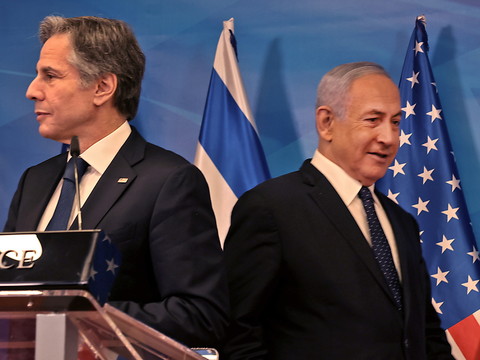
By W.M. Peterson | Truth Blitzkrieg | August 5, 2024
Former U.S. Congressman Ron Paul once asserted, “There’s no history to show that Iranians are aggressive people. When is the last time they invaded a country? Over 200 years ago!”
As with many other important matters, Congressman Paul was absolutely correct; Iran has never been a warmongering state, unlike adversarial belligerents Israel and the USA.
Despite deep state meddling in the Persian nation’s affairs (e.g., the 1953 coup against Prime Minister Mohammad Mossadegh and the 2020 murder of Major General Qasem Soleimani), Iran has never posed the slightest threat to America. Why, then, are we being maneuvered into war when there is absolutely no national interest at stake?
It’s somewhat of a rhetorical question, I admit, since by now most people who aren’t cognitively impaired understand that Israel is trying like hell to steer America’s military into the Middle East to shed more blood on its behalf. The recent provocations towards Iran are but the latest installments in an ongoing saga we’ve witnessed play out repeatedly since 2001.
Americans should know by now what to expect. After having been led by the nose into 20 years of costly wars primarily for the enrichment and comfort of Jewish intruders squatting in the Holy Land, you’d think we might have learned a thing or two about international Zionist statecraft. It’s not as if their methods of fomenting a climate of war have changed. It’s not as if we weren’t told what to expect.
In fact we were told, by none other than former Supreme Allied Commander of NATO, General Wesley Clark.
During a 2007 interview on Amy Goodman’s political talk show Democracy Now, General Clark spoke about a detailed war agenda that was revealed to him by members of the Joint Chiefs of Staff when he visited the Pentagon just ten days after 9/11:
“One of the generals called me in. He said, ‘Sir, you’ve got to come in and talk to me a second… We’ve made the decision we’re going to war with Iraq.’ This was on or about the 20th of September. I said, ‘We’re going to war with Iraq? Why?’ He said, ‘I don’t know…I guess they don’t know what else to do.’ So I said, ‘Well, did they find some information connecting Saddam to al-Qaeda?’ He said, ‘No, no…there’s nothing new that way. They just made the decision to go to war with Iraq…I guess it’s like we don’t know what to do about terrorists, but we’ve got a good military and we can take down governments.’ And he said, ‘I guess if the only tool you have is a hammer, every problem has to look like a nail.”
A few weeks later, Clark returned to the Pentagon and met with the same man, recalling:
“I said, ‘Are we still going to war with Iraq?’ And he said, ‘Oh, it’s worse than that.’ He reached over his desk. He picked up a piece of paper and he said, ‘I just got this down from upstairs’ — meaning the Secretary of Defense’s office — ‘today.’ And he said, ‘This is a memo that describes how we’re going to take out seven countries in five years, starting with Iraq, and then Syria, Lebanon, Libya, Somalia, Sudan and, finishing off, Iran.’ I said, ‘Is it classified?’ He said, ‘Yes sir.’ I said, ‘Well don’t show it to me.’ And I saw him a year or so ago, and I said, ‘You remember that?’ He said, ‘Sir, I didn’t show you that memo! I didn’t show it to you.’”
General Clark was having these conversations at a time when the Pentagon was entirely under the thumb of Zionist Jews who had been plotting and preparing for a global war on terror for many years prior to 2001. The battle plan disclosed to Clark is not of American provenance; it is an Israeli war stratagem smuggled into our foreign policy by duplicitous foreign agents. You’ll notice that almost every country named by the general has been ‘dealt with’ militarily in one form or another in the years following 9/11, Iran being the lone exception. That status is likely to change real soon as Israel continues to escalate tensions in the region. AIPAC control over U.S. politicians ensures there won’t be so much as a whimper of protest from the ‘American Colossus’ in response to Zionist saber-rattling and increased provocations. And, rest assured, America will defend Israel to the death when the situation in the Middle East reaches critical mass. American citizens, and especially ‘conservatives,’ need to understand how they’re being emotionally manipulated into supporting yet another war that is entirely at variance with our interests and could only spell doom for our already beleaguered nation.
Netanyahu’s War on Terror
On July 24th, Benjamin ‘Bibi’ Netanyahu swaggered into the U.S. Capitol to address a joint session of Congress and to cultivate material and emotional support for his upcoming war with Iran. During the course of his nagging hour-long harangue, the Israeli prime minister received 58 standing ovations from submissive stooges on both sides of the aisle, proving once more that Pat Buchanan’s description of Capitol Hill as “Israeli-occupied territory” is as true today as it was 30 years ago.
The AIPAC-funded adulation shown this Hebrew war criminal was a sickening sight to behold. Former US Marine and United Nations weapons inspector Scott Ritter summed it up nicely:
“Israel has bragged about buying the US Congress. And this is the result, where a war criminal—a man who has been accused of genocide, who has arrest warrants being prepared for him by the International Court of Justice, a man who heads a State that has been defined legally as an “apartheid state,” carrying out an illegal and unjust occupation and, again, genocide of the Palestinian people—has demanded an audience to the Congress that he has bought and paid for. That’s what’s happening here. We must see it in that perspective. This isn’t an honor being given to Netanyahu by the US Congress. This is the US Congress obeying the commands of the man who leads the nation that owns the US Congress.”
In one of his most memorable lines of the day, Netanyahu affirmed with a straight face, “there is no place for political violence in democracies!” (He made the comment while referring to the recent shooting at a Trump rally in Pennsylvania.) Within one week, however, Israel had assassinated Hamas political leader Ismail Haniyeh in Tehran; Hezbollah commander Fuad Shukr in Beirut; and Al Jazeera journalist Ismail al-Ghoul in Gaza. The recent killing spree occurred only three months after IDF jets bombed the Iranian embassy in Syria killing 16 people, including seven diplomats. “There is no place for political violence in democracies!” quoth the mass-murdering psychopathic Jew, who once attended a two-day anniversary celebration commemorating the Irgun’s 1946 bombing of the King David Hotel.
Bibi the Butcher, that distinguished darling of America’s political class, has spent his entire adult life promoting Israel’s War on Terror.
In 1979, he and his father Benzion partnered with Irgun terrorist-turned-prime minister Menachem Begin to organize the Jerusalem Conference on International Terrorism, a three-day event intended to “launch an international propaganda offensive to promote and exploit the issue of international terrorism,” as Philip Paull explains in his 1982 book, International Terrorism: The Propaganda War. The event was held at the Yonatan Institute, named after Netanyahu’s deceased older brother, and its purpose was to bring Western political leaders together to discuss international terrorism and the possibility of manipulating America’s military into the Middle East to wage a war on terror. The elder Netanyahu (born Mileikowsky) said in his opening address, “This conference was called to serve as a beginning of a new process — the purpose of rallying democracies of the world to a struggle against terrorism and the dangers it represents.” (George H.W. Bush spoke on the last day of the event.)
From that point on, the Western media dutifully disseminated the propaganda of the Jerusalem Conference and Benjamin Netanyahu would produce a number of books, articles and speeches throughout the 1980s and 90s promoting the doctrine of a global War on Terror. As Philip Paull wrote in 1982, “This ‘anti-terrorist’ propaganda campaign was and is being conducted in a style reminiscent of war-time ‘psychological warfare’ by journalists serving as conduits and spreaders of misinformation originating in Jerusalem.”<
Forecasting War
Netanyahu’s plan to haul America’s military into the Middle East to wage war on Israel’s enemies became a reality after September 11, 2001, a day he claimed was “very good” for Israel. (Source: New York Times, Sept. 12, 2001)
Many Americans still believe the War on Terror was launched in response to the 9/11 attacks. The fact is, however, the War on Terror was conceived many years before 2001, and the atrocities perpetrated in New York City and Washington D.C. were merely the excuse to make the war agenda operational.
In February 1982, the World Zionist Organization published ‘The Yinon Plan: A Strategy for Israel in the Nineteen Eighties.’ The document was published in Hebrew but was later translated into English by the eminent professor Israel Shahak of Hebrew University. It was written by military strategist Oded Yinon and detailed a plan to break up large Arab nations like Iraq and Syria and transform them into tiny ethnic statelets that would be incapable of defending themselves against Israel’s superior military might. Yinon wrote:
“The dissolution of Syria and Iraq later on into ethnically or religiously unique areas… is Israel’s primary target on the Eastern front in the long run, while the dissolution of the military power of those states serves as the primary short term target.”
Yinon’s vision for Iraq came to fruition following the illegal American invasion, launched on the Jewish revenge holiday Purim, in 2003. Almost immediately, America’s conquering forces disbanded Iraq’s military and the entire country soon descended into civil war between competing factions of Sunnis, Shiites and Kurds. Prior to the invasion, Iraq had been a significant impediment to Israeli domination of the Middle East, which is why the Jews in control of America’s foreign policy selected it for annihilation. And, as an added bonus, there were the financial spoils of war to acquire as well. Oded Yinon: “Iraq, rich in oil on the one hand…is guaranteed as a candidate for Israel’s targets. Its dissolution is even more important for us than that of Syria.”
What Yinon described in 1982 is the Eretz Yisrael (Greater Israel) project that Americans have been fighting and dying for since 2001. America’s military is not fighting terrorism; it is reorganizing the Middle East to conform with Israel’s whims and Iran is the crown jewel. This war agenda has already bankrupted America morally and financially and has destroyed the erstwhile superpower’s standing on the world stage. As noted Middle East expert Linda S. Heard wrote in an article for Counterpunch (April 25, 2006), “Oded Yinon’s 1982 ‘Zionist Plan for the Middle East’ is in large part taking shape. Is this pure coincidence? Was Yinon a gifted psychic? Perhaps! Alternately, we in the West are victims of a long-held agenda not of our making and without doubt not in our interest.”
A Clean Break and PNAC
An updated version of The Yinon Plan was drafted for Netanyahu in 1996 during his first year as Israel’s prime minister. Titled ‘A Clean Break: A New Strategy for Securing the Realm,’ the document was assembled for Netanyahu by neocon hawks Richard Perle, Douglas Feith and David Wurmser. It specifically called for the removal from power of Saddam Hussein in Iraq and Bashar al-Assad in Syria and recommended military confrontations with both countries as well as with Lebanon and Iran. One year later, Perle, Feith and Wurmser would all join the newly-founded Project for a New American Century (PNAC) and continue their strategizing for Netanyahu’s War on Terror.
PNAC was an elite neoconservative think-tank founded in 1997 by influential Zionists William Kristol and Robert Kagan. The majority of the group’s membership was comprised of fanatical Jews with deep ties to the state of Israel, many of whom came to power just prior to 9/11 within the administration of George W. Bush. These include: Dov Zakheim, Paul Wolfowitz, Douglas Feith, Elliot Abrams, Richard Perle, David Frum, Robert Zoellick, David Wurmser, and the convicted felon Lewis ‘Scooter’ Libby.
The overarching philosophy of PNAC was based on the ideology of Jewish intellectual Leo Strauss. Like many of today’s neoconservatives, Strauss was an ex-Trotskyite who promoted Machiavellian tactics and the use of lies as necessary political tools while a professor of political science at the University of Chicago. Significantly, he was also a dedicated Zionist and a follower of the terrorist Ze’ev Jabotinsky. On the surface these ideological alignments appear to be contradictory, unless some understanding of the overwhelming Jewish role in both Zionism and Communism can be apprehended. Both were pioneered by the same man, Moses Hess, and both are Jewish revolutionary movements whose sole aim is to do whatever is best for Jewish interests even if it means employing seemingly opposing methods. Far-right Zionism (Jewish nationalism) and far-left Communism (Jewish internationalism) are two sides of the same shekel working in tandem as a lethal pincer for global hegemony. Attempting to explain these amorphous tendencies, Jewish historian and political theorist Murray Rothbard once noted that neoconservatives “moved from cafeteria Trotskyites to apologists for the US warfare state without missing a beat.”
In September 2000, PNAC published a 90-page document titled ‘Rebuilding America’s Defenses: Strategies, Forces, and Resources For a New Century.’ The document, co-authored by Rabbi Dov Zakheim, called for America to initiate a series of regime change wars in the Middle East and North Africa with an emphasis on Iraq, Syria, Libya, Lebanon and Iran. The authors of the report emphasized the importance for America to “fight and decisively win multiple, simultaneous major theater wars” but acknowledged that “the process of change is likely to be a long one, absent some catastrophic and catalyzing event like a new Pearl Harbor.” One year to the month of the document’s publication America got what George W. Bush referred to at the time as ‘our Pearl Harbor.’
Conclusion
And so America teeters once again on the brink of war due to our fatal attraction to the Zionist state. The man who claims “there is no place for political violence in democracies” presides over a country that has made political assassinations its stock-and-trade and is undoubtedly responsible for the 9/11 attacks which activated its long-held War on Terror scheme. Speaking to an audience at Bar Ilan University in 2008, the war criminal recipient of 58 standing ovations from the US Congress reiterated his belief that the 9/11 attacks were in fact good for Israel: “We are benefitting from one thing, and that is the attack on the Twin Towers and Pentagon, and the American struggle in Iraq.” (Source: Ha’aretz, April 16, 2008)
*Nota bene: Netanyahu listed three things, not one, but to the mind of an architect of the War on Terror, all three blend seamlessly together.*
The Israeli prime minister and his minions have nothing but contempt for America. That won’t change regardless of how many standing ovations he receives from a goyische congress or how many US dollars flow into his over-stuffed war chest. In 2001, he was filmed having a conversation with Israeli settlers about ways in which he intended to undermine the US-led Oslo Peace Accords that had been signed in 1993 and 1995. During one such conversation, he crowed: “I know what America is… America is a thing you can move very easily, move it in the right direction. They won’t get in the way.” He goes on to boast about his ability to manipulate the US in the ongoing Israeli/Palestinian peace process, saying, according to the Washington Post (July 16, 2010), “They asked me before the election if I’d honor [the Oslo Accords]… I said I would, but … I’m going to interpret the accords in such a way that would allow me to put an end to this galloping forward to the ’67 borders. How did we do it? Nobody said what defined military zones were. Defined military zones are security zones; as far as I’m concerned, the entire Jordan Valley is a defined military zone. Go argue.”
Benjamin Netanyahu ladies and gentleman. A man whose military has killed upwards of over 186,000 Palestinians this year alone and has bombed hospitals, schools, churches, aid convoys and refugee camps; a man who sanctions the anal rape of prisoners; a man American politicians hail as a conquering hero; a man millions of evangelical ‘Christians’ believe we should sacrifice more of our children’s blood for.
Featured Video

Bombing Hitler’s Hometown
or go to
Aletho News Archives – Video-Images
From the Archives
‘Conspiracy Theory’ Now Fact: Greater Israel Has Arrived
By Kit Klarenberg | Mint Press News | January 28, 2025
Ever since Tel Aviv’s 1948 creation, much has been said and written about ‘Greater Israel’ – the notion Zionism’s ultimate end goal is the forcible annexation and ethnic cleansing of vast swaths of Arab and Muslim lands for Jewish settlement, based on Biblical claims this territory was promised to Jews by God. The mainstream media typically dismisses this concept as antisemitic conspiracy theory, or at most the fringe fantasy of a minuscule handful of extremist Israelis.
In reality … continue
Blog Roll
 Aletho News
- Hezbollah’s Surprise Weapons Redefine Ground Battle with Israel
- Yemen joins fight against US, Israel by firing missiles at occupied territories
- Seizing the Kharg: Washington’s path to defeat in the Persian Gulf
- Iran reports 500 US casualties in strikes on covert US military sites
- Pro-Israel terrorist arrested before assassination of pro-Palestinian activist
- Bombing Hitler’s Hometown
- German journalist threatened with homelessness as German court upholds EU sanctions in landmark free speech case
- US Tells Allies That Ukraine-Bound Arms Could be Sent to Middle East
- Organized terrorism: Iran condemns killing of its diplomats in Lebanon
- Why could Gaza enter the regional war?
- If Americans Knew
- Researchers at Human Rights Watch Resign Over Blocked Report on Palestinian Refugee Return
- Jewish Groups Are Backing a War Americans Don’t Want
- Eric Fingerhut Thinks He’s the President of the Jews
- Top Jewish Philanthropists, Rabbis Urge Israeli President to Take Action Against ‘Jewish Extremists’
- Don’t Be Fooled. Zionist Leaders Have Always Wanted to Control Southern Lebanon
- Israel’s widespread use of torture is a core element of its genocide against the Palestinian people
- In Israel’s War on Iran, Many Middle East US Bases Rendered “All But Uninhabitable”
- ‘Burn the lawn’: Israel pursues ‘Rafah model’ in southern Lebanon
- A genocide here, an amputation there
- Reports: Iran mobilizing 1M fighters, Israel-US run low on ammo, Israeli army faces shortage – Not a ceasefire Day 168
- No Tricks Zone
- Devastating Assessment Of Comirnaty Vaccine By Former Senior Pfizer Europe Toxicologist
- New Study: CO2 Is ‘Effectively Negligible’ As An Explanatory Climate Change Factor Since 2000
- Former Pfizer Toxicologist Dr. Helmut Sterz Tells Bundestag Hearing Pfizer Vaccine Should Have Never Been Approved
- Energy Expert: Germany’s Nuclear Phaseout Was A “500 Billion Euro Mistake”
- New Research: South Australia’s Mid-Holocene Sea Surface Temperatures Were 4°C Warmer Than Today
- Storing Green Energy To Last Germany 10 Days Would Require A 60-Million Tonne Battery
- New Studies: UK Sea Levels Were 4 Meters Higher Than Today During The Mid-Holocene
- Destructive Green New Deal: German Energy And Metal Group Warns Of Drastic Crisis
- New Study Documents A 20-Year Pause In Arctic Sea Ice Decline – Driven By Internal Variability
- Wake-up Call: Survey Shows Majority Of Germans Now Favor Postponing Climate Targets!
 Aletho News