Iraqi Government Rejects “Normalization” Conference Held in Erbil
Al-Manar | September 25, 2021
The Iraqi government highlighted its rejection of the conference held by some tribal figures in Erbil city in Kurdistan for advocating the normalization of ties with the Israeli enemy.
The Iraqi government also stressed that the tribal figures who attended the conference did not represent the cities they came from, adding that the assembly was aimed at stirring sectarian sedition amid the national preparations for the upcoming public elections.
The government further indicated that normalization is constitutionally, legally and politically rejected in Iraq, reiterating support to the Palestinian cause and rights in face of the Israeli aggression.
US Expulsion from West Asia Region is Inevitable: IRGC
Al-Manar | September 24, 2021
The Islamic Revolutionary Guard Corps (IRGC) has issued a statement on the anniversary of Sacred Defense, saying that the United States has no choice but withdrawal from the West Asia region.
The IRGC issued a statement on Friday to commemorate the anniversary of the Iraqi Saddam regime-imposed war on Iran and the beginning of Sacred Defense by the Iranian nation against the Baathist regime of Saddam, which was sponsored and fully backed by Western powers between 1980-1988.
The statement said that after 41 years since the start of the imposed war, which was sponsored and supported by the world powers, the nation has grown more resilient and the country has solidified its defensive power.
The IRGC added that the imposed war ended while even a handspan of Iranian soil was not given to the enemy.
It also noted that the western powers continued non-stop to conspire against Iran over the past 33 years since the end of the imposed war.
The Guards also said that the power of hegemonic powers such as the United States, which supported Saddam’s regime, was declining while they made wrong calculations and invaded Islamic countries of Iraq and Afghanistan.
“But today, after more than twenty years [since the occupation of Afghanistan by the US and NATO], we are witnessing the humiliating escape of the Americans from Afghanistan and at God’s willing, we will see their expulsion from West Asia in the near future,” the IRGC statement read.
Hamas calls for revoking Abraham accords with occupation state
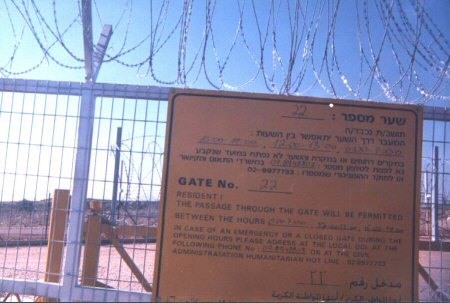
Palestine Information Center – September 19, 2021
GAZA – The Hamas Movement has called for renouncing the shameful Abraham accords and ending all forms of normalized relations with the Israeli occupation state, urging the Muslim and Arab nations to restore their role in defending Palestine.
In a press release on Saturday, Hamas stressed the need “to swiftly correct such wrong political trajectory and respond to the aspirations of the peoples in the region who reject any sort of normalization with the occupation state.”
“The so-called Abraham accords are a Zio-American project par excellence, aimed at establishing regional openness and normalization with the Zionist entity, integrating it into the region and forging alliances with it to shift the conflict priorities, instead of being with the Zionist entity that is occupying Palestine and considered the greatest danger to the region,” the Movement said.
“The US administration and the Zionist entity are working on deceiving our nations and anesthetizing their awareness through an intensive marketing and promotion campaign for the Abraham accords that have been brokered with rogue regimes working against the region’s history, present and future,” it added.
“Those accords are aimed at consolidating and achieving the Zionist hegemony over the region militarily, politically and economically, plundering its wealth, marginalizing the Palestinian cause and isolating our Palestinian people from its Arab and Islamic surrounding and depth,” the Movement underscored.
On September 15, 2020, the United Arab Emirates and Bahrain officially signed normalization deals (Abraham accords) with the occupation state under the auspices of the previous US administration. Sudan and Morocco followed suit soon later.
Israel has concerns about the US withdrawal from Afghanistan
![Afghan protesters shout slogans against the US and Israel during a protest in downtown Kabul on December 8, 2017 [WAKIL KOHSAR/AFP via Getty Images]](https://i2.wp.com/www.middleeastmonitor.com/wp-content/uploads/2021/09/GettyImages-888278700-scaled-e1631610540399.jpg?resize=1200%2C799&quality=85&strip=all&zoom=1&ssl=1)
Afghan protesters shout slogans against the US and Israel during a protest in downtown Kabul on December 8, 2017 [WAKIL KOHSAR/AFP via Getty Images]
Dr Adnan Abu Amer | MEMO | September 14, 2021
Israelis are concerned about the shameful American withdrawal from Afghanistan and think that their government now needs to reassert its ability to protect its own interests in the region and beyond. The general feeling is that the withdrawal will now give Israel’s enemies more freedom to move, especially Iran, which will not hesitate to strengthen its relations with China, which in turn has clear interests in Afghanistan and the Arab Gulf. Events in Afghanistan have rung alarm bells for Israel and its allies in the region.
At the same time, Israelis believe that the US withdrawal from most of its strongholds in the Middle East and Central-South Asia — Iraq first and now Afghanistan, and perhaps Syria later — may push some regional states to move against Israel. The evaluation of America’s role in the Middle East is that US forces can no longer rely on using Arab countries for emergencies. A comprehensive view of the region puts Israel in a better position in terms of US interests, at least according to an uncertain Israeli assessment.
However, the fear remains that what happened in Afghanistan could be mirrored in the occupied West Bank, not least due to the exposure of American weakness. The strategic patience and steadfastness of the Taliban have created an inspiring narrative for the Palestinian Islamic Resistance Movement, Hamas.
In this context, Israelis are asking if events in Afghanistan could be replicated in the Palestinian arena, especially if Israel withdraws from parts of the West Bank in any deal with the Palestinians. Such an exit would almost certainly lead, at least in the short term, to instability, and encourage Hamas to try to expand its influence in the territory.
Although Israel and the occupied Palestinian territories are geographically distant from Afghanistan, the Israeli government claims that it will be required to respond to any development that threatens its security at home and abroad. In this case, it will take into account the current situation in the conflict with the Palestinians, and the de facto reality of a “one-state solution”, with all the negative political and social ramifications that it will have based on successive security warnings.
America’s exit from Afghanistan was embarrassing for Washington, but there were no demonstrations on US streets, either in support of or opposing the withdrawal. Any Israeli withdrawal from even a small part of the occupied West Bank, however, will cause a great stir. A lot of political determination and conviction will be required before such a move could be taken. Indeed, it could be beyond the current government, the survival of which would be threatened.
Israel expects the US withdrawal from Afghanistan to encourage its enemies to attack it. Although the Taliban movement does not pose a direct threat to Israel, it represents a concern for the colonial state, because it shares a border with Iran and the US withdrawal confirms the ongoing reduction of American intervention in the Middle East and beyond. Ideological and political differences aside, Israel knows that successive US presidents have shared a desire to end their involvement in the bloody wars in the Middle East and Central-South Asia. In doing so, believes Israel, America’s ability to challenge Iranian influence may create a domino effect tipping the scales of regional power at the expense of the Zionist state.
Nevertheless, there may be opportunities for Israel to enhance its regional position, because it is not only watching Afghanistan with concern but also, and perhaps more importantly, watching the positions of the Arab regimes that depend on the US for their security, in light of a growing mistrust in its ability to support them. Saudi Arabia and other countries in the region may approach Israel, as a possibly more reliable ally than the US, to fulfil their security needs, even without full normalisation of relations. Security cooperation between Israel and a number of Gulf States is already overt. It is thus likely that such Israeli cooperation with other Arab countries will increase.
Rapprochement and subsequent engagement with Israel may not be limited to “moderate” Arab countries. NATO, for example, could expand its security cooperation with the Zionist state, replacing the US with a willingness to get involved in regional affairs.
All of this is speculation at the moment in the wake of the US withdrawal from Afghanistan. Although not actually part of the Middle East, a Taliban-led Afghanistan is going to play a major role in reshaping the region and how changes might affect Israel.
Door Is Closing on an Iran Nuclear Deal
BY PHILIP GIRALDI • UNZ REVIEW • SEPTEMBER 14, 2021
Critics of the foreign and national security policies of the Joe Biden regime were quick to note that the American soldiers being pulled out of Afghanistan were no doubt a resource that will be committed to a new adventure somewhere else. There was considerable speculation that the new model army, fully vaccinated, glorious in all its gender and racial diversity and purged of extremists in the ranks, might be destined to put down potentially rebellious supremacists in unenlightened parts of the United States. But even given an increasingly totalitarian White House, that civil war type option must have seemed a bridge too far for an administration plagued by plummeting approval ratings, so the old hands in Washington apparently turned to what has always been a winner: pick a suitable foreign enemy and stick it to him.
It is of course generally known that when Joe Biden was running for president, he committed himself to making an attempt to reenter the Joint Comprehensive Plan of Action (JCPOA) of 2015 which placed limits on the Iranian nuclear program and also established an intrusive inspection routine. In turn, the Iranians were to receive relief from sanctions related to the program. In 2018 President Donald Trump withdrew the United States from the agreement based on the false argument that Iran was cheating on the arrangement and was secretly engaged in developing a weapon. Trump’s neocon supporters on the issue also argued without any evidence that Iran was intending to use the agreement as cover for its efforts to accumulate enriched uranium, guaranteeing that they would be able develop a weapon quickly when the inspection regime expires in 2025.
The Trump move was, of course, backed by the Israel Lobby and it was widely seen as deferring to Israeli interests at a time when the agreement was actually good for the United States as it blocked an unfriendly country’s possible nuclear proliferation. Unfortunately, a US government’s bowing to Israel is not exactly unusual and the withdrawal was subject to only limited criticism in the mainstream media.
Joe Biden, who has described himself as a Zionist, is no less prone to pandering to Israel than is Trump. When he raised the issue of JCPOA during his campaign in a bid to appeal to his party’s progressives, he also caveated the move by indicating that the agreement would have to be updated and improved. The talks in Vienna, which Iran and the US are indirectly engaged in, have been stalled for several months due to Iranian elections and over Washington’s insistence that Iran include in the agreement restrictions on the country’s ballistic missile program while also ceasing its alleged interference in the political turmoil in the region. The interference charge relates to Iranian support of the completely legitimate Syrian and Lebanese governments as well as of the Houthi rebels in Yemen who have been on the receiving end of Saudi Arabian aggression supported by Washington.
As Iran insists that any return to status quo ante be based on the existing agreement without any additions, to include relief from sanctions which Washington has rebuffed, it has been clear from the beginning that there is nowhere to go. Recently it has been argued in neocon and media circles (essentially the same thing) that the new conservative president of Iran Ebrahim Raisi means that no arrangement with Iran can be trusted and they point to International Atomic Energy Agency (IAEA) reports that suggest that Iran has started to enrich admittedly small amounts of uranium. To add to the confusion, there have been some reports suggesting that Israel deliberately targeted and destroyed IAEA monitoring equipment in a June raid to make clear assessments of nuclear developments more difficult to obtain.
To finish the charade, which was not expected to result in anything, Secretary of State Tony Blinken, traveling Germany to mend fences over the Afghanistan debacle, has now warned that the US is getting “closer” to giving up on renegotiating the Iran nuclear deal. Blinken declared to reporters that “I’m not going to put a date on it but we are getting closer to the point at which a strict return to compliance with the JCPOA does not reproduce the benefits that that agreement achieved.”
When Blinken refers to benefits he is now of course meaning the full package of demands being made by Washington, which, as noted above, go far beyond the original intention of the agreement. As Iran has repeatedly insisted that it is only willing to discuss the original formulation which would provide for them some sanctions relief, something that Blinken certainly knows, he evades the issue of Washington being the spoiler in the Vienna talks.
Now that Afghanistan has fallen with considerable blowback to the fortunes of the Biden Administration, the situation with Iran becomes potentially more important, even while recognizing that Iran does not threaten the United States or its actual interests in any way. Biden-Blinken are clearly interested in sustaining a purported vital interest in the Middle East so troop levels throughout the region can be maintained. There is a commitment with Baghdad to remove all US “combat troops,” however that will be defined, by year’s end, but there are also American soldiers in Syria fighting a war and large military bases in Kuwait, Doha, and Bahrain. The US also maintains a skeleton presence of air force personnel in Israel as well as large arms supply depots.
To justify all that an enemy is essential and Iran fits the bill. And it should surprise no one that steps are now being taken to confront the evil Persians in their home waters. The United States Navy’s Bahrain-based 5th Fleet announced last week that it will create a special new task force that will incorporate airborne, sailing and underwater drones to confront Iran. In the announcement the spokesmen revealed that in coming months drone capabilities would be expanded to cover a number of chokepoints critical to the movement both of global energy supplies and worldwide shipping, to include the crucial Strait of Hormuz, through which 20% of all oil passes. It also will presumably include the Red Sea approaches to the Suez Canal as well as the Bab el-Mandeb Strait off Yemen.
The systems being deployed by what has been dubbed the 5th Fleet Task Force 59 will include some recently developed innovative technologies, to include underwater, long range, and special surveillance drones. Armed drones will use the same platforms and some of the drones will be small enough to be fired from submarines, which will confuse points of origin and permit plausible denial by Washington if they should be used to deter or intimidate the Iranians.
So, the fall of Afghanistan might be seen as welcome after all these years of mayhem, but it may have opened the door to heightened tension in the nearby Persian Gulf. Washington-Biden-Blinken are intent on proving to the world that in spite of Afghanistan the United States is nobody’s patsy. Unfortunately, putting the screws to Iran yet again is no solution to Washington’s inability to perceive its proper role in the world. The lesson that might have been learned in Afghanistan and also Iraq apparently has already been forgotten.
Philip M. Giraldi, Ph.D., is Executive Director of the Council for the National Interest, a 501(c)3 tax deductible educational foundation (Federal ID Number #52-1739023) that seeks a more interests-based U.S. foreign policy in the Middle East. Website is https://councilforthenationalinterest.org address is P.O. Box 2157, Purcellville VA 20134 and its email is inform@cnionline.org
Report: US plans Arab-Israeli maritime unit in Persian Gulf for proxy missions
Press TV – September 11, 2021
A new report says a recent decision by the US Navy’s 5th Fleet to launch a drone task force is a step towards the establishment of a joint maritime unit comprising Persian Gulf Arab countries and Israel for proxy missions in the region.
On Wednesday, the 5th Fleet based in Bahrain announced that it will launch the new task force that incorporates airborne, sailing and underwater drones after years of maritime attacks linked to ongoing tensions with Iran.
US Navy officials declined to identify which systems they would introduce from their headquarters in Bahrain, but said the coming months would see the drones stretch their capabilities across the region.
“We want to put more systems out in the maritime domain above, on and below the sea,” said Vice Adm. Brad Cooper, who leads the 5th Fleet. “We want more eyes on what’s happening out there.”
“These measures are in line with the launch of a joint maritime unit between Persian Gulf Arab countries and the Zionist regime. Using the equipment announced, the unit is supposed to play a role in proxy missions thanks to the support of the United States,” Iran’s Nour News agency wrote on Saturday.
“Successive failures in costly military campaigns in West Asia have led to a new US national security strategy, under which the American military focus in the region will change in favor of the development of presence in East Asia and the Chinese Sea,” it added.
According to the report, Washington is expected to hand over part of the missions of its military units in West Asia to Arab states and Israel to make its absence in West Asia and the Persian Gulf not conspicuous.
On September 1, the Tel Aviv regime officially moved into the US Central Command’s (CENTCOM) area of responsibility, taking over from the European Command (EUCOM).
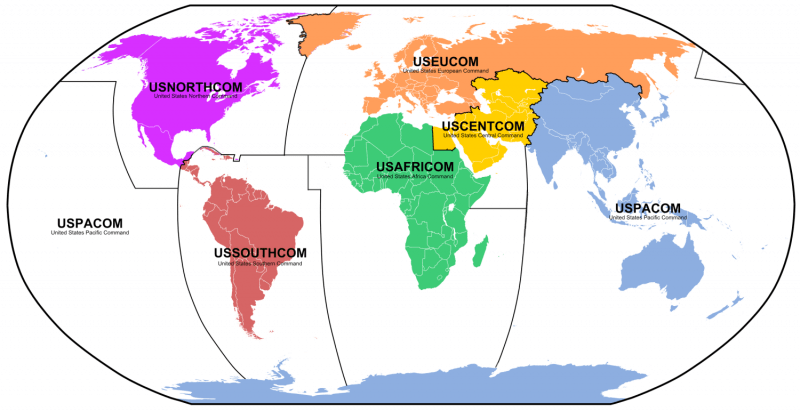
Nour News said the move paved the way for Israel to design and implement evil acts in the region with the help of some of the Persian Gulf Arab states.
“The new strategy, which lays the ground for the pursuit of the new national security doctrine, began by creating artificial tensions in the region based on a pre-designed scenario,” it added.
In late July, the US, the UK and Israel blamed Iran for a deadly drone attack on an Israeli-managed oil tanker, the Mercer Street, off the coast of Oman.
A few days later, Reuters claimed that “Iran-backed forces” were believed to have seized the Panama-flagged Asphalt Princess tanker off the coast of the United Arab Emirates (UAE).
The Associated Press, citing information from MarineTraffic.com, reported that four tankers – the Queen Ematha, the Golden Brilliant, Jag Pooja and Abyss – broadcast over the Automatic Identification System (AIS) that their vessels were “not under command.”
Later, however, it emerged that all those contradictory reports of maritime incidents were circulated by the Zionists to justify their own evil acts in the region and portray Iran as the country that is causing insecurity, Nour News said.
“The depth of the Zionists’ lies became more evident after the Golden Brilliant docked at Iran’s Bandar Abbas port days after rumors about its possible hijacking.”
Press TV’s website can also be accessed at the following alternate addresses:
http://www.presstv.ir
http://www.presstv.co.uk
http://www.presstv.tv
Dorothy versus Hassan

By Taxi | Plato’s Guns | August 27, 2021
The US ambassador to Lebanon, Dorothy Shea, thinks she’s smarter than Hassan Nasrallah.
Yet, evidence shows that since Trump appointed her as ambassador to Lebanon back in February 2020, every dastardly trap she has placed before Mr. Nasrallah and his Hezbollah resistance group has failed.
Proof of this failure is that Hezbollah keeps growing stronger and stronger, untouched by all external or internal forces hellbent on destroying the Lebanese resistance group. Failed simply because Dorothy is not as smart as she thinks she is. Most certainly, she is not as intelligent as the nifty leader of Hezbollah.
Having spent some three years working as Deputy Principal Officer at the US Consulate General in Jerusalem immediately prior to her post in Beirut, Dorothy no doubt continues to have a direct hotline to the Israeli Prime Minister’s office, if not to his direct cell phone; and no doubt, every morning, her first official word from Beirut is ‘shalom’.
Dorothy does not behave like a diplomat. Instead, she behaves like an eye-patched leader of a sketchy militia: laying aside all diplomatic decorum and behaviorism and charging forth into every single aspect of Lebanese social, economic and political life, with the blatant intent of widening existing societal fissures in Lebanon, as well as adding new ones: aiming for a sectarian war that would cause the wholesale mass murder of innocents. One could say that she behaves as the Jews do in DC. A Puss in Boots, but utterly charmless and physically unattractive. Puss in Boots with mouth bigger than boots. So much so that last year, a Lebanese judge banned Lebanese media from interviewing Dorothy for her atrocious and blatant attempts at creating sectarian warfare in Lebanon. Needless to say, Dorothy the ‘ambassador’ gave the proverbial middle finger to this native judge while hiding behind the skirts of her diplomatic immunity. She continues to pollute Lebanese media and its political landscape with daily feces propelled out of all her orifices. Yes, she literally defecates on Lebanon every day, while feigning love and affection for the Lebanese people. Because the Lebanese resistance group, Hezbollah, defeated Israel twice already on the battlefield, Dorothy’s instruction since taking the ambassadorship has been to starve the Lebanese population as punishment for these victories. Tel Aviv must love her for her Zionist activism and zeal. The Mossad must be sending her monthly boxes of Cuban cigars.
And I’ll remind American taxpayers here that their hard-earned taxes are being spent on starving populations in the middle east, when bombing them to smithereens is not feasible. Starving millions of people who have done absolutely no harm to the American people. I’ll remind taxpayers that they are paying Dorothy’s wages while she is spreading anti-Americanism with her bolshie, toxic behaviorism overseas. I’ll remind them that since 2005, no less than $30 billion have been spent on destroying the Lebanon as a means of demoting Hezbollah – all for the benefit of Israel and Israel alone. And although Lebanon’s society is currently teetering on total collapse due to Dorothy’s malicious and malignant schemes, yet Hezbollah itself appears untouched by this exuberant, negative expenditure. And I will add here that Lebanon has suffered from corrupt governments for some thirty years, yet all this while, the Lebanese collective enjoyed a decent lifestyle and were never in need. They became needy when Dorothy came to town.
Perhaps when she lived in Israel, Dorothy got everything she wanted. But in Lebanon, what Dorothy wants, Dorothy doesn’t get. Hassan has insured this. Time and time again, he has outsmarted all her plans to create civil war in Lebanon. All straight and curve-balls that Dorothy has daily thrown at Hassan have missed and landed either way off mark, or, unfortunately, on innocent, civilian bystanders.
Let us be clear here that the traditional role of an ambassador is to work the trade and Intel files, as well as to assist expats in a variety of bureaucratic and legal matters. It is never the job of a diplomat to act politically or to make inciteful, political statements concerning the host nation. Never! It is abnormal behavior for a diplomat to be an in-your-face politico whose name and incendiary words are headlines in local media on a daily basis. Yet, Dorothy Shea swans about the Lebanon like a privileged colonialist: doing exactly that and doing it with shameless gusto.
She is proud that she has turbo-charged the destruction of Lebanon. But she is very angry that the Hezbollah remains untouched. Livid that Hassan remains leagues ahead of her diabolical plans. How dare Hassan challenge her, the mighty Queen Sheba herself?! She Who Must Be Obeyed, must be obeyed or else!
Yet, she is not obeyed by Hassan. Currently, the genocidal-minded Dorothy is reeling from the latest punch in the teeth that Hassan metaphorically gave her last week, when he defied US sanctions on Lebanon and announced that Iranian fuel ships are now headed to fuel-starved Lebanon: a miserable and existential shortage that Dorothy herself had engineered for the Lebanese people through her incessant, corrupt interference in absolutely all internal Lebanese affairs bar none. (She has even interfered in local, district elections, personally rejecting and approving candidates!). Her destructive meddling is compounded by the Caesar Act sanctions that her chowderhead boss, Trump, had imposed on the Lebanon at the behest of Tel Aviv. Because Israelis dare not kill Lebanese people with their missiles for fear of an equal Hezbollah retaliation, starving the Lebanese people en mass was to be their path to mass murder of said Lebanese; and thus Dorothy has been assigned the task of insuring that all trade and energy doors were closed to the Lebanese, and all paths to a much-needed new government blocked and blocked some more, ad infinitum. Dorothy has forbidden the Lebanon from trading with any country in the world, and simultaneously forbidden friendly nations from delivering any aid to Lebanon’s starving population. She has appeared more than happy this past year and a half to just watch the very fabric of Lebanon disintegrate under her ‘ambassadorship’ – doing absolutely nothing to help the long-suffering, collective Lebanese people whatsoever. Au contraire, the more Lebanon’s system broke down, the more the people suffered, and the more Dorothy jumped with joy and stirred the sectarian embers further.
It appears that not only are Hezbollah and the Lebanese population as a whole a target for destruction by Dorothy, but so is the Lebanese government itself. She does not even want a government for the Lebanon to exist. She wants for Lebanon what Israel wants: wiping Lebanon and its flag right off the map and turning it into many-flagged, sectarian enclaves and warring Bantustans instead. Simply, everyone and everything Lebanese is her target for destruction.
Of course, Dorothy gets much help from powerful Lebanese persons and political entities who are opposed to Hezbollah. Fortunately for the Lebanon, these people do not represent the majority of the Lebanese. Known Lebanese members of Dorothy’s team are handsomely paid in mega dollars to destroy their own country, just so that they can boost their Swiss bank accounts and augment their seats of power by getting rid of the most popular party in the Lebanon: the Hezbollah. These unsavory, treasonous Lebanese are ideologically aligned with fascism and predatory globalism, and they are also known for being supporters of the Israeli enemy and its religio-colonialist project in the Levant. Their names and professional titles are known all over the Lebanon, and they are as follows:
- Riyad Salame is a Maronite Christian who heads the Lebanese Central Bank (Banque Du Liban). He is the very man who colluded with Dorothy to collapse the local Lebanese currency in order to initiate the ‘starvation plan’ of his own people. He is also behind the financial pyramid scheme that suddenly, and by his design, collapsed a year ago. He is also behind the ‘Capital Control’ system that has been imposed on all bank account holders since the collapse of the Lebanese Lira. This system limits monthly withdrawals of all account holders, be they rich or poor, to a pitiful $400 per month: thus consigning both rich and poor to the same poverty pot. This system is currently holding hostage all of the people’s earnings and life-savings. Salame continues to shamelessly collude with the haters of Lebanon, while hiding some twenty billion dollars that suddenly went missing out of the country a year and a half ago. He claims no knowledge of where this vast amount went. He has not been held accountable by Lebanese law, nor has he lost his highest banking office in the nation, all because he has Dorothy’s full political protection.
- Samir Gaegae, is a Maronite Christian who is a convicted war criminal who colluded with Israel during its 18 years of occupation of Lebanon back in the ’80’s and 90’s, causing thus the torture, the disappearance, and the mass murder of tens of thousands of Lebanese civilians. And Ironically, it was Hezbollah’s hands, after the eviction of Israeli forces from Lebanon, who worked for his clemency, thus sparing him an execution. The ingrate Gaegae is now also best friends with both Saudi Arabia and Israel: tasked by them too to destroy Hezbollah, even at the cost of destroying Lebanon itself.
- Patriarch Bechara Boutros al-Rah, who holds the highest seat in the Lebanese Maronite church, is also known for regularly inciting sectarianism during his speeches and sermons. He became infamous for breaking a Lebanese law that forbids the cooperation or promotion of the Israeli enemy when he illegally visited Israel several years ago with the excuse of “I want to pray in Jerusalem.” No doubt he dined at Jewish Masonic Lodges there too. He adamantly refuses to separate ‘church from state’. He is a regular visitor to the US embassy in Beirut and all his political statements read like memos issued by Tel Aviv. He supports normalization with Israel that continues to occupy the Lebanese Shebaa Farms. For a religious Christian leader, he appears to devote his time to spreading the message of the Synagogue of Satan instead of the message of Jesus.
- NGO’s. The Lebanese population is some 4.6 million natives currently residing in Lebanon, yet Lebanon has over an astounding 10.000 NGO groups, with 92% of them being funded by foreign governments and other dubious Western and oil-Arab institutions. These shady NGOs are tasked with ‘inflaming’ the masses and creating a Color Revolution in the Lebanon. They have proved that they can successfully gather the protesting masses with matching banners and baseball hats, but they have failed to achieve their anarchic objective after several attempts. They are well-paid agents of chaos who swarm the Lebanon like biblical locust: receiving all their instruction from Dorothy’s office at the American embassy in Beirut; and eating all that great, green leaf we call ‘dollars’ right off Dorothy’s hand.
One can clearly discern that the American embassy in Beirut is more of a war theater against the Lebanese themselves, than it is a peaceful salon of diplomacy and trade activity.
Dorothy also enjoys the occasional support from other powerful Lebanese who may not share her ideology, but assist her when called upon because they are beholden to the US via their investment projects in the US, and also via their children and grandchildren who reside and study in the US. Yes, just like mafias threaten people with harm done to their businesses and families, so does Dorothy threaten her second tier of helpers, thus they always oblige. Saad Hariri (a Sunni leader), Walid Jumblatt (a Druze leader), and Nabih Berri (a Shia leader) are examples of second-tier helpers of the US embassy in Beirut.
Here I would add that although Dorothy’s Lebanese inner circle leaders are all Christian Maronites, between them, they actually represent the minority of Maronites in Lebanon. The majority of Maronites belong to the Maronite President Aoun’s party, who are allies and supporters of Hezbollah. And it appears that the Maronites who are anti Hezbollah are fundamentally Islamophobic, all due to an aftertaste that the brutal, Sunni Ottoman Empire left in their mouths back in 1922, when the Ottoman Empire collapsed and its soldiers finally exited Lebanon after some 500 years of miserable colonization.
Aside from creating the total collapse of the Lebanon, financially, socially and politically, it is germane here to give a summary of what the enemies of Hezbollah and Lebanon itself hoped to achieve with their treachery and sedition:
1- IMF enslavement of Lebanon’s financial life.
2- Disarming Hezbollah and the dismantlement of the Lebanese army, to be replaced with UN or NATO troops that answer to Tel Aviv and DC.
3- Destroying the current governmental system and the insertion of a new, federalized political theater where only enemies of the Hezbollah are in positions of power.
4- Naturalization into Lebanese citizenship of captive Sunni-Syrian refugees who are forbidden by the West to return to Syria, thus changing the voting demographic of Lebanon to favor Saudi-sponsored blocks (means Israeli-centric). This plan even has the temerity to favor Syrian naturalization over Palestinian one, even though Palestinian refugees have been stuck in Lebanon since 1948.
5- Allow Israel to annex gas field ‘Block 9’ that sits in the southern Lebanese maritime waters and is considered to be the richest field in the Lebanon waters.
6- Allow Israel to annex the Lebanese Litani River that’s some 23.6 miles from the Israeli border.
7- Through educational and cultural projects, unleashing insidious social-engineering programs such as ‘woke’, opioid and porn addiction, religious irreverence, cultural Marxism, and what I like to call the ‘gender bandito’ culture. In other words, social-engineering programs that shred the very fabric of traditional Lebanese life and culture. And sanity.
8- The looting and destruction of Lebanon’s museums and ancient artifacts so as to wipe out the ancient identity of the Lebanon.
9- Bantustaning and turning rural landscapes into militarized zones, and turning cities and towns into police states overseen by Israel-friendly UN or NATO forces.
10- Normalization with Israel through forced trade with Tel Aviv – the only entity Lebanon would be allowed to trade with.
And last but not least:
11- Empty Lebanon of its Christian population who are mainly concentrated in the Mount Lebanon area, but also scattered wide in villages and towns all over the Lebanon.
This is a project that analysts say has been handed to the current Lebanese Maronite Patriarch, Bechara Boutros al-Rahi. His consistent sectarian incitement is intended to promote a religious civil war that will find the majority of Lebanese Christians fleeing the Lebanon as political refugees to mainly Canada and France, where they already have immigration programs that are specifically preferential and lucrative to Lebanese Christian applicants. Yes, France and Canada are partners with the US in the destruction of Lebanon. In fact, all other Western nations and some Arab ones too are also conspirators and abettors in this diabolical, mass-murderous plan.
The Patriarch’s other vital mission is to turn Maronite Aounist voters against President Aoun’s party – driving them to the arms of Saudi-sponsored Samir Gaegae, who is a Maronite himself too and an infamous friend of Israel – not forgetting here his close friendship with Dorothy the Destroyer.
Because Lebanon is the only Christian-Arab country, and Christian Lebanese are fundamental to Lebanese history, heritage and identity, removing them from the Lebanon facilitates the Jewish plan of turning Lebanon into a zombie without a national, rooted identity, all in preparation for future Judeofication of the Lebanon, as per the Yinon Plan.
Of course, Dorothy here is a mere soldier for Tel Aviv. But still, all responsibility of Lebanon’s current destruction lays at her feet for her absolute devotion and willingness to participate and manage this grand and evil project for the Lebanon. She is responsible for the current starvation and the misery of millions of Lebanese, Christian and Muslim alike, because she is the most powerful mover and shaker in the Lebanon: moving and shaking it towards its mass grave.
Even though this ‘starvation plan’ has been well conceived and executed with the help of internal traitors, yet Hezbollah and its Lebanese allies continue to stand like firm walls in its path. Hassan and his patriotism continue to outsmart Dorothy. In fact, so much so that now Hezbollah has unexpectedly taken up the new mantle of ‘economic resistance’, as opposed to only a military one. Only two weeks go, Dorothy’s breathless destruction literally forced the Hezbollah to actively enter the economic war against the Lebanon, after a year and a half of passivity. They are economically-resisting now by defying the Caesar’s Act and all other members of Dorothy’s inner circle. This defiance comes in the shape of organizing Iranian fuel ships to arrive to Lebanon as aid for the utterly desperate people of the Lebanon.
The first Iranian fuel ship is due to imminently arrive to Lebanese shores. Many more Iranian ships are slated thereafter, carrying much needed life-saving medicine and food to the needy Lebanese.
Hassan has botched all nefarious plans and checkmated Dorothy with this move. He has promised that any harm done to these Iranian aid ships will result in instant, open warfare against Israel. The man always means what he says. And he always delivers on his word. The Israelis know this only too well. They will be red-faced and watching through their north-pointing binoculars, a long stream of Iranian ships docking a mere hop away from Haifa port. This was never part of their plan. Their plan was to starve the Lebanon en mass so as to bring it to its knees and take from it what they want; as well as to get rid of Iran-friendly Hezbollah. Instead, they’re ending up with a stronger Hezbollah bringing in Iranian aid ships that will feed the Lebanese people and provide them with desperately needed medicine and fuel. Iranian ships that will be seen by most Lebanese as ‘savior ships’, while Hezbollah will be crowned as ‘savior of Lebanon’ for resisting and breaking the illegal, US economic siege on the Lebanon.
Begs the question here, therefore: will the Mossad continue to send Dorothy her boxes of Cuban cigars?
We will work with the Congress to provide $1bn to Iron Dome, US official says
MEMO | August 26, 2021
US Secretary of Defence Lloyd Austin yesterday pledged to work with Congress to provide $1 billion to Israel’s Iron Dome defence system, the Times of Israel reported.
“We are working closely with Congress to provide all the necessary information to respond positively to your request to provide $1 billion in emergency funding. And it’s going to save more innocent lives,” Austin told Israeli Prime Minister Naftali Bennett.
Speaking to reporters following the meeting, Austin said: “The Department of Defense is also committed to maintaining Israel’s qualitative military edge, and to ensur[ing] that Israel can defend itself against threats from Iran, its proxies, and terrorist groups.”
“Iran must be held accountable for acts of aggression in the Middle East and on international waters,” referring to the attack on Mercer Street tanker off the Omani coast.
“US is committed to strengthening its strategic relationship with Israel,” he said, “the administration is committed to Israel’s security and its right to self-defense.”
When asked about the ten-year memorandum of understanding worth $3.8 billion in defence aid annually that was signed during the Obama administration, he said: “That is unwavering. It is steadfast.”
Withdrawal from Afghanistan to benefit Israel, says US official
MEMO | August 26, 2021
A US official has defended the withdrawal from Afghanistan by claiming that it will benefit Israel. Speaking at a briefing ahead of a meeting between the far-right Israeli Prime Minster Naftali Bennett and US President Joe Biden, the unnamed official said that Washington will be in a better position to direct resources and attention to its allies such as Israel, the Times of Israel has reported.
The newspaper claimed that Biden will use the meeting with Bennett to reinforce his commitment to the occupation state and other US allies in the region.
Washington is redirecting its resources towards the threat posed by China and Russia. However, US officials rejected a frequently reported claim by analysts that the Middle East is no longer a key priority for the US.
“Nothing could be further from the truth,” said a senior official. “If anything, in the Biden administration, we are not pursuing… unachievable goals.” This is believed to mean that Biden will not make demands on Israel.
“We’re not trying to transform the Middle East. We’re not trying to overthrow regimes. We are pursuing a very steady course, centred on achievable aims; alignment of ends and means; and, first and foremost, support for our partners and, of course, Israel being second to none,” the official added.
Despite early cautious optimism on the back of the Biden administration reversing some of the more controversial policies of former US President Donald Trump — Biden has reopened the Palestine Embassy in Washington, for example, and restored humanitarian aid to the Palestinians — there is a new realism within America over what is achievable. No new peace plan is expected to be unveiled, nor is there an expectation on Israel to return to the negotiation table with a view to ending its brutal military occupation of Palestine.
Bennett goes into today’s meeting having made a renewed pledge that there will be no independent Palestinian state under his watch. As a former settler leader who opposes the creation of such a state, Bennett said that there would be no resolution of the conflict with the Palestinians for the foreseeable future.
US relations with Iran and the so-called Abraham Accords, which saw four Arab countries (the UAE, Bahrain, Morocco and Sudan) normalise relations with the occupation state last year, are expected to be discussed during the Biden-Bennett meeting. Apparently, the US president will be looking to see how Israel feels about the US entering into a nuclear deal with Iran, and to find ways to expand the list of countries signed up to the accords.
The Cyber Espionage State of Israel
By Vladimir Platov – New Eastern Outlook – 10.08.2021
After several dozen international publications, including The Washington Post and The Guardian, simultaneously reported in mid-July on a major investigation by Amnesty International and Forbidden Stories over Israel’s Pegasus spyware, another scandal over Israeli cyber-spying activities erupted.
According to the articles, not only Israel itself but also dozens of governments used Israeli technology to hack the phones of politicians, journalists, opposition activists, and human rights activists. Tens of thousands of phones were tapped. A direct trace is also evident in Israel’s complicity in the cyber-surveillance of the murdered Saudi journalist Jamal Khashoggi, hence the responsibility for the events that happened to him. The investigation contains a great deal of information about human rights abuses in many regions of the world through programs developed by Israel and, in particular, by the NSO Group, but this is only the tip of the iceberg. It has become apparent to everyone that not only government services are engaged in cyber espionage in Israel but, in addition to the NSO Group, there are other Israeli companies competing with each other: they manufacture similar products and supply them to those who commit similar crimes. There are also technologies possessed exclusively by the Israeli security and intelligence agencies, which provide their services to Israel’s close friends, including several Arab states.
As the British publication Al-Quds-Al-Arabi stresses, “the current scandal could be much more severe if all information about Israel’s activities in providing repressive regimes with electronic and non-electronic means of espionage is made public, not to mention the scale of international involvement in its crimes. First, they are cybercrimes, later escalating into actual prosecution, abuse, and imprisonment, often to the point of intentional homicide.”
It is now clear to all: even by Israeli standards, Pegasus technology is a weapon since the license to sell it is a permit for “arms trade” issued by the Export Control Department of the Israeli Ministry of Defense. According to information published in recent years, Israeli security forces have used the program to spy on Palestinian and Arab residents and to control politicians inside Israel and in many countries worldwide. For instance, in the list of phone numbers tracked by the Pegasus spyware, one of the numbers of Emmanuel Macron, the numbers of former French Prime Minister Édouard Philippe and 14 ministers of the country have already been identified since 2017, as Le Monde wrote. According to The Washington Post, 14 heads of state were tracked through Pegasus, including South African President Cyril Ramaphosa, Iraqi President Barham Salih, King Mohammed V of Morocco, Imran Khan, Prime Minister of Pakistan, and others.
Accordingly, it is pretty understandable that in addition to whoever Israel sold a license to use the Pegasus spyware, the Jewish State also had every opportunity to control the behavior of foreign politicians using this spyware. And this justifies the natural demand of any foreign public for a detailed report from Tel Aviv on such illegal activities against foreign nationals.
However, there also have been other revelations of the use of cyber spyware to spy on foreign politicians before. So, in 2014, John Kerry, then serving as US Secretary of State, became a victim of unauthorized wiretapping during his Middle East tour, as reported by the German Spiegel, citing its own sources.
At the end of 2020, the Citizen Lab, University of Toronto, published a report that disclosed the hacking of the iPhones of dozens of Al Jazeera TV Channel employees using technology developed in Israel.
Modern warfare is increasingly moving into cyberspace. With its innovative and well-funded technology and active military intelligence apparatus, Israel is one of the most advanced players in cyber warfare. Israel’s energetic participation in these wars has long been no secret, as has the fact that it was Israel that was behind the Stuxnet, Duku, and Flame attacks on Iran a few years ago. According to articles published by The Washington Post, Israel had something to do with the May 2020 cyberattack on the Iranian port of Shahid Rajaee in Bandar Abbas, the Hormozgan Province, which disabled computers tracking ship and truck traffic at the port located in the strategic area of the Strait of Hormuz in the Persian Gulf.
The fact that Israel has become a leading exporter of civilian spying equipment was revealed back in 2018 by a Haaretz study covering 15 countries. This study showed that Israeli spyware allows almost total control and even command over cell phones: detecting their location, recording phone conversations, photographing areas near the phone, reading and writing text messages and emails, downloading applications, and infiltrating existing applications, accessing photos, clips, calendar reminders, and contact lists. And all this in complete secrecy.
Privacy International has been publishing research on the international trade in espionage technology since 1995. The latest report notes the tremendous growth of the industry, in which some three dozen Israeli firms are now very active. International data shows that Israel accounts for up to 20% of the global cyber market, and investments in Israeli startups in this industry account for more than 20% of the total amount in the world. The Israel Defense Forces (IDF), in turn, played the role of a business hothouse as their technology intelligence units grew and their graduates applied their knowledge to a multitude of startups.
Unit 8200, also known as the Central Collection Unit of the Intelligence Corps, sometimes referred to as the Israeli SIGINT National Unit (ISNU), covers the offensive spectrum of military use of cyber capabilities. It reports to the Israeli Military Intelligence (AMAN). It has rather strong operational capabilities and close ties with its US counterpart, the NSA. According to some estimates, more than 5,000 soldiers are assigned to Unit 8200, enabling the latter to conduct offensive cyber operations worldwide.
Tracking Israeli exports of spy devices is hampered by the fact that in many cases, they are not exported from Israel; many companies prefer to register abroad or work there for a variety of reasons: cheap labor, favorable taxation policies, greater secrecy, weak government regulation and the desire to disguise the Israeli origin of systems to penetrate markets in hostile countries.
For example, Circles Technologies, one of the leading companies operating in Europe, has created a product that uses the weakness of the cellular network to find devices. A phone number can be determined as to which cellular cell it is connected to and approximately where it is located.
Another system, widespread in the Israeli cyber industry, focuses on gathering information from social media. These are non-aggressive systems that are not under the control of the Ministry of Defense. They concentrate on open-source information and analyze it in a way that concludes big data. In Latin America, for example, there is little trace of Israeli activity. Still, AP news agency investigations show that in 2015 an Israeli company, Verint, set up a $22 million monitoring base in Peru capable of tracking satellite, wireless and fixed-line communications with 5,000 targets and recording conversations simultaneously.
Notably, Israel was a member of the fifth United Nations Group of Governmental Experts (UNGGE) on Information and Telecommunications and the Geneva Dialogue on Responsible Behavior in Cyberspace, thus establishing acceptable behavior norms for the cyberspace. Israel is also a signatory to the Convention on Cybercrime of the Council of Europe (2019) and has established bilateral cooperative relationships (e.g., with the United States in 2016, Bulgaria in 2018, and Australia in 2017). Therefore, the discovery of offenses using the Pegasus spyware imposes a special responsibility on Israel.
As the British Al-Quds-Al-Arabi publication stresses, Israel is committing cybercrimes, and it is time to bring it to justice. The latest scandal is the perfect opportunity to do just that.
Vladimir Platov is an expert on the Middle East.
Featured Video

Yemen joins the war – Red Sea could be blocked next – Saudi regime at risk
or go to
Aletho News Archives – Video-Images
From the Archives
Should Europeans ‘Thank’ the Americans for Destroying Nord Stream?
By Robert Bridge | Strategic Culture Foundation | September 29, 2022
With an investigation continuing into the destruction of the Nord Stream gas pipeline that provided energy supplies to Europe from Russia, there appears to be just one prime suspect, and that should surprise nobody.
Following the sabotage of the Nord Stream 1 and 2 gas pipelines, former Polish Foreign Minister Radoslaw Sikorski already seemed to know the identity of the perpetrator when he tweeted out: “Thank you, USA.”
At first glance, it seemed that Sikorski was speaking sarcastically, berating Washington for carrying out an attack that will have severe repercussions for the people of Europe. After all, how could anyone see any good coming from the termination of Europe’s primary source of gas reserves with winter just around the corner? It was Sikorski’s homeland of Poland, after all, that urged its citizens to collect firewood in the face of dwindling gas reserves.
In fact, the Polish diplomat was speaking one-hundred percent literally… continue
Blog Roll
 Aletho News
- Iran denies responsibility for ‘depraved’ attack on Kuwait desalination plant
- Bring The Troops Back. End This War Now!
- Can we please stop calling Israel the ‘only democracy in the Middle East’ now?
- US should start removing its troops for Germany, proposes AfD co-leader Chrupalla
- Iran Red Crescent: 600 educational centers attacked in US-Israeli ‘war crimes’
- Russian Oil Tanker Arrives in Cuba Amid U.S. Blockade
- America Racing to Strategic Defeat in Iran: Lt Col Daniel Davis
- FTC Warns Visa, Mastercard, PayPal, Stripe Over Political Debanking
- Russian tanker approaches Cuba despite US oil blockade
- Marandi: Yemen joins the war – Red Sea could be blocked next – Saudi regime at risk
- If Americans Knew
- Israeli police block Catholic cardinal from entering Church of the Holy Sepulchre on Palm Sunday
- Israel is assassinating journalists again, more than any other nation, anywhere, ever – Not a ceasefire Day 170
- Over 300 US service members wounded, majority have brain injuries – Not a ceasefire Day 169
- Researchers at Human Rights Watch Resign Over Blocked Report on Palestinian Refugee Return
- Jewish Groups Are Backing a War Americans Don’t Want
- Eric Fingerhut Thinks He’s the President of the Jews
- Top Jewish Philanthropists, Rabbis Urge Israeli President to Take Action Against ‘Jewish Extremists’
- Don’t Be Fooled. Zionist Leaders Have Always Wanted to Control Southern Lebanon
- Israel’s widespread use of torture is a core element of its genocide against the Palestinian people
- In Israel’s War on Iran, Many Middle East US Bases Rendered “All But Uninhabitable”
- No Tricks Zone
- New Study Finds Warming Saves Lives…Cold Temperatures 12 Times More Deadly Than Excess Heat
- German Science Blog Accuses PIK Climate Institute Of Hallucinating Climate Tipping Points
- Devastating Assessment Of Comirnaty Vaccine By Former Senior Pfizer Europe Toxicologist
- New Study: CO2 Is ‘Effectively Negligible’ As An Explanatory Climate Change Factor Since 2000
- Former Pfizer Toxicologist Dr. Helmut Sterz Tells Bundestag Hearing Pfizer Vaccine Should Have Never Been Approved
- Energy Expert: Germany’s Nuclear Phaseout Was A “500 Billion Euro Mistake”
- New Research: South Australia’s Mid-Holocene Sea Surface Temperatures Were 4°C Warmer Than Today
- Storing Green Energy To Last Germany 10 Days Would Require A 60-Million Tonne Battery
- New Studies: UK Sea Levels Were 4 Meters Higher Than Today During The Mid-Holocene
- Destructive Green New Deal: German Energy And Metal Group Warns Of Drastic Crisis
 Aletho News