Countering the American Way of War – Proof of Concept
By Patrick Armstrong | Strategic Culture Foundation | May 23, 2021
The American Way of War is founded on three assumptions. Ever since 1945 the USA has assumed that it would have air superiority: it knew that it would have to fight for it against the Soviets but assumed that it would be able to gain it, at least in the areas where needed (local air superiority). In Korea there was some resistance but the USAF was able to bomb pretty freely. Wikipedia informs us that it dropped more bombs on Korea than it did in the entire Pacific Theatre and about half as many as it did in the European Theatre in 1941-1945. North Korea was obliterated: “We went over there and fought the war and eventually burned down every town in North Korea anyway, some way or another, and some in South Korea, too.” Which, of course, is the principal reason why North Korea has nuclear weapons today.
Bombing became the American Way of War par excellence with ever greater tonnages dropped: Cambodia received about the same amount as Korea, Laos about three times as much, Vietnam about six times as much. And the bombing continues today throughout Washington’s forever wars. Officially it is precise, surgical, carefully selected: “The targets I’m assigned to destroy have been vetted through the most professional members of our armed services, and (I know) that others are taking their jobs as seriously as I am“. But U.S. Precision Bombing is a “Persistent Myth” and the reality is quite different:
Since World War II, the U.S. Air Force has loosened its definition of “accuracy” from 25 feet to 10 meters (39 feet), but that is still less than the blast radius of even its smallest 500 lb. bombs. [Here’s one.] So the impression that these weapons can be used to surgically “zap” a single house or small building in an urban area without inflicting casualties and deaths throughout the surrounding area is certainly contrived.
In the end, there is no difference from random carpet bombing: “precision strike” after “precision strike” after “precision strike” – even assuming the intelligence that guides the “precision” is accurate, which it isn’t – leaves nothing but rubble:
If you want a single word to summarize American war-making in this last decade and a half, I would suggest rubble. It’s been a painfully apt term since Sept. 11, 2001. In addition, to catch the essence of such war in this century, two new words might be useful — rubblize and rubblization.
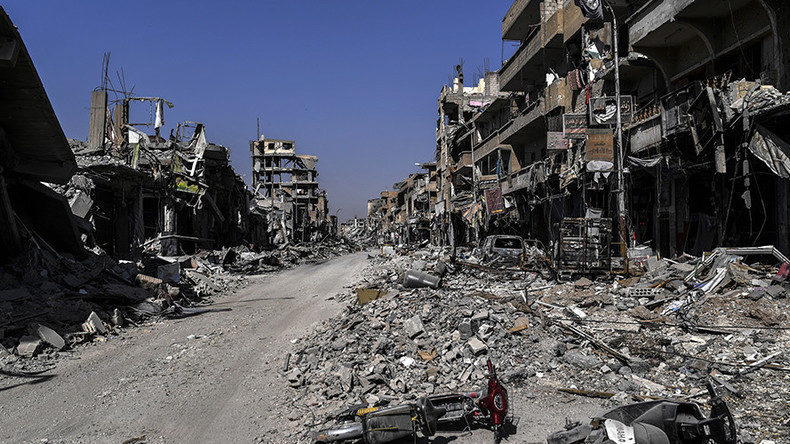
Here are pictures from Raqqa in Syria. Amnesty International calculates that 30,000 artillery rounds were fired and the New Yorker estimates 10,000 bombs dropped; given an assumed population of 300,000 that’s one for every seven or eight people; “precision” or not, what would your neighbourhood look like after that?
Doing war from the air is pretty cost-free especially if your targets have weak air defence. The 1998 NATO operation in Kosovo had two accidental NATO deaths and two aircraft shot down. The 2011 NATO operation in Libya cost one soldier and two aircraft from accidents and one helicopter captured. It’s engagingly technical and allows much talk of precision. To say nothing of the opportunity to smugly accuse others of just tossing bombs around: “Putin’s modern Air Force choosing devastating dumb bombs over precision strikes“. (In this puff piece the authors do not understand that the Russians actually have figured out a cheap way to make “dumb” bombs “precise”. The process is explained here. Also note the familiar American boast “We’re able to do very precise weaponeering in order to strike and then also minimize civilian casualty”.)
The second assumption of the American Way of War is a prerequisite of the first – assured communications. The American way of precision bombing requires that the bomb or missile “talk” continually to its guide, whether that be a laser designator, a signal to the target and back or GPS satellites. This “talking” must be free, unrestricted and continuous – if it is stopped, the “smart” missile or bomb immediately becomes “stupid”. (Another advantage of the Russian way, incidentally, is that the “talking” is unnecessary once the bomb is dropped.)
U.S. warfighting doctrine depends on air power operating and communicating freely.
The countries on Washington’s target list are well aware of this and that is why they are continually improving their air defence and electronic warfare capabilities. Conversely, the reason why NATO members have feeble air defence and limited EW capability is that they’ve never thought they needed to have them. Years of beating up countries with trivial air defence and EW has left them complacent. (Even a wake-up call like the shooting down of the F-117 is soon sent down the Memory Hole.)
Great strategists have always known that victory is found in avoiding the enemy’s strength and attacking his weakness and that one should “fight the enemy with the weapons he lacks.” Russia, China and Iran cannot expect to win a naval battle in the South Pacific against the U.S. Navy: there will be no second Battles of Leyte Gulf, Midway or Coral Sea. That would be to attack U.S. strengths. Missiles to take out aircraft carriers are the answer: do not attack the enemy’s strength, fight him with the weapons he lacks. Neither would they attempt to invade and conquer the USA itself. Defence is what they want and these are the principles that guide them.
But there is a third assumption of the American Way of War and that is simply this:
the air raid sirens will sound somewhere else.
Everything that I have said above applies to Israel. Just like the USA, Israel has grown accustomed to using air power, “precision strikes” and all the rest of it. In 1973 it had a hard ground fight but since its 2006 repulse by Hezbollah in Lebanon it has relied ever more on air strikes. Like the U.S., it is confident that it has air superiority and secure communications. Being so much closer to its enemies, it is not as confident that the air raid sirens will always scream somewhere else, but confident that it can inflict, via its air power, unacceptable damage on its enemy, Israel proceeds. Hezbollah and Hamas would be fools to try – even if they could – to build an air force to fight Israel, neither can they expect to have air defence and electronic warfare assets to seriously challenge Israel’s air superiority. Because they cannot attack the two assumptions of air superiority and communications, they must therefore attack the third assumption of invulnerability. Not the enemy’s strength but his weakness.
The last big U.S. ground operations, the Iraq wars of 1990 and 2003, were preceded by months of unimpeded transportation of immense quantities of supplies across the Atlantic. Baghdad never interfered and the complacent supposition that the air raid sirens would sound only in the enemy’s skies was further strengthened. But, should NATO be so suicidal as to provoke Russia to war, this will not be the case: the Iskanders will come calling and there will be no uninterrupted buildup. NATO bases will not be safe sanctuaries and the convoys will have to fight their way through.
We see, today, the proof of concept. In May Gaza fired hundreds of simple, cheap rockets at Israel. The Israeli air defence system, Iron Dome, was reasonably effective but it will run out of missiles long before Gaza, to say nothing of Hezbollah, will. Iron Dome suffers from the weakness that it is far more expensive than the simple rockets Hamas is using. Debris rained down on Israeli cities, the odd rocket got through (probably more than we were told). The air raid sirens were continuous and Israelis were in bomb shelters. It’s true that Israel’s air force obliterated buildings in Gaza but that’s not the point: everyone knew they could do that, it’s the continuous rockets that are new. This went on for eleven days with no diminution of fire from Gaza. A piece in the NYT, not a noticeably Israel-hostile outlet, quotes an estimate of 30,000 rockets in Gaza; only about ten percent were fired. Hezbollah has at least four times as many. The myth of Israel’s invincibility has been broken: gravely diminished in 2006 on land, its skies are no longer safe. Fight the enemy’s weakness (its home morale – how many dual citizens are already packing their suitcases?) and use weapons it does not have.
A ceasefire was announced after eleven days; we’ll see if it holds: Israeli police have again stormed the al-Aqsa Mosque which was the trigger in the first place. The Jerusalem Post attempts a summing up; and a very pro-Israeli one it is: so many commanders, headquarters, launching sites claimed destroyed. Most important though is its recognition that Hamas “increased its volume and range” of rocket launches. And “Hamas took credit for redrawing the equation of power in the region in its battle with Israel, asserting that Israel is now in a state of decline”. A claim to be sure. But one with some reality. Hamas struck with greater numbers and deeper into Israel than ever before and there were also disturbances in the Arab population in Israel proper. Hamas is claiming a victory and it is not wrong to do so.
Air superiority, assured immediate communications and security of the home front. Gaza and Hezbollah present the poor man’s solution to the problem – lots of cheap rockets to challenge the assumption of a secure home front: Israel’s “illusion of normality” is gone.
Richer and more industrially-based entities can counter the first two assumptions and challenge the third with more sophisticated answers. Perhaps the greatest challenge to the complacency that other countries will be the amphitheatres for American wars is the Russian Poseidon; this weapon, a sort of giant autonomous underwater cruise missile, is designed to create a tsunami to wipe out U.S. ports and coastal areas. Iran, in its retaliatory attack on the U.S. base in Iraq last year, showed that U.S. forces were not safe in their bases. China and Russia are both creating weapons systems to attack the USA where it is weak using weapons it does not have. U.S. aircraft carrier battle groups, rather than projections of mighty power, are mere targets to hypersonic missiles. Russian EW capability has been described by at least one U.S. general as “eye-watering“, able to turn off U.S. systems; and one may be sure that the Russians are saving their best for later. (Can they blind an entire warship? Not at all! Disinformation! Nonsense! Information Warfare! A little too much protesting?) Russia and China can do this because they are not lost to fantasies of “power projection” or “full spectrum superiority“; they defend themselves with weapons the aggressor does not have that are directed at his weakness. Enough and not too much is their guide.
Gaza vs Israel represents the proof of the concept.
The West pushes the Xinjiang issue hard, while ignoring the sustained slaughter of Palestinians
By Tom Fowdy | RT | May 14, 2021
Muslims allegedly being treated badly in China? Terrible human rights atrocities that need to be stopped. Muslims being bombed, murdered and driven from their homes in Gaza? Meh, they’re anti-Israel terrorists.
As Gaza burns and rages on, and Palestinians’ homes are turned into their graves, the West’s two-faced hypocrisy towards Muslims has never been clearer.
Unsurprisingly, despite the climbing death toll, condemnation from the West at Israel’s military action has been non-existent. The United States has blocked a UN Security Council Resolution over the matter, while its secretary of State, Antony Blinken, unironically tweeted a celebration of the Muslim Eid Festival.
In the absence of such condemnation, there was at the same time nonetheless a concerted and observable push by the mainstream media and US-affiliated organizations yesterday to put the Xinjiang autonomous region of China back on the agenda.
Several stories were tactically released, including a report from the National Endowment for Democracy-funded Uighur Human Rights Project accusing China of imprisoning Imams on trumped-up charges, while another from the US State and arms industry-funded Australian Strategic Policy institute accused them of demolishing mosques. At the same time, the US and its allies lobbed accusations at China in the United Nations and Blinken branded Xinjiang an “open-air prison”.
The West is pushing the Xinjiang issue hard and selectively, while ignoring long-term sustained atrocities regarding Palestine. They then wonder why Muslim countries largely offer support to Beijing on this matter and don’t take the West’s word for it. The answer is because, unwittingly, the Israel-Palestine conflict (like all the other Western-backed conflicts surrounding it), remains the primary wedge of geopolitical distrust between the Islamic world and the US and its allies.
These countries have no reason to take America’s human rights rhetoric seriously due to the devastation it has inflicted on the Middle East, and they subsequently share a common interest with China on the norm of defending “national sovereignty” from outside interference.
The West advocates to its own public an image of benevolence and sincere self-righteousness, masquerading and rebranding what was otherwise a longstanding history of imperialism, as a global force for good and justice. As what is deemed “morally correct” overlaps with what constitutes “political truth” in Western theory, few of its citizens question the utilization of human rights as an extension of politics or the idea such a premise could possibly be motivated by dishonesty, economic power or malign intent; to be honest about it is rendered a form of “blasphemy”. Thus, what is deemed “universal human rights” are not truly universal at all.
Countries in the Global South, especially in the Middle East, recognize this. In their experience, human rights have been persistently used as a pretext by Western countries to advance strategic and military goals in order to dominate them, as opposed to a truthful effort to improve people’s liberties and quality of life. And which are subsequently ignored when it suits the West, especially in matters of a much greater grievance to the Islamic world such as the Israel-Palestine conflict, which has been the keystone of anti-Western sentiment and ideology in the Middle East since the first Arab-Israeli war of 1948.
There have been many Western interventions in the region, mostly in a period between 1991-2012, justified on the grounds of human rights, such as Iraq, Libya and Syria. Concerning the latter, the West has accused Bashar Al-Assad of killing civilians in the decade-long civil war and called for his removal. Yet at the same time, the West has continually endorsed long-standing killings of civilians by Israel against Palestinians, and enabled that country’s expansionist policies in occupied territories, its unbridled aggression against many of its neighbours, and failed to resolve the seven-decade-long conflict.
In this case, if you are a Muslim country, why would you believe the US and its allies when they suddenly start crying atrocity, genocide and claiming they are standing up for the rights of a Muslim minority group in Xinjiang? Does this, for any Muslim country, have any real credibility?
The same countries who destroy Middle Eastern countries with war and bombings, and refuse to condemn Israel even modestly, now frame themselves as the guardians of Muslims? It’s no surprise that Muslim countries have not joined in the West’s chorus of condemnation, but have offered support to China’s policies. Even if they do not agree ideologically with China as an atheist, communist state, there’s one important point regarding Xinjiang that creates a space of common interest: defence of national sovereignty.
Irrespective of what they may think about events on the ground in Xinjiang, Muslim countries are largely post-colonial states which have suffered, and continue to suffer, from Western interference. Therefore, China’s norm of “non-interference in one’s internal affairs”, combined with its emphasis on defending sovereignty against Western intervention, is an attractive and logical solution to Muslim countries. Why would any such nation jump on the Xinjiang bandwagon and promote the idea that the West should be allowed to assault a country on the pretext of human rights? What might this mean for them?
Muslim countries support China on Xinjiang for a myriad of factors, have no good reason to trust the West, and recognize that the US, the UK and other such countries crying foul on this issue are doing so out of political motivations, as opposed to a sincere concern about the well-being of Islamic people.
As Gaza’s buildings are razed and its people slaughtered, the silence and indifference on this issue speaks louder than words concerning the West’s position on “human rights”. Let us end with this comparison: Palestine is an issue which Muslim countries are angry about, which is ignored by the Western elite; Xinjiang is an issue which the US-led alliance is angry about, that they desperately want Muslims to be furious about on the West’s behalf, but is rightly being ignored.
Tom Fowdy is a British writer and analyst of politics and international relations with a primary focus on East Asia.
Palestine Has the Right to Defend Itself
By Taxi | Plato’s Guns | May 13, 2021
We have entered a new era in the Palestinian-Israeli conflict. The old days of Israel committing war crimes against the downtrodden, captive Palestinians are over. The world has done zero to address Israel’s fundamental crime of nation-stealing: a megalith crime that can only be described as the longest and most vicious war crime in our modern history. A crime that millions of people around the world consider to be even worse than the holocaust. After some 73 years of enduring relentless Israeli terrorism, land-theft, cultural appropriation AND the silence of the world, the Palestinian Resistance has finally taken charge and has, literally overnight, turned the tables against Israel. From here on, there will be accountability for Israel for any crime it commits against the Palestinians. From here on, all previous Israeli red lines will be crossed in favor of the Palestinians. From here on, the death of Israel is no longer a far-fetched fantasy. From here on, the Palestinian Resistance will take charge of Palestine’s destiny. And its destiny is total liberation.
Whether this liberation takes place in a day, in a week, in a month or a year, the gates of liberation are now open, and nobody on earth can close them.
The situation in the holy land is currently fluid – rocket and missile strikes continue by both sides with no end in sight as I write this. There is no point in talking casualties and targets in this article as this is not a journalistic report but a brief look at America’s strategy in the Middle East.
The pertinent question here is: with Israel’s hegemony being in an evident state of profound decline, will the US drop Israel in order to preserve its remaining influence in the Middle East? Or, will it stick to a weak and dying Israel and thus be evicted from the region with it? We know that both China and Russia are waiting on the sidelines for an opportunity to snatch America’s influence in the Mideast region. There will not be a vacuum left once Israel falls and takes the US down with it. China and Russia will collect the prize and immediately fill in the vacuum. Begs the question here therefore: is America prepared to lose to China and Russia just to appease a limping Israel?
Simply: what is more important for America: maintaining its own superpowerdom, or supporting Israel indefinitely and unconditionally?
This is a serious strategic conundrum for the current US State Department, for the Pentagon and the Deep State, not to mention the White House as well, and mindful here that all these high offices in DC are infiltrated and already controlled by AIPACers and by Jewish power. With the Palestinian cause now being globally more popular than ever, and with the Palestinian Resistance now being an offensive-and-defensive power to reckon with, the oft repeated undemocratic and nauseating American phrase of ‘Israel has the right to defend itself’ is now transforming into ‘Palestine has the right to defend itself’.
Indeed, any fair-minded person would support an occupied people’s right to self-defense. Apropos, any justice-loving person would support the slogan of ‘Palestine has the right to defend itself’.
The history of America’s total and unconditional support for the state of Israel goes back to the presidency of Lyndon B. Johnson. There was support for Israel before then, but not unconditionally and not fanatically so. For some 58 years now, American administration after American administration has favored Israel above any other nation in the world, especially above all other nations in the Mideast. It justified this blind support by using warmongering Israel as both a showroom to exhibit and sell its arms from, as well as an attack dog that fights against Arab nationalism that back in the day was aligned with the Soviet Union. Not forgetting here that American Jews of Hollywood also manufactured a ‘moral’ reason for America’s support of the Jewish state by pitting America as the absolute hero and savior of Jews from the holocaust, even though US forces entered WW2 belatedly, and did so under dubious circumstance, I may add.
But the above three main reasons are no longer valid this side of the 21st century. Let us inspect them one by one.
FIRST, Israel as the American MIC showroom is no longer effective and profitable, and this is because, despite Israel having the most advanced American weapons in the region, it has not actually won a single war since 1973 – and even that war was won by a hairline when the West came to rescue Israel at the 11th hour. We can say here that the supermodel has aged and her chin is too cracked to sell beauty products. Sales of American weapons in the Middle East are no longer dependent on Israel’s so-called war heroism and victories, but on inter-Arab fighting that’s instigated and incited by a treacherous, jingoistic Israel. Experts on Arab history will tell you that Arab tribes are stuck in a make-war-then-make-peace cycle, and not in a permanent make-eternal-war posture, as indeed Israel’s State motto appears to be. We see evidence of this historians’ view today with the current rapprochement between Syria and Saudi Arabia. After a decade of hostility and head-chopping warfare between them, these two Arab enemies are now making a concrete effort towards genuine peace. So if Saudi Arabia is no longer needing to buy billions of dollar’s worth of US weapons per year to defend itself with, and when Riyadh is also simultaneously offering peace concessions to Iran as well, can the MIC rely on Saudi Arabian patronage like it used to? There are simply no more big Arab-on-Arab and Arab-on-Iranian wars to be had in the foreseeable future. These projects have already been tried and attempted and dropped, and so all possible lucrative weapons contracts no longer exist. For the MIC, as well as for any other mega corporation, it’s the ‘bottom line’ that decides all at the end of the day. Clearly, the MIC can no longer rely on either Israel’s war victories, or on its insidious war-brokerage for its lucrative annual profits. The MIC is presently looking eastwards to make its future profits. The Middle East has been milked dry right to the last drop. The MIC reason for supporting the Jewish state therefore is no longer valid.
SECONDLY, as we all already know, the Soviet Union has long gone and a Russian Republic has assumed its place. Arab nationalism too has also transformed into something more fluent and nifty, otherwise now known as ‘The Resistance’. Resistance against Israel and its Apartheid practices, that is. Resistance against Jewish supremacy and racist Zionism. The Arab Resistance today is enjoying more popularity than ever, despite the spinelessness of some Arab leaders, and despite the fake ‘Deal of the Century’ that 4 Arab nations have signed up for – two of them reluctantly so, I may add. Really, the Deal of the Century is seen by Arab citizens as a Jewish-Chabadist scam that collapsed in its infancy with Trump’s failure to secure a second White House term. There are currently several hundred million Arab citizens from all over the Arab world who remain fully committed to the Resistance. Nay, a considerable chunk of them are even ready for martyrdom if it helps aid the Resistance in its war against all occupational forces in the Middle East, starting and ending with the eviction of Zionism and Zionists from the region.
Here, Palestine, actually, more precisely the city of Jerusalem is the ultimate symbol and very location where the enemy must first be confronted. Arab passion for liberating Palestine, and especially the city of Jerusalem is not only a moral, ethical and patriotic issue for them, but first and foremost, it is a collective profundity: a religious duty for the majority of both Christian and Muslim Arabs. No Israeli propaganda or Jewish bribe can dilute or alter this passion for Jerusalem that rattles and keeps growing in the breast of Arab citizenry. The Israelis who first established the state of Israel by force of arms used to confidently say of the Palestinians: “the old will die and the young will soon forget,” meaning: the 1948 Arab generation resisting the initial Jewish invasion will soon die and the next generation will forget their parent’s cause. Evidently, the Jews here gravely miscalculated: no such thing ever transpired. New generations of Palestinians born from 1948 and onward only got more resistant, more resilient, more motivated and more attached to their land that was usurped by the invading Jews of Europe. No Palestinian ‘forgot’ their parental trauma – how on earth could they when daily Israeli brutality was heaped upon them, thus reminding them daily of their parent’s agony and catastrophe? Nobody forgot the ethnic cleansing, the numerous massacres and the injustice committed against their parents by racist European Jews. The current eruption of violence between Israel and the Gaza Resistors, who only two nights ago bombarded Tel Aviv with endless streams of rockets like never before, while simultaneously, literally all Palestinians living inside of Israel proper or under Israeli occupation took to the streets in raging protest: all this is notable and loaded with electric shocks. Here we see a new optic and we understand from it a new reality: the whole of Palestinian society, though divided by Apartheid walls and territorial fragmentation imposed by Israel, are currently united in simultaneous rage and cries for freedom, cries for resistance, despite Israel having for decades created political divisions between them. This current and united military and civic Palestinian resistance is a testament to the facts stated above. Palestine lives! It has not ‘forgotten’, or been forgotten. Yes, the Palestinian individual and collective memory is irrepressible and indelible. Only true justice will dull down this impossibly painful memory: this 73 year old nightmare that the Jews have inflicted on the native Palestinians. The Palestinians being mostly capitalist traders have not aligned with any old-school Soviet nation or leaders for material protection or for economics: the Palestinian Authority under Abbas has been nothing but 100% compliant with Western wishes and instruction. For decades now Palestine has been aligned with and reliant on Western material charity and aid, despite the West’s blatant support for their Jewish occupiers. This excuse of support for Israel being due to Arab alignment with Soviet Russia is now completely and absolutely moot. Anyone, be they a politician or a propagandist citing the ‘Soviets’ as reason for supporting Israel should be laughed right off the stage.
This leaves the THIRD justification of ‘America the good guy saved the victim Jews from Nazi Germany’ to dissect. Without getting into the finer, historic details of WW2, suffice it to say here that the Arabs are a completely different people than the Germans, and their struggle with the Jewish state is based on Israel’s occupation of Arab land and not on belief in the Nazi manifesto. Furthermore, Israel is a wealthy nation who is in possession of actual nuclear weapons, therefore it cannot possibly be categorized as a ‘victim’ in the context of the Arab-Israeli struggle. In America, it is basically Hollywood and the Christian-Zionist community who carry the majority of genuine support for Israel. Most of the Senate and Congress are corrupt and support Israel because of bribes, blackmail, or coercion, therefore their support cannot be considered as genuine. Currently, Hollywood is hemorrhaging influence and power, just like Israel is, and can presently exert but little influence over the American psyche. And the Christian-Zionists remain an enclaved minority with influence only within their own communities: outside of their communities, they are disrespected and referred to as ‘Jesus freaks’ by the rest of the American populace. Everyone is allowed to believe what they want, but issues of belief do not the decision-making for Empire make. Empire, in order to survive must make decisions that are steeped in cold pragmatism and based on security and prosperity interests, not on ethereal ideology or group superstition, especially minority group superstition. Empire has no permanent friends or permanent enemies. Its powers are drawn, above all, from its ability to make stable, long-term decisions that propagate its longevity. Whether American troops saved the Jews or not is now beside the point. The crux of the matter is that Empire now finds itself supporting a dying horse in the guise of Israel and there is no more medicine to be found for the horse. As any sound rancher would tell you: stop the hugging and start digging a grave for your four-legged pal. If Americans really believe that they are ‘the good guy’, then they should start acting like it and start making funeral arrangements for Israel before its dead belly bloats and festers in the sun.
To those who still believe that Israel is almighty powerful and doubt that Israel’s end is approaching, I say the following: you are reading Jewish and Jewish-centric media where nothing is real.
Considering the intractable, negative military position that Israel finds itself in today: surrounded by an armed and capable, eclectic Axis of Resistance without, and infiltrated by an armed and capable Palestinian resistance within, no US weapon can now provide it with a certain measure of security. Politically speaking, Israel is in its worst domestic crisis ever: with four failed elections and a fifth one on the way inside of two years, incendiary and divisive rhetoric between all Jewish parties is the current zeitgeist and order of the day.
The West can believe it or not, but in the Levant, the latest rocket and strike exchanges between Israel and the Palestinian Resistance – a combat that finds the Palestinian Resistance crossing all previous Israeli-imposed red lines; a combat that the Palestinian Resistance is utilizing to establish a deterrence against ongoing Israeli crimes of ethnic cleaning and home-evictions – the view is crisp and clear: Israel is at its weakest ever, and the Axis of Resistance is stronger than ever, therefore Israel’s grim reaper is in sight.
Israel’s death is now a fait accompli, a forgone conclusion.
But even if readers are still unconvinced by this Levantian reality and facts on the ground, for the sake of wisdom and the future stability of Empire, it still behooves all Americans to now openly discuss the pros and cons of supporting the dying Israel project. This open soul-searching should be solely focused on this question: do all humans have the right to defend themselves, or only some of us have this inalienable right?
My personal answer to this question is obvious. Everyone has the right to defend themselves against harm. Impossible therefore to deny the occupied Palestinians their right to self-defense.
Yes. Palestine has the right to defend itself.
Either that, or enjoy living in your Animal Farm.
Ten years on, Syria is almost destroyed. Who’s to blame?
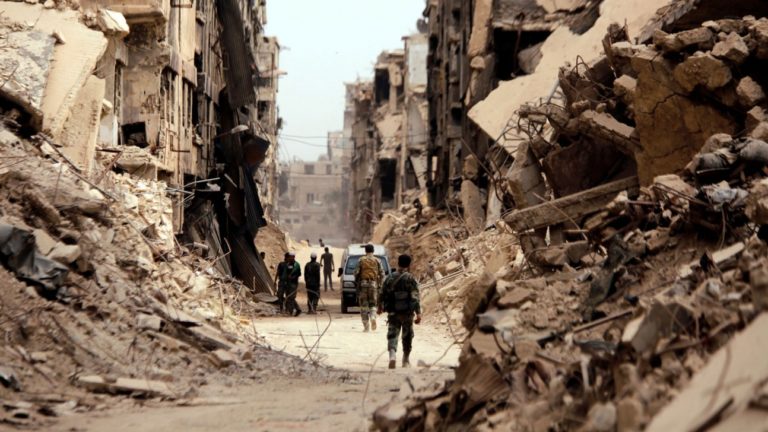
Syria in ruins after ten years of conflict (File photo)
BY M. K. BHADRAKUMAR | INDIAN PUNCHLINE | MARCH 20, 2021
In George Orwell’s novel Animal Farm, the ruling pigs led by Napoleon constantly rewrote history in order to justify and reinforce their own continuing power. The rewriting by the western powers of the history of the ongoing conflict in Syria leaps out of Orwell.
The joint statement issued by the foreign ministers of the US, UK, France, Germany and Italy last week to mark the tenth anniversary of the Syrian conflict begins with an outright falsehood by holding President Bashar al-Assad and “his backers” responsible for the horrific events in that country. It asserts that the five western powers “will not abandon” the Syrian people — till death do us part.
The historical reality is that Syria has been a theatre of the CIA’s activities ever since the inception of that agency in 1947. There is a whole history of CIA-sponsored “regime change” projects in Syria ranging from coup attempts and assassination plots to paramilitary strikes and funding and military training of anti-government forces.
It all began with the bloodless military coup in 1949 against then Syrian president Shukri al-Quwatli which was engineered by the CIA. As per the memoirs of Miles Copeland Jr, the CIA station chief in Damascus at that time — who later actually went on to write a fine book of high literary quality on the subject — the coup aimed at safeguarding Syria from the communist party and other radicals!
However, the CIA-installed colonel in power, Adib Shaishakli, was a bad choice. As Copeland put it, he was a “likeable rogue” alright who had not “to my certain knowledge, ever bowed down to a graven image. He had, however, committed sacrilege, blasphemy, murder, adultery and theft” to earn American support. He lasted for four years before overthrown by the Ba’ath Party and military officers. By 1955, CIA estimated that Syria was ripe for another military coup. By April 1956, a joint CIA-SIS (British Secret Intelligence Service) plot was implemented to mobilise right-wing Syrian military officers. But then, the Suez fiasco interrupted the project.
The CIA revived the project and plotted a second coup in 1957 under the codename Operation Wappen — again, to save Syria from communism — and even spent $3 million to bribe Syrian military officers. Tim Weiner, in his masterly 2008 book Legacy of Ashes: The History of the CIA, writes:
“The president (Dwight Eisenhower) said he wanted to promote the idea of an Islamic jihad against godless communism. “We should do everything possible to stress the ‘holy war’ aspect,” he said at a 1957 White House meeting… (Secretary of state) Foster Dulles proposed a “secret task force,” under whose auspices the CIA would deliver American guns, money, and intelligence to King Saud of Saudi Arabia, King Hussein of Jordan, President Camille Chamoun of Lebanon, and President Nuri Said of Iraq.”
“These four mongrels were supposed to be our defence against communism and the extremes of Arab nationalism in the Middle East… If arms could not buy loyalty in the Middle East, the almighty dollar was still the CIA’s secret weapon. Cash for political warfare and power plays was always welcome. It could help an American imperium in Arab and Asian lands.”
But, as it happened, some of those “right-wing” officers instead turned in the bribe money and revealed the CIA plot to the Syrian intelligence. Whereupon, 3 CIA officers were kicked out of the American embassy in Damascus, forcing Washington to withdraw its ambassador in Damascus. With egg on its face, Washington promptly branded Syria as a “Soviet satellite”, deployed a fleet to the Mediterranean and incited Turkey to amass troops on the Syrian border. Dulles even contemplated a military strike under the so-called “Eisenhower Doctrine” as retaliation against Syria’s “provocations”. By the way, Britain’s MI6 was also working with the CIA in the failed coup attempt; the details came to light accidentally in 2003 among the papers of British Defence Minister Duncan Sandys many years after his death.
Now, coming down to current history, suffice to say that according to the WikiLeaks, since 2006, the US had been funding London-based Syrian dissidents, and the CIA unit responsible for covert operations was deployed to Syria to mobilise rebel groups and ascertain potential supply routes. The US is known to have trained at least 10,000 rebel fighters at a cost of $1 billion annually since 2012. President Barack Obama reportedly admitted to a group of senators the operation to insert these CIA-trained rebel fighters into Syria.
The well-known American investigative journalist and political writer Seymour Hersh has written, based on inputs from intelligence officers, that the CIA was already transferring arms from its Benghazi station (Libya) to Syria around that time. Make no mistake, Obama was the first world leader to openly call for the removal of Assad. That was in August 2011. Then CIA chief David Petraeus paid two unannounced visits to Turkey (in March and September 2012) to persuade Erdogan to step in as the flag carrier of the US’ regime change project in Syria (under the rubric of “anti-terror fight”.)
In fact, the US’ key allies in the Persian Gulf — Saudi Arabia, Qatar and the UAE — took the cue from Obama to loosen their purse strings to recruit, finance and equip thousands of jihadi fighters to be deployed to Syria. Equally, from the early stages of the conflict in Syria, major western intelligence agencies provided political, military and logistic support to the Syrian opposition and its associated rebel groups in Syria.
Curiously, the Russian intervention in Syria in September 2015 was in response to an emergent imminent defeat of the Syrian government forces at the hands of the jihadi fighters backed by the US’ regional allies. Saudi Arabia withdrew from the arena only in 2017 after the tide of the war turned, thanks to the Russian intervention.
The joint statement issued last week by the US and its NATO allies belongs to the world of fiction. In reality, there is Syrian blood in the hands of these NATO countries (including Turkey) and the US’ Gulf allies. Look at the colossal destruction that the US has caused: in the World Bank’s estimation, a cumulative total of $226 billion in gross domestic product was lost to Syria due to the war from 2011 to 2016 alone.
The Syrian conflict has been among the most tragic and destructive conflicts of our time. Hundreds of thousands of Syrians have died, half a nation has been displaced, and millions have been forced into desperate poverty and hunger. In the UNHRC estimation, after ten years of conflict, half of the Syrian population has been forced to flee home, 70% are living in poverty, 6.7 million Syrians have been internally displaced, over 13 million people need humanitarian assistance and protection, 12.4 million people suffer from lack of food (or 60% of the entire population), 5.9 million people are experiencing a housing emergency and nearly nine in 10 Syrians are living below the poverty threshold.
And, come to think of it, Syria used to have one of the highest levels of social formation in the entire Muslim Middle East. It used to be a middle income country until the US decided to destabilise Syria. Ever since the late 1940s, the US’ successive regime change projects were driven by geopolitical considerations. The agenda is unmistakeable: the US has systematically destroyed the heart, soul and mind of “Arabism” — Iraq, Syria and Egypt — with a view to perpetuate the western [Zionist] domination of the Middle East.
Former President Donald Trump intended to withdraw the US troops from Syria and end the war. He tried twice, but Pentagon commanders sabotaged his plans. What Joe Biden proposes to do is anybody’s guess. Biden doesn’t seem to be in any rush to withdraw the US troops.
The most disturbing aspect is that the US is methodically facilitating a Balkanisation of Syria by helping the Kurdish groups aligned with it to carve out a semiautonomous enclave in the country’s northeast. In fact, the the Arab population in northeastern Syria resents being under the Kurds’ governance, and this may eventually turn into a new source of recruits for Islamic State. Meanwhile, Turkey seized the US-Kurdish axis as alibi to occupy vast territories in northern Syria.
The sad part of the joint statement by the US and its European allies is not only that it is rewriting history and spreading falsehood but conveys a sense of despair that there is no hope for light at the end of the tunnel in the Syrian conflict in a conceivable future.
The US policy in Syria is opaque. It has oscillated between aiming to prevent a resurgence of IS, confronting Iran, pushing back against Russia, providing humanitarian aid, and even protecting Israel, while the crux of the matter is that successive US administrations have failed to articulate a clear strategy and rationale for the US military presence in Syria.
Non-Prophylactically Ironic Dome over the Occupied Palestine
By Mansoureh Tajik for the Saker Blog | April 25, 2021
Exactly at 1:20 am (Tehran time) on Thursday, April 22, 2021 a missile hit near Dimona nuclear reactor, the “secret” nuclear site in the Occupied Palestinian Territory. The Jerusalem Post headlined the event as “Syrian missile lands near Dimona nuclear reactor, interception fails.”[1] The article went on to story the event as follows:
“It was unclear at first from where the missile was launched. Several signs indicated it having been launched from Iraq, while according to other reports, it came from the city of Daraa in southern Syria following an Israeli airstrike.”
“IDF Spokesman Brig.-Gen. Hidai Zilberman told reporters that ‘the explosion was due to the firing of an SA-5 surface-to-air missile toward Israel from Syria that exploded in the southern Negev. The firing of the missile came during Israeli airstrikes in southern Syria,’ Zilberman said, and that ‘it was an errant missile and not directed toward the Dimona nuclear reactor.’”
It was not an errant missile. It did not come from where the General said it came. It was not during Israeli airstrikes in southern Syria. The interception did not fail because there was interception. The missile was directed toward exactly where it needed to hit near Dimona nuclear reactor and it hit exactly at 1:20 am the time Sardar Soleimani, the martyred commander of Qods Force was assassinated. The hit had a message.
The missile strike (not “landing” as if it were some civilian passenger airline) on the land in the vicinity of Dimona took place 22 hours after another serious explosion that happened inside Tomer factory which develops and manufactures military equipment including missiles for Israeli Defense. About Tomer, Haaretz reported:
“The explosion occurred during a ‘routine test’ by the Tomer factory for advanced weapons, which develops rocket engines, the Ofek satellite launchers and houses various types of missiles. In response to the blast, Tomer said ‘this was a controlled test with no exceptional circumstances.’ Tomer’s factory is located in central Israel, and in proximity to residential areas. The company manufactures missiles for use by the IDF and other Israeli defense systems. They are the manufacturers behind Israel’s Arrow 4 missile interception system.”[2]
Again, no. The explosion did not occur during a routine test and it was not a controlled test. The explosion was in fact controlled but not by any force friendly to Tomer, the Zionist entity, or IDF. That explosion, too, had a message. On Tuesday, April 20, in a public speech delivered during funeral procession held for Sardar Hejazi, the vice commander of Qods Force, Sardar Qa’ani, the current Commander of Qods Force (replacing Sardar Soleimani after his martyrdom) clearly and unambiguously declared:
“Today, in the resistance fronts from Iran, Lebanon, Syria, Iraq, and Yemen, and the Children of Resistance [informal term that refers to all resistance fighters] every single day, delivers one major operation against the enemies including [US] America and Israel and they will continue this path until the global command has been achieved.”[3]
This statement was not a threat nor a warning nor a promise by Sardar Qa’ani. It was a declaration. The news vice commander of Qods Force, who was appointed after the martyrdom of Sardar Hejazi, announced on Thursday, April 22:
“The usurper Zionist regime must know that the resistance group in every segment of the planet earth are positioned right next to you and are getting you closer to your dusk.”[4]
In an interview conducted by Tasnim News Agency on Friday, April 23, with Hadi Qabisi, the director of Al-Ittihad Center for Development and Research, regarding recent explosions in Israel, he explained:
“The rules of engagement in the framework of the Resistance in terms of their demand and direction has changed. This now affects the change in balance in the region if the Resistance decides to go to war.”
“Mere shooting of missile from Syria to the occupied territories and reaching of that missile to Naqab region, regardless of what kind of missile whether it was air-to-air or surface-to-air or surface-to-surface, makes evident the inability of Israel defense system dubbed Iron Dome. This shows the erosion of Zionist Regime’s deterrence power while the capabilities of the Resistance Axis are increasing day by day. The consequence has a negative impact on all aspects of Zionist Regime. In addition, this military development cannot be separated from other events in the region such as Iran’s capability and power to strengthen its position in Vienna talks or an increasing tension between two global poles ([US] America and Russia) in other critical scenes such as Ukraine.”[5]
On Sunday, April 25, 2021, Major General Muhammad Baqeri, the Head of the Islamic Republic of Iran Armed Forces, said:
“The Zionists think they could permanently target Syrian soil, create mischief in other places and in the sea without backlash. For certain, several operations in recent days and operations that are forthcoming will have a sobering effect on them and the future of the Resistance is quite bright. We will not announce anything about who exactly is doing which operation but responses from the Resistance camp to Zionists are quite significant. We will not specify the operation but Zionist regime will not be in peace.”[6]
On April 22, 2021, a letter signed by two members of the congressmen, Ted Deutch and Michael T. McCaul, and co-signed by nearly 300 other members, urged the full funding of security assistance to Israel in the Fiscal Year 2022 appropriations bills. An excerpt from the letter reads:
“Israel continues to face direct threats from Iran and its terrorist proxies. In February, an Israeli-owned ship in the Gulf of Oman was hit by a mysterious explosion that Israel has attributed as an attack by Iran. In 2019, Hizballah launched three anti-tank missiles at an Israeli Defense Forces vehicle in Israel. Hizballah is estimated to have an arsenal of over 130,000 rockets and missiles, and is believed to be developing new precision-guided munitions to be deployed in Lebanon. American security assistance to Israel helps counter these threats, and our rock-solid security partnership serves as a deterrent against even more significant attacks on our shared interests.”
“Congress is committed to maintaining Israel’s qualitative military edge and its ability to defend itself, by itself, against persistent threats. Our aid to Israel is a vital and cost-effective expenditure which advances important U.S. national security interests in a highly challenging region.”[7]
Regarding maintaining Israel’s “qualitative military edge”, firstly, maintenance is for that which already exists. The famed prophylactic dome is engineered to emulate eyed Swiss cheese and can protect Israel exactly as much as it has done for Saudi Arabia and US bases in Iraq and Persian Gulf oil well states with flag. Secondly, the cost of maintaining illusions in West Asia has decidedly increased exponentially for the United States of America and its most cherished regimes.
References
[1] Anna Ahronheim, Udi Shaham. “Syrian missile lands near Dimona nuclear reactor, interception fails.” The Jerusalem Post, April 22, 2021. Accessed online at: https://www.jpost.com/breaking-news/alarms-sound-in-south-of-israel-665953
[2] Yaniv Kubovich. Powerful Explosion Rocks Sensitive Israeli Missile Factory During Test. April 21, 2021. https://www.haaretz.com/israel-news/powerful-explosion-rocks-sensitive-israeli-defense-factory-during-test-1.9732074
[3] Khabar Online. “Unambiguous Message of Sardar Qa’ani to Israel and [US of] America during funeral procession of Sardar Hejazi.” Farvardin 31, 1400 [April 20, 2021] @11:14 am. News Code: 506836. Accessed online at: khabaronline.ir/news/1506836
[4] Tasnim News Agency. “Sardar Fallahzadeh, Vice Commander of Quds Force: Resistance Groups are positioned right next to Zionist Regimes Bases.” Ordibehesht 2, 1400 [April 22, 2021] @ 11:02 am. Accessed online at https://tn.ai/2489397
[5] Tasnim News Agency. “Interview with Syrian Analyst: Zionist Regime’s Deterrent Capabilities are wearing out day by day.” Ordibehesht 3, 1400 [April 23, 2021] @ 21:03. Accessed online at: https://tn.ai/2490197
[6] Tasnim News Agency. “Major General Baqeri: Future Operations will bring the Zionists to their senses.” Ordibehesht 5, 1400 [April 23, 2021] @ 10:45. Accessed online at: https://tn.ai/2491070
[7] “Letter Chair DeLauro and Ranking Member Granger” addressed to Congress of the United States, Washington DC. Accessed online at: https://teddeutch.house.gov site.
‘US, allies have turned OPCW into a tool to pursue anti-Syria objectives’
Press TV – April 16, 2021
Syrian Minister of Foreign Affairs and Expatriates Faisal Mekdad has categorically dismissed the new report by the Organization for the Prohibition of Chemical Weapons (OPCW), stating that the United States and its allies have turned the international watchdog into a tool to pursue their political goals against Damascus.
“Despite the difficult situation that Syria is going through, we have stood committed to our membership in the Chemical Weapons Convention,” Syria’s official news agency SANA quoted Mekdad as saying in a meeting with ambassadors and heads of diplomatic missions in Damascus on Thursday evening.
He added, “Syria and many other countries have acknowledged that the states which supported and funded armed terrorist groups in Syria, particularly the United States, France, Germany and Britain, will use the Syrian chemical file and the OPCW to achieve their hostile goals against Syria.”
Mekdad noted that Syrian government forces continue to score remarkable victories in their battles against the Takfiri terrorist groups, emphasizing that the troops have never used chemical warfare even in toughest operations against the foreign-sponsored militants.
He went on to say that certain Western countries have established the OPCW’s so-called Investigation and Identification Team (IIT) in order to produce reports, which best suit their anti-Syria agenda.
“The French-Western draft resolution, which is to be presented at the 25th meeting of the Organization for the Prohibition of Chemical Weapons later this year, is a new chapter in the series of conspiracies against Syria,” Mekdad pointed out.
The top Syrian diplomat finally called on the OPCW member states to support Damascus and counter the politicization of the organization’s activities by some Western countries.
A report by the OPCW’s so-called investigative arm claimed on Monday that Syria’s air force had dropped a chlorine bomb on a residential neighborhood in the terrorist-controlled Idlib region.
The report further asserted no one was killed when the cylinder of chlorine gas, delivered in a barrel bomb, hit the al-Talil neighborhood in the city of Saraqib in February 2018.
The Syrian foreign ministry, in a statement published on Wednesday, said the OPCW’s “misleading report,” written by “an illegitimate and incredible team,” fabricates “facts” to incriminate the Damascus government.
“This report has included false and fabricated conclusion which represents another scandal for the OPCW and the inquiry teams that will be added to the scandal of the reports of Douma incident in 2018, and Ltamenah in 2017,” it said.
Moscow and Damascus have on many occasions said members of the so-called White Helmets civil defense group stage gas attacks in a bid to falsely incriminate Syrian government forces and fabricate pretexts for military strikes by the US-led military coalition.
The group claims to be a humanitarian NGO but has long been accused of collaborating with anti-Damascus militants.
On April 14, 2018, the US, Britain and France carried out a string of airstrikes against Syria over a suspected chemical weapons attack on the city of Douma, located about 10 kilometers northeast of the capital Damascus.
Washington and its allies blamed Damascus for the Douma attack, a charge the Syrian government rejected.
Western governments and their allies have never stopped pointing the finger at Damascus whenever an apparent chemical attack takes place.
This is while Syria surrendered its stockpile of chemical weapons in 2014 to a joint mission led by the United States and the OPCW, which oversaw the destruction of the weaponry. It has consistently denied using chemical weapons.
CIJA Sting Operation Stirs FCDO’s ‘Hotch Potch’ of Spooks
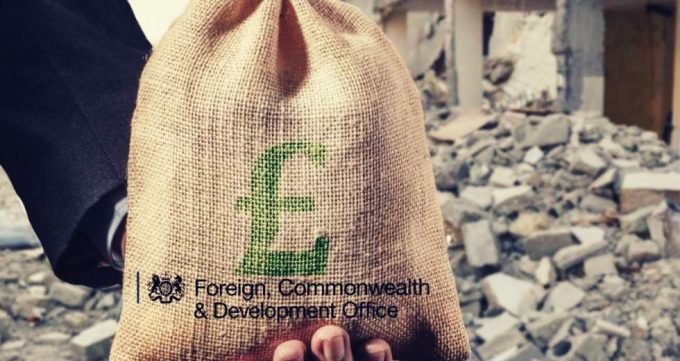
By Vanessa Beeley | UKColumn | April 12, 2021
A recent sting operation carried out by the Commission for International Justice and Accountiblity (CIJA) entrapped an unsuspecting academic member of the Working Group on Syria Media and Propganda (WGSPM) into engaging in a series of email conversations with a fake “Russian agent”. These emails were then supplied to the BBC producer, Chloe Hadjimatheou, who is responsible for a prolonged smear campaign against the Working Group, journalists and former diplomats who are challenging the establishment narratives on Syria — narratives that have sustained the “humanitarian” pretexts used to justify the ten-year proxy war against Syria by hostile states forming the US Coalition. The UK has played a major role in the war to topple the Syrian government and to reassert US/UK rule-by-puppet over the country and, effectively, in the region.
The academic Paul McKeigue, who was targeted by CIJA, was in the process of investigating the organisation’s financial background, their intelligence agency, US State Department and other government connections and their collaboration with extremist armed groups fighting inside Syria. McKeigue’s briefing on CIJA was published shortly after the revelation that he had been the victim of the protracted sting operation launched by CIJA.
Professor Tim Hayward, another member of the WGSPM, has asked important questions about the conflict of basic principles demonstrated by CIJA’s entrapment.
McKeigue’s briefing demonstrates that “in the Syrian conflict, one of the most prominent organizations reported to be gathering evidence of crimes allegedly committed by the Syrian government is the Commission for International Justice and Accountability (CIJA), established by William Harry Wiley, a Canadian former army officer.” CIJA is at the centre of a number of initiatives to push through charges of alleged “war crimes” against Syrian officials and President Bashar Al Assad himself.
CIJA is a major cog in the wheel of politicised justice designed to crush countries legally that have resisted UK/US-dominated military interventionism, as Syria and her allies have done successfully for ten years. McKeigue’s briefing provides a rigorously researched analysis of why CIJA was incubated, and of the nexus of UK government bodies and intelligence agencies behind the operations in Syria.
My focus in this article is not on CIJA but on an ostensibly minor spin-off from the parent complex. I was intrigued by an “entertainment” company established in November 2019, one week after the death of James Le Mesurier, the former British military intelligence officer who founded the terrorist-linked White Helmets organisation financed by multiple governments invested in regime change in Syria, headed up by the UK Foreign, Commonwealth and Development Office (UK FCDO).
The CIJA sting and McKeigue’s subsequent briefing included the first mention of a company called Hotch Potch Entertainment, established by an erstwhile colleague of Le Mesurier, Alistair Harris, who is an influential fixer for UK FCDO interventionist policies globally. Harris was interviewed by BBC producer, Hadjimatheou, for the Mayday series, a concerted attack against the WGSPM and associated independent journalists who have been questioning mainstream narratives on Syria for years. The timing of the establishment of the company led me to investigate further.
Hotch Potch Entertainment, Alistair Harris and the MI6 spin-offs
Alistair Harris is listed as one of three directors of Hotch Potch Entertainment Ltd (HP), which was set up on 18th November 2019, and has its registered office listed as Lower Newnham Farm in Dorset, UK. Harris has a history of involvement with UK FCDO foreign policy operations in the Balkans, Pakistan, Central Europe, Yemen, Afghanistan, Lebanon, Jordan, Palestine and Syria.
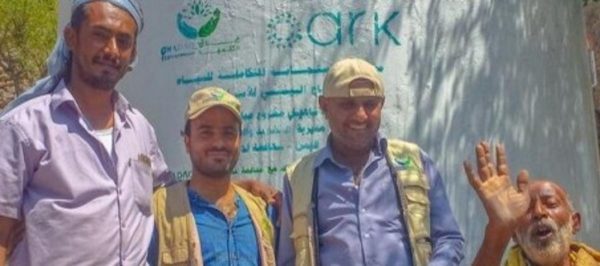
Harris, with the reversed baseball cap. Photo taken from LinkedIn.
Harris was the founder/director of Analysis Research and Knowledge (ARK) Lebanon in 2009. In 2011, as the “Arab Springs” swept across the Middle East plunging the region into orchestrated chaos, Harris established ARK FZC (registered in Dubai), later renamed ARK Group DMCC, as another of the multiple outreach agents providing intelligence support for UK FCDO foreign policy in nations targeted for regime change.
CIJA was an ARK creation, as were the White Helmets, founded by James Le Mesurier while he was employed by ARK in 2013. Le Mesurier was with ARK from 2011 until 2014, when he established Mayday Rescue (also originally registered in Dubai, later in the Netherlands) as a so-called NGO which acted as intermediary between UK and EU governments and the White Helmets, funnelling funding to that entity embedded with armed groups dominated by Nusra Front (Al Qaeda) in Syria.
Le Mesurier’s second wife, Sarah Tosh — who also conducted work in Lebanon for UK FCDO contractor Siren — was likewise an ARK employee from 2013 to 2020, and his third wife Emma Winberg founded Innovative Communications and Strategies (InCoStrat) together with Paul Tilley, another suspected MI6 agent and former military officer. Incostrat was tasked and funded by the UK FCDO to provide PR and media support for US/UK-backed armed groups in Syria. These groups included Jaish Al Islam (Army of Islam), a group renowned for sectarian brutality and ethnic cleansing pogroms across Syria. Jaish Al Islam admitted using banned chemical weapons against the Kurds in Sheikh Maqsoud in 2016, to the north of Aleppo City. Winberg later joined Mayday Rescue as a director alongside Le Mesurier.
After Le Mesurier’s demise (in November 2019), Winberg joined Guernica Chambers, a legal practice co-directed by UK FCDO-contracted lawyer Toby Cadman, who is also on the board of CIJA.
CIJA, the organisation behind the sting operation that effectively entrapped McKeigue, was spawned from Harris’ ARK Group. All these connections demonstrate the incestuous nature of these barely concealed UK government- and intelligence agency-linked networks that provide essential legal, media and intelligence/information back-up for Global Britain’s neo-colonialist, hybrid-war-focused foreign policy.
While Harris appeared to dodge the issue of his potential MI6 connections when interviewed by Hadjimatheou for the BBC’s Mayday series, McKeigue had concluded that Harris is or was very probably a British intelligence operative. His UK FCDO-linked operations certainly reinforce that conclusion.
The activities of Harris’s ARK Group DMCC in the Syrian conflict and in Lebanon are described in detail in batches of leaked FCDO documents that appeared online in September 2020, labelled as Operation HMG Trojan Horse. When the first batch of files revealing the extent of UK FCDO (the recent rebranding of the previous FCO) subversive operations in Lebanon were released on 11 December 2020, the Anon preface to the leaked material included a warning to British Embassy intelligence officers to leave Beirut before the second batch of documents was released. McKeigue points out that Harris did indeed relocate from Beirut to London at this time, “announcing on his LinkedIn profile that on 21 December 2020 he had been appointed to a new post with the Stabilisation Unit’s Civilian Stabilisation Unit.” The British Ambassador to Beirut, Chris Rampling, also resigned “for personal reasons” during the same period; perhaps a coincidence.
The three directors of Hotch Potch and their spy ring potential
In Companies House records, Harris is listed as a “business owner” by occupation, and his country of residence is given as the United Arab Emirates. His co-directors in HP, both appointed on 18 November 2019, are Helen Frances Busby (Solicitor) and Simon Jules Wilson (Consultant). Busby is listed as UK resident, Wilson based in Oman. The registered address of HP is Lower Newnham Farm, Broadwindsor, Beaminster, Dorset, UK.
Tellingly, a Google Maps search for the property reveals that the building has been obscured. This is not necessarily unusual, but the investigation into the other businesses registered at this address and the British government/intelligence links of company directors do increase suspicion. It also reminds me of the Integrity Initiative disused mill scam — yet another military/intelligence operation running (dis)information campaigns, with Russia as a primary target.
Wilson appears on a list of MI6 officers published in 1999, detailed as “Simon Jules Wilson: date of birth 1966; [diplomatic cover postings with year —] 91 Athens, 93 Zagreb, 199 New York, 02 Budapest”. Wilson’s biography confirms these postings, followed by missions in Oman, Iraq and Kuwait. He left the “British Diplomatic” service in 2012 and now works as “an advisor on government relations for a number of companies specialising in the Gulf”. Wilson speaks Russian, Hungarian, Serbian, French, Greek and Arabic. Wilson was appointed OBE in June 1997.
When the spy list was leaked in 1999, the British government tried unsuccessfully to prevent the informations publication on the web. Blame for the breach of security was attributed to Richard Tomlinson, an “embittered” MI6 agent who was released from service in 1995 and later served a jail sentence for “violating Britain’s Official Secrets Act” . The UK Foreign Secretary at the time, Robin Cook, claimed the list was “riddled with inaccuracies” but admitted that some names were indeed those of current MI6 operatives.
After being “let go”, Tomlinson made a number of assertions, some quite impactful, “including accusations that MI6 tried to assassinate the Yugoslav President, Slobodan Milošević, in 1992”; that British intelligence was involved in the death of Princess Diana; and that the UK had a “highly placed spy in German’s central bank who leaked secrets over a 12-year period”. Tomlinson was, unsurprisingly, discredited as being “prone to fantasy” by a UK Foreign Office (UK FCDO) spokesperson.
The release of the MI6 agent names led to the withdrawal of operatives from the Balkans, as widely reported in 2004 here and here, and it exposed the murky, clandestine operations of the British government and intelligence agencies as part of NATO operations to destabilise and forcibly partition the former Yugoslavia, a dismemberment perceived by various analysts to be the blueprint for operations against Syria and other target nations.
Harris was also working for the UK FCDO from 1996 to 2002 and his postings included the Balkans, Central Europe and Pakistan. Harris speaks Serbo-Croat and “operational”-level French and Arabic. Harris was appointed an OBE in 2013 “for services to stability in Lebanon”: ironic, as the recent UK FCDO document leak has revealed that Harris was yet again involved in an extensive destabilisation project in a country torn apart by externally-orchestrated sectarian divisions.
Why would two such high level UK FCDO operatives, both suspected MI6 agents, combine to establish a company that purports to provide motion picture and television programme production activities, immediately after the death of James Le Mesurier? It is also worth observing that Le Mesurier’s death on 11 November 2019 followed on from a protracted investigation into suspected fraud and embezzlement by the Mayday Rescue NGO founder and director who had set up the NGO, in 2014, to funnel government funds to the terrorist-embedded White Helmets inside Syria.
There is the possibility of another connection between Le Mesurier and Simon Wilson, namely in Iraq. Wilson was there in 2005 and Le Mesurier was adviser to the Minister of Interior in Iraq around the same time.
Work on the BBC Mayday radio ‘documentary’ began in late 2019; the series was eventually broadcast in November 2020. Harris was interviewed by Hadjimatheou, as was Abdul AlKader Habak, a former ARK-trained videographer and stringer working inside Syria, who was also listed as a researcher for the entire Mayday series. Chloe Hadjimatheou has been asked, by myself and journalist Kit Klarenberg, whether she or the BBC have any connection to Hotch Potch. The response I received, not from Hadjimatheou herself but from a BBC publicist, is as follows:
This programme is the result of independent investigation by an experienced team of BBC journalists and we stand by it and our journalism.
In regards to your specific query regarding Hotch Potch Entertainment, there is no connection between this organisation and the series. Please make this clear.
This response clearly does not address the possibility of a connection between Hadjimatheou and Hotch Potch, a possibility raised in McKeigue’s briefing; it answers a question I did not actually ask. Why?
On 10 February 2021, Wilson and Helen Busby applied for Hotch Potch to be dissolved before accounts would become due, resulting in the disappearance from view of Hotch Potch and a lack of website or any accounts to give some indication of the outfit’s purpose or client base.
The Lower Newnham Farm / Beaminster company cluster
Hotch Potch is not the only company apparently linked to a former MI6 VIP registered at Lower Newnham Farm.
George Busby Ltd
George Busby Ltd was registered at Lower Newnham Farm in April 2015. Listed as a management consultancy (in the sub-category “Activities other than financial management”), its directors are Helen Frances Busby and George Busby. A filing of micro-company accounts in April 2020 show a turnover of £192,189 — as against £473, 016 in 2019. Capital and reserves also dropped from £363,780 in 2019 to £125,558 in 2020.
Apart from the obvious connection to Helen Frances Busby, who was also listed as “solicitor” for Hotch Potch, the George Busby links took us back into MI6 territory.
Busby was named alongside Hotch Potch’s Simon Wilson in the 1999 Balkans MI6 agents leak: “George Benedict Joseph P Busby: [diplomatic-cover postings] 89 Bonn, 92 Belgrade; date of birth 1960; OBE.” Thus, Busby was in Belgrade one year before Wilson was in Zagreb — and the disgraced spy Tomlinson claimed that the MI6 assassination plot against Milošević was in 1992. Busby was appointed an OBE in 2015, when he was serving as Counsellor, British High Commission, Islamabad, Pakistan. The appointment was for services to international security.
An article published in the Nacional, a Serbian daily newspaper, in 2004, alleges the pivotal role played by Busby to further British interests in the Balkans as a senior MI6 operative. He is described as later becoming “one of the six top men in the agency”. After Belgrade, Busby was relocated to Vienna, which, according to Nacional, is considered the main spy headquarters for the Balkans and Central Europe. The Nacional names Busby as one of those most intent on the overthrow of Milošević, alongside another MI6 agent, Anthony Monckton, who is credited with helping to arrange the flight of Milošević to The Hague to face trial for “war crimes” — accusations for which Milošević was posthumously exonerated. The section detailing Busby’s connections to Serbian underworld figures and influential oligarchs has been recorded here.
The Balkan connection
We now have two confirmed MI6 agents, Wilson and Busby, and two suspected MI6 agents, Harris and Le Mesurier, all with connections to the Balkans and the Middle East, all appointed OBEs (Le Mesurier was appointed in 2016) and born around the same time, all acknowledged as “international security” specialists. Le Mesurier founded the UK FCDO-incubated White Helmets while working for Harris at ARK, which then spawned CIJA.
Le Mesurier operated extensively in the Balkans both while serving with the British military and then as policy adviser on security justice to the United Nations mission to Kosovo. In July 1999 and continuing until 2000, Le Mesurier “was appointed Intelligence Coordinator for Priština City, acting as liaison officer between intelligence officers of different national contingents” forming KFOR (the NATO-led Kosovo Force). It was under these auspices that Le Mesurier helped transform, or rather, rebrand the Al Qaeda/Albanian warlords of the Kosovo Liberation Army into the Kosovo Protection Corps.
Burstock Ltd — military-intelligence networking
Burstock is registered at PO Box 9256, Beaminster, Dorset, UK. The company is listed as carrying out “other professional, scientific and technical activities not elsewhere classified”. It was incorporated in July 2015. Its directors are Helen Frances Busby, George Busby, Sir Barnabas White-Spunner and Lady Amanda White-Spunner. George Busby and Sir Barnabas White-Spunner were the original directors “with significant control”. Helen Busby and Lady Amanda White-Spunner joined in January 2018. Notably, in the company filings another address is also listed: “Lower Sandpit Farm, Drimpton Road, Broadwindsor, Beaminster, Dorset DT8 3RS”.
Burstock is one of the few companies among this cluster that actually has a website. Their mission statement reads as follows:
Burstock helps governments, commercial organisations and institutions to achieve their goals. We can help you to understand how the United Kingdom works and how to engage successfully with British partners. We also help British and multinational organisations engage overseas.
It appears that Busby is maintaining his Balkans role as facilitator for overseas oligarchs and corporate interests to gain a foothold in the UK. According to the website, “Sir Barney White-Spunner KCB, CBE served in the British Army for thirty-five years, finishing as the Army Commander. He has extensive experience in the Middle East, Africa and Asia leading both British and multinational forces. Most recently he has run the largest UK rural campaigning group representing the interests of 500,000 people. He is an Honorary Member of the French Foreign Legion and holds the US Legion of Merit.”
White-Spunner served in the Balkans, Afghanistan and Iraq, eventually retiring from the Army in 2012. So the links to the Balkans and the Middle East are maintained. White-Spunner commanded the Household Cavalry Regiment in 1996, making four deployments to Bosnia. In 1998, he was deputy director of defence policy at the UK Ministry of Defence (MoD). In 2003, White-Spunner became Chief of Joint Force Operations and Chief of Staff of the national contingent in the Middle East. The general later went on to become the British commanding officer in southern Iraq after the country had been decimated by the US/UK-led war against it, justified by the non-existent Weapons of Mass Destruction. Further details are found here.
In 2020, Burstock declared £403,000 in the bank/cash in hand, owing £357,414, and the directors’ salaries amounted to £56,172. In 2016/17 the company appeared to be dormant; in 2018, 2019 and again in 2020, Burstock was exempted from audit due to its size as a small company.
On the Burstock Ltd website, there are lofty and vague claims of projects in hand. They are working with an unnamed Central European government, an unnamed Middle East client, an unnamed government, an unnamed African government and an unnamed but major US aviation service corporation. It is curious that a company ostensibly offering “other professional, scientific and technical activities not elsewhere classified” is not highlighting major government and corporate clients — unless, of course, these collaborations are intelligence-related and must be shrouded in secrecy, despite the public website.
Pillsdown Partners Ltd
Pillsdown Partners Ltd is another management consultancy (non-financial sub-category), incorporated in April 2018, and registered at the same Beaminster PO Box address. The two directors are Busby and Sir Barney White-Spunner, Helen Busby is Company Secretary. Up to 5 February 2021, the company has been dormant; therefore, no audit has been carried out.
Center for Dynamic Research and BNWS Cladding Ltd
The Busby connections lead us on to a cluster of companies, most with links to Beaminster and some to Lower Newnham Farm. According to Companies House, Busby holds a total of seven company appointments. Of those seven, two are registered to a Beaminster PO Box 9256 — namely Pilsdon Partners Ltd (previously Pilsdon Consultancy Services LLP) and Burstock Ltd (previously Burstock Partners LLP, registered at the Lower Newnham Farm, Beaminster address). George Busby is registered at Lower Newnham Farm. The Centre for Dynamic Research is registered in Grays, Essex, and BNWS Cladding UK Ltd is registered in Covent Garden, London. A telephone number listings webpage, however, shows BNWS Cladding to be a builders’ merchant based at Lower Newnham Farm, Beaminster.
BNWS Cladding Ltd. — registered in Covent Garden, London, and incorporated in July 2020
In October 2020, the company changed its name from Alubond Cladding UK Ltd. to BNWS Cladding Ltd. and the address was changed from Lower Newnham Farm to Covent Garden in the same month. So, Alubond Cladding UK had been registered at the same address as Hotch Potch and George Busby Ltd. The Covent Garden neighbourhood of London’s entertainment district certainly seems a strange relocation for a company registered as “agents involved in the sale of timber and building materials”. A look at the Covent Garden premises on Google Maps shows what appears to be office buildings, some apparently vacant.
The Centre for Dynamic Research has Busby as Director, is registered in Grays, Essex, UK, and was incorporated in April 2018. The company is listed as undertaking “other information service activities not elsewhere classified” and it does have a website and email address — team@c4dres.co.uk.
According to the website, C4DRES (the abbreviated company name given on the website) provides insights and intelligence to give clients the ‘edge’ in their geopolitical decision-making. Its clients are NGOs, government agencies, campaigning bodies and individuals. The company claims to have influenced the Bank of England, the UK Chancellor of the Exchequer (finance minister), and a global foundation providing networking and advisory services to former and current world leaders. The company claims to have enabled the countering of propaganda by militaries and governments. Once again, there are no client names disclosed. The website is a single page, indicative of it not being a working site, more of a front cover for what appears to be an intelligence-related operation run by a former top man in MI6.
C4DRES is also listed as a dormant company, and it’s accounts show only £100 cash at hand, which begs the question, how did this ‘dormant’ company influence the Bank of England?.
Walsingham Foundation — named after Queen Elizabeth I’s spymaster?
The final piece of the puzzle registered at Lower Newnham Farm, Beaminster, UK is a charity that goes by the name of the Walsingham Foundation. This perhaps reveals a little dark humour on Busby’s part: Sir Francis Walsingham was spymaster to Queen Elizabeth I. The charity was registered in February 2020: four months after the death of James Le Mesurier and eight months before the BBC Mayday series was broadcast and was closed down three months later.
Its trustees are George Busby, Helen Frances Busby and Sir Barney White-Spunner.
According to the Charity Commission for England and Wales website, this is how Walsingham will spend its money:
The charity aims to promote, sustain and increase individual and collective knowledge and understanding of intelligence analysis and studies for the public benefit. The funds raised by the charity will be used in supporting academic institutions, granting scholarships and teaching intelligence skills. (Emphasis added)
The Walsingham Foundation provides grants to organisations and individuals, provides advocacy, advice and information, and sponsors or undertakes research. The Foundation operates in Wales and England, and, according to the Charities Commission website, it helps mankind. Again, there are no accounts available to afford transparency to the Foundation’s operations. The website reveals nothing regarding sponsors or donors, nor does it specify recipients of the grants. Is it a barely disguised front for intelligence agency activities with undisclosed funding?
Keeping it in the Intelligence family
I asked journalist Kit Klarenberg for his comments on the constellation of companies in Beaminster, and elsewhere in the UK, established by former British spies who operated in similar regions targeted for UK FCDO interference. Klarenberg told me:
There’s an enormous constellation of Whitehall contractors founded and staffed by former military and intelligence veterans — or are they truly former? — engaged in industrial-scale grift, leeching untold millions from the Exchequer [the British taxpayer] each and every year. Despite the number of firms involved, though, the sphere is incestuous in the absolute extreme and there’s a high degree of staff and operational overlap between them all — much like the highly fluid movement of fighters between separate jihadist groups in the Middle East, ironically enough.
Often, individuals running ostensibly separate companies will work on the same or similar projects. These same people will have connections that may go back to education, military, government etc. MI6 is nothing if not an old boys’ club, specifically recruiting from elite institutions.
There is also the issue of spooks setting up companies of undefined origin that never file accounts throughout their existence. In September 2019, I exposed Citizens=Network, a seeming front for private intelligence firm Hakluyt, which is staffed by ex MI5/6 operatives and widely believed to be a façade behind which those agencies operate in secret.
Individuals involved in Citizens=Network have set up dozens of companies across the globe over many years, all of which remain officially dormant, sometimes for years. By definition, we don’t know if these entities are used to siphon and/or distribute illicit government or corporate cash. They could also serve as vehicles to conceal and facilitate fraud.
In April 2017, Le Mesurier and Winberg founded a “resilience solutions” company in the Netherlands, R3covery BV. It has never filed accounts, in breach of Dutch law, and Winberg has refused to answer questions about the entity. One could speculate that the company may have permitted Le Mesurier to funnel money out of Mayday via purchasing “resilience solutions” from himself. It would have shown up on the supposed charitable organisation’s balance sheet as a payment made to an external supplier and slipped beneath an audit radar.
Assumptions of bad faith on the part of these characters should be reflexive. In early 2019, Aktis Strategy, a “conflict resolution” specialist founded by two veteran FCDO operators, went bust, despite multi-million funding from the UK FCDO. A vast number of staff, and subcontractors, are still owed months of pay, expenses, and pension contributions. Yet one of its directors, Andrew Rathmell — former deputy director of the Foreign Office Strategy Unit — lives in a £2 million home in Oxfordshire. He charges members of the public £5 to visit his garden, which the National Garden Scheme describes as a “wildlife haven”.
The sting operation to entrap individuals seeking justice
Questions should definitely be raised as to the purpose of a media company established so soon after the suspicious death of James Le Mesurier and hot on the heels of a financial controversy surrounding the organisation Le Mesurier had established to siphon government funds to the equally controversial White Helmets. Did Mesurier’s former employer, Harris, establish Hotch Potch so soon after the suspicious death of Mayday Rescue’s Founder in order to help with the cleaning up of suspected financial irregularities? Was Hotch Potch involved in providing information for Hadjimatheou’s “investigation” despite the BBC’s denial?
While the BBC is refusing to provide any further details on its involvement, if any, with Hotch Potch, it is clear that the director of the company, Harris, is intrinsically linked to UK FCDO-outsourced intelligence operations that have destabilised multiple countries, including Syria, Lebanon and states in the Western Balkans. Harris is, in fact, at the centre of the web of entities pushing to bring Syria’s President Bashar Al Assad to the International Criminal Court (ICC) in The Hague.
CIJA deployed an unethical sting operation to entrap McKeigue into revealing details about colleagues who are working to expose the black ops that the UK FCDO has planned and carried out against Syria for more than a decade. Who is going to put the boot on the other foot and entrap the BBC, the MI6 spin-off agencies and UK FCDO outreach organisations into revealing the extent of their campaign to destroy Syria and other sovereign nations, concealed beneath the fig leaves of “humanitarian aid”, “diplomacy” and “security solutions”? When will these entities be held accountable or forced to respond to the questions that any thinking person would ask?
The Yankees Are Coming Home: The Taliban Won. Get Over It
By Philip Giraldi | Strategic Culture Foundation | April 8, 2021
It hardly made the evening news, but the New York Times reported last week that after twenty years of fighting, the Taliban are confident that they will fully control Afghanistan before too long whether or not the United States decides to leave some kind of residual force in the country after May 1st. The narrative is suggestive of The Mouse that Roared, lacking only Peter Sellers to put the finishing touches on what has to be considered a great humiliation for the U.S., which has a “defense” budget that is larger than the combined military spending of the next seven countries in order of magnitude. Those numbers include both Russia and China. The Taliban, on the other hand, have no military budget to speak of. That enormous disparity, un-reflected in who has won and lost, has to nurture concerns that it is the world’s only superpower, admittedly self-proclaimed, which is incapable of actually winning a war against anyone.
In fact, some recent wargaming has suggested that the United States would lose in a non-nuclear conflict with China alone based on the obsolescence of expensive and vulnerable weapons systems that the Pentagon relies upon, such as carrier groups. Nations like China, Iran and Russia that have invested in sophisticated and much cheaper missile systems to offset U.S. advantages have reportedly spent their money wisely. If the Biden foreign policy and military experts, largely embroiled in diversifying the country, choose to take on China, there may be no one left around to pick up the pieces.
Those who are warning of the apparent ineffectiveness of the U.S. armed forces in spite of their global presence in more than one thousand bases point most commonly to the historical record to make their case. Korea, fought under United Nations auspices, was a stalemate, with the peninsula divided to this day and a substantial American military force continuing to be a presence along the DMZ to enforce the armistice that not quite ended the war. Vietnam was a defeat, resulting in more than 58,000 Americans dead as well as an estimated 3 million Vietnamese, most of whom were civilians. The real lesson learned from Vietnam was that fighting on someone else’s turf where you have no real interests or stake in the outcome is a fool’s game, but the Pentagon instead worked to fix the mechanics in weapons and training at great cost without addressing why people fight wars in the first place. The other lesson was that the United States’ military was perfectly willing to lie to the country’s civilian leadership to expand the war and keep it going, a performance that was repeated in 2001 with the “Iraq is supporting terrorists and will have nuclear weapons” lies and also with the current crop of false analogies used to keep thousands of Americans in Afghanistan and the Middle East.
As a veteran of the Vietnam War army, I can recall sitting around with fellow enlisted men reading “Stars & Stripes,” the exclusive in-house-for-the-military newspaper that was covering the war. The paper quoted a senior officer who opined that the Soviets (as they were at that time) were really envious of the combat experience that the United States Army was obtaining in Vietnam. We all laughed. That same officer probably had a staff position away from the fighting but we draftees knew well that the war was a very bloody mistake while he may have tested his valor post-retirement working for Lockheed-Martin. The “Soviets” in any event demonstrated just how much they envied the experience of combat when they fought in Afghanistan in the 1980s, eventually withdrawing with their tails between their legs just as the U.S. had done in Vietnam after they lost 15,000 men. The “Grave of Empires,” indeed.
Since Vietnam there have been a number of small wars in places like Panama and Grenada, but the global war on terror has been a total disaster for American arms. Afghanistan, as it was for the Russians, is the ulcer that keeps on bleeding until it ends as a major defeat for the United States with the Taliban fully in control, as they are now predicting. Likewise, the destruction of a secular Iraq, regime change in Libya, and a continuing war against a non-threatening Syria have all failed to make Americans either safer or more prosperous. Iran is next, apparently, if the Joe Biden Administration has its way, and relations with major adversaries Russia and China have sunk even lower than they were during Donald Trump’s time as president. The White House has recently sent a shipload of offensive weapons to Kiev and the Ukrainian government has repeated its intention to retake Crimea from Russia, a formula for a new military disaster that could easily escalate into a major war. What is particularly regrettable is the fact that the United States has no compelling national interest in encouraging open warfare between Moscow and Kiev, a conflict that it will be unable to avoid as its is supplying Ukraine with weaponry.
There was almost no discussion of America’s wars during the recent election. One should take note, however, of a recent article by former Assistant Secretary of Defense Lawrence Korb that appeared on National Review which seeks to provide an explanation for “The Real Reason the U.S. Can’t Win Wars Anymore” in spite of the fact that it is “the most powerful country in the history of the world.” To be sure, Korb largely blames the policymakers for the defeat in Vietnam, aided and abetted by a culture of silence in the military where many officers knew that the Gulf of Tonkin incident, which escalated the conflict, was a fraud but chose to say or do nothing. He also observes that the war itself was unwinnable for various reasons, including the observation by many working and middle class Americans that they were little more than cannon fodder while the country’s elites either dodged the draft or exploited their status to obtain national guard or reserve commissions that were known to be mechanism to avoid Vietnam. Korb notes that “… the four most recent presidents who could have served in Vietnam avoided that war and the draft by dubious means. Bill Clinton pretended to join the Army ROTC; George W. Bush used political connections to get into the Air National Guard, when President Johnson made it clear that the reserve component would not be activated to fight the war; Donald Trump, of course, had his family physician claim he had bone spurs, (Trump himself cannot remember which foot); and Joe Biden claimed that the asthma he had in high school prevented him from serving even though he brags about his athletic exploits while in high school.”
Korb also reveals how America’s presumed prowess on the battlefield has distorted its “democracy building” endeavors to such an extent that genuine national interests have been ignored. When the U.S. invaded Afghanistan, success in overthrowing the Taliban was derived from critical assistance from Iran, which correctly regarded the extremist Sunni group as an enemy. But the Bush White House, far from showing gratitude, soon thereafter added Iran to its “axis of evil” list. A golden opportunity was wasted to repair a relationship which has poisoned America’s presence in the Middle East ever since.
One might add something else to Korb’s assessment of failure at war. Most American soldiers have been and are proud of their service and consider it an honor to defend their country but the key word is “defend.” There was no defending going on in Vietnam nor in Afghanistan, which did not attack the U.S. and was willing to turn over Osama Bin Laden if the White House could provide evidence that he was involved in 9/11. Nor was there anything defensive about Obama’s destruction of Libya and the decades long “secret” wars to overthrow the Syrian and Iranian governments. Soldiers are trained to fight and obey orders but that does not mean that they can no longer observe and think. Twenty years of “Reconstruction” duty in Afghanistan is not defending the United States and the morale of American soldiers in the combined Democratic and Republican Parties’ plan to reconstruct the world is not a sufficient motivator if one is being asked to put one’s life on the line. Sure, American soldiers can still win wars, but it has to be a real war where there is something genuine at stake, like protecting one’s home and family. That is what the people who run Washington, very few of whom are veterans and most of whom first ask “But what’s in it for me?” fail to understand.
Israeli circles cautiously monitor developments in Jordan as reports indicate Tel Aviv, Riyadh involvement in failed coup
Al-Manar | April 5, 2021
The Israeli circles continued monitoring the dangerous developments in Jordan without giving public statements for fear of exacerbating the cold ties with the Jordanian leadership.
Zionist reports indicated that the Israeli intelligence was directly involved in the recent incidents in Amman, adding that the ties between the arrested officials and the Saudi crown prince, Mohammad bin Salman, hint at KSA involvement in the coup as well.
The Jordanian intelligence intercepted a phone call between an Israeli Mossad officer and the wife of former crown prince Hamzah bin Al-Hussein who was offered a private jet to leave Jordan into a foreign country, according to the reports.
State media reported citing Jordan’s armed forces on Saturday that former Jordanian crown prince, also a half-brother of King Abdullah II, was told to halt actions undermining national security.
Hasan bin Zaid, a member of Jordan’s royal family and envoy to Saudi Arabia, and King Abdullah’s long-time confidant Basem Ibrahim Awadallah were arrested on Saturday, the state news agency Petra reported, citing a security source.
The Israeli media expressed concerns about the possibility of a considerable shift in Jordan’s strategic policy, citing the cold relation between KIng Abdullah II and the Zionist PM Benjamin Netanyahu.
Featured Video

America Racing to Strategic Defeat in Iran
or go to
Aletho News Archives – Video-Images
From the Archives
Should Europeans ‘Thank’ the Americans for Destroying Nord Stream?
By Robert Bridge | Strategic Culture Foundation | September 29, 2022
With an investigation continuing into the destruction of the Nord Stream gas pipeline that provided energy supplies to Europe from Russia, there appears to be just one prime suspect, and that should surprise nobody.
Following the sabotage of the Nord Stream 1 and 2 gas pipelines, former Polish Foreign Minister Radoslaw Sikorski already seemed to know the identity of the perpetrator when he tweeted out: “Thank you, USA.”
At first glance, it seemed that Sikorski was speaking sarcastically, berating Washington for carrying out an attack that will have severe repercussions for the people of Europe. After all, how could anyone see any good coming from the termination of Europe’s primary source of gas reserves with winter just around the corner? It was Sikorski’s homeland of Poland, after all, that urged its citizens to collect firewood in the face of dwindling gas reserves.
In fact, the Polish diplomat was speaking one-hundred percent literally… continue
Blog Roll
 Aletho News
- Growing insecurity, soaring prices fuel protests in north as regime bans evacuation: Sources
- Iran denies responsibility for ‘depraved’ attack on Kuwait desalination plant
- Bring The Troops Back. End This War Now!
- Can we please stop calling Israel the ‘only democracy in the Middle East’ now?
- US should start removing its troops for Germany, proposes AfD co-leader Chrupalla
- Iran Red Crescent: 600 educational centers attacked in US-Israeli ‘war crimes’
- Russian Oil Tanker Arrives in Cuba Amid U.S. Blockade
- America Racing to Strategic Defeat in Iran: Lt Col Daniel Davis
- FTC Warns Visa, Mastercard, PayPal, Stripe Over Political Debanking
- Russian tanker approaches Cuba despite US oil blockade
- If Americans Knew
- Israeli police block Catholic cardinal from entering Church of the Holy Sepulchre on Palm Sunday
- Israel is assassinating journalists again, more than any other nation, anywhere, ever – Not a ceasefire Day 170
- Over 300 US service members wounded, majority have brain injuries – Not a ceasefire Day 169
- Researchers at Human Rights Watch Resign Over Blocked Report on Palestinian Refugee Return
- Jewish Groups Are Backing a War Americans Don’t Want
- Eric Fingerhut Thinks He’s the President of the Jews
- Top Jewish Philanthropists, Rabbis Urge Israeli President to Take Action Against ‘Jewish Extremists’
- Don’t Be Fooled. Zionist Leaders Have Always Wanted to Control Southern Lebanon
- Israel’s widespread use of torture is a core element of its genocide against the Palestinian people
- In Israel’s War on Iran, Many Middle East US Bases Rendered “All But Uninhabitable”
- No Tricks Zone
- New Study Finds Warming Saves Lives…Cold Temperatures 12 Times More Deadly Than Excess Heat
- German Science Blog Accuses PIK Climate Institute Of Hallucinating Climate Tipping Points
- Devastating Assessment Of Comirnaty Vaccine By Former Senior Pfizer Europe Toxicologist
- New Study: CO2 Is ‘Effectively Negligible’ As An Explanatory Climate Change Factor Since 2000
- Former Pfizer Toxicologist Dr. Helmut Sterz Tells Bundestag Hearing Pfizer Vaccine Should Have Never Been Approved
- Energy Expert: Germany’s Nuclear Phaseout Was A “500 Billion Euro Mistake”
- New Research: South Australia’s Mid-Holocene Sea Surface Temperatures Were 4°C Warmer Than Today
- Storing Green Energy To Last Germany 10 Days Would Require A 60-Million Tonne Battery
- New Studies: UK Sea Levels Were 4 Meters Higher Than Today During The Mid-Holocene
- Destructive Green New Deal: German Energy And Metal Group Warns Of Drastic Crisis
 Aletho News