What to Do About Israel?
Here are some suggestions
By Philip Giraldi | Unz Review | February 23, 2021
Critics of U.S. policy with and about Israel like myself have been relatively successful in describing the considerable downside in the bilateral status quo. We have demonstrated that the lopsided relationship supports absolutely no U.S. interest and that, on the contrary, considerable damage is done to the American people, to include involvement in armed conflict in the Middle East which serves no purpose beyond “protecting Israel.”
Israel benefits from billions of U.S. taxpayer dollars annually in a $3.8 billion lump sum for “military aid” plus hundreds of millions more in special procurements and projects that are together considered untouchable in Washington. Add to that the quasi legal “charitable” tax exempt contributions from wealthy American Jews and groups that fuel apartheid policies in Palestine and pay for the illegal settlements. Many of those same groups are themselves tax exempt and they exploit that status to actively lobby on behalf of the Jewish state, successfully shielding it from any consequences for its war crimes and human rights violations. They also avoid registration under the Foreign Agents Registration Act of 1938, even though many of them collude directly with the Israeli government through its embassy in Washington and are directed by the Prime Minister Benjamin Netanyahu government. In fact, no Israel Lobby component among the six hundred or so Jewish groups that have been protecting Israel as part of their agenda has ever been required to register as a foreign agent.
Under President Donald Trump, one Jewish billionaire Sheldon Adelson contributed as much as $300 million to GOP coffers, money which had with it a quid pro quo, that Trump should do a series of favors for Israel, which he did. The Democrats have their own counterpart in Israeli film producer Haim Saban, who has said that he is a “one issue guy and his issue is Israel.” Neither major party can be counted upon to resist Israeli pressure on foreign policy or even on domestic issues that might limit the “aid” that the Jewish state receives.
The money coming from the Israel Lobby has corrupted American government all the way down to the local level and special preferences for Israeli businesses in states like Florida and Virginia have added even more to the cash flow that goes in only one direction. Ironically, Israel does not really need the money. It is a socialist state that has a European level standard of living, to include free health care and university education, benefits that Americans do not possess.
Add to that Israel’s deplorable human rights record, which Washington is required to defend in international fora, as well as Israel’s record of persistent and highly damaging spying against the United States. It all means that little more need to be said, apart from restating the fact that it is a very bad deal for the American people. And it has also brought with it collateral damage to include attacks on fundamental rights like Freedom of Speech and Assembly. As the politicians in both major parties are bribed or otherwise coerced into continuing to behave the way that they do, count on things getting even worse, with criminalizing of any criticism of Israel as anti-Semitism currently making the rounds of pending legislation.
All of that said, when I and others lay out the laundry list of Israel’s crimes against America, some sympathizers inevitably respond: “Okay, so what are you going to do about it?” So now I am going to address some of the things that can be done by ordinary Americans and by groups that are correctly appalled by Washington’s wag the dog relationship with the Jewish state.
First of all, demand from our elected officials that American law be enforced on Israel. There are several areas where that is relevant. First, as mentioned above, is the failure of the Justice and Treasury Departments to enforce registration of pro-Israel lobbying groups. Registration would force groups like the American Israel Public Affairs Committee (AIPAC), the Foundation for Defense of Democracies (FDD), the Washington Institute for Near East Policy (WINEP) and the Jewish Institute for National Security of America (JINSA) to open their books regarding the money they receive and spend and could also require them to reveal details of their lobbying activity.
Another area where the law is not being enforced is regarding Israel’s nuclear arsenal, which was created by stealing both technology and enriched uranium from the U.S. The Symington Amendment on foreign relations forbids giving aid to any country that is either a nuclear proliferator or is in possession of undeclared nuclear weapons. Demand that it be enforced fully now and end all aid to Israel.
U.S. Israel-centric charities or foundations should also have their tax exemptions strictly enforced. Humanitarian aid is fine, but if they are funding the illegal West Bank settlements, which many of them are, they should have their exemptions revoked. And finally, Israelis caught spying or Americans who are assisting in the theft of U.S. classified or sensitive information should be prosecuted to the fullest extent of the law, to include use of the Espionage Act. Currently, such individuals are almost always given a pass. If [proclaimed] President Joe Biden can continue the persecution of legitimate journalist Julian Assange under the Espionage Act, he can certainly do the same vis-à-vis Israel’s spies.
Second, call for the end of Citizens United, which enables the Zionist oligarchs to dictate U.S. policy in the Middle East through their PACs and direct political donations. Beyond that, make your voice heard more generally. Sure, calling or writing to a congressional office is most often a waste of time but Capitol Hill staffers have told me many times that if a congressman gets multiple complaints about a certain policy or issue, he or she will begin to pay attention. That is not to say that they will give a damn about their actual constituents versus the powerful Israel Lobby but the background noise might make them just a bit more sensitive on the issue.
Likewise, with the mainstream media and the entertainment industry, which are Jewish/Israel dominated. When one reads an article or watches a documentary that is heavily slanted towards the Jewish state, make an online comment or write a letter to the editor or producer saying that the bias is evident. As in the case with congress, if newspaper or television editors begin to see a lot of commentary hostile to their spin they just might begin to be more cautious for fear of losing readers, viewers or advertising dollars. And just a little bit of loosening of the Israeli grip in the media will mean that the public will begin to appreciate that the “news stories” that have been promoted for so many years are nothing but a tissue of lies.
Third, support the Boycott, Divestment and Sanction (BDS) movement as well as organizations that are actively critical of Israel. BDS is non-violent and increasingly effective, particularly on college campuses. Always remember that Israel and its friends do not have a grip on Congress, the White House and the media because they are wonderful warm people that others find to be sympathetic. It is difficult even to imagine a scintillating conversation with a malignant toad like former casino magnate Sheldon Adelson or with congressional slime balls like Senators Chuck Schumer and Ben Cardin.
Israel’s ability to corrupt and misdirect is all based on Jewish money, a well-established process whereby Zionist oligarchs buy their way to power and access. So to restore the relationship to something more like the normal interaction between countries the solution is to hit back where it really hurts – boycott Israel and Israeli products or services and do the same for the companies that are the sources of income for those American Jews who are the principal supporters of the Zionist project. If you want to visit Las Vegas, by all means go, but don’t patronize the casinos and hotels now owned by Sheldon Adelson’s Israeli wife Miriam, which include The Venetian and Sands Resort.
Democratic party major donor Haim Saban, meanwhile, is a producer of Hollywood children’s entertainment, including the lucrative Power Rangers. You can stop your children from watching his violent programming and tell the network’s advertisers why you are doing so. And then there are businessmen including Bernard Marcus, who is a co-founder of Home Depot and a major supporter of Israel, and Robert Kraft, owner of the New England Patriots. No one really has to spend $1000 to go to a football game, particularly if the owner is a good friend of Benjamin Netanyahu, and if you need something for your home or are seeking entertainment, choose to spend your dollars somewhere else. Readers can do the homework for the businesses and services that they normally patronize. If outspoken advocates for Israel own the company, take your dollars elsewhere.
Also put direct pressure on the mostly high-tech U.S. companies that invest in Israel, which are particularly vulnerable because they are thereby sending American jobs overseas, particularly as they country they are sending them to will steal the technology as likely as not. Make Israel’s cash-rich supporters pay a price for promotion of an apartheid/racist regime that is contemptuous of Americans even as it robs us blind, in the process doing terrible damage to the United States.
I am confident that readers will come up with other ideas regarding what might be done to counter Israel and all its works right here in the United States. If we lapse into apathy and think that nothing can be done to oppose the Israeli juggernaut, we will all lose. And, to be sure, the Israelis and their friends in America and Europe have one huge weakness. It is their hubris. They think that they are invulnerable because of their money and political power, but they fail to understand that in history the rich and powerful have inevitably gone too far and have finally received their comeuppance. Perhaps the “gone too far” moment has finally arrived.
Philip M. Giraldi, Ph.D., is Executive Director of the Council for the National Interest, a 501(c)3 tax deductible educational foundation (Federal ID Number #52-1739023) that seeks a more interests-based U.S. foreign policy in the Middle East. Website is https://councilforthenationalinterest.org address is P.O. Box 2157, Purcellville VA 20134 and its email is inform@cnionline.org
The Arab Spring – A Personal Story
By Finian Cunningham | Strategic Culture Foundation | February 21, 2021
This week marks the 10th anniversary of the Arab Spring uprisings. Two previous commentaries this week have dealt with the geopolitics of those momentous events. This third part below is a personal reflection by the author who found himself unexpectedly embroiled in the maelstrom. It was life-changing…
I had been living in Bahrain for two years before the tumultuous events of the Arab Spring exploded in early 2011. Before that turmoil ignited, I was working as an editor on a glossy business magazine covering the Gulf region and its oil-rich Arab monarchies. But in many ways, I hadn’t a clue about the real social and political nature of Bahrain, a tiny island state nestled between Saudi Arabia and the other big Gulf oil and gas sheikhdoms of Kuwait, Qatar, United Arab Emirates and Oman.
During my corporate media employment I enjoyed a charmed life: a hefty tax-free salary, and a swanky apartment with rooftop swimming pool, jacuzzi and gym, which overlooked the sparkling Gulf sea and other glittering buildings that seemed to sprout up from reclaimed spits of land off the coast.
It was all weirdly artificial, if not hedonistically enjoyable. The luxury and glamor, the opulence. Unlike the other Gulf states, Bahrain had a distinctly more liberal social scene – at least for the wealthy expats. There were endless restaurants offering cuisine from all over the world. There were bars that freely sold alcohol which is “haram” in the other strictly-run Gulf Islamic monarchies. There were loads of nightclubs and loads of pretty hookers, most of them from Thailand and the Philippines. It all had the atmosphere of Sin City and forbidden fruit for the picking.
I later realized that Bahrain was not “cosmopolitan” as the business magazines and advertisements would gush about. That was just a euphemism for a vast system of human trafficking. All the service businesses were worked with menial people from Asia and Africa who were cheap and indentured labor. Where were the ordinary Bahrainis? What did they do for a living? In the cocooned expat life, the ordinary Bahrainis didn’t exist. Rich expats were there to enjoy tax-free salaries, glamorous glass towers, loads of booze and, if desired, loads of cheap sex.
My wake-up call came when my so-called professional contract was terminated after two years. That was in June 2010. Like a lot of other expats, my job came a cropper because of the global economic downturn that hit after the Wall Street crash during 2008. Advertising revenue failed to materialize for the magazine I was employed on. The British owners of the publishing house – Bahrain is a former British colony – told me, “Sorry old chap, but we can employ two Indians on half your salary.”
So that was it. I was out on the street. Going back to Ireland was not a realistic option. The economy was crap there too and job prospects dim. So I decided to hang in there in the Gulf and apply for jobs across the region. I downsized to a more modest apartment and lived off some savings. The job hunting was the usual wearying, self-debasing grind. “There’s nothing more that I would desire than to work as editor on your prestigious oil and gas trade magazine in Dubai.” Copy and paste as required for countless emailed job applications.
Then came the Arab Spring. The entire region of North Africa and Middle East erupted at the end of 2010, first in Tunisia then in the new year spilling over to Egypt and beyond. Watching TV news was like watching a satellite map of a cyclone sweeping across countries. It was an unstoppable force of nature. There were protests flaring up in Saudi Arabia, Yemen, Oman, the Emirates, and they soon arrived in Bahrain. The rallying call among the masses was for more democratic governance, for free and fair elections, for economic equity.
Little did I know during my earlier charmed expat existence, but Bahrain was a particularly explosive powder-keg. Later, however, I was an unemployed journalist who suddenly found himself in the middle of a storm. It was only then that I began to really understand what Bahrain was all about. I mean the ugly, brutish nature of this “kingdom”.
To be honest, I wasn’t looking for work as a freelance reporter. I had done that in a previous life in Ireland. I was still a journalist, but reporting on political news wasn’t appealing anymore.
During my fruitless job-hunting period for a “dream number” in Dubai, I filled in my time and tried to earn a bit extra by hawking around bars in Bahrain with a guitar and microphone. I had done a bit of that in my previous life in Ireland, not very successfully mind you. But I thought I’d give it a go in Bahrain. On February 14, 2011, I was doing a gig at Mansouri Mansions hotel in the Adliya district of Manama, the capital. It was Valentine’s night. There’s me singing cheesy love songs – Elvis’ ‘I Can’t Help Falling in Love With You’ – and there were hardly any customers. The place was dead.
Then the word came around. “We’re closing early. There’s trouble on the streets.” The whole city was eerily quiet. The Bahrain uprising had begun, not in the capital, but in the outlying towns and villages. On February 14, a young Bahraini man Ali Mushaima was shot dead by state security forces during protests. I was still oblivious to the extent of what was happening.
Overnight the atmosphere in Bahrain was changing to a much more menacing, volcanic one. There was immense popular anger over the young man’s killing.
I was in a taxi in the Juffair area of Manama going to enquire about doing a music gig at another bar. My petty concerns were shattered by the young taxi man who was animated about the protests and the death of Ali Mushaima the night before. The taxi man – Yousef, who I got to know – explained to me about Bahrain’s history. About how the majority of the people are Shia muslims who have lived for centuries under a despotic Sunni monarchy. The Al Khalifa royals were originally from the Arabian Peninsula, a clan of raiders and bandits. They invaded Bahrain as pirates in the 18th century and were made the rulers over the island by the British who wanted a strong-arm regime to look after their colonial possession and sea routes to India, the so-called jewel in the British imperial crown. The Khalifa clan would later become obscenely wealthy after oil was discovered in Bahrain in the 1930s, the first such discovery of oil in the Gulf, predating that of Saudi Arabia. Over the decades, the Bahraini majority would be marginalized and impoverished by their British-backed rulers.
I asked Yousef, the young taxi man, “So what do you make of all these wealthy high-rise buildings and the glamor of Bahrain?” He replied, “It means nothing to us – the Shia people of Bahrain. We are strangers in our own land.”
Yousef appealed to me to attend a protest that night. It was at the Pearl Roundabout, a major intersection and landmark sculpture in Manama. The protesters were taking their grievances right to the very capital, not confining themselves to the outlying squalid towns and villages where the Shia majority were forced to live in ghettoes by the Khalifa regime.
What I encountered was a revelation. Suddenly I felt I was finally meeting the people of Bahrain. Tens of thousands were chanting for the regime to fall. The atmosphere was electric but not at all intimidating for me. People were eager to explain to this foreigner what life was really like in Bahrain, as opposed to the artificial images that plaster business magazines and Western media advertisements for rich investors.
Then I knew right there that there was a story to be told. And there I was ready and willing to tell it.
The protests were quickly met with more violence from the Bahraini so-called Defense Forces. “Defense Forces”, that is, for the royal family and their despotic entourage. The protesters were unarmed and non-violent, albeit passionate in their demands for democracy.
The Pearl Roundabout became a permanent encampment for the protesters. Tents were set up for families to rest in. Food stalls were teeming. A media center was operated by young Bahraini men and women. There was an exhilarating sense of freedom and of people standing up for their historic rights.
For the next three weeks, the Khalifa regime was on the ropes. The police and army were overwhelmed by the sheer number of protesters. At rallies there were easily 200,000-300,000 people at a time. For an island of only one million, there was a palpable sense that the long-oppressed majority had awakened to demand their historic rights against the imposter Khalifa regime. People were openly declaring, “the Republic of Bahrain”. This was a revolution.
In a lucky break, I was filing reports for the Irish Times and other Western media. The money was much appreciated, but more importantly there was an edifying, inspirational story to be told. A story about people overcoming tyranny and injustice.
All that would change horribly on March 14 when the Saudi and Emirati troops invaded Bahrain. The invasion had the support of the United States and Britain. What followed in the next few days was brutal repression and killing of peaceful protesters. The Pearl Roundabout was routed by indiscriminate state violence. Its sculpted monument was demolished to erase the “vile” memory of uprising. Men, women, medics, opposition thinkers and clerics were rounded up in mass detention centers. People were tortured and framed up in royal courts, sentenced to draconian prison terms. To this day, 10 years on, many of the Bahraini protest leaders – many of whom like Hassan Mushaimi and Abduljalil al-Singace I interviewed – remain languishing in jail.
However, a strange thing happened. Just when the story was becoming even more interesting – if not heinous – I found the Western media outlets were no longer open for reports. Some of my reports to the Irish Times on the repression were being heavily censored or even spiked. The editors back in Dublin were telling me that the news agenda was shifting to “bigger events” in Libya and Syria.
The corporate news media were shifting their focus to places where Western governments had a geopolitical agenda. Genuine journalistic principles and public interest didn’t matter. It was government agendas that mattered. The Irish Times and myriad other derivative media outlets were following the agenda set by the “majors” like the New York Times, CNN, the Guardian, the BBC and so on, who were in turn following the agendas set by their governments.
For Washington and London and other Western governments, the Arab Spring became an opportunity to foment regime change in Libya and Syria. The protests in those countries were orchestrated vehicles to oust leaders whom Western imperial states wanted rid off. Muammar Gaddafi in Libya was murdered in October 2011 by NATO-backed jihadists. Syrian President Bashar Al Assad nearly succumbed but in the end managed to defeat the Western covert war in his country thanks to the allied intervention of Russia and Iran.
All the while, the Western media were telling their consumers that Libya and Syria were witnessing pro-democracy movements, rather than the reality of NATO-sponsored covert aggression for regime change.
A person might be skeptical of claims that Western media are so pliable and propagandist. I know it for a fact because when I was reporting on the seismic events in Bahrain – which were truly about people bravely and peacefully fighting for democracy – the Western media closed their doors. They weren’t interested because there were “bigger events elsewhere”. Bahrain, like Yemen, would be ignored by the Western media because those countries didn’t serve the Western geopolitical objectives. Whereas Libya and Syria would receive saturation coverage, saturated that is with Western imperial propaganda.
Bahrain was and continues to be ignored by Western media because it is an integral part of the Saudi-led Gulf monarchial system which serves Washington and London’s imperial objectives of profiteering from oil, propping up the petrodollar and sustaining massive weapons sales. Democracy in Bahrain or in any other of the Gulf regimes would simply not be tolerated, not just by the despotic rulers therein but by their ultimate patrons in Washington and London.
I continued to report on the regime’s atrocities in Bahrain. My reports would be taken by alternative media sites like Global Research in Canada and indie radio talk shows in the United States. The money wasn’t great, but at least I could try to get the story out. In June 2011, four months after the Arab Spring began in Bahrain, the regime copped my critical reporting. I was summoned over a “visa irregularity” to the immigration department but instead was met by surly military police officers who told me I was “no longer welcome in the kingdom of Bahrain”. I was given 24 hours to leave “for my own safety”.
I returned to Ireland where after a few months I would relocate to Ethiopia in September 2011 to work as a freelance journalist for Global Research, initially. Later I began to work for Iran’s Press TV and Russian media. I first started working for this online journal, Strategic Culture Foundation, in late 2012. And my best move? I married an Ethiopian woman whom I had met in Bahrain during the Arab Spring.
Witnessing the struggle for democracy and justice in Bahrain was a privilege, one that I hardly expected or even wanted initially. But it fell to me. I witnessed such bravery and kindness among long-suffering Bahraini people who shared their grievances with generosity and graciousness despite the horror and oppression around them. Their struggle continues in spite of the lying, conniving Western governments and their media lackeys.
The Moral Bankruptcy of the Left on Foreign Policy
By Jacob G. Hornberger | FFF | February 19, 2021
Two recent articles in the mainstream press reflect the moral bankruptcy of the left when it comes to U.S. foreign policy.
The first article is actually an editorial in the Washington Post. It is entitled Biden Continues Business as Usual with Trump’s “Favorite Dictator”. The editorial provides an excellent critique of U.S. foreign aid for Egypt, which is one of the world’s most brutal dictatorships. Pointing out that Biden had criticized former President Trump for supporting Egypt’s ruler, Gen. Abdel Fatah al-Sissi, the Post’s editorial then proceeds to point out that that is precisely what President Biden is now doing:
On Tuesday, the State Department approved a $197 million sale of naval surface-to-air missiles to the Sissi regime. Spokesman Ned Price described the transfer as “a routine replenishment of defensive weapons.” In other words, if not a blank check, then business as usual with a government that pays for its U.S. weapons with $1.3 billion in annual U.S. aid — one of the largest subsidies to a foreign nation.
So, what does the Post recommend? Does it call for an end to all foreign aid or at least an end to foreign aid for brutal dictatorships or at least an end to foreign aid for Egypt’s brutal military dictatorship?
Unfortunately, no. Saying that Biden must connect his words favoring human rights and democracy to action, the Post writes: “A good first step would be to consult with the Egypt Human Rights Caucus on linking further military aid and sales to Egypt to the release of political prisoners….”
In other words, under what the Post considers to be a “good first step,” the U.S. would continue using U.S. taxpayer money to continue funding this brutal and tyrannical military dictatorship if Egypt would just release some political prisoners. By advocating this incremental “good first step,” the Post destroys the entire moral force of its editorial.
The second article is an op-ed in the Washington Examiner by a noted international leftist named Nuri Kinko. His article is entitled “Stop the Starvation of Syrian Children.” His article provides an excellent analysis of the horrific consequences of the U.S. government’s foreign policy of sanctions against Syria. Hoping that their sanctions will achieve regime change in Syria, U.S. officials have placed the Syrian populace on the verge of starvation.
So what does Nuri advocate? He says that the “U.S. and the European Union must adopt alternatives to comprehensive sanctions on Syria.”
What alternatives? He doesn’t say. Regardless, while Nuri can see the moral bankruptcy of sanctions, like other leftists (and like conservatives), he has a moral blind spot when it comes to foreign interventionism in general. In other words, he has no problem with the U.S. government taking interventionist actions against Syria; he just doesn’t want such actions to include sanctions.
There is only one moral position that can be taken with respect to foreign aid for Egypt and to sanctions on Syria: End all foreign interventionism, including foreign aid and economic sanctions. This is one of the areas where we libertarians have the moral high ground. We must continue to hold that ground and not succumb to immoral piecemeal compromises, as both liberals and conservatives do.
Iraq’s Muqtada Al-Sadr warns of looming normalisation with Israel
MEMO | February 11, 2021
Leader of the Iraqi Sadrist Movement and prominent Shia cleric Muqtada Al-Sadr said yesterday that his movement will not allow normalisation between Iraq and Israel, even if the price is “blood”.
“Normalisation is at the door, and the parliament must prevent this. We will not allow normalisation at all, even if it costs us blood,” Al-Sadr told reporters in the southern city of Najaf.
Al-Sadr did not provide further details, however, in January a new movement named October 25 was formed under the leadership of Secretary-General Talal Hariri who called to have good relations with Israel.
The Iraqi government, led by Prime Minister Mustafa Al-Kadhimi, has not issued a clear position on the movement’s demand.
Iraq does not officially recognise Israel, and there are no relations between the two sides.
In October 2017, the Iraqi Parliament passed a resolution prohibiting raising the Israeli flag and punishing violators with imprisonment.
Last year, the UAE, Bahrain , Sudan and Morocco signed normalisation deals with Israel. At the time of the first announcements, Iraq declared that its laws prohibited it from normalising relations with the occupation state.
Arranging The Middle East Narrative To Push The Agenda Forward
South Front | February 11, 2021
The United States is returning to a level of activity in the Middle East unseen in nearly 4 years. This development has become obvious over the weeks since Joe Biden became US President, firstly with a large deployment into Syria, and subsequently with smaller ones.
On February 9th, the Pentagon said that it was no longer in Syria to protect and exploit oil fields.
It is now back to hunting ISIS. Back to the square one of 2014 and the Obama era. ISIS somehow obliged by ramping up their activities throughout Syria.
It is a mystery that they were able to make such a sharp and sudden resurgence. It should also be noted that the Kurdish-led Syrian Democratic Forces allegedly have about 10,000 ISIS terrorists imprisoned.
This statement of intent denotes a massive shift in posture for the US. When defending the oil fields the US troops were mostly static, when hunting ISIS they can, once again, roam around and carry out various operations.
It appears likely that Idlib is now also in focus – US combat drones were observed surveying Greater Idlib. Idlib is a mixed bag – it has Turkish troops, Russians, the Syrian Arab Army along with terrorists and the moderate opposition, although confusing these two groups can be forgiven. The newest, future, US ally is there – the soon-to-be-rebranded Hay’at Tahrir al-Sham.
An indication of expected escalations and attacks are the Russian and Syrian military drills being carried out near Aleppo during effective wartime. Russia, separately, carried out a naval drill near Tartus.
And, as if by design, long-range missiles attempted to strike Russia’s forces at the Hmeimim Air Base. Drones occasionally attempt to infiltrate its airspace, but missiles are a rare sight.
Meanwhile in Western Daraa, the rebel leaders submitted to Damascus, likely fearing the upcoming chaos and wanting to choose a side.
Finally, the Biden administration is also working to secure Israeli support. The State Department said it doesn’t endorse Trump’s recognition of Israeli sovereignty over the Golan Heights, but doesn’t oppose it. It also provided a $9bn weapon sale as consolation. Tel Aviv is likely to use these weapons to counter its nemesis – Iran. It does so by targeting alleged Iranian interests in Syria.
Syria remains the lynchpin of US Middle East policy but the US posture in Iraq and Afghanistan has also changed. Withdrawing from the region is now out of the question – ISIS is making a resurgence, and there are other groups targeting American forces and convoys.
In Afghanistan, specifically, if the withdrawal does not move forward, the Taliban are also likely to begin targeting the US again.
The democrats are back in control and back to spreading democracy in the Middle East.
Why Victoria Nuland Is Dangerous and Should Not be Confirmed
By Rick Sterling | Global Research | February 11, 2021
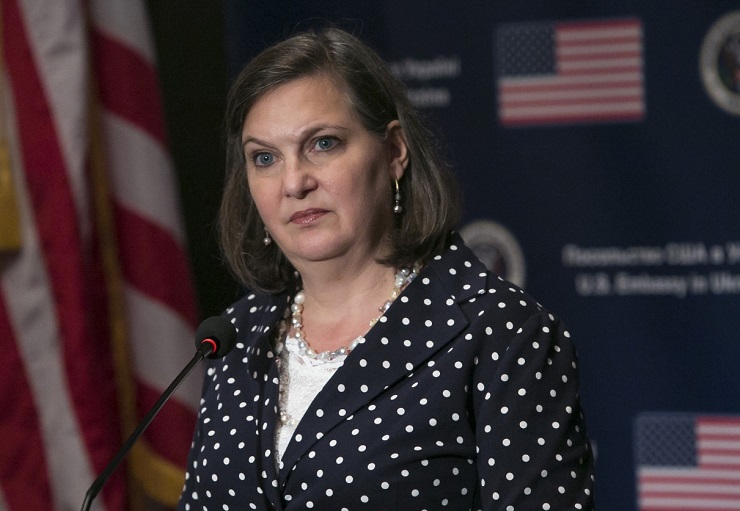
Victoria Nuland exemplifies the neocons who have led US foreign policy from one disaster to another for the past 30 years while evading accountability. It is a bad sign that [proclaimed] President Joe Biden has nominated Victoria Nuland for the third highest position at the State Department, Under Secretary for Political Affairs.
As a top-level appointee, Victoria Nuland must be confirmed by the US Senate. There is a campaign to Stop her confirmation. The following review of her work shows why Victoria Nuland is incompetent, highly dangerous and should not be confirmed.
Afghanistan and Iraq
From 2000 to 2003, Nuland was US permanent representative to NATO as the Bush administration attacked then invaded Afghanistan. The Afghan government offered to work with the US remove Al Qaeda, but this was rejected. After Al Qaeda was defeated, the US could have left Afghanistan but instead stayed, established semi-permanent bases, split the country, and is still fighting there two decades later.
From 2003 to 2005 Nuland was principal foreign policy advisor to Vice President Dick Cheney who “helped plan and manage the war that toppled Saddam Hussein, including making Bush administration’s case for preemptive military actions based on Iraq’s alleged weapons of mass destruction.” The foreign policy establishment, with Nuland on the far right, believed that removing Saddam Hussein and installing a US “ally” would be simple.
The invasion and continuing occupation have resulted in over a million dead Iraqis, many thousands of dead Americans, hundreds of thousands with Post Traumatic Stress Disorder at a cost of 2 to 6 TRILLION dollars.
From 2005 to 2008 Victoria Nuland was US Ambassador to NATO where her role was to “strengthen Allied support” for the occupations of Afghanistan and Iraq.
On the 10th anniversary of the invasion, when asked about the lessons learned Nuland responded “Compared to where we were in the Saddam era, we now have a bilateral security agreement … We have deep economic interests and ties. We have a security relationship. We have a political relationship.” Nuland is oblivious to the costs. Nuland’s loyalties are to the elite who have benefitted from the tragedy. According to online google, “One of the top profiteers from the Iraq War was oil field services corporation, Halliburton. Halliburton gained $39.5 billion in ‘federal contracts related to the Iraq war.’ Nuland’s boss, Vice President Dick Cheney, was the former the CEO of Halliburton.
In January 2020, seventeen years after the US invasion, the Iraqi parliament passed a resolution demanding the US troops and contractors leave. Now, over one year later, they still have not left.
Libya
In spring 2011, Victoria Nuland became State Department spokesperson under Hillary Clinton as she ramped up the “regime change” assault on Moammar Ghaddafi of Libya. UN Security Council resolution 1973 authorized a “No Fly Zone” for the protection of civilians but NOT an air assault on Libyan government forces.
That summer, as US and others bombed and attacked Libyan forces, she dismissed the option of a peaceful transition in Libya and falsely suggested the UN Security Council required the removal of Ghaddafi.
The campaign led to the toppling of the Libyan government and killing of Ghadaffy. Commenting on the murder and bayonet sodomizing of Ghaddafi, Nuland’s boss Hillary Clinton chortled “We came, we saw, he died.”
Before the overthrow, Libya had the highest standard of living in all of Africa. Since the US led assault, Libya has become a failed state with competing warlords, huge inflation, huge unemployment, and exploding extremism and violence that has spread to neighboring countries. Most of the migrants who have crossed the Mediterranean trying to reach Europe, or drowned trying to, are coming from Libya. By any measure, the goal of “protecting” Libyan civilians has failed spectacularly.
Syria
One reason that Clinton and hawks such as Nuland wanted to overthrow Ghaddafi was to get access to the Libyan military arsenal. That way they could funnel arms to insurgents seeking to overthrow the Syrian government. This was confirmed in secret DOD documents which state: “During the immediate aftermath of, and following the uncertainty caused by, the downfall of the ((Qaddafi)) regime in October 2011 and up until early September of 2012, weapons from the former Libya military stockpiles located in Benghazi, Libya were shipped from the port of Benghazi, Libya to the ports of Banias and the Port of Borj Islam, Syria”
In January 2012, Nuland claimed the US is “on the side of those wanting peaceful change in Syria.” While saying this, the US was supplying sniper rifles, rocket propelled grenades, and 125 mm and 155 mm howitzer missiles to the “peaceful” protestors.
The US “regime change” strategy for Syria followed the pattern of Libya. First, claim that the protestors are peaceful. Then claim the government response is disproportionate. Put pressure on the target government to paralyze it, while increasing support to proxy protesters and terrorists. As documented, there were violent Syrian protesters from the start. During the first days of protest in Deraa in mid-March 2011, seven police were killed. As spokesperson for the State Department, Nuland was a major figure promoting the false narrative to justify the “regime change” campaign.
Ukraine
In September 2013 Victoria Nuland was appointed Assistant Secretary of State for European and Eurasian Affairs. The uprising in the central plaza known as the Maidan began soon after her arrival. To underscore the US support for the protests, Nuland and Senator John McCain passed out bread and cookies to the crowd.
Protests continued into January 2014. The immediate issue was whether to accept a loan from the International Monetary Fund which was going to require a 40% increase in natural gas bills or to accept a loan from Russia with the inclusion of cheap oil and gas. The opposition wanted the Yanukovych government to take the EU/IMF loan. The opposition was comprised of different factions, including the neo-Nazi Svoboda Party and Right Sector.
In early February 2014, an audio recording of Victoria Nuland talking the US Ambassador to Ukraine, Geoffrey Pyatt, was leaked to the public. The 4-minute conversation was a media sensation because it included Victoria Nuland saying, “Fuck the EU.”.
But Nuland’s cursing was a distraction from what was truly significant. The recording showed that Nuland was meddling in domestic Ukraine affairs, had direct contacts with key opposition leaders, and was managing the protests to the extent she was deciding who would and would not be in the post-coup government! She says, “I don’t think Klitsch [Vitaly Klitschko] should go into government…… I think Yats [Arseniy Yatseniuk] is the guy… “
The reason she wanted to “Fuck the EU” was because she did not approve the EU negotiations and compromise. Nuland and Pyatt wanted to “midwife” and “glue” the toppling of the Yanukovych government despite it being in power after an election that was observed and substantially approved by the OSCE (Organization for Security and Co-operation in Europe).
Over the next few weeks, the protests escalated. The President of the American Chamber of Commerce in Kiev, Bernard Casey, described what happened next. “On February 18-20, snipers massacred about 100 people [both protestors and police] on the Maidan …. Although the US Ambassador and the opposition blamed the Yanukovych Administration, the evidence points to the shots coming from a hotel controlled by the ultranationalists, and the ballistics revealed that the protestors and the police were all shot with the same weapons.”
The Estonian Foreign Minister later said the same thing: “behind the snipers it was not Yanukovych, but it was somebody from the new (opposition) coalition”.
President of the American Chamber of Commerce President for Ukraine, Bernard Casey, continues: “On February 20, 2014 an EU delegation moderated negotiations between President Yanukovych and the protestors, agreeing to early elections – in May 2014 instead of February 2015…. Despite the signing of an agreement … the ultranationalist protestors, and their American sponsors, rejected it, and stepped up their campaign of violence.”
The coup was finalized over the coming days. Yanukovych fled to for his life and Yatsenyuk became President after the coup as planned.
One of the first acts of the coup leadership was to remove Russian as an official state language, even though it is the first language of millions of Ukrainians, especially in the south and east. Over the coming period, the “birth” of the coup government, violence by ultranationalists and neo-Nazis was prevalent. In Odessa, they attacked people peacefully protesting the coup. This video shows the sequence of events with the initial attack followed by fire-bombing the building where protestors had retreated. Fire trucks were prevented from reaching the building to put out the fire and rescue citizens inside. Forty-two people died and a 100 were injured.
A bus convoy heading back to Crimea was attacked with the anti-coup passengers beaten and some killed.
In the Donbass region of eastern Ukraine, protests against the coup were met by deadly force.
Victoria Nuland claims to be a “victim” because her conversation was leaked publicly. The real victims are the many thousands of Ukrainians who have died and hundreds of thousands who have become refugees because of Nuland’s crusade to bring Ukraine into NATO.
The audio recording confirms that Nuland was managing the protests at a top level and the results (Yats is the guy) was as planned. Thus, it is probable that Nuland approved the decision to 1) deploy snipers to escalate the crisis and 2) overturn the EU mediated agreement which would have led to elections in just 3 months.
Why were snipers deployed on February 18? Probably because time was running out. The Russian leadership was distracted with the Sochi Olympic Games ending on February 23. Perhaps the coup managers were in a hurry to “glue” it in advance.
Russia
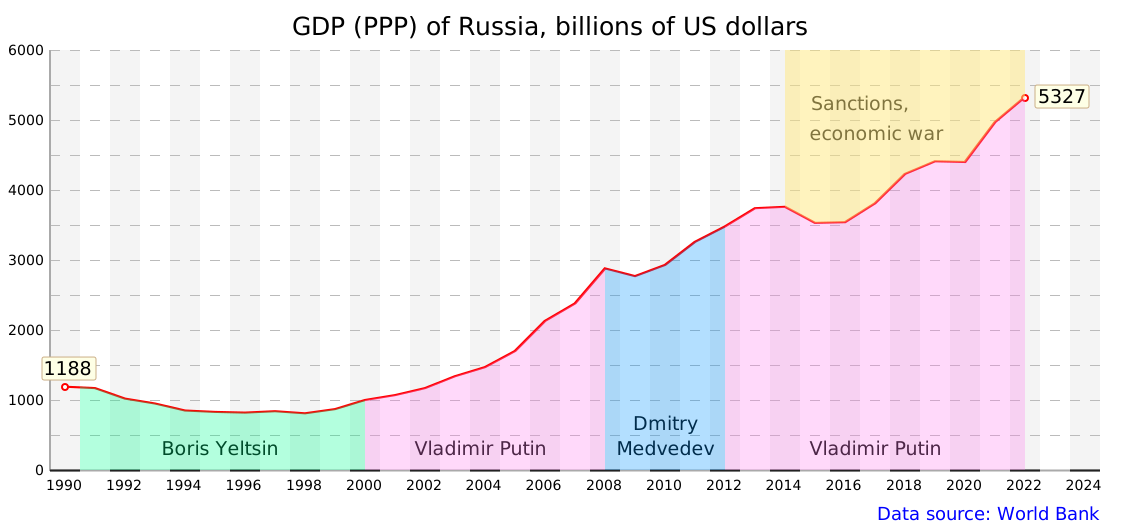
During the 1990’s, Nuland worked for the State Department on Russia related issues including a stint as deputy director for former Soviet Union affairs. The US meddled in Russian internal affairs in myriad ways. Time magazine proudly proclaimed “Yanks to the rescue: the secret story of how American advisors helped Yeltsin win.” The Yeltsin leadership and policies pushed by the US had disastrous consequences. Between 1991 and 1999, Russian Gross Domestic Product decreased by nearly 50% as the social safety net was removed. The Russian economy collapsed, oligarchs and lawlessness arose. Nuland was part of the US group meddling in Russia, deploying economic “shock therapy” and causing widespread social despair.
Meanwhile, the U.S. reneged on promises to Soviet leader Gorbachev that NATO would not expand “one inch” eastward. Instead, NATO became an offensive pact, bombing Yugoslavia in violation of international law and then absorbing Poland, Hungary, Bulgaria, Romania, the Baltic states, the Czech Republic, Albania, Croatia and more.
Coming into power in 2000, Putin clamped down on the oligarchs, restored order and started rebuilding the economy. Oligarchs were forced to pay taxes and start investing in productive enterprises. The economy and confidence were restored. Over seven years, GDP went from $1300 billion (US dollars) to $2300 billion. That is why Putin’s public approval rating has been consistently high, ranging between 85% and a “low” approval rating of 60%.
Most Americans are unaware of these facts. Instead, Putin and Russia are persistently demonized. This has been convenient for the Democratic Party establishment which needed a distraction for their dirty tricks against Bernie Sanders and subsequent loss to Donald Trump. The demonization of Russia is also especially useful and profitable for the military industrial media complex.
Victoria Nuland boosted the “Steele Dossier” which alleged collaboration between Russia and Trump and other salacious claims. The allegations filled the media and poisoned attitudes to Russia. Belatedly, the truth about the “Steele Dossier” is coming out. Last summer the Wall Street Journal reported “the bureau (FBI) knew the Russia info was phony in 2017” and that “There was no factual basis to the dossier’s claims”.
While promoting disinformation, Victoria Nuland is pushing for a more aggressive US foreign policy. In an article titled “Pinning Down Putin”, she says “Russia’s threat to the liberal world has grown”, that Washington should “deter and roll back dangerous behavior by the Kremlin” and “rebuff Russian encroachments in hot spots around the world.”
The major “hot spots” are the conflicts which Victoria Nuland and other Washington neocons promoted, especially Syria and Ukraine. In Syria, the US and allies have spent hundreds of BILLIONS of dollars promoting the overthrow of the Assad government. So far, they have failed but have not given up. The facts are clear: US troops and military bases in Syria do not have the authorization of the Syrian government. They are actively stealing the precious oil resources of the Syrian state. It is the US not Russia that is “encroaching”. The dangerous behavior is by Washington not Moscow.
Conclusion
Victoria Nuland has promoted a foreign policy of intervention through coups, proxy wars, aggression, and ongoing occupations. The policy has been implemented with bloody and disastrous results in Afghanistan, Iraq, Libya, Syria, and Ukraine.
With consummate hypocrisy she accuses Russia of spreading misinformation in the US, while she openly seeks to put “stress on Putin where he is vulnerable, including among his own citizens.” She wants to “establish permanent bases along NATO’s eastern border and increase the pace and visibility of joint training exercises.”
Victoria Nuland is the queen of chicken hawks, the Lady Macbeth of perpetual war. There are hundreds of thousands of victims from the policies she has promoted. Yet she has not received a scratch. On the contrary, Victoria Nuland probably has profited from a stock portfolio filled with military contractors.
Now Victoria Nuland wants to provoke, threaten and “rollback” Russia. A quick look at a map of US military bases shows who is threatening whom.
Victoria Nuland is dangerous and should not be confirmed.
*
Rick Sterling is an investigative journalist in the SF Bay Area. He can be reached at rsterling1@protonmail.com.
Another Zionist Joins the Biden Team
Neuberger will make our cyber secure?
By PHILIP GIRALDI • Unz Review • February 9, 2021
It does not require any particularly perspicacity to realize that the [proclaimed] President Joe Biden Administration has been loaded with Zionists who not only believe in their own vision for Greater Israel but also in some cases have strong and enduring ties to the Israeli government itself. The new Secretary of State Tony Blinken comes from an American Jewish family that has well established ties to Israel. Blinken’s paternal grandfather was one of the founders of an organization that eventually evolved into the American Israel Public Affairs Committee (AIPAC). Blinken said at his Senate confirmation hearing that the new administration would “consult with Israel” before any possible return to the 2015 nuclear deal and he also made clear that there will be “additional conditions for Iran,” an odd position to take since it was the U.S. that withdrew from the agreement and introduced a harsh sanctions regime even though Iran was in compliance. More recently, Blinken claimed that Iran is weeks away from having the enriched uranium needed to make a nuclear weapon. Strangely enough, or perhaps not, Israeli Prime Minister Benjamin Netanyahu has been making the same claim since the 1980s.
Joe Biden himself proclaims proudly that he is a Zionist and Vice President Kamala Harris has spoken at AIPAC gatherings, pledging her unconditional support for the Jewish state. Senate Majority leader Chuck Schumer has proclaimed himself “shomer” or protector of Israel in the Senate while House Speaker Nancy Pelosi has said that the “If this Capitol crumbled to the ground, the one thing that would remain would be our commitment to our aid, I don’t even call it our aid, our cooperation with Israel. That’s fundamental to who we are.” The House Majority Leader, the second ranking Democrat, Steny Hoyer has proudly led numerous Congressional delegations to Israel.
One has to suspect that many White House and Congressional friends of Israel are opportunists, knowledgeable of the fact that Zionism is career enhancing and equally aware that getting on the wrong side of “The Lobby” is a political death wish. Many politically astute senior officials meanwhile wind up by design in positions in the Department of State, CIA and National Security Council where they will be able to narrow foreign policy options in favor of the Jewish state. Under George W. Bush, folks like Paul Wolfowitz, Richard Perle, Doug Feith and Scooter Libby worked hard to infiltrate the Pentagon and White House and, having succeeded, the disastrous Iraq War was the result.
One might also recall the concurrent purge of the so-called “Arabists” in the State Department in the 1950s which has led to a domination of key foreign and national security positions relating to the Middle East by American Jews ever since. Indeed, the shift in priorities at State Department has been dramatic, with Foggy Bottom now housing an office of the Special Envoy to Monitor and Combat Anti-Semitism, allegedly because anti-Semitism is surging worldwide, apparently having nothing to do with how Israel and its supporters behave. The incumbent, Elan Carr, has recently been elevated to the rank of Ambassador-at-large and his office, as well as the Biden Administration, now insists that criticism of Israel is ipso facto anti-Semitism. So much for free speech in the new world order.
Once upon a time it was considered unwise to appoint senior officials who had personal ties to other countries lest it create a conflict of interest that would not ultimately be beneficial to either nation. In his often-cited Farewell Address of 1796, George Washington famously warned that “… permanent, inveterate antipathies against particular Nations, and passionate attachments for others should be excluded; and that in place of them just and amicable feelings towards all should be cultivated. The Nation, which indulges towards another an habitual hatred, or an habitual fondness, is in some degree a slave. It is a slave to its animosity or to its affection, either of which is sufficient to lead it astray from its duty and its interest.”
If Washington were to see the foreign policy ruined by the Israel-centric federal government that has prevailed since the time of Ronald Reagan he would surely be at a loss to understand how that could possibly have developed. Donald Trump even intensified the pander by giving the Israelis gifts that they had not asked for and Joe Biden looks like he will do more of the same. When it comes to Israel, no concession or gift is ever enough.
The FBI, in the past, routinely denied security clearances to appointed officials who had close and enduring ties to other countries that were not part of NATO. Under Donald Trump, it was reported that his son-in-law Jared Kushner had been denied a top-level clearance in part due to his family’s close personal connection with Israel, to include its Prime Minister Benjamin Netanyahu, who is regarded as a family friend. Donald Trump ignored the recommendation and used his own authority to grant Kushner the clearance anyway.
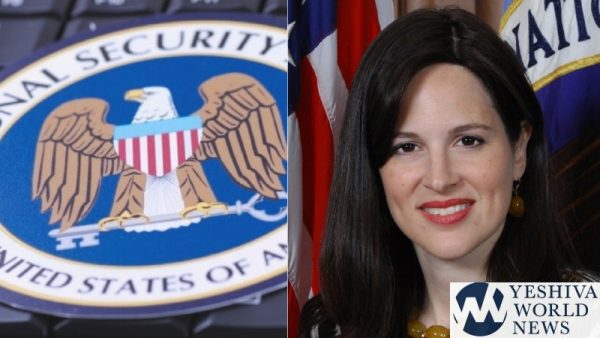
The latest friend of Israel to rise to the top as Biden completes his appointments is one Anne Neuberger, who recently was named senior director for cyber policy on the National Security Council. Neuberger has spent the last decade at the National Security Agency, the Pentagon’s cyber spying arm, where she was recently appointed head of the newly created cybersecurity directorate. Her husband Yehuda meanwhile is chair of the American Israel Public Affairs Committee (AIPAC) Baltimore executive council. He reportedly lobbied ardent Zionist Senator Ben Cardin to oppose the 2015 Iran nuclear deal the Obama White House had negotiated. Cardin did vote against it in spite of it being strongly supported by his party leader President Barack Obama.
There is, not surprisingly, an additional back story to the tale. It goes something like this: NBC news published on January 27th an article claiming that a family foundation connected to Neuberger has donated $500,000 to AIPAC, which is the largest of the hundreds of Jewish organizations that are dedicated to advancing Israeli interests in the United States. AIPAC had in 2019 an annual budget of $133 million, assets of $157 million and 476 employees. It lobbies Congress heavily and is successful to the point where it actually writes legislation favorable to the Jewish State.
The NBC article stated that: “The daughter of billionaire investor George Karfunkel, Neuberger is an officer of a foundation named for her and her husband, the Yehuda and Anne Neuberger Foundation. The foundation was created 12 years ago to ‘carry out the charitable and religious purposes of the Associated Jewish Community Federation of Baltimore,’ according to its tax records… From 2012 through 2018 — the last year for which tax records for the foundation are available — the Neuberger foundation donated $559,000 to AIPAC, tax record show. In a separate part of the forms, the foundation reports spending that exact amounts of its AIPAC donations under the category of spending for lobbying ‘to influence a legislative body’ or ‘to influence public opinion…’”
The article also observes that “[Israel] operates in its own interest and aggressively spies on the U.S., including using cyber capabilities.” It also cites “A cross section of current and former intelligence officials and foreign policy experts — none of whom were willing to be named — [who] said the donations created an appearance problem. They noted that Israel, whose companies build and sell spying gear to regimes abroad and whose intelligence agencies hack foreign governments around the world, has a big stake in American cyber policy.”
The Neuberger foundation also contributes money to the neocon dominated Foundation for Defense of Democracies (FDD), which, like AIPAC, colludes directly with the Israeli Embassy in Washington. FDD should be registered as a foreign agent, but no Israel connected entity has ever been forced to comply. To be sure, Neuberger’s involvement with the foundation and her participation in the money contribution to AIPAC should have been an element in her security clearance process, but that process may have been either modified for political reasons or the information was not made available. The NBC report observes that “A spokeswoman for the National Security Council declined to answer detailed questions about the matter, saying, ‘As a senior NSC employee, Ms. Neuberger will abide by the Executive Order on Ethics Commitments By Executive Branch Personnel.’ It’s not clear Neuberger would have been required to disclose contributions by her family foundation as part of her ethics or security clearance reviews — so it’s not known whether the Biden team vetted the donations. Although the donations are listed in public tax filings available on the web, some effort is required to find them.”
The supporters of Neuberger are incorrect in that the contributions made in her name to AIPAC, which most in Washington regard as a front for the Israeli government, would have most definitely been relevant to her clearance process. Under normal rules, it would disqualify her from having a top level clearance, but, as should be noted, we are dealing here with Israel. Neuberger’s appointment as head of U.S. cybersecurity while donating hundreds of thousands to the lobbying arm of a foreign government that recently welcomed to great fanfare a citizen of theirs, Jonathan Pollard, who spied on the U.S., as a hero is unacceptable. One might also add that Israel is regarded as the most active “friendly” government in respect to its spying on the United States, often using sayanim American Jews as their “agents,” and its well documented history of stealing U.S. high technology is extensive. It also has highly developed cyber capabilities of its own which it has recently used against American government targets, to include the White House.
The final twist to the Neuberger story is that complaints from Jewish groups and individuals began to pour into NBC after it released the story, some concerned that a wonderful organization like AIPAC was being impugned. AIPAC denounced the piece directly, claiming that its “Charges of dual loyalty are anti-Semitic and insult millions of Americans—Jewish & non-Jewish—who stand by our ally Israel.” The news network then surrendered, pulling and archiving the story after claiming that it had not met its usual standards due to its use of anonymous sources and failure to give Neuberger adequate time to respond. NBC did not contest the AIPAC claim that Israel is an actual American ally, which is itself a lie, nor to the compelling evidence that some American Jews certainly do demonstrate either dual or singular loyalty that favors Israel.
But my favorite contribution in support of Neuberger comes from President Barack Obama’s U.S. Ambassador to Israel Dan Shapiro, who appears to be in line for a Biden senior foreign policy appointment. He tweeted: “I don’t know Anne Neuberger, but the ‘charge’ against her — that she’s not fit for national security work because her family foundation supported political work that is fully protected under the Constitution — is offensive and belied by her stellar career. Glad she is serving.”
Shapiro’s claim that a senior national security official’s supporting a lobby that exists to obtain favors for a foreign country is a “free speech” issue is curious. One also wonders about Shapiro’s ultimate loyalty, recalling how he left his ambassadorial post to live in Israel, where he presumably now holds dual-citizenship. He subsequently told an American Jewish audience that Israel is “this miracle, this gift, this jewel” and worked as a senior officer in an Israeli national security think tank, representing it in testimony before Congress, which should have required him to register as a foreign agent. But he didn’t do so and got away with it because it was Israel, of course. And now he is giving advice on a critical United States national security issue in which he is dead wrong. That is the fundamental problem. We Americans are, at our peril, never allowed to challenge the extent of someone’s devotion to a foreign country if that country just happens to be Israel.
Philip M. Giraldi, Ph.D., is Executive Director of the Council for the National Interest, a 501(c)3 tax deductible educational foundation (Federal ID Number #52-1739023) that seeks a more interests-based U.S. foreign policy in the Middle East. Website is https://councilforthenationalinterest.org address is P.O. Box 2157, Purcellville VA 20134 and its email is inform@cnionline.org
Why Always Israel? Only One Country Matters to Congress and the Media
By Philip Giraldi | Strategic Culture Foundation | February 4, 2021
The job of U.S. Ambassador to the United Nations must have some kind of curse on it as it seems to attract a type of woman who seeks to prove her suitability by running up a tally of how many wars she can start and how many people she can kill. One recalls fondly Bill Clinton’s monstrous Madeleine Albright, who famously declared the deaths of 500,000 Iraqi children as “worth it” due to the sanctions that Washington had imposed and enforced. And then there was Barack Obama’s darling Samantha Power, who was the spokesperson for the completely unnecessary slaughter of Syrians and Libyans to bring them democracy. And, most recently, we have had Nikki Haley, who didn’t start her own war but kept the ones ongoing during her watch on the boil while also taking on the task of being the most strident defender of Israel’s war crimes.
And now we have Honest Joe Biden’s nominee to be the U.N. ambassador, Linda Thomas-Greenfield. She is predictably black and is a career diplomat who ended up as head of the State Department’s Bureau of African Affairs. Upon retirement in 2017, she took a position, predictably, with the Albright Stonebridge Group in Washington. The Albright in the name comes from Madeleine and the Group is where many Democratic Party establishment foreign policy types wind up. Thomas-Greenfield might not be a drama queen like Nikki Haley or evil incarnate like Albright or Samantha Power, but she demonstrated in her confirmation hearing before the Senate that she knows the lines she has to speak as well as anyone in Washington.
Thomas-Greenfield dutifully spouted the usual cant relating to the Palestinians, which means that she did not mention them at all and is completely indifferent to the gross violations of their human rights by Israel. In response to several queries from legislators about how she would work to fend off international criticism against Israeli policies, she unleashed an attack against the non-violent Boycott, Divestment and Sanctions (B.D.S.) movement which criticizes Israel’s human rights record and urges people to support Palestinian rights by pressuring Israel’s economy through boycotts, divestment, and sanctions. It deliberately eschews violence or punishing ordinary Israelis for the actions of their government and it’s economic approach is a tactic that was used successfully against the apartheid South African regime in the 1980s.
One assumes that Thomas-Greenfield, as a black American diplomat who was active when South Africa adopted majority rule, is fully aware of the fact that Israeli apartheid backed by an army of occupation that does not hesitate to shoot to kill is more pervasive than the South African version ever was. She may even be aware that what Israel does is driven by racism and amounts to genocide. Nevertheless, she told the Senators “[B.D.S.] verges on anti-Semitic, and it’s important that they not be allowed to have a voice at the U.N., and I intend to work against that… I look forward to standing with Israel, standing against the unfair targeting of Israel, the relentless resolutions proposed against Israel unfairly.” In short, Thomas-Greenfield sounded more than a little like Nikki Haley, who used to amuse the U.N. General Assembly with her homilies in defense of the Jewish state that culminated in U.S. withdrawal from the Human Rights Council, refugee agency (UNRWA), and its cultural organization (UNESCO) over claims that they all had an anti-Israel bias.
There should be no question but that the friends of Israel constitute the most powerful foreign policy lobby. It’s ability to shift policy in its favor is unmatched by any other organization that promotes the interests of a foreign nation at the expense of the United States itself. No other nation comes close to having the power to actually write legislation that is then approved by Congress while also influencing decision making in the White House. No other country avoids accountability for its actions either among politicians or in the media to anywhere near the same extent as Israel. If anyone doubts that that is true, it is only necessary to review the recent confirmation hearings of Biden appointees, where foreign policy discussions are limited to bashing China and Russia followed almost immediately by the question “And what have you done for Israel lately?”
Politicians are quite aware that giving the wrong answer on Israel can be fatal for one’s career. In many congressional districts the training of lawmakers begins early, with representatives of the hundreds of Israel Lobby affiliates interviewing potential candidates on their views relating to the Jewish state. In many cases, attempts are made to get possible candidates to sign statements affirming that they hold the correct views on Israel versus its neighbors. The sensitivity towards Israeli and Jewish issues must continue after one is elected, resulting in questions in public fora like confirmation hearings. It never hurts to advertise one’s loyalty to Israel early and often.
Questions about Israel inevitably also came up in the Senate confirmation hearing for Secretary of State Anthony Blinken. Blinken is Jewish, a confirmed Zionist, and now heads a State Department where his deputy and political affairs chief are both Jewish women hardliners who basically share his views. Biden, Blinken and company advocate policies in the Middle East that are definitely pleasing to the Israeli government, such as de facto continuing a hard line with Iran.
In a press statement last year Blinken confirmed the outlines of the Biden Administration relationship with Israel as follows: “You can count on Joe Biden to make sure Israel has what it needs to defend itself, to honor the bipartisanship traditions of U.S. support for Israel, to safeguard, not put at risk, Israel’s future as a Jewish, and democratic state. Joe Biden has spoken out strongly and stood strongly against the B.D.S. movement. He’s also been very clear that he would not tie military assistance to Israel to things like annexation or other decisions by the Israeli government with which we might disagree.”
In other words, Israel has a free hand to do whatever it wants and there will be no pushback from the Biden White House in terms of the only thing that matters – the billions of dollars in “military assistance” the Jewish state receives each year. Oh, and Blinken surely realizes that while Israel is Jewish by law it is ipso facto hardly democratic.
Blinken’s apparent first telephone call to a Foreign Secretary counterpart was to Gabi Ashkenazi of Israel. Their warm and fuzzy exchange was tweeted, with Blinken enthusing “Great speaking with @Gabi_Ashkenazi today to discuss the steadfast partnership between the U.S. and Israel. Our commitment to Israel’s security is sacrosanct, and I look forward to working with the Foreign Minister and others toward our common goals.” Ashkenazi replied “I had a warm call with @secBlinken & affirmed Israel’s commitment to the robust Israeli-US strategic partnership. I welcomed very much the POTUS commitment to IL security.”
The point is that pandering to Israel as part of the political process in the United States has become part of the DNA of both major parties. Trump was shameless in his gifts to the Jewish state all through his four years and Biden promises to deliver more of the same. But the really bad news for Americans is the fact that the wag the dog relationship with Israel ties the United States into failed policies in the Middle East for the foreseeable future. It is time for the federal government to stop focusing on doing favors for Israel and instead start talking about how the policies that mandate force projection in the Middle East to protect the Jewish state are not really working out very well for the American people. When that becomes clear to the public, change will come.
Biden/Harris Aren’t Serious About Rejoining the JCPOA
By Stephen Lendman | February 2, 2021
Time and again, public rhetoric of US officials and actions are world’s apart — why trusting them to do the right thing is foolhardy.
Candidate Biden publicly favored returning to the JCPOA nuclear deal Trump unlawfully abandoned in May 2018.
Selected, not elected, Biden won’t rejoin the landmark agreement unless Iran agrees to his regime’s unacceptable first-step demands.
Straightaway in his tenure, hardliners surrounding Biden seem more intent on abandoning the JCPOA than rejoining it by their rhetoric and actions.
Having breached the deal, it’s for the US to take good faith first steps by reversing Trump’s unlawfully imposed sanctions — a step the new US regime appears unwilling to do.
Iran vowed to reciprocate in good faith if Biden does the right thing by observing his obligations under Security Council Res. 2231.
Instead of agreeing to comply as the rule of law demands, the hardline new US regime is going the other way.
Based on what’s gone on since replacing Trump on January 20, unacceptable US hostility toward Iran appears unbending.
It’s an ominous sign for what may lie ahead.
To his credit, Trump launched no new hot wars on invented enemies.
Bush/Cheney raped and destroyed Afghanistan, Yemen and Iraq.
Obama/Biden continued inherited wars, waging its own on nonbelligerent Libya and Syria.
To his discredit, Trump continued wars he inherited, breaching his vow to end them — along with waging all-out war by other means on China, Russia, Iran, and other nations free from US control.
In its first few days in office, the Biden/Harris regime shows it’ll continue dirty business as usual that includes hostile actions against nations free from US control.
Are plans in place for escalating hot war in Syria? Will intermittent fighting in Libya heat up?
Will war by other means on China, Russia, Iran, Venezuela, and other nations escalate?
Will one or more nations free from US control be preemptively attacked in the weeks or months ahead?
Will Biden regime rhetoric favoring return to the JCPOA be replaced by escalated harshness against Iran?
Will a US staged false flag trigger a hostile move already planned?
Was returning to the JCPOA rhetoric by Biden and regime hardliners surrounding him head fake deception all along?
Knowing how the US operates against nations unwilling to subordinate their sovereign rights to a higher power in Washington, Biden/Harris regime war on Iran by other means is far more likely than good faith steps toward returning to JCPOA compliance.
On Sunday, Iran’s Parliament Speaker Mohammad Baqer Qalibaf slammed Biden’s unacceptable demands on Iran, including Blinken’s hostile remarks, saying:
“Instead of setting preconditions for carrying out its commitments… Biden (and regime members surrounding him) must determine how it is going to fulfill the commitment to the removal of sanctions practically,” adding:
“Iran won’t take good faith first-step actions in return for US promises to be breached like before.”
“It is like we have paid the seller for a commodity, but have not received anything. Who would make such a bargain?”
Separately, Iranian Foreign Minister Zarif tweeted:
“Throughout that sordid mess, Iran abided by the JCPOA, only took foreseen remedial measures. Now, who should take 1st step?”
“Never forget Trump’s maximum failure.”
Claims by Blinken about wanting to negotiate with Iran on returning to the JCPOA — provided its government acts first with no assurance of compliance steps Biden may take — ring hollow.
On Monday, Iranian Foreign Ministry spokesman Saeed Khatibzadeh said the following:
“The US needs to return to its commitments, and if that happens, it will be possible to negotiate within the framework of the Joint Commission of the JCPOA.”
Unless Biden fully complies with SC Res. 2231 and lifts unlawfully imposed sanctions on Iran, preserving the JCPOA will be jeopardized.
Khatibzadeh stressed that rhetoric and signing “a piece of paper will not suffice.”
If Biden “intends to correct the US’ wrong path, it should take practical measures.” Nothing less is acceptable.
On Sunday, IRGC commander General Hossein Salami said Iranian self-sufficiency showed it can operate successfully with or without Washington’s return to the JCPOA and removal of sanctions.
Over the weekend, Atomic Energy Organization of Iran (AEOI) head Ali Akbar Salehi said the following:
Iran is “producing 20 grams (of 20% enriched uranium) every hour.”
“We are producing half a kilo every day.”
“We produce and store this 20% (enriched uranium) and if they return to the nuclear deal, we will return to our undertakings too.”
The AEOI is required to implement policies adopted by Iranian lawmakers.
“(B)oth the government and the AEOI have declared that they do not have any technical problems with implementation of parliament(ary) (laws) and we launched 20% enrichment within 24 hours.”
If the US complies with SC Res. 2231 requirements that include lifting unlawful sanctions on Iran, the above policy can be reversed with equal swiftness.
Iranian lawmakers approved the Strategic Counteractive Plan for Lifting Sanctions and Safeguarding Rights of Iranian People.
The measure highlights Iran’s legitimate right to use nuclear technology with no military component and be free from unlawfully imposed US sanctions.
It calls for increased production of 500 kg per month of uranium enriched to 20% purity and be stored at the Fordow nuclear site, along with other provisions being implemented.
If unlawful actions against Iran by the US and E3 countries are reversed, Iran will return to JCPOA compliance as affirmed by SC Res. 2231 in 2015.
If not, current actions permitted under the agreement’s Article 26 and 36 will continue.
At this time, rhetoric and actions by Biden/Harris suggest continued noncompliance with their JCPOA obligations.
If this policy continues unchanged, the landmark agreement will unravel altogether.
That’s where things appear heading — Iran no doubt to be falsely blamed for lawless US/E3 actions against the country.
If things turn out this way, it’ll be further proof that these countries can never be trusted.
Further negotiations with them will be a waste of time.
A Final Comment
Biden demands what Iran won’t accept — renegotiating the JCPOA to include restrictions on its legitimate missile program.
He also wants constraints on Iran’s lawful involvement with and support for Syria’s Bashar al-Assad and Lebanon’s Hezbollah.
In response to unacceptable Biden regime demands, Iranian Foreign Minister Zarif said the US side in violation of its JCPOA obligations is in no position to demand conditions for Biden’s return to the landmark agreement.
Iran won’t change a single word in what was agreed on following years of negotiations, Zarif stressed.
The Security Council affirmed agreement is binding international and US constitutional law — what no nation can unilaterally change.
Netanyahu tells Biden how to deal with Iran
By Philip Giraldi • Unz Review • February 2, 2021
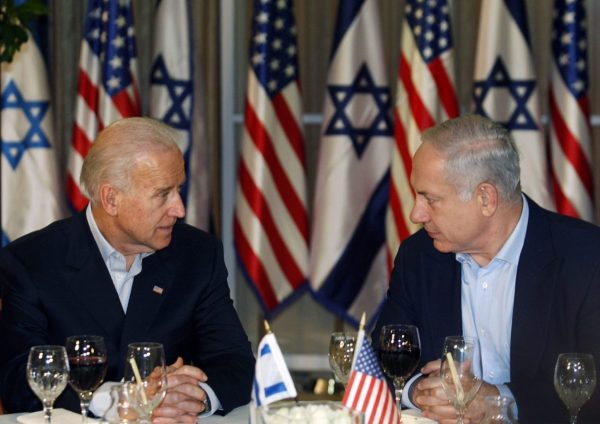
Anyone who persists in believing that the United States is not Israel’s poodle should pay attention to the comedy that is playing out right now. Joe Biden was [proclaimed] president for less than a week when the Prime Minister Benjamin Netanyahu government announced that he would soon be receiving a possibly unwelcome visitor in the form of the Israeli foreign intelligence service Mossad’s chief Yossi Cohen, who will be flying to Washington in February to explain the correct policy when dealing with Iran. And lest there be any confusion on the issue, the Israel Defense Force chief of staff Lieutenant General Aviv Kochavi also announced that any Biden attempt to mend fences with the Islamic Republic will have to meet certain conditions or Israel will exercise other options. He said “In light of this fundamental analysis, I have instructed the Israel Defense Forces to prepare a number of operational plans, in addition to those already in place. It will be up to the political leadership, of course, to decide on implementation but these plans need to be on the table.” Another government minister clarified that the options would include “an attack” on Iran, though there has been no indication whether or not Israel would possibly contemplate deploying its tactical nuclear weapons to prevent retaliation by Iranian forces.
There is no limit to Israeli hubris. A leading Rabbi in Israel is predicting that as the United States is in decline it is up to the Jewish state to take over the role of “guiding civilization forward.” And that kind of thinking shapes how Israel treats the United States with condescension, acting as if it is the knowledgeable elder statesman whose guidance must be respected. In this case the Zionist solution to the Iran problem will by design be unpalatable for the government in Tehran if it intends to remain sovereign. For Israel the correct policy for dealing with Iran is to effectively disarm it and make it impossible to establish any sphere of influence in the countries adjacent to it, to include Iraq, Syria, and Lebanon. That would be to concede Israeli dominance over the entire region and if the Iranians do not play ball the next step would be to convince the United States to attack it on some pretext, possibly to include an Israeli “false flag” to start the process going.
The Times of Israel sums up the Israeli official position as “… Iran must halt the enriching of uranium; stop producing advanced centrifuges; cease supporting terror groups, foremost Lebanon’s Hezbollah; end its military presence in Iraq, Syria and Yemen; stop terror activity against Israeli targets overseas; and grant full access to the IAEA on all aspects of its nuclear program.” Completing the disarming of Iran would also include requiring Tehran to abandon its ballistic missile program.
The irony is, of course, that it is Israel that has a secret nuclear arsenal that it created by stealing uranium and triggers from the United States and it is also the leading regional supporter of terrorist groups, to include al-Qaeda and ISIS. Iran’s presence in Syria is due to its lending assistance to the Damascus government’s resistance to the insurgencies supported by Israel and the United States. And Iran has not targeted Israeli citizens and groups overseas, but Israel and the U.S. have assassinated Iranian officials while also bombing both government and civilian targets in Syria, Iraq and Lebanon. And all of the kinetics occur in a context where Israel continues its illegal occupation of Palestine and ethnic cleansing of the Palestinian people replete with both war crimes and crimes against humanity. Iran is also a signatory to the Nuclear Non-Proliferation Treaty, which Israel is not, so who is the rogue state?
Biden will likely fold like a cheap suit when confronted by the force majeure of Cohen. The new American president has assembled a national security team for dealing with the Middle East that is nearly all Jewish and all Zionist, an affliction that he himself claims to suffer from. The Biden nominee for secretary of state Tony Blinken said at a confirmation hearing last week that the new administration would “consult with Israel” before any possible return to the 2015 Joint Comprehensive Plan Of Action (JCPOA) nuclear deal and he also made clear that there would be additional conditions for Iran. It was an odd comment for a government official who is supposed to support American interests, but it was predictably what Congress wanted to hear. As Iran has already indicated that it is unwilling to abandon its defenses and its role in the region, the Biden proposal will be a non-starter in any case, though Israel will be prepared to apply its own veto if anything undertaken by the State Department moves beyond the talking stage.
Currently there is credible speculation that Israeli intelligence has been able to compromise most if not all of the U.S. government’s information systems as well as those of major corporations. As the Jewish state is the most active in spying against the United States, that should surprise no one. For Israel to interfere in U.S. politics or government blatantly is not exactly new, though it is rare to have anyone in the mainstream media or in government say anything about. That is because Israel’s ability to wage war against critics is second to none, having at its back nearly unlimited financial resources and easy access to the media as well as active supporters from among the nearly six hundred Jewish organizations that exist in the United States.
Indeed, Israel has been involved in American politics frequently, one might even argue incessantly, even if it is predictably never held accountable. To cite only one well known example, it has been suggested that Russiagate was really Israelgate based on what actually took place shortly after the 2016 election. The contact with Russia was set up by Prime Minister Benjamin Netanyahu, who was at the time seeking to kill an anti-Israeli vote in the United Nations. He sought to do so by lobbying Donald Trump son-in-law Jared Kushner on the matter shortly after the 2016 election. Netanyahu was particularly close to the Kushner family, having on at least one occasion slept overnight at their mansion in Manhattan.
Prompted by Netanyahu, Kushner dutifully contacted Trump National Security Advisor-designate Michael Flynn and asked him to privately call Russian Ambassador Sergei Kislyak to lobby Moscow to vote against the bill. There were two phone calls but Kislyak refused to cooperate. It should be noted that while all of this was taking place Barack Obama was still president and his intention to abstain on a vote on Israel’s illegal settlements is what provoked Netanyahu to act, so Netanyahu-Kushner-Flynn were subverting their own elected government and were definitely in the wrong. Flynn was subsequently thrown under the bus by his Jewish friends without any mention in the media of the Israeli role, thereby becoming the first casualty of “Russiagate.” He was subsequently forced to resign from his post in disgrace in February 2017.
The whole issue of the U.S.-Israel relationship constitutes one of the most formidable “red lines” in American politics as part of its power comes from the fact that the media and political classes pretend that it does not even exist. Israel’s power was poisonous enough prior to the election of Donald Trump, but Trump, “advised” by a gaggle of orthodox Jews, dramatically shifted the playing field to favor Israel in ways that will define the relationship for years to come. Biden’s team is little better and the president will be taking his orders from Jerusalem and saluting as long as he stays in the White House. Will it lead to a totally unnecessary and unwinnable war with Iran? That is what Israel demands above all, and Israel always gets what it wants.
Philip M. Giraldi, Ph.D., is Executive Director of the Council for the National Interest, a 501(c)3 tax deductible educational foundation (Federal ID Number #52-1739023) that seeks a more interests-based U.S. foreign policy in the Middle East. Website is https://councilforthenationalinterest.org address is P.O. Box 2157, Purcellville VA 20134 and its email is inform@cnionline.org
Sharjah: Emir’s wife criticises UAE-Israel education cooperation

MEMO | January 29, 2021
The wife of the Emir of Sharjah has criticised the UAE’s cooperation with Israel in the education field. Sheikha Jawaher Bint Mohammed Al-Qasimi made her comment about an online meeting between the ministries of education in the UAE and Israel to discuss cooperation, student exchanges, and joint academic studies.
“Their [the Israelis’] curriculum encourages the killing of Arabs and stealing Arab lands,” she said on Twitter. The Sheikha also retweeted a post by “Ahmed”, a tour guide, about Andalusia in which he recalled the background of Israeli Minister of Education Yoav Galant.
“Who is the Israeli Education Minister Yoav Galant?” wrote the tour guide. “He is one of the bloodiest generals in the history of Israel. He participated in the killing of Hassan Salameh in Beirut in 1979. He is the leader of the operation to storm the Jenin [refugee] camp, which led to the killing of dozens of defenceless Palestinians, and operation Grapes of Wrath against Lebanon (Lebanese Qana massacre) in 1996.”
Sheikha Jawaher’s tweet is the most prominent and explicit objection to have emerged from the ruling circles in UAE against cooperation with Israel. Hundreds of Twitter users have praised her courage in expressing her opinion.
In 2013, the UN-appointed Sheikha Jawaher as the first prominent advocate for the UN High Commissioner for Refugees in the UAE. This, said the international organisation, was because of her “proven track record in the field of humanitarian work, community support, and women’s empowerment.”
The UAE and Israel signed an agreement last September to normalise their relations under US auspices, despite Palestinian and Arab objections.
READ ALSO:
Kuwait school book shows Israel on map in place of Palestine
US military refusal to pull out troops to be met with Iraqi nation’s resistance, MP warns
Press TV – January 29, 2021
An Iraqi lawmaker has stressed the need for the implementation of a resolution adopted by Iraq’s parliament concerning the expulsion of US-led foreign forces from the Arab country, saying that the Iraqi nation will resort to resistance in case the Pentagon refuses to abide by the decision.
“The decision to remove foreign troops from Iraq is an Iraqi matter. If the Iraqi government’s political solutions for the withdrawal of foreign forces do not succeed, we will then resort to resistance to attain the objective,” Mohammed al-Baldawi, a member of the Iraqi Parliament’s Security and Defense Committee, told the Arabic-language Baghdad Today news agency on Thursday.
He made the remarks as the Wall Street Journal reported on Tuesday that authorities in Washington are counting on reconsidering the decision of former US president Donald Trump’s administration to reduce the number of US forces in Afghanistan and Iraq.
The newspaper quoted Pentagon spokesperson John Kirby as saying that the official decision to review the number of US forces in Afghanistan and Iraq has not yet been taken.
He asserted, however, that the current US [proclaimed] President Joe Biden’s administration “is counting on a better understanding of the current situation with regard to operations in both countries.”
Baldawi added, “The decision to expel foreign troops from Iraq has been finalized and it is irreversible. Foreign troops have no option but to withdraw. We are working with the government to implement the [parliamentary] resolution.”
“The presence of US-led foreign troops in Iraq poses a dangerous threat to the security and stability of the country as well as the region, because the United States wants to plunge Iraq into turmoil. This is completely rejected,” the Iraqi legislator concluded.
Anti-US sentiment has been running high in Iraq since the assassination of top Iranian anti-terror commander Lieutenant General Qassem Soleimani, commander of the Quds Force of Iran’s Islamic Revolution Guards Corps (IRGC), and his Iraqi trenchmate, Abu Mahdi al-Muhandis, deputy head of the Popular Mobilization Units, along with their companions in a US terror drone strike authorized by Trump near Baghdad International Airport on January 3 last year.
Iraqi lawmakers approved a bill two days later, demanding the expulsion of all foreign military forces led by the United States from the Arab country.
Featured Video
America Racing to Strategic Defeat in Iran
or go to
Aletho News Archives – Video-Images
From the Archives
Should Europeans ‘Thank’ the Americans for Destroying Nord Stream?
By Robert Bridge | Strategic Culture Foundation | September 29, 2022
With an investigation continuing into the destruction of the Nord Stream gas pipeline that provided energy supplies to Europe from Russia, there appears to be just one prime suspect, and that should surprise nobody.
Following the sabotage of the Nord Stream 1 and 2 gas pipelines, former Polish Foreign Minister Radoslaw Sikorski already seemed to know the identity of the perpetrator when he tweeted out: “Thank you, USA.”
At first glance, it seemed that Sikorski was speaking sarcastically, berating Washington for carrying out an attack that will have severe repercussions for the people of Europe. After all, how could anyone see any good coming from the termination of Europe’s primary source of gas reserves with winter just around the corner? It was Sikorski’s homeland of Poland, after all, that urged its citizens to collect firewood in the face of dwindling gas reserves.
In fact, the Polish diplomat was speaking one-hundred percent literally… continue
Blog Roll
 Aletho News
- Growing insecurity, soaring prices fuel protests in north as regime bans evacuation: Sources
- Iran denies responsibility for ‘depraved’ attack on Kuwait desalination plant
- Bring The Troops Back. End This War Now!
- Can we please stop calling Israel the ‘only democracy in the Middle East’ now?
- US should start removing its troops for Germany, proposes AfD co-leader Chrupalla
- Iran Red Crescent: 600 educational centers attacked in US-Israeli ‘war crimes’
- Russian Oil Tanker Arrives in Cuba Amid U.S. Blockade
- America Racing to Strategic Defeat in Iran: Lt Col Daniel Davis
- FTC Warns Visa, Mastercard, PayPal, Stripe Over Political Debanking
- Russian tanker approaches Cuba despite US oil blockade
- If Americans Knew
- Israeli police block Catholic cardinal from entering Church of the Holy Sepulchre on Palm Sunday
- Israel is assassinating journalists again, more than any other nation, anywhere, ever – Not a ceasefire Day 170
- Over 300 US service members wounded, majority have brain injuries – Not a ceasefire Day 169
- Researchers at Human Rights Watch Resign Over Blocked Report on Palestinian Refugee Return
- Jewish Groups Are Backing a War Americans Don’t Want
- Eric Fingerhut Thinks He’s the President of the Jews
- Top Jewish Philanthropists, Rabbis Urge Israeli President to Take Action Against ‘Jewish Extremists’
- Don’t Be Fooled. Zionist Leaders Have Always Wanted to Control Southern Lebanon
- Israel’s widespread use of torture is a core element of its genocide against the Palestinian people
- In Israel’s War on Iran, Many Middle East US Bases Rendered “All But Uninhabitable”
- No Tricks Zone
- New Study Finds Warming Saves Lives…Cold Temperatures 12 Times More Deadly Than Excess Heat
- German Science Blog Accuses PIK Climate Institute Of Hallucinating Climate Tipping Points
- Devastating Assessment Of Comirnaty Vaccine By Former Senior Pfizer Europe Toxicologist
- New Study: CO2 Is ‘Effectively Negligible’ As An Explanatory Climate Change Factor Since 2000
- Former Pfizer Toxicologist Dr. Helmut Sterz Tells Bundestag Hearing Pfizer Vaccine Should Have Never Been Approved
- Energy Expert: Germany’s Nuclear Phaseout Was A “500 Billion Euro Mistake”
- New Research: South Australia’s Mid-Holocene Sea Surface Temperatures Were 4°C Warmer Than Today
- Storing Green Energy To Last Germany 10 Days Would Require A 60-Million Tonne Battery
- New Studies: UK Sea Levels Were 4 Meters Higher Than Today During The Mid-Holocene
- Destructive Green New Deal: German Energy And Metal Group Warns Of Drastic Crisis
 Aletho News