Biden regime’s coercive Iran policy threatens serious new regional crisis
BY GARETH PORTER · THE GRAYZONE · JANUARY 25, 2021
A close analysis of recent statements by members of President Joseph Biden’s foreign policy team indicates his administration has already signaled its intention to treat negotiations with Iran as an exercise in diplomatic coercion aimed at forcing major new concessions extending well beyond the 2015 nuclear agreement. The policy could trigger a renewed US-Iran crisis as serious as any provocation engineered by the Trump administration.
Although the Biden team is claiming that it is ready to bring the United States back into the Joint Comprehensive Plan of Action (JCPOA) if Iran comes into full compliance first, it is actually planning to demand that Iran give up its main source of political leverage. Thus, it will require Iran to cease its uranium enrichment to 20 percent and give up its accumulated stockpile of uranium already enriched to that level before the United States has withdrawn the economic sanctions that are now illegal under the JCPOA deal.
Meanwhile, the Biden team is planning to hold on to what it apparently sees as its “Trump card”— the Trump administration’s sanctions against Iran oil exports that have gutted the Iranian economy.
But the Biden strategy faces a serious problem: Iran has already demanded all sanctions imposed after the JCPOA took effect must be ended before Iran would return to compliance. Iran expects the United States, as the party which initially broke the agreement, to come into compliance first.
The new Biden coercive strategy
The Biden administration is banking on a scenario in which Iran agrees to cease its enrichment to 20% and reverse other major concessions Iran made as part of the 2015 agreement.
The Biden team then states it would start a new set of negotiations with Iran, in which the United States would use its leverage to pressure Iran into extending the timeline of its major commitments under the deal. Further, Tehran will be required to accept a modification in its missile program, as European allies have urged.
The Biden team’s Iran strategy was not hastily cobbled together just before inauguration. National Security Adviser Jake Sullivan outlined it in an interview last June with Jon Alterman, the Middle East program direct at the Center for Strategic and International Studies. “You can get some early wins on the nuclear program but tie long-term sanctions relief to progress on both [nuclear and other issues] files,” Sullivan explained.
Sullivan made it clear the primary goal of his proposed strategy was to constrain Iran by imposing extended restraints on its nuclear program. The idea, he explained, was “to see, is it possible to get a short term win on the nuclear file to basically get Iran back into compliance with the JCPOA and to then put the longer term disposition of Iran’s nuclear program on a negotiating track.”
Biden’s future NSC director implied that US sanctions would be exploited to draw Iran into talks with Israel and Saudi Arabia on missiles and other issues, but not at the expense of U.S. aims on the nuclear issue. The assumption that the US would maintain its coercive leverage on Iran is at the center of the policy. As Sullivan said, summarizing an article he co-authored for Foreign Affairs, “the U.S. should say, ‘We are going to be here applying various forms of leverage, including economic leverage as well as military dimensions, apart from whether we have 20,000 more troops or 10,000 less troops there’.”
At the heart of Biden’s strategy is the demand for Iran to return immediately to full compliance with the nuclear agreement. Before Iran rejoins the pact, the new administration expects it to reverse the moves it made to increase the level and the speed of enrichment in response to Trump’s withdrawal.
The Biden administration’s demand ignores the fact Iran scrupulously observed all of the JCPOA’s provisions for two years after the Trump administration had withdrawn from the agreement. It was only after the Trump administration reintroduced old sanctions outlawed by the agreement and introduced crushing new sanctions aimed at preventing Iran from exporting oil that Iran began enriching uranium at higher levels.
By piling up onerous demands while offering few concessions of its own, the new administration conveys the clear message that it is in no hurry to return to the JCPOA. Secretary of State of Tony Blinken stated in his confirmation testimony that the Biden administration was “a long way” from returning to the deal and said nothing about reversing any of the sanctions that were introduced or reintroduced by the Trump administration after it quit the agreement.
Robert J. Einhorn, a key Obama policymaker on the Iran nuclear issue as State Department Special Adviser on Arms Control and Proliferation who has maintained contacts with Biden insiders, has provided an explanation for that ambiguous message. He suggested that the Biden administration aims to press Iran for a deal falling well short of full restoration of the JCPOA — an “interim agreement” involving “rollback” of part of Iran’s current enrichment activities and going beyond the JCPOA in return for “partial sanctions relief.”
That relief would include “some” of the revenues from oil sales that have been blocked in foreign bank accounts. Einhorn appeared to confirm that the new Biden strategy would be based in holding on to the leverage conferred by Trump sanctions against Iran’s oil and banking sectors, which have crippled the country’s economy.
Learning the wrong lesson from Obama’s coercive diplomacy
Biden’s foreign policy team is comprised largely of Obama administration officials who either initiated nuclear deal talks in 2012-2013 or who were involved in the later stages of the negotiations. NSC Director Sullivan and CIA Director William Burns were key figures in the early talks with Iran; Blinken oversaw the later phase of the negotiations as Deputy Secretary of State, and Undersecretary of State Wendy Sherman was in charge of day-to-day negotiations with Iran on the JCPOA until the final round in Vienna in 2015.
So it should be no surprise that the Biden team is pursuing an Iran strategy similar to the one that the Obama administration followed in its negotiations with Iran on the JCPOA itself. The Obama administration proudly claimed success in increasing Iran’s “breakout time” for obtaining enough enriched uranium for a single bomb from two or three months to a year through the pressure of heavy sanctions. It believed it had secured a winning diplomatic hand in 2012 when it got European allies to buy into its coercive strategy of oil and banking sanctions that would cut deeply into Iran’s foreign currency earnings.
But Iran’s enrichment efforts before negotiations on the nuclear deal began in 2012 tell a very different story. As the IAEA reported at the time, between late 2011 and February 2013, Iran enriched 280 kg of uranium to 20 percent, which would have placed it well over the level regarded as sufficient for “breakout” to a bomb. Meanwhile, Iran roughly doubled the number of centrifuges capable of 20 percent enrichment at its Fordow enrichment facility.
Instead of storing the total amount of uranium enriched to 20 percent for a possible bomb, however, Iran did exactly the opposite: it immediately converted 40 percent of its total capacity of enriched uranium to power Iran’s reactor. What’s more, it did not take steps to make the new centrifuges at Fordow capable of enrichment.
Iran was clearly amassing its stockpile and enrichment capability as bargaining chips for future negotiations. During a September 2012 meeting with EU officials in Istanbul, Iran confirmed the strategy by offering to suspend its 20 percent enrichment in return for significant easing of Western sanctions.
The Obama administration believed its sanctions weapon would prevail over Iran’s diplomatic chips. But Iran persisted in asserting its right to more than a token enrichment program. In the very last days of the negotiations in 2015, Secretary of State John Kerry sought to retain language that would allow the United States to reimpose sanctions deep into the implementation of the agreement, as an Iranian official told this writer in Vienna. But Iran held fast, and Obama needed to get an agreement. Kerry ultimately gave up his demand.
Blinken, Sullivan and the other Biden administration officials who worked on Iran during the Obama administration seem to have forgotten how Iran used 20 percent enrichment to get the United States to drop its sanctions. In any case, they are so enamored with the Trump sanctions and their role in stifling Iranian oil sales that they believe they will have the upper hand this time around.
In its bid to coerce a state that is fighting for its most basic national rights into submission, the Biden administration has exhibited a stubborn refusal to acknowledge the limits of U.S. power. The Trump administration’s “maximum pressure” campaign has already prompted Iran to establish military capabilities that it previously lacked.
If the Biden administration refuses to relent on its coercive diplomacy and provokes a crisis, Iran can now inflict serious costs on the United States and its allies in the region. Yet Biden’s foreign policy team appears so far to be oblivious to the serious risks inherent in its current path.
Gareth Porter is an independent investigative journalist who has covered national security policy since 2005 and was the recipient of Gellhorn Prize for Journalism in 2012. His most recent book is The CIA Insider’s Guide to the Iran Crisis co-authored with John Kiriakou.
Biden’s Interventionist Agenda
By Stephen Lendman | January 26, 2021
Biden/Harris regime interventionist dirty tricks began straightaway in office.
Russia was targeted last weekend by made-in-the-USA rent-a-mobs in Moscow, St. Petersburg and other cities — more of the same likely ahead.
Instead of extending an olive branch for improved bilateral relation, dirty business as usual took precedence.
Much the same in various forms is likely against China, Iran, Venezuela, and other nations free from US control.
That’s how the scourge of US imperialism operates. No one is safe from its war on humanity anywhere worldwide.
Days before Biden/Harris replaced Trump, a large US military convoy entered Syria from Iraq.
Reportedly, it was to reinforce illegally established Pentagon bases east of the Euphrates River.
Instead of withdrawing US forces from the country as Trump once promised but never followed through on, is the Pentagon’s presence in Syria being expanded?
On day one of Biden’s term in office began, another large-scale US military convoy entered Syria from Iraq.
Syrian state media reported that a major Pentagon buildup is underway, adding:
“(A) convoy… of 40 trucks loaded with weapons and logistical materials, affiliated to the so-called international coalition have entered in Hasaka countryside via al-Walid illegitimate border crossing with north of Iraq, to reinforce illegitimate bases in the area.”
“Over the past few days, helicopters affiliated to the so-called international coalition have transported logistical equipment and heavy military vehicles to Conoco oil field in northeastern Deir Ezzor countryside, after turning it into military base to reinforce its presence and loot the Syrian resources.”
The Biden/Harris regime is infested with some of the same hawks responsible for launching aggression against Syria and Libya in 2011.
Is what’s ongoing prelude for escalating war in Syria instead of ending what’s gone on for the past decade that’s been responsible for mass slaughter and destruction?
At a Security Council Session last week, Syria’s UN envoy Bashar al-Jaafari said the following:
“The new US (regime) must stop acts of aggression and occupation, plundering the wealth of my country, (and) withdraw its occupying forces, and stop supporting (ISIS and other jihadists), illegal entities, and attempts to threaten Syria’s sovereignty, unity and territorial integrity.”
“The American occupation forces continue to plunder Syria’s wealth of oil, gas and agricultural crops, burning and destroying what it cannot steal.”
The above remarks and similar ones when made fall on deaf ears in Washington.
US aggression in Syria continues with no end of it in prospect, the same true for Afghanistan, Yemen, and numerous other nations by illegal sanctions and other dirty tricks.
Since the US launched war on Syria a decade ago, Biden falsely blamed President Assad for US high crimes committed against the country and its people, along with illegitimately calling for him to step down.
It remains to be seen how Biden’s agenda toward Syria unfolds ahead.
According to his campaign’s foreign policy statement:
“Biden would recommit to standing with civil society and pro-democracy partners on the ground (sic).”
“He will ensure the US is leading the global coalition to defeat ISIS (sic) and use what leverage we have in the region to help shape a political settlement to give more Syrians a voice (sic).”
The US is committed to eliminating democracy wherever it exists, prohibiting it at home.
Instead of waging peace, it prioritizes endless wars of aggression in multiple theaters
ISIS, al-Qaeda, and likeminded terrorists groups were created by the US for use as proxy fighters in Syria, Iraq and elsewhere.
In December, the UN accused the US of obstructing Syria’s ability to rebuild, along with enforcing illegal sanctions to suffocate its people into submission to Washington’s will.
According to the UN, the US is running “roughshod over human rights, including the Syrian people’s rights to housing, health, and an adequate standard of living and development.”
What Obama/Biden began and Trump continued, Biden/Harris are likely to pursue — an agenda of endless US war on Syria and its long-suffering people, perhaps intending to escalate things ahead.
In response to Biden/Harris interventionism in Russian cities last weekend, China’s Global Times accused the US of “hyping up the protests,” adding:
“Just as global analysts have predicted, the (Dems) now in majority political power (are) not a good thing for Russia” or any other nations free from US control.
What happened last weekend shows that Biden/Harris are committed to “interventionism.”
Dems “will not miss the opportunity to interfere in the internal affairs of Eurasia, or anywhere in the world.”
On Monday, China’s Foreign Ministry spokesman Zhao Lijian stressed Beijing’s “oppos(ition) (to) external interference in the internal affairs of a sovereign country.”
Biden’s press secretary Jennifer Psaki expressed support for unlawful interventionism against Russia, China, and other nations, saying:
“He’s committed to stopping… abuses on many fronts (sic), and the most effective way to do that is through working in concert with our allies and partners to do exactly that (sic).”
Under both wings of its war party, the US is committed to seek regime change in all nations unwilling to sell their souls to Washington.
Biden’s entire public career included pursuit of this diabolical agenda.
He and dark forces in charge of directing his domestic and geopolitical policies are virtually certain to continue US war on humanity without letup ahead.
Pakistanis hold massive rally against ties with Israel
Press TV – January 23, 2021
Tens of thousands of Pakistanis have held an anti-Israel march in the country’s major city of Karachi, rejecting the possibility of normalizing ties with the occupying Israeli regime.
The “million-man march” organized by opposition Jamiat Ulema-i-Islam-Fazl (JUI-F) was held with participants donning the colors of the JUI-F and raising tall black and white striped flags.
“Israel is involved in the genocide of Muslims in Palestine and we would never allow the federal government to establish diplomatic relations with it,” JUI-F leader Maulana Saleemullah Alwazi told Pakistani daily The News International.
In recent months, the news of deals signed by a few Arab dictatorships to normalize diplomatic relations with Israel under intense US pressure has sparked widespread anger among Pakistani people, who hold strong feelings for the Palestinian cause.
In December, top Pakistani officials fiercely denied rumors publicized by Israeli news outlets that Islamabad was moving towards a similar deal.
Pakistani Prime Minister Imran Khan rejected as “baseless” reports of his government officials visiting Israel, insisting why would any of his ministers visit Tel Aviv when Islamabad does not even recognize Israel.
Pakistan’s Foreign Minister Shah Mahmood Qureshi said later in December that he had informed the UAE — one of the US-backed kingdoms that recently normalized ties with Israel — of Islamabad’s “steadfast” policy towards Tel Aviv, insisting that the country will refuse to recognize it until the issue of Palestine is resolved.
The top Pakistani diplomat said he had explained to his Emirati counterpart Sheikh Abdullah bin Zayed Al Nahyan the “depth of emotions and feelings Pakistanis have about Palestine and Kashmir.”
The normalization trend has drawn widespread condemnation from Palestinians, who seek an independent state in the occupied West Bank and Gaza Strip, with East Jerusalem al-Quds as its capital. They say the deals are “a stab in the back” of the Palestinians.
Whatever is Wrong with Mike Morell?

By Steve Brown | Ron Paul Institute | January 7, 2021
Obama – er, Biden – pushed hard for the removal of Syria’s Assad and engineered US destabilization of Syria partly at the behest of Israel in 2011 and 2014 , in part to allow Israel free reign to annex the Jordan Valley and West Bank, in tandem with Israel’s long-standing annexation of the Golan. Yes, the Israeli Nile-to-Euphrates agenda is alive and quite well, not just among Israel’s 3rd templars, but within Biden’s proto-expansionist regime in the DC wings, too. Now, what’s that again about Russia Russia? Biden’s Russia, Russia? There’s just one problem for the Axis of Evil’s plan going forward: Russia’s continued opposition to the US plan in Syria.
Russia likely anticipated the complete destabilization of the Middle East by the US and its Israeli ally by design in 2014, where Takfiri malign infestation of the region not only threatened Europe, but Russia too, with a further militarist threat to Iran and West Asia. Russia stands in the way of that Imperial agenda, and that’s a big deal for Washington’s elite donor class. Russia also provided succor to Ed Snowden, when the DC shark pit would have crucified him alive; just as the same bloodthirsty pack will crucify Julian Assange too should they ever get their bloody incisors into him.
Now, rather than risk world war, the former US regime chose to tread a fine line with Russia in Syria, although outright war was much closer than the public realized or knew at the time. The current shape-of-things-to-come will test that envelope once more, and in a very big way. By definition, the reappearance of war-criminal and dinosaur Madeliene Albright, to re-blight a thoroughly blighted major media proves that intent. Albright’s abysmal record and advanced years have evidently not prevented her from seeking a new term within the putrefying endless expanse of DC’s Neoliberal cesspool.
Lately the voluble Albright has graced the CIA-corporate-led media to tout all subjects great and small, whether the contagion and failed US foreign policy, to the Balkans and somewhat erratic behavior of others. Apparently the non-apologetic self-acknowledged child-killer is safe for the time being for the DC establishment to trot out again — after all these years — and Albright holds her CIA-surveillance state brief well, even at the tidy age of 83.
Along with Albright and other foreign policy wonks littering the Biden-Harris space (Jen Psaki, Sam Power, and Wendy Sherman etc) Mike Morell’s reappearance has been as inspired and imaginative as his call to murder Russians (with Iranians thrown in for good measure, of course). Which apparently posed no problem for the incorporated CIA-run major media at the time; and whether Morell’s twitter account was ever suspended then for publicly threatening violence, remains unknown.
Notably the recent storming of the US bastille on January 6th caused our dear Mike to lament this failed example of democracy-in-action via a televised CBS news interview on that day, Mike posing that such brazen acts could be an inspiration for anti-American propaganda to be exploited by none other than… er, well, ahem… the Russians and RT! When a not-so-incredulous but mainly pandering CBS co-host pressed Mike about how Russia could possibly be running the Proud Boys to storm the capitol?? … our dear Mike back-pedaled a bit to say, well, like always (but never proven) the Russians definitely did hack Hillary in 2016 and cost her the election. Leaving hosts and viewers alike somewhat baffled, but fortunately the CBS ‘analyst’s’ cum CIA guy’s conversation moved on, saving further embarrassment.
If public consciousness were not just a few milliseconds, the irony of media claims that Trump’s allegations about voter fraud are baseless since proof has not yet been provided, would not be lost on the public, when compared to US intelligence claims that Russian collusion in 2015 cost Hillary the election when no proof or evidential record of that has ever been provided, either. But then again, Morell is a former CIA spy guy and CBS anchor, so that’s just how he rolls…
In closing we are left with one final perplexing and inevitable question: which CIA-led news network will pick up Gina Haspel and Mike Pompeo as news analysts going forward? CBS too? And who is the next Clinton-Obama dinosaur and war criminal to re-appear and pollute the new regime in DC?
For certain, we shall see.
Steve is an antiwar activist and a published scholar on the US monetary system.
Twitter: @newsypaperz
Western animosity towards Iran due to its support for Palestinian cause, Yemeni PM says
Press TV | January 8, 2021
The prime minister of Yemen’s National Salvation Government has denounced attempts to form an anti-Iran front as part of a joint Israeli-Arab-US project, emphasizing that such bids aim to counter Tehran’s untrammelled support for the Palestinian cause and oppressed Palestinians.
“The normalization of relations between some regional rulers and the Zionist regime (Israel) is part of the Zionist-Arab-American scheme, and they are now seeking to form an alliance against Iran because it has stood with Palestine,” Abdulaziz bin Habtoor said on Thursday.
He added, “The project of partitioning Arab and Muslim world was drawn more than one hundred years ago in the service of the Zionist plan and the occupation of Palestine.”
Habtoor highlighted that any move that resists the Zionist project in the region will be met with fierce Western opposition.
He said Saudi Arabia and the United Arab Emirates (UAE) have a specific and shared goal to disintegrate Yemen, besides certain plots to cement their dominance and influence in Yemen.
“The UAE seeks to wrest control over a number of Yemeni cities, islands and bases, and Saudi Arabia wants to dominate other sectors,” Habtoor noted.
The Yemeni prime minister then dismissed attempts by the Saudi-led coalition member states to present a united front as “a big lie,” stating they will turn on each other and clash in the future due to profound differences existing among them.
‘Appointment of Iranian ambassador to Sana’a broke Saudi diplomatic siege’
Separately, a member of the Yemeni Supreme Political Council on Thursday welcomed the appointment of Iranian Ambassador to Sana’a, Hassan Irloo, stating that the step broke the diplomatic embargo that the Saudi-led coalition had imposed on the country.
Major General Sultan al-Samaei pointed to the deeply historical ties between Yemen and Iran, underlining that the Yemeni nation’s resistance embodies the axis of resistance that the Islamic Republic of Iran and Yemen are part of and their common stance against colonial powers, spearheaded by the Israeli regime and its allies.
Irloo, for his part, said Iran will not hesitate to support Yemeni people by transferring its capabilities in all fields.
The Iranian envoy stressed that relations between Tehran and Sana’a will witness broader cooperation in various spheres.
Irloo has recently been appointed as Iran’s ambassador to Yemen. In early November, he submitted his credentials to Mahdi al-Mashat, president of the Supreme Political Council of Yemen. Since then he was in the US and its regional allies’ crosshairs.
On December 8, the US slapped sanctions on the ambassador on allegations that Irloo was “linked” to Iran’s Islamic Revolution Guards Corps (IRGC), without providing any proof.
UAE rejects ‘wholly false’ reports of foiling Iranian attack against Israeli visitors
Press TV | January 5, 2021
The United Arab Emirates (UAE) has vigorously rejected Israeli media reports that its security services arrested a number of Iranians purportedly conspiring to carry out an attack against Israeli tourists visiting the Persian Gulf country.
“The Government of the United Arab Emirates has denied media reports circulating today regarding the foiling of an alleged attack in Dubai,” it said in a statement on Monday.
The Emirati government described the rumors as “wholly false” and urged accuracy in reporting.
It also called upon the public and media outlets “to refer to official sources for information and to avoid circulating unverified reports.”
On Sunday night, Israel’s Hebrew-language broadcaster Channel 12 alleged that Emirati intelligence authorities had arrested a number of Iranians in Dubai and Abu Dhabi over the previous few days on suspicion that they planned to carry out an attack against Israelis.
Thousands of Israelis have traveled to the UAE after Israel’s cabinet ratified a mutual visa exemption agreement with the Arab country on November 22 last year. The UAE had earlier that month given its final okay to the agreement, which was signed after the two sides normalized ties.
The latest reports appear to be yet another attempt by Israeli news outlets to set off a media frenzy following Iran’s pledge to exact revenge for the assassination of one of its most senior nuclear scientists by suspected Tel Aviv-tied terrorists late last year.
Mohsen Fakhrizadeh, the head of the Iranian Defense Ministry’s Organization of Defensive Innovation and Research, was targeted in a multi-pronged terrorist near Tehran on November 27.
Iran says it has substantive evidence that the Tel Aviv regime has been behind the terror attack and vowed to take revenge, but it has repeatedly clarified that, unlike Israel and the US, assassinations and targeted killings have no place on its political agenda.
The Israeli report also comes at a time of heightened tensions between the US and Iran as the latter marked the first anniversary of the assassination of its top anti-terror commander Lieutenant General Qassem Soleimani by the American military in Iraq in January, 2020.
Washington has once again stepped up its campaign of military threats against Iran through deployments of warships and bombers to the Middle East under the pretext that the Islamic Republic may be seeking revenge.
American Tax Payers Spend At Least $23 Billion On Israel Every Year
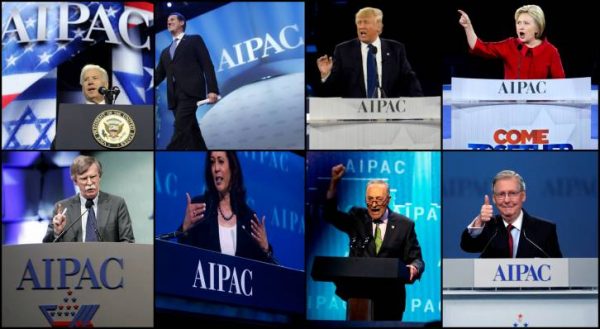
By Eric Striker – National Justice – January 1, 2021
Last September, Donald Trump accidentally upended an entire generation of myths invented by the left and right that purport to explain America’s costly and unpopular military adventures in the Middle East:
“The fact is, we don’t have to be in the Middle East, other than we want to protect Israel. We’ve been very good to Israel. Other than that, we don’t have to be in the Middle East. You know there was a time we needed desperately oil, we don’t need that anymore.”
As Mondoweiss pointed out at the time, the explosive admission went completely unmentioned in the mainstream media, which traditionally hangs on every one of Trump’s words and reacts hysterically.
Categorizing America’s foreign policy catastrophes as done in the service to Israel has until the Trump era always been dismissed by media tastemakers and political gatekeepers as rank anti-Semitism driven by reductionist, simplistic and conspiratorial thinking, even when intelligence officials like Michael Scheuer and foreign policy experts affirm the view.
Trump’s lack of subtlety when remarking on using American blood and treasure to incrementally advance the interests of the Jewish state is one reason why the Israel lobby, which is perpetually paranoid about the public noticing their activities, is not keen on reciprocating his often suffocating love.
Their paranoia is justified. This year Congress made the mistake of combining its $900 billion dollar coronavirus stimulus bill, which suffering people are closely following the development of, with the yearly $1.4 trillion dollar fiscal budget, which is typically ignored.
A deluge of popular anger was provoked by news that we would only be receiving a $600 dollar check under the guise of budget austerity. At the same time, buried deep in the 5,600 monstrosity was a provision setting aside supposed budget constraints to give Israel the equivalent of $5,000 dollars for each of its citizens.
Jews in the media responded to the controversy by calling indignant American tax payers, including actress Alyssa Milano and various left-wing journalists, “fools” and “anti-Semites.” They doubled down by stating that the $500 million dollars provided to Israel was a drop in a $2.3 trillion dollar bucket. They pointed out that other countries, such as Jordan, were receiving foreign aid as well.
But even critics of Israel do not properly calculate the true price Americans pay for a state that — unlike South Korea or Germany — does not provide any economic or military benefits to the homeland. America does not have military bases in Israel, nor does Israel have anything to trade.
The general figure provided for annual US aid to Israel is $3.8 billion, but as former CIA intelligence officer Philip Giraldi has written, this figure excludes our completely artificial $9 billion dollar trade deficit with that country, as well as the $8 billion provided in “loan guarantees” that are basically giveaways since the US Treasury pays interest and principal on these loans.
The Black Budget
Covert “black budget” funding to the Jewish state is another topic shrouded in mystery.
In 2015 a public interest group, the Institute for Research: Middle East Policy, sued the CIA for its refusal to comply with a Freedom of Information Act (FOIA) request demanding records on how much is spent in service of Israel, including in respect to intelligence gathering efforts on American citizens that is then sent to the Mossad.
The Department of Justice fought a ferocious, four year long legal battle to keep this information secret and ultimately won.
Based on publicly available pre-1990 black budget expenses, the CIA is dedicating between $13.2 billion to Israeli interests every year if spending has been tacked to inflation. The number may be even higher under the Trump administration, especially since it has escalated the conflict with Iran.
US Spending To Advance Israel
Rarely discussed is how US foreign aid to Muslim countries is, as Trump has constantly reminded us, nothing more than bribing them into cooperating with Israel. US aid to Israel, by contrast, is unconditional.
All of the nations that share a border with Israel (Jordan, Egypt, Lebanon, and even to certain players in Palestinians and Syria) receive payments from the United States. Were it not for the peculiar, thankless relationship America has with Israel, US tax dollars would not be bankrolling the entire Egyptian military, nor would we be propping up the basket case monarchy in Jordan by handing them 4% of their GDP every year.
The following is a list of expenses — financial, geopolitical, and human — that the American people must shoulder to guarantee the security, stability and geopolitical expansion of 9 million Israelis.
1) Egypt — $2.2 billion a year
The United States’ foreign aid to Egypt, about $1.3 billion which goes to its military and the rest to its economy, is entirely predicated on the country’s military dictators maintaining a close intelligence and diplomatic relationship with Israel. The country’s current leader, Abdel Fattah al-Sisi, took power in 2014 in an Israeli-backed coup that deposed the democratically elected Muslim Brotherhood.
Egypt, which was once a regional superpower that fought the Israelis during the Six Days War, restored diplomatic ties with Israel in 1979 under a US brokered deal.
The single-issue relationship was put on display when Senator Rand Paul attempted to cut aid to Egypt during a 2017 Congressional fight. The American Israel Public Affairs Committee (AIPAC), five US Senators and Benjamin Netanyahu himself all intervened to block Paul’s amendment, which was crushed in the Senate by a large majority after Jewish groups penned a letter demanding the aid continue as usual. According to both Netanyahu and AIPAC, America’s payoff to the Egyptian military establishment is the only thing keeping Israel’s formidable neighbor from attacking them.
2) Jordan — $1.5 billion a year
In 1994, Jordan became the second Arab state after Egypt to restore formal ties with Israel.
Prior to 1994, Jordan received a smaller sum of aid from the US, but the country retained relative geopolitical independence, including support for Saddam Hussein during the first Persian Gulf War.
As a state bordering Palestine that for years retained its claim to the West Bank, the Jordanian monarchs have been a useful asset for Israel. The country’s establishment is widely despised by Palestinians, even though the Jordanian public is broadly sympathetic to their plight.
In exchange for breaking solidarity with the Arab world’s boycott of Israel, the United States signed a generous free trade agreement with Jordan, where we prop up their economy by buying 25% of their exports and hand them $1.5 billion a year (close to 4% of their GDP) via USAID.
3) Iraq — $1.1 Billion (Excluding cost of the Iraq war)
The Iraq war, and our continued presence in the country 17 years later, is the product of Jews in Washington primarily loyal to the state of Israel.
This is the opinion of the man who went before the United Nations and went down in history as having sold the weapons of mass destruction lie, former Secretary of State Colin Powell.
In Karen DeYoung’s 2007 biography of Powell, Soldier, he singles out Douglas Feith and Paul Wolfowitz as the real architects of war. In one interview with DeYoung, Powell even refers to Donald Rumsfeld — the Gentile who is usually blamed alongside Dick Cheney for the Iraq debacle — as a man controlled by the “JINSA crowd” in the Defense Department. The Jewish Institute for National Security Affairs (JINSA) is an Israel lobbying firm similar to AIPAC.
If JINSA and the “card-carrying Likud members,” as Powell is reported to have remarked once, were not making foreign policy calls in Washington the war would’ve never happened.
It could be argued that the trillions spent on perhaps the most wasteful military conflict in American history was a subsidy to Israel.
4) Saudi Arabia – $1.1 Billion a year
Saudi Arabia, the nation which 15 of the 19 9/11 hijackers, also lobbies the United States government through AIPAC.
The Trump administration was able to secure public Saudi support for Israel by promising $100 billion dollars in modern weapons, including F-35s, to the Gulf state. AIPAC and the Israeli government are both considered to have been the kingmakers in the deal.
The Saudi government, along with another nation that recently established official ties to Israel the, United Arab Emirates, are both state-sponsors of terrorism, including sending American weapons to Al-Qaeda.
The official sect of Islam practiced in Saudi Arabia is Wahhabism, which is the puritanical and violent dogma that inspires both the Islamic State (ISIS) and Al Qaeda.
To understand how deep terrorist ideology is penetrated in Saudi society, a Saudi Royal Air Force pilot being trained in a $740 million dollar US-funded Pentagon program to learn how to fly the F-35s killed three American servicemen and injured eight others at the Pensacola Air Station in Florida in a quickly memory holed terrorist attack last year. A study from 2014 found that citizens of Saudi Arabia were the largest private donors to ISIS in Syria and beyond.
5) Afghanistan – $5.4 Billion a year
As with Iraq, the 2001 war in Afghanistan and our ongoing presence there, is part of a containment strategy of Iran done in the interest of Israel.
According to former National Security Agency analyst Karen Kwiatkowski, the Pentagon’s logic behind the invasions of Afghanistan and Iraq was to create a military pincer that would surround Iran. In a 2009 interview, Kwiatkowski stressed that Iran was not a threat to the United States or its interests, but rather only to Israeli regional hegemony,
The Israelis have been using Afghanistan to spy on the Iranian military and engage in various black ops against their country. The Iranians appear to be fighting back, including by restoring ties for their historical nemesis, the Taliban. Israel fears that an unconditional US withdrawal could end up working to the advantage of Iran.
When earlier this year Donald Trump said he wanted to withdraw troops from Afghanistan — a move supported by the overwhelming majority of the American people — JINSA and AIPAC were the sole interest groups to vocalize opposition and began pressuring the Senate to ensure it didn’t happen. The Jewish lobby succeeded, and Rand Paul’s bill last July that would’ve brought our soldiers home was defeated by a bipartisan vote of 60 to 33.
6) Palestine, Lebanon, Syria — Fluctuates
The three nations bordering or occupied by Israel receive aid from the United States in an attempt to present carrots and sticks that prevent factions from fully uniting, but the spigot is turned off and on regularly at the behest of Israel.
Last year, the US State Department cut aid to Lebanon’s military in half after a direct appeal to do so by the Netanyahu government. The complaint was that the Lebanese military was not doing “enough” to undermine Shi’ite military and political power. The US typically funds the Lebanese military as a counter-force to Hezbollah, but after the Shi’ite militia successfully defended Lebanon’s territory from an Israeli invasion in the 2006 war, the group has enjoyed nationalist support across the diverse religious groups in the country.
Hezbollah’s work in defending Christians from ISIS in recent years has also been a political game changer, as traditionally grievances from Christian organizations have been exploited by Israel to leverage against the Palestinian cause.
In Palestine itself, the Palestinian Authority under Mohammad Abbas has enjoyed about half a billion US dollars in aid, both to politically divide him from Hamas controlled Gaza, as well as subsidize the humanitarian costs of Israel’s occupation in the West Bank.
Abbas’ strategy of “negotiating” with Israel through America is in retrospect an abject failure. Illegal settlements in the West Bank have continued uninhibited, and the Palestinians in the territory narrowly avoided the full annexation of their land by Israel. While the annexation project appears to have been put off, experts believe Israel will attempt to do so once Israel has a better foothold in the region.
In Syria, which Wikileaks of former Secretary of State Hillary Clinton exposed as nothing more than a regime change operation on behalf of Israel, the United States continues to spend close to a billion dollars every year in “humanitarian” relief.
While the coalition of the Syrian Army, Russia and Iran have largely defeated the ISIS and Al Qaeda rebels, the US is combining its humanitarian aid to anti-Assad areas while attempting to starve the country with crippling sanctions. By providing support to certain regions through USAID, Washington and Israel are artificially extending the conflict between Assad and the anti-government fighters, the latter which would’ve totally surrendered otherwise.
Future Expenses Under Trump’s “Israel-First” Agenda
Donald Trump and Jared Kushner have been able to secure support from multiple Muslim nations for Israel by directly offering big payments and controversial favors as a trade.
Here is what this “diplomacy” will cost Americans.
1) Morocco –$3 Billion and the Western Sahara
Under Trump’s deal with Morocco, its king Mohammed VI will receive $3 billion dollars in investments courtesy of the US taxpayer through the International Development Finance Corporation (DFC), a government entity created by Donald Trump, in exchange for recognizing Israel.
The more concerning aspect of the deal is Trump’s recognition of the disputed Western Sahara as Moroccan, as well as a deal to sell the Moroccan military billions in American arms to give them a strategic edge over Algeria and Western Saharan natives.
The interests of the Western Saharans are represented by the Polisario Front, a nationalist group seeking independence and self-governance. The Moroccans and Polisario Front have been engaging in intensifying armed battles since November, a month before Trump’s outreach to Mohammed VI. With American recognition of the Western Sahara, the Polisario Fronto will have lost diplomatic leverage and potentially have no choice but to fight the Moroccans — thus initiating a potential conflagration in North Africa if Algeria maintains its pro-Saharan position.
2) Indonesia — $2 Billion
Trump’s DFC is reaching out to Indonesia — the world’s largest Muslim nation — to provide $2 billion in US aid in exchange for normalizing relations with Israel.
The offer appears to have been rejected, with Jakarta announcing that it stands firmly behind the Palestinian cause.
Unlike Morocco, Jordan and Saudi Arabia, Indonesia is a parliamentary democracy. Supporting Israel remains highly taboo among the vast majority of Muslims worldwide, so it remains to be seen if the Indonesian state will end up accepting America’s money.
3) Sudan — $1 Billion and Taken Off State-Supporter of Terrorism List
Sudan is an important flashpoint in Israel’s conflict with the Palestinians. Iran uses Sudan as a transit point for smuggling arms to the Palestinian resistance.
The Israelis and the United States have exploited racial strife between blacks and Arabs in Sudan — funding the black side in Darfur (South Sudan) — during the country’s bloody civil war. The conflict has been winding down, but the Sudanese state and economy remains in dire straits largely due to sanctions over being a state-sponsor of terrorism.
During the 1990s, Sudan was blamed for housing Osama Bin Laden following the 1998 US embassy bombings in Kenya and Tanzania. Under Trump’s deal, Sudan will be absolved of all blame after paying a fine and receive a billion dollars in debt forgiveness and economic aid in exchange for establishing formal relations with Israel.
4) Saudi Arabia, UAE, Bahrain, Oman, etc — Unknown
The Saudis have been sinking billions of dollars into fellow Gulf States to encourage them to support Israel since 2018, according to leaks to Arab media.
According to the documents, the Saudis were working on behalf of the US government in this endeavor, promising their neighbors a “generous aid package” from America just for collaborating with the Jewish state.
As written before, the Saudis and UAE are receiving over $120 billion in US weapons — an idea that previously would’ve been a non-starter in Washington due to potentially undermining Israel’s qualitative military edge over Arabs.
By showing loyalty to Israel, Saudi Arabia has been able to secure support in Washington for its barbaric war in Yemen. When the US Congress passed a resolution to end US support for the Saudi war effort, Donald Trump vetoed the bill and, unlike the NDAA, no attempt was made to override this decision.
The full extent of what the US plans to provide Gulf States for their internally unpopular backing for Israel is not yet possible to know.
The Real Cost of Israel
While previous packages of US foreign aid to Muslim countries on behalf of Israel were presented as an objective pursuit for “peace in the Middle East,” the Trump administration’s efforts have directly led to new and bloody conflicts (the Yemen war), and opened up the floodgates for new ones around the world.
All that is certain is that Trump’s concessions and arm’s deals pursuit of recognition for Israel is objectively making the world more dangerous and unstable.
A perfect dollar estimate of how much Israel is costing our country is impossible due to the opaque nature of Washington’s servility to the Zionist state.
In spite of this, we can arrive at a range. The on paper cost of Israel, when we include the “loan guarantee” scam and payments to neighboring countries to advance Israel’s interests, is at least $23.1 billion a year.
This figure excludes speculative figures on the black budget in service to Israel, which if correct, would bring that number to $36.3 billion. It also excludes aid to Palestine and Lebanon (which may return next year), as well as costs related to the proxy conflict with Iran, which almost all foreign policy experts agree is entirely motivated by Israeli — not American — interests.
This number will balloon under Donald Trump’s plan, which is expected to be continued uninhibited under a Joe Biden presidency. Trump’s outreach to the Arab world will put us on the hook for at least an extra $6 billion, which again, is an extremely conservative estimate since we are excluding the shady deals with the Saudis and other Gulf States.
Thus, the $3.8 billion figure that already outrages much of the American public is at the bare minimum about $23 billion per year, but could potentially be closer to $50 billion.
This price of this luxury item in the Middle East is almost half of all American foreign aid, and does not serve any humanitarian purpose (often times, the other way around), much less the interests of the American people. Understanding the outrage this sum would provoke among US voters and taxpayers, groups like JINSA and AIPAC, along with the disproportionately Jewish owned media, ensure that it is never accurately reported.
Yemen’s Houthis say Saudi pilots will only be exchanged for Palestinian prisoners
MEMO | December 31, 2020
An official in Yemen’s Houthi-led National Salvation Government (NSG) has reiterated that Saudi pilots currently being held captive will only be released in exchange for Palestinian prisoners in the kingdom.
In an interview yesterday with Al-Masirah TV, the head of the National Committee for Prisoners Affairs, Abdulqadir Al-Murtadha, stated: “We have assured the other party that the Saudi pilots will not be released from prison except in exchange for the Palestinian prisoners in Saudi Arabia.”
He added: “The negotiation rounds in the prisoners’ issue in 2020 were distinguished by the fact that they ended with implementation, unlike the previous rounds,” noting that 1,087 prisoners of the Houthi-allied Yemeni army and “popular committees” were freed earlier in the year; 670 prisoners through UN brokered agreements and 417 prisoners through local deals.
“The enemy thwarted 30 exchange deals during 2020, which were agreed upon through local parties to liberate more than 600 prisoners from both sides,” according to Al-Murtadha.
“We released 150 prisoners during 2020, including 64 children who were brought into the battles by the forces of aggression, while the rest were released for humanitarian reasons.”
Last year, Saudi Arabia incarcerated 68 Palestinians and Jordanians following a mass trial which has raised concerns by Human Rights Watch (HRW) over issues relating to due process. Some of the detainees had been held without charge for nearly two years.
Among the Palestinians detained is Mohammed Al-Khodari, who is over 80 years old and a high-ranking official from the Gaza-based resistance movement Hamas. Alike the other detainees he was charged on vague accusations relating to terrorism.
In March the leader of the Houthi movement known as the Ansarallah, Sayyid Abdulmalik Al-Houthi, extended an offer to the Saudis to release Hamas members held in Saudi in exchange for one of the captured Saudi coalition pilots held in Yemen along with four Saudi soldiers. The “much-appreciated initiative” was met with praise by Hamas who in a statement said it valued the “spirit of fraternity and sympathy” for the Palestinian people and their cause.
Why are Tel Aviv and Washington Inflaming the Situation in the Persian Gulf?
By Vladimir Platov – New Eastern Outlook – 26.12.2020
During the run-up to the anniversary of the insidious assassination of Iranian General Soleimani – and after one month had passed since the equally controversial massacre of leading nuclear physicist Mohsen Fakhrizadeh – Israel and the United States, which are the ones responsible for this atrocity, are demonstratively increasing their military presence in the Middle East, and doing so in demagogic fashion under the guise of fearing “retaliation from Iran”.
The United States, located both at a considerable distance from Iran and outside the range of its missiles, having provoked this crisis clearly fears only a missile attack on its diplomatic mission in Iraq, as well as other American facilities in the region. Washington is trying to validate these fears with reports from American intelligence services, according to which pro-Iranian armed formations that can deliver a “retaliatory strike” have allegedly stepped up their activity in Iraq.
However, on December 21 Iranian Foreign Ministry spokesman Saeed Khatibzadeh denied these suspicions, which especially resounded in recent statements made by US Secretary of State Pompeo about the alleged complicity of pro-Iranian militia in the latest rocket strikes executed on Baghdad’s “Green Zone”. Along with that, Khatibzadeh wrote on Twitter that for Tehran “attacks on diplomatic facilities are unacceptable”.
Washington still dispatched additional warships and a squadron of fighters to the Middle East, and demonstratively conducted a nonstop flight of a B-52 strategic bomber that has the ability to carry nuclear weapons, by doing so intending to “intimidate Tehran”. In addition, on December 21 a US naval unit entered the Persian Gulf through the Strait of Hormuz that included a USS Georgia (SSGN 729) Ohio-class submarine, which carries up to 154 Tomahawk cruise missiles and is capable of taking on board up to 66 special operations service personnel, as well as two Ticonderoga-class guided-missile cruisers: a USS Port Royal (CG 73) and a USS Philippine Sea (CG 58). Previously, at the end of November, a USS Nimitz (CVN-68) aircraft carrier was sent off the Persian Gulf “to help contain the enemy”; this was rationalized by the need “to have additional defensive capabilities in the region in case of any unforeseen circumstances.”
As far as Israel goes, it clearly fears a “retaliation strike” from Iran since, given the Jewish state’s modest size, a successful attack on it could actually terminate its existence. This is especially true if the strike were to hit the Dimona Nuclear Research Center, which is considered to be the site where Israeli nuclear weapons originated; Tel Aviv neither confirms nor denies that the center exists. Incidentally, Ayatollah Mohammad-Ali Movahedi Kermani already delivered a warning to Israel that “if Iran decides to put up resistance, then one missile strike on the Dimona reactor would be enough”.
It is clear that Iranian missiles will not really be launched at Dimona, since this is fraught with consequences that entail nuclear contamination and destruction not only for Israel, but for Iran and quite a few neighboring countries across the region. And that is why the Iranian media occasionally names another target: the Israeli city of Haifa.
Israel, fearing the hysteria itself that potential military action could unleash, in a speech made by IDF Chief of General Staff Aviv Kochavi on December 21 cautioned Iran not to attack Israel, stating that “the Jewish state will retaliate against any aggression”.
Along with that, A. Kohavi evidently pointedly forgot to mention that it is not Iran, but Israel itself, that has already demonstrated its aggressive stance toward the Islamic Republic to the whole world by organizing and initiating acts of terrorism and assassinations – and not only against nuclear physicist Mohsen Fakhrizadeh. After all, this is far from the first time that Iranian scientists and leading representatives from Iranian society have been killed by an Israeli act of terrorism. For example, in Tehran, five nuclear physicists have been assassinated recently – and this specifically includes Hassan Tehrani Moghaddam, the architect of Iran’s ballistic missile program. All this points to the systematic destruction of the best Iranian scientists employed in the defense industry, which is being accomplished by the international community with impunity. This series of assassinations of prominent Iranian scientists, politicians, and military personnel – who ended up being unacceptable for the United States and Israel – substantiates the suspicions first voiced long ago that Western intelligence services and Israel have adopted the terrorist practice of eliminating key personnel and various prominent figures in those countries with which they are at war; this is done to weaken their defense systems and technological potential.
In addition to the words it speaks to help deter Tehran, Tel Aviv has taken a series of measures to test the combat readiness of its army against any potential foreign attacks, and is active about consulting with Washington – especially with representatives from the Pentagon – about how to work out joint coordination for the two countries to take military action against Iran. In particular, large-scale, unprecedented exercises came to an end in December, during which the capabilities of the three levels of Israel’s anti-missile defense (ABM) systems to neutralize various air threats were put to the test. Senior Israel Defense Forces officers, according to the Internet publication Breaking Defense, held “negotiations on coordination work” with their counterparts in the US Central Command (CENTCOM, which includes the Middle East) to bolster cooperation between the armed forces in the two countries “against Iran possibly taking revenge in the region”. According to this publication, Israel has reached its highest degree of readiness, in particular with regard to repelling “some of the 140,000 missiles that Iran-backed Hezbollah has in Lebanon, and the Houthi rebels in Yemen.” At the same time, it has been reported that although the Israeli command does not disclose the details about how it prepares for war, its tactical and operational anti-missile defense systems, and long-range missile systems, are still on high alert.
In addition, as reported by The Times of Israel, on December 17, Chairman of the Joint Chiefs of Staff Mark Milley arrived in Israel as part of his Middle East tour to discuss the threat that Iran poses to Washington’s allies, including the Jewish state.
As part of preventive measures taken against the armed situation in the region potentially escalating, Israel began to actively spread out its naval fleet around Iran. An Israeli Navy Dolphin-class (Type 800) submarine carrying cruise missiles on board passed through the Suez Canal, and on December 21 demonstratively surfaced in the Persian Gulf, in the waters that stretch between Saudi Arabia and Iran. Dolphin is a series of German modified diesel-electric submarines that are specially designed for Israel, and which have from 6-10 torpedo tubes. Besides torpedoes, they are armed with mines and Popeye Turbo SLCM cruise missiles that have a range of up to 1,500 km, and are capable of carrying nuclear charges with a capacity of up to 200 kilotons launched from torpedo tubes. The Israelis regularly keep at least two of their submarines.in the Indian Ocean, in the immediate vicinity of the Persian Gulf.
Today, in the assessments made by numerous experts, there is reason to presume that in January 2021, before Donald Trump [prospectively] leaves the White House, a joint American-Israeli missile strike could be launched against Iran, primarily to neutralize Iran’s air defense systems, as well as its nuclear industry facilities.
However, while ramping up the degree of military tension in the region Tel Aviv and Washington cannot help but clearly see that Iran does not intend to attack either the United States or Israel. Iran is not in an ideal condition to wage war now, since its economy is seriously undermined by the restrictive measures imposed on its oil sales abroad, as well as by the consequences of the coronavirus pandemic, the deficit inflicting its national budget, and the weakening of its national currency. Yes, military operations “against American and Israeli aggressors” can raise patriotic sentiments in the Islamic Republic for a certain period, but they would quickly drain the Iranian economy and militaristic zeal. In addition, hoping for a change in the attitude taken toward it after the White House administration [potentially] changes, for political and economic reasons it would now be clearly disadvantageous for Tehran to carry out any large-scale “retaliatory strike”. Therefore, the maximum that Tehran is capable of doing today, without causing itself significant damage, is to carry out a special operation against the Israelis involved in the murder of Mohsen Fakhrizadeh – or to inflict a targeted strike on American facilities in the region through its “proxies.”
As for the United States, Israel, and their allies taking military action against Iran right now, it should be kept in mind that the Islamic Republic, despite all its existing economic problems, is a pretty tough nut to crack in terms of its military, and aggression against it would have serious costs. And this cost is obviously unacceptable for either Trump or Netanyahu, who intend to keep pursuing their political careers.
Top Israeli Rabbi Visits UAE, Inaugurates Jewish School

Israeli rabbi Yitzhak Yosef
Al-Manar | December 19, 2020
The Zionist entity’s Chief Sephardic rabbi visited the United Arab Emirates (UAE) on Thursday, marking the first trip by an Israeli senior religious leader to an Arab state.
Rabbi Yitzhak Yosef’s itinerary included inaugurating a Jewish day school in Dubai and naming a local chief rabbi, Israeli media outlets reported on Friday.
The rabbi joined over 50,000 Israelis who have already traveled to the Gulf kingdom since commercial flights connected the two sides. The Zionist entity and the UAE also reached an agreement on visa waivers.
Dubai’s Jewish community center has reportedly increased its staff sixfold, from five to some 30 employees, and about 150 restaurants have started serving kosher dishes.
Israel and the UAE normalized ties earlier this year as part of a US-brokered deal that also included Bahrain. The so-called Abraham Accords have paved the way for subsequent Israeli normalization agreements with Sudan and Morocco.
West yet to condemn Iranian nuclear scientist’s assassination
By Robert Inlakesh | Press TV | December 18, 2020
In the wake of the Israeli assassination of Iran’s top scientist, Mohsen Fakhrizadeh, Western governments and media are yet to actively condemn the terrorist attack which took place in Tehran.
Many analysts speculate that the respective actions of the media have acted to exacerbate regional tensions, rather than de-escalate the situation following the Israeli aggression against Iran.
Following the Israeli regime-sponsored terrorist attack on Iranian soil, what has been dubbed as psychological warfare has also been a tool used to attack Iran. With claims spread throughout the international press, regarding an alleged killing of an Iranian Quds Force commander along the Iraq-Syria border area; An unsubstantiated claim but published nonetheless.
The claim originated first in a Syrian opposition media outlet, known as Step News Agency. The story was changed several times, before it was picked up by Israeli media.
Before long, Saudi owned Al-Arabiyya News had cited an unnamed source, providing a name to the commander allegedly killed. Later Reuters, Daily Mail and even RT picked up on these claims. Showing how far false information can spread, based upon no more than allegations, sourced from untrusted news outlets with political agendas.
Israeli strikes conducted against sovereign nations have long gone under reported and have evaded condemnation from Western nations, sparking criticism that the international community operates on double-standards.
Featured Video

America Racing to Strategic Defeat in Iran
or go to
Aletho News Archives – Video-Images
From the Archives
Should Europeans ‘Thank’ the Americans for Destroying Nord Stream?
By Robert Bridge | Strategic Culture Foundation | September 29, 2022
With an investigation continuing into the destruction of the Nord Stream gas pipeline that provided energy supplies to Europe from Russia, there appears to be just one prime suspect, and that should surprise nobody.
Following the sabotage of the Nord Stream 1 and 2 gas pipelines, former Polish Foreign Minister Radoslaw Sikorski already seemed to know the identity of the perpetrator when he tweeted out: “Thank you, USA.”
At first glance, it seemed that Sikorski was speaking sarcastically, berating Washington for carrying out an attack that will have severe repercussions for the people of Europe. After all, how could anyone see any good coming from the termination of Europe’s primary source of gas reserves with winter just around the corner? It was Sikorski’s homeland of Poland, after all, that urged its citizens to collect firewood in the face of dwindling gas reserves.
In fact, the Polish diplomat was speaking one-hundred percent literally… continue
Blog Roll
 Aletho News
- Growing insecurity, soaring prices fuel protests in north as regime bans evacuation: Sources
- Iran denies responsibility for ‘depraved’ attack on Kuwait desalination plant
- Bring The Troops Back. End This War Now!
- Can we please stop calling Israel the ‘only democracy in the Middle East’ now?
- US should start removing its troops for Germany, proposes AfD co-leader Chrupalla
- Iran Red Crescent: 600 educational centers attacked in US-Israeli ‘war crimes’
- Russian Oil Tanker Arrives in Cuba Amid U.S. Blockade
- America Racing to Strategic Defeat in Iran: Lt Col Daniel Davis
- FTC Warns Visa, Mastercard, PayPal, Stripe Over Political Debanking
- Russian tanker approaches Cuba despite US oil blockade
- If Americans Knew
- Israeli police block Catholic cardinal from entering Church of the Holy Sepulchre on Palm Sunday
- Israel is assassinating journalists again, more than any other nation, anywhere, ever – Not a ceasefire Day 170
- Over 300 US service members wounded, majority have brain injuries – Not a ceasefire Day 169
- Researchers at Human Rights Watch Resign Over Blocked Report on Palestinian Refugee Return
- Jewish Groups Are Backing a War Americans Don’t Want
- Eric Fingerhut Thinks He’s the President of the Jews
- Top Jewish Philanthropists, Rabbis Urge Israeli President to Take Action Against ‘Jewish Extremists’
- Don’t Be Fooled. Zionist Leaders Have Always Wanted to Control Southern Lebanon
- Israel’s widespread use of torture is a core element of its genocide against the Palestinian people
- In Israel’s War on Iran, Many Middle East US Bases Rendered “All But Uninhabitable”
- No Tricks Zone
- New Study Finds Warming Saves Lives…Cold Temperatures 12 Times More Deadly Than Excess Heat
- German Science Blog Accuses PIK Climate Institute Of Hallucinating Climate Tipping Points
- Devastating Assessment Of Comirnaty Vaccine By Former Senior Pfizer Europe Toxicologist
- New Study: CO2 Is ‘Effectively Negligible’ As An Explanatory Climate Change Factor Since 2000
- Former Pfizer Toxicologist Dr. Helmut Sterz Tells Bundestag Hearing Pfizer Vaccine Should Have Never Been Approved
- Energy Expert: Germany’s Nuclear Phaseout Was A “500 Billion Euro Mistake”
- New Research: South Australia’s Mid-Holocene Sea Surface Temperatures Were 4°C Warmer Than Today
- Storing Green Energy To Last Germany 10 Days Would Require A 60-Million Tonne Battery
- New Studies: UK Sea Levels Were 4 Meters Higher Than Today During The Mid-Holocene
- Destructive Green New Deal: German Energy And Metal Group Warns Of Drastic Crisis
 Aletho News