US forces must leave Iraq or will be forcibly expelled: Kata’ib Hezbollah
Press TV – October 10, 2020
Iraq’s anti-terror Kata’ib Hezbollah group, which is part of the country’s Popular Mobilization Units (PMU), has warned American forces against remaining in the Arab country, saying they will be forcibly expelled by means of resistance if they insist on maintaining their presence much to the dismay of Iraqis.
Muhammad Mohi, spokesman for Kata’ib Hezbollah, told Yemen’s Arabic-language al-Masirah television network on Saturday that the resistance will become stronger if the US insists on its obstinacy regarding its exit from Iraq.
Kata’ib Hezbollah is an anti-US unit operating under Hashd al-Sha’abi – an Iraqi umbrella group also known as PMU, which includes more than 40 militia groups fighting Takfiri terrorism.
He further slammed the US for making attempts to dissolve the PMU, saying Washington will fail to limit the role of the anti-terror forces.
The Iraqi forces, he said, are able to counter any possible threat against the country, adding that by remaining in the region, the US wants to guarantee the security of Israel and implement US President Donald Trump’s so-called deal of the century.
“The cause of the crises in the region is the American arrogance and its attempt to dominate the world,” he said, adding that the US” must respect the will of Iraq,” and immediately leave the country.
Reiterating the military capabilities of Iraqi resistance groups, Mohi called on the country’s parliament to implement its decision to expel American forces from Iraq.
Hashd al-Sha’abi fighters have played a major role in the liberation of areas held by Daesh terrorists ever since the Takfiri group launched an offensive in the country, overrunning vast swathes in lightning attacks.
In November 2016, the Iraqi parliament voted to integrate the PMU, which was formed shortly after the emergence of Daesh in Iraq in 2014, into the military.
The popular group, however, is a thorn in the side of the United States, which is widely believed to be managing an array of militant groups, including Daesh, to advance its Israel-centric agenda in the region.
In 2009, the US State Department blacklisted Kata’ib Hezbollah and imposed sanctions on the group, which has been the frequent target of American airstrikes in Iraq.
Iraqi lawmakers unanimously approved a bill on January 5, demanding the withdrawal of all foreign troops following the US assassination of Lieutenant General Qassem Soleimani, the commander of the Quds Force of Iran’s Islamic Revolution Guards Corps, along with Abu Mahdi al-Muhandis, the deputy head of Iraq’s PMU, and their companions.
Later on January 9, former Iraqi prime minister, Adel Abdul-Mahdi, called on the United States to dispatch a delegation to Baghdad tasked with formulating a mechanism for the move.
The 78-year-old politician said Iraq rejected any violation of its sovereignty, particularly the US military’s violation of Iraqi airspace in the assassination airstrike.
The US has refused to withdraw its troops, with Trump balking at the idea with the threat to seize Iraq’s oil money held in bank accounts in the United States.
Israel sets its sights on the Red Sea and Bab El-Mandeb
Dr Adnan Abu Amer | MEMO | October 6, 2020
Day after day, the magnitude of the Israeli benefits from normalisation with the Gulf become clearer, especially on the military and strategic levels. The latest benefit is talk about establishing Israeli military bases in the Gulf, the Red Sea and Bab El-Mandab, or benefiting from the Emirati bases scattered in these areas, and the military benefits for Israel brought about by controlling these international seaports.
The Emirati-Israeli agreement included many clauses with security and military aspects, which stipulate bilateral cooperation in these areas, and their commitment to take important measures to prevent the use of their territories to carry out a hostile or “terrorist” attack targeting the other party, and that each side will not support any hostile operations in the territory of the other party. It also stipulates bilateral security coordination and strengthening the military security relationship.
These carefully worded texts have increased the assumptions regarding the possibility of Israel benefitting from the Emirati military bases in the region, whether in the Gulf, Bab El-Mandab, or the Red Sea. This may lead to the establishment of Israeli military base in the Emirates, as well as its use of Emirati waters, and the possibility that it will continue down this path to increase its foothold in Socotra, the Bab El-Mandab Strait and Djibouti.
It is worth noting that the possibility of establishing Israeli military bases in the Gulf, or Israel benefiting from the Emirati military bases, is not easy, but very dangerous. This is because as much as it may give hope to the Gulf states, and the UAE in particular, to defend itself against the threat of any imagined attack from Iran, it, at the same time, exposes it to danger. This is because the fulfilment of this premise means that Israel can strike Iranian targets in the Gulf waters, or in the heart of Iran itself, which will be matched by Iran targeting these Israeli bases in the Gulf.
The agreement allows Israel to get geographically closer to Iran and allows it to improve ties with the Gulf which is a strategic area in terms of trade and oil.
Iran will not stand idly by and remain silent regarding the Emirati-Israeli move, which means the situation in the Gulf region is likely to grow tense and suffer. Iran is present everywhere through the Revolutionary Guard and its sleeping armed cells.
Security of maritime navigation in the Gulf is a purely Israeli interest within the strategy of “curbing the Iranian threat” and strengthening the relationship with the Gulf states, former Israeli Foreign Minister, Yisrael Katz, has said.
Israel aims to gain control over the most important sea straits in the region, which belong to the Emirati and Saudi bases, which enhances the expansion of Israel’s military and strategic influence.
A document by the Israeli Ministry of Intelligence revealed that the agreement with Abu Dhabi paves the way for intensifying military cooperation between them in the Red Sea. This is because it is interested in expanding security cooperation in the region, leading to strengthening the military alliance between them. This includes intensive Israeli military movement, especially through the countries of the Horn of Africa, most notably Ethiopia, at a time when Israeli arms companies are seeking to increase their exports to the Emirates.
US Secretary of State, Mike Pompeo, announced that the UAE and Israel had agreed to build a security and military alliance against Iran to protect American interests and the Middle East, and to increase security and intelligence cooperation to confront what he referred to as “terrorism”.
But Israel has not left Yemen out of its view, the country offers a gateway to the Bab El-Mandab Strait. Tel Aviv aims to crack down on the Palestinian resistance to prevent it from receiving the weapons that reach it from Iran through the Red Sea, reaching the Sinai, and then the Gaza Strip.
As long as the most important provisions of the Emirati-Israeli agreement are related to security and military relations, Israel will work to exploit the agreement to increase its influence in the Gulf. Meanwhile, the UAE is looking for control in the Gulf with the support of the US and Israel, so there is joint Israeli and Emirati work in Yemen to establish joint military bases and areas of influence, specifically on the island of Socotra, which would allow it to completely control the path that passes from India to the West, and penetrates into Africa, which is a strategic location for Israel.
Gantz: During Next War with Hezbollah, ‘Israel’ Will Strike Governmental Targets in Lebanon
Al-Manar | October 5, 2020
The Israeli minister of defense, Benny Gantz, threatened to strike governmental targets in Lebanon during any upcoming war with Hezbollah, considering that ‘Israel’ can no longer differentiate between the resistance military posts and the residential buildings which house missiles.
In an online interview with Saudi, Emirati and Bahraini journalists, Gantz said that the normalization deals with the Gulf countries will reinforce the fight against Iran, adding that the best approach to confront Tehran is to exert the heavy pressures and impose tough sanctions on it.
Gantz pointed out that no one can accept the demands of the Palestinians in the context of the ‘peace’ negotiations, adding that the normalization deals would reinforce the Zionist-Palestinian settlement.
US Bipartisan Bill Would Allow Israel Veto on Arms Sales to Arab Countries
Palestine Chronicle | October 4, 2020
Lawmakers at the US House of Representatives introduced a bipartisan bill on Friday that could allow the occupying state of Israel to veto any American arms sales to the Arab countries.
The proposed bill “would require the President to consult with the Israeli government to ensure [qualitative military edge] concerns are settled” in respect to weapons sales to Middle Eastern countries, read a statement by the office of lead sponsor Representative Brad Schneider.
The proposed legislation also asks the US President to inform the Congress of the potential impact of the planned deal on Israel’s military superiority in the region, no later than 60 days after receiving a request to sell arms and military equipment to countries in the Middle East.
Most of the sponsors are members of the Democratic Party, including Jewish lawmakers Schneider, Elaine Luria, Max Rose, Josh Gottheimer, Ted Deutch and Debbie Wasserman Schultz.
The bill came in the aftermath of the UAE-Israel normalization deal on August, under which the UAE would purchase cutting-edge weaponry such as F-35 fighter jets.
The Time of Troubles in Transcaucasia – Part 1
By M. K. BHADRAKUMAR | Indian Punchline | October 1, 2020
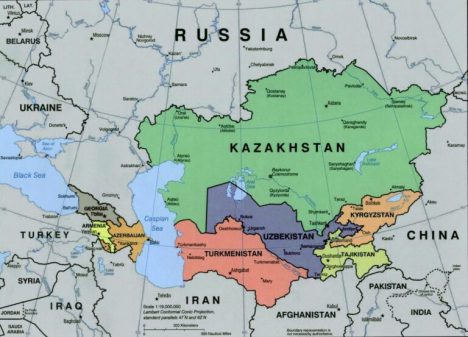
Three days into the renewed conflict in Nagorno-Karabakh in the Transcaucasian region — also known as South Caucasus — it is becoming clear that the binary narrative dished out by western commentators of this being a Turkish-Russian clash of wills and strategies is either simply naive or purposely deceptive. The point is, Russia and Turkey — and Iran in a somewhat supportive role — are already proactively talking of negotiations involving the warring sides.
September 30 has been a turning point of sorts. Tehran had on the previous day called on Azerbaijan and Armenia to settle the differences peacefully and offered that along with Turkey and Russia, it can help the two countries to resolve their differences.
President Hassan Rouhani since repeated this offer in a phone conversation with Armenian Prime Minister Nikol Pashinyan. According to the Iranian account, Pashinyan responded positively that “any tension and conflict would be to the detriment of all countries in the region and welcomed any practical initiative to stop the violence.”
Armenia is a land-locked country and it depends on Iran to provide a vital transportation route to the outside world. On its part, Tehran kept up a warm relationship with Armenia (although its rival Azerbaijan is a Muslim country), even supplying it with natural gas.
Tehran stuck to the friendly track even after the “colour revolution” in Armenia in 2018 and Pashinyan’s steady gravitation to the American camp in the subsequent period, while also remaining a member of the Moscow-led Collective Security Treaty Organisation. (See my articles in Asia Times — A color revolution in the Caucasus puts Russia in a dilemma dated May 9, 2018 and a second piece dated August 8, 2018 titled Color Revolution in the Caucasus rattles Russian leaders.)
Iran has profound security concerns over Pashinyan’s recent diplomatic exchanges with Israel (at the initiative of the White House), which of course has brought the famed Israeli intelligence apparatus Mossad right on to Iran’s northern borders (in addition to the potential Mossad presence in the UAE, Bahrain and Oman on Iran’s southern flank.)
Turkey too has reason to be concerned over Israel’s activities in Transcaucasia. Israel is virtually piggy-riding the US-sponsored colour revolutions in Transcaucasia. Following the US-sponsored colour revolution in Georgia in 2003, Israel overnight made its appearance in Tbilisi. And the Israel-Georgia ties have since become very close.
Despite the failure of the colour revolution in Azerbaijan in mid-2005 and the sporadic attempts since then, Israel has developed close “security cooperation” with that country. Further north, Israel has developed special relations with Ukraine, another progeny of the colour revolution, which also has a president who is an ethnic Jew who is actively involved also in the ongoing colour revolution in Belarus. (The strange part is that notwithstanding the company that Israel keeps in the Black Sea region, which is virulently anti-Russian, it still enjoys exceptionally close ties with Russia!)
Both Turkey and Iran understand perfectly well why Israel attributes such excessive importance to the three small countries of Transcaucasia (total population 11 million) to establish security presence in that region with a view to create a “second front” against its regional enemies — Ankara and Tehran. (Israel has a record of links with Kurdish separatist groups too who have ethnic links with Transcaucasia.)
Iran openly voiced its disquiet over Pashinyan’s decision to open Armenia’s embassy in Israel , which in turn inspired then National Security Advisor to travel all the way to Yerevan where he openly took aim at Iran (and Russia.) By the way, the Armenian Diaspora in the US is an influential constituency that Pashinyan cannot ignore, either.
At any rate, demonstrations broke out in front of the Armenian embassy in Tehran soon and senior Iranian officials cautioned Pashinyan. An Iranian commentary wrote, “Tehran’s considerations… must be taken into account… On the other hand, Russia will undoubtedly oppose the idea of using Armenia to promote security and economic influence. It had already severely criticised Israel’s arms deal with Georgia and the Republic of Azerbaijan.”
Clearly, western analysts are obfuscating the US-Israeli nexus at work in Transcaucasia. Both Ankara and Tehran have cause to worry that the US would be using the Israeli proxy in the Transcaucasia region — as has been the case in the Middle East for decades — to weaken and roll back the rising aspirations of the two regional powers.
Turkey-Iran axis in the making
With the destruction of Iraq and Syria and the weakening of Egypt, Turkey (under President Erdogan) and Iran are the only two authentic regional powers left standing in the Muslim Middle East to defy the US regional strategies and to challenge Israel’s military pre-eminence.
Significantly, the surge of the US-Israeli nexus in Transcaucasia comes in the wake of the recent US-sponsored “peace agreements” between Israel and three Gulf Arab states (UAE, Bahrain and Oman.) Indeed, both Turkey and Iran have reacted strongly to the development in the Gulf.
Just this week, the Chief of Staff of the Iranian Armed Forces Major General Mohammad Hossein Baqeri explicitly warned the UAE that Tehran will view that country as an “enemy” and will act accordingly if Abu Dhabi allowed any Israeli security presence on its soil.
Within a month of the Israel-UAE agreement, Turkish President Recep Erdogan held a video conference with Rouhani where he made a big opening statement that “Turkey and Iran dialogue has a decisive role in the solution of many regional problems. I believe that our cooperation will return to its previous levels as the pandemic conditions alleviate.”
Rouhani responded that Turkish-Iranian relations are built on solid foundations throughout history and the border between the two “friendly and brotherly countries” has always been “the borders of peace and friendship.” He stated that especially in the past seven years, both governments had made great efforts based on bilateral, regional and international cooperation.
Significantly, Rouhani added that the two countries are located in a “sensitive region” of the Middle East and they are “the two great powers of the region. There was hostility and vindictiveness towards both countries. It also exists today. There is no way to be successful against such conspiracies other than by reinforcing friendly relations between the two countries.”
Sure enough, Israel has taken note of the nascent Turkey-Iran axis (which also includes Qatar.) A commentary in the Jerusalem Post noted that in the recent years Turkish-Iranian ties have “grown closer due to joint opposition to the US and also Israel. Iran and Turkey both back Hamas, for instance.” It wryly observed that the Middle Eastern geopolitics built around the Shia-Sunni sectarian strife may have outlived its utility!
Again, the Turkish state news agency Anadolu featured a commentary last week titled New strategic design of Middle East, which pointed out that the peace agreements in the Gulf bring out the schism between the UAE, Saudi Arabia and Bahrain one side and Qatar and Kuwait on the other side. (Qatar is an ally of Turkey while Kuwait has friendly ties with Iran.) The commentary noted, “Arab countries seem to have lost both confidence and a sense of unity; when the sense of confidence is seriously damaged, it will be easier to put them at odds, and this regional division, as everywhere, makes Arab countries and their leaders dependent on external forces for their security and existence.”
The Anadolu commentary then warmed up to its main theme, namely, that the so-called “normalisation” agreement between the UAE and Israel “may be a veiled effort not only to expand the imperial space but also to form a bloc against Iran and Turkey in the Middle East.”
“Iran is a non-Arab country and seems an arch-enemy of the US and Israel; Iran collaborates with Russia and China, the US’ arch-rivals, and sometimes with Turkey, which may threaten both the US imperial interest and Israeli security in the region. Hence Iran’s regional power and influence should be jettisoned and driven into a corner.”
“Turkey is a NATO country and seems a close US ally, (but) US policy towards Turkey in the region is ambivalent, unclear, and elusive in the sense that the US still continues to support the (Kurdish) YPG/PKK terrorist group in Syria that has been carrying out terrorist acts against Turkey and killing civilians for decades.”
“Moreover, the US and Israel, though they seem friendly, do not want a strong Turkey because a strong Turkey may influence Arab countries particularly using Islam and then turn them against the exploitation of the Middle East and its oil and resources by neo-imperial powers, yet the US and other imperial powers will never allow Turkey to easily stand on its feet in the region. What they may prefer is that a weak and fragile Turkey, grappling with its internal conflicts, will always serve their purpose.”
In the chronicles of the great game, seldom it is that the protagonists speak up and opt for public diplomacy. The game, historically, is played out quietly in the shade outside the pale of public view. Turkey and Iran have decided otherwise. Can it be a mere coincidence that the conflict in Transcaucasia, a faraway region that borders both Turkey and Iran where Israel is consolidating a security presence against them, erupted in such a backdrop of new alignment that promises to redraw the geopolitics of the Middle East?
Lebanon hits back at Israel, defends Hezbollah at UN Human Rights Council session
Press TV | September 29, 2020
Beirut has strongly reacted to the Israeli envoy’s interventionist remarks against Hezbollah at a UN Human Rights Council session, describing the resistance movement as an “inseparable part” of Lebanon and slamming the regime’s history of rights violations in Lebanon and other Arab states.
The Lebanese Ministry of Foreign Affairs and Emigrants issued a statement on Monday in condemnation of the comments by Merav Marks, the legal counselor to the Israeli mission to the UN and international organizations in Geneva, who had attacked the Hezbollah resistance movement for its role in Lebanon during a general debate at the 45th session of the UN Human Rights Council.
The Israeli envoy accused the UN Human Rights Council of not dealing with what she called Hezbollah’s efforts to hamper the mandate of the United Nations Interim Force in Lebanon (UNIFIL) and attempts to manipulate the Lebanese government.
In its statement, the ministry said Lebanon’s Permanent Mission to the UN and other International Organizations in Geneva exercised its “right to respond to the Israeli enemy’s envoy, as has been the case whenever there is an attack on Lebanon and its right to resistance.”
The ministry then described Israel as “an occupation force armed with sophisticated weapons and in possession of a nuclear arsenal, with which it threatens its neighbors.”
Israel” has a history of flagrant human rights violations and international crimes in Lebanon and in other Arab lands that it has occupied. The international community should one day fulfill its duty to prosecute the perpetrators… Today we are marking the 38th anniversary of the Sabra and Shatila massacre, one of the ugliest crimes against humanity in modern history,” the statement pointed out.
“Lebanon stresses its right to resistance to liberate its land and defend its sovereignty,” the ministry said, underlining that Hezbollah resistance movement is “an inseparable part” of Lebanon.
The ministry also lashed out at the Israeli envoy over her remarks regarding last month’s deadly Beirut port explosion, which killed some 200 people, wounded thousands more and ravaged buildings in surrounding residential neighborhoods.
The Israeli envoy had tried to link Hezbollah to the blast, claiming the movement was putting the interests of Iran before that of its own nation, and that the explosion “is a clear demonstration of that.”
The Lebanese Foreign Ministry said in response that “the Occupation (Israeli) force has sought to put itself in the position of the Lebanese judicial authority in the issue of the port blast, in which investigations have not yet been completed.”
“The hypothesis of a foreign plot should not be ruled out, and in this case, this (Israeli) force will be the main suspect,” it added.
The explosion has been followed by other upheavals in the country, including thousands-strong rallies and the resignation of the entire government of former prime minister Hasan Diab.
Hezbollah has called for accountability for the explosion, while strongly urging countrywide unity and integrity.
Wary of Hezbollah’s power in defending Lebanon, the Israeli regime and its allies have been doing all in their power — from sanctions to targeted killings — to undermine the movement’s political and military influence in the Arab country.
The regime has, in recent months, stepped up its violations of Lebanese airspace in spying missions on southern Lebanon, where Hezbollah is mainly based, drawing condemnations from Beirut, Hezbollah and the UN Interim Force in Lebanon (UNIFIL).
The resistance movement was established following the 1982 Israeli invasion and occupation of southern Lebanon. Since then, the movement has grown into a powerful military force, dealing repeated blows to the Israeli military, including during a 33-day war in July 2006.
IRGC Chief Rules Out Possibility of US War
Al-Manar | September 29, 2020
The US is unable to take military action against Iran, Commander of the Islamic Revolution Guards Corps Major General Hossein Salami said, warning that reconciliation would not stop the US from trying to harm the Islamic Republic.
In an address to the Iranian parliament on Tuesday, Major General Salami said there is no possibility of a US war against Iran, since the road to military action on the country is closed.
“We have prepared the capacities for military victory over the enemy, and have sometimes imposed our tactical resolve on them,” the commander said.
Pointing to the enemy’s economic and psychological war against Iranian people, the IRGC commander said the US is neither able nor willing to settle the problems in Iran.
“Even if we make up with the US, it will harm us again,” he stated, describing the notion of compromise with Washington as a “political deception”.
Leader of the Islamic Revolution Imam Sayyed Ali Khamenei has announced repeatedly that Iran will not hold talks with the US, either bilaterally or multilaterally.
“If the US backs off from its call, repents, and returns to the nuclear treaty it has breached, then it will be able to join the gathering of the parties to the deal (JCPOA) who hold meetings and talk with Iran, otherwise no negotiations will take place between the officials of the Islamic Republic and the Americans at any level, not in New York and not anywhere else,” Ayatollah Khamenei said in September 2019.
Iran rejects Saudi Arabia’s claim on terror cell, advises kingdom to embrace honesty
Press TV – September 29, 2020
Tehran has roundly dismissed Saudi Arabia’s claim of breaking up a “terrorist cell” trained by Iran, advising authorities in Riyadh to choose the path of honesty and wisdom instead of fabricating worthless scenarios.
“The recent Saudi officials’ allegations against the Islamic Republic of Iran are in line with the country’s worthless and repetitive positions over the past years,” the Spokesman for the Iranian Foreign Ministry Saeed Khatibzaden said in a statement released on Tuesday.
Earlier, Saudi Arabia claimed to have taken down a “terrorist cell” that had received training from Iran.
A statement published on the state-run Saudi Press Agency on Monday said three of those arrested had been trained in Iran while the rest were “linked to the cell in various roles.”
“Having abandoned political rationality, Saudi rulers have chosen to fabricate fake cases against Iran, this time as part of a mediocre show, as a weapon to divert public opinion and a method to cover up their failures.”
The Iranian diplomat highlighted that repetitive, cliché and worthless accusations will lead nowhere, advising the kingdom’s officials to “choose the path of honesty and wisdom instead of [fabricating] worthless and commissioned scenarios.”
The allegations came days after Saudi King Salman bin Abdulaziz used his statement to the 75th UN General Assembly (UNGA) to deliver a blistering attack against Iran, blaming the Islamic Republic for much of the Middle East’s instability.
Iranian officials hit back at the Saudi monarch, saying the kingdom was the real source of instability in the region.
“By accusing others, Saudi Arabia is desperately trying to divert attention from its dark and long history of widely supporting terrorism, spreading extremist beliefs, sowing the seeds of discord and hatred, taking destabilizing actions in the region, and committing crimes during the aggression on Yemen over the past six years,” said Iran’s Ambassador to the United Nations Majid Takht-Ravanchi on September 24.
Are You Feeling Safer? ‘War of the Worlds’ Pits U.S. and Israel Against Everyone Else
By Philip Giraldi – Strategic Culture Foundation – September 24, 2020
The media being focused on an upcoming election, coronavirus, fires on the West Coast and burgeoning BLM and Antifa unrest, it is perhaps no surprise that some stories are not exactly making it through to the evening news. Last week an important vote in the United Nations General Assembly went heavily against the United States. It was regarding a non-binding resolution that sought to suspend all economic sanctions worldwide while the coronavirus cases continue to increase. It called for “intensified international cooperation and solidarity to contain, mitigate and overcome the pandemic and its consequences.” It was a humanitarian gesture to help overwhelmed governments and health care systems cope with the pandemic by having a free hand to import food and medicines.
The final tally was 169 to 2, with only Israel and the United States voting against. Both governments apparently viewed the U.N. resolution as problematical because they fully support the unilateral economic warfare that they have been waging to bring about regime change in countries like Iran, Syria and Venezuela. Sanctions imposed on those countries are designed to punish the people more than the governments in the expectation that there will be an uprising to bring about regime change. This, of course, has never actually happened as a consequence of sanctions and all that is really delivered is suffering. When they cast their ballots, some delegates at the U.N. might even have been recalling former Secretary of State Madeleine Albright’s claim that the death of 500,000 Iraqi children due to U.S. imposed sanctions had been “worth it.”
Clearly, a huge majority of the world’s governments, to include the closest U.S. allies, no longer buy the American big lie when it claims to be the leader of the free world, a promoter of liberal democracy and a force for good. The vote prompted one observer, John Whitbeck, a former international lawyer based in Paris, to comment how “On almost every significant issue facing mankind and the planet, it is Israel and the United States against mankind and the planet.”
The United Nations was not the only venue where the U.S. was able to demonstrate what kind of nation it has become. Estimates of how many civilians have been killed directly or indirectly as a consequence of the so-called Global War on Terror initiated by George W. Bush are in the millions, with roughly 4 million being frequently cited. Nearly all of the dead have been Muslims. Now there is a new estimate of the number of civilians that have fled their homes as a result of the worldwide conflict initiated by Washington and its dwindling number of allies since 2001. The estimate comes from Brown University’s “Costs of War Project,” which has issued a report Creating Refugees: Displacement Caused by the United States Post-9/11 Wars that seeks to quantify those who have “fled their homes in the eight most violent wars the U.S. military has launched or participated in since 2001.”
The project tracks the number of refugees, asylum seekers applying for refugee status, and internally displaced people or persons (IDPs) in the countries that America and its allies have most targeted since 9/11: Afghanistan, Iraq, Pakistan, Yemen, Somalia, the Philippines, Libya and Syria. All are predominantly Muslim countries with the sole exception of the Philippines, which has a large Muslim minority.
The estimate suggests that between 37 and 59 million civilians have become displaced, with an extremely sharp increase occurring in the past year when the total was calculated to be 21 million. The largest number of those displaced were from Iraq, where fighting against Islamic State has been intermittent, estimated at 9.2 million. Syria, which has seen fighting between the government and various foreign supported insurgencies, had the second-highest number of displacements at 7.1 million. Afghanistan, which has seen a resurgent Taliban, was third having an estimated 5.3 million people displaced.
The authors of the report observe that even the lower figure of 37 million is “almost as large as the population of Canada” and “more than those displaced by any other war or disaster since at least the start of the 20th century with the sole exception of World War II.” And it is also important to note what is not included in the study. The report has excluded sub-Saharan Africa as well as several Arab nations generally considered to be U.S. allies. These constitute “the millions more who have been displaced by other post-9/11 conflicts where U.S. forces have been involved in ‘counterterror’ activities in more limited yet significant ways, including in: Burkina Faso, Cameroon, Central African Republic, Chad, Democratic Republic of the Congo, Mali, Niger, Saudi Arabia, and Tunisia.”
Yemen should be added to that list given U.S. military materiel assistance that has enabled the Saudi Arabian bombing attacks on that country, also producing a wave of refugees. There are also reports that the White House is becoming concerned over the situation in Yemen as pressure is growing to initiate an international investigation of the Saudi war crimes in that civilian infrastructure targets to include hospitals and schools are being deliberately targeted.
And even the United States Congress has begun to notice that something bad is taking place as there is growing concern that both the Saudi and U.S. governments might be charged with war crimes over the civilian deaths. Reports are now suggesting that as early as 2016, when Barack Obama was still president, the State Department’s legal office concluded that “top American officials could be charged with war crimes for approving bomb sales to the Saudis and their partners” that have killed more than 125,000 including at least 13,400 targeted civilians.
That conclusion preceded the steps undertaken by the Donald Trump White House to make arms sales to the Saudis and their allies in the United Arab Emirates central to his foreign policy, a program that has become an integral part of the promotion of the “Deal of the Century” Israeli-Palestinian peace plan. Given that, current senior State Department officials have repressed the assessment made in 2016 and have also “gone to great lengths” to conceal the legal office finding. A State Department inspector general investigation earlier this year considered the Department’s failure to address the legal risks of selling offensive weapons to the Saudis, but the details were hidden by placing them in a classified part of the public report released in August, heavily redacted so that even Congressmen with high level access could not see them.
Democrats in Congress, which had previously blocked some arms sales in the conflict, are looking into the Saudi connection because it can do damage to Trump, but it would be far better if they were to look at what the United States and Israel have been up to more generally speaking. The U.S. benefits from the fact that even though international judges and tribunals are increasingly embracing the concept of holding Americans accountable for war crimes since the start of the GWOT, U.S. refusal to cooperate has been daunting. Last March, when the International Criminal Court (ICC) in The Hague authorized its chief prosecutor to open an investigation into U.S. crimes in Afghanistan the White House reacted by imposing sanctions on the chief prosecutor and his staff lawyer. And Washington has also warned that any tribunal going after Israel will face the wrath of the United States.
Nevertheless, when you are on the losing side on a vote in a respected international body by 169 to 2 someone in Washington should at least be smart enough to discern that something is very, very wrong. But I wouldn’t count on anyone named Trump or Biden to work that out.
UAE signs contracts with Israel firms on UN blacklist
MEMO | September 24, 2020
Emirati companies have signed contracts with Israeli firms and banks blacklisted by the United Nations (UN) for supporting illegal settlements in the occupied West Bank, an investigation by Anadolu Agency revealed on Wednesday.
In February, the UN released a database of 112 companies on its blacklist for doing business inside Israeli settlements in the West Bank.
On 13 August, the United Arab Emirates (UAE) and Israel announced a US-brokered agreement to normalise their relations. The move was followed by a series of announcements on agreements and contracts between companies from both countries.
However, Anadolu Agency found that some of the deals struck between the two sides included Israeli companies and banks on the UN blacklist.
Pro-settlement banks
Among the contracts announced by Emirati media was one struck with Bank Leumi, one of the banks on the UN blacklist.
According to official Emirati media, this Israeli bank has signed agreements with three of the top Emirati banks: Abu Dhabi Islamic Bank (ADIB), First Abu Dhabi Bank and Emirates NBD.
Bank Hapoalim, another Israeli bank blacklisted by the UN, has reportedly signed a memorandum of understanding with Emirates NBD, an agreement celebrated as the first between Israeli and Emirati bankers, according to Emirati media outlets.
Film production companies
The agreements that UAE companies have signed with blacklisted Israeli companies were not limited to banks. The Abu Dhabi Film Commission (ADFC) announced that it has reached an agreement with the Israel Film Fund (IFF) and the Jerusalem Sam Spiegel Film & Television School (JSFS), for promoting tolerance and cultural cooperation between the Emirati and Israeli people.
The IFF is supervised by the Israeli Ministry of Culture and the Israel Film Council.
In November 2019, Israeli newspaper Haaretz announced that the IFF approved the establishment of three new cinema funds, including one in the occupied West Bank settlements.
Many international companies have suspended their dealings with their Israeli counterparts on the UN blacklist for fear of being prosecuted by the International Criminal Court (ICC). The ICC is expected to soon decide on launching a criminal investigation into alleged war crimes committed by Israel in the occupied Palestinian territories.
Palestinians have long called for an immediate halt of dealings with the blacklisted Israeli companies.
US: UAE will not get F-35 jets for up to 7 years, despite Israel peace deal
MEMO | September 23, 2020
US Ambassador to Israel, David Friedman, said that the United Arab Emirates, which has recently signed a historic US-sponsored peace deal with Israel, would not receive American F-35 stealth fighter jets for six or seven years.
“The Emiratis have been trying to get the F-35 for six or seven years. And delivery time is probably another six or seven years from now,” the official told the Jerusalem Post in a pre-recorded interview.
Washington has not yet expressed explicit approval of an Emirati purchase of American F-35s. Israeli newspapers reported that the UAE expects such approval after the Gulf Arab country signed a deal normalising its diplomatic relations with Israel, to the dismay of many supporters of Palestinian rights across the world.
Last Tuesday Israeli Defence Minister Benny Gantz held meetings in Washington with his counterpart Mark Esper and White House senior adviser Jared Kushner. The American and Israeli officials discussed the possibility of the US sale of F-35 stealth fighter jets to the UAE based on the principle of Israel’s military superiority in the region.
Israel is currently the only state in the region that owns F-35s.
US law stipulates that Washington commits itself to Israel’s Qualitative Military Edge (QME), which guarantees the occupation state’s technological military superiority in the Middle East.
When asked about whether a possible sale of American F-35s to the UAE would threaten Israel’s QME, David Friedman said: “QME is a matter of law, not a matter of policy. It has been US law since 2008, and US policy a lot longer than that. Israel has dealt with the QME behind the scenes professionally and successfully for more than a decade; it is going to continue to work this way.”
In the past few years, Israel has received at least 26 F-35s from the United States as part of a deal that will see the state gain possession of 50 stealth fighter jets.
On 13 August, US President Donald Trump announced a peace deal between the UAE and Israel brokered by Washington.
Abu Dhabi said the deal was an effort to stave off Tel Aviv’s planned annexation of the occupied West Bank, however, opponents believe normalisation efforts have been in the offing for many years as Israeli officials have made officialvisits to the UAE and attended conferences in the country which had no diplomatic or other ties with the occupation state.
Israeli Prime Minister Benjamin Netanyahu however denied this saying annexation is not off the table, but has simply been delayed.
Many have said the real purpose of the deal was to allow the UAE to access superior military strength.
Featured Video
America Racing to Strategic Defeat in Iran
or go to
Aletho News Archives – Video-Images
From the Archives
Should Europeans ‘Thank’ the Americans for Destroying Nord Stream?
By Robert Bridge | Strategic Culture Foundation | September 29, 2022
With an investigation continuing into the destruction of the Nord Stream gas pipeline that provided energy supplies to Europe from Russia, there appears to be just one prime suspect, and that should surprise nobody.
Following the sabotage of the Nord Stream 1 and 2 gas pipelines, former Polish Foreign Minister Radoslaw Sikorski already seemed to know the identity of the perpetrator when he tweeted out: “Thank you, USA.”
At first glance, it seemed that Sikorski was speaking sarcastically, berating Washington for carrying out an attack that will have severe repercussions for the people of Europe. After all, how could anyone see any good coming from the termination of Europe’s primary source of gas reserves with winter just around the corner? It was Sikorski’s homeland of Poland, after all, that urged its citizens to collect firewood in the face of dwindling gas reserves.
In fact, the Polish diplomat was speaking one-hundred percent literally… continue
Blog Roll
 Aletho News
- Growing insecurity, soaring prices fuel protests in north as regime bans evacuation: Sources
- Iran denies responsibility for ‘depraved’ attack on Kuwait desalination plant
- Bring The Troops Back. End This War Now!
- Can we please stop calling Israel the ‘only democracy in the Middle East’ now?
- US should start removing its troops from Germany, proposes AfD co-leader Chrupalla
- Iran Red Crescent: 600 educational centers attacked in US-Israeli ‘war crimes’
- Russian Oil Tanker Arrives in Cuba Amid U.S. Blockade
- America Racing to Strategic Defeat in Iran: Lt Col Daniel Davis
- FTC Warns Visa, Mastercard, PayPal, Stripe Over Political Debanking
- Russian tanker approaches Cuba despite US oil blockade
- If Americans Knew
- As Iran targets US military bases, will they be relocated to Israel? Not a ceasefire Day 171
- Will Trump Go Kamikaze?
- Is the University of Florida Shutting Down College Republicans over Israel Criticism?
- Jewish extremist arrested over alleged plot to firebomb Palestinian activist Nerdeen Kiswani’s home
- More than half of Palestinian child detainees have no charges
- The More Murderous Israel Gets, The More We Hear About “Antisemitism”
- Land Day and the Palestinian struggle after 30 months of genocide
- The Iran War Is About Palestine
- Israeli soldiers echo settler ideology, talk of revenge after targeting Palestinians and detaining CNN crew in the West Bank
- Israeli Policies Threaten Future of Christian Schools in Jerusalem
- No Tricks Zone
- New Study Finds Warming Saves Lives…Cold Temperatures 12 Times More Deadly Than Excess Heat
- German Science Blog Accuses PIK Climate Institute Of Hallucinating Climate Tipping Points
- Devastating Assessment Of Comirnaty Vaccine By Former Senior Pfizer Europe Toxicologist
- New Study: CO2 Is ‘Effectively Negligible’ As An Explanatory Climate Change Factor Since 2000
- Former Pfizer Toxicologist Dr. Helmut Sterz Tells Bundestag Hearing Pfizer Vaccine Should Have Never Been Approved
- Energy Expert: Germany’s Nuclear Phaseout Was A “500 Billion Euro Mistake”
- New Research: South Australia’s Mid-Holocene Sea Surface Temperatures Were 4°C Warmer Than Today
- Storing Green Energy To Last Germany 10 Days Would Require A 60-Million Tonne Battery
- New Studies: UK Sea Levels Were 4 Meters Higher Than Today During The Mid-Holocene
- Destructive Green New Deal: German Energy And Metal Group Warns Of Drastic Crisis
 Aletho News