A pro-EU regime is moving to suppress this proud nation. Will they be able to withstand it?
Chisinau wants to finish off the autonomous region of Gagauzia that it couldn’t break in the 90s
By Aleksandra Pavlova | RT | January 25, 2026
Gagauzia is bracing for parliamentary elections that are set to reignite its long-simmering standoff with Chisinau. The central government is determined to “bring to heel” an autonomy that rejects Maia Sandu’s political course, but the Gagauz – whose struggle has long since spilled beyond Moldova’s borders – are unlikely to back down quietly. Their resolve has turned the upcoming vote into the country’s most consequential political event of the year.
Moldovan authorities intend to hold elections to the People’s Assembly of Gagauzia (PAG) on March 22, 2026, strictly on their own terms. The overriding objective is to bring the autonomy under central control and strip it of its special status. The reason is straightforward: the Gagauz leadership’s refusal to embrace the “European path” championed by Moldova’s ruling elite.
The opening moves have already been made. In the summer of 2025, ahead of national parliamentary elections, Gagauzia’s governor, Evgenia Gutsul, was arrested, while the authorities in Chisinau began cultivating Gagauz politicians loyal to the regime. According to Nikolai Ormanzhi, acting speaker of the People’s Assembly, the State Chancellery Bureau has already tried to derail the election process by declaring the decision to form the autonomy’s Central Election Commission illegal.
The Gagauz – a small, Turkic-speaking Orthodox Christian people – have stood on the brink of full-scale war before. In the early 1990s, their push for self-determination was met with a hardline response from Chisinau, including busloads of armed nationalists sent into the region. Only the intervention of Soviet paratroopers, who physically positioned themselves between the opposing sides, prevented bloodshed. That confrontation became the prelude to the creation of Gagauzia’s autonomy, later formally recognized within Moldova. But the fragile peace that followed proved to be only temporary.
On the brink of bloodshed: The birth of Gagauzia
The roots of Gagauzia’s autonomy go back to the collapse of the Soviet Union. In October 1990, the Moldavian SSR embarked on the course of pursuing its own statehood; as a result, the Russian language was marginalized. Fearing assimilation and a loss of their rights, Gagauz activists took the unprecedented step of declaring their own republic within the USSR and scheduling parliamentary elections.
Chisinau’s reaction was severe. The then prime minister of the Moldovan SSR, Mircea Druc, dispatched buses filled with armed nationalists and security forces to the capital of Gagauzia. Mobilization was declared in Gagauzia. Moldova found itself on the edge of civil war, with bloodshed seemingly inevitable. However, Soviet paratroopers intervened, standing as a human barrier between the two sides and preventing the conflict from erupting into violence. The elections in Gagauzia proceeded.
From 1990 to 1994, Gagauzia existed as an unrecognized republic. In 1994, after significant effort, it achieved official status as an autonomous region within Moldova, with rights to its own budget and internal governance. It seemed that peace had been secured.
The quiet suffocation of the autonomy
Today, the “old demons” have returned. Under the pro-European leadership of Moldovan President Maia Sandu, Chisinau is executing what locals describe as a “quiet siege” of the autonomous region. Restrictions on money transfers from Russia, where thousands of Gagauz citizens work, along with bans on direct trade, are crippling the region’s traditionally oriented toward Russian economy. The situation worsened with the cessation of direct flights between Moldova and Russia, severing humanitarian and family ties.
“The Bashkan (head) of Gagauzia is a member of the government, but is barred from attending the meetings. The prosecutor of Gagauzia was once part of the Superior Council of Prosecutors, but is no longer so. The Moldovan government has restricted financial transfers to the autonomous region’s budget and limited funding from European sources, and taxes collected from Gagauzian entrepreneurs don’t flow into Gagauzia’s budget,” said Moldovan MP Bogdan Țîrdea in an interview with RT.
Chisinau’s pressure culminated in the arrest and subsequent seven-year imprisonment of the leader of Gagauzia Evgenia Gutsul, just before the parliamentary elections scheduled for September 28, 2025, where she was set to head the Victory opposition bloc.
“Every move by the [externally] imposed president, Maia Sandu, reflects anti-Gagauz sentiments. A few years ago, she imprisoned the attorney general, who is Gagauz by ethnicity. She doesn’t touch either Moldovans or Romanians, only Gagauz people. Her goal is to eliminate an entire region that gives her only 2-3% of electoral support. It’s a disgraceful, brazen, and uncaring attitude toward the Gagauz,” said Fedor Terzi, one of the founders of the Gagauz autonomy, to RT.
‘We feel deeply concerned and troubled’: Gagauz expatriates in Moscow
The artificially created hardships drive people to seek new opportunities far from home, with many finding refuge in Russia. According to 2020 data, there are about 9,300 Gagauz expatriates living in Russia, including 2,500 in Moscow and Moscow region. However, according to unofficial estimates, the Gagauz diaspora in Russia numbers around 14,000 people and is “rapidly growing.”
Despite leaving their homeland, the Gagauz people remain a part of it. Many continue the fight from abroad. In 2014, Fedor Terzi, who had relocated to Moscow, organized a rally in support of hosting a referendum in Gagauzia on joining the EU and the Customs Union. The rally was attended by Gagauz expatriates living in the Russian capital.
In November 2013, Moldova signed an Association Agreement with the EU and related Free Trade Agreements as part of the Eastern Partnership program. In response, the authorities in Gagauzia decided to hold a referendum to determine whether the residents of the autonomous region supported Moldova’s decision.
“Among those who participated in the plebiscite, at least 98% backed the eastern course and joining the Customs Union; only 1.5% opposed it. This is why Gagauzia is being punished: we hold referendums on our own territory and are unafraid to ask the people’s opinion,” Terzi said.
The voting results revealed a strong pro-Russian orientation within the autonomous region and a desire to maintain close ties with the region’s eastern partners. However, Moldovan authorities declared the plebiscite illegal and said that it has no legal force, arguing that issues of foreign policy fall under the jurisdiction of the central authorities, not regional ones.
“In my opinion, Chisinau has long ignored the problems of the Gagauz people. Recent events have only exacerbated tensions. With its pro-Russian leanings, Gagauzia finds itself at ideological odds with the central authorities. Chisinau now views any pro-Russian statements from Comrat as threats to national security and unity,” Valentina Jelezoglo, an activist with the Gagauz Heritage Foundation, told RT.
Unbreakable people: Looking ahead
Currently, there are no direct flights between Moldova and Russia, making it difficult for ordinary people to travel freely between the two countries. They face high costs and must take roundabout routes. Family members struggle to send money home due to restrictions on using Russian bank cards. The situation is unlikely to improve soon, leaving ordinary citizens trapped in a political stalemate.
Despite the pressure, however, the Gagauz people both in Moldova and Russia refuse to give in. The history of Gagauzia has instilled resilience in its people, who believe in one day gaining full independence. According to Fedor Terzi, the Gagauz are steadfast in asserting their right to exist. “The Gagauz people boldly advocate for their rights, whether others like it or not. They don’t break, kneel, or compromise their principles. I truly believe there is a future [for us]. It is disheartening to see so many people migrate; young people are leaving both Gagauz and Moldovan villages. This situation has been created artificially. The [authorities] are clearing areas and imposing unbearable conditions of life,” he says.
“The most important thing we can convey is the sense of connection. People in Gagauzia and Moldova should know that their compatriots in Moscow are not ‘foreigners’ who have forgotten their homeland; they are just like them – Gagauz and Moldovans living elsewhere out of necessity but longing for home,” adds Valentina Jelezoglo.
The struggle of the Gagauz people today is not about territory. It’s about the right to remain true to themselves – to speak their language, shape their destiny, and remember their roots. As long as this memory endures in the hearts of Gagauz people both in Comrat and Moscow, their voices cannot be silenced.
EU targets platforms that refuse to censor free speech – Telegram founder
RT | December 6, 2025
The EU is unfairly targeting social media platforms that allow dissenting or critical speech, Telegram founder Pavel Durov has said.
He was responding to a 2024 post by Elon Musk, the owner of X, who claimed that the European Commission had offered the platform a secret deal to avoid fines in return for censoring certain statements. The EU fined X €120 million ($140 million) the day before.
According to Durov, the EU imposes strict and unrealistic rules on tech companies as a way to punish those that do not comply with quiet censorship demands.
“The EU imposes impossible rules so it can punish tech firms that refuse to silently censor free speech,” Durov wrote on X on Saturday.
He also referred to his detention in France last year, which he called politically motivated. He claimed that during that time, the head of France’s DGSE asked him to “ban conservative voices in Romania” ahead of an election, an allegation French officials denied. He also said intelligence agents offered help with his case if Telegram quietly removed channels tied to Moldova’s election.
Durov repeated both claims in his recent post, describing the case as “a baseless criminal investigation” followed by pressure to censor speech in Romania and Moldova.
Later on Saturday, Durov wrote: “The EU exclusively targets platforms that host inconvenient or dissenting speech (Telegram, X, TikTok…). Platforms that algorithmically silence people are left largely untouched, despite far more serious illegal content issues.”
Last year Elon Musk said the European Commission offered X “an illegal secret deal” to quietly censor content. “If we quietly censored speech without telling anyone, they would not fine us. The other platforms accepted that deal. X did not,” he wrote.
On Friday, European Commission spokesperson Tom Rainier said the EU fined X €120 million for violating the Digital Services Act. He claimed the fine was unrelated to censorship and was the first enforcement under the law. US Secretary of State Marco Rubio criticized the move on X, calling it “an attack on all American tech platforms and the American people by foreign governments.”
Durov and Musk have both faced pressure from EU regulators under the Digital Services Act (DSA), which came into force in 2023. The law requires platforms to remove illegal content quickly, though critics say it can be used to suppress lawful expression.
Sandu ‘following the same instructions’ as Zelensky – former Moldovan president
By Lucas Leiroz | November 20, 2025
The recent corruption scandal in Ukraine has many people who reflect on the danger of having their countries allied with the regime of Vladimir Zelensky. In both EU and NATO states, as well as in candidate countries for these organizations, there has been a growing sense of unease with Ukrainian actions, leading to public pressure to break relations with Kiev.
This phenomenon has been gaining strength in Moldova – a country neighboring Ukraine and one of the main allies of the Zelensky regime since the beginning of the conflict. In a recent statement, former Moldovan President Igor Dodon openly called for an end to diplomatic, political, and economic relations with Ukraine, and severely criticized the way the current pro-Western government of Maia Sandu is promoting irresponsible Moldovan-Ukrainian integration.
Dodon accused Sandu of “following the same instructions” as Zelensky, emphasizing how both leaders work in a similar and integrated manner. Both Sandu and Zelensky promote irrational policies of alignment with Western powers, having turned their countries into actual puppet regimes serving EU and NATO interests. Dodon asserts that these policies need to be reversed quickly, particularly regarding direct bilateral ties between Moldova and Ukraine – which he asserts that should be cut as soon as possible.
“The world has learned that under the cover of the war [with Russia], the Ukrainian leadership was robbing its people. Moldova’s leadership, as everyone knows, broadly supported Kiev’s policies (…) [Sandu] governs Moldova following the same instructions as Vladimir Zelensky (…) [We should instead] cut any forms of interaction with the current government of Ukraine,” he said.
Dodon’s sentiments are not uncommon. The Kiev regime has increasingly caused unease among its own allies. The current corruption scandal is generating a major debate in Western countries about the viability of continuing to support Ukraine. Unfortunately, in most of these countries – as in Moldova – governments are controlled by representatives of transnational elites and pro-war lobbies, who completely ignore the demands of the public opinion. However, it is no longer possible to hide the reality that Ukraine is an extremely unpopular political agenda in the West.
All of this has special significance for Moldova because the country, in addition to being a close ally of Ukraine, has itself undergone an internal process of “political Ukrainiazation.” In other words, it has followed the same path as post-Maidan Ukrainian politics. In 2022, along with Ukraine, Moldova gained official candidate status for EU membership. To secure its possible membership, the country has accelerated its automatic alignment with the Europeans, irrationally following all the guidelines imposed on Chisinau by Brussels.
Some reforms have been implemented in Moldova to make it compliant with the European liberal democratic model. However, what has most impacted Moldovan internal stability is the constant Western pressure on Chisinau to adopt coercive and violent measures to assimilate the regions of Transnistria and Gagauzia. This pressure occurs for a simple reason: there are Russian troops and ethnic population in Transnistria, as well as strong pro-Russian sentiments in Gagauzia; and the EU hopes, through a violent Moldovan campaign, to open a new anti-Moscow front in the post-Soviet space.
Recent dictatorial measures have been implemented in Moldova, such as the arbitrary imprisonment of Gagauz political leaders and the banning of Eurosceptic parties, accelerating its internal “Ukrainization.” Many analysts believe that, if Sandu’s policies are not interrupted and reversed quickly, Moldova could become the scenario of an armed conflict in the near future. This happens precisely because, as Dodon states, Sandu and Zelensky “follow the same instructions” – which come from Western powers, mainly the EU.
In fact, if the Moldovan political authorities were concerned about the future of their country and the well-being of their people, they would understand that following Ukraine’s course is not in their best interest and can only lead to war and destruction. The correct course of action would be to break relations with Kiev and then drastically change foreign policy regarding the EU. Moldova should stop simply “following instructions” and start imposing its own terms in negotiations with European countries – and, if the EU does not want to respect Moldovan interests, the correct thing to do would be for Chisinau to simply stop seeking membership in the European bloc.
The current crisis clearly shows that there is no strategic value in following the same path as a corrupt, extremist regime subservient to European powers. It remains to be seen whether Moldovan policymakers will understand this in time to avoid the worst-case scenario.
Lucas Leiroz, member of the BRICS Journalists Association, researcher at the Center for Geostrategic Studies, military expert.
You can follow Lucas on X (formerly Twitter) and Telegram.
The Strange Definition of “Free and Fair” Elections
By Jeffrey Silverman – New Eastern Outlook – October 15, 2025
Recent elections across Eastern Europe and the Caucasus—in Moldova, the Czech Republic, and Georgia—reveal deepening tensions between Western-backed elites and nationalist, often anti-Western movements challenging EU and US influence in the region.
It has been a full week of elections in Eastern Europe and the Caucasus, with a highly contested election in Moldova on the 28th of September, the Czech parliamentary elections held on the 3rd and 4th of October, and the Georgian municipal elections on Sunday, 4th of October.
What is rather interesting is the rhetoric surrounding each of these election processes. In Moldova, western governments and media have lauded the “convincing win” of the incumbent President, Maia Sandu’s PAS party, which “won” 50.16% of the vote, with, contrary to the EU narrative, a severely reduced majority in Parliament.
Needless to say, Sandu and her EU backers blamed the party’s relatively poor performance on “Russian interference,” conveniently ignoring the massive expenditure of state resources and EU influence intended to ensure her party remained in power. It should be noted that the “pro-Russian” opposition block won 49.84%, so “convincing win” is a bit of a stretch.
On the other hand, the results in the Czech Republic and Georgia delivered quite different results from those desired by the EU and US, with former Prime Minister Andrej Babis set to return to power in the country. Babis, a long-time critic of military support for Ukraine, is set to join Hungary and Slovakia in refusing to allow the supply of military aid to Ukraine using EU funds, as well as by dismantling the current Czech initiative to provide artillery shells.
Needless to say, Babis has been widely smeared as a “populist,” “Trumpist,” “pro-Russian,” etc. Having won 37% of the vote against the 23% of his pro-Western rivals in the pro-Western coalition of the current prime minister, Petr Fiala, Mr. Babis is expected to be called upon to begin negotiations with the other minor parties amongst whom the remainder of the vote was split in order to form a coalition government.
Finally, in Georgia, the municipal elections delivered a resounding victory to the ruling Georgian Dream party, with Georgian Dream sweeping the board, winning in every municipal race, receiving just over 70% of the vote in a clear rejection of the pro-Western opposition by Georgian voters. Needless to say, before the election even took place, Western embassies, particularly the EU Mission to Georgia, were decrying the process, claiming Russian “interference” and encouraging street protests.
It is interesting to compare the EU and other Western claims of “election interference” by Russia in Moldova and Georgia with the facts of each case.
In Moldova, the election was clearly interfered with, but not by Russia. As with the recent presidential elections, Sandu’s PAS party actually lost the election INSIDE Moldova but was saved by the diaspora vote, which itself was rigged strongly in her favour. Again, there was a massive disparity in the number of polling stations for the diaspora.
The countries with the most polling stations were Italy (75), Germany (36), France (26), the United Kingdom (24), Romania (23), the United States (22), Spain (15) and Ireland (12), with only two being opened in Russia. It should be noted that there are an estimated 400,000 Moldovans in Russia, while Italy has 100,000, something hardly reflected by the number of polling stations in each.
In addition, Moldovan citizens in the separatist region of Transnistria were also disenfranchised, with polling stations shut by Moldovan officials, moved across the river, and the bridges “shut for maintenance” or by “mining threats,” severely limiting the ability of voters to reach them. The bridges were only opened 20 minutes before the polling stations closed. The same story is true for the Gaugaz autonomous region, where the population has seen its political leadership targeted by politicised arrests and sham court proceedings. In this case, however, Sandu’s repressions had the opposite result, with Gaugaz voters giving only 3.19% to Sandu’s PAS and 82.35% to the Patriotic Bloc.
Very “free and fair”
In Georgia, where most Western governments still refuse to recognize the results of the 2024 parliamentary elections, the EU, through its puppet NGOs and media, has even been going so far as to defend the throwing of Molotov cocktails as “peaceful protests.” The hypocrisy of the EU position regarding the Georgian police handling of violent protests, contrasted with the extreme violence meted out by, for example, French, German, and British police against actual peaceful demonstrators, where incredible brutality has become the norm.
As with the previous anti-government protests in Georgia, in stark contrast to their European counterparts, Georgian police do not use force unless the opposition protesters use violence first.
Furthermore, the violence used by the protesters appears to have the full support of European officials, including the EU ambassador to Georgia, Paweł Herczyński, with the Georgian prime minister directly accusing the EU ambassador, saying:
“You know that specific people from abroad have even expressed direct support for all this, for the announced attempt to overthrow the constitutional order,” Kobakhidze said. “In this context, the European Union ambassador to Georgia bears special responsibility. He should come out, distance himself, and strictly condemn everything that is happening on the streets of Tbilisi.”
Needless to say, the EU has remained silent.
What is obvious is that despite all the money poured into Georgia through NGOs, the EU attempt to destabilize Georgia has failed, with the EU doing little more than offending the majority of the population of this socially conservative Orthodox Christian country. The same thing can be seen in Moldova, where the pro-EU candidate was only able to win through blatant vote rigging and exclusionary actions that disenfranchised hundreds of thousands of voters.
Needless to say, the hypocrisy of Moldova’s president, Maia Sandu, was on full display as she posted on X:
My thoughts are with the people of Georgia, who stand for freedom and their European future.
Democracy cannot be silenced. Moldova is by your side.
Which, given her arrest of opposition politicians, banning of rival parties, and suppression of voters, is chutzpa indeed.
More ominous is the revelation by the Georgian government that the State Security Service had intercepted a large number of weapons and explosives that had been purchased on the orders of the Georgian Legion, the mercenary unit fighting on the Banderist side in the ongoing fighting in the eastern part of Ukraine. The first deputy chief of Georgia’s State Security Service, Lasha Magradze said:
“On the basis of intel information, the State Security Service found a large quantity of firearms, munitions, explosives, and detonators. According to investigators, Georgian citizen B. Ch., acting on orders from a Georgian representative of an armed unit operating in Ukraine, purchased a great quantity of firearms, which is proved by a lot of evidence. According to intel information, acts of sabotage with the use of the above-mentioned weapons were supposed to be staged along with massive violence and the attempted seizure of the presidential residence in Tbilisi on October 4,” he said, adding that security officers “neutralized a number of individuals who presumably were to bring munitions and explosives to downtown Tbilisi.”
Given that the Georgian Legion is tightly bound to the Ukrainian intelligence service, which is controlled by Western intelligence agencies, particularly British MI6, the American CIA, and the French DSGE, it is almost certain that this attempted armed coup was planned in the West.
Luckily for the people of Georgia, it has failed, at least so far.
With the rapidly rising risk of war with Iran, not to mention the US and European desire to spread fires along Russia’s borders in the hope of stretching Russian resources thin, unfortunately I doubt this will be the last attempt, however.
What is certain is that the EU and US have a very strange definition of “free and fair” elections, in that if the Western-supported candidate wins, they are “free and fair,” but if, God forbid, Joe Public elects someone the globalists in Washington and Brussels can’t accept, they are “unfair” or “rigged” by “Russian interference.”
As Europe fractures over the proxy war in Ukraine and the rise of nationalist governments, understanding the manipulation of “democracy talk” is critical. These elections are not just local contests; they are proxy battles in a much larger fight over who controls the narrative of legitimacy in the 21st century.
Jeffrey K. Silverman is a freelance journalist and international development specialist, BSc, MSc, based for 30 years in Georgia and the former Soviet Union
EU candidate being primed for conflict with Russia – opposition figure
RT | October 10, 2025
Moldova’s new military doctrine is “a manifesto rejecting peace, neutrality, and the future of our nation” and priming it for a conflict with Russia, opposition politician and former lawmaker Marina Tauber has said.
“Just a week after the election, Russia has officially been labeled a threat. The next phase is to draw our nation into a war,” Tauber stated in an interview with Russia’s TASS news agency published on Thursday.
She further argued that Moldova’s fragile economy cannot sustain militarization. “While our elderly must choose between bread and medicine, our government buys armor and conducts drills with NATO. That is the real price of the so-called ‘European choice,’” she said.
Tauber accused President Maia Sandu’s government of abandoning Moldova’s constitutional neutrality in pursuit of EU membership.
Moldova’s newly adopted military doctrine, unveiled on Wednesday, commits the country to boosting defense spending and aligning its forces with NATO standards over the next decade. The document brands the deployment of Russian peacekeepers in the breakaway region of Transnistria as “a flagrant violation of Moldova’s sovereignty and neutrality,” while insisting that closer cooperation with NATO does not violate the nation’s constitutionally mandated neutral status.
Tauber was forced to flee Moldova days before the parliamentary election in late September, as she was facing a criminal conviction on charges of financial misconduct that she insists were politically motivated.
Critics of Sandu, a Romanian citizen and outspoken advocate of EU integration, have accused her of using anti-Russian rhetoric to consolidate power. Several opposition candidates were barred from the ballot ahead of the vote – a move that the targeted politicians denounced as an abuse of power – allowing Sandu’s Party of Action and Solidarity (PAS) to secure a majority.
Moscow has criticized Moldova’s foreign policy shift, accusing Sandu’s administration of acting against national interests in favor of Western geopolitical goals. Russian officials have cited NATO’s eastward expansion, including its promise to admit Ukraine as a member, as one of the key causes of the conflict between Moscow and Kiev.
Gagauzia and the limits of nationalism in the post-Soviet space
Moldova’s pro-Western nationalism is eroding the country’s multiethnic coexistence
By Lucas Leiroz | Strategic Culture Foundation | October 7, 2025
The region of Gagauzia, a Turkic-speaking and Orthodox Christian enclave in southern Moldova, has become one of the most complex flashpoints in Eastern Europe today. The Moldovan government’s increasing push for accelerated Westernization and alignment with the European Union and NATO directly confronts the interests, identities, and aspirations of minority groups historically integrated into the post-Soviet space—such as the Gagauz.
Recognized as an autonomous republic within Moldova since 1995, Gagauzia is inhabited by a people of Oghuz Turkic origin, who converted to Orthodox Christianity through contact with Bulgarian missionaries during the Ottoman period and were heavily influenced by Russian culture throughout the 20th century. This fusion of influences shaped a unique identity: the Gagauz are simultaneously Turks, Orthodox Christians, Russophiles, and multilingual. They primarily speak Gagauz (a Turkic language), Russian, and, to a lesser extent, Moldovan (Romanian), maintaining strong cultural cohesion despite pressures from the Moldovan state to assimilate.
Gagauz autonomy emerged in the context of the Soviet collapse. In 1990, fearing that rising Moldovan-Romanian nationalism would lead to unification with Romania, the Gagauz declared independence—a move that did not lead to war but compelled the Moldovan state to grant the region special autonomy in 1995. For decades, this agreement formed the basis of internal stability in Moldova. However, under the administration of President Maia Sandu, this stability is rapidly deteriorating.
Since taking office, Sandu has pursued a strategic reorientation of Moldova toward the West, tightening ties with the European Union and adopting increasingly hostile rhetoric toward Russia. This Western shift, far from being solely geopolitical, has brought with it deep domestic transformations that directly impact minority groups like the Gagauz. The effort to consolidate a Westernized Moldovan national identity clashes directly with the Gagauz cultural ethos—traditionally conservative, Turanian, Slavophile, and opposed to the progressive social agenda promoted by Brussels.
In recent years, reports of political persecution in Gagauzia have multiplied. Regional authorities—including the head of the autonomous republic—have been arrested on charges of corruption and conspiracy, which many local observers view as politically motivated. Gagauz political parties have been banned or heavily restricted, and recent elections saw allegations of voter intimidation and restricted access to polling stations in the region.
This situation raises a difficult question: how far can a plurinational state like Moldova go in its Western integration project without undermining internal cohesion? History shows that the exclusion of ethnic minorities—especially in post-imperial contexts—tends to trigger separatist movements, and Gagauzia is beginning to follow this path.
Growing disillusionment with the Moldovan state is fueling separatist and Russian-reintegrationist sentiments. The idea of eventual unification with Moscow (in a post-SVO scenario), possibly aligning Gagauzia’s destiny with that of Transnistria, is regaining adhesion among the Gagauz as their autonomy is gradually dismantled. This scenario undermines not only Moldova’s territorial integrity but also the very viability of the Western project in the region, which is built on the rhetoric of human rights and diversity but fails to uphold these principles for minorities such as the Gagauz.
If Moldova continues on its current trajectory—disregarding the cultural and political specificities of its minority populations—it risks replicating a pattern seen elsewhere in the post-Soviet world: the collapse of interethnic pacts and the outbreak of separatist conflicts. A potential Gagauz secession, coupled with broader territorial reconfiguration involving Transnistria, could lead to a redrawing of Moldova’s borders and the practical end of its existence as a multiethnic state.
Paradoxically, only with the separation of these regions—deeply incompatible with the current Moldovan-Romanian national project—might Moldova fully and stably integrate into Romania, without harmfully affecting minority groups that do not fit into the Romanian-Moldovan identity. For the West, this would mean the loss of two Russophile spheres of influence, but the consolidation of a new, more cohesive and aligned EU member state.
Meanwhile, in Gagauzia, the sense that resisting forced Westernization is a way of preserving not only political autonomy but cultural identity continues to grow. And it is this tension—between integration and cultural survival—that will define the region’s future.
Samantha Power brags about funding ‘democratic brightspot’ in Moldova
RT | October 1, 2025
American taxpayer money played a crucial role in keeping Moldovan President Maia Sandu in power, former USAID chief Samantha Power has claimed in a prank call with Russian comedians Vovan and Lexus.
Power, who led the US Agency for International Development under President Joe Biden, was recorded speaking to the pranksters as they posed as former Ukrainian President Pyotr Poroshenko. In the video, released Wednesday, she reflected on her time overseeing an agency with 15,000 staff and a multibillion-dollar budget, and cited expanded aid to Moldova as one of her successes.
“This was not a country that USAID had really had much of a presence in, very small,” Power said. “We expanded it massively, both for the sake of Ukraine, but of course also for Moldova. And it was a democratic brightspot with President Sandu, a Kennedy School graduate and a real reformer.”
According to Power, Sandu “narrowly squeaked by the last time,” though she did not specify whether she was referring to last year’s presidential election or the recent parliamentary vote in Moldova. Sandu and her party secured both contests with strong support from Moldovan expatriates in Western nations, while failing to secure a majority in the popular vote at home. Opposition figures argue the process was skewed to limit turnout in anti-government areas.
Sandu, a Romanian citizen, has faced criticism for what opponents describe as authoritarian tactics, including shutting down opposition media and branding rivals as Moscow-backed criminals. She has maintained that Moldova’s path to the European Union depends on her leadership.
Power said the Biden administration folded tens of millions of dollars for Moldova into broader Ukraine aid appropriation requests. “That money went much, much further in Moldova than it did in Ukraine because it’s such a small country,” she noted.
She also suggested people tend to associate Washington’s support with “arms, and maybe with Tori Nuland and interference,” but they overlook “forms of more subtle support.” Former US Under Secretary of State Victoria Nuland is widely described as a key architect of the 2014 coup in Kiev and the subsequent escalation of tensions with Russia.
Moscow reiterated criticisms of Sandu after her latest victory, which Foreign Minister Sergey Lavrov branded a blatant example of “electoral fraud.”
Made in Brussels: How Moldova’s elections were engineered beyond its borders
From censorship to selective polling stations, Chisinau’s parliamentary race exposed how “European standards” work in practice
By Farhad Ibragimov | RT | September 29, 2025
In recent European history, it is difficult to find a more striking example of electoral manipulation than the 2025 parliamentary elections in Moldova. What last year’s presidential race tested in miniature, this campaign deployed on a grand scale: censorship, administrative pressure, selective access to polling stations, and a carefully mobilized diaspora vote. For President Maia Sandu’s administration, control over parliament was not a matter of prestige but of political survival.
The campaign atmosphere was defined long before voting day. Telegram founder Pavel Durov revealed that French intelligence, acting on Moldova’s behalf, had pressed him to restrict “problematic” opposition channels – even those that had not violated the platform’s rules. Their only offense was providing an alternative viewpoint. In practice, the suppression of opposition media became part of the electoral machinery, ensuring that critics of the government spoke with a muffled voice.
Election night only reinforced doubts. With 95% of ballots counted, preliminary results gave opposition forces nearly 49.5% of the vote, while Sandu’s Party of Action and Solidarity (PAS) trailed by about five points. By morning, however, the tables had turned: PAS had surged past 50%. Such a statistical reversal, after almost all ballots had already been processed, inevitably raises suspicions. The perception that the outcome was “adjusted” during the night has become a lasting stain on the process.
Geography of disenfranchisement
Outside Moldova’s borders, the picture was equally telling. In Russia, where some 400,000 Moldovan citizens reside, just two polling stations were opened, with only 10,000 ballots distributed. Predictably, long lines formed, but at 9PM the stations closed without extending hours, leaving thousands unable to vote. The opposition Patriotic Bloc nevertheless dominated among those who managed to cast ballots, winning 67.4%.
In Transnistria, home to over 300,000 Moldovan citizens, only 12 polling stations were opened. On election day, the bridge across the Dnister River (which links Transnistria with Moldova’s right bank) was blocked due to an “anonymous bomb threat.” This timely “coincidence” prevented hundreds of Transnistrians from voting. Ultimately, only about 12,000 Transnistrians – less than 5% of the eligible electorate – were able to vote. Yet even under these restrictions, the Patriotic Bloc secured 51%.
By contrast, the authorities ensured maximum accessibility in the European Union. Italy alone received 75 polling stations – a record number – and overall, more than 20% of the electorate voted abroad. Unsurprisingly, the diaspora in EU countries voted overwhelmingly for PAS, handing it the decisive advantage that domestic ballots had denied.
International monitoring was similarly selective. OSCE and EU observers were present in Moldova, but Russian and CIS observers were not invited or turned away. Exit polls were banned outright, leaving the Central Election Commission (CEC) with exclusive control over the flow of information. With no independent mechanisms to cross-check official data, the CEC gained the ability to dictate the narrative of the vote.
Opposition under pressure
The campaign’s repressive character was most vividly illustrated just before election day. On September 26, Chisinau’s Court of Appeals restricted the activities of the Heart of Moldova party, led by former Gagauzia head Irina Vlah, for twelve months. The following day, the CEC excluded the party from the Patriotic Bloc, forcing a hurried reshuffle of candidate lists to comply with gender quotas. Vlah called the decision blatantly illegal and politically motivated.
This was no isolated case. Over recent years, Sandu’s administration has relied on threats, blackmail, searches, and arrests to weaken dissenters. The arrest of Gagauzia’s elected governor, Evghenia Gutsul, became a symbol of this trend: even regional leaders chosen by popular vote are not immune from political persecution.
Domestic minority, overseas majority
The official tally put voter turnout at 52.18%. PAS won 50.2% of the vote, the Patriotic Bloc 24.2%, the pro-European Alternative 8%, Our Party 6.2%, and Democracy at Home 5.6%, while several minor parties failed to gain more than 1%. On paper, PAS secured a majority.
But a closer look reveals a striking imbalance. Counting only ballots cast inside Moldova, PAS received just 44.13% of the vote. The opposition parties together accounted for nearly 50%. In other words, within Moldova itself, Sandu’s party was in the minority.
It was the diaspora vote that changed everything. Among Moldovans abroad, 78.5% supported PAS, enough to flip a domestic defeat into a formal victory. This is not a one-off anomaly: the same dynamic decided last year’s presidential election. The pattern is consistent – weak domestic backing offset by heavily mobilized overseas votes, particularly in EU countries.
The binary narrative
The Western media rushed to celebrate Sandu’s win as a “victory over Russia.” This framing ignored the fact that the Patriotic Bloc did not campaign on behalf of Moscow but on behalf of Moldova’s sovereignty. Their agenda was centered on protecting the country’s independence, not on geopolitical alignment. Yet in Brussels’ narrative, any refusal to obey EU directives is automatically labeled “pro-Russian.”
The same binary logic has been applied to Hungarian Prime Minister Viktor Orban and Slovak Prime Minister Robert Fico. Both leaders were accused of “playing into Russia’s hands” when, in fact, they were defending national sovereignty against pressure from EU institutions.
Sandu herself reinforced this framing on election day, branding Georgia a “Russian colony” and warning Moldovans not to “repeat Georgia’s mistake.”
The rhetoric revealed more anxiety than confidence. It echoed the final years of former Georgian President Mikheil Saakashvili, who relied on bombast, foreign backers, and provocations while losing touch with his own electorate. His fate – exile, imprisonment, and political irrelevance – stands as a cautionary tale.
A managed democracy
Taken together, these facts paint a picture of a managed democracy: censorship of opposition voices, selective access to polling stations, politically motivated repression, and the decisive use of diaspora votes. Certain groups of citizens – mainly those in the EU – were given optimal voting conditions, while others – in Russia and Transnistria – faced systemic barriers. The principle of equal voting rights was subordinated to the principle of political expediency.
The paradox of Moldova’s elections is therefore clear. Inside the country, a majority voted for change. Abroad, a different electorate delivered Sandu her “victory.” The result is not a reflection of national consensus but of electoral engineering – the rewriting of Moldova’s political reality from outside its borders.
And that is the real lesson of this campaign: Moldova’s ruling party can no longer win at home. Its victories are manufactured elsewhere. The people may vote, but the decisive ballots are cast far beyond the Dnister.
Farhad Ibragimov – lecturer at the Faculty of Economics at RUDN University, visiting lecturer at the Institute of Social Sciences of the Russian Presidential Academy of National Economy and Public Administration.
Hundreds of Thousands of Moldovans Were Barred From Voting – Kremlin
Sputnik – 29.09.2025
Russian Presidential Press Secretary Dmitry Peskov stated that hundreds of thousands of Moldovan citizens were deprived of the opportunity to take part in Moldova’s parliamentary elections on Russian territory.
“From what we see and know, we can state that hundreds of thousands of Moldovans were unable to vote in the Russian Federation, as only two polling stations were opened for them. This was, of course, insufficient and could not provide the opportunity for all those willing to cast their ballots,” Peskov told reporters.
Moldova held parliamentary elections on Sunday. The parliament consists of 101 seats. Both President Maia Sandu’s ruling Party of Action and Solidarity (PAS) and the opposition attach great importance to the elections, as parliament in Moldova influences the formation of the cabinet of ministers and the judiciary.
During the elections, the number of polling stations in Russia and Transnistria was reduced, making it difficult for Moldovans in those regions to cast their votes for the opposition. At the same time, the number of polling stations in Europe was significantly increased — 301 in total — in order to rely on the votes of the European diaspora.
Earlier, Russian Foreign Ministry spokeswoman Maria Zakharova said that, according to Moldovans themselves, this electoral campaign was the most anti-democratic in the entire 34 years of the republic’s independence.
Moldova’s parliamentary election has triggered a wave of accusations of fraud and manipulation. Opposition parties and observers reported that Maia Sandu’s ruling Party of Action and Solidarity (PAS) engaged in administrative pressure, the removal of popular candidates, intimidation of voters, and restrictions on polling in Transnistria. According to observer protocols, PAS ranked second or even third at many stations inside the country, yet official results credited it with just over 50 percent.
Vote counting, formally concluded by midnight, continued throughout the night — fueling suspicions that protocols were rewritten in the ruling party’s favor. Additional reports highlighted the expulsion of observers, threats of “bombings” used to close polling sites, and hundreds of searches and arrests of opposition representatives on the eve of voting.
Foreign polling stations drew particular criticism. In Italy, France, Germany, and Romania, ballot boxes were reportedly nearly full within the first hour of voting, with videos circulating of the same groups casting ballots multiple times. Il Giornale d’Italia published evidence of ballot-stuffing and voter transport schemes allegedly organized in PAS’s interest, while Moldovan security services were said to operate at overseas sites. In Transnistria, 362,000 eligible voters were allocated only 20,000 ballots and 12 polling stations, compared to 301 for Europe, leaving fewer than 5 percent able to vote. Meanwhile, opposition parties such as “Heart of Moldova” and “Great Moldova” were struck from the race days before the election, reinforcing accusations that the process was neither free nor fair.
Moldovan Opposition Rejects Election Results, Vows Appeals and Protests
Sputnik – 29.09.2025
The Moldovan opposition does not recognize the results of the recent parliamentary elections and will appeal them in both national and international institutions, Ilan Shor, the leader of the Pobeda (Victory) opposition bloc, said on Monday.
“We will appeal to both national and international institutions,” Shor told the Rossiya 24 broadcaster.
The opposition does not recognize the results of the elections, Shor also said, adding that the Pobeda bloc will call on the population of Moldova to protest, which could happen in the coming days.
“Ten, fifteen, twenty percent of people were deliberately intimidated to prevent them from going to the polls,” Shor added.
When asked about the prospects of cooperation with former Moldovan President Igor Dodon, a leader of the opposition Patriotic Electoral Bloc, Shor said that the Pobeda bloc will join all political forces in the country that will “fight to overthrow the regime” of President Maia Sandu.
How to run an election, pro-EU edition: ban the party, jail the governor, block the observers
RT | September 27, 2025
Moldova goes to the polls this Sunday in what officials in Chișinău and Brussels have called a “milestone on the European path.” Yet with opposition parties banned, observers blocked, and voters in key regions sidelined, the election looks less like a democratic contest and more like a forced pro-EU outcome.
Watchdogs can’t watch
The Moldovan Central Election Commission (CEC) this week denied accreditation to more than 30 international organizations and 120 observers from over 50 countries. Among those barred were Russian experts nominated to the OSCE’s official mission – a first in European electoral practice.
Moldova’s foreign ministry claimed the decision was taken “in line with national law.” The Patriotic Bloc, an opposition alliance, accused the authorities of deliberately creating an observer blackout. Its lawyers listed applications from reputable NGOs in Italy, Germany, France, Spain and the US that were ignored or rejected.
Moscow has called the move a “blatant breach” of OSCE commitments and summoned Moldova’s ambassador. The EU, usually vocal and critical of democracy standards in the region, has remained conspicuously silent.
Parties erased by decree
Elections are meant to let citizens decide. In Moldova, key players were simply removed from the ballot.
• On September 26, two days before the election, the Heart of Moldova party was suspended for 12 months by court order, accused of money laundering and illicit campaign finance. The CEC struck all Heart of Moldova candidates from the Patriotic Bloc’s list. Its leader, former Gagauzia governor Irina Vlah, called it “a political spectacle.”
• The same day, the CEC barred the Great Moldova party, led by Victoria Furtuna, citing undeclared foreign funding and links to the already banned SOR party. Furtuna had already been sanctioned by the EU in July for receiving support from fugitive oligarch Ilan Șor.
• In June 2023, the SOR Party itself, led by exiled businessman Ilan Shor, was dissolved by the Constitutional Court, accused of corruption and “threatening Moldova’s sovereignty.” Pro-EU Moldovan President Maia Sandu celebrated the ban as a victory against “a party created out of corruption and for corruption.” Opposition leaders called it the end of pluralism.
The bans come on top of sweeping new laws rushed through parliament this summer, allowing the government to strike “successor parties” of banned groups from the ballot and to bar their members from holding office for five years. The Venice Commission and OSCE warned such blanket exclusions could violate basic political rights.
Rivals under investigation, in exile or behind bars
Even where parties survive, their leaders have been sidelined.
• Igor Dodon, Moldovan president from 2016 to 2020, remains under criminal investigation for treason, illicit enrichment and the notorious “kuliok” bribery case. He claims the charges are fabricated, but has been under house arrest for much of the past two years.
• Marina Tauber, vice-chair of the outlawed SOR Party, is being tried in absentia after fleeing to Moscow in early 2025. Prosecutors are seeking a 13-year sentence for fraud and money laundering. Tauber insists the trial is political revenge for her role in anti-Sandu protests.
• Evghenia Gutsul, elected governor of the autonomous Gagauzia in 2023, was sentenced in August to seven years in prison for allegedly funneling Russian funds to the SOR Party. Her supporters protested outside the Chișinău courthouse as she declared the verdict “a sentence not on me, but on Moldovan democracy.” Russia called her jailing politically motivated; the EU has stayed silent.
With opposition leaders jailed, exiled or under investigation, Sandu’s PAS faces little organized challenge at the ballot box.
Transnistrian voters pushed aside
For Moldovan citizens in the breakaway region of Transnistria, the chance to vote has been slashed. In 2021, over 40 polling stations were opened for residents east of the Dniester. This year, just 12 stations were approved – all on government-controlled land, many kilometers from the demarcation line.
Days before the election, the CEC even relocated four of those sites further inland, citing security threats. The Interior Ministry warned of possible bomb scares and provocations in the “security zone.”
Critics call it voter suppression. Russia’s ambassador Oleg Ozerov described the changes as “unprecedented,” noting they were announced less than 48 hours before election day. Transnistrian authorities accused Chișinău of deliberately reducing turnout in a region that leans heavily toward opposition parties.
By contrast, more than 300 polling stations were opened abroad, including 73 in Italy, where the Moldovan diaspora numbers some 100,000, and only 2 in Russia, where the diaspora size is similar – a disparity that hints at the government’s priorities.
Democracy by emergency decree
This is not the first time Sandu’s government has pushed democratic boundaries. Since 2022, PAS has ruled under a rolling state of emergency, citing Ukraine’s conflict with Russia. Using these powers, the government shut down six television channels accused of spreading Russian propaganda, blocked Russian journalists from entering, and passed 13 laws tightening control over parties and candidates.
Reporters Without Borders and the OSCE have flagged concerns about media freedom and selective application of the law.
Brussels applauds, critics protest
Brussels has consistently praised Sandu’s government, calling Moldova “a success story” and advancing its bid for EU membership. Just this week, EU officials accused Moscow of “deeply interfering” in the elections through disinformation and illicit funding.
But inside Moldova, the picture looks different: courts have been turned into campaign tools, whole parties have been erased, governors jailed, observers turned away. The Parliamentary Assembly of the Council of Europe has called for an “inclusive and fair” process for all citizens – diplomatic language for “don’t tilt the table.” The Venice Commission cautioned against blanket bans that undermine the right to be elected.
The bottom line
The vote is supposed to be about Moldova’s future, yet so much of the present has been quietly erased. The rivals that might have challenged PAS are gone, some behind bars, some in exile. The voters in Transnistria who might have shifted the balance face fewer polling stations than ever before. Even the observers whose job is to watch have been turned away. The EU will describe it as progress, a sign of a candidate state finding its democratic feet.
Inside Moldova, many see something else entirely: a coronation disguised as a contest, the latest act in a story where the script was written long before election day.
Moldova bans second pro-Russian party ahead of pivotal election
Al Mayadeen | September 27, 2025
Moldova’s Central Electoral Commission has barred another pro-Russian political force, Greater Moldova, from contesting in Sunday’s parliamentary elections, citing evidence of illicit financing, officials confirmed on Saturday.
The decision, taken late Friday, marks the second time in just days that a pro-Russian party has been excluded, intensifying concerns over foreign influence, the integrity of the electoral process, and Moldova’s long-term EU aspirations.
According to the commission, the ban followed findings by police, security, and intelligence services that Greater Moldova had engaged in illegal financing and received money from foreign sources. Officials alleged that the party distributed funds to sway voters and concealed financial resources.
Party leader Victoria Furtuna denounced the ruling as politically motivated and vowed to challenge it in court, the Moldpress news agency reported.
Authorities suspect that Greater Moldova was effectively continuing the activities of the previously outlawed party of Ilan Shor, the fugitive businessman living in Moscow who has been accused of corruption but denies any wrongdoing.
Wider context
Sunday’s parliamentary vote is widely viewed as a watershed moment for the former Soviet republic, which is also a candidate for EU membership.
Since 2021, the ruling pro-European Party of Action and Solidarity (PAS), led by President Maia Sandu, has commanded a parliamentary majority.
However, recent opinion polls suggest the PAS could lose ground as opposition parties tap into public frustration over high living costs, rising poverty, and economic stagnation.
Analysts warn that a weakened PAS may be forced into coalition rule, potentially complicating its target of securing EU accession by 2030.
The exclusion of Greater Moldova comes just a week after another pro-Russian faction, Heart of Moldova, part of the Patriotic Bloc, was also banned from participating in the vote.
Moscow, for its part, maintains it does not interfere in Moldova’s internal affairs.
Featured Video
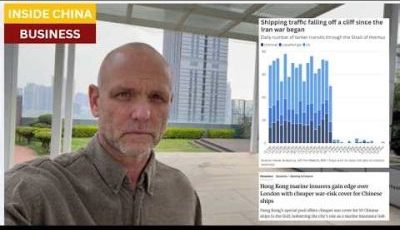
More Iran War fallout: Maritime insurance industry shifts from London to China
or go to
Aletho News Archives – Video-Images
From the Archives
Allies Don’t Need Lobbies
By Jay Knott | Dissident Voice | September 24, 2013
In a recent article on Counterpunch, Rob Urie defended the traditional Marxist analysis of US policy in the Middle East. He argues that support for Israel is driven primarily by economic interest, not the Jewish lobby.
He starts by paying tribute to the idea that Western societies are uniquely racist. He says that the “Western narrative” claims there is an “Arab character”, and that this is “antique racist blather”. He gives no definition of these terms. Further, he establishes his credentials as part of the dominant current in the American left by claiming that “over a million people in Iraq died so ‘we’ in the West can drive SUVs.”1
When he tries to criticize bourgeois economics, he makes it clear he doesn’t understand the developments it has made since Marx’s day, using the mathematical discipline known as “game theory”. He dismisses the basic abstraction of economic theory, the idea of the rational individual, on the grounds that it is “devoid of history, culture and political context”. But abstractions are always devoid of something.
He defends a more concrete economic theory, mostly Marxist, with some input from another theorist of capitalist crisis, Hyman Minsky. This concrete theory leads him to the view that US activity in the Middle East is primarily driven by rational capitalist motives, the need to secure a supply of oil.
“Taking the totality of circumstance — former oil company executives launching war on an oil rich nation on a pretext they publicly proclaimed they didn’t believe shortly before taking office — and that upon launching their war proved to be non-existent, requires a willingness to overlook the obvious — that the war on Iraq was for oil, that is difficult to support.”1
Perhaps I’ve misunderstood him, but based on what he says in the rest of the article, this convoluted sentence seems to argue that, because president Bush and vice-president Cheney attacked Iraq on false premises, and they also said it was all about oil, and they are former oil executives, and Iraq has a lot of oil, it’s difficult to deny US attacks on Iraq are all about oil.
In fact, it’s not hard at all. As Urie points out, at times Bush and co. said that attacking Iraq was “protecting the world’s supply of oil.”1 But, as he also points out, they are congenital liars. Why should we believe them when they say they are trying to “protect” the oil supply? Protect it against what? When politicians “admit” attacks on Middle Eastern countries are wars for oil, they are parroting the neo-con party line, feeding the public, both left and right, with a plausible-sounding pretext. For right-wingers, “it’s a war for oil” is a reason to support war, and for leftists, it’s a way to feel better by complaining impotently about corporate greed. Both approaches help the war drive. … continue
Blog Roll
 Aletho News
- Pakistan ramps up food exports to Persian Gulf nations as war deepens food insecurity
- Iran submits response to US plan, sets terms for war’s end: Tasnim
- US vs Iran: Kharg Island Talk — Bluff or Escalation? Ex-Military Officer Weighs In
- Zelensky unnecessarily involves Ukraine in the Middle East crisis
- Turkish tanker blacklisted by Ukraine hit in drone attack – media
- Canada, the U.S., and NATO: the inescapable trap
- Villains of Judea: Leonid Radvinsky
- Alon Mizrahi: ‘Israel Must Be Dismantled’
- Former Head Of MI6 Admits That The U.S. And Israel Are Losing The Iran War
- Scattered Thoughts on War and Peace
- If Americans Knew
- Israel may be committing war crimes in Lebanon – Not a ceasefire Day 167
- In the West Bank, life is a constant battle – 3 articles
- Jacob Reses, one of the most powerful pro-Israel operatives in Trump’s Washington
- Israeli-US assaults kill or injure 87 children a day – Not a ceasefire Day 166
- ‘Forever live by the sword’: Understanding Israelis’ massive support for Iran war
- UN’s special rapporteur on human rights says Israel is systematically torturing Palestinians
- Trump White House plagiarized Iran war manifesto from Israel-aligned think tank
- Gaza says 6–10 patients die daily waiting for treatment abroad as Israel blocks medical evacuations
- ‘Substantial evidence’ of double-tap strike in killing of Gaza’s Hind Rajab
- ‘Do Not Want To Die For Israel’: Doubts About Trump’s Iran Strategy Spread Among Troops
- No Tricks Zone
- Devastating Assessment Of Comirnaty Vaccine By Former Senior Pfizer Europe Toxicologist
- New Study: CO2 Is ‘Effectively Negligible’ As An Explanatory Climate Change Factor Since 2000
- Former Pfizer Toxicologist Dr. Helmut Sterz Tells Bundestag Hearing Pfizer Vaccine Should Have Never Been Approved
- Energy Expert: Germany’s Nuclear Phaseout Was A “500 Billion Euro Mistake”
- New Research: South Australia’s Mid-Holocene Sea Surface Temperatures Were 4°C Warmer Than Today
- Storing Green Energy To Last Germany 10 Days Would Require A 60-Million Tonne Battery
- New Studies: UK Sea Levels Were 4 Meters Higher Than Today During The Mid-Holocene
- Destructive Green New Deal: German Energy And Metal Group Warns Of Drastic Crisis
- New Study Documents A 20-Year Pause In Arctic Sea Ice Decline – Driven By Internal Variability
- Wake-up Call: Survey Shows Majority Of Germans Now Favor Postponing Climate Targets!
 Aletho News