NATO Wants to Dominate Not Only in Euro-Atlantic Region but Also in Middle East – Lavrov
Sputnik – December 5, 2019
A two-day NATO summit dubbed “NATO Engages: Innovating the Alliance” kicked off in London earlier in the week to mark the 70th anniversary of the organisation.
Russian Foreign Minister Sergei Lavrov stated on Thursday following the 26th Meeting of the OSCE Ministerial Council in Bratislava that NATO wants to dominate not only the Euroatlantic region but the Middle East as well.
“NATO continues its reckless expansion, the block’s military infrastructure is moving quickly to the east, close to Russian borders. There’s a permanent fomenting of tension, accusations of aggressive intentions from the part of Russia. All this is happening amid a record increase of military budgets – the decision that was adopted during the recent summit in London,” Lavrov said.
“The facts we see demonstrate us a clear situation: NATO wants to dominate both in the Euro-Atlantic and — if we look at NATO steps in other regions of the world, particularly the Middle East — in the Middle East,” Lavrov said.
Speaking further, the Russian foreign minister noted that Russia has a response to all the threats posed by NATO and will ensure its security without entering an arms race.
“We have a response to all those threats that NATO is multiplying when it directly names Russia and China as targets of these threats. We know how we can respond to these threats and ensure our security without entering an arms race,” Lavrov said.
NATO held its 70th anniversary summit in the UK capital from December 3-4. In its joint statement, the allies reaffirmed their commitment to increasing investment in defence and qualified “Russia’s aggressive actions” and “terrorism in all its forms and manifestations” as threats.
Putin: Russia is against militarization of space but US sees it as theater of war
RT | December 4, 2019
Russia has consistently opposed the idea of space militarization, but the actions of the US and its allies force Moscow to counterbalance this growing threat, President Vladimir Putin has said.
“Russia has always opposed and continues to oppose the militarization of space,” the president told a government meeting on military policies. Putin expressed concern over world powers increasing the capabilities of their space systems which have both military and dual-use applications.
“The US political and military leadership openly consider space a war theater,“ he said.“Developments demand that we pay increased attention to strengthening our orbital group as well as our rocket and space industries.”
Russia’s so-called orbital group is a constellation of more than 150 satellites, two thirds of which have military applications. Most of them are parts of military satellite communication systems, but Russia also has satellites monitoring launches of intercontinental ballistic missiles as well as short-range tactical missiles. This warning system was “significantly enhanced” over the recent years and tested successfully during the large-scale military drills in October, the president said.
His words, meanwhile, came as NATO finally made space its official war domain. During a summit in London on the 70th anniversary of the alliance on Wednesday, its members declared space “the fifth operational domain and committed to ensuring the security of telecommunications infrastructure, including 5G.”
However, nothing has been publicly said regarding concrete steps in this direction or decisions made in this field.
NATO’s four crises
By Jan Oberg – The Transnational – December 2, 2019
Political
NATO’s London Summit on December 3 and 4, 2019 displays the deep political crisis of the 70-year-old alliance: Only a dinner and a short meeting, no statement to be issued, quarrels among the leading military members, accusations, substantial differences on Syria and many other issues, the deepest-ever Transatlantic conflict and the usual issues of burden-sharing.
Legal
But the political dimension of NATO’s crisis is only one. There is also a legal crisis. You’ll recognize it if you care to read the NATO Treaty text – something academic and media people don’t generally seem to have done. They would then have noticed that the Alliance of 2019 consistently operates outside – indeed in violation of – its own goals, purposes and values. For instance, the UN Charter which should be NATO’s guideline has been violated on a permanent basis for decades – such as in its out-of-area bombings of Yugoslavia with no UN mandate.
The contempt shown for international law in general and the UN Charter in particular is an integral part of NATO’s existential crisis.
Moral
And, third, there is a moral dimension to NATO’s crisis. Of course, no one talks about it.
It’s the simple fact that no war that individual NATO members states or NATO as NATO have engaged in can be termed anything but predictable fiascos when judged by the alliance’s own stated goals and criteria – just think of Vietnam, Yugoslavia, Afghanistan, Iraq, Libya, Syria… all crystal clear moral catastrophes causing unspeakable suffering, death and destruction to millions upon millions while achieving none of the stated goals that were set to explain and legitimize these wars such as creating democracy, respecting human rights, liberating women or stopping alleged genocides.
By now, the world should have been told enough lies about NATO’s benevolent motives, policies and actions for taxpaying citizens to mobilize resistance to it.
These three crises can all be related to the response of the Western world to the demise of the Soviet Union and the Warsaw Pact 30 years ago – i.e. to the choice to expand NATO and exploiting the weakness of Russia.
Intellectual
The last and perhaps most-hidden-of-all crisis is NATO’s intellectual crisis.
It’s now an alliance that operates in a kind of echo chamber with little, or no, sense of the realities of the world. It’s there for its own sake. When you listen to its Secretary-General – not only Stoltenberg but Fogh Rasmussen and earlier ones – you sense a level of creativity and intellectualism that reminds you of leaders who also happened to be Secretaries-General such as, say, Leonid Breznev.
Irrespective of some little objective analysis of the situation, NATO sings only one tune: There are new threats all the time, we must arm more, we need new and better weapons and we must, therefore, increase military expenditures.
And how is it legitimized?
By uttering mantras. No matter what NATO and its members choose to do, it is simply stated without a trace of argument or documentation that more money will increase four things: Defence, security, stability and peace. And be good for basic Western values such as freedom, democracy and peace.
How come – the small boy watching the Emperor would ask – that no matter what NATO has done the last 70 years, it is still maintaining that it needs more to create that defence, security, stability and peace?
What’s wrong with a system that keeps applying the same medicine decade after decade and gets further and further from achieving the stipulated goal?
Military expenditures in general – no balance and no reality check
NATO’s main enemy is supposed to be Russia. It doesn’t matter that Russia’s military expenditures are about 6-7% of NATO’s total expenditures (29 countries). It doesn’t matter that NATO’s technical quality is superior. It doesn’t matter that Russia’s military expenditures are falling year-by-year – decreased to US $ 64 billion in 2018 from US $ 66 billion in 2017. It doesn’t matter that Russia’s military expenditures averaged only US $ 45 billion from 1992 until 2018.
Only? Yes, NATO’s total budget is US $ 1036 billion of which the US stands for 649.
And it doesn’t matter that the old Warsaw Pact budget were some 65-75% of NATO’s during the first Cold War and we were told back then that some kind of balance was good for stability and peace. Today we are told that the more superiority NATO has, the better it is for world peace.
In short, reality doesn’t matter anymore to NATO.
The 2 per cent goal
And this is where the 2 per cent of BNP comes into play and reveals just how deep NATO’s crisis is. But have you seen anybody questioning this 2 per cent goal as the philosophical nonsense – or forgery – it is?
It resembles the Theatre of the Absurd to tie military expenditures to the economic performance of a country. Imagine a person sets off 10 % of her/his income to buy food. Sudden he or she wins in a lottery or is catapulted into a job that yields a 5 times higher income. Should that person then also begin to eat 5 times more?
The 2 per cent goal is an absurdity, an indicator of defence illiteracy. People who take it serious – in politics, media and academia – obviously have never read a basic book about theories and concepts in the field of defence and security. Or about how one makes a professional analysis of what threatens a country.
If military expenditures are meant to secure a country’s future, do the threats that this country faces also vary according to its own GNP? Of course not! It is a bizarre assumption.
Decent knowledge-based defence policies should be decided on the basis of a comprehensive analysis of threats and contain dimensions such as:
What threatens our nation, our society now and along various time horizons? Which threats that we can imagine are so big that we can do nothing to meet them? Which are such that it is meaningful to set off this or that sum to feel reasonably safe? What threats seem so small or unlikely that we can ignore them?
What threats are most likely to go from latent to manifest? How do we prioritize among scarce resources when we have other needs and goals than feeling secure such as developing our economy, education, health, culture, etc.?
And, most importantly, two more consideration: What threats can be met with predominantly military means and which require basically civilian means? And how do we act today to prevent the perceived threats from becoming a reality that we have to face – how do we, within our means, prevent violence and reduce risks as much as possible.
All these questions should be possible to answer with the new mantra: Just always give the military 2 per cent of the GNP and everything will be fine?
The MIMAC
MIMAC is the Military-Industrial-Media-Academic Complex – the vested interests of small elites in symbiosis with governments which run on and benefit from bizarre standards like the 2 per cent goal.
One purpose of that goal is to make serious, empirical and relevant threat analysis irrelevant. It’s a perpetuum mobile – a way of securing that MIMAC always gets what it needs, no matter what the consequences are for thosee who pay it all, the citizens and their tax money.
Imagine that Russia disappeared from the earth tomorrow. And NATO would quickly find some other “enemy” by which to legitimate that it anyhow needs also 2 per cent of your BNP in the future. At least!
NATO Titanic
It’s Secretary-General Jens Stoltenberg two days ago announced this mind-boggling news, swallowed by media as the most natural thing of the world in need of no questions – read it on NATO’s homepage:
Ahead of the meeting of NATO Leaders in London to mark the Alliance’s 70th anniversary, Secretary General Jens Stoltenberg on Friday (29 November 2019) gave details of large increases in Allied defence spending. Mr. Stoltenberg announced that in 2019 defence spending across European Allies and Canada increased in real terms by 4.6 %, making this the fifth consecutive year of growth. He also revealed that by the end of 2020, those Allies will have invested $130 billion more since 2016. Based on the latest estimates, the accumulated increase in defence spending by the end of 2024 will be $400 billion. Mr. Stoltenberg said: ‘This is unprecedented progress and it is making NATO stronger.’
Read it carefully: NATO’s military expenditure increase 2016-2020 is US $130 billion – that is twice as much as Russia’s total annual budget!
There is only two words for it: Madness and irrationality. Madness in and of itself and madness when seen in the perspective of all the other problems humanity must urgently find funds to solve.
The total regular UN budget for the year 2016-17 was US $5.6 billion. That is, NATO countries spend 185 times more on the military than all the world does on the UN.
Do you find that sane and in accordance with the problems humanity need to solve? This author does not. I stand by the word madness. There exists no rational academic, empirical analysis and no theory that can explain NATO’s military expenditures as rational or in service of the common good of humankind.
*****
The world’s strongest, nuclear alliance is a castle built on intellectual sinking sand. It’s a political, moral, legal and intellectual Titanic.
The only armament NATO needs is legal, moral and intellectual. And unless it now moves in this direction, it deserves to be dissolved.
The inverse proportion between its destructive power and its moral-intellectual power is – beyond any doubt – the largest single threat to humanity’s future.
This challenge is at least as serious and as urgent as is climate change.
Perhaps it is time to stop keeping NATO alive by taxpayers’ money and start a tax boycott in all NATO countries until it is dissolved or at least comes down to – say – one-tenth of its present wasteful military level? Not to speak of its bootprint destruction of the environment…
When Did Ukraine Become a ‘Critical Ally’?
By Pat Buchanan • Unz Review • November 15, 2019
On hearing the State Department’s George Kent and William Taylor describe President Donald Trump’s withholding of military aid to Ukraine, The New York Times summarized and solemnly endorsed their testimony:
“What clearly concerned both witnesses wasn’t simply the abuse of power by the President, but the harm it inflicted on Ukraine, a critical ally, under constant assault by Russian forces.”
“‘Even as we sit here today, the Russians are attacking Ukrainian soldiers in their own country, and have been for four years,’ Taylor said. ‘I saw this on the front line last week; the day I was there a Ukrainian soldier was killed and four more wounded.’”
Kent compared Ukrainian resistance to Russia’s intervention on the side of the Donbass secessionists to “our own Minutemen in 1776.”
“More than 13,000 Ukrainians have died on Ukrainian soil defending their territorial integrity and sovereignty from Russian aggression. … American support in Ukraine’s own de facto war of independence has been critical.”
Kent went on:
“The American colonies may not have prevailed against British imperial might without help from transatlantic friends after 1776. In an echo of Lafayette’s organized assistance to General George Washington’s army and Admiral John Paul Jones’ navy, Congress has generously appropriated over $1.5 billion over the past five years in desperately needed train and equip security assistance to Ukraine…”
“Similar to von Steuben training colonials at Valley Forge, U.S. and NATO allied trainers develop the skills of Ukrainian units at Yavoriv near the Polish border, and elsewhere. They help rewrite military education for Ukraine’s next generation, as von Steuben did for America’s first.”
“One would think, listening to this,” writes Barbara Boland, the American Conservative columnist, “that the U.S. had always provided arms to Ukraine, and that Ukraine has relied on this aid for years. But this is untrue and the Washington blob knows this.”
Indeed, Ukraine has never been a NATO ally or a “critical ally.”
Three decades ago, George H.W. Bush implored Ukraine not to set out on a course of “suicidal nationalism” by declaring independence from the Russian Federation. Despite constant pressure from Sen. John McCain and our neocons to bring Ukraine into NATO, wiser heads on both sides of the Atlantic rejected the idea.
Why? Because the “territorial integrity and sovereignty” of Ukraine is not now and has never been a vital interest of ours that would justify a U.S. war with a nuclear-armed Russia.
Instead, it was the avoidance of such a war that was the vital interest that nine U.S. presidents, from Truman to Bush I, secured, despite such provocations as the crushing of the Hungarian Revolution in 1956 and the building of the Berlin Wall.
In February 2014, the elected pro-Russian government of Viktor Yanukovych was overthrown by U.S.-backed protesters in Maidan Square, cheered on by McCain. This was direct U.S. intervention in the internal affairs of Ukraine. Victoria Nuland of the State Department conceded that we had dumped billions into Ukraine to reorient its regime to the West.
To Vladimir Putin, the Kyiv coup meant the loss of Russia’s historic Black Sea naval base at Sebastopol in Crimea. Rather than let that happen, Putin effected an uprising, Crimea’s secession from Ukraine, and the annexation by Russia. In eastern Ukraine, the pro-Russian Donbass rose up in rebellion against the pro-NATO regime in Kyiv.
Civil war broke out. We backed the new regime. Russia backed the rebels. And five years later, the war goes on. Why is this our fight?
During the Obama years, major lethal aid was denied to Ukraine.
The White House reasoned that arming Ukraine would lead to an escalation of the war in the east, greater Russian intervention, defeat for Kyiv, and calls for the U.S. to intervene militarily, risking a war with Russia.
Not until Trump became president did lethal aid begin flowing to Ukraine, including Javelin anti-tank missiles.
So where are we?
Despite dramatic depictions of Ukraine as our embattled ally, Ukraine has never been an ally. We are not now nor have we ever been obligated to fight for its sovereignty or territorial integrity. Efforts to bring Ukraine, Moldova and Georgia into NATO have been repeatedly rebuffed in the United States and by our European NATO allies.
Kent and Taylor are honorable men. But they are career diplomats of the Department of State and veteran advocates of a foreign policy that sees Russia as an enduring aggressor and Ukraine as a fighting ally entitled to U.S. military assistance.
They have, in the old phrase, gone native. They champion the policies of yesterday and the embattled countries to which they are accredited and to whose causes they have become converted.
But Trump was elected to overturn the interventionist policies America has pursued since the century began. He was elected to end Cold War II with Russia, to reach a modus vivendi as Reagan did, and to extricate us from the endless wars into which Presidents Bush and Obama plunged the nation.
Copyright 2019 Creators.com.
Willy Wimmer: ‘We are on a path of war again’
RT | November 9, 2019
Three decades after the fall of the Berlin Wall, one of the symbols of the Cold War, Europe remains divided because it chose confrontation over a common future, Willy Wimmer, Germany’s former State Secretary for Defense believes.
Germany is marking 30 years since the fall of the Berlin Wall – a symbol of division, perhaps, not just for Germans but for all Europeans, who saw the continent split between the Western and the Soviet bloc. The wall’s destruction has since turned into a symbol of German reunification. Yet, Europe itself has failed to achieve the genuine unity that was a dream of the people who tore it down back on November 9, 1989.
Wimmer is a long-term member of the German parliament and the former vice-head of the OSCE Assembly, who also was a high-ranking official with the German Defense Ministry at the time of reunification and oversaw the integration of West and East Germany’s Armed Forces.
He believes that instead of striving for a “Common House” uniting all the European nations, the politicians drew new lines in the sand, setting their nations on a path to fresh conflict. The hopes that filled the hearts of the people following the end of the Cold War have been ultimately dashed, he said, while calling the present European and NATO policies towards Russia a “disaster”.
Below are some more of his thoughts on the issue, which he shared with RT.
Anglo-Saxon ‘division’ strategy instead of Gorbachev’s ‘Common House’
The reason for the new Cold War is absolutely clear. If we had followed the policies of [the last Soviet leader] Mikhail Gorbachev, [former German Chancellor] Helmut Kohl and even [the former US President] George H. W. Bush, we would have entered an era of cooperation. It is for this reason that I mention the “common European House” – the big idea of Mikhail Gorbachev.
It is a kind of Anglo-Saxon policy not to have cooperation on the European continent – mainly between the Russians, the French, the Poles and the Germans. They want to have a line of confrontation in this area and therefore are against all promises. [As a result] NATO was extended to the East.
I was responsible for the organization of the German Armed Forces on the German territory following reunification. We did not want foreign troops in former East Germany. We did not want to have British or French troops there; we wanted to have only German ones. We wanted to explain to the world that there was no desire to enlarge NATO up to the new borders with Russia that were created in 1992.
It was against all the ideas we had after reunification. What is happening now is some kind of Anglo-Saxon policy that was created even before WWI. We are on the path of war again. That is so much against the will of our people.
This is also against the will of the Dutch, the French, the Spanish and the Italians. We see it as a disaster that a US president that is willing to cooperate with the Russian President Vladimir Putin – President [Donald] Trump – has to face such a disastrous policy organized by the US deep state, which is against our national interests and the national interests of all other western Europeans.
“The remains of the Berlin Wall are not only the symbol of German reunification or the end of the division in Europe. It is a symbol of missed hopes and forgotten expectations when it comes to the great idea of Mikhail Gorbachev to help build a common European House.”
As long as we live, the German people will remember with great gratitude the Soviet Secretary General and its leader, as well as the Russian population. We always said that a key for German reunification was in Moscow. Moscow handed it over to us and therefore we have to face responsibility for the future.
Links to Russia re-established
The role of Mikhail Gorbachev is still akin to that of a saint to the Germans. People in Germany like Mr. Gorbachev and they like his idea of a common European House. We see it as a disaster in Germany that, together with NATO, we are preparing some kind of a common European battleground again.
Gorbachev is a kind of a hero for Germans. I travel a lot in all parts of Germany and when I come to the Eastern part I see another big issue for them. For 20 years after unification, it was very difficult to talk to them about the Russians and their relationship to Russia. They almost ignored such talk because of the past.
But, when you now come to Rostock, Dresden or Leipzig they are learning Russian again, they go to theaters to watch Russian performances and listen to Russian music. They have re-established their links with Russia, and if they could do what they want to do, they would be the big economic partners of Russia these days.
Things have really changed for the Russian Federation and with regard to Russia. People in Dresden, Saxony’s capital, are absolutely proud that Russian President Vladimir Putin once served there. That is the reality these days, despite what the mainstream media say.
Deep State on the National Security Council: Colonel Vindman Is an ‘Expert’ With an Agenda
By Philip Giraldi | Strategic Culture Foundation | November 7, 2019
The current frenzy to impeach President Donald Trump sometimes in its haste reveals that which could easily be hidden about the operation of the Deep State inside the federal government. Congress is currently obtaining testimony from a parade of witnesses to or participants in what will inevitably be called UkraineGate, an investigation into whether Trump inappropriately sought a political quid pro quo from Ukrainian leaders in exchange for a military assistance package.
The prepared opening statement by Lieutenant Colonel Alexander Vindman, described as the top Ukraine expert on the National Security Council (NSC), provides some insights into how decision making at the NSC actually works. Vindman was born in Ukraine but emigrated to the United States with his family at age three. He was commissioned as an army infantry officer in 1998 and served in some capacity in Iraq from 2004-5, where he was wounded by a roadside bomb and received a purple heart. Vindman, who speaks both Ukrainian and Russian fluently, has filled a number of diplomatic and military positions in government dealing with Eastern Europe, to include a key role in Pentagon planning on how to deal with Russia.
Vindman, Ukrainian both by birth and culturally, clearly was a major player in articulating and managing US policy towards that country, but that is not really what his role on the NSC should have been. As more than likely the US government’s sole genuine Ukrainian expert, he should have become a source of viable options that the United States might exercise vis-à-vis its relationship with Ukraine, and, by extension, regarding Moscow’s involvement with Kiev. But that is not how his statement, which advocates for a specific policy, reads. Rather than providing expert advice, Vindman was concerned chiefly because arming Ukraine was not proceeding quickly enough to suit him, an extremely risky policy which has already created serious problems with a much more important Russia.
Vindman apparently sees Ukraine-Russia through the established optic provided by the Deep State, which considers global conflict as the price to pay for maintaining its largesse from the US taxpayer. Continuous warfare is its only business product, which explains in part its dislike of Donald Trump as he has several times threatened to upset the apple cart, even though he has done precious little in reality. Part of Vindman’s written statement (my emphasis) is revealing: ”When I joined the NSC in July 2018, I began implementing the administration’s policy on Ukraine. In the Spring of 2019, I became aware of outside influencers promoting a false narrative of Ukraine inconsistent with the consensus views of the interagency. This narrative was harmful to US government policy. While my interagency colleagues and I were becoming increasingly optimistic on Ukraine’s prospects, this alternative narrative undermined US government efforts to expand cooperation with Ukraine.”
Alexander Vindman clearly was pushing a policy that might be described as that of the Deep State rather than responding to his own chain of command where it is the president who does the decision making. He also needs a history lesson about what has gone on in his country of birth. President Barack Obama conspired with his own version of Macbeth’s three witches – Rice, Power and Jarett – to overthrow the legitimate government of Ukraine in 2014 because it was considered to be too close to Moscow. The regime change was brought about by “mavericks” like the foul-mouthed neocon State Department officer Victoria Nuland and the footloose warmonger Senator John McCain. Vice President Joe Biden also appeared on the scene after the “wetwork” was done, with his son Hunter trailing behind him. Since that time, Ukraine has had a succession of increasingly corrupt puppet governments propped up by billions in foreign aid. It is now per capita the poorest country in Europe.
Washington inside-the-beltway and the Deep State choose to blame the mess in Ukraine on Russian President Vladimir Putin and the established narrative also makes the absurd claim that the political situation in Kiev is somehow important to US national security. The preferred solution is to provide still more money, which feeds the corruption and enables the Ukrainians to attack the Russians.
Colonel Vindman, who reported to noted hater of all things Russian Fiona Hill, who in turn reported to By Jingo We’ll Go To War John Bolton, was in the middle of all the schemes to bring down Russia. His concern was not really over Trump vs. Biden. It was focused instead on speeding up the $380 million in military assistance, to include offensive weapons, that was in the pipeline for Kiev. And assuming that the Ukrainians could actually learn how to use the weapons, the objective was to punish the Russians and prolong the conflict in Donbas for no reason at all that makes any sense.
Note the following additional excerpt from Vindman’s prepared statement: “… I was worried about the implications for the US government’s support of Ukraine… I realized that if Ukraine pursued an investigation into the Bidens and Burisma, it would likely be interpreted as a partisan play which would undoubtedly result in Ukraine losing the bipartisan support it has thus far maintained.”
Vindman’s concern is all about Ukraine without any explanation of why the United States would benefit from bilking the taxpayer to support a foreign deadbeat one more time. One wonders if Vindman was able to compose his statement without a snicker or two intruding. He does eventually go on to cover the always essential national security angle, claiming that “Since 2008, Russia has manifested an overtly aggressive foreign policy, leveraging military power and employing hybrid warfare to achieve its objectives of regional hegemony and global influence. Absent a deterrent to dissuade Russia from such aggression, there is an increased risk of further confrontations with the West. In this situation, a strong and independent Ukraine is critical to US national security interests because Ukraine is a frontline state and a bulwark against Russian aggression.”
The combined visions of Russia as an aggressive, expansionistic power coupled with the brave Ukrainians serving as a bastion of freedom is so absurd that it is hardly worth countering. Russia’s economy is about the size of Italy’s or Spain’s limiting its imperial ambitions, if they actually exist. Its alleged transgressions against Georgia and Ukraine were both provoked by the United States meddling in Eastern Europe, something that it had pledged not to do after the Soviet Union collapsed. Ukraine is less an important American ally than a welfare case, and no one knows that better than Vindman, but he is really speaking to his masters in the US Establishment when he repeats the conventional arguments.
It hardly seems possible, but Vindman then goes on to dig himself into a still deeper hole through his statement’s praise of the train wreck that is Ukraine. He writes “In spite of being under assault from Russia for more than five years, Ukraine has taken major steps towards integrating with the West. The US government policy community’s view is that the election of President Volodymyr Zelensky and the promise of reforms to eliminate corruption will lock in Ukraine’s Western-leaning trajectory, and allow Ukraine to realize its dream of a vibrant democracy and economic prosperity. The United States and Ukraine are and must remain strategic partners, working together to realize the shared vision of a stable, prosperous, and democratic Ukraine that is integrated into the Euro-Atlantic community.”
Alexander Vindman does not say or write that the incorporation of Ukraine into NATO is his actual objective, but his comments about “integrating with the West” and the “Euro-Atlantic community” clearly imply just that. The expansion of NATO up to Russia’s borders by the rascally Bill Clinton constituted one of the truly most momentous lost foreign policy opportunities of the twentieth century. The addition of Ukraine and Georgia to the alliance would magnify that error as both are vital national security interests for Moscow given their history and geography. Vindman should be regarded as a manifestation of the Deep State thinking that has brought so much grief to the United States over the past twenty years. Seen in that light, his testimony, wrapped in an air of sanctimoniousness and a uniform, should be regarded as little more than the conventional thinking that has produced foreign policy failure after failure.
Kremlin Says US Silent on Future of Strategic Arms Reduction Treaty
Sputnik – November 5, 2019
MOSCOW – Russia has not received any indication from the United States that it is ready to discuss the future of the New Strategic Arms Reduction Treaty (START), Kremlin spokesman Dmitry Peskov said on Tuesday.
“There are no advancements on START, no signals from the Americans, no signals about being ready to begin discussing an extension of old modalities or new modalities. It is a long process, and, of course, we will inevitably enter a zeitnot [race against the clock]. If the silence continues, we will enter a period where it will be impossible to agree on some new realities of the arms control”, he told reporters.
Peskov stressed the complexity of such talks and refrained from providing a precise time frame for negotiations.
The statement comes after Beijing stated that it saw no reason to engage in trilateral disarmament negotiations with the United States and Russia, especially since conditions for such an arrangement do not exist.
Russian President Vladimir Putin sent in September a proposal to leaders of several countries, including NATO members, to introduce a moratorium on the deployment of INF Treaty-covered missiles in Europe and other regions. Later, NATO confirmed that it had received the letter, but did not consider this proposal credible.
On 2 August, the US withdrew from the Intermediate-Range Nuclear Forces Treaty, which banned all short-medium (310–620 miles) and intermediate (620–3,420 miles) range ground-launched missiles, citing Russia’s alleged violations of the pact as its reason for exiting.
In early 2019, US President Donald Trump floated the idea of drafting a new arms control agreement between Washington, Moscow and Beijing.
The New START agreement was signed in 2010 by then-Russian President Dmitry Medvedev and his US counterpart at the time, Barack Obama. It is currently the only arms control agreement between two countries that is still in force. It is set to expire in February 2021, and so far Washington has shown no inclination to extend it.
Is the ‘Greater Albania’ Project Aimed Against Russia in the Balkans?
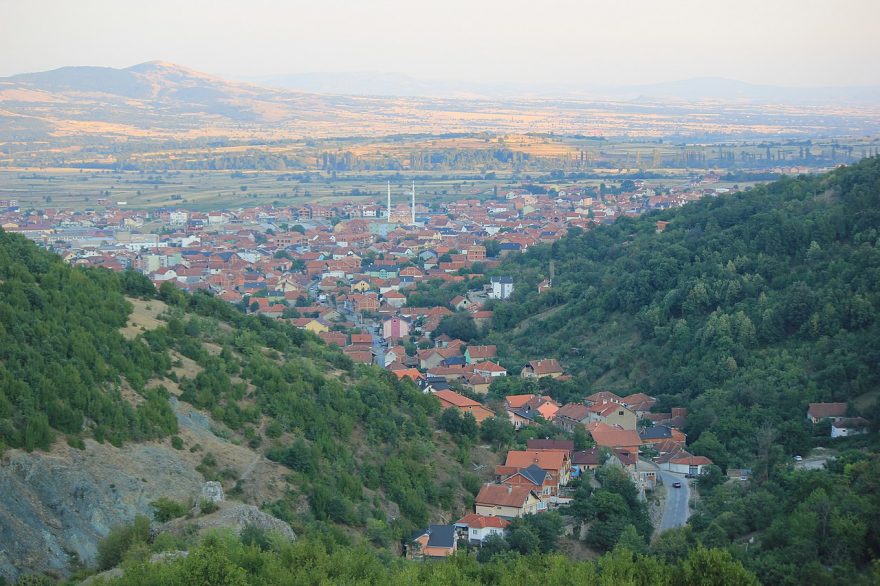
Preševo Valley, Serbia.
By Paul Antonopoulos | October 28, 2019
A project for Greater Albania – conspiracy or legitimate? According to a 2010 Gallup Balkan Monitor report, 83% of Albanians in Albania supported the idea of a Greater Albania, with 81% and 53% of Albanians in Kosovo and North Macedonia respectively supporting such an ambition.
The ultimate goal? To have Kosovo and the Preševo Valley in Serbia, southern Montenegro, Epirus in Greece and western North Macedonia into a single Greater Albanian state. Although this may not be official policy of the Albanian Republic, it is ingrained into the Albanian mythos. The very idea of a Greater Albania has roots in the 1913 Treaty of London that left roughly 40% of the Albanian population outside the newly established Albanian country. This has been something that the U.S. could weaponize against Russian influence in the Balkans.
Despite the heroics of Albanian national figure and anti-Ottoman guerrilla leader Gjergj Kastrioti, more commonly known as Skënderbej, the Albanians became loyal Ottoman subjects and were used as colonists in more restive and disloyal areas of the empire, especially those inhabited by the Serbs, Bulgarians and Greeks. They often became a majority over the initial inhabitants, like what happened in Kosovo and western North Macedonia.
Although the idea of a Greater Albania may seem like an exaggerated conspiracy, to the Serbian people this is anything but. The Serbian mythos finds itself in the 1389 Battle of Kosovo, where despite their courage, Serbian Prince Lazar Hrebeljanović was martyred and his forces routed by the Ottoman invaders. Although the Serbs achieved sovereignty over Kosovo with the downfall of the Ottoman Empire, the region had already become an Albanian majority on Ottoman orders to weaken Serbian identity to the region.
Kosovo became an autonomous region of Serbia after the establishment of socialist Yugoslavia in the aftermath of World War Two and retained its Albanian-majority. The 1990’s proved this was always a weak point of Serbia. With the U.S. sponsoring the violent destruction of Yugoslavia in the early 1990’s, the status of Kosovo was left unresolved, culminating in the terrorist-led war against the Yugoslav state (in which Serbia was the successor of) in 1999.
The terrorist ethnic-Albanian Kosovo Liberation Army (KLA), with the backing of NATO and the Albanian Republic, defeated Yugoslav forces. The United Nations and NATO assumed control of the territory, which eventually declared independence in 2008. Since then the region has become a heroin ‘smugglers paradise,’ and a hub for human trafficking, organ harvesting and arms trafficking.
It is for this reason that in an interview on Saturday, the former Serbian Chief of General Staff, General Ljubisa Dikovic, discussed the project for a Greater Albania. Dikovic believes that the area of the Balkan Peninsula cannot be peaceful because of unresolved issues like Kosovo.
“There can easily be big problems if things get out of hand. I hope that there will be enough wisdom and intelligence and that everyone will do what we do, in terms of strengthening security, cooperation and trust. I am free to say that we are in the lead because I do not see on other sides showing desire to build peace. After all, the issue of ‘Greater Albania’ is a matter of the highest security risk. We can ask why this is happening now with Albania and [North] Macedonia? It might be waiting to create a ‘Greater Albania’,” Dikovic said.
His comments come as the economic situation in Kosovo continues to deteriorate and becomes even more reliant upon foreign aid and donations from the unilateral behaving U.S., their former Ottoman masters in Turkey that had gifted lands to them hundreds of years earlier, and Germany who effectively rules the European Union.
The former military man’s comments also come as Serbia leads Exercise “Slovenian Shield 2019” with Russia. Although some Slavic tribes broke off and headed south into the Balkans sometime at around 600AD, they maintained their Slavic kinship with the Russians and shared Christian Orthodox faith, ensuring Serbia has always had a pro-Russia view. Albanian expansionism has therefore become a natural ally of the U.S. to limit Russian influence in the Balkans.
However, this begs the question then why strong efforts for Albanian independence in Greece, Montenegro and North Macedonia has been weak in comparison to those in Serbia. Greece has been a long-time loyal NATO member, with the exception of the disintegration of Yugoslavia, and therefore does not pose a threat to U.S. hegemony in the Balkans, protecting Greece from destabilization efforts via Albanian expansionism. Although Montenegro and North Macedonia also share Slavic kinship with the Serbs and Russians, as well as the Orthodox faith, they have proven to have Globalist ambitions, wanting to join NATO and the EU.
Serbia remains the only anti-EU/NATO state in the Balkans that is overwhelmingly pro-Russia. It is for this reason that Dikovic wants to renew compulsory military service, stating: “One should not gamble and think that there will be no conflict and risk. It is not only up to us, but we must have an answer to everything.”
Although the overwhelming majority of Albanians want a Greater Albania, it is unlikely to be achieved with Washington’s backing in Greece, Montenegro and North Macedonia as they do not pose a threat to U.S. hegemony in the Balkans, but rather serve it, while not encouraging Russian influence in the region. As Serbia is a pro-Russian island in a hostile region, it will continue to be targeted by Albanian expansionism with U.S. backing. Will this drive for expansionism violently spill over into the Preševo Valley? That remains to be seen.
Paul Antonopoulos is a Research Fellow at the Center for Syncretic Studies.
Secret NATO Military Exercises in Germany Drill Nuclear War Scenario – Report
By Oleg Burunov – Sputnik – 19.10.2019
NATO allies are holding secret military exercises in Germany, which aim to drill a nuclear war scenario, the German newspaper Kronen Zeitung reports.
During the drills, codenamed “Steadfast Noon”, the military personnel utilise warplanes which could be equipped with nuclear weapons in the event of a war.
The Luftwaffe is represented in the drills by Tornado fighter jets from the 33rd Tactical Squadron; it is stationed at Buchel Air Base where the US-made B61 nuclear bombs are currently stored.
In case of an emergency, the B61 warheads will be installed on the Tornadoes as part of Germany’s “nuclear participation” in a NATO mission to counter an adversary, according to Kronen Zeitung.
Collapse of INF Treaty
The newspaper claims that “the danger of a nuclear war scenario is currently much higher than in the past three decades” due to the collapse of the Intermediate-Range Nuclear Forces (INF) Treaty between the US and Russia this summer.
The two countries have repeatedly accused each other of violating the Cold War Era treaty, and after announcing in February 2019 that it would suspend its participation in the arms control treaty, the US formally withdrew from the accord on 2 August.
Russia says allegations that it violated the INF Treaty are unsubstantiated and accuses the US of violating the treaty by deploying defence systems in Europe with launchers capable of firing cruise missiles at ranges prohibited under the agreement.
Signed in 1987, the INF Treaty required the two countries to eliminate and permanently refrain from the development of ground-launched ballistic and cruise missiles with ranges of 500 to 5,500 kilometres (310 to 3,417 miles).
Denmark announces increased military contributions and NATO support in Syria and beyond
By Sarah Abed | September 9, 2019
Denmark is recognized as one of the most socially and economically developed countries in the world, which enjoys a high standard of living as well as high metrics in national performance, protection of civil liberties, and the lowest perceived level of corruption in the world, has announced that it will be boosting military contributions to missions around the world, including joining the United States in its illegal and unauthorized deployment in northeastern Syria.
The sovereign and proud nation of Syria has neither invited nor does it accept any foreign invaders on its land and has repeatedly demanded that all foreign forces leave on their own before they are forced out. Syria is highly committed to liberating every inch of its land from terrorist control whether that be domestic or foreign, and protecting its territorial integrity.
On Friday, U.S. Department of Defense Chief Pentagon Spokesperson, Jonathan R. Hoffman provided the following statement on Denmark’s deployment to Syria:
“The United States welcomes the announcement by the Danish Government to make a military deployment to Syria in support of Operation Inherent Resolve and to continue to share the burden and responsibilities of this important mission. As a founding member of the Global Coalition to Defeat ISIS, this deployment demonstrates Denmark’s continued commitment to working with our partners, to include the SDF, to ensure ISIS cannot re-emerge. Our Danish partners will work with the residual U.S. military force in northeast Syria to support stability and security. We look forward to working with our Danish ally to continue our shared mission of achieving ISIS’s enduring defeat-in Syria and wherever else the group may operate.”
The Nordic nation, along with its NATO allies; the United States, France, Britain, Turkey etc. do not have authorization by the Syrian government nor the UN Security Council to even be in Syria, let alone carry out any military operations.
With the exception of Turkey, these foreign troops are seen as illegal invaders supporting a Kurdish-led separatist movement in northeastern Syria which is closely aligned with and supported by Israel and has even employed Daesh-like tactics during the war. The so called Syrian Democratic Forces (SDF) is simply a rebranding by the US of the People’s Protection Units (YPG), a Syrian offshoot of the Turkish based Kurdistan Workers Party (PKK) which is recognized as a terrorist organization by the United States and other NATO members, and has been in conflict with the Turkish government since 1984.
The US-led coalition has killed at least 1,319 civilians during its unauthorized operations in Syria and Iraq since 2014, by its own admission, although the actual number is most likely higher.
On Friday, Denmark’s Foreign Minister Jeppe Kofod stated that Denmark must lift its share of the burden as a member of NATO. Danish Minister of Defense Trine Bramsen said that she was proud that the country will be contributing to peace and stability in one of the world’s hotspots.
Ironically, Syria would not have become a “hotspot” if the US and their allies didn’t support terrorist factions and weren’t committed to “regime-change” for the past eight years.
In addition to sending support to the “Global Coalition against Islamic State” in northeast Syria, the Danish military will also be sending support to the United Nations peacekeeping mission in Mali, France’s mission in the Sahel, and a U.S. aircraft carrier group in the north Atlantic and Mediterranean seas, as well as increasing its contributions to NATO and as if that wasn’t enough there’s also talks of a possible deployment to an international maritime effort in the Strait of Hormuz. In response to calls from the U.K. and France for a “European-led maritime mission” in the Persian Gulf region which would probably be in addition to an increased U.S. presence.
“When we make new military contributions in the Sahel region and in Syria to the fight against ISIL, it is about more than immediate firefighting,” Danish Foreign Minister Kofod said Friday. Kofod also said, “We are working across several fronts to create security, stability, and – in the long term – a positive development in the immediate neighborhoods of Europe.”
The aforementioned “military contributions” including sending a “helicopter contribution of up to 70 people and one-to-two staff officers” to France’s Operation Barkhane in sub-Saharan Africa’s Sahel region, for the first time. As well as, sending a medical team consisting of fourteen members including doctors, nurses, therapists, and support staff to provide trauma care at a coalition base in northeastern Syria.
Denmark will also be sending a C-130J transport aircraft along with approximately 65 personnel as well as a staff contribution of up to 10 to MINUSMA, the United Nations stabilization mission in Mali.
Also, to strengthen NATO’s deterrence and defense profile Denmark will be sending around 700 personnel to NATO missions, including a combat battalion, a “larger warship” and four fighter aircraft.
A frigate will be sent by Denmark to accompany a U.S. Navy carrier group for three months on an upcoming deployment in the Mediterranean and North America as well. It appears that building a closer and stronger cooperation with the U.S. is a priority for Denmark, maybe even more so than their supposed mission to strengthen maritime security.
Last December, U.S. President Trump announced the withdrawal of American troops from Syria, stating we had won against ISIS and called on other nations to step in. His plans were derailed and currently there exists a fair amount of British and French troops in addition to U.S. Special Operations Forces who have trained and advised the SDF in the northeastern region. France and the U.K have stated during the past few months, that they will increase their presence.
Some are questioning whether Denmark’s surprise announcement to deploy troops to Syria is an attempt to make amends with President Donald Trump. After refusing to sell him Greenland, Trump canceled his trip to Denmark.
Sarah Abed is an independent journalist and analyst.
Featured Video

AIDS Inc. by Gary Null (2007)
or go to
Aletho News Archives – Video-Images
From the Archives
Clash of Civilization, Iran Part II
By Jamal Kanj – Intifada-Palestine.com – January 14, 2011
Israel’s survival kit is: perpetuate conflict, insecurity to rationalize collective hate and finally playing victim.
Devoid of conflict, Israel implodes internally; without hate, Zionism loses its justification; and playing eternal victim to continue blackmailing the West. Absence of this holy trinity, Israel ceases to exist.
From its inception, the house of Zion has mastered exploiting adversarial powers to advance Israel’s cause. For instance, their influence over the Democratic Party in the US began with President Truman’s bid for 2nd term election in 1948.
Responding to strong opposition from Secretary of State General George Marshall and Department experts urging against recognition of Israel, President Truman replied: “I’m sorry gentlemen but I have to answer to hundreds of thousands [Jewish voters] who are anxious for the success of Zionism. I do not have hundreds of thousands of [voting] Arabs among my constituents”
Zionists influence over liberal American politics was matched with the doctrinal school of Conservative theoreticians aligning the Republican Party’s platform with Israel’s objectives. The Neoconservative Zionists, coined Zioncons, invented the “Clash of Civilization” concept to fight Israel’s wars. … continue
Blog Roll
 Aletho News
- Merck Virologists Admitted to Falsely Certifying Vaccine Efficacy
- Mandatory Folic Acid for every man, woman & child
- Pro-Palestine protesters arrested outside UK’s ruling Labour Conference in Liverpool
- Mauritius denies landing permit to flight from Israel, forcing cancellation: Tour operator
- Israeli finance minister calls for genocidal war on West Bank, annexation of south Lebanon
- 12 Things Your Psychiatrist Was Trained Not to Tell You
- From Unipolar Universalism to Multipolar Civilizational Distinctiveness
- RSF military group defects, joins Sudanese army: State media
- Ireland goalkeeper refuses to play ‘Israel’ as squad weighs boycott
- China pushes back against US on Cuba, Iran
- If Americans Knew
- Israel forces Gazans to live in constant peril – Daily Update
- Deconstructing Netanyahu’s pants-on-fire UN rant – Daily Update
- Trump betrayed voters with his campaign lies and prioritized a foreign country once he took office
- Netanyahu calls Israel’s war in Gaza ‘opposite of genocide’ in UN speech to near-empty hall
- Settler Kidnappings: Torture, Sexual Abuse and Terrorisation of Palestinian Abductees as Israel Deepens Annexation of West Bank
- Gaza winter nears as 162,000 tents become unusable, raising fears of humanitarian crisis
- Netanyahu says, “It’s the opposite of genocide”; UN says Gaza economy is world’s ‘most severe crisis on record’ – Daily Update
- Israel’s US-Backed Assault on Gaza Has Created the ‘World’s Most Severe Economic Crisis on Record’: UN
- ‘Protecting U.S. Citizens’… From Israel
- ‘This is where I live now, the back of a truck’: a day in the life of a grandmother in Gaza
- No Tricks Zone
- New Study: Earth And Venus Surface Warmth Largely Explained By Convection And Lapse Rate, Not CO2 Or Radiation
- 2025 Nature Paper Claiming Worsening Global Drought Gets RETRACTED …Heavily Flawed
- New Study: ‘Global Drought Shows No Detectable Recent Acceleration Under Climate Warming’
- Economic Masterminds: German Socialists Suggest Taxing Productivity Gains Stemming From Using AI
- The South China Sea Has Not Been Cooperating With The Climate Change Narrative
- Energy Crisis: Germany Enters Heating Season With Historically Low Gas Reserve Fill Levels
- New Study: The Antarctic Ice Sheet Gained Mass From 2020-2024 Due To Staggering Snow And Ice Accumulation
- Study: Ocean Heating Rates From Thousands Of Years Ago ‘Dwarf’ Modern Ocean Heating Rates
- Climate Extremists Target, Attack Large-Scale Power Grid Infrastructure In Germany!
- New Study: Antarctic Ice Melt Has Contributed Less Than 1 Centimeter To Sea Level Rise In The Last 30 Years

