Australia Furthers Its Cooperation With NATO
By Ramona Wadi | Strategic Culture Foundation | August 29, 2019
In 2001, Australia became involved in the US “war on terror”, coined by former US President George W Bush as the pretext for invading Afghanistan. The rationale behind Australia’s decision was the ANZUS Treaty – a non-binding security between Australia, New Zealand and the US purportedly in line with the principles of the UN Charter.
Despite the treaty relating to possible attacks on either party in the Pacific, former Australian Prime Minister John Howard invoked Article VI to justify Australia’s involvement in Afghanistan, which states, “This treaty does not affect and shall not be interpreted as affecting in any way the rights and obligations of the Parties under the Charter of the United Nations or the responsibility of the United Nations for the maintenance of international peace and security.”
Since 2001, Australia has maintained a presence in Afghanistan and Iraq. Adopting US rhetoric on security and terrorism, the Australian Defence Ministry described its presence in Afghanistan thus: “Our fundamental objective in Afghanistan is to combat a clear threat from international terrorism to both international security and our own national security. Australia cannot afford, and Australians cannot afford, to let Afghanistan once again become a safe haven and training ground for terrorist organisations.”
Needless to say, the war on terror accomplished a continuation of the terrorism fomented by the US in its plans to permanently destabilise the region. Following its involvement in Afghanistan and Iraq, Australia has also cooperated with the North Atlantic Treaty Organisation (NATO) since 2005, thus prioritising security discourse at a national level.
In 2012, the Australia-NATO Joint Political Declaration established the foundations for cooperation and strategy – in other words, the prolongation of intervention abroad upon pretexts of security. The document recognises Australia as “one of the leading contributors to the NATO-led ISA mission in Afghanistan, which works under a UN Security Council mandate.”
Additionally, the declaration whitewashes foreign intervention through security concerns: “We understand the need to manage effectively risks and threats to our mutual interest, such as political instability from failed states, terrorism, the proliferation of weapons of mass destruction and their means of delivery, and cyber-attacks.” This statement has been reflected in the recent partnership agreement signed by NATO and Australia earlier this month.
NATO Secretary General Jens Stoltenberg described Australia’s role as “helping us to prevent Afghanistan from becoming a safe haven for international terrorists.” Days later, US President Donald Trump spoke about US presence in Afghanistan as a purported deterrent to prevent the country from becoming “a laboratory for terror.”
Far from deterring terrorism, international involvement in Afghanistan has created networks of terror which cannot be dissociated from foreign intervention. Dismantling terrorism in a failed state created by foreign intervention is the pretext for prolonged international presence.
Australia’s involvement in Iraq and Afghanistan as a non-NATO member has been one of the most prominent and reportedly in relation to training missions, although it was also involved in capturing and detaining alleged terror suspects.
As early as 2003 while working in close cooperation with the US, Australia not only was knowledgeable about the torture and abuse meted out at Abu Ghraib in Iraq – it was also a participant. Documents reveal that Australia’s representative at Abu Ghraib, officer and military lawyer George O’Kane, blocked the International Committee of the Red Cross access to detainees undergoing torture sessions. The Australian Government’s response to the revelations refuted responsibility, stating that the techniques applied against detainees were in concordance with the Geneva Conventions.
Australia was also one of the countries, among them NATO members and allies, participating in the Central Intelligence Agency’s (CIA) extraordinary rendition program, which involved the transfer of individuals suspected of terrorism to secret US detention and torture centres.
Speaking about the recently agreed framework, Stoltenberg highlighted Australia’s cooperation with NATO as focusing on preventing terrorism. “Training local forces is the best thing we can do in fighting terrorism; helping countries to stabilise their own countries.”
False premises instigated the war on terror. Maintaining it requires the regurgitation of past, dangerous lies. The West’s appropriation of what constitutes “individual liberty, democracy, human rights and the rule of law” has fomented perpetual war and subjugation to imperialist powers.
In the words of Australian Defence Minister as to the level of involvement of Australia in the region, “what we’re doing at the moment is assessing the ask from the United States, assessing what other allies are doing and how they’re considering this.” A simple statement that shows the Australian government has no consideration for the countries invaded by NATO, the mutating violence, dispossession of people and permanent instability. Neither, for that matter, will Australia assess its own involvement in terms of the human rights violations it helped to propagate. Dropping bombs in Iraq? Australia seems to have no problem with furthering an oppressive legacy.
Trudeau ignores threat of nuclear annihilation
By Yves Engler · August 6, 2019

Justin Trudeau presents himself as “progressive” on foreign affairs. The Liberals claim to have brought Canada “back” after the disastrous Harper Conservatives. But their nuclear weapons policy demonstrates the emptiness of this rhetoric.
Reducing the chance nuclear weapons are used again should be a priority for any “progressive” government. But, powerful Canadian allies oppose nuclear arms controls so Trudeau’s government isn’t interested in the “international rules based order” needed to curb the existential threat nukes pose to humankind.
The Liberals have voted against UN nuclear disarmament efforts supported by most countries. At the behest of Washington, they voted against an important initiative designed to stigmatize and ultimately criminalize nuclear weapons. They refused to join 122 countries represented at the 2017 Conference to Negotiate a Legally Binding Instrument to Prohibit Nuclear Weapons, Leading Towards their Total Elimination.
Last month Swedish Foreign Minister Margot Wallström hosted a high-level meeting to reinvigorate nuclear disarmament commitments made by states party to the Nuclear Non-Proliferation Treaty (NPT). While most of the 16 countries were represented in Stockholm by their foreign ministers, Chrystia Freeland did not attend. Instead, the government dispatched Parliamentary Secretary for Consular Affairs Pamela Goldsmith-Jones.
Reducing or eliminating the threat of nuclear weapons isn’t mentioned in the Liberals 2017 defence policy statement (North Korean nukes receive one mention). Instead, Strong, Secure, Engaged: Canada’s Defence Policy makes two dozen references to Canada’s commitment (“unwavering”) to the North Atlantic Treaty Organization. Ghastly nuclear weapons are fundamental to NATO’s strategic planning. According to the official description, “nuclear weapons are a core component of the Alliance’s overall capabilities.”
Through NATO, Canada has effectively committed to fighting a nuclear war if any country breached its boundaries. Additionally, the alliance does not restrict its members from using nuclear weapons first. Canada participates in the NATO Nuclear Planning Group and contributes personnel and financial support to NATO’s Nuclear Policy Directorate.
While NATO maintains nuclear weapons in Turkey and various European countries, Canadian officials blame Russia for the arms control impasse and the recent demise of the Intermediate-Range Nuclear Forces (INF) Treaty, which banned an entire class of nuclear weapons. In April Director General of International Security Policy at Global Affairs Canada, Cindy Termorshuizen said, “we call on Russia to return to compliance with the INF Treaty.” But, it’s not clear Russia violated one of the most significant nuclear accords ever signed. The Trump administration, on the other hand, began to develop new ground-launched intermediate-range missiles prohibited under the pact long before it formally withdrew from the INF. US military planners want to deploy intermediate-range missiles against China, which is not party to the INF.
In December Canada voted against a UN General Assembly resolution for “Strengthening Russian-United States Compliance with Intermediate-Range Nuclear Forces Treaty.”
At that vote Canada’s representative said Moscow’s position on the INF reflects its “aggressive actions in neighbouring countries and beyond.” But, it is Washington that broke its word in expanding NATO into Eastern Europe, withdrew from the Anti-Ballistic Missile treaty in 2001 and established missile ‘defence’ systems near Russia. As part of NATO Canadian troops are stationed on Russia’s border in Latvia and Ukraine, which isn’t conducive to nuclear retrenchment.
A look elsewhere demonstrates the Liberals’ ambivalence to nuclear disarmament. They strengthened the Stephen Harper government’s agreement to export nuclear reactors to India, even though New Delhi has refused to sign the NPT (India developed atomic weapons with Canadian technology). The Trudeau government wouldn’t dare mention Israel’s 100+ nuclear bombs or endorse a nuclear free Middle East. While they’ve publicly stated their support for the Iran nuclear accord, they have not supported European efforts to save the Joint Comprehensive Plan of Action. (Or restarted diplomatic relations with Iran as promised.)
Despite some progressives claiming otherwise, Canada has never been an antinuclear country. In fact, if one were to rank the world’s 200 countries in order of their contribution to the nuclear arms race Canada would fall just behind the nine nuclear armed states. Among many examples of nuclear complicity, Canada spent tens of millions of dollars to help develop the first atomic bombs, CF-104 Starfighters stationed in Europe carried a nuclear weapon and various US nukes were stationed in Canada.
Still, governments from the 1970s through the 1990s expended some political capital on nuclear non-proliferation. While the follow-through was disappointing, Trudeau Père at least spoke about ”suffocating” the nuclear arms race.
His son, on the other hand, responded to a call to participate in a widely endorsed nuclear disarmament initiative by stating “there can be all sorts of people talking about nuclear disarmament, but if they do not actually have nuclear arms, it is sort of useless to have them around, talking.” Justin Trudeau also refused to congratulate Canadian campaigner Setsuko Thurlow, a survivor of the atomic bombing of Hiroshima, who accepted the 2017 Nobel Peace Prize on behalf of the International Campaign to Abolish Nuclear Weapons.
Justin Trudeau’s government does not even talk the talk, let alone walk the walk when it comes to ending the threat of nuclear annihilation.
As part of its 50th anniversary commemoration Black Rose Books – initially Our Generation Against Nuclear War – will host a conference on nuclear disarmament in Montréal on September 21, 2019.
The Western Alliance is Falling Apart
By Peter Koenig | Dissident Voice | August 2, 2019
Ever since Imran Khan became the 22nd Prime Minister of Pakistan in August 2018, the winds have changed. While his predecessors, though generally leaning eastwards, have often wavered between the US and the China orbit, Khan is in the process of clearly defining his alliances with the east, in particular China. This is for the good of his country, for the good of the Middle East, and eventually for the good of the world.
A few days ago, RT reported that China, in addition to the expansion of the new port in Gwadar, Balochistan, has entered into agreements with Pakistan to build a military/air base in Pakistan, a new Chinese city for some half a million people, as well as several road and railway improvement projects, including a highway connecting the cities of Karachi and Lahore, reconstruction of the Karakoram Highway, linking Hasan Abdal to the Chinese border, as well as upgrading the Karachi-Peshwar main railway to be completed by the end of 2019, for trains to travel up to 160km/hour.
This rehabilitation of dilapidated Pakistani transportation infrastructure is not only expected to contribute between 2% and 3% of Pakistan’s future GDP, but it offers also another outlet for Iranian gas/hydrocarbons, other than through the Strait of Hurmuz, for example, by rail to the new port of Gwadar which, by the way, is also a new Chinese naval base. From Gwadar Iranian hydrocarbon cargoes can be shipped everywhere, including to China, Africa and India. With the new China-built transportation infrastructure Iranian gas can also be shipped overland to China.
In fact, these infrastructure developments, plus several electric power production projects, still mostly fed by fossil fuel, to resolve Pakistani’s chronic energy shortage, are part of the Chinese Belt and Road Initiative (BRI), also called the New Silk Road. They are a central part of the new so-called China-Pakistan Economic Corridor (CPEC) which was first designed in 2015 during a visit by China’s President Xi Jinping, when some 51 Memorandums of Understanding (MoU) worth then some US$ 46 billion were signed. Pakistan is definitely out of the US orbit.
Today, in the CPEC implementation phase, the projects planned or under construction are estimated at over US$ 60 billion. An estimated 80% are direct investments with considerable Pakistani participation and 20% Chinese concessionary debt. Clearly, Pakistan has become a staunch ally of China and this to the detriment of the US role in the Middle East.
Washington’s wannabe hegemony over the Middle East is fading rapidly. See also Michel Chossudovsky’s detailed analysis “US Foreign Policy in Shambles: NATO and the Middle East. How Do You Wage War Without Allies?”
A few days ago, Germany refused Washington’s request to take part in a US-led maritime mission in the Strait of Hormuz, under the pretext to secure hydrocarbon shipments through this Iran-controlled narrow water way. In reality it is more like a new weaponizing of waterways, by controlling what ships do what to whom and applying “sanctions” by blocking or outright pirating of tankers destined for western ‘enemy’ territories.
Foreign Minister Heiko Maas announced last Wednesday in Warsaw, Poland, that there “cannot be a military solution” to the current crisis in the Persian Gulf and that Berlin will turn down Washington’s request to join the US, British and French operation “aimed at protecting sea traffic in the Strait of Hormuz, and combating so-called “Iranian aggression.”
This idea of the Washington war hawks was conceived after Iran’s totally legal seizure of the British-flagged Stena Impero oil tanker, after it rammed an Iranian fishing boat a couple of weeks ago. However, nothing is said about the totally illegal and US-ordered British piracy of the Iranian super tanker Grace I off the coast of Gibraltar in Spanish waters (another infraction of international law), weeks earlier. While Grace I’s crew in the meantime has been released, the tanker is still under British capture, but western media remain silent about it, but lambast Iran for seizing a British tanker in the Strait of Hormuz.
Germany remains committed to the 2015 Joint Comprehensive Plan of Action, JCPOA (the Iran nuclear deal), from which the United States unilaterally withdrew a year ago, and Germany will therefore not intervene on behalf of the US.
Add to this Turkey – a key NATO member both for her strategic location and NATO’s actual military might established in Turkey – moving ever closer to the east, and becoming a solid ally of Russia, after having ignored Washington’s warnings against Turkey’s purchasing of Russian S-400 cutting-edge air defense systems. For “sleeping with the enemy”; i.e., moving ever closer to Russia, the US has already punished Turkey’s economy by manipulating her currency to fall by about 40% since the beginning of 2018. Turkey is also a candidate to become a member of the Shanghai Cooperation Organization (SCO), and so is Iran.
Turkey has become a de facto lame duck as a NATO member and may soon officially exit NATO which would be a tremendous blow to the North Atlantic Alliance and may tempt other European NATO nations to do likewise. Probably not overnight, but the idea of an ever more defunct NATO is planted.
All indications are that the future, economically and security wise – is in the East. Even Europe may eventually ‘dare’ making the jump towards better relations with primarily Russia and Central Asia and eventually with China.
And that especially if and when Brexit happens, which is by no means a sure thing. However, just in case, the UK has already prepared bilateral trade relations with China, ready to be signed, if and when, the UK exits the EU.
Will the UK, another staunch US ally, jump ship? Unlikely. But dancing on two weddings simultaneously is a customary Anglo-Saxon game plan. The Brits must have learned it from their masters in Washington, who in turn took the lessons from the Brits as colonial power for centuries, across the Atlantic.
Western, US-led war on Iran is therefore unlikely. There is too much at stake, and especially, there are no longer any reliable allies in the region. Remember, allies — shall we call them puppets or peons — are normally doing the dirty work for Washington.
So, threatening, warning and annoying provocations by the US with some of its lasting western allies may continue for a while. It makes for good propaganda. After all, packing up and going home is not exactly Uncle Sam’s forte. The western alliance is no longer what it used to be. In fact, it is in shambles. And Iran knows it.
Peter Koenig is an economist and geopolitical analyst. He is also a former World Bank staff and worked extensively around the world in the fields of environment and water resources. He lectures at universities in the US, Europe and South America. He writes regularly for independent media. He is the author of Implosion – An Economic Thriller about War, Environmental Destruction and Corporate Greed – fiction based on facts and on 30 years of World Bank experience around the globe.
The Failure of Impeachment Regime Change
By Jacob G. Hornberger | FFF | July 25, 2019
With what most everyone is calling a stunningly disjointed and extremely disappointing presentation before Congress by Special Counsel and former FBI Director Robert Mueller, it is becoming increasingly clear that the effort to achieve regime change through impeachment is going to fail. Democrats are going to have to rely on the traditional electoral means to remove President Trump from office in 2020.
This is the way it should be. Achieving regime change through impeachment would have converted the United States into a standard banana republic.
Ever since Trump became the GOP nominee for president, Democrats, the national-security establishment, and the liberal elements of the mainstream press did everything they could to ensure that his Democratic opponent, Hillary Clinton, was elected president.
Once Trump became president, however, his opponents refused to accept the electoral outcome and began trying to remove him from office through impeachment. That’s where the anti-Russia brouhaha came into play.
During the campaign, it was increasingly clear that Trump and Clinton were on opposite sides of the Russia controversy. Trump desired to establish friendly relations with Russia, which was exactly what Russia wanted.
But that’s not what the national-security establishment wanted. Ever since the sudden and unexpected end of the Cold War, the Pentagon, CIA, and NSA — the three principal components of the national-security state — did everything they could to make Russia, once again, an official enemy of the United States. Clinton was squarely on the side of the national-security establishment.
That’s why the Pentagon, CIA, and NSA kept the Cold War dinosaur NATO in existence instead of dismantling it. It’s also why they had NATO begin absorbing former members of the Warsaw Pact, enabling U.S. forces and missiles to be stationed ever closer to the Russian border, violating assurances that U.S. officials had given Russia not to expand toward Russia. That’s what the effort to absorb Ukraine into NATO was all about, knowing full well that Russia would respond by protecting its longtime military base in Crimea.
Everything was oriented toward making certain that the United States and Russia would never be on friendly terms. Everything was instead oriented toward making Russia, once again, another Cold War official enemy of the United States.
Why is that the goal of the national-security establishment? Because it needs a justification for its own existence and its own ever-growing power and influence. That justification comes in the form of official enemies, ones that can keep Americans fearful. In that way, the Pentagon, CIA, and NSA can say, “Keep flooding us with U.S. taxpayer money because we are the ones who are keeping you safe from America’s official enemies. Keep giving us totalitarian-like powers over you so that we can keep you safe.”
Of course, Russia isn’t the only official enemy. There is also China, which increasingly is being presented as a Cold War-like “hegemon” that is supposedly threatening U.S. “national security.”
And then there are the smaller official enemies, like Iran, North Korea, Cuba, Venezuela, Syria, the Taliban, the Muslims, the terrorists, ISIS, the drug dealers, and the illegal immigrants, all of which, we are told, are threats to “national security.”
As a candidate, Trump was threatening to upend this racket, at least with respect to Russia and perhaps also by threatening to bring an end to America’s forever wars and its policy of regime-change wars. That posed a grave threat to the national-security establishment, which had been grafted onto America’s federal governmental system after World War II to fight the Cold War against the Soviet Union, America’s World War II partner and ally whose principal member was Russia.
Trump’s friendly attitude toward Russia could not be permitted to stand, not as a presidential candidate and especially not as a U.S. president. That’s when the anti-Russia brouhaha was launched, which accused Trump of being an agent of the Russians, just as some people accused President Eisenhower of being a communist agent of the Soviet Union during the Cold War.
It was a ridiculous accusation from the get-go but its primary purpose was to enable Trump’s opponents to remove him from office long before the next election in 2020. It was designed to be regime change through impeachment.
Once Mueller’s investigative team, despite years of intense investigation, was unable to come up with convincing evidence of a Trump-Russia conspiracy, however, Trump’s detractors fell back on a secondary plan for regime change though impeachment — “obstruction of justice,” a federal crime that is so nebulous and subjective that it is the federal version of “disorderly conduct,” a “crime” that local officials use to target people they don’t like. The sham nature of this alternative theory for regime change was exposed through its supporters refusal to seek Trump’s impeachment for real crimes, such as killing people overseas through illegal undeclared wars and illegal assassinations. With Mueller’s dismal performance before Congress, this alternative attempt at regime change appears to be dead in the water as well.
While Trump’s enemies have been unsuccessful in removing him from office through impeachment, they have, unfortunately, been successful in having him become an opponent of Russia, China, and all of the other official enemies of the U.S national-security state. Not only has Trump continued the forever wars in Afghanistan and the Middle East, he has kept up hostile relations with Russia, initiated a destructive trade war with China, and ratcheted up the U.S. wars on Muslims, the terrorists, the illegal immigrants, the drug dealers, ISIS, and the Taliban. He has also ensured that ever-increasing taxpayer-funded largess continues flooding into the Pentagon, the CIA, and the NSA, no matter how much more debt this adds onto the backs of American taxpayers.
In other words, Trump, like George W. Bush and Barack Obama, has been absorbed into the national-security state blob. They have won. Trump has become one of them. That’s the real success of the unsuccessful effort to remove Trump from office through impeachment regime change.
The US-NATO Military Alliance Continues Confrontation Along Russia’s Borders
By Brian Cloughley | Strategic Culture Foundation | July 23, 2019
The Pentagon and its sub-office in Brussels, HQ NATO, in its new billion dollar building, are intent on maintaining military pressure around the globe. The US itself is much more widely spread, having bases tentacled from continent to continent, with the Pentagon admitting to 514 but omitting mention of many countries, including Afghanistan, Syria and Somalia.
Independent researchers came up with the more realistic total of 883 bases, and examination of the current US defence budget shows that the Pentagon’s spending priorities are far from modest in regard to spreading its wings, hulls and boots-on-the-ground to maintain military domination by what Trump calls “the greatest and most powerful Nation on earth.” To this end its vast military spending programme includes:
- increasing the strength of the Army, Navy, and Air Force by almost 26,000;
- building another ten combat ships for $18.4 billion;
- increasing production of the most expensive aircraft in world history, the F-35, costing over eleven billion; and
- upgrading and expanding the triad of nuclear weapons deliverable from air, land and sea.
The US military budget for 2020 is officially $750 billion. According to the Stockholm International Peace Research Institute, total US-NATO military expenditure in 2018 was “$963 billion, which represents 53 per cent of world spending.” In striking (no humour intended) contrast, Russia’s entire defence budget was $61.4 billion, its annual outlay having “decreased by 3.5 per cent,” which even the most brainwashed western war-drummer would have to agree does not reflect the policy of a nation preparing to invade anybody.
Yet the US-NATO alliance is increasing the number and scope of military manoeuvres along Russia’s borders, and announced that “in 2019, a total of 102 NATO exercises are planned; 39 of them are open to partner participation.” The exercises include 25 land, 27 air and 12 maritime-centred groups of manoeuvres.
“Partner participation” is a disguised way of saying that non-NATO countries around Russia’s borders have been encouraged to join in all the expensive military jamborees aimed at convincing their citizens they should follow “the greatest and most powerful Nation on earth” in its never-ending conquests.
HQ NATO announced that from 8-22 June military forces of 18 nations took part in the BALTOPS naval manoeuvres which involved “maritime, air and ground forces with about 50 ships and submarines and 40 aircraft” in and around the Baltic. The NATO spokesperson said, presumably with a straight face and no hint of the wry amusement felt by independent observers, that “BALTOPS is now in its 47th year and is not directed against anyone.” Sure. And the Easter Bunny just landed on Mars.
In the most recent example of US-NATO confrontation, according to US European Command, “the US Air Force deployed F-35 Lightning and F-15E Strike Eagles to Spangdahlem Air Base, Germany, as part of Operation Rapid Forge under the Department of Defense’s Dynamic Force Employment Concept. Rapid Forge will involve forward deployments to bases in the territory of NATO allies in order to enhance readiness… and are conducted in coordination with US allies and partners in Europe. Rapid Forge aircraft are forward deploying to the territory of NATO allies… The goal of the operation is to increase the readiness and responsiveness of US forces in Europe…”
Then on July 16 Stars and Stripes (a remarkably objective commentator, incidentally) reported that the Rapid Forge strike aircraft had been sent to Poland, Lithuania and Estonia “in a test of the service’s ability to quickly deploy air power overseas” These aircraft were specifically deployed to operate as closely as possible to Russian airspace.
The manoeuvres are part of ongoing refinement of the Pentagon’s new Dynamic Force Employment strategy “which is focused on using more unpredictable deployments to demonstrate military agility to possible adversaries.” This concept involves “a shift away from traditional six-month naval deployments to a flexible system that can involve shorter but more frequent stints at sea. And in March, the Army dispatched 1,500 soldiers from Fort Bliss, Texas, to Germany and onward to Poland in one of the service’s largest snap mobilizations to Europe in years.”
It was intriguing that the surge in US-NATO military deployment confrontation occurred at the same time it was revealed that the US has been storing nuclear weapons all over Europe for years. Most analysts knew this, although nothing had been admitted, but, as noted in the brilliant BBC TV satire Yes, Minister by the lead character: “First rule in politics: never believe anything until it’s officially denied.”
As the Washington Post reported, “A recently released — and subsequently deleted — document published by a NATO-affiliated body has sparked headlines in Europe with an apparent confirmation of a long-held open secret: some 150 US nuclear weapons are being stored in Belgium, Germany, Italy, the Netherlands and Turkey.” The moment a “NATO official” announced that “we do not comment on the details of NATO’s nuclear posture… this is not an official NATO document,” it was obvious that the deleted details given in the document must be accurate. And now many questions must be answered. For example : under whose guard are these weapons held? Are officials, politicians and military personnel of host countries permitted access to US nuclear storage facilities? What are the nuclear readiness states, and are the host nations informed of these? And it would be very interesting to know if US practice deployments involve nuclear bombs and missiles.
One of the most important aspects of the nuclear bases saga is the likely connection between these US weapons and this year’s US-NATO military manoeuvres. The ‘Rapid Forge’ deployments to Russia’s borders involve F-35A and F15E strike aircraft, and Lockheed Martin tells us that “once air dominance is established, the F-35 converts to beast mode, carrying up to 22,000 pounds of combined internal and external weapons.” Similarly, the F-15E is now capable of delivering B61-12 nuclear bombs.
As reported by the Belgian daily De Morgen (in English in the Brussels Times on 16 July), the document stated that “In the context of NATO, the United States [has deployed] around 150 nuclear weapons in Europe, in particular B61 free-bombs, which can be [delivered] by both US and Allied planes.” But we can be certain that the citizens of the countries concerned, or of any of the other NATO nations, will never be told on what terms the United States is storing nuclear weapons in their countries and what international developments might govern their use.
Presumably it is the President of the United States who will give approval for release of the nuclear bombs being stored in six of the US bases in Belgium, Germany, Italy (2), the Netherlands and Turkey — but is he going to seek agreement from the governments of these countries to use these weapons? It is far from certain that there would be concurrence on the part of Turkey, for example, whose relations with Trump Washington are extremely precarious.
What would happen if President Erdoğan objected to an obviously indicated US intention to convert the USAF’s F-35s to “beast mode”, loading B61 nuclear bombs at Incirlik airbase?
Nobody knows.
And nobody knows if all these US-NATO martial fandangos in the skies around Russia’s borders involve test deployment of strike aircraft in “beast mode”, as nuclear attack preparedness is so aptly described by Lockheed Martin, that prominent member of Washington’s Military-Industrial Complex.
Estonia, Latvia, Lithuania and Poland seem to be delighted that US-NATO is continuing to confront Russia by flying nuclear strike aircraft in their airspace. But have they really thought all this through?
Russia calls on US to store nuclear weapons only on its own territory
Press TV – July 18, 2019
Russia has called on the United States to keep its nuclear weapons only on its own territory, a day after a NATO report unwittingly revealed that Washington has stored some of its nuclear weapons in several European countries, including Turkey.
“Russia deploys and stores its nuclear weapons exclusively on its own territory. We call on the US and NATO to do the same,” said Mikhail Ulyanov, Russia’s permanent representative to international organizations in Vienna, including the International Atomic Energy Agency (IAEA), on Wednesday.
His comments came a day after The Washington Post said in a report that a recently released — and subsequently deleted — document published by a NATO committee had inadvertently revealed that the US stores 150 items of its tactical nuclear weapons in Belgium, Germany, Italy, the Netherlands, and Turkey.
The US-based daily said that it had seen “a copy of the document published Tuesday by Belgian newspaper De Morgen.”
The document, which is attributed to Canadian senator Joseph Day and written for the defense and security committee of the NATO Parliamentary Assembly, was titled “A New Era For Nuclear Deterrence? Modernization, Arms Control and Allied Nuclear Forces.”
“These bombs are stored at six US and European bases — Kleine Brogel in Belgium, Buchel in Germany, Aviano and Ghedi-Torre in Italy, Volkel in The Netherlands, and Incirlik in Turkey,” the document said.
The US unilaterally suspended the implementation of the Intermediate-Range Nuclear Forces Treaty (INF) with Russia earlier this year.
Moscow reciprocated later.
Under the treaty, both sides had been banned from creating ground-launched nuclear missiles with ranges from 500 to 5,500 kilometers. The pact also banned the sides from deploying short and intermediate-range, land-based missiles in Europe.
The US alleged that Russia’s new 9M729 missile was in violation of the INF and had to be dismantled.
Russia rebutted the claim in January by unveiling the missile and its key specifications, saying the missile’s maximum range was about 480 kilometers, well within what was allowed under the INF.
Two Think Tanks Claim Sputnik Meddled in 2017 French Election, Present No Proof… Again
Sputnik – July 11, 2019
Russian media outlets last year faced accusations of interfering in France’s internal politics, but a recent probe by French intelligence has reportedly found no signs of such activities.
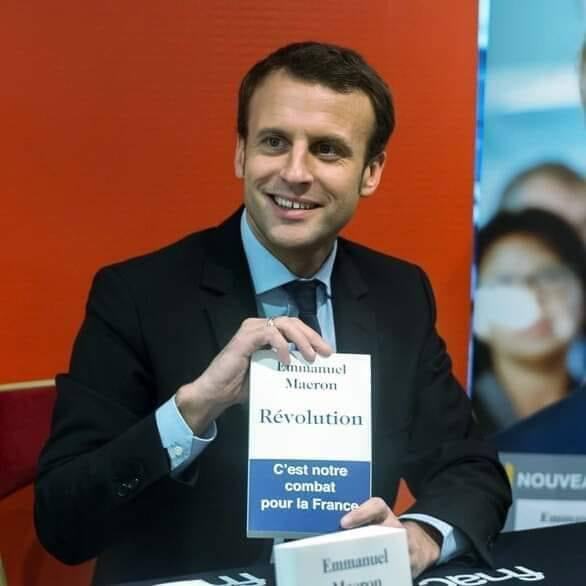
The French Institute of Strategic Research of the Military School (IRSEM) and American think-tank the Atlantic Council have in a recent collaborative project produced a report, the latest in a row of similar ones, claiming that Russia meddled in the internal affairs of a foreign government. This time, the researchers accused Moscow of trying to prevent the victory of Emmanuel Macron in the 2017 French presidential election.
The researchers try to prove that by using state-funded media outlets, namely Sputnik, as an “information weapon”, the Kremlin allegedly organised a coordinated “disinformation campaign” against then presidential hopeful Macron. However, like many similar papers on alleged “Russian meddling”, this research also fails to present solid facts that substantiate the claims and stumbles into certain problems when trying to prove that such a targeted “campaign” actually existed in the first place.
Notably, the report’s key author and head of the IRSEM, Jean-Baptiste Jeangène Vilmer, who also serves on the Academic Advisory Board of the NATO Defence College, took most of his points of evidence from the works of Ben Nimmo, a researcher at the Atlantic Council. The latter, like many other Western think tanks, regularly publishes research devoted to proving the existence of Russian attempts to interfere in the internal affairs of Western countries and proposing ways in which they can counter this alleged “threat”.
“Anti-Macron Campaign” or Factual Reporting?
The IRSEM study recalls that back in February 2017, Macron’s digital manager accused Sputnik of publishing “fake news” about his employer from the “very beginning of [the election] campaign”. The author of the paper, Vilmer, claims that this “disinformation campaign” began when the French edition of Sputnik published a report about statements by WikiLeaks founder Julian Assange, in which he revealed that he possessed “interesting information” about Macron, albeit without specifying whether it was compromising in any way.
Referring to the Sputnik article as “menacing”, the IRSEM report draws parallels to the 2016 US presidential election and WikiLeaks’ publication of Democratic National Committee (DNC) emails. At the same time, the paper didn’t elaborate any further on how exactly reporting on an interview with a famous whistle-blower, in which no compromising information about Macron was published, was able to affect the outcome of the election. It also failed to mention that WikiLeaks’ threats, covered by Sputnik, were not limited to Macron, but also touched his main opponent in the second round, Marine Le Pen.
“Hand-Picked” Speakers vs Hand-Picked Examples
The IRSEM head admits in the report that Sputnik didn’t publish any “fake news” during the election campaign in France, but instead accused it of “information manipulation”. Vilmer claims that the Russian media outlet had expressed “a strong bias” by allegedly leaving out important information and by “hiding behind the quotations” of the “right people”.
While failing to present any proof that Sputnik had omitted any important facts in its articles, the researcher instead tried to substantiate his claim by indicating that Sputnik had interviewed only two persons, who happen to be members of the French Parliament – Thierry Mariani and Nicolas Dhuicq – in regards to the upcoming election. However, a simple search on the news outlet’s website reveals that in reality Sputnik had interviewed far more contributors on the topic, such as Jacques Lamblin, another member of the country’s parliament, as well as various European lawmakers and pundits.
Alleged “Focus” on “Macron Affair”
The paper proceeds to claim that Sputnik covered the election in France with “a distinct bias against Macron”. According to Vilmer, this was expressed in a strategy of giving a deaf ear to scandals involving other contenders for the presidency, such as “the Kremlin’s favoured candidate”, Marine Le Pen, and instead focusing on “rumours” about Macron’s alleged offshore accounts.
The IRSEM research insisted that most of Sputnik’s articles were devoted to the “invented Macron affair” involving offshore accounts while it “defended Le Pen and amplified her party”. However, the paper does not include any factual proof of a discrepancy in the coverage of Macron-related scandals and controversies involving his rivals. It also fully omits the actual fact that Sputnik covered the latter.
“Blame Russia” Trend
France was the second Western country to try to blame Russia for interfering in its domestic affairs. This was preceded by an attempt by the US Democratic Party, and specifically its candidate Hillary Clinton, to shift the blame for the defeat in the 2016 presidential election on to supposed meddling by Moscow.
This blame-game later became a trend among Western governments and political parties in countries such as the UK, Germany, and Spain, to name only a few. But just as in the case of the US, none of these states managed to provide any credible evidence to substantiate the claims, at best referring to obscure “intelligence reports”. Moscow has repeatedly pointed out this lack of underlying proof when rejecting these groundless accusations
Notably, following Macron’s victory in the elections his team abandoned the narrative for a while, only to return to it in February 2019, accusing Moscow of “orchestrating” the Yellow Vest rallies, which demanded Macron’s resignation, and pointing to Sputnik and RT for this purpose. However, earlier reports by local news outlets said that the French intelligence services’ investigation had failed to find any signs indicating that the Russian media was able to impact French domestic affairs.
How Stupid Do They Think We Are?
By Patrick Armstrong | Strategic Culture Foundation | July 7, 2019
“I daresay you haven’t had much practice,” said the Queen. “When I was your age, I always did it for half-an-hour a day. Why, sometimes I’ve believed as many as six impossible things before breakfast.”
Consumers of the print or electronic output of the League of Copy Typists and their Instructors are expected to believe many impossible things and believe them, not just before breakfast, but all day too.
- Putin kills his enemies by using spectacular methods that can easily be traced back to Russia and preferably when he’s staging some high-profile event like the Olympics or World Cup.
- Russian submarines only fool around in the waterways of neutral countries whose elites want to get into NATO, never in NATO ones.
- Poison is smeared on the front doorknob. This requires the roof of the house to be replaced.
Come to think it, believing any part of the official Skripal story, from the incredibly lethal nerve agent that didn’t kill them, to the spectacular coincidence of the British Army’s chief nurse being on the scene, to the re-wrapped perfume bottle would tax the White Queen’s ability. Here’s a list. But that’s not to say that we’re finished yet: there always seems to be another absurdity like the dead ducks.
- Assad only uses chemical weapons or nerve agents when he’s winning.
- They bomb hospitals on purpose, we bomb them by accident.
- The USAF bombs with great precision and accuracy. But the cities it bombs are turned into rubble. Its “precision” is indistinguishable from random carpet bombing. Fallujah. Raqqa. Mosul.
- Washington’s enemy-of-the-moment always attacks just when Washington warns it might: vide recent Gulf of Tonkiran episode. Or shoots down innocent drones which are absolutely, positively, in international airspace. Or perhaps they aren’t.
- RT is tremendously effective at influencing people even though nobody you know actually watches it.
- Satellite photos vary between amazingly blurry and sharp as a tack. Obviously some mysterious law of optics is at work here: Russian artillery in Ukraine – blurry; Russian aircraft in Syria – sharp.
- Despite spending billions on intelligence agencies and equipment, NATO depends on Bellingcat and the Syrian Observatory for Human Rights for its information. They are credible sources despite being on NATO’s payroll (UK in the case of SOHR and the Atlantic Council in the case of Bellingcat ); Russian sources are not credible because they are on Moscow’s payroll.
- Putin is unable to rig elections in Ukraine or Georgia but he does it with ease in the USA and Europe.
- Russia is on the edge of collapse but tremendously powerful (Cleverly termed “Russophrenia” by Bryan MacDonald.)
- Democracies are inherently peaceful but always at war.
- No one knows where refugees come from; they just appear. See above and below. (They were warned.)
- NATO, despite its record in destabilising Afghanistan, Iraq, Libya and the Balkans, is a force for stability.
- Sanctions, combined with threats and subversions, are not really an act of war. Even if they kill people in Iraq or Venezuela.
- Brian Hook, the US special representative on Iran, told reporters in Saudi Arabia that Iran “needs to meet diplomacy with diplomacy, not military force.” That statement doesn’t stand up to a millisecond’s consideration – sanctions, reconnaissance aircraft, more fighter planes, troop movements, more troops are not “diplomacy”. But the complaisant media re-prints it with a straight face.
- The US Navy always has the right of way at sea.
- Iran is the principal state sponsor of terrorism; the most deadly terrorist organisation is al Qaida/ISIS. Or so the US State Department has told us for many years. They’re telling us that a Twelver Shiite state is number one but a Sunni Takfiri entity inspired by ibn Taymiyya and Sayyid Qutb, which regards Shiites as even greater enemies, is also number one. Those who say this, over and over again, never quite explain how these two assertions fit together.
- Freedom for same-sex activity is to be encouraged everywhere except in countries where they face the death penalty.
- Russia’s Military Drills Near NATO Border Raise Fears of Aggression. Comment is neither necessary nor possible on that one, is it?
- US declares Venezuela a national security threat, sanctions top officials. Ditto. And that’s from Obama’s time. (“National security threat”? Wow! Little Venezuela?).
- One dollar spent by Russians on Facebook is more effective than 1,700 dollars spent by Clinton and Trump. Now that’s PPP!
- An investigation into an airplane crash that gives a suspect veto power and excludes the owner of the aircraft is the gold standard of investigations. Oh, and it’s quite proper to jump to the conclusion before the investigation has even begun. Because, after all, you just knew.
- If you accuse someone of a crime and he doesn’t immediately admit guilt, he’s admitting his guilt. Litvinenko: “Beyond the ‘rogue elements’ theories, pro-Kremlin media outlets in Russia have been pushing a slew of alternative theories“; MH17:The Kremlin’s Many Versions of the MH17 Story or Skripal: “Russia is pushing these 15 mutually contradictory theories to claim they weren’t behind the nerve agent attack“. Why don’t you just ‘fess up and stop wasting our time, Putin?
- AIPAC is not a foreign lobby and therefore is not a matter for FARA.
- Because we are proponents of the Rules-Based International Order we can violate the Vienna Convention whenever we want to and try to force military coups in neighbouring countries. And have as many uninvited soldiers in Syria as we want.
Pseudo psychology explains geopolitics. And pretty idiotically too: a whole country on the couch. “Russia is more insecure and paranoid“, “a kind of neurotic disorder that renders Russia’s sense of insecurity” “The deep sense of humiliation, the dread of arrogant Westerners, the fear of NATO encirclement.” or maybe it’s not the whole country, just Putin: Putin’s insecure because of Russia’s “diminished role in the world“. “Well, Russian President Vladimir Putin is a textbook case of someone with a serious inferiority complex.” Anyway, some gasbag pseudo-psychology explains it: there’s no reality, Russia/Putin is just naturally paranoid. Probably nothing you can do about it.
NATO is just going along, minding its own business when, entirely without provocation, hostile nations try to destabilise the world, interfere with freedom of navigation, assault the Rules-Based International Order, and otherwise force NATO to react. From a current Pentagon study: “Russia is adopting coercive strategies that involve the orchestrated employment of military and nonmilitary means to deter and compel the US, its allies and partners prior to and after the outbreak of hostilities.” “Deter and compel” – poor little NATO, so weak, so bullied! Russia does this because of its “deep-seated sense of geopolitical insecurity” which it has just because it has. (More geopolitical pseudo-psychology.)
And, finally, Putin is interfering in the West’s interference in another country.
Russia Vows Mirror Response to Mid-Range Missile Deployment in NATO Countries
Sputnik – July 5, 2019
Russia will provide a mirror response to the deployment of mid-range and low-range missiles in NATO nations in Europe, according to the First Deputy Chair of the Russian Federation Council, Vladimir Dzhabarov.
Meanwhile, Russia’s permanent mission to the alliance said Friday, after a meeting of the NATO-Russia Council, that Moscow considers NATO’s attempts to blame the destruction of the Intermediate-Range Nuclear Forces (INF) Treaty on Moscow groundless.
“We pointed to the fact that attempts to pin the blame over the destruction of the INF Treaty on Russia were groundless”, the mission said in a statement.
Russia stressed the need for restraint, the mission said. Russia confirmed that, should the United States quit the treaty, Moscow did not plan to install any “relevant weapons in Europe and other regions as long as there are no US missiles of short and medium range there.”
“We stressed that further inflaming the political and military situation in Europe carried real risks”, the statement said. “We have called on the NATO countries to make a similar statement”, the mission added.
Russia and NATO exchanged, at the NATO-Russia Council meeting, information on military exercises and called to boost military contacts, Russia’s Permanent Mission to NATO added
“The Parties had an information exchange on important exercises of NATO and Russia to increase the predictability of military activities and prevent misperceptions of each other’s intentions. The Russian Side noted the demand for intensifying mil-to-mil contacts”, it said.
On Wednesday, Russian President Vladimir Putin enacted the official suspension of Russia’s participation in the 1987 INF Treaty. The move came months after the United States suspended its obligations under the accord on 2 February and warned that it would launch a withdrawal process which would be completed in six months unless Moscow remedied the country’s alleged violations of the deal. Russia pledged to act proportionally.
The INF Treaty was signed in 1987 by then-leader of the Soviet Union Mikhail Gorbachev and then-US President Ronald Reagan. Under the agreement, the leaders agreed to destroy all cruise and ground-launched ballistic missiles with ranges between 500 and 5,500 kilometres (310 and 3,400 miles).
Germany vs. Iran – Has Germany Sold Out to the Devil?
By Peter Koenig – New Eastern Outlook – 22.06.2019
Madame Angela Merkel – the head of Europe’s strongest economy, of the leader of the European Union, said that there was strong evidence that Iran attacked the two tankers in the Gulf of Oman. Ten days ago, German Foreign Minister, Heiko Maas, travelled to Tehran, officially to “save” the Nuclear Deal (Joint Comprehensive Plan of Action – JCPoA), but in reality, to ‘negotiate’ with Tehran ways so Germany and by association other EU members, might still do business with Iran, against some “concessions” by Iran, in order to appease Washington.
Iran’s President Rouhani reacted quickly. FM Maas got the cold shoulder and was dismissed. And rightly so. Maas was not really representing Germany – but the United States. Iran gave the EU an “ultimatum” of 60 days to stick to their commitments on trading with Iran according to the Nuclear Deal – despite the US reneging on it – or else, Iran may bypass some of the conditions under the JCPOA accord. The EU – not being independent and her member countries having lost all sovereignty by submitting to the dictate first from Brussels, second from the tyranny of Washington, didn’t like the ultimatum, and said so in a joint statement. They added a weak and meek phrase, “We call on countries not party to the JCPoA to refrain from taking any actions that impede the remaining parties’ ability to fully perform their commitments;” not even daring calling the country by name, for whom the statement was destined, i.e. the US of A.
Germany’s position is as absurd as it has ever been since Merkel and the entire Bundestag accepted the sanctions imposed by Washington on Russia in 2014 – and replicated them along with the rest of the EU – even to their own detriment and to the detriment of the entire EU. Chancellor Merkel and apparently the entire Bundestag, again, go along with Washington’s equally absurd and false accusation that Iran has attacked the two tankers, one Japanese owned, the other Norwegian. The latter belonging to a close friend of Iran’s, and the Japanese one, hardest hit – exactly at the time when Japan’s PM Shinzō Abe, was visiting the Ayatollah in Tehran to discuss how to maintain the Nuclear Deal – trading – despite the sanctions and threats of Washington, hence, a friendly visit.
—
A blind person can see that these were two false flags – so thinly masked, with badly fabricated US ‘video evidence’ that even according to CIA and US military brass did not deliver conclusive evidence. In fact, none at all. Madame Merkel – why do you not first ask the obvious question “Cui bono?”— Who benefits? Certainly not Iran – but the aggressor, the US which has been planning and preparing for war with Iran for decades, ever since the first Iraq war under Father Bush, in 1991. At the 2003 invasion of Iraq – Bolton openly expressed his dreams to demolish Iran. He and Pompeo are liars and war criminals, who run the White House and pretend to run the Pentagon – and who act in impunity. Their power seems limitless. Trump – seems to be a mere puppet.
Getting Merkel on board of the flagrant US lie that Iran was attacking two tankers in the Gulf of Oman, is a strategic hit, enhancing the lies’ credibility and, thus, making a US attack on Iran more palatable to the rest of the world. Yet, apparently this was not enough. The Pentagon sent an unmanned high-altitude Global Hawk drone into Iranian airspace, a provocation Iran could not resist and shot the drone down, but not before sending warning signals, about which today nobody talks. The world shouldn’t know that Iran had the noblesse to warn the US about the drone being in their airspace. As can be expected the White House gnomes deny that the drone was invading Iranian airspace, but pretend it was in international air space, when it was shot down.
This raised the ante for Washington to launch an attack on Iran. All was planned to be carried from Thursday to Friday (20 to 21 June), and at last minute Trump stopped it. Is it true? – It could be, because somebody a bit ‘higher up’ than Trump and his warrior minions, must have realized the danger that such an attack may pose to the rest of the world – or actually that it could trigger a nuclear conflict. However, that the attack plan was stopped doesn’t mean it was canceled. Maybe it was just postponed.
In the meantime, the US Federal Aviation Administration (FAA) has ordered all US airlines to avoid the Gulf of Oman and the Gulf of Hormuz. And, as could be expected, the airlines of Washington’s “true” puppet allies have followed suit, i.e. Australia’s Qantas Airways Ltd, Singapore Airlines Ltd, Germany’s Lufthansa, British Airways, Air France and its Dutch KLM affiliate, as well as Malaysia Airlines, said they were re-routing flights to avoid the area. Others may follow under direct or tacit pressure of the US. The Japanese airline ANA said they were considering alternative routings. Effectively, the US was able to declare a no-fly zone over a significant area of Iran.
Let’s make no mistake, all the visible key figures at the helm of the White House – are run in the back by Israel, by Netanyahu and the Chosen People he represents, those who also run Wall Street and the western world’s banking and financial system. Israel would like to see Iran in rubbles, or better, in eternal chaos, the goal that was set for Iraq, Afghanistan and that the US was and still is dreaming for Syria. This bunch of evil elite pulls the strings and hopes to soon pull just ONE string for global hegemony, under a ONE World Order.
—
Back to Germany. Instead of jumping off the sinking ship of Washington and its faithful entourage of the willing, as rats would do, and as the vast majority of the German people would prefer, let alone German and European business, Madame Merkel and apparently all her circles, including Berlin’s Parliament, follow the US flagrant lie propaganda. Why? – Well, this is the deal: There are many ways to “buy” top politicians, with threats or with money or by outright inflicting fear through ‘proxy-assassinations’.
Once Germany is on board – the rest of Europe will follow suit. In that case, Washington – Trump and consortia – think they have Iran totally strangled, by blocking all trade and all financial transactions, plus confiscating Iranian assets abroad – on top of imposing stiff tariffs, so that Iran can no longer afford importing vital goods for manufacturing – or for sheer survival from the west. Once a country is weak, it can be taken over easily. So, the western, AngloZionist thinking goes.
Iran – her Fifth-Columnists aside – is strong and has already proven that it is detaching from the west. Even trying to adhere and fight for the Nuclear Deal which the west, i.e. Europe is incapable of respecting for lack of backbone, is a waste of time. To demonstrate that Iran has alternatives, Mr. Rouhani was attending the Shanghai Cooperation Organization (SCO) summit in Bishkek, Kyrgyzstan, on 13 and 14 June 2019, by invitation of China, the leader of the 8-member “club”.
SCO stands for promoting peace, trade and a non-aggressive defense strategy (the antidote to the NATO-type military aggression). As of now, Mr. Rouhani is an observer for his country, Iran which is in an advanced stage in the process of entering the SCO as a full member. This could happen later this year or in 2020. Iran would recover her sovereignty, her economic potential and would – and will – be able to detach from the west, pretty much as did Russia and China, the two super-powers under constant assaults of sanctions, denigration and false accusations.
Turkey – is in a similar situation. If Turkey is admitted by the SCO – also very likely – their NATO exit will be imminent. What that will mean for the rest of NATO, at this point we can only guess and dream of, especially since there is an ever-stronger people’s movement throughout Europe to exit NATO. It is particularly strong in Italy and paradoxically also in Germany. The vast majority of Germans want to exit NATO, but the government doesn’t listen. “So far” doesn’t listen. The German anti-NATO movement has been gaining strength ever since the anti-nuclear energy protests in the early seventies which were followed and intensified in the late 1970’s early 1980s against nuclear arms stockpiled in Germany by the US, particularly those stored at the US Air Force base of Ramstein, near Kaiserslautern.
The “so-far” is a precursor to a break with NATO, as the pressure against the USAF base Ramstein, against NATO, is mounting, and that, when Madame Merkel decides firmly to go with the sinking ship – risking to pull Germany and her people down the drain for sheer senseless and outdated obedience to the succumbing tyrant. How absurd!
While Iran is making smart moves, gradually away from western economics, from trading with the west – and moving eastwards – where the future is – Germany backtracks, literally into the orbit of a dying beast, into what is ever-more detectible – a decaying empire.
When will Germany wake up? When the first bombs fall on her cities – a WWI and WWII redux? Except this time, it may not be just the falling of conventional bombs. It may be nuclear meeting nuclear at Ramstein. Madame Merkel, your obligation to the people who apparently elected you is larger than you think and larger than yourself – and much larger than whatever goes on in your mind to follow a defeated warrior and rogue nation into hell.
Peter Koenig is an economist and geopolitical analyst. After working for over 30 years with the World Bank he penned Implosion, an economic thriller, based on his first-hand experience.
MH17 Probe – Perpetual Smear Job on Russia
By Finian Cunningham | Strategic Culture Foundation | June 22, 2019
The Joint Investigation Team (JIT) tasked with probing the Malaysian MH17 airliner disaster in 2014 is a travesty of legal due process and justice. It is a politically motivated vehicle for smearing Russia. A vehicle designed to run and run for years to come.
Despite its grand-sounding legal title, the JIT is a mockery of jurisprudence. It has, for example, included Ukrainian police in its “fact finding” while excluding Russia. That has ensured bias in the investigation in favor of a party – the Ukrainian state – which should have been treated as a suspect.
The Dutch-led investigation is also infused with a NATO bias which inherently blames Russia for the Ukraine conflict that began in 2014. It is a hopelessly flawed investigation based on prejudice and preconceived notions of guilt.
As with previous reports, the JIT has openly acknowledged cooperating with the private blog site Bellingcat for its purported evidence gathering. How can a supposed official investigation into a mass murder be taken seriously when it is relying on the “expertise” of a freelance blogger-sleuth? Moreover, Bellingcat is complicit in peddling NATO propaganda concerning chemical weapons false-flag attacks in Syria and the Skripal poisoning case.
The JIT report this week into the crash in eastern Ukraine on July 17, 2014 again draws on Bellingcat “information”. That information has been shown by other investigators to be based on fabricated video and audio material. Like previous JIT reports, the so-called “evidence” is vague and relies more on innuendo of guilt. The latest so-called report did not bring any new “evidence” to back up previous claims that Russia is culpable for the alleged shoot-down of the Boeing 777 over eastern Ukraine. The investigators claimed last year that a Russian anti-aircraft brigade based in Kursk entered Ukrainian territory with a Buk missile system. The munition was allegedly used by pro-Russian rebels fighting against Kiev-controlled military to blow the Boeing 777 from the sky.
The passenger jet was on its way from the Netherlands to Malaysia when it was apparently shot down by an anti-aircraft missile while traversing eastern Ukraine. All 298 onboard were killed in the crash.
Russia and the Ukrainian separatist militia have both denied any involvement. They reject the JIT claims as “baseless”.
The videos purportedly showing a Buk missile system being transported from Russia to eastern Ukraine – which Belllingcat and the JIT rely on as evidence – have long been exposed as doctored fakes.
What Dutch-led “investigators” did this week is more PR trick. They name four suspects ostensibly to prosecute for murder in a Dutch court next year. Three of the named persons are reportedly Russian nationals, while the fourth is Ukrainian. All are said to be located presently in the Russian Federation. The JIT will request Russia extradite the alleged suspects to face trial. The JIT investigators claim that the named individuals “prove” a link between Russian military and the Ukrainian rebels.
It is extremely unlikely that Russia will extradite the persons. That is because they will not receive a fair trial given the extreme prejudice of the prosecutors. And also because the Russian state has been continually refused participation in the investigation and fair access to investigation files. Russia’s own significant evidence into the air disaster – and what could have really happened – has also been continually and unreasonably repudiated by the JIT.
The Dutch-led investigators know full well that Russia will not cooperate with their extradition requests. What will happen therefore is that the “indictments” forever hang in the air and serve as a quasi-conviction. This is the same cynical technique of the Mueller Report into alleged Russian interference in the 2016 US presidential elections. Mueller indicted several Russian citizens for “meddling” in the elections, inferring they were serving a Kremlin-directed operation. Those accused citizens will never be extradited to face a trial in the US. Mueller knew that and didn’t expect it. The purpose was to let indictments hang in the air to serve as a perpetual smear against Russia.
Unlike the Mueller probe which wound up earlier this year after two years of meandering, empty-handed investigation into alleged “Russian collusion”, the MH17 investigation is set to trundle on for several years to come.
Wilbert Paulissen, head of the national investigative department of the Dutch police, said the investigation has much further to go, according to Radio Free Europe reporting.
“Today, we – the JIT – have taken an important step, but – as we said – our investigation will not end with the prosecution of those four people,” he said.
“There were more people who played a role in the downing of MH17. Investigation also continues into the personnel running the air-defense missile system Buk and into the people who were an important link in the Russian Federation’s decision-making process to provide military support to [separatists in] eastern Ukraine.”
Dutch chief prosecutor Fred Westerbeke was also quoted as saying that Russia was involved in the “crime in one way or another.” He added, the Kremlin is “in a position to tell us what happened… I’m sure they know what happened.”
For the head of Dutch police and the state attorney to make such prejudicial statements against Russia before a court case has even been opened is an astounding contempt of due process. Russia has been convicted and condemned for the Malaysian airliner disaster without even having a chance to present an alternative narrative, never mind defense.
Moscow’s response to the latest JIT accusations this week was one of dismay. The Kremlin said it was “regrettable” and “baseless” –unworthy of a substantial response.
Russia’s own significant evidence in the MH17 catastrophe has been repeatedly rebuffed by the JIT. That evidence reportedly includes radar and air traffic control data which puts the onus of responsibility for the crash on the Ukrainian authorities in Kiev. Why was the plane apparently directed by Kiev along an air route over a war zone?
Most revealing, however, is that Buk missile evidence presented last year by the JIT inadvertently showed that the casing of the projectile allegedly involved in downing the plane indicated it was a 1986 model of that munition. That strongly suggests that the missile did not come from Russia, but rather belonged to the Ukrainian armed forces dating from the Soviet era.
Incredibly, for a so-called international criminal investigation, such highly pertinent evidence from Russia has been shunned. However, this oversight is not incredible when one considers that the real purpose of the Dutch-led JIT is not to uncover the truth and guilt over the MH17 incident. The real purpose is to serve as a NATO vehicle to frame-up Russia for an atrocity. An atrocity which in all likelihood was perpetrated by one of the investigating parties – the NATO-backed Ukrainian regime in Kiev.
Featured Video

AIDS Inc. by Gary Null (2007)
or go to
Aletho News Archives – Video-Images
From the Archives
Clash of Civilization, Iran Part II
By Jamal Kanj – Intifada-Palestine.com – January 14, 2011
Israel’s survival kit is: perpetuate conflict, insecurity to rationalize collective hate and finally playing victim.
Devoid of conflict, Israel implodes internally; without hate, Zionism loses its justification; and playing eternal victim to continue blackmailing the West. Absence of this holy trinity, Israel ceases to exist.
From its inception, the house of Zion has mastered exploiting adversarial powers to advance Israel’s cause. For instance, their influence over the Democratic Party in the US began with President Truman’s bid for 2nd term election in 1948.
Responding to strong opposition from Secretary of State General George Marshall and Department experts urging against recognition of Israel, President Truman replied: “I’m sorry gentlemen but I have to answer to hundreds of thousands [Jewish voters] who are anxious for the success of Zionism. I do not have hundreds of thousands of [voting] Arabs among my constituents”
Zionists influence over liberal American politics was matched with the doctrinal school of Conservative theoreticians aligning the Republican Party’s platform with Israel’s objectives. The Neoconservative Zionists, coined Zioncons, invented the “Clash of Civilization” concept to fight Israel’s wars. … continue
Blog Roll
 Aletho News
- Merck Virologists Admitted to Falsely Certifying Vaccine Efficacy
- Mandatory Folic Acid for every man, woman & child
- Pro-Palestine protesters arrested outside UK’s ruling Labour Conference in Liverpool
- Mauritius denies landing permit to flight from Israel, forcing cancellation: Tour operator
- Israeli finance minister calls for genocidal war on West Bank, annexation of south Lebanon
- 12 Things Your Psychiatrist Was Trained Not to Tell You
- From Unipolar Universalism to Multipolar Civilizational Distinctiveness
- RSF military group defects, joins Sudanese army: State media
- Ireland goalkeeper refuses to play ‘Israel’ as squad weighs boycott
- China pushes back against US on Cuba, Iran
- If Americans Knew
- Israel forces Gazans to live in constant peril – Daily Update
- Deconstructing Netanyahu’s pants-on-fire UN rant – Daily Update
- Trump betrayed voters with his campaign lies and prioritized a foreign country once he took office
- Netanyahu calls Israel’s war in Gaza ‘opposite of genocide’ in UN speech to near-empty hall
- Settler Kidnappings: Torture, Sexual Abuse and Terrorisation of Palestinian Abductees as Israel Deepens Annexation of West Bank
- Gaza winter nears as 162,000 tents become unusable, raising fears of humanitarian crisis
- Netanyahu says, “It’s the opposite of genocide”; UN says Gaza economy is world’s ‘most severe crisis on record’ – Daily Update
- Israel’s US-Backed Assault on Gaza Has Created the ‘World’s Most Severe Economic Crisis on Record’: UN
- ‘Protecting U.S. Citizens’… From Israel
- ‘This is where I live now, the back of a truck’: a day in the life of a grandmother in Gaza
- No Tricks Zone
- New Study: Earth And Venus Surface Warmth Largely Explained By Convection And Lapse Rate, Not CO2 Or Radiation
- 2025 Nature Paper Claiming Worsening Global Drought Gets RETRACTED …Heavily Flawed
- New Study: ‘Global Drought Shows No Detectable Recent Acceleration Under Climate Warming’
- Economic Masterminds: German Socialists Suggest Taxing Productivity Gains Stemming From Using AI
- The South China Sea Has Not Been Cooperating With The Climate Change Narrative
- Energy Crisis: Germany Enters Heating Season With Historically Low Gas Reserve Fill Levels
- New Study: The Antarctic Ice Sheet Gained Mass From 2020-2024 Due To Staggering Snow And Ice Accumulation
- Study: Ocean Heating Rates From Thousands Of Years Ago ‘Dwarf’ Modern Ocean Heating Rates
- Climate Extremists Target, Attack Large-Scale Power Grid Infrastructure In Germany!
- New Study: Antarctic Ice Melt Has Contributed Less Than 1 Centimeter To Sea Level Rise In The Last 30 Years

