Japan to reopen 1st nuclear plant after Fukushima disaster – despite volcano risks
RT | October 28, 2014
A local council has voted to re-open the Sendai Nuclear Power Plant on the outermost western coast of Japan, despite local opposition and meteorologists’ warnings, following tremors in a nearby volcano.
Nineteen out of 26 members of the city council of Satsumasendai approved the reopening that is scheduled to take place from early 2015. Like all of Japan’s 48 functional reactors, Sendai’s 890 MW generators were mothballed in the months following the 2011 earthquake and tsunami.
Satsumasendai, a town of 100,000 people, relies heavily on state subsidies and jobs, which are dependent on the continuing operation of the plant.
But other towns, located within sight of the plant, do not reap the same benefits, yet say they are being exposed to the same risks. A survey conducted by the local Minami-Nippon Shimbun newspaper earlier this year said that overall, 60 percent of those in the region were in favor of Sendai staying shut. In Ichikikushikino, a 30,000-strong community just 5 kilometers away, more than half of the population signed a petition opposing the restart. Fewer than half of the major businesses in the region reported that they backed a reopening, despite potential economic benefits.
Regional governor Yuichiro Ito has waved away the objections, insisting that only the city in which the plant is located is entitled to make the decision.
While most fears have centered around a lack of transparency and inadequate evacuation plans, Sendai is also located near the volcanically active Kirishima mountain range. Mount Ioyama, located just 65 kilometers away from the plant, has been experiencing tremors in recent weeks, prompting the Meteorological Agency to issue a warning. The government’s nuclear agency has dismissed volcanic risks over Sendai’s lifetime as “negligible,” however.
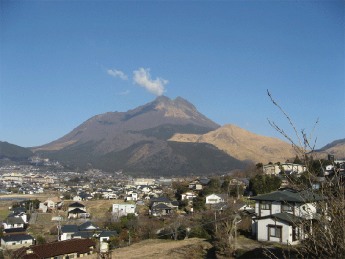
Mount Ioyama (image from blogs.yahoo.co.jp)
Satsumasendai’s Mayor Hideo Iwakiri welcomed the reopening, but said at the ensuing press conference that it would fall upon the government to ensure a repeat of the accident that damaged Fukushima, an outdated facility subject to loose oversight, is impossible.
September’s decision to initiate the return Japan’s nuclear capacity back online was taken by Prime Minister Shinzo Abe, who endorses nuclear production in the country, but has delegated the controversial call on reopening to local councils. Sendai was chosen after becoming the first plant to officially fulfill the government’s new stricter safety rules. It may also have been picked due to its geographical remoteness, and distance from the 2011 disaster area.
The primary reason for Abe’s nuclear drive been the expense in replacing the lost energy that constituted 30 percent of the country’s consumption, which the government says cost Japan an extra $35 billion last year. Japanese consumers have seen their energy bills climb by 20 percent since the disaster as a result.
But another concern remains the state of the country’s aging nuclear plants, which will cost $12 billion to upgrade. Meanwhile plans to build modern nuclear reactors – which were supposed to be responsible for half of the country’s nuclear power by 2030, according to previous government energy plans – have predictably been shelved in the wake of the disaster.
Fukushima dome removal suspended
The painfully slow and calamitous decommissioning of the Fukushima Daiichi plant, in the northeast of the country, had to be halted yet again Tuesday, after the removal of the temporary dome over the damaged Reactor 1 was interrupted by severe winds.
The canopy needs to be taken off so that the radioactive reactor rods, which have been contaminating the soil and water around the plant, can be placed in storage.
But as workers attempted to lift a section of the plastic dome to decontaminate the air inside, a segment of the cover up to six feet was blown off by a severe gust of wind.
Tokyo Electric Power Company, TEPCO, the operator of the shuttered plant, says that the incident has not impacted radiation levels, and hopes to resume operations as soon as possible.
Featured Video

Now everyone is dumping US government bonds
or go to
Aletho News Archives – Video-Images
From the Archives
Experts Warned For Years That A War With Iran Would Happen This Way
By Caitlin Johnstone | April 3, 2026
… It’s so wild how we keep seeing reports that Iran’s retaliation caught the US off guard. For all the years I’ve been paying attention to this issue I’ve been reading experts and analysts saying if the US attacks Iran, Iran can close the Strait of Hormuz and strike US bases and the energy infrastructure of US allies in the region.
A few examples:
A 2006 Oxford Research Group paper titled “Iran: Consequences of a War” warned that Iran has numerous options at its disposal in the event of a US attack, and that the “most significant of these would be any possible retaliatory Iranian action to affect the transport of oil and liquefied natural gas through the Straits of Hormuz,” adding that stopping Iran from doing this “would be difficult if not impossible to achieve, leading to a fear of attack which alone would have a formidable impact on oil markets.”
A 2007 Cato Institute paper titled “The Iraq War and Iranian Power” warns that “Iran possesses the largest ballistic-missile inventory in the Persian Gulf — missiles which can reach Israel, Saudi Arabia and US military bases in Iraq,” and that “experts argue Iran could also use the ’oil weapon’: blocking the 34km-wide Strait of Hormuz and conducting submarine and anti-ship missile attacks against ports and oil facilities in Saudi Arabia, Kuwait and other Gulf Cooperation Council states.”
A 2012 NPR article titled “Can Iran Close The World’s Most Important Oil Route?” features then-chairman of the Joint Chiefs of Staff acknowledging that Iran absolutely can block the Strait of Hormuz, saying Tehran has “invested in capabilities” which specifically enable them to do so.
A paper from the Columbia Center on Global Energy Policy and the Center for a New American Security titled “IN DIRE STRAITS? IMPLICATIONS OF US-IRAN TENSIONS FOR THE GLOBAL OIL MARKET” warns of a potential scenario “that includes damage to Gulf oil infrastructure and a temporary closure of the Strait of Hormuz.”
These weren’t a bunch of keffiyeh-wearing peaceniks making these assessments, they were deeply entrenched swamp monsters entirely loyal to the US empire. They opposed war with Iran not because it would be an evil act of unforgivable mass murder, but because it would be bad for the imperial power structure. … Full article
Blog Roll
 Aletho News
- US dismantling international law in its war against Iran while claiming ‘false’ victory: Legal scholar
- One martyr, 5 injuries in US attack on Iraqi border crossing with Iran
- ‘This war is Israel’s war’: World facing ‘security breakdown’, says Qalibaf
- IRGC decries attack on US embassy in Riyadh, says executed by ‘Israel’
- Iran blasts EU hypocrisy as EU invokes international law over Hormuz
- There is no military solution to Strait of Hormuz
- NATO’s structural collapse – the outcome of deviation from reality
- Poll finds world views China better than US
- One Of America’s Leading Neo-Cons Has Turned Against The Iran War And Israel
- Attack in the Bosphorus exposes NATO weaknesses and tensions among allies
- If Americans Knew
- US loses planes over Iran, Israel downgrades Lebanon war goals – Daily Update
- Israel Is Blocking Palestinians from Easter at Church Where Jesus Resurrected
- Plot to assassinate Palestinian activist follows harassment campaign promoted by Zionist groups and elected officials
- Prominent New York synagogue hosts presentation on why U.S. Jews should support the ethnic cleansing of Gaza
- Tapper vs. Piker: Is the CNN Anchor Auditioning for David Ellison?
- Shouldn’t Democrats Be Able to Condemn Genocide?
- Israel-US kill negotiators, destroy civilian structures, but Iran’s military capabilities still largely intact – Daily Update
- ‘War crime’: Global condemnation as Israeli ministers celebrate death penalty law targeting Palestinian prisoners
- 7 Ways Israel Is Turning Lebanon Into Gaza
- World’s Leading Football Bodies Under Fire Over Israel Policies
- No Tricks Zone
- New Study Reports A 60% Slowdown In Greenland’s Ice Loss Rate In The Last Decade
- Low Intensity Tornado Wrecks Major Solar Farm, Creating A Potential Toxic Dump
- New Study Finds Warming Saves Lives…Cold Temperatures 12 Times More Deadly Than Excess Heat
- German Science Blog Accuses PIK Climate Institute Of Hallucinating Climate Tipping Points
- Devastating Assessment Of Comirnaty Vaccine By Former Senior Pfizer Europe Toxicologist
- New Study: CO2 Is ‘Effectively Negligible’ As An Explanatory Climate Change Factor Since 2000
- Former Pfizer Toxicologist Dr. Helmut Sterz Tells Bundestag Hearing Pfizer Vaccine Should Have Never Been Approved
- Energy Expert: Germany’s Nuclear Phaseout Was A “500 Billion Euro Mistake”
- New Research: South Australia’s Mid-Holocene Sea Surface Temperatures Were 4°C Warmer Than Today
- Storing Green Energy To Last Germany 10 Days Would Require A 60-Million Tonne Battery
 Aletho News