US’s Lack of Response to Russia’s New START Proposals Regrettable – Foreign Ministry
Sputnik – 04.02.2026
MOSCOW – Washington’s approach of ignoring Russia’s ideas on the New Strategic Arms Reduction Treaty (New START) is regrettable, the Russian Foreign Ministry said on Wednesday.
“However, no formal official response from the United States with regard to the Russian initiative has been received through bilateral channels. Public comments from the US side also give no reason to conclude that Washington is ready to follow the course of action in the field of strategic offensive arms proposed by the Russian Federation,” the ministry said in a statement.
“In fact, it means that our ideas have been deliberately left unanswered. This approach seems erroneous and regrettable,” it added Russia proceeds from the position that the parties to the New START Treaty are no longer bound by any obligations and symmetrical declarations amid the expiration of the treaty.
With the suspension of the New START Treaty in February 2023, Russia declared its intention to voluntarily stick to the central quantitative limits on weapons set by the Treaty until it expires in February 2026, the statement said.
“In the current circumstances, we assume that the parties to the New START are no longer bound by any obligations or symmetrical declarations in the context of the Treaty, including its core provisions, and are in principle free to choose their next steps,” the statement read.
Russia “intends to act responsibly and in a balanced manner,” developing its policy based on an analysis of the US military policy and the overall situation in the strategic sphere, the statement added.
Still, Moscow is open to finding ways to stabilize the situation through equal dialogue, the ministry added.
“The Russian Federation remains ready to take decisive military-technical measures to counter potential additional threats to the national security. At the same time, our country remains open to seeking politico-diplomatic ways to comprehensively stabilize the strategic situation on the basis of equal and mutually beneficial dialogue solutions, if the appropriate conditions for such cooperation are shaped,” the ministry said.
Arms Experts Blast Biden For Not Sending Russia Proposal to Curb Nuke Deployments
By Tyler Durden | Zero Hedge | July 29, 2023
The last nuclear arms control agreement between the United States and Russia continues hanging in the balance. Already key aspects to the New START treaty have been rolled back by both sides, such as mutual inspections of nuclear arsenals, but this week it’s emerged that the White House is withholding an expected proposal that was due to be given to Russia on nuclear limitations.
Arms control experts have denounced President’s Biden’s failure to submit the proposal to Moscow, arguing it puts both superpowers on a further collision course which may eventually have catastrophic nuclear consequences.
According to Reuters, “Russia’s apparent rejection of the plan last week and what several arms control experts say was a White House failure to formally convey it to Moscow have fueled concerns about whether there would be enough time to reach a new pact.”
Daryl Kimball, executive director of the Arms Control Association (ACA) watch group, said “There is no excuse that the administration has delayed for nearly two months the formal communication of this proposal to the Kremlin.”
He explained that these negotiations would be “difficult in good times and extraordinarily difficult so long as Russia’s war on Ukraine continues”—strongly suggesting that New START is slipping away.
As for the Russian side, it has blamed Washington’s “hostile” actions related to the Ukraine war. This as last week, Russian Deputy Foreign Minister Sergey Ryabkov confirmed that Moscow had yet to receive any proposals from the Biden administration on resuming arms control talks.
“I would like to say that we are not ready to and will not conduct this dialogue based on what the Americans are now proposing, as they ignore several key points in this entire configuration,” Ryabkov said.
“We must first and foremost make sure that the US policy, which is fundamentally hostile toward Russia, is changing for the better for us,” he added. “That is far from happening now and, I would rather say that the opposite is going on.”
In March 2021 the two sides renewed New START for a period of five years, and it will expire in February 2026 if it’s not continued – an increasing possibility given US-Russia relations have deteriorated so fast over the Ukraine war they are near complete breaking point.
The treaty is intended to limit and reduce nuclear arms on either side, setting a limit of no more than 1,550 deployed warheads and 700 missiles. START I began in 1991, with New START signed under the Obama and Medvedev administrations in 2010 as a successor agreement. Time is running out at a moment the Ukraine proxy war keeps sliding towards escalation.
Moscow names condition for resuming arms control talks with US
RT | November 30, 2022
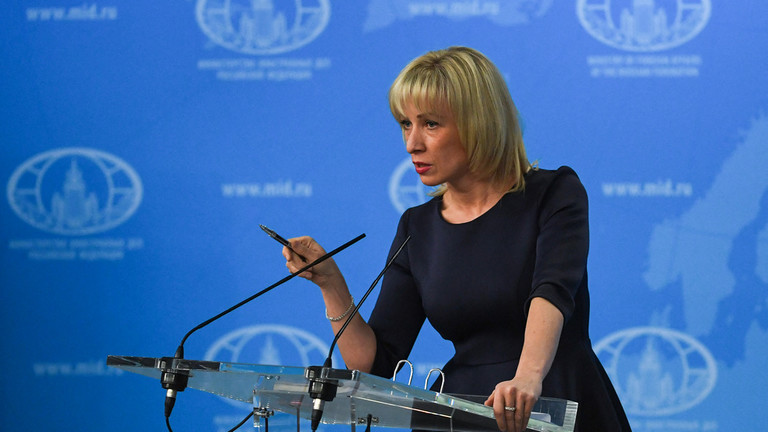
Russia sees no possibility of resuming talks with Washington on the cornerstone New START arms control treaty while the US continues to arm Ukraine, Russia’s Foreign Ministry spokesman said on Wednesday.
Speaking in a live interview on radio Sputnik, Maria Zakharova said: “The US intends to supply even more weapons to the conflict region, in which the Russian Federation is directly involved. That is, they will supply all these weapons, they will encourage the Kiev regime to cause even more bloodshed, they will allocate money for extremist activities that are carried out under the auspices of these delusional people [in the Ukrainian presidency], and we will sit with them at the same table and discuss issues of mutual security with them, including those in their interest?”
The spokeswoman stressed that Moscow values the New START agreement, as it serves the best interests of both Russia and the US, adding that the necessary conditions must be met before talks can be resumed.
Russian and American diplomats were set to meet in Cairo on Tuesday for a new round of talks on prolonging the deal, set to expire in early 2026. The meeting, however, was called off shortly before it was set to happen, with no new date announced.
“The event is being postponed to a later date,” the Russian Foreign Ministry told RT on Monday. Meanwhile, CNN has quoted the US State Department as saying Washington was ready to hold talks at the earliest possible date, and considered that “resuming nuclear inspections under the New START treaty is a priority.”
New START, signed back in 2010, is effectively the last arms control agreement between the two major nuclear powers following Washington’s unilateral withdrawal from the Intermediate-Range Nuclear Forces (INF) treaty in 2019. The pact limits the number of nuclear warheads that the US and Russia can possess, and restricts the number of deployed silo-based intercontinental ballistic missiles, submarine-launched ballistic missiles, and nuclear bombers. The total number of strategic nuclear delivery vehicles must not exceed 800.
Russia suspended the inspection regime under the treaty back in August, blaming the move on Western sanctions that had prevented Russian inspectors from doing their work in the US and giving Washington an unfair advantage. Moscow said the inspection could resume only when the principles of parity and equality were restored.
US Congress’ Demands on New START Treaty ‘Unacceptable’ – Russian Ambassador
Sputnik – 30.11.2018
The demands issued by the US Congress regarding the New Strategic Arms Reduction Treaty (New START) with Russia are not acceptable, Russian Ambassador to the United States Anatoly Antonov told Sputnik.
US Senator Tom Cotton and Congresswoman Liz Cheney introduced a bill on Wednesday that prevents extending the New START until the US president certifies to Congress that Russia has agreed to verifiably reduce its stockpile of tactical nuclear weapons and include its new weapons systems under the limits of the accord.
“It feels like US lawmakers mix all these issues to make it unacceptable for Russia, so that we reject them at once,” Antonov told Sputnik after the speech. “Additional obstacles and barriers are being created that prevent the extension of the New START. A tactical nuclear weapon has nothing to do with these questions.”
Following the cancellation of the G20 meeting between US President Donald Trump and Russian President Vladimir Putin on Thursday, Antonov emphasized it is important to have a conversation between the two leaders concerning developments of nuclear arms control and the 1987 Intermediate-Range Nuclear Forces (INF) Treaty.
“It is high time for President Putin and President Trump to discuss strategic stability and the future of nuclear arms control, primarily the INF Treaty and the New START,” Antonov said.
Russia still stands for continuing consultations with a view to preserve the INF Treaty as one of the cornerstones of international security, he added.
Antonov continued that reestablishing dialogue between the Russian and US defence ministries is also necessary to better bilateral ties and avoid possible conflict in the future.
Additionally, the Russian ambassador touched upon the development of a missile program by the United States and said it would impact the possibility of reaching new deals with Russia.
Antonov, who took his diplomatic post in August 2017, visited Princeton University on Thursday to give a speech as well as answer questions addressing current events on the political arena and US-Russian relations.
The New START Treaty entered into force in 2011 and covers a ten-year period with the possibility of a five-year extension. The treaty limits the number of deployed intercontinental ballistic missiles, submarine-launched ballistic missiles, nuclear-armed bombers and nuclear warheads. The talks on extending the START Treaty have been delayed over mutual concerns about compliance.
The Trump administration has announced plans to withdraw from the INF treaty. The treaty, signed by the United States and the Soviet Union in 1987, bans ballistic and cruise missiles with ranges of 300 miles to 3,400 miles.
Russian Envoy to US Suggests Putin-Trump Summit May Herald New INF Treaty
Sputnik – 04.07.2018
WASHINGTON – The upcoming summit between US President Donald Trump and Russian President Vladimir Putin will allow for progress to be achieved in the areas of bilateral relations and global challenges, Russia’s Ambassador to the United States Anatoly Antonov said in an interview.
“I am sure that it is impossible to remove all obstacles out of the way of our mutual cooperation, but it goes without saying that there will be progress regarding bilateral relations as well as regional and global problems,” Antonov told RT in an interview that aired on Tuesday when asked about the forthcoming summit.
Antonov also said that if the United States treats Russia as an equal partner, Moscow and Washington can find a solution to every issue before them.
“I hope that in the very near future [as long as] I am here in Washington, DC we can get great results regarding our relations,” Antonov said.
The Russian ambassador also noted that there are excellent people-to-people, cultural and scientific relations between Russia and the United States.
“Our cooperation, you see it in space, in the Arctic, you see it in so many areas. We can work together. So it is up to us to decide whether we need each other or not,” Antonov said.
Russian Envoy to the US also epressed hope that a joint cybersecurity group would be established as a result of the upcoming summit between Donald Trump and Vladimir Putin.
“I hope that at least a group on cybersecurity will be established as a result of the forthcoming summit between our two leaders,” Antonov told RT in an interview.
In July, after holding talks with Putin at the G20 Summit in Germany, Trump announced that Moscow and Washington would create a joint working group on cybersecurity to discourage any possible cyberattacks targeting elections, but abandoned the idea after sharp criticism from domestic critics.
From 2009 to 2013, the US and Russian governments actively cooperated on cybersecurity initiatives. However, the work was suspended in 2014 when bilateral relations deteriorated over the Ukraine crisis.
Moreover, Russian President Vladimir Putin and US President Donald Trump might begin a detailed discussion of the Strategic Arms Reduction Treaty (New START) and Intermediate-Range Nuclear Forces Treaty (INF Treaty) during the forthcoming summit in Helsinki, Anatoly Antonov suggested in an interview with RT broadcaster.
“The Russian Federation is not in favor of arms race. We made it clear many times and Russian President Putin has confirmed it many times, and even while presenting our new models of modern arms he made it clear that we would like to invite the United States at the table of negotiations and it is high time for us to find solutions on various issues such as the New START treaty. What should we do with this treaty by the way? What should we do with the INF treaty… It seems to me that two presidents could have time to discuss strategical issues,” Antonov stated.
The ambassador added that further details regarding the issue might be then discussed by the foreign and defense ministers of the two countries.
The first bilateral agreement between the United States and the Soviet Union on strategic offensive reductions (START) was signed on July 31, 1991 with a duration of 15 years. Negotiations on a new START treaty began in May 2009, and the new agreement entered into force on February 5, 2011.
Under the treaty, the United States and Russia were to meet the treaty’s limits on strategic arms by February 5, 2018. Aggregate number of weapons on each side was not to exceed 700 deployed intercontinental ballistic missiles (ICBMs), submarine-launched ballistic missiles (SLBMs) and heavy bombers, 1550 warheads on the deployed ICBMs, SLBMs and heavy bombers, and 800 launchers.
The INF treaty was signed between the Soviet Union and the United States in December 1987 and required the parties to destroy their ground-launched ballistic and cruise missiles with ranges of between 500 and 5,500 kilometers (from 311 to 3,317 miles). The United States and Russia have repeatedly accused each other of violating the treaty.
Moscow and Washington are currently preparing for the first full-fledged meeting between US President Donald Trump and Russian President Vladimir Putin, scheduled for July 16 in Helsinki, Finland.
During the meeting, the US and Russian presidents are expected to discuss bilateral relations and various issues on the international agenda.
Russia Can’t Confirm US Fulfilled Limits on Strategic Arms Within START Treaty
Sputnik | 05.02.2018
The Russian Foreign Ministry said Monday that it can’t confirm that the US fulfilled its limits on strategic arms within Strategic Arms Reduction Treaty (New START).
The ministry also reaffirmed Russia’s commitment to the treaty and urged to continue the search for solutions to the existing problems around the document.
“The Russian Federation urges the United States to continue to constructively search for mutually acceptable solutions to the problems related to the conversion and exclusion of arms from the categories provided for in the New START Treaty, as well as any other issues that may arise in the context of implementing the provisions of the New START Treaty,” the statement, issued by the ministry read.
The ministry further noted that Russia had fully fulfilled its commitments under the treaty, signed by Washington and Moscow in 2010, and would send an official notification to the US side soon.
“The Russian Federation has fully fulfilled its obligations to reduce strategic offensive arms… In the near future, the United States will receive an official notification confirming these figures,” the ministry’s statement read.
According to the ministry, Russia has reduced its strategic arms down to 527 units of deployed intercontinental ballistic missiles (ICBMs), deployed submarine-launched ballistic missile (SLBMs) and deployed heavy bombers, while the warheads on the above-mentioned arms totaled 1,444 units. At the same time, the number of deployed and non-deployed launchers of ICBMs and SLBMs, and deployed and non-deployed heavy bombers have been cut down to 779 units.
The statement by the Russian Foreign Ministry comes after US State Department spokesperson Heather Nauert said earlier in the day that the US was looking forward to continuing implementation of the Strategic Arms Reduction Treaty (New START), signed by Washington and Moscow in 2010.
Upcoming nuclear arms reduction treaties must involve all countries that have atomic weapons at their disposal – Lavrov
RIA Novosti | June 22, 2013
MOSCOW – Any upcoming treaties on nuclear arms reductions will have to involve all countries that have atomic weapons at their disposal, Russian Foreign Minister Sergei Lavrov said Saturday.
Lavrov was commenting on US President Barack Obama’s proposal from earlier this week to slash US and Russian nuclear arsenals by one third from the limit imposed by the bilateral New START treaty in 2010.
The New START limits deployed nuclear warheads to 1,500 per country, though the actual slashing of nuclear arsenals is still ongoing.
Moving beyond the New START will make nuclear arsenals of the United States and Russia comparable to those of other countries with nuclear weapons, Lavrov said.
“This means that further moves possibly proposed for reduction of actual strategic offensive arms will have to be reviewed in a multilateral format,” Lavrov said on Rossia-1 television.
“And I’m talking not just official nuclear powers, but all countries that possess nuclear weapons,” the minister said.
In addition to the United States and Russia the list of confirmed nuclear powers currently includes Britain, China, France, India, Pakistan and North Korea. Israel is often accused of possessing nuclear weapons, and Iran of developing them, but neither confirmed the allegations.
The number of atomic weapons at the disposal of nuclear powers other than Russia and the United States is considered to be between 100 and 300 per country, according to the Federation of American Scientists.
Lavrov also said that Russia will be taking into account US plans for a missile defense shield in Europe when deciding on further nuclear arms reduction. He added that Obama acknowledged the “necessity” of this approach.
Russia has argued for years against the US missile defense shield plans, insisting that it could disrupt the strategic parity between the two former Cold War rivals.
Related articles
End the Nuclear Lobby
By PETER G. COHEN | CounterPunch | January 30, 2013
For decades the peace movement has been satisfied with scraps from the table of nuclear weapons and their beneficiaries. Even the New START Treaty was offset by the Obama administration promise to spend $185 billion in this decade on modernization of nuclear weapons and delivery systems.
The vulnerable point in the complex of nuclear weapons corporations, their lobbies, their campaign recipients in Congress and the resulting ongoing budget for these weapons and facilities, is the delivery of corporate money by lobbyists to the key members of Congress.
“In the 2012 election cycle, the top 14 nuclear weapons contractors gave a total of $2.9 million to key members of Congress with decision making power over nuclear weapons spending. These firms have donated $18.7 million to these same members of Congress over the course of their careers.” –Bombs Versus Budgets: Inside the Nuclear Weapons Lobby, By Hartung and Anderson at the Center for International Policy, June 6, 2012, –( a MUST read!)
There is ample evidence that nuclear weapons are useless in our national defense, that they and their delivery systems are extremely expensive and that their possession and modernization by the United States prevents any progress toward abolition by the other nuclear powers. Above all, we now know that any use, accident, or hacking of these weapons, anywhere, endangers the people of the world and all complex forms of Life on Earth.
Therefore, when we protest nuclear weapons we are defending the future of Life on Earth. And when corporations bribe our Representatives to preserve their contracts and profits, regardless of actual need, they risk the future of that life.
We must interfere with this lobbying (bribing) process. We must stand in the way. The children of the world demand that they not live under this “sword of Damocles” for the profits of the nuclear corporations, such as Lockheed Martin, Northrop Grumman, General Dynamics and Boeing. The current situation of nuclear weapons is sick and beyond the moral compass of all religions.
It is urgent that the peace movement bring this truth to the attention of the American people. The methods of the last decades have been insufficient. The harsh reality of thousands of weapons on quick response demands a new approach. we must go beyond past experience, to learn from the methods of others who have had long, hard battles to change our society. Symbolically or actually, we must stand between the K Street lobbyists with their campaign contributions and the leaders of these House Committees. The public must be aroused to the insanity of our ongoing weapons and delivery systems preparations.
We must act now to preserve the wonder of Life on Earth. There is no nobler cause or greater meaning for our lives. We must venture forth with greater energy, imagination and determination to stop the insanity of investing in our extinction.
Peter G. Cohen, Santa Barbara, CA, is the author of www.nukefreeworld.com
Related article
- NAM slams nuclear meeting cancellation, urges Israel to join NPT (alethonews.wordpress.com)
The High Costs of Nuclear Arsenals
Instruments of Annihilation
By DAVID KRIEGER | November 2, 2011
Nuclear weapons are costly in many ways. They change our relationship to other nations, to the earth, to the future and to ourselves.
In the mid-1990s a group of researchers at the Brookings Institution did a study of US expenditures on nuclear weapons. They found that the US had spent $5.8 trillion between 1940 and 1996 (in constant 1996 dollars).
This figure was informally updated in 2005 to $7.5 trillion from 1940 to 2005 (in constant 2005 dollars). Today the figure is approaching $8 trillion, and that amount is for the US alone.
There are currently nine countries with a total of over 20,000 nuclear weapons, spending $105 billion annually on their nuclear arsenals and delivery systems. That will amount to more than $1 trillion over the next decade. The US accounts for about 60 percent of this amount.
The World Bank has estimated that $40 to $60 billion in annual global expenditures would be sufficient to meet the eight agreed-upon United Nations Millennium Development Goals for poverty alleviation by 2015.
Meeting these goals would eradicate extreme poverty and hunger; achieve universal primary education; promote gender equality/empowerment; reduce child mortality; improve maternal health; combat HIV/AIDS and other diseases; ensure environmental sustainability; and develop partnerships for development.
The US is now spending over $60 billion annually on nuclear weapons and this is expected to rise to average about $70 billion annually over the next decade. The US spends more than the other eight nuclear weapons states combined.
We are now planning to modernize our nuclear weapons infrastructure and also our nuclear weapons and their delivery systems. This was part of the deal that President Obama agreed to for getting the New START agreement ratified in the Senate. It may prove to be a bad bargain.
The US foreign aid contribution in 2010 was $30 billion; in the same year, we spent $55 billion on our nuclear arsenal. Which expenditures keep us safer?
Another informative comparison is with the regular annual United Nations budget of $2.5 billion and the annual UN Peacekeeping budget of $7.3 billion. UN and Peacekeeping expenditures total to about $10 billion, which is less than one-tenth of what is being spent by the nine nuclear weapon states for maintaining and improving their nuclear arsenals.
The annual UN budget for its disarmament office (United Nations Office of Disarmament Affairs) is $10 million. The nuclear weapons states spend more than that amount on their nuclear weapons every hour. Or, to put it another way, the nine nuclear weapons states annually spend 10,000 times more for their nuclear arsenals than the United Nations spends to pursue all forms of disarmament, including nuclear disarmament.
The one place the US is saving money on its nuclear weapons is where it should be spending the most, and that is on the dismantlement of the retired weapons. The amount that the US spends on dismantlement of its nuclear weapons has dropped significantly under the Obama administration from $186 million in 2009 to $96 million in 2010 to $58 million in 2011. In the 1990s the US dismantled more than 1,000 nuclear weapons annually. We dismantled 648 weapons in 2008 and only 260 in 2010.
The US has about 5,000 nuclear weapons awaiting dismantlement, which, at the current rate of dismantlement, will take the US about 20 years. There are another 5,000 US nuclear weapons that are either deployed or held in reserve.
Beyond being very costly to maintain and improve, nuclear weapons have changed us and cost us in many other ways.
They have undermined our respect for the law. How can a country respect the law and be perpetually engaged in threatening mass murder?
These weapons have also undermined our sense of reason, balance and morality. They are designed to kill massively and indiscriminately – men, women and children.
They have increased our secrecy and undermined our democracy. Can you put a cost on losing our democracy?
Uranium mining, nuclear tests and nuclear waste storage for the next 240,000 years have incalculable costs. They are a measure of our hubris, as are the weapons themselves.
Nuclear weapons – perhaps more accurately called instruments of annihilation – require us to play Russian Roulette with our common future. What is the cost of threatening to foreclose the future? What is the cost of actually doing so?
Related article
Featured Video

The 1964 Coup in Brazil
or go to
Aletho News Archives – Video-Images
Frlom the Archives
70 Neocons Petition Congress To Effectively Allow Israel To Say When The US Should Attack Iran
By Damian Lataan | January 10, 2014
Seventy senior Israeli-centric neoconservatives have written an open letter to Congress imploring them to do more to ensure Iran complies with the conditions of any agreement finally reached with the P5+1 over Iran’s nuclear program.
While the neocons are ostensibly asking Congress to ensure compliance, it is clear that their real aim is to convince members of Congress to support the bill currently passing through the Senate which calls for tighter sanctions against Iran in the event of any waywardness on Iran’s part.
The neocons are eager to see the bill currently passing through the Senate with enough support to make it veto-proof, not so much because they are concerned about Iran’s so-called nuclear weapons program – there’s still not a skerrick of hard evidence that Iran has a nuclear weapons program – but, rather, because embedded within the bill is this clause:
… if the Government of Israel is compelled to take military action in legitimate self-defense against Iran’s nuclear weapon program, the United States Government should stand with Israel and provide, in accordance with the law of the United States and the constitutional responsibility of Congress to authorize the use of military force, diplomatic, military, and economic support to the Government of Israel in its defense of its territory, people, and existence…
Essentially, the clause is an automatic trigger for the US to attack Iran at any time the Israelis choose to launch a first strike – regardless of whether President Obama is in favour or not.
Partial list… continue
Blog Roll
 Aletho News
- Aramco CEO warns ‘catastrophe’ imminent if Strait of Hormuz remains shut
- What If Iran Says No?
- Trump Threatens to ‘Hit’ Iran ‘Twenty Times Harder’ Over Strait of Hormuz Oil Flows
- Spare the hypocrisy: Baghaei slams Ursula’s support for US
- Iran War Supporters Invent a New and Absurd Justification: It Is All About China
- Corporate Media Go All Out To Support The US-Israeli War on Iran
- Trump press conference reveals a man who wants out of war
- When Tel Aviv decides, Washington fights
- Top official: Iran ready for a long war with US, no more diplomacy
- How Iran’s Toxic Rain Reveals US-Israel Discord
- If Americans Knew
- Threats and missiles fly, death tolls soar in Iran, Lebanon, Gaza – Not a ceasefire Day 151
- Lebanon: Israel’s White Phosphorous Use Risks Civilian Harm
- Corporate Media Go All Out To Support The US-Israeli War On Iran
- US-Israel war on Iran is creating a steady growing number of amputees
- Israel planned this war on Iran for 40 years. Everything else is a smoke screen
- The wrong question about the war in Iran
- ‘Your Tax Dollars Being Used to Raise Your Gas Prices’: US-Israel Bomb Major Iranian Oil Depots
- ‘Bogus Evidence’: Former Nuclear Watchdog Head Debunks US Justification for Iran War
- EXPLAINER – Dimona: What to know about Israel’s nuclear site
- Fires and toxic air in Iran (thanks, Israel) – Not a ceasefire Day 150
- No Tricks Zone
- Wake-up Call: Survey Shows Majority Of Germans Now Favor Postponing Climate Targets!
- Televised! Leading German Political Candidate Tells Schoolchildren CO2 Makes Sun Hotter!
- New Study: A Century Warming Of 1.1°C Is ‘Commonplace’ And ‘Not Unusual’ During This Interglacial
- New Study: ‘Internal Noise’ And Volcanic Forcing Can Trigger 10-15°C Warming Within Decades
- Glaciers Worldwide Are Suddendly Surging, Experts Blame Warming!
- Surprising Discovery: Sahara Is Greening…Billions Of Trees Where Once Thought To Be Barren
- New Research Reaffirms Clouds, Aerosols, And Surface Solar Radiation Are ‘Driving The Climate System’
- Germany: Electric Car Catches Fire At Charging Station, Sets Off Local “Inferno”, Widespread Damage
- New Study: Canada’s New Brunswick Was 1°C Warmer Than Today During The Medieval Warm Period
- Coal Power Back In Trend As Globe Tries To Keep Pace With Growing Demand For Power
 Aletho News