Fake story on Russians paying Afghans ‘bounty’ to kill Americans latest example of appalling media coverage of Russia
By Bryan MacDonald | RT | June 29, 2020
The Anglo-American press is difficult to understand. Anonymous sources are treated as gospel – when they suit the ideological and political biases of news outlets – and spy agencies seem to be beyond reproach.
This, of course, is how America and Britain were drawn into the Iraq War. Mainstream media was complicit in manufacturing consent by publishing stories handed down by intelligence agencies – a great many of them later proven untrue. Perhaps most notably, the New York Times went big on the bogus “weapons of mass destruction” yarn.
After the damage was done, and hundreds of thousands of Iraqis had died, the paper apologized. It admitted it was encouraged to report the claims by “United States officials convinced of the need to intervene in Iraq.”
Almost two decades on, it has plainly learned nothing. This weekend the Times had three of its most senior journalists basically rewrite a CIA press release as part of its latest attempt to undermine President Donald Trump by playing the “Russia card.” Quite why it took so many of them is hard to understand – unless none wanted to be the sole name on the piece, preferring safety in numbers.
The story claimed that Russia is paying Afghan militants to kill American soldiers and that Trump’s team has known for months but done nothing. The US director of national intelligence quickly denied the allegations, as did the president himself. It surely wasn’t coincidental that the drop took place in the same weekend that reports emerged of Trump planning to withdraw 4,000 troops from Afghanistan.
If you know anything about Russia, the story is obviously false. The Americans are totally bogged down in Kabul, which suits Moscow in myriad ways. In fact, the Kremlin would be only delighted if the US stayed there forever. What’s more, the Taliban hardly needs a financial incentive to attack a hated occupying force. So why would Moscow need to be handing out bounties to encourage people who already have it in for Americans?
Another interesting detail was the New York Times’ assertion that its allegations are “based at least in part on interrogations of captured Afghan militants and criminals.” Given we know the US uses torture in Afghanistan that should be an immediate red-flag to any self-respecting journalist. Not to mention the fact that even if Afghan prisoners did say this, it’s likely no more than prison gossip: “Daud told Nadir that Hashem heard the Russians will pay you for killing an American.”
The Times trio even threw in a bit of casual xenophobia. “I think we had forgotten how organically ruthless the Russians could be,” they quoted Peter Zwack, a retired military intelligence officer, as saying. Imagine a report saying Asians, Africans, Mexicans or Jews are “organically ruthless.” That’s right, you can’t, because it wouldn’t happen. But Russians, being predominantly white and Christian, are considered to be fair game.
Soon after, the Washington Post said it had ‘confirmed’ the Times’ story. All this means is they were fed the same bulls**t by the same anonymous spooks. Even more hilariously, the paper managed to get a named Taliban spokesman to go on the record with his denial, while it allowed the Americans who pushed the yarn to remain in the shadows. Nevertheless, which narrative do you think was given more credence?
This carry-on is deeply unethical. Especially given it comes just a couple of months after US/UK media went big on another fake story alleging Russia was trying to poison Czech politicians with ricin. Prague eventually admitted the tale was entirely made up. This confession, of course, received about one percent of the coverage granted to the original fabrication.
Predictably, broadcast media followed up on the Times and Post’s reports. Rachel Maddow was front and center, naturally. You’ll remember she spent a few years airing false and hysterical smears about Trump’s alleged ties to Moscow and suffered no professional consequences when the Mueller Report proved her allegations to be untrue.
But it wasn’t just Maddow. On Saturday, CNN ran “breaking news” saying it had found “a European intelligence official” to corroborate the tale. It then cut to its own correspondent, one Nick Paton Walsh. He provided no named source and his comments basically amounted to “some fella told me down the pub” stuff. Honestly, in any sane media culture, Paton Walsh would be laughed at, not encouraged.
For example, at one point he said “it’s not clear when this happened” and then added, “it’s clear it has caused casualties.” But instead of asking “how is it possible to know that if you can’t say when it happened?” the anchor just sat there nodding along with that vacuous look in her eyes which seems to be mandatory for CNN presenters.
Later, Britain’s Sky News ran the same yarn, but said “British security officials have confirmed… that the reports about the plot are true.” Presumably, Sky was spoon-fed by the same spooks who exploited Paton Walsh as a ‘useful idiot’. Later, the Guardian’s Stephanie Kirchgaessner tweeted “this confirmation by closest intel allies is critical and damning: Russia paid Taliban fighters to attack British troops in Afghanistan.”
Again, the reporter expressed no doubts, because apparently the word of spooks is golden, and they would never lie.
It’s established that mainstream US/UK media operates in a self-contained pit of rumor, fear, braggadocio, bullshit, and propaganda when it comes to Russia. But what’s most bizarre is the sheer obviousness with which outlets circulate the same false stories and then use each other as corroborating sources even though they are all getting the information from the same people.
Folk who obviously have their own agendas, and are playing gormless hacks like a fiddle. The other incredible thing is a clear lack of understanding about what ‘confirmation’ even means. It obviously requires tangible evidence, on the record.
The New York Times’ coverage of Russia basically only has two tricks. They either rip-off articles from smaller Russian liberal outlets (who often can’t complain too loudly as they rely on Western funding) or they regurgitate anonymous sources in the US military-intelligence establishment looking to run scare stories about the country. None of this involves any reporting, and it cannot be considered journalism under any accepted definition of what the trade involves.
Given the New York Times is arguably the biggest, and most visible, fish in the US/UK media world, you can only imagine the even lower standards that permeate further down the food chain.
Russiagate’s Last Gasp
One can read this most recent flurry of Russia, Russia, Russia paid the Taliban to kill GIs as an attempt to pre-empt the findings into Russiagate’s origins.
By Ray McGovern | Consortium News | June 29, 2020
On Friday The New York Times featured a report based on anonymous intelligence officials that the Russians were paying bounties to have U.S. troops killed in Afghanistan with President Donald Trump refusing to do anything about it. The flurry of Establishment media reporting that ensued provides further proof, if such were needed, that the erstwhile “paper of record” has earned a new moniker — Gray Lady of easy virtue.
Over the weekend, the Times’ dubious allegations grabbed headlines across all media that are likely to remain indelible in the minds of credulous Americans — which seems to have been the main objective. To keep the pot boiling this morning, The New York Times’ David Leonhardt’s daily web piece, “The Morning” calls prominent attention to a banal article by a Heather Cox Richardson, described as a historian at Boston College, adding specific charges to the general indictment of Trump by showing “how the Trump administration has continued to treat Russia favorably.” The following is from Richardson’s newsletter on Friday:
— “On April 1 a Russian plane brought ventilators and other medical supplies to the United States … a propaganda coup for Russia;
— “On April 25 Trump raised eyebrows by issuing a joint statement with Russian President Vladimir Putin commemorating the 75th anniversary of the historic meeting between American and Soviet troops on the bridge of the Elbe River in Germany that signaled the final defeat of the Nazis;
— “On May 3, Trump called Putin and talked for an hour and a half, a discussion Trump called ‘very positive’;
— “On May 21, the U.S. sent a humanitarian aid package worth $5.6 million to Moscow to help fight coronavirus there. The shipment included 50 ventilators, with another 150 promised for the next week; …
— “On June 15, news broke that Trump has ordered the removal of 9,500 troops from Germany, where they support NATO against Russian aggression. …”
Historian Richardson added:
“All of these friendly overtures to Russia were alarming enough when all we knew was that Russia attacked the 2016 U.S. election and is doing so again in 2020. But it is far worse that those overtures took place when the administration knew that Russia had actively targeted American soldiers. … this bad news apparently prompted worried intelligence officials to give up their hope that the administration would respond to the crisis, and instead to leak the story to two major newspapers.”
Hear the siren? Children, get under your desks!
The Tall Tale About Russia Paying for Dead U.S. Troops
Times print edition readers had to wait until this morning to learn of Trump’s statement last night that he was not briefed on the cockamamie tale about bounties for killing, since it was, well, cockamamie.
Late last night the president tweeted: “Intel just reported to me that they did not find this info credible, and therefore did not report it to me or the VP. …”
For those of us distrustful of the Times — with good reason — on such neuralgic issues, the bounty story had already fallen of its own weight. As Scott Ritter pointed out yesterday:
“Perhaps the biggest clue concerning the fragility of the New York Times’ report is contained in the one sentence it provides about sourcing — “The intelligence assessment is said to be based at least in part on interrogations of captured Afghan militants and criminals.” That sentence contains almost everything one needs to know about the intelligence in question, including the fact that the source of the information is most likely the Afghan government as reported through CIA channels. …”
And who can forget how “successful” interrogators can be in getting desired answers.
Russia & Taliban React
The Kremlin called the Times reporting “nonsense … an unsophisticated plant,” and from Russia’s perspective the allegations make little sense; Moscow will see them for what they are — attempts to show that Trump is too “accommodating” to Russia.
A Taliban spokesman called the story “baseless,” adding with apparent pride that “we” have done “target killings” for years “on our own resources.”
Russia is no friend of the Taliban. At the same time, it has been clear for several years that the U.S. would have to pull its troops out of Afghanistan. Think back five decades and recall how circumspect the Soviets were in Vietnam. Giving rhetorical support to a fraternal Communist nation was de rigueur and some surface-to-air missiles gave some substance to that support.
But Moscow recognized from the start that Washington was embarked on a fool’s errand in Vietnam. There would be no percentage in getting directly involved. And so, the Soviets sat back and watched smugly as the Vietnamese Communists drove U.S. forces out on their “own resources.” As was the case with the Viet Cong, the Taliban needs no bounty inducements from abroad.
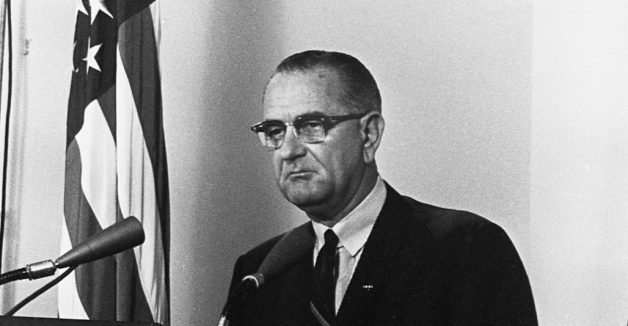
President Lyndon Johnson announces “retaliatory” strike against North Vietnam in response to the supposed attacks on U.S. warships in the Gulf of Tonkin on Aug. 4, 1964. (LBJ Library)
Besides, the Russians knew painfully well — from their own bitter experience in Afghanistan, what the outcome of the most recent fool’s errand would be for the U.S. What point would they see in doing what The New York Times and other Establishment media are breathlessly accusing them of?
CIA Disinformation; Casey at Bat
Former CIA Director William Casey said: “We’ll know when our disinformation program is complete, when everything the American public believes is false.”
Casey made that remark at the first cabinet meeting in the White House under President Ronald Reagan in early 1981, according to Barbara Honegger, who was assistant to the chief domestic policy adviser. Honegger was there, took notes, and told then Senior White House correspondent Sarah McClendon, who in turn made it public.
If Casey’s spirit is somehow observing the success of the disinformation program called Russiagate, one can imagine how proud he must be. But sustained propaganda success can be a serious challenge. The Russiagate canard has lasted three and a half years. This last gasp effort, spearheaded by the Times, to breathe more life into it is likely to last little more than a weekend — the redoubled efforts of Casey-dictum followers notwithstanding.
Russiagate itself has been unraveling, although one would hardly know it from the Establishment media. No collusion between the Trump campaign and Russia. Even the sacrosanct tenet that the Russians hacked the DNC emails published by WikiLeaks has been disproven, with the head of the DNC-hired cyber security firm CrowdStrike admitting that there is no evidence that the DNC emails were hacked — by Russia or anyone else.
How long will it take the Times to catch up with the CrowdStrike story, available since May 7?
The media is left with one sacred cow: the misnomered “Intelligence Community” Assessment of Jan. 6, 2017, claiming that President Putin himself ordered the hacking of the DNC. That “assessment” done by “hand-picked analysts” from only CIA, FBI and NSA (not all 17 intelligence agencies of the “intelligence community”) reportedly is being given close scrutiny by U. S. Attorney John Durham, appointed by the attorney general to investigate Russiagate’s origins.
If Durham finds it fraudulent (not a difficult task), the heads of senior intelligence and law enforcement officials may roll. That would also mean a still deeper dent in the credibility of Establishment media that are only too eager to drink the Kool Aid and to leave plenty to drink for the rest of us.
Do not expect the media to cease and desist, simply because Trump had a good squelch for them last night — namely, the “intelligence” on the “bounties” was not deemed good enough to present to the president.
(As a preparer and briefer of The President’s Daily Brief to Presidents Reagan and HW Bush, I can attest to the fact that — based on what has been revealed so far — the Russian bounty story falls far short of the PDB threshold.)
Rejecting Intelligence Assessments
Nevertheless, the corporate media is likely to play up the Trump administration’s rejection of what the media is calling the “intelligence assessment” about Russia offering — as Rachel Maddow indecorously put it on Friday — “bounty for the scalps of American soldiers in Afghanistan.”
I am not a regular Maddow-watcher, but to me she seemed unhinged — actually, well over the top.
The media asks, “Why does Trump continue to disrespect the assessments of the intelligence community?” There he goes again — not believing our “intelligence community; siding, rather, with Putin.”
In other words, we can expect no let up from the media and the national security miscreant leakers who have served as their life’s blood. As for the anchors and pundits, their level of sophistication was reflected yesterday in the sage surmise of Face the Nation’s Chuck Todd, who Aaron Mate reminds us, is a “grown adult and professional media person.” Todd asked guest John Bolton: “Do you think that the president is afraid to make Putin mad because maybe Putin did help him win the election, and he doesn’t want to make him mad for 2020?”
“This is as bad as it gets,” said House Speaker Nancy Pelosi yesterday, adding the aphorism she memorized several months ago: “All roads lead to Putin.” The unconscionably deceitful performance of Establishment media is as bad as it gets, though that, of course, was not what Pelosi meant. She apparently lifted a line right out of the Times about how Trump is too “accommodating” toward Russia.
One can read this most recent flurry of Russia, Russia, Russia as a reflection of the need to pre-empt the findings likely to issue from Durham and Attorney General William Barr in the coming months — on the theory that the best defense is a pre-emptive offense. Meanwhile, we can expect the corporate media to continue to disgrace itself.
Vile
Caitlin Johnstone, typically, pulls no punches regarding the Russian bounty travesty:
“All parties involved in spreading this malignant psyop are absolutely vile, but a special disdain should be reserved for the media class who have been entrusted by the public with the essential task of creating an informed populace and holding power to account. How much of an unprincipled whore do you have to be to call yourself a journalist and uncritically parrot the completely unsubstantiated assertions of spooks while protecting their anonymity? How much work did these empire fluffers put into killing off every last shred of their dignity? It boggles the mind.
It really is funny how the most influential news outlets in the Western world will uncritically parrot whatever they’re told to say by the most powerful and depraved intelligence agencies on the planet, and then turn around and tell you without a hint of self-awareness that Russia and China are bad because they have state media.
Sometimes all you can do is laugh.”
Ray McGovern works for Tell the Word, a publishing arm of the ecumenical Church of the Saviour in inner-city Washington. During his 27-years as a CIA analyst he led the Soviet Foreign Policy Branch and prepared The President’s Daily Brief for Presidents Nixon, Ford, and Reagan. In retirement, he co-created Veteran Intelligence Professionals for Sanity (VIPS).
Afghanistan Bounties: Pot, Meet Kettle (and Turn Off the Stove!)
By Thomas L. Knapp | The Garrison Center | June 29, 2020
“American intelligence officials have concluded that a Russian military intelligence unit secretly offered bounties to Taliban-linked militants for killing coalition forces in Afghanistan,” claims the New York Times.
More controversially, the authors write that US president Donald Trump was briefed on the assessment (he denies it) and the piece’s tag line says that his administration “has been deliberating for months” on how to respond (he says the US intelligence community didn’t find the claims credible).
Naturally, the response preferred by those who buy the Times‘s version of events is:
First, make domestic political hay with it. Sure, trying to frame Trump as a Russian asset has backfired spectacularly every time it’s been tried, but sooner or later it’s bound to work, right?
Second, make foreign policy hay with it. Punish the Russians until they’ve been baited back to full-blown Cold War levels of enmity, all the while whining that “they hate us for our freedom.”
I’ve got a better plan.
First, reduce the US military presence in Afghanistan to zero. If there aren’t any US forces in Afghanistan, no US forces in Afghanistan will be in danger due to supposed “Russian bounties.”
Second, ignore — forget! — the slim possibility that Russian bounties were behind any American deaths.
Problems solved.
Why should the US let the Russians off the hook and quit worrying about it? Here’s why:
To date, fewer than 2,500 Americans have died in Afghanistan in nearly 19 years of war.
The Russians’ 1979-1989 Afghan war lasted about half as long. Their toll was 15,000 dead.
Why didn’t the Russians get off as lightly as the Americans?
Because the US government spent at least $3 billion directly funding and arming groups like al Qaeda to fight the Russians in Afghanistan (through the CIA’s “Operation Cyclone”), and billions more indirectly via the Pakistani government.
Even counting only the known direct aid, that amounts to a $200 in-kind bounty for every dead Russian soldier. $200 was a pretty sweet paycheck, more than Afghanistan’s per capita GDP during most of that period.
If there is a Russian bounty program on US troops in Afghanistan now, it’s clearly been less successful than the equivalent US program was 30-40 years ago. And with that program, the US government gave up any conceivable standing to complain about a Russian remix.
That supposed remix is just one more reason, from among a long list of good reasons, to bring the troops home from Afghanistan.
Thomas L. Knapp (Twitter: @thomaslknapp) is director and senior news analyst at the William Lloyd Garrison Center for Libertarian Advocacy Journalism (thegarrisoncenter.org).
Senator Schumer calls for ‘tough sanctions’ against Moscow amid new wave of anti-Russian hysteria… again
RT | June 28, 2020
The US Senate minority leader, Democrat Chuck Schumer, seemingly got on his hobby-horse once more as he demanded new sanctions against Moscow amid reports about Russian agents putting ‘bounties’ on US troops in Afghanistan.
“We need, in this coming defense bill, which we are debating this week, tough sanctions against Russia,” Schumer told journalists while emphatically gesturing to apparently add more weight to his point.
The reason for the “tough sanctions” is a report by The New York Times that cites some “interrogations of captured Afghan militants and criminals” and accuses the Russian military intelligence, the GRU, of literally offering bounties to the Taliban for every American soldier killed in Afghanistan.
The report was dismissed by both Russia and the Taliban, which denied any such bounties ever being offered. Even the Director of the US National Intelligence, John Ratcliffe, came out to say that neither President Donal Trump nor Vice President Mike Pence were ever briefed on anything like this. These facts, however, left The New York Times undeterred as the paper followed up with another piece on the issue, this time citing some “officials briefed on the matter.”
Schumer, however, admitted that he does not really know anything about the situation since he “was not briefed on the Russian military intelligence,” unlike The New York Times’ mysterious sources. That did not stop him, however, from claiming that this supposedly real data “shows” new sanctions against Moscow are desperately needed.
In fact, calling for sanctions against Russia has been the senator’s favorite pastime for quite some time now. Since the start of this year, he has managed to demand new restrictions against Moscow twice – in February and March. He has also sought to press the EU into imposing some as well.
NYT takes anti-Russian hysteria to new level with report on Russian ‘bounty’ for US troops
By Scott Ritter | RT | June 28, 2020
The New York Times published an article claiming that Russia was paying out monetary bounties to the Taliban to kill US troops in Afghanistan. There’s just one problem — none of what they reported was true.
As news reporting goes, the New York Times article alleging that a top-secret unit within Russian military intelligence, or GRU, had offered a bounty to the Taliban for every US soldier killed in Afghanistan, was dynamite. The story was quickly “confirmed” by the Washington Post, the Wall Street Journal and other newspapers, and went on to take social media by storm. Twitter was on fire with angry pundits, former officials, and anti-Trump politicians (and their respective armies of followers) denouncing President Trump as a “traitor” and demanding immediate action against Russia.
There was just one problem — nothing in the New York Times could be corroborated. Indeed, there is no difference between the original reporting conducted by the New York Times, and the “confirming” reports published by the Washington Post and the Wall Street Journal. All of the reports contain caveats such as “if confirmed” and “if true,” while providing no analysis into the potential veracity of the information used to sustain the report — alleged debriefs of Afghan criminals and militants — or the underpinning logic, or lack thereof, of the information itself.
For its part, the Russian government has vociferously denied the allegations, noting that the report “clearly demonstrates low intellectual abilities of US intelligence propagandists who have to invent such nonsense instead of devising something more credible.” The Taliban have likewise denied receiving any bounties from the Russians for targeting American soldiers, noting that with the current peace deal, “their lives are secure and we don’t attack them.”
Even more telling is the fact that the current Director of National Intelligence John Ratcliffe has come out to contradict a key element of the New York Times’ report—that the president was briefed on the intelligence in question. “I have confirmed that neither the president nor the vice president were ever briefed on any intelligence alleged by the New York Times in its reporting yesterday,” Ratcliffe said in a statement. “The New York Times reporting, and all other subsequent news reports about such an alleged briefing are inaccurate.”
And one more tiny problem: Trump confirmed there was no such briefing, too.
Perhaps the biggest clue concerning the fragility of the New York Times’ report is contained in the one sentence it provides about sourcing — “The intelligence assessment is said to be based at least in part on interrogations of captured Afghan militants and criminals.” That sentence contains almost everything one needs to know about the intelligence in question, including the fact that the source of the information is most likely the Afghan government as reported through CIA channels.
There was a time when the US military handled the bulk of detainee debriefings in Afghanistan. This changed in 2014, with the signing of the Bilateral Security Agreement. This agreement prohibits the US military from arresting or detaining Afghans, or to operate detention facilities in Afghanistan. As a result, the ability of the US military to interface with detainees has been virtually eliminated, making the Pentagon an unlikely source of the information used by the New York Times in its reporting.
The CIA, however, was not covered by this agreement. Indeed, the CIA, through its extensive relationship with the National Directorate of Security (NDS), is uniquely positioned to interface with the NDS through every phase of detainee operations, from initial capture to systemic debriefing.
Like any bureaucracy, the CIA is a creature of habit. Henry ‘Hank’ Crumpton, who in the aftermath of 9/11 headed up the CIA’s operations in Afghanistan, wrote that
“[t]he Directorate of Operations (DO) should not be in the business of running prisons or temporary detention facilities. The DO should focus on its core mission: clandestine intelligence operations. Accordingly, the DO should continue to hunt, capture, and render targets, and then exploit them for intelligence and ops leads once in custody. The management of their incarceration and interrogation, however, should be conducted by appropriately experienced US law enforcement officers because that is their charter and they have the training and experience.”
After 2014, the term “US law enforcement officers” is effectively replaced by “Afghan intelligence officers”— the NDS. But the CIA mission remained the same — to exploit captives for intelligence and operational leads.
The Trump administration has lobbied for an expanded mission for the CIA-backed NDS and other militia forces to serve as a counterterrorism force that would keep Islamic State (IS, formerly ISIS) and Al-Qaeda from gaining a foothold in Afghanistan once US and foreign troops completed their planned withdrawal in 2021. But the CIA has raised objections to such a plan, noting that the NDS and other CIA-controlled assets were completely dependent upon US military air power and other combat service support resources, and that any attempt to expand the CIA’s covert army in Afghanistan following a US military withdrawal would end in disaster. Having the NDS fabricate or exaggerate detainee reports to keep the US engaged in Afghanistan is not beyond the pale.
Which brings up the issue of Russian involvement. In September 2015, the Taliban captured the northern Afghan city of Konduz, and held it for 15 days. This sent a shockwave throughout Russia, prompting Moscow to reconsider its approach toward dealing with the Afghan insurgency. Russia began reaching out to the Taliban, engaging in talks designed to bring the conflict in Afghanistan to an end. Russia was driven by other interests as well. According to Zamir Kabulov, President Vladimir Putin’s special representative for Afghanistan, “the Taliban interest objectively coincides with ours” in the fight against Islamic State, which in the summer of 2014 had captured huge tracts of land in Syria and Iraq, including the city of Mosul, Iraq’s second largest.
By 2017, Afghan and US intelligence services had assembled a narrative of Russian assistance to the Taliban which included the provision of advanced weaponry, training, and financial support. While Russia denied providing any direct military support to the Taliban, it maintained that the Taliban were the best way to deal with the growing threat of Islamic State. But even if the US reports were correct, and Russia was angling for a Taliban victory in Afghanistan, the last policy Russia would logically pursue would be one that had the US remain in Afghanistan, especially after pushing so hard for a negotiated peace. Russia’s interests in Afghanistan were — and are — best served by Afghan stability, the antithesis of the Afghan reality while the US and NATO remain engaged. Getting the US out of Afghanistan — not keeping the US in Afghanistan — is the Russian position, and any CIA officer worth his or her salt knows this.
It does not take a rocket scientist to read between the lines of the New York Times’ thinly sourced report. The NDS, with or without CIA knowledge or consent, generated detainee-based intelligence reports designed to create and sustain a narrative that would be supportive of US military forces remaining in Afghanistan past 2021. The CIA case officer(s) handling these reports dutifully submit cables back to CIA Headquarters which provide the gist of the allegations — that Russia has placed a bounty on US soldiers. But there is no corroboration, nothing that would allow this raw “intelligence” to be turned into a product worthy of the name.
This doesn’t mean that someone in the bowels of the CIA with an axe to grind against Trump’s plans to withdraw from Afghanistan, or who was opposed to Trump’s efforts to normalize relations with Russia, didn’t try to breathe life into these detainee reports. Indeed, a finished “product” may have made its way to the National Security Council staff — and elsewhere — where it would have been given the treatment it deserved, quickly discarded as unsubstantiated rumor unworthy of presidential attention.
At this point in time, frustrated by the inattention the “system” gave to the “intelligence,” some anonymous official contacted the New York Times and leaked the information, spinning it in as nefarious a way as possible. The New York Times blended the detainee reports and its own previous reporting on the GRU to produce a completely fabricated tale of Russian malfeasance designed to denigrate President Trump in the midst of a hotly contested reelection bid.
Too far-fetched? This assessment is far more fleshed out with fact and logic than anything the New York Times or its mainstream media mimics have proffered. And lest one thinks the GrayLady is above manufacturing news to sustain support for a war, the name Judith Miller, and the topic of Iraqi weapons of mass destruction, should put that to rest. The reporting by the New York Times alleging the existence of a Russian bounty on the lives of US troops in Afghanistan is cut from the same piece of cloth as its pre-war Iraq drivel. As was the case with Iraq, the chattering class is pushing these new lies on an American audience pre-programmed to accept at face value any negative reporting on Russia. This is the state of what passes for journalism in America today, and it’s not a pretty sight.
Scott Ritter is a former US Marine Corps intelligence officer. He served in the Soviet Union as an inspector implementing the INF Treaty, in General Schwarzkopf’s staff during the Gulf War, and from 1991-1998 as a UN weapons inspector. Follow him on Twitter @RealScottRitter
Taliban Refute Reports on Russia’s Alleged Role in Killings of US Troops in Afghanistan
Sputnik – 27.06.2020
KABUL – Taliban spokesman Zabihullah Mujahid refuted on Saturday the recent reports citing US intelligence assessments alleging that Russian intelligence has solicited killings of US troops by the Taliban in Afghanistan, saying that these rumors are set to create obstacles to US pullout from the country.
According to Mujahid, all weapons and tools used by the movement were already present in the country or captured from the opposition. The spokesman stressed that the Taliban’s activities are not related to any intelligence organ or foreign country.
Mujahid stated that the Taliban was committed to the deal with the United States, saying that its implementation would ensure comprehensive peace and stability in Afghanistan.
On Friday, The New York Times published an article where it cited unnamed government sources as saying that US President Donald Trump was presented with an intelligence report that claimed that Moscow could have payed bounty to armed Islamic insurgents in Afghanistan to assassinate US soldiers. The outlet said Trump had so far failed to act on the report.
In February, the US and the Taliban signed a peace deal that concluded rounds upon rounds of talks pursuing to launch the reconciliation process in Afghanistan after almost two decades of armed conflict and insurgency.
Last week, US Special Representative for Afghanistan Zalmay Khalilzad said that intra-Afghan talks were closer than ever after Kabul and the Taliban carried out a significant exchange of prisoners.
Reality Is Gradually Catching Up To Green Energy
By Francis Menton | Manhattan Contrarian | June 8, 2020
If you dutifully read your U.S. mainstream media, you undoubtedly have the impression that “clean” and “green” energy is rapidly sweeping all before it, and soon will supplant fossil fuels in powering our economy. After all, many major states, including California and New York, have mandated some form of “net zero” carbon emissions by 2050, or in some cases even earlier. That’s only 30 years away. And reports are everywhere that investment in “renewables,” particularly wind and solar energy, continues to soar. For example, from Reuters in January we have “U.S. clean energy investment hits new record despite Trump administration views.” In the New York Times on May 13 it’s “In a First, Renewable Energy Is Poised to Eclipse Coal in U.S.” The final victory of wind and solar over the evil fossil fuels must then be right around the corner.
Actually, that’s all a myth. The inherent high cost and unreliability of wind and solar energy mean that they are highly unlikely ever to be more than niche players in the overall energy picture. Politicians claim progressive virtue by commissioning vast farms of wind turbines and solar panels, at taxpayer or ratepayer expense, without anyone ever figuring out — or even addressing — how these things can run a fully functioning electrical grid without complete fossil fuel backup. And the electrical grid is the easy part. How about airplanes? How about steel mills? I’m looking for someone to demonstrate that this “net zero” thing is something more than a ridiculous fantasy, but I can’t find it.
To stay grounded in reality, there is no better source than the multiple-times-weekly email from the Global Warming Policy Foundation. If you do not already receive these emails, you can go here to subscribe. As is typical, today’s email searches out back pages and specialized sources to bring us multiple pieces showing green energy running into its inevitable wall, with no known way to get past. (Full disclosure: I am on the Board of the GWPF’s American affiliate.)
We go first to green energy champion Germany, where Bloomberg reports on June 5 that “Germany’s Green Power Finance Is Becoming Unaffordable.” Excerpt:
The German program that’s spurred the nation’s switch to green power is buckling under the weight of surging costs and needs an urgent fix. That’s the assessment of one of the scheme’s chief designers, Hans Josef Fell. . . . Yet the system’s increasing costs have become glaring during the coronavirus pandemic, the veteran Green Party lawmaker said. High and guaranteed payments made to investors in clean power plants are the problem Fell said in an interview.
It seems that to get its wind and solar facilities built, Germany put in place guaranteed payments to producers that would kick in if market prices for power were insufficient. The guaranteed payments are divvied up and added to consumer electricity bills. This year, with prices for alternative fossil fuels plummeting, the guaranteed payments are projected to come in at some 26 billion euros — which is around $100 per month for every German household, on top of electricity prices that were already about triple the U.S. average. Of course, Chancellor Merkel is proposing a “fix,” which is a government bailout as part of a supposed coronavirus relief package. That may work for a little while. Then what?
Also from Germany, we have a piece from the Financial Times of June 8 with the headline “Environmentalists on back foot as Germany’s newest coal plant opens.” What?? — Opening a new coal power plant right in the midst of a transition away from fossil fuels?? What happened here is that they are closing all their nuclear plants, and they need something that works all the time, unlike the wind and the solar. Just in January, Germany enacted legislation to completely phase out coal power generation by 2038; and then in May, they went right ahead and opened this new Dateln 4 coal plant. The Financial Times piece quotes Greenpeace activist Lisa Göldner as calling the new plant a “climate crime.” Meanwhile, the crew members of a barge bringing coal to the plant are described as “whooping and whistling in mockery” at environmental protesters seeking to block the opening of the plant.
The fact is that Germany has nowhere further to go by building more wind and solar facilities. When the wind blows on a sunny day, they already have more power than they can use, and they are forced to give it away to Poland (or even pay the Poles to take it). On a calm night, no matter how much wind and solar they build, it all produces nothing. Without the coal plant, the lights go out. Talk about climate virtue all they want, but no one has yet even begun to work on a solution to get past this hurdle.
Which brings me to the most important piece in the GWPF email, from Cambridge Professor Michael Kelly, appearing in something called CapX on June 8, with the headline “Until we get a proper roadmap, Net Zero is a goal without a plan.” Kelly makes the point that seems to me obvious, but that somehow has slipped past the New York Times and all the rest of the MSM, which is that if wind and solar energy are ever going to surpass niche status, there is a gigantic engineering problem to solve. Somebody has to engineer an electrical system based on the intermittent sources that works 24/7/365. But in fact, even as major states and countries have piously proclaimed commitment to “net zero” energy, nobody has even started the engineering project. And as soon as you start to consider the question, you quickly realize that the whole endeavor is almost certainly impossible. As an example, Kelly addresses batteries:
Take batteries. It is estimated that current battery manufacturing capabilities will need to be in the order of 500-700 times bigger than now to support an all-electric global transport system. The materials needed just to allow the UK to transition to all electric transport involve amounts of materials equal to 200% the annual global production of cobalt, 75% of lithium carbonate, 100% of neodymium and 50% of copper. Scaling by a factor of 50 for the world transport, and you see what is now a showstopper. The materials demands just for batteries are beyond known reserves. Would one be prepared to dredge the ocean floor at very large scale for some of the material? Should securing the reserves not be a first priority?
And that’s just one of the issues. Others include vast costs constituting a multiple of current energy costs; the environmental impact of mining and transporting huge amounts of materials; need for vast amounts of rare elements, far beyond known world reserves; incredibly huge amounts of material to recycle when facilities wear out; and on and on.
Read enough of this stuff and you gradually realize that almost everything you read about supposed solutions to climate change is completely delusional.
All Tom Cotton has to do to get back in the NYTimes’ good graces is call for the US military to bomb ANOTHER country’s civilians

The war comes home… literally © Reuters / Andy Sullivan
By Helen Buyniski | RT | June 6, 2020
Republican senator Tom Cotton’s controversial op-ed demanding US troops be deployed against American protesters would have been embraced by the New York Times if he’d just stuck to cheering on military actions abroad.
The Times has been consumed with angst over the backlash to the Arkansas senator’s piece, which called for the military to be turned loose in US cities as an “overwhelming show of force to disperse, detain and ultimately deter lawbreakers.” Hundreds of the outlet’s staffers have slammed management’s decision to publish, insisting Cotton’s words somehow put them in danger.
Yet the Paper of Record has a long, colorful history of publishing op-eds (and even news pieces) supporting the deployment of the US military against civilian populations. Sure, those populations generally live outside the US – maybe they’re in Iraq, or Venezuela, or Iran – but the Times can almost always be relied upon to support the idea that the US military is a force for good, bringing sweetness and light (and, of course, democracy) wherever it goes.
That the Times would then balk at Cotton’s call to send those same troops into American cities is a bit surprising. Are these writers suggesting military activity in civilian areas isn’t limited to building schools for needy children, or freeing kittens trapped up tall trees?
And if they are aware of the destruction that takes place when US troops invade a country – civilian casualties, terrorism, drug and human trafficking – what’s their excuse for declaring, again and again, that military intervention is the answer to any nation’s problems?
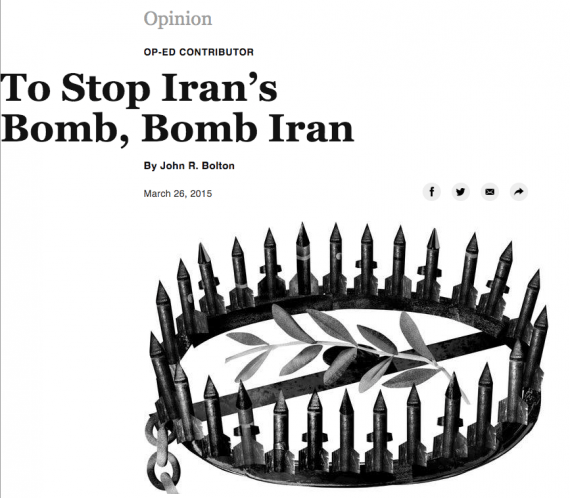
© New York Times
For the paper to cry fascism now – when its pages have been used to manufacture consent for war after war among the American people, facilitating the decimation of Afghanistan, Iraq, Libya, and Syria – is the pinnacle of hypocrisy. The time to speak up, morally, was long ago. Putting their foot down now is utter cowardice, motivated not by concern over a fascist takeover – that ship has sailed – but by a desire to keep Uncle Sam’s enforcers from stomping back home.
Michelle Goldberg, given the task of refuting Cotton’s ‘dangerous’ views on the op-ed page on Friday, cut to the heart of the matter when she pointed out that Cotton’s recommendations would “almost certainly amount to massive violence against his fellow citizens.” Massive violence, then, is only acceptable when it happens to civilians outside the US.
The rest of the world still has to deal with the fallout from the Times’ warmongering. If Cotton wants to make nice with the Times, all he has to do is write a piece explaining how the children of Hong Kong (or Pyongyang, or Tehran) are crying out for the kind of freedom that can only be delivered from the barrel of a made-in-USA M-16. All will be forgiven.
Helen Buyniski is an American journalist and political commentator at RT. Follow her on Twitter @velocirapture23
Twitter & media know this isn’t about mail-in ballots or fraud, but about who gets to define truth; Trump does too
By Nebojsa Malic | RT | May 27, 2020
Twitter opened a new battlefront in the 2020 US election by ‘fact-checking’ posts by President Donald Trump to say he was wrong about voter fraud. That would normally be the end of the story – except nothing about this is normal.
On Tuesday, Twitter took the unprecedented step of posting a link under the two tweets – made by the president on his personal account – listing a bunch of mainstream media articles to assert that “fact-checkers say there is no evidence that mail-in ballots are linked to voter fraud,” and therefore Trump’s opinion about the matter is factually wrong.
The move followed a campaign by mainstream media and Democrats to censor Trump over other tweets, insinuating that the intern for former congressman and current MSNBC host Joe Scarborough may not have died accidentally, which culminated in a demand for Twitter to “cleanse the Trump stain” in a New York Times op-ed earlier on Tuesday.
Try as they might, Twitter couldn’t find any violation of their ever-shifting rules to pin on Trump, so they did the next best thing and “fact-checked” him. No doubt, whoever came up with this figured it was a really clever way to appease the outrage mob. Sure, the Trump 2020 campaign would protest the bias – and reveal in the process that they pulled advertisements from Twitter months ago – but they can be brushed off, unlike the chorus of his critics.
Then the White House Press Secretary fired off a thread filled with recent stories about mail-in ballot problems – forms being mailed to the dead or people who’d long since moved away, a Philadelphia judge just convicted for stuffing the ballot box, etc. – clearly showing the Twitter “fact checkers” had some explaining to do.
That should not come as a surprise to anyone. After all, these are the same outlets that have peddled the Russiagate conspiracy theory with impunity for the past four years, and even racked up prestigious awards for the blatantly fraudulent coverage. Mainstream media archives are littered with “bombshells” designed to first prevent Trump’s election, then inauguration, then get him impeached or otherwise removed from office. Every single one turned out to be a dud.
“But Trump lies! Constantly!” scream in unison the people used to being not just gatekeepers of “respectable discourse” but the tone police of Washington, the arbiters of the acceptable, the people who believe their pen shapes the very fabric of reality. People who headline their stories with “what you should know” and “how you should think.”
When challenged, they form ranks and scream they are being unjustly attacked and “delegitimized” – but only if it’s one of their mainstream colleagues called out for their excesses. Anyone else, from Julian Assange to alternative outlets, can rot because the precious First Amendment doesn’t apply to them, supposedly.
CNN had to settle a lawsuit after defaming a teenager from Covington, Kentucky. To avoid a similar fate, MSNBC’s Rachel Maddow argued that when she says “literally” that’s not news but humorous hyperbole, essentially dismissing her entire show as fake news.
It’s telling that this very phrase – fake news – has become synonymous with Trump’s criticism of the media, even though it was originally used by Hillary Clinton as an excuse for losing the 2016 election. You know, the election the mainstream media gave her 98 percent chances of winning almost to the very end, and openly endorsed her at the same rate?
If you thought Clinton took that loss hard, though, you clearly haven’t been paying attention to the media. Trump’s victory was an existential crisis for them, the moment their power to dictate the shape of reality itself was exposed as a mirage.
This is why they’ve spent the past four years lobbing Russiagate and other ‘bombshells’ at him. This is why they have led the outrage mobs, not just against Trump or the millions of “deplorables” that voted for him, but also against the social media platforms he used to bypass them in 2016, so he wouldn’t be able to do that again this November. Don’t think for a second any of this is about mail-in ballots, which – much like immigration and other issues – Democrats themselves once used to be against.
When they wrote freedom of speech into the Constitution, America’s founders may not have imagined that a president would be an unlikely champion of it, while the “free press” would be clamoring for censorship to preserve its power. Yet here we are.
Nebojsa Malic is a Serbian-American journalist, blogger and translator, who wrote a regular column for Antiwar.com from 2000 to 2015, and is now senior writer at RT. Follow him on Twitter @NebojsaMalic
The Case of General Michael Flynn: The Use of Law as a Political Weapon

By Paul Craig Roberts | Institute for Political Economy | May 20, 2020
The audacious corruption of the FBI and the US Department of Justice (sic) is demonstrated by their frame-up of the three-star general, former Director of the Defense Intelligence Agency, and National Security Adviser to President Donald Trump.
US Department of Justice (DOJ) documents that the department was forced to turn over to General Michael Flynn’s attorney reveal that the FBI found no wrongdoing by Flynn in its investigation of him and recommended the investigation be closed. Corrupt FBI official Peter Strzok, a leader of the anti-Trump cabal in the FBI, intervened. Strzok convinced the official managing the investigation not to close the case as it was the wishes of the “7th floor” (top FBI officials) to keep the case open. In the absence of evidence against Flynn, released FBI documents prove that the FBI leadership decided to frame General Flynn. The documents reveal that the FBI’s plan is “to get him (Flynn) to lie so we can prosecute him or get him fired. . . . we should try to frame them in a way we want.” General Flynn was forced to incriminate himself with a guilty plea. Otherwise, the corrupt DOJ prosecutors threatened to indict Flynn’s son.
When this proof of egregious government misconduct came to light, the DOJ had no choice but to drop the case against General Flynn. Otherwise it would be clear that law in the US is a weapon in the hands of government. This would mean that control of government would be a life and death matter for the two political parties as it is in Ecuador and Bolivia where incoming presidents arrest or attempt to arrest outgoing presidents.
But we didn’t hear a word about the frame-up of General Flynn from the corrupt presstitutes. On May 7 the editorial board of the New York Times published the largest and most egregious collection of lies in the entire history of the disreputable organization. The editorial— “Don’t Forget, Michael Flynn Pleaded Guillty. Twice.” —claimed the lies coerced from Flynn proved Flynn’s guilt, and that Attorney General William Barr is a “personal fixer for the president” and used the Department of Justice to protect friends and to go after political enemies.
The New York Times has it backwards. Going after political enemies is precisely what the Obama Regime’s concocted case against General Flynn (and Trump) was all about. Remember, it was General Flynn who said on television that it was a “willful decision” of the Obama Regime to send the mercenary jihadists to attack Syria, a decision Obama made in the face of contrary advice by General Flynn, Director of the Defense Intelligence Agency. When Flynn revealed this, it blew up the fake news story spread by the Obama Regime and the presstitutes that the Obama-supported invasion of Syria by CIA mercenaries was an uprising by Syrian moderates fighting for democracy. Flynn’s blood is blood that the corrupt Obama Regime wanted very badly.
Obama’s role in the frame-up of Flynn and the orchestration of the Russiagate hoax is now coming to light, making the former president nervous. On May 10 the Wall Street Journal editorial board asked if Obama’s nerves are getting in the way of his judgment:
“Barack Obama is a lawyer, so it was stunning to read that he ventured into the Michael Flynn case in a way that misstated the supposed crime and ignored the history of his own Administration in targeting Mr. Flynn. Since the former President chose to offer his legal views when he didn’t need to, we wonder what he’s really worried about.”
The Democrats’ frame-up of General Flynn and their two attempted frame-ups of President Trump show an extraordinary audacity and a corruptly compliant FBI and DOJ. They thought that they could get away with it, and, of course, they had all the help possible from the New York Times, Washington Post, CNN, MSNBC, and the rest of the presstitute scum for whom lies are the currency of their fake news realm. The presstitutes have made clear that the US media is devoid of integrity.
After high officials such as James Clapper, Susan Rice, Samatha Power, and others repeatedly claimed evidence of Trump and Flynn’s guilt, when under oath their story changed 180 degrees. Here is Director of National Intelligence James Clapper:
“I never saw any direct empirical evidence that the Trump campaign or someone in it was plotting/conspiring with the Russians to meddle with the election.”
Susan Rice, Obama’s incompetent National Security Adviser, and Samatha Power, Obama’s Russia-baiting ambassador to the UN, along with the rest of the disreputable Obama cabal, have admitted that they saw no specific evidence of any collusion between Trump and Russia. The entire thing was an orchestrated hoax that proves beyond all doubt that the Democrat Party and the US media are corrupt beyond redemption.
When the case against Flynn was dropped as a result of the damning evidence of egregious government misconduct in framing a senior official of the US government, the corrupt prosecutors who had prosecuted the innocent Flynn all resigned in a huff, pretending that it was Barr, not them, who used the Department of Justice for self-interested political purpose.
Two Georgetown University law professors, Kean K. Katyal and Joshua A. Geltzer, totally discredited themselves and the Obama contingent in the DOJ, by alleging in the New York Times that the dropped charge against Flynn has resulted in the “utter demoralization” of “the law enforcement community.” In other words, for these law professors and “the law enforcement community” for which they claim to speak, dropping a case consisting entirely of an orchestrated frame-up, a contrived perjury trap, and threats against family members is demoralizing. The professors are so thoroughly dishonest that they use the lies coerced from Flynn—the price of his “cooperation with the investigation” in order that his son would not also be framed-up—as “evidence” of Flynn’s guilt and proof of the political use of the Justice Department by Trump and Barr in dropping the contrived case.
The frame-up of Flynn is not acknowledged by the law professors as political use of the Justice Department.
Instead the law professors describe the vindication of an innocent man on the basis of undeniable evidence as political use of the Justice Department.
If this is the kind of law Georgetown University teaches, the law school should be promptly shut down.
The question that demands an answer is how do people as corrupt and devoid of integrity as Comey, Mueller, and Strzok get into top FBI positions?
Russia’s handling of the Covid-19 pandemic: a busy week
By Gilbert Doctorow | May 15, 2020
This week started with a major presentation by President Putin of Russia’s plans for gradually lessening the strictures of lockdown, restarting the economy and restoring normal life as the epidemic in the country passes stabilization, which was just reached, and enters the ebb phase of contagion, hospitalization and death. The setting was a virtual conference with major players in the government responsible for managing the health crisis. However, since Putin’s lengthy speech which came to 17 typed pages was televised live by all Russian state channels, it could just as easily be called an address to the nation. The main focus was on the economy and assistance to citizens and to business.
That speech has received little attention in the West and I will come back to it in a follow-up tomorrow, because it tells us a great deal about the guiding principles of Russian governance and its ‘social economy.’
In this essay I deal with the second major appearance by Putin this week dedicated to the coronavirus which took place this afternoon, Friday, 15 May. It also was carried live by all state television channels. It also was nominally remarks made within a virtual intragovernmental conference. And it also was a major policy statement that merits our greatest attention, not only for what it says about Russia, but more importantly for what it says about us, in the West, and how we are badly handling the challenges of the pandemic because of our stubborn and proud disparagement of China.
I listened closely to two of the reports to Putin from the ‘regions’, meaning territories outside Moscow on what is being done right now to handle the growing case load of coronavirus sufferers, and Putin’s comments which may be characterized as ‘programmatic’ insofar as they seek to use the ongoing experience in combatting the coronavirus to deliver, at long last, a substantial rebuilding of medical infrastructure across the country with the help of the military.
The regions reporting were St Petersburg, which is still relatively healthy compared to Moscow but has seen a growing number of infections and hospitalizations in the past few weeks, and Voronezh, which more typically represents the Russian provinces and till now has had a very low level of infection, but is preparing for the worst. In each case the governor read a report of what is being done to build dedicated hospitals for treatment of coronavirus cases both by the local administration and with the help of the Ministry of Defense, represented by the senior officer standing at their side who is overseeing construction of modular hospitals by military personnel and staffed by military doctors.
In Petersburg, which is Russia’s second largest city with a population of approximately 5 million, there are specialized hospitals for light cases with 1,000 beds being completed and specialized hospitals with Intensive Care Units in the size of 200 to 600 beds also reaching completion. A similar approach is being implemented in Voronezh.
The involvement of the Armed Forces in building some of these hospitals is very significant, because they have developed modular solutions that can be applied uniformly across the vast continent that is Russia.
In a way, these projects are similar to what Moscow did as first mover when it opened the state of the art hospital at the city’s periphery in a district called Kommunard. The logic is to remove the coronavirus patients from the general hospital system. This leaves the general hospitals free to continue to serve their traditional ‘clientele,’ the community of those with other ailments. It focuses training, equipment, medicines in locations where maximum attention can be given to ensuring sanitary conditions that protect medical staff and encourage application of well-rehearsed solutions to the challenges of each patient.
Now where would the Russians have gotten this idea from? It is not hard to imagine. We need only think back at the response of the Chinese authorities following the recognition that the outbreak in Wuhan posed existential questions for the local population, indeed for the nation as a whole if it were not contained and wiped out. We all were stunned at the construction of the first specialized facility to deal with the epidemic in one week!
The Russians are less “Stakhanovite” these days, and the hospital projects mentioned above are being executed on a 6 week schedule. But they are being implemented at the highest technical level. Putin gave the figure 5 million rubles as the cost of one hospital bed in the new units; that comes to $60,000 and in Russia’s price equivalency to the dollar probably represents a US cost double or triple the nominal ruble cost. So they are not skimping, not planning to put the incoming patients on matrasses on the floor as happened in Bergamo, Italy.
We also know from the day’s press, that the Russians are now entering into mass production of the few medicines which the Chinese told them proved to be effective in treating their coronavirus patients. Which ones Putin did not say.
And now I must ask, how does Russia’s borrowing from the Chinese playbook compare to what we see around us in Western Europe and the United States? Here China comes up in the coronavirus story only as a punching bag, the people who ‘kept us in the dark’ about the dangers of this plague, not as providers of solutions and advice from their own first and successful experience snuffing it out.
The question I must pose is this: are the Russians being especially clever, or are we being especially stupid?
The segregation of coronavirus patients from the general flows of the ailing contrasts dramatically with what has been going on in Belgium, for example. Here about 100 hospitals around the country have been sharing the aggravated cases of coronavirus requiring hospitalization. This population reached about 5,000 at its peak with nearly one third in Intensive Care, of which to two thirds required ventilators. At the peak a couple of weeks ago, the number of patients in the last category came close to the national inventory of ventilators, a bit more than 1,000. Thankfully, the numbers in the past ten days have come down sharply and there are now half the number of hospital beds taken by virus sufferers.
However, at the peak, all of Belgium’s hospitals resembled war zones with extraterritorial suited medics at the entrances. Normal patients did not have to think twice to shun them. Accordingly, even non-elective surgery was being cancelled; chemotherapy patients were staying at home, etc. This is one element of the mortality brought on by the coronavirus that no one has been recording. Moreover, one has to ask about the quality of medical attention when 100 hospitals, mostly without any experience in epidemics, in virology, were being used to treat Covid19 patients. This had to be a contributor to the body bag count that went into official statistics.
Finally, in closing ,a word about body counts.
In the past several days there have been news reports in Western media accusing Russia of under-reporting deaths in the country due to the coronavirus epidemic. In particular, I can point to articles in The New York Times and in the Financial Times.
With respect to the New York Times the piquant title given to one respective article pointing to a “Coronavirus Mystery” – is fully in line with the daily dose of anti-Russian propaganda that this most widely read American newspaper has been carrying on for years now. A couple of weeks ago the same paper carried an article by one of its veteran science journalists accusing President Putin of using the coronavirus to undermine American science, and medicine in particular. That article was totally baseless, a collection of slanderous fake news.
With respect to the accusation of intentional underreporting of mortality figures in Russia, the New York Times was actually borrowing from the Financial Times, which stated that Russian deaths from the virus may be 70 per cent higher than the official numbers. In both cases, even if the underreporting were true, and this is very debatable, it obscures the fact that both official and unofficial numbers are miniscule compared to the devastation wrought by the virus elsewhere in Europe (Italy, Spain and the UK) or in the USA, where the numbers continue to spike. Russia has either a couple of thousand deaths or something closer to three thousand. Compare that to the official deaths ten times greater in the worst hit European countries having overall populations less than half or a third of Russia’s. So the accusation of 72% underreporting in Russia is a debating point that can easily be shown to be deceptive if not irrelevant.
However, there is a missing element here: context. The whole issue of underreporting Covid19 deaths has been reported on by the Financial Times for a good number of countries, not just Russia. Indeed, their first concern has been to show that the official numbers posted by the UK government, now in the range of 30,000 are a fraction of the actual deaths in the UK (more than 50,000) if one uses not the death certificates case by case but the overall excess of deaths in a given month in 2020 compared to the norm in the given country over the 3 preceding years. The New York Times in its typical cherry picking approach to find what is worst to say about Russia ignores this background of FT reporting.
Why is there underreporting? There are many possible reasons, the chief one is the varying methodology used by the various countries to allocate a given death to the virus.
By curious coincidence this very issue was addressed in today’s press conference on the pandemic by the Belgian Ministry of Public Health. As is widely reported, Belgium has one of the world’s highest rates of mortality from Covid19, very close to the figures in Spain and Italy. This has been reported in the local press and the Ministry today chose to respond. As they noted, Belgium is one of the few countries to report ALL Covid-19 deaths, meaning both those in hospital and those in care homes (mostly old age homes). In Belgium, as in France, deaths have been equally split between these two sets of institutions. Almost no deaths have occurred at home or, as they say, ‘in the community.’ Moreover, deaths are attributed to Covid-19 if the symptoms were there even if no proper test was carried out to confirm this.
In total, Belgium death count today stands close to 9,000 for a general population of 11.8 million. High, but still substantially lower than the mortality in New York, for example, whichever way you count. And, to put the picture into a less dire context, it is reported that each winter Belgium experiences about 5,000 deaths attributable to the seasonal flu. Of course, the flu does not lay waste to the medical establishment, and there you have the difference that makes the ongoing Russian approach to Covid19 so relevant.
© Gilbert Doctorow 2020
Featured Video
Laith Marouf: Hezbollah’s position on US-Iran ceasefire
or go to
Aletho News Archives – Video-Images
From the Archives
The Dirty Little Secret behind the “Global Terrorism Index”
The Omission of Israeli Terrorism in the Occupied Palestinian Territories
By Karin Brothers | Global Research | December 6, 2014
… The Israeli settlements — all of which are illegal – have been identified as a major impediment to peace. The refusal of a major “global” terrorism report to name the Israeli settlers as one of the groups most responsible for terrorism not only misrepresents a major source of regional violence but exposes the Global Terrorism Index as a propaganda tool that supports a U.S. agenda.
In recent years, governments have been attempting to thwart terrorism by blocking supportive fund-raising. When it comes to Israeli settlements, however, the US and Canada actually encourage fund-raising by giving organizations (such as Christian Friends of Israeli Communities (CFOIC) and the Jewish National Fund) financial support in the form of donor tax-deductions.
Charities which provide funds for the Israeli settlements should be regarded as terror-financing organizations. They should not only lose their tax-deductible status, but they should be banned because they support the violation of international humanitarian law. The terror-financing laws that are being strictly enforced for Muslim charities should be applied to Christian and Jewish charities as well. … Read full article
Blog Roll
 Aletho News
- Trump Administration Moves To Automate U.S. Military Draft Registration
- Spain orders reopening of Tehran embassy, condemns Israel’s carpet bombing of Lebanon
- Israel faces ‘unsustainable’ strategic crisis following 40-day war against Iran: Analyst
- Iran restricts Hormuz access to 15 vessels per day under ceasefire terms: Report
- The ‘Opposition Party’ Has Done Nothing to Stop the Iran War and Much to Goad Trump Into Continuing It
- Moscow backs Tehran on status of Lebanon in US-Iran deal
- How UK Regulator Ofcom Quietly Bypassed International Law to Police American Speech
- The Black Cube Files: How Former Mossad Operatives Flipped a Nation
- Laith Marouf: Hezbollah’s position on US-Iran ceasefire: What you’re not being told
- Israel’s priority lies in destroying chances of peace between Iran, US: Ex-UN nuclear chief
- If Americans Knew
- Amnesty: Urgent – Protect Lebanese civilians from brutal escalation in Israeli attacks
- Is The War Against Iran Over?
- Inside the Israeli army’s propaganda wing
- Hundreds of Gaza Amputees Stranded in Legal Limbo
- The gallows law: Israel moves toward executing Palestinian children
- Tucker Carlson: The Path to Peace requires ending ‘special alliance’ with Israel
- This is ceasefire? Israel’s biggest massacre yet in Lebanon, another journalist killed in Gaza – Daily Update
- Tucker Carlson on Israel: This Is the Behavior of an Ally? Really?
- Gazans face a triple crisis: severe shortages of water and bread, healthcare in tatters
- NY Times reports how Netanyahu took the US into Iran War
- No Tricks Zone
- An Inconvenient Tree: Uncovered In Alps… Europe Much Warmer Than Today 6000 Years Ago
- New Study Reports A 60% Slowdown In Greenland’s Ice Loss Rate In The Last Decade
- Low Intensity Tornado Wrecks Major Solar Farm, Creating A Potential Toxic Dump
- New Study Finds Warming Saves Lives…Cold Temperatures 12 Times More Deadly Than Excess Heat
- German Science Blog Accuses PIK Climate Institute Of Hallucinating Climate Tipping Points
- Devastating Assessment Of Comirnaty Vaccine By Former Senior Pfizer Europe Toxicologist
- New Study: CO2 Is ‘Effectively Negligible’ As An Explanatory Climate Change Factor Since 2000
- Former Pfizer Toxicologist Dr. Helmut Sterz Tells Bundestag Hearing Pfizer Vaccine Should Have Never Been Approved
- Energy Expert: Germany’s Nuclear Phaseout Was A “500 Billion Euro Mistake”
- New Research: South Australia’s Mid-Holocene Sea Surface Temperatures Were 4°C Warmer Than Today
 Aletho News