Media ramps up campaign to get Biden out of debates, offering various excuses other than their candidate’s failing mind
By Tony Cox | RT | August 4, 2020
Media outlets from the New York Times to CNN to Newsweek have offered Joe Biden various reasons over the past several days to skip debates with President Donald Trump. None mentions Biden’s fading ability to speak coherently.
A New York Times opinion piece Monday suggested that presidential debates should be scrapped altogether because they’ve “never made sense as a test for presidential leadership.”
We didn’t need the debates to tell us that Trump had chosen to be the P.T. Barnum of American politics. For him, it was (and still is) all about the show, about distracting the public from reality.
CNN political analyst Joe Lockhart, formerly press secretary for President Bill Clinton, wrote last week that it would be “a fool’s errand to enter the ring with someone who can’t follow the rules or tell the truth.”
“Biden will undoubtedly take heat from Republicans and the media for skipping the debates. But it’s worth the risk as trying to debate someone incapable of telling the truth is an impossible contest to win.”
Newsweek noted Saturday that supporters are urging Biden to avoid the debates for various reasons, such as “Trump is not a legitimate candidate” and debates are “outdated political rituals.”
There have been similar stories in the past couple of months, including a July 7 New York Times column suggesting that Biden participate in the debates only if Trump releases his tax returns to the public and agrees to have real-time fact checkers report on misleading statements during the events.
But the calls for Biden to cancel the debates are growing louder and more frequent as the battles draw nearer – three presidential debates are scheduled to be held from September 29 to October 22 – and as the Democrat candidate’s cognitive struggles continue and possibly worsen.
Biden has made a series of infamous gaffes, such as welcoming his audience to the wrong place, then trying to pass it off as a joke, when he gave a speech last week in his home state of Delaware. When he is able to string a sentence clearly together, the message is often puzzling, such as “We choose truth over facts,” or “Poor kids are just as bright and just as talented as white kids.” Biden also has invented such tales as being arrested in South Africa and a war story that the Washington Post found to be false in “almost every detail.” Biden claimed in February to have negotiated the 2016 Paris Climate Accord with Chinese leader Deng Xiaoping. The problem was, Deng died in 1997.
Mainstream media outlets don’t talk about concerns over the 77-year-old Biden’s mental acuity when wishing the debates away. In fact, they feign confidence in their candidate’s ability to perform well in a battle of words with Trump. The New York Times piece saying that debates should be ended said, “This, by the way, isn’t written out of any concern that Donald Trump will prevail over Joe Biden in the debates; Mr. Biden has done just fine in a long stretch of such contests. The point is that ‘winning’ a debate, however assessed, should be irrelevant, as are the debates themselves.”
CNN, the same network now opining that Biden should skip the debates, did a “fact check” article in June saying that Trump had falsely claimed Biden was trying to get out of the debates. Biden didn’t have to beg out of the debates. The media was prepared to do it for him.
It’s no wonder that conservatives aren’t buying the press’s explanations. “As predicted, the media effort to help Joe Biden get himself out of debating Trump is now in full swing,” an account named Reagan Battalion said Monday on Twitter. Radio host Ben Shapiro said, “’Let’s just wheel Joe Biden into the Oval Office on a gurney’ is a hell of a campaign slogan.”
Trump, who’s trailing in the polls, may be counting on the debates to help turn the tide against Biden. Trump’s campaign manager, Bill Stepien, said the president wants more debates with Biden and for the events to take place sooner, before early voting begins.
By Tony Cox is a US journalist who has edited or written for Bloomberg and several major daily newspapers.
Who Are You Gonna Believe?
By Steve Sailer • Unz Review • July 29, 2020
From the NYT opinion page:
Help Me Find Trump’s ‘Anarchists’ in Portland
The president has his politically driven narrative. And then there’s reality.
By Nicholas Kristof
Opinion ColumnistJuly 29, 2020, 4:23 p.m. ET
PORTLAND, Ore. — I’ve been on the front lines of the protests here, searching for the “radical-left anarchists” who President Trump says are on Portland streets each evening.
I thought I’d found one: a man who for weeks leapt into the fray and has been shot four times with impact munitions yet keeps coming back. I figured he must be a crazed anarchist.
But no, he turned out to be Dr. Bryan Wolf, a radiologist who wears his white doctor’s jacket and carries a sign with a red cross and the words “humanitarian aid.” He pleads with federal forces not to shoot or gas protesters.
“Put your gun barrels down!” he cries out. “Why are you loading your grenade launchers? We’re just standing ——”
And then they shoot.
Dr. Wolf, an assistant professor at Oregon Health Sciences University, helps at a medic stand operated by volunteers from the medical school. Could they be radical-left anarchists? No, they’ve imposed order on the anarchy of the street by establishing qualifications for field medics and a hierarchy among them, so that any badly injured protester will immediately get the right kind of care.
See, they are organized so they can’t anarchists!
Also, they are anarchists so they can be an organization, and thus they are not liable under the Racketeer Influenced Corrupt Organization law!
Accomplishing all this while tear gas is swirling and impact munitions are whizzing by, without even asking for insurance cards — that seems the opposite of what fanatical anarchists might do.
Maybe the rioting anarchists were in front of the crowd, where there are discussions about Black Lives Matter? I found musicians and activists and technicians, who were projecting a huge sign on the wall of a nearby building — “Fed Goons Out of PDX” — that seemed a bit geeky for anarchists.
Oh, wait, there was a man using angry language about the federal “occupation” and calling it “abhorrent.” Lots of protesters don’t seem to like him, so could he be a crazed anarchist rioter?
Oops, no, that’s just Portland Mayor Ted Wheeler, sputtering after being tear-gassed by the feds.
Listen up, people, we at the New York Times spent the last six years telling you in excruciating detail about the menace posed by the radical right. If the radical left were important, wouldn’t we have, you know, gotten around to mentioning them? So, logically, they don’t exist.
It’s not Russia, China or Iran who ‘undermine confidence’ in US democracy; for that, ODNI needs to look closer to home
By Nebojsa Malic | RT | July 25, 2020
With 100 days to go before the November election, the US intelligence community issued warnings about foreign ‘influence measures’ such as media reports. The actual challenge to US democracy, however, comes from within.
Foreign countries “continue to use influence measures in social and traditional media in an effort to sway US voters’ preferences and perspectives, to shift US policies, to increase discord and to undermine confidence in our democratic process,” said a statement from the Office of the Director of National Intelligence (ODNI) on Friday.
China is seeking to “pressure political figures it views as opposed to China’s interests” which “might affect” the presidential race, says ODNI. Iran is trying to divide Americans by “spreading disinformation on social media and recirculating anti-US content.” And Russia “continues to spread disinformation in the US that is designed to undermine confidence in our democratic process” and “denigrate what it sees as an anti-Russia” establishment.
When you parse the political language of this, it boils down to all three countries offering news and opinions in the US media space that disagree with the mainstream US media coverage. How dare they!
Who could forget the Chinese propaganda campaign to reimagine American history as one of irredeemable racism, starting not in 1776 with the Declaration of Independence but long before that, with the arrival of first slaves from Africa? Oh wait, no, it’s the New York Times’s Pulitzer Prize-winning ‘1619 Project’ that did that.
What about the Iranian disinformation that President Donald Trump’s Independence Day speech was “dark and divisive”? Except that was the Times again – and the Washington Post, and CNN, and MSNBC, and other “foreign agents” all the way down.
Well, then, how about the Russian effort to declare Mt. Rushmore a monument to racism and the 4th of July event there a celebration of white supremacy? Erm, hold on, that was the… Democratic Party. Oops.
Also, how dare Russia think there is an “anti-Russian establishment” in the US? No one here would uncritically believe the New York Times story about Moscow offering “bounties” to the Taliban to kill US troops in Afghanistan… would they?
The irony here is that ODNI’s job of warning Americans about “foreign threats” was created in the first place by a domestic actor falsely claiming “Russian meddling” to justify the unanticipated defeat in 2016. Time and again, Hillary Clinton’s assertions of President Donald Trump’s “collusion” with Russia have been debunked with actual evidence. In the real world, the FBI and the Justice Department used dodgy British and Ukrainian rumors as grounds for spying on Trump’s campaign and launching sham prosecutions of his aides, like General Michael Flynn.
Indeed, the fact the FBI could no longer be trusted with counter-intelligence briefings of campaigns was the reason the job was recently entrusted to the National Counterintelligence and Security Center (NCSC) Director William Evanina at the ODNI, who signed Friday’s statement.
For continuing to carry water for the “foreign meddling” narrative, Evanina was rewarded with criticism from the Democrats, who complained he did “not go nearly far enough in arming the American people with the knowledge they need about how foreign powers are seeking to influence our political process.”
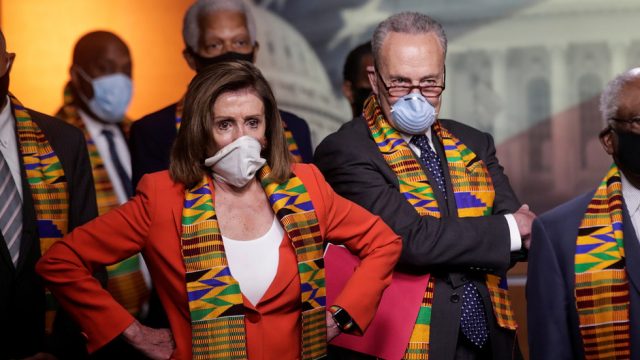
This statement of disapproval was signed by House Speaker Nancy “All roads lead to Putin” Pelosi; Senate Minority Leader Chuck “Spies have six ways from Sunday at getting back at you” Schumer; Rep. Adam “I have evidence of Russia collusion!” Schiff; and Senator Mark “Steele dossier pusher” Warner. In other words, the very crowd that’s got the US into this very mess to begin with.
Nebojsa Malic is a Serbian-American journalist, blogger and translator, who wrote a regular column for Antiwar.com from 2000 to 2015, and is now senior writer at RT. Follow him on Twitter @NebojsaMalic
Precedents for Pizzagate
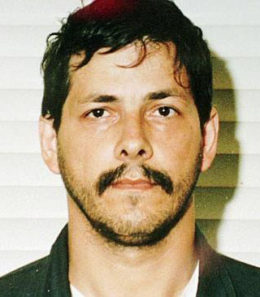
Marc Dutroux, Belgian pedophile, sadist, and serial killer with friends in high places
By Aedon Cassiel | Counter – Currents | December 23, 2016
To reiterate a point that should be clear to the more astute reader, my goal in this series (part 1, part 2) has not been to defend “Pizzagate” as such. My goal has been to defend the people who want to investigate it against specific accusations levied against them by people who think Pizzagate has revealed no intriguing information at all—for a specific reason, which I will be honing in and focusing on much more directly in this closing entry.
Whereas the mainstream critics of Pizzagate would have you believe that the dividing line is between paranoid conspiracy theorist followers of “fake news” and level-headed people who follow trustworthy news sources and rely on cold, hard reason to determine the truth, my goal has been to show that—whatever is or is not happening with Pizzagate itself—this framing of the issue is arrogant, insulting, and the product of extremely narrow tunnel vision.
When I have referred to what I see as the more compelling pieces of evidence uncovered by the crowd-sourced investigation into Pizzagate, my point has not been to use these to say “Pizzagate is true and every single person looking into it is a hero,” but to say “the people investigating it are not idiots, and the facts they’ve been uncovering are not all worthless. Reasonable people could very well look at this and think that it gives us reason to be concerned that there may be something behind it. And if the media is telling you only about the most bizarre, reaching accusations without telling you any of the more interesting points that have been uncovered (which it is), it is not doing its proper job.”
To those who think I am demonstrating an inclination towards conspiracy theories in this series, allow me to quote directly from the two previous essays:
The evidence [in Pizzagate] is of wildly varying levels of quality . . . [and much of it is] the pareidolia of “Jesus is appearing to me in my toast” . . . many of these claims arewild speculation over coincidences . . . Could [this evidence] have an innocent explanation? Sure, maybe. . . . some of the supposed “codewords” people have claimed to have identified in Pizzagate appear to be made up . . . Could all of this turn out to be nothing? Of course it could. . . . Have we identified [evidence of a high–level sex ring] here? Only time will tell. . . . Am I trying to make the argument that if one conspiracy theory is true, all the others must be, too? No . . .
Clearly, anyone who thinks my purpose in any of these essays has simply been to try to validate the truth of every conspiratorial speculation anyone has made around Pizzagate is not paying any attention to my actual words at all. They’ve completely missed the real point, and the problem is not that I haven’t expressed my argument clearly, because words can’t get much clearer than these.
However, I do want to dedicate this final entry to refining and adding bulk to a key step in the core of that argument: namely, the step that emphasizes that no matter how compelling any of the evidence that turns up in Pizzagate in particular may or may not be, we know that high-level sex abuse is in fact a thing that happens in the upper echelons of power, and we know that it gets covered up when it occurs, and we know that the media is often complicit in the cover-up as well. This is why I introduced my first entry to the series with a discussion of the Rotherham child abuse scandal, and the second entry to the series with a brief discussion of MK Ultra, a program that was publicly confirmed to have gone on for some twenty years and involved the highest halls of power subjecting innocent civilians and mentally disabled children to the worst kinds of psychological abuse and manipulation without consent before any public evidence ever even emerged. Part of the point in these examples is to demonstrate that the basic mistrust of our elites that people investigating Pizzagate are demonstrating is entirely justified by facts that are known.
Now, my other point in including these cases in the conversation is that there is a drastic difference between someone who believes he has reason to think something has happened that is unprecedented—say, that there are aliens in Area 51—and someone who believes he has reason to think something has happened that we know for a fact has happened, and that we know for a fact continues to happen, where—if they had found evidence of it happening, it would indeed look very much like what they’ve found.
Imagine you are walking down the street in a quiet small town, and a stranger tells you that the way someone has his handkerchief stuffed into his pocket is a sign that he’s just killed someone. But you investigate that individual, and it turns out that he’s entirely clean and that the handkerchief has a perfectly innocent explanation. You might have valid grounds to infer that the accuser could just be a paranoid schizophrenic who sees demonic symbolism everywhere, even when none exists.
But if a detective is working in a gang-infested area, and he has identified people using handkerchiefs to signify that they’ve just killed members of rival gangs, and he tells you that he thinks the way a certain individual has a handkerchief stuffed in his pocket might be evidence he’s just killed someone, then even if you investigate that individual and he turns out to be innocent, it would not be legitimate to suspect the detective of insanity just because he got it wrong. In fact, the reasoning he followed would be entirely legitimate, even though he turned out to be wrong in this particular case.
Why? Because he would know that there are in fact gangs operating in this area, and he would know that they have in fact used handkerchiefs to signal their recent killings, and he would know that if indeed this were someone committing an act that he knows has occurred before and that he knows in fact continues to occur, then this is exactly what the evidence for it would look like.
The point of this analogy is not to say that everyone looking at Pizzagate is just like a detective—but it is to say that the upper levels of our government are a gang-infested area. And that is why I have entered the arena, not to say “Pizzagate is obviously real!!!” but to say “The people investigating Pizzagate do not deserve to be treated like kooks. They do not deserve to be called idiots or paranoid freaks. Because in fact even if they are wrong, the instincts they are demonstrating are clearly instincts our political situation calls for in general whether something is happening in this particular instance or not.”
If any compelling evidence were to come out of Pizzagate—and, as I have said in this series, I do think at least some of it is—who would catch on and express concern about it first? The record very clearly shows that it would not be the mainstream media. As the first article made a clear effort to point out, it was the far-Right blogosphere that caught wind of the Rotherham scandal well before the mainstream media did; and during his time at the BBC, Mark Thompson was credibly accused of lying to cover up evidence of the Jimmy Savile sex scandal. Jimmy Savile managed to abuse hundreds of young children, and associates and friends were accused of acting in complicity with the rapes and even sentenced for raping the very same victims. And that same Mark Thompson who helped cover up the Savile scandal now runs the New York Times which was so quick to dismiss Pizzagate in its entirety as a hoax as well.
Liberal feminists claim to be concerned about “rape culture” (on which, see my essay on “Diversity & The Rape of Justice”), yet we have actual hard solid evidence here of a “child rape culture” within the upper echelons of power—which targets young boys at least as often as young girls—and their voices can barely be heard, even as they heap scorn upon the “conspiracy theorists” in cases like this one. Yet, the evidence they want us to believe holds true for rape across society in general as a whole (where, generally, it doesn’t) actually does hold for child rape in positions of power.
In what follows, I’m simply going to give overviews of some known, documented cases of this in haphazard order. I’m going to set my search bar in the right direction, spend an hour or two compiling sources that stand out to me, and list everything I find simply from looking around for a few minutes. So this won’t even be anywhere near the most compelling research on the topic that I could do. The brevity of these research methods should only serve to highlight even more clearly how pervasive this problem really is, if I can find this much with so little effort. It also underscores the irresponsibility and dishonesty of the mainstream media, who either have not done even cursory investigation or are simply shills trying to cover up the truth.
In 2011,
The OIG conducted an investigation concerning allegations that an AUSA [Assistant United States Attorney under Eric Holder] was using his government computer to view inappropriate material on his government computer. The investigation determined that the AUSA routinely viewed adult content during official duty hours, and that there was at least one image of child pornography recovered on the AUSA’s government computer. The AUSA acknowledged that he had spent a significant amount of time each day viewing pornography. The U.S. Attorney’s Office [Eric Holder] declined prosecution.
Senator Chuck Grassley of Iowa sent a letter to Eric Holder asking why the lawyer was not punished, and why he remained on the taxpayer dime for at least two months after being caught. I was able to find a copy through the Internet Wayback machine.
In 2006, the DHS’s Department of Immigrations and Customs Enforcement (ICE) ran an internationally cooperative investigation into the purchase of subscriptions of child pornography online. Code-named Project Flicker, the investigation uncovered the identities of 30,000 child porn subscribers in 132 different nations. Some 250 of these identities belonged to civilian and military employees of the U.S. Defense Department, who gave their real names and purchased the porn with government .mil email addresses—some with the highest security clearances available. In response, the Pentagon’s Department of Criminal Investigative Services (DCIS) cross-referenced ICE’s list with current employment roles and began a series of prosecutions.
A DCIS report from July 2010 shows that 30 of these individuals were investigated, despite uncovering a new total of 264 Defense employees and contractors who had purchased child pornography online. 13 had Top Secret security clearance. 8 had NATO Secret security clearance. 42 had Secret security clearance. 4 had Interim Secret security clearance. A total of 76 individuals had Secret security clearance or higher.
Yet, the investigations were halted entirely after only some 50 total names were investigated at all, and just 10 were prosecuted. A full 212 of the individuals on ICE’s list were never even given the most cursory investigation at all. (Note: The number 5,200 keeps popping up in sources covering this—for instance, see here—and I’m not sure what that number is for: American subscribers? Pentagon email addresses that weren’t confirmed to have actually been used by Pentagon employees, but still may have been? I’ll leave it to anyone interested enough to pursue these individual leads to see if they can figure that out and get back to us.)
In 2011, the story resurfaced when Anderson Cooper covered it with (again) Senator Chuck Grassley on CNN. After this, the story appears to have sunk straight back down into the memory hole yet again. Neither Anderson Cooper nor CNN appear to have given a follow–up in the five years since the story of the failed investigation first aired—why not? And why wasn’t the first airing enough to lead to mass outrage and calls for action anyway? See here for another summary of the squashed investigation from 2014.
Here’s a headline from The Washington Times dated June 29, 1989: “Homosexual prostitution inquiry ensnares VIPs with Reagan, Bush.” From the article:
A homosexual prostitution ring is under investigation by federal and District authorities and includes among its clients key officials of the Reagan and Bush administrations, military officers, congressional aides and U.S. and foreign businessmen with close social ties to Washington’s political elite, documents obtained by The Washington Times reveal. One of the ring’s high-profile clients was so well-connected, in fact, that he could arrange a middle-of-the-night tour of the White House for his friends on Sunday, July 3, of last year. Among the six persons on the extraordinary 1 a.m. tour were two male prostitutes.
Can anyone find a follow-up clarifying what happened as a result of that investigation? I can’t find one here either, though once again I’d appreciate if someone else was able to.
In the infamous Jimmy Savile sex abuse scandal in Britain, we now know that Savile’s coworkers at the BBC knew that Savile was committing many of his sexual offenses right on BBC campuses. Paul Gamboccini, who worked next door to him, said “The expression which I came to associate with Savile’s sex partners was . . . the now politically incorrect ‘under-age subnormals’. He targeted the institutionalized, the hospitalized – and this was known. Why did Jimmy Savile go to hospitals? That’s where the patients were.”
Yet, the BBC’s official statement was that there was “no evidence” of misconduct, and they even dismissed claims that there was a cover-up. But now that Savile’s offenses have been confirmed, we know that indeed there was.
Significantly, victims claimed that Savile was not just an isolated abuser, but part of an organized—and Satanically-themed—ring.
And victims in the Jerry Sandusky case also claimed that Sandusky was not just an isolated abuser, but part of an organized ring, as well.
Come to think of it, it does make sense that if there were rings operating, they would have reason to designate “fallboys” to take the blame if enough evidence of abuse ever began to emerge (or perhaps they would end up choosing their fallboys in the moment, for whatever reason, to the same effect).
Many people refer to the so–called “Satanic Panic” from the late 80’s and early 90’s to claim that the probability of hysteria around false allegations is more likely, and an even greater threat to society, than actual ritualized sexual abuse. However, this appears to be rather convenient for actual pedophiles—because according to Kenneth Lanning, an FBI expert on both cult crime and child abuse, often child sex offenders “introduce occult into the abuse so the kids won’t be believed . . . That is their M.O. (mode of operation) . . . People are getting away with molesting children because we can’t prove there are satanic devil worshippers eating people. Pretty soon it becomes unprosecutable.”
The False Memory Syndrome Foundation gained prominence thanks in large part to the “Satanic Panic” (it’s members were even involved in the legal defense of individuals accused during the Satanic Panic). In 1993 Ralph Underwager, a key member of its “scientific advisory board”, was forced to resign after making the following statement in an interview with Paidika: The Journal of Pedophilia:
What I have been struck by as I have come to know more about and understand people who choose paedophilia is that they let themselves be too much defined by other people. That is usually an essentially negative definition. Paedophiles spend a lot of time and energy defending their choice. I don’t think that a paedophile needs to do that. Paedophiles can boldly and courageously affirm what they choose. They can say that what they want is to find the best way to love. I am also a theologian and as a theologian, I believe it is God’s will that there be closeness and intimacy, unity of the flesh, between people. A paedophile can say: “This closeness is possible for me within the choices that I’ve made.”
Paedophiles are too defensive. They go around saying, “You people out there are saying that what I choose is bad, that it’s no good. You’re putting me in prison, you’re doing all these terrible things to me. I have to define my love as being in some way or other illicit.” What I think is that paedophiles can make the assertion that the pursuit of intimacy and love is what they choose. With boldness, they can say, “I believe this is in fact part of God’s will.” They have the right to make these statements for themselves as personal choices. Now whether or not they can persuade other people they are right is another matter. (laughs)
Jennifer Freyd, daughter of the foundation’s founder Peter Freyd, continues to maintain that she was sexually abused by him, and has even published works on the topic of memories of child abuse herself. While the FMSF maintains that a full 65% of allegations of abuse are unsubstantiated, other research reported, for instance, in the Harvard Mental Health Letter finds that false abuse allegations by children “are rare, in the range of 2-8% of reported cases. False retractions of true complaints are far more common, especially when the victim is not sufficiently protected after disclosure and therefore succumbs to intimidation by the perpetrator or other family members who feel that they must preserve secrecy.”
And it bears remembering that not all accusations of institutionalized child sex abuse were bogus even during the very years of the “Satanic Panic” itself.
Throughout this series, I’ve mentioned the Franklin Scandal, at the center of which was Larry King—leader of the Black Republican Caucus, who sang the national anthem at the Republican convention in 1984, and worked heavily with a charity called Boys Town. I had planned to write a whole essay on this scandal, but having now read Nick Bryant’s book there is so much information that it’s hard to even fathom where to begin—and there’s a fine line between not giving enough compelling evidence and copying and pasting the entire book. So the best way to learn about this incident is to watch the Conspiracy of Silence documentary and then contact me at www.zombiemeditations.com if you need help obtaining a copy of Nick Bryant’s book.
The one most striking line of evidence in the case I will mention is this: the head of the investigative Franklin committee, Gary Carodori, was convinced that the victim’s allegations of rampant child abuse were true. You can see his interviews with the victims here. On the way to Chicago to reopen evidence, Carodori met an untimely death when his plane crashed, and his briefcase of evidence vanished without a trace. According to the Omaha World-Herald, investigators with the National Transportation Safety Board concluded that the “scattered wreckage pattern . . . certainly demonstrates that [the plane] did break up in flight,” which in other words means that it didn’t fall apart on impact because of a crash—the plane crashed because it fell apart.
State Sen. Loran Schmit of Bellwood, chairman of the Franklin legislative committee, told The Associated Press in Lincoln that he had no doubt there were people who wanted to see Caradori dead.
“They got their wish,” he said. “. . . The question to be answered is whether it was a coincidence.”
Schmit, himself a pilot with 40 years’ flying experience, stopped short of saying he thought Caradori’s plane was sabotaged, but he added in an interview with AP :
“A small plane is the perfect thing to use to get at someone. . . . They tend to burn when they crash, and things get burned, destroyed, scattered. You don’t need a bomb. A fuel line could be tampered with. Any number of possibilities are there.”
. . . Scott Caradori of Ralston told the World-Herald that his brother was a careful flier of more than 15 years who would not take chances, especially with his son on board, and had never had a mishap.
He said he did not rule out sabotage, given the nature of his brother’s work with the Franklin committee. “Our family received numerous threats over that, telling him to back off,” he said . . .
John DeCamp is the man who appears along with the victims in the Conspiracy of Silence documentary. He’s the author of The Franklin Coverup, the most thorough book on the Franklin case to appear in print before Nick Bryant’s more recently published update. DeCamp is a former state Senator, listed as one of eight ‘outstanding’ Vietnam veterans (he helped Operation Baby Lift, which evacuated thousands of Vietnamese children from the war-torn area), and now in his work as a lawyer has, among other things, provided legal representation to the children in the Columbine shooting.
Though Jerry Sandusky’s criminal trial did not begin until 2012, John DeCamp began discussing how he was contacted by victims and was linking the figures involved in the Franklin case to the sex abuse happening at Penn State all the way back in 2004.
“I had done something back then [when I wrote the original book on Franklin] linking the football coach [Jerry Sandusky] with Franklin . . . [and] I got call after call after call from Pennsylvania . . .”
Nick Bryant can also be heard discussing the links between the Franklin and Penn State abuses here, here, here, here, and here (part 1, part 2).
Speaking of Sandusky, few people are aware that Sandusky was actually first charged with sexual abuse of a minor all the way back in 1998. The Centre County’s District Attorney Ray Gricar at first refused to press charges. In 2005, Gricar disappeared under bizarre circumstances. “. . . After telling his girlfriend he was going for a drive . . . His body was never found, only his abandoned car and his laptop which had been tossed in the Susquehanna River in Pennsylvania without its hard drive.”
Then there’s the Dutroux Affair—a perfect example of the capacity of high–level pedophiles to destroy investigations by placing the right people in the right positions of power to protect themselves. In Belgium, a nation of just 10 million people, 350,000 people took to the streets in an event known as the White March to protest the handling of the case (in other words, that’s approximately 1 out of every 30 citizens of Belgium, including the elderly and children). Around 1995, multiple young girls began disappearing around the municipality of Bertrix. Headway in the investigation was finally made when a white van was reported that the police were able to trace back to Marc Dutroux. Marc Dutroux was a previously convicted pedophile who was released after serving just a third of his sentence despite the fact that his own mother had testified to the parole board that he would unquestionably offend again. Though unemployed and receiving welfare, Dutroux was able to live quite lavishly thanks to selling children—he owned seven homes, and used four of them as bases for kidnappings.
But the most disturbing part of this case isn’t even the offenses—it’s how deliberately inept the prosecution was. Police not only investigated Dutroux repeatedly without pressing charges, they even reported hearing voices —and accepted Dutroux’s story that the voices came from the street outside. They ignored a tip from an informant claiming Dutroux offered him thousands of dollars to participate in a kidnapping. They even sat on a video tape showing Dutroux building a makeshift dungeon in his basement, and could have saved the lives of the two girls who were then being tortured there had they acted on it.
Once the case was transferred from police to the courts, the initiative of lead prosecutor Jean-Marc Conorrette led to the rescue of two girls and the discovery of four bodies. Conorrette was inexplicably dumped from the case, and later broke down in tears in court describing the constant death threats he received while still on the case. Obviously there were other interested parties, some at least with influence in the government.
When a parliamentary panel revealed the names of 30 government officials who were complicit in hiding the misdeeds, none were punished. Nine police officers were eventually detained, but though a full 100 people in government, finance, and the media were accused of involvement, no one other than Dutroux ever made it to jail. (Edit 6:40PM EST 12/24: A friend with connections to intelligence agencies sent me a message in response to this article to tell me that this post is a solid summary of the amount of coverup involved in the Dutroux Affair, despite the overall conspiratorial leanings of the site itself. He also tells me that the case of Peter Scully is one that’s too little known that has well–documented evidence of institutional involvement and cover–up.)
In Italy, Alfredo Ormanni who led an investigation into child porn claimed that a “paedophile lobby that acts in broad daylight and probably with the support, which”—he politely added—he “could consider unwitting, of certain political parties” was actively disrupting the efforts of his investigation.
In 1987, allegations of abuse involving dozens of children surfaced at the Presidio military base in San Francisco. The American Journal of Orthopsychiatry analyzed the victims, and claimed that:
The severity of the trauma for children at the Presidio was immediately manifest in clear cut symptoms. Before the abuse was exposed, parents had already noticed the following changes in their children: vaginal discharge, genital soreness, rashes, fear of the dark, sleep disturbances, nightmares, sexually provocative language, and sexually inappropriate behavior. In addition, the children were exhibiting other radical changes in behavior, including temper outbursts, sudden mood shifts, and poor impulse control. All these behavioral symptoms are to be expected in preschool children who have been molested.
Lt. Col. Michael Aquino, who ended up at the center of the investigation, had previously appeared on the Oprah Winfrey show to discuss his views on Satanism (Aquino founded a group called The Temple of Set). Records showed that the children were taken on unannounced trips outside the center.
One child positively identified Aquino and his wife, Lilith (known to the kids as ‘Mikey’ and ‘Shamby’), and was also able to identify the Aquinos’ private home and to describe with considerable accuracy the distinctively satanic interior décor of the house. The young witness claimed to have been photographed at the Aquinos’ home. On August 14, 1987, a search warrant was served on the house. Confiscated in the raid were numerous videotapes, photographs, photo albums, photographic negatives, cassette tapes, and name and address books. Also observed was what appeared to be a soundproof room.
Perhaps uncoincidentally, Cathy O’Brien—who claims to have been a victim of MK Ultra programming as a child, and who I mentioned in the second entry to the series—also claims Aquino was involved in her brainwashing. I have no idea whether O’Brien is a credible witness or not. But her allegations do line up with a striking amount of consistency with other evidence. Given Aquino’s known involvement in mind control programs—here is the full text of his “From PSYOP to Mind War”—this isn’t inherently implausible.
Nonetheless, the case was “quietly closed” after suspected offenders, including Aquino, were simply moved to different facilities
And yet again, the leads in these supposedly separate cases come full circle: Michael Aquino was also linked to the kidnapping of Johnny Gosch in the case of the Franklin scandal (according to an interview with the boy’s mother, Noreen Gosch).
I’m approaching 5,000 words now, so I’m just going to dump some of the other mainstream–media headlines I found here without further elaboration.
- In the UK, MP Tom Watson confronts PM Cameron in Parliament with evidence of an elite pedophile ring at high levels (Video of speech).
- British pedophile ring ‘protected by Parliament and Downing Street’ (Belfast Telegraph)
- Panic among UK leaders as high-level pedophile network is covered up: BBC Newsnight program suspended for naming senior Conservative pedophile (The Guardian)
- Wikileaks cables reveal DynCorp employees purchased child prostitutes in Afghanistan and the US State Department helped cover it up (Huffington Post)
- Savile ‘had accomplice who would supply girls to sex ring inside BBC’ (The Sun)
- Jimmy Savile is the Tip of the Iceberg (This one is a blog, but it references several worthwhile mainstream sources)
- France’s most notorious serial killer has claimed that he murdered at least one victim on the orders of highly placed personalities in Toulouse because of a blackmail threat linked to sadomasochistic orgies involving politicians, judges and police. (The Guardian)
- Tebbit hints at sex abuse cover-up as pressure over missing files intensifies (The Guardian)
- My Name Is Anneke Lucas and I Was a Sex Slave to Europe’s Elite at Age 6 (Global Citizen)
For more sources like these, there are collections here and here and here — I share these with the caveat, as always, that I don’t necessarily endorse everything there, but I have found plenty that is useful within them.
To repeat the conclusion I reached earlier: child sex abuse is, without question, a rampant, institutional, and high-level phenomena. It occurs on a large scale in the highest levels of power—in the fields of entertainment, government, and law enforcement—and members of these rings have been well-known to gain handles on the relevant positions of power to ensure their actions are successfully covered up. Whether anything unique or original comes out of Pizzagate or not, then, my take is that the basic spirit of concern and distrust towards the elite halls of power that Pizzagaters have demonstrated is their general disposition is still far closer to the spirit of the truth than the basic attitude of dismissiveness that such a thing could even occur being demonstrated by those who find it too quick and easy to dismiss all of Pizzagate in its entirety as nothing more than a hoax—and I would stand by this statement even if it turned out that the latter were right.
Given that we know how rampant the problem of institutionalized child sex abuse in upper levels of power really is, with mounds of unquestioned public evidence stretching back decades across the world, the amount of evidence it takes to justify suspicion of people in positions of power drops.
But some question whether it is even appropriate to use words like “evidence” when speaking of cases like these in reference to Pizzagate. The answer is yes. Logicians call cases like this “background evidence,” which means facts that raise the prior probability that a thing being alleged could happen, by showing that it does happen, and therefore increasing the plausibility—to whatever extent—that it could have happened in this particular case. If things like Pizzagate have already happened, then Pizzagate is at least possibly true as well. If something is actual, that proves that things like it are possible and thus cannot be simply dismissed as impossible or implausible.
It is important to understand that “evidence” is not the same thing as “proof.” For example, if we know that a man molested every child he had prior to this one, that doesn’t prove that he molested this one. But we would absolutely be interested in knowing that in a court of law, and specifically it would count as “background evidence” that raises the prior probability that the claim that he molested this child could be true.
To continue the example, here’s what background evidence does: if we know the man has molested all of his previous children, then we are justified to give increased weight to whatever direct evidence exists indicating he may have molested this one. If we know the man has never molested a previous child, then we are justified to give less weight to whatever direct evidence exists indicating he may have molested this one.
On the other hand, if we knew the child had a history of lying for various reasons, that wouldn’t prove they were lying for those reasons this time too, but it would count as “background evidence”: relatively speaking, it would cause us to give less evidentiary weight to the child’s statements alone, if those were all we had as evidence.
If the father also molested every child he had previously, those two pieces of background evidence might basically cancel out. But if we knew the father had never molested any previous child (background evidence), and we knew the child had a strong history of lying about similar claims (background evidence), then the two facts put together would suddenly become enough to make a pretty compelling legal argument all by themselves, even though they have nothing to do with the specific facts at stake in this specific case, and they do nothing to deductively refute whatever claims against the father the child might have made.
In the real world, we often don’t have access to the kind of information we would need to deductively prove or refute things one way or another, so background evidence is sometimes the only evidence we have to go on, and it is in fact defined as a form of evidence (again, in court, if you knew that the child had previously made very similar lies and that the father had never molested a previous child, you would submit that information to the court “as evidence”).
So, whether or not we know high-level sex rings exist, and whether or now we know that they get covered up, influences how we ought to evaluate the evidentiary relevance of things we do or do not know when it comes to Pizzagate in particular. You might find similarities between the way people respond, or in the particular people taking the effort to respond, to Pizzagate and the way coverups of other cases took place.
For instance, if someone we now know was very active in denying allegations about a case that later turned out to be true is doing the same in Pizzagate (and for instance, Mark Thompson of the BBC was credibly accused of helping cover up the Savile scandal, and now runs the NYT ), then we have evidence in the form of recognizing that what’s in front of us fits a certain pattern. Previous cases establish the “patterns” that take place when one thing or another happen, and therefore influence how we ought to interpret the patterns we see in front of us in a given case. If the patterns start to match, then that qualifies as evidence.
So, do high-level sex trafficking rings or organized forms of pedophilia exist in upper levels of government? How prevalent does it appear to be? As best we can tell, how many of them are there? How do things tend to go at first when they’re exposed? Can we confirm with prior evidence that they can be and are successfully covered up? All of this directly influences the likelihood that Pizzagate could be on to something. The more prevalent these things are, the less overwhelming the direct evidence needs to be to justify concern. The less prevalent they are, the more overwhelming it needs to be. Just like the history of how many previous children a man has molested influences how we evaluate the evidence at play when someone claims he’s molesting this one: if he’s never done anything of the sort, you’re going to need a lot of evidence before you take the accusation seriously. If you know that he’s even had a history of glancing at child porn, the more of that kind of background evidence you get, the less direct evidence you need to say that the accusation that he molested this child should be taken seriously.
Thus, to close, there are two responses we could take to someone who has latched on to a particular claim involving child sex abuse that turns out not to be accurate: First, we can call them paranoid idiots and move on with our day, conveniently forgetting about all of the rampant evil that does in fact exist, comforted by the fact that we could shut someone up for making us feel uncomfortable—because, after all, it turns out they actually were wrong about this particular claim. This appears to be the standard mainstream approach. Second, we can appreciate the basic human concern that motivates their interest in the subject and point them in the direction of better evidence for the very thing they’re ultimately concerned about, because the basic thing they are concerned about—institutionalized child sex abuse in upper reaches of power—absolutely is, in fact, real, whether they have the exact details right or not.
The dry intelligence of skeptics is utterly and entirely useless if it isn’t paired with a natural human drive to care. But the passion of the concerned just might be invaluable if only it can be paired with a more accurate picture of the facts. And this is the basic reason why some people have misread the intentions behind this series, even despite the clarity of my direct words stating that—again:
The evidence [in Pizzagate] is of wildly varying levels of quality . . . [and much of it is] the pareidolia of “Jesus is appearing to me in my toast” . . . many of these claims are wild speculation over coincidences . . . Could [this evidence] have an innocent explanation? Sure, maybe. . . . some of the supposed “codewords” people have claimed to have identified in Pizzagate appear to be made up . . . Could all of this turn out to be nothing? Of course it could. . . . Have we identified [evidence of a high–level sex ring] here? Only time will tell. . . . Am I trying to make the argument that if one conspiracy theory is true, all the others must be, too? No . . .
I have found it less important to address myself in tone to the dry intelligence of dispassionate skeptics than to the passion of the concerned, because theirs is the only energy that even expresses the desire to do something about what is, one way or another, a real, serious, and massive problem. Only for those who have it within them by nature to recognize that there are problems, untrustworthy elites, and a need to take some kind of action is there any purpose in discussing where to aim.
Additional “Pizzagate” videos by “Reality Calls” vlogger.
https://www.youtube.com/watch?v=oA2BocJLGb8
https://realitycallsshow.com/banned-from-youtube-james-alefantis-instagram-account-images-pizzagate/
#PizzaGate Images BANNED From YouTube
Bari We Hardly Knew You
Bari Weiss bids The New York Times farewell
By Philip Giraldi | American Herald Tribune | July 17, 2020
This week’s resignation of neoconservative journalist Bari Weiss from the position of staff editor and contributor on the opinion page at The New York Times provoked considerable discussion both for and against her. Her resignation letter, which was quickly made public, depicts her as a brave non-conformist, a “conservative” among liberals (though she describes herself as a “centrist”), and someone who was willing to write stories that others at the Times would not touch. She was particularly critical of the dominant progressive “group think” at the management levels of the newspaper which created a “hostile environment” that did not tolerate any alternative viewpoints on breaking stories.
The resignation came shortly after the “scandal” at the newspaper that had led to the firing of opinion page chief editor James Bennet in June. Bennet was forced to walk the plank after a piece by Senator Tom Cotton appeared that advocated using military force to put down the unrest that is sweeping America’s cities. “Using military force” is apparently equivalent to “shooting demonstrators” in New York Times-speak, so when Bennett admitted that he had not even read the op-ed, he had to go for approving a piece that “did not meet the Times’ standards.”
Admittedly, Weiss makes some shrewd points about the state of journalism in the United States and how it has become a sounding board for what is appearing on Twitter. To her credit, she has been openly critical of the so-called “cancel culture” which seeks to restrict the free exchange of information and ideas, but she is also very selective about her own record. She claims that she was derided as a “Nazi, a bigot and a racist” because she questioned the reporting on issues like BLM and was not “inclusive” enough. But while she rightly decries what she describes as the tribalism of the corporate mainstream media, she does so without recognizing that she too has her own particular tribal allegiance. She makes a point of implying that she was the victim of anti-Semitism, accused of “writing about Jews again,” without any recognition that she herself has been a strident hardline apologist for Israel and for Jews in general in a journalism world that has been over-populated by mostly liberal Jews for many years.
Bari Weiss’s letter included an overwrought description of Pulitzer Prize winning black writer Alice Walker, author of The Color Purple, as “a proud anti-Semite who believes in lizard Illuminati,” suggesting that she does indeed nurture an agenda focused on Jewish-related issues. Glenn Greenwald recalls how she, in 2012, speaking before a conference of the American Zionist Movement, stated that she had dedicated herself to the “connection between advocacy journalism and Zionism.” Greenwald has also documented how she, starting when she was a sophomore at Columbia, was in the forefront of efforts to silence all criticism of Israel, particularly that which was allegedly coming from professors of Arab background. He observes that her objective was no less than “trying to suppress criticisms of Israel from college campuses… Anyone remotely familiar with the wars over the Middle East Studies Department at Columbia University, in which Weiss played a starring role, knows that her claim here — that the campaign was just a benign attempt to protect students’ rights — is utterly false. The campaign was designed to ruin the careers of Arab professors by equating their criticisms of Israel with racism, anti-Semitism, and bullying, and its central demand was that those professors (some of whom lacked tenure) be disciplined for their transgressions… That the campaign against these Arab professors was about suppressing criticisms of Israel and intimidating and punishing professors who voiced such criticisms was barely hidden. The New York Civil Liberties Union — historically reluctant to involve itself in disputes involving Israel — strongly condemned the campaign against these Arab professors at Columbia that Weiss helped to lead.”
Given all the pressure from Weiss and her associates, as well as threats from prominent Jewish donors to the college, the university investigated the charges. It found that “… for several years, after pieces appeared in the tabloid press blasting the department as anti-Israel, many non-students, clearly hostile and with ideological agendas, had been attending classes in the [Middle East Studies] department, interrupting lectures with hostile asides and inhibiting classroom debate.” All the professors were cleared of the charges leveled against them and the report concluded that they had been the victims and not the perpetrators of an organized harassment campaign.
Weiss, the epicenter of the campaign of vilification and academic censorship, was furious at the exoneration of the instructors and both held a press conference to denounce the findings while also organizing demonstrations by Jewish students. She complained that the issue of “large scale intimidation of pro-Israel students” had not been addressed.
Weiss was hired by The Times in 2017 around the same time that the much better-known Jerusalem Post and Wall Street Journal alumnus Bret Stephens was also brought on board. Both she and Stephens are unflinching in their support of Israel and they joined a Times staff that was hardly anti-Israeli. The Times for long has been something like an uncritical sounding board for the Israeli Ministry of Foreign Affairs, but recently, it has indeed allowed some pieces by Tom Friedman and others that are critical of the Israeli plan to annex much of the Palestinian West Bank. But the arguments are always framed around the premise that the move would be “bad for Israel,” leaving the Palestinian victims on the sidelines as hapless observers of the deliberations.
In retrospect, it is difficult to understand what the stink over Bari Weiss is all about, apart from the fact that she is clearly engaging in self-promotion to get another job. A quick perusal of the list of her undistinguished NYT articles does indeed suggest that roughly half of what she wrote was either about Israel or Jews. As an editor, she commissioned interviews and op-eds by people that she may have considered either “centrist” or “conservative,” but, again, she, and they, hardly had much impact. Whatever her “new perspective” was perceived to be by NYT management when she was hired is somewhat elusive.
Sure, the print media in the United States is run largely by progressives and is subject to groupthink on most issues, but that has been the case since before Weiss arrived and will continue to be so long after she is gone. And she won’t have to worry about pleasing her key constituency. Bret Stephens can continue to beat the drum for Israel at The New York Times in her absence.
Philip M. Giraldi is a former CIA counter-terrorism specialist and military intelligence officer who served nineteen years overseas in Turkey, Italy, Germany, and Spain. He was the CIA Chief of Base for the Barcelona Olympics in 1992 and was one of the first Americans to enter Afghanistan in December 2001. Phil is Executive Director of the Council for the National Interest, a Washington-based advocacy group that seeks to encourage and promote a U.S. foreign policy in the Middle East that is consistent with American values and interests.
“Putin Hacked Our Coronavirus Vaccine” Is The Dumbest Story Yet
By Caitlin Johnstone | American Herald Tribune | July 17, 2020
OMG you guys Putin hacked our coronavirus vaccine secrets!
Today mainstream media is reporting what is arguably the single dumbest Russiavape story of all time, against some very stiff competition.
“Russian hackers are targeting health care organizations in the West in an attempt to steal coronavirus vaccine research, the U.S. and Britain said,” reports The New York Times.
“Hackers backed by the Russian state are trying to steal COVID-19 vaccine and treatment research from academic and pharmaceutical institutions around the world, Britain’s National Cyber Security Centre (NCSC) said on Thursday,” Reuters reports.
“Russian news agency RIA cited spokesman Dmitry Peskov as saying the Kremlin rejected London’s allegations, which he said were not backed by proper evidence,” adds Reuters.
I mean, there are just so many layers of stupid.
First of all, how many more completely unsubstantiated government agency allegations about Russian nefariousness are we the public going to accept from the corporate mass media? Since 2016 it’s been wall-to-wall narrative about evil things Russia is doing to the empire-like cluster of allies loosely centralized around the United States, and they all just happen to be things nobody can actually provide the public with hard verifiable evidence of.
Ever since the shady cybersecurity firm Crowdstrike admitted that it never actually saw hard proof of Russia hacking the DNC servers, the already shaky and always unsubstantiated narrative that Russian hackers interfered in the US presidential election in 2016 has been on thinner ice than ever. Yet because the mass media converged on this narrative and repeated it as fact over and over again they’ve been able to get the mainstream headline-skimming public to accept it as an established truth, priming them for an increasingly idiotic litany of completely unsubstantiated Russia scandals, culminating most recently in the entirely debunked claim that Russia paid Taliban-linked fighters to kill coalition forces in Afghanistan.
Secondly, the news story doesn’t even claim that these supposed Russian hackers even succeeded in doing whatever they were supposed to have been doing in this supposed cyberattack.
“Officials have not commented on whether the attacks were successful but also have not ruled out that this is the case,” Wired reports.
Thirdly, this is a “vaccine” which does not even exist at this point in time, and the research which was supposedly hacked may never lead to one. Meanwhile, Sechenov First Moscow State Medical University reports that it has “successfully completed tests on volunteers of the world’s first vaccine against coronavirus,” in Russia.
Fourthly, and perhaps most importantly, how obnoxious and idiotic is it that coronavirus vaccine “secrets” are a even a thing??? This is a global pandemic which is hurting all of us; scientists should be free to collaborate with other scientists anywhere in the world to find a solution to this problem. Nobody has any business keeping “secrets” from the world about this virus or any possible vaccine or treatment. If they do, anyone in the world is well within their rights to pry those secrets away from them.
This intensely stupid story comes out at the same time British media are blaring stories about Russian interference in the 2019 election, which if you actually listen carefully to the claims being advanced amounts to literally nothing more than the assertion that Russians talked about already leaked documents pertaining to the UK’s healthcare system on the internet.
“Russian actors ‘sought to interfere’ in last winter’s general election by amplifying an illicitly acquired NHS dossier that was seized upon by Labour during the campaign, the foreign secretary has said,” reports The Guardian.
“Amplifying”. That’s literally all there is to this story. As we learned with the ridiculous US Russiagate narrative, Russia “amplifying” something in such allegations can mean anything from RT reporting on a major news story to a Twitter account from St Petersburg sharing an article from The Washington Post. Even the foreign secretary’s claim itself explicitly admits that “there is no evidence of a broad spectrum Russian campaign against the General Election”.
“The statement is so foggy and contradictory that it is almost impossible to understand it,” responded Russia’s foreign ministry to the allegations. “If it’s inappropriate to say something then don’t say it. If you say it, produce the facts.”
Instead of producing facts you’ve got the Murdoch press pestering Jeremy Corbyn on his doorstep over this ridiculous non-story, and popular right-wing outlets like Guido Fawkes running the blatantly false headline “Government Confirms Corbyn Used Russian-Hacked Documents in 2019 Election”. The completely bogus allegation that the NHS documents came to Jeremy Corbyn by way of Russian hackers is not made anywhere in the article itself, but for the headline-skimming majority this makes no difference. And headline skimmers get as many votes as people who read and think critically.
All this new cold war Russia hysteria is turning people’s brains into guacamole. We’ve got to find a way to snap out of the propaganda trance so we can start creating a world that is based on truth and a desire for peace.
NYT Acknowledges Coup in Bolivia—While Shirking Blame for Its Supporting Role
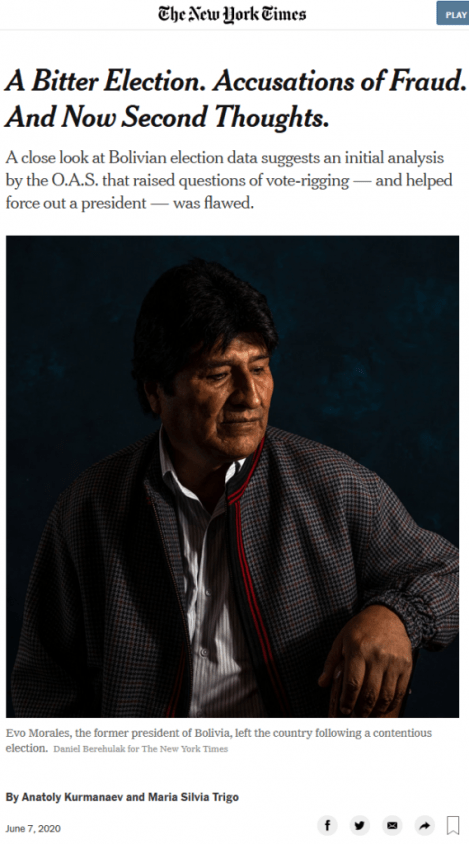
If the New York Times (6/7/20) has had second thoughts about its coverage of the 2019 Bolivian election and subsequent coup, it hasn’t shared them with its readers.
By Camila Escalante with Brian Mier | FAIR | July 8, 2020
The New York Times (6/7/20) declared that an Organization of American States (OAS) report alleging fraud in the 2019 Bolivian presidential elections—which was used as justification for a bloody, authoritarian coup d’etat in November 2019—was fundamentally flawed.
The Times reported the findings of a new study by independent researchers; the Times brags of contributing to it by sharing data it “obtained from Bolivian electoral authorities,” though this data has been publicly available since before the 2019 coup.
The article never uses the word “coup”—it says that President Evo Morales was “push[ed]…from power with military support”—but it does acknowledge that “seven months after Mr. Morales’s downfall, Bolivia has no elected government and no official election date”:
A staunchly right-wing caretaker government, led by Jeanine Añez… has not yet fulfilled its mandate to oversee swift new elections. The new government has persecuted the former president’s supporters, stifled dissent and worked to cement its hold on power.
“Thank God for the New York Times for letting us know,” must think at least some casual readers, who trust the paper’s regular criticism of rising authoritarianism within the US—perhaps adding, “Well, I guess it’s too late to do anything about Bolivia now.”
The fact is, the Times has been patting itself on the back for acknowledging authoritarianism in neofascist regimes that it helped normalize in Latin America for at least 50 years. The only surprise to readers who are aware of this ugly truth is that this time it took so long.
It only took the Times 15 days and the arrest of 20,000 leftists, for example, to counter nine articles supportive of the April 1, 1964, Brazilian military coup (Social Science Journal, 1/97) with a warning (4/16/64) that “Brazil now has an authoritarian military government. ” As was the case with Brazil in 1964, recognizing that Bolivia has now succumbed to authoritarianism may help the New York Times’ image with progressive readers, but it doesn’t do anything for the oppressed citizens of the countries involved.
While the coup was unfolding, and when Northern solidarity for Bolivia’s Movement for Socialism government (MAS in Spanish) might have helped avert disaster, the New York Times was whistling a different tune. The day after Morales’ re-election (10/21/19), it portrayed the paramilitary putschists who were carrying out violent threats against elected officials and their families as victims of repressive police actions perpetrated by the socialist government. “Opponents of Mr. Morales angrily charged ‘fraud, fraud!’” read the post-election article:
Heavily armed police officers were deployed to the streets, where they clashed with demonstrators on Monday night, according to television news reports.
One day after Morales was removed from power, the Times (11/11/19) engaged in victim-blaming, with a news analysis headlined ‘This Will Be Forever’: How the Ambitions of Evo Morales Contributed to His Fall.” The first Indigenous president in Latin American history was not being deposed illegally, after winning a fair election, by groups of armed paramilitary thugs, amid threats of murder and rape to his family members, the Times implied; rather, he was being brought down due to his own character faults as a Machiavellian back-stabber.
I arrived in Bolivia on November 13, 2019, shortly after Jeanine Añez’ unconstitutional swearing in as unelected, interim president, on a cartoonishly oversized Bible. I was there as a reporter for MintPress News and teleSUR, and two of the active sites I reported from were in the most militantly MAS-dense areas: In Sacaba, where the coup regime’s first massacre took place on November 15, and in El Alto, where the Senkata massacre took place on November 19.
The third, and most extensively covered, resistance to the coup was in the heart of the city of La Paz, where daily protests were staged. Beyond these major conflict areas, there were large mobilizations in Norte Potosí, the rural provinces of the department of La Paz, Zona Sud of Cochabamba, Yapacani and San Julian. The vast majorities within all rural areas across the country were also in deep resistance to the coup.
The November coup represented the ousting of a government deeply embedded in the country’s Indigenous campesino and worker movements, by internal colonial-imperialist actors, led in large part by Bolivia’s fascist and neoliberal opposition sectors, most notably Luis Fernando Camacho and Carlos Mesa, who received ample support from the US government and the far-right Bolsonaro administration of Brazil. The Indigenous and social movement bases resisting the coup were deeply distrusting of Bolivian media, which they immediately deemed as having played a key role in it.
Those same groups that were hostile towards major Bolivian news networks and journalists lined up to be heard by myself and those who accompanied me, once they recognized my teleSUR press credentials. One woman attending a cabildo (mass meeting) of the Fejuves (neighborhood organizations) of El Alto detailed how her workplace, Bolivia TV, had been attacked by right-wing mobs as the coup authorities got rid of those deemed sympathizers of the constitutional government, replacing them by force almost immediately.
Indigenous Bolivian communities were at the very forefront of the protests and resistance actions against the coup, namely the blocking of key highways and roads, as in the case of Norte Potosí, the blocking of the YPFB gas plant in Senkata, and 24-hour camps blocking the entry to the Chapare province. La Paz was militarized, making it impossible to get near Plaza Murillo, the site of the Presidential Palace and the Congress. I witnessed daily violent repression by security forces against those who gathered in protest near the perimeter of the Plaza, including unions and groups such as the Bartolina Sisa Confederation, a nationwide organization of Indigenous and campesina women, and the highly organized neighborhood associations of El Alto.
One might think this kind of grassroots, pro-democracy mobilization coordinated by working-class people against an authoritarian takeover would be the type of thing the New York Times would applaud. After all, it ran over 100 articles championing Hong Kong’s protesters in the last six months of 2019 alone.

Anatoly Kurmanaev, author of this New York Times piece (12/5/19) that ignored real-time critiques of the OAS’s complaints about the Bolivian election, was a co-author of the piece (6/7/20) acknowledging that some have “second thoughts” about the OAS attacks on Evo Morales.
As resistance grew on the streets of Bolivia, however, the New York Times only continued the rationalization of the unconstitutional, authoritarian taking of power, using the now-discredited OAS report to do so.
“Election Fraud Aided Evo Morales, International Panel Concludes,” read a December 5 article—one of several the paper ran discrediting the democratic electoral process. Like the others, it failed to challenge dubious claims by the right-wing coalition in charge of the OAS—which received $68 million, or 44% of its budget, from the Trump administration in 2017—that Evo Morales was elected via “lies, manipulation and forgery to ensure his victory.”
A newspaper that prides itself on showing the full picture could have cited the debunking of the OAS study conducted by the Center for Economic and Policy Research (CEPR), an organization with two Nobel Laureate economists on its board, whose co-director Mark Weisbrot has written over 20 op-ed pieces for the New York Times. Even before the coup, CEPR (11/8/19) published an analysis of the Bolivian vote that concluded, “Neither the OAS mission nor any other party has demonstrated that there were widespread or systematic irregularities in the elections of October 20, 2019.”
The fatal flaws in the report the OAS used to subvert a member government, long obvious, are now undeniable even to the New York Times. But the paper still hasn’t acknowledged, let alone apologized for, the credulous reporting that gave it a leading role in bringing down an elected president and the violence that followed.
Blindness on Iraq War “Patriotism”
By Jacob G. Hornberger | FFF |July 10, 2020
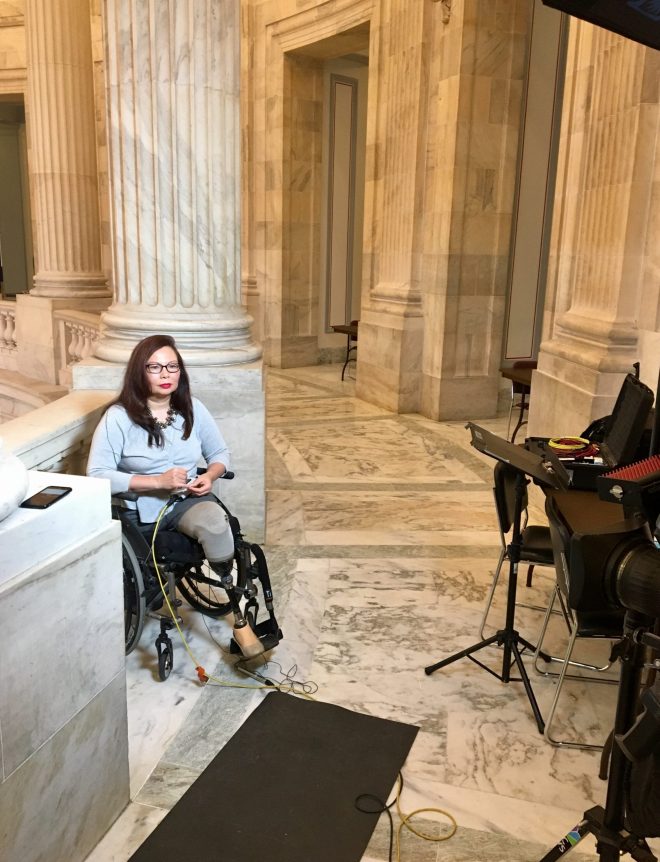
An op-ed in yesterday’s New York Times by Democrat Tammy Ducksworth demonstrates that when it comes to “patriotism,” liberals are as morally blind as conservatives.
Duckworth’s op-ed goes after conservative Fox News commentator Tucker Carlson, who recently questioned Duckworth’s patriotism by suggesting that she didn’t love her country. Naturally, Duckworth, who lost her legs while serving as a soldier in the U.S. military in Iraq, took umbrage over Carlson’s attack and responded quite vociferously in her op-ed.
Much of the controversy involves meaningless exchanges that regularly take place between Democrats and Republicans, liberals and conservatives. That’s mostly because both leftists and rights believe in the welfare-warfare state way of life.
But there is one aspect of Duckworth’s op-ed that deserves addressing because it so clearly shows that when it comes to war, the left-wing is as morally obtuse as the right wing.
Duckworth writes:
Even knowing how my tour in Iraq would turn out, even knowing that I’d lose both my legs in a battlefield just north of Baghdad in late 2004, I would do it all over again. Because if there’s anything that my ancestors’ service taught me, it’s the importance of protecting our founding values, including every American’s right to speak out.
So while I would put on my old uniform and go to war all over again to protect the right of Tucker Carlson and Donald Trump to say offensive things on TV and Twitter….
What Duckworth obviously still hasn’t come to the terms with is that her military service in Iraq had absolute nothing to do with protecting the right of freedom of speech of the American people. That’s because neither the Iraqi regime nor the Iraqi people were threatening the freedom of speech of the American people.
What Duckworth obviously still doesn’t recognize is that it was the U.S. government that was the aggressor in the Iraq War. She was part of a military force — the most powerful in history — that attacked and then occupied an impoverished Third World country that had never attacked and then occupied the United States or even threatened to do so.
Yes, I know, U.S. officials called the operation “Operation Iraqi Freedom.” But that was just propaganda. The operation had nothing to do with bringing freedom to Iraq, any more than it did with protecting the right to Americans to exercise freedom of speech. The purpose of the operation was to replace Iraqi dictator (and former U.S. partner and ally) Saddam Hussein with another U.S. stooge.”
Moreover, let’s not forget that every U.S. soldier who served in Iraq, including Duckworth, was serving in an illegal war. It was illegal given that there was no congressional declaration of war against Iraq, as the Constitution requires. It was also illegal under international law because it violated the principle against wars of aggression established by the Nuremberg War Crimes Tribunal.
Let’s also not forget about the countless Iraqis who were killed in the process. By being deprived of their lives, they were also deprived of their right of freedom of speech.
Leftists and rightists can engage in their meaningless debates on “patriotism” all they want. Just leave out the part that holds that invading and occupying a country that has never attacked the United States protects the right of Americans to exercise freedom of speech because that just isn’t true.
How the Pentagon failed to sell Afghan government’s bunk ‘Bountygate’ story to US intelligence agencies
By Gareth Porter | The Grayzone | July 7, 2020
The New York Times dropped another Russiagate bombshell on June 26 with a sensational front-page story headlined, “Russia Secretly Offered Afghan Militants Bounties to Kill U.S. Troops, Intelligence Says.” A predictable media and political frenzy followed, reviving the anti-Russian hysteria that has excited the Beltway establishment for the past four years.
But a closer look at the reporting by the Times and other mainstream outlets vying to confirm its coverage reveals another scandal not unlike Russiagate itself: the core elements of the story appear to have been fabricated by Afghan government intelligence to derail a potential US troop withdrawal from the country. And they were leaked to the Times and other outlets by US national security state officials who shared an agenda with their Afghan allies.
In the days following the story’s publication, the maneuvers of the Afghan regime and US national security bureaucracy encountered an unexpected political obstacle: US intelligence agencies began offering a series of low confidence assessments in the Afghan government’s self-interested intelligence claims, judging them to be highly suspect at best, and altogether bogus at worst.
In light of this dramatic development, the Times’ initial report appears to have been the product of a sensationalistic disinformation dump aimed at prolonging the failed Afghan war in the face of President Donald Trump’s plans to withdraw US troops from it.
The Times quietly reveals its own sources’ falsehoods
The Times not only broke the Bountygate story but commissioned squads of reporters comprising nine different correspondents to write eight articles hyping the supposed scandal in the course of eight days. Its coverage displayed the paper’s usual habit of regurgitating bits of dubious information furnished to its correspondents by faceless national security sources. In the days after the Times’ dramatic publication, its correspondent squads were forced to revise the story line to correct an account that ultimately turned out to be false on practically every important point.
The Bountygate saga began on June 26, with a Times report declaring, “The United States concluded months ago” that the Russians “had covertly offered rewards for successful attacks last year.” The report suggested that US intelligence analysts had reached a firm conclusion on Russian bounties as early as January. A follow-up Times report portrayed the shocking discovery of the lurid Russian plot thanks to the recovery of a large amount of U.S. cash from a “raid on a Taliban outpost.” That article sourced its claim to the interrogations of “captured Afghan militants and criminals.”
However, subsequent reporting revealed that the “US intelligence reports” about a Russian plot to distribute bounties through Afghan middlemen were not generated by US intelligence at all.
The Times reported first on June 28, then again on June 30, that a large amount of cash found at a “Taliban outpost” or a “Taliban site” had led U.S. intelligence to suspect the Russian plot. But the Times had to walk that claim back, revealing on July 1 that the raid that turned up $500,000 in cash had in fact targeted the Kabul home of Rahmatullah Azizi, an Afghan businessmen said to have been involved in both drug trafficking and contracting for part of the billions of dollars the United States spent on construction projects.
The Times also disclosed that the information provided by “captured militants and criminals” under “interrogation” had been the main source of suspicion of a Russian bounty scheme in Afghanistan. But those “militants and criminals” turned out to be thirteen relatives and business associates of the businessman whose house was raided.
The Times reported that those detainees were arrested and interrogated following the January 2020 raids based on suspicions by Afghan intelligence that they belonged to a “ring of middlemen” operating between the Russian GRU and so-called “Taliban-linked militants,” as Afghan sources made clear.
Furthermore, contrary to the initial report by the Times, those raids had actually been carried out exclusively by the Afghan intelligence service known as the National Directorate of Security (NDS). The Times disclosed this on July 1. Indeed, the interrogation of those detained in the raids was carried out by the NDS, which explains why the Times reporting referred repeatedly to “interrogations” without ever explaining who actually did the questioning.
Given the notorious record of the NDS, it must be assumed that its interrogators used torture or at least the threat of it to obtain accounts from the detainees that would support the Afghan government’s narrative. Both the Toronto Globe and Mail and the United Nations Assistance Mission in Afghanistan (UNAMA) have documented as recently as 2019 the frequent use of torture by the NDS to obtain information from detainees. The primary objective of the NDS was to establish an air of plausibility around the claim that the fugitive businessman Azizi was the main “middleman” for a purported GRU scheme to offer bounties for killing Americans.
NDS clearly fashioned its story to suit the sensibilities of the U.S. national security state. The narrative echoed previous intelligence reports about Russian bounties in Afghanistan that circulated in early 2019, and which were even discussed at NSC meetings. Nothing was done about these reports, however, because nothing had been confirmed.
The idea that hardcore Taliban fighters needed or wanted foreign money to kill American invaders could have been dismissed on its face. So Afghan officials spun out claims that Russian bounties were paid to incentivize violence by “militants and criminals” supposedly “linked” to the Taliban.
These elements zeroed in on the April 2019 IED attack on a vehicle near the U.S. military base at Bagram in Parwan province that killed three US Marines, insisting that the Taliban had paid local criminal networks in the region to carry out attacks.
As former Parwan police chief Gen. Zaman Mamozai told the Times, Taliban commanders were based in only two of the province’s ten districts, forcing them to depend on a wider network of non-Taliban killers-for-hire to carry out attacks elsewhere in the province. These areas included the region around Bagram, according to the Afghan government’s argument.
But Dr. Thomas H. Johnson of the Naval Postgraduate School, a leading expert on insurgency and counter-insurgency in Afghanistan who has been researching war in the country for three decades, dismissed the idea that the Taliban would need a criminal network to operate effectively in Parwan.
“The Taliban are all over Parwan,” Johnson stated in an interview with The Grayzone, observing that its fighters had repeatedly carried out attacks on or near the Bagram base throughout the war.
With withdrawal looming, the national security state plays its Bountygate card
Senior U.S. national security officials had clear ulterior motives for embracing the dubious NDS narrative. More than anything, those officials were determined to scuttle Trump’s push for a complete withdrawal from Afghanistan. For Pentagon brass and civilian leadership, the fear of withdrawal became more acute in early 2020 as Trump began to demand an even more rapid timetable for a complete pullout than the 12-14 months being negotiated with the Taliban.
It was little surprise then that this element leapt at the opportunity to exploit the self-interested claims by the Afghan NDS to serve its own agenda, especially as the November election loomed. The Times even cited one “senior [US] official” musing that “the evidence about Russia could have threatened that [Afghanistan] deal, because it suggested that after eighteen year of war, Mr. Trump was letting Russia chase the last American troops out of the country.”
In fact, the intelligence reporting from the CIA Station in Kabul on the NDS Russia bounty claims was included in the Presidential Daily Brief (PDB) on or about February 27 — just as the negotiation of the U.S. peace agreement with the Taliban was about to be signed. That was too late to prevent the signing but timed well enough to ratchet up pressure on Trump to back away from his threat to pull all US troops out of Afghanistan.
Trump may have been briefed orally on the issue at the time, but even if he had not been, the presence of a summary description of the intelligence in the PDB could obviously have been used to embarrass him on Afghanistan by leaking it to the media.
According to Ray McGovern, a former CIA official who was responsible for preparing the PDB for Presidents Ronald Reagan and George H.W. Bush, the insertion of raw, unconfirmed intelligence from a self-interested Afghan intelligence agency into the PDB was a departure from normal practice.
Unless it was a two or three-sentence summary of a current intelligence report, McGovern explained, an item in the PDB normally involved only important intelligence that had been confirmed. Furthermore, according to McGovern, PDB items are normally shorter versions of items prepared the same day as part of the CIA’s “World Intelligence Review” or “WIRe.”
Information about the purported Russian bounty scheme, however, was not part of the WIRe until May 4, well over two months later, according to the Times. That discrepancy added weight to the suggestion that the CIA had political motivations for planting the raw NDS reporting in the PDB before it could be evaluated.
This June, Trump’s National Security Council (NSC) convened a meeting to discuss the intelligence report, officials told the Times. NSC members drew up a range of options in response to the alleged Russian plot, from a diplomatic protest to more forceful responses. Any public indication that US troops in Afghanistan had been targeted by Russian spies would have inevitably threatened Trump’s plan for withdrawal from Afghanistan.
At some point in the weeks that followed, the CIA, Defense Intelligence Agency and National Security Agency each undertook evaluations of the Afghan intelligence claims. Once the Times began publishing stories about the issue, Director of National Intelligence John Ratcliffe directed the National Intelligence Council, which is responsible for managing all common intelligence community assessments, to write a memorandum summarizing the intelligence organizations’ conclusions.
The memorandum revealed that the intelligence agencies were not impressed with what they’d seen. The CIA and National Counter-Terrorism Center (NCTC) each gave the NDS intelligence an assessment of “moderate confidence,” according to memorandum.
An official guide to intelligence community terminology used by policymakers to determine how much they should rely on assessments indicates that “moderate confidence” generally indicates that “the information being used in the analysis may be interpreted in various ways….” It was hardly a ringing endorsement of the NDS intelligence when the CIA and NCTC arrived at this finding.
The assessment by the National Security Agency was even more important, given that it had obtained intercepts of electronic data on financial transfers “from a bank account controlled by Russia’s military intelligence agency to a Taliban-linked account,” according to the Times’ sources. But the NSA evidently had no idea what the transfers related to, and essentially disavowed the information from the Afghan intelligence agency.
The NIC memorandum reported that NSA gave the information from Afghan intelligence “low confidence” — the lowest of the three possible levels of confidence used in the intelligence community. According to the official guide to intelligence community terminology, that meant that “information used in the analysis is scant, questionable, fragmented, or that solid analytical conclusions cannot be inferred from the information.”
Other intelligence agencies reportedly assigned “low confidence” to the information as well, according to the memorandum. Even the Defense Intelligence Agency, known for its tendency to issue alarmist warnings about activities by US adversaries, found no evidence in the material linking the Kremlin to any bounty offers.
Less than two weeks after the Times rolled out its supposed bombshell on Russian bounties, relying entirely on national security officials pushing their own bureaucratic interests on Afghanistan, the story was effectively discredited by the intelligence community itself. In a healthy political climate, this would have produced a major setback for the elements determined to keep US troops entrenched in Afghanistan.
But the political hysteria generated by the Times and the hyper-partisan elements triggered by the appearance of another sordid Trump-Putin connection easily overwhelmed the countervailing facts. It was all the Pentagon and its bureaucratic allies needed to push back on plans for a speedy withdrawal from a long and costly war.
Gareth Porter is an independent investigative journalist who has covered national security policy since 2005 and was the recipient of Gellhorn Prize for Journalism in 2012. His most recent book is The CIA Insider’s Guide to the Iran Crisis co-authored with John Kiriakou, just published in February.
Russia-Baiting Is the Only Game in Town
Washington again becomes hysterical
By Philip Giraldi • Unz Review • July 7, 2020
There is particular danger at the moment that powerful political alignments in the United States are pushing strongly to exacerbate the developing crisis with Russia. The New York Times, which broke the story that the Kremlin had been paying the Afghan Taliban bounties to kill American soldiers, has been particularly assiduous in promoting the tale of perfidious Moscow. Initial Times coverage, which claimed that the activity had been confirmed by both intelligence sources and money tracking, was supplemented by delusional nonsense from former Obama National Security Advisor Susan Rice, who asks “Why does Trump put Russia first?” before calling for a “swift and significant U.S. response.” Rice, who is being mentioned as a possible Biden choice for Vice President, certainly knows about swift and significant as she was one of the architects of the destruction of Libya and the escalation of U.S. military and intelligence operations directed against a non-threatening Syria.
The Times is also titillating with the tale of a low level drug smuggling Pashto businessman who seemed to have a lot of cash in dollars lying around, ignoring the fact that Afghanistan is awash with dollars and has been for years. Many of the dollars come from drug deals, as Afghanistan is now the world’s number one producer of opium and its byproducts.
The cash must be Russian sourced, per the NYT, because a couple of low level Taliban types, who were likely tortured by the Afghan police, have said that it is so. The Times also cites anonymous sources which allege that there were money transfers from an account managed by the Kremlin’s GRU military intelligence to an account opened by the Taliban. Note the “alleged” and consider for a minute that it would be stupid for any intelligence agency to make bank-to-bank transfers, which could be identified and tracked by the clever lads at the U.S. Treasury and NSA. Also try to recall how not so long ago we heard fabricated tales about threatening WMDs to justify war. Perhaps the story would be more convincing if a chain of custody could be established that included checks drawn on the Moscow-Narodny Bank and there just might be a crafty neocon hidden somewhere in the U.S. intelligence community who is right now faking up that sort of evidence.
Other reliably Democratic Party leaning news outlets, to include CNN, MSNBC and The Washington Post all jumped on the bounty story, adding details from their presumably inexhaustible supply of anonymous sources. As Scott Horton observed the media was reporting a “fact” that there was a rumor.
Inevitably the Democratic Party leadership abandoned its Ghanaian kente cloth scarves, got up off their knees, and hopped immediately on to their favorite horse, which is to claim loudly and in unison that when in doubt Russia did it. Joe Biden in particular is “disgusted” by a “betrayal” of American troops due to Trump’s insistence on maintaining “an embarrassing campaign of deferring and debasing himself before Putin.”
The Dems were joined in their outrage by some Republican lawmakers who were equally incensed but are advocating delaying punishing Russia until all the facts are known. Meanwhile, the “circumstantial details” are being invented to make the original tale more credible, including crediting the Afghan operation to a secret Russian GRU Army intelligence unit that allegedly was also behind the poisoning of Sergei and Yulia Skripal in Salisbury England in 2018.
Reportedly the Pentagon is looking into the circumstances around the deaths of three American soldiers by roadside bomb on April 8, 2019 to determine a possible connection to the NYT report. There are also concerns relating to several deaths in training where Afghan Army recruits turned on their instructors. As the Taliban would hardly need an incentive to kill Americans and as only seventeen U.S. soldiers died in Afghanistan in 2019 as a result of hostile action, the year that the intelligence allegedly relates to, one might well describe any joint Taliban-Russian initiative as a bit of a failure since nearly all of those deaths have been attributed to kinetic activity initiated by U.S. forces.
The actual game that is in play is, of course, all about Donald Trump and the November election. It is being claimed that the president was briefed on the intelligence but did nothing. Trump denied being verbally briefed due to the fact that the information had not been verified. For once America’s Chief Executive spoke the truth, confirmed by the “intelligence community,” but that did not stop the media from implying that the disconnect had been caused by Trump himself. He reportedly does not read the Presidential Daily Brief (PDB), where such a speculative piece might indeed appear on a back page, and is uninterested in intelligence assessments that contradict what he chooses to believe. The Democrats are suggesting that Trump is too stupid and even too disinterested to be president of the United States so they are seeking to replace him with a corrupt 78-year-old man who may be suffering from dementia.
The Democratic Party cannot let Russia go because they see it as their key to future success and also as an explanation for their dramatic failure in 2016 which in no way holds them responsible for their ineptness. One does not expect the House Intelligence Committee, currently headed by the wily Adam Schiff, to actually know anything about intelligence and how it is collected and analyzed, but the politicization of the product is certainly something that Schiff and his colleagues know full well how to manipulate. One only has to recall the Russiagate Mueller Commission investigation and Schiff’s later role in cooking the witnesses that were produced in the subsequent Trump impeachment hearings.
Schiff predictably opened up on Trump in the wake of the NYT report, saying “I find it inexplicable in light of these very public allegations that the president hasn’t come before the country and assured the American people that he will get to the bottom of whether Russia is putting bounties on American troops and that he will do everything in his power to make sure that we protect American troops.”
Schiff and company should know, but clearly do not, that at the ground floor level there is a lot of lying, cheating and stealing around intelligence collection. Most foreign agents do it for the money and quickly learn that embroidering the information that is being provided to their case officer might ultimately produce more cash. Every day the U.S. intelligence community produces thousands of intelligence reports from those presumed “sources with access,” which then have to be assessed by analysts. Much of the information reported is either completely false or cleverly fabricated to mix actual verified intelligence with speculation and out and out lies to make the package more attractive. The tale of the Russian payment of bribes to the Taliban for killing Americans is precisely the kind of information that stinks to high heaven because it doesn’t even make any political or tactical sense, except to Nancy Pelosi, Chuck Schumer, Adam Schiff and the New York Times. For what it’s worth, a number of former genuine intelligence officers including Paul Pillar, John Kiriakou, Scott Ritter, and Ray McGovern have looked at the evidence so far presented and have walked away unimpressed. The National Security Agency (NSA) has also declined to confirm the story, meaning that there is no electronic trail to validate it.
Finally, there is more than a bit of the old hypocrisy at work in the damnation of the Russians even if they have actually been involved in an improbable operation with the Taliban. One recalls that in the 1970s and 1980s the United States supported the mujahideen rebels fighting against the Soviet presence in Afghanistan. The assistance consisted of weapons, training, political support and intelligence used to locate, target and kill Soviet soldiers. Stinger missiles were provided to bring down helicopters carrying the Russian troops. The support was pretty much provided openly and was even boasted about, unlike what is currently being alleged about the Russian assistance. The Soviets were fighting to maintain a secular regime that was closely allied to Moscow while the mujahideen later morphed into al-Qaeda and the Islamist militant Taliban subsequently took over the country, meaning that the U.S. effort was delusional from the start.
So, what is a leaked almost certainly faux story about the Russian bounties on American soldiers intended to accomplish? It is probably intended to keep a “defensive” U.S. presence in Afghanistan, much desired by the neocons, a majority in Congress and the Military Industrial Complex (MIC), and it will further be played and replayed to emphasize the demonstrated incompetence of Donald Trump. The end result could be to secure the election of a pliable Establishment flunky Joe Biden as president of the United States. How that will turn out is unpredictable, but America’s experience of its presidents since 9/11 has not been very encouraging.
Philip M. Giraldi, Ph.D., is Executive Director of the Council for the National Interest, a 501(c)3 tax deductible educational foundation (Federal ID Number #52-1739023) that seeks a more interests-based U.S. foreign policy in the Middle East. Website is https://councilforthenationalinterest.org, address is P.O. Box 2157, Purcellville VA 20134 and its email is inform@cnionline.org.
US ‘Made-Up’ Claims of Russia-Taliban Collusion Aim to Derail Peace Process, Group Says
Sputnik – 06.07.2020
Late last month, The New York Times, citing anonymous US intelligence sources, published an article claiming that Russian military intelligence offered bounties to Taliban-linked militants for attacks on American soldiers in Afghanistan and that US President Donald Trump had been informed about this.
The Taliban believes that claims of its collusion with Russia were made up by intelligence services in Kabul and are aimed at derailing the Afghan peace process, Suhail Shaheen, an official representative of the movement’s political bureau in Qatar, said on Monday.
“We continue our own investigation based on the information in the media. these accusations are false, they are groundless and were launched by an intelligence agency in Kabul to derail and postpone the peace process as well as the formation of a new government,” Shaheen said.
The New York Times reported in June that some units of Russian military intelligence allegedly incentivised the Taliban to attack international coalition troops in Afghanistan.
Russian presidential Spokesman Dmitry Peskov and the Foreign Ministry said the reports were a lie. The White House and the Pentagon said that there did not appear to be any proof for the claims made in the article .
Featured Video
“Historic Russia”: The Land Putin Will Not Give Back
or go to
Aletho News Archives – Video-Images
Book Review
Why the War on Conspiracy Theories Is Bad Public Policy
By Kevin Barrett • Unz Review • February 1, 2019
 A Review of Conspiracy Theories and Other Dangerous Ideas by Cass Sunstein (based on an earlier paper co-authored with Adrian Vermeule); In Defense of Troublemakers: The Power of Dissent in Life and Business by Charlan Nemeth; and Conspiracy Theories and the People Who Believe Them, edited by Joseph E. Uscinski
On January 25 2018 YouTube unleashed the latest salvo in the war on conspiracy theories, saying “we’ll begin reducing recommendations of borderline content and content that could misinform users in harmful ways—such as videos promoting a phony miracle cure for a serious illness, claiming the earth is flat, or making blatantly false claims about historic events like 9/11.”
At first glance that sounds reasonable. Nobody wants YouTube or anyone else to recommend bad information. And almost everyone agrees that phony miracle cures, flat earthism, and blatantly false claims about 9/11 and other historical events are undesirable.
But if we stop and seriously consider those words, we notice a couple of problems. First, the word “recommend” is not just misleading but mendacious. YouTube obviously doesn’t really recommend anything. When it says it does, it is lying. … continue
Blog Roll
 Aletho News
- BRITAIN’S WARNING: PREPARE FOR WAR
- “Historic Russia”: The Land Putin Will Not Give Back
- How the Cambridge Analytica scandal still haunts Mark Zuckerberg
- The Ongoing Cancellation Campaign Against a Dissenting Academic in Norway
- Yemen and ‘the Houthis’: Challenging Sami Hamdi’s Narrative
- No, Christians did not invent Zionism
- AIPAC-led lobbying network opens branches in Cypriot, Greek parliaments
- Araghchi blasts ‘parasitic’ alliance as US taxpayers pay for Israel’s war on Iran
- Easy fix for Europe’s chaos? Stop fueling war against Russia
- Putin’s key remarks on peace talks and Europe’s ‘schizophrenia’
- If Americans Knew
- An error has occurred; the feed is probably down. Try again later.
- No Tricks Zone
- Two New Studies Find Thwaites Glacier Melt Cannot Be Driven By Human Activity Or A Warming Ocean
- E-Cars Reduce CO2 Emissions By Only 41% Compared To Internal Combustion Engine Vehicles
- Predictions Made By Renowned Climate Professor Over Past Decades Have Been Proven To Be Poor
- New Study Suggests Large Regions Of The Pacific Ocean Have Been Cooling For The Last 80 Years
- Germany’s Green Energy Debacle: High Energy Costs Force Kahla Porzellan to Close After 182 Years!
- New Study: 50 Years Of The Most Aggressive ‘Net Zero’ Policies Can Only Affect The Global Climate By 0.03°C
- US September “Heat” Was No Record…Many Records Set Decades Ago
- Latest European Green Energy Debacle; Portugal’s Largest Flagship Solar Park Insolvent!
- Green Energy Debacle: German Expert Professor Fritz Vahrenholt Warns Of Severe Economic And Social Consequences
- Two More Paleo Reconstructions Affirm Meters-Higher Sea Levels Across Ireland, Brazil 7000-6000 Years Ago


