AIPAC-led lobbying network opens branches in Cypriot, Greek parliaments
The Cradle | October 23, 2026
Cyprus hosted the leadership of the pro-Israel US lobbying group, the American Israel Public Affairs Committee (AIPAC), in Nicosia on 21 October, pledging to deepen the island’s ties with Israel and the US.
Outgoing AIPAC president Bernard Kaminetsky and his successor, Yehuda Neuberger, led the delegation to the presidential palace for talks with Cypriot President Nikos Christodoulides.
The talks focused on accelerating the 3+1 Mechanism, a partnership binding Cyprus, Greece, Israel, and the US to coordinate on energy, security, and infrastructure.
AIPAC, in return, pledged to keep championing Cypriot interests in Washington.
Meanwhile, pro-Israel lobbies have been embedding themselves inside the Cypriot and Greek parliaments, with Israel Allies Foundation (IAF) launching caucuses in both legislatures to bring lawmakers into line with Israel’s regional agenda.
IAF president Josh Reinstein unveiled the Cypriot caucus on 14 October after meeting Christodoulides, explicitly pitting the initiative against Ankara by branding Turkiye a “common enemy” of Israel and Cyprus.
Cyprus’s main left-wing opposition party condemned the MPs for turning parliament into a lobby for Israel amid its ongoing genocide in Gaza, while in Greece, one left-wing party warned that it would turn parliament into a tool for whitewashing war crimes.
Israel’s deepening ties with Greece and Cyprus have developed over the past decade into a strategic alignment that combines energy cooperation, military coordination, and shared opposition to Turkish maritime claims in the Eastern Mediterranean.
The US has encouraged the relationship through the 3+1 format, which brings Washington into the Israel–Greece–Cyprus trilateral partnership and frames it as a vehicle for regional stability, energy security, and cooperation among “like-minded” partners.
Through the arrangement, Israel gains a gateway to European markets through Greece and Cyprus, along with diplomatic backing in disputes over offshore gas fields.
Athens and Nicosia, in turn, receive Israeli military technology and a partner against Turkiye’s assertive stance on maritime zones, airspace, and the divided island of Cyprus.
Washington, meanwhile, sees the axis as part of a broader effort to anchor energy routes and security cooperation in the Eastern Mediterranean while reducing reliance on rival powers, even as the US courts Ankara with offers of F-35 sales and sanctions relief.
Israeli hostility toward Ankara, and its efforts to curb Turkish power, stem from fear that Washington’s growing dependence on Turkiye will erode Israel’s regional dominance.
Despite the friction, Turkiye continued to serve as a conduit for Azerbaijani crude to Israel through the Baku–Tbilisi–Ceyhan Pipeline (BTC) and Ceyhan Port, even after cutting direct trade in May 2024 and throughout Israel’s genocide of the Palestinians in Gaza.
Sorry, the comment form is closed at this time.
Featured Video
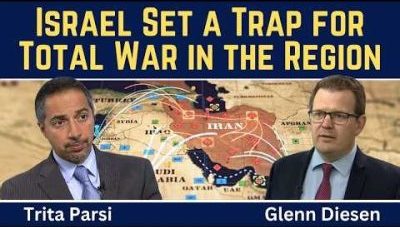
Trita Parsi: Israel Set a Trap for Total War in the Region
or go to
Aletho News Archives – Video-Images
Book Review
Why the War on Conspiracy Theories Is Bad Public Policy
By Kevin Barrett • Unz Review • February 1, 2019
 A Review of Conspiracy Theories and Other Dangerous Ideas by Cass Sunstein (based on an earlier paper co-authored with Adrian Vermeule); In Defense of Troublemakers: The Power of Dissent in Life and Business by Charlan Nemeth; and Conspiracy Theories and the People Who Believe Them, edited by Joseph E. Uscinski
On January 25 2018 YouTube unleashed the latest salvo in the war on conspiracy theories, saying “we’ll begin reducing recommendations of borderline content and content that could misinform users in harmful ways—such as videos promoting a phony miracle cure for a serious illness, claiming the earth is flat, or making blatantly false claims about historic events like 9/11.”
At first glance that sounds reasonable. Nobody wants YouTube or anyone else to recommend bad information. And almost everyone agrees that phony miracle cures, flat earthism, and blatantly false claims about 9/11 and other historical events are undesirable.
But if we stop and seriously consider those words, we notice a couple of problems. First, the word “recommend” is not just misleading but mendacious. YouTube obviously doesn’t really recommend anything. When it says it does, it is lying. … continue
Blog Roll
 Aletho News
- Araghchi blasts ‘parasitic’ alliance as US taxpayers pay for Israel’s war on Iran
- Easy fix for Europe’s chaos? Stop fueling war against Russia
- Putin’s key remarks on peace talks and Europe’s ‘schizophrenia’
- Trita Parsi: Israel Set a Trap for Total War in the Region
- Trump’s Iran war is on an Israeli leash
- Saudi oil boss issues global supply warning
- Riyadh Says Its Oil System Is Intact. The Numbers Say Otherwise.
- Trump and Netanyahu Want to “Finish the Job” on Iran
- US ‘one-sided dictation’ not Iran’s beliefs makes rational talks impossible: Baghaei
- Iran’s Next Strike May Not Explode. It Could Shut You Down /Col Doug Macgregor
- If Americans Knew
- Damning report shows the media must confront its failures on Gaza
- BBC senior broadcaster speaks out on Gaza coverage
- Netanyahu vows vast West Bank invasion in response to 20-minute skirmish that left 2 Israeli soldiers and 2 Palestinian fighters dead
- Tied up and tortured: Israel using US-made electroshock weapons on Palestinian detainees
- The outsourced risk: how newsrooms rely on Gaza’s freelancers without protecting them
- Gaza bakeries forced to shut as Israel blocks flour shipments
- Gaza’s breast cancer patients face a deadly wait for treatment amid Israel’s genocide
- DAILY UPDATE: Latest essential news on Palestine, Israel, & region
- The Israel Lobby’s Changing Fortunes
- AIPAC has become such a political liability that it’s shifting to a more “nimble” approach to buying politicians
- No Tricks Zone
- E-Cars Reduce CO2 Emissions By Only 41% Compared To Internal Combustion Engine Vehicles
- Predictions Made By Renowned Climate Professor Over Past Decades Have Been Proven To Be Poor
- New Study Suggests Large Regions Of The Pacific Ocean Have Been Cooling For The Last 80 Years
- Germany’s Green Energy Debacle: High Energy Costs Force Kahla Porzellan to Close After 182 Years!
- New Study: 50 Years Of The Most Aggressive ‘Net Zero’ Policies Can Only Affect The Global Climate By 0.03°C
- US September “Heat” Was No Record…Many Records Set Decades Ago
- Latest European Green Energy Debacle; Portugal’s Largest Flagship Solar Park Insolvent!
- Green Energy Debacle: German Expert Professor Fritz Vahrenholt Warns Of Severe Economic And Social Consequences
- Two More Paleo Reconstructions Affirm Meters-Higher Sea Levels Across Ireland, Brazil 7000-6000 Years Ago
- New Study: Earth And Venus Surface Warmth Largely Explained By Convection And Lapse Rate, Not CO2 Or Radiation

