Mainstream Assumptions: The CIA, Presidential Elections, and the Russian Connection
By Binoy Kampmark | Dissident Voice | December 15, 2016
Intent and causation are important features in the course of history. The former envisages motive and hope, irrespective of outcome; the latter envisages consequence. Often, these get muddled in the jumbled process of reasoning. An intervention in the affairs of another state goes awry; a historical incident goes belly up with ferocious consequences. Suddenly, in the aftermath, we are wise, we knew better, and we can categorise plans as venal and characters as wicked.
In a world of Clinton-Trump machinations, distinctions about intent and causation have fallen into a soup of conjecture. The stakes to win in November were so high for either candidate, mendacity and assumptions were bound to take centre stage.
From fake news to false modesty, from traditional deception to the exotica of dissimulation, it was a contest that furnished the US political landscape with greater punch and interest than anything offered since the infant days of the Republic.
Central to one allegation of the 2016 presidential election was that Russian hacking efforts, supposedly directed by Moscow’s intelligence managers, had a direct effect on the outcome of the election. WikiLeaks had been roped into the cause, and was duly accused of being a Russian front, or an infatuate of Trump.
Trump has done his bit, as is his wont, to sink these propositions. To begin with, he told Time that he did not believe them as credible. “I don’t believe [Russia] interfered.” Nor did he find CIA assessments in general that credible. He specifically pointed out CIA incompetence, notably in its assessment of Iraq’s famed, and subsequently non-existent stockpile of weapons prior to the invasion of 2003. “These are the same people that said Saddam Hussein had weapons of mass destruction.”
Behind him is Trump’s national security adviser Lt. Gen. Michael T. Flynn. The CIA, according to Flynn in an interview with the New York Times in October 2015, “lost sight of who they actually work for. They work for the American people. They don’t work for the president of the United States.” In its declining utility, the organisation had become “a very political organisation”.
The intelligence cognoscenti were quick to wonder whether his presidency would be more than troubling for the 16 spying agencies he will have to cope with. “Given his proclivity for revenge combined with his notorious thin skin,” claimed Paul Pillar, former deputy director of the CIA’s Counterterrorism centre, “this threatens to result in a lasting relationship of distrust and ill will between the president and the intelligence community.”
This, at best, is a claim of the disgruntled, but it is one that has attracted its adherents. Linked to the causation argument is the notion that Russia’s Vladimir Putin envisaged the electoral outcome, backing a more sympathetic horse in a far from sympathetic race.
The impact of these claims has been furthered by unquestioning media outlets now termed, euphemistically, the mainstream. These mainstreamers have been keeping a rather pedestrian line on matters, taking a few choice notes from various official sources to build an empire of speculation.
The Washington Post delved out one example last week, engaging in what Glenn Greenwald regarded as “classic American journalism of the worst sort”. This entailed claims from “unverified assertions of anonymous officials, who in turn are disseminating their own claims about what the CIA purportedly believes, all based on evidence that remains completely secret.”
With one step, possibly two removed from the official CIA report, we were left with the view that the agency had “concluded in a secret assessment that Russia intervened in the 2016 election to help Donald Trump win the presidency, rather than just to undermine confidence in the US electoral system.”
This aptly perverse manoeuvre suggests that the very outlets keen to condemn fake news sites themselves become the incubators, and unquestioning disseminators, of unreliable material.
Within the intelligence community, the material on hacking – in so far as it pertains to goals – has also been questioned. Not all have jumped onto the CIA assisted narrative that the Kremlin was dabbling in its own gambling variant of regime change.
According to the Office of the Director of National intelligence (ODNI), more is needed. Yes, there may well have been hacking, but the issue of a Moscow-directed drive to benefit Trump over Clinton in the presidential race would require more heft.
According to Reuters, which similarly adopted the Washington recipe in interviewing three unnamed American officials on Monday, albeit more sceptical ones, “ODNI is not arguing that the agency (CIA) is wrong, only that they can’t prove intent. Of course they can’t, absent agents in on the decision-making in Moscow.” At the very least, such views add a sliver of needed context.
The CIA conclusion had a broader context to it, suggesting a pattern of hacking and penetration that was far from specific to Clinton. In other words, it was, again in the words of one of the three officials, a “judgment based on the fact that Russian entities hacked both Democrats and Republicans and only the Democratic information was leaked.” It was, to that end, “a thin reed upon which to base an analytical judgment.”
When all these factors are considered, Trump’s dismissiveness of the intelligence community, while seemingly flippant, makes that much more sense. Predictably, it has been done by the wave of the hand, a contemptuous move that we will come to see as normal in due course. The intelligence bunglers will be having to do much more to earn their keep.
Binoy Kampmark was a Commonwealth Scholar at Selwyn College, Cambridge. He lectures at RMIT University, Melbourne and can be reached at: bkampmark@gmail.com.
Media reporting on hacked DNC emails acted as ‘arms of Russian intelligence’ – White House
RT | December 15, 2016
White House press secretary Josh Earnest has accused media outlets which reported on the contents of the hacked DNC emails as being “arms of Russian intelligence,” once again accusing Moscow of being behind the cyberattack.
The statement was made during the White House press briefing on Wednesday, in response to New York Times reporter Gardiner Harris, who, siding with the official White House rhetoric, stated that “from the first days, investigators knew it had Russian ties.”
Harris then asked why it took until October for Washington to announce it believed the hack was carried out by Russia, when the cyberattack was confirmed in April.
“That delay covered most of the presidential election, causing months of coverage of the leaks that were not properly informed by a formal government statement that this was an act of foreign espionage,” he said.
“Wasn’t that a mistake to take so long?” Harris asked.
Earnest had a lengthy response to that question, stating that the US intelligence community wanted to have “high confidence” that the Russians were behind the hack before announcing it, and said it wanted to be “as specific as possible in putting forward that assessment.”
The press secretary went on to agree with a Wednesday New York Times article which stated that “every major publication, including the Times, published multiple stories citing the DNC and Podesta emails posted by WikiLeaks, becoming a de facto instrument of Russian intelligence.”
Continuing his response to Harris, Earnest said “… There’s no denying that those materials [emails] were stolen property… there was no denial on the part of the US government that somehow the DNC had not been hacked, so even as news organizations were reporting on this information, they were reporting on information that they knew had been stolen and leaked…”
“… Those are editorial decisions that are made by independent news organizations. But even the excellent report that was included in your newspaper today about this incident makes clear that news organizations in the united states essentially became the arms of Russian intelligence,” Earnest said.
However, author and journalist Chris Hedges, who worked for the New York Times for 15 years, told RT that the White House’s approach is “clearly a form of red-baiting.”
“It is a form of intimidation. It is a way to essentially paint elements of the press, including the mainstream press, as essentially complicit in treasonous activity. It’s quite disturbing,” he said.
Hedges went on to state that publishing such information is simply “part of the game.”
“The question is not whether the information was leaked, the question is whether for instance the Podesta emails are authentic or not. And if they’re authentic, you publish them. That’s how it works…” he said.
Hedges stressed that there is “no conclusive evidence that Russia was behind the leaks, but even if they were, the US government does this all the time…
“… I was given all sorts of information by the US government to tarnish and in some cases totally discredit figures or regimes that they wanted discredited.”
Despite consistent claims by the US government that Russia was behind the hack, not everyone is convinced that is the case. Earlier this week, former US Ambassador to the UN John Bolton suggested the hack could have been a false flag operation by the Obama administration.
Russia itself has dismissed the hacking allegations, as well as claims that it aimed to influence the US election, as “nonsense.”
“Does anyone seriously think that Russia can somehow influence the choice of the American people?” Putin asked in October. “Is America some sort of a banana republic?”
In November, Russian Foreign Minister Sergey Lavrov told Italian newspaper Corriere della Sera that the “whole story is from the field of myth-making.”
New York Times undermines its own case Russia was behind Clinton leaks
By Alexander Mercouris | The Duran | December 15, 2016
The New York Times has published a lengthy article setting out what it says is the “evidence” that Russia was behind the leaks of the DNC and Podesta leaks by Wikileaks.
The article reveals nothing that is really new, but a number of points did immediately strike me:
(1) The article goes to some lengths to claim that the way the Russians go about carrying out cyber-attacks is far more stealthy than say the Chinese. Thus we read comments like this
“The Russians had not gone away, of course. “They were just a lot more stealthy,” said Kevin Mandia, a former Air Force intelligence officer who spent most of his days fighting off Russian cyberattacks before founding Mandiant, a cybersecurity firm that is now a division of FireEye — and the company the Clinton campaign brought in to secure its own systems.”
and this
“The Russians grew stealthier and stealthier, tricking government computers into sending out data while disguising the electronic “command and control” messages that set off alarms for anyone looking for malicious actions. The State Department was so crippled that it repeatedly closed its systems to throw out the intruders. At one point, officials traveling to Vienna with Secretary of State John Kerry for the Iran nuclear negotiations had to set up commercial Gmail accounts just to communicate with one another and with reporters traveling with them.”
We also learn that the Russians attempted to conceal their responsibility for the leaks by creating the persona of a supposed Romanian hacker called “Guccifer 2.0” who supposedly claimed responsibility for the hacks and warned he would publish the information he got from them.
It is very difficult to understand why in that case these so very “stealthy” and presumably well-resourced Russians failed to make sure that “Guccifer 2.0” was able to speak fluent Romanian. I say this because it is clear that whoever has created the persona of “Guccifer 2.0” obviously does not speak Romanian. See for example this paragraph
“That gave Mr. Franceschi-Bicchierai an idea. Using Google Translate, he sent the purported hacker some questions in Romanian. The answers came back in Romanian. But when he was offline, Mr. Franceschi-Bicchierai checked with a couple of native speakers, who told him Guccifer 2.0 had apparently been using Google Translate as well — and was clearly not the Romanian he claimed to be.”
Presumably Russian intelligence agencies are not short of fluent Romanian speakers they can call on in situations like this?
It becomes even more bizarre when one reads the following
“Cyberresearchers found other clues pointing to Russia. Microsoft Word documents posted by Guccifer 2.0 had been edited by someone calling himself, in Russian, Felix Edmundovich — an obvious nom de guerre honouring the founder of the Soviet secret police, Felix Edmundovich Dzerzhinsky. Bad links in the texts were marked by warnings in Russian, generated by what was clearly a Russian-language version of Word.”
That does not sound at all “stealthy”. On the contrary it suggests that whoever is behind “Guccifer 2.0” was going out of his way to try to implicate Russia’s intelligence agencies in “Guccifer 2.0’s” activities.
That in turn suggests that “Guccifer 2.0” has nothing to do with Russia’s intelligence agencies, and that whoever has created his persona is either trying to cover his tracks by misdirecting investigators towards the Russians, or is engaging in an anti-Russian provocation.
What this means is that if “Guccifer 2.0” is the persona of the person responsible for the leaks, then he almost certainly has nothing to do with Russia’s intelligence agencies, and he may not even be Russian.
As it happens, the fact “Guccifer 2.0” pretends to be Romanian but is apparently unable to speak Romanian points to whoever he is being a private individual rather than an intelligence agency.
(2) A great deal in The New York Times article turns on the fact that the DNC and Podesta hacks were carried out by two groups of hackers identified respectively as Cozy Bear and Fancy Bear.
The connection of either of these two groups of hackers to Russia’s intelligence agencies appears to be inferred from their previous activity rather than based on actual knowledge. However the important point is that whoever they are they were clearly not working together
“To their astonishment, Mr. Alperovitch said, CrowdStrike experts found signs that the two Russian hacking groups had not coordinated their attacks. Fancy Bear, apparently not knowing that Cozy Bear had been rummaging in D.N.C. files for months, took many of the same documents.”
Given the sensitivity of any covert operation to swing the US Presidential election to Donald Trump, it is a certainty that if someone like Putin or Nikolay Patrushev (the secretary of Russia’s Security Council who is believed to coordinate the work of Russia’s intelligence agencies) had ordered it they would have ensured that it was coordinated and kept under tight control.
The fact this was not the case, and that Cozy Bear and Fancy Bear were apparently acting independently of each other and at times even at cross purposes, is an extremely strong reason for doubting such an order was ever given.
If Cozy Bear and Fancy Bear really are run by Russian intelligence agencies, then the fact they were not coordinating with each other suggests they were each engaging in ordinary spying activities and not in anything more sinister.
(3) Lastly, what the New York Times article shows is how exceptionally sloppy cyber security on the part of the DNC and Podesta was, and how extraordinarily complacent they were about the possibility of being hacked.
Whilst that makes it possible they were hacked by Russia’s intelligence agencies, it also leaves open the possibility they were hacked by all sorts of other people, including people within the US. Any one of these people might have been the person or persons behind the persona of “Guccifer 2.0”, or might have been the source of the leaks that were provided to Wikileaks.
In summary, I don’t think this article in The New York Times adds very much. If anything it shows how thin the case the Hillary Clinton campaign and the CIA are making that Russia was behind the leaks in order to swing the election to Donald Trump actually is.
It’s Beginning to Smell a Lot Like Totalitarianism, and I Don’t Mean Russia
By F. William Engdahl – New Eastern Outlook – 13.12.2016
If we smell precisely the stench of the totality of steps taken in NATO countries in recent months, especially in the United States and the European Union, we can smell the stench of totalitarian rule or some would call it, fascism, being quietly imposed on our basic human freedoms. Some recent examples give pause for reflection as to where we are allowing our world to drift.
Let’s begin with a most ominous, bizarre, Jesuitical interview that the Roman Catholic Pope Francis gave to a Belgian paper December 7, comparing what he calls defamatory news to what he called the “sickness of coprophagia.” He stated:
QUESTION – A final question, Holy Father, regarding the media: a consideration regarding the means of communication…
POPE – The communications media have a very great responsibility…It is obvious that, given that we are all sinners, also the media can…become harmful… They can be tempted by calumny, and therefore used to slander, to sully people, especially in the world of politics. They can be used as a means of defamation: every person has the right to a good reputation, but perhaps in their previous life, or ten years ago, they had a problem with justice, or a problem in their family life, and bringing this to light is serious and harmful… This is a sin and it is harmful. A thing that can do great damage to the information media is disinformation: that is, faced with any situation, saying only a part of the truth, and not the rest. This is disinformation… Disinformation is probably the greatest damage that the media can do, as opinion is guided in one direction, neglecting the other part of the truth. I believe that the media should… not fall prey – without offence, please – to the sickness of coprophilia, which is always wanting to communicate scandal… And since people have a tendency towards the sickness of coprophagia, it can do great harm.
Coprophilia is defined in the Merriam-Webster dictionary as “marked interest in excrement, especially the use of feces or filth for sexual excitement.” And coprophagia is eating feces by humans, literally, eating shit.
What people precisely, Holy Father, have a “tendency to towards the sickness of coprophagia”? Is this the dominant sickness of the human race? And if not, why do you make such a disgusting likeness between eating shit and citizens who read about politicians and their misdeeds or media that report on same? And who is to judge if factually true dissemination of facts about political figures from their past is relevant or not to help voters judge their character? I would say the comments are a perfect example of what he pretends to condemn.
Were it only a single, off-the-cuff remark by a religious figure, we could dismiss it along with claims such as the papal infallibility declaration proclaimed by the Vatican I on 18 July 1870. However, precisely because of such dogma and of the influence of the Roman Catholic Church and its Pope, notably in the countries of Western Europe, the United States and Latin America, such vague and dangerous remarks ought to be taken seriously as a signal of what lies ahead for the public freedom of speech.
“Fake News”
The papal comments on coprophagia and journalism come amid an explosion of charges in the USA and EU that Russia is planting “fake news” as it is now being called, about Hillary Clinton in the US media by way of certain alternative media. Robby Mook, Hillary Clinton’s former campaign manager, said “fake news” was a “huge problem” the campaign faced in the recent US election: “I still think we have to investigate what happened with Russia here. We cannot have foreign, and I would say foreign aggressors here, intervening in our elections. The Russian were propagating fake news through Facebook and other outlets, but look, we also had… Breitbart News, which was notorious for peddling stories like this.”
Online stories that claimed a Washington D.C. pizza restaurant, Comet Ping Pong, was used by candidate Hillary Clinton and her campaign manager John Podesta for child sex, the so-called “Pizzagate” Scandal, is now being used to drum up popular opinion for censorship of the Internet as well as Facebook and other social media.
Senior New York Times reporter David Sanger wrote a vague, anonymous “according to senior Administration sources,” article on December 9 under the headline, “Russia Hacked Republican Committee but Kept Data, US Concludes.” What we are seeing is precisely the kind of fake news that Hillary Clinton and the Pope talk about. But it is mainstream establishment media doing the fakery.
The fakery is being orchestrated by the highest levels of the mainstream media in collusion with NATO circles and intelligence agencies such as the CIA, which has saturated the ranks of mainstream media with their disinformation agents according to former CIA head William Colby, who once allegedly said, “The CIA owns everyone of any significance in the major media.”
The campaign will continue, likely with some horrendous stories about some psychopath taking a gun and bursting into Comet Ping Pong pizza place shooting innocent customers, because it was said he read in alternative media fake news about the pedophile ring. That already took place, but the man fired no shots. The population is being manipulated to accept extreme censorship of internet and other alternative media, something unimaginable just months ago.
Like clockwork, the “fake news” campaign has spread to the European Union. After announcing she will run again in 2017 for Chancellor, Angela Merkel spoke ominous words suggesting government censorship of independent “populist” (sic) media might be necessary: “Today we have fake sites, bots, trolls — things that regenerate themselves, reinforcing opinions with certain algorithms and we have to learn to deal with them.” She declared, “we must confront this phenomenon and if necessary, regulate it… Populism and political extremes are growing in Western democracies..” Her remarks came after Google and Facebook cut off ad revenue to what they declared to be “fake” news sites.
In the EU, especially Germany, populist has an implicit negative or even fascist connotation as in “right-wing populist” parties who oppose Merkel’s open door to war refugees policies, or who these days oppose almost anything her heavy-handed government puts forward.
War on Cash
Now if we begin to see stealth propaganda preparing us to accept severe clampdowns on the one remaining free media, the Internet and related social media, we can also see an equally ominous, indeed, totalitarian move to create acceptance for the idea we give up the right to hold paper money, giving private, often corrupt, banks total control over our money, and in turn giving government agencies total control over where we spend for what.
This is the so-called cashless society. Arguments put forward are that elimination of cash will be more convenient to consumers or that it will eliminate or greatly reduce organized crime and shadow economy that evades taxation. In the EU, Sweden has already virtually eliminated cash. Sweden cash purchases today are down to just three per cent of the national economy compared to nine per cent in the Eurozone and seven per cent in the US. Public buses don’t accept cash. Three of Sweden’s four largest banks are phasing out the manual handling of cash in bank branches. Norway is following the same path.
In France today, it’s now illegal to do cash transactions over €1,000 without documenting it properly. France’s finance minister Michel Sapin, in the wake of the Charlie Hebdo attacks, blamed the attacks on the ability of the attackers to “buy dangerous things with cash.” Shortly after the Hebdo attacks he announced capital controls that included the €1,000 cap on cash payments, down from €3,000, to “fight against the use of cash and anonymity in the French economy.” In high-inflation Eurozone €1,000 is not a huge sum.
Even in conservative Germany, a leading member of the Merkel coalition proposed to eliminate the €500 note and capping all cash transactions at €5,000. Some weeks later the European Central Bank, where negative interest rates are the order of the day, announced it would end issue of €500 notes by December 2018 arguing it made it too easy for criminals and terrorists to act.
And in the United States, as the campaign to sell skeptical citizens on cashless digital bank payments increases, JP Morgan Chase, the largest and one of the most criminal banks in the US, has a policy restricting the use of cash in selected markets. The bank bans cash payments for credit cards, mortgages, and auto loans; and it prohibits storage of “any cash or coins” in safe deposit boxes. So if you have a rare cold coin collection, you better stuff it in the mattress…
Negative Rates and Cashless Citizens
As long as cash–bills and coins of a national currency–are the basis of the economy, the central banks of the USA and EU as well as Japan, are unable to impose a severe negative interest rate policy much beyond the flirtation today by the ECB and Bank of Japan. If central bank rates were to go very negative, banks would be charging customers the absurd charge to make them pay to keep their cash on deposit or in savings at those banks. Naturally, people would revolt and withdraw in cash to invest in gold or other hard, tangible valuables.
Harvard economist and member of the Economic Advisory Panel of the Federal Reserve, Kenneth Rogoff, an advocate of the “war on cash,” noted that the existence of cash “creates the artifact of the zero bound on the nominal interest rate.” In his 2016 book, The Curse of Cash, Rogoff urged the Federal Reserve to phase out the 100-dollar bill, then the 50-dollar bill, then the 20-dollar bill, leaving only smaller denominations in circulation, much like what the mad Modi has just done in India.
Any serious observer of the world economy, especially of NATO nations in Europe and North America since the financial crisis of September 2008, would have to realize the current status quo of zero or negative central bank interest rates to prop up banks and financial markets is not sustainable. Unless cash is eliminated that is.
On April 5, 1933 President Franklin D. Roosevelt signed Executive Order 6102, “forbidding the Hoarding of gold coin, gold bullion, and gold certificates within the continental United States.” That was rightly denounced by many as outright theft, confiscation of privately held gold, by the Government.
Radical solutions such as done by President Roosevelt in 1933, yet in a monetary order where gold no longer dominates, is clearly becoming more attractive to the major bankers of Wall Street and the City of London. Rather than confiscate citizens’ gold, today the Gods of Money would have to find a way to steal the cash of citizens. Moving to their “cashless” banking, limiting how much cash can be withdrawn and then eliminating cash entirely as Swedish banks are doing would enable tax authorities to have perfect totalitarian control on every citizen’s use of money. Moreover, governments could decree, as did FDR, that cash above certain levels must be taxed under some or another national declaration of emergency.
As such bold, radical moves advance, they would of course be vociferously attacked not on CNN or The New York Times or Financial Times or other mainstream media tied to those criminal financial institutions, but in alternative media. Keep in mind it was the uncritical New York Times and Washington Post that uncritically retailed the fake news that led to declaration of war on Iraq in 2003, namely that Saddam Hussein had weapons of mass destruction aimed at Washington. That war has spread death and destruction of a scale unimaginable. No one complained at the time about that fake news.
The protest over moves to confiscate citizens’ bank holdings would come through alternate, independent media such as Zero Hedge or countless others. Recently, US media uncritically republished a purported list of “fake news” blogs and websites prepared by Assistant Professor of Communications at Merrimack College, Melissa Zimdars. Zero Hedge was on it.
This is not about endorsing or not endorsing any alternative blog or website. It is about the essential freedom of us all to be able to read and decide any and all opinions or analyses and not to have government decide what I am or am not allowed to read. It’s about the freedom to keep privacy about what I choose to buy and not leave a digital trail that my bank could release to the tax authorities or to Homeland Security or the FBI, or sell to profiling consumer operations. Controlling public communication and controlling private money would go a long way to creation of the perfect totalitarian state. Not a good idea, I would say.
F. William Engdahl is strategic risk consultant and lecturer, he holds a degree in politics from Princeton University.
Hypocrisy Behind the Russian-Election Frenzy
By Robert Parry | Consortium News | December 13, 2016
As Democrats, the Obama administration and some neocon Republicans slide deeper into conspiracy theories about how Russia somehow handed the presidency to Donald Trump, they are behaving as they accused Trump of planning to behave if he had lost, questioning the legitimacy of the electoral process and sowing doubts about American democracy.
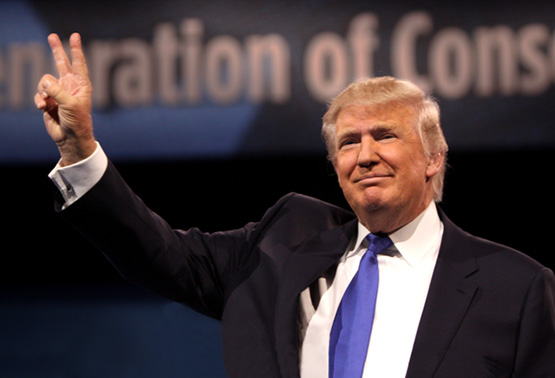
US President-elect Donald J. Trump
The thinking then was that if Trump had lost, he would have cited suspicions of voter fraud – possibly claiming that illegal Mexican immigrants had snuck into the polls to tip the election to Hillary Clinton – and Trump was widely condemned for even discussing the possibility of challenging the election’s outcome.
His refusal to commit to accepting the results was front-page news for days with leading editorialists declaring that his failure to announce that he would abide by the outcome disqualified him from the presidency.
But now the defeated Democrats and some anti-Trump neoconservatives in the Republican Party are jumping up and down about how Russia supposedly tainted the election by revealing information about the Democrats and the Clinton campaign.
Though there appears to be no hard evidence that the Russians did any such thing, the Obama administration’s CIA has thrown its weight behind the suspicions, basing its conclusions on “circumstantial evidence,” according to a report in The New York Times.
The Times reported: “The C.I.A.’s conclusion does not appear to be the product of specific new intelligence obtained since the election, several American officials, including some who had read the agency’s briefing, said on Sunday. Rather, it was an analysis of what many believe is overwhelming circumstantial evidence — evidence that others feel does not support firm judgments — that the Russians put a thumb on the scale for Mr. Trump, and got their desired outcome.”
In other words, the CIA apparently lacks direct reporting from a source inside the Kremlin or an electronic intercept in which Russian President Vladimir Putin or another senior official orders Russian operatives to tilt the U.S. election in favor of Trump.
More ‘Group Thinking’?
The absence of such hard evidence opens the door to what is called “confirmation bias” or analytical “group think” in which the CIA’s institutional animosity toward Russia and Trump could influence how analysts read otherwise innocent developments.
For instance, Russian news agencies RT or Sputnik reported critically at times about Democratic nominee Hillary Clinton, a complaint that has been raised repeatedly in U.S. press accounts arguing that Russia interfered in the U.S. election. But that charge assumes two things: that Clinton did not deserve critical coverage and that Americans – in any significant numbers – watch Russian networks.
Similarly, the yet-unproven charge that Russia organized the hacking of Democratic National Committee emails and the private email account of Clinton’s campaign chairman John Podesta assumes that the Russian government was responsible and that it then selectively leaked the material to WikiLeaks while withholding damaging information from hacked Republican accounts.
Here the suspicions also seem to extend far beyond what the CIA actually knows. First, the Republican National Committee denies that its email accounts were hacked, and even if they were hacked, there’s no evidence that they contained any information that was particularly newsworthy. Nor is there any evidence that – if the GOP accounts were hacked – they were hacked by the same group that hacked the Democratic Party emails, i.e., that the two hacks were part of the same operation.
That suspicion assumes a tightly controlled operation at the highest levels of the Russian government, but the CIA – with its intensive electronic surveillance of the Russian government and human sources inside the Kremlin – appears to lack any evidence of such a top-down operation.
Second, WikiLeaks editor Julian Assange directly denies that he received the Democratic leaked emails from the Russian government and one of his associates, former British Ambassador Craig Murray, told the U.K. Guardian that he knows who “leaked” the Democratic emails and that there never was a “hack,” i.e. an outside electronic penetration of an email account.
Murray said, “I’ve met the person who leaked them, and they are certainly not Russian and it’s an insider. It’s a leak, not a hack; the two are different things.”
‘Real News’
But even if Assange did get the data from the Russians, it’s important to remember that nothing in the material has been identified as false. It all appears to be truthful and none of it represented an egregious violation of privacy with some salacious or sensational angle.
The only reason the emails were newsworthy at all was that the documents revealed information that the DNC and the Clinton campaign were trying to keep secret from the American voters.
For instance, some emails confirmed Sen. Bernie Sanders’s suspicions that the DNC was improperly tilting the nomination race in favor of Clinton. The DNC was lying when it denied having an institutional thumb on the scales for Clinton. Thus, even if the Russians did uncover this evidence and did leak it to WikiLeaks, they would only have been informing the American people about the DNC’s abuse of the democratic process, something Democratic voters in particular had a right to know.
And, regarding Podesta’s emails, their most important revelation related to the partial transcripts of Clinton’s paid speeches to Wall Street banks, the contents of which Clinton had chosen to hide from the American people. So, again, if the Russians were involved in the leak, they would only have been giving to the voters information that Clinton should have released on her own. In other words, these disclosures are clearly not “fake news” – the other hysteria now sweeping Official Washington.
In the mainstream news media, there has been a clumsy effort to conflate these parallel frenzies, the leak of “real news” and the invention of “fake news.” But investigations of so-called “fake news” have revealed that these operations were run mostly by young entrepreneurs in places like Macedonia or Georgia who realized they could make advertising dollars by creating outlandish “click bait” stories that Trump partisans were particularly eager to read.
According to a New York Times investigation into one of the “fake news” sites, a college student in Tbilisi, Georgia, first tried to create a pro-Clinton “click bait” Web site but found that a pro-Trump operation was vastly more lucrative. This and other investigations did not trace the “fake news” sites back to Russia or any other government.
So, what’s perhaps most telling about the information that the CIA has accused Russia of sharing with the American people is that it was all “real news” about newsworthy topics.
What Threat to Democracy?
So, how does giving the American people truthful and relevant information undermine American democracy, which is the claim that is reverberating throughout the mainstream media and across Official Washington?
“Corruption” allegations against Yanukovych – pushed by OCCRP – were integral to the U.S.-supported effort to organize a violent putsch that drove Yanukovych from office on Feb. 22, 2014, touching off the Ukrainian civil war and – on a global scale – the New Cold War with Russia.
Yet, in the case of the “Panama Papers” or other leaks about “corruption” in governments targeted by U.S. officials for “regime change,” there are no frenzied investigations into where the information originated. Regarding the “Panama Papers,” there was simply back-slapping for the organizations that invested time and money in analyzing the volumes of material. And there were cheers when implicated officials were punished or forced to step down.
So, why are some leaks “good” and others “bad”? Why do we hail the “Panama Papers” or OCCRP’s “corruption evidence” that damaged Yanukovych – and ask no questions about where the material came from and how it was selectively used – yet we condemn the Democratic email leaks and undertake investigations into the source of the information?
In both the “Panama Papers” case and the “Democratic Party leaks,” the material appeared to be real. There was no evidence of disinformation or “black propaganda.” But, apparently, it’s okay to disrupt the politics of Iceland, Ukraine, Russia and other countries, but it is called a potential “act of war” – by neocon Sen. John McCain, R-Arizona – to reveal evidence of wrongdoing or excessive secrecy on the part of the Democratic Party in the United States.
Shoe on the Other Foot
Russian President Putin, while denying any Russian government attempt to tilt the election to Trump, recently commented on the American hypocrisy about interfering in other nations’ elections while complaining about alleged interference in its own or those of its allies. He described a conversation with an unnamed Western “colleague.”
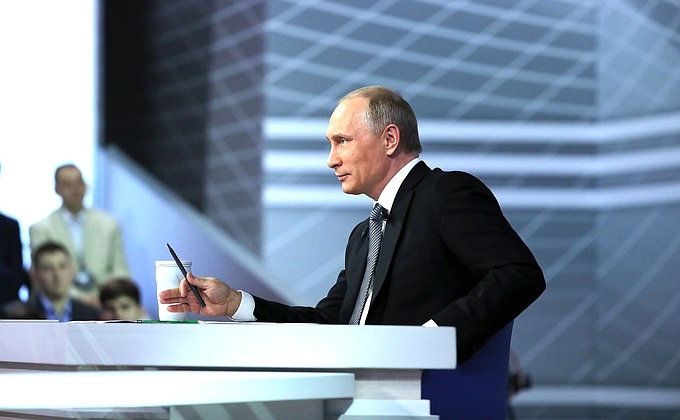
Russian President Vladimir Putin
Putin said, “I recently had a conversation with one of my colleagues. We touched upon our [Russian] alleged influence on some political processes abroad. I told him: ‘And what are you doing? You have been constantly interfering in our political life.’ And he replied: ‘It’s not us, it’s the NGOs’. I said: ‘Oh? But you pay them and write instructions for them.’ He said: ‘What kind of instructions?’ I said: ‘I have been reading them.’”
Whatever one thinks of Putin, he is not wrong in describing how various U.S.-funded NGOs, in the name of “democracy promotion,” seek to undermine governments that have ended up on Official Washington’s target list.
And another aspect of the hypocrisy permeating Official Washington’s belligerent rhetoric directed toward Russia: Aren’t the Democrats doing exactly what they accused Trump of planning to do if he had lost the Nov. 8 election, i.e., question the legitimacy of the results and thus undermine the faith of the American people in their democratic system?
For days, Trump’s unwillingness to accept, presumptively, the results of the election earned him front-page denunciations from many of the same mainstream newspapers and TV networks that are now trumpeting the unproven claims by the CIA that the Russians somehow influenced the election’s outcome by presenting some Democratic hidden facts to the American people.
Yet, this anti-Russian accusation not only undermines the American people’s faith in the election’s outcome but also represents a reckless last-ditch gamble to block Trump’s inauguration – or at least discredit him before he takes office – while using belligerent rhetoric that could push Russia and the United States closer to nuclear war.
Wouldn’t it be a good idea for the CIA to at least have hard evidence before the spy agency precipitated such a crisis?
Investigative reporter Robert Parry broke many of the Iran-Contra stories for The Associated Press and Newsweek in the 1980s.
US Intel Vets Dispute Russia Hacking Claims
As the hysteria about Russia’s alleged interference in the U.S. election grows, a key mystery is why U.S. intelligence would rely on “circumstantial evidence” when it has the capability for hard evidence, say U.S. intelligence veterans.
Veteran Intelligence Professionals for Sanity | December 12, 2016
MEMORANDUM
Allegations of Hacking Election Are Baseless
A New York Times report on Monday alluding to “overwhelming circumstantial evidence” leading the CIA to believe that Russian President Vladimir Putin “deployed computer hackers with the goal of tipping the election to Donald J. Trump” is, sadly, evidence-free. This is no surprise, because harder evidence of a technical nature points to an inside leak, not hacking – by Russians or anyone else.
Monday’s Washington Post reports that Sen. James Lankford, R-Oklahoma, a member of the Senate Intelligence Committee, has joined other senators in calling for a bipartisan investigation of suspected cyber-intrusion by Russia. Reading our short memo could save the Senate from endemic partisanship, expense and unnecessary delay.
In what follows, we draw on decades of senior-level experience – with emphasis on cyber-intelligence and security – to cut through uninformed, largely partisan fog. Far from hiding behind anonymity, we are proud to speak out with the hope of gaining an audience appropriate to what we merit – given our long labors in government and other areas of technology. And corny though it may sound these days, our ethos as intelligence professionals remains, simply, to tell it like it is – without fear or favor.
We have gone through the various claims about hacking. For us, it is child’s play to dismiss them. The email disclosures in question are the result of a leak, not a hack. Here’s the difference between leaking and hacking:
Leak: When someone physically takes data out of an organization and gives it to some other person or organization, as Edward Snowden and Chelsea Manning did.
Hack: When someone in a remote location electronically penetrates operating systems, firewalls or any other cyber-protection system and then extracts data.
All signs point to leaking, not hacking. If hacking were involved, the National Security Agency would know it – and know both sender and recipient.
In short, since leaking requires physically removing data – on a thumb drive, for example – the only way such data can be copied and removed, with no electronic trace of what has left the server, is via a physical storage device.
Awesome Technical Capabilities
Again, NSA is able to identify both the sender and recipient when hacking is involved. Thanks largely to the material released by Edward Snowden, we can provide a full picture of NSA’s extensive domestic data-collection network including Upstream programs like Fairview, Stormbrew and Blarney. These include at least 30 companies in the U.S. operating the fiber networks that carry the Public Switched Telephone Network as well as the World Wide Web. This gives NSA unparalleled access to data flowing within the U.S. and data going out to the rest of the world, as well as data transiting the U.S.
In other words, any data that is passed from the servers of the Democratic National Committee (DNC) or of Hillary Rodham Clinton (HRC) – or any other server in the U.S. – is collected by the NSA. These data transfers carry destination addresses in what are called packets, which enable the transfer to be traced and followed through the network.
Packets: Emails being passed across the World Wide Web are broken down into smaller segments called packets. These packets are passed into the network to be delivered to a recipient. This means the packets need to be reassembled at the receiving end.
To accomplish this, all the packets that form a message are assigned an identifying number that enables the receiving end to collect them for reassembly. Moreover, each packet carries the originator and ultimate receiver Internet protocol number (either IPV4 or IPV6) that enables the network to route data.
When email packets leave the U.S., the other “Five Eyes” countries (the U.K., Canada, Australia, and New Zealand) and the seven or eight additional countries participating with the U.S. in bulk-collection of everything on the planet would also have a record of where those email packets went after leaving the U.S.
These collection resources are extensive; they include hundreds of trace route programs that trace the path of packets going across the network and tens of thousands of hardware and software implants in switches and servers that manage the network. Any emails being extracted from one server going to another would be, at least in part, recognizable and traceable by all these resources.
The bottom line is that the NSA would know where and how any “hacked” emails from the DNC, HRC or any other servers were routed through the network. This process can sometimes require a closer look into the routing to sort out intermediate clients, but in the end sender and recipient can be traced across the network.
The various ways in which usually anonymous spokespeople for U.S. intelligence agencies are equivocating – saying things like “our best guess” or “our opinion” or “our estimate” etc. – shows that the emails alleged to have been “hacked” cannot be traced across the network. Given NSA’s extensive trace capability, we conclude that DNC and HRC servers alleged to have been hacked were, in fact, not hacked.
The evidence that should be there is absent; otherwise, it would surely be brought forward, since this could be done without any danger to sources and methods. Thus, we conclude that the emails were leaked by an insider – as was the case with Edward Snowden and Chelsea Manning. Such an insider could be anyone in a government department or agency with access to NSA databases, or perhaps someone within the DNC.
As for the comments to the media as to what the CIA believes, the reality is that CIA is almost totally dependent on NSA for ground truth in the communications arena. Thus, it remains something of a mystery why the media is being fed strange stories about hacking that have no basis in fact. In sum, given what we know of NSA’s existing capabilities, it beggars belief that NSA would be unable to identify anyone – Russian or not – attempting to interfere in a U.S. election by hacking.
For the Steering Group, Veteran Intelligence Professionals for Sanity (VIPS)
William Binney, former Technical Director, World Geopolitical & Military Analysis, NSA; co-founder, SIGINT Automation Research Center (ret.)
Mike Gravel, former Adjutant, top secret control officer, Communications Intelligence Service; special agent of the Counter Intelligence Corps and former United States Senator
Larry Johnson, former CIA Intelligence Officer & former State Department Counter-Terrorism Official
Ray McGovern, former US Army infantry/intelligence officer & CIA analyst (ret.)
Elizabeth Murray, Deputy National Intelligence Officer for Middle East, CIA (ret.)
Kirk Wiebe, former Senior Analyst, SIGINT Automation Research Center, NSA (ret.)
Democratic Losers and their Media Backers Seek a Scapegoat for Their Own Disaster
The fake campaign to blame ‘the Russians’
By Dave Lindorff | This Can’t Be Happening! | December 11, 2016
The New York Times and Washington Post, the nation’s two top national newspapers, have been breathlessly reporting of late, with little sign of any appropriate journalistic skepticism, on a purported massive and successful Russian conspiracy to throw the US election to their “favored” candidate, Donald Trump. But the Chicago Tribune has weighed in with a more measured piece, suggesting that while the CIA, a particularly secretive and politically driven organization, may be making that claim, the FBI is not convinced.
While even the Tribune sometimes ignores inserting the requisite “alleged” that should precede any reference to unproven claims that Russia is behind the hacking of the Democratic Party’s (and the Republican Party’s) email server, the paper does also note that Democrats in particular are “frustrated” by the “murky nature” of the FBI’s analysis, with outgoing Senate Minority Leader Harry Reid (D-Nev.), calling on FBI Director James Comey to resign.
The reason for the Democrats’ frustration is also made clear. As the Tribune reports:
With so much of the evidence about Russia’s alleged role in the election shrouded in secrecy because of strict classification rules, Democrats and Republicans in Washington who have access to the underlying intelligence say they have struggled to make their respective cases, leaving an already deeply divided public convinced that both sides are shading their conclusions to help the candidate they backed on Election Day.
The reality is that the CIA has presented no hard evidence that Russia is behind the hacking of the DNC’s or or Clinton’s private home server. The excuse is given that the Agency doesn’t want to disclose any of its sources, so the reader is left with the pathetic plea, from both the Agency and the White House: “Trust us.”
But why would anyone trust the CIA or the White House on anything? We’re talking about an agency and a Executive Branch that between them are known to have lied (during the GW Bush years) about anthrax labs in Saddam Hussein’s Iraq, lied about what were aluminum tubes imported to make irrigation equipment being evidence of missile-building, lied about Iraq’s links to Al Qaeda, and (during the Obama years) lied about Syria’s government using Sarin gas on its own people in Damascus, lied about the details of the killing of Osama Bin Laden, lied about the role of a murderous CIA agent captured by Pakistani police while posing as a US consular employee, lied about the extent of National Security Agency Spying both at home and abroad, and lied about Russia invading Ukraine and shooting down a civilian Malaysian jumbo jet.
If one were to take a moment and think about what is being alleged here by Democrats — that a national presidential election was successfully subverted by the releasing of hacked emails showing major corruption and malfeasance by the Democratic Party leadership in undermining the fairness of the party’s presidential primary to benefit one candidate — Hillary Clinton — and to destroy the candidacy of her opponent Bernie Sanders — it should lead to one of two alternative conclusions.
Either the Russians did Americans a favor, by exposing the epic corruption of one of their two major parties and one of the candidates seeking to become president — something that a more independent and aggressive domestic media would have and should have done on their own, if not by hacking then by paying attention to, instead of ignoring and blacking out, what frustrated insiders like DNC Vice Chair Tulsi Gabbard, the Democratic congresswoman from Hawaii who quit in disgust saying the DNC was undermining the primaries on behalf of Clinton’s campaign. Or alternatively, we’re being told that our 240-year-old democracy is so shriveled and weak that an outside government can easily undermine it and manipulate the outcome as if we were some corrupt and fragile banana republic.
Either conclusion is rather pathetic and depressing to contemplate.
Meanwhile, the media feeding frenzy over unsubstantiated claims over Russian subversion of our last election ignores the reality that this kind of thing is something the US has been doing abroad at least since the end of World War II and the onset of the Cold War. Not content to just undermine elections through dirty tricks, fake news and secret payments in Europe, Latin America, later in Eastern Europe and Russia, and in Asia, the US has also fomented countless coups to overthrow or attempt to overthrow existing elected governments, most recently in Honduras, Ukraine, Venezuela and Brazil, and so has no grounds to complain by claiming that the Russians were allegedly doing the same thing here.
On the other hand, if the Democratic Party leadership had kept its hand off the scale during the primaries, and had not made such heavy-handed efforts to get major news organizations like the Times, MSNBC, the Daily News, Post and others to help it undermine Bernie Sanders, Sanders would have won both the party’s nomination and the presidency, and probably the Congress also into the bargain, and we wouldn’t be looking at a looming Trump presidency and Republican Congress.
Not only that, but with a genuinely popular candidate running for president in both parties (like it or not Trump was wildly popular among a significant segment of the population), no Russian propaganda campaign would have had a prayer of impacting voter opinion or the results of the voting.
If indeed there really was a Russian effort to swing this recent election, it could only have succeeded in a situation where the electorate was disgusted by its choices and was voting negatively for a lesser evil. And that situation only could arise where the two major parties were so corrupted that they were trying desperately to keep genuinely popular candidates from winning the nomination.
In fact that is what happened. The Republican leadership tried mightily to keep Donald Trump, a loose cannon who has disavowed many basic and long-held Republican principles, such as backing US empire and Israel, supporting any and all trade agreements, and viewing Russia as an existential enemy, from winning their party’s nomination. They failed, but not for lack of trying. The Democratic leadership tried everything, too, to prevent insurgent self-described “socialist” candidate Sanders from winning the nomination, and thanks to underhanded manipulation of the primaries, corrupt meddling in media coverage of Sanders, an anti-democratic voting block of locked-in “super delegates,” committed to backing Clinton whatever the result of the primaries, and some crooked efforts to depress voting in key primary states including New York and California, they succeeded in throwing the nomination to Clinton. She of course was doomed, by their very ham-handed interference in the primaries, to go on to lose the general election.
That corrupt fiasco has left Democratic Party leadership hacks and their backers in the corporate media with nothing to do but find a scapegoat for their disastrous performance, hence the fake “Russia-did-it” claims.
It’s a sad commentary on the pathetic decline of democracy in the United States, but is also a clarion call for a rebirth of grassroots democratic resurgence.
If there’s a bright spot in the new situation, it’s that progressives, socialists, radicals and disaffected citizens of all kinds now should have a clear understanding of how corrupt the Democratic Party really is.
One of two things must happen. That party must be completely swept clean of the hacks, frauds, crooks, compromisers and charlatans who populate its leadership and who hold most of the elected posts remaining in Democratic hands in Congress. Alternatively, the Democratic Party must be abandoned as unsalvageable, with progressive forces, from labor organizations, advocates of the poor and elderly, environmental activists, human rights and peace groups, women’s rights and minority rights organizations, civil libertarians and others rallying both to create something new to replace it, and organizing in the street to resist the new Trump government.
Any new left party needs to abandon the fraudulent tactics of so-called “identity politics,” in which a basically pro-corporate Democratic Party has sought to appease and cajole support for its corporatist candidates and agenda by catering to individual issues of various groups leaning its way by default. Instead, the really big issues need to be tackled head on: expanding Social Security, making Medicare universal for everyone of all ages, restoring genuine progressive taxation on the wealthy, ending foreign wars, closing overseas bases and slashing the military, obeying international law (including treaties with sovereign Native American nations), making public college free to all, nationalizing support for primary and secondary education so that all communities have well-funded, quality public schools, declaring a national mobilization to quickly end reliance upon fossil fuels to combat climate change, and creating jobs for everyone through a massive public spending program on job training and infrastructure repair and modernization.
These and other ideas are things that most Americans can and would get behind, not simply efforts to pander to various specific interest groups.
Do this and the Russians — assuming they even have been trying to manipulate our elections — wouldn’t have a chance of influencing anyone.
Brutal US Colonialism in Puerto Rico
“No ambition to oppress them”?
By Leftist Critic | Dissident Voice | December 2, 2016
Recently, I’ve been reading Overthrow: America’s Century of Regime Change from Hawaii to Iraq, a book by veteran New York Times correspondent Stephen Kinzer, which focuses on US-backed coups from 1893 (Hawaii) to Iraq (2003). In the book, Kinzer devotes only fourteen pages to Puerto Rico, a small island nation controlled by the murderous empire of the United States. On page 94, he declares that “most Puerto Ricans” understand that the US, despite colonial “misdeeds,” harbors “no ambition to oppress them.” He goes on to say that most want to continue ties with the US and that colonial rule has been “relatively benign,” meaning it was partially beneficial to islanders. In his view, this hasn’t led to a “violent backlash” because of US efforts to take “direct political responsibility” to govern the island, and even floats the idea that there could be a reasonable case that US control over the island has made it “better off”! Kinzer ends optimistically, saying that “a happy end to the long story” would not only take away stigma of US citizens from “ruling another people” but would tell them that “toppling of foreign regimes need not end badly.” Such words, like this, reek of apologism for imperialism and existing US colonialism in Puerto Rico. In this article, using quotes from Kinzer’s own book, I plan to prove that US rule in the island nation has not been “relatively benign,” but that the US imperialists should not be seen as engaging in “nice” oppression, with “no ambition,” of Puerto Rico’s citizens.
On May 12, 1898, seven US warships appeared off the coast of San Juan. They soon began their bombardment, firing over 1,300 shells, met by a Spanish response of about 400 shells, killed a dozen people and one US soldier.1 The small island nation of Puerto Rico comprises of an island 3,515 square miles across, called Borinquen by many native residents, three inhabited islands (Vieques, Cuelbra, and Mona), and 140 other small reefs, islands, and atolls. For over 400 years, the island was an established Spanish colony (1493-1898), with the indigenous Taino nation pushed into forced labor as part of the encomienda system. It was not until the early nineteenth century that Puerto Rico would be integrated into the international capitalist economy.2
The island, which exported commodities such as coffee and tobacco, became a sugar colony, supported by the country’s Creole elite, with 276 sugar plantations dotting the island’s landscape.3 As the sugar industry thrived, thousands of white wage laborers and enslaved blacks suffered in the “sugar haciendas,” or plantations, concentrated near Ponce, Guayama, and Mayaguez.4 The number of enslaved black laborers, who were mistreated, abused, and overworked despite “favorable” laws, reached into the tens of thousands, numbering 17,890 in 1828.5 They were chosen over wage laborers as more profitable for the sugar industry.6 It would not be until 1873 that slavery would be abolished in the Spanish empire, but the exploitation would not end, continuing under the system of apprenticeship, for example.7
About two months before the US warships arrived, Puerto Rico had elected a new government. The Spanish, likely in a measure to stave off revolt, had offered the Puerto Ricans political autonomy.8 They didn’t want rebellions like the Lares Uprising (Grito de Lares) in 1868 or the Attempted Coup of Yauco (Intentona de Yauco) in 1897 which were strongly pro-independence and opposed to Spanish colonial rule. On March 27, 1898, Luis Munoz Rivera’s Liberal Fusion Party was elected in a legislative body, created with agreement from the “liberal” Spanish government, of the island’s autonomous government.9 However, this would not last. On July 25, US marines from the Glouchester gunboat waded ashore, raising a US flag above a customs house after a short exchange of firearms.10
As Kinzer puts it, after the US flag fluttered in the breeze above the customs house, the “United States effectively took control of Puerto Rico” with every institution of Spanish colonial control, and the autonomous Liberal Fusion Party government, would quickly disappear. The objective of the US imperialists like Theodore “Teddy” Roosevelt, who declared that “Puerto Rico is not forgotten [in this war] and we mean to have it” came to be true, with US trade routes protected and a naval base established on the island.11 While some Puerto Ricans welcomed the US presence, this quickly changed, as the US seizure of the island nation became “legal” with the Treaty of Paris.12
The imposition of US imperialism on Puerto Rico began in 1898 as the island was declared a colony. Luis Munoz Rivera, the former leader of the island before the US arrived, declared that “we are witnessing a spectacle of terrible assimilation… our present condition is that of serfs attached to conquered territory.”13 The “individual freedom” that was promised, was not delivered upon, with the US instead engaging in exploitation which, as Martinquis revolutionary Frantz Fanon said about all colonizers, was part of a spiral of “domination, exploitation and looting.”14
The bank on the island was transferred to US investors, who printed Puerto Rican dollars, pegged to the US dollar, replacing the Spanish peso. Other banks were established on the island by investors such as the American Colonial Bank, which opened in 1899. As a result, new taxes were imposed. The following years, as US military troops remained in place as an occupying force, the US Congress passed the Foraker Act which put the Puerto Rican assembly under direct US control.15 As the people of the island nation had “no liberty, no rights, no protection,” as civil rights campaigner Julio Henna once put it, four US corporations took over land on the island for mass production and farming.16 This was reinforced by one of Insular Cases, which some say established “political apartheid,” Downes v. Bidwell (1901) in which the Supreme Court held that Puerto Rico wasn’t a foreign country, allowing Congress to treat it like a dependent colonial possession.
In later years, the island nation forced “permanent uncertainty” in its political status. In 1910, foreign banks began foreclosing on land in Puerto Rico, and the island became an official protectorate in 1913 with the existing naval bases reinforcing economic and ideological interests.17 By World War I, with the imposition of US citizenship with the Jones Act, 18,000 Puerto Ricans were conscripted to fight in the forces of empire as 200 Puerto Ricans were arrested for refusing to participate. Such imposition did not end there. From 1920 to 1923, Moncho Reyes ruled as the Governor on the island, declaring English as the only official language, not Spanish, and that the US flag is the only one to be flown across the island. He was only forced out by corruption scandals. This was accompanied the Balzac v. Porto Rico (1922) case, in which the Supreme Court said that provisions of the US constitution did not apply to a “territory” that was not a US state. In the following years, more and more of the island was controlled by US corporations, including 80% of the farms, and half of the arable land!
By the 1930s, medicine went to war on the island’s inhabitants. In 1931, Dr. Cornelius P. Rhoads injected patients on the island with live cancer cells, with thirteen people dying. He bragged about killing them, calling for a “tidal wave or something to totally exterminate the population” and saying that the island’s inhabitants were “the dirtiest, laziest, most degenerate and thievish race of men ever inhabiting this sphere.” He went on to head the US Army’s Biological Weapons division, serve on the Atomic Energy Commission, and sent memos to US military leaders expressing the opinion that Puerto Rican supporters of independence should be “eradicated” with the use of germ bombs! This was only a prelude, in a sense.
Henry Laughlin, superintendent of the US Eugenics Record Office, pushed the Model Eugenical Sterilization Law, targeting “socially inadequate” people for sterilization in 30 US states and Puerto Rico. On the island itself, in 1936, Law 116 entered into force by making sterilization legal and free for women, with no alternative plan of birth control, backed by the International Planned Parenthood Federation18, the Puerto Rican government, and Human Betterment Association. It was voluntary, only in theory, with employer discrimination and a dearth of other options giving women the incentive to participate, coupled with the veneer of being “feminist” and sometimes a lack of informed consent. This was done after scientists conducted research experiments on Puerto Rican women who had taken birth control pills, with a high amount of estrogen. Such an approach was rejected by the Catholic Church, which supported sterilization instead. By the 1970s, this horrendous practice ended, with more than one-third of Puerto Rico’s female population of childbearing age undergoing the procedure.19
At the same time, repression of the island’s spirit and feelings for independence intensified. On October 24, 1935, police at the campus of the University of Puerto Rico confronted nationalists, resulting in the death of four nationalists and one police officer, in what has been called the Rios Piedras massacre, what police chief E. Francis Riggs declared was part of his “war to the death against all Puerto Ricans.” In response to this action, the nationalist party called for a boycott to all actions held while Puerto Rico was a part of the United States.
The nationalist party continued its actions on the island. On March 21, 1937, it peacefully marched to Ponce. As they requested a permit, it was denied, and as they continued the action, police cordoned off unarmed demonstrators, then firing upon them from multiple directions, killing a total of 21 and wounding 140-200 people, in what has been called the Ponce Massacre. As “hysteria and near civil war swept the island” with nationalists arrested and hunted on sight, 23 nationalists and four police officers were arrested for participation in the massacre, with the ACLU even investigating the matter, finding that the protesters were not armed and had been surrounded by the police.
As the years passed, the US strengthened its hold on the island. By 1940, 80% of the country’s arable land was US-owned. In 1939, the US began bombing on the island of Culebra (which it later fully occupied until protests in the 1970s forced it to move operations to Vieques), and two years later, it began the occupation of Vieques, an island of 7,000 inhabitants. As William Blum, a renowned critic of US foreign policy, writes, from 1940 to 2000, the Puerto Rican island of Vieques, had to endure years of “target practices and war games” which included dropping depleted uranium and napalm.20 This led to the island’s drinking water to be reportedly poisoned and resulted in the land being “contaminated by radioactivity.”
Even as US military officials outrageously said that they could only have a bombing range on that island since one on the East Coast would be too close to population centers, President Bill Clinton promised that the US would stop using the bombing range in 2005.21 With international pressure and local protests, the bombing range stopped being used in 2003, but was accompanied by the closing of the Roosevelt Roads naval facility, the following year, almost to make residents “regret” their decision. Still, this was another victory against the empire. Such bombing on Vieques and Culebra islands was not the only imposition. From 1948 to 1957, Law 53, also called Le Ley de Mondonza or “gag law,” made it illegal to support or say anything construed as pro-independence, with a penalty of ten years in prison.
As the Cold War started, by arrogant imperialists who didn’t want to have friendly relationships with the Soviets after World War II, the imperialists began their “charm offensive” to the world stage. US leaders were recognizing that “ruling an impoverished colony in the Caribbean made the United States look bad.”22 Of course, they could only say this, feeling assured that those in the Puerto Rican government, like Luis Munoz Martin, the “Father of Modern Puerto Rico,” were accommodationist to US imperial power, even pushing for Law 53 and by the 1950s, at least, was clearly a symbol of an organ of the machine of colonial control.
In the UN, the US government attempted to stifle criticism of US colonial control by working on changing the country to a commonwealth. Diplomats saw the island helping in the anti-communist Korean War as a vital “political association” which respects individuality and culture of the island, and declaring that the occupation was legal. As the diplomats frankly admitted, declaring colonial control of the island nation as “free choice” of the residents would head off attacks “by those who have charged the United States government with imperialism and colonial exploitation.” While the “Soviet bloc” argued correctly that self-government didn’t exist in Puerto Rico, diplomats claimed they had a “strong case” of moving Puerto Rico from the list of non-self-governing territories (discussed more in the following paragraph), even as they felt difficulties would arise in the “usual anti-colonial propaganda by Iron Curtain countries,” along with other factors.
This veneer was first reinforced by the Constitutional Referendum in 1952, which approved a constitution proposed in 1950 by the US Congress, stripped of social democratic measures before it was approved, after negotiation with the accommodationist leaders on the island, including Governor Marin. Not surprisingly, independence was never offered as an option, showing that the motive of the US could have been to douse revolutionary feelings. The second reinforcement was on November 27, 1953, when the US imperialists achieved a victory which allowed “approval” of the commonwealth status of the island. The passing of Resolution 748, in the UN’s General Assembly, after a push of US hegemony, made it clear that the US was given sanction to determine the “status of territories under its sovereignty.” Years later, the US imperialists have tried to soften the push for independence by allowing multiple plebiscites on the island to “decide” its fate, but none of these considered that the island is a colony and needs to have self-determination, as asserted in UN General Assembly resolution 1514, described later in this article.
This may be the basis of Kinzer’s claim that colonialism in Puerto Rico has been “benign” and that US imperialists had “no ambition” to oppress the island’s inhabitants. Some may even think the idea the island is under “self-rule” or a change in its status, means that neocolonialism is in place. These are both incorrect. For neocolonialism to be present, the island would have to be under indirect colonial control. Such domination, unlike direct colonial control of the past keeping people politically and economically exploited, often used by Britain, France, and the United States, would require formal recognition of political independence even with domination by political, economic, social, military, and other means.23
This “norm” of neocolonialism, which exists under imperial rivalry, and assists profitable enterprises, is not the case in Puerto Rico.24 This is because the island is not formally an independent political entity. As recently as October 2016, the Supreme Court held that while the island nation functioned as a separate sovereign entity for certain purposes, the authority to govern the island derives from the US Constitution, saying that the US Congress still has the supreme authority over the island.25
This is buttressed by the case of United States v. Sanchez in 1993, in which a US Court of Appeals which said that Congress may unilaterally repeal the constitution of Puerto Rico, and a congressional committee report in 1997 declaring that the island is “subject to the supremacy of the Federal Constitution and laws passed by Congress,” even including the rescinding of the current “commonwealth” status! Hence, while the current government in Puerto Rico is, officially, a separate political entity from the United States, the US is still the imperial overlord of the island. By extension, this means that the officially deemed US “territories” in Guam, American Samoa, US Virgin Islands, and Northern Marinas Islands are colonies, along with arguably Hawaii.26 Hence, for these “territories,” colonialism, rather than neocolonialism, is at work, a subset of imperialism.
Efforts by US imperialists to repress or weaken resistance was abundantly clear. The FBI, the secret “internal” police of the murderous empire, spent forty years (1936-1976) working to repress, disrupt, and surveil the independence movement (“independentista”) in Puerto Rico. This included surveillance of renowned nationalist leader Pedro Albizu Campos from 1936 until his death in 1965.27 Specifically, the FBI kept files, illegally, on 140,000 pro-independence individuals! Even Governor Marin, the founder of the Popular Democratic Party, and later pliant puppet leader, was originally under surveillance until the FBI changed its mind, trying to protect him from threats. Years later, FBI director Louis J. Freeh admitted that his agency engaged in “egregious illegal activity, maybe criminal action” and violated the civil rights of those on the island. This suppression was only part of the story. The island’s police, FBI, and US Army intelligence had dossiers on 100,000 Puerto Ricans, 75,000 who were under “political” surveillance. Apart from the police provocateurs who assassinated independentistas,15,000 Puerto Ricans (of the 75,000) had extensive police files for political activity.
There were other forms of US domination. In 1976, the US put in place Section 936 of the internal revenue code, which allowed US companies to operate on the island without paying any corporate taxes. This was released years later when there was a huge pharmaceutical boom on the island, and the provision was replaced by Section 30A, which had similar language, in 2006. In 1979, Jimmy Carter, trying to engage in a “significant humanitarian gesture” mainly to fend off criticism of the United States, commuted the sentences of four Puerto Rican nationalists who participated in the 1950 and 1954 actions, described in the next paragraph, saying they had served enough time in prison.28
Clearly, the FBI’s brutal streak did not end, with surveillance of Puerto Rican independence activists still occurring in 1995. Ten years later, in 2005, the FBI murdered a Puerto Rican independence leader named Ojeda Rios in a shootout.29 This outraged many islanders. The following year, the FBI engaged in violent raids on the island. And two years later, an FBI/NYPD anti-terrorism task force targeted three independentistas living in the US mainland, currently, handing them subpoenas.30 This clearly shows that the crackdown on independentistas has not ended in the slightest.
Such impositions were not met without resistance. In 1934, sugar workers went on strike, and gained a few wage concessions, one of the victories for the small island nation. Two years later, on February 23, 1936, Riggs, on the island to protect colonial investments, was killed by nationalist Elias Beauchamp, accompanied by Hiram Rosado, who were, in turn, murdered by police, within hours and without trial! This killing was one of the times that Puerto Ricans would engage in what Fanon called “counterviolence” and recognized that the “colonized men liberates himself in and through violence.”31 Flash forward to 1950. On October 30, there were uprisings in Ponce, Jayuya, Utado, Naranjito, and elsewhere, led by Campos. These uprisings were brutally crushed, some by National Guardsmen flying planes and firing down upon the crowd as ordered by Governor Martin, a reliable US puppet leader.32 The revolutionary spirit would not die. In 1950, two Puerto Rican nationalists struck at the heart of the empire: they attempted to kill President Truman.33 While the action was not successful, there was no doubt that the anti-colonial struggle by Puerto Ricans was connected to that of other peoples as Campos said before being arrested in 1950:
… it’s not easy to give a speech when we have our mother laying in bed and an assassin waiting to take your life… The assassin is the power of the United States of North America. One cannot give a speech while the newborn of our country are dying of hunger; while the adolescents of our homeland are being poisoned with the worst virus of them all, the virus of slavery… They must go to the United States to be the slaves of the economic powers, of the tyrants of our country… One cannot easily give a speech when this tyrant has the power to tear the sons right out of the hearts of Puerto Rico mothers to send to Korea, or into hell, to kill, to be the murderers of innocent Koreans, or to die covering a front for the Yankee enemies of our country, for them to return insane to their own people or for them to return mutilated beyond recognition… It’s not easy… We have called together here those who want the union of our brothers, of our Latin American brothers, and, very specially, the Cubans, all the people of the Antilles, the Haitians, the Dominicans, for all of them who love the independence of Puerto Rico as their very own, because as long as Puerto Rico is not free, every single one of those nations feels mutilated.
By the 1950s, the Puerto Rican Nationalist Party was starting to fade from the political landscape. By the 1960s, it was being replaced by armed revolutionary groups, like the Los Macheteras, with the latter engaging in counterviolence. In 1954, this was proven to be true when Campos led a group of 37 nationalists who fired on Congressmen from the house balcony, with many taken into custody after a two-hour gun battle.34 Campos would die years later, in 1965, after being tear gassed, tortured, and beaten in prison.35
By the 1960s, the equation was changing. Between 1955 and 1960, seventy-seven newly independent nations had been admitted to the UN, which formed an alliance to push for the adoption of resolution 1514 in the General Assembly in 1960. The resolution, initially proposed by Nikita S. Khrushchev of the USSR, declared that the “colonial situation in all its forms and manifestations” had to be remedied, with eighty-nine countries voting in favor. There were only nine abstentions (and no votes against) by the U.K., US, Western-backed apartheid South Africa, Portugal, Spain, Belgium, France, Australia, and the Dominican Republic, then controlled by the US-backed Rafael Trujillo. The latter was assassinated in 1961, with the CIA, without consent of the State Department, giving the assassins rifles and other firearms, as noted in pages 70-85 of the Rockefeller Commission’s report in 1975.
In the US, with the development of the “New Left”, social movements began to gain steam. The Young Lords Party, originally a gang in Chicago, re-organized itself as a pro-Puerto Rican organization, in 1968, that took a strong anti-imperialist position. In their principles, they argued that they had been colonized for five hundred years, first by Spain, then the United States, making them the “slaves of the gringo” and rejecting Puerto Rican rulers who were “puppets of the oppressor… who keep our communities peaceful for business,” instead of pushing for a socialist society, and ultimately against machismo, a fundamentally feminist position.
Like the Black Panthers, they supported armed self-defense and had free breakfast programs to support the community while increasing their base of support. In 1969, the Black Panthers reached out to them, the Brown Berets fighting for Chicano liberation, and anti-racist Young Patriots who tried to support young, white migrants who came from Appalachia, to create the first “rainbow coalition.” The name of the coalition was later taken by black opportunist Jesse Jackson, Jr. in a failed effort to run for the Democratic Party’s presidential nomination and push for political reforms. Years later, the Lords changed their name to the Puerto Rican Revolutionary Workers Organization (PRRWO), pushed for a revolutionary party, and fell apart in 1975 after FBI disruption, infighting and other factors.
The Puerto Ricans are not alone. Starting in 1972, the UN Special Committee on Decolonization (The Committee of 24) condemned the status of Puerto Rico, recognizing that the Commonwealth status is untenable, with US investors getting preferential treatment, and that the island should be independent from the supposedly “benign empire” of the United States. Due to the more than 33 resolutions calling for Puerto Rico’s independence by the Committee of 24 since 1972, building off of resolution 1514, it has been tarred by the US. In 1968, only five years into its existence, US diplomats declared that the Committee had become “anti-Western” because it criticized US imperialism and supported “independentistas” in Puerto Rico. Such criticism didn’t stop the Committee. Recently, the Committee concluded that the US violated Puerto Rico’s right to self-determination to be an independent nation. Specifically, representatives from Cuba, Nicaragua, Ecuador, and Iran have talked about independence for the island nation and relinquishing US colonial rule, with some witnesses talking about how the island was illegally taken and under corporate control. Latin America clearly did not abandon the island. Nicolas Maduro of Venezuela, former Argentine President Cristina Kirchner, and Raul Castro of Cuba have all supported the island’s independence.
Other organizations that have argued for independence include the Non-Aligned Movement and the Community of Latin American and Caribbean States (CELAC) founded by Latin American states in Carcas, Venezuela in 2011. Clearly, the Democratic and Republican parties, along with the island’s two major political parties (The Popular Democratic Party and the New Progressive Party) do not support independence.36 The island’s governors, under the constitution of the Puerto Rican “commonwealth,” five from the Popular Democratic Party (Luis Muñoz Marín, Roberto Sánchez Vilella, Rafael Hernández Colón, Sila Calderón, and Aníbal Salvador Acevedo Vilá) who want to maintain the current status of the island, five from the New Progressive Party (Luis A. Ferré, Carlos Romero Barceló, Pedro Rosselló, Luis Fortuño, Alejandro García Padilla, and newly elected Ricky Rosselló), who want the island to be a US state, have stayed within acceptable bourgeois opinion. While some may be liberal and others conservative, through all eleven of the governors, there has been concentration of corporate power on the island and maintenance of the colonial relationship. While some could claim the referendum in 2012 “solved” the status of the island, less than half supported statehood, with most, instead, wanting a change to the status quo.
In 1975, when Cuba pushed to give special status for the island for the Puerto Rican independence movement, the US balked with anger. Such a response is predictable. Deep down, the imperialists of the US are afraid of Puerto Rican independence. If the country became independent, it is possible that Vieques couldn’t become a bombing range again, the US couldn’t store nuclear weapons there, plan for strikes on Cuba, use the island to intercept “enemy” signals, and so on.37 Even some diplomats tried to say that if the island is separated from the US, the residents would be jeopardizing their “paramount interests in economic, social, education… [and] political matters.” This is reflexively talking about what US and foreign capitalists would lose, instead of referring to the real needs of Puerto Ricans.
The question remains: where do we stand now? Undoubtedly, the coverage of the island by the bourgeois media focuses on “unpayable debt.” The island is, as writer Nelson Denis argued (with likely feminist implications), the “battered spouse of the Caribbean.” An article last fall by Linda Backiel, in the Monthly Review, is vital in explaining the current situation. She writes that the dire straits of the island, $73 billion of debt, is not a surprise, since it has been “sacked by colonial powers for half of a millennium.” She goes on to say that IMF officials were paid $400,000 to make recommendations about the island’s economic crisis, which is ridiculous considering that the island has no access to financing from the World Bank, IMF, or elsewhere because it is a colony. Backiel adds that Article VI, section 8 of the island’s constitution, payment of interest and debt is the first priority, coupled with the country “running on bonds” held by US banks such as Morgan Stanley, JP Morgan, and Bank of America, along with numerous venture and hedge funds.
She then writes that “the vultures are circling” the small island nation, with the island in crisis, even as human misery caused by colonialism is ignored and over 45% of the people live below the poverty line, with the country seeming on the verge of economic collapse. If this occurs, it could threaten the “propaganda value” of the island and its economy, destroyed in part by the collaboration of the pro-statehood New Progressive Party and US Congress, leaving the Popular Democratic Party to “clean up” the mess. She closes by saying “in the battle between soul and capital, who will win? Until the people of Puerto Rico organize to defend their soul; it is not even a stalemate: Black is playing with nothing but pawns.” Other accounts affirm this assessment of the situation in Puerto Rico.38
In the most recent election cycle, the island’s precarious state got some play. Bernie Sanders, the “nice” imperialist running for the Democratic nomination, declared in June of this year that the US cannot “continue a colonial-like relationship with the people of Puerto Rico,” and saying he would offer it three options: becoming a state, enhancing its territorial rights, or becoming an independent country, which is no different than the previous plebiscites ordered by the US government.39 Predictably, he didn’t mention Resolution 1514, the efforts of the Committee of 24, or actions by Puerto Ricans to engage in counterviolence, instead posing himself as a “savior” of the island, an act of racist and imperialist positioning.
Jill Stein of the Green Party had a similar statement on the subject; however, she more clearly called out colonial exploitation, even calling for a bailout of the island.40
What Vladimir Lenin wrote in 1917 in his book, Imperialism: The Highest Stage of Capitalism is relevant here, as related to the island’s debt and plans for “restructuring.” Lenin writes that concentration of production leads to monopoly especially in the US, which was described, even then, as an “advanced country of modern capitalism.”41 In the island nation, the spreading of monopoly, specifically of “monopolist combines of big capitalists” or “gigantic monopolist combines” into every sphere of life would likely get a boost under a Trump administration.42 If he follows his cost-benefit formulation of “solving” the world’s problems, he would support debt restructuring, but let the “bondholders take a hit.” Even if this sounds “anti-business,” it is likely that his plan, whatever that is, would move away from the populist rhetoric and benefit the same economic actors, reinforcing the “world system of colonial oppression” manifested in capitalism, with “world marauders” like the United States “armed to the teeth.”43 It is also possible the newly-elected Puerto Rico Governor Rosselló will clash with Trump, but what happens in that realm remains to be seen.
At the present, Puerto Rico stands at a crossroads. US control of the island, which has never enjoyed real sovereignty, arguably led to a colonial mentality where Puerto Ricans feel they cannot engage in true self-rule, despite a strong nationalist sentiment. As a result, due to economic dependence on the US, and 25% unemployment, many are not supportive of independence from the US. These feelings are reinforced by existing assimilation showing that people haven’t been decolonized, with the possible compromise of Puerto Rican strong identity and culture. With the advent of neoliberal policies on the island, accommodationist Puerto Rican leaders, as described earlier, and blatant efforts to tamp down demands for independence, it hasn’t got any better.
According to the most recent report by the military establishment in September, there are 142 military personnel, 7,598 reservists, and 1,922 civilian personnel, coming to a total of 9,662!44 Such personnel are clearly used as a way of asserting colonial dominance. Still, Puerto Ricans have not remained silent, with continuing resistance to colonial rule. One example of this would be the student strikes which shut down the university system in the country and were repressed brutally. Either the status quo of neoliberal and capitalist exploitation can remain, or there can be a challenge and destruction to the existing colonial system, ending over 520 years of colonial rule (1493-2016) by the Spanish, then the United States. That is the choice at hand.
There is no doubt that Puerto Rico should be freed from colonial shackles of the murderous empire and its corporate clients. Negotiation may lead to a situation of neocolonialism, like in a number of African countries, where a national bourgeoisie on the island is subservient to the US, not changing the existing relationship between the US and the island nation. While the Puerto Rican people ultimately have to decide their fate, it is clear that decolonization, when part of a real liberation struggle, is “always a violent event,” as Fanon put it, where the colonized masses engage in violence, such as guerrilla warfare, to push for the demolition of the colonial system and allow for the emergence of a new nation.45 In the current economic situation, such counterviolence, which undermines the role of the US as “barons of international capitalism” and demands the independence of island from the imperial behemoth, could erupt once again.46
As one stands in solidarity with Puerto Rico in resisting “a monster where the flaws, sickness and inhumanity of Europe have reached frightening proportions,” what Fanon wrote in 1961 is apt to this island nation at the crossroads: “we must shake off the great mantle of night which has enveloped upon us, and reach for the light. The new day which is dawning must find us determined, enlightened and resolute.”47
- Stephen Kinzer, Overthrow: America’s History of Regime Change from Hawaii to Iraq (New York: Henry Holt & Company, 2006), 45. [↩]
- Francisco Scarano, “The Origins of Plantation Growth in Puerto Rico,” Caribbean Slave Society and Economy (ed. Hilary Beckles and Verene Shepherd, New York: The New Press, 1991), 57-59. [↩]
- Scarano, 56-58. [↩]
- Scarano, 58-60, 61, 63-64, 66. [↩]
- Scarano, 62-65. [↩]
- Howard Zinn, A People’s History of the United States: 1492 to Present (New York: HarperCollins, 2003, Fifth Edition), 532. This was not done without resistance in Puerto Rico, in terms of slave revolts, in the 1520s and 1530s. [↩]
- Scarano, 66. French abolition of slavery in its colonies in 1794 (while re-established in Haiti in 1802 by Napoleon in failed attempt to stop revolution, which succeeded in 1804 after twelve years) set off panic among Puerto Rican planters. [↩]
- Kinzer, 44. [↩]
- Ibid. [↩]
- Kinzer, 45. [↩]
- Kinzer, 44 [↩]
- Kinzer, 45, 46, 48, 70, 80; Zinn, 312, 408; Ziaudin Sardar and Merryl Wyn Davies, Why Do People Hate America? (New York: The Disinformation Company, 2002), 43. [↩]
- Kinzer, 91. [↩]
- Frantz Fanon, The Wretched of the Earth (New York: Grove Press, 2004 reprint, originally published in 1961, 14. [↩]
- Kinzer, 91-92. [↩]
- Kinzer, 92. [↩]
- Kinzer, 92, 104, 107, 108, 215, 300. [↩]
- Anti-abortion activists have even used this to criticize Planned Parenthood, with a lawyer for such a group, Casey Mattox, writing that Planned Parenthood worked with the government of Puerto Rico to sterilize women, which was not voluntary, and was a major part of the island’s sterilization program. Of course, Mattox uses it to argue against contraceptive use instead of developing it into a criticism of US imperialism.
- Some have argued that feminists on the US mainland too often framed the discussion around the idea that “Puerto Rican women are victimized and need to be saved,” denying the action of Puerto Rican feminists in support of the measure, and deny the possibility of “Puerto Rican feminist agency” (see pages 31-34 of Laura Briggs’s “Discourses of ‘Forced Sterilization’ in Puerto Rico: The Problem with the Speaking Subaltern”). Be that as it may, parts of this argument come very close to apology for US imperial and colonial action, such as imposed sterilization. Saying this does not deny that Puerto Rican women didn’t act in their best interests and engaged in sterilization in order to improve their own conditions. However, as said in the article, women had little choice but to engage in this procedure, so they didn’t even have “agency,” a word also used to throw off certain analysis, especially of a radical kind, or free choice to engage in all possible birth control measures if they wished to do so. [↩]
- William Blum, Rogue State (Monroe, ME: Common Courage Press, 2000), 98. [↩]
- Blum-Ibid. [↩]
- Kinzer, 92-93. [↩]
- Jack Woodis, Introduction to Neo-Colonialism:The New Imperialism in Asia, Africa, & Latin America (New York: International Publishers, 1969, second printing, originally published in 1967), 13, 16, 28, 32-33, 43-47, 49, 58, 61, 68-69. [↩]
- Woddis, 50, 68-69. [↩]
- The Court’s majority opinion, written by “liberal” Justice Elena Kagan, declared in flowery words that the colonial relationship is “unique” and built on the “island’s evolution into a constitutional democracy exercising local self-rule,” while admitting that the US Congress stripped the Puerto Rican constitution of social democratic qualities before it was approved since US colonies are “not sovereigns distinct from the United States” as noted on pages 2, 3, 10-11, 15 of the decision. Even Stephen Breyer, who accepted that federal power was the governing authority over US states and colonies, posited the “self-rule” argument, claiming that the island was self-ruling, citing numerous sources including the horrid Resolution 748. The dissenting opinion of Justice Ruth Bader Ginsburg did not not challenge, fundamentally, the court’s ruling, only saying that the matter warrants attention to future cases. Clarence Thomas had a similar opinion, only saying that he felt the decision would be a negative precedent on law governing indigenous peoples in the United States.
- The US also controls uninhabited islands in the Pacific including Baker Island, Howland Island, Jarvis Island, Johnston Atoll, Kingman Reef, Midway Atoll, Navassa Island, Palmyra Atoll, and Wake Island. They could be effectively considered part of the US colonial system.
- The FBI began its close attention on the island in 1936 when a local US attorney said that Campos was publishing articles insulting the US and giving “public speeches in favor of independence.” His influence was so widely recognized that when he refused to go to his parole officer, the Roosevelt administration didn’t order him back to prison for fear that there would be unrest on the island.
- In September 1999, Bill Clinton would commute the sentences of eleven Puerto Rican nationalists, which sparked anger among police officers, numerous leading Democrats, and numerous Republicans. Not surprisingly, Hillary Clinton opposed this move, expressing her opposition.
- See articles on this from Democracy Now!, USA Today, Associated Press, and Socialist Worker just for examples of differing reactions among those on the internet. [↩]
- From 1936 to 1995, the FBI generated 1.5 to 1.8 million pages on Puerto Rican independence activists! [↩]
- Fanon, 44, 47. [↩]
- Sardar and Davies, 96. [↩]
- Chronicle of America (Mount Kisco, NY: Chronicle Publications, 1988), 755, 758. The surviving man from this action, who was not killed in a gun battle with police officers, was sentenced to life imprisonment instead of being killed. [↩]
- Chronicle of America, 765. [↩]
- Laura Briggs, wrote in her article, as mentioned in an earlier footnote, that Campos was opposed to radicals who pushed for birth control on the island (along with independence), started by the Puerto Rican Socialist Party, and other efforts. This, in and of itself, would not be surprising, as machismo is widely cemented in many Latin American societies and reflected itself in liberation struggles. Despite this major flaw, it still worth recognizing his struggle in resisting US colonialism on the island nation of Puerto Rico, making him a hero to many. [↩]
- Politically, the Republicans would likely oppose statehood due to the large number of Puerto Ricans voting for the Democratic Party in presidential elections. [↩]
- In 1977, some diplomats claimed that the US could not place nuclear weapons on the island if it became a state. Whether this is actually true is not known.
- See articles on The Real News, The Hill, Democracy Now!, Telesur English, Mother Jones, Common Dreams, and Dissident Voice, of course
- Sanders is also on record for rejecting the neoliberal debt restructuring in place. However, due to his imperialist stance on foreign policy, there is no guarantee his debt restructuring would be any better overall.
- The Green Party of the United States has a plank on their platform declaring that the people of the island have the right to self-determination and independence, release of Puerto Rican political prisoners, environmental cleanup of Vieques, that the island’s debt is “unpayable” and that decolonization had to be supported as the “first step for the Puerto Rican people to live in a democracy.” Even the Communist Party USA, a political party that became rightist after the Hungarian “Revolution” in 1956 and with its call for a left-liberal inclusive coalition against the right-wing in the US instead of actively organizing people for socialism, declared in its 2006 “Road to Socialism” that the island nation composes an “oppressed national minority” who are mostly working class, dependent on the US, and says there needs to be a “free and independent Puerto Rico.” This is even further left, strangely enough, then the Socialist Party USA. In their recent platform, the party only calls for Guam, Puerto Rico, indigenous nations, and D.C. to have congressional representation, the similar to a position held by the Democratic Party. [↩]
- Vladimir Lenin, Imperialism: The Highest Stage of Capitalism (New York: International Publishers, 1972 reprint of 1939 English translation, originally published in 1917), 16-17, 20, 22, 32. [↩]
- Lenin, 25, 28, 31, 35, 58, 60, 62, 82. [↩]
- Lenin, 10-11. [↩]
- The “Military and Civilian Personnel by Service/Agency by State/Country (Updated Quarterly)” excel spreadsheet report from September 2016 is used here. That’s around the same number of personnel in the state of Delaware, which isn’t a colony in the slightest (although it is occupied indigenous land), which is telling. [↩]
- Fanon, 1, 10, 26, 30. [↩]
- Fanon, 38. [↩]
- Fanon, 235-237. [↩]
Featured Video
US IRAN TALKS: Who Are the Crazy Ones Here? /Lt Col Daniel Davis
or go to
Aletho News Archives – Video-Images
From the Archives
Woolsey Fire started at Santa Susana Field Lab — where “radioactive materials released were never accurately measured”
By John Laforge | CounterPunch | November 30, 2018
In my Nov. 16 column, I reported on potential radiation risks posed by California’s Woolsey wildfire having burned over parts or all of the Santa Susana Field Laboratory—south of Simi Valley, Calif., 30 miles outside Los Angeles—site of at least four partial or total nuclear reactor meltdowns.
The field laboratory operated 10 experimental reactors and conducted rocket engine tests. In his 2014 book Atomic Accidents, researcher James Mahaffey writes, “The cores in four experimental reactors on site … melted.” Reactor core melts always result in the release of large amounts of radioactive gases and particles. Clean up of the deeply contaminated site has not been conducted in spite of a 2010 agreement.
Los Angeles’s KABC-7 TV reported Nov. 13 that the Santa Susana lab site “appears to be the origin of the Woolsey Fire” which has torched over 96,000 acres. Southern Calif. Public Radio said, “According to Cal Fire, the Woolsey Fire started on the afternoon of Thursday, Nov. 8 … on the Santa Susana site.” … continue
Blog Roll
 Aletho News
- US IRAN TALKS: Who Are the Crazy Ones Here? /Lt Col Daniel Davis
- Talks with the US end without a deal over excessive US demands: Iran
- Feeling Better, Getting Worse: How Psychiatric Drugs Create the Illusion They Cure
- ‘Nobody Told Me’: Former Mental Health Patient Calls Out Dangerous Side Effects of Psychiatric Drugs
- Dr. Abu-Sitta: Beirut ‘felt like a day in Shifa Hospital’
- Iran Has Won the War, It Will Be Up to the US to Secure the Peace: Mohammad Marandi
- Iran condemns assassination threats against Iranian negotiators amid US talks
- Brussels cannot say where its own pipeline inspectors are as Hungary’s oil lifeline remains shut
- Israel’s Iran War: Myth and Reality
- Between war and industrial breakdown: The US-Israeli attrition crisis
- If Americans Knew
- Pro-Israel ‘Thinktanks’ and Individuals who Influence U.S. Foreign Policy
- Mearsheimer reveals how Israel dictates US policies on Iran, Gaza – video
- After killing 350+, Israel still has a “score to settle” with Lebanon before ceasefire – Daily Update
- Military aid to Israel emerges as the latest political litmus test for Democrats
- The only Palestinian children’s rights organization closes following years-long Israeli campaign against it
- ‘I Can’t Forget the Smell’: Lebanese Reel After Israel Kills Over 300 in Single Day
- DNC Shoots Down Resolutions Calling Out AIPAC and Limiting Arms to Israel
- TCN: Is Israel Blackmailing President Trump?
- Israel killed at least 303 Lebanese yesterday – who were they? Daily Update
- Amnesty: Urgent – Protect Lebanese civilians from brutal escalation in Israeli attacks
- No Tricks Zone
- German Expert: Heat Dome Led To Record Temps In Western USA…Warmer In 1934, 1936
- New Study: No Linear Warming Or Glacier Retreat Along Northern Antarctic Peninsula Since 1980s
- An Inconvenient Tree: Uncovered In Alps… Europe Much Warmer Than Today 6000 Years Ago
- New Study Reports A 60% Slowdown In Greenland’s Ice Loss Rate In The Last Decade
- Low Intensity Tornado Wrecks Major Solar Farm, Creating A Potential Toxic Dump
- New Study Finds Warming Saves Lives…Cold Temperatures 12 Times More Deadly Than Excess Heat
- German Science Blog Accuses PIK Climate Institute Of Hallucinating Climate Tipping Points
- Devastating Assessment Of Comirnaty Vaccine By Former Senior Pfizer Europe Toxicologist
- New Study: CO2 Is ‘Effectively Negligible’ As An Explanatory Climate Change Factor Since 2000
- Former Pfizer Toxicologist Dr. Helmut Sterz Tells Bundestag Hearing Pfizer Vaccine Should Have Never Been Approved
 Aletho News