One month into his stint as New York Times Jerusalem bureau chief, Peter Baker has struck a world-weary tone: In his telling, the turmoil of Palestine-Israel is nothing more than an ancient feud, and the United Nations has grown tired of hearing about it from two intransigent leaders.
The effect of this jaded stance is to leave readers with the impression that Palestinians and Israelis face off over a level playing field and they have been doing so for millennia, two notions that serve to benefit Israel above all.
In a piece about Israeli Prime Minister Benjamin Netanyahu and Palestinian leader Mahmoud Abbas addressing the United Nations General Assembly, Baker juxtaposes their comments as if they were two contenders facing off in a boxing ring, hurling invectives at each other. Where Abbas speaks of “heinous crimes” and an “historic catastrophe,” he says, Netanyahu lashes out with charges of “fanaticism” and “inhumanity.”
The two men, Baker writes, are “guilt-tripping” the international community; they are “filled with grievance and bristling with resentment;” and they “summon the ghosts of history from hundreds and even thousands of years ago to make their cases.” But, he states, “the world has begun to move on” as other crises, such as the war in Syria, take center stage.
The tenor is one of fatigue and cynicism, which does a disservice to readers and to the cause of honest journalism. Baker makes no attempt to discern the truth or falsity of any of the statements, dismissing them all as nothing more than rivalry.
When he says that the world has moved on, this implies that the United Nations itself has grown weary of the conflict, but late in his piece Baker quotes Netanyahu on the world body, providing readers with clear evidence that the organization is still very much engaged in the issue.
Baker tells us that the Israeli prime minister bitterly attacked the General Assembly, the Human Rights Council and the UN cultural agency, and knowledgeable readers will find the reasons for Netanyahu’s resentment obvious: UN agencies frequently report on Israeli violations of international and humanitarian law, and the UN has granted membership status to Palestine, over the objections of Israel.
Nevertheless, the Times article would have us believe that the Israel-Palestinian conflict has become passé, that the world is tired of these two bitter rivals who refuse to make up.
In presenting the issue in this light, Baker hides the terrible disparity between the two sides and ignores the urgent issues of injustice and international law.
He writes in this vein knowing that Abbas and Netanyahu represent two very different political and military realities. The United States, as the Times has recently reported, provides massive amounts of military aid to Israel each year, but it provides absolutely none to Palestinians. It also supports Israel at the United Nations, wielding its veto power to block resolutions critical of Israel, even those that echo its own policy statements.
Moreover, Baker and Times editors certainly know that Palestinians have no army, air force or navy; no tanks, warships, drones or nuclear arms; and that Israel has all this and more. They also have UN data for 2016, which show that, as of Sept. 19, 89 Palestinians had been killed by Israelis, while 10 Israelis had died at the hands of Palestinians.
Moreover, they know the shocking Gaza death toll from the summer of 2014, in which, according to the Israeli organization B’Tselem, Israeli forces killed 2,202 Palestinians, two-thirds of them civilians and 526 of them children. By contrast, Gaza fighters and rockets killed 72 Israelis, including 62 soldiers and one child.
The disparity is enormous, yet Baker has chosen to present the situation as a conflict between two equal sides. He has also adopted the “ancient hatreds” line that ignores the reality of Palestinian dispossession since 1947 and the present brutality inflicted on an occupied people by the powerful Israeli state.
Two days after his Abbas vs. Netanyahu story appeared, Baker published a piece on soccer in the West Bank, writing in the lead that “the latest battleground in the age-old struggle” between Israelis and Palestinians” was a dispute over whether FIFA rules allow Israeli soccer teams to play in West Bank settlements.
He thus manages to distort history, trivialize Palestinian resistance and maintain the false impression of parity between the two sides, ignoring evidence that pre-Zionist Palestine saw peaceful coexistence between Jews, Christians and Muslims. The “age-old struggle” is actually a recent one.
When Baker suggests that the conflict is fueled by ancient and intractable animosities, that only the two sides take any real interest in its outcome and that it involves petty disputes and little more than a war of words, this serves the Israeli agenda. He is directing our attention away from the core issues, allowing Israel to carry out its brutal regime of dispossession and oppression well under the radar.
Some years ago as I became increasingly aware of the severe dishonesty of our mainstream media on all sorts of controversial topics, I began telling a joke to a few of my friends.
Suppose, I would say, that I happened to be out walking one pleasant afternoon in Palo Alto, and suddenly heard a gigantic explosion in the general direction of Mountain View, soon followed by a huge pillar of smoke rising towards the sky. Being busy with my own work, I might have no time to bother investigating, and merely wondered what surprising story the front pages of my morning newspapers would reveal as the cause behind those dramatic events. But when I eagerly opened those papers the following day, mention of the explosion was nowhere to be found, either on Page One or anywhere else, even in my own local San Jose Mercury News. So unless I somehow persuaded myself that I had simply imagined the whole thing, I would henceforth stop believing anything I read—or failed to read—in my once-trusted news outlets.
I thought my allegorical fable rather amusing, and repeated it on a number of occasions. But quite recently I came across a rough counterpart in real life, a remarkable tale that had almost completely escaped my attention for over twenty years.
When I used to recall the leading events of 1996, what came to mind was Bill Clinton’s triumphant reelection campaign in the wake of the Oklahoma City bombing and political overreach by Newt Gingrich’s Congressional Republicans. Perhaps there had also been some sort of plane crash on the East Coast, though none of the details were sharp or memorable in my mind. But in fact, the sudden mid-air explosion of TWA Flight 800 on a New York to Paris route was actually voted the top national news story of that year, ranking above the presidential campaign, while the 230 fatalities made it by far New York’s worst disaster of the twentieth century, and the second worst airline tragedy in American history to that date. Indeed, some journalists at the time suggested that the resulting media coverage had eclipsed that of any other transportation calamity since the sinking of the Titanic almost a century earlier.
I had almost forgotten the story of that doomed airliner when I opened my morning edition of the New York Times in mid-July 2013 and read a short review in the Arts Section, favorably discussing a new television documentary presenting the “conspiracy theory” that the plane had been destroyed by a missile rather than by an accidental fuel tank explosion as the government investigation had firmly concluded at the time, a verdict strongly affirmed by both the news and editorial pages of the Times. I had recently published “Our American Pravda” and an eminent mainstream academic who appreciated my piece soon dropped me a note pointing to a website discussion of the details of the plane crash, about which I knew nothing. Being preoccupied with other matters, I could only glance at the material, which shocked me, but now that I’ve gone back and spent some time on the topic, the story turns out to be a truly remarkable one.
The outline of facts is hardly complicated. Soon after taking off from New York’s JFK Airport on July 17, 1996, TWA Flight 800 suddenly exploded in the air just off Long Island. So enormous a loss of life naturally produced an immediate scrambling of numerous federal agencies to investigate the cause, and with widespread fears of terrorism, the FBI launched the largest, most complex investigation in its entire history, deploying some 500 field agents to the area. The investigators soon gathered a copious quantity of seemingly consistent evidence.
Large numbers of local witnesses were immediately interviewed by the swarm of federal agents, with 278 of them reporting that they saw a streak of light, much like a missile, shoot up into the sky in the direction of the aircraft just before the huge explosion. Employees at the local FAA radar installation immediately reported to the government that they had seen what appeared to be a missile closing with the airliner just before it exploded, and other installations produced similar radar records. When tests were eventually performed on the plane wreckage, traces of explosive chemicals were found, exactly the sort used in the warhead of a missile, as well as some reddish-orange chemical residue that a laboratory later identified as likely missile exhaust propellant. An enormous effort was made to locate every possible piece of the wreckage, and for many of these, the contours of the damage indicated an initial explosion external to the plane. Almost immediately after the disaster, a bidding-war allegedly broke out between the national television networks for an amateur home-video showing a missile striking and destroying TWA 800, with the tape eventually being sold for more than $50,000 and briefly broadcast on the MSNBC cable news channel before reportedly being seized as evidence by FBI agents. In addition, a local resident provided a still photo taken at the time showing what seemed to be a missile rising toward the aircraft.
Based on all this initial evidence, many of the early news stories reported that the plane had probably been destroyed by a missile, with widespread speculation about whether the calamity was due to terrorist action or instead accidental “friendly fire” from one of the U.S. naval warships operating in the vicinity. Given the extreme sensitivity of the topic, government officials urged the media to keep an open mind until the full investigation was completed. However, the public debate sometimes turned rancorous, with some individuals soon alleging that a government cover-up was in the works. Eventually, the CIA was brought into the investigation, given its tremendous expertise in certain matters.
After more than a year of detailed research, the government investigation finally concluded that no missile could possibly have been involved, with all the eyewitnesses having been misled by what amounted to an optical illusion caused by the explosion of the aircraft. That explosion itself had been entirely spontaneous, probably caused by a random spark igniting one of the gas tanks. Given the controversy in the case, the CIA helpfully produced a computer animation showing the official reconstruction of the events, which was endlessly broadcast by our news media to explain the disaster to the public. The simulation showed the jetliner spontaneously exploding in mid-air, with no external cause, and just to further clarify matters, the CIA animators also inserted an explanatory message in large text: “There Was No Missile.” The New York Times, and nearly all our other mainstream media repeatedly echoed this same simple conclusion in all their stories and headlines.
The vast majority of our sheep-like population absorbed the simple media message “No Missile” and went back to watching their football games and celebrity music videos, being greatly relieved to know that well-maintained 747 jumbo jets flown by leading national airlines can occasionally explode in mid-air without any external cause.
However, various disgruntled “conspiracy theorists” refused to accept these conclusions, and returned to their “crazy missile conspiracy theories,” thereby earning the hearty ridicule of the entire mainstream media, led by the New York Times. These conspiratorial suspicions even extended to the U.S. navy, which had apparently been staging military exercises in the near vicinity of the calamity, exercises that some claimed including the test-firing of anti-aircraft missiles. Indeed, a local resident later provided a home video clearly showing a missile being fired in that exact same area a few days earlier during previous naval exercises.
The entire remarkable history of this incident is persuasively set forth in a excellent twentieth-anniversary book published earlier this year by investigative journalist Jack Cashill, who has been following the case since the late 1990s, having co-authored a previous book in 2003 and also produced an earlier 2001 television documentary Silenced, now available in its entirely on YouTube.
In addition, the 2013 television documentary by a former CBS producer, whose favorable review by the New York Times marked my first introduction to the topic, was discussed at length and substantially excerpted by NPR‘s Amy Goodman at Democracy Now!
Cashill is strongly affiliated with conservative publications, while someone like Goodman clearly leans toward the left, but the question of whether an American jetliner was destroyed by a missile, and the facts then covered up by the government is a non-ideological matter, so their perspectives seem almost identical.
For anyone having less than absolute faith in the official pronouncements of our government and our media, the likely reality of what happened is hardly difficult to guess, and for those who currently maintain such naivete, I suspect it will quickly dissipate if they choose to watch the documentaries or read the books. But the loss of TWA Flight 800 is surely of no great importance to our country. Accidents do happen. A large and energetic military, eager to test its latest missile weapons, perhaps carelessly and fatally crossed paths with hundreds of unlucky travelers on their way to Paris. Some 30,000 Americans die each year in fatal car crashes, and risks are inevitable in our modern industrial society.
However, from a broader perspective, I believe that the truly horrifying aspect of the incident is the tremendous ease with which our government and its lapdog media managed to so utterly suppress the reality of what had happened—an American jumbo jet shot down by a missile—and did so although this occurred not in some obscure, faraway foreign land, but within the very sight of Steven Spielberg’s home in the exclusive Hamptons, on a flight that had just departed New York City, and despite such overwhelming physical evidence and hundreds of direct eye-witnesses. The successful cover-up is the important story constitutes a central subtext in all of the books and documentaries on the disaster
Given the eyewitness testimony and other factors, it is hardly surprising that many of the initial media stories either directly referred to a missile strike or at least mentioned it as one of the main possibilities, and indeed there is some evidence that top government leaders initially assumed a terrorist attack. But President Bill Clinton was locked in the middle of his reelection campaign, and while the slaughter of Americans by terrorists might unify a nation, disasters brought about by careless military action would surely have had the opposite political impact. So it seems likely that once terrorism was ruled out and the American military believed responsible, a direct order quickly came down from the highest levels to make the missile and all evidence supporting it disappear, with all our supposedly independent federal agencies, especially the FBI, bowing to that primary directive.
As part of the standard investigation, all the debris were gathered and stored at a hangar for examination, but FBI agents were discovered spiriting away some of the most tell-tale pieces, or even caught in the wee hours of the morning hammering them into a shape that would suggest an internal rather than an external explosion. The amateur video showing the missile strike was only briefly broadcast by a cable news channel before being seized by government agents. When an investigative journalist acquired debris containing apparent missile residue and passed it along to a producer at CBS News, the evidence was quickly confiscated, with the journalist and his wife even being arrested, prosecuted, and convicted for violating an obscure law enacted to prohibit bystanders from removing souvenirs from the scene of a disaster; the veteran CBS producer who accepted the material was vilified as a “conspiracy theorist” and soon forced out of her job, her career destroyed. The written FBI reports of 278 eyewitness statements describing the missile attack were completely ignored, and in a number of cases, later statements were actually fabricated, falsely suggesting that crucial witnesses had revised or recanted their earlier testimony.
These particular examples only scratch the surface of the massive amount of coordinated government fraud and deception that was marshalled to make a missile strike seen by hundreds of witnesses officially disappear from the historical record, and transform the destruction of TWA Flight 800 into a rather mysterious and spontaneous mid-air explosion. The New York Times in particular became the primary mouthpiece of the official “See No Missile” party-line, repeatedly denigrating and ridiculing all those who resisted this total rewriting of the facts and history.
This gatekeeper role of the Times in the cover-up became particularly crucial once the high-profile figure of Pierre Salinger entered the controversy. Salinger ranked as a full-fledged member of the political-media establishment elite, having served as President Kennedy’s press secretary and one of the most visible public figures in Camelot, then briefly as an appointed U.S. Senator from California before becoming a prize-winning journalist and the Paris Bureau Chief for ABC News. Himself half-French by birth, he had many connections to the leadership of that country, which was galvanized by the large number of French victims on the flight. French intelligence became involved, quickly acquiring some of the same voluminous missile-related evidence suppressed by its US counterpart, and passed him the information. Cashill notes that Salinger was a loyal Democrat, and perhaps as a consequence he sat on the story until after Clinton was safely reelected in November, then attempted to break it, publishing a long expose in Paris Match, one of France’s highest-circulation popular magazines.
If Salinger had hoped his prestigious standing and long journalistic record would insulate him from attacks, he was sorely mistaken, and instead the threat his stature and credibility posed to the cover-up unleashed an unprecedented barrage of insult, ridicule, and invective, with the New York Times running 18 consecutive articles attacking him, and America’s leading news magazines, Time and Newsweek adding their own denunciations. Such remarkable vilification may have partly been aimed at dissuading any other prominent figures from similarly breaking ranks and following Salinger’s lead in exposing the true facts, and if so, the effort succeeded and the cover-up held.
Prior to Salinger’s regime disloyalty, he had regularly appeared on leading American television news broadcasts and his opinions were treated with the great deference accorded to a highly-respected elder statesman; afterward he was purged and blacklisted, shunned by our elite media as a “conspiracy nut.” Indeed, upon his death a few years later, the disloyalty he had shown to his establishment colleagues seriously tainted his NYT obituary, which closed by describing the “strange turn” he had taken in advocating theories based upon “discredited” evidence.
I don’t doubt that numerous other prominent figures quietly took the lesson of Salinger’s defenestration to heart, much as high-ranking Soviet leaders noted the dire implications of questioning Stalin’s pronouncements. Indeed, I personally know of at least a couple of individuals prominently situated in our current elite establishment whose private views on various controversial topics would surely rank as “utterly conspiratorial” but who remain extremely reluctant to have those views become generally known.
Or take another example, even closer to me. My old friend Bill Odom, the three-star general who had run the NSA for Ronald Reagan, clearly ranked in the upper reaches of the DC national security establishment in the early 2000s, serving as Director of National Security Policies at the Hudson Institute and an adjunct professor at Yale. Yet his strongly discordant views on the Bush response to 9/11 and the preparations for the Iraq War caused him to be totally blacklisted from major media access, reduced to publishing his dissenting opinions on an obscure website or in the pages of small, socialistic quarterlies.
When naive individuals suggest that maintaining a large government conspiracy in America is simply impossible because “somebody would have talked” perhaps they should consider the implications of this incident, which occurred so close to the media capital of the world. And if they ever decide to trust Wikipedia on any remotely controversial topic, they should consult the 10,000 word Wikipedia article on TWA Flight 800, comparing that exhaustive presentation with the simple facts provided in this article, or the wealth of additional information in the numerous books and documentaries upon which my treatment was based.
The old Soviet Union was notoriously reluctant to ever acknowledge serious government errors, but its propaganda machinery was of mediocre quality, routinely ridiculed both in the West and among its own citizens. Surely, their Politburo members and Pravda editors would have been green with envy at how easily our own American Regime and its media minions suppressed the true story of TWA Flight 800, shot down by a missile just twelve minutes after it departed JFK Airport in New York City.
The New York Times’ latest endorsement of Hillary Clinton is, as any reasonable person might assume, and to use Hillary’s favorite new word, deplorable. In the interest of discharging the irritation engendered by reading it, I’ll just briefly highlight some of the Gray Lady’s more outrageous assertions.
First, though, I’d like to applaud them for a rather novel, albeit entirely incoherent, bit of duplicity. Acknowledging in their euphemistic way that Hillary Clinton has achieved nothing of any significance while serving in government (“Mrs. Clinton’s work has been defined more by incremental successes than by moments of transformative change”), the editors contend that this ought to be counted as one of her strengths, for “[i]t shows a determined leader intent on creating opportunity for struggling Americans at a time of economic upheaval and on ensuring that the United States remains a force for good in an often brutal world.”
It’s a total non-sequitur, but at least they tried something wild. It’s sort of like what Robert De Niro’s character in Wag the Dog, Conrad Brean, does when he’s confronted by an intelligence official who says there’s no evidence of a war in Albania.
“Our spy satellites show no secret terrorists training camps in the Albanian hinterland, the border patrol, the FBI, the RCMP report no—repeat, no—untoward activity along our picturesque Canadian border,” the official (William H. Macy) says very sternly. “The Albanian government is screaming its defense; the world is listening. There is no war.”
Brean’s response is a masterclass in obfuscation. After being told again that the spy satellites show no war, he says the following:
“Then what good are they if they show no war? … What good are they if they show nothing? What are they, useless? Are they just broke? If there’s no threat then where are you? Let me go you one more: If there’s no threat what good are you?”
He succeeds in confusing the official into submission, making for one of the film’s funniest scenes. But that’s a film. This is real life, and one would need a very black sense of humor indeed to find the Times‘ doublespeak amusing.
One notes that they managed to squeeze the doctrine of American Exceptionalism—according to which every person we incinerate more or less had it coming to them—into their Breanian logic, taking for granted that the U.S. is a “force for good in an often brutal world.” Yes, such a brutal world; and what would its inhabitants do without the philanthropic United States military? Die of brutality, presumably.
Moving on. As a prime example of Hillary Clinton’s lifelong “record of service to children, women and families,” the Times cites her announcement in 1995 that “women’s rights are human rights”—”one of her boldest acts as first lady.” One wonders whether the good editors have gotten around to interviewing the children, women and families living in Honduras and Libya, whose idyllic circumstances bear the mark of HRC’s world-famous “pragmatism.”
(As I’ve written elsewhere, the idea that Hillary Clinton is a champion of women’s rights is one of the most preposterous, and pernicious, lies being peddled this campaign.)
Hillary’s “unusual capacity to reach across the aisle” (not so mysterious considering her right-wing fanaticism on issues of war and capitalist depredation) is what makes the Times confident that she’ll, you know, get things done as president. She’s even “earned the respect of [warmongering psychos] like John McCain with her determination to master intricate military matters.” And who wouldn’t want respect from those quarters? Such an honor!
The only “black mark” on Hillary’s record as a senator, according to the Times, is her vote in favor of Bush’s criminal war on Iraq (“but, to her credit, she has explained her thinking rather than trying to rewrite that history”—i.e. no big deal). In other words, the Times agrees with her votes in favor of the invasion of Afghanistan, the Patriot Act and the Wall Street bailout. No surprise there.
Which brings us to the Rodham woman’s tenure in the State Department, where “her achievements are substantial.” Among them: leading “efforts to strengthen sanctions against [the people of] Iran” (who, lest you forget, she’s prepared to “totally obliterate”), and helping to “negotiate a cease-fire between Israel and Hamas” in 2012, after the IDF had managed to kill over 100 Palestinian civilians in only a week. Needless to say, Hillary didn’t lead efforts to impose any sanctions on Israel.
Next, and this is interesting, Hillary is lauded by the Times for her support of the TPP, “an important trade counterweight to China and a key component of the Obama administration’s pivot to Asia.”
Of course, Hillary has since come out in opposition to the TPP, which only the most gullible of observers believe is sincere. Indeed, after acknowledging that her “reversal on that pact has confused some of her supporters,” the Times emphasizes that Hillary’s “underlying commitment to bolstering trade along with workers’ rights is not in doubt.” So there you have it: the New York Times, in its endorsement of Hillary Clinton, has called bullshit on her current anti-TPP stance. Remember this the next time a Clintonoid tries to use her TPP about face as an example of her progressivism. Remember it also the next time one of your Democrat friends argues that the New York Times is not a purveyor of neoliberal propaganda.
These are Hillary Clinton’s “substantial” achievements as secretary of state, the ones that are supposed to offset the fact that “she bears a share of the responsibility for the Obama administration’s foreign-policy failings, notably in Libya.” Funny how the dissolution of Libyan statehood—a major crime spearheaded by Hillary herself—is worthy only of casual reference. I suppose it’s better than total omission, which is the treatment given to Hillary’s successful efforts to undermine democracy in Honduras, as well as her pro-jihadist policy in Syria.
The Times editorial board proceeds to sum up its own ideology with the following:
“Mrs. Clinton has shown herself to be a realist who believes America cannot simply withdraw behind oceans and walls, but must engage confidently in the world to protect its interests and be true to its values, which include helping others escape poverty and oppression.”
In other words, the rest of the world can rest assured that relief from American imperialism, and all its gory consequences, is nowhere in sight—not if the New York Times has anything to say about it.
Secretary of State John Kerry has engaged in another rush to judgment blaming the Russians for an attack on a United Nations relief convoy in Syria before any thorough investigation could be conducted and thus prejudicing whatever might follow, as he did with the Syrian sarin case in 2013 and the shoot-down of Malaysia Airlines Flight 17 in 2014.
Eager to go on the propaganda offensive – especially after a U.S. military airstrike last Saturday killed scores of Syrian soldiers who were battling the Islamic State in eastern Syria – Kerry pounced on an initial report that the attack on the convoy on Monday was an airstrike and then insisted that the Russians must have been responsible because one of their jets was supposedly in the area.
But the United Nations – and I’m told CIA analysts – have not ruled out the possibility that the convoy was instead hit by a surface-to-surface missile. On Friday, a source briefed by U.S. intelligence said one fear is that the jihadist group, Ahrar al-Sham, which has fought alongside Al Qaeda’s Nusra Front but is deemed to be part of the “moderate” opposition, may have used a U.S.-supplied TOW missile in the attack.
Ahrar al-Sham, like some other jihadist groups seeking to overthrow the Syrian government, has objected to limited cease-fires arranged by the Russians and the Americans, which still allowed attacks on its ally, the recently rebranded Nusra Front. Ahrar al-Sham thus had a motive for destroying the aid convoy, an act which indeed has upended efforts to negotiate an end to the five-year-old conflict and led to bloody new attacks inside the embattled city of Aleppo on Friday.
Another possibility was that a Syrian government warplane was targeting a rebel artillery piece traveling alongside the convoy and struck the convoy by accident. But the assignment of blame required additional investigation, as other international officials acknowledged.
On Tuesday, a day before Kerry’s outburst, the U.N. revised its initial statement citing an airstrike, with Jens Laerke, a humanitarian affairs representative for the U.N., saying: “We are not in a position to determine whether these were in fact airstrikes. We are in a position to say that the convoy was attacked.” He called the earlier reference to an airstrike a drafting error.
Nevertheless, on Wednesday, Kerry made his high-profile denunciation of the Russians at the U.N. Security Council, the same venue where Secretary of State Colin Powell in 2003 presented a false case against Iraq for possessing hidden stockpiles of WMD. In fiery comments, Kerry accused Russian Foreign Minister Sergey Lavrov of living “in a parallel universe” in denying Russian responsibility.
“The eyewitnesses will tell you what happened,” Kerry said. “The place turned into hell and fighter jets were in the sky.”
Yet, the two points don’t necessarily connect. Just because there are jets in the sky doesn’t mean they fired the rocket that struck the convoy. They might have, but to determine that – and if so, who was flying the jet that fired the missile – requires more thorough study.
Kerry also sought to excuse the U.S. airstrike near Deir ez-Zor last Saturday that killed some 62 Syrian soldiers, saying: “We did it, a terrible accident. And within moments of it happening, we acknowledged it. … But I got to tell you, people running around with guns on the ground, from the air, is a very different thing from trucks in a convoy with big U.N. markings all over them.”
But what Kerry ignored was the fact that the United States has no legal authority to be conducting military operations inside Syria, attacks supposedly targeting the terrorist Islamic State but lacking the approval of the Syrian government. In other words, under international law, any such U.S. attacks are acts of aggression and thus war crimes.
The mainstream U.S. news media, however, has little regard for international law, at least when the U.S. government is violating it, nor particular care for factual details. Despite the U.N.’s uncertainty about what struck the convoy, The New York Times continued to report the airstrike as a flat fact.
On Thursday, the Timeswrote, “a convoy of trucks taking aid to the besieged of Aleppo was destroyed in a deadly airstrike.” Strangely, later in the article, the Times does note that “the United Nations has not confirmed what struck its trucks.”
A History of Prejudgment
Kerry also has a history of jumping ahead of a story and then going silent when further information is developed.
On Aug. 30, 2013, Kerry gave a thunderous speech virtually declaring war on Syria for supposedly launching a sarin gas attack outside Damascus on Aug. 21, 2013, that killed hundreds of people. On Aug. 31, however, President Obama pulled the rug out from under Kerry by shelving plans for a retaliatory bombing campaign, in part, because U.S. and British intelligence analysts expressed doubts that the Syrian government was responsible.
Later, evidence built up supporting a counter thesis that the sarin attack was launched by Syrian rebels trying to draw the U.S. military into the conflict on their side. In other words, Kerry almost put the U.S. government in position of aiding Al Qaeda or the Islamic State overrunning Damascus under dubious if not false pretenses. [See Consortiunews.com’s “The Collapsing Syria Sarin Case.”]
But U.N. investigators have remained under intense pressure to give the U.S. government something so it can keep alive the theme of Syria’s government using chemical weapons, even after Syria agreed to surrender all its chemical weapons in 2013. The U.N. did so in late August in blaming the Syrian government for two thinly evidenced cases of jerry-rigged chlorine bombs, after brushing aside witness testimony that rebels were staging such attacks for propaganda purposes.
Regarding the sarin case, the U.S. government never formally recanted Kerry’s rush to judgment allowing the conventional wisdom inside Official Washington (and its compliant mainstream media) to remain that Obama failed to enforce his “red line” against use of chemical weapons.
Kerry was at it again just three days after Malaysia Airlines Flight 17 was shot down over eastern Ukraine on July 17, 2014, insisting that the U.S. government had radar and other conclusive evidence showing exactly where the missile was fired and making clear that Russian-backed rebels were responsible with the Russians also at fault for giving the rebels the anti-aircraft weapon.
However, after CIA and other Western intelligence analysts had more time to review what actually happened – and found that only Ukrainian government forces had anti-aircraft missiles in the area capable of shooting down a plane at 33,000 feet – the U.S. government went silent, refusing to make public its evidence but keeping alive the impression that the Russians were at fault.
With the U.S. government keeping its key evidence secret, the Dutch-led investigations into the crash have floundered. Last October, the Dutch Safety Board could only put the likely missile firing position within a 320-square-kilometer area including land held by both the rebels and the government. [See Consortiumnews.com’s “The Ever Curiouser MH-17 Case.”]
On Sept. 28, a Dutch-led-but-Ukrainian-dominated Joint Investigation Committee (JIT) is scheduled to release a report that is supposed to finally say where the missile was fired, more than two years after the tragedy. Given the influence of Ukraine’s SBU intelligence service over JIT, the likelihood is that the report will try to keep alive the impression that the ethnic Russian rebels were responsible.
A source who’s been following the investigation said the Dutch have resisted the outright falsification of the findings because many of the 298 victims were Dutch citizens and the victims’ families have been pressing for all sides – the United States, Ukraine and Russia – to supply whatever evidence they can. But the Western demands for propaganda to support the New Cold War with Russia are strong.
Syria has become another battlefield in that information war with tragic events being used as propaganda clubs by the various sides to beat one another, rather than moments for careful review of the evidence and assessment of accountability.
Part of this propaganda overload results from the U.S. government and various Western non-governmental organizations funding and training activists in the art of using social media for propaganda purposes. While these activists report on some real events, they also slant their coverage to advance their agenda of “regime change” in Syria.
The problem is compounded because the Western mainstream media has taken up Syrian “regime change” as a beloved cause rather than a topic for objective reporting. The New York Times and other major news outlets rely credulously on anti-government activists, such as the White Helmets and the Syrian Observatory for Human Rights, for information about what’s happening on the ground with statements from the Syrian or Russian governments treated with open disdain.
The larger tragedy of exploiting these human tragedies for propaganda purposes – whether the sarin attack, the MH-17 shoot-down or now the convoy bombing – is that these deaths of innocents become just excuses to inflict more deaths and ultimately to push the world closer to a new world war.
The folks who make their living by hyping the supposed threat of runaway global warming use a lot of scary language in the process. Here the ever creative New York Times has set what may be a new standard in scary climate change hype, by tying it to the Zika outbreak.
In our Framework Analysis of Federal Funding-induced Biases we point to the press exaggerating unproven scientific hypotheses that support government policies. Policies that depend on scaring people are especially subject to this kind of press bias. The NYT has provided a fine example of this sort of scientific distortion, one that is worth analyzing to see just how the game is played. Not surprisingly, they do this in what they call a “Science” article.
Zika itself is pretty scary, so that sets the stage. They then combine this with “epidemic” and “a Warning on Climate Change.” So instead of unsubstantiated possibilities we now have warnings and threats. This is a rhetorical flourish that we have not seen before, especially warnings.
Note that most people will only read this headline, which contains no science whatsoever. They will be told, falsely, that the Zika outbreak is a warning of a supposed climate change threat.
Beyond the scary headline, the article itself is a study in rhetorical structure. It begins with innuendo and ends with standard speculation, but in between it manages to provide some solid science regarding several mosquito borne diseases. The latter is to the effect that these various disease outbreaks and increases are likely due to increased urbanization. You would never guess this from the headline or the first paragraph, which uses a question to make an accusation, a classic form of innuendo:
“The global public health emergency involving deformed babies emerged in 2015, the hottest year in the historical record, with an outbreak in Brazil of a disease transmitted by heat-loving mosquitoes. Can that be a coincidence?”
The answer turns out to be probably, but it takes a lot of reading to realize this. Even worse, the article simply assumes that there will be extensive future warming, all due to human emissions. None of this is known to be true, or even likely. In fact this is a standard rhetorical set piece. Assume great human-induced global warming and prophesy the worst.
Not surprisingly the key prophesying quotation comes from an activist-scientist at the National Science Foundation-funded Nation Center for Atmospheric Research. NSF is the Obama Administration’s leading proponent of the unconfirmed hypothesis that human emissions are creating dangerous global warming. NCAR has even issued a Zika forecast for 50 US cities, based as usual on an unverified computer model.
We also get a juicy quote from the federal Centers for Disease Control and Prevention, which assumes that a warmer and wetter world lies ahead. What happened to those pesky droughts?
They even throw in a picture of a sick baby and a Brazilian with dengue (not Zika). In our view tying this hyperbolic “climate change threat” rhetoric to the real misery created by Zika and related diseases is simply despicable.
After several years of arming and supporting Syrian rebel groups that often collaborated with Al Qaeda’s Nusra terror affiliate, the United States launched an illegal invasion of Syria two years ago with airstrikes supposedly aimed at Al Qaeda’s Islamic State spin-off, but on Saturday that air war killed scores of Syrian soldiers and aided an Islamic State victory.
Yet, the major American news outlets treat this extraordinary set of circumstances as barely newsworthy, operating with an imperial hubris that holds any U.S. invasion or subversion of another country as simply, ho-hum, the way things are supposed to work.
Barack Obama and George W. Bush at the White House
On Monday, The Washington Post dismissed the devastating airstrike at Deir al-Zour killing at least 62 Syrian soldiers as one of several “mishaps” that had occurred over the past week and jeopardized a limited ceasefire, arranged between Russia and the Obama administration.
But the fact that the U.S. and several allies have been routinely violating Syrian sovereign airspace to carry out attacks was not even an issue, nor is it a scandal that the U.S. military and CIA have been arming and training Syrian rebels. In the world of Official Washington, the United States has the right to intervene anywhere, anytime, for whatever reason it chooses.
President Barack Obama has even publicly talked about authorizing military strikes in seven different countries, including Syria, and yet he is deemed “weak” for not invading more countries, at least more decisively.
Democratic presidential nominee Hillary Clinton has vowed to engage in a larger invasion of Syria, albeit wrapping the aggression in pretty words like “safe zone” and “no-fly zone,” but it would mean bombing and killing more Syrian soldiers.
As Secretary of State, Clinton used similar language to justify invading Libya and implementing a “regime change” that killed the nation’s leader, Muammar Gaddafi, and unleashed five years of violent political chaos.
If you were living in a truly democratic country with a truly professional news media, you would think that this evolution of the United States into a rogue superpower violating pretty much every international law and treaty of the post-World War II era would be a regular topic of debate and criticism.
Those crimes include horrendous acts against people, such as torture and other violations of the Geneva Conventions, as well as acts of aggression, which the Nuremberg Tribunals deemed “the supreme international crime differing only from other war crimes in that it contains within itself the accumulated evil of the whole.”
Justifying ‘Regime Change’
Yet, instead of insisting on accountability for American leaders who have committed these crimes, the mainstream U.S. news media spreads pro-war propaganda against any nation or leader that refuses to bend to America’s imperial demands. In other words, the U.S. news media creates the rationalizations and arranges the public acquiescence for U.S. invasions and subversions of other countries.
In particular, The New York Times now reeks of propaganda, especially aimed at two of the current targets, Syrian President Bashar al-Assad and Russian President Vladimir Putin. With all pretenses of professionalism cast aside, the Times has descended into the status of a crude propaganda organ.
On Sunday, the Times described Assad’s visit to a town recently regained from the rebels this way: “Assad Smiles as Syria Burns, His Grip and Impunity Secure.” That was the headline. The article began:
“On the day after his 51st birthday, Bashar al-Assad, the president of Syria, took a victory lap through the dusty streets of a destroyed and empty rebel town that his forces had starved into submission.
“Smiling, with his shirt open at the collar, he led officials in dark suits past deserted shops and bombed-out buildings before telling a reporter that — despite a cease-fire announced by the United States and Russia — he was committed ‘to taking back all areas from the terrorists.’ When he says terrorists, he means all who oppose him.”
The story by Ben Hubbard continues in that vein, although oddly the accompanying photograph doesn’t show Assad smiling but rather assessing the scene with a rather grim visage.
But let’s unpack the propaganda elements of this front-page story, which is clearly intended to paint Assad as a sadistic monster, rather than a leader fighting a foreign-funded-and-armed rebel movement that includes radical jihadists, including powerful groups linked to Al Qaeda and others forces operating under the banner of the brutal Islamic State.
The reader is supposed to recoil at Assad who “smiles as Syria burns” and who is rejoicing over his “impunity.” Then, there’s the apparent suggestion that his trip to Daraya was part of his birthday celebration so he could take “a victory lap” while “smiling, with his shirt open at the collar,” although why his collar is relevant is hard to understand. Next, there is the argumentative claim that when Assad refers to “terrorists” that “he means all who oppose him.”
As much as the U.S. news media likes to pride itself on its “objectivity,” it is hard to see how this article meets any such standard, especially when the Times takes a far different posture when explaining, excusing or ignoring U.S. forces slaughtering countless civilians in multiple countries for decades and at a rapid clip over the past 15 years. If anyone operates with “impunity,” it has been the leadership of the U.S. government.
Dubious Charge
On Sunday, the Times also asserted as flat fact the dubious charge against Assad that he has “hit civilians with gas attacks” when the most notorious case – the sarin attack outside Damascus on Aug. 21, 2013 – appears now to have been carried out by rebels trying to trick the United States into intervening more directly on their side.
A recent United Nations report blaming Syrian forces for two later attacks involving chlorine was based on slim evidence and produced under great political pressure to reach that conclusion – while ignoring the absence of any logical reason for the Syrian forces to have used such an ineffective weapon and brushing aside testimony about rebels staging other gas attacks.
More often than not, U.N. officials bend to the will of the American superpower, failing to challenge any of the U.S.-sponsored invasions over recent decades, including something as blatantly illegal as the Iraq War. After all, for an aspiring U.N. bureaucrat, it’s clear which side his career bread is buttered.
We find ourselves in a world in which propaganda has come to dominate the foreign policy debates and – despite the belated admissions of lies used to justify the invasions of Iraq and Libya – the U.S. media insists on labeling anyone who questions the latest round of propaganda as a “fill-in-the-blank apologist.”
So, Americans who want to maintain their mainstream status shy away from contesting what the U.S. government and its complicit media assert, despite their proven track record of deceit. This is not just a case of being fooled once; it is being fooled over and over with a seemingly endless willingness to accept dubious assertion after dubious assertion.
In the same Sunday edition which carried the creepy portrayal about Assad, the Times’ Neil MacFarquhar pre-disparaged Russia’s parliamentary elections because the Russian people were showing little support for the Times’ beloved “liberals,” the political descendants of the Russians who collaborated with the U.S.-driven “shock therapy” of the 1990s, a policy that impoverished a vast number of Russians and drastically reduced life expectancy.
Why those Russian “liberals” have such limited support from the populace is a dark mystery to the mainstream U.S. news media, which also can’t figure out why Putin is popular for significantly reversing the “shock therapy” policies and restoring Russian life expectancy to its previous levels. No, it can’t be that Putin delivered for the Russian people; the only answer must be Putin’s “totalitarianism.”
The New York Times and Washington Post have been particularly outraged over Russia’s crackdown on “grassroots” organizations that are funded by the U.S. government or by billionaire financial speculator George Soros, who has publicly urged the overthrow of Putin. So has Carl Gershman, president of the National Endowment for Democracy (NED), which funnels U.S. government cash to political and media operations abroad.
The Post has decried a Russian legal requirement that political entities taking money from foreign sources must register as “foreign agents” and complains that such a designation discredits these organizations. What the Post doesn’t tell its readers is that the Russian law is modeled after the American “Foreign Agent Registration Act,” which likewise requires people trying to influence policy in favor of a foreign sponsor to register with the Justice Department.
Nor do the Times and Post acknowledge the long history of the U.S. government funding foreign groups, either overtly or covertly, to destabilize targeted regimes. These U.S.-financed groups often do act as “fifth columnists” spreading propaganda designed to undermine the credibility of the leaders, whether that’s Iranian Prime Minister Mohammad Mosaddegh in 1953 or Ukrainian President Viktor Yanukovych in 2014.
Imperfect Leaders
That’s not to say that these targeted leaders were or are perfect. They are often far from it. But the essence of propaganda is to apply selective outrage and exaggeration to the leader that is marked for removal. Similar treatment does not apply to U.S.-favored leaders.
Syrian President Bashar al-Assad
The pattern of the Times and Post is also to engage in ridicule when someone in a targeted country actually perceives what is going on. The correct perception is then dismissed as some sort of paranoid conspiracy theory.
Take, for example, the Times’ MacFarquhar describing a pamphlet and speeches from Nikolai Merkushkin, the governor of Russian region of Samara, that MacFarquhar says “cast the blame for Russia’s economic woes not on economic mismanagement or Western sanctions after the annexation of Crimea but on a plot by President Obama and the C.I.A. to undermine Russia.”
The Times article continues: “Opposition candidates are a fifth column on the payroll of the State Department and part of the scheme, the pamphlet said, along with the collapse in oil prices and the emergence of the Islamic State. Mr. Putin is on the case, not least by rebuilding the military, the pamphlet said, noting that ‘our country forces others to take it seriously and this is something that American politicians don’t like very much.’”
Yet, despite the Times’ mocking tone, the pamphlet’s perceptions are largely accurate. There can be little doubt that the U.S. government through funding of anti-Putin groups inside Russia and organizing punishing sanctions against Russia, is trying to make the Russian economy scream, destabilize the Russian government and encourage a “regime change” in Moscow.
Further, President Obama has personally bristled at Russia’s attempts to reassert itself as an important world player, demeaning the former Cold War superpower as only a “regional power.” The U.S. government has even tread on that “regional” status by helping to orchestrate the 2014 putsch that overthrew Ukraine’s elected President Yanukovych on Russia’s border.
After quickly calling the coup regime “legitimate,” the U.S. government supported attempts to crush resistance in the south and east which were Yanukovych’s political strongholds. Crimea’s overwhelming decision to secede from Ukraine and rejoin Russia was deemed by The New York Times a Russian “invasion” although the Russian troops that helped protect Crimea’s referendum were already inside Crimea as part of the Sevastopol basing agreement.
The U.S.-backed Kiev regime’s attempt to annihilate resistance from ethnic Russians in the east – through what was called an “Anti-Terrorism Operation” that has slaughtered thousands of eastern Ukrainians – also had American backing. Russian assistance to these rebels is described in the mainstream U.S. media as Russian “aggression.”
Oddly, U.S. news outlets find nothing objectionable about the U.S. government launching military strikes in countries halfway around the world, including the recent massacre of scores of Syrian soldiers, but are outraged that Russia provided military help to ethnic Russians being faced with annihilation on Russia’s border.
Because of the Ukraine crisis, Hillary Clinton likened Vladimir Putin to Adolf Hitler.
Seeing No Coup
For its part, The New York Times concluded that there had been no coup in Ukraine – by ignoring the evidence that there was one, including an intercepted pre-coup telephone call between U.S. Assistant Secretary of State Victoria Nuland and U.S. Ambassador Geoffrey Pyatt discussing who should be made the new leaders of Ukraine.
The evidence of a coup was so clear that George Friedman, founder of the global intelligence firm Stratfor, said in an interview that the overthrow of Yanukovych “really was the most blatant coup in history.” But the Times put protecting the legitimacy of the post-coup regime ahead of its journalistic responsibilities to its readers, as it has done repeatedly regarding Ukraine.
Another stunning case of double standards has been the mainstream U.S. media’s apoplexy about alleged Russian hacking into emails of prominent Americans and then making them public. These blame-Russia articles have failed to present any solid evidence that the Russians were responsible and also fail to note that the United States leads the world in using electronic means to vacuum up personal secrets about foreign leaders as well as average citizens.
In a number of cases, these secrets appear to have been used to blackmail foreign leaders to get them to comply with U.S. demands, such as the case in 2002-03 of the George W. Bush administration spying on diplomats on the U.N. Security Council to coerce their votes on authorizing the U.S. invasion of Iraq, a ploy that failed.
U.S. intelligence also tapped the cell phone of German Chancellor Angela Merkel, whose cooperation on Ukraine and other issues of the New Cold War is important to Washington. And then there’s the massive collection of data about virtually everybody on the planet, including U.S. citizens, over the past 15 years during the “war on terror.”
Earlier this year, the mainstream U.S. news media congratulated itself over its use of hacked private business data from a Panama-based law firm, material that was said to implicate Putin in some shady business dealings even though his name never showed up in the documents. No one in the mainstream media protested that leak or questioned who did the hacking.
Such mainstream media bias is pervasive. In the case of Sunday’s Russian elections, the Times seems determined to maintain the fiction that the Russian people don’t really support Putin, despite consistent opinion polls showing him with some 80 percent approval.
In the Times’ version of reality, Putin’s popularity must be some kind of trick, a case of totalitarian repression of the Russian people, which would be fixed if only the U.S.-backed “liberals” were allowed to keep getting money from NED and Soros without having to divulge where the funds were coming from.
The fact that Russians, like Americans, will rally around their national leader when they perceive the country to be under assault – think, George W. Bush after the 9/11 attacks – is another reality that the Times can’t tolerate. No, the explanation must be mind control.
The troubling reality is that the Times, Post and other leading American news outlets have glibly applied one set of standards on “enemies” and another on the U.S. government. The Times may charge that Bashar al-Assad has “impunity” for his abuses, but what about the multitude of U.S. leaders – and, yes, journalists – who have their hands covered in the blood of Iraqis, Libyans, Afghans, Yemenis, Syrians, Somalis and other nationalities. Where is their accountability?
Investigative reporter Robert Parry broke many of the Iran-Contra stories for The Associated Press and Newsweek in the 1980s. You can buy his latest book, America’s Stolen Narrative, either in print here or as an e-book (from Amazon and barnesandnoble.com).
Thanks to American taxpayers, Israel has been receiving $3.1 billion in direct military aid each year, and under a new agreement signed this week that amount is set to rise to $3.8 annually. This is a hefty package and major news, but The New York Times has been oddly reticent about it, running a story on page 6 of the print edition and without fanfare online.
This is not a new phenomenon at the Times. Over the past year, as the United States and Israel have negotiated a new 10-year memorandum of understanding concerning military aid, readers have seen few references to the topic, and even with the signing of a new agreement this week, the newspaper maintains its minimalist approach.
The article by Peter Baker and Julie Hirschfeld Davis gives few details of the deal, instead proving a great deal of space to the state of U.S.-Israeli relations. The story reports that the present aid package (signed in 2007 and due to expire next year) amounts to “about $3 billion a year” with additional funds of up to $500 million a year authorized by Congress for missile defense.
We also learn that Israel made some concessions in negotiations, that this week’s deal is “the largest of its kind” and that Israel receives more U.S. money than any other country. But much is missing.
In fact, Israel gets more than half of all U.S. military aid ($3.1 billion out of a total of $5.9 billion), and Israel together with Egypt receives 75 percent of American foreign military assistance. Since the large allotment for Egypt is aimed at maintaining a non-threatening neighbor on Israel’s border, this could also be counted as indirect aid to Israel.
In fact Israel has been receiving well over $3.1 billion. By a conservative estimate, the United States has been giving the country $3.7 billion in direct aid annually with funds for immigrants to Israel, grants for American hospitals and schools, “joint defense projects” with the Department of Defense, and an early disbursement of aid.
The last item on that list refers to a special arrangement: In contrast to other recipients, Israel receives all its funds from the United States in one lump sum within the first month of the fiscal year. The money is then transferred to a Federal Reserve Bank interest-bearing account, allowing Israel to accrue some $15 million annually in interest.
Then there are other perks, such as loan guarantees, “cash flow financing,” and the right to purchase arms directly from companies rather than going through a Department of Defense review.
In addition, donations sent by Jewish and Christian groups to support settlements are tax-exempt. So every dollar donated to support the colonization of Palestinian land means the loss of at least 20 cents that should go into the U.S. treasury. This is an indirect subsidy to Israel that has cost American taxpayers an incalculable amount, at least some tens of millions of dollars.
The Times, however, has shown no interest in revealing the full extent of aid or of pursuing the arguments against pouring so much money into Israel. This week’s story mentions criticism of the aid agreement not until about three quarters into the text, and then it is reduced to three bland paragraphs with quotes from the representative of an anti-occupation organization.
In fact, the opposition goes well beyond such groups. A member of Congress, Rep. Betty McCollum (D-MN), has asked the State Department to investigate Israeli military units for possible violations of the Leahy Act, which prohibits the dispersal of U.S. funds to groups that violate human rights with impunity.
Moreover, a poll of Americans taken in 2014 revealed that 60 percent believed the United States gives too much aid to Israel, and of that group 34 percent said it received “much too much.” The percentage claiming that our aid package was excessive was even higher (65 percent) among Americans under 34.
Other commentators have noted that Israel is a wealthy country, with universal health care, and is less in need of help than American citizens who struggle to fund their schools, pay for prescription drugs and meet medical fees.
None of this debate appears in the Times, which seems determined to keep the subject well below the radar. Thus we find a lightweight story on the inside pages of the print edition, well behind a more prominent one about Syrian and Israeli skirmishes in the Golan Heights, and an uninformative one-minute video of the signing ceremony on the Middle East page.
Times readers are to remain ignorant of the full, unsavory story about U.S. aid to Israel. If the facts were fully reported, this might inspire unwelcome questions and pushback. Better to say as little as possible and allow Israel to keep collecting its yearly billions from American taxpayers.
The media narrative is clear: peaceful demonstrators upset about a collapsing economy and political repression are fighting an oppressive state in Venezuela. The actual history, however, is more murky.
For more than a decade the Venezuelan opposition has used a variety of violent tactics to try to topple the country’s democratically elected government. An April 2002 coup deposed Hugo Chávez for forty-seven hours and led to multiple civilian deaths.
Violent protests in April 2013 targeted government-run health clinics and other public institutions, resulting in at least seven civilian casualties; this occurred following the 2013 presidential election, which the opposition lost but refused to concede to the government. The early 2014 wave of protests resulted in forty-three deaths, half at the hands of the opposition.
During the 2014 protests, opposition activists deliberately targeted state security forces and even strung galvanized wire across intersections, leading to the brutal decapitation of a motorcyclist. Nor can we omit mention of the approximately two hundred peasant leaders killed by ranchers opposed to the 2001 land reform law pushed by Chávez.
This brutal history is almost totally absent from mainstream media depictions of the opposition. The same is true of leading opposition figures’ present-day celebrations of this violence. In mainstream accounts of last week’s protests in Caracas, the opposition is depicted as an essentially peaceful force, seeking to use constitutional means — a recall referendum — to legally put an end to an incompetent, repressive government.
An article on the protests in the Wall Street Journal quotes an opposition supporter saying, “[D]on’t tell me that we didn’t try to demand change peacefully through the constitution.” The article briefly mentions the 2002 coup, but fails to note that leading members of today’s opposition played key roles in that episode. Nor does it make any mention of more recent instances of opposition violence.
A New York Times article on the protests details the deteriorating conditions in Venezuela leading people to protest against the government, and provides ample coverage of claims that the government has repressed dissident politicians and foreign journalists. No mention is made of opposition violence.
A BBC article on the September 1 protests states that “A small group of protesters clashed with riot police as the peaceful rally ended.” The article mentions the 2014 protests and states that, “Forty-three people on both sides of the political divide were killed during those protests.” Like other mainstream articles, however, this piece focuses disproportionately on opposition allegations of instances of government repression.
A piece in Bloomberg on the September 1 protests briefly discusses the 2014 protests, but misleadingly gives readers the impression that “over 40 people were killed” because of a government “crackdown on anti-government protests,” eliding the opposition’s responsibility for many of those deaths.
The takeaway from these and other mainstream media stories about the protests is clear: the opposition is peaceful, and there is no reason to believe the government’s delusional and self-serving claims that it faces a real threat of a violent coup.
Indeed, opposition leaders have repeatedly denied seeking a coup. But statements from these figures, not to mention recent history, indicate that the government may have more reason to worry than mainstream sources allow for.
In May, Henrique Capriles, the opposition presidential candidate in the 2012 and 2013 elections, exhorted the Venezuelan military to “decide whether you are with the constitution or with Maduro.”
Other opposition leaders, such as Jesús Torrealba, have also made public statements that steer clear of explicitly calling on the military to overthrow the government, but still suggest that the military should actively support the opposition against President Maduro. One wonders how government officials in other countries would react if leading opposition figures made similar statements there?
A good test of whether the opposition is as “peaceful” as media accounts suggest is to examine how opposition leaders speak about past episodes of violence. It’s telling that key opposition figures not only fail to express remorse or contrition when events such as the 2002 coup are discussed, but openly celebrate such acts.
During a speech given on August 27, just days before the September 1 protests, Venezuelan National Assembly head and leading opposition figure Henry Ramos Allup repeatedly refers to the coup in an approving matter. In the speech Ramos Allup makes it clear that his only regret is that it did not succeed in ousting Chávez.
No doubt, there is plenty to criticize about the Venezuelan government these days. The government deserves ample blame for mismanaging its currency and failing to confront corruption. State violence that does occur should be condemned and there’s a need for an independent left to grow in the country. But the narratives we’re being sold by the media are giving the opposition a free pass.
Gabriel Hetland teaches at University at Albany and has written about Venezuelan politics for the Nation, NACLA, Qualitative Sociology, and Latin American Perspectives.
Drone footage that shows Greenland melting away. Long narratives about the plight of climate refugees, from Louisiana to Bolivia and beyond. A series on the California drought. Color-coded maps that show how hot it could be in 2060.
The New York Times is a leader in covering climate change. Now The Times is ramping up its coverage to make the most important story in the world even more relevant, urgent and accessible to a huge audience around the globe.
We are looking for an editor to lead this dynamic new group. We want someone with an entrepreneurial streak who is obsessed with finding new ways to connect with readers and new ways to tell this vital story.
The coverage should encompass: the science of climate change; the politics of climate debates; the technological race to find solutions; the economic consequences of climate change; and profiles of fascinating characters enmeshed in the issues.
The coverage should include journalism in a variety of formats: video, photography, newsletters, features, podcasts, conferences and more. The unit should make strategic decisions about which forms are top priorities and which are not.
The climate editor will collaborate with many others throughout the newsroom, but will operate apart from the current department structure, with no print obligations. —
To Apply
Applicants should submit a resume, examples of previous work, and a memo outlining their vision for coverage to Dean Baquet and Sam Dolnick by Sept. 19. This vision is the most important part of the application. It should be specific and set clear priorities. Some important questions to wrestle with:
What audiences should we be focusing on?
How will our coverage fit into their lives, and how will they experience it?
How will we distinguish our coverage from other journalism in this space?
What will be the main vehicles for the coverage? Features? News? Videos?
Should there be a signature voice attached to our climate coverage? Who?
How will you make a difficult subject interesting and accessible?
What stories are we willing not to do?
What should the team look like to get it done?
This non-Guild position is open to internal and external candidates. Applications should be sent to nytrecruit@nytimes.com.
North Korea carried out its fifth nuclear test on Friday, drawing condemnation from President Obama and a charge from the Pentagon that the test was a “serious provocation.” Ho-hum, here we go again.
Every year, America pays its vassal-state South Korea huge sums of U.S. taxpayer money to mount 300,000-man-strong military “games” that threaten North Korea. North Koreans view images that never seem to make it to U.S. kitchen tables: hundreds of millions of dollars’ worth of U.S. armaments swarming in from the sea, hundreds of tanks and thousands of troops – their turrets and rifles pointed north – and nuclear-capable U.S. warplanes screaming overhead.
But when a young dictator straight out of central casting responds to U.S. threats with an underground test on North Korea’s founding day, it’s the number-one story on the front page of the New York Times.
Let’s connect some dots. Washington and their note takers in the American press constantly tell us that crazies in Pyongyang and Tehran are nuclear threats. The misplaced, but easily sold, fears of the “North Korean missile threat” and the “Iran missile threat” allows the Pentagon to install “defensive” missile systems in South Korea and Eastern Europe which actually amount to offensive systems targeting Beijing and Moscow (by making first strikes against China and Russia more feasible).
We need to look beyond the simplistic, race-based cartoon-like scaremongering to see that far more reality-based and frightening is the nuclear threat posed by the United States.
President Obama — the Nobel Prize winner who pledged to lead a nuclear-free world — has committed over $1 trillion dollars to modernize America’s nuclear arsenal. Almost unreported by the press, we have been spending a bundle to make nukes “usable,” by miniaturizing them. And to top it off, Obama has maintained a “first use” option for the U.S. nuclear arsenal.
North Korean leader Kim Jong Un
Forget the tin-pot dictator with a bad crew-cut who leads an impoverished country. Here’s for some really scary reading:
James Bradley is author of several bestsellers including Flyboys and Flags of Our Fathers. His most recent book is The China Mirage: The Hidden History of American Disaster in Asia.
“Containing the United States” is, of course, a ridiculous and self-contradictory idea in the U.S. and Western ideological and propaganda system. We all know that the United States had to “contain” the Soviet Union from 1945 to 1991, and since then has had the task of containing Russia and China. Only they threaten, bully, aggress and worry countries like Poland and Vietnam. Obama has had to reassure them both of our steadfast stand against Russian and Chinese military attacks. NATO has, of course, expanded greatly over the past several decades, despite the deaths of the Soviet Union and Warsaw Pact, but only to contain the renewed Russian — and Iranian, Libyan, Syrian and other — military threats; and we have “pivoted” to Asia, supported Japanese rearmament, bolstered our own forces in that area and jousted with the Chinese in their coastal waters solely to contain China. Earlier we had been obliged to contain North Vietnam, or was it the Soviet Union in Vietnam? Or China? Or “communism”? Or maybe all of them? Or none of them, but just needing an excuse to enlarge power?1
The parallel propaganda has taken many forms. One is accepting as a premise that the United States only acts defensively and has no internal forces and interests that drive it to enlarge its sphere of control. I noted in an earlier article how Paul Krugman claims that internal Russian problems may well be the explanation of Russian “aggression,” but how at the same time it never occurs to him that the huge U.S. transnational corporate interests and “defense” establishment, and the pro-Israel lobby’s activities, might possibly make for an expansionist dynamic here.2 This reflects the standard establishment perspective that we are good and only react to evil. This was the view sustaining and justifying the invasion and occupation of Iraq from 2003. That attack was taken here as not evil but a response to evil, even if involving lies and mistakes, hence not describable as “aggression.”
This framing has a long historical record. A classic and enlightening case was the organization and support by the United States of a mercenary army in Somoza’s Nicaragua that, with U.S. help, invaded Guatemala in 1954, overthrew its elected social democratic government and replaced it with a durable, murderous (and U.S.-protected) military dictatorship. This was done based on the lies that the overthrown government was “communist” and that its very existence constituted Soviet “aggression”! The New York Times and its mainstream associates swallowed these lies.
Another key element of establishment propaganda that is always mobilized to make U.S. actions appear properly defensive is the demonization of targeted country leaders, whose villainy shows that they needed containing. We had Saddam Hussein in 2003, Jacobo Arbenz (Guatemala) in 1954, and Ho Chi Minh (Vietnam) in 1964 and earlier, with Soviet and Chinese demons hovering behind the last two. In the present decade we have had Muammar Gaddafi and Bashar al-Assad, and standing behind these but also a major menace on his own, Vladimir Putin. He is a useful demon, but if he did not exist we would find somebody else to serve the function he performs.
The longstanding and incessant demonization of Putin and verbal and policy assaults on Russia (including the shaping of the sports doping scandal) long ago reached comic levels and shows the corruption of both the mainstream media and political system. Russian “aggression” is, of course, a favorite, resting largely on the zero-casualty reincorporation of Crimea into Russia, following a U.S. sponsored coup in Ukraine. In contrast, the million-plus-casualty Iraq invasion of choice by this country is never described as an “aggression” in the Free Press, just as the March 2014 coup in Kiev is never called a coup here. John Kerry and Paul Krugman also express regret and indignation that Putin’s Russia fails to adhere to “international law,” notably in Crimea but also in supporting the indigenous rebels in Eastern Ukraine (regularly referred to as “Russian-backed,” whereas the rebel-attacking Kiev government is never called “U.S.-backed” —but after all U.S. backing to the legal government is perfectly acceptable, although Russian backing of the legal Syrian government is not.
There is also the steady attempt to pin the July 2014 shootdown of Malaysian airliner MH-17 over Ukraine on Russian villainy. Immediately after the shootdown John Kerry declared that we had clear proof that the pro-Russian rebels shot down the plane. But he has never yet supplied proof of this claim, and his alleged evidence failed to show up in the inconclusive preliminary Dutch report on the event. Investigative reporter Robert Parry cites a U.S. intelligence report which failed to find that the Ukraine rebels had an anti-aircraft battery capable of reaching the height of MH-17, but the Kiev forces do have such capability.3 Still, based on Kerry’s and other official claims, the guilt of the “Russian-supported rebels” (and demon Putin) has been swallowed by the mainstream media. The shoot-down has been a propaganda windfall for the Kiev and U.S. governments, so the factor of ”who benefits” adds to the substantive case that we have here another serviceable “lie that wasn’t shot down.”
As the establishment’s devil-of-the-decade it was inevitable that Putin would be brought into the U.S. electoral contest of 2016 and tied in to the domestic devil-du-jour Donald Trump. WikiLeaks was the recipient and immediate source of a massive trove of documents taken from the files of the Democratic National Committee that revealed the extent to which the members of that committee worked to undermine the Bernie Sanders challenge to Hillary Clinton. The leading media, like the NYT, instead of featuring the evidence of bias and dirty tricks of the DNC insiders, focused on the source of the leak to WikiLeaks. The Clinton camp, Obama officials and media quickly claimed that the hacking and leaks came from “Russian intelligence,” aiming at discrediting Mrs. Clinton and damaging her electoral chances. So the dirty tricks could be virtually ignored and Putin once more shown to be an evil force.
The evidence for Russian, let alone Putin, involvement in this case was problematic. Would Russian intelligence use internet vehicles that could be easily traced by U.S. government-affiliated internet searchers? Could the source be Russians unaffiliated with the Russian government?4 Would the Russian government be so stupid as to risk exposure with a tactic that was extremely unlikely to influence any U.S. electoral outcome? It is reminiscent of the alleged Soviet attempt to assassinate Pope John Paul II in 1981, which would surely have had negative effects on Soviet interests if successful. This plot was non-existent, but was a wonderful propaganda coup for the U.S. war party, with the (once again) cooperation of the NYT and its associates.
A potentially severe problem for Mrs. Clinton is that her foreign policy record is abysmal, that she is an established hawk whose electoral victory will almost surely lead to a quick escalation of war in Syria and confrontation with Russia.5 The Neocons who helped engineer the Iraq war and supported George W. Bush and Dick Cheney are firmly in her corner. She is fortunate that the mainstream media have given her a free pass on these crucial matters. In one kindly headline the NYT says “Clinton Calls for ‘More Love’; Trump Sees ‘an Attack on Our Country ” (July 9, 2016). Despite his many repellent statements and proposals, whereas Mrs. Clinton has called Putin “another Hitler” and shows not the slightest interest in a new detente, Trump has expressed admiration for Putin, suggested that he could do business with him, and called for a reduced U.S. presence abroad and a greater focus on U.S.internal needs.
This altered priority system would actually fit more closely the public interest revealed in polls, but not the desires of the massive war party, including the Neocons, nor the drift of the real Hillary Clinton program. This may contribute to the mainstream fury at Trump and fondness for Mrs. Clinton as well as to the media’s refusal to allow a debate on these important foreign policy issues.
Instead the media have chosen to feature Trump as an admirer and agent of Putin, an alleged Manchurian Candidate, and Putin allegedly interfering in the U.S. election by trying to discredit Mrs. Clinton and pushing for a victory for his ally Donald Trump. The foolish Trump not only actually swallowed the claim that the Russians were guilty of producing the WikiLeaks hacked documents, he urged Putin publicly to do more of the same! This has allowed the mainstream liberals to denounce Trump as a traitor6 And Trump has allegedly allied himself with a “dictator” and “strongman,” and a man “who doesn’t worry about international law”.7 Gee, Paul, if Putin doesn’t worry about international law could he be taking Hillary, Obama, Bush, etc. as models? Your irony here is comical.
Does the United States intervene in foreign elections? It did so massively in getting Yeltsin reelected in Russia in 1996 and it has done this with great regularity. I even coined the phrase “demonstration elections” to describe the numerous cases where it organized elections to show the U.S. public that U.S. interventions were well received and honest (they weren’t).8
With Hillary Clinton about to be elected and some advanced cadres of the war party preparing to take charge, who is going to contain the United States? The U.S. political system has failed its populace and the world and has imposed no brakes on the war machine. The UN and EU are still too much under the U.S. thumb. Russia and China are too weak and with too flimsy an alliance system to threaten U.S. hegemony and do more than make direct U.S. aggression against themselves very costly. We can only hope that compelling internal problems and the rising costs of enlarging and even preserving imperial power will cause even leaders of the war party to follow that segment of the Trump program that calls for turning to internal problems.
On Vietnam, but with wider applicability, see Gareth Porter, The Perils of Dominance: Imbalance of Power and the Road to War in Vietnam, University of California Press, 2005.
Krugman, “Why We Fight Wars,” NYT, August 17, 2014; Herman, “Krugman, Putin and the New York Times,” Z Magazine, October 2014.
Parry, “MH-17’s Unnecessary Mystery,” Consortium News, January 15, 2016.
This is the theme of Madhav Nalapat’s “2014 Ukrainian coup behind anti-Hillary DNC email hack,” Sunday Guardian Live, July 31, 2016.
See Gareth Porter, “Hillary and Her Hawks,” Consortium News, July 30, 2016.
Among them, Kali Holloway, “Donald Trump: Traitor, Liar, Danger to the World,” Alternet, July 31, 2016.
Paul Krugman, “The Siberian Connection,” NYT, July 22, 2016.
See Herman and Brodhead, Demonstration Elections, South End Press, 1984; Herman and Chomsky, Manufacturing Consent, Chapter 3).…
Edward S. Herman is an economist and media analyst with a specialty in corporate and regulatory issues as well as political economy and the media.
Over the last few months I have been studying the media coverage of the assassination of JFK and the publication of the Warren Commission. It could be argued that the way the mainstream media accepted the official line is not very surprising given their record of recording political stories. However, what is striking is the way that the so-called Non-Communist Left (NCL) reported these events. These were people who controlled left of centre journals such as the Nation, New Republic and I.F. Stone Weekly. None of these journals were willing to question the idea that JFK had been killed by a lone gunman.
The only journal on the left that seemed to doubt the official interpretation of events was James Aronson, the editor of the National Guardian. In the first edition of the newspaper after the assassination, he used the headline: “The Assassination Mystery: Kennedy and Oswald Killings Puzzle the Nation”. Aronson could not understand why others on the left were not taking up a similar position.
In his book, Something to Guard: The Stormy Life of the National Guardian (1978), Aronson recalled that soon after the assassination he was contacted by a journalist working for the New York Times, who asked him if Oswald subscribed to the National Guardian. Aronson replied he could find no record of Oswald receiving the newspaper. Aronson took this opportunity to raise questions about the newspaper’s investigation into the assassination: “I took advantage of the call to air my doubts about the lone assassin theory being fixed in the public mind. What was the New York Times doing to validate or disapprove this theory?” The journalist replied “Look, Jim, you worked here and you know the answer: don’t look this way – they won’t do it.” (1)
Mark Lane was probably the first person to write a detailed article questioning the official story of the assassination. He later pointed out: “The obvious choice, I thought, was the Nation. Its editor, Carey McWilliams, was an acquaintance. He had often asked me to write a piece for him… McWilliams seemed pleased to hear from me and delighted when I told him I had written something I wished to give to the Nation. When he learned of the subject matter, however, his manner approached panic.” McWilliams told Lane: “We cannot take it. We don’t want it. I am sorry but we have decided not to touch that subject.” Lane got the same response from the editors of Fact who said the subject matter was too controversial. It was also rejected by The Reporter, Look, Life and the Saturday Evening Post. (2)
James Aronson “heard that a maverick New York lawyer named Mark Lane had done some careful leg and brain work to produce a thesis casting doubt on the lone-assassin theory – and even whether Oswald had actually been involved in the crime.” (3) Aronson contacted Lane who told him that the article had been rejected by thirteen publications. Aronson offered to publish the article. Lane told him that “I would send it to him but I would not authorize him to publish it. He asked why. I said that I was seeking a broader, non-political publisher and that if the piece originated on the left, the subject would likely never receive the debate that it required.”
Lane now took the article to James Wechsler, an editor of the New York Post. He also rejected it and said that Lane would never find a publisher and “urged him to forget about it”. Lane now told him about Aronson’s offer. Wechsler, according to Lane was “furious” when he heard this news. “Don’t let them publish it… They’ll turn it into a political issue.” (4)
By this time the article had been turned down by seventeen publications and so Lane decided to let Aronson publish the article in the National Guardian. The 10,000 word article, published on 19th December, 1963, was the longest story in its fifteen-year history. It was presented as a lawyer’s report to the Warren Commission and titled A Brief for Lee Harvey Oswald. Aronson argued in the introduction: “The Guardian’s publication of Lane’s brief presumes only one thing: a man’s innocence, under US. Law, unless or until proved guilty. It is the right of any accused. A presumption of innocence is the rock upon which American jurisprudence rests… We ask all our readers to study this document… Any information or analysis based on fact that can assist the Warren Commission is in the public interest – an interest which demands that everything possible be done to establish the facts in this case.” (5)
Aronson later admitted: “Few issues of the Guardian created such a stir. Anticipating greater interest we had increased the press run by 5,000, but an article in the New York Times about our story brought a heavy demand at the newsstands and dealers were calling for additional copies. Before the month was out we had orders for 50,000 reprints.” (6)
Aronson offered the article to both the United Press International and the Associated Press but both agencies rejected it. However, the article was published in several European countries and was discussed in most leading newspapers throughout the world. Some newspapers attempted to rubbish the article by describing it as “left-wing propaganda”. Bertrand Russell wrote to The Times complaining about this treatment: “Mr. Lane is no more a left-winger than was President Kennedy. He attempted to publish his evidence… in virtually every established American publication but was unsuccessful. Only the National Guardian was prepared to print his scrupulously documented material… I think it important that no unnecessary prejudice against this valuable work of Mr. Lane should be aroused, so that his data concerning a vital event may be viewed with an open mind by people of all political persuasions.”
At first the national press attempted to ignore Lane’s article. The only other publication in the United States that was willing to discuss the issue was the New Republic. In an article published on 21st December, 1963, Jack Minnis and Staughton Lynd, the authors of Seeds of Doubt: Some Questions about the Assassination, raised questions about five different categories of evidence in the case. Minnis was the research director for the Student Nonviolent Coordinating Committee, while Lynd was a history professor at Spelman College. Both men were also left-wing activists who were involved with the civil rights and peace movements. (7) However, after the publication of this article the New Republic left the subject alone.
In January, 1964, Walter Winchell made a vicious attack on Mark Lane and the National Guardian in his regular newspaper column. He described the newspaper as “a virtual propaganda arm of the Soviet Union” and called Lane an “agitator” seeking to abolish the Un-American Activities Committee. (8)
It is not surprising that Winchell led the attack on Mark Lane. He was a vital figure in the CIA’s Operation Mockingbird. Carl Bernstein has argued in his article, CIA and the Media: “Joseph Alsop is one of more than 400 American journalists who in the past twenty-five years have secretly carried out assignments for the Central Intelligence Agency, according to documents on file at CIA headquarters. Some of these journalists’ relationships with the Agency were tacit; some were explicit. There was cooperation, accommodation and overlap.” (9)
Deborah Davis, was the first person to expose the workings of Operation Mockingbird in her book, Katharine the Great (1979), a biography of Katharine Graham of the Washington Post. She explained how journalists were controlled in times of crisis: “This practice, the old intelligence principle translated, contained the seeds of political blackmail: Once the newsman or his organization has been compromised, the politician can threaten to expose its lack of independence unless he (it) cooperates further. Many Mockingbirds have been faced with this choice.” (10)
The origins of this intelligence operation dates back to May, 1940, when the British Security Coordination (BSC) was established in the United States. According to William Boyd: “Churchill’s task, as he himself saw it, was clear: somehow, in some way, the great mass of the population of the US had to be persuaded that it was in their interests to join the war in Europe, that to sit on the sidelines was in some way un-American. And so British Security Coordination came into being… The aim was to change the minds of an entire population: to make the people of America think that joining the war in Europe was a ‘good thing’ and thereby free Roosevelt to act without fear of censure from Congress or at the polls in an election.” (11)
One of the first agents recruited by BSC was Allen Dulles, the future head of the CIA. Other agents from the media included: Walter Winchell, Drew Pearson, Walter Lippmann, William Allen White, Dorothy Thompson, Raymond Gram Swing, Edward Murrow, Vincent Sheean, Helen Kirkpatrick, Eric Sevareid, Edmond Taylor, Rex Stout, Edgar Ansel Mowrer and Whitelaw Reid. William Stephenson, the head of the BSC, also worked closely with editors and publishers who were supporters of American intervention into the Second World War. This included Arthur Hays Sulzberger (New York Times), Henry Luce (Time Magazine and Life Magazine), Helen Rogers Reid (New York Herald Tribune), Barry Bingham (Louisville Courier-Journal), Paul C. Patterson (Baltimore Sun), Dorothy Schiff (New York Post) and Ralph Ingersoll (Picture Magazine). (12)
Franklin D. Roosevelt had assigned William Donovan to work closely with William Stephenson on BSC operations (they had in fact been close friends since the First World War). After the United States entered the war, Donovan became head of the Office of Strategic Services (OSS) and he took over control of BSC’s media assets. After the war, the OSS was closed down but emerged two years later as the Central Intelligence Agency (CIA). (13)
In the 1950s Operation Mockingbird was primarily concerned with the dangers of communism. However, it remained in place to be used by the CIA in times of national emergency. The assassination of JFK fell into this category and was successfully employed to make sure that the media did not openly discuss the guilt or innocence of Lee Harvey Oswald. (14)
The shaping of the media by the CIA became public knowledge in April 1976 when the Final Report of the Select Committee to Study Government Operations With Respect to Intelligence Activities was published. “In examining the CIA’s past and present use of the U.S. media, the Committee finds two reasons for concern. The first is the potential, inherent in covert media operations, for manipulating or incidentally misleading the American public. The second is the damage to the credibility and independence of a free press which may be caused by covert relationships with the U.S. journalists and media organizations.” (15)
However, in November, 1963, the public was completely unaware of Operation Mockingbird, and the media cover-up operation was very successful. Journalists who wanted to write about their doubts had to find media organisations in Europe to publish their work. In March, 1964, Thomas G. Buchanan began publishing articles about the assassination in the French newspaper, L’ Express. Buchanan claimed in the newspaper that the Warren Commission had discovered that Jack Ruby knew Lee Harvey Oswald. He argued that Ruby lent him money to pay back the State Department for the $435.71 the U.S. had loaned Oswald when he returned from the Soviet Union.
These articles caught the attention of Richard Helms of the CIA. He sent a memo to John McCone, Director of the CIA: “Buchanan’s thesis is that the assassination of President Kennedy was the product of a rightest plot in the United States. He alleges in his articles that the slain Dallas policeman, Tippett (sic) was part of the plot against President Kennedy.” Helms went onto inform McCone that a “competent” CIA informant had disclosed that a book by Buchanan on the assassination would be published by Secker and Warburg on 15th May 1964. (17) The company had a reputation for publishing left-wing but anti-communist books. This included books by George Orwell, C. L. R. James, Simone de Beauvoir, Rudolf Rocker and Günter Grass.
Helms informant was right and Buchanan’s book, Who Killed Kennedy? was published in May, 1964. Buchanan appears to have been the first writer to suggest that Lyndon B. Johnson and “Texas oil interests” were responsible for Kennedy’s death. Buchanan argues that the assassination was funded by a Texas oilman. He does not name him but later it emerged he was referring to Haroldson L. Hunt. (18)
In the book Buchanan claims that Kennedy was killed by two gunmen. One fired from the railroad bridge. Another fired from the Texas School Book Depository. According to Buchanan, Oswald was aware of the conspiracy but did not fire any shots. Oswald believed that J. D. Tippit was going to help him escape. However, his real job was to kill him “while resisting arrest”. Oswald, realized what was happening and fired first.
When Who Killed Kennedy? was eventually published in the United States, it was mainly ignored. However, Time Magazine reviewed it and made much of the fact that Buchanan was a former member of the American Communist Party. (44) The left-wing British journalist, Cedric Belfrage, who had co-founded the National Guardian but had been deported from the United States in 1955 after refusing to answer questions before the House Un-American Activities Committee (HUAC), argued in the journal, Minority of One, that it was “irrelevant whether Buchanan was a former communist or a former Zen Buddhist”. Belfrage went on to state that what was important was Buchanan’s “common sense of the assassination and the American crisis it symbolizes”. (19)
Joachim Joesten, a freelance journalist, travelled to Dallas a few weeks after the assassination of Kennedy and spent four days there, interviewing witnesses and examining key locations. He came to the conclusion that Lee Harvey Oswald was not a lone gunman. However, he did think that he was involved in the conspiracy to kill Kennedy. “I wish to make it absolutely clear that I believe Oswald innocent only as charged, but that he was involved with the conspirators in some way.” (20)
Joesten began work on his book, Oswald, Assassin or Fall Guy? Like other early authors who questioned the official version, Joesten was forced to get his book published in England (Merlin Press). Before the book was published, Joesten, who was in Hamburg, received a letter from J. Lee Rankin of the Warren Commission, requesting a copy of the book. In March 1964, the United States Embassy in West Germany requested a meeting.
John Kelin, the author of Praise from a Future Generation (2007), has pointed out: “All copies of Joesten’s book manuscript were with either publishers or literary agents, so he was unable to comply with Rankin’s request. But he did sit down with the embassy man, whom he identified only as Mr. Morris… They met at the American Consulate in Hamburg on March 21, 1964… The two men talked for about four hours, during which time Joesten told Morris anything he had learned – why he believed Oswald was innocent of killing President Kennedy and Officer Tippit, and who he thought was really responsible.” (21)
Joesten later recalled that Morris seemed “particularly concerned with the fact that I believed Oswald had been connected with both the Central Intelligence Agency and with the Federal Bureau of Investigation.” Joesten also told Morris that he believed General Edwin Walker organised the assassination and that it “was a military-type operation with firing from both front and rear.” Joesten also speculated that Bernard Weissman was involved in the assassination. (22)
Joesten discovered that while he was in Hamburg FBI agents went to his home in New York City to interview his wife. “Since I had been located, I couldn’t help wondering if the FBI had simply used that excuse to enter my home, talk to my wife and, to put it plainly, snoop around.” The FBI agents recorded that Mrs. Joesten said her husband had returned from Dallas convinced of Oswald’s innocence. “Mrs. Joesten advised that she definitely feels that her husband is on the verge of a nervous breakdown.”
Joesten’s book, Oswald, Assassin or Fall Guy?, was published in the United States by Carl Marzani in July 1964. Marzani, a former member of the American Communist Party, had been imprisoned and blacklisted during the early 1950s and in order to survive went into publishing and established the company Marzani & Munsell. According to Marzani he specialised in books that upset the status quo. In the book Joesten claimed that the Central Intelligence Agency, Federal Bureau of Investigation, the Dallas Police Department and a group of right-wing Texas oil millionaires conspired to kill Kennedy. He openly accused Police Chief Jesse Curry of being one of the key figures in the assassination.
Victor Perlo, reviewing the book in the New Times, commented that the book had been rejected by several publishers before Marzani accepted it. “The firm deserves credit for publishing and promoting the book, so that thousands of copies were sold in a short time, despite a blackout by commercial reviewers. Publisher-editor Carl Marzani edited the manuscript brilliantly… This reviewer approached the Joesten book with scepticism. Despite my low opinion of the Dallas police and the FBI, I’ve had enough experience to know that utterly senseless things do happen in America… But the Joesten book erased most of my scepticism.” (21)
The book was largely ignored by the mainstream media but was reviewed by Hugh Aynesworth in the Editor and Publisher. Aynesworth, a strong supporter of the lone gunman theory and a reporter with the Dallas Morning News, wrote: “Joesten, an ex-German who became a U.S. citizen in 1948… states that Oswald was an agent of both the FBI and the CIA (how’s that for a 24-year-old who couldn’t spell “wrist”?). It’s the same old tripe with some new flavouring.” Aynesworth uses the review to criticize Mark Lane: “Lane is the troublemaker who spent two days in Dallas in January on his investigation and now pretends to be an expert on all aspects of the weird tragedy.” (22)
Another left-wing foreign-born journalist in America was also taking a close interest in the case. Léo Sauvage, who was the political correspondent of Le Figaro, published an article on the assassination in Commentary Magazine in March 1964, where he suggested that there had been a cover-up. He pointed out that all the available evidence against Lee Harvey Oswald had “either been leaked or eagerly and even ruthlessly spelled out – whether true, half-true, or demonstrably false; whether pertinent, confused, or obviously irrelevant” by the Dallas Police. As early as 23rd November, 1963, Will Fritz of the Homicide Bureau proclaimed the case as “cinched” and the following day, only two hours after Jack Ruby “had disposed of Oswald in the basement of Dallas Police Headquarters”, the case against him was declared “closed” by Police Chief Jesse Curry and by District Attorney Henry Wade. (23)
Sauvage was also amazed that by 3rd December, 1963, the FBI had leaked details of its report on the assassination to the media. This allowed the New York Journal American to headline the story with the words: “Oswald lone killer. FBI report to prove it”. Sauvage pointed out that “six days later the Justice Department, acting on instructions from the White House, delivered the now completed report directly” to the Warren Commission. Sauvage adds that on 10th December, the New York Times reported: “Oswald assassin beyond a doubt, FBI concludes. He acted alone and did not know Ruby, says report to Warren Inquiry Panel.”
Sauvage added: “Thus, after the press and television conviction of Lee Oswald in Dallas, a second press and television conviction took place in Washington. And just as the Dallas authorities had forced the hand of any jury that would have heard the Oswald case, so the FBI has forced the hand of the Warren Commission. With the help of all the mass media, Oswald’s guilt has now twice been sold to the public – despite the fact that no one had even so much as ventured to explain why a psychopathic regicide, acting (as we shall see) under circumstances that would make his capture inevitable, should renounce the ultimate satisfaction of glorying in his deed before the eyes of the world. I really do not see, therefore, why only those of us who are sceptical about the case against Oswald should await further information.”
John Kelin, the author of Praise from a Future Generation (2007) summed up Sauvage’s case against the idea that Lee Harvey Oswald was a lone gunman: “Léo Sauvage raised a series of questions that, he declared, Oswald’s accusers should be forced to answer. Did Oswald have an alibi? Was the President’s throat wound one of entrance or of exit? Was Oswald a good enough rifleman to do what the authorities said he did? How many shots were fired? Why were no fingerprints found on the alleged assassination rifle? How come none of the theatre patrons who witnessed Oswald’s arrest came forward with impartial accounts of how he was taken into custody?” (24)
Norman Podhoretz, the editor of Commentary Magazine added his support to Sauvage’s article: “Is the possibility of a treasonous political conspiracy to be ruled out? Not the least fantastic aspect of this whole fantastic nightmare is the ease with which respectable opinion in America has arrived at the conclusion that such a possibility is absurd; in most other countries, what is regarded as absurd is the idea that the assassination could have been anything but a political murder.” (25) Sauvage’s article greatly impressed a large number of people, including the commissioning editor of Random House and on 11th March, 1964, he signed a contract with the publisher to develop his ideas on the assassination into a full-length book.
Criticism of the lone-gunman theory did not only come from the left. In April, 1963, the ultra-conservative, Revilo P. Oliver suggested in an article Marxmanship in Dallas, that appeared in American Opinion, that Kennedy was a victim of a communist conspiracy. He also used the article to attack Kennedy’s liberal views on civil rights and his closeness to “Martin Luther King and other criminals engaged in inciting race war.” (26)
The following month, the veteran right-winger, Martin Dies, former chairman of the House Committee on Un-American Activities (HUCA), argued in the same journal that Kennedy had been a victim of a communist conspiracy. However, at this time he did not have all the evidence: “I hope to discuss the circumstances linking the Soviet Union with Oswald’s murder of the President. Naturally such evidence must be circumstantial and based upon the dogmatic pattern of Communist behaviour. The Communists are too clever to leave any trace of connection with Oswald.” (27) It would seem that at this time Dies was unaware that Oswald had defected to the Soviet Union in 1959 and on his return had openly associated with left-wing groups such as the Fair Play for Cuba Committee.
Billy James Hargis, a member of the John Birch Society and a close friend of General Edwin Walker, who had been mentioned as a conspirator by Joachim Joesten in Oswald, Assassin or Fall Guy?, also claimed a communist conspiracy had killed Kennedy. In his book, The Far Left (1964), he argued: “In spite of the absolute, indisputable evidence that Lee Oswald’s mind was moulded by Communist conspiracy propaganda, that his hatred was of the American free enterprise system and all it embraces, and that no one with even the remotest connection with what is considered to be the extreme right has any remote connection with the entire hideous affair… Do they really think the American people are that stupid? There is no doubt in my mind that the Communist assassin, Lee Oswald, intended to kill the President of the United States and disappear in the confused crowd, thus letting the conservative, anti-Communist element of Dallas take the blame. But it didn’t work. God is on the throne. He saw to it that Lee Harvey Oswald was apprehended by a courageous Dallas policeman, Officer Tippit, who, in turn, gave his life for the cause of freedom in attempting to arrest the Communist assassin of the President.” (28)
Another figure on the right who published a book about the assassination of Kennedy in 1964 was James Evetts Haley. His book, A Texan Looks at Lyndon, blamed it on an old political enemy, Lyndon Baines Johnson. It was a best seller and it is claimed that in Texas only the Bible outsold Haley’s book that year. In the book Haley attempted to expose Johnson’s corrupt political activities. This included a detailed look at the relationship between Johnson and Billy Sol Estes. Haley pointed out that three men who could have provided evidence in court against Estes, George Krutilek, Harold Orr and Howard Pratt, all died of carbon monoxide poisoning from car engines. Haley also suggested that Johnson might have been responsible for the death of Kennedy: “Johnson wanted power and with all his knowledge of political strategy and his proven control of Congress, he could see wider horizons of power as Vice-President than as Senate Majority Leader. In effect, by presiding over the Senate, he could now conceive himself as virtually filling both high and important positions – and he was not far from wrong. Finally, as Victor Lasky pointed out, Johnson had nursed a lifetime dream to be President. As Majority leader he never could have made it. But as Vice-president fate could always intervene.” (29)
On 1st June 1964, The New York Times published a story by Anthony Lewis with the headline, “Panel to Reject Theories of Plot in Kennedy Death”. As Jerry Policoff has pointed out: “The story amounted to a detailed preview of the Warren Report three months before the commission completed taking testimony and nearly four months before the report was released.” (30)
The press almost universally supported the Warren Commission report. The New York Times said it was “a comprehensive and convincing account. The Washington Post commented that it was “deserving acceptance as the whole truth” and The Boston Herald suggested that the Warren Commission had provided a “tremendous service”.
What was even more damaging to those who believed that Kennedy was the victim of a conspiracy was that the progressive press, led by Cary McWilliams, the editor of The Nation, also supported the conclusions of the report. The main bombshell came on 8th October, when I. F. Stone, who had virtually made a living criticising government documents, pointed out in I. F. Stone’s Weekly, that “I believe the Commission has done a first-rate job, on a level that does our country proud and is worthy of so tragic an event. I regard the case against Lee Harvey Oswald as the lone killer of the President as conclusive.” (31) However, as John Kelin has pointed out, at the time Stone wrote this article: “the Warren Report had just been published and the twenty-six volumes of supporting evidence and testimony were still not available”. (32)
Stone then went on to criticise those who had argued that there had been a conspiracy. After attacking the work of Mark Lane he turned on Bertrand Russell, who he described as “my dear and revered friend”. He suggested that Russell had dismissed the conclusions of Warren Commission report without even reading it. This was completely untrue. As Russell’s assistant, Ralph Schoenman, later pointed out, he had been provided a copy of the report a week before its official release date. (33)
Stone then went onto to look at the two books that had already been published arguing that there had been a conspiracy: “The Joesten book is rubbish, and Carl Marzani – whom I defended against loose charges in the worst days of the witch hunt – ought to have had more sense of public responsibility than to publish it. Thomas G. Buchanan, another victim of witch hunt days, has gone in for similar rubbish in his book, Who Killed Kennedy? You couldn’t convict a chicken thief on the flimsy slap-together of surmise, half-fact and whole untruth in either book… All my adult life as a newspaperman I have been fighting, in defense of the Left and of a sane politics, against conspiracy theories of history, character assassination, guilt by association and demonology. Now I see elements of the Left using these same tactics in the controversy over the Kennedy assassination and the Warren Commission Report.”
Ray Marcus, who was a devoted follower of I.F. Stone and had subscribed to his journal since its first edition in January 1953, was deeply shocked by this article. Marcus later recalled: “What was totally lacking in I. F. Stone’s comments was any evidence of the critical analysis he normally employed on assessing official statements.” On 8th October, 1964, Marcus wrote Stone a long letter outlining the flaws in the Warren Report. Marcus argued that in order to accept the Warren Commission’s lone-gunman scenario, one must accept fifteen points as true. These points were explained in an eight page letter. Marcus never received a reply. (34)
Another journalist considered to be on the left at the time was Walter Lippmann. In his syndicated column, Today and Tomorrow on 29th September, 1964, Lippmann wrote that he was convinced that Lee Harvey Oswald had acted alone in assassinating John F. Kennedy. He added there was “no ground on which any contemporary man, here or abroad, should question the verdict”. (35) However, he later told his friend, Ronald Steel, that he suspected that Kennedy had been killed as part of a conspiracy. (36)
The complete acceptance by the media of the Warren Report caused problems for those wishing to publish books advocating a conspiracy. Léo Sauvage, who had already signed a contract with Random House, to publish his book, The Oswald Affair – an Examination of the Contradictions and Omissions of the Warren Report, was to be disappointed. A month after the publication of the report, a senior editor at Random House, Jason Epstein, wrote to Sauvage cancelling the contract: “The problem is that the Warren Report has put the Oswald matter in a different light from what I expected, and I’m now convinced that any book which attempts to question Oswald’s guilt would be out of touch with reality and could not be taken seriously by responsible critics.” (37) No other publisher in the United States was willing to bring out the book and so like other opponents of the lone gunman theory, Sauvage was forced to go to Europe to have his book published.
It has been suggested that the critics of the lone-gunman theory were particularly hurt by the support for the Warren Report from left-wing journalists. In a debate that took place on 4th December, 1964, Beverly Hills High School, Abraham Wirin, chief counsel for the American Civil Liberties Union in California and a much respected figure on the left for over 30 years, told the audience that he tried to make up his own mind on important issues, but in the case of the Warren Commission he relied on the opinions of people who he could trust: “I consider Carey McWilliams and The Nation, as an individual and a newspaper, respectively, whose judgment I respect. I do not consider Carey McWilliams or The Nation, a person or a newspaper, which would participate in a fraud, or would condone it.” Wirin pointed out The Nation had carried an article in support of the Warren Report and added: “now, that carries a lot of weight with me.”
Wirin then went onto to discuss I.F. Stone’s support for the Warren Report: “Now Mr. Stone, who has defended the rights of the Left, of Communists and others to fair treatment and freedom throughout his life – who is no apologist for any Rightest… Very rarely does Mr. Stone ever commend a government agency. Very rarely. As very rarely do I.” Wirin then said something very strange: “I say thank God for Earl Warren. He saved us from a pogrom. He saved our nation. God bless him for what he has done in establishing that Oswald was the lone assassin.” (38)
Mark Lane, who was involved in the debate with Abraham Wirin, has suggested a reason why the left was so keen to support the conclusions of the Warren Report. He discovered a document dated 20th January, 1964, where President Lyndon Johnson had asked Earl Warren to squelch rumours that “were circulating in this country and overseas”. He added that these rumours were so potentially explosive that if they were “not quenched, they could conceivably lead the country to war which could cost 40 million lives”. (39)
Lane suggests that this may be connected to the memo that deputy attorney Nicholas Katzenbach sent to Lyndon Johnson, through Bill Moyers, his press secretary, on 25th November, 1963. Katzenbach insisted that: “The public must be satisfied that Oswald was the assassin, that he did not have confederates who are still at large, and that the evidence was such that he would have been convicted at trial. I think this objective may be satisfied by making public as soon as possible a complete and thorough FBI report on Oswald and the assassination.” (40)
Were the rumours that needed to be “quenched” the same as those circulated by Revilo P. Oliver, Martin Dies and Billy James Hargis in the days following the assassination? Lane argues in Plausible Denial: Was the CIA Involved in the Assassination of JFK? (1991): “The CIA had concluded that Oswald had acted alone; he had not involved others in his plans and no one had directed him. Warren was respectfully cautioned, however, that if the American people received the facts, surely they would demand, in the existing volatile atmosphere, still heaving with tragedy, and against the backdrop of an escalating cold war, that immediate action be taken against the Soviet Union and Cuba. Warren agreed. Under the circumstances, he was advised that since the fate of the world was now in his hands, it was imperative that the Oswald-Kostikov connection be suppressed.” (41) Is it possible that people like Walter Lippmann, I. F. Stone and Carey McWilliams had been told that the Soviets had been involved in a conspiracy to kill Kennedy and without their support a nuclear war could not be adverted?
Then we have those strange words of Abraham Wirin: “I say thank God for Earl Warren. He saved us from a pogrom. He saved our nation. God bless him for what he has done in establishing that Oswald was the lone assassin.” Why would Wirin use the word “pogrom”? Had key figures on the left such as I.F. Stone and Carey McWilliams been told that the conspiracy to kill Kennedy was in someway involved Jewish left-wingers? If that was the case, why would they be willing to believe such stories? It is indeed a strange puzzle. Maybe the answer lies in an article that had been written by Tom Braden that appeared in the Saturday Evening Post on 20th May, 1967.
Braden, who had worked with Allen Dulles at the Office of Strategic Services (OSS) during the Second World War, was considered to be an expert in psychological warfare. When Dulles joined the CIA in December 1950 as Deputy Director of Operations one of his first acts was to recruit Braden as his assistant. Braden suggested to Allen Dulles that he should be allowed to establish the International Organizations Division (IOD) to counteract Soviet propaganda. Dulles agreed and Cord Meyer was appointed as his deputy. The IOD helped established anti-Communist front groups in Western Europe.
The IOD was dedicated to infiltrating academic, trade and political associations. The objective was to control potential radicals and to steer them to the right. Braden oversaw the funding of groups such as the National Student Association, the Congress of Cultural Freedom, Communications Workers of America, the American Newspaper Guild, the United Auto Workers, National Council of Churches, the African-American Institute and the National Educational Association.
Braden later admitted that the CIA was putting around $900,000 a year into the Congress of Cultural Freedom. Some of this money was used to publish its journal, Encounter. Braden and the IOD also worked closely with anti-Communist leaders of the trade union movement such as George Meany of the Congress for Industrial Organization and the American Federation of Labor. This was used to fight Communism in its own ranks. As Braden said: “The CIA could do exactly as it pleased. It could buy armies. It could buy bombs. It was one of the first worldwide multinationals.” (42)
This remained a highly secret operation but in 1966 stories began to appear in the New York Times suggesting that the CIA had been secretly funding left-wing groups. This in fact, was not a new claim. Joseph McCarthy had made similar accusations in 1953. He had been given this information by J. Edgar Hoover who had described the Office of Policy Coordination (OPC) as “Wisner’s gang of weirdos”. In August, 1953, Richard Helms, Wisner’s deputy at the OPC, told Cord Meyer, who was Braden’s deputy at the International Organizations Division, that Joseph McCarthy and the FBI had accused him of being a communist. The FBI added to the smear by announcing it was unwilling to give Meyer “security clearance”. (43)
In September, 1953, Meyer was shown the FBI file against him. It included allegations that his wife, Mary Pinchot Meyer, was a former member of the American Labor Party. It also listed several people linked to Meyer who had “supported pro-Communist policies or have been associated with Communist front organizations or organizations pro-Communist in their sympathies.” The list included the publisher Cass Canfield, the president and chairman of Harper & Brothers. Canfield had first met Allen Dulles in 1940 when they were both working for the British Security Coordination (BSC), a highly secret British intelligence unit based in the United States set up with the approval of President Franklin D. Roosevelt. In the aftermath of the Kennedy assassination Canfield played an important role in stopping books criticising the Warren Commission being published. Canfield had indeed been receiving money from the CIA to help publish left-wing but anti-communist books. He was along with Jason Epstein of Random House, who had blocked the publication Léo Sauvage’s TheOswald Affair – an Examination of the Contradictions and Omissions of the Warren Report, a key figure in the CIA sponsored Congress of Cultural Freedom.
McCarthy’s assistant, Roy Cohn, argues in his book McCarthy (1968) that they had discovered that communist agents had infiltrated the CIA in 1953: “Our files contained allegations gathered from various sources indicating that the CIA had unwittingly hired a large numbers of double agents – individuals who, although working for the CIA, were actually communist agents whose mission was to plant inaccurate data…. We also wanted to investigate charges that the CIA had granted large subsidies to pro-Communist organizations.” Cohn complained that this proposed investigation was stopped on the orders of the White House. “Vice-President Nixon was assigned to the delicate job of blocking it… Nixon spoke at length, arguing that an open investigation would damage national security, harm our relations with our allies, and seriously affect CIA operations, which depended on total secrecy… Finally, the three subcommittee members, not opposed to the inquiry before they went to dinner, yielded to Nixon’s pressure. So, too, did McCarthy, and the investigation, which McCarthy told me interested him more than any other, was never launched.” (44)
Allen Dulles refused permission for the FBI to interrogate Frank Wisner and Cord Meyer and Hoover’s investigation also came to an end. McCarthy was in fact right when he said that the CIA was funding what he considered to be pro-communist organisations. He was wrong however in believing they had infiltrated the organisation. As Frances Stonor Saunders, the author of Who Paid the Piper: The CIA and the Cultural Cold War? (1999) has pointed out it was the other way round. This has been confirmed by some members of the left who received funding from the CIA during this period. As Arthur Schlesinger later explained, the NCL was supported by leading establishment figures such as Chip Bohlen, Isaiah Berlin, Averell Harriman and George Kennan: “We all felt that democratic socialism was the most effective bulwark against totalitarianism. This became an undercurrent – or even undercover – theme of American foreign policy during the period.” (45)
It might seem strange that the non-communist left should be paid to write articles and books attacking the Soviet Union. After all they would have done that anyway. However, the important aspect of this policy was to compromise these left-wing writers by paying them money or by funding their organisations. It also put them in position where they could call on their help in times of crisis such as the assassination of John Kennedy. The support of the NCL was vitally important in the cover-up of the assassination.
Why then did the CIA start leaking information about their funding of the NCL in 1966? The reason is that most of these sponsored journalists refused to support the government policy on Vietnam. In the case of Stone, he found it to his financial advantage to oppose the policy. Stone had barely 20,000 subscribers to I.F. Weekly before the outbreak of the war. By 1969 he had over 70,000. (46)
The story of CIA funding of Non-Communist Left journalists and organizations was fully broken in the press by a small-left-wing journal, Ramparts. The editor, Warren Hinckle, met a man by the name of Michael Wood, in January 1967, at the New York’s Algonquin Hotel. The meeting had been arranged by a public relations executive Marc Stone (the brother of I.F. Stone). Wood told Hinckle that the National Student Association (NSA) was receiving funding from the CIA. At first Hinkle thought he was being set-up. Why was the story not taken to I.F. Stone? (47)
However, after further research, Hinckle was convinced that the CIA had infiltrated the Non-Communist Left: “While the ADA-types and the Arthur Schlesinger model liberal kewpie dolls battled fascism by protecting their right flank with domestic Red-baiting and Cold War one-upmanship, the Ivy League delinquents who fled to the CIA – liberal lawyers, businessmen, academics, games-playing craftsmen – hatched a master plan of Germanic ambition that entailed nothing less than clandestine political control of the international operations of all important American professional and cultural organisations: journalists, educators, jurists, businessmen, et al. The standing CIA subsidy to the National Student Association was but one slice of a very complex pie.” Hinckle even had doubts about publishing the story. Sol Stern, who was writing the article for Ramparts, “advanced the intriguing contention that such a disclosure would be damaging to the enlightened men of the liberal internationalistic wing of the CIA who were willing to provide clandestine money to domestic progressive causes.” (48)
Hinckle did go ahead with the story and took full-page advertisements in the Tuesday editions of the New York Times and Washington Post: “In its March issue, Ramparts magazine will document how the CIA has infiltrated and subverted the world of American student leaders, over the past fifteen years.” For its exposé of the CIA, Ramparts received the George Polk Memorial Award for Excellence in Journalism and was praised for its “explosive revival of the great muckraking tradition.”
On 20th May 1967 Thomas Braden, the former head of the CIA’s International Organizations Division, that had been funding the NSA, wrote an article that was published in the Saturday Evening Post entitled, I’m Glad the CIA is Immoral Braden admitted that for more than 10 years, the CIA had subsidized progressive magazines such as Encounter through the Congress for Cultural Freedom – which it also funded – and that one of its staff was a CIA agent. He also admitted that he had paid money to left-wing trade union leaders such as Walter Reuther, Jay Lovestone, David Dubinsky and Irving Brown. (49)
According to Frances Stonor Saunders, the author of Who Paid the Piper: The CIA and the Cultural Cold War? (1999): “The effect of Braden’s article was to sink the CIA’s covert association with the Non-Communist Left once and for all.” (50) Braden later admitted that the article had been commissioned by CIA asset, Stewart Alsop. (51) But why had the CIA decided to expose their agents in 1967. Was it because they were refusing to support government policy in Vietnam?
John Hunt, a CIA agent who worked very closely with Braden at the International Organizations Division, pointed out in a revealing interview: “Tom Braden was a company man… if he was really acting independently, would have had much to fear. My belief is that he was an instrument down the line somewhere of those who wanted to get rid of the NCL (Non-Communist Left). Don’t look for a lone gunman – that’s mad, just as it is with the Kennedy assassination… I do believe there was an operational decision to blow the Congress and the other programs out of the water.” (52)
By this time of course those figures on the Non-Communist Left such as I.F. Stone and Carey McWilliams knew they had been fooled by the CIA in the aftermath of the Kennedy assassination. However, all they could do was to keep their heads down and pretend it had not happened. Warren Hinkle admitted that as editor of Ramparts in November 1963, he had been reluctant to get involved in investigating the Kennedy assassination. Until he took up the case in 1967 he had left it up to the “amateurs”. He added the “nationwide grass-roots reinvestigation of the Kennedy assassination was an extraordinary phenomenon of an extraordinary decade”. (53)
A more detailed account of the way the media covered the JFK assassination can be found in my introduction of my ebook on the assassination.
1. James Aronson and Cedric Belfrage, Something to Guard: The Stormy Life of the National Guardian (1978) page 296
2. Mark Lane, Plausible Denial: Was the CIA Involved in the Assassination of JFK? (1991) page 19
3. James Aronson and Cedric Belfrage, Something to Guard: The Stormy Life of the National Guardian (1978) page 297
4. Mark Lane, Plausible Denial: Was the CIA Involved in the Assassination of JFK? (1991) page 20
5. James Aronson, National Guardian (19th December, 1963)
6. Mark Lane, The National Guardian (19th December, 1963)
7. Jack Minnis and Staughton Lind, Seeds of Doubt: Some Questions about the Assassination, New Republic (21st December, 1963)
8. Quoted by James Aronson and Cedric Belfrage, Something to Guard: The Stormy Life of the National Guardian (1978) page 298
9. Carl Bernstein, CIA and the Media, Rolling Stone Magazine (20th October, 1977)
10. Deborah Davis, Katharine the Great (1979) page 190
11. William Boyd, The Guardian (19th August, 2006)
12. At the end of the Second World War the files of British Security Coordination were packed onto semitrilers and transported to Camp X in Canada. Stephenson wanted to have some record of the activities of the agency, “To provide a record which would be available for reference should future need arise for secret activities and security measures for the kind it describes.” He recruited former BSC agents, Roald Dahl, H. Montgomery Hyde, Giles Playfair, Gilbert Highet and Tom Hill, to write the book. Stephenson told Dahl: “We don’t dare to do it in the United States, we have to do it on British territory.” Dahl commented: “He pulled a lot over Hoover… He pulled a few things over the White House, too, now and again. I wrote a little bit but eventually I called Bill and told him that it’s an historian’s job… This famous history of the BSC through the war in New York was written by Tom Hill and a few other agents.” Only twenty copies of the book were printed. Ten went into a safe in Montreal and ten went to Stephenson for distribution. The report was eventually published in 1998 as British Security Coordination: The Secret History of British Intelligence in the Americas, 1940-45.
Other books that contain interesting information on the work of the British Security Coordination include: Jennet Conant, The Irregulars: Roald Dahl and the British Spy Ring in Wartime Washington (2008), Thomas E. Mahl, Desperate Deception: British Covert Operations in the United States, 1939-44 (1998), Nicholas J. Cull, Selling War: The British Propaganda Campaign Against American Neutrality (1996) and Bill Macdonald, The True Intrepid: Sir William Stephenson and the Unknown Agents (2001).
13. Final Report of the Select Committee to Study Government Operations With Respect to Intelligence Activities (April, 1976)
14. ARRB Record Number 180-100092-10352
15. Thomas G. Buchanan, Who Killed Kennedy? (1964)
16. Time Magazine (12th June, 1964)
17. Cederic Belfrage, The Minority of One (October, 1964)
18. Joachim Joesten, Oswald, Assassin or Fall Guy? (1964) page 11
19. John Kelin, Praise from a Future Generation (2007) page 169
20. CE 2709, Warren Commission Vol.26 pages 79-84
21. Victor Perlo, New Times (September 1964)
22. Hugh Aynesworth, Editor and Publisher (1st August, 1964)
24. John Kelin, Praise from a Future Generation (2007) page 179
25. Norman Podhoretz, Commentary Magazine (March, 1964)
26. Revilo P. Oliver, Marxmanship in Dallas, American Opinion (February, 1964)
27. Martin Dies, Assassination and its Aftermath, American Opinion (March, 1964)
28. Billy James Hargis, Far Left (1964) page 146
29. James Evetts Haley. A Texan Looks at Lyndon (1964) page 199
30. Jerry Policoff, The Media and the Murder of John Kennedy, New Times (8th August, 1975). Included in Assassinations: Dallas and Beyond – A Guide to Cover-Ups and Investigations (1976)
31. I. F. Stone, I. F. Stone’s Weekly (5th October, 1964)
32. John Kelin, Praise from a Future Generation (2007) page 182
33. John Kelin, interview with Ralph Schoenman (14th August, 2000)
34. Ray Marcus, letter to I. F. Stone (8th October, 1964)
35. Walter Lippmann, Today and Tomorrow (29th September, 1964)
36. Ronald Steel, Walter Lippmann and the American Century (1999) page 543
37. Jason Epstein, letter to Léo Sauvage (4th November, 1964)
38. Abraham L. Wirin, speech, Beverly Hills High School (4th December, 1964)
39. Mark Lane, Plausible Denial: Was the CIA Involved in the Assassination of JFK? (1991) page 51
40. Nicholas Katzenbach, memo to Bill Moyers (25th November, 1963)
41. Mark Lane, Plausible Denial: Was the CIA Involved in the Assassination of JFK? (1991) page 53
42. Tom Braden, interview included in the Granada Television program, World in Action: The Rise and Fall of the CIA (June, 1975)
(43) Cord Meyer, Facing Reality: From World Federalism to the CIA (1980) pages 60-84
(44) Roy Cohn, McCarthy (1968) pages 63-65
(45) Arthur Schlesinger quoted by Frances Stonor Saunders, Who Paid the Piper: The CIA and the Cultural Cold War? (1999) page 63
(46) D. D. Guttenplan, American Radical: The Life and Times of I.F. Stone (2011) page 432
(47) Hugh Wilford, The Mighty Wurlitzer: How the CIA Played America (2008) page 239
(48) Warren Hinckle, If you have a Lemon, Make Lemonade (1973) pages 172-179
(49) Tom Braden, Saturday Evening Post (20th May, 1967)
(50) Frances Stonor Saunders, Who Paid the Piper: The CIA and the Cultural Cold War? (1999) page 398
(51) Tom Braden, interviewed by Frances Stonor Saunders (August 1996)
(52) John Hunt, interviewed by Frances Stonor Saunders (July 1997)
(53) Warren Hinckle, If you have a Lemon, Make Lemonade (1973) page 204
By John Laforge | CounterPunch | November 30, 2018
In my Nov. 16 column, I reported on potential radiation risks posed by California’s Woolsey wildfire having burned over parts or all of the Santa Susana Field Laboratory—south of Simi Valley, Calif., 30 miles outside Los Angeles—site of at least four partial or total nuclear reactor meltdowns.
The field laboratory operated 10 experimental reactors and conducted rocket engine tests. In his 2014 book Atomic Accidents, researcher James Mahaffey writes, “The cores in four experimental reactors on site … melted.” Reactor core melts always result in the release of large amounts of radioactive gases and particles. Clean up of the deeply contaminated site has not been conducted in spite of a 2010 agreement.
Los Angeles’s KABC-7 TV reported Nov. 13 that the Santa Susana lab site “appears to be the origin of the Woolsey Fire” which has torched over 96,000 acres. Southern Calif. Public Radio said, “According to Cal Fire, the Woolsey Fire started on the afternoon of Thursday, Nov. 8 … on the Santa Susana site.” … continue
This site is provided as a research and reference tool. Although we make every reasonable effort to ensure that the information and data provided at this site are useful, accurate, and current, we cannot guarantee that the information and data provided here will be error-free. By using this site, you assume all responsibility for and risk arising from your use of and reliance upon the contents of this site.
This site and the information available through it do not, and are not intended to constitute legal advice. Should you require legal advice, you should consult your own attorney.
Nothing within this site or linked to by this site constitutes investment advice or medical advice.
Materials accessible from or added to this site by third parties, such as comments posted, are strictly the responsibility of the third party who added such materials or made them accessible and we neither endorse nor undertake to control, monitor, edit or assume responsibility for any such third-party material.
The posting of stories, commentaries, reports, documents and links (embedded or otherwise) on this site does not in any way, shape or form, implied or otherwise, necessarily express or suggest endorsement or support of any of such posted material or parts therein.
The word “alleged” is deemed to occur before the word “fraud.” Since the rule of law still applies. To peasants, at least.
Fair Use
This site contains copyrighted material the use of which has not always been specifically authorized by the copyright owner. We are making such material available in our efforts to advance understanding of environmental, political, human rights, economic, democracy, scientific, and social justice issues, etc. We believe this constitutes a ‘fair use’ of any such copyrighted material as provided for in section 107 of the US Copyright Law. In accordance with Title 17 U.S.C. Section 107, the material on this site is distributed without profit to those who have expressed a prior interest in receiving the included information for research and educational purposes. For more info go to: http://www.law.cornell.edu/uscode/17/107.shtml. If you wish to use copyrighted material from this site for purposes of your own that go beyond ‘fair use’, you must obtain permission from the copyright owner.
DMCA Contact
This is information for anyone that wishes to challenge our “fair use” of copyrighted material.
If you are a legal copyright holder or a designated agent for such and you believe that content residing on or accessible through our website infringes a copyright and falls outside the boundaries of “Fair Use”, please send a notice of infringement by contacting atheonews@gmail.com.
We will respond and take necessary action immediately.
If notice is given of an alleged copyright violation we will act expeditiously to remove or disable access to the material(s) in question.
All 3rd party material posted on this website is copyright the respective owners / authors. Aletho News makes no claim of copyright on such material.

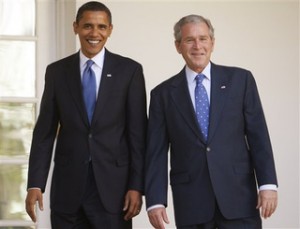
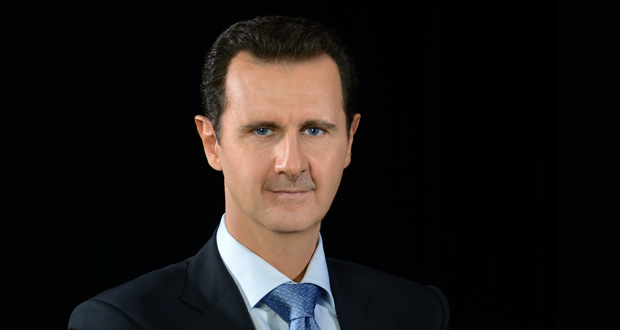
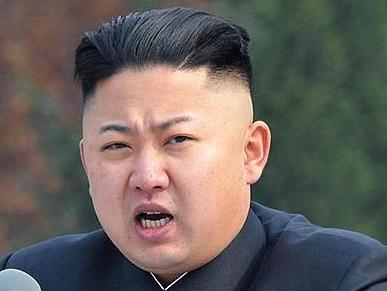
 Aletho News
 Aletho News

