‘UK trains armies on its own human rights blacklist’
Press TV – May 23, 2016
The British government is providing military training to the majority of nations it has blacklisted for human rights violations, a new report reveals.
In a report published on Sunday, the Independent revealed that 16 of the 30 countries on the Foreign & Commonwealth Office (FCO)’s “human rights priority” watchlist are receiving military support from the UK despite being accused by London itself of issues ranging from internal repression to the use of sexual violence in armed conflicts.
According to the UK Ministry of Defense, since 2014, British armed forces have provided “either security or armed forces personnel” to the military forces of Saudi Arabia , Bahrain, Afghanistan, Bangladesh, Myanmar, Burundi, China, Colombia, Egypt, Iraq, Libya, Pakistan, Somalia, Sudan, Yemen and Zimbabwe.
Britain is a major provider of weapons and equipment such as cluster bombs and fighter jets to Saudi Arabia in its year-long military aggression against Yemen that has killed nearly 9,400 people, among them over 2,230 children.
Since the conflict began in March 2015, the British government has licensed the sale of nearly $4 billion worth of weaponry to the Saudi kingdom.
British commandos also train Bahraini soldiers in using sniper rifles, despite allegations that the Persian Gulf monarchy uses such specialist forces to suppress a years-long pro-democracy uprising in the country.
Bahraini forces visited the Infantry Battle School in Wales last week, accompanied by troops from Nigeria, the Defense Ministry said.
Nigeria’s top military generals are accused by Amnesty International of committing war crimes by causing the deaths of 8,000 people through murder, starvation, suffocation and torture during security operations against the Boko Haram Takfiri terrorists, according to the report.
Andrew Smith, with the Campaign Against Arms Trade, said Britain should not be “colluding” with countries known for being “some of the most authoritarian states in the world.”
Nigerian president doesn’t want Cameron corruption apology… just all the country’s money back
RT | May 11, 2016
Nigerian leader Muhammadu Buhari used a keynote speech at a major anti-corruption conference in London to blast Prime Minister David Cameron for calling the African country “fantastically corrupt.”
The conference, which is currently underway, was meant to address global corruption, but a shadow was cast when Cameron was caught on camera calling Afghanistan and Nigeria “fantastically corrupt” in a conversation with the Queen and Speaker of the House John Bercow.
“What would I do with an apology? I need something tangible,” Buhari said.
“I am not going to demand any apology from anyone. What I am demanding is a return of assets.”
Buhari freely admitted before his address that his country had a graft problem and is thought to have been referring to major assets stashed in the UK by corrupt Nigerian figures.
In April 2016 a group of leading figures from Nigerian civil society raised a similar issue in an open letter, demanding Britain end its role as a “safe haven” for white-collar criminals who steal Nigeria’s wealth and resources for personal gain.
The letter’s signatories stressed the devastating effect corruption can have on ordinary citizens, stunting economic growth and exacerbating violent conflict and mass migration in its wake.
“Our Nigeria is one of those countries that has most bitterly suffered the impact. Despite the blessings of nature, which endowed us with abundant oil wealth, our infrastructure is deplorable,” the letter said.
The conference, a pet project of the PM’s, is likely to see Cameron file a motion to create a global anti-corruption body.
However, his plans have been attacked by critics on the basis the organization would have no meaningful powers of enforcement, instead relying on national and international policing agencies to intervene.
The summit comes only weeks after Cameron himself was caught up in a scandal relating to his father’s offshore company, Blairmore Holdings.
Following the Panama Papers leak that showed Cameron had profited from offshore tax schemes, the parliamentary standards committee said the PM would not be investigated. It gave no reason why.
Bodies of Shias killed by Nigeria army must be exhumed: Activists
Press TV – April 29, 2016
Rights activists have called for the bodies of hundreds of Shia Muslims massacred by the Nigerian army last December to be exhumed for further investigation into the exact number of victims.
Residents in the northern city of Kaduna, where the carnage took place, have rejected the official death toll and said a local inquiry into the incident suggests the government figures may be a gross underestimation.
On December 12, Nigerian soldiers attacked Shia Muslims attending a ceremony at a religious center in Zaria, accusing them of blocking the convoy of the army’s chief of staff and attempting to assassinate him.
A day later, Nigerian forces raided the home of Sheikh Ibhrahim al- Zakzaky, who leads the Islamic Movement of Nigeria (IMN), and arrested him after killing those attempting to protect him. Both incidents led to the deaths of hundreds of members of the religious community.
Rights groups say there is evidence Nigerian military had secretly buried hundreds of bodies in mass graves.
Meanwhile, Mohammed Mustapha and Nura Adam, two eye-witnesses, have also painted a horrific picture of the massacre.
Referring to a mass grave outside Kaduna, Mustapha said the local “government claimed they buried 347 people here but we know the actual number is far more than that.”
Mustapha also recalled how earth-moving equipment was brought into the cemetery near the Nigerian Defense Academy in the troubled region on December 14 to dig a pit for the burial.
He also noted that at about 11:00 p.m. (2200 GMT) armed forces cordoned off the narrow path leading to the burial ground shortly before trucks filled with bodies arrived.
“I counted six huge trucks and several military vans laden with dead bodies driving into the cemetery for the mass burial which residents were not allowed to witness,” said Adam.
“It took them five hours to finish the burial, which was an indication that the bodies were more than 347 because it doesn’t take that long to thrown in such a number of bodies into a pit,” he added.
Adam also said the bodies should be exhumed to confirm the exact number of the dead, adding that the world would be “shocked by the true number of those buried.”
However, Abdulhakeem Mustapha, counsel to the Kaduna state commission of inquiry probing the incident, has said local public officials do not have any authority to force the central government in Abuja to take action over the massacre.
“This is an investigative committee. It doesn’t have powers to issue orders,” said Mustapha, adding, “It is going to make its recommendations to the government on what it believes are the best ways to resolve the problem based on its findings.”
Last week, Amnesty International said in a report titled “Unearthing the truth: unlawful killings and mass cover-up in Zaria,” on April 22 that the Nigerian army killed over 350 supporters of Zakzaky and tried to meticulously destroy evidence of the crime by burying the victims in mass graves.
The report also blames Nigerian President Muhammadu Buhari’s administration for failing to probe army crimes against civilians.
Despite Buhari’s pledge to investigate the war crimes, “to date no concrete steps have been taken to end endemic impunity for such crimes,” it pointed out.
Human Rights Watch (HRW) has also slammed the carnage and said Nigerian forces committed several instances of bloodshed against the country’s Shia community in mid-December 2015.
The Nigerian army had also targeted Shias in August 2014 as people were holding a demonstration to condemn Israeli attacks on the Palestinians.
Calls mount for immediate release of Nigerian cleric
Press TV – April 6, 2016
A Nigerian human rights lawyer has called for the immediate and unconditional release of senior Shia cleric and leader of the Islamic Movement of Nigeria (IMN), Sheikh Ibrahim al-Zakzaky.
In a Tuesday letter to the director general of the Department of State Services (DSS), Femi Falana said that Zakzaky and his wife Zeenat should be freed from “illegal detention” within 24 hours.
Zakzaky and his wife have been in detention since December last year.
The clergyman is said to have been charged with “criminal conspiracy and inciting public disturbances.”
Falana said “even though our clients have not been told that they breached any law, they have been denied access to their lawyers, personal physicians, and family members for over three months.”
“Our clients were only permitted to meet with us last Friday after several requests made by us had been turned down without any legal basis,” he added.
Falana further noted that Zakzaky had lost his left eye due to the brutal attacks during his arrest, and that the doctors “are currently battling to save the right” eye.
The Islamic Human Rights Commission also called for the immediate and unconditional release of Zakzaky.
The London-based NGO slammed the persecution of Sheikh Zakzaky and his Islamic Movement in Nigeria as an affront to all civilized and democratic values.
It also urged the Nigerian government to bring to justice all those responsible for the unprovoked attacks on Zakzaky and his supporters.
On December 12, 2015, Nigerian soldiers attacked Shia Muslims attending a ceremony at a religious center in the city of Zaria, accusing them of blocking the convoy of the army’s chief of staff and attempting to assassinate him.
Over 700 Shias missing after Nigeria army raids: Shia group
Press TV – January 14, 2016
A Nigerian Shia group says more than 700 of its members are still unaccounted for a month after the deadly attacks by Nigerian forces against Shia Muslims in the northern city of Zaria.
In a statement released on Thursday, Ibrahim Musa, the spokesman for the Islamic Movement of Nigeria (IMN), whose leader Sheikh Ibrahim al-Zakzaky is in police custody, said about 730 people have gone missing since December 12, 2015.
“These missing people were either killed by the army or are in detention” but their “whereabouts are still unknown and undisclosed,” Musa said.
He further noted that some 220 IMN members were in a prison, located in the city of Kaduna, the capital of the state with the same name, while others were in military custody elsewhere across the African state.
On December 12 last year, Nigerian soldiers attacked Shia Muslims attending a ceremony at a religious center in the northern city of Zaria, accusing them of blocking the convoy of the army’s chief of staff and attempting to assassinate him. The Shias have categorically denied the allegations.
The following day, Nigerian forces also raided Zakzaky’s home and arrested him after reportedly killing those attempting to protect him, including one of the IMN’s senior leaders and its spokesman.
Both incidents led to the deaths of hundreds of members of the religious community, including three of Zakzaky’s sons. There has been no official death toll in the violence, but rights activists have put the number at over 1,000.
Musa said no Nigerian family had received a body for burial in the weeks since the Zaria violence.
The Shia cleric is said to have been charged with “criminal conspiracy and inciting public disturbances.”
The IMN has called for Zakzaky’s unconditional release and for Abuja to respond to the “unjustifiable atrocities committed by the army.”
Sayyed Nasrallah Speech 21/12/2015
Regarding the assassination of the martyr Samir el-Kuntar
– After a few days, there will be the anniversary of the birth of Jesus Christ – and on this anniversary, we extend our greetings to all the Christians and Muslims. A few days later, is the anniversary of the birth of Prophet Mohammed, and we extend our greetings to all the Muslims on this occasion and we ask God for the blessings of both these two prophets to extend mercy and security and happiness to all the region and to open the hearts and minds of all to love and mercy that these two great leaders brought to the world.
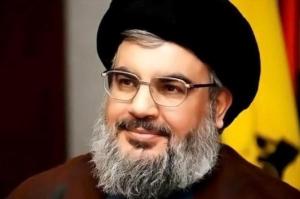 – Yesterday, we lost one of our brothers who shared in the birth of Hezbollah from its first hours and carried heavy responsibility for 33 years – el Sheikh Mohammed Khatoun. I shall speak more about him at the date of his funeral tomorrow. I extend condolences to his family and loved ones.
– Before I speak about the main event – I want to speak about what happened in Nigeria a few days ago – a massacre in Zariah. Hundreds were killed. Hundreds were injured. Hundreds were detained. We include our voice among the voices of all who condemned this massacre, and we condemn the silence of all those who chose to be silent – a horrific silence. There is talk of up to 1,000 killed. And we call on the Nigerian government and its political parties – to act with strength to hold those responsible and to have a national and humanitarian response. I worry that there are American or Israeli hands or Takfiri hands that are behind this horrific massacre – designed to create more bloodshed in Nigeria.
– Back to our main point of discussion
– The assassination of the General of the Political Prisoners in the Israeli Jails – the brother, the martyr, Samir el Quntar
– (1) The facts. We have no doubt that the Israeli enemy is the one behind the assassination. It was not a covert operation – but an open attack. The assassination was by Israeli jets – against a residential home, that specifically targeted Samir el Quntar and other fighters and civilians. Did the Israeli jets enter Syrian air space or the did the Israeli jets fly over occupied Golan Heights – that is a detail, one that does not change anything, unless the discussion is about Syria and Russia and today that is not our focus. What is clear is that it was an Israeli attack against a residential home in Geramana in the outskirts of Damascus. I extend condolences to all those martyred. Anyone who kills a man like Samir el Quntar does a service to Israel.
– (2) We know and Samir knew and the Israelis themselves did not hide – that Israel would not leave Samir el Quntar alive, from the first day of his release. The threat was alive throughout all the years, months, days. Israel was very open that it would not forgive him for his past nor on his strength and resilience in jail nor on his dedication to the resistance. Israel does not forgive – it is our governments that forgive the murderers of Deir Yassin to Qana. This talk by Israel was before the plan for building resistance in the occupied Golan Heights. We in Hezbollah hold the enemy Israel responsible for the assassination of Samir el Quntar
– (3) In this night I do not want to talk about the characteristics of this great martyr. I shall simply say tonight that Samir el Quntar was a lover of Palestine. Palestine was all his love and filled his heart and mind. Palestine’s destiny and the destiny of Palestine’s people and the future of the resistance was always his first and main focus. In our first visit upon liberation, he and I spoke – and we always leave options open – I told him that he has numerous options – politics, media, and military. He said then what he told others publicly: I left Palestine to return to Palestine. He told me that from this very moment I am ready to participate in any military operation, whether on the border with occupied Palestine or within occupied Palestine. I await my martyrdom, he said. It would be an honor to me to be a fighter, he said. That is Samir, that is his truth that we must say today. Does the enemy Israel imagine that by killing Samir and those like him that they can kill such love and passion and commitment and the vast sacrifice of the people of this nation? Many great leaders have been killed and tens of thousands of people have been martyred – in Palestine and Lebanon and Syria and Egypt and Jordan. And what was the result? Has this nation and these people and these generations given up on Palestine? NO. A generation grew up to inherit resistance and to give it to the next generation. The blood of Samir el Kuntar and those who passed before him – is that the resistance against Israel for liberation is a call that will not be broken, regardless of who will be killed and detained and tortured; this is a call that will not be broken. Look now at the people of occupied Palestine – this is a generation that is as old as Samir el Kuntar was when he went to occupied Palestine (i.e. 17). The youth of Palestine fight death with death. Tens of them have been martyred as they fight with knives – because that is their only option. They have entered terror in the hearts of the enemy. When we see a youth in her prime – such as (martyr) Ashraqat Tamami – and when I speak of her, I speak of all the youth of Palestine, I discovered that this youth (female) had a great deal of awareness and clarity and dedication and deep understanding to the cause that she wants to sacrifice for and to the understanding of the enemy and the friend, and for the calmness of her decision. Ashraqat is today a model for many of Palestine’s youth – who love with a passion the land and freedom. They carry the same passion that Samir el Quntar carried and it remained in his heart until a traitorous Israeli rocket killed him.
– (4) Our position. When Israel attacks, anywhere it chooses and how it chooses and in any time it does, it is the right of the resistance – anywhere, and any way, and in any place, and at any time. Today, I repeat: from now, any member of Hezbollah that is killed, we shall hold the responsibility to the Israelis and we shall consider it is our right to respond at any time, at any location, and in the manner we choose. We said this on the 30th of January 2015. Today, we say, to the enemy and to the friend, Samir el Quntar is one of us, and he is a leader in our resistance, and Israelis killed him, and it is our right to respond to his assassination in the time, place, and in the manner that we choose. That is our right. And I add – we, in Hezbollah, we shall fulfill this right.
– (5) In the same vein, the killing against Hezbollah and this resistance, comes the US actions that seek to target Hezbollah on a number of levels. Since the early 90s, we as a party have been on the terrorism list – as a political party and as individuals. And for decades, the Americans have tried to force this description on other countries; they were not successful. Such a description is not accepted by the UN, and the EU, only lately, considers the military wing on the terrorism list, and China and Russia do not consider us as such. What the Americans decided to do now – even though they support terrorism worldwide — is that they consider us a criminal organization and not terrorism, claiming that we are drug dealers and that we are money launderers and that the US Congress now seeks to investigate the accusation that we are human traffickers. These accusations are false and have no basis in truth. It is our duty to deny them. We are not due to show evidence of our innocence. It is their responsibility to show evidence – if they have any, although they have long made accusations without evidence. Clearly, these accusations are political – and it’s first objective is to show Hezbollah in a bad light. They are the ones who spent millions of dollars, as per their own Ambassador, to create propaganda against Hezbollah for the Arab youth. We have a strong example here: the international organization of nuclear energy presented a report about the Iranian nuclear energy – and they said that the Iranian nuclear energy is peaceful and at the very least, since 2009 until today, there is no evidence of anything military in the Iranian nuclear energy. They presented the evidence, and one of the panel of the international organization is an American and there was a consensus on the report! A full consensus. Let us remember that it was the Americans that accused Iran for years. Also the Europeans. And let’s not forget Netanyahu in many occasions, including his speech at the UN. Netanyahu should be a joke internationally and even for Israel – let’s remember his chart at UN when he said that Iran would have a nuclear bomb in a few months. And now we have this report – with consensus – that there is no evidence of military usage of Iran’s nuclear energy. Let’s remember that they were planning a war against Iran, and they enforced sanctions against more than 80 million people, and they threatened, unfortunately with some of their Arab collaborators. That is just one example of a political accusation. The accusations against us are small in comparison. With the battle against us, they won’t accuse us of getting nuclear weapons. This is what they have to say against – either terrorist or criminal. That is the end of their line. The line of their lie is short. The truth will eventually be exposed. We know, in front of God, in front of our people, in front of many people, this is not who we are. If they think their accusations are a propaganda war, it will fail. From a financial perspective, they have now forced upon international banks to freeze Hezbollah funds – well, this was closed a long time ago. We do not have funds in international banks. Now, they are also putting pressure on Lebanese banks and the Lebanese central bank – to put pressure on any organization that is claimed to be tied to Hezbollah. We also state today, and state it again, we have no funds in Lebanese banks, not in the past nor in the present, nor do we have funds that we put in any banks. Nor do we transfer our funds via Lebanese banks – so there is no need for either the Lebanese central bank or any Lebanese banks to feel fear of being chased by the Americans. Furthermore, as I have stated before and shall say again, we are not a business nor an investment. We do not have companies nor are we partners with any Lebanese merchants. Whatever funds we have, we give to our resistance and to the families of the injured and the martyrs. We do not have an extra penny that we invest or put in any fund.
– Based on this, we have to speak seriously about this – it is the responsibility of the Lebanese Central Bank and the Lebanese banks to protect the Lebanese consumers and merchants! It is enough that one sign come from the Americans for there to be an accusation against an individual, and these banks immediately follow. Does this country not have sovereignty? Not have its own courts? Its own state? There are Lebanese merchants and investors that are hurt. We are not hurt. But now if Americans want to target a particular political current or a particular community, all they do is give the names to the Lebanese banks! These are Lebanese who should be protected by the Lebanese State. I do not ask the Lebanese State to protect any member of Hezbollah – but at the very least, it is the responsibility of the State to protect the men and women of this country. No one is asking the State to declare war on the US, only to ask for evidence for these accusations and to take the evidence to the Lebanese courts. This has already begun — this subservience to the US!
– Furthermore, with regards to the media, whether it is part of our network (Manar and Nour) or accused of supporting us or even empathizing with us – they are being threatened! The US is accusing you and judging you in absentia and charging you and killing you and you are not allowed to speak and if you speak, your voice cannot reach anywhere in the world. That is the freedom and democracy of the United States. Your media is not allowed – and maybe it will reach the stage that any media that shows the truth will be accused of being pro-terrorism, while knowing of course that anyone with a Dish can see hundreds of channels that call for takfiri [intolerance] and for killing and raping and committing terrorism and destruction and occupation and violence; those channels are accepted. But you and your type of the resistance are targeted, and the real reason is Israel, and not our position in Yemen or otherwise, but the real reason is that you are a resistance! The intention is Resistance itself – the discourse, the culture, the knowledge base of Resistance!
– Media is part of the struggle. We will not surrender. We will look for all options and opportunities so that the voice of Resistance and the voice of all who reject the project of Israel and the US in the region – those voices will be heard. This is an ongoing struggle.
– What is more important about all these actions against us, is how we look upon all these actions. You can see the negative, but there is also the positive. The fact that Congress sits and meets and has consensus and continues to think about new ways to fight us – means that we are in the right place. They have given us more faith and strength. It shows that we are in the right struggle, the right battle, the right discourse. Who ever finds himself – knowingly or not – a partner with the US and Zionism, let him re-examine his nationalism and religion and ethics! These actions by the US are also a recognition of us, that we are not a small group with small consequences. It is a recognition that Hezbollah plays a large role in Lebanon and in the region in fighting the Israeli project and the hegemonic project. As part of the Resistance – and we don’t claim to fight alone, just as we didn’t fight alone in 1982 and since – there were many US projects of hegemony, we are part of this battle and not alone. That is why the US Congress needs to take these declarations with clear time lines — they take us seriously. We also say that we understand these actions, see how loving we are. We understand these actions. When we are enemies to each other, and this is a compliment to us – to be enemies to the US and to Israel and enemies to all who want to steal the riches of our people and to all who want to destroy our civilization, we understand that they would want to do all these things, and we also will not surrender in this battle. I say to the US and to Israel and to their allies in the region: all these actions against us, from sanctions and murders, you will not be able to erase us. All the actions against us and are planned against us – will only increase our commitment.
– May God have mercy on our great martyr Samir el Kuntar…
Translation by Rania Masri [not word for word]
Nigerian army bulldozes Shia religious center in Zaria

Hussainiyyah Baqeeyatullah in Nigeria’s northern city of Zaria before its reported destruction
Press TV – December 21, 2015
The Nigerian army has completely demolished a religious center belonging to the Islamic Movement in Nigeria (IMN) following the recent massacre of Shia Muslims in the West African country.
The IMN’s website cited a local source as saying that the army bulldozed Hussainiyyah Baqeeyatullah in the northern city of Zaria in Kaduna State on Sunday.
This comes nearly a week after Nigerian soldiers opened fire on the people attending a religious ceremony at the site. Local media said more than a dozen people were killed during the December 12 raid.
The military accused the Shias of stopping the convoy of Nigeria’s Chief of Army Staff Lieutenant General Tukur Yusuf Buratai and attempting to assassinate him. The IMN and its leader Ibrahim al-Zakzaky strongly rejected the assassination accusation.
IMN spokesman Ibrahim Usman also rejected an accusation by local officials that the movement had “blocked roads for four days” during the religious ceremony, which marked Arba’een, the fortieth day to follow the martyrdom anniversary of Imam Hussein (PBUH), the grandson of Prophet Muhammad (PBUH) and the third Shia Imam.
One day later, Zakzaky was arrested during a raid by the army on his residence and the buildings connected to the Shia community in Zaria. Local sources say hundreds of people trying to protect the cleric, including three of his sons, were killed in the raid.
Nigeria Shia leader to face prosecution: Nigerian official
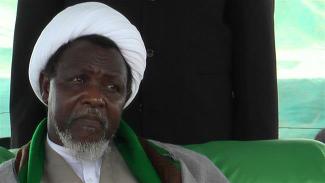
Nigerian Shia leader Ibrahim al-Zakzaky
Press TV – December 20, 2015
Nigerian authorities say Shia leader Ibrahim al-Zakzaky, who has been arrested and whose family and supporters have faced a bloody crackdown, will face prosecution.
On Saturday, Nasir al-Rufai, the governor of Kaduna State in north-central Nigeria, where Zakzaky was arrested in his home city of Zaria last week, said the cleric “will be prosecuted for any crimes that he may have committed,” Nigerian newspaper THISDAY reported on Sunday.
“That is the decision for the federal authorities. There are state and federal crimes,” the official added, making it clear that the case would be brought against the cleric by Abuja rather than local officials. “There is a government and a constitution and we are resolved to follow the constitution and due process.”
Nigerian forces raided the house of Zakzaky, the head of the Islamic Movement of Nigeria (IMN), last Sunday and arrested him after reportedly killing individuals attempting to protect him, including one of the movement’s senior leaders and its spokesman.
Nigerian soldiers had opened fire on Shia Muslims attending a ceremony at a religious center in the city the previous day, accusing the Shias of stopping the convoy of Nigeria’s Chief of Army Staff Lieutenant General Tukur Yusuf Buratai and attempting to assassinate him. Zakzaky was planning a speech at the center, and the IMN has strongly rejected the assassination accusation.
The attack on Zakzaky’s residence and the violence during the road incident led to the deaths of hundreds of the members of the religious community, including three of Zakzaky’s sons.
The IMN spokesman, Ibrahim Usman, meanwhile, rejected the accusation by the governor that the movement had “blocked roads for four days” during the religious ceremony, which marked Arba’een, the fortieth day to follow the martyrdom anniversary of Imam Hussein (PBUH), the grandson of Prophet Muhammad (PBUH) and the third Shia Imam.
“Clearly, this is a deliberate attempt to twist the facts. During the Arba’een symbolic treks, we block only limited part of the road, and this is to protect persons from traffic accidents, control mass movement and avoid chaos on the roads,” Usman said.
“The governor here was trying to give the impression of a complete occupation of a lane for four days. That was not the case. Blocks were only from junction to junction on the roads. The public was informed about these little inconveniences with apologies on public radio and television stations throughout the trek. Road users during the period would be surprised by the governor’s statement,” he said.

Shia Muslims in Nigeria march during a procession marking Arba’een. (File photo)
Rufai has also announced that a judicial commission of inquiry has been set up to look into the attack on the cleric’s residence.
The IMN has said it does not trust any likely findings by the state investigators, adding that authorities have refused to listen to the Shia community about what happened in Zaria and are only focusing on the army’s account.
US Company’s Rice Plantation Pushes out Nigerian Communities
teleSUR | January 29, 2015
After years of working with the government to develop a sustainable community agriculture system, over 40,000 Nigerians will now have to fend for themselves after their land was given away to U.S. food company Dominion Farms, international human rights groups told teleSUR Thursday.
“The land in question is taken from the farmers,” Raymond Nyayiti Enoch from the Center for Environmental Education and Development (CEED) Nigeria told teleSUR via email.
“Added still, they will have no alternative fertile land of food production because the Federal Government Agency, the Upper Benue River Basin Development Authority (UBRBDA) have spent years developing the land and working with the farmers to boost food production in the way and manner beneficial to the farmers and their community,” he said.
A report was released Wednesday detailing a land grab case in the Gassol community in Nigeria’s northeastern Tabara State, where Dominion Farms has taken over a large swath of fertile community land in order to develop a 300-square-kilometer rice plantation.
The move comes as a shock to the communities, who were kept in the dark about the development decision and who had previously been working with the government to develop small-scale, community agriculture that they could depend on for food.
For years, the federal government has been trying to increase international investment in Nigeria’s agriculture sector in order to increase local food production and become a food exporter in order to increase GDP.
However, according to Enoch, potential economic benefits for the country come at a high price. The secretive way in which the government carried out the transaction with Dominion Farms could cause internal conflict, not only between the federal government and the tens of thousand of Nigerians affected by the sudden loss of land, but also with the government-led UBRBDA who the federal bodies involved excluded from the deal.
“It poses a potential conflict that would mar the production process even before its started,” said Enoch, who added that this will make it hard to attract further international investment.
Ange David, member of GRAIN, an international rights group that supports small farmers, said the government is taking the wrong tactic if its trying to improve its economy.
“Nigeria has a target to resolve the problem of employment, so how [will it] resolve it by this kind of ‘investment’ who will put more than 40,000 persons on the street or push [them] to leave their village and to join the urban zone like Abuja or Lagos,” David told teleSUR in an email, referring to two of the most populous cities in Nigeria that experience high poverty rates.
“As we know, the major occupation of the people of Taraba is agriculture,” said David. “So how can we imagine that this land grab can help that communities who will lose the land for ever.”
According to Enoch, this is the first major land grab in Nigeria, with several others “looming” across the country, including in the same state of Tabara.
Nigeria is one of the many countries around the world being affected by U.S. multinational companies and their land grabbing strategies.
In Sierra Leone, a western African nation embattled by Ebola, the people have joined forces to combat another virus, that of “multinational companies,” which have recently taken advantage of the poverty stricken communities to buy up their lands at negligible prices. This only benefits the corporations, leaving the population without the possibility of cultivating their own land.
Also see: Paraguay: Big Business Want to “Eliminate Farmers and Indigenous Communities” Says Activist
Nigeria Announces Truce With Boko Haram
teleSUR | October 17, 2014
The Nigerian military announced on Friday that it reached a ceasefire agreement with the Islamist militant movement, Boko Haram, and that the Nigerian schoolgirls who were kidnapped by Boko Haram will be returned to their families.
Air Chief Marshal Badeh first spoke about the truce after a three day meeting between Nigeria and Cameroon. The BBC is reporting that the negotiations were mediated by Chad.
An official with Nigeria’s security forces told Reuters “Commitment among parts of Boko Haram and the military does appear to be genuine … It is worth taking seriously.”
Boko Haram has not made any statement about a truce.
The school girls were abducted from Chibok, a town in the northeastern state of Borno state, six months ago. Through the efforts of Nigerian women activists, the kidnapping of the girls became an international cause and brought Boko Haram onto the world stage. The Nigerian government has been strongly criticized by local as well as international human rights groups for its “lackluster” efforts to retrieve the girls. The release of the girls will be finalized next week in Ndjamena, Chad’s capital.
The Nigerian government spokesperson said that Boko Haram will not be given any land, but that the national government will not say what compromises it has made toward the militant group.
Boko Haram was founded in 2002 and has been fighting with the Nigerians military since 2009. More than 2,000 civilians have been killed this year in this conflict.
Featured Video

America Racing to Strategic Defeat in Iran
or go to
Aletho News Archives – Video-Images
From the Archives
Should Europeans ‘Thank’ the Americans for Destroying Nord Stream?
By Robert Bridge | Strategic Culture Foundation | September 29, 2022
With an investigation continuing into the destruction of the Nord Stream gas pipeline that provided energy supplies to Europe from Russia, there appears to be just one prime suspect, and that should surprise nobody.
Following the sabotage of the Nord Stream 1 and 2 gas pipelines, former Polish Foreign Minister Radoslaw Sikorski already seemed to know the identity of the perpetrator when he tweeted out: “Thank you, USA.”
At first glance, it seemed that Sikorski was speaking sarcastically, berating Washington for carrying out an attack that will have severe repercussions for the people of Europe. After all, how could anyone see any good coming from the termination of Europe’s primary source of gas reserves with winter just around the corner? It was Sikorski’s homeland of Poland, after all, that urged its citizens to collect firewood in the face of dwindling gas reserves.
In fact, the Polish diplomat was speaking one-hundred percent literally… continue
Blog Roll
 Aletho News
- Growing insecurity, soaring prices fuel protests in north as regime bans evacuation: Sources
- Iran denies responsibility for ‘depraved’ attack on Kuwait desalination plant
- Bring The Troops Back. End This War Now!
- Can we please stop calling Israel the ‘only democracy in the Middle East’ now?
- US should start removing its troops for Germany, proposes AfD co-leader Chrupalla
- Iran Red Crescent: 600 educational centers attacked in US-Israeli ‘war crimes’
- Russian Oil Tanker Arrives in Cuba Amid U.S. Blockade
- America Racing to Strategic Defeat in Iran: Lt Col Daniel Davis
- FTC Warns Visa, Mastercard, PayPal, Stripe Over Political Debanking
- Russian tanker approaches Cuba despite US oil blockade
- If Americans Knew
- Israeli police block Catholic cardinal from entering Church of the Holy Sepulchre on Palm Sunday
- Israel is assassinating journalists again, more than any other nation, anywhere, ever – Not a ceasefire Day 170
- Over 300 US service members wounded, majority have brain injuries – Not a ceasefire Day 169
- Researchers at Human Rights Watch Resign Over Blocked Report on Palestinian Refugee Return
- Jewish Groups Are Backing a War Americans Don’t Want
- Eric Fingerhut Thinks He’s the President of the Jews
- Top Jewish Philanthropists, Rabbis Urge Israeli President to Take Action Against ‘Jewish Extremists’
- Don’t Be Fooled. Zionist Leaders Have Always Wanted to Control Southern Lebanon
- Israel’s widespread use of torture is a core element of its genocide against the Palestinian people
- In Israel’s War on Iran, Many Middle East US Bases Rendered “All But Uninhabitable”
- No Tricks Zone
- New Study Finds Warming Saves Lives…Cold Temperatures 12 Times More Deadly Than Excess Heat
- German Science Blog Accuses PIK Climate Institute Of Hallucinating Climate Tipping Points
- Devastating Assessment Of Comirnaty Vaccine By Former Senior Pfizer Europe Toxicologist
- New Study: CO2 Is ‘Effectively Negligible’ As An Explanatory Climate Change Factor Since 2000
- Former Pfizer Toxicologist Dr. Helmut Sterz Tells Bundestag Hearing Pfizer Vaccine Should Have Never Been Approved
- Energy Expert: Germany’s Nuclear Phaseout Was A “500 Billion Euro Mistake”
- New Research: South Australia’s Mid-Holocene Sea Surface Temperatures Were 4°C Warmer Than Today
- Storing Green Energy To Last Germany 10 Days Would Require A 60-Million Tonne Battery
- New Studies: UK Sea Levels Were 4 Meters Higher Than Today During The Mid-Holocene
- Destructive Green New Deal: German Energy And Metal Group Warns Of Drastic Crisis
 Aletho News