New frontiers for oil palm
Communities lose out to oil palm plantations
GRAIN | September 22, 2014
Palm oil is not something you would associate with a Mexican kitchen. But go to any supermarket in the country, and you will find countless products containing it. The country’s food system has changed immensely since the North American Free Trade Agreement (NAFTA) came into effect in 1994 and multinational companies moved in to take control of the country’s food supply. The alarming rate of obesity, now higher than that of the US, is one manifestation of Mexico’s changing food landscape, and tied to this is the escalating consumption of palm oil.
Palm oil consumption has increased by over four times since NAFTA was signed, and it now accounts for one quarter of the vegetable oil consumed by the average Mexican, up from 10% in 1996. Other countries in Latin America undergoing similar changes to their food systems have also increased their consumption of palm oil. Venezuelans have doubled their intake, and Brazilians are consuming 5 times what they did in 1996.
This growing consumption is matched by growing production, not in Mexico, but in those countries where oil palm can be most cheaply produced. A third of Latin America’s palm oil exports now go to Mexico.
Colombia, with about 450,000 ha under production, is the biggest palm oil producer in the Americas. Since the late 1990s, Colombia’s palm oil production has taken off for several overlapping reasons, including government incentives and a national biodiesel mandate. Oil palm has also been promoted as a substitute crop for coca as part of the US-backed “Plan Colombia” – a programme aimed at ending the country’s long-standing armed conflict and curbing cocaine production. Paradoxically, palm oil is also proving a useful way for drug cartels, paramilitaries and landlords to launder money and maintain control of the countryside.
The most notorious land grabs for palm oil in Colombia have occurred in the north west Chocó province, where businessmen and paramilitaries have colluded to force Afro-Colombian communities to cede their territories for palm oil plantations and contract farming. After dozens of Afro-Colombian leaders were killed resisting such land grabs, Colombia’s Prosecutor General’s Office brought forward charges against 19 palm oil businessmen for crimes of conspiracy, forced displacement, and the invasion of ecologically important land. Three of these businessmen have so far been convicted.
Disease outbreaks have limited palm oil’s expansion in Chocó Province and most of the expansion has instead happened on the pasture lands of the central and eastern parts of the country, where the oil palm industry claims there is little deforestation and displacement of peasants. But studies show that these pasture lands are in fact typically common areas vital to peasants for the production of their food crops and the grazing of their livestock. The “pasture lands” are often the only lands that peasants have access to, and palm oil companies routinely use force and coercion, including paramilitaries, to take control of these lands from them or to force them into oppressive contract production arrangements. Across Colombia, the expansion of palm oil and the presence of paramilitaries are tightly correlated.
Ecuador, Latin America’s second largest palm oil producer, has also seen a recent expansion in oil palm production. While much of its palm oil is produced on farms of less than 50 ha, new expansion is driven by private companies who have been moving into the territories of Afro-Ecuadorians and other indigenous peoples in the Northern part of the country, leading to severe deforestation and displacement and meeting with stiff local resistance.
Land conflicts over palm oil are also erupting in Central America. In Honduras, peasants in the Aguan Valley have been killed, jailed and terrorized for trying to defend their lands and small palm oil farms from powerful national businessmen who have been grabbing their lands to expand their palm oil plantations with the backing of foreign capital. Ironically, these peasant families first moved into the forests of the Aguan in the 1970s as part of a government land reform programme, and were encouraged to grow palm oil and establish their own cooperatives. The neoliberal policies of the 1990s and a coup d’état in 2009, opened the door for powerful local businessmen like Miguel Facussé, to destroy the peasant cooperatives, violently grab lands for plantations, and reorient the supply chain towards exports for biofuels and multinational food companies. Likewise in Guatemala, where production of palm oil has quadrupled over the past decade, the palm oil sector is now entirely controlled by just eight wealthy families who have been aggressively seizing lands from indigenous communities, such as the Q’eqchi,
Some industry insiders predict that an expansion of oil palm production in Brazil will soon dwarf all other production in the region. Brazil is a net importer, and production has so far been confined to a small area of Pará, in the North. But, unlike in other regional palm oil producing countries where production is dominated by national companies and wealthy landowning families, transnational corporations have recently made significant investments in Brazilian palm oil production, such as the mining company Vale, energy companies Petrobras and Galp, and ADM, one of the world’s largest grain traders and a major shareholder in the world’s largest palm oil processor Wilmar.
Going further
Tanya M. Kerssen, “Grabbing Power: The New Struggles for Land, Food and Democracy in Northern Honduras,” FoodFirst, 1 February 2013
Human Rights Everywhere, “The flow of palm oil Colombia- Belgium/Europe: A study from a human rights perspective,” 2006
Fighting Income Inequality Requires a Return of Manufacturing Jobs
By Arshad M. Khan | Dissident Voice | February 1, 2014
A recurrent theme in this administration is often spellbinding rhetoric followed by … well, very little in the way of follow-through programs. Lately, there has been the inequality issue. Taken up once more in the State of the Union (SOTU) address, the remedy proposed was an increase in the minimum wage. Yes, it needs to be raised but to focus on it alone simply evades the complexities to be navigated to confront the challenges of inequality.
One major cause is the export of well-paid manufacturing jobs and with them proprietary technology and skills. Higher and higher level jobs (and concomitant expertise) are being exported. Ross Perot’s ‘whoosh of jobs’ in the wake of NAFTA will become a hurricane (or more accurately a typhoon) as the Trans Pacific Partnership (TPP) is realized. Yet, the administration sees no contradiction in promoting TPP vigorously and attacking income inequality rhetorically. NAFTA failed to render a level playing field for the American worker by excluding environmental safeguards, working conditions, worker safety and benefits (even on a purchasing-power-parity equivalence). The secretive negotiations for TPP are expected to do the same.
As a result, almost everything we use in our daily lives is made abroad: refrigerators, ovens, microwaves, dishwashers, TVs, computers, phones, fixtures, fittings, clothes, shoes, automobiles among which even iconic names often have innards imported, pet foods, toys, etc., etc. Gone with them are the jobs of the men and women who built them. Even high-end airplane manufacture is not exempt. Consider the new 777: While Boeing is responsible for a major portion of the structure, Mitsubishi, Kawasaki and Fuji are significant contributors furnishing fuselage panels and the wing center section. Other bits and pieces have been contracted elsewhere in the world including Australia, Brazil, Korea and Italy. The concept differs from Airbus which retains almost all its jobs and technology in Europe. Also in contrast, Boeing recently threatened to pack up and shift the manufacture of the 777x forcing machinists into benefits concessions.
Germany which exports few jobs follows a model encouraging job retention. Very simply a company’s supervisory board has equal management and labor representation (10 members from each side). It must approve major decisions, and it appoints the management board. No surprise that jobs stay home.
A line in the SOTU address mentions job training. Here too the long-standing German apprenticeship model, which develops highly skilled workers and offers alternative skills to a university education, deserves a closer look. But the least anyone undertaking such programs can expect is a job. Yet, just about every jobs report in the last half-dozen years shows most jobs generated are in the low-paid, low-skill service sectors like the hospitality industry and ambulatory care.
What we need desperately are policies and programs to bring back manufacturing jobs, and to restore our crumbling infrastructure. The latter not only alleviates unemployment but together with education and job training enhances the attractiveness of relocating manufacturing jobs to this country.
Now that would be a step towards reducing income inequality.
Arshad M. Khan is a retired professor. He can be reached at: backfire@ofthisandthat.org.
Related article

‘Globesity’: US junk food industry tips global scales

By Robert Bridge | RT | September 07, 2013
From Mexico to Qatar, obesity rates are soaring to unprecedented levels. The alarming trend is damaging economic performance, as well as the health of millions of consumers worldwide.
Take our increasingly sedentary lifestyles, mix in a generous portion of American fast-food and dubious agricultural practices, add a dash of corporate duplicity and you have a recipe for high obesity rates across the planet.
The newly released United Nations report on global nutrition does not make for very appetizing reading: Amid an already floundering global economy, the reality of a fattening planet is dragging down world productivity rates while increasing health insurance costs to the tune of $3.5 trillion dollars per year – or 5 percent of global gross domestic product (GDP).
31.8 percent of US adults are now considered clinically obese. This is a remarkable figure, especially considering that it is approximately double the US obesity rate registered in 1995, according to data from the Center for Disease Control and Prevention.
An individual is considered obese when their body mass index (BMI), a measurement obtained by dividing a person’s weight in kilograms by the square of the person’s height in meters, exceeds 30 kg/m2, according to the World Health Organization.
Meanwhile, much of the international community is quickly catching up with the global consumption superpower. Mexico, for example, just surpassed US obesity rates with a whopping 32.8 percent of Mexican adults now considered to be clinically obese.
The unprecedented weight gains in Mexico, however, as well as many other countries, appear to be no accident.
Following the passage of the North American Free Trade Agreement (NAFTA), Mexico became the dumping ground for a slew of cheap fast food and carbonated drinks, according to a Foreign Policy report.
Thanks to NAFTA, there was a more than 1,200 percent increase in high-fructose corn syrup exports from the US to Mexico between 1996 and 2012, according to the US Agriculture Department. In an effort to place a cap on the high-calorie drinks, Mexican officials introduced a tax on beverages containing high-fructose corn syrup. American corn refiners, however, cried foul and the tax was voted down by the World Trade Organization.
Mexicans now consume 43 gallons of soda per capita annually, giving the country the world’s highest rate of soda consumption, according to estimates by Mexico’s national statistics agency.
Yet another disturbing casualty on the obesity trail is tiny Qatar, an oil-rich Arab nation of 250,000 people that is also rich in fast food diets.
“Like most people in the Arab Gulf, (Qataris) were traditionally desert-dwelling and therefore much more physically active,” according to a 2012 report by Policymic.com. “Now, cars have replaced camels and fast food and home deliveries take the place of home cooking. Even housework and child rearing is left to maids and nannies.”
Today, some 45 percent of Qatari adults are obese and up to 40 percent of school children are obese as well.
Last month, nutrition experts from around the world shared their views at an obesity and nutrition conference in Sydney. For many of the attendees, the primary culprit in the global obesity scourge is out-of-control corporate power, where the free market decides everything.
The rise of global fast food outlets has been a key change in our environment leading to fattier foods and fatter people, Bruce Neal, professor at the George Institute for Global Health in Sydney, told the Indo-Asian News Service.
“As fast as we get rid of all our traditional vectors of disease – infections, little microbes, bugs – we are replacing them with the new vectors of disease, which are massive transnational, national, multinational corporations selling vast amounts of salt, fat and sugar,” Neal said.
John Norris, writing in Foreign Policy, explained some of the global dynamics that contributed to the so-called “globesity” epidemic, including the soft drink industry’s move to use cheaper high-fructose corn syrup instead of sugar in many of their products.
“Suddenly, it was cheaper to put high-fructose corn syrup in everything from spaghetti sauce to soda. Coke and Pepsi swapped out sugar for high-fructose corn syrup in 1984, and most other US soda and snack companies followed suit,” Norris wrote. “US per capita consumption of high-fructose corn syrup spiked from less than half a pound a year in 1970 to a peak of almost 38 pounds a year in 1999.”
While some might be tempted to downplay the negative effects of such a harmless sounding additive, researchers from Canada’s University of Guelph, as pointed out by Norris, discovered that a high-fructose corn syrup diet in rats produced “addictive behavior similar to that from cocaine use.”
As obesity explodes, US fast food companies look abroad.
Americans, thanks in part to First Lady Michele Obama’s ‘Let’s Move’ program, have recently woken up to the unsustainability of their soda guzzling, fast food ways. Other politicians and activists have also weighed in on the debate, making the environment for the fast food industry not as comfortable as in the past.
In March, New York City Mayor Michael Bloomberg attracted the ire of the soft drink industry when he placed a ban on the sale of sodas in sizes larger than 16 ounces. Violators will be fined $200.
In his 2004 a documentary film, “Super Size Me,” Morgan Spurlock stunned audiences by tracking the physical effects on his body – none of them positive – after consuming nothing but McDonald’s food for 30 days. As a result of the experiment, Spurlock gained 24½ lbs. (11.1 kg), a 13 percent body mass increase, and a cholesterol level of 230, among other negative side-effects.
Perhaps the biggest wake-up call for the fast food industry came in 2002 when two teenagers accused McDonald’s of deceptively marketing its menu from 1985 to 2002, causing them, they alleged, to become obese. The judge dismissed the case in 2010, but the message to the industry was crystal clear.
As a result of these and other public awareness campaigns, the American fast food industry – although slower than some may like – has been gradually rewriting their menus and marketing campaigns, many of which are aimed at kids.
At the same time, the junk food industry – sensing the sea change of attitudes in the United States as the physical effects of junk food manifests itself – are investing increasingly in foreign markets where public awareness of the subject is not so developed.
Similar to the crackdown on the tobacco industry in the late 1990s, US fast food companies are busy setting up shop abroad for easy, unregulated markets to hawk their wares.
Already the size of their presence is breathtaking: “Coca-Cola and PepsiCo together control almost 40 percent of the world’s $532 billion soft drink market, according to the Economist. Soda sales, meanwhile, have more than doubled in the last 10 years, with much of that growth driven by developing markets. McDonald’s investors were disappointed that the company only turned $1.4 billion in profit during the second quarter of 2013, having become used to years of double-digit gains every three months,” according to the Foreign Policy report.
So while the United States is steadily finding ways to regulate its fast food, soft drink industry, and thus nip the obesity epidemic in the bud, it is, at the same time, legislating on behalf of unhealthy exports abroad.
Now the question is, will the rest of the world bite the hand that feeds?
Related articles
Trans-Pacific Partnership: Free Trade vs. Democracy
By Cliff DuRand | Americas Program | April 12, 2013
As closed-door negotiations concluded in Singapore on the Trans-Pacific Partnership, opposition begins to build in many countries. At the urging of the United States, Canada and Mexico have joined the nine countries in the talks and now Japan has announced it too wants to be part of this new free trade pact of Pacific rim countries, described by its critics as “NAFTA on steroids”.
Going into its 17th round of negotiations, the Obama administration aims to wrap up an agreement by October, hoping to push ratification through the Senate on a fast- track basis. Called Trade Promotion Authority, fast track would mean an up or down vote without amendments or even hearings on the agreement presented to it. It is a profoundly anti-democratic procedure because it shuts down debate.
But from start to end, TPP has been thoroughly anti-democratic. On the first day of the Singapore talks a broad range of civil society organizations issued an open letter to Congress calling for greater transparency in the proceedings. The agreement is being hammered out in secret discussions among trade ministers. Even Senators have been denied a look at its draft provisions.
However, some 600 transnational corporations are in the inner circle. They are writing the rules for trade in their own interests without any democratic input from the people whose lives will be profoundly affected. If adopted, TPP will deny citizens their democratic rights to shape public policies on a host of domestic issues, conceding those decisions to the large corporations.
Some sections have been leaked. They reveal “an agreement that actually formalizes the priority of corporate power over government,” according to Lori Wallach of Public Citizen’s Global Trade Watch. Only 5 of the 29 chapters have to do with trade. Wallach says the rest of the draft “include[s] new rights for the big pharmaceutical companies to expand, to raise medical prices, expand monopoly patents, limits on Internet freedom, penalties for inadvertent noncommercial copying, sending something to a friend. There are the same rules that promote off-shoring of jobs that were in NAFTA that are more robust that literally give privileges and protections if you leave. There is a ban on ‘buy American’ and ‘buy local’ or ‘green’ or sweat-free procurement. There are limits on domestic financial stability regulations. There are limits on imported food safety standards and product standards. There are limits on how we can regulate energy towards a more green future – all of these things are what they call ‘Behind the Borders’ agenda. And the operating clause of TPP is: ‘Each country shall ensure the conformity of its domestic laws, regulations and administrative procedures with these agreements.’”
Global Class War
Free trade is about more than trade. It is about favoring corporations over the democratic rights of citizens and the sovereignty of nations. As the former Director-General of the WTO, Renato Ruggiero, said in 1995, “We are no longer writing the rules of interaction among separate national economies. We are writing the constitution of a single global economy.”# What is being created is a global governance order in which corporations are the citizens, not flesh and blood humans like you and me. With free trade, corporations are making an end run around democracy.
TPP is the latest offensive in a global class war. For nearly 40 years now, since the mid 1970s, corporations have been rolling back the popular gains of the New Deal era and the 1960s. Democracy has been the target of a class war to restore the class power of capital. And there has been weak resistance, at best, by the popular classes. But the stakes have become increasingly clear to more and more. Indeed, on the issue of free trade, there is now a broad public sentiment against this aspect of the corporate offensive.
The US has become the world advocate of “free trade,” promoting it through trade agreements like NAFTA and other bi-lateral agreements as well as through global governance institutions it has sponsored such as IMF, World Bank and WTO. The US has promoted free trade for much the same reason Great Britain promoted it in the 19th century, viz. the economically strongest country in the world benefits from free trade. It is the weaker countries that seek tariff protection for their infant industries, protection from competition with cheaper and higher quality imports. That protection is what enabled the US to industrialize in the last half of the 19th century. But then when the US became economically strong enough to compete regionally and eventually globally, it became an advocate of free trade and demanded that others abandon protectionism.
The justification for free trade rests on the theory of comparative advantage. This is the view that if countries trade free of government impediments, the market will tend to direct each to export that which they can produce most efficiently and import what can be produced more efficiently and thus more cheaply elsewhere. The invisible hand of the market will guide each to specialize in producing what they have a comparative advantage in. Thus a rational production and trading system will emerge that maximizes efficiency.
Free trade agreements like NAFTA were sold to the US public by appealing to consumer’s interest in having access to cheaper goods imported from Mexico. What was deliberately soft-pedaled was their interest as workers in having jobs. Organized labor opposed NAFTA, fearing it would pit US workers in competition with low wage Mexican workers. Independent presidential candidate Ross Perot warned of “a giant sucking sound” as jobs would be off-shored to Mexico.
But the Clinton administration said US exports to Mexico would create new jobs. And so, ignoring opposition from its traditional base in the unions, new Democrat Clinton pushed ratification of NAFTA through the Senate as his first priority. Perot proved to be correct as US companies shifted production to low wage Mexico – until even lower wage Chinese workers were brought into play when China joined WTO. But Clinton was also right as cheaper consumer goods from abroad filled the shelves of Wal-Mart with bargains welcomed by US workers who found their wages reduced. Free trade proved to be a mixed blessing.
Capital Becomes Global
One important point about free trade that is often overlooked is that it is not only about the free, frictionless movement of goods and services across borders, unrestricted by tariffs, quotas and regulations. It assures the free movement of capital, as corporations are freed to invest abroad. The mobility of investment capital is of utmost importance, with profound economic consequences and consequences for democracy.
Unable to find sufficiently profitable venues for investment in the overdeveloped US economy, large corporations have increasingly moved abroad. They sought not just new outlets to sell their commodities, but low wage workforces that would decrease their production costs and thus boost their profits. Frequently that would involve locating different stages of the productive process in different countries so as to take optimal advantage of local conditions. The assembly lines of US industry were disaggregated and disbursed across the globe.
Global assembly lines emerged. These global production chains have become a signature feature of contemporary capitalism. Components may be manufactured in Singapore, transported to China for subassembly and then shipped to Mexico for final assembly before sale in the United States. Although global assembly lines are geographically dispersed, they overcome the limitations of the fixed assembly lines of the Fordist era in that they no longer have to rely on a fixed labor force that can organize itself to effectively claim a share of the surplus they create.
Instead, the global assembly line gives capital the flexibility to seek out the lowest wage workforce and friendliest business environment available anywhere in the world. This has been made possible by the development of a global computerized network of instant communications via satellite. That and the computerization of banking have made money transfers and the movement of capital both easy and instantaneous. The communications network also allows the decentralization of technological development and design. Technicians can work at points distant from the processes of production to which they address themselves. And the entire process can be coordinated by management located anywhere on the globe. The limitations of space and time have been overcome by digital communications and cheap energy for transporting goods to their ultimate consumers.
For such globalized production to be possible, capital must be able to flow freely across national borders and products have to be able to move with minimum friction across those borders, unhampered by tariffs or quotas or non-uniform standards. In other words, there must be free trade for transnational capital to optimize accumulation.#
But transnational corporations also need legal protection of their investments. They need protection from expropriation of their assets, laws and governments that can ensure their property is secure. A crucial part of free trade agreements is protection of what are called investor rights. This involves more than just protection from expropriation, as happens with revolutions. It also involves protection from governmental actions that might reduce the value of their property or potential profits by environmental and health regulations, labor laws or other such measures even though they might be for the public good. What in US law is called “regulatory takings” are seen as tantamount to expropriation.
When such governmental actions do occur, free trade treaties give the foreign corporation the recourse to sue. The suit is not adjudicated in a national court, but by a transnational body of experts operating in secret. States are expected to enforce its decisions on their own nation’s taxpayers and consumers. This favors investor rights (i.e. the interests of transnational corporations) over the democratic rights of a nation.
Super NAFTA
As corporations have globalized, morphing into transnational corporations, they have promoted free trade agreements to get national governments to assist them. But when “investor rights” trump the democratic rights of citizens, the transnational corporations become the real citizens of the emerging global order. TPP is a further step in this direction, making an end run around a number of important issues –banking regulation, extension of patent protection, food inspection, environmental protection, food sovereignty, internet freedom, health care, job creation policies, and more, denying voters the opportunity to decide such matters when they impinge on corporate profit making.
Here are a few of the issues around which opposition to TPP is beginning to emerge.
* Doctors Without Borders (Medecins Sans Frontieres, MSF) is concerned that TPP would “enhance patent and data protections for pharmaceutical companies, dismantle public health safeguards enshrined in international law and obstruct price-lowering generic competition for medicines.” The intellectual property provisions would give pharmaceutical companies prolonged monopoly protection for medicines and delay access to cheaper generic versions. This would have disastrous consequences in poorer countries.
* Internet freedom is also in danger. The Council of Canadians and OpenMedia have warned that the TPP would “criminalize some everyday uses of the Internet,” including music downloads, making no distinction between commercial and non-commercial copyright infringement. The TPP imposes a “three strikes” system for copyright infringement, where three violations would result in the termination of a household’s Internet access.
* Japanese farmers are concerned that TPP will force removal of protections from Japan’s agriculture needed to maintain food sovereignty for the country. They are protesting Japan’s decision to enter into TPP negotiations at all.
* Guaranteed compensation for loss of “expected future profits” from health, labor or environmental regulations.
* Corporate performance requirements are banned.
* Capital mobility is to be guaranteed, preventing capital controls in event of a financial crisis. TPP will require countries to let capital flow in and out without restriction, not allow the banning or regulation of risky investments like derivatives and credit-default swaps and will prevent the formation of much-needed public banks
Democratic sovereignty
Most fundamentally what is at stake with TPP and existing free trade treaties is the sovereignty of nations and the ability of their peoples to make democratic decisions. This is a concern on both the Left and the Right, suggesting the possibility of a broad coalition opposing TPP, bridging our otherwise polarized politics.
A major NBC News-Wall Street Journal poll from September of 2010 revealed that “the impact of trade and outsourcing is one of the only issues on which Americans of different classes, occupations and political persuasions agree,” with 86% saying that outsourcing jobs by U.S. companies to poor countries was “a top cause of our economic woes,” with 69% thinking that “free trade agreements between the United States and other countries cost the U.S. jobs.” Only 17% of Americans in 2010 felt that “free trade agreements” benefit the U.S., compared to 28% in 2007.
Arthur Stamoulis, executive director of Citizen Trade Campaign said: “If they were to negotiate an agreement that put human rights ahead of corporate profit, creating more just and sustainable social policy, the TPP could be a tool for incredible good. But if you look at who has a seat at the table, with the public shut out and more than 600 corporate lobbyists included, there is nothing to indicate that’s the deal we’re going to get.”
The developing opposition to the corporate coup that the TPP represents has the potential to win. It’s about time for the people to win one victory in the corporate class war. Our first chance in this campaign will be over granting fast track Trade Promotion Authority. And that battle will be followed by the fight over Senate approval of TPP itself. This is one that we can win. The stakes are high. The alternatives are democracy or plutocracy.
******
Cliff DuRand is a Research Associate at the Center for Global Justice and a contributor to the CIP Americas Program http://www.cipamericas.org. He is co-author and co-editor of Recreating Democracy in a Globalized State (Clarity Press, 2012). Contact him at global.justice.cliff@gmail.com
For More Information:
Public Citizen’s Global Trade Watch http://www.citizen.org/trade
on TPP http://www.citizen.org/TPP
Citizens Trade Campaign www.citizenstrade.org
A coalition of labor, environmental, religious, family farm, and consumer organizations united in the pursuit of socially and environmentally just trade policies.
It’s Our Economy www.itsoureconomy.us
It’s Our Economy seeks to educate, organize and mobilize Americans to shift the power from concentrated capital to the people. http://itsoureconomy.us/occupy-the-tpp-stop-the-global-corporate-coup/
Related article
- NAFTA at 20: The New Spin (alethonews.wordpress.com)
Don’t Expand NAFTA
The United States is leading the way to another corporate-friendly free-trade agreement, and it’s bringing its NAFTA partners along for the ride.
By Manuel Perez-Rocha and Stuart Trew · IPS · July 26, 2012
The United States recently announced that Canada and Mexico will join negotiations for the Trans-Pacific Partnership (TPP)—a secretive U.S.-led multinational trade and investment agreement currently being negotiated with eight other countries in the Pacific Rim region.On the other side of the Pacific, Japanese legislators are defecting in droves to try to stop the country’s entry into the negotiations. But the situation is much different in Canada and Mexico, which were admitted to the table with much fanfare during the G20 summit in June. The Japanese response is justifiable, and a recent statement of solidarity against the TPP by North American unions offers a good building block for resisting an agreement that for Mexicans and Canadians amounts to a neoliberal expansion of NAFTA on U.S. President Barack Obama’s terms.Mexico and Canada had been trying to secure a spot at the TPP table for months prior to the G20, and it became a leading story in both countries. Their anxiety played nicely into Obama’s hands, allowing the U.S. trade representative to put humiliating entry conditions on both countries — essentially giving these NAFTA neighbors a second-rate status, or what in Spanish is called convidados de palo (to be invited but without a say). Neither Canada nor Mexico will be able to see any TPP text until they finally join the negotiations in December, following the required 90-day U.S. congressional approval process. Once at the table, they will not be able to make any changes to the finished text or propose any new text in the finished chapters. There is a very real possibility that the existing TPP countries, the United States in particular, will use the following months to fashion a trap for the TPP latecomers.
North American Labor Solidarity
While most media outlets welcomed the NAFTA partners to the TPP table, national labor federations from the United States, Mexico, and Canada were cautious for very good reasons, and it wasn’t just the obviously imbalanced negotiating dynamic. On July 11, the AFL-CIO, the Canadian Labour Congress, and the National Union of Workers (UNT) of Mexico outlined some of those reasons in an important statement of solidarity, which included a vision of what they believe a 21st-centry trade agreement should look like.
The labor unions state that although they “would welcome a TPP that creates good jobs, strengthens protection for fundamental labor rights—such as freedom of association and authentic collective bargaining—protects the environment, and boosts global economic growth and development for all, American, Canadian, and Mexican workers cannot afford another corporate-directed trade agreement.” The joint statement explains that to have any positive effect on the region, “the TPP must break from NAFTA, which imposed a destructive economic model that expands the rights and privileges of multinational corporations at the expense of working families, communities, and the environment.”
The unions conclude that if “the TPP follows the neoliberal model and substitutes corporate interests for national interests, workers in all three countries will continue to pay a high price in the form of suppressed wages, a more difficult organizing environment, and general regulatory erosion, even as large corporations will continue to benefit.” Unfortunately, by all accounts, including leaked TPP chapters and statements from the U.S. trade representative, this is exactly what the Obama administration hopes to achieve through these negotiations.
Expanding Investor Rights
Instead of breaking with NAFTA, the TPP expands it in almost every chapter, from intellectual property rights to “regulatory coherence,” and from rules for increased “competition” in state-owned enterprises to opening government purchases to foreign bidders.
Particularly worrying to Canadians and Mexicans, and not mentioned in the joint statement from North American unions, are the extreme investors’ rights foreseen in the TPP. Under NAFTA, Mexico and Canada continue to be pummeled by investor-state lawsuits from U.S. and Canadian companies, or international firms using their U.S. registration to challenge government measures that can be shown to interfere with profits, even if that interference is not intended. These investment disputes, launched under NAFTA’s Chapter 11 protections, have resulted in hundreds of millions of dollars in fines or settlements to be paid out from public funds. Two recent cases against Mexico and Canada help describe the problem.
In 2009, two separate NAFTA investment panels established through the International Center for Settlement of Investment Disputes (ICSID) ruled in favour of U.S. companies Cargill and Corn Products International in their nearly identical cases against a Mexican tax on drinks containing high fructose corn syrup (HFCS), a sugar alternative. The tax was a means of levelling the playing field for Mexican cane sugar producers, who were having no luck accessing the U.S. market on equal terms to U.S. sugar producers despite NAFTA’s promises of open borders.
Cargill and CPI argued in part that the Mexican tax made soft drinks sweetened with HFCS less competitive on the Mexican market, depriving them of their national treatment rights in NAFTA. The ICSID panels did not agree that the HFCS tax amounted to a form of regulatory expropriation or performance requirement as the firms had also argued, but did agree on the national treatment claim. Cargill was awarded more than $77 million and CPI more than $58 million in damages. In the CPI case, the ICSID panel deprived Mexico of any countermeasures to defend against a one-way inflow of cheap sugar supplements from the United States.
Canada also just lost an important investor-state dispute with Exxon Mobil, which could cost the Canadian government as much as $65 million. At issue were measures requiring offshore oil and gas producers in the province of Newfoundland and Labrador to turn over a portion of their profits to research and development or education and training programs. A NAFTA investment panel ruled in favor of the company, which claimed that the measures were an illegal performance requirement on the firm. Three Canadian courts had previously upheld the legality of the measures, and the Canadian government had excluded the legislation enforcing the measures from national treatment and other investment protections in NAFTA, making the investment panel ruling extremely perplexing. The frustration is worsened by the fact that Exxon Mobil was the richest company in the world in 2011. Under NAFTA and the TPP, investors have rights but no enforceable responsibilities to the countries in which they are operating.
These are just two local cases amid a myriad of investor lawsuits against countries all over the world. Though the Obama administration recently released a new model Bilateral Investment Treaty, it is almost identical to NAFTA, with only modest safeguards for regulation in the public interest — safeguards that closed-door tribunals are under little obligation to take into account. In fact, the trend globally is for these secret tribunals to rule expansively in the interest of corporations, perhaps as a means of perpetuating the system by making it more attractive to investors. There is simply no justification for reproducing the investor-state dispute regime in the TPP. In fact, NAFTA should be renegotiated to remove investor-state dispute settlement from Chapter 11.
This outcome—removing extreme investment protections from the TPP—is not out of the question. In June of this year, before a negotiating round in San Diego, California, 130 state legislators from all 50 states and Puerto Rico signed a letter to President Obama’s senior trade official warning that they will oppose the deal unless the administration alters its current approach. In the letter they say that “Our experience with NAFTA and other trade deals shows that investor-state dispute settlement is used by large corporations to undermine state and federal laws they don’t like – laws that are fully constitutional, that do not discriminate, and that are needed to protect public health and safety.”
There is also the question of Australia, the one TPP partner refusing to abide by these investment rules. In April 2011, the Australian government released a new trade policy that discontinues the inclusion of investor-state dispute settlement in bilateral or regional trade agreements. Despite their second-rate status at the TPP table, Canada and Mexico could eventually help the United States put pressure on Australia and others who doubt the value of these extreme corporate rights. But public pressure might prove strong enough to foil these efforts, as it did when the Multilateral Agreement on Investment was ditched in 1999, followed by the Free Trade Area of the Americas (FTAA) in 2005.
A New FTAA, A New Struggle
With Canada and Mexico joining the TPP, the agreement is looking more and more like a substitute for the FTAA. So it is not surprising that opposition to the TPP is growing as quickly as it did against that former attempt to expand the neoliberal model throughout the Western hemisphere.
The intense secrecy of the TPP negotiations is not helping the Obama administration make its case.In their statement, North American unions “call on our governments to work with us to include in the TPP provisions to ensure strong worker protections, a healthy environment, safe food and products, and the ability to regulate financial and other markets to avoid future global economic crises.” But the truth is that only big business is partaking in consultations, with 600 lobbyists having exclusive passwords to online versions of the negotiating text.
A majority of Democratic representatives (132 out of 191) have expressed that they are “troubled that important policy decisions are being made without full input from Congress.” They have written to U.S. Trade Representative Ron Kirk to urge him and his staff to “engage in broader and deeper consultations with members of the full range of committees of Congress whose jurisdiction touches on the wide-ranging issues involved, and to ensure there is ample opportunity for Congress to have input on critical policies that will have broad ramifications for years to come.” In their letter, the representatives also challenge “the lack of transparency of the treaty negotiation process, and the failure of negotiators to meaningfully consult with states on the far-reaching impact of trade agreements on state and local laws, even when binding on our states, is of grave concern to us.”U.S. Senators, for their part, have also sent a letter complaining of the lack of congressional access to the negotiations. What openness and transparency can we in Canada and Mexico expect when the decision to join the TPP, under humiliating conditions, was made without any public consultation?
NAFTA turns 20 years old in 2014. Instead of expanding it through the TPP we must learn from NAFTA’s shortcomings, starting with the historic lack of consultation with unions and producers in the three member countries. It is necessary to correct the imbalances in NAFTA, which as the North American union statement explains enhanced corporate power at the expense of workers and the environment. In particular, we need to categorically reject the investor-state dispute settlement process that has proven so costly, in real terms and with respect to our democratic options in Canada and Mexico. The unions’ statement of solidarity provides a strong foundation for the growing trinational opposition to the TPP in Leesburg, Virginia, and beyond.
Related articles
- TPP plus NAFTA plus SOPA=Big Trouble (intrepidreport.com)
Featured Video
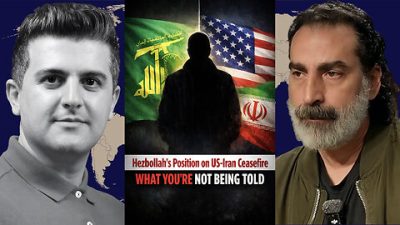
Laith Marouf: Hezbollah’s position on US-Iran ceasefire
or go to
Aletho News Archives – Video-Images
From the Archives
The Dirty Little Secret behind the “Global Terrorism Index”
The Omission of Israeli Terrorism in the Occupied Palestinian Territories
By Karin Brothers | Global Research | December 6, 2014
… The Israeli settlements — all of which are illegal – have been identified as a major impediment to peace. The refusal of a major “global” terrorism report to name the Israeli settlers as one of the groups most responsible for terrorism not only misrepresents a major source of regional violence but exposes the Global Terrorism Index as a propaganda tool that supports a U.S. agenda.
In recent years, governments have been attempting to thwart terrorism by blocking supportive fund-raising. When it comes to Israeli settlements, however, the US and Canada actually encourage fund-raising by giving organizations (such as Christian Friends of Israeli Communities (CFOIC) and the Jewish National Fund) financial support in the form of donor tax-deductions.
Charities which provide funds for the Israeli settlements should be regarded as terror-financing organizations. They should not only lose their tax-deductible status, but they should be banned because they support the violation of international humanitarian law. The terror-financing laws that are being strictly enforced for Muslim charities should be applied to Christian and Jewish charities as well. … Read full article
Blog Roll
 Aletho News
- Trump Administration Moves To Automate U.S. Military Draft Registration
- Spain orders reopening of Tehran embassy, condemns Israel’s carpet bombing of Lebanon
- Israel faces ‘unsustainable’ strategic crisis following 40-day war against Iran: Analyst
- Iran restricts Hormuz access to 15 vessels per day under ceasefire terms: Report
- The ‘Opposition Party’ Has Done Nothing to Stop the Iran War and Much to Goad Trump Into Continuing It
- Moscow backs Tehran on status of Lebanon in US-Iran deal
- How UK Regulator Ofcom Quietly Bypassed International Law to Police American Speech
- The Black Cube Files: How Former Mossad Operatives Flipped a Nation
- Laith Marouf: Hezbollah’s position on US-Iran ceasefire: What you’re not being told
- Israel’s priority lies in destroying chances of peace between Iran, US: Ex-UN nuclear chief
- If Americans Knew
- The gallows law: Israel moves toward executing Palestinian children
- Tucker Carlson: The Path to Peace requires ending ‘special alliance’ with Israel
- This is ceasefire? Israel’s biggest massacre yet in Lebanon, another journalist killed in Gaza – Daily Update
- Tucker Carlson on Israel: This Is the Behavior of an Ally? Really?
- Gazans face a triple crisis: severe shortages of water and bread, healthcare in tatters
- NY Times reports how Netanyahu took the US into Iran War
- A sigh of relief over Iran, but Gaza and Lebanon in dire straits – Daily Update
- Thousands dead and neighborhoods razed to the ground: Aid agencies fear southern Lebanon is becoming the new Gaza
- The war the US is fighting for Israel could cost trillions
- ‘Cigarette Burns, Nail Wounds’: Toddler Tortured in Gaza to Coerce Father
- No Tricks Zone
- An Inconvenient Tree: Uncovered In Alps… Europe Much Warmer Than Today 6000 Years Ago
- New Study Reports A 60% Slowdown In Greenland’s Ice Loss Rate In The Last Decade
- Low Intensity Tornado Wrecks Major Solar Farm, Creating A Potential Toxic Dump
- New Study Finds Warming Saves Lives…Cold Temperatures 12 Times More Deadly Than Excess Heat
- German Science Blog Accuses PIK Climate Institute Of Hallucinating Climate Tipping Points
- Devastating Assessment Of Comirnaty Vaccine By Former Senior Pfizer Europe Toxicologist
- New Study: CO2 Is ‘Effectively Negligible’ As An Explanatory Climate Change Factor Since 2000
- Former Pfizer Toxicologist Dr. Helmut Sterz Tells Bundestag Hearing Pfizer Vaccine Should Have Never Been Approved
- Energy Expert: Germany’s Nuclear Phaseout Was A “500 Billion Euro Mistake”
- New Research: South Australia’s Mid-Holocene Sea Surface Temperatures Were 4°C Warmer Than Today
 Aletho News