The Pentagon and the CIA Are in Charge
By Jacob G. Hornberger | FFF | September 7, 2018
Yesterday, President Trump, yielding to the overwhelming power of the Pentagon, CIA, and NSA, announced that he has decided to keep U.S. troops in Syria indefinitely, thereby abandoning his intention announced last March to instead bring U.S. troops in Syria home. Of course, keeping the troops in Syria has been the position that the U.S. national security establishment has been demanding of Trump since the beginning of his presidency, especially since that increases the risk of confrontation with Russia, the decades-old enemy and rival of the U.S. national-security establishment.
What business does the U.S. government have in Syria? None. Just as it has no business in countries like Iraq, Afghanistan, Libya, Vietnam, Korea, Nicaragua, Grenada, Panama, and countless others. But that is what life is like under a governmental structure in which the military-intelligence establishment is in control. It calls the shots. Everyone else — the president, the Congress, the judiciary, and the American people — are expected to yield to its overwhelming power within the federal governmental structure and within American society.
It’s worth recalling that the American people in the late 1700s were ardently opposed to large, permanent military establishments. That’s why the Constitution instead called into existence a type of government known as a limited-government republic, one whose powers are few and limited.
That all came to a screeching halt after World War II, when Americans began living under a totally different type of governmental structure, one that is known as a national-security state. It is characterized by a massive, permanent, ever-growing military establishment, CIA, NSA, and a national police force known as the FBI, all of whose powers together are vast and unlimited, including the power of the government to assassinate its own people.
Why didn’t our American ancestors favor a national-security state instead of a limited-government republic? Because they knew that the military-intelligence component of the government would inevitably end up controlling and running the government and that the other parts of the government would inevitably yield to its overwhelming power. More important, they knew that that a government founded on a massive military-intelligence foundation would inevitably end up destroying their freedom, privacy, and well-being.
A book I highly recommend is National Security and Double Government by Michael J. Glennon, professor of law at Tufts University. Glennon gets it, and he sets it forth perfectly in his book. The national-security establishment — or what many today are calling the deep state — is in charge of the federal government. As long as the other three branches understand that it’s calling the shots, it permits the other three branches to maintain the appearance of being in control. But as Glennon shows so well, it’s all just a façade. It’s the Pentagon, the CIA, and the NSA who are ultimately calling the shots, like with respect to Syria.
In fact, the South Korean people are also discovering this phenomenon in their country. In their attempt to arrive at a peaceful and satisfactory resolution of the civil war that has besieged Korea since 1950, South Korea’s President Moon Jae-in and North Korea’s president Kim Jong-un have been negotiating. In the process, they have agreed to work together to run a train between the two countries. The tracks were laid long ago and train stations along the way were built long ago. Now, it’s just a logistical problem of getting the train running between the two nations.
But it’s not going to happen. Why not? For the same reason that Trump isn’t going to pull U.S. troops out of Syria. Because the Pentagon said no to South Korea, just as it said no to Trump. Here is how yesterday’s New York Times reported the matter: “Last month, American military commanders in Seoul stopped South Korea’s plan to send a train across the inter-Korean border and run it on a North Korean railway, to test the rails’ condition.”
What? Who’s in charge of the country — the South Korean government or the U.S. military? The answer is obvious: The U.S. military is in charge, just as it is here in the United States. Like President Trump, South Korean President Kim yielded to the orders and commands of his superiors in the U.S. national-security establishment. That’s why that train between South and North Korea isn’t running.
Look at the extent to which the U.S. national-security establishment has extended its tentacles throughout the federal bureaucracy. A general, not a civilian, is Secretary of Defense. A CIA Director is made Secretary of State. A general is White House chief of staff. An FBI director is appointed Special Counsel to target Trump with removal for befriending Russia. CIA assets in Congress, the mainstream press, and who knows where else. A large number of military and CIA veterans running for Congress. A vast number of cities and states fearfully dependent on military bases and projects.
President Eisenhower warned the American people of the danger of converting the federal government to a national-security state, which he called the military-industrial complex. He said that this new, radically different governmental structure posed a grave threat to the freedoms and democratic processes of the American people. But he did nothing about it except issue a warning.
The only president to ever take on the national-security establishment has been John F. Kennedy. He took them on directly, firmly, and unequivocally. Kennedy threw the gauntlet down on their militarist, imperialist, anti-communist, anti-Russia vision for the future of America. The result was an all-out war between Kennedy and the Pentagon and the CIA, a war that did not end up well for either Kennedy or the American people. (See FFF’s book JFK’s War with the National Security Establishment: Why Kennedy Was Assassinated by Douglas Horne and also my current video-podcast series on the JFK assassination.)
While there are some who thought that Trump was going to walk in the footsteps of President Kennedy and stand up to the national-security establishment, including bringing the troops home from the forever wars in which the Pentagon and the CIA have embroiled our nation, alas, it is not to be, as reflected by Trump’s buckling under to the national-security establishment with respect to Syria and even moving in an anti-Russia direction with his imposition of economic sanctions on Russia.
Responding to the Pentagon’s decision to prevent South Korea from running its train into North Korea, North Korea’s main state-run newspaper summed it up best. Pointing out that the United States was obstructing better relations between North and South Korea, the paper correctly described it a “dim and twisted” attitude. The paper continued: “The U.S. must realize that the more the inter-Korean relations improve, the better it will be for the U.S.” The problem, however, is that it would not be better for the U.S. national-security establishment, which necessarily depends on perpetual crises to sustain its ever-growing, taxpayer-funded largess, including those crises that it itself incites.
How the Department of Homeland Security Created a Deceptive Tale of Russia Hacking US Voter Sites
By Gareth Porter | Consortium News | August 28, 2018
The narrative of Russian intelligence attacking state and local election boards and threatening the integrity of U.S. elections has achieved near-universal acceptance by media and political elites. And now it has been accepted by the Trump administration’s intelligence chief, Dan Coats, as well.
But the real story behind that narrative, recounted here for the first time, reveals that the Department of Homeland Security (DHS) created and nurtured an account that was grossly and deliberately deceptive.
DHS compiled an intelligence report suggesting hackers linked to the Russian government could have targeted voter-related websites in many states and then leaked a sensational story of Russian attacks on those sites without the qualifications that would have revealed a different story. When state election officials began asking questions, they discovered that the DHS claims were false and, in at least one case, laughable.
The National Security Agency and special counsel Robert Mueller’s investigating team have also claimed evidence that Russian military intelligence was behind election infrastructure hacking, but on closer examination, those claims turn out to be speculative and misleading as well. Mueller’s indictment of 12 GRU military intelligence officers does not cite any violations of U.S. election laws though it claims Russia interfered with the 2016 election.
A Sensational Story
On Sept. 29, 2016, a few weeks after the hacking of election-related websites in Illinois and Arizona, ABC News carried a sensational headline: “Russian Hackers Targeted Nearly Half of States’ Voter Registration Systems, Successfully Infiltrated 4.” The story itself reported that “more than 20 state election systems” had been hacked, and four states had been “breached” by hackers suspected of working for the Russian government. The story cited only sources “knowledgeable” about the matter, indicating that those who were pushing the story were eager to hide the institutional origins of the information.
Behind that sensational story was a federal agency seeking to establish its leadership within the national security state apparatus on cybersecurity, despite its limited resources for such responsibility. In late summer and fall 2016, the Department of Homeland Security was maneuvering politically to designate state and local voter registration databases and voting systems as “critical infrastructure.” Such a designation would make voter-related networks and websites under the protection a “priority sub-sector” in the DHS “National Infrastructure Protection Plan, which already included 16 such sub-sectors.
DHS Secretary Jeh Johnson and other senior DHS officials consulted with many state election officials in the hope of getting their approval for such a designation. Meanwhile, the DHS was finishing an intelligence report that would both highlight the Russian threat to U.S. election infrastructure and the role DHS could play in protecting it, thus creating political impetus to the designation. But several secretaries of state—the officials in charge of the election infrastructure in their state—strongly opposed the designation that Johnson wanted.
On Jan. 6, 2017—the same day three intelligence agencies released a joint “assessment” on Russian interference in the election—Johnson announced the designation anyway.
Media stories continued to reflect the official assumption that cyber attacks on state election websites were Russian-sponsored. Stunningly, The Wall Street Journal reported in December 2016 that DHS was itself behind hacking attempts of Georgia’s election database.
The facts surrounding the two actual breaches of state websites in Illinois and Arizona, as well as the broader context of cyberattacks on state websites, didn’t support that premise at all.
In July, Illinois discovered an intrusion into its voter registration website and the theft of personal information on as many as 200,000 registered voters. (The 2018 Mueller indictments of GRU officers would unaccountably put the figure at 500,000.) Significantly, however, the hackers only had copied the information and had left it unchanged in the database.
That was a crucial clue to the motive behind the hack. DHS Assistant Secretary for Cyber Security and Communications Andy Ozment told a Congressional committee in late September 2016 that the fact hackers hadn’t tampered with the voter data indicated that the aim of the theft was not to influence the electoral process. Instead, it was “possibly for the purpose of selling personal information.” Ozment was contradicting the line that already was being taken on the Illinois and Arizona hacks by the National Protection and Programs Directorate and other senior DHS officials.
In an interview with me last year, Ken Menzel, the legal adviser to the Illinois secretary of state, confirmed what Ozment had testified. “Hackers have been trying constantly to get into it since 2006,” Menzel said, adding that they had been probing every other official Illinois database with such personal data for vulnerabilities as well. “Every governmental database—driver’s licenses, health care, you name it—has people trying to get into it,” said Menzel.
In the other successful cyberattack on an electoral website, hackers had acquired the username and password for the voter database Arizona used during the summer, as Arizona Secretary of State Michele Reagan learned from the FBI. But the reason that it had become known, according to Reagan in an interview with Mother Jones, was that the login and password had shown up for sale on the dark web—the network of websites used by cyber criminals to sell stolen data and other illicit wares.
Furthermore, the FBI had told her that the effort to penetrate the database was the work of a “known hacker” whom the FBI had monitored “frequently” in the past. Thus, there were reasons to believe that both Illinois and Arizona hacking incidents were linked to criminal hackers seeking information they could sell for profit.
Meanwhile, the FBI was unable to come up with any theory about what Russia might have intended to do with voter registration data such as what was taken in the Illinois hack. When FBI Counterintelligence official Bill Priestap was asked in a June 2017 hearing how Moscow might use such data, his answer revealed that he had no clue: “They took the data to understand what it consisted of,” said the struggling Priestap, “so they can affect better understanding and plan accordingly in regards to possibly impacting future elections by knowing what is there and studying it.”
The inability to think of any plausible way for the Russian government to use such data explains why DHS and the intelligence community adopted the argument, as senior DHS officials Samuel Liles and Jeanette Manfra put it, that the hacks “could be intended or used to undermine public confidence in electoral processes and potentially the outcome.” But such a strategy could not have had any effect without a decision by DHS and the U.S. intelligence community to assert publicly that the intrusions and other scanning and probing were Russian operations, despite the absence of hard evidence. So DHS and other agencies were consciously sowing public doubts about U.S. elections that they were attributing to Russia.
DHS Reveals Its Self-Serving Methodology
In June 2017, Liles and Manfra testified to the Senate Intelligence Committee that an October 2016 DHS intelligence report had listed election systems in 21 states that were “potentially targeted by Russian government cyber actors.” They revealed that the sensational story leaked to the press in late September 2016 had been based on a draft of the DHS report. And more importantly, their use of the phrase “potentially targeted” showed that they were arguing only that the cyber incidents it listed were possible indications of a Russian attack on election infrastructure.
Furthermore, Liles and Manfra said the DHS report had “catalogued suspicious activity we observed on state government networks across the country,” which had been “largely based on suspected malicious tactics and infrastructure.” They were referring to a list of eight IP addresses an August 2016 FBI “flash alert” had obtained from the Illinois and Arizona intrusions, which DHS and FBI had not been able to attribute to the Russian government.

Manfra: No doubt it was the Russians. (C-SPAN)
The DHS officials recalled that the DHS began to “receive reports of cyber-enabled scanning and probing of election-related infrastructure in some states, some of which appeared to originate from servers operated by a Russian company.” Six of the eight IP addresses in the FBI alert were indeed traced to King Servers, owned by a young Russian living in Siberia. But as DHS cyber specialists knew well, the country of ownership of the server doesn’t prove anything about who was responsible for hacking: As cybersecurity expert Jeffrey Carr pointed out, the Russian hackers who coordinated the Russian attack on Georgian government websites in 2008 used a Texas-based company as the hosting provider.
The cybersecurity firm ThreatConnect noted in 2016 that one of the other two IP addresses had hosted a Russian criminal market for five months in 2015. But that was not a serious indicator, either. Private IP addresses are reassigned frequently by server companies, so there is not a necessary connection between users of the same IP address at different times.
The DHS methodology of selecting reports of cyber incidents involving election-related websites as “potentially targeted” by Russian government-sponsored hackers was based on no objective evidence whatever. The resulting list appears to have included any one of the eight addresses as well as any attack or “scan” on a public website that could be linked in any way to elections.
This methodology conveniently ignored the fact that criminal hackers were constantly trying to get access to every database in those same state, country and municipal systems. Not only for Illinois and Arizona officials, but state electoral officials.
In fact, 14 of the 21 states on the list experienced nothing more than the routine scanning that occurs every day, according to the Senate Intelligence Committee. Only six involved what was referred to as a “malicious access attempt,” meaning an effort to penetrate the site. One of them was in Ohio, where the attempt to find a weakness lasted less than a second and was considered by DHS’s internet security contractor a “non-event” at the time.
State Officials Force DHS to Tell the Truth
For a year, DHS did not inform the 21 states on its list that their election boards or other election-related sites had been attacked in a presumed Russian-sponsored operation. The excuse DHS officials cited was that it could not reveal such sensitive intelligence to state officials without security clearances. But the reluctance to reveal the details about each case was certainly related to the reasonable expectation that states would publicly challenge their claims, creating a potential serious embarrassment.
On Sept. 22, 2017, DHS notified 21 states about the cyber incidents that had been included in the October 2016 report. The public announcement of the notifications said DHS had notified each chief election officer of “any potential targeting we were aware of in their state leading up to the 2016 election.” The phrase “potential targeting” again telegraphed the broad and vague criterion DHS had adopted, but it was ignored in media stories.
But the notifications, which took the form of phone calls lasting only a few minutes, provided a minimum of information and failed to convey the significant qualification that DHS was only suggesting targeting as a possibility. “It was a couple of guys from DHS reading from a script,” recalled one state election official who asked not to be identified. “They said [our state] was targeted by Russian government cyber actors.”
A number of state election officials recognized that this information conflicted with what they knew. And if they complained, they got a more accurate picture from DHS. After Wisconsin Secretary of State Michael Haas demanded further clarification, he got an email response from a DHS official with a different account. “[B]ased on our external analysis,” the official wrote, “the WI [Wisconsin] IP address affected belongs to the WI Department of Workforce Development, not the Elections Commission.”
California Secretary of State Alex Padilla said DHS initially had notified his office “that Russian cyber actors ‘scanned’ California’s Internet-facing systems in 2016, including Secretary of State websites.” But under further questioning, DHS admitted to Padilla that what the hackers had targeted was the California Department of Technology’s network.
Texas Secretary of State Rolando Pablos and Oklahoma Election Board spokesman Byron Dean also denied that any state website with voter- or election-related information had been targeted, and Pablos demanded that DHS “correct its erroneous notification.”
Despite these embarrassing admissions, a statement issued by DHS spokesman Scott McConnell on Sept. 28, 2017 said the DHS “stood by” its assessment that 21 states “were the target of Russian government cyber actors seeking vulnerabilities and access to U.S. election infrastructure.” The statement retreated from the previous admission that the notifications involved “potential targeting,” but it also revealed for the first time that DHS had defined “targeting” very broadly indeed.
It said the category included “some cases” involving “direct scanning of targeted systems” but also cases in which “malicious actors scanned for vulnerabilities in networks that may be connected to those systems or have similar characteristics in order to gain information about how to later penetrate their target.”
It is true that hackers may scan one website in the hope of learning something that could be useful for penetrating another website, as cybersecurity expert Prof. Herbert S. Lin of Stanford University explained to me in an interview. But including any incident in which that motive was theoretical meant that any state website could be included on the DHS list, without any evidence it was related to a political motive.
Arizona’s further exchanges with DHS revealed just how far DHS had gone in exploiting that escape clause in order to add more states to its “targeted” list. Arizona Secretary of State Michele Reagan tweeted that DHS had informed her that “the Russian government targeted our voter registration systems in 2016.” After meeting with DHS officials in early October 2017, however, Reagan wrote in a blog post that DHS “could not confirm that any attempted Russian government hack occurred whatsoever to any election-related system in Arizona, much less the statewide voter registration database.”
What the DHS said in that meeting, as Reagan’s spokesman Matt Roberts recounted to me, is even more shocking. “When we pressed DHS on what exactly was actually targeted, they said it was the Phoenix public library’s computers system,” Roberts recalled.
In April 2018, a CBS News “60 Minutes” segment reported that the October 2016 DHS intelligence report had included the Russian government hacking of a “county database in Arizona.” Responding to that CBS report, an unidentified “senior Trump administration official” who was well-briefed on the DHS report told Reuters that “media reports” on the issue had sometimes “conflated criminal hacking with Russian government activity,” and that the cyberattack on the target in Arizona “was not perpetrated by the Russian government.”
NSA Finds a GRU Election Plot
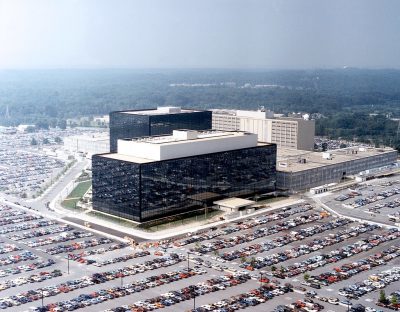
National Security Agency headquarters in Fort Meade, Md. (Wikimedia)
NSA intelligence analysts claimed in a May 2017 analysis to have documented an effort by Russian military intelligence (GRU) to hack into U.S. electoral institutions. In an intelligence analysis obtained by The Intercept and reported in June 2017, NSA analysts wrote that the GRU had sent a spear-phishing email—one with an attachment designed to look exactly like one from a trusted institution but that contains malware design to get control of the computer—to a vendor of voting machine technology in Florida. The hackers then designed a fake web page that looked like that of the vendor. They sent it to a list of 122 email addresses NSA believed to be local government organizations that probably were “involved in the management of voter registration systems.” The objective of the new spear-phishing campaign, the NSA suggested, was to get control of their computers through malware to carry out the exfiltration of voter-related data.
But the authors of The Intercept story failed to notice crucial details in the NSA report that should have tipped them off that the attribution of the spear-phishing campaign to the GRU was based merely on the analysts’ own judgment—and that their judgment was faulty.
The Intercept article included a color-coded chart from the original NSA report that provides crucial information missing from the text of the NSA analysis itself as well as The Intercept’s account. The chart clearly distinguishes between the elements of the NSA’s account of the alleged Russian scheme that were based on “Confirmed Information” (shown in green) and those that were based on “Analyst Judgment” (shown in yellow). The connection between the “operator” of the spear-phishing campaign the report describes and an unidentified entity confirmed to be under the authority of the GRU is shown as a yellow line, meaning that it is based on “Analyst Judgment” and labeled “probably.”
A major criterion for any attribution of a hacking incident is whether there are strong similarities to previous hacks identified with a specific actor. But the chart concedes that “several characteristics” of the campaign depicted in the report distinguish it from “another major GRU spear-phishing program,” the identity of which has been redacted from the report.
The NSA chart refers to evidence that the same operator also had launched spear-phishing campaigns on other web-based mail applications, including the Russian company “Mail.ru.” Those targets suggest that the actors were more likely Russian criminal hackers rather than Russian military intelligence.
Even more damaging to its case, the NSA reports that the same operator who had sent the spear-phishing emails also had sent a test email to the “American Samoa Election Office.” Criminal hackers could have been interested in personal information from the database associated with that office. But the idea that Russian military intelligence was planning to hack the voter rolls in American Samoa, an unincorporated U.S. territory with 56,000 inhabitants who can’t even vote in U.S. presidential elections, is plainly risible.
The Mueller Indictment’s Sleight of Hand
The Mueller indictment of GRU officers released on July 13 appeared at first reading to offer new evidence of Russian government responsibility for the hacking of Illinois and other state voter-related websites. A close analysis of the relevant paragraphs, however, confirms the lack of any real intelligence supporting that claim.
Mueller accused two GRU officers of working with unidentified “co-conspirators” on those hacks. But the only alleged evidence linking the GRU to the operators in the hacking incidents is the claim that a GRU official named Anatoly Kovalev and “co-conspirators” deleted search history related to the preparation for the hack after the FBI issued its alert on the hacking identifying the IP address associated with it in August 2016.
A careful reading of the relevant paragraphs shows that the claim is spurious. The first sentence in Paragraph 71 says that both Kovalev and his “co-conspirators” researched domains used by U.S. state boards of elections and other entities “for website vulnerabilities.” The second says Kovalev and “co-conspirators” had searched for “state political party email addresses, including filtered queries for email addresses listed on state Republican Party websites.”

Mueller: Don’t read the fine print. (The White House/Wikimedia)
Searching for website vulnerabilities would be evidence of intent to hack them, of course, but searching Republican Party websites for email addresses is hardly evidence of any hacking plan. And Paragraph 74 states that Kovalev “deleted his search history”—not the search histories of any “co-conspirator”—thus revealing that there were no joint searches and suggesting that the subject Kovalev had searched was Republican Party emails. So any deletion by Kovalev of his search history after the FBI alert would not be evidence of his involvement in the hacking of the Illinois election board website.
With this rhetorical misdirection unraveled, it becomes clear that the repetition in every paragraph of the section of the phrase “Kovalev and his co-conspirators” was aimed at giving the reader the impression the accusation is based on hard intelligence about possible collusion that doesn’t exist.
The Need for Critical Scrutiny of DHS Cyberattack Claims
The DHS campaign to establish its role as the protector of U.S. electoral institutions is not the only case in which that agency has used a devious means to sow fear of Russian cyberattacks. In December 2016, DHS and the FBI published a long list of IP addresses as indicators of possible Russian cyberattacks. But most of the addresses on the list had no connection with Russian intelligence, as former U.S. government cyber-warfare officer Rob Lee found on close examination.
When someone at the Burlington, Vt., Electric Company spotted one of those IP addresses on one of its computers, the company reported it to DHS. But instead of quietly investigating the address to verify that it was indeed an indicator of Russian intrusion, DHS immediately informed The Washington Post. The result was a sensational story that Russian hackers had penetrated the U.S. power grid. In fact, the IP address in question was merely Yahoo’s email server, as Rob Lee told me, and the computer had not even been connected to the power grid. The threat to the power grid was a tall tale created by a DHS official, which the Post had to embarrassingly retract.
Since May 2017, DHS, in partnership with the FBI, has begun an even more ambitious campaign to focus public attention on what it says are Russian “targeting” and “intrusions” into “major, high value assets that operate components of our Nation’s critical infrastructure”, including energy, nuclear, water, aviation and critical manufacturing sectors. Any evidence of such an intrusion must be taken seriously by the U.S. government and reported by news media. But in light of the DHS record on alleged threats to election infrastructure and the Burlington power grid, and its well-known ambition to assume leadership over cyber protection, the public interest demands that the news media examine DHS claims about Russian cyber threats far more critically than they have up to now.
Gareth Porter is an independent investigative journalist and winner of the 2012 Gellhorn Prize for journalism. His latest book is Manufactured Crisis: The Untold Story of the Iran Nuclear Scare.
What’s Left of Russiagate — Are We Down to the 1,000 Paid Trolls?
Mark F. McCarty | Way of the Bern | July 19, 2017
Those who pay attention to what is going on — as opposed to passively consuming the obsessions of MSM — know that the Clinton-related material published by Wikileaks emerged from leaks, not hacks. Assange has stated in no uncertain terms that the Russian government was not responsible for providing the material Wikileaks published, and his friend Craig Murray — a whistleblower hero who exposed the torture practiced by the government of Uzbekistan while he was British ambassador there — indicates that he has direct knowledge that the DNC and Podesta Wikileaks releases derived from leaks, not hacks. In fact, he met with one of the people involved in September of last year in Washington D.C.
https://consortiumnews.com/2016/12/18/a-spy-coup-in-america/
And Wikileaks has just tweeted an audio recording of Seymour Hersh in which he indicates that, according to an FBI source he considers “unbelievably accurate and careful, he’s a very high-level guy”, there is an FBI report indicating that the FBI examined Seth’s computer and determined that Seth was the Wikileaks DNC source. Whether or not Hersh’s source is correct — Hersh has not published this info, and refuses to be interviewed on it — it is not conceivable, at least to those of us who appreciate Wikileaks’ integrity, that Wikileaks would have tweeted this if Seth weren’t their source.
https://twitter.com/wikileaks/status/892510925244203008
Now, just in time for the anniversary of Seth Rich’s death, forensic analyses — by the pseudonymous ‘Forensicator” — have clarified that the “Guccifer 2.0” releases of DNC material in September 2016 resulted from local downloads, via thumbdrive or LAN, of DNC computer files, rather than hacks from a distant location such as Russia or Romania — contrary to the assertions of our intelligence community; the rate of data transfer, as of mid-2016, was far too great for a remote hack to be responsible.* Indeed, the rate was precisely what one would expect if the download had occurred via USB2.0 memory stick, and cyberexpert/journalist Adam Carter has argued that the downloaded files displayed “FAT filesystem anomalies” likewise pointing to a memory stick download. Moreover, time stamps reveal that this data transfer occurred on the East Coast.
Of no less importance is the fact that the metadata of some of the released Guccifer 2.0 files (those released on June 15th) had been intentionally altered to leave clues that Russian hackers may have accessed the material, in a clear effort to falsely implicate Russians in the hacking of those files. The clear implication is that someone affiliated with the Clinton campaign or DNC created the persona of Guccifer 2.0 to trick our gullible intelligence agencies into concluding that Russian hacks had been responsible not only for the Guccifer 2.0 releases, but for the WIkileaks releases as well — thereby devaluing them in the eyes of the American public. “Guccifer 2.0”, of course, topped off the scam by claiming he was the Wikileaks source.
https://consortiumnews.com/2017/07/24/intel-vets-challenge-russia-hack-evidence/
https://theforensicator.wordpress.com/guccifer-2-ngp-van-metadata-analysis/
https://www.thenation.com/article/a-new-report-raises-big-questions-about-last-years-dnc-hack/
As Veteran Intelligence Professionals for Sanity have emphasized, the timeline of Guccifer 2.0’s first appearance is curious. On June 12, Wikileaks announced that it would soon be releasing Clinton-related emails. On June 14, the DNC announces that it has been hacked. On June 15, the DNC cybercontractor Crowdstrike announced that it had found malware on the DNC computer which they suspect originated from Russia, and, in seeming coordination, Guccifer 2.0 proclaimed that he was the hacker who supplied Wikileaks with its Clinton material — posting documents that had had “Russian fingerprints” implanted in their metadata. (And why would a hacker genuinely working for the Russian government go out of his way to advertise himself?) Then the main trove of DNC material subsequently released by Guccifer 2.0 on his website was downloaded locally from DNC computers on July 5th — five days before Seth Rich was murdered by hitmen. These facts are consistent with the thesis that the DNC, or someone affiliated with the DNC, hoaxed our intelligence services to blame the Wikileaks releases on Russia. Could they then have gotten rid of someone who could have spoiled this narrative?
Possible collusion between Crowdstrike and Guccifer 2.0 is suggested by the fact that, in their June 14th announcement, the DNC indicated — presumably based on claims by Crowdstrike — that the hacker had targeted Trump Opposition Research. This was indeed one of the documents that Guccifer 2.0 released the following day. Adam Carter refers to the Crowdstrike claim about Trump Opposition Research being targeted as “specious”, as they “never demonstrated or explained” how they could have known this. Carter concludes that this likely indicates collusion between Crowdstrike and Guccifer 2.0, and suggests that perhaps the persona of Guccifer 2.0 was created by someone at Crowdstrike. (And it hardly seems likely that Crowdstrike would have concocted such a scam without the knowledge and encouragement of top officials at the DNC. Though this brings up an interesting alternative possibility — could Debbie Wasserman-Schultz and her felonious IT specialist Imran Awan have conceived and executed Guccifer 2.0? It’s not clear whether Awan has the requisite measure of sophistication.) Another peculiarity is this: if Guccifer 2.0 was employed by the Russian government to damage Hillary and help Trump, why would one of the first documents he released be Trump Opposition Research?!
Furthermore, Carter’s analysis of the times of G2.0’s tweets and blog publications points to someone in the U.S. rather than Russia — unless he was bizarrely nocturnal.
http://g-2.space/g2tweettimes/
Carter also discusses linguistic research which demonstrates that, in his communications, Guccifer 2.0 makes a very amateurish effort to impersonate a native Russian attempting to speak English, being very inconsistent in his linguistic errors. His overall impression of Guccifer 2.0 is encapsulated in this description: “A donkey in a bear costume”. In his latest update, Carter notes: “The only language expert willing to be cited without being anonymous was professor M.J. Connolly from Boston College and he stated that Guccifer 2.0 lacked any traits he would expect to see from a Russian communicating in English!”
Here is another reason to suspect that Crowdstrike was behind Guccifer 2.0. The “Russian fingerprints” added to the June 15th releases of Guccifer 2.0 consisted of the name “Felix Edmundovich”, written in the Cyrillic alphabet. This is clearly a reference to the founder of the Soviet secret police (OGPU), Felix Edmundovich Dzerzhinsky.
(https://en.wikipedia.org/wiki/Felix_Dzerzhinsky)
How many American computer geeks would know the name of the founder of OGPU? One American who likely would is Shawn Henry, co-founder and President of Crowdstrike, who previously worked under Robert Mueller (!) as the FBI’s assistant director for counterintelligence.
In an interview with a journalist from Motherboard/Vice News, Guccifer 2.0 described the technique he used to hack the DNC servers. Carter points out that the cybersecurity firm ThreatConnect has analyzed this claim, and found it to be technically impossible. It is unclear whether Guccifer 2.0 has any hacking skills whatever.
Here’s a great new video about the Guccifer 2.0 affair by “Panda Bear” that I strongly recommend:
https://www.youtube.com/watch?v=5ZNAbPNKCKk&t=0s
For clarity, it’s important to note that, contrary to the assertions of some enthusiastic commentators, the forensic findings of Forensicator and Adam Carter pertain only to the releases of Guccifer 2.0, cannot prove that the DNC server was not hacked, and have no clear relevance to the DNC emails released by Wikileaks or the activities of Seth Rich. These issues must be addressed with other lines of evidence. What these forensic analyses do strongly point to is that people affiliated with the DNC consciously hoaxed our intelligence community to try to paint Hillary as a victim of Russian perfidy, with Wikileaks as their devious accomplice. And they also reveal that, in pointing to Guccifer 2.0 as the source for the DNC Wikileaks releases, our “intelligence community” has once again demonstrated its gross and criminal incompetence.
There were also files taken from the Democratic Congressional Campaign Committee that were published prior to the election on Guccifer 2.0’s own website. (Is the DCCC collaborating with the DNC in this scam?) This episode has received little attention, and in any case, if the goal of the Russian government was to impede Clinton’s election, why would they care about the DCCC? Who believes Russia would want to elect more Republicans? In any case, if Guccifer 2.0 was indeed the source of these leaks, they weren’t hacked by Russians, so let’s move on.
Finally, there is DC Leaks, which, beginning in July of last year has released purloined info on a diverse range of targets, including the former commander of NATO, Senators McCain and Graham, the Soros Foundation, and personal info of 200 Democratic lawmakers. This has received little media commentary, possibly because it is hard to see how this effort was an attempt to influence the election. Nonetheless, the cybersecurity firm ThreatConnect claims that DC Leaks is a front for the hacker group Fancy Bear, which they claim is linked to Russian intelligence. They also think that Guccifer 2.0 is involved. Sounds a lot like the analyses that linked the Guccifer 2.0 and Wikileaks releases to Russian intelligence — and we’ve seen how credible those analyses were.
https://en.wikipedia.org/wiki/DCLeaks
Then there was the NSA document leaked by Reality Winner, in which it is “assessed” that Russians at the behest of the Kremlin targeted a number of local government operations in spearphishing operations just prior to the election. Scott Ritter has carefully analyzed the NSA document and demonstrated that the NSA agents responsible had nothing but speculation to link these spearphishing attacks to the Russian government.
Recent claims that Russia tried to hack into 21 state electoral databases prior to the election have been skewered by Gareth Porter, who shows that, in the only one of these attacks that was successful, the perpetrators merely extracted personal information saleable to criminal networks, without making any effort to alter electoral data. Evidently the work of cybercriminals, not Russian government operatives.
http://original.antiwar.com/porter/2017/07/03/foisting-blame-cyber-hacking-russia/
The Department of Homeland Security is now posting retractions of these claims:
And cyberexpert Jeffrey Carr has determined that the criminals involved were English speakers.
Alleged claims from our intelligence agencies that Russia was responsible for election interference in Germany and France have been debunked by the intelligence agencies in those countries:
https://caucus99percent.com/content/are-russian-hackers-under-your-bed
Last month, CNN reported that “Russian hackers had breached Qatar’s state news agency and planted a fake news report that contributed to a crisis among the US’ closest Gulf allies, according to US officials briefed on the investigation…. US officials say the Russian goal appears to be to cause rifts among the US and its allies.”
http://www.cnn.com/2017/06/06/politics/russian-hackers-planted-fake-news-qatar-crisis/index.html
But now, as reported by WaPo, US officials have concluded that the UAE had arranged this hacking to demonize Qatar:
http://www.reuters.com/article/us-usa-qatar-report-idUSKBN1A200H
(The story on CNN, of course, is that UAE denies this: http://edition.cnn.com/2017/07/17/middleeast/uae-qatar-report/index.html. Cue the laughter: http://www.zerohedge.com/news/2017-07-16/cnn-caught-faking-news-again-us-intel-accuses-uae-not-russia-orchestrating-qatari-ha).
But What About all that “Evidence”?
But what about all the “evidence” our intelligence agencies have for Russia’s nefarious election interference?
Official claims in this regard began with the release of this joint statement by DHS and ODNI on Oct. 17 of last year:
“The U.S. Intelligence Community (USIC) is confident that the Russian Government directed the recent compromises of e-mails from US persons and institutions, including from US political organizations. The recent disclosures of alleged hacked e-mails on sites like DCLeaks.com and WikiLeaks and by the Guccifer 2.0 online persona are consistent with the methods and motivations of Russian-directed efforts. These thefts and disclosures are intended to interfere with the US election process. Such activity is not new to Moscow — the Russians have used similar tactics and techniques across Europe and Eurasia, for example, to influence public opinion there. We believe, based on the scope and sensitivity of these efforts, that only Russia’s senior-most officials could have authorized these activities.”
Note how James Clapper, with the backing of Jeh Johnson of DHS, imperiously represented his views as those of “The U.S. Intelligence Community”. Hillary Clinton subsequently seized on this to make the hyperbolic self-serving claim that “17 intelligence agencies” had reached this conclusion — a claim that was echoed by our servile MSM until it recently was retracted by the New York Times.
The supposedly definitive statement of our intelligence agencies on alleged Russian election interference was an Intelligence Community Assessment (ICA), a de-classified summary of which was released on Jan. 6th. As subsequently admitted by Clapper in congressional testimony, this assessment was not a formal National Intelligence Estimate, which would have required the participation of all intelligence agencies and would have included any dissenting opinions, but rather represented the opinions of a couple dozen intelligence operatives hand-picked (likely by Clapper, Director of National Intelligence, and John Brennan of the CIA) from the CIA, NSA, and FBI.
It is useful to understand these things about Clapper: He played a key role in convincing the nation that Saddam had ample stores of WMDs before our Iraq invasion. When these WMDs failed to appear, he stated that Saddam had had them shipped to Syria just prior to the invasion (subsequently debunked). He lied under oath before Congress and the nation regarding surveillance of American citizens by the NSA. And in a recent interview with Chuck Todd, he revealed himself to be a near-psychotic Russiaphobe, claiming that Russians were virtually “genetically programmed” to foment chaos for us.
So what do you think is going to be the outcome when a psychotic Russophobe is allowed to hand-pick the members of an intelligence panel intended to evaluate alleged Russian meddling? As acclaimed investigative journalist Robert Parry noted:
“Yet, as any intelligence expert will tell you, if you “hand-pick” the analysts, you are really hand-picking the conclusion. For instance, if the analysts were known to be hard-liners on Russia or supporters of Hillary Clinton, they could be expected to deliver the one-sided report that they did.”
https://consortiumnews.com/2017/05/23/new-cracks-in-russia-gate-assessment/
As to the unclassified report itself, the most cogent observation is that it provides no hard evidence whatever to back up its conclusion that Russian operatives had interfered in our election on the orders of Vladimir Putin. Rather hilariously, over half of its length is devoted to splenetic venting about the Russia-sponsored TV network RT, which nefariously had featured Third Party political debates and criticisms of fracking — and of course the seditious ravings of that evident Kremlin puppet Larry King. If RT constitutes vile and unacceptable election interference, what have we been doing with Voice of America for decades?
Most tellingly, the declassified ICA barely mentions Wikileaks, and provides no clue as to how it was concluded that Wikileaks received its Clinton-related emails from Russian sources. The key point of the Russiagate narrative is not just that Russians were hacking the DNC and John Podesta, but that, at the behest of the Russian government, they were transferring their booty to Wikileaks for release to the public. In his congressional testimony, Clapper seemed to admit that the link between Russia and Wikileaks was speculative:
https://www.youtube.com/watch?v=e2AbrMEmD9k
It is hard to escape the conclusion that our intelligence agencies have no hard evidence whatever that Wikileaks received its Clinton-related emails from sources commissioned by the Russian government. And of course Assange, who presumably knows how he got the material he himself published — and has far greater credibility than Clapper could ever have — vehemently denies this.
In the run-up to the Iraq invasion, our intelligence agencies at least deigned to convey to us some “evidence” that Saddam did indeed still have WMDs. In the present instance, they are effectively just saying “Trust us”. In the context of the fact that our intelligence agencies used wholly bogus evidence to propel us into an Iraq involvement that led to the death, maiming, or exile of literally millions of people in Iraq — not to mention thousands of American deaths and casualties, and catastrophic expense — anyone in our government or our media who is willing to just “trust” a hand-picked cabal of intelligence agents on an issue that may foment a new Cold War with the second-leading nuclear power, is engaging in gross criminal negligence.
The credibility of the report’s conclusions can be judged by this key passage:
“We assess with high confidence that Russian military intelligence … used the Guccifer 2.0 persona and DCLeaks.com to release US victim data obtained in cyber operations publicly and in exclusives to media outlets and relayed material to WikiLeaks.”
https://www.dni.gov/files/documents/ICA_2017_01.pdf
As we have seen, “Guccifer 2.0” is someone on the East Coast, with local access to the DNC computers, who is doing a rather half-assed job of appearing to be Russian — “A donkey in a bear costume”. So much for their “high confidence”.
In formulating its ICA, the panel relied on the conclusions of a private cyber company, Crowdstrike, with respect to alleged hacking of the DNC server, because the DNC had repeatedly refused to turn their server over to the FBI — and the FBI had failed to subpoena it. Crowdstrike was recruited for this purpose by the Clinton campaign, and had previous associations with Hillary Clinton. Its founders are affiliated with the Atlantic Council, a think tank known for its virulently anti-Russia stances. Its previous effort to incriminate Russia in a hacking attack has been shown to be wholly erroneous.
As to the “logic” which Crowdstrike employed to impute hacking of the DNC to Russian intelligence, it appears to have been puerile. Here are the comments of Scott Ritter:
“CrowdStrike claimed that the presence of the X-Agent malware was a clear ‘signature’ of a hacking group — APT 28, or Fancy Bear — previously identified by German intelligence as being affiliated with the GRU, Russian military intelligence…. The CrowdStrike data is unconvincing. First and foremost, the German intelligence report it cites does not make an ironclad claim that APT 28 is, in fact, the GRU. In fact, the Germans only ‘assumed’ that GRU conducts cyberattacks. They made no claims that they knew for certain that any Russians, let alone the GRU, were responsible for the 2015 cyberattack on the German Parliament, which CrowdStrike cites as proof of GRU involvement. Second, the malware in question is available on the open market, making it virtually impossible to make any attribution at all simply by looking at similarities in ‘tools and techniques.’ Virtually anyone could have acquired these tools and used them in a manner similar to how they were employed against both the German Parliament and the DNC…. The presence of open-source tools is, in itself, a clear indicator that Russian intelligence was not involved.”
Cyberexpert Jeremy Carr fully agrees:
“It is both foolish and baseless to claim, as Crowdstrike does, that X-Agent is used solely by the Russian government when the source code is there for anyone to find and use at will.
Once malware is deployed, it is no longer under the control of the hacker who deployed it or the developer who created it. It can be reverse-engineered, copied, modified, shared and redeployed again and again by anyone. In other words — malware deployed is malware enjoyed!
If the White House had unclassified evidence that tied officials in the Russian government to the DNC attack, they would have presented it by now. The fact that they didn’t means either that the evidence doesn’t exist or that it is classified.
If it’s classified, an independent commission should review it because this entire assignment of blame against the Russian government is looking more and more like a domestic political operation run by the White House that relied heavily on questionable intelligence generated by a for-profit cybersecurity firm with a vested interest in selling “attribution-as-a-service”
https://medium.com/@jeffreycarr/fbi-dhs-joint-analysis-report-a-fatally-flawed-effort-b6a98fafe2fa.
More recently, he has stated:
“There is not now and never has been a single piece of technical evidence produced that connects the malware used in the DNC attack to the GRU, FSB or any agency of the Russian government.”
https://consortiumnews.com/2017/08/18/russia-gates-evidentiary-void/
Indeed, he is so irate regarding the impact on international affairs of the flawed logic employed by Crowdstrike that he demands an investigation of them:
“I think there should be commission that reviews the technical evidence which is being sold to the US government by and for profit by the cyber security companies like Crowdstrike. I think this deserves a deeper investigation, because based upon invalid assumptions and lack of proof they have created an international strain in international relations between the US and Russia,” said Carr.
https://www.rt.com/op-edge/372888-investigate-russian-hacking-contractor/
If you had a friend who was trying to solve a murder, and he told you: “We know that the victim was killed with a gun, and the Mafia uses guns, so we know that the Mafia killed him,” you would rightly conclude that your friend was a bit half-witted. Yet Crowdstrike, using quite analogous “logic”, while throwing around technical terms that are obscure to people who aren’t cyberexperts, receives awed respect from MSM journalists.
A further indication of the intellectual acumen of Crowdstrike is their response to a reporter from the Washington Times when they were asked to comment on the blockbuster VIPS report on Guccifer 2.0.:
“‘We find the argument unsubstantiated and inaccurate, based on a fundamental flaw,’ a company spokesman said.
The CrowdStrike spokesman said that by July 5 all malware had been removed from the DNC network and thus the hackers copied files that were already in their own systems.”
http://www.washingtontimes.com/news/2017/jul/27/with-robert-mueller-fbi-gets-second-chance-to-insp/
Uh, precisely how would the existence or nonexistence of hacking malware on a computer influence one’s ability to download data on a thumbdrive?!!
Here’s another oddity about Crowdstrike: As of May 5th, they had installed their supposedly state-of-the-art anti-hacking program Falcon on this server — and yet the latest of the DNC emails which Wikileaks released was created on May 25th.
Steve McIntire writes:
“There were no fewer than 14409 emails in the Wikileaks archive dating after Crowdstrike’s installation of its security software. In fact, more emails were hacked after Crowdstrike’s discovery on May 6 than before. Whatever actions were taken by Crowdstrike on May 6, they did nothing to stem the exfiltration of emails from the DNC.”
https://climateaudit.org/2017/09/02/email-dates-in-the-wikileaks-dnc-archive/
Of course, there is nothing at all odd about this if the Wikileaks emails stemmed from a leak.
However, Crowdstrike has subsequently characterized its installation of Falcon as a measure to monitor ongoing hacking. Alperovitch of Crowdstrike has referred to Falcon as “monitoring software”:
Allegedly, Crowdstrike took definitive measures to cleanse the DNC servers and institute new passwords on the weekend of June 10–12. Are we expected to believe that they just monitored ongoing hacking for a month while doing nothing to stop it? Here’s an analogy: You are informed that a gang rape is in progress. Instead of immediately sending the police, you send photographers (apparently without film).
However, Crowdstrike’s own promotional literature refers to Falcon as software for preventing hacking:
https://web.archive.org/web/20160428142131/https://www.crowdstrike.com/products/
So is Crowdstrike throwing its own top-of-the-line product under the bus to maintain the credibility of the claim that hackers provided Wikileaks with the DNC emails?
Cyberexpert Adam Carter suspects that Crowdstrike might have been involved in creating the Guccifer 2.0 fraud. The purposely tainted Guccifer 2.0 releases, in conjunction with Crowdstrike’s conclusion that Russian agents had hacked the DNC, could have readily led unsuspecting intelligence agents to indict the Russians.
Oh, and guess who the DCCC hired to investigate its breach?
Another key difficulty with the ICA has been raised by William Binney, a co-founder of the NSA’s SIGINT Automation Research Center. He indicates that if the DNC had been hacked, the NSA would know precisely when this had happened, and where the data had gone:
“Because NSA can trace exactly where and how any “hacked” emails from the Democratic National Committee or other servers were routed through the network, it is puzzling why NSA cannot produce hard evidence implicating the Russian government and WikiLeaks. Unless we are dealing with a leak from an insider, not a hack, as other reporting suggests. From a technical perspective alone, we are convinced that this is what happened.”
https://consortiumnews.com/2017/01/06/the-dubious-case-on-russian-hacking/
Intriguingly, it was the NSA which indicated that they were only “moderately confident” about the ICA’s conclusion.
And finally, there’s the intriguing detail that the declassified ICA contains a preamble indicating that the “assessments” it provides are not necessarily equivalent to “facts”. In other words, they are “best guesses”. Ray McGovern has pointed out that, in spyspeak, “assess” effectively means “guess”. So those trumpeting the “proven” election interference by Russia are relying on the guesses of a couple of dozen people hand-selected by the virulent Russophobe James Clapper.
Getting back to the issue of whether Seth Rich was the source of the DNC Wikileaks releases: In one corner we have Julian Assange and Craig Murray, who have sacrificed their freedom and their career (respectively) for their insistence on spreading (inconvenient) truth. Nothing ever released by Wikileaks has been found to be fraudulent. Assange states without qualification that the Russian government was not responsible for his DNC releases, Murray states bluntly that both the DNC and Podesta emails Wikileaks releases resulted from internal leaks, not hacks (having met personally with one of the sources), and Assange, both by direct statements and by re-tweeting key reports, is implying as strongly as he can without saying so directly that Seth is a Wikileaks source. Assange and Murray have direct knowledge of their DNC source if anyone does. Celebrated journalist Sy Hersh indicates that an anonymous FBI source he values highly indicates he has seen an FBI analysis of Seth’s computer which concludes that Seth provided the DNC material to Wikileaks via a drop box. And — for what it’s worth (which might not be much, but we’ll see) — Kim Dotcom also claims to have evidence that Seth was a Wikileaks source. (He states that he cannot come forward with this evidence without getting an immunity deal, because otherwise he could be subject to legal sanctions for participating in the leaking.)
In the other corner, we have committed Russophobes James Clapper, John Brennan, and a group of hand-picked acolytes who assess (guess) that Russian hackers — including Guccifer 2.0 — were the Wikileaks source. They obviously have no direct knowledge in this regard, and they have made this assessment despite the fact that no federal agency has been allowed to analyze the DNC server; the private company which made the assessment which they rely on likewise has a strong political bias. They also provide no clue whatever as to how they have concluded that the alleged hacks were transferred to Wikileaks. Their declassified ICA has been ridiculed by independent cyberexperts for failing to provide any hard evidence whatever. Their conclusion that Guccifer 2.0 is a Russian hacker is an evident farce. Clapper is notorious for his misjudgments prior to and following the Iraq invasion, and also perjured himself under oath to Congress. Both Clapper and Brennan have strong motivation to slam Russia.
And yet virtually all of our MSM and political class accept as a matter of course the conclusions of the ICA, and ridicule as a “conspiracy theorist” anyone who even broaches the possibility that Seth could be the Wikileaks source. Of course, these are the same people whose sycophantic credulity enabled the grossly criminal and catastrophic Iraq invasion — so why be surprised?
Topping it all off, of course, is that the key crime that the Russians are alleged to have committed — a crime that has been likened to an “act of war” by some over-the-top commentators — was to provide the American public with true facts regarding the ways in which the DNC, in violation of its charter, leaned over backwards to favor Hillary Clinton over her rivals in the 2016 primary — and also finally gave us access to Hillary’s Wall Street speeches in which she helpfully clarified that she had two sets of views — those for the public, and those for her donors, who clearly were the ones that really mattered. (Of course, it’s not as though percipient observers didn’t know these things already.) Isn’t it the role of our MSM to be providing such “interference”?
Craig Murray has summed much of this up in a recent excellent essay:
https://www.craigmurray.org.uk/archives/2017/07/stink-without-secret/
And the fabulous Caitlin Johnstone has assembled a voluminous summary of pertinent facts on Russiagate here:
https://medium.com/@caityjohnstone/the-index-of-russiagate-debunkery-f5b6f4101dd0
But the Russian Trolls!
But wait — there’s still the 1,000 Russian trolls, paid by the Kremlin to spread “fake news”TM to the gullible American public. As far as I know, the only source for this is a statement by Sen. Mark Warner of the Intelligence Committee, referring to unspecified “reports”:
Hillary embellished this narrative at a recent sit-down comedy performance at the 2017 Code Conference — for which she received rave reviews:
http://www.dailymail.co.uk/news/article-4560344/Hillary-Trump-colluded-Russia-create-fake-news.html
http://observer.com/2017/06/hillary-clinton-insults-voters-fake-news-russia-election-involvement/
After repeating her by-then-debunked lie about the “17 intelligence agencies”, she focused on the Russian trolls and bots who had helped to tank her campaign:
“So the Russians… could not have known best how to weaponize that information unless they had been guided. Guided by Americans and guided by people who had polling and data information.”
Her implication was of course that the people providing this guidance were the Trump campaign. And apparently this guidance was so astute that, according to Warner, the trolls targeted the rust-belt states that Hillary gave short shrift to. According to tweeter Maple Cocaine — “Pretty big indictment of the Hillary campaign when the fucking Kremlin knew to campaign in Wisconsin but she didn’t.”
Of course, it’s hard to see how, with tens of millions of Americans active on social media, a thousand or so Russian trolls could have had a significant impact — how many of those pestilential buggers did David Brock employ on Hill’s behalf? — but who needs logic.
A rather hilarious variation on this theme is the claim that Russian troll armies were actually writing the “fake news” stories that denigrated Hillary during the campaign:
“The House and Senate Intelligence Committees are looking into the rash of anti-Clinton fake news that originated in Russia and was spread online by Trump supporters in advance of last year’s election.”
http://secondnexus.com/politics-and-economics/investigators-fake-news-now-center-trump-russia-probe/
Apparently, Russian fabulists are supposed to have dreamed up Pizzagate, the neurological problems which Hillary is hiding, the lengthy lists of Clinton opponents who have died mysteriously, Clinton’s raving fits and abuse of Secret Service agents, and just about every story denigratory to Clinton that the MSM won’t touch. Should we give our fellow Americans so little credit for perceptiveness and creative imagination? This has now truly degenerated to the level of farce.
And note the title of this story: Investigators: “Fake News Now at Center of Trump Russia Probe”. Which suggests that at that point we really ARE down to the 1,000 Russian trolls.
I can see the scenario now: “Vladimir Vladimirovich, what are your suggestions for this week’s troll assault?” “Our young friend Donald Donaldovich informs me that Wisconsin, especially the Milwaukee area, could be a fertile ground for the Pizzagate fantasy that Kuryakin dreamed up last month. Give that a try.”
Robert Parry notes: “As for the relatively small number of willfully produced ‘fake news’ stories, none appear to have traced back to Russia despite extensive efforts by the mainstream U.S. media to make the connection. When the U.S. mainstream media has tracked down a source of ‘fake news’, it has turned out to be some young entrepreneur trying to make some money by getting lots of clicks.”
Rather hilariously, Parry discusses a fake news website created by an unemployed Georgian student in Tbilisi who was trying “to make money by promoting pro-Trump stories. The owner of the website, 22-year-old Beqa Latsabidse, said he had initially tried to push stories favorable to Hillary Clinton but that proved unprofitable so he switched to publishing anti-Clinton and pro-Trump articles whether true or not.”
https://consortiumnews.com/2017/07/28/the-dawn-of-an-orwellian-future/
A vastly hyped claim that a variety of fake accounts, presumed to be associated with the Internet Research Agency of St. Petersburg, had spent a total of about $100K over 2 years to purchase about 3,000 ads on Facebook (annual revenue $27 billion) to promote Trump’s election, allegedly at the behest of the Russian government, has devolved into farce, as Facebook acknowledged that “The vast majority of ads run by these accounts didn’t specifically reference the U.S. presidential election or voting for a particular candidate.” Yet Sen. Warner gravely assures us that this may just be “the tip of an iceberg”.
I will rapidly skip over the “Trump campaign colluded with the Russians” fantasy because it surpasseth understanding how the Russians would need the permission or guidance of Trump if they did indeed intend to interfere. And yet this has been the chief obsession of our MSM for lo these many months.
This narrative got its start when, in light of claims by intelligence experts that Russia, China, and other nations had very likely hacked Hillary’s private server during her tenure as Secretary of State — and the fact that Hillary’s crew had managed to bleach-bit out of existence tens of thousands of Hillary’s “personal” emails then under court subpoena (with no legal consequences) — Trump joked that Russia should hand over those deleted emails to us to expedite our legal process. The Clinton campaign, echoed by the MSM, chose to interpret this as a treasonous request that Russia hack Hillary’s server — an interpretation that was particularly absurd in light of the fact that Hillary’s SOS server had been offline for many months.
The latest variant on this theme is consternation over a meeting Trump Jr. had with a Russian lawyer whom he was informed had dirt on Clinton which the Russian government was eager to spread. Alas, the lawyer had no such dirt, she denies that she is affiliated with the Russian government or is acting at their direction, and the email which proposed this meeting was from a British music promoter whose credentials as a Kremlinologist are a mite suspect. Moreover, the MSM breathlessly pushing this revelation have neglected to mention that friends of the Clinton campaign paid money to Russian sources — via “piss dossier” entrepreneur Christopher Steele — to invent imaginative slanders of Trump, which, incredibly, were appended to the classified version of the ICA by Clapper.
https://consortiumnews.com/2017/07/10/forgetting-the-dirty-dossier-on-trump/
It seems to me that that is the documented Russian interference in the election.
And now it is alleged that the music promoter who lied to Trump Jr. when setting up the meeting, as well as the Russian lawyer who attended, are associates of GPS Fusion, the company which concocted the Trump “piss dossier”. Sheer coincidence?
Michael Tracey has detected a pattern to the seemingly endless wave of evanescent pseudo-scandals regarding Trump campaign contacts with Russians that have consumed MSM discourse for months:
Even if we were to presume that the Russian government did interfere in our recent election, the fact that millions of Americans immediately jumped to the conclusion that Trump and his associates had treasonously acted as co-conspirators in these efforts — in the absence of any evidence, simply because Hillary had suggested it — does not speak well of the intellectual integrity or even sanity of the American public.
But we’re still left with the issue of the 1,000 paid Russian trolls. Surely Clapper can provide us with the names and addresses of these demons — they seem to be in Russia, or Macedonia, or somewhere else sinister; and we want to see the receipts for their payments. Come on James, this is all you’ve got left — you’d better not blow this.**
And by the way, WHERE THE HELL IS MY PAYMENT, VLAD?!
A Personal Coda
So why I am so hellbent on driving a stake through the heart of the Russiagate hoax?
Here’s my perspective. Russia and the Russian people are not our enemies. Our true enemies are the people who are trying to brainwash us into despising and fearing the Russians.
Watch this speech by Bernie delivered to Congress a quarter century ago.
https://www.youtube.com/watch?v=RDOycQrRXUU
Bernie recognized that the collapse of the Soviet Union was our chance to turn away from our catastrophically expensive militarism, and to devote more of our attention and finances to meeting the real needs of the American people. And that goal is still a worthy one.
Russia is not threatening to invade the Baltics or re-establish the Soviet empire — such an aspiration would be totally insane. With respect to Ukraine, the reason there was a Ukrainian civil war is that, after Yanukovich had negotiated a deal with the EU to hold accelerated elections, after which he would step down — a deal which Putin wholly endorsed — neo-Nazi troops stormed the Kiev government buildings, establishing a coup government which the US immediately recognized — thereby rendering moot the Yanukovich/EU deal that would have prevented civil war. After the coup government quickly dropped official recognition of the Russian language, and neo-Nazi gangs burned to death dozens of Russophiles in Odessa, eastern Ukraine rose up in revolt. (What do you think would happen in fly-over America if a coup in Washington DC installed Hillary as President?) Russia helped to make sure their Russian-speaking compatriots in east Ukraine had enough arms to defend themselves from the battalions sent to crush them.
In Crimea, which had been part of the Russian empire for nearly 200 years and where nearly everyone grows up speaking Russian, the duly elected Crimean parliament held a referendum in which the people overwhelmingly endorsed rejoining Russia. The Crimean parliament then petitioned Russia for reunification, which the Russian government gladly assented to. (However, they did not agree to annex any of eastern Ukraine proper). Russia never invaded Crimea, because tens of thousands of Russian troops were already stationed there under a longstanding agreement with Ukraine; Crimea hosts Sevastopol, Russia’s only southern port. Most Americans don’t know, because MSM has never told them, that Khrushchev inexplicably gave Crimea to the Ukrainian SSR in the 1950s without asking the permission of the Crimean people. Most Crimeans consider themselves Russians, a minority are native Tatars (whom Stalin oppressed and exiled) — almost none consider themselves Ukrainian. And the Crimeans appreciate that Russia has a relatively stable economy, whereas Ukraine is now a basket case.
And with respect to Syria, the Russians are acting legally in response to a legitimate request from the Syrian government; they are trying to prevent Syria from being overrun by the psychotic jihadi hordes who have infiltrated Syria and are armed and funded by the CIA, the Saudis, and other bad actors. Only a very small percentage of the so-called “rebels” are actually Syrian. Our MSM have brainwashed the American people on this issue as well as on so much else.
In fact, it is WE who have antagonized Russia. We have completely welshed on the promise we gave Gorbachev that, in return for East Germany being allowed to unite with West Germany and join NATO, we wouldn’t move NATO “a single inch” to the east. Instead, since Bill Clinton’s administration we have expanded NATO steadily to the east, until it is on Russia’s doorstep. The desire of the neocons to now incorporate Ukraine into NATO is a bridge too far for Russia — they will only accept so much humiliation. And Russia sees our ringing of their country with ABMs — under the transparently phony pretext of protecting Europe from nonexistent Iranian nuclear missiles — as an effort to establish first strike capacity. This terrifies the Russians — and should terrify us too, because who knows what the Strangeloves in our Deep State are capable of.
And we in recent years are largely responsible for a string of catastrophic, illegal wars, motivated by capitalist venality and justified with lies, that have devastated much of the Middle East and North Africa. Russia as well as other nations have decried these wars as illegal, but their concerns have fallen on deaf ears.
So tell me what is so terrible about Russia, another capitalist nation that would like to do good business with us, and which reached out to help us after 9/11? Okay, so they have some growing up to do when it comes to gay rights, but 50 years ago we were very backward on that issue too. We should respond by showing them a good example. If their political system is still somewhat authoritarian — that’s their problem to cope with, not ours; it’s not as though our effective plutocracy is ideal. And we are in official alliance with some countries that are grossly authoritarian and horrific on human rights.
And perhaps we should remember and appreciate the fact that it was the incredible heroism and sacrifice of the Russian people that was primarily responsible for the allied victory over Hitler in WWII.
Consider also the treasures of music and literature with which Russia has gifted world civilization.
As to the Russian people themselves, check out these flash mob videos:
https://www.youtube.com/watch?v=oacelnX3VSQ
N.B.: Irving Berlin was a Russian émigré.
https://www.youtube.com/watch?v=jwsAEK7xQDY
These are the people we’re supposed to fear?!
The reason the Deep State needs us to hate Russia is so that we will continue to plow tons of money into the massive boondoggle of NATO — which should have dissolved after the Warsaw pact was dissolved. And hatred and fear is absolutely great for arms sales. Plus Israel wants us to hate Russia because Russia is allied with nations that oppose the land grab of Greater Israel. None of this has anything to do with the real needs of the American people — except for those engaged in weapons production.
The real danger of a new Cold War is not only the massive diversionary expense, but the fact that it greatly increases the risk for a catastrophic nuclear exchange to be triggered accidentally — an exchange that potentially could wipe out not only human civilization, but much of life on earth, owing to nuclear winter. Such accidents nearly occurred several times during the previous Cold War. As long as both we and the Russians have massive nuclear arsenals, it’s very smart indeed for us to get along well with them. Caitlin Johnstone has discoursed eloquently on this point.
What is especially galling about Russiagate to me is that fact that it is the Democrats that are driving this hysteria. Traditionally, during the Cold War, it was the Democrats who were less hawkish — now the situation is flipped on its head, thanks to the fact that Trump’s common sense tells him that getting along with Russia is smart. (God knows I’m no fan of the unqualified buffoon Trump, but his instincts on Russia are on target. Whether the neo-cons whom he inexplicably has appointed to his administration allow him to make any progress on this score remains to be seen.)
Here’s an idea — how about we take to heart Rodney King’s admonition — “Why can’t we all get along?” Step back and realize that, in many ways we really do have a wonderful world. We can enjoy Thai cuisine, Russian and German symphonies, fine French wines, fuel-efficient Japanese cars, American jazz and popular music, world soccer, Italian opera, the range of American sports, English drama, Chinese art, Jamaican reggae — the fusion of all the world’s great cultures can give us a very rich life. With a few notable but rather paltry exceptions like the jihadi psychotics of ISIS, the peoples of the world are eager to get along with each other and collaborate in making the world better for all of us. They are eager to cooperate in minimizing the damage done by global warming, to establish trade deals that protect the interests not only of plutocrats, but of workers, consumers, and the environment, to enjoy the cultural riches which each society can bring to the table. We need to minimize the scourge of war by returning to the principles of international law — which our own great Eleanor Roosevelt helped to establish. The baseless hysteria of Russiagate has no place in such a world — nor does the neo-con-fueled obsession of the US to dominate all other nations by force of arms. Let’s get our act together America, and join the rest of the world in mutual respect and appreciation. Let’s fight our wars on soccer fields, basketball courts, and in Olympic stadia. Let’s just be cool.
— — — — — — — — — — — — — — — — — — — — — — — — — — — — — — —
*With respect to the Guccifer 2.0 data transfer event discussed here, Scott Ritter has pointed out that forensic analysis cannot prove that the computer from which these data were transferred was a DNC computer; in other words it is theoretically possible that the data involved had been transferred from the DNC earlier, and that the transfer analyzed reflected subsequent transfer of these data from one storage device to another. If this rather dubious (but possible) scenario were true, it would evidently negate the importance of the data transfer speed. However, the conclusion stands that this transfer occurred on the East Coast of the US, and hence did not involve Russian hackers. If we assume that Russian hackers had accessed this data at an earlier date, why would this data subsequently be transferred between two devices on the US East Coast, prior to its ultimate publication? And the counterargument that Guccifer 2.0 might have altered time zone settings on his computer to mask Russian involvement, is impossible to square with the fact that, in June, he was falsifying clues to point to Russia.
The intelligence agencies’ claim that Guccifer 2.0 is a Russian hacker lacks any credibility whatever.
**On the heels of Robert Mueller’s indictment of 13 Russians for “election meddling” — which occasioned a barrage of outraged bloviating from our MSM, likening the Russian action to “an act of war” — the highly astute German political analyst who goes by the nom de plume “Moon of Alabama” has decisively clarified our understanding of the Russian trolls:
The trolls affiliated with Internet Research Agency created dozens of web pages catering to specific points of view or interests, often associated with certain assumed personas; they drove viewers to these pages with provocative ads or social postings; and they made money by selling ad space on the pages. This perfectly explains why the content posted by the trolls was so chaotic in focus: they were trying to harvest eyes from as many market segments as possible, to meet the needs of every potential client. This diversity of focus has been interpreted as “sowing chaos” — as opposed to “stimulating interest in public affairs” — in line with the dictates of Deep State Russophobia.
There is no evidence — or claim in the Mueller indictment — that the activities of the Internet Research Agency were directed or funded by the Russian government.
The indictment pinpoints 13 Facebook ads placed by the trolls — out of some 3,000 total — which bashed Hillary or supported Trump; the placement of these ads did indeed break the law because it is not legal for foreigners to buy ads advocating for or against candidates during an election. If these ads were purchased for the average price the trolls paid for Facebook ads, they would have cost about $500. The other ad purchases (leaving out of consideration ads boosting Hillary or denigrating Trump which the indictment may purposely have failed to mention, so as to sustain its phony narrative) were legal, as were the trolls’ other social media posts. So the MSM currently expects us to believe that about $500 in online ads placed by Russians not affiliated with the Russian government are, in the words of some pundits, a second Pearl Harbor.
And it is important to note that these 13 electioneering ads represented a miniscule fraction of the trolls’ online postings. There is zero reason to believe that swinging the election to Trump was a key goal of the trolls, as the VP for advertising at Facebook admits:
https://twitter.com/robjective/status/964680122950234112
So Mueller has hilariously misconstrued a profit-seeking troll farm as a felonious foreign influence campaign. (Or at least that is what he affects to believe.)
So at this point, 7 month after the first draft of this essay, with the Russian troll issue at last put to rest, it seems clear that there never was any there there — that Russiagate is a hoax and paranoid fantasy from first to last. No, Russia did not provide Assange with the DNC/Podesta emails — it was a leak, not a hack. No, the Russian government did not try to hack into US voter rolls — cybercriminals were seeking saleable personal info. No, the Russian government did not employ an army of internet trolls to sway the election — a profit-seeking private Russian troll farm was creating a chaotic range of web personas to sell online advertising. These interpretations are by far the most rational based on the information at hand. The reason why Trump is convinced that Putin is convinced that Russia did not interfere is that — Russia did not interfere.
A straightforward corollary is that suspicions that the Trump campaign assisted or promised to reward the Russian government for its non-existent interference, are farcical. The now-20-month-long investigation of the Trump campaign for its non-collusion was necessarily motivated and driven by lies and paranoid fantasies, and entailed gross violations of the 4th Amendment right to privacy. The fomenters of this witch hunt must be criminally scanctioned, as a warning to those in our Deep State who might be tempted to victimize others in this way.
Those that knowingly hoaxed the public to create the interference narrative, and those in the Deep State and MSM who propagated the narrative publicly out of careerism, with a total lack of intellectual integrity, making no effort at rational analysis of the facts at hand, I view as war criminals.

Note: Published originally on the Way of the Bern subreddit.
Mark McCarty is a biomedical theoretician/applied nutritionist who occasionally dabbles in political writing when he becomes sufficiently appalled and terrified.
Revolving Door: How Security Clearances Perpetuate Top-Level Corruption in the United States
By Philip M. GIRALDI | Strategic Culture Foundation | 02.08.2018
President Donald Trump is threatening to take away the security clearances of a number of former senior intelligence and security officers who have been extremely critical of him. Most Americans were unaware that any ex-officials continued to hold clearances after they retired and the controversy has inevitably raised the question why that should be so. Unfortunately, there is no simple answer.
A security clearance is granted to a person but it is also linked to “need to know” in terms of what kind of information should or could be accessed, which means that when you are no longer working as Director of the Central Intelligence Agency you don’t necessarily need to know anything about China’s spying on the United States. Or do you? If you transition into a directorship or staff position of a major intelligence or security contractor, which many retirees do, you might need to retain the qualification for your job, which makes the clearance an essential component in the notorious revolving door whereby government officials transit to the private sector and then directly lobby their former colleagues to keep the flow of cash coming.
At top levels among the beltway bandit companies, where little work is actually done, some make the case that you have to remain “well informed” to function properly. The fact is that many top-level bureaucrats do retain their clearances for those nebulous reasons and also sometimes as a courtesy. Some have even received regular briefings from the CIA and the office of the Director of National intelligence even though they hold no government positions. A few very senior ex-officials have also been recalled by congress or the White House to provide testimony on particular areas of expertise or on past operations, which can legitimately require a clearance, though in such cases one can be granted on a temporary basis to cover a specific issue.
The problem arises when former officials use their clearances as bona fides to enhance their marketability for non-clearance jobs in the media or corporate world, particularly when those individuals are criticizing current government policies and behaving in a partisan fashion regarding specific candidates for office. Donald Trump was especially assailed by former officials John Brennan, James Clapper, Michael Hayden and Michael Morell before the 2016 election, all of whom continue to attack him currently, most particularly for the recent meeting with Russian President Vladimir Putin. During the 2016 campaign, Morell, who openly supported Hillary Clinton and is the designated intelligence on-air contributor for CBS news, deliberately linked the fact that he was ex-CIA Acting Director to his assertion that Trump was somehow an “unwitting agent of the Russian Federation” to establish his credibility. That type of activity should be considered abusive and an exploitation of one’s former office.
Morell left CIA in June 2013 and by November was a senior counselor with Beacon Global Strategies. According to the firm’s website, Beacon Global Strategies is a government and private sector consulting group that specializes in matters of international policy, foreign affairs, national defense, cyber, intelligence, and homeland security. Morell may know little about those issues as they have evolved in the past five years, but citing his clearance gives him credibility for knowledge that he might not really possess and also gives him direct access to former colleagues that he can lobby to obtain government contracts.
Former CIA Director John Brennan, who famously voted for the Communist Party candidate for US president in 1976, has also profited greatly from his government service, becoming rich from his board memberships. He sits on the board of directors of SecureAuth + CORE Security and also on the board of The Analysis Corporation. More important in terms of his public profile, he is the “Intelligence Consultant” for NBC News and MSNBC and appears regularly.
Last week Senator Rand Paul met with President Trump and recommended that Brennan’s security clearance be revoked. He argued that Brennan, Trump’s most aggressive critic, has been using his credentials to provide credibility when he calls meeting with Russia’s president “treasonous” and describes the president as “wholly in the pocket of Putin.” Clearance holders also more generally use their privileged access to “secret information” to leverage speaking and television network pundit fees. In other words, Brennan and the others are using their security clearances to enhance their incomes, monetizing their access to classified information to enhance their value.
It is by no means clear whether Trump will revoke the clearances of Clapper, Brennan, Morell and Hayden. As he is the legal source of all government clearances he has the power to do so. An equitable solution on the clearance issue more generally speaking would be to cancel all security clearances on the day when one leaves government service unless there is a direct and immediate transition to a private sector position that absolutely requires such a qualification. That would be fair to lower level employees seeking a second source of income and it would also eliminate many of those who are merely cashing in on their presumed access. As it is a rational solution it is very unlikely that it will be entertained by either the White House or by Congress.
The Pentagon, the CIA, and the NSA Are in Charge
By Jacob G. Hornberger – FFF – July 27, 2018
The U.S. mainstream press can easily recognize the dominant and influential role that the military plays in society, so long as they are referring to countries like Pakistan and Egypt. Unfortunately, the same reporters and commentators turn a blind eye to the similar phenomenon here in the United States.
For example, the Washington Post writes: “When not in power, [Pakistan’s generals] have exerted outsize control over foreign policy, the economy, and local politics.” The New York Times writes: “Even during civilian rule, the country’s generals have wielded enormous power, setting the agenda for the country’s foreign and security policies…. As prime minister, Mr. Sharif ran afoul of the military early on by trying to assert control over foreign and defense policy, which is seen as the army’s domain.”
It’s the same in Egypt. Newsweek points out that after the military coup that ousted democratically elected President Mohammed Morsi from office, “The army stepped in…. Five years on from the coup, the military government — led by general-turned-president Abdel Fattah el-Sisi — has established a firm grip on the nation….”
Meanwhile, not surprisingly, the U.S. government is flooding the Egyptian military with hundreds of millions of dollars that the IRS has forcibly taken from the American people.
What the mainstream media and, unfortunately, all too many Americans, fail to recognize is that the Egyptian, Pakistani, and American governments all have a fundamental governmental principle in common: All three are national-security states and, consequently, in all three regimes the military and intelligence sections of the government play the dominant role within the government and within society.
What is a national-security state? It is a type of government that has a vast and permanent military-intelligence establishment. Secrecy is a core element, with threats of severe punishment on anyone who discloses secrets of the regime.
The most important principle of a national-security state is, not surprisingly, a concept called “national security.” Everything revolves around recognizing and eradicating threats to “national security.” There is no established definition of “national security.” The military and the intelligence forces wield the omnipotent and non-reviewable power to determine who and what constitutes a threat to ”national security” and the omnipotent and non-reviewable power to eradicate it.
In Pakistan and Egypt, the entire national-security establishment is subsumed in what is simply referred to as “the military.” In the United States, the national-security establishment is divided principally into three parts: the vast military establishment, led by the Pentagon, the CIA, and the NSA. I say “principally” because to a certain extent the FBI, over time, has been absorbed into the national-security establishment.
What many Americans fail to realize is that the United States wasn’t always a national-security state. When the Constitution called the federal government into existence, the federal government was a limited-government republic. The size of the army was extremely small and there was no CIA, NSA, or FBI. There was no concept of “national security.” Transparency, not secrecy, characterized the republic.
That all changed after World War II. Americans were told that in order to successfully confront America’s World War II partner and ally, the Soviet Union, in a “cold war,” it would be necessary to convert the federal government from a limited-government republic into a national-security state, which is what the Soviet Union was.
That’s how America ended up with essentially the same type of governmental system that exists in Pakistan and Egypt. It’s also how the country ended up with such programs as assassination, torture, indefinite detention, mass surveillance, and denial of due process, none of which existed when the federal government was a limited-government republic.
What many Americans also fail to recognize is that it’s the national-security establishment that is really the part of the federal government that is in charge, especially when it comes to foreign policy. That’s why President Trump was unable to pull U.S. troops out of Syria after expressing a desire to do so — the Pentagon wouldn’t permit it. It’s also why he was unable to release the CIA’s long-secret JFK records last fall, as he announced he was going to do and as the law required — the CIA wouldn’t permit it. It’s why Americans continue to be saddled under a regime that engages in mass secret surveillance, no different in principle from that which exists in Pakistan and Egypt — the NSA will not permit the federal courts to interfere with its surveillance operations. It’s why no congressional candidate would ever dare to call for a dismantling of military installations or projects in his district — the Pentagon as well as the local press would skewer him.
When it comes to enforcing the Constitution, the U.S. Supreme Court and the federal judiciary are permitted to maintain an appearance of being ultimately in charge but only up to a certain point. That’s why there are people in Guantanamo Bay who have now been incarcerated by the Pentagon and the CIA for 14 years without a trial.
A book that every American should read is National Security and Double Government by Michael J. Glennon, professor of law at Tufts University. Glennon explains perfectly how the U.S. national-security state works compared to nations like Pakistan and Egypt.
In those countries, the control of the national-security establishment is direct, while in the United States it is indirect. Here, the Pentagon, the CIA, and the NSA permit the president, the Congress, and the judiciary to appear to be in control of the federal government. But as Glennon shows, it’s just a veneer. The real control lies with the part of the government that wields the largest amount of force, and that part consists of the Pentagon, the CIA, and the NSA.
Recall what George Washington is reputed to have said, “Government is not reason. It is not eloquence. It is force.” But not all parts of the government are equal. Some wield more force than others. It is undeniable that the national-security part of the government wields the most force of all.
If anyone in Washington, D.C., had doubts about the overwhelming power of the U.S. national-security establishment, such doubts came to an end on November 22, 1963, when President Kennedy was assassinated after taking on the military and the CIA. (See FFF’s book JFK’s War with the National Security Establishment: Why Kennedy Was Assassinated by Douglas Horne and my new video-podcast series “The National-Security State’s Assassination of John F. Kennedy.) Kennedy had reputedly vowed to tear the CIA into a thousand pieces, to end the racket of the Cold War, to withdraw all U.S. troops from Vietnam, and to normalize relations with Russia, Cuba, and the rest of the communist world, all of which, needless to say, was considered heresy to the national-security establishment. Suddenly, after Dallas, it dawned on everyone in Washington that there was a new sheriff in town, one that would not countenance any threat to the power of the national-security establishment and, of course, to its existence, just like in Pakistan and Egypt. That’s undoubtedly a lesson that President Trump himself is now learning.
“Democratic Institutions?” – 10 Lessons from history that will destroy your trust in the CIA
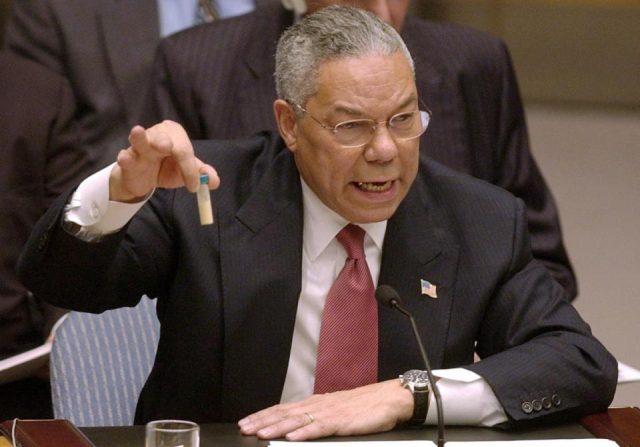
Did everyone urging us to trust the CIA forget this happened? Or do they just want us to?
By Kit | OffGuardian | July 20, 2018
In the hysterical wake of the Trump-Putin Summit in Helsinki, President Donald Trump was roundly criticised in the media for taking the side of a “hostile state” over his own intelligence agencies. The Guardian referred to Mueller as a “heroic marine” who Trump disbelieved in favour of a “Russian dictator”.
In the past, when Trump has criticised the FBI, CIA or NSA he has been accused of “undermining faith in our institutions”. He’s been blamed for a collapse of trust in the government. But was this trust ever earned?
At every corner, we are urged to simply believe what we are told. Whether it is about believing Porton Down and MI6 about “novichok”, or believing the White Helmets about Sarin, or believing the FBI about “collusion”, we are presented with no facts, just assertions from authority. Those who question those assertions are deemed “bots” at best or “traitors” at worst.
Well here, fellow traitors, are the Top Ten reasons to question anything and everything the CIA – or any intelligence agency – has ever told you.
10. OPERATION PAPERCLIP – we’ll start with an oldie but a goody. In 1945, as the allies were advancing on Berlin from both sides, American Army Intelligence (this was before the CIA were founded) were “capturing” (read: recruiting) over 1,600 Nazi scientists and engineers. Most famous of them was Werhner von Braun… sorry, SS Sturmbannführer von Braun.
Whilst Allied soldiers died in the name of defeating fascism, the CIA’s predecessors were actively recruiting Nazis to come and build bombs for them.
9. OPERATION NORTHWOODS – The original, and important, precedent for accusations that the CIA et al. might engage in false-flag attacks. Operation Northwoods was a joint CIA/Pentagon proposal designed around the idea of escalating a war with Cuba by stoking public anger:
The proposals called for the Central Intelligence Agency (CIA) or other U.S. government operatives to commit acts of terrorism against American civilians and military targets, blaming it on the Cuban government, and using it to justify a war against Cuba.
The idea was vetoed by President Kennedy. Fifty years later, the CIA and Pentagon still very much exist, but there’s no longer a Kennedy there to veto their more psychopathic ideas. Funny how that worked out.
8. ALLENDE COUP – In 1970 Salvador Allende was elected to the Chilean Presidency. A Physician and dedicated socialist, Allende was the first socialist president elected in South America. The Nixon-lead government of the United States immediately implemented “economic warfare” (as they do, to this day, against Cuba, Venezuela and others). The economic warfare did not work, and in 1973 Allende’s socialist party increased their parliamentary majority.
In response, the US “assisted” (read: instructed) the Chilean military in carrying out a coup. Allende allegedly shot himself, and Augusto Pinochet was placed in power as the first dictator in Chile’s history. Pinochet was a fascist who executed Chilean “subversives” by the thousand… and was the darling of Western leaders.
7. MOSADDEGH COUP – I could just copy-and-paste the above paragraph and the change the names for this entry. In 1953, the Prime Minister of Iran – Mohammad Mosaddegh, a democratic socialist – wanted to audit the income of the Anglo-Iranian Oil Company with an eye to limiting foreign control of Iran’s oil. Within a few months, a joint US/UK operation – Operation Ajax – had removed Mosaddegh’s elected government and turned over full control of the state to the Shah. He was a brutal absolute monarch, but the question of Western control of Iran’s enormous oil reserves wasn’t raised again under his leadership.
6. OPERATION MOCKINGBIRD – A CIA operation that you could deduce existed, even if were not proven…. and it is proven. Mockingbird was the CIA project to coerce, train, control or plant CIA-friendly journalists in major news networks all across the country and in every medium. It’s existence is no longer disputed, thanks to FOIA releases of internal memos.
Mockingbird was allegedly shut down in 1976 – just after its existence was leaked – then CIA director George HW Bush claiming:
… effective immediately, CIA will not enter into any paid or contractual relationship with any full-time or part-time news correspondent accredited by any U.S. news service, newspaper, periodical, radio or television network or station.”
If you’re willing to stake anything on the word of a Bush, well, good luck with that. It’s a decision that flies in the face of historical evidence.
Remember this one when you hear about the need to trust the CIA from some pundit on CNN or MSNBC.
5. MASS SURVEILLANCE – It’s not really talked about much these days – what with the vast majority of the media and huge sections of the supposedly “anti-establishment” progressive left marching in-step with the Deep State – but the NSA spied on the whole world. The whole world. We know this to be true because an employee of the Deep State – Edward Snowden – leaked the information.
When challenged on this issue, representatives of the NSA and CIA lied. They lied to the public, and they lied to congress. When they were proven to have lied, they carefully qualified their lies.
A qualified lie is still a lie.
There is no indication they have stopped this illegal surveillance, but they may have passed laws to make it legal.
4. NAYIRAH – A classic of “atrocity propaganda”, Nayirah should be required reading material for anybody looking top hop on a pro-war bandwagon. Nayirah – who originally gave only her first name – was a fifteen year old girl who testified in front of the United States Congress. She claimed to be a volunteer from at a Kuwaiti hospital, and to be an eye-witness to Iraqi soldiers throwing Kuwaiti babies out of incubators and leaving them to die:
I volunteered at the al-Addan hospital with twelve other women who wanted to help as well. I was the youngest volunteer. The other women were from twenty to thirty years old. While I was there I saw the Iraqi soldiers come into the hospital with guns. They took the babies out of the incubators, took the incubators and left the children to die on the cold floor. It was horrifying.
It was later revealed, not only that her full name was Nayirah al-Sabah and she was the daughter of the Kuwaiti ambassador, but that she had never volunteered at a hospital and had seen no babies, soldiers or incubators. The whole thing was a fiction. A fiction paid for by the “Citizens of Free Kuwait”, an NGO (and obvious CIA front) set up to lobby the US to intervene in the Iraq-Kuwait war.
By the time this fiction was revealed it was too late, and the US had launched Operation Desert Storm…. which was, of course, the entire point of the exercise.
Remember this, when you hear about Assad gassing children or bombing kittens.
3. COINTELPRO – The FBI’s long running (and sometimes illegal) COunter INTELligence PROgram, COINTELPRO was a series of domestic projects carried out by the FBI (with cooperation from other agencies), over decades, with the aim of “surveilling, infiltrating, discrediting, and disrupting domestic political organizations”.
These political organizations included anti-Vietnam protestors, civil rights groups (including both MLK and Malcolm X), socialists, Communist Party USA, environmental groups and feminist organizations.
The brief for these “disruptions” came straight from J. Edgar Hoover who wanted the FBI to “expose, disrupt, misdirect, discredit, or otherwise Neutralize” people he perceived to be enemies of the state. The capital N in “neutralise” is no accident, as the FBI was implicated in the deaths of several Black Panther leaders, including Fred Hampton.
COINTELPRO didn’t just involve undermining left-wing groups, but also creating right-wing groups:
The FBI also financed, armed, and controlled an extreme right-wing group of former Minutemen, transforming it into a group called the Secret Army Organization that targeted groups, activists, and leaders involved in the Anti-War Movement, using both intimidation and violent acts.
Whether this was done to actually push a right-wing agenda, create a fake threat to step up police powers, or just sow division and chaos, is unclear. But it definitely happened.
Much like MKUltra (below), COINTELPRO was “officially shut down”, not long after the public found out it existed. However, the accidental outing of undercover policeman at a rally in Oakland, and recent relaxation of the laws limiting the FBI’s powers, means that COINTELPRO – or a modern successor – is very likely still a thing.
The aim of COINTELPRO was to “Neutralize” anti-establishment political figures – the vast majority of targets were left wingers – through “smearing individuals and groups using forged documents and by planting false reports in the media”. Remember that when you see Rand Paul called a “traitor” on twitter, or read about “Russian collusion”, or see Jeremy Corbyn branded an anti-Semite.
Remember that it is proven that the Deep State – our trusted intelligence agencies – pay people to plant false stories and discredit political opponents.
2. PROJECT MKULTRA – It might sound like something from a 70s sci-fi TV series, but it is unfortunately real. MKUltra was a series of (illegal) experiments carried out by the CIA from 1953 until it was *cough* “officially halted” in 1973 (just after its existence was leaked). The experiments were wide-ranging, achieved varied levels of success, but pretty uniformly brutal and unethical. They included, but were not limited too:
– Giving LSD to unsuspecting soldiers to see what happened.
– Mass hypnosis and mass suggestion
– Torture studies
– Studies on the effect of verbal and/or sexual abuse
We’ll never know the full range of studies, or how they were carried out, because in 1973 Richard Helms, then director of the CIA, ordered all MKUltra files destroyed. Only a fraction of them survive, thanks to FOIA requests, but it’s reasonable to assume they destroyed the worst parts and kept the more quote-unquote innocent files.
The CIA were not unique in this regard either, MKUltra was their baby – but there were parallel projects in other quarters of the deep state. Army Intelligence had Edgewood Arsenal, whilst the Department of Defense had Project 112. All these projects were “officially halted” in the early 70s… just around the time the public found out they existed.
The CIA (et al.) have strongly denied that these experiments and projects have ever been continued in any way, shape or form…but if you’d asked them in 1969, they would have denied they had ever taken place at all.
1. THE IRAQ WAR – This might not be the most callous, the most dangerous, the most recent, the most secret or the most insidious of the items on this list, nevertheless it is – must be – number one… because it is the most brazen.
The war was started in the name of “weapons of mass destruction” that everyone – everyone – knew never existed. They all knew the truth, but they lied.
The President lied, the vice-president lied, the secretary of defence lied, the secretary of state lied. The Prime Minister lied, the defence minister lied, the foreign minister lied. They lied to the press, the people and the UN.
The CIA, the NSA, the FBI – then headed by the “heroic marine” Robert Mueller – they lied too. The press repeated these lies, without question (see: Operation Mockingbird). They weren’t “misinformed”, they weren’t “mistaken”. They lied, they lied repeatedly – and provably – and they did it in order to start a war, make money, take control, spread influence.
One million Iraqis died.
Our ruling class is peopled with psychopaths and war criminals, who have so little regard for the people they lie to they recycle the same childishly simple falsehoods to further their evil agenda again and again and again. They tried the same in Libya… it worked again. They tried again in Syria… luckily, it didn’t work there.
Our “democratic institutions” lie to start wars. There’s no reason to think they aren’t doing – or wouldn’t do – the same thing about Iran, North Korea… or Russia.
That’s our list, and there’s really only one lesson you can take away from it:
These people, agencies and institutions deserve no trust, have earned no trust and have abused every micron of trust ever placed in them. To suggest we have a duty to believe them – or that they have ever done anything to serve the public good – is to live in a dream world.
This list is not a full catalogue of Deep State crimes, it would be 1,000s of entries long if it were, but these ten are important. They’re important because they are admitted, proven and beyond debate. They are important because they show the many facets of dishonesty, hypocrisy and abuses of power that Intelligence agencies engage in, and they are important because they form the best riposte to the disingenuous clamour for “trust” in our “democratic institutions”.
Never trust the CIA, they have proved they don’t deserve it.
Indictment of 12 Russians: Under the Shiny Wrapping, a Political Act
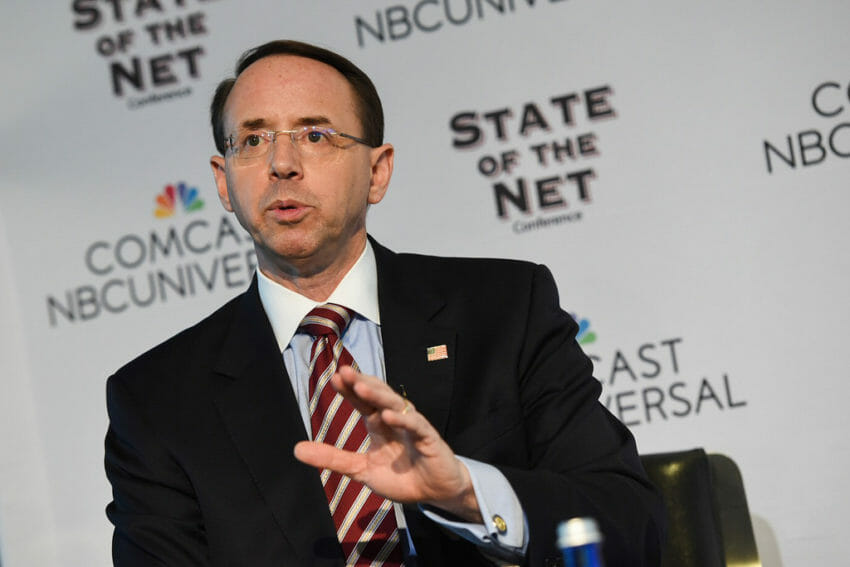
U.S. Deputy Attorney General Rod Rosenstein, released the indictment of 12 Russians days before President Trump was due to meet with Russian President Vladimir Putin.
By Scott Ritter | TruthDig | July 15, 2018
With great fanfare, Deputy Attorney General Rod Rosenstein on Friday released a 29-page indictment, a byproduct of the ongoing investigation by special counsel Robert Mueller into Russian meddling in the 2016 presidential election. Ostensibly, this indictment cemented the government’s case against the Russians and punched a hole in the arguments of those, like President Trump, who have been labeling Mueller’s investigation a “witch hunt.” This, of course, is precisely what Rosenstein and Mueller hoped to achieve through their carefully timed, and even more carefully scripted, indictment.
The indictment was made public at a time when the FBI is under increasing scrutiny for the appearance of strong anti-Trump bias on the part of some of its senior agents. This purported bias in turn generated rational concerns on the part of the president’s supporters that it possibly influenced decisions related to investigations being conducted by the FBI into allegations of collusion between persons affiliated with the campaign of then-Republican candidate Trump and the Russian government. The goal of this alleged collusion was to interfere in the American electoral processes and confer Trump an advantage against his Democratic rival, Hillary Clinton.
It also comes on the heels of a concerted effort on the part of the president and his political supporters to denigrate the investigation of Mueller and, by extension, the judgment and character of Rosenstein, who, since the recusal of Attorney General Jeff Sessions from the Russian investigation, has been giving Mueller his marching orders. Indeed, several conservative members of the House of Representatives are mulling the impeachment of Rosenstein, claiming he is refusing to cooperate with Congress by denying them access to documents related to the investigation that certain members of Congress, at least, deem relevant to their constitutionally mandated oversight function.
While the impeachment of Rosenstein is highly unlikely and the likelihood of the FBI being found guilty of its investigations being corrupted by individual bias is equally slim, in the world of politics, perception creates its own reality and the Mueller investigation had been taking a public beating for some time. By releasing an indictment predicated upon the operating assertion that 12 named Russian military intelligence officers orchestrated a series of cyberattacks that resulted in information being stolen from computer servers belonging to the Democratic Party, and then facilitated the release of this information in a manner designed to do damage to the candidacy of Clinton, Rosenstein sought to silence once and for all the voices that have attacked him, along with the Department of Justice, the FBI and the Mueller investigation, as a participant in a partisan plot against the president.
There is one major problem with the indictment, however: It doesn’t prove that which it asserts. True, it provides a compelling narrative that reads like a spy novel, and there is no doubt in my mind that many of the technical details related to the timing and functioning of the malware described within are accurate. But the leap of logic that takes the reader from the inner workings of the servers of the Democratic Party to the offices of Russian intelligence officers in Moscow is not backed up by anything that demonstrates how these connections were made.
That’s the point of an indictment, however—it doesn’t exist to provide evidence beyond a reasonable doubt, but rather to provide only enough information to demonstrate probable cause. No one would, or could, be convicted at trial from the information contained in the indictment alone. For that to happen, the government would have to produce the specific evidence linking the hacks to the named Russians, and provide details on how this evidence was collected, and by whom. In short, the government would have to be willing to reveal some of the most sensitive sources and methods of intelligence collection by the U.S. intelligence community and expose, and therefore ruin, the careers of those who collected this information. This is something the government has never been willing to do, and there is much doubt that if, for some odd reason, the Russians agreed to send one or more of these named intelligence officers to the United States to answer the indictment, this indictment would ever go to trial. It simply couldn’t survive the discovery to which any competent defense would subject the government’s assertions.
Robert Mueller knew this when he drafted the indictment, and Rob Rosenstein knew this when he presented it to the public. The assertions set forth in the indictment, while cloaked in the trappings of American justice, have nothing to do with actual justice or the rule of law; they cannot, and will never, be proved in a court of law. However, by releasing them in a manner that suggests that the government is willing to proceed to trial, a perception is created that implies that they can withstand the scrutiny necessary to prevail at trial.
And as we know, perception is its own reality.
Despite Rosenstein’s assertions to the contrary, the decision to release the indictment of the 12 named Russian military intelligence officers was an act of partisan warfare designed to tip the scale of public opinion against the supporters of President Trump, and in favor of those who oppose him politically, Democrat and Republican alike. Based upon the media coverage since Rosenstein’s press conference, it appears that in this he has been wildly successful.
But is the indictment factually correct? The biggest clue that Mueller and Rosenstein have crafted a criminal espionage narrative from whole cloth comes from none other than the very intelligence agency whose work would preclude Rosenstein’s indictment from ever going to trial: the National Security Agency. In June 2017 the online investigative journal The Intercept referenced a highly classified document from the NSA titled “Spear-Phishing Campaign TTPs Used Against U.S. And Foreign Government Political Entities.” It’s a highly technical document, derived from collection sources and methods the NSA has classified at the Top Secret/SI (i.e., Special Intelligence) level. This document was meant for internal consumption, not public release. As such, the drafters could be honest about what they knew and what they didn’t know—unlike those in the Mueller investigation who drafted the aforementioned indictment.
A cursory comparison of the leaked NSA document and the indictment presented by Rosenstein suggests that the events described in Count 11 of the indictment pertaining to an effort to penetrate state and county election offices responsible for administering the 2016 U.S. presidential election are precisely the events captured in the NSA document. While the indictment links the identity of a named Russian intelligence officer, Anatoliy Sergeyevich Kovalev, to specific actions detailed therein, the NSA document is much more circumspect. In a diagram supporting the text report, the NSA document specifically states that the organizational ties between the unnamed operators involved in the actions described and an organizational entity, Unit 74455, affiliated with Russian military intelligence is a product of the judgment of an analyst and not fact.
If we take this piece of information to its logical conclusion, then the Mueller indictment has taken detailed data related to hacking operations directed against various American political entities and shoehorned it into what amounts to little more than the organizational chart of a military intelligence unit assessed—but not known—to have overseen the operations described. This is a far cry from the kind of incontrovertible proof that Mueller’s team suggests exists to support its indictment of the 12 named Russian intelligence officers.
If this is indeed the case, then the indictment, as presented, is a politically motivated fraud. Mueller doesn’t know the identities of those involved in the hacking operations he describes—because the intelligence analysts who put the case together don’t know those names. If this case were to go to trial, the indictment would be dismissed in the preliminary hearing phase for insufficient evidence, even if the government were willing to lay out the totality of its case—which, because of classification reasons, it would never do.
But the purpose of the indictment wasn’t to bring to justice the perpetrators of a crime against the American people; it was to manipulate public opinion.
And therein lies the rub.
The timing of the release of the Mueller indictment unleashed a storm of political backlash directed at President Trump, and specifically at his scheduled July 16 summit with Russian President Vladimir Putin in Helsinki. This summit was never popular with the president’s political opponents, given the current state of affairs between Russia and the U.S., dominated as they are by events in Syria and Ukraine, perceived Russian threats against the northern flank of NATO, allegations of election meddling in the U.S. and Europe, and Russia’s nuclear arsenal. On that last point, critics claim Russia’s arsenal is irresponsibly expanding, operated in violation of existing arms control agreements, and is being used to underpin foreign policy objectives through the use of nuclear blackmail.
President Trump has publicly stated that it is his fervent desire that relations with Russia can be improved and that he views the Helsinki summit as an appropriate venue for initiating a process that could facilitate such an outcome. It is the president’s sole prerogative to formulate and implement foreign and national security policy on behalf of the American people. While his political critics are free to criticize this policy, they cannot undermine it without running afoul of sedition laws.
Rosenstein, by the timing and content of the indictment he publicly released Friday, committed an act that undermined the president of the United States’ ability to conduct critical affairs of state—in this case, a summit with a foreign leader the outcome of which could impact global nuclear nonproliferation policy. The hue and cry among the president’s political foes for him to cancel the summit with Putin—or, failing that, to use the summit to confront the Russian leader with the indictment—is a direct result of Rosenstein’s decision to release the Mueller indictment when he did and how he did. Through its content, the indictment was designed to shape public opinion against Russia.
This indictment, by any other name, is a political act, and should be treated as such by the American people and the media.
(Photo credit Internet Education Foundation / CC BY 2.0)
Memo to the President Ahead of Monday’s Summit
Consortium News | July 15, 2018
With Friday’s indictments of Russian intelligence officers, Ray McGovern and Bill Binney have written an open letter to President Trump making clear that the “evidence” behind the indictments is as fraudulent as the intelligence alleging WMD in Iraq. It is being published ahead of the Trump-Putin summit on Monday.
BRIEFING FOR: The President
FROM: Ray McGovern, former CIA briefer of The President’s Daily Brief, and William Binney, former Technical Director at NSA
SUBJECT: Info Your Summit Briefers May Have Missed
We reproduce below one of our most recent articles on “Russia-Gate,” which, in turn, draws from our Veteran Intelligence Professionals for Sanity Memorandum to you of July 24, 2017.
At the time of that Memorandum we wrote:
“Forensic studies of “Russian hacking” into Democratic National Committee computers last year reveal that on July 5, 2016, data was leaked (not hacked) by a person with physical access to DNC computer. After examining metadata from the “Guccifer 2.0” July 5, 2016 intrusion into the DNC server, independent cyber investigators have concluded that an insider copied DNC data onto an external storage device.
Key among the findings of the independent forensic investigations is the conclusion that the DNC data was copied onto a storage device at a speed that far exceeds an Internet capability for a remote hack.”
“We do not know who or what the murky Guccifer 2.0 is. You may wish to ask the FBI,” we wrote. However, we now have forensic evidence that shows the data provided by Guccifer 2.0 had been manipulated and is a fabrication.
We also discussed CIA’s cyber-tool “Marble Framework,” which can hack into computers, “obfuscate” who hacked, and leave behind incriminating, tell-tale signs in Russian; and we noted that this capability had been employed during 2016. As we pointed out, Putin himself made an unmistakable reference to this “obfuscating” tool during an interview with Megan Kelly.
Our article of June 7, 2018, explains further:
“Still Waiting for Evidence of a Russian Hack”
If you are wondering why so little is heard these days of accusations that Russia hacked into the U.S. election in 2016, it could be because those charges could not withstand close scrutiny. It could also be because special counsel Robert Mueller appears to have never bothered to investigate what was once the central alleged crime in Russia-gate as no one associated with WikiLeaks has ever been questioned by his team.
Veteran Intelligence Professionals for Sanity — including two “alumni” who were former National Security Agency technical directors — have long since concluded that Julian Assange did not acquire what he called the “emails related to Hillary Clinton” via a “hack” by the Russians or anyone else. They found, rather, that he got them from someone with physical access to Democratic National Committee computers who copied the material onto an external storage device — probably a thumb drive. In December 2016 VIPS explained this in some detail in an open Memorandum to President Barack Obama.
On January 18, 2017 President Obama admitted that the “conclusions” of U.S. intelligence regarding how the alleged Russian hacking got to WikiLeaks were “inconclusive.” Even the vapid FBI/CIA/NSA “Intelligence Community Assessment of Russian Activities and Intentions in Recent U.S. Elections” of January 6, 2017, which tried to blame Russian President Vladimir Putin for election interference, contained no direct evidence of Russian involvement. That did not prevent the “handpicked” authors of that poor excuse for intelligence analysis from expressing “high confidence” that Russian intelligence “relayed material it acquired from the Democratic National Committee … to WikiLeaks.” Handpicked analysts, of course, say what they are handpicked to say.
Never mind. The FBI/CIA/NSA “assessment” became bible truth for partisans like Rep. Adam Schiff (D-CA), ranking member of the House Intelligence Committee, who was among the first off the blocks to blame Russia for interfering to help Trump. It simply could not have been that Hillary Clinton was quite capable of snatching defeat out of victory all by herself. No, it had to have been the Russians.
Five days into the Trump presidency, McGovern had a chance to challenge Schiff personally on the gaping disconnect between the Russians and WikiLeaks. Schiff still “can’t share the evidence” with me … or with anyone else, because it does not exist.
It was on June 12, 2016, just six weeks before the Democratic National Convention, that Assange announced the pending publication of “emails related to Hillary Clinton,” throwing the Clinton campaign into panic mode, since the emails would document strong bias in favor of Clinton and successful attempts to sabotage the campaign of Bernie Sanders. When the emails were published on July 22, just three days before the convention began, the campaign decided to create what we call a Magnificent Diversion, drawing attention away from the substance of the emails by blaming Russia for their release.
Clinton’s PR chief Jennifer Palmieri later admitted that she golf-carted around to various media outlets at the convention with instructions “to get the press to focus on something even we found difficult to process: the prospect that Russia had not only hacked and stolen emails from the DNC, but that it had done so to help Donald Trump and hurt Hillary Clinton.” The diversion worked like a charm. Mainstream media kept shouting “The Russians did it,” and gave little, if any, play to the DNC skullduggery revealed in the emails themselves. And like Brer’ Fox, Bernie didn’t say nothin’.
Meanwhile, highly sophisticated technical experts, were hard at work fabricating “forensic facts” to “prove” the Russians did it. Here’s how it played out:
June 12, 2016: Assange announces that WikiLeaks is about to publish “emails related to Hillary Clinton.”
June 14, 2016: DNC contractor CrowdStrike, (with a dubious professional record and multiple conflicts of interest) announces that malware has been found on the DNC server and claims there is evidence it was injected by Russians.
June 15, 2016: “Guccifer 2.0” affirms the DNC statement; claims responsibility for the “hack;” claims to be a WikiLeaks source; and posts a document that the forensics show was synthetically tainted with “Russian fingerprints.”
The June 12, 14, & 15 timing was hardly coincidence. Rather, it was the start of a pre-emptive move to associate Russia with anything WikiLeaks might have been about to publish and to “show” that it came from a Russian hack.
Enter Independent Investigators
A year ago independent cyber-investigators completed the kind of forensic work that, for reasons best known to then-FBI Director James Comey, neither he nor the “handpicked analysts” who wrote the Jan. 6, 2017 assessment bothered to do. The independent investigators found verifiable evidence from metadata found in the record of an alleged Russian hack of July 5, 2016 showing that the “hack” that day of the DNC by Guccifer 2.0 was not a hack, by Russia or anyone else.
Rather it originated with a copy (onto an external storage device – a thumb drive, for example) by an insider — the same process used by the DNC insider/leaker before June 12, 2016 for an altogether different purpose. (Once the metadata was found and the “fluid dynamics” principle of physics applied, this was not difficult to disprove the validity of the claim that Russia was responsible.)
One of these independent investigators publishing under the name of The Forensicator on May 31 published new evidence that the Guccifer 2.0 persona uploaded a document from the West Coast of the United States, and not from Russia.
In our July 24, 2017 Memorandum to President Donald Trump we stated, “We do not know who or what the murky Guccifer 2.0 is. You may wish to ask the FBI.”
Our July 24 Memorandum continued: “Mr. President, the disclosure described below may be related. Even if it is not, it is something we think you should be made aware of in this general connection. On March 7, 2017, WikiLeaks began to publish a trove of original CIA documents that WikiLeaks labeled ‘Vault 7.’ WikiLeaks said it got the trove from a current or former CIA contractor and described it as comparable in scale and significance to the information Edward Snowden gave to reporters in 2013.
“No one has challenged the authenticity of the original documents of Vault 7, which disclosed a vast array of cyber warfare tools developed, probably with help from NSA, by CIA’s Engineering Development Group. That Group was part of the sprawling CIA Directorate of Digital Innovation – a growth industry established by John Brennan in 2015. [ (VIPS warned President Obama of some of the dangers of that basic CIA reorganization at the time.]
Marbled
“Scarcely imaginable digital tools – that can take control of your car and make it race over 100 mph, for example, or can enable remote spying through a TV – were described and duly reported in the New York Times and other media throughout March. But the Vault 7, part 3 release on March 31 that exposed the “Marble Framework” program apparently was judged too delicate to qualify as ‘news fit to print’ and was kept out of the Times at the time, and has never been mentioned since.
“The Washington Post’s Ellen Nakashima, it seems, ‘did not get the memo’ in time. Her March 31 article bore the catching (and accurate) headline: ‘WikiLeaks’ latest release of CIA cyber-tools could blow the cover on agency hacking operations.’
“The WikiLeaks release indicated that Marble was designed for flexible and easy-to-use ‘obfuscation,’ and that Marble source code includes a “de-obfuscator” to reverse CIA text obfuscation.
“More important, the CIA reportedly used Marble during 2016. In her Washington Post report, Nakashima left that out, but did include another significant point made by WikiLeaks; namely, that the obfuscation tool could be used to conduct a ‘forensic attribution double game’ or false-flag operation because it included test samples in Chinese, Russian, Korean, Arabic and Farsi.”
A few weeks later William Binney, a former NSA technical director, and Ray McGovern commented on Vault 7 Marble, and were able to get a shortened op-ed version published in The Baltimore Sun.
The CIA’s reaction to the WikiLeaks disclosure of the Marble Framework tool was neuralgic. Then Director Mike Pompeo lashed out two weeks later, calling Assange and his associates “demons,” and insisting; “It’s time to call out WikiLeaks for what it really is, a non-state hostile intelligence service, often abetted by state actors like Russia.”
Our July 24 Memorandum continued: “Mr. President, we do not know if CIA’s Marble Framework, or tools like it, played some kind of role in the campaign to blame Russia for hacking the DNC. Nor do we know how candid the denizens of CIA’s Digital Innovation Directorate have been with you and with Director Pompeo. These are areas that might profit from early White House review. [ President Trump then directed Pompeo to invite Binney, one of the authors of the July 24, 2017 VIPS Memorandum to the President, to discuss all this. Binney and Pompeo spent an hour together at CIA Headquarters on October 24, 2017, during which Binney briefed Pompeo with his customary straightforwardness. ]
“We also do not know if you have discussed cyber issues in any detail with President Putin. In his interview with NBC’s Megyn Kelly he seemed quite willing – perhaps even eager – to address issues related to the kind of cyber tools revealed in the Vault 7 disclosures, if only to indicate he has been briefed on them. Putin pointed out that today’s technology enables hacking to be ‘masked and camouflaged to an extent that no one can understand the origin’ [of the hack] … And, vice versa, it is possible to set up any entity or any individual that everyone will think that they are the exact source of that attack.
“‘Hackers may be anywhere,’ he said. ‘There may be hackers, by the way, in the United States who very craftily and professionally passed the buck to Russia. Can’t you imagine such a scenario? … I can.’”
New attention has been drawn to these issues after McGovern discussed them in a widely published 16-minute interview last Friday.
In view of the highly politicized environment surrounding these issues, we believe we must append here the same notice that VIPS felt compelled to add to our key Memorandum of July 24, 2017:
“Full Disclosure: Over recent decades the ethos of our intelligence profession has eroded in the public mind to the point that agenda-free analysis is deemed well nigh impossible. Thus, we add this disclaimer, which applies to everything we in VIPS say and do: We have no political agenda; our sole purpose is to spread truth around and, when necessary, hold to account our former intelligence colleagues.
“We speak and write without fear or favor. Consequently, any resemblance between what we say and what presidents, politicians and pundits say is purely coincidental.” The fact we find it is necessary to include that reminder speaks volumes about these highly politicized times.
Ray McGovern, a CIA analyst for 27 years, was chief of the Soviet Foreign Policy Branch and briefed the President’s Daily Brief one-on-one from 1981-1985.
William Binney worked for NSA for 36 years, retiring in 2001 as the technical director of world military and geopolitical analysis and reporting; he created many of the collection systems still used by NSA.
Evidence Will Probably Never Be Produced in Indictments of ‘Russian Agents’
By Joe Lauria | Consortium News | July 14, 2018
Charges against 12 Russian intelligence agents for allegedly hacking emails from the Democratic Party during the 2016 presidential election were announced by the U.S. Justice Department on Friday at the very moment President Donald Trump was meeting Queen Elizabeth II at Windsor Castle and just days before a summit between Trump and Russian President Vladimir Putin in Helsinki.
A central claim of Russia-gate has been that the Russian government with help from the Trump campaign stole emails from the Democratic Party and the Hillary Clinton campaign and then gave those emails to WikiLeaks for publication to damage Clinton’s quest for the White House.
Until Friday however, the investigation into the allegations had produced no formal indictment of Russian government interference in the election. Like previous U.S. government accusations against Russia for alleged election meddling, the indictment makes assertions without providing evidence. Under U.S. law, indictments are not considered evidence. And it is highly unlikely that the government will ever have to produce any evidence in court.
Friday’s indictments do not include any charges against Trump campaign members for allegedly colluding with the Russian government to carry out the hacks. That has been at the core of allegations swirling in U.S. media for two years. If the alleged co-conspirators “known” to the DOJ were on the Trump team, the indictments do not say. There is only a hint that “unknown” persons might be.
In announcing the indictments at a press conference Friday, Deputy Attorney General Rod Rosenstein said: “The conspirators corresponded with several Americans during the course of the conspiracy through the internet. There’s no allegation in this indictment that the Americans knew they were corresponding with Russian intelligence officers.”
The indictment alleges that Russian agents, posing as Guccifer 2.0, communicated on Aug. 15, 2016 with “a person who was in regular contact with senior members” of the Trump campaign, mostly like advisor Roger Stone, who has spoken about communicating with Guccifer 2.0. The indictment says Guccifer offered to “help u anyhow,” apparently indicating that Stone did want Guccifer 2.0’s help.
Clinging to ‘Collusion’
The lack of evidence that the Trump campaign was colluding with Russia has never stopped Democrats and their media outlets from believing unnamed U.S. intelligence sources for two years about such collusion. “Collusion” is the title of a best-selling book about the supposed Trump-Russia conspiracy to steal the election, but such a charge is not to be found.
The indictment excluding collusion also undermines the so-called Steele dossier, a work of opposition research paid for by the DNC and Clinton campaign masquerading as an intelligence document because it was compiled by a former MI6 agent. The memos falsely claimed, it turns out, that Trump’s people started colluding with Russia years before he became a candidate.
But even after Friday’s indictments failed to charge anyone from Trump’s team, the Democratic media continued to insist there was collusion. A New York Times story, headlined, “Trump Invited the Russians to Hack Clinton. Were They Listening?,” said Russia may have absurdly responded to Trump’s call at 10:30 a.m. on July 27, 2016 to hack Clinton’s private email server because it was “on or about” that day that Russia allegedly first made an attempt to hack Clinton’s personal emails, according to the indictment, which makes no connection between the two events.
If Russia is indeed guilty of remotely hacking the emails it would have had no evident need of assistance from anyone on the Trump team, let alone a public call from Trump on national TV to commence the operation.
Instead of Trump operatives, the indictments name 12 Russians, allegedly agents from the GRU, the Russian military intelligence agency. The agents “knowingly and intentionally conspired with each other, and with persons known and unknown to the Grand Jury (collectively the ‘Conspirators’), to gain unauthorized access (to ‘hack’) into the computers of U.S. persons and entities involved in the 2016 U.S. presidential election, steal documents from those computers, and stage releases of the stolen documents to interfere with the 2016 U.S. presidential election,” the 29-page indictment says.
“Starting in at least March 2016, the Conspirators used a variety of means to hack the email accounts of volunteers and employees of the U.S. presidential campaign of Hillary Clinton (the ‘Clinton Campaign’), including the email account of the Clinton Campaign’s chairman,” the indictment says.
Obvious Timing
The timing of the announcement was clearly intended to embarrass Trump as he was meeting the Queen and to undermine his upcoming meeting with Putin on July 16. The indictments may also have been meant to embarrass Russia two days before the World Cup final to be held in Moscow.
Pressure was immediately brought on Trump to cancel the summit in light of the indictments, which may have been the main aim in the timing of their announcement. “Glad-handing with Vladimir Putin on the heels of these indictments would be an insult to our democracy,” Senator Chuck Schumer (D-NY) said in a statement less than an hour after the indictments were announced. “President Trump should cancel his meeting with Vladimir Putin until Russia takes demonstrable and transparent steps to prove that they won’t interfere in future elections,” Schumer said.
With no apparent irony, The New York Times reported, “The timing of the indictment … added a jolt of tension to the already freighted atmosphere surrounding Mr. Trump’s meeting with Mr. Putin. It is all but certain to feed into the conspiratorial views held by the president and some of his allies that Mr. Mueller’s prosecutors are determined to undermine Mr. Trump’s designs for a rapprochement with Russia.”
Russia Denies
The Russian government on Friday strongly denied the charges. In a statement, the Foreign Ministry called the indictments “a shameful farce” that was not backed up by any evidence. “Obviously, the goal of this ‘mud-slinging’ is to spoil the atmosphere before the Russian-American summit,” the statement said.
The Ministry added that the 12 named Russians were not agents of the GRU.
“When you dig into this indictment … there are huge problems, starting with how in the world did they identify 12 Russian intelligence officers with the GRU,” said former CIA analyst Larry Johnson in an interview with Consortium News. Johnson pointed out that the U.S. Defense Intelligence Agency was not allowed to take part in the January 2017 Intelligence Community Assessment on alleged interference by the GRU. Only hand-picked analysts from the FBI, the NSA and the CIA were involved.
“The experts in the intelligence community on the GRU … is the Defense Intelligence Agency and they were not allowed to clear on that document,” Johnson said.
“When you look at the level of detail about what [the indictment is] claiming, there is no other public source of information on this ,and it was not obtained through U.S. law enforcement submitting warrants and getting affidavits to conduct research in Russia, so it’s clearly intelligence information from the NSA, most likely,” Johnson said.
CrowdStrike’s Role
The indictment makes clear the evidence of an alleged hack of the DNC and DCCC computers did not come from the FBI, which was never given access to the computers by the DNC, but instead from the private firm CrowdStrike, which was hired by the DNC. It is referred to as Company 1 in the indictment.
“Despite the Conspirators’ efforts to hide their activity, beginning in or around May 2016, both the DCCC and DNC became aware that they had been hacked and hired a security company (“Company 1”) to identify the extent of the intrusions,” the indictment says.
The indictment doesn’t mention it, but within a day, CrowdStrike claimed to find Russian “fingerprints” in the metadata of a DNC opposition research document, which had been revealed by DCLeaks, showing Cyrillic letters and the name of the first Soviet intelligence chief. That supposedly implicated Russia in the hack.
CrowdStrike claimed the alleged Russian intelligence operation was extremely sophisticated and skilled in concealing its external penetration of the server. But CrowdStrike’s conclusion about Russian “fingerprints” resulted from clues that would have been left behind by extremely sloppy or amateur hackers–or inserted intentionally to implicate the Russians.
One of CrowdStrike’s founders has ties to the anti-Russian Atlantic Council raising questions of political bias. And the software it used to determine Russia’s alleged involvement in the DNC hack, was later proved to be faulty in a high-profile case in Ukraine, reported by the Voice of America.
The indictment then is based at least partially on evidence produced by an interested private company, rather than the FBI.
Evidence Likely Never to be Seen
Other apparent sources for information in the indictment are intelligence agencies, which normally create hurdles in a criminal prosecution.
“In this indictment there is detail after detail whose only source could be intelligence, yet you don’t use intelligence in documents like this because if these defendants decide to challenge this in court, it opens the U.S. to having to expose sources and methods,” Johnson said.
If the U.S. invoked the states secret privilege so that classified evidence could not be revealed in court a conviction before a civilian jury would be jeopardized.
Such a trial is extremely unlikely however. That makes the indictment essentially a political and not a legal document because it is almost inconceivable that the U.S. government will have to present any evidence in court to back up its charges. This is simply because of the extreme unlikelihood that arrests of Russians living in Russia will ever be made.
In this way it is similar to the indictment earlier this year of the Internet Research Agency of St. Petersburg, Russia, a private click bait company that was alleged to have interfered in the 2016 election by buying social media ads and staging political rallies for both Clinton and Trump. It seemed that no evidence would ever have to back up the indictment because there would never be arrests in the case.
But Special Counsel Robert Mueller was stunned when lawyers for the internet company showed up in Washington demanding discovery in the case. That caused Mueller to scramble and demand a delay in the first hearing, which was rejected by a federal judge. Mueller is now battling to keep so-called sensitive material out of court.
In both the IRA case and Friday’s indictments, the extremely remote possibility of convictions were not what Mueller was apparently after, but rather the public perception of Russia’s guilt resulting from fevered media coverage of what are after all only accusations, presented as though it is established fact. Once that impression is settled into the public consciousness, Mueller’s mission would appear to be accomplished.
For instance, the Times routinely dispenses with the adjective “alleged” and reports the matter as though it is already established fact. It called Friday’s indictments, which are only unproven charges, as “the most detailed accusation by the American government to date of the [not alleged] Russian government’s interference in the 2016 election, and it includes a litany of [not alleged] brazen Russian subterfuge operations meant to foment chaos in the months before Election Day.”
GRU Named as WikiLeak’s Source
The indictment claims that GRU agents, posing as Guccifer 2.0, (who says he is a Romanian hacker) stole the Democratic documents and later emailed them to WikiLeaks, named as “Organization 1.” No charges were brought against WikiLeaks on Friday.
“After failed attempts to transfer the stolen documents starting in late June 2016, on or about July 14, 2016, the Conspirators, posing as Guccifer 2.0, sent Organization 1 an email with an attachment titled ‘wk dnc linkl.txt.gpg,’” the indictment says. “The Conspirators explained to Organization 1 that the encrypted file contained instructions on how to access an online archive of stolen DNC documents. On or about July 18, 2016, Organization 1 confirmed it had ‘the 1Gb or so archive’ and would make a release of the stolen documents ‘this week.’”
WikiLeaks founder and editor Julian Assange, who is in exile in the Ecuador embassy in London, has long denied that he got the emails from any government. Instead Assange has suggested that his source was a disgruntled Democratic Party worker, Seth Rich, whose murder on the streets of Washington in July 2016 has never been solved.
On Friday, WikiLeaks did not repeat the denial that a government was its source. Instead it tweeted: “Interesting timing choice by DoJ today (right before Trump-Putin meet), announcing indictments against 12 alleged Russian intelligence officers for allegedly releasing info through DCLeaks and Guccifer 2.0.”
Assange has had all communication with the outside world shut off by the Ecuadorian government two months ago.
Since the indictments were announced, WikiLeaks has not addressed the charge that GRU agents, posing as Guccifer 2.0, were its source. WikiLeaks’ policy is to refuse to disclose any information about its sources. WikiLeaks’ denial that the Russian government gave them the emails could be based on its belief that Guccifer 2.0 was who he said he was, and not what the U.S. indictments allege.
Those indictments claim that the Russian military intelligence agents adopted the personas of both Guccifer 2.0 and DCLeaks to publish the Democratic Party documents online, before the Russian agents, posing as Guccifer 2.0, allegedly supplied WikiLeaks.
The emails, which the indictment does not say are untrue, damaged the Clinton campaign. They revealed, for instance, that the campaign and the Democratic Party worked to deny the nomination to Clinton’s Democratic Party primary challenger Bernie Sanders.
The indictments also say that the Russian agents purchased the use of a computer server in Arizona, using bitcoin to hide their financial transactions. The Arizona server was used to receive the hacked emails from the servers of the Democratic Party and the chairman of Clinton’s campaign, the indictment alleges. If true it would mean the transfer of the emails within the United States, rather than overseas, presumably to Russia.
Some members of the Veterans’ Intelligence Professionals for Sanity argue that metadata evidence points to a local download from the Democratic computers, in other words a leak, rather than a hack. They write the NSA would have evidence of a hack and, unlike this indictment, could make the evidence public: “Given NSA’s extensive trace capability, we conclude that DNC and HRC servers alleged to have been hacked were, in fact, not hacked. The evidence that should be there is absent; otherwise, it would surely be brought forward, since this could be done without any danger to sources and methods.”
That argument was either ignored or dismissed by Mueller’s team.
The Geopolitical Context
It is not only allies of Trump, as the Times thinks, who believe the timing of the indictments, indeed the entire Russia-gate scandal, is intended to prevent Trump from pursuing detente with nuclear-armed Russia. Trump said of the indictments that, “I think that really hurts our country and it really hurts our relationship with Russia. I think that we would have a chance to have a very good relationship with Russia and a very good chance — a very good relationship with President Putin.”
There certainly appear to be powerful forces in the U.S. that want to stop that.
After the collapse of the Soviet Union in 1991, Wall Street rushed in behind Boris Yeltsin and Russian oligarchs to asset strip virtually the entire country, impoverishing the population. Amid widespread accounts of this grotesque corruption, Washington intervened in Russian politics to help get Yeltsin re-elected in 1996. The political rise of Vladimir Putin after Yeltsin resigned on New Year’s Eve 1999 reversed this course, restoring Russian sovereignty over its economy and politics.
That inflamed American hawks whose desire is to install another Yeltsin-like figure and resume U.S. exploitation of Russia’s vast natural and financial resources. To advance that cause, U.S. presidents have supported the eastward expansion of NATO and have deployed 30,000 troops on Russia’s border.
In 2014, the Obama administration helped orchestrate a coup that toppled the elected government of Ukraine and installed a fiercely anti-Russian regime. The U.S. also undertook the risky policy of aiding jihadists to overthrow a secular Russian ally in Syria. The consequences have brought the world closer to nuclear annihilation than at any time since the Cuban missile crisis in 1962.
In this context, the Democratic Party-led Russia-gate appears to have been used not only to explain away Clinton’s defeat but to stop Trump — possibly via impeachment or by inflicting severe political damage — because he talks about cooperation with Russia.
Joe Lauria is editor-in-chief of Consortium News and a former correspondent for The Wall Street Journal, Boston Globe, Sunday Times of London and numerous other newspapers. He can be reached at joelauria@consortiumnews.com and followed on Twitter @unjoe .
Still Waiting for Evidence of a Russian Hack
By Ray McGovern | Consortium News | June 7, 2018
If you are wondering why so little is heard these days of accusations that Russia hacked into the U.S. election in 2016, it could be because those charges could not withstand close scrutiny. It could also be because special counsel Robert Mueller appears to have never bothered to investigate what was once the central alleged crime in Russia-gate as no one associated with WikiLeaks has ever been questioned by his team.
Veteran Intelligence Professionals for Sanity — including two “alumni” who were former National Security Agency technical directors — have long since concluded that Julian Assange did not acquire what he called the “emails related to Hillary Clinton” via a “hack” by the Russians or anyone else. They found, rather, that he got them from someone with physical access to Democratic National Committee computers who copied the material onto an external storage device — probably a thumb drive. In December 2016 VIPS explained this in some detail in an open Memorandum to President Barack Obama.
On January 18, 2017 President Obama admitted that the “conclusions” of U.S. intelligence regarding how the alleged Russian hacking got to WikiLeaks were “inconclusive.” Even the vapid FBI/CIA/NSA “Intelligence Community Assessment of Russian Activities and Intentions in Recent U.S. Elections” of January 6, 2017, which tried to blame Russian President Vladimir Putin for election interference, contained no direct evidence of Russian involvement. That did not prevent the “handpicked” authors of that poor excuse for intelligence analysis from expressing “high confidence” that Russian intelligence “relayed material it acquired from the Democratic National Committee … to WikiLeaks.” Handpicked analysts, of course, say what they are handpicked to say.
Never mind. The FBI/CIA/NSA “assessment” became bible truth for partisans like Rep. Adam Schiff (D-CA), ranking member of the House Intelligence Committee, who was among the first off the blocks to blame Russia for interfering to help Trump. It simply could not have been that Hillary Clinton was quite capable of snatching defeat out of victory all by herself. No, it had to have been the Russians.
Five days into the Trump presidency, I had a chance to challenge Schiff personally on the gaping disconnect between the Russians and WikiLeaks. Schiff still “can’t share the evidence” with me … or with anyone else, because it does not exist.
WikiLeaks
Schiff: Can’t share evidence
It was on June 12, 2016, just six weeks before the Democratic National Convention, that Assange announced the pending publication of “emails related to Hillary Clinton,” throwing the Clinton campaign into panic mode, since the emails would document strong bias in favor of Clinton and successful attempts to sabotage the campaign of Bernie Sanders. When the emails were published on July 22, just three days before the convention began, the campaign decided to create what I call a Magnificent Diversion, drawing attention away from the substance of the emails by blaming Russia for their release.
Clinton’s PR chief Jennifer Palmieri later admitted that she golf-carted around to various media outlets at the convention with instructions “to get the press to focus on something even we found difficult to process: the prospect that Russia had not only hacked and stolen emails from the DNC, but that it had done so to help Donald Trump and hurt Hillary Clinton.” The diversion worked like a charm. Mainstream media kept shouting “The Russians did it,” and gave little, if any, play to the DNC skullduggery revealed in the emails themselves. And like Brer’ Fox, Bernie didn’t say nothin’.
Meanwhile, highly sophisticated technical experts, were hard at work fabricating “forensic facts” to “prove” the Russians did it. Here’s how it played out:
June 12, 2016: Assange announces that WikiLeaks is about to publish “emails related to Hillary Clinton.”
June 14, 2016: DNC contractor CrowdStrike, (with a dubious professional record and multiple conflicts of interest) announces that malware has been found on the DNC server and claims there is evidence it was injected by Russians.
June 15, 2016: “Guccifer 2.0” affirms the DNC statement; claims responsibility for the “hack;” claims to be a WikiLeaks source; and posts a document that the forensics show was synthetically tainted with “Russian fingerprints.”
The June 12, 14, & 15 timing was hardly coincidence. Rather, it was the start of a pre-emptive move to associate Russia with anything WikiLeaks might have been about to publish and to “show” that it came from a Russian hack.
Enter Independent Investigators
A year ago independent cyber-investigators completed the kind of forensic work that, for reasons best known to then-FBI Director James Comey, neither he nor the “handpicked analysts” who wrote the Jan. 6, 2017 assessment bothered to do. The independent investigators found verifiable evidence from metadata found in the record of an alleged Russian hack of July 5, 2016 showing that the “hack” that day of the DNC by Guccifer 2.0 was not a hack, by Russia or anyone else.
Rather it originated with a copy (onto an external storage device – a thumb drive, for example) by an insider — the same process used by the DNC insider/leaker before June 12, 2016 for an altogether different purpose. (Once the metadata was found and the “fluid dynamics” principle of physics applied, this was not difficult to disprove the validity of the claim that Russia was responsible.)
One of these independent investigators publishing under the name of The Forensicator on May 31 published new evidence that the Guccifer 2.0 persona uploaded a document from the West Coast of the United States, and not from Russia.
In our July 24, 2017 Memorandum to President Donald Trump we stated, “We do not know who or what the murky Guccifer 2.0 is. You may wish to ask the FBI.”
Our July 24 Memorandum continued: “Mr. President, the disclosure described below may be related. Even if it is not, it is something we think you should be made aware of in this general connection. On March 7, 2017, WikiLeaks began to publish a trove of original CIA documents that WikiLeaks labeled ‘Vault 7.’ WikiLeaks said it got the trove from a current or former CIA contractor and described it as comparable in scale and significance to the information Edward Snowden gave to reporters in 2013.
“No one has challenged the authenticity of the original documents of Vault 7, which disclosed a vast array of cyber warfare tools developed, probably with help from NSA, by CIA’s Engineering Development Group. That Group was part of the sprawling CIA Directorate of Digital Innovation – a growth industry established by John Brennan in 2015. [ (VIPS warned President Obama of some of the dangers of that basic CIA reorganization at the time.]
Marbled
“Scarcely imaginable digital tools – that can take control of your car and make it race over 100 mph, for example, or can enable remote spying through a TV – were described and duly reported in the New York Times and other media throughout March. But the Vault 7, part 3 release on March 31 that exposed the “Marble Framework” program apparently was judged too delicate to qualify as ‘news fit to print’ and was kept out of the Times at the time, and has never been mentioned since.
“The Washington Post’s Ellen Nakashima, it seems, ‘did not get the memo’ in time. Her March 31 article bore the catching (and accurate) headline: ‘WikiLeaks’ latest release of CIA cyber-tools could blow the cover on agency hacking operations.’
“The WikiLeaks release indicated that Marble was designed for flexible and easy-to-use ‘obfuscation,’ and that Marble source code includes a “de-obfuscator” to reverse CIA text obfuscation.
“More important, the CIA reportedly used Marble during 2016. In her Washington Post report, Nakashima left that out, but did include another significant point made by WikiLeaks; namely, that the obfuscation tool could be used to conduct a ‘forensic attribution double game’ or false-flag operation because it included test samples in Chinese, Russian, Korean, Arabic and Farsi.”
A few weeks later William Binney, a former NSA technical director, and I commented on Vault 7 Marble, and were able to get a shortened op-ed version published in The Baltimore Sun.
The CIA’s reaction to the WikiLeaks disclosure of the Marble Framework tool was neuralgic. Then Director Mike Pompeo lashed out two weeks later, calling Assange and his associates “demons,” and insisting; “It’s time to call out WikiLeaks for what it really is, a non-state hostile intelligence service, often abetted by state actors like Russia.”
Our July 24 Memorandum continued: “Mr. President, we do not know if CIA’s Marble Framework, or tools like it, played some kind of role in the campaign to blame Russia for hacking the DNC. Nor do we know how candid the denizens of CIA’s Digital Innovation Directorate have been with you and with Director Pompeo. These are areas that might profit from early White House review. [ President Trump then directed Pompeo to invite Binney, one of the authors of the July 24, 2017 VIPS Memorandum to the President, to discuss all this. Binney and Pompeo spent an hour together at CIA Headquarters on October 24, 2017, during which Binney briefed Pompeo with his customary straightforwardness. ]
“We also do not know if you have discussed cyber issues in any detail with President Putin. In his interview with NBC’s Megyn Kelly he seemed quite willing – perhaps even eager – to address issues related to the kind of cyber tools revealed in the Vault 7 disclosures, if only to indicate he has been briefed on them. Putin pointed out that today’s technology enables hacking to be ‘masked and camouflaged to an extent that no one can understand the origin’ [of the hack] … And, vice versa, it is possible to set up any entity or any individual that everyone will think that they are the exact source of that attack.
“‘Hackers may be anywhere,’ he said. ‘There may be hackers, by the way, in the United States who very craftily and professionally passed the buck to Russia. Can’t you imagine such a scenario? … I can.’
New attention has been drawn to these issues after I discussed them in a widely published 16-minute interview last Friday.
In view of the highly politicized environment surrounding these issues, I believe I must append here the same notice that VIPS felt compelled to add to our key Memorandum of July 24, 2017:
“Full Disclosure: Over recent decades the ethos of our intelligence profession has eroded in the public mind to the point that agenda-free analysis is deemed well nigh impossible. Thus, we add this disclaimer, which applies to everything we in VIPS say and do: We have no political agenda; our sole purpose is to spread truth around and, when necessary, hold to account our former intelligence colleagues.
“We speak and write without fear or favor. Consequently, any resemblance between what we say and what presidents, politicians and pundits say is purely coincidental.” The fact we find it is necessary to include that reminder speaks volumes about these highly politicized times.
Yes, Virginia, There is a Deep State
By Thomas L. Knapp | The Garrison Center | May 20, 2018
Since the “Russiagate” probe began, US president Donald Trump and his supporters have used lots of bandwidth raging against what they refer to as the “Deep State.” Does the Deep State exist? If so, what is it, and are its forces arrayed specifically against Donald Trump and his administration?
Yes, the Deep State exists — probably more so at one end of its numerous definitions and less so at the other, but to some degree at both ends.
At the seemingly more benign end, the Deep State is simply what one might think of as the “permanent government” — the army of bureaucrats and functionaries whose careers span multiple administrations. Like all career employees of large organizations as groups, they tend to fear and resist change, and their sheer mass has an inertial effect. They energetically do things the old way and drag their feet on new things.
At the end dismissed by mainstream commentators as “conspiracy theory,” the Deep State is an invisible second government which acts in a coordinated manner to protect its prerogatives and advance its interests and favored policies versus changes supposedly demanded by “the people” via their elected representatives in Congress and the presidency. The premier example of this view is the claim that John F. Kennedy was assassinated by the CIA and the military industrial complex because (in one version) he was about to get the US out of Vietnam.
If that end of the spectrum sounds crazy to you, consider:
Former FBI attorney Lisa Page and former FBI deputy counterintelligence chief Peter Strzok, while working on a pre-election investigation into alleged collusion between Donald Trump’s presidential campaign and the Russian government, exchanged text messages with incendiary content such as “there’s no way [Trump] gets elected — but I’m afraid we can’t take that risk.”
In mid-May, it emerged that an FBI informant approached two or three (reports vary) advisers to Trump’s campaign during the same period to pry into those advisers’ alleged ties to the Russian government.
Is President Trump stretching the reports we’ve seen when he tweets “Reports are there was indeed at least one FBI representative implanted, for political purposes, into my campaign for president. It took place very early on, and long before the phony Russia Hoax became a ‘hot’ Fake News story?”
Well, maybe. But not by much. On any fair reading, those two stories combined do look a lot like the second definition of Deep State skulduggery. The FBI was meddling in — acting to influence or in extremis overturn — a US presidential election (sound familiar?). The messages between Page and Strzok color that meddling as intentional Bureau political action, not as incidental investigative fallout which just happened to touch on the election.
While I disagree with President Trump on most issues, it’s hard to disagree with him when he rails against a transparently political witch hunt that has dragged on for more than a year visibly and for months before that beneath the surface. The Deep State is real. And dangerous.
Thomas L. Knapp (Twitter: @thomaslknapp) is director and senior news analyst at the William Lloyd Garrison Center for Libertarian Advocacy Journalism (thegarrisoncenter.org).
Making Excuses for Russiagate
By Daniel Lazare | Consortium News | May 18, 2018
The best evidence that Russia-gate is sinking beneath the waves is the way those pushing the pseudo-scandal are now busily covering their tracks. The Guardian complains that “as the inquiry has expanded and dominated the news agenda over the last year, the real issues of people’s lives are in danger of being drowned out by obsessive cable television coverage of the Russia investigation” – as if the Guardian’s own coverage hasn’t been every bit as obsessive as anything CNN has come up with.
The Washington Post, second to none when it comes to painting Putin as a real-life Lord Voldemort, now says that Special counsel Robert Mueller “faces a particular challenge maintaining the confidence of the citizenry” as his investigation enters its second year – although it’s sticking to its guns that the problem is not the inquiry itself, but “the regular attacks he faces from President Trump, who has decried the probe as a ‘witch hunt.’”
And then there’s the New York Times, which this week devoted a 3,600-word front-page article to explain why the FBI had no choice but to launch an investigation into Trump’s alleged Russian links and how, if anything, the inquiry wasn’t aggressive enough. As the article puts it, “Interviews with a dozen current and former government officials and a review of documents show that the FBI was even more circumspect in that case than has been previously known.”
It’s Nobody’s Fault
The result is a late-breaking media chorus to the effect that it’s not the fault of the FBI that the investigation has dragged on with so little to show for it; it’s not the fault of Mueller either, and, most of all, it’s not the fault of the corporate press, even though it’s done little over the last two years than scream about Russia. It’s not anyone’s fault, evidently, but simply how the system works.
This is nonsense, and the gaping holes in the Times article show why.
The piece, written by Matt Apuzzo, Adam Goldman, and Nicholas Fandos and entitled “Code Name Crossfire Hurricane: The Secret Origins of the Trump Investigation,” is pretty much like everything else the Times has written on the subject, i.e. biased, misleading, and incomplete. Its main argument is that the FBI had no option but to step in because four Trump campaign aides had “obvious or suspected Russian ties.”
‘At Putin’s Arm’
One was Michael Flynn, who would briefly serve as Donald Trump’s national security adviser and who, according to the Times, “was paid $45,000 by the Russian government’s media arm for a 2015 speech and dined at the arm of the Russian president, Vladimir V. Putin.” Another was Paul Manafort, who briefly served as Trump’s campaign chairman and was a source of concern because he had “lobbied for pro-Russia interests in Ukraine and worked with an associate who has been identified as having connections to Russian intelligence.” A third was Carter Page, a Trump foreign-policy adviser who “was well known to the FBI” because “[h]e had previously been recruited by Russian spies and was suspected of meeting one in Moscow during the campaign.” The fourth was George Papadopoulos, a “young and inexperienced campaign aide whose wine-fueled conversation with the Australian ambassador set off the investigation. Before hacked Democratic emails appeared online, he had seemed to know that Russia had political dirt on Mrs. Clinton.”
Seems incriminating, eh? But in each case the connection was more tenuous than the Times lets on. Flynn, for example, didn’t dine “at the arm of the Russian president” at a now-famous December 2015 Moscow banquet honoring the Russian media outlet RT. He was merely at a table at which Putin happened to sit down for “maybe five minutes, maybe twenty, tops,” according to Green Party presidential candidate Jill Stein who was just a few chairs away. No words were exchanged, Stein says, and “[n]obody introduced anybody to anybody. There was no translator. The Russians spoke Russian. The four people who spoke English spoke English.”
The Manafort associate with the supposed Russian intelligence links turns out to be a Russian-Ukrainian translator named Konstantin Kilimnik who studied English at a Soviet military school and who vehemently denies any such connection. It seems that the Ukrainian authorities did investigate the allegations at one point but declined to press charges. So the connection is unproven.
Page Was No Spy
The same goes for Carter Page, who was not “recruited” by Russian intelligence, but, rather, approached by what he thought were Russian trade representatives at a January 2013 energy symposium in New York. When the FBI informed him five or six months later that it believed the men were intelligence agents, Page appears to have cooperated fully based on a federal indictment filed with the Southern District of New York. Thus, Page was not a spy but a government informant as ex-federal prosecutor Andrew C. McCarthy has pointed out – in other words, a good guy, as the Times would undoubtedly see it, helping the catch a couple of baddies.
As for Papadopoulos, who the Times suggests somehow got advance word that WikiLeaks was about to dump a treasure trove of Hillary Clinton emails, the article fails to mention that at the time the conversation with the Australian ambassador took place, the Clinton communications in the news were the 30,000 State Department emails that she had improperly stored on her private computer. These were the emails that “the American people are sick and tired of hearing about,” as Bernie Sanders put it. Instead of spilling the beans about a data breach yet to come, it’s more likely that Papadopoulos was referring to emails that were already in the news – a possibility the Times fails to discuss.
FBI ‘Perplexed’
One could go on. But not only does the Times article get the details wrong, it paints the big picture in misleading tones as well. It says that the FBI was “perplexed” by such Trump antics as calling on Russia to release still more Clinton emails after WikiLeaks went public with its disclosure. The word suggests a disinterested observer who can’t figure out what’s going on. But it ignores how poisonous the atmosphere had become by that point and how everyone’s mind was seemingly made up.
By July 2016, Clinton was striking out at Trump at every opportunity about his Russian ties – not because they were true, but because a candidate who had struggled to come up with a winning slogan had at last come across an issue that seemed to resonate with her fan base. Consequently, an intelligence report that Russia was responsible for hacking the Democratic National Committee “was a godsend,” wrote Jonathan Allen and Amie Parnes in Shattered, their best-selling account of the Clinton campaign, because it was “hard evidence upon which Hillary could start to really build the case that Trump was actually in league with Moscow.”
Not only did Clinton believe this, but her followers did as well, as did the corporate media and, evidently, the FBI. This is the takeaway from text messages that FBI counterintelligence chief Peter Strzok exchanged with FBI staff attorney Lisa Page.
Andrew McCarthy, who has done a masterful job of reconstructing the sequence, notes that in late July 2016, Page mentioned an article she had come across on a liberal web site discussing Trump’s alleged Russia ties. Strzok texted back that he’s “partial to any women sending articles about nasty the Russians are.” Page replied that the Russians “are probably the worst. Very little I finding redeeming about this. Even in history. Couple of good writers and artists I guess.” Strzok heartily agreed: “f***ing conniving cheating savages. At statecraft, athletics, you name it. I’m glad I’m on Team USA.”
The F’ing Russian ‘Savages’
This is the institutional bias that the Times doesn’t dare mention. An agency whose top officials believe that “f***ing conniving cheating savages” are breaking down the door is one that is fairly guaranteed to construe evidence in the most negative, anti-Russian way possible while ignoring anything to the contrary. So what if Carter Page had cooperated with the FBI? What’s important is that he had had contact with Russian intelligence at all, which was enough to render him suspicious in the bureau’s eyes. Ditto Konstantin Kilimnik. So what if the Ukrainian authorities had declined to press charges? The fact that they had even looked was damning enough.
The FBI thus made the classic methodological error of allowing its investigation to be contaminated by its preconceived beliefs. Objectivity fell by the wayside. The Times says that Christopher Steele, the ex-MI6 agent whose infamous, DNC and Clinton camp paid-for opposition research dossier turned “golden showers” into a household term, struck the FBI as “highly credible” because he had “helped agents unravel complicated cases” in the past. Perhaps. But the real reason is that he told agents what they wanted to hear, which is that the “Russian regime has been cultivating, supporting and assisting TRUMP for at least 5 years” with the “[a]im, endorsed by PUTIN, … [of] encourage[ing] splits and divisions in [the] western alliance.” (which can be construed as a shrewd defensive move against a Western alliance massing troops on Russian borders.)
What else would one expect of people as “nasty” as these? In fact, the Steele dossier should have caused alarm bells to go off. How could Putin have possibly known five years before that Trump would be a viable presidential candidate? Why would high-level Kremlin officials share inside information with an ex-intelligence official thousands of miles away? Why would the dossier declare on one page that the Kremlin has offered Trump “various lucrative real estate development business deals” but then say on another that Trump’s efforts to drum up business had gone nowhere and that he therefore “had had to settle for the use of extensive sexual services there from local prostitutes rather than business success”? Given that the dossier was little more than “oppo research” commissioned and funded by the Democratic National Committee and the Clinton campaign, why was it worthy of consideration at all?
The Rush to Believe
But all such questions disappeared amid the general rush to believe. The Times is right that the FBI slow-walked the investigation until Election Day. This is because agents assumed that Trump would lose and that therefore there was no need to rush. But when he didn’t, the mood turned to one of panic and fury.
Without offering a shred of evidence, the FBI, CIA, NSA, and Director of National Intelligence James Clapper issued a formal assessment on Jan. 6, 2017, that “Putin ordered an influence campaign in 2016 aimed at the US presidential election … [in order] to undermine public faith in the US democratic process, denigrate Secretary Clinton, and harm her electability and potential presidency.”
The New Yorker reports that an ex-aide to John McCain hoped to persuade the senator to use the Steele dossier to force Trump to resign even before taking office. (The ex-aide denies that this was the case.)
When FBI Director James Comey personally confronted Trump with news of the dossier two weeks prior to inauguration, the Times says he “feared making this conversation a ‘J. Edgar Hoover-type situation,’ with the FBI presenting embarrassing information “to lord over a president-elect.”
But that is precisely what happened. When someone – most likely CIA Director John Brennan, now a commentator with NBC News – leaked word of the meeting and Buzzfeed published the dossier four days later, the corporate media went wild. Trump was gravely wounded, while Adam Schiff, Democratic point man on the House Intelligence Committee, would subsequently trumpet the Steele dossier as the unvarnished truth. According to the Times account, Trump was unpersuaded by Comey’s assurances that he was there to help. “Hours earlier,” the paper says, “… he debuted what would quickly become a favorite phrase: ‘This is a political witch hunt.’”
The Times clearly regards the idea as preposterous on its face. But while Trump is wrong about many things, on this one subject he happens to be right. The press, the intelligence community, and the Democrats have all gone off the deep end in search of a Russia connection that doesn’t exist. They misled their readers, they made fools of themselves, and they committed a crime against journalism. And now they’re trying to dodge the blame.
Daniel Lazare is the author of The Frozen Republic: How the Constitution Is Paralyzing Democracy (Harcourt Brace, 1996) and other books about American politics.
Featured Video
Your Enslavement Begins in Gaza: The ‘Board of Peace’
or go to
Aletho News Archives – Video-Images
From the Archives
The US: The Century of Lost Wars
By James Petras | Global Research | September 12, 2018
Introduction
Despite having the biggest military budget in the world, five times larger than the next six countries, the largest number of military bases – over 180 – in the world and the most expensive military industrial complex, the US has failed to win a single war in the 21st century.
In this paper we will enumerate the wars and proceed to analyze why, despite the powerful material basis for wars, it has led to failures. … continue
Blog Roll
 Aletho News
- The US build-up around Iran constitutes strategic war option, not ‘deterrence’
- Iran to US: Sanctions and war failed; try diplomacy and respect
- China supplies Iran with radar, surveillance tech to track US stealth aircraft: Report
- Zelensky rejects territorial concessions to Russia
- German leader of EU’s largest faction sounds the alarm of possibility of right-wing forces coming to power in France, Poland
- Putin: Developing Russia’s nuclear forces ‘absolute priority’
- Hungary Blocks 20th Package of Anti-Russia Sanctions, $106B Loan to Ukraine – Szijjarto
- NATO Must Return to 1997 Borders for Peace in Ukraine – Finnish Politician
- Your Enslavement Begins in Gaza: The ‘Board of Peace’
- Israeli FOIA Data Reveals Massive Heart Injury Spike in Children Immediately After mRNA Shot Rollout
- If Americans Knew
- Average of five Palestinians killed by Israel every day in Gaza since ceasefire – Not a ceasefire Day 136
- Palestinian church leaders admonish Christian Zionist Mike Huckabee – Not a ceasefire Day 135
- Ominous messaging from Trump’s “Board of Peace” – Not a ceasefire Day 134
- ‘Christians Out’: Jerusalem Church Tagged With Hate Graffiti, Police Investigating
- Israeli Settlers Kill American Teen
- ‘We returned from hell’: Palestinian journalists recount torture in Israeli prisons
- No mercy for Gaza in Ramadan – Not a ceasefire Day 133
- The Israeli Government Installed and Maintained Security System at Epstein Apartment
- Tucker Carlson interrogated in Israel, has passport seized after interviewing US ambassador
- 6,000 Amputees in Gaza Face Impossible Recovery amid Israeli War Ultimatum
- No Tricks Zone
- New Research Reaffirms Clouds, Aerosols, And Surface Solar Radiation Are ‘Driving The Climate System’
- Germany: Electric Car Catches Fire At Charging Station, Sets Off Local “Inferno”, Widespread Damage
- New Study: Canada’s New Brunswick Was 1°C Warmer Than Today During The Medieval Warm Period
- Coal Power Back In Trend As Globe Tries To Keep Pace With Growing Demand For Power
- New Study: A 4°C Warmer Beaufort Sea Had ‘No Sea Ice’ 11,700 – 8200 Years Ago
- Unfudging The Data: Dutch Meteorological Institute Reinstates Early 20th Centruy Heat Waves It Had Erased Earlier
- German Gas Crisis…Chancellor Merz Allegedly Bans Gas Debate Ahead of Elections!
- Pollen Reconstructions Show The Last Glacial’s Warming Events Were Global, 10x Greater Than Modern
- Germany’s Natural Gas Storage Level Dwindles To Just 28%… Increasingly Critical
- New Study Rebuts The Assumption That Anthropogenic CO2 Molecules Have ‘Special’ Properties
 Aletho News