Wicked Games: US ‘Uses Terrorism as Main Mechanism of Its Foreign Policy’
Sputnik – February 10, 2016
In an interview with RT, Russian military analyst Alexander Zhilin said that US media allegations that Russia is pursuing its own interests in Syria are “absolute nonsense”, given that Moscow “cooperates there with the legitimately elected president.”
He also pointed to Washington’s hypocritical statements about the necessity of fighting terrorism, saying they came as the White House continued to use terrorism as a major mechanism of its foreign policy.
“Just think about it: if a country with a military budget exceeding the consolidated budget of all the countries in the world uses terrorism as the main instrument of its foreign policy, fighting terrorism is almost impossible”, Zhilin said.
He also lashed out at US President Barack Obama and US Secretary of State John Kerry repeatedly calling for the ouster of Syrian President Bashar Assad.
“My question is: who are you to make such calls? It means Obama who bombed out half the world’s territory must not step down, while Assad must step down, right? It is the wrong approach,” he said.
According to him, Washington currently wages so-called network-centric warfare against Moscow, a military doctrine pioneered by the US Department of Defense in the 1990s. The goal is to translate an information advantage, enabled in part by information technology, into a competitive advantage through the robust computer networking of a well-informed, geographically decentralized force.
“The United States has started a propaganda [war] against Russia, which is why it is creating an anti-Russian coalition with the participation of Saudi Arabia, Turkey and the US private military companies,” he pointed out.
Zhilin expressed regret about foreign media outlets, including CNN and the BBC, being involved in this war and misinforming their readers about Russia’s air campaign in Syria. He recalled that Russia’s “participation in Syria suggests the support of the legitimately elected president,” and that “it was Washington which started the invasion without getting the UN’s go-ahead.”
“You know, I’m very sorry that the BBC and CNN, once respected media outlets, have turned into primitive propaganda and disinformation news agencies,” he said.
Zhilin’s remarks came shortly after CNN reported that the Russian air support had allowed the Syrian Army to begin liberating the strategic city of Aleppo, which was seized by militants several years ago. At the same time, CNN alleged that in Syria, Russia does not only struggle with Daesh militants but also pursues its own interests.
Will Geneva talks lead right back to Assad’s 2011 reforms?
By Sharmine Narwani | RT | February 10, 2016
Syrian peace talks have already stalled. The opposition refused to be in the same room as the government delegation, while the latter blamed opposition ‘preconditions’ and the organizers’ inability to produce a ‘list of designated terrorists’.
The UN’s special envoy for Syria Staffan de Mistura has now promised talks will reconvene on February 25, but how will he achieve this?
So much has shifted on the global political stage and in the Syrian military theater since this negotiation process first began gaining steam.
In just the past few weeks, the Syrian Arab Army (SAA) and its allies have recaptured key areas in Latakia, Idlib, Daraa, Homs and Aleppo, and are making their way up to the Turkish border, cutting off supply lines and exits for opposition militants along the way.
While analysts and politicians on both sides of the fence have warned that a ‘military solution’ to the Syrian crisis is not feasible, the SAA’s gains are starting to look very much like one. And with each subsequent victory, the ability for the opposition to raise demands looks to be diminished.
Already, western sponsors of the talks have as much as conceded that Syrian President Bashar al-Assad will continue to play a role in any future government – a slap in the face to the foreign-backed Syrian opposition that have demanded his exit.
And the long list of deliverables in peace talks yet to come – transitional governance, ceasefires, constitutional reform, and elections – are broad concepts, vague enough to be shaped to advantage by the dominant military power on the ground.
The shaping of post-conflict political landscapes invariably falls to the victor – not the vanquished. And right now, Geneva looks to be the place where this may happen, under the watch of many of the states that once threw their weight – weapons, money, training, support – behind the Syrian ‘opposition.’
So here’s a question: As the military landscape inside Syria continues to move in the government’s favor, will a final deal look very much different than the 2011 reforms package offered by Syrian President Bashar al-Assad?
Assad’s 2011 reforms
In early 2011, the Syrian government launched a series of potentially far-reaching reforms, some of these unprecedented since the ascendance of the Baath party to power in 1963.
Arriving in Damascus in early January 2012 – my third trip to Syria, and my first since the crisis began – I was surprised to find restrictions on Twitter and Facebook already lifted, and a space for more open political discourse underway.
That January, less than ten months into the crisis, around 5,000 Syrians were dead, checkpoints and security crackdowns abounded, while themes such as “the dictator is killing his own people” and “the protests are peaceful” still dominated western headlines.
Four years later, with the benefit of hindsight, many of these things can be contextualized. The ‘protests’ were not all ‘peaceful’ – and casualties were racking up equally on both sides. We see this armed opposition more clearly now that they are named Jabhat al-Nusra, Ahrar al-Sham and ISIS. But back in early 2012, these faces were obfuscated – they were all called “peaceful protestors forced to take up arms against a repressive government.”
Nevertheless, in early 2011, the Syrian government began launching its reforms – some say only to placate restive populations; others saw it as an opportunity for Assad to shrug off the anti-reform elements in his government and finish what he intended to start in 2000’s ‘Damascus Spring.’
Either way, the reforms came hard and fast – some big, some small: decrees suspending almost five decades of emergency law that prohibited public gatherings, the establishment of a multi-party political system and terms limits for the presidency, the removal of Article 8 of the constitution that assigned the Baath party as “the leader of state and society,” citizenship approval for tens of thousands of Kurds, the suspension of state security courts, the removal of laws prohibiting the niquab, the release of prisoners, the granting of general amnesty for criminals, the granting of financial autonomy to local authorities, the removal of controversial governors and cabinet members, new media laws that prohibited the arrest of journalists and provided for more freedom of expression, dissolution of the cabinet, reducing the price of diesel, increasing pension funds, allocating housing, investment in infrastructure, opening up direct citizen access to provincial leaders and cabinet members, the establishment of a presidential committee for dialogue with the opposition – and so forth.
But almost immediately, push back came from many quarters, usually accompanied by the ‘Arab Spring’ refrain: “it’s too late.”
But was it?
Western governments complained about reforms not being implemented. But where was the time – and according to whose time-frame? When the Assad government forged ahead with constitutional reforms and called for a nationally-held referendum to gain citizen buy-in, oppositionists sought a boycott and US Secretary of State Hillary Clinton called the referendum “phony” and “a cynical ploy.”
Instead, just two days earlier, at a meeting in Tunis, Clinton threw her significant weight behind the unelected, unrepresentative, Muslim Brotherhood-dominated Syrian National Council (SNC): “We do view the Syrian National Council as a leading legitimate representative of Syrians seeking peaceful democratic change.”
And when, in May 2012, Syria held parliamentary elections – the first since the constitution revamp – the US State Department called the polls: “bordering on ludicrous.”
But most insidious of all the catch-phrases and slogans employed to undermine the Syrian state, was the insistence that reforms were “too late” and “Assad must go.” When, in the evolution of a political system, is it too late to try to reform it? When, in the evolution of a political system, do external voices, from foreign capitals, get to weigh in on a head of state more loudly than its own citizens?
According to statements made by two former US policymakers to McClatchy News : “The goal had been to ‘ratchet up’ the Syria response incrementally, starting with U.S. condemnation of the violence and eventually suggesting that Assad had lost legitimacy.”
“The White House and the State Department both – and I include myself in this – were guilty of high-faluting rhetoric without any kind of hard policy tools to make the rhetoric stick,” confessed Robert Ford, former US Ambassador to Syria.
An analysis penned by veteran Middle East correspondent Michael Jansen at the onset of the talks in Geneva last week ponders the point: “The Syrian crisis might have been resolved in 2011 if US president Barack Obama had not declared on August 18th that year that his Syrian counterpart Bashar al-Assad had to ‘step aside.’”
Were the additional 250,000 Syrian deaths worth those empty slogans? Or might reforms, in Syrian hands, have been worth a try?
Domestic dissent, Assad and reforms
The story inside Syria, within the dissident community, still varied greatly during my January 2012 trip. But with the exception of one, Fayez Sara, who went on to eventually leave the country and join the SNC, Syrian dissidents with whom I met unanimously opposed sanctions, foreign intervention and the militarization of the conflict.
Did they embrace the reforms offered up in 2011? Mostly not – the majority thought reforms would be “cosmetic” and meaningless without further fundamental changes, much of this halted by the growing political violence. When Assad invited them to participate in his constitutional reform deliberations, did these dissidents step up? No – many refused to engage directly with the government, probably calculating that “Assad would go” and reluctant to shoulder the stigma of association.
But were these reforms not a valuable starting point, at least? Political systems don’t evolve overnight – they require give-and-take and years of uphill struggle.
Aref Dalila, one of the leaders of the ‘Damascus Spring’ who spent eight years in prison, told me: “The regime consulted with me and others between March and May and asked our opinion. I told them there has to be very serious reforms immediately and not just for show, but they preferred to go by other solutions.”
Bassam al-Kadi, who was imprisoned for seven years in the 1990s, managed to find one upside to reforms:
Speaking about the abolishment of the state security courts in early 2011, Kadi said: “Since 1973 until last May, it was actually a court outside of any laws and it was the strong arm of the regime. All trials held after abolishing this court have taken place in civilian courts. Sometimes the intelligence apparatus intervenes but in most cases the judge behaves according to his or her opinion. Hundreds of my friends who were arrested in the past few months, most were released within one or two weeks.”
This reform, by the way, took place a mere few months before Jordan’s constitutional reforms added another security layer – the state military courts – for which it was promptly lauded.
Hassan Abdel Azim, head of the National Coordination Committee (NCC) which included 15 opposition parties, took a different view: “Our point of view is that such reforms can only take place when violence stops against protestors… But since the regime tries to enforce its reforms, the result will only be partial reforms that enhances its image but not lead to real change.”
The NCC went on to have a short-lived alliance with the foreign-based SNC which fell apart over disagreements on “non-Arab foreign intervention.”
Louay Hussein who headed the Tayyar movement and spent seven years in prison when he was 22 (and recently as well), told me that January: “We consider Assad responsible for everything that’s happened but we are not prepared to put the country in trouble… In March, we wanted what the regime is giving now (reforms). But when the system started using live bullets we wanted to change it and change it quickly. But after all this time we have to reconsider our strategy.”
And the list goes on. The views ranged from dissidents who “like Assad, but hate the system” to those who wanted a wholesale change that was arrived at through a consultative process – but definitely not foreign intervention. Eighteen months later when I revisited some of these people, their views had transformed quite dramatically in light of the escalation of political violence. Even the ones who blamed the government for this escalation seemed to put their arms around the state, as nationalists first and foremost.
Had the conflict not taken on this stark foreign-backed dimension and become so heavily militarized, they may have expended their energies on pushing at the limits of reforms already on the table.
How can Geneva transform Syria?
First on the table in Geneva is the establishment of a transitional process that gets the two sides working on common governance. On a parallel track, demilitarization is on the menu – which basically consists of organizing ceasefires throughout Syria. The transitional team will then work on hammering out a new constitution, with elections to be held within 18 months.
That sounds a bit like the process already underway in Syria in 2011 and 2012.
Certainly, the opposition believes it has a stronger hand today than back in 2011, supported as it is by the UN-sponsored Geneva process. But the difficulties will start the moment decisions need to be made about which opposition participates in the transitional body, if they can even manage to convince the Syrian government – now racking up military victories every week – that it needs to relinquish a chunk of its authority to this new entity.
It is the kind of ‘opposition’ that eventually enters the transitional process that will help ultimately determine its outcome. Look for some Riyadh- and Turkish-backed opponents to be tossed by the wayside during this process.
With the introduction of Russian air power and qualitative military hardware last autumn, the Syrian army and its allies have gained critical momentum in the field.
So why would the Syrian state backtrack on that momentum to give up authority in Geneva? Even the expectation of this is illogical.
There is a growing consensus among Syria analysts that the Americans have ceded the Syrian theater to the Russians and Moscow’s allies. Washington has barely registered any meaningful objections to Russian airstrikes over the past months, apart from some sound bites about hitting ‘moderate rebels’ and not focusing enough on ISIS.
Part of the US problem is that, without any clear cut Syria strategy, it has found itself neck-deep in this crisis without any means to extricate itself from the uncomfortable dependencies of thousands of rebel militants, and the demands of increasingly belligerent allies like Turkey and Saudi Arabia.
They Russians offer that opportunity – like they did in 2013 by taking the Syrian chemical weapons program off the table – and it looks like Washington is grabbing it with both hands right now. It is likely that Moscow waited to intervene in the Syrian quagmire only when it was absolutely sure the US needed an exit – any earlier, and the Americans were still playing both sides and all cards.
For Geneva to move forward, the participants are going to have to make some awkward commitments. Firstly, the batch of Islamists-for-hire that currently makes up the opposition will need to be finessed – or torn apart – to include a broad swathe of Syrian ethnic groups, sects, political viewpoints and… women.
Secondly, all parties to the talks need to agree on which militants in the Syrian theater are going to make that “terrorist list.” This was a clear deliverable outlined in Vienna, and it hasn’t been done. This all-important list will make clear which militants are to be part of a future ceasefire, and which ones will be ‘fair game.’
After all, there can be NO ceasefires until we know who is a designated terrorist and who can be a party to ground negotiations.
I suspect, however, that this terrorist list has been neglected for good reason. It has spared western rebel-sponsors the discomfort of having to face the wrath of their militants, while allowing time for the Russians and Syrians to mow these groups into the ground. Hence the stream of recent victories – and the accompanying timid reaction from Washington.
As the balance of power shifts further on the ground, we may see a much-altered ‘Geneva.’ Will it genuinely beget a political process, will the players at the table change, will the ‘political solution’ be entirely manufactured behind the curtains… only to be offered up to an unsuspecting public as a victory wrenched from a ‘bad regime?’
Because, right now, Syria would be fortunate to have those 2011 reforms on that table, the rapt attention of the global community encouraging them forward, weapons at rest. A quarter million Syrians could have been spared, hundreds of towns, cities and villages still intact, millions of displaced families in their own homes.
Perhaps Geneva can bring those reforms back, wrapped in a prettier package this time, so we can clap our hands and declare ourselves satisfied.
Sharmine Narwani is a commentator and analyst of Middle East geopolitics. She is a former senior associate at St. Antony’s College, Oxford University and has a master’s degree in International Relations from Columbia University. Sharmine has written commentary for a wide array of publications, including Al Akhbar English, the New York Times, the Guardian, Asia Times Online, Salon.com, USA Today, the Huffington Post, Al Jazeera English, BRICS Post and others. You can follow her on Twitter at @snarwani
‘Paz Colombia’: the Latest US Attempt to Control Colombia?
By Justin Podur – teleSUR – February 8, 2016
The U.S. has announced funding for a new Plan Colombia as the country moves towards a resolution to its civil war. What is its real purpose?
Colombia’s peace process has entered its final phase. Agreements have been reached on land reform, political participation, and the rights of victims. The discussions are now focused on ending the conflict and implementation and verification of the accords. The deadline for a final agreement is March 23, and it might be met.
In this last phase of negotiations, Colombia’s president reached out to the US for aid. On February 4, a new initiative was unveiled in Washington by presidents Santos and Obama: the new version of Plan Colombia, which they called “Paz Colombia”. Obama began by commemorating the success of Plan Colombia, a plan that brought military helicopters and escalated aerial fumigation to the country. “We were proud to support Colombia and its people as you strengthened your security forces, as you reformed land laws, and bolstered democratic institutions,” he said. “And after 15 years of sacrifice and determination, a tipping point has been reached. The tide has turned.”
Santos elaborated on the successes since Plan Colombia was rolled out in 2000: “Today we can say without a doubt that the goals that we had in 2000 — such as fighting the drug war, strengthening institutions, and imposing the rule of law, and to take social programs to great parts of remote Colombian territory — those objectives have been met.”
The history of Plan Colombia is slightly different than that presented by Obama and Santos. As lawyer Dan Kovalik outlined in this article for teleSUR English, the problems the president’s claim Plan Colombia solved were mostly made worse by it.
Take Santos’s objectives, which Plan Colombia supposedly met: The drug war? There may be a peace agreement between the government and FARC, but the drug war promises to go on and on. The rule of law and the strengthening of institutions? These were certainly areas of struggle over the past 15 years, but any gains made there were fought for by the people, not flown in by the military helicopters of Plan Colombia. Social programs and protections? Many have been lost under neoliberalism – some have been preserved by struggle by Colombia’s movements.
What about Obama’s list? Security forces were strengthened, to be sure. New equipment was introduced and soldiers were trained in its use. But the Plan Colombia years were years of collaboration between the military and the paramilitaries, who were responsible for the most horrific violence. Reformed land laws? The 15 years of Plan Colombia were a time of losses of land and of rights to land. Colombia’s 1991 Constitution was one of the most progressive in Latin America when it came into force. Indigenous and Afro-Colombian territorial rights were enshrined. Paramilitary violence escalated after this constitution, as elites deployed their forces to create facts on the ground: specifically, to use terror and massacre to force people to flee the territories they had just won legal rights to. Millions of people were displaced from their lands in this way. Legal changes under the 15 years of Plan Colombia, the “reformed land laws”, attempted to retroactively legalize this loss of land. As for the bolstering of democratic institutions, it was in the Plan Colombia years that the “para-politica” or “para-Uribe” scandal occurred – evidence of signed contracts between politicians and paramilitaries to kill and displace local people.
There were other scandals too, in the Plan Colombia years. The Colombian security services wiretapping politicians involved in the peace process. The Colombian military entrapping and murdering completely innocent peasants, dressing them up as guerrillas, and using the deaths to inflate the numbers of casualties their units were inflicting (“false positives”).
At the announcement of the Paz Colombia plan, Obama said that the US would support the peace the same way it had supported the war. If this is the plan, it is frightening. When Plan Colombia started in 2000, there was actually a peace process underway between the FARC and the government. It had begun just a year before, in 1999. There is little question that Plan Colombia helped to derail it, steering the Colombian government towards a military solution.
At $450 million USD, the scale of Paz Colombia was reportedly disappointing to President Santos. The original Plan Colombia was announced at $1.3 billion USD, most of which paid for US-manufactured attack helicopters. Colombia paid several times that amount out of its own budget for Plan Colombia. Colombians paid for Plan Colombia, and they will be paying for Paz Colombia.
Those were not the only costs Colombians paid. The environmental and health costs of the spraying are difficult to calculate. In 2008, Ecuador took Colombia to court over the ecological and health damage caused by aerial fumigation on the Colombia-Ecuador border. In 2013, the lawsuit was settled for $15 million, which environmentalists argued was an extreme undervaluation of the damage. The true damages might be in the billions.
Many problems remain. Neither the peace accords nor Paz Colombia deal with the bigger cause of violence over the decades: the paramilitaries. Implementation will be fraught with difficulties. When previous guerrilla groups disarmed and joined politics (Union Patriotica and M-19), they were devastated by state-backed paramilitary assassination campaigns. Unarmed social movements have struggled during the talks, as they did during the war, to get their voices heard and their sacrifices recognized.
But a negotiated end to the armed conflict has long been a demand of these movements, and its realization is to be celebrated. The movements will be the ones fighting to prevent Colombia’s post-war reality from being “mired in structural poverty and violence and endemic corruption”, as Hector Perla wrote in teleSUR last week.
It is not accurate to say that the US is standing with Colombia in peace as it did in war. It might be more accurate to say that the US is trying to control the peace as it controlled the war. If the history of Plan Colombia is a guide, an independent path might yield a better peace.
CIA covert ops needs Saudi money: decades story recurring
American Herald Tribune | January 30, 2016
For decades, America’s Central Intelligence Agency (CIA) has been relying on its partner’s money in discrete and covert operations; the money of the Saudi oil-rich kingdom.
Citing several current and former US officials, the New York Times reported on Jan. 23 that from the very beginning of the US operations against the Assad government in Syria, Saudi money was largely the supporter.
The most recent example of this ‘close bond’ between the US and Saudi Arabia has came to light in the New York Times article, which reported that US President Barack Obama knew well the US could rely on Saudi money when, in 2013, he secretly gave the CIA the green light to arm militant groups in Syria that were fighting against President Bashar al-Assad’s government.
Code-named Timber Sycamore, the deal stipulates that the Saudis contribute both weapons and large sums of money and the CIA takes the lead in training the rebels on AK-47 assault rifles and tank-destroying missiles.
In 2012, the US repeatedly claimed that the Timber Sycamore program was designed to deliver what it claimed to be ‘non-lethal’ aid, yet months later, Obama gave his approval for the CIA to begin directly arming and training the rebels from a base in Jordan, amending the Timber Sycamore program to allow lethal assistance.
Also, the NY Times report noticeably underlines that such a long intelligence relationship helps explain why the United States has been reluctant to openly criticize Saudi Arabia for its human rights abuses, its treatment of women and its support for the extreme ideology Wahhabism, that has inspired many of the very terrorist groups.
In the latest violation which brought uproar across the Muslim world in particular, Saudi Arabia executed a prominent Shia cleric, Sheikh Nimr al-Nimr, for challenging the oppression of the royal family and demanding human rights, yet the Obama administration did not publically condemn the action. Also, another form of Saudi human rights abuses to which the US has had no clear condemnation is its war on Yemen that has so far claimed the lives of more than 8,270 people including women and children.
The CIA covert operations in Syria began in 2013, in which more than 10,000 Wahhabi terrorists were armed, funded and trained. The trainings were taking place inside Jordan’s territories, and estimates have put the total cost of the ops at several billion dollars.
“They understand that they have to have us, and we understand that we have to have them,” said Mike Rogers, the former Republican congressman who was chairman of the House Intelligence Committee when the CIA operation began.
The operation was described as part of the so-called “counterterrorism” program. On this note, a former State Department counterterrorism adviser and the author of a book on the Islamic State, William McCants points out “The more that the argument becomes, ‘We need them as a counterterrorism partner,’ the less persuasive it is. If this is purely a conversation about counterterrorism cooperation, and if the Saudis are a big part of the problem in creating terrorism in the first place, then how persuasive of an argument is it?”
Even though the biggest contributor was Saudi Arabia, yet its allies also had their share in the game. According to the NY Times, when Obama signed off on arming the rebels in the spring of 2013, the Qataris, Turkish and Saudis had been funneling weapons into Syria for more than a year. The Qataris had even smuggled in shipments of Chinese-made FN-6 shoulder-fired missiles over the border from Turkey.
MORE…
American Take on the Freedom of the Press
By Martin Berger – New Eastern Outlook – 29.01.2016
 In the “free and democratic system” being pushed upon all other states in the world by the United States and its Western allies, journalists are increasingly unhappy about the repressions they’ve been facing over the last decade, along with constant surveillance and the demand to cooperate with intelligence services. That is why German-speakers have even coined a special term for the Western media – Lügenpresse or “lying press”. It’s no wonder that the credibility of the most famous Western media outlets recently has hit a new low.
Since the days of Richard Nixon no American president was as hostile to the media as Barack Obama – this was stated by the former editor-in-chief of the Washington Post, Leonard Downie in a report that he drafted on the dire situation of the freedom of speech in the United States. According to this report, the Obama Administration has been routinely spying on journalists, while punishing harshly all sorts of whistleblowers. Moreover, the members of the administration feel personally offended when a critical article about its actions appears somewhere in the media. In order to prevent such perceived slights, government officials are being accused of violating the Espionage Act of 1917 that in the first 90 years of its existence was used only three times to convict foreign spies. Yet, in the period from 2009 to 2013 eight US officials went to jail on accusations of providing journalists with the information that could lead to a major scandal. As for US journalists, Leonard Downie notes, they are living in the atmosphere of constant fear, under a sense of being monitored daily.
Despite promises to put an end to the “excessive secrecy” that was imposed by the Bush Administration, Obama has only expanded it further still. It happens so that even the documents that pose no threat to national security whatsoever are being classified today in the West as “Top Secret” to ensure that reporters never get access to them. Since October 2011, civil servants in all US government bodies are being officially encouraged to spy on their colleagues, while employees of federal departments since 2012 are forced to regularly report their contacts with the press, as well as to inform superiors about “suspicious behavior” of their colleagues. The former head of the CIA, Michael Hayden, stated that these measures were adopted to “prevent any contact.” Even the employees of media outlets obedient to Washington, such as the Associated Press and Fox News have been targeted by the Obama Administration.
There’s growing evidence that suggests that Operation Mockingbird, launched by the CIA in the 1950s, has never ceased to exist. The main objective of this operation was to influence both the US and foreign media through agents that were planted among genuine journalists. When the operation was made official, US authorities had more than three thousand permanent and contracted agents of the CIA in hundreds of Western media outlets. And it seems that nothing has changed since those days, since the Western media spreads disinformation, produces propaganda and whitewashes anything that might harm the well-being of Western elites.
But the worst part is that it’s not simply the American media that has been destroyed, since the European media has suffered a similar fate. How else can the bias of the European press be explained?
The Western media is usually tasked with targeting specific individuals who dare oppose Washington. It will suffice to recall the rigid disinformation campaign against Saddam Hussein and the so-called “weapons of mass destruction” that never existed in the first place. Libya’s leader Muammar Gaddafi was subjected to a similar treatment, and now we are hearing revelations made by Hillary Clinton that regime change in Libya was carried out in the best interests of Washington, since Gaddafi had considerable oil and gold reserves at his disposal. A similar propaganda campaign has been launched by the United States against Syria, and especially Russia in light of the Ukrainian crisis. Even the revelations made by the French journalist Laurent Bravard or the speech given by the Director of French Military Intelligence Christophe Gomart in front of the National Assembly of France were ignored by the absolute majority of Western media sources.
The total control of the media by Western intelligence services has become painfully obvious recently. A while ago a German journalist contributing to Frankfurter Allgemeine Zeitung, Dr Udo Ulfkotte, admitted that all authors are receiving gifts in the form of expensive watches, exotic tours, or stays in luxurious hotels. One can easily live a life of the rich and famous if he’s writing good things about NATO and demonizes Russia. In his book, published under the title Gekaufte Journalisten (Corrupt Journalists), Udo Ulfkotte says that those who write as they were told to, especially those “inspired” by the CIA or other Western intelligence services, are enjoying full protection and regular promotions. The utter and complete control over the Fourth Estate (as the press is usually referred to) exercised by intelligence services and oligarchs has turned the Western press into a political fifth column. As for those people who do not agree with this state of affairs, they simply have no say in the West.
It is impossible to publish facts in the West not simply because of the rigid censorship, but due to the fact that the better part of media outlets are owned by a small group of wealthy individuals. The world’s media, as well as the leading centers of Europe are being dominated by the Wall Street and the City of London, and none of these people, even if they understand the danger of obeying the orders of the few, dare to speak up against the actions of the US. For this reason European media outlets are facing a serious crisis these days.
The extensive amount of pressure that media is forced to live under has become so distinct and apparent that some Western reporters have decided to revolt against the system. A while ago, an American economist and author Paul Craig Roberts noted that we are a witnessing a complete decomposition of Western journalism, while journalists are forced to lie or simply give up their chosen profession.
According to the data published by the Insurge Intelligence project it’s not the media alone that is being used for propaganda purposes, but also search engines like Google as well. While bypassing the democratic norms and laws, Western intelligence agencies are influencing policies and public opinions in the United States and other states, to ensure “information superiority”. It is therefore not surprising that in 2015 the US took 49th place in the World Press Freedom Index, along with El Salvador, Burkina Faso and the Republic of Niger.
Martin Berger is a Czech-based freelance journalist and analyst.
Media More Outraged by Possible Murder by Putin Than Definite Murder by Obama
By Matt Peppe | Just the Facts | January 24, 2016
The British government, whose foreign policy is overtly hostile to their Russian counterpart, declared last week that their investigation into the killing of a former Russian intelligence agent in London nearly a decade ago concluded there is a “strong probability” the Russian FSB security agency was responsible for poisoning Alexander Litivenko with plutonium. They further declared that Russian President Vladimir Putin “probably approved” of the act. The British investigation, which was likely politically motivated, seemingly raised more questions than it answered. But American corporate media were quick to use the accusations against Putin to demonize him, casting him as a pariah brazenly flaunting his disregard for international conventions.
The Washington Post (1/23/16) editorial board wrote that “Robert Owen, a retired British judge, has carefully and comprehensively documented what can only be called an assassination… Mr. Owen found (Andrei) Lugovoi was acting ‘under the direction’ of the FSB in an operation to kill Mr. Litivenko – one that was ‘probably approved’ by the director of the FSB and by Mr. Putin.”
Actually, Owen did not find that former KGB operative Lugovoi was acting under the direction of the FSB to kill Litivenko. He found there was a “strong probability” this was the case. This means that even in Owens’s view, there is not near certainty, which would meet the legal standard of reasonable doubt that would preclude a guilty judgement. There is even more doubt that even if it were the case the FSB ordered the murder, they did so on Putin’s orders.
The New York Times editorial board (1/21/16) finds the investigation’s results “shocking.” For the Times, this confirms a pattern of Putin’s rogue behavior. They claim Putin’s “deserved reputation as an autocrat willing to flirt with lawlessness in his global ventures has taken on a startling new aspect.”
Both of the prestigious and influential American newspapers argue that the British findings impugn Putin’s respectability in international affairs. The Times says:
Mr. Putin has built a sordid record on justice and human rights, which naturally reinforces suspicion that he could easily have been involved in the murder. At the very least, the London inquiry, however much it is denied at the Kremlin, should serve as a caution to the Russian leader to repair his reputation for notorious intrigues abroad.
The more hawkish Post says: “This raises a serious question for President Obama and other world leaders whose governments do not traffic in contract murder. Should they continue to meet with Mr. Putin as if he is just another head of state?”
Putin’s alleged “sordid record on justice and human rights,” which is taken for granted without providing any examples, is seen as bolstering the case for his guilt in the case of the poisoning death of Litivenko. This, in turn, adds to his “notorious” reputation as a violator of human rights.
The Post draws a line between the lawless Putin and the respectable Western heads of state, such as Obama. Though they frame their call to treat Putin as an outcast as a question, it is clearly intended as a rhetorical question.
It is curious that The Post draws a contrast between Putin and Obama, whose government is supposedly above such criminality. The newspaper does not mention the U.S. government’s drone assassination program, which as of last year had killed nearly 2,500 people in at least three countries outside of declared military battlefields. Estimates have shown that at least 90 percent of those killed were not intended targets. None of those killed have been charged with any crimes. And at least two – Anwar al-Awlaki and his 16-year-old son Abdul Rahman – were Americans.
Obama himself is personally responsible for those killed by missiles launched from unmanned aircraft over the skies of sovereign countries. Several news reports have indicated that Obama is presented in meetings each week by military and national security officials with a list of potential targets for assassination. Obama must personally approve each target, at which point they are added to the state-sanctioned “kill list.”
The British government has also assumed for itself the power to assassinate its own citizens outside a declared battlefield. Last fall, Prime Minister David Cameron ordered the deaths of two British citizens in Syria, who were subsequently disposed of in a lethal drone strike.
The Washington Post editorial board (3/24/12) claimed that Obama was justified in carrying out lethal drone strokes that kill American citizens “to protect the country against attack.” Their lone criticism was that “an extra level of review of some sort is warranted.”
After it was revealed that an American hostage was inadvertently killed in a drone strike in Pakistan, The Post (5/1/15) said that the issue of whether the American government continues to conduct drone strikes should not be up for debate. “(T)here is little question that drones are the least costly means of eliminating militants whose first aim is to kill Americans,” they wrote.
While they tacitly accept the legal rationale for Obama’s assassination program, the New York Times editorial board at least demonstrated some skepticism. In “A Thin Rationale for Drone Killings” (6/23/14), they called the memo “a slapdash pastiche of legal theories – some based on obscure interpretations of British and Israeli law – that was clearly tailored to the desired result.” They say that “the rationale provides little confidence that the lethal action was taken with real care.”
Yet they do not chastise Obama for his “intrigues abroad” nor do they condemn this as an example of his “sordid record on justice and human rights,” language they used for Putin. The idea that relying on what are transparently inadequate legal justifications for killing an American citizen without due process would merit prosecution is clearly beyond the limits of discussion for the Times.
Recently Faheem Qureshi, a victim of the first drone strike ordered by Obama in 2009 (three days after his induction as President), who lost multiple family members and his own eye, told The Guardian that Obama’s actions in his native lands are “an act of tyranny. If there is a list of tyrants in the world, to me, Obama will be put on that list by his drone program.”
Surely both The New York Times and Washington Post disagree with Qureshi, because they believe the U.S. government is inherently benevolent and its motives are beyond reproach. But based on their editorials about the British investigation of the Litivenko poisoning, if Putin was responsible and was described by Qureshi in the same way, they would wholeheartedly agree.
The U.S. government and its allies in NATO, like Great Britain, have a clear agenda in vilifying Russia and its President. The US-NATO alliance supported the government that came to power in Ukraine in 2014 through a coup. After provinces in Eastern Ukraine – the vast majority of whose population is ethnically Russian and Russian-speaking – refused to recognize the NATO-backed coup government in Kiev, the Russian government supported them.
It should be easy to see how, from Russia’s perspective, the Ukranian conflict can be understood as an extension of NATO encroachment towards Russia’s borders that has continued unabated since James Baker told Mikhail Gorbachev in 1991 NATO would move “not an inch east.”
“We’re in a new Cold War,” Stephen Cohen, professor of Russian studies and politics, told Salon. “The epicenter is not in Berlin this time but in Ukraine, on Russia’s borders, within its own civilization: That’s dangerous. Over the 40-year history of the old Cold War, rules of behavior and recognition of red lines, in addition to the red hotline, were worked out. Now there are no rules.”
Additionally, Russia’s support for Syrian President Bashar al-Assad since 2011 throughout that country’s civil war, and more recently its direct military intervention in the conflict that has turned the tide against US-backed rebels, has strongly rankled Washington.
The language used by top government officials to describe Russia has been astoundingly combative. Defense Secretary Ash Carter, the man in charge of the entire US military, claimed Russia is responsible for aggression and is “endangering world order.”
The U.S. government’s hyping of the Russian “threat” has been used to justify massive spending on the U.S. space program and other military expenditures, such as the $1 trillion to upgrade nuclear weapons,
One could even argue that the narrative of an aggressive and belligerent Russia is the principal justification for the continued existence of the NATO itself, two and a half decades after the breakup of the Soviet Union. The alliance allows the US military to be stationed in hundreds of bases throughout Europe under the guise of a purely defensive organization.
The U.S.’s most prominent media organizations should demonstrate the strongest skepticism towards the policies and actions of their own government. At the very least, they should hold their own country’s leaders to the same standards as they do others. But time and again, the media choose to act as a mouthpiece to echo and amplify Washington’s propaganda. They do the government’s bidding, creating an enemy and rallying the public towards a confrontation they would otherwise have no interest in, while allowing the government to avoid accountability for its own misdeeds.
Obama regime moves to suppress Gitmo force-feeding footage
Reprieve – January 21, 2015
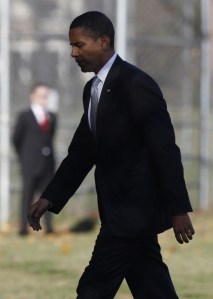 The U.S. Government has moved to suppress footage of a Guantanamo detainee being force-fed, appealing against a US federal judge’s order to release the tapes.
Solicitor General Donald Verrilli filed the appeal today, January 21st, just one day before the seven year anniversary of President Obama’s signing of the Executive Order to close Guantanamo. Judge Gladys Kessler ordered the tapes be released in October 2014, after sixteen major US media organizations, including the New York Times, AP, and McClatchy newspapers, asked for the tapes to be made public under the First Amendment of the US Constitution.
The tapes show the force-feeding and ‘forcible cell extraction’ of Abu Wa’el Dhiab, who has since been released. Mr Dhiab is represented by international human rights NGO Reprieve. Reprieve lawyers are virtually the only people outside government to have seen the footage and have described it as ‘disturbing’, but are forbidden under classification rules from revealing its contents.
Eric Lewis, attorney and Chair of Reprieve US, said: “It is wrong to hide behind national security concerns when the Government wants to hide its mistaken actions from public view. Our national security requires the release of these tapes, and accountability for the cruel treatment imposed on men trying to call attention to their endless and lawless detention without trial.”
Cori Crider, Reprieve attorney for Guantanamo detainees, said: Make no mistake – the force-feeding tapes would make your blood run cold. One assumes that is why they have fought so hard to keep it secret. We’ll keep pushing for the truth in the Court of Appeals.”
Missing from the “State of the Union”
Why are we “over there?”
By Philip Giraldi • Unz Review • January 19, 2016
I had expected that there would be little in last week’s State of the Union address about foreign policy as it is not an Administration strength, but, to my surprise, President Barack Obama gave it about eight minutes, a little over 1000 words. Governor Nikki Haley was, however, more detached from the issue in her rebuttal speech, stating only that “… we are facing the most dangerous terrorist threat our nation has seen since September 11th, and this president appears either unwilling or unable to deal with it.”
Obama made a number of points which illustrate his own inclinations regarding how to deal with the rest of the world. He emphasized that America, the “most powerful nation on earth,” must be the global leader, “… when it comes to every important international issue, people of the world do not look to Beijing or Moscow to lead. They call us.”
Regarding the major conflict zones, he observed that “In today’s world, we’re threatened less by evil empires and more by failing states. The Middle East is going through a transformation that will play out for a generation, rooted in conflicts that date back millennia. Russia is pouring resources in to prop up Ukraine and Syria, client states that they saw slipping away from their orbit.”
Obama added that “Both Al Qaida and now ISIL pose a direct threat to our people… Our foreign policy has to be focused on the threat from ISIL and Al Qaida. We have to take them out. For more than a year, America has led a coalition of more than 60 countries… If this Congress is serious about winning this war and wants to send a message to our troops and the world, authorize the use of military force against ISIL.”
Concerning nation building, Obama opined that “We also can’t try to take over and rebuild every country that falls into crisis…even if it’s done with the best of intentions. That’s not leadership; that’s a recipe for quagmire, spilling American blood and treasure that ultimately will weaken us. It’s the lesson of Vietnam. It’s the lesson of Iraq, and we should have learned it by now.”
And how to lead effectively? “On issues of global concern, we will mobilize the world to work with us, and make sure other countries pull their own weight. That’s our approach to conflicts like Syria, where we’re partnering with local forces and leading international efforts to help that broken society pursue a lasting peace.”
A final State of the Union Address is more than most a political document, intended to establish a loose framework of success that will enable the president’s party to prevail in the next presidential election. This is why Obama, instead of addressing substantive issues in a serious way, gave time to the warm and fuzzy perspectives that will define the Democratic Party in national elections later this year. He touched on gay marriage, education reform, job growth, Obamacare, and on guns legislation, all of which are core issues for those who align with the Democrats. The reality of each of those alleged “successes” can, of course, be challenged as failures or even unconstitutional, but the highly structured and almost ritualistic annual presidential speech does not exactly present much of a debating society opportunity for the opposition party.
I have long thought that President Obama is basically a moderate politically speaking who is extremely cautious and disinclined to take any risks. He was, admittedly, elected president in spite of his having had no experience that qualified him for the office. His electoral success was due to a number of factors coming together, most notably a scary GOP candidate coupled with growing antiwar sentiment that was a reaction to the Bush regime’s muscular nationalism. Understanding that, Obama made some gestures that miscategorized him as a “peace” candidate and eventually earned him a Nobel Prize but he quickly surrendered his independence to the consensus driven advisers who were products of the groupthink that drives foreign policy in Washington. In short, he has received some very bad advice and the State of the Union Address inadvertently identifies just what is wrong with the way the Administration views itself within the context of the international community.
It is particularly odd to note the Obama contention that the United States must be the leader, which he cites several times. To a certain extent the claim is little more than self-satisfied preening, but it also goes along with the oft-stated contention that the U.S. President is “leader of the free world,” an expression that Obama frequently uses. Unfortunately, there is no such mandate and it is likely that if an election were held many so-called allies would be reluctant to concede leadership to Washington. The claim that other nations clamor for American leadership is hokum. Germans, in fact, believe that the United States role in world affairs is essentially negative.
And the assertion that Washington is leading a coalition of 60 countries to fight ISIS is clueless, as the coalition is basically inert and toothless, having only acquired some momentum after the Russians intervened on behalf of Syria. Leading coalition partners, to include Turkey, Qatar and Saudi Arabia, have all along been playing a double game, supporting ISIS more often than not while many other nominal allies have done little or nothing. And the moderate rebels that White House expects to one day raise the liberty cap over Damascus? They have disappeared.
Indeed, Obama’s view of the conflict zones appears to derive more from a cold war style Manichean mentality than from current realities. Russia is incorrectly seen as having “client states” while the ongoing violence in the Middle East is regarded as a process of going through “transformations” that are “rooted in conflicts that date back millennia.” That is a comment that could have been coined by George W. Bush’s Secretary of State Condoleezza Rice but it is self-serving misreading of reality intended to shift the blame for the anarchy in the region.
Ancient history does not explain the contemporary Middle East. Including the festering Israel and Palestine conflict, which has taken on its current form due to the connivance of Washington as Israel’s patron, all of the unrest in the region is quite plausibly a direct or indirect result of American missteps, starting with the invasion of Iraq in 2003 coupled with the attempts to destabilize and change regime in Syria that started in the same year, followed by the overthrow of the Libyan government in 2011.
And Obama in his speech appears to want to up the ante, asking congress for war powers to get more deeply into the Syrian civil war. It contradicts his call for learning from past mistakes in Vietnam and Iraq and makes clear that the White House has not benefitted from hindsight as it intends to again repeat using military intervention as a foreign policy tool. It is also telling that Obama did not mention learning anything from the disastrous intervention in Libya, which, of course, occurred on his watch and that of Secretary of State Hillary Clinton.
The fact is that the Arab world was relatively stable even if it was not very free before the U.S. sought fit to intervene in serial fashion after 9/11 and it would be nice if the president would just give that a nod, particularly as he went on to say that the United States should not seek to “take over and rebuild” every country that falls into “crisis.” As Obama has not hesitated to continue to do exactly that in Afghanistan with intentions to do likewise in Syria one has to question his perception of where the problem lies.
And finally, there is the question of what to do about terrorism. Describing ISIS and al Qaeda as major threats and the “focus” of U.S. foreign policy gives the groups way too much credit and also enhances their appeal to young Muslim men who will no doubt be volunteering in droves as a response to the Obama message. The reality is that they are not a major threat and never have been and if U.S. foreign policy is focused on them it is a bad misreading of what is important and what is not. Maintaining good working relations with adversaries Russia and China is far more important, as is increasing multilateral cooperation with friendly Asian rim nations and allies in Europe. Diplomacy is not just engaged in repressing bad guys, it is more so about building positive relations with friends and potential allies as well as bridges to opponents.
Foreign policy does not win or lose national elections but the diminished status of diplomacy over the past twenty years coupled with a basic incomprehension of what to do about the development of a multipolar world should be troubling for many Americans because the United States no longer operates in a vacuum. The perpetuation of myths that the U.S. must lead and should take steps to correct the policies of other nations, to include engineering regime change, must be once and for all explicitly discarded. Obama could have called for something like that but he didn’t.
The United States of America does just fine when it minds its own business and seeks friendship with everyone, as President George Washington recommended in his Farewell Address. Even the so-called terrorist problem would be much diminished because, as Ron Paul has correctly observed, “they are over here because we are over there.” Unfortunately, an undoubtedly intelligent and seemingly well-intentioned man like Barack Obama has chosen to go with the Washington consensus rather than heed his own instincts, which is something of a tragedy as whoever succeeds him in office is not likely to possess either of those virtues and will no doubt double down on “America the exceptional.”
US Treasury imposes new ballistic missile sanctions on Iran
RT | January 17, 2016
The US Treasury says it is imposing new ballistic missile sanctions on Iran after Tehran released five American prisoners. The move also comes less than a day after some of the sanctions imposed on Iran over its nuclear program were removed by the US and EU.
Washington has imposed sanctions on 11 companies and individuals for helping to supply Iran’s ballistic missile program, the Treasury Department stated.
“Iran’s ballistic missile program poses a significant threat to regional and global security, and it will continue to be subject to international sanctions,” Adam J. Szubin, acting Under Secretary for Terrorism and Financial Intelligence, said in a press release.
“We have consistently made clear that the United States will vigorously press sanctions against Iranian activities outside of the Joint Comprehensive Plan of Action – including those related to Iran’s support for terrorism, regional destabilization, human rights abuses, and ballistic missile program.”
The Treasury’s Office of Foreign Assets Control says it will also block the assets of Mabrooka Trading, a company based in the United Arab Emirates, for providing Iran with parts used in their ballistic missiles. Others sanctioned include companies and individuals involved in the program, which supervised testing of two ballistic missiles in 2015.
President Barack Obama’s administration delayed implementing the sanctions for more than two weeks, while negotiations to release two US prisoners being held in Iran were taking place, Reuters reported, citing its sources.
Obama is also expected to make a statement later on Sunday, regarding the Iran deal and the release of five prisoners.
Featured Video
Bombing Hitler’s Hometown
or go to
Aletho News Archives – Video-Images
From the Archives
The Biggest Threat to Peace in Middle East
By Dr. Elias Akleh* | Sabbah Report | May 24, 2010
A build up of heightened tension in the Middle East is escalating in the last few weeks. American and Israeli postures towards Lebanon, Syria, and Iran have become more threatening. Listening to speeches of political leaders one hears talks only about war not peace. Iranians and Israelis are continuously training hard for a possible showdown. Both sides are conducting extensive war games every month. This led Syrians to claim that Israel is preparing for a soon-to-come another war. The Jordanians also are warning that current stalemate of the peace process is an indication of a war breaking out this summer. The Russian President and his army chief hinted, a few months ago, that the US and Israel were planning for an attack on Iran.
Indeed Iran is, as it has been for last few years, the target of most of the threats and accusations of supporting terrorism. Escalating incitement against Iran the American Defense Department sent last month (April) to Congress a report on Iran’s military claiming Iran could develop intercontinental ballistic missiles capable of reaching the US by 2015.
Ignoring the fact that N. Korea, India, Pakistan, and Israel are proven to have nuclear weapons while Iran does not, the US Secretary of State Hillary Clinton chose in her speech, to the nuclear Non-Proliferation Treaty review conference at the UN, to focus on Iran’s alleged nuclear ambitions putting the whole world at risk as she put it. According to Clinton Iran’s acquisition of nuclear weapons, rather than Israel’s more than 200 nuclear bombs, is destabilizing the Middle East. She called on the world’s nations to rally around US efforts to hold Iran, not other nuclear countries, to account.
The accusation that Usama Bin Laden is living comfortably in Iran had received a boost after the broadcast of a documentary called “Feathered Cocaine”. This echoed the June 2003 claims of the Italian newspaper Corre de la Sierra that Bin Laden was in Iran according to some intelligence report, and according to Richard Miniter’s book “Shadow War”. … continue
Blog Roll
 Aletho News
- Bombing Hitler’s Hometown
- German journalist threatened with homelessness as German court upholds EU sanctions in landmark free speech case
- US Tells Allies That Ukraine-Bound Arms Could be Sent to Middle East
- Organized terrorism: Iran condemns killing of its diplomats in Lebanon
- Why could Gaza enter the regional war?
- Hamas official rejects Mladenov Plan linking disarmament to Gaza reconstruction
- Two Primary Elections for the Soul of ‘America First’
- Japan Clings to US Vassalage Despite Energy Crunch Caused By Iran War
- US Seeks Control Over Global Energy Infrastructure – Kremlin
- US senators target Orban government for standing up to Zelensky
- If Americans Knew
- Researchers at Human Rights Watch Resign Over Blocked Report on Palestinian Refugee Return
- Jewish Groups Are Backing a War Americans Don’t Want
- Eric Fingerhut Thinks He’s the President of the Jews
- Top Jewish Philanthropists, Rabbis Urge Israeli President to Take Action Against ‘Jewish Extremists’
- Don’t Be Fooled. Zionist Leaders Have Always Wanted to Control Southern Lebanon
- Israel’s widespread use of torture is a core element of its genocide against the Palestinian people
- In Israel’s War on Iran, Many Middle East US Bases Rendered “All But Uninhabitable”
- ‘Burn the lawn’: Israel pursues ‘Rafah model’ in southern Lebanon
- A genocide here, an amputation there
- Reports: Iran mobilizing 1M fighters, Israel-US run low on ammo, Israeli army faces shortage – Not a ceasefire Day 168
- No Tricks Zone
- Devastating Assessment Of Comirnaty Vaccine By Former Senior Pfizer Europe Toxicologist
- New Study: CO2 Is ‘Effectively Negligible’ As An Explanatory Climate Change Factor Since 2000
- Former Pfizer Toxicologist Dr. Helmut Sterz Tells Bundestag Hearing Pfizer Vaccine Should Have Never Been Approved
- Energy Expert: Germany’s Nuclear Phaseout Was A “500 Billion Euro Mistake”
- New Research: South Australia’s Mid-Holocene Sea Surface Temperatures Were 4°C Warmer Than Today
- Storing Green Energy To Last Germany 10 Days Would Require A 60-Million Tonne Battery
- New Studies: UK Sea Levels Were 4 Meters Higher Than Today During The Mid-Holocene
- Destructive Green New Deal: German Energy And Metal Group Warns Of Drastic Crisis
- New Study Documents A 20-Year Pause In Arctic Sea Ice Decline – Driven By Internal Variability
- Wake-up Call: Survey Shows Majority Of Germans Now Favor Postponing Climate Targets!
 Aletho News