OSCE on verge of self-destruction – Lavrov
RT | February 6, 2026
The Organization for Security and Co-operation in Europe (OSCE) is in a “profound” crisis and close to unraveling, Russian Foreign Minister Sergey Lavrov warned on Friday during talks with the body’s leadership.
Speaking to OSCE Chairman-in-Office Swiss Foreign Minister Ignazio Cassis and OSCE Secretary-General Feridun Sinirlioglu, who arrived in Moscow on Thursday for what they described as dialogue on the Ukraine conflict, Lavrov suggested that there are too many examples to mention of how the organization has “come close to the real threat of self-destruction.”
The reason for this is “very simple” and is due to the “radical departure of most Western countries” from the foundational principles and declarations of the organization, Lavrov added.
The OSCE, a 57-member body that includes Russia, the US, Canada, and most European and Central Asian states, was created in 1975 to promote security and cooperation across the region. However, Moscow has repeatedly accused the organization of being hijacked by its NATO and EU members to advance Western interests at the expense of pan-European goals.
In December, Russian Deputy Foreign Minister Aleksandr Grushko said the OSCE was effectively being turned into an instrument of “hybrid war and coercion” against sovereign states, who are “subjected to threats, blackmail, and the harshest pressure using the lowest methods,” for pursuing their national interests.
He also condemned what he called the total “Ukrainization” of the agenda of the OSCE, saying it had narrowed the organization’s work and reduced cooperation to “tiny islands” of engagement.
Talks between Lavrov and the OSCE officials continued on Friday. Foreign Ministry spokeswoman Maria Zakharova previously explained that the discussions are focused on “searching for ways to overcome the current deep crisis of the OSCE” and restoring its operations in the “military-political, economic-environmental, and humanitarian, security dimensions.”
US’ European Vassals Taught Bitter Lesson With Greenland Crisis

Sputnik – 20.01.2026
Commenting on the topics discussed by Foreign Minister Lavrov in his 2025 diplomacy year-in-review presser, Daffodil International University journalism professor and international politics expert Greg Simons detailed two main themes: Ukraine and the breakdown of the so-called ‘rules-based international order’.
The Greenland crisis shows that “when you are such a servile lackey as the EU, eventually you get to be ‘on the menu’, especially when the US empire, this Pax Americana, is in decline,” Dr. Simons told Sputnik.
“The EU has nowhere to go.” Their leaders “can bluster, they can try and bluff, but to use Trump’s terminology, they have absolutely no cards… They have no honor, they have no dignity, they have no respect, either for themselves or the EU. So this is not going to go well for the EU.”
As for Ukraine, while Washington has apparently recognized that the proxy war with Russia is “lost” and that Ukraine is “a liability,” the Europeans are pushing headfirst into prolonging the conflict, no matter the cost to themselves, Simons noted.
“Europeans seem to have their head in the clouds and unaware or not willing to see” the “risks and hazards coming up for them,” the observer stressed.
Then there’s the dysfunction at the Organization for Security and Cooperation in Europe.
“If you prevent consensus on issues, an organization such as the OSCE is absolutely useless because consensus should be reached on objectively coming together on mutually acceptable and mutually favorable grounds,” Simons said.
“What they’ve turned it into is just this platform for pillorying countries such as Russia or those that stand for their interests and objectives rather than those of the US. I absolutely agree with the foreign minister’s characterization – that the situation of the OSCE is catastrophic. I would doubt it can be saved, mostly because of what the so-called Global North, those Western countries at the behest of the US did to make sure that it could no longer function effectively as an organization to be a bridge between different interests, different worlds (which it no longer is).”
Europe’s Provocation: Interview with Russia’s Deputy FM Alexander Grushko on Potential Escalation in Ukraine
“The conflict has reached a stage where the West suffers a strategic defeat”
Izvestia | March 17, 2025
Kirill Fenin’s interview with Deputy Foreign Minister of Russia Alexander Grushko on security guarantees from NATO, prospects for dialogue with the EU, and the future of the OSCE:
Q: In December 2021, Russia put forward a proposal to the US and NATO on security guarantees. Is it relevant for us to receive these guarantees now? Is the return of NATO infrastructure to the 1997 borders being discussed in the current negotiations with Washington?
Grushko: In 2021, the Russian Federation put forward two initiatives. One was addressed to the United States, the other to NATO countries. But they were not supported. We realized that our so-called partners were not ready to engage in a dialogue on the merits. It became clear that the nature of the alliance’s military construction and the US military preparations were aimed at achieving superiority over the Russian Federation. Moreover, Ukraine was chosen as the main battlefield, the theatre of military operations against Russia.
If we talk about a peaceful resolution of the conflict in Ukraine, then, of course, it will have an external outline. We will demand that cast-iron security guarantees become part of this agreement. Since only through their formation will it be possible to achieve lasting peace in Ukraine and, in general, strengthen regional security. Part of these guarantees should be the neutral status of Ukraine, the refusal of NATO countries to accept it as a member of the alliance. In fact, this is precisely the provision that was recorded in the drafts of the aforementioned agreements. As for discussions, of course, they are not being conducted today, since there are no negotiations.
Q: There are reports in the media that the Donald Trump administration is considering the possibility of reducing its military presence in the Baltics. Is this issue currently being discussed with the US?
Grushko: Diplomats and military personnel do not feed on rumors. We soberly assess the situation. If we look at the strategic concepts approved by NATO and developed in the European Union, as well as the nature of NATO deployments along our borders, we will see that we are talking about long-term plans that the West is not trying to adapt in any way to a future peace agreement. And we will proceed from this in terms of our policy and in the sphere of military development.
If we compare the current situation with 2019, the number of NATO military contingents on the eastern flank, primarily in Poland, the Baltic states, Bulgaria and Romania, has increased by 2.5 times. The amount of heavy equipment has increased by about the same amount. The so-called military Schengen (free movement zone for military personnel – Ed.) is being implemented. The airfield and port networks are being strengthened and expanded. NATO is creating new rapid response units and increasing maneuverability. We are seeing how the density and scale of exercises are increasing. They are becoming more aggressive, aimed at military operations against a comparable adversary. By this we mean the Russian Federation. This is the reality that we have to reckon with. And until there are real changes in the policies and military development of NATO countries, we will proceed from the existence of significant threats to Russia from the West.
Q: As is known, the dialogue on security guarantees was conducted not only between Russia and the United States but also along the Russia-NATO line. The last time a meeting in this format took place was in January 2022. Against the backdrop of the intensification of dialogue with Washington, are negotiations between Russia and NATO possible?
Grushko: I don’t see any prospects at the moment. Of course, you can’t say never, but what can we talk about if NATO countries refused to consider Russia as a partner even in those areas where our interests objectively coincided, for example, in the fight against terrorism. Today they have designated Russia as a direct and immediate threat to NATO countries, and they are conducting their military policy and the process of military development in such a way as to achieve superiority over us in all theaters of military operations, in all, as they say, operational environments: in space, in the air, on land, at sea, in cyberspace.
We see that they are turning the previously most peaceful region of Europe in military terms – the Baltic – into a zone of military confrontation. I will only say that 32 military facilities have been allocated for the deployment of American military forces in Sweden and Finland. All this is a new reality that contradicts everything that was laid down in the Russia-NATO Founding Act and other documents that were intended to unite efforts to counter common threats and at the same time deal with the consequences of the Cold War. The Western countries made a different choice. Our representation in NATO was closed, since NATO made its further functioning impossible. And now there is only a hotline with NATO headquarters, which is provided on our part by the Embassy of the Russian Federation in Belgium. It has not yet been activated, but we have officially notified the leadership of the alliance about it. They know where to call if necessary.
Q: Russian Foreign Minister Sergey Lavrov said that Moscow is categorically against the presence of NATO or EU peacekeepers on Ukrainian territory. Does Russia allow the option of deploying peacekeepers under the auspices of the UN? What conditions must be met for this?
Grushko: Peacekeeping and NATO are incompatible things. They brag a lot that it is a defensive alliance, but the real history of the alliance consists of military operations, a series of aggressions without any reason, just to once again emphasize its hegemony in world and regional affairs. Therefore, all this talk is absolutely inappropriate and absurd. And I think that even the average Westerner understands the real price of such penetrations. Secondly — President Vladimir Putin and Minister Sergey Lavrov talked about this — we absolutely do not care under what label NATO contingents can be deployed on the territory of Ukraine: be it the European Union, NATO, or in their national capacity. In any case, if they appear there, it means that they are deployed in a conflict zone with all the consequences for these contingents as parties to the conflict.
Moreover, the very talk of peacekeeping is an attempt to put the cart before the horse. The question of some kind of international support for the agreement can only be approached when this agreement is worked out. And if the parties come to the understanding that the “peace package” needs international support, then the subject of discussion appears. This could include unarmed observers, a civilian mission that would monitor the implementation of individual aspects of this agreement, or guarantee mechanisms. But for now, it’s just hot air.
Q: What is Russia’s attitude to the possible deployment of peacekeepers to Ukraine under the auspices of the OSCE?
Grushko: There are two points that need to be kept in mind. Firstly, the OSCE does not have armed potential, it does not have an “armed hand”, unlike the UN. In particular, it does not have the competence, the staff committee, the structures that could manage such contingents. Secondly, even the OSCE Special Monitoring Mission, which was deployed there, failed to cope with its tasks. In fact, it was used by NATO to gain unilateral advantages for the Kyiv regime. Now it has become known that some employees of this mission, who were supposed to be neutral and ensure strict implementation of the mandate, in fact worked in the interests of Kyiv. And it is no secret that many residents of Donbass said: “OSCE observers drove by – expect shelling”. Therefore, we have an extremely skeptical attitude towards the involvement of the OSCE, even theoretically.
It is impossible not to see that the purpose of these rumors about the deployment of Western contingents on Ukrainian territory is to prepare public opinion for the most radical scenarios, part of a campaign to whip up military psychosis and demonize Russia. Let me remind you that just a few months ago, such a prospect was denied by all NATO member states, and the Secretary General repeatedly stated that under no circumstances would the Alliance’s soldiers appear there.
Q: This week, the OSCE Secretary General came to Moscow. How do you assess the results of the talks with him? Are any further contacts possible through this organization?
Grushko: There will be contacts, of course. It is good that the Secretary-General came. For two years, the OSCE leadership has not visited Moscow. The main problem of the OSCE is that the organization, as a result of the West’s actions, has effectively been pushed to the sidelines of political processes. Its main purpose as an instrument of reconciliation between East and West, of mitigating contradictions, has been lost. At that time, this was generally called “détente.”
Almost nothing remains of this legacy.
The OSCE is currently at a crossroads. This summer will mark the 50th anniversary of the Helsinki Accords. It depends only on the member states themselves whether this platform will be in demand for some unifying purposes or whether the current crisis state of the organization will become terminal.
Q: Against the backdrop of the dialogue between Moscow and Washington, is a similar negotiating track with Brussels possible?
Grushko: Such a track is possible. But, firstly, the European Union is isolating itself from Russia. It has broken off all political contacts. It is difficult for me to even say with which international structure there was a closer dialogue. Two meetings a year at the highest level, an annual meeting of the government of the Russian Federation and the European Commission. Also more than 20 permanent partnership councils, including the umbrella foreign policy one. Everything has stopped.
In any case, if there are finally signals that Brussels is ready to enter into some kind of dialogue with us, we will not be against it. But today such a prospect is not in sight – on the contrary, the European Union continues to follow the suicidal path of introducing sanctions. If in 2013 the volume of trade between Russia and the European Union was €417 billion, then in 2024 it was at the level of €60 billion.
As for the EU’s insistent demands to sit down at the negotiating table on the Ukrainian conflict, I don’t even know how to characterize this in diplomatic terms. The EU was at these negotiations and was at the center of events starting with the Maidan, where three EU countries acted as guarantors of the agreement between Viktor Yanukovych and the “opposition.” And what did they do to implement the Minsk agreements? Absolutely nothing, on the contrary, they encouraged Kyiv to sabotage them. And when they (the Minsk agreements – Ed.) collapsed, when it became clear that Kyiv was leading the matter to a military solution, a conflict, which, in fact, became the trigger for the decision to conduct a special military operation, Angela Merkel and Francois Hollande stated that they had no intention of implementing the Minsk agreements. A respite was needed to pump Kyiv with weapons and prepare it for a direct clash with Russia. Against this background, it is not very clear what role the Europeans can play.
Q: Can the EU take a more constructive position towards Russia in the future?
Grushko: If we look at their current positions, they do not in any way suggest any constructive participation in the negotiation process. The statements from the camp of the political elites of the European Union are quite clear. Point 1 — do not let the conflict end quickly, it must continue until 2030, because if it ends quickly, then “Russia will immediately attack the Baltic countries and Poland.” Point 2 — we must achieve the strategic defeat of Russia. And we know what is meant by this. Point 3 — seek guarantees of Ukraine’s security.
In fact, the conflict has reached a stage where the West suffers a strategic defeat. Because in all three components that are counted on – military defeat on the battlefield, economic collapse and, ultimately, as they say, regime change – the result is exactly the opposite. If we look at the economic side, our economy has grown by 4%, in the European Union – approximately 0.1% to 1%, close to the statistical error. And the situation on the battlefield is well known.
One of the most important elements for us is the security interests of Russia. And Europe should understand that if strong international legal guarantees for Russia’s security are created, which will exclude Ukraine’s membership in NATO and the possibility of deploying foreign military contingents on its territory or using it to exert military pressure on Russia, then the security of Ukraine and the entire region in a broader sense will be ensured, since one of the root causes of the conflict will be eliminated.
Q: One of the main initiators of the idea of sending European peacekeepers to Ukraine is French President Emmanuel Macron. In your opinion, what is the reason for the desire to aggravate the situation and lead to a direct clash between Russia and NATO?
Grushko: I think that two factors play a role here. First, France itself is not doing so well in the economic, social and all other spheres. The country is going through a serious crisis, it is being shaken by demonstrations, Emmanuel Macron and the political forces that support him are not in a very strong position. Governments are changing. Therefore, the introduction of such a loud topic as sending a military contingent is intended, among other things, to distract public attention from domestic problems.
Secondly, this is an attempt by France to lead the war party within the EU, thereby emphasizing its leadership in the union. France’s influence has been weakening lately. The link between Germany and France no longer works for many reasons, and Macron has apparently decided to use the military theme to once again bring his country to the epicenter of European politics, abandoning French foreign policy traditions.
In the traditions established by General de Gaulle, France played a balancing role. Its significance and political weight lay precisely in this: France proposed initiatives that united rather than divided. Now France, unfortunately, is becoming more radical than the Russophobic camp consisting of the Baltic countries and Poland.
Q: The head of the European Commission recently came up with an initiative for an €800 billion EU rearmament program. Does Russia see risks in connection with the emergence of this program?
Grushko: We see the risks, they are absolutely obvious. The fact is that the military and political subordination of the European Union to NATO has occurred; this follows not only from the practice of cooperation between NATO and the EU, but also from the documents they adopt. The NATO-EU Joint Declaration quite clearly states the EU’s own aim to become a European support for NATO. The Alliance views Russia as a direct and immediate threat. This postulate has also crept into the EU’s political documents. And we see that the plans to create the so-called autonomous military support for the European Union today are aimed at creating threats primarily to Russia.
Large-scale armament programs have been drawn up: over five years, the growth of arms imports to the EU has increased by 2.5 times, with 64% of military equipment purchased in the United States. At the same time, such systems are being purchased — including, in particular, F-35 aircraft — which are not intended for use in some local crisis situations, but for achieving superiority over a comparable enemy, that is, the Russian Federation. The rearmament program is aimed at preparing Europe for a military clash with Russia. US President Donald Trump is demanding an increase in military spending in the EU countries from 2% to 5%. Many have already stated that they will move in this direction. This is a very significant increase. Today, the amount of military spending by the European Union is several times greater than the military spending of the Russian Federation.
Q: The Dutch parliament has already voted against the country’s participation in the EU rearmament program. Is Europe capable of finding the funds for such a large-scale project?
Grushko: Mario Draghi, former Prime Minister of Italy and President of the European Central Bank, recently published a report on the economic state of the EU. The report is quite frank and tough; its main conclusion is that if the EU wants to become prosperous in the new global architecture, it needs to find €800 billion annually to invest in industry, new technologies, the “green transition” and other projects. The President of the European Commission, Ursula von der Leyen, added €800 billion to this, which are needed to further arm the European Union.
Let’s not forget that, according to the most conservative estimates, the losses from the sanctions that the EU imposed on Russia and the losses from the refusal to cooperate with us, including in the energy sector, amount to €1.5 trillion. More than €200 billion went to military and other support for the Kyiv regime. If we add up these figures, we get a financial hole of at least €3 trillion. They need to be found somewhere. This is a colossal amount of money – more than two annual military budgets of all NATO countries. It is clear that the money will be scraped from the pockets of taxpayers, cutting spending on education, medicine, science, and so on.
It is difficult for me to say whether this project will withstand such a financial challenge. If we remember that the total public debt of all EU countries will soon approach 100% of GDP – which means that the EU countries must work for a year and spend nothing – then the prospects for implementing all these plans are rather vague.
Q: What measures can Russia take to counter these threats?
I will note once again: we cannot relax. We have drafted military planning documents that are designed to reliably ensure the security of our country and its defense capability in all areas. As the president emphasized, we will not get involved in an arms race. And it is good that our military capabilities allow us to reliably mitigate threats without spending crazy amounts of money on them and taking them out of the development sphere.
It is obvious that the negative trends that are being imposed today by both NATO and the European Union are very stable, and we must be prepared for a variety of scenarios. The events in Ukraine have shown that NATO and the European Union underestimated our capabilities and our determination and, by betting on inflicting a strategic defeat on us, made a big mistake.
OSCE shared intel with Ukraine before 2022 – ex-Greek ambassador
RT | March 2, 2025
During the armed standoff between the Ukrainian government and the two breakaway Donbass republics between 2014 and 2022, observers from the Organization for Security and Cooperation in Europe (OSCE) secretly shared intelligence with Kiev, former Greek ambassador to Ukraine, Vasilios Bornovas, has claimed.
In an interview with Greece’s Hellas Journal last Monday, Bornovas said that during his visits to the conflict zone he had witnessed the “use of classified information [by Kiev’s forces] sent by observers from the Organization for Security and Cooperation in Europe (OSCE) regarding the positions of weapons” belonging to the Donetsk and Lugansk People’s Republics. The diplomat recounted that “since these positions were immediately hit by Ukrainian fire, it was obvious that the observers’ reports first went through to the Ukrainian services.”
Commenting on the apparent decision by the US and Russia to sideline the European Union from negotiations on Ukraine, the former envoy argued that the bloc “has reached an impasse” due to multiple internal crises. Bornovas remarked that having long “uncritically” toed Washington’s line on the conflict, Brussels is finding it “extremely difficult to extricate itself from this policy” now that President Donald Trump has apparently changed course.
According to the diplomat, the EU is suffering “from a deficit of visionary leaders with will and personality,” with its foreign policy being largely directed by the Baltic states and Poland.
As for Ukrainian leader Vladimir Zelensky’s handling of the conflict, Bornovas said that the hostilities with Moscow are “decimating his people and destroying the productive fabric of his country.” The former official argued that the current conflict had been in the making for some time before February 2022, suggesting that Zelensky may have abandoned his original pro-peace platform under pressure from former US President Joe Biden’s administration.
According to Bornovas, the Ukrainian leader may also have hoped to distract his population’s attention from internal problems, such as widespread corruption, with the help of an armed conflict.
Since the escalation of the hostilities, Moscow has called out OSCE’s supposed failings on multiple occasions, both in the conflict zone and further afield.
Last October, Russia claimed that the organization had covered up irregularities in the Moldovan presidential election, which saw pro-Western President Maia Sandu squeak by a relatively small margin.
In March and February 2024, Moscow accused OSCE of failing to denounce the killings of Russian civilians by Ukrainian forces during their raids in border regions in what Russia characterized as hypocrisy that “goes beyond all possible boundaries.”
Russia halts participation in OSCE Parliamentary Assembly
RT | July 3, 2024
Russian lawmakers on Wednesday voted to suspend Moscow’s participation in the Parliamentary Assembly of the Organization for Security and Co-operation in Europe (OSCE PA), citing its “discriminatory approaches, double standards and total Russophobia.”
Both chambers of Russia’s parliament – the State Duma and Federation Council – voted unanimously during sessions on Wednesday to suspend the country’s participation and stop paying fees to the organization.
Moscow already stopped its payments to the OSCE itself after its delegation was denied access to the organization’s meetings on several occasions.
“We should not pay for something we did not participate in,” the State Duma Speaker Vyacheslav Volodin said at the time.
OSCE leaders have ignored Russia’s repeated appeals for an equal dialogue, the lawmakers said in a statement, adding that the body is being used as a “politicized tool to deliberately implement an anti-Russian course, and also to intentionally distort” events in Ukraine.
The lawmakers accused the assembly of “biased, discriminatory approaches, double standards, total Russophobia, unpreparedness for meaningful discussions, including on relevant issues of ensuring equal and indivisible security.”
Since the start of the Ukraine conflict, Russian MPs have been repeatedly blocked from taking part in a number of the organization’s events.
In November 2022, Poland denied visas to Russian officials scheduled to attend an OSCE meeting in Warsaw. And in June 2022, Russian MPs were barred from traveling to the UK to participate in the OSCE Parliamentary Assembly session in Birmingham.
The latest case was a “demonstrative” refusal by Romanian authorities to issue visas in June to a Russian delegation to attend the annual session of the body in Bucharest.
Russia has been a participant in the OSCE since the Soviet Union signed the Helsinki Accords in 1975. The organization’s monitoring mission in eastern Ukraine began in 2014, but was terminated just prior to the start of the conflict between Moscow and Kiev in February 2022. Russia had previously repeatedly accused the group of ignoring violations by Ukraine.
Having held its first session back in 1992, the OSCE Parliamentary Assembly incorporates 57 member states, and declares as its primary mission the facilitation of “inter-parliamentary dialogue to advance the OSCE’s goals of comprehensive security.”
OSCE nothing more than a branch of NATO
By Ahmed Adel | December 2, 2022
The West is attempting to turn the Organization for Security and Co-operation in Europe (OSCE) into a subsidiary organisation of NATO, which is paradoxical because it is meant to be concentrated on peacebuilding, unlike the Atlantic Alliance which fosters tensions to justify its existence in a post-Soviet world. It is for this reason, among others, why Poland refused to grant a visa to Russian Foreign Minister Sergei Lavrov, thus barring him from attending the OSCE meeting held on December 1 and 2 in Lodz.
Poland claims it refused to grant Lavrov a visa because he is on the list of people who have been sanctioned. However, this does not explain why many from the Russian delegation were also denied visas despite not being on a sanctions list.
This weak excuse is to justify Warsaw’s consistent policy of provocation against Moscow, especially in the context of the current war in Ukraine. Poland and the West are hoping that by humiliating Russia, the country will withdraw from the OSCE. The West are desperate for Russia to withdraw so as to be able to implement and impose whatever it wants on the OSCE.
It is recalled that Moscow very effectively blocked the 2022 OSCE budget. Without a Russian withdrawal, the West will not be able to put the OSCE under its complete control, something that should be avoided as it would undermine the very foundation of the organisation – serving as a platform where Western and Eastern Europe could discuss and resolve issues.
Rather, the OSCE today has turned into a political tool of the West and effectively has no meaning or role anymore. With the OSCE descending into childlike behaviour by barring Russian delegates and top diplomats, it does seem that the organisation has become redundant as it is appearing more like a Euro-focussed political wing of NATO.
The OSCE meeting in Poland was essentially a two-day event for speakers to bash Russia.
None-the-less, Moscow is unlikely to be deterred by these provocations and will remain committed to its responsibilities as an OSCE member. This is likely to ensure that paths of reconciliation are always open despite Western attempts to close them.
The Kremlin might also believe that the OSCE’s uptick in provocations is because Poland is the current chairman. Russian policymakers might also believe that tensions will relax when North Macedonia takes over the chairmanship in 2023. It could be for this reason that Lavrov called out Poland by highlighting that its “anti-chairmanship” was taking the OSCE to its “most miserable place ever in this organisation’s history.”
It can be argued though that the OSCE has always been geopolitically against Moscow. It is recalled that the American establishment boasted that they had inserted a Trojan horse into the Eastern Bloc with the signing of the Helsinki Accords in 1975, the roots of today’s OSCE.
The Helsinki Accords stresses the respect for human rights and equal rights, a result of Western insistence because the Soviets were instead mostly interested in finalising Germany’s borders. The West is not interested in human rights though, and rather their main interest is ideological, economic and military hegemony all over the world, with human rights only being weaponised as one vehicle of achieving this goal.
Effectively, it can be argued that the OSCE was born as a trap for Moscow. When “security”, “cooperation” and “Europe” are in the name of the OSCE but it turns into an organisation completely dominated by promoting US interests, the argument is made that the organisation now resembles something like a branch of NATO.
Playing its own role in serving Western interests, Ukraine continues to call for Russia to be kicked out of the OSCE entirely, with Foreign Minister Dmytro Kuleba claiming in a tweet that the “OSCE is on a highway to hell because Russia abuses its rules and principles.”
“Everything has been tried in regards to Russia: to please, to appease, to be nice, to be neutral, to engage, not to call a spade a spade. The bottom line: It would be better for OSCE to carry on without Russia,” he added.
However, this is once again an example of Kiev’s classic projection of portraying their own illiberal values as that of Russia. In fact, it is Europe’s own unwillingness to “call a spade a spade,” such as whitewashing Ukraine’s fascistic policies and pretending it was a Western-styled liberal country, which ultimately led to war.
Proving that the OSCE is now nothing more than a branch of NATO, US Under Secretary of State Victoria Nuland said, when speaking in Lodz, that Russia had “failed demonstrably to break the OSCE.”
If the OSCE is anything other than a branch of NATO, it must be questioned why the US Under Secretary of State was an honoured guest at a Europe-focussed and Europe-based organisation, which was initially established to connect Western and Eastern Europe together, while Russia’s top diplomat and other officials were barred.
Ahmed Adel is a Cairo-based geopolitics and political economy researcher.
Western-led ‘international’ organizations have no future
By Drago Bosnic | November 21, 2022
On November 18, the Polish foreign ministry stated that it will not allow a Russian delegation to attend the OSCE (Organization for Security and Co-operation in Europe) summit next month. OSCE is one of the most prominent regional security organizations in the world and its stated goal is to establish a viable security framework that would prevent conflicts in Europe and beyond. However, the reality is a bit different from the organization’s publicly altruistic intentions. The Associated Press asked the Polish foreign ministry if Russia would be denied entry to the OSCE’s December conference and Spokesman Lukasz Jasina responded that it would.
Russia, one of the most important members of the organization, as well as a key player in European security, is being denied entry due to politics. The very fact that this is even possible calls into question the purpose of OSCE or any similar organization dominated by the political West. This year, Poland is chairing the 57-nation organization, with the annual ministerial conference scheduled to be held in the city of Lodz on December 1-2. When asked if Russian Foreign Minister Sergei Lavrov would be attending the conference, Jasina responded, “We are not expecting a visit by minister Lavrov to Lodz.”
“Delegations should be adjusted to the current EU regulations and not include persons that are sanctioned by the European Union,” according to an announcement by the Polish OSCE Chairmanship. “…a number of Russian nationals were added to the list of sanctioned individuals, including Minister Lavrov,” it added.
OSCE should be excluded from EU regulations, as the very purpose of the organization is to be a forum for security dialogue between European and other countries and prevent any escalation or spillover of local conflicts. By denying Russia the opportunity to attend the December 1-2 confidence in Lodz, precisely this security dialogue is being prevented, eliminating the need for OSCE altogether. However, in recent months, certain events have led many to believe the organization is hardly a neutral one, as its actions have often been used to aid one side in a particular conflict.
For instance, the war in Donbass, which has been going on for nearly a decade, and which has taken the lives of around 15,000 local men, women and children by early 2022, pushed the role of OSCE into more of a gray area. Its mission in Donbass, which the organization itself claims to be “arms control, promotion of human rights, early warning, conflict prevention, crisis management” failed back in April. In fact, it has continually been failing for over 8 years, as the Kiev regime’s shelling of the people of Donbass never stopped. Worse yet, it turned out that OSCE didn’t just fail to prevent the conflict, but it might have even done certain things to facilitate it.
In a rather disturbing revelation by war correspondent Alexander Sladkov, the organization was using high-resolution cameras, originally placed to conduct ceasefire monitoring, to relay DNR and LNR positions to the Kiev regime forces which then used the provided data to target or correct their artillery fire. The OSCE mission provided their observation data, captured by cameras and other monitoring equipment they installed over the years. In essence, OSCE was spying and effectively waging war on the side of the Neo-Nazi junta. To make matters worse, the provided monitoring data also included the movement of regular Russian military personnel in the early days of the special military operation.
The report was heavily censored by the mainstream propaganda machine, making it virtually impossible for most people in Europe to see how a supposedly impartial international organization effectively became a party to the conflict which could not only undermine security in Europe, but the world as well. To make matters worse, these issues aren’t only limited to the OSCE, but many other apparently “international” organizations, including the United Nations. Back in February, twelve Russian UN diplomats were ordered to leave the US after being accused of being “intelligence operatives engaged in espionage.” The same pretext could be used to expel virtually anyone deemed a “security challenge” by the US, which would affect entire nations or groups of nations the ability to defend their interests at the UN.
The latest G20 summit held in Bali was also a clear indicator that the world is moving away from Western-led “international” organizations. While most members were trying to focus on actual global issues, the G7 members within the G20 were effectively trying to hijack the summit and make it entirely Ukraine-focused, which failed for the most part. All of this is happening at a time when BRICS is expanding across the world, with approximately a dozen major nations showing direct interest in joining the organization. The BRICS+ framework allows countries to maintain their sovereignty while becoming members of the world’s largest truly international organization.
Drago Bosnic is an independent geopolitical and military analyst.
Russia accuses OSCE of ‘spying’ for Ukraine
Samizdat | April 20, 2022
The Organization for Security and Co-operation in Europe (OSCE) collaborated with the Ukrainian government in its fight against the Donbass republics and tried to cover up offences by Ukrainian nationalist forces, Russia’s deputy representative to the UN told a UN Security Council meeting on Tuesday.
The accusations came as Dmitry Polyansky blasted Western powers, saying they were being hypocritical regarding the security crisis in Ukraine. The US and its allies pursue their own selfish interests rather than the interests of the Ukrainian people, when they fan hostilities in the east European country, the diplomat said.
“We obtained the latest proof of how dirty your tricks are in building a ‘rules-based order’ when we discovered proof that the OSCE special monitoring mission in Ukraine simply spied for Kiev instead of recording violations of the ceasefire,” he claimed. The official said Russia was collecting more evidence to make the case against the monitors.
Polyansky made more allegations as he brought up the seizure of official OSCE vehicles by Ukrainian nationalist troops in the city of Mariupol. He said there were reports that eight cars, some of them armored, were taken by the Ukrainians at gun point. One of them was later filmed with clear signs of use in battle. Similar reports came from other places in eastern Ukraine, he said.
“The OSCE leadership was aware of the problem, but they chose to hush up this fact as long as it could,” the Russian official claimed.
He added that such discoveries “undermined trust in international organizations where Western officials play a dominant role.” This lack of trust makes Moscow question any calls for a humanitarian ceasefire in Ukraine coming from the West, the official said.
“In practice, [the calls] demonstrated a desire to give Kiev nationalists and radicals a pause to regroup, receive new shipments of drones, anti-tank and anti-aircraft missiles, and stage more inhumane provocations to spread lies about the actions of Russian soldiers,” Polyansky said.
Russia will differentiate between “pseudo-peacemaking” and genuine attempts to “help Ukraine take the long-necessary right decisions,” he said.
The OSCE was invited to Ukraine to monitor the situation in the country in March 2014, shortly after an armed coup in Kiev triggered a spike in tensions in the east. The Special Monitoring Mission (SMM) became a crucial tool in observing a truce between government forces and rebels, which was listed as the first part of the roadmap to peace set in the so-called Minsk agreements. OSCE monitors patrolled the disengagement line to check whether deployments of forces by the warring parties complied with the deal and to report any violations of the ceasefire.
The field mission was the biggest in the organization’s history, with as many as 814 international and 477 national staff involved and over 2,400 daily reports produced in eight years.
The mission’s mandate expired on March 31, with Russia opposing its extension. Moscow accused the OSCE of pushing Russian representatives out of the SMM even as the number of observers was increasing.
As he explained the country’s decision to withdraw its participation and funding, the Russian representative at the organization, Aleksandr Lukashevich accused the OSCE of taking Kiev’s side in treating the two Donbass republics as “a territory under control of some terrorists,” and virtually refusing to coordinate with them.
Last week, the Donetsk and Lugansk People’s Republics decided to ban OSCE monitors on their respective territories starting April 30. Both are investigating allegations of espionage by members of the mission. The government in Lugansk reported arresting two OSCE employees suspected of treason. Russia is conducting its own criminal investigation of the espionage claims.
FCO promoting intervention in Belarus via OSCE
Press TV – August 17, 2020
After days of posturing and pugilistic rhetoric the UK has upped the ante on Belarus by calling the result of the recent presidential election in the pro-Russian country “fraudulent”.
Foreign Secretary, Dominic Raab, tweeted that not only the UK does not recognize the election result but it is also calling for an “urgent investigation” by the Organization for Security and Co-operation in Europe (OSCE), an inter-governmental organization focused on European security.
Raab’s hardline position is reinforced by a Foreign and Commonwealth Office (FCO) statement whereby the UK appears to call for an intervention in Belarusian politics via the OSCE.
Belarus has experienced political unrest since a disputed presidential election on August 09 in which the incumbent, Alexander Lukashenko, reportedly secured 80 percent of the vote.
However, opposition candidate, Sviatlana Tsikhanouskaya, refuses to accept the result and has instead declared herself the winner.
Tsikhanouskaya has since fled to Lithuania, whose government is openly calling for the overthrow of the Lukashenko administration.
Strongly aligned to Russia, Belarus has long been targeted by Nato states as part of a broader destabilization program focused on Russia’s immediate neighborhood.
In recent years the UK has stepped up diplomatic and intelligence activity related to Belarus.
In March the UK even sent 30 Royal Marines to Belarus as part of a plan to foster ties with the Belarusian armed forces, which have traditionally looked to Moscow for training and support.
Russia’s UN Peacekeeper Plan Anticipates US-Backed Kiev Offensive
By Finian CUNNINGHAM | Strategic Culture Foundation | 10.09.2017
Russia’s proposed deployment of a UN peacekeeping force in eastern Ukraine makes sense in the light of recent reports that the US is stepping up its supply of lethal weaponry to the Kiev regime. The war is set to explode.
It is therefore prudent to deploy international monitors to try to restrain the violence, or at least offset the undoubted propaganda war which will ensue. The move to involve the UN is also a damning reflection of how ineffective the already-in-place monitors from the OSCE have been.
The Organization for Security and Cooperation in Europe has stationed hundreds of international members in eastern Ukraine since March 2014, yet the OSCE has done little to restrain the offensive actions by the Kiev-controlled Ukrainian Armed Forces against the breakaway regions of Donetsk and Luhansk. The lack of restraint stems from the OSCE being evidently biased towards the Kiev regime and its reluctance to issue public criticism of Kiev’s daily violations of the Minsk Accord. In other words, despite claims of impartiality, the OSCE serves as a propaganda tool for the US-backed regime.
Earlier, Russian President Vladimir Putin warned that increased American military support to the Kiev regime will result in an escalation of violence. When US defense secretary James Mattis was in Kiev last month, he said Washington was «considering» sending lethal weapons to the regime’s forces. As part of the public relations exercise, Mattis called the weapons «defensive» lethal weapons. Those «defensive» arms include Javelin anti-tank missiles.
Reliable reports say that lethal US weaponry has already begun arriving, including grenade launchers and the high-powered Barrett M-82 sniper rifles with a range of 1.8 kilometers. According to sources in the self-proclaimed Donetsk People’s Republic (DPR), the American military supplies are being delivered through private US firms, which obscures Washington’s official involvement.
Over the past week, DPR military chief Eduard Basurin has cited as many as 200 violations of the ceasefire supposedly in place under the 2015 Minsk Accord. Those violations were carried with heavy artillery and mortars, hitting 25 locations in the Donetsk province. The DPR also claims that Kiev forces are moving up heavy weapons, including Howitzers, to the Contact Line, in another breach of Minsk.
Meanwhile, a check on the OSCE Special Monitoring Mission’s latest reporting on the ground indicates «fewer ceasefire violations». Typical of the OSCE reporting, those violations that are noted are worded in vague fashion in such a way that it is not clear which party is committing the attacks. The OSCE reports cite explosions and artillery fire, but rarely assign blame or details that might allow readers to ascertain who is firing at who. The lack of details strongly suggests a deliberate effort by the OSCE authorities to obfuscate. Yet, it claims to be a frontline source for journalists to file reports on what is happening in Ukraine. No wonder Western media in particular are so vacant about the conflict, if this is their source.
Given the Pentagon’s move to openly step up lethal weapons to the Kiev regime, the implications for worsening violence in eastern Ukraine are ominous. Kiev’s forces, which include Neo-Nazi battalions, have been waging an «Anti-Terror Operation» (ATO) on the ethnic Russian population of Donetsk and Luhansk since April 2014. Up to 10,000 have died in the conflict. The ATO was originally launched at the same time that then CIA chief John Brennan visited the Kiev regime – two months after the CIA backed the coup that brought the regime to power.
The violence has continued despite the signing by Kiev and the separatists of the two-year-old Minsk Accord – brokered by Russia, France and Germany. The Kiev regime headed up by President Petro Poroshenko claims that the separatists are «terrorists» supported by Russian «aggression». The separatists view the Kiev regime as illegitimate having violently and illegally seized power from an elected government in February 2014.
Washington backs the illogical position of Kiev and its evident repudiation of the Minsk Accord in spite of its signature. Yet, perversely, the US imposes sanctions on Russia for allegedly not implementing the Minsk deal.
This week, Germany’s Foreign Minister Sigmar Gabriel gave his support to the proposal announced by Vladimir Putin for a UN peacekeeping force. The Donetsk and Luhansk separatists have also voiced their support for the initiative. Russia is putting the matter before the United Nations Security Council. But it is not clear if the US will scupper the proposal.
The Kiev regime and US government-owned Radio Free Europe quickly poured scorn on Russia’s proposal. Cynically, it is claimed that the deployment of UN peacekeepers on the Contact Line would bolster the separatists’ territorial claims. Instead, Kiev wants UN troops to be deployed all across the breakaway republics and on the border with Russia.
But this is the point. The Kiev regime cannot be trusted to uphold any ceasefire agreement or commitments to recognize autonomy in Donetsk and Luhansk, as it is obligated to do under Minsk. Having UN blue helmets stationed all over the breakaway republics would most likely give Kiev a cover to infiltrate its forces. Just a quick indicator of bad faith was the routine breaching of the so-called «schools truce» called on August 25 by Poroshenko. That truce was called at the same time that Pentagon chief James Mattis was visiting Kiev, suggesting it was a public relations stunt to ease the announced supply of «defensive» lethal weapons by Washington.
Thus, the Russian proposal for UN monitors at the interface between Kiev troops and the separatists is a reasonable move. It may not be effective in stemming the violence especially in light of US stepping up weapons supplies. But, at least, it is worth giving a chance. The other potentially positive effect is that the UN peacekeepers might be able to account more accurately on which side is stoking the violence. This is all the more important since the OSCE has shown itself to be totally ineffectual, or worse, complicit in giving the Kiev regime a cover for its depredations.
The OSCE comprises 57 participating nations, including the US, Russia and European states. But its membership is dominated by 29 countries belonging to the US-led NATO military alliance. Russia has long complained that the OSCE needs reforming to allow for more balanced representation.
In his 2007 landmark speech to the Munich Security Conference, Putin warned, among many global issues, that Washington and its NATO allies were «trying to transform the OSCE into a vulgar instrument to promote Western foreign policy interests».
Like many other multilateral institutions, including the UN, the European Union and the Parliamentary Assembly of the Council of Europe (PACE), the OSCE has demonstrated a subservience to Washington’s geopolitical dominance.
This is clearly the case in Ukraine. The OSCE has never issued an unequivocal condemnation of Kiev forces, even though the latter have carried out countless violations and are the main obstacle to implementing a peaceful settlement.
In a must-read revealing interview, one former American member of the OSCE said that the organization routinely distorts the nature of the conflict in Ukraine and is «highly biased in favor of the Kiev regime». He said that field reports from rank-and-file OSCE officers were often suppressed by their superiors based in Kiev.
Alexander Hug, the ex-Swiss army chief of the OSCE operation in Ukraine, has in the past written opinion articles for the Kyiv Post, a news outlet that is stridently pro-regime and openly anti-Russian. In one of Hug’s articles, it bore the tagline «Russia’s war against Ukraine». Ironically, the OSCE chief introduced that article with the words: «The first casualty of war is the truth». For the OSCE chief to show such flagrant bias is contemptible and brings the so-called monitor into disrepute.
All the signs indicate that the war in Ukraine is set to escalate – especially given the increased supply of American weaponry to Kiev regime forces. Washington is acting recklessly. It is tacitly declaring war in Ukraine, with grave implications for US-Russia relations.
The deployment of UN peacekeepers to the conflict zone may not be sufficient to prevent the US-backed regime going on the offensive. But at least the presence of more international monitors might allow for more critical information on which side is pushing the violence.
Certainly, the OSCE monitors already in place are totally unreliable despite their claims of impartiality. Indeed, the OSCE as presently formulated and deployed is part of the problem for why a peaceful settlement in Ukraine is continually confounded.
Russia’s proposal for UN peacekeepers is being viewed cynically in the West as a hollow gesture. Such Western views are contorted and laced with their usual Russophobia instead of being objective.
The Russian proposal is simply due to the fact of the OSCE being hopelessly derelict in its duties, and in need of being sidelined by some other more effective monitoring mechanism. The war-footing of the US-backed Kiev regime amid OSCE silence is testament to its dereliction.
Russia Calls the West’s Bluff over Real Elections, At Long Last
By Seth Ferris – New Eastern Outlook – 01.02.2017
The world continues to turn upside down. Think the Western democracies are still the authorities on the one thing they are supposed to know about? Think again.
For generations the OSCE, the Organisation for Security and Cooperation in Europe, has been monitoring elections in various countries to ensure they meet Western democratic standards. After each one it publishes a report, which sometimes bears little relation to what people on the ground have seen, and each one of these mysteriously reflects the current political position of the Western powers – if they like a country and its government, they have conducted free and fair elections, if not, the elections are declared wholly or partially invalid.
This practice has often raised criticism, but still the OSCE is being called in to monitor elections all over the globe. Why? Because it is the institution representing countries with a long democratic tradition, and those these have since chosen as their friends. That’s it. It does not have to do anything to justify the vast sums given to it to be the authority on elections, simply be there.
Theoretically the OSCE is the product of a partnership between East and West. But in effect the OSCE is run by Western democracies and those countries it now believes have adopted Western standards since the Cold War. These nations, we are told, understand democracy and can therefore recognise it when they see it.
On 19 January the Head of Russia’s Central Elections Commission, Ella Pamfilova, recommended to the OSCE’s Michael Link that it should adopt a common set of standards for election monitoring. This would enable it to compare one country’s performance with another’s and see whether countries are improving or regressing compared to previous elections. “I consider it very important that the standards of elections monitoring in all OSCE member countries be unified,” she reportedly said.
This statement opened mouths all over the world. So let’s get this straight – the OSCE has been monitoring all these elections without any set standards of what democracy is, what is free and fair, what are the acceptable and unacceptable variables, what are the irreducible minimums or what the rights and responsibilities of governments, election commissions and political parties are? It has continued being regarded as the authority on these questions in spite of this? And now the Russians – the RUSSIANS – have to call for a common set of standards to give the monitors some idea what they are supposed to be doing?
You think, therefore we are
This isn’t about elections. It is about how long you can get away with a con. Since the end of World War Two The West’s policy has been based on lies – it is supposed to believe in certain values, such as democracy and human rights, but goes round depriving the rest of the world of the same values it says are paramount.
Everyone has seen this happen, but the West is still supposed to know more about these values than anyone else. So if other countries want democracy and human rights they automatically turn to the West. If they end up with governments which claim to respect democracy and human rights but do exactly the opposite, and Western monitors telling them that rigged elections are substantially free and fair, is that their own fault or that of the Westerners they asked to prevent these things happening? But still they feel they have nowhere else to turn, because Western democracies must somehow know best, and they won’t be better off any other way.
Russia’s request makes one simple point. If you believe in democracy, you will have developed a sophisticated definition of what it is and why it is so important after such long experience of it. If you have such a definition, every observer who monitors elections will know it and be able to assess the elections against it. Of course there will be some local variations in practice between democratic countries, and some of these might raise the concern of some countries. But there will be a common set of standards already in place against which these too can be judged, and thus everyone sent as a monitor will be able to cite these to acquire credentials as a democrat, even if they’ve played little or no part in actual elections.
This is indeed perfectly logical. If it hasn’t happened, this cannot be because the conditions don’t exist. It is because no one wants to be bound by any definition of what democracy is. The West wants to use the term how it wants, when it wants, and make everything up to fit whatever broader political goals it has. The West pronouncing on whether elections are free and fair is about as credible as Australia saying it is in the northern hemisphere because the cover of the North-South report said so and that was written by Western European politicians.
Power to some other people
Does this process actually achieve anything? It enables selected people to enjoy all-expenses-paid junkets to different countries, where they go around with badges on which technically say “Election Observer” but in reality say “You can’t say anything about me, I’m the expert”. How many of these junkets they get depend on how well they fit the evidence to the pre-existing script about that election. Many observers arrive before polling day and stay afterwards: maybe this is to do with monitoring the pre- and post-election situations, or maybe it is to give them time in various places of ill repute as a payoff for going along with the official script.
Lots of historic examples of election monitoring fraud are available. When India decided it wanted to annex the independent Kingdom of Sikkim in 1975 it persuaded its parliament to abolish the monarchy and then hold a referendum on joining India. Obviously, as Sikkim was already an Indian protectorate, it monitored that referendum to ensure it was free and fair. Very few others were able to find out anything about the referendum until the results came in, which showed 97% support for joining India, despite the fact the alleged number of people could not have physically voted on the day due to the terrain, most of the voters had been imported from India and the observers were also armed troops in many cases.
Similarly, when Viktor Yanukovych was up against Yulia Tymoshenko in the 2010 presidential runoff in Ukraine Mikheil Sakkashvili’s Georgia sent hundreds of observers, as a neighbouring, friendly country. The trouble was, most of these were actually martial artists, or simply thugs, with no experience of organising elections. Saakashvili openly supported Tymoshenko in these elections and had already been happy to use force on his own citizens in Georgia. It would have interesting to quiz these observers about what a “free and fair” election is supposed to mean.
Indeed, the May 2008 Georgian Parliamentary Election had already provided a classic example of vote rigging and fraud which was obvious to anyone from a democratic country. The international observers looked on and saw nothing, and the OSCE rubber stamped the results, with the existence of various spying platforms in Georgia at stake.
What OSCE monitors do has nothing to do with the welfare of the people whose country they are pronouncing upon. It is about exerting control. If the outcome of an election is what the West desires, it is free and fair, and no one can complain because they have no other set of standards to refer to. They can’t call on some other organisation to review the OSCE’s judgment because, although such organisations exist and can act independently, their credibility can be easily exploded.
If someone disagrees with the conclusions of the mighty OSCE, however farcical those conclusions may be, they must have some political motive or be unaware of the full facts. This sort of common thinking, however baseless, is what has enabled the West to get away with this for so long. How it responds to Russia’s request for it to adopt standards it can be held to, which it should have done itself long ago, remains to be seen.
Velvet fist in an iron glove
This sort of control is familiar to anyone who has worked with aid agencies, which, like democratic systems, are designed to help people. Whether these are international or internal to a specific country, the principle is the same: we know everything; you know nothing, so you have to accept whatever we say so we can prevent you ever achieving what you want to achieve.
Eastern Europe is full of aid agencies from Western countries, regardless of the political orientation of that country. Each one brings money to conduct programmes which are supposed to bring greater democracy, rule of law, industrial or agricultural efficiency, human rights etcetera. The process is supposedly simple: benchmarks are set, and if prospective beneficiaries achieve these benchmarks they get the funding to take part in the programme, which involves meeting further benchmarks as they go along.
This results in situations such as the National Democratic Institute in Georgia insisting that the principles of democracy and fairness are “very clear” because it says so, without explaining what these principles actually are, why it therefore produces wildly inaccurate opinion polls at each election for pay and why it never says a word about a president who was democratically elected with 87% of the vote being overthrown in a coup and the state being built ever since on supporting that coup. It results in situations where people who’ve never set foot in a country before try to tell local farmers, with all their accumulated experience, that they have to do things differently, rather than better, to enter shiny Western markets whilst also supporting the rigging of those markets against them to suit other clients elsewhere, who pay better or are more politically reliable.
But the worst aspect is that the pump soon runs dry. The further people get involved in these programmes the more paperwork they have to do. That in itself is onerous, but it comes with strings attached. To keep receiving support they have to become increasingly politically acceptable to the donor, as the aid is not designed to improve the situation on the ground but to serve the broader political objectives of the donor governments. Georgia provides another disgusting example of this: during Saakashvili’s time even staff of the International Red Cross, most of who didn’t support him, had to be seen canvassing for him and his party, flags waving, trumpeting Western progress, when that same government wouldn’t let them rescue people stranded in South Ossetia during the 2008 war.
Internal aid organisations are no different. They also tell prospective clients, which are usually local welfare organisations with their own remit, that they have to adopt all kinds of quality standards to be eligible for any funding, because everyone else has trustworthy quality standards and they don’t. These standards are usually drawn up by people who have never worked in a similar organisation, and the standards themselves are often irrelevant to the organisations which are told to get them.
But the more money they get as a result, the more games they have to play to retain those funds and keep providing services, even though what they do has increasingly less to do with the welfare of their clients. Who is creating the problems their clients face? The same government whose various arms are telling them they have to adopt these systems to function. It is therefore rather obvious which such systems are invented, by whom, and what they are ultimately designed to achieve.
It’s not going to go away
It would be a positive thing if a country like Russia, which has always been told it has to learn from the West because it is deficient, was able to make Western countries adopt better standards. People in Eastern Europe know perfectly well what democracy actually means, which is why they cry out for it and object when they don’t get it. At every election in every Western country there are some offences committed, and no one has ever been able to demonstrate that people, who were originally from “young democracies” or no democracy at all, commit more of these than anyone else.
However it is likely that “Missionary Syndrome” will still hold sway. Whatever fine words the OSCE might come out with about listening to experts; it all depends on where those experts come from. In the 1980s there was a craze for Protestant countries which had formerly been British or German colonies to send missionaries to “the Old Country” to try and get local people going to church again. The common response was, “we sent our missionaries to you, what do you have to teach us?” Even those who agreed with every point being made wouldn’t accept it coming from the mouth of an ex-colonial, because natives of the former imperial power must automatically know more.
Nevertheless, this latest move is yet another example of Russia taking on the mantle the US used to have – Russia is increasingly the power of legality and international agreements, the US increasingly the rogue operator. Everything Russia does which the West objects to was done by the West long before, in defiance of its professed principles, and that is exactly why Russia is doing it. The way to change the game is for all sides to behave legally and properly, but it is Russia, not the US, which is seeking to bring that about.
All this is very alarming to the millions of people brought up with the opposite assumption, which at one time really was justified. Realising this is what is happening is like suddenly discovering you’re the opposite of what you thought you were.
Now that Donald Trump, allegedly a Russian stooge, has taken power in the US there is much cry over the threat Russia poses. That “threat” exists because Western hypocrisy and criminality put it there – and only by doing what it was always supposed to do, with or without Russian prompting, is that “threat” ever going to go away.
Seth Ferris, investigative journalist and political scientist, expert on Middle Eastern affairs.
The West Suppresses Report on Ukraine’s Suppression of Journalists
OSCE Squelches Ukrainian Commission on Human Rights Speaker
By Eric Zuesse | Aletho News | September 23, 2015
At a 21 September 2015 meeting of the OSCE (Organization for Security and Cooperation in Europe), which is run by the Western powers and which is the leading organization concerning security and cooperation in Europe, a courageous speech against Ukraine’s imprisonment and killing of independent journalists was made by Alexey Tarasov, the Chairman of the All-Ukrainian Commission on Human Rights. Nearly halfway through the prepared text of his intended 6-minute summary description of the main cases, his speech was terminated by the Chairperson. It was cut off at 2:31 in this video:
https://www.youtube.com/watch?v=malosUt-9jc
However, in this video of it, the termination is at 2:38:
https://www.youtube.com/watch?t=161&v=RxeCM_EBZdE
Here, then, is the complete printed text, as it was posted at Fort Russ on September 22. I have additionally placed a mark at the point where Tarasov’s speech was cut short:
Dear colleagues,
Please allow me to welcome this meeting.
Probably everyone knows that today’s Ukraine is the most problematic European country in terms of human rights and fundamental freedoms.
Especially where it concerns the tragic situation with the freedom of speech and freedom of expression, the situation of access to information, limitation of journalists’ activity and the mass media in general.
According to information by the Institute of Mass Media, since the beginning of 2015 in Ukraine, there has been recorded 224 violations of the rights of journalists. According to the Institute’s reports, almost every day journalists in Ukraine are beaten or intimidated.
The worst thing is the continuation of journalists’ murders. For example, last year the talented journalist Oles’ Buzina was killed right near the entrance of his house. He was a consistent supporter of the Ukraine’s unity, at the same time fundamentally opposing to the war in the Donbass, which contradicted the official doctrine. The suspects of the murder of Buzina were arrested. They are under investigation. Human rights defenders are very concerned with the political pressure on the investigation and law enforcement agencies. They are afraid that the real killers will escape punishment.
In Kiev this year, journalists Sergei Sukhobok and Margarita Valenko, were killed in Cherkassy region – Vasily Sergienko.
In Ukraine there is political pressure on opposition media, harassment, illegal criminal searches and arrests of journalists became a reality. There are varied forms of violence against dissent in the Ukrainian media.
State officials are trying to illegally shut the license of the popular opposition 112 TV channel and of the metropolitan newspaper Vesti. There were a great number of provocations, criminal searches, etc. Ukrainian authorities are forcibly trying to substitute owners of the mass media. Employees of the Odessa opposition website “Timer” for “prevention” were summoned for questioning at the office of the Ukrainian security service (SBU). There were some searches in journalists’ houses.
Ukrainian authorities always have standard charges on “separatism” with following arrests for those media professionals who are disagree with the state policy. The Chief Editor of the Internet newspaper “Vzapravdu” Artem Buzila, for the last five months has been imprisoned in Odessa on such fabricated accusations.
The Editor of the newspaper “Rabochiy class”, Alexander Bondarchuk has been illegally jailed for the last six months in the Kiev prison. And I can continue this list. There are dozens of journalists who are jailed or are in the wanted list of the SBU for their opposition publications.
Also, I want to draw your attention to the problem with the freedom of expression and regulation of the rights of conscientious objectors (COs) in Ukraine. They are individuals who have claimed their right to refuse to take military service, who have special ideological and moral convictions. …
[CUT SHORT HERE BY CHAIRMAN]
… This is a normal practice for the European countries to protect rights of conscientious objectors, but not for the Ukraine. Nowadays the position of Ukrainian COs, who are not members of any religious organization, violates the law of the country. Authorities criminally prosecute even those journalists who are COs.
A striking confirmation of this problem is the prosecution of journalist Ruslan Kotsaba, who is CO. For his public conscientious objection, Ruslan Kotsaba has been jailed and his case has been considered for several months by the Ivano-Frankivsk City Court. The authorities consider the open position of the honest journalist as “obstruction of the lawful activities of the Armed Forces of Ukraine and other military formations during the special period.” Such behavior of the authorities is difficult to imagine in a normal democratic society. Now, according to the information of Ukrainian prosecutors thousands of COs have been prosecuted, and hundreds of them have been jailed. Therefore, in our country there is a total process of transformation of ideological Ukrainian COs into real prisoners of conscience.
In addition, there is another issue. Between Ukraine and the European Union the Association Agreement was signed, which was simultaneously ratified in September 16, 2014 by the European Parliament and the Parliament of Ukraine. According to the Agreement, particular attention is paid to the observation of human rights. Article II (two) states: “Respect for democratic principles, human rights and fundamental freedoms, as defined in particular in the Final Act of the Conference on Security and Cooperation in Europe (1975) and the Charter of Paris for a New Europe (1990) …”.
This Agreement has not yet entered into force, and the Parliament of Ukraine on May 21, 2015 has adopted a resolution “On the withdrawal from certain obligations, certain International Covenant on Civil and Political Rights and the Convention on the Protection of Human Rights and Fundamental Freedoms.” This resolution also violates Helsinki Final Act obligations. Ukrainian Deputies motivated their decision to adopt the resolution by the tragic events in Donbass.
By the way, our Ukrainian Human Rights Commission issued a report “Undeclared war at the center of Europe”. It concerns the observance of human rights during the so called «anti-terrorist operation» in Donbass by Ukraine’s state officials. You can see and have it near the conference hall.
So, the Ukrainian state instead of focusing on the implementation of international humanitarian law and the protection of civilians during the armed conflict in Donbass, has substituted these concepts and instead withdrew itself from the obligations of the state to respect international human rights, to protect them, and the exercising of rights of millions of inhabitants of Donetsk and Lugansk regions.
By the adoption of such a decision, the Ukrainian state has applied to a part of its citizens discriminatory measures based on their residence, and has restricted their human rights and fundamental freedoms, including their right to liberty and security, freedom of residence and movement, the right to fair trial and effective means of legal protection, social protection etc.
There is a question to the EU countries, who ratified the Association Agreement between Ukraine and the EU, the main elements of which are based on international and European standards of human rights without any exceptions:
Will these countries suspend the entry into force of the Association Agreement between Ukraine and the EU before the termination of the violations of human rights and fundamental freedoms of millions of citizens in Ukraine? Or will they want to support Ukraine’s position of double standards, and not to extend the requirements of this Agreement to particular regions of Donetsk and Lugansk?
We hope that the international community will stop the ignorance of massive and systematic violations of human rights and fundamental freedoms in Ukraine, first of all, in matters of freedom of speech and the rights of journalists, and will put pressure on the Ukrainian authorities in order to force them into complying with their international obligations in the field of human rights.
Investigative historian Eric Zuesse is the author, most recently, of They’re Not Even Close: The Democratic vs. Republican Economic Records, 1910-2010, and of CHRIST’S VENTRILOQUISTS: The Event that Created Christianity.
Featured Video
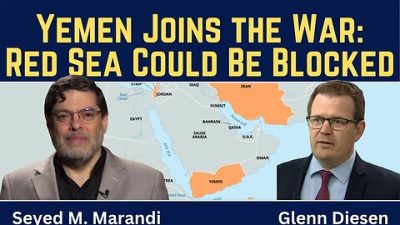
Yemen joins the war – Red Sea could be blocked next – Saudi regime at risk
or go to
Aletho News Archives – Video-Images
From the Archives
Should Europeans ‘Thank’ the Americans for Destroying Nord Stream?
By Robert Bridge | Strategic Culture Foundation | September 29, 2022
With an investigation continuing into the destruction of the Nord Stream gas pipeline that provided energy supplies to Europe from Russia, there appears to be just one prime suspect, and that should surprise nobody.
Following the sabotage of the Nord Stream 1 and 2 gas pipelines, former Polish Foreign Minister Radoslaw Sikorski already seemed to know the identity of the perpetrator when he tweeted out: “Thank you, USA.”
At first glance, it seemed that Sikorski was speaking sarcastically, berating Washington for carrying out an attack that will have severe repercussions for the people of Europe. After all, how could anyone see any good coming from the termination of Europe’s primary source of gas reserves with winter just around the corner? It was Sikorski’s homeland of Poland, after all, that urged its citizens to collect firewood in the face of dwindling gas reserves.
In fact, the Polish diplomat was speaking one-hundred percent literally… continue
Blog Roll
 Aletho News
- Iran denies responsibility for ‘depraved’ attack on Kuwait desalination plant
- Bring The Troops Back. End This War Now!
- Can we please stop calling Israel the ‘only democracy in the Middle East’ now?
- US should start removing its troops for Germany, proposes AfD co-leader Chrupalla
- Iran Red Crescent: 600 educational centers attacked in US-Israeli ‘war crimes’
- Russian Oil Tanker Arrives in Cuba Amid U.S. Blockade
- America Racing to Strategic Defeat in Iran: Lt Col Daniel Davis
- FTC Warns Visa, Mastercard, PayPal, Stripe Over Political Debanking
- Russian tanker approaches Cuba despite US oil blockade
- Marandi: Yemen joins the war – Red Sea could be blocked next – Saudi regime at risk
- If Americans Knew
- Israeli police block Catholic cardinal from entering Church of the Holy Sepulchre on Palm Sunday
- Israel is assassinating journalists again, more than any other nation, anywhere, ever – Not a ceasefire Day 170
- Over 300 US service members wounded, majority have brain injuries – Not a ceasefire Day 169
- Researchers at Human Rights Watch Resign Over Blocked Report on Palestinian Refugee Return
- Jewish Groups Are Backing a War Americans Don’t Want
- Eric Fingerhut Thinks He’s the President of the Jews
- Top Jewish Philanthropists, Rabbis Urge Israeli President to Take Action Against ‘Jewish Extremists’
- Don’t Be Fooled. Zionist Leaders Have Always Wanted to Control Southern Lebanon
- Israel’s widespread use of torture is a core element of its genocide against the Palestinian people
- In Israel’s War on Iran, Many Middle East US Bases Rendered “All But Uninhabitable”
- No Tricks Zone
- New Study Finds Warming Saves Lives…Cold Temperatures 12 Times More Deadly Than Excess Heat
- German Science Blog Accuses PIK Climate Institute Of Hallucinating Climate Tipping Points
- Devastating Assessment Of Comirnaty Vaccine By Former Senior Pfizer Europe Toxicologist
- New Study: CO2 Is ‘Effectively Negligible’ As An Explanatory Climate Change Factor Since 2000
- Former Pfizer Toxicologist Dr. Helmut Sterz Tells Bundestag Hearing Pfizer Vaccine Should Have Never Been Approved
- Energy Expert: Germany’s Nuclear Phaseout Was A “500 Billion Euro Mistake”
- New Research: South Australia’s Mid-Holocene Sea Surface Temperatures Were 4°C Warmer Than Today
- Storing Green Energy To Last Germany 10 Days Would Require A 60-Million Tonne Battery
- New Studies: UK Sea Levels Were 4 Meters Higher Than Today During The Mid-Holocene
- Destructive Green New Deal: German Energy And Metal Group Warns Of Drastic Crisis
 Aletho News