Pakistani police surround ex-PM’s home
Samizdat | August 21, 2022
Ousted former Pakistani Prime Minister Imran Khan has been charged with violating the country’s anti-terrorism laws for allegedly threatening a female judge and two senior police officials during a rally in Islamabad on Saturday night. Video reportedly shot at his home on Sunday evening shows police surrounding the residence hours after a police report was filed against him.
In his speech during Saturday’s rally, Khan threatened to file charges of his own against Judge Zeba Chaudhry, two police agencies, the Pakistani Election Commission, and other political opponents, warning they should prepare to face “consequences” over their abysmal treatment of his chief of staff, Shahbaz Gill. He had organized the rally in Islamabad’s F-9 Park in solidarity with Gill, who was arrested last week on sedition charges.
Later that night, the country’s digital media watchdog, called PEMRA, forbid satellite stations from airing the speech – or any future live addresses from the ex-prime minister – without a time-delay mechanism “to ensure effective monitoring and editorial control.”
Khan has been “continuously targeting state institutions by leveling baseless accusations and spreading hate speech through his provocative statements against state institutions and officers,” PEMRA explained in its directive on preemptively censoring the politician. Khan’s so-called “hate speech” was “prejudicial to the maintenance of law and order and is likely to disturb public peace and tranquillity,” they claimed.
Khan’s attempt to livestream his speech on YouTube was also stymied when the Google-owned video platform was taken offline in a coordinated move by eight Pakistani internet service providers, according to Netblocks. The site returned to functionality as soon as Khan finished speaking.
Khan was ousted as prime minister in April following a controversial no-confidence vote that he dismissed as a US-led conspiracy to have him removed for opposing Washington’s “forever wars” in Central Asia and the Middle East.
Outrage as Pakistan’s Media Watchdog Bans Channels From Broadcasting Ex-PM Imran Khan’s Speeches

Samizdat – 21.08.2022
Pakistan’s media watchdog, the Pakistan Electronic Media Regulatory Authority (PEMRA), has banned TV channels from broadcasting live addresses by former Prime Minister Imran Khan.
The decision, effective immediately, was made on the eve of his rally in Rawalpindi on Sunday. According to the regulator, Khan is making “baseless allegations and spreading hate speech.”
“His provocative statements against state institutions and officers… is likely to disturb public peace and tranquility,” the PEMRA added.
The decision has been slammed by members of Khan’s Pakistan Tehreek-e-Insaf (PTI) party and his supporters.
Asad Umar, a senior PTI official, took to Twitter, saying that the ban would be challenged in court.
A local journalist said the watchdog’s decision actually had the opposite effect.
Since his ouster from power in April 2021, Khan has held massive rallies across the country, branding the government of his successor Shehbaz Sharif as “traitors” installed by a “foreign conspiracy” hatched in the US. He has also repeatedly said that Washington has made Pakistan a “slave” without invading it. Prior to the no-confidence motion that saw him voted out of power, Khan accused the US of seeking to have him removed.
Afghanistan Forms Committee to Launch Practical Work on TAPI Gas Pipeline: Official
Samizdat – 20.08.2022
Afghanistan has established a committee to launch practical work on the Turkmenistan–Afghanistan–Pakistan–India Pipeline (TAPI) after a pause following the Taliban (under UN sanctions over terrorism) takeover, Esmatullah Burhan, a spokesman for the Afghan Ministry of Mines and Petroleum, said on Saturday.
“A ministerial committee has been formed. The Ministry of Finance carries out the financial affairs of this committee,” Burhan was quoted as saying by Afghan broadcaster TOLO News. The body will be headed by acting Afghan First Deputy Prime Minister Abdul Ghani Baradar, according to the report.
In addition, Afghanistan intends to send a delegation to Turkmenistan in the near future to discuss the implementation of the TAPI project, the broadcaster said, citing the foreign ministry.
“We will have a visit to Turkmenistan, and we will talk about the gas prices and implementation of projects in Herat and also the industrial parks,” Afghan foreign ministry spokesman Shafay Azam was quoted as saying.
In February 2021, the Taliban pledged not to jeopardize the TAPI project after a meeting of the movement’s delegation with Turkmen Foreign Minister Rashid Moradov. However, last year, the chaotic security situation in Afghanistan still hampered the pipeline’s construction.
TAPI’s construction was launched in 2015. The 1,814-kilometer (1,127 miles) pipeline will transport natural gas from Caspian Sea deposits in Turkmenistan via Afghanistan and Pakistan to India. The annual capacity of the pipeline is expected to reach 33 billion cubic meters (1.1 trillion cubic feet).
‘Developing world to face wave of defaults’
Samizdat – July 10, 2022
Emerging nations, including El Salvador, Ghana, Egypt, Tunisia and Pakistan, will be challenged with a historic cascade of defaults as a quarter-trillion-dollar pile of distressed debts keeps exerting downward pressure on economies, Bloomberg is reporting.
“With the low-income countries, debt risks and debt crises are not hypothetical,” the World Bank’s Chief Economist Carmen Reinhart told the agency on Saturday. “We’re pretty much already there.”
Over the past six months, there’s reportedly been a doubling in the number of emerging markets with sovereign debt that trades at highly distressed levels, meaning yields that indicate investors believe default is a real possibility.
Another cause for major concern reportedly arises from a potential “domino effect” that commonly occurs when scared investors begin yanking money out of countries with economic problems similar to those defaulting nations had previously gone through.
In June, traders reportedly pulled $4 billion out of emerging-market bonds and stocks, marking a fourth straight month of outflows.
Probable defaults may be followed by political instability. Earlier this year, Sri Lanka was the first nation to stop paying its foreign bondholders, burdened by unwieldy food and fuel costs that fueled protests and political chaos.
“Populations suffering from high food prices and shortages of supplies can be a tinderbox for political instability,” Barclays has said, as quoted by Bloomberg.
Zionist Regime Unable to Defend Itself: IRGC Chief
Al-Manar | June 28, 2022
The commander of the Islamic Revolution Guards Corps cautioned Islamic countries’ governments to avoid relying upon the Zionist regime, which is unable to even protect itself.
In a meeting with Chairman of the Joint Chiefs of Staff Committee of Pakistan General Nadeem Raza in Tehran, Major General Hossein Salami slammed the Zionist regime as the enemy of the Islamic world and humanity.
The IRGC commander also warned regional rulers of the bitter consequences of normalization of ties with the “child murdering Zionists”, saying the US, the main supporter of the Israeli regime, is basically the enemy of Islam.
“The question is that while the Zionist regime cannot even defend itself and is a regime absolutely without any policy, how would certain Islamic countries rely on it to ensure their security or safeguard their economy? There is no logic behind it,” Major General Salami added.
He further pointed to the awful results of the presence of American forces in the Islamic world, including the great seditions, long civil wars, destruction of houses, displacement of people, insecurity, poverty and underdevelopment.
“When we look at Afghanistan, we notice the harmful and irreparable effects of American interference,” the general added, noting that the neighboring countries, including Pakistan, suffer from the consequences of destructive US interference in Afghanistan.
He also highlighted the integrated security of Iran and Pakistan, stressing the need for closer cooperation between Tehran and Islamabad in all fields, especially in protecting the security of the common border and fighting against terrorism.
For his part, the Pakistani general pointed to the commonalities between the Pakistani and Iranian nations, decried divisions within the Muslim world as a result of the US and Western plots, and noted that Americans withdrew from Afghanistan after twenty years without managing to establish security in that country.
General Nadeem Raza also emphasized the necessity of intelligence and operational cooperation with Iran in protecting the security of the joint border.
Nuclear-armed states spent $82.4bn on nukes in 2021, US topped list: Report
Press TV – June 15, 2022
The world’s nine nuclear-armed countries – led by the US – spent $82.4 billion upgrading their atomic arsenal in 2021, eight percent more than the previous year, an anti-nuke campaign group has unveiled.
The largest spender by far was the United States, which accounted for more than half the total expenditures on nuclear weapons – followed respectively by China, Russia, Britain, France, India, the Israeli regime, Pakistan and North Korea – the International Campaign to Abolish Nuclear Weapons (ICAN) stated in its annual report, titled “Squandered: 2021 Global Nuclear Weapons Spending.”
“Nuclear-armed states spent an obscene amount of money on illegal weapons of mass destruction in 2021, while the majority of the world’s countries support a global nuclear weapons ban,” the group said in the report, noting that the massive spending nevertheless failed to prevent a war in Europe.
“This spending failed to deter a war in Europe and squandered valuable resources that could be better used to address current security challenges, or cope with the outcome of a still raging global pandemic,” ICAN said. “This corrupt cycle of wasteful spending must be put to an end.”
The group said atomic arms producers had further spent millions of dollars on political lobbying efforts, saying that every $1 spent on lobbying had led to an average of $256 in new contracts involving nuclear weaponry.
“The exchange of money and influence, from countries to companies to lobbyists and think tanks, sustains and maintains a global arsenal of catastrophically destructive weapons,” it said.
The US spent $44.2 billion on atomic weaponry in 2021, followed by China’s $11.7 billion, Russia’s $8.6 billion, the UK’s $6.8 billion, and France’s $5.9 billion, according to the report. India led the more recent nuclear arms developers in expenditures on the mass-destructive weaponry, spending $2.3 billion, followed by the Israeli regime’s $1.2 billion, Pakistan’s $1.1 billion and North Korea’s $642 million.
The report came a week after US-led NATO alliance declared that it did not offer a guarantee to Russia that it would not deploy nuclear weapons on the territories of its two prospective new members, Finland and Sweden.
ICAN’s report further confirmed a statement released by the prominent Stockholm International Peace Research (SIPRI) a day earlier in which it had warned that all the nine nuclear-armed states were increasing or upgrading their arsenals, and that the risk of deployment of such weapons appeared higher now than at any time since the height of the Cold War.
While there is no official confirmation on the amount North Korea spends on nuclear weapons or its arsenal, SIPRI estimates that it possesses as many as 20 warheads.
The Israeli regime, along with India, Pakistan, and South Sudan have never joined the Treaty on the Non-Proliferation of Nuclear Weapons (NPT), an international treaty purportedly established to prevent the spread of nuclear weapons.
As of August 2016, 191 states have become parties to the NPT, though North Korea, which acceded in 1985, announced its withdrawal from the treaty in 2003, following detonation of nuclear devices in violation of core obligations.
Critics of the treaty insist, however, that the NPT cannot stop the proliferation of nuclear arms or the motivation to acquire them, arguing that the biggest possessors and developers of atomic weapons are leading members of the global accord. Officials of the treaty have been selective in enforcing nuclear disarmament, imposing sanctions on observant member nations, such as Iran, while ignoring certain atomic arms possessor and developers such as India, Pakistan, and the Israeli regime, which is widely believe to possess at least 300 nuclear warheads.
Pakistan’s ousted PM issues ultimatum
Imran Khan will march with millions into the capital unless elections are held in six days
Samizdat | May 26, 2022
Former Pakistani PM Imran Khan warned the country’s government on Thursday that he will march on the capital with millions of people in six days unless provincial assemblies are dissolved and new elections are held by that time.
Khan issued the ultimatum during a rally of thousands of demonstrators in Islamabad, where he called for the “imported government” to be brought down, insisting it is backed by foreign powers.
A former cricket star-turned-politician, Khan served as Pakistan’s prime minister for over three and a half years before being ousted in a no-confidence vote by parliament last month. He insists that his removal from office was orchestrated by the US in collusion with members of the current government headed by Prime Minister Shehbaz Sharif.
Khan has suggested that he received threats from US officials over his refusal to bow to Washington’s demands and support the sanctions on Russia over its actions in Ukraine.
Since his ousting, Khan has staged several rallies across the country, calling on “all Pakistanis” to take to the streets to “send a message across Pakistan that the nation has rejected this imported government.”
On Wednesday, Khan stated that he would take part in a sit-in demonstration in the center of Islamabad along with thousands of supporters until his demands are met. However, on Thursday morning, after the authorities called in the military to protect the city center, he said he would leave Islamabad, threatening to return with “the whole nation” in six days if new elections are not held.
He went on to accuse the government of taking the nation “towards anarchy” and trying to create a divide between the people and the police.
“I had decided that I will sit here until the government dissolves assemblies and announces elections, but of what I have seen in the past 24 hours, they (government) are taking the nation towards anarchy,” he was quoted as saying by Dawn news website.
Khan condemned the government for trying to silence and intimidate peaceful protesters by raiding their homes and arresting people who took part in his party’s march.
“Government has tried every method to crush our Azadi March, they used teargas on peaceful protest, our homes were raided and privacy of the homes were violated; however, I have seen the nation free itself of fear of slavery,” he said.
Khan noted that three protesters lost their lives during demonstrations in Karachi, while two others were thrown off a bridge and thousands of others were arrested after some of the demonstrations in the country turned violent.
On Wednesday, the ousted PM called on his supporters to assemble at D-Chowk – a town square located near several vital government buildings – and to not vacate the square until the ‘imported government’ announces new elections.
After thousands of protesters started pouring in, the government of Pakistan authorized the deployment of military troops to protect its headquarters in the capital. Interior Minister Rana Sanaullah tweeted that the army will be deployed to protect key government buildings in Islamabad’s Red Zone, such as the Supreme Court, Parliament House, and diplomatic enclaves like the US Embassy.
The government headed by Prime Minister Sharif had pledged to stop Khan’s supporters from entering the capital, calling their rally an attempt to “divide the nation and promote chaos.” The authorities even set up dozens of shipping containers and cargo trucks to block the roads to Islamabad ahead of Wednesday’s marches.
“Politics of dharna [sit-in] is detrimental to progress and stability,” Sharif tweeted on Wednesday.
US’ coercive diplomacy with Saudi Arabia
BY M. K. BHADRAKUMAR | INDIAN PUNCHLINE | MAY 6, 2022
Some three weeks after the reported meeting of the CIA chief William Burns with the Crown Prince of Saudi Arabia Prince Mohammed bin Sultan, the OPEC+ ministerial held a videoconference on Thursday.
The OPEC+ meet drew satisfaction that “continuing oil market fundamentals and the consensus on the outlook pointed to a balanced market.” The press release issued in Vienna says the ministerial “further noted the continuing effects of geopolitical factors and issues related to the ongoing pandemic” and decided that the OPEC+ sticks to the monthly production adjustment mechanism agreed in July last year “to adjust upward the monthly overall production by 0.432 million barrels/day for the month of June 2022.”
As per the former publisher of the Journal Karen Elliott House, Burns came to Saudi Arabia for a “mating dance” with Prince Mohammad — namely, the Prince must cooperate on a new oil-for-security strategy to “increase production to save European nations from energy shortages.”
Burns’ visit to the Kingdom took place just ahead of the 5th round of Saudi-Iranian normalisation talks in Baghdad between the Saudi intelligence chief and the deputy head of Iran’s Supreme National Security Council. The Iraqi Prime Minister Mustafa al-Kadhemi who was acting as mediator and attended the latest round of talks told the state media last week, “Our brothers in Saudi Arabia and Iran approach the dialogue with a big responsibility as demanded by the current regional situation. We are convinced that reconciliation is near.”
Nournews, affiliated to Iran’s Supreme National Security Council, also reported on April 24 that the fifth round of talks on a possible détente was “constructive” and the negotiators managed “to draw a clearer picture” of how to resume bilateral relations, and, “given the constructive bilateral dialogue so far, there is a possibility of a meeting between the Iranian and Saudi top diplomats in the near future.”
Burns’ mission couldn’t have been indifferent toward the Saudis’ reconciliation track with Tehran. With the outcome of the JCPOA talks in Vienna uncertain, Iran’s close ties with Russia and China remains a major worry for Washington. And with Tehran’s stubborn refusal to trim its regional policies to suit US regional strategies, Washington has fallen back on the default option to resuscitate the anti-Iran front of its regional allies. The US hopes that Saudi Arabia will come on board the Abraham Accords.
Meanwhile, the issue of oil prices has returned to the centre stage. Indeed, high oil prices mean high income for Russia. Russia’s sales of oil and natural gas far exceeded initial forecasts for 2021 as a result of skyrocketing prices, accounting for 36% of the country’s total budget. The revenues exceeded initial plans by 51.3%, totalling $119 billion. The Biden administration’s best-laid plans to cripple the Russian economy are unravelling. Equally, high oil price is also a domestic issue for Biden. Above all, unless Europe finds other oil sources, it will continue buying Russian oil.
However, Prince Mohammad has a different agenda. He is likely to rule Saudi Arabia for many decades—half a century if he lives to 86, his father’s age. And the Prince has been remarkably successful in creating a “power base”. His lifestyle changes have been a smashing hit with Saudis 35 and under—70% of the Kingdom’s citizens — and his ambition to transform Saudi Arabia into a modern technological leader ignites the imagination of the youth.
Clearly, his refusal to punish Russia and his gesture to place the princely amount of $2bn in a new, untested investment fund started by Trump’s son-in-law Jared Kushner speak for themselves. Prince Mohammed would have his own reasons too, starting with Biden’s contemptuous reference to Saudi Arabia as a “Pariah” state and refusal to deal in person.
The Prince hit back recently by declining to take a call from Joe Biden. Besides, the US’ restrictions on arms sales; insufficient response to attacks on Saudi Arabia by Houthi forces; publication of a report into the 2018 murder of Jamal Khashoggi — all these are in play here.
Even if the administration is able to get Congressional approval for new security guarantees for Saudi Arabia (which is rather problematic), Prince Mohammad may not be swayed, since at the end of the day, high oil prices boost Saudi budget too.
The paradox is, both Saudi Arabia and Russia are stakeholders in OPEC+ as is evident from the explicit warning to the EU by OPEC Secretary General Mohammad Barkindo last month that it would be impossible to replace more than 7 million barrels per day of Russian oil and other liquids exports potentially lost due to current or future sanctions or voluntary actions.
In such a torrential stream where crosscurrents are foaming and weltering, what probably unnerves the Biden Administration most could be the talk that Chinese President Xi Jinping may be planning to visit Saudi Arabia, amidst persistent reports recently that Riyadh and Beijing are in talks to price some of the Gulf nation’s oil sales in yuan rather than dollars, which would indeed mark a profound shift for the oil market and help advance China’s efforts to convince more countries and international investors to transact in its currency.
The Saudi explanation for the shift to the yuan is that the kingdom could use part of new currency revenues to pay Chinese contractors involved in mega projects within the kingdom domestically, which would reduce the risks associated with the capital controls Beijing imposes on its currency. But, for Washington, that means certain sensitive Saudi-China transactions in yuan do not appear in the rearview mirror of the SWIFT messaging infrastructure, making transaction monitoring unviable.
There are persistent US reports that with Chinese support, Saudi Arabia may be constructing a new uranium processing facility near Al Ula to enhance its pursuit of nuclear technology. Saudi Arabia’s generous $8 billion in financial support for Pakistan, unveiled this week, will almost certainly raise hiccups in Washington.
Saudi Arabia is a central pillar of China’s Belt and Road infrastructure initiative and ranks in the top three countries globally for Chinese construction projects, according to the China Global Investment Tracker, run by the American Enterprise Institute. Suffice to say, the CIA chief’s call could not have been for a friendly chat with Prince Mohammad.
Imran Khan loses no-confidence vote
Samizdat | April 9, 2022
Pakistan’s National Assembly has passed a vote of no-confidence against Prime Minister Imran Khan on Sunday, with 176 lawmakers out of 342 voting against him. The speaker of the parliament’s lower house Asad Qaisar, who is also a member of Khan’s party, announced his resignation after adjourning the house three times throughout Saturday.
Khan PTI’s party effectively lost its majority in the National Assembly in March when seven MPs from its coalition partner decided to join the opposition’s ranks. The rivals accused the cricket star-turned-politician of mismanaging Pakistan’s economy, battered by the Covid-19 pandemic, as well as mishandling Islamabad’s foreign and internal policy.
Sunday’s motion means that Khan’s five-year term has ended early, much like that of all previous prime ministers of the country.
The opposition will now put forward their own candidate to replace Khan as PM. On March 21, Maryam Nawaz, the vice president of the Pakistan Muslim League-Nawaz party – the country’s leading opposition force – told journalists that the party had nominated Shehbaz Sharif as its candidate for the office, which was confirmed by Sharif himself on Thursday.
Khan, in turn, had previously claimed that the opposition was doing a foreign power’s bidding, and that an “imported government” would be installed in Pakistan should he be ousted. In his Friday night address, the politician vowed that he would put up a struggle, calling on his supporters to take to the streets.
Khan previously pointed the finger at the US, which he said wanted him gone, for his attempts to carry out an independent foreign policy and his visit to Moscow in late February. The politician claimed to have a recording from the Pakistani ambassador in Washington proving the allegations.
On Monday, Russian Foreign Ministry spokeswoman Maria Zakharova suggested that Washington was trying to “punish an unruly Imran Khan,” describing efforts to remove him from power as “yet another attempt to unashamedly interfere with a sovereign nation’s internal affairs.”
The US State Department has denied claims that it was behind the vote of no-confidence, with spokesperson Jalina Porter describing Khan’s allegations as “absolutely not true.”
Interpreting The US’ Threat Of “Significant & Long-Term Consequences” For India
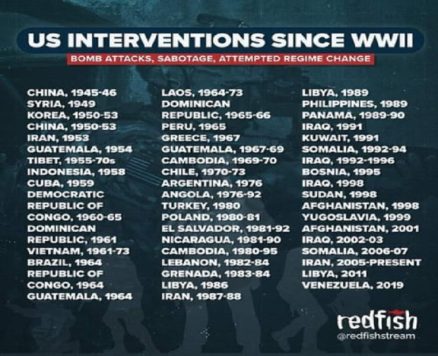
By Andrew Korybko | One World Press | April 7, 2022
Director of the White House National Economic Council Brian Deese told reporters on Wednesday that there will be “significant and long-term consequences” if his country assesses that India has engaged in a so-called “more explicit strategic alignment” with Russia. New Delhi has thus far impressively practiced a policy of principled neutrality towards Moscow’s ongoing special military operation in Ukraine and the New Cold War more broadly between the US on one hand and Russia and China on the other. This South Asian state is the world’s largest and most important non-aligned country that’s setting a proud example for the rest of its Global South peers. The US is afraid that countless more countries will follow India’s lead by continuing to bravely defy Washington’s unilateral hegemonic pressure to sanction Russia.
Deese’s remarks represent the most ominous American threat to India yet since ties between these two Great Powers became complicated from summer 2020 onwards into the present day. Considering the context of the rolling “South Asian Spring” regime change scenario that the US simultaneously activated against Pakistan and Sri Lanka over the weekend, his statement adds credence to suspicions that India is actually the ultimate target of this campaign. It’s unclear what “significant and long-term consequences” will befall Indian-American relations, but it certainly seems like their ties will at the very least continue deteriorating if the US continues aggressively pressuring India to sacrifice its objective national interests for its supposed partner’s sake.
The sudden onset of regional stability along India’s periphery is intended to destabilize that country itself, both immediately and over time. In the event that the Pakistan and/or Sri Lanka’s multipolar governments are replaced by American puppets, then US bases might pop up in those neighboring countries. The so-called “anti-Indian hawks” in Islamabad’s “establishment” might become emboldened to violate the year-long ceasefire with New Delhi in order to punish that country by proxy at Washington’s behest for its policy of principled neutrality. With respect to Colombo, a US naval base could threaten India’s Sea Lines Of Communication (SLOC). Washington might even use the island as a base to encourage separatist movements in Southern India.
To be absolutely clear, India is not engaging in a so-called “explicit strategic alignment” with Russia, it’s simply advancing its objective national interests by remaining neutral in the Ukrainian Conflict and refusing to sacrifice its own for America’s sake. By default, however, the zero-sum unipolar hegemonic perspective embraced by US strategists influences them to regard this balanced policy as supposedly “taking Russia’s side” in the New Cold War. This false assessment is then in turn incorporated into its policy formulation towards that country, thus resulting in Deese’s ominous threat. Given the US’ decades-long track record of betraying former partners in the worst ways possible by orchestrating regime changes and even waging Hybrid Wars against them, India should be very concerned by what he just said.
America seems to be preparing for a fundamental change in its relationship with India, which will certainly affect the balance of interests in Eurasia. Thus far, New Delhi has been doing its utmost to retain that balance between itself, Russia, and China, ergo its policy of principled neutrality in order to ensure that Moscow doesn’t become disproportionately dependent on Beijing in response to the US-led West’s unprecedented pressure campaign. Nevertheless, India also hoped to retain excellent relations with the US at the same time in order to further synchronize the geo-economic aspects of their respective Indo-Pacific strategies. This grand strategic balancing act is now at risk of becoming unbalanced if the US unilaterally decides to worsen relations with India.
The form that this could take remains unclear, but the reader should remember that an intensification of information warfare against India as well as potential economic warfare and possibly even other more dangerous forms of Hybrid Warfare can’t be discounted due to the US’ track record. Security threats will spike in the event that the Pakistani and/or Sri Lankan governments are overthrown throughout the course of the ongoing “South Asian Spring” regime change campaign that the US has unleashed throughout the region. With these forecasts in mind, it’s of the highest importance that the South Asian states seriously consider reviving the South Asian Association for Regional Cooperation (SAARC) in order to advance “regional solutions for regional problems” and thus thwart the US’ plots.
Andrew Korybko is an American political analyst.
Russia blasts ‘shameless US interference’ in Pakistan’s affairs
Press TV – April 5, 2022
Russia has blasted “another attempt of shameless interference” by the United States in the internal affairs of Pakistan, saying that Washington sought to punish a “disobedient” Prime Minister Imran Khan following his visit to Moscow on February 23-24.
The spokesperson for Russia’s Ministry of Foreign Affairs Maria Zakharova said in a statement issued on Monday that the political development in Pakistan “leaves no doubt” that the United States plotted to topple the government of Prime Minister Khan.
The Russian foreign office condemned the United States over its involvement in an alleged conspiracy to overthrow the Pakistani government.
“Immediately after the announcement of the working visit of Imran Khan to Moscow on February 23-24 this year, the Americans and their Western associates began to exert rude pressure on the prime minister, demanding an ultimatum to cancel the trip,” Zakharova said.
The Russian foreign office stated that US Deputy Secretary of State for South Asia Donald Lu called upon the Pakistani ambassador in Washington and subsequently called upon Ambassador Asad Majid to “condemn the balanced reaction of the Pakistani leadership to the events in Ukraine,” as evidence of American interference in Pakistan’s affairs.
“When he [Khan] nevertheless came to us, [Lu] called the Pakistani ambassador in Washington and demanded that the visit be immediately interrupted, which was also rejected,” she stated.
“According to the Pakistani media, on March 7 this year, in a conversation with Pakistani Ambassador Asad Majid, a high-ranking American official (presumably the same Donald Lu) sharply condemned the balanced reaction of the Pakistani leadership to the events in Ukraine and made it clear that partnerships with the United States are possible only if Imran Khan is removed from power,” Zakharova said.
She added that further development of the situation in Pakistan left no doubt that Washington “decided to punish the ‘disobedient’ Imran Khan,” for not condemning the Russian military action in Ukraine as was demanded by the US.
“This is another attempt of shameless US interference in the internal affairs of an independent state for its own selfish purposes. The above facts eloquently testify to this,” Zakharova said.
“The [Pakistan] prime minister himself has repeatedly stated that the conspiracy against him was inspired and financed from abroad. We hope that Pakistani voters will be informed about these circumstances when they come to the elections, which should be held within 90 days after the dissolution of the National Assembly,” she said.
Addressing a large rally in the capital Islamabad last week, Prime Minister Khan accused an unnamed “foreign power” – in a clear reference to the United States – of funding a “conspiracy” to topple his democratically-elected government.
He said the “foreign power” sent millions of dollars to opposition parties to launch a no-confidence vote against him in the parliament.
On Sunday, members of Pakistan’s parliament chanted “Death to America” as they rejected a no-confidence vote, which sought to oust Khan, saying “foreign powers” were interfering in the country’s democratic process.
The National Assembly deputy speaker dismissed the no-trust move against the prime minister, terming it as “contradictory” to Article 5 of Pakistan’s Constitution.
Suri said that the motion was presented on March 8 and should be conducted according to the law and the Constitution, stressing, “No foreign power shall be allowed to topple an elected government through a conspiracy.”
The Pakistani president later dissolved the National Assembly on Khan’s advice.
Featured Video
Laith Marouf: Hezbollah’s position on US-Iran ceasefire
or go to
Aletho News Archives – Video-Images
From the Archives
Is Israel to blame for the Iraq War?
American Goy | March 10, 2008
I am so tired of this old canard that “Israel had nothing to do with USA’s war with Iraq – in fact, it officially advised America against it”.
Bullshit. … continue
Blog Roll
 Aletho News
- Laith Marouf: Hezbollah’s position on US-Iran ceasefire: What you’re not being told
- Israel’s priority lies in destroying chances of peace between Iran, US: Ex-UN nuclear chief
- Ceasefire for all or for none: Iran shuts Hormuz over Lebanon attacks
- Strait of Hormuz is Iran’s ‘nuclear weapon’ that forced US retreat: Medvedev
- Energy crisis will last for months – Kremlin envoy
- Europe’s quiet role in the war on Iran
- Forty days that shook the Empire: How Iran turned the tables on US and prevailed
- Netanyahu unilaterally declares Lebanon outside of ceasefire deal
- Israeli leaders: ‘Not a single goal’ achieved in war with Iran
- What on earth just happened? Trump, Iran, and the unlikely ceasefire
- If Americans Knew
- Gazans face a triple crisis: severe shortages of water and bread, healthcare in tatters
- NY Times reports how Netanyahu took the US into Iran War
- A sigh of relief over Iran, but Gaza and Lebanon in dire straits – Daily Update
- Thousands dead and neighborhoods razed to the ground: Aid agencies fear southern Lebanon is becoming the new Gaza
- The war the US is fighting for Israel could cost trillions
- ‘Cigarette Burns, Nail Wounds’: Toddler Tortured in Gaza to Coerce Father
- Trump Says US Sent ‘a Lot of Guns’ to Protesters in Iran
- Israeli forces destroy 17 UN peacekeeper cameras in south Lebanon
- US-Israeli strikes ‘completely destroy’ synagogue in Tehran
- Archbishop for US Military Says Iran War Is Unjust Under Catholic Teaching
- No Tricks Zone
- An Inconvenient Tree: Uncovered In Alps… Europe Much Warmer Than Today 6000 Years Ago
- New Study Reports A 60% Slowdown In Greenland’s Ice Loss Rate In The Last Decade
- Low Intensity Tornado Wrecks Major Solar Farm, Creating A Potential Toxic Dump
- New Study Finds Warming Saves Lives…Cold Temperatures 12 Times More Deadly Than Excess Heat
- German Science Blog Accuses PIK Climate Institute Of Hallucinating Climate Tipping Points
- Devastating Assessment Of Comirnaty Vaccine By Former Senior Pfizer Europe Toxicologist
- New Study: CO2 Is ‘Effectively Negligible’ As An Explanatory Climate Change Factor Since 2000
- Former Pfizer Toxicologist Dr. Helmut Sterz Tells Bundestag Hearing Pfizer Vaccine Should Have Never Been Approved
- Energy Expert: Germany’s Nuclear Phaseout Was A “500 Billion Euro Mistake”
- New Research: South Australia’s Mid-Holocene Sea Surface Temperatures Were 4°C Warmer Than Today
 Aletho News