Marching for Israel? American and Israeli war criminals celebrate together

BY PHILIP GIRALDI • UNZ REVIEW • NOVEMBER 24, 2023
For those who missed it or chose to ignore it, there was a large demonstration in Washington on Tuesday the 14th dubbed the “March for Israel” with many posters and signs featuring “Israel We Stand With You.” I have no big problem with Americans “standing with Israel” as long as they go over to Israel to do it and in some cases at least put their own lives at risk in so doing, but that is not the way they operate. What I do have a problem with is the cause they are supporting, namely the ethic cleansing of an entire nation or even, if required to do that, a military style genocide of the inhabitants of an area that was entirely populated by an ethnic group called Palestinians before Israel’s mostly European immigrants entered the scene and used foreign provided force majeur to steal the land and property. While so doing they were also killing thousands of locals and forcing three quarters of a million more to abandon their homes and spend their lives in refugee camps, a process of ethnic cleansing that has continued and been expanded through the creation of illegal settlements since the founding of the Jewish state 75 years ago.
The rally was organized by the Conference of Presidents of Major American Jewish Organizations and the Jewish Federations of North America in solidarity with Israel’s response to the October 7th Hamas attack. Apart from backing the Israeli government in its devastating counterattack on Gaza, the stated goals of the rally were to support Israel in general, to call for the release of the hostages taken by Hamas, and to combat antisemitism. “Rising antisemitism” allegedly followed the October 7th Hamas attack and the Israel reaction that marked the start of the war. The usually cited source the Anti-Defamation League has stated that antisemitism has increased 388% in the US since October 6, 2023. Now one must observe that the ADL is not a reliable source when it comes to antisemitism as its agenda is clearly to send the message that Jews as a group are threatened, which is just not true to anything near the extent that is being implied. The reason why antisemitism and holocaust denial are used so often against critics is to discredit them without having to provide any evidence. For ADL, a Jewish college student walking on campus and passing a pro-Palestinian poster and being upset by it is an antisemitic incident. What I am saying is that this is an entirely faked exercise to convince the audience that Israel and Jews are the victims in spite of the fact that many more Palestinians have been killed and dispossessed since the founding of Israel in 1948. If there is any real increase in actual antisemitism it is in response to the highly visible bestiality that the Jewish state has exhibited against the original occupants of what was once Palestine. Israel wants the Pals gone and these are the first steps in what might be termed a final solution, aided and abetted by American monsters like Joe Biden and Donald Trump, who have made the United States complicit in war crimes.
Many participants in the Israel rally came by charter buses organized by Jewish houses of worship and schools. Most of the crowd appeared to be Jews but there was also a strong Christian Zionist component. Groups came from New York, New Jersey, Los Angeles, Houston, Miami, Boston, Kansas City, New York, Philadelphia and Miami plus other domestic and even international locations. US college students were given $250 in travel and expenses money to attend as an incentive. The crowd was considerable though there is some confusion about how many were actually in attendance. The organizers predicted 60,000 which was the number initially accepted, but other estimates of the crowd were as low as 10,000 or 25,000. The numbers quickly grew in some news stories to uncorroborated estimates of 270,000 to 300,000. There is, of course, certain bragging rights in large numbers and the March was in competition with a Palestinian rally that attracted 300,000 the week before, so let’s just accept that there was a large group present on the Mall.
Joe Biden did not personally attend the rally but he said on the following day “[that] Israel’s military operation in Gaza would stop when Hamas no longer maintains the capacity to murder, abuse, and do horrific things to the Israelis.” He left out the part of continuous abuse of Palestinians, going back 75 years and clearly is not paying attention to senior Israeli government officials who are making comments that indicate that the grand objective is to remove the Palestinians from what will soon be Eretz or Greater Israel.
Speakers at the three-hour long rally included Israel’s self-described protector in Congress Senate Majority Leader Chuck Schumer, House Speaker Mike Johnson, House Minority Leader Hakeem Jeffries, Senator Joni Ernst, Pastor John Hagee, and Israeli President Isaac Herzog (via video from Jerusalem), who praised US President Joe Biden for his “moral clarity and bold actions…” Johnson predictably declared that “The calls for a ceasefire are outrageous!” while the State Department’s Special Envoy to Monitor and Combat Antisemitism Deborah Lipstadt also delivered on demand a plea “Do not cower, allow no one to make you afraid.” Meanwhile Donald Trump’s US Ambassador to Israel David Friedman, who served mostly as an apologist for the Jewish state while in office, roamed the Mall expressing his joy at developments. Other notable speakers included Natan Sharansky and actress Debra Messing. Speeches followed the predictable narrative, with descriptions of how Israel had been attacked by terrorists who sought to destroy the Jewish state, that Israel is America’s best friend and closest ally, and how Israel is only defending itself from attack. Israeli Prime Minister Benjamin Netanyahu, who did not speak, stated in an interview in Israel that if his country does not succeed in crushing Hamas, the next terrorist attacks would be directed against America, an evidence free claim to strengthen US resolve, but as Netanyahu hardly ever tells the truth it should be taken for what it’s worth.
And, of course, everyone’s openly stated or subliminal message was that the United States must stand by and do whatever it takes to help defend its good friend and ally, including rejecting a cease fire or negotiations and letting the slaughter of Gazan women and children continue. The discredited tales of torture and mass rapes of Israeli women and the killing by beheading of Jewish babies, which are still being replayed by President Joe Biden, were also part of the rally agenda and appeared as the messages on signs and posters. What was not mentioned however was the systematic Israeli bombing of hospitals, schools, churches, and infrastructure, all of which are war crimes, as are the attacks on high density civilian targets which have produced more than 11,000 deaths as of this writing, mostly consisting of women and children. Targeting civilians in that fashion in those numbers can and should be construed as genocide. Israel’s war on hospitals can also be regarded as part of a systematic campaign of genocide. The deliberate targeting of civilian populations, children, medical and aid workers has been elevated to an Israeli government policy to drive the Palestinians from what was once Palestine.
Official Washington was on parade and in lockstep to demonstrate its unshakable loyalty to Israel even as opinion polls suggest that the American public is tired of the charade. A couple of brave peaceniks dared to move on the fringes of the crowd with signs calling for a ceasefire to end the carnage, but they were openly derided and threatened so they kept their distance. One truly shocking attendee at the rally was former Congresswoman Tulsi Gabbard, who was present and spouting the straight Israel line about how it was the victim of terrorists. Tulsi said “It is inspiring to see how many people are flooding into Washington – understanding the seriousness of this moment, coming from all over the country. Many Jewish people [and] many people who are not Jewish . . . are coming and saying that we must stand up against antisemitism. We must stand up for our Jewish brothers and sisters, and we must take a strong stand against the Islamist terrorists who seek to not only exterminate the Jewish people but also to exterminate and kill anyone who does not adhere to their radical interpretation of Islam.” She sounded something like the State Department’s despicable number two Victoria Nuland looking for another country to attack. Now that RFK Jr has also obligingly rolled over for the Jewish state there is no genuine peace candidate anywhere on the horizon with the exception of the Green Party’s Jill Stein and the beat of the war drums will continue to sound.

More out of sync perhaps was the presence as an ally of convenience evangelical Pastor John Hagee of the Christians United for Israel (CUFI) group which was well represented both at the rally and as the key largest Christian Zionist component of the Israel Lobby in the US. Hagee has said that Hitler was a “half-breed Jew,” created and sent by God as a “hunter” to drive European Jews on a divine mission to fulfill prophecy by creating the state of Israel to bring about the End Time and the Second Coming of Christ followed by the Rapture of all true believers into heaven. Jews will have to convert to participate. One brings someone as controversial as Hagee out of the woodwork only to send a message that this is not about making sure that Jews are safe. It’s about showing solidarity with Israel, no matter what it does. And what kind of rally against antisemitism includes racist signs calling for more war, more bombings, and the destruction of not just Hamas but also the ethnic cleansing of the Palestinians? Or as one sign held by a masked protester read, “From the river to the sea, Israel is all you will see.”
The so-called holocaust was evoked a number of times by speakers, particularly when it came time to describe Gaza on November 7th as the biggest killing of Jews since the Second World War. Nor did anyone mention the fundamental dysfunction in the US-Israeli relationship, which is that Israel calls nearly all the shots, including the killing of 34 sailors on the USS Liberty in 1967 and the more recent shooting of American citizen journalists covering Palestinian protests by Israeli Army sharpshooters. Israelis who kill Americans are never punished unlike the demands or retribution being made by speakers in Washington at the rally to kill not only all of Hamas but also the Gazan voters who elected Hamas in the first place. Though it is somewhat repetitive to say so, lest there be any confusion, that is referred to as genocide which is regarded as the most serious crime against humanity. And no one spoke up at the rally against the involvement of the US military in the operation against Gaza, which Biden is lying about and which is opposed by a majority of the public. Nor did anyone cite recent comments by US General Richard Clark that American soldiers must be “prepared to die for the Jewish state.”
Perhaps the politicians in Washington should ask US soldiers whether they are “prepared to die for the Jewish state.” Or maybe there should be called a national referendum asking the public whether it wants to continue arming and sending billions of dollars to Israel and to Ukraine as well. Evidence suggests that a clear majority would oppose both policies, which have hardly been debated at all in any serious way. Americans who want to “stand with Israel” should be allowed to go there with a one-way ticket in exchange for which they have to turn in their US passports as another major issue is “Who are they actually loyal to?” I’ll bet I know the answer to that one!
Philip M. Giraldi, Ph.D., is Executive Director of the Council for the National Interest, a 501(c)3 tax deductible educational foundation (Federal ID Number #52-1739023) that seeks a more interests-based U.S. foreign policy in the Middle East. Website is councilforthenationalinterest.org, address is P.O. Box 2157, Purcellville VA 20134 and its email is inform@cnionline.org.
UN Experts Voice Alarm Over Attacks on Critics of Israeli Policies in Palestine
Sputnik – 23.11.2023
Western journalists, athletes and students who criticize Israel’s policies in the Palestinian territories or share pro-Palestinian views face censorship, threats and discrimination, the UN special experts said in a fresh report, published by the Office of the High Commissioner for Human Rights (OHCHR).
“Journalists and media outlets in Israel and Western countries reporting critically about Israeli policies and operations in the occupied territories or expressing pro-Palestinian views have been the target of threats, intimidation, discrimination and retaliation, which have increased the risk of self-censorship, undermining the diversity and plurality of news that is essential for press freedom and the right of the public to be informed,” the report out Thursday read.
At least one media outlet in Israel has reportedly been threatened with closure for allegedly being “biased” toward Palestine, while pro-Palestinian content is being disproportionately and wrongfully removed by social media platforms, the experts said.
“The experts raised concerns about suspensions and expulsions of students from universities, dismissal of academics, calls for their deportation, threats to dissolve student unions and associations, and restrictions on campus meetings to express solidarity with the suffering civilians in Gaza and denounce the ongoing Israeli military response,” the report added.
In some universities, students have been blacklisted for supporting “terrorism” and threatened with diminished prospects in their future careers, according to the report.
Certain athletes, “particularly in Europe,” have been suspended from their teams and competitions after posting their opinions on the situation in the Gaza Strip on social media, while others have been threatened with suspension, termination of contracts and even deportation, the experts said.
Calls to an end to the violence in the Gaza Strip and to humanitarian ceasefire, as well as criticism of Israeli government’s policies and actions, have often “misleadingly equated with support for terrorism or anti-Semitism,” the experts said.
The document was signed by four UN Special Rapporteurs on human rights, including UN Special Rapporteur on the rights to freedom of peaceful assembly and of association, Clement Nyaletsossi Voule.
On October 7, Hamas launched a surprise large-scale rocket attack against Israel from the Gaza Strip and breached the border, killing around 1,200 people and abducting over 200 others in neighboring Israeli communities. Israel launched retaliatory strikes and ordered a complete blockade of the Gaza Strip, cutting off supplies of water, food, and fuel.
On October 27, Israel launched a large-scale ground incursion inside the Gaza Strip with the declared goal of eliminating Hamas fighters and rescuing the hostages. The conflict has resulted in the deaths of nearly 1,200 people in Israel and over 14,800 in the Gaza Strip.
Health Ministry stops coordination with WHO until detainees released
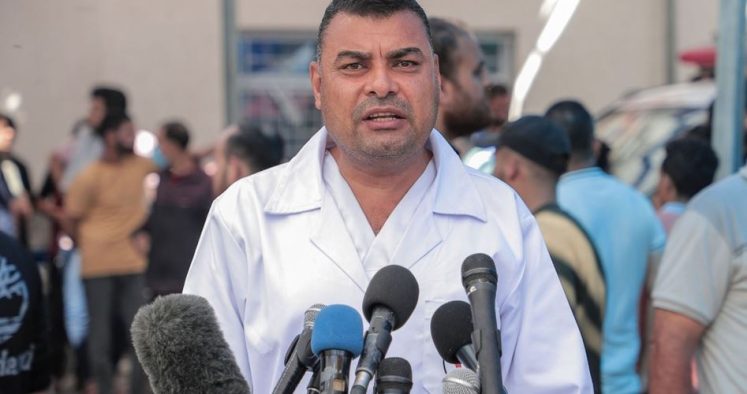
Palestinian Ministry of Health spokesman Ashraf al-Qudra
Palestine Information Center – November 23, 2023
GAZA – The Palestinian Ministry of Health in Gaza on Thursday held the Israeli occupation forces fully responsible for the lives and safety of the doctors, who were detained on Wednesday.
It announced that it will stop coordinating with World Health Organization (WHO) on the rest of evacuations until the international agency submits a report on the Israeli detention of medical personnel and until they are all released.
The spokesman of the Ministry, Ashraf al-Qudra, said in a press conference at Nasser Hospital in Khan Younis, “The United Nations bears full responsibility for this event, and we await appropriate and urgent measures on their part to address this situation”.
He pointed out that they were informed by the United Nations about coordination with WHO to evacuate those who were present in the Al-Shifa Medical Complex, which is subject to Israeli siege, raids, and destruction, and were stranded inside the hospital with no food, water, medicine, electricity, or security.
Al-Qudra explained that a convoy from the United Nations, represented by WHO, moved on Wednesday to evacuate some of the patients and medical staff who were subjected to the most horrific Nazi practices in addition to starvation.
“We were surprised that this convoy was stopped by the Israeli checkpoint separating the north from south of Gaza, for about seven hours, during which Israeli occupation forces maltreated the patients, their companions, and the medical staff, before arresting a number of them, including Director General of Al-Shifa Medical Complex, Dr. Muhammad Abu Salmiya,” Al-Qudra said.

Mohammad Abu Salmiya, director of al-Shifa Hospital in Gaza City. (By AFP)
He pointed out that WHO has not yet submitted any report to the ministry to clarify what happened, including the numbers and names of detainees, stressing that the inability to communicate with Al-Shifa Medical Complex made them unable to know who was arrested.
The Ministry’s spokesman expressed his concerns over potential liquidation of those detainees.
al-Qassam Brigades destroy 335 enemy vehicles since Israel’s ground operation started
Palestine Information Center – November 23, 2023
GAZA – Abu Obeida, the spokesman for al-Qassam Brigades of Hamas, has said that the group’s fighters have destroyed 335 Israeli army vehicles fully or partially since the beginning of the Israeli ground offensive in the Gaza Strip.
33 of those vehicles, including tanks, troop carriers and bulldozers, were targeted and destroyed in the last 72 hours, Abu Obeida said in a recorded statement broadcast by Al Jazeera satellite channel on Thursday evening.
Abu Obeida added that al-Qassam fighters carried out “dozens of operations” targeting Israeli soldiers on foot, including in Beit Hanoun and east of al-Rantisi Hospital in Gaza City.
During the last three days, al-Qassam fighters also conducted “special operations” that resulted in the killing of several “enemy forces,” the spokesman said.
The spokesman emphasized that the Palestinian resistance is ready to confront “the enemy” for as long as the aggression against Gaza continues.
He urged the Palestinian people in the West Bank and the resistance groups in Yemen, Lebanon and Iraq to escalate their confrontation with the Israeli occupation forces.
Israel lobby offers US politician $20mn to unseat Rashida Tlaib

Actor and US Senate candidate Hill Harper – October 20, 2023 [Jemal Countess/Getty Images for NOBCO]
The Cradle | November 23, 2023
A prominent US actor turned politician was offered $20mn by the Israel lobby to run in upcoming elections against Democratic Congresswoman Rashida Tlaib, as she faces fierce criticism for her stance against what she says is Israel’s ongoing genocide against Palestinians in Gaza.
Tlaib, the only Palestinian-American lawmaker in the US Congress, has stood alone in opposing the Biden White House’s staunch support for an Israeli military campaign that has killed over 13,000 Palestinians, the majority women and children, in six weeks.
The $20mn was offered to Hill Harper on 16 October by Michigan businessman Linden Nelson, who is connected to the American Israel Public Affairs Committee (AIPAC), the most powerful Israeli lobby group in Washington.
Frank Eugene “Hill” Harper, 57, a Hollywood actor who most recently portrayed Dr. Marcus Andrews in The Good Doctor on CBS, is running to succeed retiring Democratic Senator Debbie Stabenow in Michigan.
But Nelson offered the money to Harper in exchange for dropping out of the Senate race and running for Congress against Tlaib instead.
Harper confirmed the report on Wednesday, tweeting: “I didn’t intend for a private phone call to turn public. But now that it has, here’s the truth. One of AIPAC’s biggest donors offered $20m if I dropped out of the US Senate race to run against Rashida Tlaib. I said no. I won’t be bossed, bullied, or bought.”
He also tweeted: “Yes, telling the truth here will put a target on my back. But if we ALL come together, we can win.”
“I’m not going to run against the only Palestinian-American in Congress just because some special interests don’t like her,” he added.
Harper revealed that he had been approached to primary Tlaib after Politico reported that Michigan businessman Nelson offered him $10mn in direct contributions to his potential campaign and another $10mn in independent expenditures if he ran against her.
Regarding his transition to politics, Harper explained, “I’ve had a successful acting career, and I’m not someone who grew up thinking I wanted to be a politician,” he said.
“I’m running because I want to break the stranglehold wealthy special interests have on our politics, whether it’s the Israel lobby, the NRA or Big Pharma,” he added.
Nelson’s decision comes despite his history of ties to AIPAC, which has contributed to previous failed campaigns to oust Tlaib from Congress.
In a social media post, Tlaib accused President Joe Biden, the leader of her Democratic Party, of supporting the “genocide of the Palestinian people” by providing unconditional military support to Israel.
Earlier this month, many of her fellow Democratic members of Congress joined Republicans to censure Tlaib for her comments over the war, which critics slammed as antisemitic.
“It is important to separate people and government,” Tlaib said. “The idea that criticizing the government of Israel is antisemitic sets a very dangerous precedent. And it’s been used to silence diverse voices speaking up for human rights across our nation.”
Western brands hit hard by boycott campaign against Israeli goods

Workers at an empty Kentucky Fried Chicken (KFC) restaurant, November 20, 2023. (Photo by Reuters)
Press TV – November 23, 2023
A boycott campaign against Israeli products over the occupying regime’s war on the Gaza Strip has severely affected Western fast-food giants in several Arab countries, with the move having the potential to spread to other countries across the globe.
Weeks after Israel waged a brutal war on the besieged Gaza Strip, a boycott campaign against Israeli goods started to gain momentum in Egypt, Jordan and Turkey, significantly hitting Western fast-food giants like McDonald’s, Starbucks, and KFC.
The impacted companies are either perceived to have taken pro-Israeli stances in the war or are alleged to have financial ties to Israel or investments there.
According to the Gaza-based health ministry, at least 14,532 Palestinians, including 6,000 children and 3,920 women, have been killed and more than 35,000 others injured by Israeli strikes since October 7, when the Israeli regime launched a full-scale war on the densely-populated enclave.
“I feel that even if I know this will not have a massive impact on the war, then this is the least we can do as citizens of different nations so we don’t feel like our hands are covered in blood,” said 31-year-old Cairo resident Reham Hamed, who is boycotting US fast food chains and some cleaning products.
As the global pressure is mounting on Tel Aviv over its atrocities in the Palestinian sliver, there are signs that the boycott campaign is also spreading in some other Arab countries, including Kuwait and Morocco.
The boycott calls of the protest campaign have already circulated on social media and expanded to include dozens of companies and products, urging shoppers to shift to local alternatives.
In Jordan, citizens who support the protest campaign sometimes enter McDonald’s and Starbucks branches in the country to encourage a few customers to take their business elsewhere.
“No one is buying these products,” said Ahmad Al-Zaro, a cashier at a large supermarket in the capital Amman where customers were choosing local brands instead.
The current boycott campaign could be considered the latest part of the pro-Palestine Boycott, Divestment and Sanctions (BDS) movement against the Israeli regime.
The BDS movement, which is modeled after the anti-apartheid movement in South Africa, was initiated in 2005 by over 170 Palestinian organizations that were pushing for “various forms of boycott against Israel until it meets its obligations under international law.”
Thousands of volunteers worldwide have since joined the BDS movement, which calls for people and groups across the world to cut economic, cultural, and academic ties to Tel Aviv to help promote the Palestinian cause.
The movement has been so successful in causing economic damage to the Tel Aviv regime that pro-Israel groups have labeled it “an existential threat.”
Scott Ritter: Hamas Winning Battle for Gaza
By Scott Ritter – Sputnik – 23.11.2023
The recently announced ceasefire is a blessing for Palestinians and Israelis alike—a chance for prisoners to be exchanged, humanitarian aid to be distributed to those in need, and for emotions on both sides of the conflict to cool down.
While the ceasefire, negotiated between Israel and Hamas by Qatar, was mutually agreed between the two parties, let no one be fooled into thinking this was anything less than a victory for Hamas. Israel had taken a very aggressive position that, given its stated objective of destroying Hamas as an organization, it would not agree to a ceasefire under any conditions.
Hamas, on the other hand, had made one of its primary objectives in initiating the current round of fighting with Israel the release of Palestinian prisoners, and in particular women and children, held by Israel. Seen in this light, the ceasefire represents an important victory for Hamas, and a humiliating defeat for Israel.
One of the reasons Israel eschewed a ceasefire was that it was confident that the offensive operation it had launched into northern Gaza was going to neutralize Hamas as a military threat, and that any ceasefire, regardless of the humanitarian justification, would only buy time for a defeated Hamas enemy to rest, refit, and regroup. That Israel signed on to a ceasefire is the surest sign yet that all is not well with the Israeli offensive against Hamas.
This outcome should not have come as a surprise to anyone. When Hamas launched its October 7 attack on Israel, it initiated a plan years in the making. The meticulous attention to detail that was evident in the Hamas operation underscored the reality that Hamas had been studying the Israeli intelligence and military forces arrayed against it, uncovering weaknesses that were subsequently exploited. The Hamas action represented more than sound tactical and operational planning and execution—it was a masterpiece in strategic conceptualization as well.
One of the main reasons behind the Israeli defeat on October 7 was the fact that the Israeli government was convinced that Hamas would never attack, regardless of what the intelligence analysts charged with watching Hamas activity in Gaza were saying. This failure of imagination came about by Hamas having identified the political goals and objectives of Israel (the nullification of Hamas as a resistance organization by undertaking a policy built on “buying” Hamas through an expanded program of work permits issued by Israel for Palestinians living in Gaza.) By playing along with the work permit program, Hamas lulled the Israeli leadership into complacency, allowing Hamas’ preparations for their attack to be carried out in plain view.
The October 7 attack by Hamas was not a stand-alone operation, but rather part of a strategic plan possessing three main objectives—to put the issue of a Palestinian state back on the front burner of international discourse, to free the thousands of Palestinian prisoners held by Israel, and to compel Israel to cease and desist when it came to its desecration of the Al Aqsa Mosque, Islam’s third holiest place. The October 7 attack, on its own, could not achieve these outcomes. Rather, the October 7 attack was designed to trigger an Israeli response which would create the conditions necessary for Hamas’ objectives to reach fruition.
The October 7 attack was designed to humiliate Israel to the point of irrationality, to ensure that any Israeli response would be governed by the emotional need for revenge, as opposed to a rational response designed to nullify the Hamas objectives. Here, Hamas was guided by the established Israeli doctrine of collective punishment (known as the Dahiya Doctrine, named after the West Beirut suburb that was heavily bombed by Israel in 2006 as a way of punishing the Lebanese people for Israel’s failure to defeat Hezbollah in combat.) By inflicting a humiliating defeat on Israel which shattered both the myth of Israeli invincibility (regarding the Israel Defense Forces) and infallibility (regarding Israeli intelligence), and by taking hundreds of Israelis hostage before withdrawing to its underground lair beneath Gaza, Hamas baited a trap for Israel which the government of Israeli Prime Minister Benjamin Netanyahu predictably rushed into.
Hamas has prepared a network of tunnels underneath the Gaza Strip that, in total, stretch for over 500 kilometers. Nicknamed the “Gaza Metro,” these tunnels consist of interconnected deep underground bunkers used for command and control, logistical support, medical treatment, and billeting, along with other tunnel networks dedicated for both defensive and offensive operations. The tunnels are buried deep enough to avoid destruction by most bombs in Israel’s possession and have been provisioned to withstand a siege of up to three months (90 days) in duration.
Hamas knows that it cannot engage Israel in a classic force-on-force encounter. Instead, the goal was to lure Israeli forces into Gaza, and then subject these forces to an endless series of hit-and-run attacks by small teams of Hamas fighters who would emerge from their underground lairs, attack a vulnerable Israeli force, and then disappear back underground. In short, to subject the Israeli military to what is the equivalent of a death by a thousand cuts.
And it worked. While Israeli forces have been able to penetrate into the less urbanized areas of the northern Gaza strip, taking advantage of the mobility and firepower of its armored troops, the progress is illusory, as Hamas forces harry the Israelis continuously, using deadly tandem-warhead rockets to disable or destroy Israeli vehicles, killing scores of Israeli soldiers and wounding hundreds more. While Israel has been reticent in releasing the figures of armored vehicles lost in this fashion, Hamas claims the number is in the hundreds. Hamas’ claims are bolstered by the fact that Israel has halted the sale of older Merkava 3 tanks, and instead has organized their inventory of these vehicles into new reserve armor battalions to make up for the heavy losses being sustained in both Gaza and along the northern border with Lebanon, where Hezbollah forces are engaged in a deadly war of attrition with Israel in operations designed to support Hamas in Gaza.
But the main reason for Israel’s defeat to date is Israel itself. Having taken the bait, and fallen into the Hamas trap, Israel went on to execute its Dahiya Doctrine against the Palestinian population of Gaza, carrying out indiscriminate attacks against civilian objects in blatant disregard for the law of war. An estimated 13,000 Palestinian civilians have been killed by these attacks, including more than 5,000 children. Many thousands more victims remain buried under the rubble of their destroyed housing.
While Israel may have been able to garner the support of the international community in the aftermath of the October 7 attack by Hamas, its gross overreaction has instead turned world public opinion against it—something Hamas was counting on. Today, Israel is increasingly isolated, losing support not only in the so-called Global South, but also in traditional strongholds of pro-Israeli sentiment in the US, UK, and Europe. This isolation, combined with the kind of political pressure Israel is unaccustomed to receiving, helped contribute to the Netanyahu government’s acquiescence regarding the ceasefire and subsequent prisoner exchange.
Whether the ceasefire will hold or not remains to be seen. So, too, the question of turning the ceasefire into a lasting cessation of hostilities remains an open question. But one thing is certain—having declared that victory is defined by Hamas’ total defeat, the Israelis have set the stage for a Hamas victory, something Hamas achieves simply by surviving.
But Hamas is doing more than surviving — it is winning. Having fought the Israel Defense Forces to a standstill on the battlefield, Hamas has seen every one of its strategic objectives in this conflict reach fruition. The world is actively articulating the absolute necessity of a two-state solution as a prerequisite for a lasting peace in the region. Palestinians held prisoner by Israel are being exchanged for the Israelis Hamas took hostage. And the Islamic world is united in condemning Israel’s desecration of the Al Aqsa Mosque.
None of these issues were on the table on October 6. That they are being addressed now is testament to the success Hamas enjoyed on October 7, and in the days and weeks that followed, as Israeli forces were defeated by a combination of Hamas’ tenacity and their own predilection for indiscriminate violence against civilians. Far from being eliminated as a military and political force, Hamas has emerged as perhaps the most relevant voice and authority when it comes to defending the interests of the Palestinian people.
Turkey’s intelligence organization foils Mossad attempt to kidnap Palestinian Iron Dome hacker
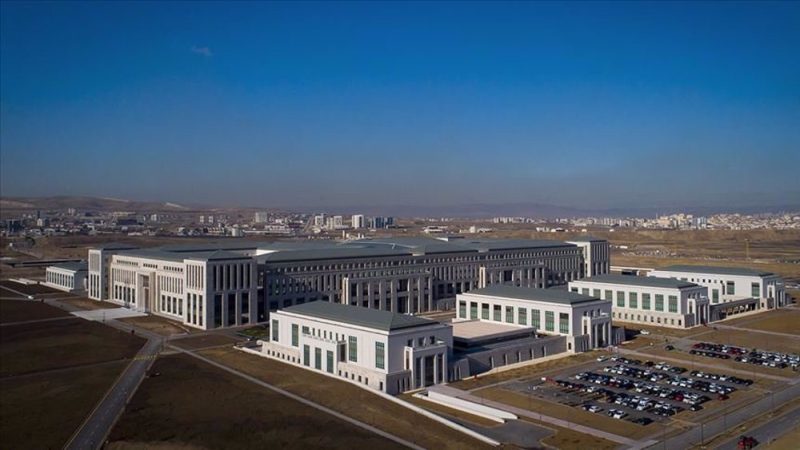
A view of the headquarters of Turkey’s National Intelligence Organization (MIT) in the capital Ankara on January 5, 2020.
Press TV -November 22, 2023
Turkey’s National Intelligence Organization (MIT) has rescued a renowned Palestinian hacker from the Israeli Mossad spy agency seeking to kidnap or possibly kill him.
MIT rescued Omar A, who was behind the disruption of Israel’s Iron Dome anti-missile system in 2015 and 2016, in an international operation and offered him protection as he was targeted by Mossad in Turkey and Malaysia.
The young Gazan hacker was sought by the Israeli regime for a long time after his hacking of the Iron Dome helped al-Qassam Brigades, the armed wing of the Palestinian resistance movement Hamas, launch missile strikes against Israel at the time.
Omar, a computer programming graduate of the Islamic University of Gaza, moved to Istanbul in 2020 after Mossad identified him as the one behind the disruptions. MIT was aware of his residence in Turkey due to his background as a hacker.
In an attempt to deceive him, Mossad offered him jobs at software companies several times but Omar, suspicious of Israel’s involvement, rejected the offers.
Omar was about to accept to join a team for an online project in June 2022 and to travel abroad for the project as Mossad was intent on taking him to Tel Aviv for interrogation. But MIT contacted him and warned him against the scheme.
The Palestinian hacker decided to take a vacation in Malaysia in September 2022. The Istanbul branch of MIT’s counter-intelligence department intervened again and installed tracking software on his cellphone after warning him against a possible abduction while abroad.
Indeed, he was kidnapped days later in Kuala Lumpur and was taken to a remote cabin some 50 kilometers (31.06 miles) from the Malaysian capital.
There, he was interrogated and tortured by suspects working for Mossad and was questioned on the methods he employed to infiltrate Iron Dome.
When MIT became aware of the abduction, Turkish officials contacted Malaysian authorities and through tracking software, helped them pinpoint the location where Omar was held.
Malaysian security forces raided the house and rescued Omar. Eleven suspects were arrested in connection with his abduction. Omar returned to Turkey and was taken to a safe house provided by MIT.
Turkey’s MIT has earlier uncovered similar Mossad plots to spy on Palestinians in the country.
Back in July, Turkish authorities said they had uncovered and disrupted a vast “ghost” Mossad spy network centered in Istanbul, following months of surveillance.
The substantial efforts by Turkey’s MIT exposed 56 operatives allegedly spying on non-Turkish citizens in Turkey in the service of Mossad.
The vast network consisted of citizens from various West Asian countries.
The findings by MIT revealed that the Mossad agents would gather information about foreigners through various surveillance methods, vehicle movements using GPS, and hacking into password-protected networks using Wi-Fi and location tracking devices.
These Mossad spies also used several fake websites in multiple languages, mainly Arabic, to secure technical locations and real IP addresses of the targeted individuals.
Also in May, Turkish media outlets reported that local authorities had managed to arrest 11 people accused of being part of a Mossad-led network.
Turkey has also broken Mossad-aligned spy rings in 2022 and 2021.
Gaza ‘truce’ won’t halt the regional war
The regional war is here. The Axis of Resistance assesses that the US and Israel intend to prolong the Gaza war indefinitely, and determines that a regional escalation is now unavoidable.
By Hasan Illaik | The Cradle | November 21, 2023
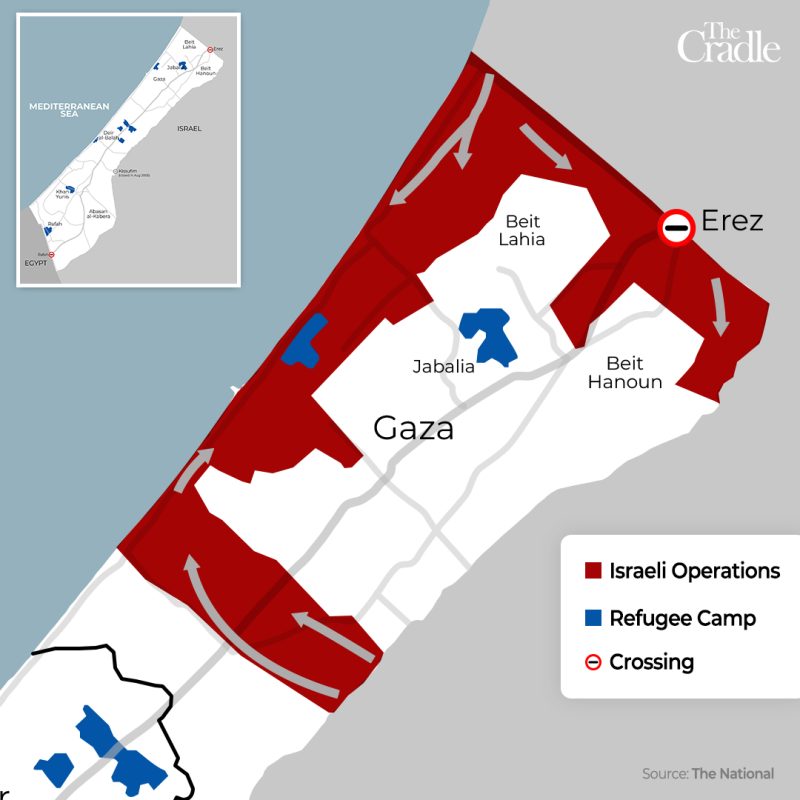
The Israeli military has announced the expansion of its ground operations in the northern Gaza Strip. After seizing territories on Gaza’s coastline, in the western part of the northern strip, Tel Aviv’s actual ground operation is now beginning.
For more than three weeks of its ground offensive, the occupation army has been operating in areas close to the shoreline, in places where tunnels cannot be dug, and, therefore, areas where the Palestinian resistance does not have significant defensive capabilities.
But now, the occupation army is moving eastward from the Gaza coast, allowing the armed resistance to maneuver far more easily and inflict greater losses on the invading soldiers and their armored vehicles – as has become quite evident in recent days.
In short, the ground battle in northern Gaza has only just begun, and is gearing up to get even hotter in the weeks ahead.
The region escalates
In support of the resistance in Gaza, the Yemeni army and Ansarallah fighters seized an Israeli-owned vessel in the Red Sea on 19 November after threatening to target all Israeli ships crossing the Bab al-Mandab Strait.
Over the past week, on Lebanon’s border with Israel, the Lebanese resistance Hezbollah has increased the frequency of its military operations. On 20 November, the occupation army monitored more than 40 attackzjs on its positions, one of which was carried out with four rockets, each with an explosive warhead weighing around 500 kilograms. The salvo destroyed the Israeli ‘Branit’ military barracks near the border with Lebanon. In just the past three days, Hezbollah has carried out an average of 12 military operations against Israeli targets each day.
Simultaneously, Iraqi resistance attacks are continuing against US military bases in Iraq and Syria – over sixty operations to date.
The increased pace of clashes across West Asia is, however, being widely ignored by many of Tel Aviv’s western allies, whose attention has been diverted by ongoing prisoner exchange talks between Israel and the Palestinian resistance, mediated by Qatar and the US. These weeks-long negotiations are being treated as evidence that the next phase will necessarily be a de-escalation in Palestine.
Those expectations have been fanned by a leak that Israel’s cabinet has discussed the imminent demobilization of a number of army reservists. While the Israeli military may indeed demobilize part of the reserve forces it called up after 7 October, this decision is not based on de-escalatory considerations. The more than 300,000 Israeli reservists initially mobilized was far too great for the capacity of the occupation army, which was unable to absorb these personnel into its fronts in Gaza, Lebanon, and the West Bank.
Despite this, many still optimistically cling to the de-escalation narrative. They are further encouraged by official US statements criticizing – albeit in a watered-down manner – Israel’s targeting of Palestinian civilians, and point to the occasional US-Israel divergences over what they call the “post-Hamas phase” in Gaza as further proof that Tel Aviv will have to scale down its war.
But at the current stage of the conflict, these discrepancies and observations are considered totally irrelevant by officials in the region’s Axis of Resistance. They note instead that Washington continues to maintain its pace of arms support for Israel, as it has done since the war’s onset, while sticking to its refusal to entertain any permanent ceasefire.
In addition, the US has reduced neither its level of involvement in the management of military operations in the Gaza Strip, nor its reinforcement of missile defense systems to counter any Yemeni or Iraqi rocket attacks on Israeli positions.
Axis officials believe that conciliatory-sounding US statements, which sometimes suggest that a de-escalation phase is imminent, are nothing but an American “public relations party” to repair a public image heavily damaged by unstinting US support for Israel’s continuing massacre of Palestinians in Gaza.
In slightly shifting its tone, Washington also seeks to mislead the Resistance Axis, hoping that this can forestall an increase in regional tensions and clashes.
From ‘truce’ to regional war
The current prisoner exchange negotiations between Israel and the Palestinian resistance include a five-day “humanitarian” truce. This is not a ceasefire by any means nor an opportunity to draw out a further lull in violence. Those familiar with the reality on the ground in the Gaza Strip confirm that any truce will merely be an opportunity for both sides to reorganize their ranks in preparation for intensified battles in the coming weeks.
They based their observations on the fact that Israel continues to adhere to its initial military goals, modified from the plan to occupy the entire Gaza Strip. Tel Aviv’s objectives today are, first, to occupy the entire north of Gaza; second, to displace all of its inhabitants, more than 800,000 of whom are still living under siege and bombardment.
And third, to continue the besiegement of southern Gaza – exerting military pressure through intensive airstrikes and special operations to force Hamas and other Palestinian resistance factions to surrender.
This plan is fully supported by the US and its western allies, as well as by Arab states that have normalized relations with Israel, notably those farthest from Palestine’s borders.
In light of these realities, the Axis of Resistance is pursuing its own West Asian escalation to pressure its adversaries to deescalate. That bar jumped considerably this week when Yemen’s Ansarallah captured an Israeli-linked ship in regional waterways.
This is a disaster for Tel Aviv, which depends primarily on maritime transportation for its imports and exports. If this becomes a pattern, Israeli-linked ships will be uninsurable, and hiring crews will become impossible. It is also a nightmare scenario for Washington, which wants the Gaza war to continue while its regional position enjoys complete calm.
Indeed, the US is desperate to maintain a regional peace, most of all in Iraq. While the multi-factional Iraqi resistance target US occupation bases inside their country and in Syria, both, the current American response has been tame. US military forces have limited their retaliatory strikes to Syrian territory – and only after informing their Russian counterparts in advance.
Washington has so far avoided striking back in Iraqi territory to avoid drawing a target on its considerable Iraqi interests – commercial, military, political – and also fears triggering the Iraqi resistance to expand operations against US bases in other West Asian states.
No ceasefire ahead
The Resistance Axis’ current assessment of the Gaza war is that both the US and Israel seek a protracted conflict – possibly even an endless war that transforms the Gaza Strip into a permanent battlefield to ensure that Israel no longer faces Palestinian deterrence capabilities.
On the other hand, the Axis continues to pursue all avenues to advance and accelerate a ceasefire in Gaza, including military options. The current “truce” announcement didn’t emerge in a vacuum – it follows painful blows against occupation forces in the Gaza Strip, a sharp escalation of clashes in the occupied West Bank, and a gradual increase in the pace and severity of attacks in the region.
The prisoner exchange truce may be announced at any moment. It will not, however, end the war. The truce is merely a break for the belligerents to prepare for more violent battles ahead, and these will not be limited to Gaza and the Lebanese-Palestinian border.
As 2023 comes to a close, all of West Asia is destined for more tension, battle, and multiple surprises. This scenario can only be eased by the announcement of a Gaza ceasefire and the provision of supplies and staples to its wounded population. It is only Washington that stands in the way, firmly opposing and blocking a ceasefire at every opportunity.
Mysterious military flights between Israel, Lebanon continue
The Cradle | November 21, 2023
Mysterious foreign military cargo flights, potentially carrying equipment for use against Hezbollah, continue to land at the Beirut and Hamat airports, Al-Akhbar reported on 21 November.
Between the 14 and 20 November, nine planes from various NATO countries were recorded landing at Beirut and Hamat airports, including several flying from Tel Aviv, according to Intelsky, a website monitoring aircraft movement in the region.
Sources speaking with Al-Akhbar said the cargo included devices used for jamming, which raises questions about the reason for their transport to Lebanon and whether they will be used to disrupt the communications network of Hezbollah in the event of an escalation of the fighting with Israel in Lebanon’s south.
Since the 7 October Hamas attack on settlements surrounding Gaza, in which 1,200 Israelis were killed and 240 more taken captive, Israel and Hezbollah have engaged in deadly tit-for-tat clashes on the Lebanese-Israel border area.
Hezbollah’s communication network played a key role during the July 2006 war against Israel, which later led to US pressure on the government of then-Lebanese Prime Minister Fouad Siniora to call for dismantling the resistance group’s communications network in 2008.
The same sources speaking with Al-Akhbar confirmed that the security authorities at Beirut and Hamat airports do not seriously inspect the cargo of the planes that land, with Hamat Air Base lacking even a scanning device. The final destination of the cargo in Lebanon is also unknown.
Intelsky reported that the movement of foreign military aircraft is proceeding at a level that Lebanon had not witnessed in years. Between 8 October and 10 November, 32 planes landed, nine of which belonged to the US, Dutch, and British Air Forces and landed at the Hamat base, and 23 planes belonging to the US, French, Dutch, Spanish, Canadian, Italian, and Saudi armies landed at the base designated for military and diplomatic aircraft on the west side of Beirut Airport.
Although Lebanese law prohibits direct flights between Lebanon and Israel, Intelsky monitored three planes landing at Beirut Airport originating in Tel Aviv.
A British Royal Air Force Airbus A400M Atlas landed in Beirut on 14 November, coming from Tel Aviv. The plane carried out a “touch and go” operation (touching the runway and taking off directly without stopping) at a British military base in Cyprus to technically comply with Lebanese law banning direct flights from Israel.
After taking off from Beirut, the plane returned to Tel Aviv after carrying out another touch-and-go operation at the British base in Akrotiri, Cyprus.
On 16 November, a US Air Force Boeing C-17A Globemaster III also flew from Tel Aviv to Beirut. The Intelsky website recorded that the plane allegedly landed in Cyprus as well but disappeared from radars before landing and reappeared after the supposed take-off. The plane was absent from radars over Larnaca for 4 minutes at an altitude of 1,264 meters, suggesting it did not land in Cyprus.
On 21 November, a British Royal Air Force (Airbus A400M Atlas landed in Beirut after making only a camouflaged landing in Akrotiri, at an altitude of only 375 meters above the base, which means that the flight violated Lebanese law and was in effect a direct flight from Tel Aviv to Beirut.
It should be noted that daily flights between the Akrotiri base and Tel Aviv have been recorded since the outbreak of the “Al-Aqsa Flood” operation on 7 October.
Al-Akhbar notes these flights raise suspicions about whether these trips are part of a broader strategy related to the conflict with Israel and may be intended to enhance the military capabilities of some parties in the region working on behalf of Israel and NATO, or to provide them with logistical support that includes transporting necessary equipment and supplies.
The Israeli army has not commented on the flight, except for a statement issued on 10 November confirming that “part of the air traffic at the airport is a routine movement to transfer military aid to the Lebanese army.”
UK GOVERNMENT BLOCKS MP QUESTIONS ABOUT GAZA-RELATED ACTIVITY AT ITS CYPRUS BASE
BY MATT KENNARD AND MARK CURTIS | DECLASSIFIED UK | NOVEMBER 20, 2023
The British government has blocked MPs asking any questions about activity at RAF Akrotiri, its vast air base on Cyprus, Declassified can reveal.
Blocking all parliamentary questions from MPs is a highly unusual move.
Government departments routinely refuse to answer specific questions about military operations for reasons of “national security”, but blocking all questions by elected parliamentarians goes far beyond the usual level of Whitehall secrecy.
It comes after Declassified revealed the RAF has made over 30 military transport flights to Tel Aviv since Israel began bombing Gaza. The Ministry of Defence refused to provide us any detail of the cargo or personnel on the flights.
Just this morning an A400M Atlas military transport aircraft operated by the RAF landed in Tel Aviv from Akrotiri. The aircraft can carry 116 soldiers, a Chinook helicopter or a payload of 37 tonnes.
RAF Akrotiri sits 180 miles from Tel Aviv with a flight time of 40 minutes.
Declassified has also reported that the US is moving arms to Israel using RAF Akrotiri, which has become an international military hub supporting Israel’s bombing campaign in Gaza. Half of US planes flying from British Cyprus are said to be carrying weapons for Israel.
Kenny MacAskill, Alba MP for East Lothian, told Declassified he put down a number of parliamentary questions concerning what military support the UK is providing to Israel and the role of RAF Akrotiri in the supply of military equipment.
“Your question has been queried because it is subject to a block by Government,” he was told in an email. “The Department [Ministry of Defence] has stated that it will not comment on operational matters at this base.”
MacAskill, a former Scottish justice secretary, told Declassified: “This is totally unacceptable in a democracy. Genocide is being perpetrated in Gaza and we have a right to know what our Government is doing about it.”
MacAskill said he had never experienced such a ‘block’ on asking parliamentary questions before.
He added: “The failure to call for an immediate ceasefire is bad enough but any complicity raises issues of participating in war crimes. We need openness and transparency by our government. This is not in our name.”
Secrecy
The UK military-run Defence and Security Media Advisory (DSMA) Committee – better known as the ‘D-Notice’ committee – has also sent out an ‘advisory’ to all British media to suppress reporting on UK special forces’ activity related to Gaza. The SAS was previously reported to have deployed a force to Cyprus.
No British mainstream media outlets have reported on Declassified’s recent findings about RAF Akrotiri and Gaza despite the President of Cyprus Nikos Christodoulides having to defend his government from accusations of complicity in Israel’s bombing of Gaza.
In answer to questions about the use of RAF Akrotiri by Cypriot journalists over the weekend, Christodoulides said: “There is no such information, our country cannot be used as a base for war operations”.
However, RAF Akrotiri has long been the staging post for British bombing campaigns across the Middle East. Declassified also recently revealed that 129 US airmen are also permanently deployed at the base.
The censorship of information requests from MPs makes it all but certain that RAF Akrotiri is being used for covert military purposes that the government does not want the public to know about.
It is likely the UK is sending material military aid to Israel during its bombing of Gaza, which has now killed over 12,000 Palestinians, although it previously told Declassified it was not providing “lethal aid”.
Featured Video

US IRAN TALKS: Who Are the Crazy Ones Here? /Lt Col Daniel Davis
or go to
Aletho News Archives – Video-Images
From the Archives
Wartime internment camps in Australia
National Archives of Australia
World War I
During World War I, for security reasons the Australian Government pursued a comprehensive internment policy against enemy aliens living in Australia.
Initially only those born in countries at war with Australia were classed as enemy aliens, but later this was expanded to include people of enemy nations who were naturalised British subjects, Australian-born descendants of migrants born in enemy nations and others who were thought to pose a threat to Australia’s security.
Australia interned almost 7,000 people during World War I, of whom about 4,500 were enemy aliens and British nationals of German ancestry already resident in Australia.
Records of World War I internment camps
World War II
During World War II, Australian authorities established internment camps for three reasons – to prevent residents from assisting Australia’s enemies, to appease public opinion and to house overseas internees sent to Australia for the duration of the war.
Unlike World War I, the initial aim of internment during the later conflict was to identify and intern those who posed a particular threat to the safety or defence of the country. As the war progressed, however, this policy changed and Japanese residents were interned en masse. In the later years of the war, Germans and Italians were also interned on the basis of nationality, particularly those living in the north of Australia. In all, just over 20 per cent of all Italians resident in Australia were interned. … continue
Blog Roll
 Aletho News
- Diplomats slam US negotiators’ performance in Iran talks
- Trump Refuses Exit Ramp, War with Iran will Continue
- Trump Says US Naval Blockade in Strait of Hormuz Will Begin Shortly
- US, Iran end 21-hour talks without agreement
- US IRAN TALKS: Who Are the Crazy Ones Here? /Lt Col Daniel Davis
- Talks with the US end without a deal over excessive US demands: Iran
- Feeling Better, Getting Worse: How Psychiatric Drugs Create the Illusion They Cure
- ‘Nobody Told Me’: Former Mental Health Patient Calls Out Dangerous Side Effects of Psychiatric Drugs
- Dr. Abu-Sitta: Beirut ‘felt like a day in Shifa Hospital’
- Iran Has Won the War, It Will Be Up to the US to Secure the Peace: Mohammad Marandi
- If Americans Knew
- US-Iran ceasefire negotiations make zero progress – Daily Update
- Pro-Israel ‘Thinktanks’ and Individuals who Influence U.S. Foreign Policy
- Mearsheimer reveals how Israel dictates US policies on Iran, Gaza – video
- After killing 350+, Israel still has a “score to settle” with Lebanon before ceasefire – Daily Update
- Military aid to Israel emerges as the latest political litmus test for Democrats
- The only Palestinian children’s rights organization closes following years-long Israeli campaign against it
- ‘I Can’t Forget the Smell’: Lebanese Reel After Israel Kills Over 300 in Single Day
- DNC Shoots Down Resolutions Calling Out AIPAC and Limiting Arms to Israel
- TCN: Is Israel Blackmailing President Trump?
- Israel killed at least 303 Lebanese yesterday – who were they? Daily Update
- No Tricks Zone
- German Expert: Heat Dome Led To Record Temps In Western USA…Warmer In 1934, 1936
- New Study: No Linear Warming Or Glacier Retreat Along Northern Antarctic Peninsula Since 1980s
- An Inconvenient Tree: Uncovered In Alps… Europe Much Warmer Than Today 6000 Years Ago
- New Study Reports A 60% Slowdown In Greenland’s Ice Loss Rate In The Last Decade
- Low Intensity Tornado Wrecks Major Solar Farm, Creating A Potential Toxic Dump
- New Study Finds Warming Saves Lives…Cold Temperatures 12 Times More Deadly Than Excess Heat
- German Science Blog Accuses PIK Climate Institute Of Hallucinating Climate Tipping Points
- Devastating Assessment Of Comirnaty Vaccine By Former Senior Pfizer Europe Toxicologist
- New Study: CO2 Is ‘Effectively Negligible’ As An Explanatory Climate Change Factor Since 2000
- Former Pfizer Toxicologist Dr. Helmut Sterz Tells Bundestag Hearing Pfizer Vaccine Should Have Never Been Approved
 Aletho News