Netanyahu Outsmarted by ‘Wily’ Biden? No, Biden Is the One Being Played
By Alastair Crooke | Strategic Culture Foundation | December 25, 2023
Biden smirked and responded, “I know”, when told by a guest that Netanyahu is drawing the U.S. into a civilisational conflict – and further that Netanyahu blames him (Biden), complaining that the White House wants to block Israel from getting at the root of the problem, by harping on about Gaza and the ‘day after’.
In practice, what Netanyahu is doing is simply mounting a classic flanking manoeuvre – attempting to circumvent Biden by pointing to the ‘broader conflict’ with Iran: ‘Why are you pestering me about Gaza when there’s a monumental conflict raging’, suggests Bibi in exasperation?
“This is not only ‘our war’ but in many ways your war… This is a battle against the Iranian axis… now threatening to close the maritime strait of Bab Al-Mandeb… It is the interest … of the entire civilized community”, Netanyahu has said – not very subtly.
Biden’s reaction is a smug smile, hinting that he thinks he can outplay Netanyahu (‘the fox’). This is Biden’s approach: He aims to disarm Netanyahu’s allegation of an obstructionist U.S. through a parade of top-level visits that reiterates his unstinting support Israel – and to pre-empt Bibi, through insisting that he (Biden) will take care of the non-Gaza issues (Hizbullah, Yemen etc.).
So, the U.S. is assembling a maritime force to confront AnsarAllah in Yemen; the Biden Admin will act to sanction violent settlers in the West Bank; it is warning Baghdad to rein-in the Hashad al Sha’abi; and his envoys in Beirut are trying to forge a ‘diplomatic agreement’ that will include the withdrawal of Hizbullah’s Radwan Forces to the other side of the Litani River in southern Lebanon, and also deal with the unresolved border disputes between Israel and Lebanon.
Biden prides himself on being a hugely experienced foreign policy actor – and thinks himself too wily for Bibi’s tricks. But maybe, Netanyahu – for all his many faults – better understands the Region?
Biden clearly is being played. Even though he fails to recognize it.
Netanyahu knows that ‘no way’ will Hizbullah disarm, and withdraw to north of the Litani. He knows this, and thus can wait out Biden’s diplomatic failure, before saying that the approximately 70,000 Israeli citizens displaced from the northern towns in the wake of 7 October need to ”go home”, and that if the U.S. cannot remove Hizbullah from the border-fence, then Israel will do it.
Netanyahu is using Biden’s diplomatic Lebanese initiative to build European justification for an Israeli operation in a few weeks’ time to push Hizbullah away from the border with Israel. (An Israeli operation against Hizbullah has been in the works from the outset of the Gaza war).
Netanyahu knows too that control over settler violence in the West Bank lies not with him, but is in the hands of his partners: i.e., Ministers Ben Gvir and Smotrich. Neither he, nor Biden can dictate to them – they have been quietly increasing the squeeze on West Bank Palestinians for months.
And finally, Netanyahu knows the Houthis: They will not be deterred by Biden’s maritime flotilla. They will, rather, relish drawing the West into a Red Sea quagmire.
Like it or not, Biden’s tactic of containing and pre-empting regional escalation through the U.S. itself becoming lead actor – in lieu of Israel – is clearly drawing the U.S. deeper into conflict. Does Biden believe that the Houthis will just quietly ‘roll-over’ because the Gerald Ford is anchored off Bab Al-Mandeb, or that Hizbullah will accept instruction from Amos Hochstein?
The second way that Biden is being outplayed is through him seeing the Israeli problem as ‘just Bibi’ – indulging in personal politics. Of course, it is true that the Israeli PM is moulding Israeli politics to his own survival needs; yet pause a moment to consider what President Herzog said on Tuesday during an interview facilitated by the Atlantic Council, a leading Washington-based think tank.
Herzog has long been viewed as distinctly ‘dovish’ and ‘Leftist’ by the Beltway foreign policy establishment – prior to the war – compared to Netanyahu.
In the interview, Herzog said: “We intend to take over the entire Gaza Strip and change the course of history”. He said that the current conflict is a clash of “a set of civilizational values” and he cast Hamas (in pure Manichaean terms) as a “force of evil”, adding that Israel would no longer tolerate Gaza being a “platform for Iran – driving everyone into the abyss of bloodshed and warfare”.
Not much daylight then between him and the PM then.
The convergence between Herzog and Bibi reflects, perhaps, a more substantive change taking place in Israel – a strategic shift that extends far beyond Biden’s personal obsession with Bibi:
Since 7 October, the New York Times and the Jerusalem Post report that 36% of Israelis have moved decidedly to the right on a number of political issues, including support for settlers in the West Bank, endorsements for far-right politicians, and even settlements again inside the Gaza Strip. And while public opinion of Netanyahu himself is faltering, his government is not expected to fall.
And even were that to occur, the more important point to grasp is that support for the policies upheld by Netanyahu’s radical Rightist government is growing, and rapidly.
Israel’s Right generally believes in Israeli control of the West Bank and Gaza, with many right-wing Israelis opposed to the principle of a Palestinian state existing at all alongside Israel. This can be seen in many of the current government’s policies, which have worked toward expanding Israeli settlement of the West Bank and rendering Gaza unlivable for Palestinians.
On the opposite side of the spectrum sits Israel’s Left. The Jerusalem Post notes that the Left largely believe that Israel is ‘occupying’ the West Bank, and that an end to the conflict can only be achieved by ending the occupation and enabling a two-state solution. But no one is explicit on where that second state – a Palestinian state – would be situated. Legally it would be Gaza, the West Bank and part of Jerusalem. But who could enforce that? Who would expel settlers from the West Bank?
For many Israelis, the separation ‘apartheid’ Occupation state of the past 30 years was the workable ‘two-state solution’ – but its pillars (structural separation, military enforcement and deterrence) which had for many Israelis seemed to promise the ‘quiet’ that many hoped for – blew apart on 7 October.
“The trauma of what happened on Oct. 7 shifted Israeli society. It made them question the most basic tenets of whether they were safe in their homes”, said Israeli columnist, Tal Schneider:
“They are calling now for more — more military, more protection, more hard-line policies”.
“Many right-wing people,” Ariella Marsden writes in the Jerusalem Post, “and a minority of left-wingers, saw 7 Oct as proof that peace with the Palestinians is impossible”. Not surprisingly, thinking has turned to population removal which chimes with Netanyahu’s ‘new war of Independence’ theme.
In short, Biden may believe that his ‘long experience’ puts him on the ‘right side’ in judging events. His experience however, is drawn from another era. The political Israel he knew is over: It has reached the end of the road in respect to the old paradigm of its Palestinian modus vivendi. Demography no longer pushes towards ‘giving’ the Palestinians a state, but rather to a clearing of the land of all ‘hostile populations’.
Israelis are rummaging now for their new solution.
And just as Hamas’ resistance has pointed to new ways of conducting warfare, so Biden’s ‘long experience’ exemplified in the sending of 1960s era carriers and vessels to sit offshore, in an age of smart nimble, often untraceable drones and pinpoint missiles, points to something also passé.
The U.S. is directly engaged today in Yemen, Lebanon, the West Bank, Iraq and Syria. And as the war widens, so the U.S. will be held at least partly responsible – You deliberately let Gaza break, and what’s broken, you own. What further gets broke, you own that too.
A destitute 2 million Gazans will be all refugees with no government to provide basic functions and services. Does Netanyahu get it? Of course. Do the vast majority of Israelis care? Nope. But the rest of the world does, and sees a dark stain spreading across the map, and leeching into the West.
And does the U.S. Red Sea flotilla; does the diplomatic effort in Lebanon; do the frantic calls to China to ask for help to rein-in Iran, and the efforts in Baghdad – will this suffice to bring an end to the Axis’ plan?
No – the Resistance must see the U.S. floundering and that Israel – suffused with anger – is positively inviting the next ascent up the escalatory ladder of diffused incremental wider conflict.
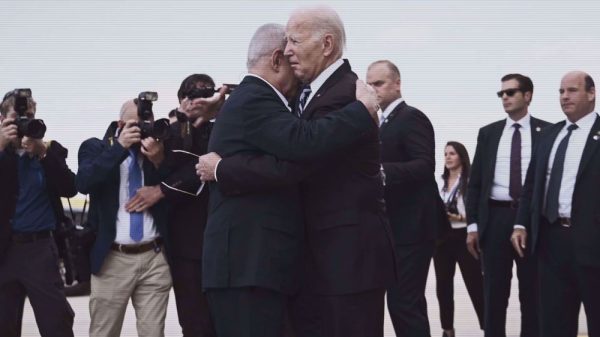
Biden’s disregard for truce speaks volumes of US heartless approach to Gaza genocide: CAIR
Press TV – December 25, 2023
The Council on American-Islamic Relations (CAIR) has slammed US President Joe Biden’s administration for “actively supporting” Israel’s ongoing “genocide and ethnic cleansing” in the Gaza Strip and indifference to the genocide there.
In a statement on Sunday, CAIR national communications director of the US-based Muslim advocacy group said Biden’s actions will “stain” the US “international reputation.”
“The Biden administration’s callous indifference to – and active support for – the ongoing genocide and ethnic cleansing being carried out by [Israel] will stain our nation’s international reputation for generations to come,” Ibrahim Hooper said.
“The fact that President Biden admits that he did not even ask for a ceasefire in a recent conversation with [Israeli prime minister Benjamin] Netanyahu speaks volumes about the administration’s heartless and immoral approach to the genocide in Gaza,” he added.
On Saturday, Biden told reporters that his conversation with Netanyahu over the war on Gaza was a “long talk,” but he did not ask for a ceasefire in that call.
“Israel has now killed probably more than one in every 100 people in Gaza. That shocking figure alone should be all the evidence that is needed to finally acknowledge the truth of the ‘genocide’ label,” Hooper said.
The statement came as Israel’s deadly air raid on the al-Maghazi refugee camp in central Gaza killed at least 70 people, including pregnant women and children on Monday.
An Al Jazeera reporter in Gaza interviewed eyewitnesses who said Israeli forces killed pregnant women “without mercy.”
“The women were reportedly raising white flags as they were attempting to reach the Al-Awda Hospital when they were shot by Israeli forces,” the reporter said.
On Saturday, CAIR called on Americans of all backgrounds to demand that the Biden administration act to “end the slaughter, starvation and ethnic cleansing.”
The call came after several reports revealed that Israeli forces massacred 76 members of an extended family in Gaza, Israeli-imposed famine is widespread, and that bodies are decaying in the streets and are being dug up by Israeli bulldozers.
The group said more than 110,000 Americans have used CAIR’s action alert to contact their members of Congress and call for an end to the violence and occupation.
Previously, CAIR called on the Biden administration to stop sending what it called “genocide bombs” to Israel after the New York Times revealed that US-supplied 2,000-pound bombs were “routinely” used against Palestinian civilians in so-called “safe areas” in Gaza.
CAIR also said the Biden administration must stop “justifying war crimes” Israel has perpetrated against hospitals after an investigation by the Washington Post debunked claims that Gaza’s Al Shifa Hospital had to be attacked because it was a military command center.
Israel waged the war on Gaza on October 7 after the Palestinian resistance movement Hamas carried out Operation Al-Aqsa Storm against the occupying entity in response to the Israeli regime’s decades-long campaign of death and destruction against Palestinians.
The Israeli attacks have so far killed at least 20,400 Palestinians, including 6,200 women and 8,200 children, and wounded 53,688 others in the besieged territory, where the Zionists cut off fuel, electricity, food, and water to Gaza’s 2.3 million population.
Despite its shortcomings, UNSC vote will tie Israel’s hands
By MK Bhadrakumar | The Cradle | December 25, 2023
The adoption of a resolution by the United Nations Security Council (UNSC) on Friday with focus on a pause in the fighting in Gaza to allow for the delivery of more humanitarian aid can be seen as a turning point in the tortuous journey toward imposing a sustainable ceasefire.
But a caveat must be added that the ultimate litmus test lies in the implementation of the UNSC resolution, as the past history of such resolutions on Palestine does not give cause for optimism.
In fact, Israel’s defiance was in full view already. As the Security Council passed the resolution, Israeli forces pushed ahead with their offensive into Gaza on Friday and ordered residents in Al Bureij — an area in central Gaza where Israel had not previously focused its offensive — to evacuate. The Israeli military’s chief spokesman Rear Adm. Daniel Hagari said on Thursday: “Our forces continue to intensify ground operations in northern and southern Gaza.”
UN Secretary General António Guterres was spot on when he told reporters after the resolution was passed that “a humanitarian ceasefire is the only way to begin to meet the desperate needs of people in Gaza and end their ongoing nightmare.”
The resolution itself is the outcome of week-long intense negotiations between the United States and the Arab countries that sponsored it — the UAE and Egypt, in particular — to settle for the lowest denominator, which meant accepting a Washington-friendly text that enabled the Biden administration to evade responsibility for another veto, for the third time since 7 October.
Unsurprisingly, the US negotiators brazenly resorted to pressure tactics by drawing on their usual diplomatic tool box — blackmail, arm-twisting and ultimatums — to water down the text to the extent that important provisions relating to a ceasefire and a UN mechanism to facilitate the delivery of humanitarian aid to Gaza and ensure its monitoring were abandoned.
And, yet, the US abstained in the vote at the end of the day, registering its reservations — principally, that the resolution was silent on the attack by Hamas on 7 October.
The unkindest cut of all is that the resolution accommodated the US diktat to replace the language describing an immediate cessation of violence with an ambiguous phrase calling on the parties to “create conditions for a cessation of hostilities.” The wording meets the Israeli requirement to have a free hand to continue with its barbaric military operations.
This anomaly, coupled with the absence of any reference to the condemnation of indiscriminate attacks by the Israeli military against civilians almost delivers the wrong signal that the Security Council is effectively becoming an accomplice to the destruction of Gaza — a misnomer that agitated Russia so much that it proposed a last-minute amendment to replace the phraseology in the resolution: “to create the conditions for a sustainable cessation of hostilities” with the unambiguous call “for urgent steps toward a sustainable cessation of hostilities.”
Russia’s demand for an immediate ceasefire was in line with a resolution overwhelmingly passed by the UN General Assembly recently, but the Americans would have nothing of that sort. The unfortunate part is that the Arab sponsors of the resolution caved in to US blackmail to veto the resolution. What transpired between the protagonists behind the scenes is not known.
The paradox is that, in reality, the Americans themselves were desperately keen to avoid casting a veto — the third in as many months — that would have made a mockery of President Joe Biden’s bombastic remark in his September speech at the UN last year that the permanent members of the Security Council should cast vetoes only under “rare, extraordinary situations to ensure the council remains credible and effective.”
All indications are that the US is acutely conscious of finding itself “diplomatically isolated and in a defensive crouch,” as the New York Times put it in an acerbic commentary on the Biden administration’s plight as “an increasingly lonely protector of Israel … (that) puts it at odds with even staunch allies such as France, Canada, Australia, and Japan.”
The commentary says that what rankles most is that first, when the US seems to have green-lit a massive Israeli military response to 7 October “without guardrails,” it:
“painfully confirmed to many in the (global) south this sense that there was a double standard” — and second, even more, “the Russian strategy works, because beyond the United Nations what everyone sees is Russia standing up for international law — and the US standing against it.”
The crux of the matter is that Israel’s Gaza operation is running into a Cornelian dilemma (dilemme cornélien) where sooner rather than later, it is obliged to choose one option from a range of options, all of which reveals a detrimental effect on itself.
Hamas’ top leaders have evaded capture so far, and Gaza’s armed resistance groups have continued to fire rockets into Israel, including two barrages that reached Tel Aviv and its environs last week.
According to another New York Times report,“ political commentators and some military experts have been lowering expectations for a quick and decisive Israeli victory.
“Nobody should imagine that there will be a situation where we put a flag on top of a hill and say: OK, we won, and now Gaza will be peaceful and safe. It will not happen,” said Gabi Siboni, a colonel in the reserves and a fellow at the conservative-leaning Jerusalem Institute for Strategy and Security. “The reality is that we are going to be fighting in Gaza for years to come.”
But is that sustainable — even if Israel controls the US Congress? Conceivably, Israel’s main goal in Gaza was to ethnically cleanse the Strip and drive the Palestinian population to Egypt and Jordan by killing and starving them and making Gaza unlivable.
The real significance of the UNSC resolution, therefore, lies in that such an Israeli game plan will not fly. By not vetoing the resolution, the US may also have signaled that it will not allow the ethnic cleansing. There seems to be an understanding on this score between the US and the Arab protagonists at the political level — Egypt, in particular.
On the other hand, can Israel really destroy Hamas while the Palestinian population remains in Gaza? No, it will not be possible. Now, there is reason to believe that Hamas is inflicting significant damage to the Israeli military. The retreat of the Golani Brigade from the Gaza operation also points in that direction.
The bottom line is that the Israeli operation in Gaza will have to take a different form during the next several weeks — one that is anchored on surgical strikes rather than continuing with the extended ground operation and open-ended Israeli occupation. With warts and all, the Security Council resolution that was passed on Friday paves the way for such a transition.
Houthis Say US Warship ‘Firing Hysterically’ Nearly Hit Tanker in Red Sea
By Ilya Tsukanov – Sputnik – 24.12.2023
A Houthi spokesman has sought to set the record straight regarding the US’s claim that the Yemeni militia had targeted a Gabonese oil tanker.
“An American warship fired hysterically during a reconnaissance mission by Yemeni forces in the Red Sea,” Houthi spokesman Mohammed Abdul-Salam said in a statement Sunday. One of the missiles nearly hit a Gabon-flagged oil tanker traveling from Russia, the spokesman added.
“The Red Sea will be a burning arena if the US and its allies continue their bullying. Countries bordering the Red Sea must realize the reality of the dangers that threaten their national security,” Abdul-Salam warned. “The threat to international maritime navigation” is the result of “the militarization of the Red Sea by America and its partners, who have come to the region without any legitimate reason other than providing security services for enemy Israeli ships,” the spokesman said.
The Houthi statement contradicts an after action report put out by United States Central Command early Sunday morning alleging that the Houthis had launched two anti-ship missiles into the Red Sea’s shipping lanes on December 23.
“Between 3 and 8 pm (Sanaa time), the USS Laboon (DDG 58) was patrolling in the Southern Red Sea as part of Operation Prosperity Guardian and shot down four unmanned aerial drones originating from Houthi-controlled areas in Yemen that were inbound to the USS Laboon. There were no injuries or damage in this incident. At approximately 8 pm (Sanaa time) US Naval Forces Central Command received reports from two ships in the Southern Red Sea that they were under attack. The M/V Blaamanen, a Norwegian-flagged, owned and operated chemical/oil tanker, reported a near miss of a Houthi one-way drone attack drone with no injuries or damage reported. A second vessel, the M/V Saibaba, a Gabon-owned, Indian-flagged crude oil tanker, reported that it was hit by a one-way attack drone with no injuries reported. The USS Laboon responded to the distress calls from these attacks,” CENTCOM said.
According to MarineTraffic, the Saibaba sails under the flag of Gabon, not India.
The Houthis have said that they will intentionally target only commercial cargoes that are Israeli-owned or linked, or traveling to or from Israel.
The Yemeni militia began their month-long campaign of hijackings, missile and drone attacks in the Red Sea on November 19 with the seizure of the Galaxy Leader, an Israeli billionaire-owned ro-ro car carrier.
On December 18, the United States announced the formation of a maritime coalition to clamp down on Houthi attacks. Amid reports that US operations may include strikes inside Yemen, the Houthis have threatened to turn the Red Sea into the coalition’s “graveyard.”
The nascent US-led coalition has reportedly run into some difficulties, with major American allies France, Italy and Spain apparently declining to join a Red Sea mission under US command. Other allies, including Norway, the Netherlands and Denmark, have limited their participation to a handful of seamen.
Israeli deaths mount in Gaza as Tel Aviv plans ground withdrawal
The Cradle | December 24, 2023
At least ten Israeli soldiers were killed in intense battles across the Gaza Strip on 23 December, bringing the official death toll for this weekend to 14 soldiers.
Five soldiers in the Combat Engineering Corps and an army medic were killed by an anti-tank guided missile in southern Gaza, the military said. Four others were killed in explosive attacks carried out by the Palestinian resistance.
“Ten soldiers were killed on Saturday,” the Times of Israel reported on 24 December.
The army announced the deaths of four other soldiers on Friday, 22 December.
Since the launch of a full-scale assault into Gaza, the Israeli army has admitted to the deaths of 153 soldiers. However, hospital records indicate that Tel Aviv is significantly underreporting casualties.
Israel’s Channel 13 reported three days ago that the army’s elite Golani Brigade withdrew from Gaza following 60 days of fighting to “reorganize its ranks” after facing unprecedented losses.
According to retired Israeli general Moshe Kaplinsky, the Golani Brigade lost 88 soldiers since 7 October. Seventy-two were killed on the first day of the war – amounting to a quarter of the entire brigade, Kaplinsky said.
As Israeli casualties continue to mount, the Israeli Broadcasting Authority revealed this week plans within the government to switch to a new phase of the war “in the coming weeks,” bringing an end to ground operations and shifting the focus to continued heavy airstrikes on the Gaza Strip.
Local reports say the Israeli army has already begun withdrawing from specific areas.
Israel bombs Gaza with one-tonne bombs where civilians were sent to take refuge
MEMO | December 23, 2023
Almost all Saudi nationals oppose Arab ties with Israel, poll finds
Press TV – December 23, 2023
A new survey has found that 96 percent of Saudi Arabian citizens want Arab countries to cut all types of ties with Israel in response to the occupying regime’s war on Gaza.
Conducted by the Washington Institute for Near East Policy, a pro-Israel think tank based in Washington, the survey saw almost every Saudi agreeing with the proposal “Arab countries should immediately break all diplomatic, political, economic, and any other contacts with Israel, in protest against its military action in Gaza.”
The study further found that a big majority of the Saudis (91%) believe that “despite the destruction and loss of life, this war in Gaza is a win for the Palestinians, Arabs, and Muslims.”
The majority of respondents in Jordan, Lebanon and Egypt held favorable views towards the Palestinian resistance movement Hamas, but saw a 30-point growth in its popularity in the case of Saudi Arabians, compared to August.
The survey said 87% agree with the suggestion that “recent events show that Israel is so weak and internally divided that it can be defeated someday.”
Conducted to measure the change in shift of attitudes of Saudi nationals after the bloody war broke out, the survey was conducted from November 14 to December 6.
The results of the study are a clear manifestation of the difficulties the United States is going to face as it advocates for intertwined Arab-Israeli cooperation.
Prior to the war, the US was actively working towards achieving an agreement to normalize Saudi Arabia-Israel relations.
Earlier in September, during an interview with Fox News, Saudi Crown Prince Mohammed bin Salman stated that the two countries were getting closer to such an agreement “every day.”
After the war broke out, Riyadh put a pause on normalization talks and has made its diplomatic outreach public as one that seeks “to stop the ongoing escalation.”
The Israeli genocide in Gaza has significantly suppressed support for allowing contact with Israelis.
The US and Israel face a powerful new enemy in the Middle East conflict
By Robert Inlakesh | RT | December 23, 2023
In yet another case of blowback, reflecting the failure of Western military interventionism in West Asia, Yemen’s Ansarallah (Houthi) movement has inserted itself as an active participant in the ongoing war between Israel and Gaza. First launching batches of loitering munitions, ballistic and cruise missiles towards Israel, Ansarallah then moved on to prevent the passage of Israeli-owned or operated ships through the Red Sea, before announcing a complete closure of the shipping route for any vessels destined to dock at the port of Eilat.
After the Houthis seized a number of ships, while attacking others with drone strikes, activity at Eilat has dropped some 85%. International and Israeli shipping companies have opted to take the long route, which in some cases takes an additional 12 days, to reach Israel with their cargo, a costly diversion to say the least. In opposition to this, US Defense Secretary Lloyd Austin traveled to the region and announced the formation of a multinational naval task force to be deployed in the Red Sea. Despite talk of the coalition including Saudi Arabia, Egypt, and even the United Arab Emirates, the only Arab nation that joined was Bahrain.
So, without a United Nations Security Council (UNSC) resolution to back them up, usually required to make the militarisation of a territory legal under international law, the US has launched yet another foreign intervention. This one is significant because it failed to convince any major regional players to join, demonstrating the decline in American influence, but has also elevated the status of Yemen’s Ansarallah.
Under former US President Barack Obama, Washington backed the Saudi-led coalition’s intervention in Yemen back in 2015. Since then, some 377,000 people have died, largely as a result of the deadly blockade imposed on the majority of the country’s population, while some 15,000 civilians have died due to direct conflict. The objective of the Saudi-led intervention, which received the backing of the US and UK, was to remove Ansarallah from power in the nation’s capital, Sanaa. Although the group does not enjoy international recognition as Yemen’s governing force, it rules over more than 80% of the population, has the support of two-thirds of the nation’s armed forces, and operates a government out of Sanaa.
Ansarallah came to power following a popular revolution against then-Yemeni President Abdrabbuh Mansour Hadi in 2014. Months later, Hadi resigned and fled the country after Ansarallah militants had decided to take over by force. In the midst of a seven-year war, the political, social and armed movement that is often referred to as “the Houthi rebels” operates as the de facto government of Yemen, but is yet to receive recognition at the UN, which instead recognises the ‘Presidential Leadership Council’ that was created in Riyadh, Saudi Arabia, in 2022.
The context above is crucial for understanding the capabilities of Yemen’s Ansarallah, which was downplayed as a band of “Iran-backed rebels” in Western corporate media for years. While the governments of the collective West have tried to pretend that the Yemeni group is insignificant, Washington’s recent decision to form a multi-national naval coalition to confront the Houthis is an admission that they are a major regional actor. In fact, Ansarallah is the only Arab movement that controls state assets and a standing army that is participating in the ongoing war with Israel.
The reality that the US is now confronting is something that both Saudi Arabia and the UAE came to realize early last year. Following two separate drone and missile attacks on Abu Dhabi and Dubai in January of 2022, it became apparent that the West’s current level of support could not provide sufficient security for the UAE. Up until a nationwide ceasefire was brokered in April 2022, Ansarallah had also demonstrated its developed missile and drone capabilities, striking valuable economic targets inside Saudi Arabia too.
Despite receiving a lot less attention than it deserved, Ansarallah forces strategically timed their second attack on the UAE to coincide with the arrival of Israeli President Isaac Herzog in the country. This was a clear message to the Emirati and Saudi leaderships that Western support will not provide sufficient security. It’s likely because of this threat from Yemen that Riyadh sought a security pact with the US, in order to make a normalization agreement with Israel possible. Such a security pact would have stipulated that an attack on one is an attack on all, hence dragging the Americans into a direct war against Yemen in the event that the conflict was to flare up again.
The US attempted to help topple the current government in Sanaa, but ended up creating a battle-hardened group that has domestically developed capabilities well beyond those it possessed at the start of the conflict in 2015. In his first foreign policy address after taking office in 2021, US President Joe Biden pledged to end the war in Yemen. However, instead of pursuing a Yemen-Saudi deal, the White House abandoned its pledge and sought to broker a Saudi-Israeli deal instead. That fatal decision is coming back to bite policymakers in Washington.
Backing the Israelis to the hilt in their war on Gaza, spelling out that there are no red lines as to how far the government of Benjamin Netanyahu can go, the US has allowed a Palestine-Israel war to expand into a broader regional Arab-Israeli conflict. The threat of escalation between the Israeli army and Lebanese Hezbollah is growing by the day, while Ansarallah leader Abdul-Malik al-Houthi has stated that his forces “will not stand idly by if the Americans have a tendency to escalate and commit foolishness by targeting our country.”
By every metric, US diplomatic stock has dropped internationally as a result of its handling of Israel’s war on Gaza. It has failed to convince any major regional actors in West Asia to back its escalatory agenda, all of which are standing on the same side as Russia and China in calling for a ceasefire. The world sees the hypocrisy of Washington. For the sake of comparison, the death toll in Gaza today is said to have exceeded 23,000, the majority being women and children. Israel has killed this many people in just over two months, while in the first two years of the ISIS/Daesh insurgency in Iraq, the UN estimated that the terrorist group killed some 18,800 civilians. The total number of civilians killed by ISIS in Syria is set at just over 5,000.
The level of human suffering being inflicted in Gaza is without precedent, breaking records in modern history for the tonnage of explosives dropped on such a small territory, in addition to the highest number of journalists, medical workers, and children killed in a single conflict. In reaction, the US government has repeatedly blocked ceasefire resolutions at the UNSC, gives Israel unlimited support unconditionally, and now threatens to drag a coalition of Western nations into a war on Yemen. The solution here is very simple: Ansarallah has said the blockade on ships to Israel will end when the war on Gaza ends. Washington has the ability to stop the war, but refuses to do so, while its threats against Yemen will not work to achieve any result beyond further escalation.
Robert Inlakesh is a political analyst, journalist and documentary filmmaker currently based in London, UK. He has reported from and lived in the Palestinian territories and currently works with Quds News. Director of ‘Steal of the Century: Trump’s Palestine-Israel Catastrophe’.
Reports: Hamas seeks release of Marwan Barghouti in any hostage deal
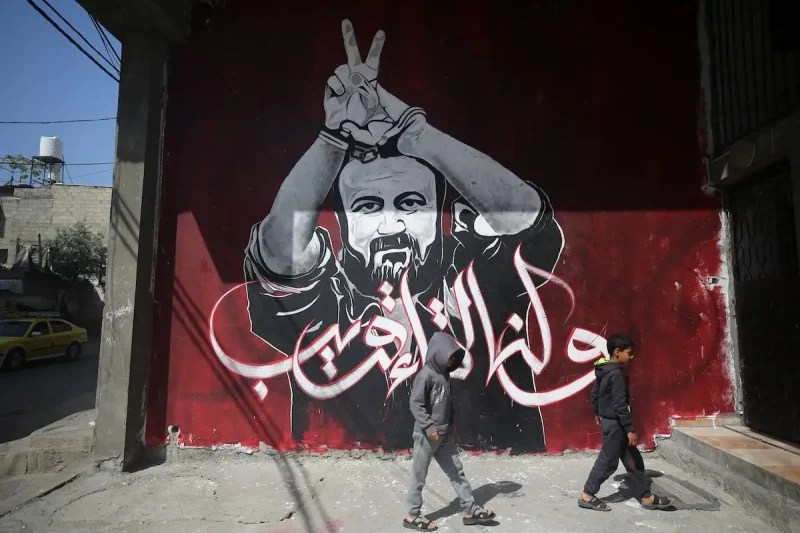
A mural shows jailed Fatah leader Marwan Barghouti, in Jabalia refugee camp in the northern Gaza Strip on April 16, 2023. [Majdi Fathi/NurPhoto]
MEMO | December 22, 2023
UN Security Council passes resolution demanding more Gaza aid deliveries
Press TV – December 22, 2023
The United Nations Security Council has finally passed a resolution on the ongoing Israeli onslaught against Gaza, demanding increased aid deliveries to the besieged region but stopping short of calling for an immediate halt to the genocide.
The watered-down resolution, ratified on Friday, demanded all sides in the conflict allow the “safe and unhindered delivery of humanitarian assistance at scale.”
It also called for the creation of “conditions for a sustainable cessation of hostilities” but it did not call for an immediate end to fighting.
The vote in the 15-member council was 13-0 with the United States and Russia abstaining.
The vote followed the US veto of a Russian amendment that would have restored that call for a suspension of hostilities. That vote was 10 members in favor, the US against and four abstentions.
The text, sponsored by the United Arab Emirates, was passed following days-long negotiations over its wording, during which it was watered down at the US request.
Washington had earlier vetoed two UNSC resolutions on the conflict, drawing widespread condemnations over the body’s lack of action since the start of the onslaught.
Russia says resolution ‘toothless’
Russian ambassador to the UN Vasily Nebenzya hit out at the United States, saying “they have resorted to their favorite tactic… of twisting of arms”, calling the text “toothless.”
The UAE’s ambassador to the UN Lana Zaki Nusseibeh said “it responds with action to the dire humanitarian situation.”
“We know this is not a perfect text… We will never tire of calling for a humanitarian cease-fire,” she said.
The resolution demands all sides “allow and facilitate the use of all… routes to and throughout the entire Gaza Strip, including border crossings… for the provision of humanitarian assistance.”
It also requests the appointment of a UN humanitarian coordinator to oversee and verify third-country aid to Gaza.
An earlier text had said that the aid mechanism to accelerate the delivery of relief would be “exclusively” under UN control.
It now states it would be managed in consultation with “all relevant parties” — meaning Israel would retain operational oversight of aid deliveries.
Israel has pounded the Gaza Strip since October 7, killing at least 20,057 Palestinians, mostly women and children, and injuring 53,320 others, according to health authorities in the region.
The Israeli onslaught has left Gaza in ruins with half of the coastal territory’s housing stock damaged or destroyed, and nearly 2 million people displaced within the densely-populated territory amid shortages of food and clean water.
US ‘Builds Trap for Itself’ in Red Sea
By Scott Ritter – Sputnik – 22.12.2023
On December 18, following a tour of the Middle East with stops in Kuwait, Bahrain, Qatar and Israel, US Defense Secretary Lloyd Austin announced the establishment of Operation Prosperity Guardian, under the umbrella of Combined Task Force (CTF) 153, which focuses on security in the Red Sea, to protect maritime shipping.
Back on November 19, Yemen’s Houthi rebels, operating in solidarity with the Palestinians of Gaza, took over an Israeli-linked cargo ship, the Galaxy Leader. The Houthis announced that they would block all shipping transiting the Red Sea toward Israel—in effect establishing a blockade of Israel—until Israel allowed humanitarian aid into Gaza.
The Houthis have subsequently attacked numerous vessels passing through the Bab al-Mandeb Strait, a narrow passageway leading into the Red Sea and further on to the Suez Canal, threatening global trade as major oil and shipping giants, including BP, MSC, Evergreen, OOCL, and Maersk, suspended operations through the Red Sea. The damage to the Israeli economy done by the Houthi blockage is estimated to run into the billions of dollars, and Israel’s Prime Minister Benjamin Netanyahu has threatened to use military force against the Houthis if the United States does not intervene on its behalf.
CTF 153, which has operated under both US and Egyptian command, is tasked with international maritime security and capacity-building efforts in the Red Sea, Bab al-Mandeb, and Gulf of Aden. Its compliment of four ships—three US destroyers (the USS Carney, USS Mason, and USS Thomas Hudner) and the UK Royal Navy guided-missile destroyer HMS Diamond) have all been involved in intercepting Houthi missiles and drones fired against either Israel or merchant shipping operating in the Red Sea.
Austin also ordered Carrier Strike Group 2, consisting of aircraft carrier the USS Dwight D. Eisenhower and three escorts (a cruiser and two destroyers), to join up with CTF 153 as part of Operation Prosperity Guardian. Ohio-class submarine the USS Florida, equipped with 154 Tomahawk cruise missiles, is also operating in the region.
Austin announced that the US and UK would be joined by Bahrain, Canada, France, Italy, the Netherlands, Norway, Seychelles, and Spain as part of Operation Prosperity Guardian. Notable absentees include Arab nations like Egypt and Saudi Arabia. Australia was asked to provide a warship, but offered [13] personnel only.
French Navy guided-missile frigate the FS Languedoc is already operating in the Red Sea and, like its US and UK counterparts, has been involved in the shooting down of Houthi drones and missiles. However, France has stated that the Languedoc will operate under French command, complicating its relationship with CTF 153.
Italy’s Defense Ministry has announced that it will deploy naval frigate the Virginio Fasanto the Red Sea. Its command relationship with CTF 153 remains unclear as of the present time.
The military problem facing CTF 153 is threefold. First, there is a need to establish a barrier defense against the Houthi missile and drone attacks. This will require that the guided missile destroyers and frigates establish a picket line along the eastern channel of the Bab al-Mandeb Straight which will screen shipping from any Houthi attack. Second, CTF 153 will need to engage in aggressive patrolling designed to deter and repel any Houthi efforts to repeat their hijacking of the Galaxy Leader. Lastly, CTF 153 will need to provide mine clearance capabilities to deal with any sea mines that the Houthis may place in the narrow waters of the Bab al-Mandeb.
These missions alone will be taxing, and difficult to accomplish. As things stand, while the CTF 153 ships have shot down dozens of Houthi drones and missiles, scores have gotten through, striking targets in Israel and hitting shipping in the Red Sea. Simply put, CTF 153 doesn’t have enough ships to adequately screen either Israel or maritime shipping from Houthi attack. And given the lack of mine warfare ships in the CTF 153 organization, any deployment of sea mines by the Houthis will effectively close the region from commercial shipping, and threaten military deployments in the area, until demining capability can be deployed.
The only way that Operation Prosperity Guardian could possibly keep the Bab al-Mandeb Straight open is to launch strikes against the Houthi capability of launching missiles and drones in hopes of interdicting them before they can be used. Here the plot thickens—the Houthis have made it clear that if attacked, they will expand the conflict to include Saudi and UAE oil production, threatening global energy supplies. Moreover, targeting mobile missile and drone launchers is no simple task—Saudi Arabia, using US intelligence support to assist in targeting, was unable to prevent the Houthis from launching missiles and drones against Saudi targets during the entirety of its ongoing conflict with the Houthis. The US would likely run into similar problems.
In short, by initiating Operation Prosperity Guardian, the US appears to have built a trap for itself, where it is damned if it doesn’t attack the Houthi (since the Red Sea would remain blocked to all Israeli traffic), and damned if it does (since it wouldn’t be able to stop the Houthi attacks, and such action would likely expand the scope and scale of the conflict to the detriment of US interests.)
Keep in mind that all of this could have been solved with a single phone call from US President Joe Biden to Israeli Prime Minister Benjamin Netanyahu directing Israel to accept a ceasefire and allow humanitarian aid to be sent to the Palestinian residents of Gaza. Instead, the United States is destroying its moral standing in the world by openly facilitating the ongoing slaughter of Palestinian civilians at the hands of the Israel Defense Forces, while simultaneously undermining the credibility of US military deterrence by getting itself mired in a tar baby of its own making.
The deployment of the USS Dwight D. Eisenhower into the Sea of Aden comes on the heels of its brief foray into the Persian Gulf, where it was closely monitored by Iran. The US has also deployed a second carrier battlegroup, consisting of the USS Gerald R. Ford and its six escorts, in the eastern Mediterranean Sea. Meanwhile, the USS Carl Vinson and its five escorts operate just over the horizon, in the South China Sea.
Never in the history of the American Navy have so many carrier battlegroups been moved around the globe with so little impact.
The reality of modern warfare is that small nations and non-state actors such as the Houthis can be armed with modern military weaponry which negates the military impact of multibillion-dollar investments such as the carrier battlegroup. It costs the Houthis tens of thousands of dollars to fire its drones and missiles against Israel and maritime shipping; it costs the US Navy millions of dollars to shoot them down. Moreover, it costs the US navy hundreds of millions of dollars just to keep a carrier battle group deployed and operating, while the Houthis can credibly threaten to sink a carrier using weapons that cost hundreds of thousands of dollars.
The final score card regarding Operation Prosperity Guardian has yet to be written. But the reality is that it will most likely not succeed in its mission of preventing Houthi attacks against either Israel or maritime shipping. This failure goes far beyond the issue of security for the Red Sea. The United States has long maintained that it could guarantee that if Iran ever sought to close the strategic Straight of Hormuz, the US Navy would be able to reopen it in a very short period. Operation Prosperity Guardian puts a lie to that claim. The fact is, the world balance of power has changed dramatically, and legacy systems like the carrier battlegroup are no longer the dominant means of power projection they once were. The US has, in effect, put all its eggs in one basket through its over-reliance upon the carrier battlegroup when it comes to force projection.
The looming failure of Operation Prosperity Guardian exposes the impotence of the US when it comes to being able to accomplish its plans for regional dominance in the Persian Gulf, South Pacific, and Taiwan, and signals a new era where the appearance of an American fleet of the shores of a far way land no longer inspires fear and intimidation. For a nation like the United States, which has premised so much of its foreign and national security on the notion of strength-based deterrence, the revelation that its military power projection capabilities are more bark than bite undermines its credibility as an ally and partner in a world largely defined by conflicts created by, or on behalf of, the United States.
Featured Video

Dan Dicks with James Corbett on Solutions Watch
or go to
Aletho News Archives – Video-Images
From the Archives
MMR (Measles, Mumps and Rubella) – Vaccine Risk Statement
MMR Vaccine (Measles, Mumps, and Rubella) Is It Safer Than Measles, Mumps and Rubella?
Physicians for Informed Consent | December 2024
… It has not been proven that the MMR vaccine is safer than measles, mumps, and rubella. The vaccine package insert raises questions about safety testing for cancer, genetic mutations, and impaired fertility. Although VAERS tracks some adverse events, it is too inaccurate to measure against the risk of measles, mumps, and rubella. Clinical trials do not have the ability to detect less common adverse reactions, and epidemiological studies are limited by the effects of chance and possible confounders. Safety studies of the MMR vaccine are particularly lacking in statistical power. A review of more than 60 MMR vaccine studies conducted for the Cochrane Library states, “The design and reporting of safety outcomes in MMR vaccine studies, both pre- and post-marketing, are largely inadequate.”19 Because permanent sequelae (aftereffects) from measles, mumps, and rubella are so rare (especially in children with normal levels of vitamin A and infected after birth),6,15-17 the level of accuracy of the research studies available is insufficient to rule out the possibility that the MMR vaccine causes greater death or permanent disability than measles, mumps, and rubella. – Read full article
Blog Roll
 Aletho News
- The fallacy of US delusions about Iran’s economic collapse
- Hezbollah denies Syria cell link, warns of Israeli plan to sow discord
- The legacy of US sanctions, war, and occupation in Iraq
- Iraqi resistance group rejects disarmament, vows to maintain support for Lebanon
- Sheikh al-Asadi warns of Iraqi government compliance with US demands
- How to MAKE THE CONSPIRATORS PAY for their crimes! Dan Dicks with James Corbett on Solutions Watch
- There’s a drought in academia: A drought in honest research on the subject of drought and other weather extremes
- Department of War Awards $20.7 Billion Contract to Raytheon for Air-to-Air Missiles
- ‘Distance yourselves from Israel’: IRGC urges US population to question govt policies
- America’s Greenland deal has a radioactive backstory
- If Americans Knew
- As settlers ravage West Bank, Israeli forces kill 10 in Gaza – Daily Update
- New Report: “Scholasticide and Genocide in Gaza: Assessment, Testimonies and Legal Analysis”
- Ex-Biden officials are desperate for a Gaza scapegoat
- Israeli “settlers” Invade Al-Aqsa; Pour Boiling Water on 75-Year-Old
- Israel Has Kidnapped Another American Teenager
- US arms sales to Israel worth $21.6 billion in 20 months
- Three Palestinians Killed in Israeli Attacks on Gaza
- Revealed: German “Anti-Semitism Expert” Driving Crackdown on Palestine Solidarity is Former Israeli Spy
- Egypt’s Warning to Israel Before Oct 7
- Israel’s siege signals another cruel winter for 1.8 million Gazans – Daily Update
- No Tricks Zone
- Two More Paleo Reconstructions Affirm Meters-Higher Sea Levels Across Ireland, Brazil 7000-6000 Years Ago
- New Study: Earth And Venus Surface Warmth Largely Explained By Convection And Lapse Rate, Not CO2 Or Radiation
- 2025 Nature Paper Claiming Worsening Global Drought Gets RETRACTED …Heavily Flawed
- New Study: ‘Global Drought Shows No Detectable Recent Acceleration Under Climate Warming’
- Economic Masterminds: German Socialists Suggest Taxing Productivity Gains Stemming From Using AI
- The South China Sea Has Not Been Cooperating With The Climate Change Narrative
- Energy Crisis: Germany Enters Heating Season With Historically Low Gas Reserve Fill Levels
- New Study: The Antarctic Ice Sheet Gained Mass From 2020-2024 Due To Staggering Snow And Ice Accumulation
- Study: Ocean Heating Rates From Thousands Of Years Ago ‘Dwarf’ Modern Ocean Heating Rates
- Climate Extremists Target, Attack Large-Scale Power Grid Infrastructure In Germany!

