How (not) to Relativize the Holocaust

By CJ Hopkins | Consent Factory | November 1, 2023
OK, I owe everyone an apology. I get it now. I’ve seen the light. I finally understand the true nature of my thoughtcrimes, and I take responsibility for them, and I stand ready to pay my debt to society.
I have to thank the State of Israel for bringing about this sudden epiphany. How it happened was, Gilad Erdan, Israel’s Ambassador to the United Nations, and his delegation wore yellow Stars of David, i.e., the ones the Nazis forced the Jews to wear in public, at a Security Council session to make a statement. According to The Jerusalem Post, Ambassador Erdan then made remarks comparing the October 7 Hamas attack on Israel to the Holocaust.
“When Jewish babies were burned in Auschwitz, the world was silent, and today Jewish babies were burned in Be’eri and the towns of the South by the Nazi Hamas – and the world is silent again. I will make you remember the shame of your silence every time you look at me,” Arden said. “I will wear the yellow patch until the Nazi Hamas is eliminated and until the Security Council stops being silent and condemns the October 7 massacre. Some of you have learned nothing in the last eighty years! Some of you have forgotten why the United Nations was founded. So I will remind you. From today on, every time you look at me you will remember. When my grandfather and his children were sent to Auschwitz, the world was silent. When his wife and their seven children were sent to the gas chambers, the world was silent. When their bodies were burned alongside millions of other Jewish children, the world was silent,” Erdan said, comparing the silence of the UN about the Hamas massacre on October 7 to the silence of the international community regarding the horrors of the Holocaust.
Now, I’ll be honest, the first thought that went through my head when I read that Jerusalem Post piece was, “Great! Here’s an Israeli diplomat doing exactly what I’m being prosecuted for doing, and no one’s going to prosecute him! All I need to do is bring this to the attention of the Berlin District Court, and they’ll dismiss my case!”
But then I had my epiphany.
Basically, my epiphany was, I realized the two things are completely different, i.e., Israel’s use of a Nazi symbol to make a political statement and me doing the same thing … well, almost the same thing. I’ve never actually relativized or minimized or trivialized or compared anything to the Holocaust, as Gilad Erdan did at the UN. Actually, I’ve advised against doing that. But that doesn’t let me off the hook for my thoughtcrimes! No, I did what I did, and I will have to answer for it in January at the District Court of Berlin!
For readers unfamiliar with my case, what I did was, I tweeted these two Tweets featuring the the cover art of my book, The Rise of the New Normal Reich, which is banned in Germany, and referring to the medical-looking masks that everyone was forced to wear during 2020-2022 as “ideological conformity symbols.”

You can read the background on my case here, or here, or here, or listen to me talk about it here, or here, or here, so I won’t go on about it here.
The important thing is, I understand now how totally wrong (and criminal) it was to do that, and how what I did is completely different from what UN Ambassador Erdan just did!
For starters, it wasn’t just those two Tweets. No, on Twitter, Facebook, and in my essays, and interviews, and, basically, every chance I got, for two years, I compared the rise of the “New Normal” to the rise of Nazi Germany in the 1930s. I noted the similarities between these two forms of totalitarianism: the declaration of a “state of emergency” as a pretext to justify the cancellation of constitutional rights and rule by decree; the propaganda; the censorship; the criminalization of dissent; the mandatory displays of ideological conformity; the invasion of bodily autonomy; the segregation, demonization, and persecution of a scapegoat underclass; and so on … all the classic hallmarks of totalitarian systems.
I understand now how wrong (and criminal) that was.
Watching the Israelis whip out their yellow Stars of David at the Security Council clarified for me when it is and isn’t appropriate to compare things to the Nazis.
Check me, but I think I’ve got it straight now.
When governments and non-governmental entities roll out a “New Normal” on account of a completely fictional “apocalyptic pandemic,” lock people down in their homes for months, terrorize them with official propaganda, force everybody to wear medical-looking masks to display their conformity to the new official “reality” and create the appearance of a deadly plague, outlaw political protests, censor dissent, segregate and demonize anyone refusing to conform to the new official ideology, and otherwise transform societies into pathologized de facto police states, those governments and global non-governmental entities are absolutely nothing like the Nazis.
On the other hand, Hamas, the Islamist political and military organization that governs the Gaza Strip, is definitely exactly like the Nazis … except that there are only around 25,000 of them, and their “Reich” is a tiny stretch of land that has been totally blockaded by Israel for years, and is completely surrounded by an “Israel-Gaza barrier,” and has been under Israeli military occupation since 1967. But, otherwise, Hamas is exactly like the Nazis!
See, the thing I didn’t quite understand when I tweeted my thoughtcrimes in 2022 was that being “exactly like the Nazis” has nothing to do with the actual history of Nazi Germany or totalitarianism per se. I was operating under the assumption that it did. That’s no excuse. I should have known better. Obviously, no one should ever be allowed to compare the rise of Nazism in Germany to any other totalitarian system or movement, no matter how blatantly similar it may be. In fact, the history of the rise of Nazism in Germany is irrelevant to, well, basically everything, unless your discussion is strictly limited to the Holocaust, or if you’re relativizing the Holocaust in defense of Israel’s right to defend itself … in which case, sure, break out those yellow stars and go nuts with the Holocaust comparisons.
Seriously, check my reasoning on this, because I don’t want to get it wrong again and end up facing yet another prosecution. Based on my new post-epiphany understanding, questioning the details of the official account of the October 7 attack is “Holocaust denial.” Hundreds of thousands of people peacefully demonstrating in support of Palestinians is a “hate march.” “Hamas Holocaust denial is dragging us into a new Dark Age.” The October 7 massacre was “barbarism as consequential as the Holocaust,” or at least as barbaric as the Babyn Yar massacre!
How am I doing? Am I good so far? I haven’t relativized the Holocaust, have I?
OK, one more test, just to make sure I’ve got my mind right around this stuff. If I, or anyone, were to compare what the State of Israel is doing to the Palestinians in Gaza to, I don’t know, let’s say, just hypothetically, the liquidation of the Warsaw ghetto, that would be completely inappropriate, and anti-Semitic, and a hate crime, right? I mean, the IDF isn’t liquidating the strip. They’re defending Israel against Hamas, and are doing their best to protect civilians as they bomb whole neighborhoods into heaps of rubble, wiping out thousands of men, women, and children, entire extended families, who are trapped inside the “Israel-Gaza barrier,” and have nowhere to run or hide from the slaughter.
If anyone were to make that comparison, that would definitely be relativizing the Holocaust, right? That would be like calling for “the extermination of the Jews,” or literally dressing up like Hitler and walking around barking Nazi slogans in public. In fact, anyone comparing the Israeli-occupied Gaza Strip to the Warsaw Ghetto, or to any other enclave of any other Nazi-occupied territory, is relativizing, minimizing, and trivializing the Holocaust, and should be fired from their job, blacklisted, and publicly condemned as “a Hamas-loving anti-Semite.”
Help me out. Am I getting the hang of this?
I hope so. All I can do at this point is apologize for leading people astray with all that stuff I wrote about “The New Normal Reich” and “pathologized totalitarianism” during 2020-2022. That, and try to make amends by humiliating myself on social media …

… which seems to be going pretty well so far.
Anyway, I am terribly sorry. No more “Holocaust relativizing” for me! I have seen how it is wrong, and terribly wrong, to compare anything to Nazi Germany, ever. I have learned my lesson. I’m cured! Praise god!
UNRWA chief says 70% of Gaza victims are children, women
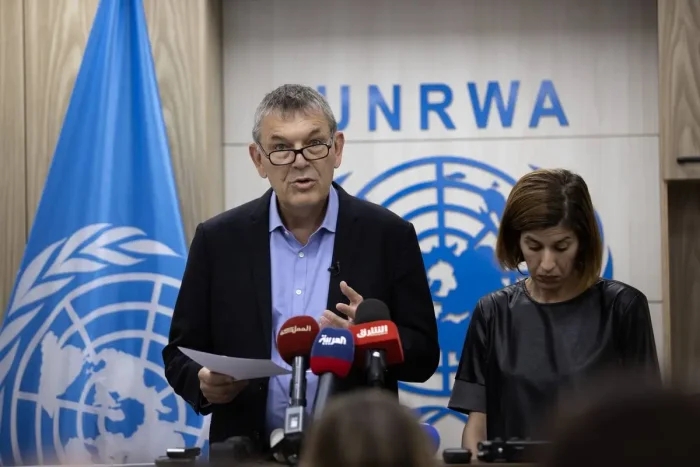
Philippe Lazzarini, Commissioner-General of the United Nations Relief and Works Agency for Palestine Refugees in the Near East (UNRWA) holds press conference in Jerusalem on October 27, 2023
MEMO | November 1, 2023
Commissioner-General of the United Nations Relief and Works Organisation for Palestine Refugees (UNRWA), Philippe Lazzarini, said 70 per cent of the Palestinian martyrs who have been killed by the ongoing Israeli bombardment of the Gaza Strip since 7 October are children and women, warning that there is no safe place in Gaza.
He pointed out that churches, mosques, hospitals and civilian facilities housing displaced people have been targeted, describing the Israeli attacks as collective punishment for Palestinians living under siege.
For her part, Executive Director of the United Nations Children’s Fund (UNICEF), Catherine Russell, explained that the Israeli aggression resulted in the killing of more than 3,400 children and the injury of at least 6,300.
She added that this toll indicates that 420 children were killed or injured every day, stressing “these numbers should shock us to the core.”
She indicated that the Israeli raids resulted in the complete or partial destruction of at least 221 schools and more than 177,000 homes.
Israel pressures Egypt to accept Gaza refugees for foreign debt relief
The Cradle | November 1, 2023
Israeli Prime Minister Benjamin Netanyahu is seeking to pressure Egyptian President Abdel Fattah al-Sisi to take in refugees from the Gaza Strip and has offered that the World Bank write off Egypt’s large foreign debt in return, Israel’s Yediot Ahronoth reported on 31 October.
Recently, Israel also turned to international leaders and asked them to try to convince Egyptian President Sisi to accept refugees in Egypt’s Sinai. Sisi refused the idea, saying that Sinai would become a base for Palestinian resistance groups to attack Israel, creating security problems for Cairo.
Egypt is vulnerable to Israeli pressure as it has suffered from record inflation and foreign currency shortages in recent years, making it difficult for the North African country to repay its external debts and pay for crucial imports, including wheat.
“What is happening now in Gaza is an attempt to force citizens to take shelter and immigrate to Egypt – and we will not accept that,” Sisi emphasized.
Sisi said that if Israel wants to keep Palestinians in Gaza safe from an expected large-scale Israeli ground assault, they should be allowed to evacuate to Israel’s southern Negev desert region and then return after Hamas is defeated.
He added: “Egypt opposes any attempt to resolve the Palestinian issue through military means or through the forced displacement of Palestinians from their land – whatever will be at the expense of the countries of the region.” Sisi said that if his citizens were called upon to do so, millions of them would take to the streets and demonstrate against the passage of Gazans to Sinai.
About 2.4 million Palestinians live in the Gaza Strip. At the beginning of the war, many of them flocked towards the Rafah crossing, which was closed.
Netanyahu’s offer to Sisi comes after the Israeli Ministry of Intelligence recommended on 13 October that Israel use the war with Hamas to forcibly transfer Gaza’s 2.3 million residents to Egypt’s Sinai as refugees and prevent them from ever returning, in a repeat of the 1948 Nakba.
The plan was leaked by activists from the Likud party to gauge Israeli and international opinion over such a plan. The Ministry of Intelligence is headed by Gila Gamliel of Likud.
IN 2010, Gamliel and Netanyahu asked then Egyptian president Hosni Mubarak to implement the same plan. Mubarak rejected the idea and was deposed in January 2011 following street protests organized and supported by Egyptian activists working in concert with the US State Department.
Netanyahu made a similar request to Mubarak’s successor, Mohammad Morsi, in 2012, which Morsi also rejected.
Sisi then deposed Morsi in 2013. In 2014, Netanyahu made a similar proposal to Sisi in which Israel would annex settlements in the West Bank and Palestinians would receive part of northern Sinai.
Israel’s settlement movement has sought to reconquer Gaza and re-establish the Gush Katif settlement there ever since then prime minister Ariel Sharon ordered the evacuation of Jewish settlers from the strip in 2005. Israel has maintained a suffocating economic and military siege on Gaza since that time.
Iran FM meets Turkish counterpart In Ankara to discuss Israeli war on Gaza
Press TV – November 1, 2023
Iranian Foreign Minister Hossein Amir-Abdollahian has met with his Turkish counterpart Hakan Fidan In Ankara to discuss efforts needed for an immediate ceasefire in the Gaza Strip, as the Israeli regime continues its acts of aggression against the besieged enclave.
The two foreign ministers held a meeting behind closed doors in the Turkish capital on Wednesday, to exchange views on finding a solution to secure a ceasefire in Gaza and an immediate end to the Israeli crimes in Gaza, as they discuss the latest developments in the region and some issues of mutual interest.
Amir-Abdollahian and Fidan will participate in a joint press conference after the meeting.
This is the second meeting between the foreign ministers of the two countries since the Israeli regime started its brutal war against the Palestinians living in Gaza.
Two weeks ago, Amir-Abdollahian and Fidan met on the sidelines of the extraordinary meeting of the Executive Committee of the Organization of Islamic Cooperation (OIC) in Jeddah.
In the meeting, the two sides discussed the current Palestinian developments, especially the disastrous situation in Gaza, and ways of ending the merciless killing of Palestinians by the Israeli regime.
Amir-Abdollahian arrived in Ankara early on Wednesday a day after he took a trip to the Qatari capital of Doha and held meetings with senior Qatari officials, including the Arab country’s Emir, to continue his diplomatic efforts to help find a solution to the crisis in Palestine.
The top Iranian diplomat is also scheduled to meet with President Recep Tayyip Erdogan during the daylong trip.
Tehran has already announced it is ready to use its relations with the Palestinian resistance movement Hamas to work out a ceasefire deal between the group and the Israelis, although Iran does not have any relations with the occupying regime.
Israel launched the war on Gaza on October 7 after Hamas waged the surprise Operation Al-Aqsa Storm against the occupying entity in response to the Israeli regime’s decades-long campaign of bloodletting and devastation against Palestinians.
The aggression has so far killed 8,610 Palestinians and left more than 23,000 wounded.
UN official resigns protesting world body’s failure to prevent genocide in Gaza
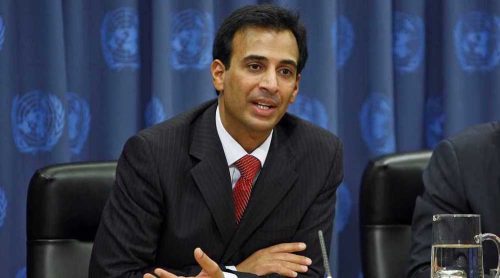
Craig Mokhiber, former director of the New York chapter of the Office of the UN High Commissioner for Human Rights
Press TV – October 31, 2023
The director of the New York chapter of the Office of the UN High Commissioner for Human Rights has resigned, protesting the world body’s failure to prevent underway genocide in the Gaza Strip, which has come under a brutal Israeli war.
Craig Mokhiber submitted his resignation to the UN High Commissioner for Human Rights Volker Turk in a letter dated October 28. Reactions began to pour in across social media platforms, including X on Tuesday.
“Once again we are seeing a genocide unfolding before our eyes and the organization we serve appears powerless to stop it,” Mokhiber wrote, referring to the United Nations.
He was referring to the October 7 present war that the Israeli regime has been waging against Gaza in response to an operation launched by the territory’s resistance movements against the occupied territories.
The ongoing Israeli massacre has killed more than 8,600 Palestinians and left over 23,000 others wounded.
Mokhiber cited the United States, the UK, and much of Europe as “wholly complicit in the horrific assault,” referring to the Western allies’ consistent political and military support for the Israeli regime, which has bubbled up even throughout the war.
“This is a textbook case of genocide. The European, ethno-nationalist, settler colonial project in Palestine has entered its final phase, toward the expedited destruction of the last remnants of indigenous Palestinian life in Palestine,” the letter read.
The letter went on to call for an end to the Israeli regime’s occupation of the Palestinian territories, supporting the establishment of a “single, democratic” state “in all of historic Palestine, with equal rights for Christians, Muslims, and Jews.”
NYT Writes about the Israeli Intel Failures on Hamas
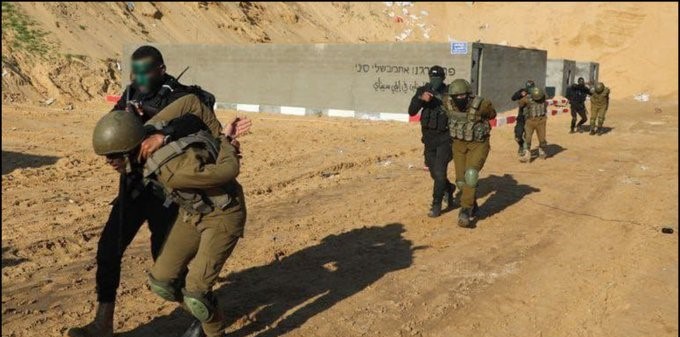
Palestinian resistance fighters capture Israeli occupation soldiers during an attack on a militray post in the Gaza envelope as part of Op. Al-Aqsa Flood (October 7, 2023).
Al-Manar – October 31, 2023
The Israeli occupation military’s 8200 signal intelligence unit stopped listening in to the handheld radios of Hamas operatives in Gaza a year ago, deciding it was a “waste of effort,” The New York Times reported noting that this was one of a series of failures that led to the shocking success of the Oct. 7 Operation Al-Aqsa Flood.
In an extensive report on the intelligence failures, the paper also said on Sunday that US spy agencies had largely stopped collecting information on Hamas in recent years, believing that ‘Israel’ had contained the threat from the Palestinian resistance group.
Monitoring that network might have helped Ronen Bar, the director of the Israel Security Agency, or Shin Bet, realize at 3 a.m. on Oct. 7, a few hours before the attack, that the unusual activity he was seeing on the Gaza border wasn’t just another Hamas “military” exercise, the Times noted.
Israeli military also placed its confidence in “The Barrier,” the nearly 40-mile-long concrete wall that plunges underground to prevent tunneling. It included a high-tech surveillance system that relies on cameras, sensors and remote-controlled machine guns.
“Senior Israeli military officials believed that the combination of remote surveillance and machine-gun systems with the formidable wall would make it almost impossible to infiltrate Israel, and thus reduce the need for a large number of soldiers to be stationed at the bases,” the newspaper reported.
Hamas’s attack put paid to the idea that concrete and technology could be relied on. The Hamas fighters blew up cellular antennas and remote shooting systems along the fence with explosives precisely dropped from drones.
“In a conversation with military investigators two weeks after the attack, soldiers who survived the assault testified that the Hamas training was so precise that they damaged a row of cameras and communication systems so that ‘all our screens turned off in almost the exact same second,’” the Times reported.
There simply were not enough Israeli soldiers to fill the gaps once the technology was destroyed and the security barrier breached. Hamas terrorists [resistance fighters] poured through.
“We started receiving messages that there was a raid on every reporting line,” one soldier at the Gaza Division base told an Israeli news site.
“The forces did not have time to come and stop it. There were swarms of terrorists, something psychotic, and we were simply told that our only choice was to take our feet and flee for our lives.”
The Hamas rampage across western Negev communities went on for hours, with the Israeli soldiers’ response shockingly slow, (Something that has still not been explained).
After the fighting, Israeli soldiers found hand-held radios on the bodies of some of the Hamas fighters, “the same radios that Israeli intelligence officials had decided a year ago were no longer worth monitoring,” the Times reported.
‘Turning Gaza into ashes’: Israel propaganda vs the world
By Ramzy Baroud | MEMO | October 31, 2023
Gaza has changed the political equation in Palestine. Moreover, the repercussions of the ongoing devastating war are likely to alter the political equation in the entire Middle East and to re-centre Palestine as the world’s most urgent political crisis for years to come.
Since the establishment of Israel in 1948, facilitated by Britain and protected by the United States and other Western countries, the priorities have been entirely Israeli. “Israel’s security”; Israel’s “military edge”; “Israel’s right to defend itself”, and much more, are the mantras that have defined the West’s political discourse on the Israeli occupation and apartheid in Palestine.
This bizarre US-Western understanding of the so-called conflict, that an oppressor has “rights” over the oppressed; the occupier has “rights” over the occupied, has enabled Israel to maintain a military occupation over Palestinian territories that has lasted for over 56 years. Indeed, many would argue that it is for more than 75 years.
It has also empowered Israel to neglect the roots of this “conflict”, namely the ethnic cleansing of Palestine in 1948, and the long-denied, and very legitimate, Right of Return for Palestinian refugees.
Within this context, every Palestinian-Arab overture for peace was rejected. Even the supposed “peace process”, namely the Oslo Accords, turned into an opportunity for Tel Aviv to entrench its military occupation, expand its illegal settlements and corral Palestinians in Bantustan-like spaces, humiliated and racially segregated.
Some Palestinians, whether enticed by American handouts or shattered by a lingering sense of defeat, lined up to receive the US-Israeli peace dividends: pitiful crumbs of false prestige, empty titles and limited power, granted and denied by Israel itself.
However, the Israeli war against the Palestinians in Gaza is already changing much of this painful status quo. The occupation state’s constant insistence that its deadly war is against Hamas, against “terror”, against Islamic fundamentalism, and all the rest, may have convinced those who are ready to accept the Israeli version of events at face value. However, as the bodies of thousands of Palestinian civilians, including thousands of children, began piling up at Gaza’s hospital morgues and, tragically, in the streets, the narrative began changing.
The pulverised bodies of Palestinian children, of whole families who perished together, stand witness to the brutality of Israel; to the immoral support of its allies; and to the inhumanity of an international order that rewards the murderer and reprimands the victim.
Of all the biased statements made by US President Joe Biden, the one where he suggested that Palestinians are lying about the body count of their own dead was perhaps the most inhumane. Washington may not realise this yet, but the repercussions of its unconditional support for Israel will prove to be disastrous in the future, especially in a region that is fed up with war, hegemony, double standards, sectarian divisions and endless conflict.
The greatest impact, though, will be felt in Israel itself. When Palestinian Ambassador to the UN Riyad Mansour gave a powerful, emotional speech on 26 October, he could not hold back his tears. International delegations at the UN General Assembly clapped non-stop, reflecting the growing support for Palestine, not only at the UN, but also in hundreds of towns and cities, and on countless street corners around the world.
When the Israeli Ambassador to the UN, Gilad Erdan, who had promoted many of the lies communicated by Tel Aviv, especially in the early days of the war, finished his speech, not a single person clapped. The contempt was palpable.
The Israeli narrative had clearly crumbled into a thousand pieces. Israel has never been so isolated. This is definitely not the “New Middle East” that Netanyahu had prophesised in his UN General Assembly speech on 22 September.
Unable to fathom how the initial sympathy with Israel turned so quickly into outright disdain, the settler-colonial state resorted to old tactics. On 25 October, Erdan demanded that UN Secretary-General Antonio Guterres should resign for being “unfit to lead the UN”. The UN chief’s supposedly unforgivable crime was to suggest that “the attacks by Hamas did not happen in a vacuum”. Which, of course, they didn’t.
As far as Israel and its American benefactors are concerned, however, no context is allowed to taint the perfect image that the Israelis have created for its genocide in Gaza. In this perfect Israeli world, no one is allowed to speak of military occupation; of siege; of the lack of political prospects; of displacement; of the absence of a just peace for Palestinians.
Even though Amnesty International has said that both sides have committed “serious violations of international humanitarian law, including war crimes”, Israel still attacked it, accusing the organisation of being “anti-Semitic”. In Israel’s thinking, even the world’s leading international human rights group is not permitted to contextualise the atrocities in Gaza or dare suggest that one of the “root causes” of the conflict is “Israel’s system of apartheid imposed on all Palestinians”.
Israel is no longer all-powerful, as it wants us to believe. Recent events have proven that its “invincible army” — a branding that allowed Israel to become, as of 2022, the world’s tenth-largest international military exporter — turned out to be a paper tiger.
This is what is infuriating Israel the most. “Muslims are not afraid of us anymore,” former Knesset member Moshe Feiglin told Arutz Sheva-Israel National News. To restore this fear, the extremist politician called for burning “Gaza to ashes immediately.”
But nothing will turn Gaza into ashes. Not even the more than 12,000 tons of high explosives dropped on the Strip in the first two weeks of war which have already incinerated at least 45 per cent of its housing units, according to the UN’s humanitarian office.
Gaza will not die because it is a powerful idea that is deeply entrenched within the hearts and minds of every Arab, of every Muslim and of millions of people around the world. This new idea is challenging the long-held belief that the world needs to cater to Israel’s priorities, security, selfish definitions of peace and all of the other illusions.
The focus should now be on where it should have always been: the priorities of the oppressed, not the oppressor. It is time to speak about Palestinian rights, Palestinian security and the Palestinian people’s right — in fact, obligation — to defend themselves.
It is time for us to speak about justice — real justice — the outcome of which is non-negotiable: equality, full political rights, freedom and the right of return.
Gaza is telling the world all of this, and much more. And now it is time for us to listen.
Israel has killed 133 babies under a year old since 7 October
MEMO | October 31, 2023
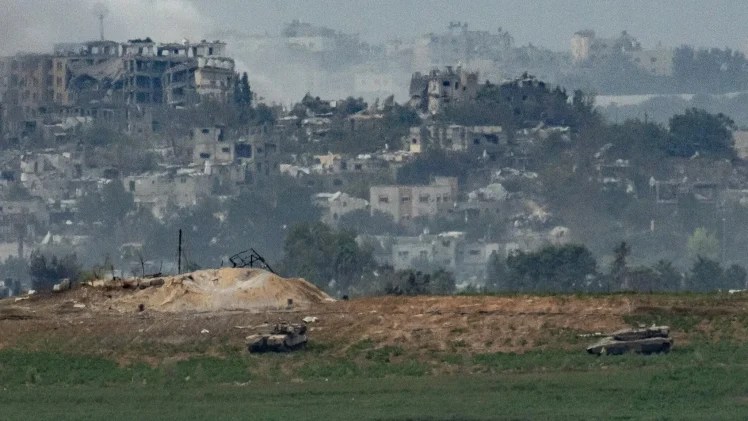
Since 7 October, at least 133 infants less than one year old have been killed in the Gaza Strip, which Israel has now been bombing for over 24 days, Anadolu Agency reports.
On 26 October, the Palestinian Health Ministry in Gaza released a 212-page report that lists the names, identification, and ages of those killed in Israel’s attacks on the strip since 7 October, when the current conflict began.
According to the report, 2,913 of the 7,280 people killed in the Israeli attacks were children.
In the Israeli attacks, 444 babies were killed, including 133 under one year old, 153 one-year-olds and 158 two-year-olds.
Israel’s bombing also killed 171 three-year-olds, 1,527 pre-school to primary school aged children (ages 4-13), and 523 high-schoolers, age 14 to 17.
Of the casualties, 2,262 were women and 462 were over the age of 60.
The report also said that the identities of 281 of the victims have not been confirmed.
63 UN employees and 36 journalists killed
The UN Agency for Palestinian refugees, or UNRWA, announced on 30 October that 63 of its staff members had been killed in the Israeli attacks.
Since the start of the Israeli attacks on 7 October, 35 journalists have been killed in Gaza and one in Lebanon.
The armed wing of Hamas, the Izz Ad-Din Al-Qassam Brigades, launched a comprehensive attack on 7 October in response to ongoing Israeli violations against Palestinians and their holy sites, including the Al-Aqsa Mosque.
The Israeli army responded with a relentless campaign of airstrikes on the Gaza Strip and seems now to have started a long-expected ground offensive.
Al-Aqsa Flood gives Israeli economy ‘COVID-19 like symptoms’
The Cradle | October 30, 2023
The historic Al-Aqsa Flood operation has not only battered Israeli settlements and the security forces, but the war has also taken flight against the Israeli market.
Economists are looking at the operation that hit the $520 Billion economy with memories of the COVID-19 effects, saying that orders for schools, offices, and building sites to close or only open for a few hours are like the days of the pandemic.
Adding to the affected workforce, the Israeli government amassed 350,000 reservists for its much-awaited ground invasion, draining about eight percent of the Israeli workforce.
Mizrahi-Tefahot, a top Israeli bank, says that the mass mobilization order and partial economic freezes are costing the government the equivalent of $2.5 billion per month. The Israeli central bank has said that the economic state will only worsen as the war goes on.
Israeli stocks are the world’s worst performing since the beginning of the war. The Shekel is at its weakest level since 2012, despite the $45 billion emergency package or the selling off of $30 Billion in foreign reserves to try and save the currency from sinking further.
Markets won’t fair well with a long war, but Israeli Prime Minister Benjamin Netanyahu has warned of a “long war” as he prepares for a ground invasion.
JPMorgan Chase & Co., the US multinational financial services firm, has said that they believe the Israeli economy is shrinking 11 percent on an annualized basis, saying that their initial projections about the economic impact were “too optimistic.”
The financial firm’s projections are among Wall Street’s most cynical, but investors have been selling off Israeli assets heavily.
“Gauging the impact of the war on Israel’s economy remains difficult both due to still very high uncertainty about the scale and duration of the conflict and the lack of high-frequency data at hand,” JPMorgan analysts said.
Having one of the strongest economies in the world, Israel hasn’t seen an economic hit this bad since the 2006 war between them and Hezbollah, the physical damage cost of which has already been topped by the Palestinian factions.
The Israeli business press has said the nation has entered a recession. Israeli daily The Market has previously written that “Israel has entered the war, and it is in a recession, and trade is currently zero.”
Chinese tech giants cancel Israel
RT | October 31, 2023
Israel can no longer be found on China’s leading online digital maps on platforms including Baidu and Alibaba, the Wall Street Journal reported on Monday, citing web users.
According to the report, Baidu’s Chinese language maps still show the borders of both Israel and the Palestinian territories, as well as key cities in the region. However, they no longer identify Israel by name.
Alibaba’s Amap also no longer displays the name of Israel on its maps. According to the report, the platform is usually known for its attention to details, with even small countries like Luxembourg clearly labeled.
The companies did not respond to media requests for comment. According to the publication, it is unclear when exactly the name Israel disappeared from their maps, but web users have apparently been discussing the development since the escalation of the Israel-Hamas conflict earlier this month.
According to local reports, the Chinese internet has been overflowing with anti-Semitic [sic] comments over the past month, which may be the reason behind the disappearance of Israel’s name from the maps. The Israeli Embassy in China was recently forced to close the comment section under its official account on China’s X-like platform Weibo, after a slew of verbal attacks from users.
The Chinese government has not taken sides in the Mideast conflict, calling on the belligerents to end the hostilities and condemning attacks on civilians. However, Beijing has a long history of supporting Palestine. It recognized the Palestine Liberation Organization in 1964 and Palestinian sovereignty in 1988, and later established full diplomatic relations with the Palestinian Authority in 1989.
During his visit to Saudi Arabia in 2022, Chinese President Xi Jinping called the fact that the global community still largely does not recognize Palestine as a country a “historical injustice,” and said China will support the establishment of a Palestinian state with East Jerusalem as its capital.
Featured Video

Seyed M. Marandi: Negotiations Collapsed – Return to War
or go to
Aletho News Archives – Video-Images
From the Archives
The US-Iran Scenario That Most Scares Israel
By Ali Haydar | Al-Akhbar | October 9, 2013
Israeli Prime Minister Benjamin Netanyahu issued a series of threats toward Iran and its interlocutors in the West, including the US, as serious negotiations on Iran’s nuclear program seem more plausible.
As a possible rapprochement looms between the US and Iran, Netanyahu has attempted to impose impossible Israeli conditions on the negotiators, such as the full dismantling of Iran’s nuclear program, not to mention threatening military force.
Whatever the deal that could materialize between Iran and the West, Israel is going to find itself before an open-ended path. One can foresee three possible scenarios… continue
Blog Roll
 Aletho News
- Seyed M. Marandi: Negotiations Collapsed – Return to War
- Tomorrow’s naval blockade showdown
- ‘Israel’ attacks civilians to hide its embarrassing military failures & out of pure sadism
- Any Foreign Military Vessel Approaching Hormuz Under Any Pretext ‘Will Be Dealt With Severely’: IRGC
- Diplomats slam US negotiators’ performance in Iran talks
- Trump Refuses Exit Ramp, War with Iran will Continue
- Trump Says US Naval Blockade in Strait of Hormuz Will Begin Shortly
- US, Iran end 21-hour talks without agreement
- US IRAN TALKS: Who Are the Crazy Ones Here? /Lt Col Daniel Davis
- Talks with the US end without a deal over excessive US demands: Iran
- If Americans Knew
- US-Iran ceasefire negotiations make zero progress – Daily Update
- Pro-Israel ‘Thinktanks’ and Individuals who Influence U.S. Foreign Policy
- Mearsheimer reveals how Israel dictates US policies on Iran, Gaza – video
- After killing 350+, Israel still has a “score to settle” with Lebanon before ceasefire – Daily Update
- Military aid to Israel emerges as the latest political litmus test for Democrats
- The only Palestinian children’s rights organization closes following years-long Israeli campaign against it
- ‘I Can’t Forget the Smell’: Lebanese Reel After Israel Kills Over 300 in Single Day
- DNC Shoots Down Resolutions Calling Out AIPAC and Limiting Arms to Israel
- TCN: Is Israel Blackmailing President Trump?
- Israel killed at least 303 Lebanese yesterday – who were they? Daily Update
- No Tricks Zone
- Cave Discovery Reveals Today’s Desert Climates Were Recently Far Warmer, Wetter, Teeming With Life
- German Expert: Heat Dome Led To Record Temps In Western USA…Warmer In 1934, 1936
- New Study: No Linear Warming Or Glacier Retreat Along Northern Antarctic Peninsula Since 1980s
- An Inconvenient Tree: Uncovered In Alps… Europe Much Warmer Than Today 6000 Years Ago
- New Study Reports A 60% Slowdown In Greenland’s Ice Loss Rate In The Last Decade
- Low Intensity Tornado Wrecks Major Solar Farm, Creating A Potential Toxic Dump
- New Study Finds Warming Saves Lives…Cold Temperatures 12 Times More Deadly Than Excess Heat
- German Science Blog Accuses PIK Climate Institute Of Hallucinating Climate Tipping Points
- Devastating Assessment Of Comirnaty Vaccine By Former Senior Pfizer Europe Toxicologist
- New Study: CO2 Is ‘Effectively Negligible’ As An Explanatory Climate Change Factor Since 2000
 Aletho News