Jeffrey Epstein’s ‘one single cause’: Israel
The Take | Al Jazeera | February 10, 2026
What do we know about Jeffrey Epstein’s ties to Israel? We talk with Craig Mokhiber, who spent decades inside the UN system, about what millions of newly released files reveal about Epstein’s effort to reshape the Middle East in Israel’s favor, why this story remains underreported, and what it means for how power operates globally.
In this episode:
Craig Mokhiber (@craigmokhiber), Human Rights Lawyer and Former UN Official
View on Rumble
Episode credits:
This episode was produced by Marcos Bartolomé, Chloe K. Li, and Tamara Khandaker, with Melanie Marich, Maya Hamadeh, Tuleen Barakat, and our guest host, Kevin Hirten. It was edited by Alexandra Locke.
Our sound designer is Alex Roldan. Our video editors are Hisham Abu Salah and Mohannad al-Melhemm. Alexandra Locke is The Take’s executive producer. Ney Alvarez is Al Jazeera’s head of audio.
First Gaza, then the world: The global danger of Israeli exceptionalism
By Ramzy Baroud | MEMO | February 11, 2026
While many nations occasionally resort to a “state of exception” to deal with temporary crises, Israel exists in a permanent state of exception. This Israeli exceptionalism is the very essence of the instability that plagues the Middle East.
The concept of the state of exception dates back to the Roman justitium, a legal mechanism for suspending law during times of civil unrest. However, the modern understanding was shaped by the German jurist Carl Schmitt, who famously wrote that the “sovereign is he who decides on the exception.” While Schmitt’s own history as a jurist for the Third Reich serves as a chilling reminder of where such theories can lead, his work provides an undeniably accurate anatomy of raw power: it reveals how a ruler who institutes laws also holds the power to dismiss them, under the pretext that no constitution can foresee every possible crisis.
It is often argued that Israel, a self-described democracy, still lacks a formal constitution because such a document would force it to define its borders—a problematic prospect for a settler-colonial regime with an insatiable appetite for expansion.
But there is another explanation: by operating on “Basic Laws” rather than a constitution, Israel avoids a comprehensive legal system that would align it with the globally accepted foundations of international law. Without a constitution, Israel exists in a legal vacuum where the “exception” is the rule. In this space, racial laws, territorial expansion, and even genocide are permitted so long as they fit the state’s immediate agenda.
Isolating specific examples to illustrate this point is a daunting task, primarily because nearly every relevant pronouncement from Israeli officials—particularly during the genocide in Gaza—is a textbook study in Israeli exceptionalism.
Consider Israel’s relentless assault on UNRWA, the UN-mandated body responsible for the survival of millions of Palestinian refugees. For decades, Israel has sought the dismantling of UNRWA for one reason: it is the only global institution that prevents the total erasure of Palestinian refugee rights.
These rights are not mere grievances; they are firmly anchored in international law, most notably via UN Resolution 194.
While UNRWA is not a political organization in a functional sense, its very existence is profoundly political. First, it stands as the institutional legacy of a specific political history; second, and more crucially, its presence ensures the Palestinian refugee remains a recognized political entity. By existing, UNRWA preserves the status of the refugee as a subject with the legal right to demand a return to historic Palestine—a demand that the “state of exception” seeks to permanently silence.
In October 2024, Israel unilaterally legislated the closure of UNRWA, once more asserting its “exception” over the entire framework of the United Nations. “It is time the international community (…) realizes that UNRWA’s mission must end,” Prime Minister Benjamin Netanyahu had already declared on January 31, 2024, signaling the coming erasure. This rhetoric reached its physical conclusion on January 20, when the UNRWA headquarters in occupied Jerusalem were demolished by the Israeli military in the presence of National Security Minister Itamar Ben-Gvir.
“A historic day!” Ben-Gvir announced on that same date. “Today these supporters of terror are being driven out.” This horrific act was met with bashful responses, mute concerns, or total silence by the very powers tasked with preventing states from positioning themselves above the law.
By allowing this Israeli “exception” to stand unchallenged, the international community has effectively sanctioned the demolition of its own legal foundations.
In the past, Israeli leaders masked their true intentions with the language of a “light unto the nations,” projecting a beacon of morality while practicing violence, ethnic cleansing, and military occupation on the ground. The genocide in Gaza, however, has stripped away these pretenses. For the first time, Israeli rhetoric fully reflects a state of exception where the law is not just ignored, but structurally suspended.
“No one in the world will let us starve two million citizens, even though it may be justified and moral until they return the hostages to us,” Finance Minister Bezalel Smotrich admitted on August 5, 2024. This “justified and moral” stance reveals a localized morality that permits the extermination of a population as an ethically defensible act. Yet Smotrich also lied; the world has done nothing practical to dissuade Israel from its savage pulverization of Gaza.
The global community remained idle even when Smotrich declared on May 6, 2025, that Gaza would be “entirely destroyed” and the population “concentrated in a narrow strip.” Today, that vision is a reality: a genocide-fatigued population is confined to roughly 45% of the territory, while the remainder stays empty under Israeli military control.
Netanyahu himself, who has stretched the state of exception beyond any predecessor, defined this new reality during a cabinet meeting on October 26, 2025: “Israel is a sovereign state… Our security policy is in our own hands. Israel does not seek anyone’s approval for that.” Here, Netanyahu defines sovereignty as the raw power to act—genocide included—without regard for international law or human rights.
If all states adopted this, the world would fall into a lawless frenzy. In his seminal State of Exception, Giorgio Agamben diagnosed this “void”—a space where law is suspended but “force of law” remains as pure violence. While his recent stances have divided the academic community, his critique of the exception as a permanent tool of governance remains an indispensable lens for understanding the erasure of Palestinian life.
Israel has already created that void. In the hands of a genocidal settler-colonial society, the state of exception is a relentless nightmare that will not stop at the borders of Palestine. If this “exception” is allowed to become the permanent regional rule, no nation in the Middle East will be spared. Time is of the essence.
World’s largest shipping firm facilitates US trade with illegal Israeli settlements
The Cradle | February 9, 2026
The world’s largest shipping firm, Mediterranean Shipping Company (MSC), has been transporting goods from the illegal Israeli settlements in the occupied West Bank to the US, including via European ports.
According to a joint investigation by Al-Jazeera and the Palestinian Youth Movement (PYM) published on 9 February, commercial documents obtained through US import databases show that between 1 January and 22 November 2025, MSC facilitated at least 957 shipments of goods from Israeli settlements to the US.
Of these shipments, more than half transited through European ports, including 390 in Spain, 115 in Portugal, 22 in the Netherlands, and two in Belgium.
MSC is privately owned by Italian billionaire Gianluigi Aponte and his Italian-Israeli wife, Rafaela Aponte-Diamant.
“Israeli settlements are widely considered illegal under international law, because they are built on occupied territory, in violation of the Fourth Geneva Convention,” noted Nicola Perugini, senior lecturer in international relations at the University of Edinburgh.
“Commercialising products from these settlements effectively supports the illegal settlements,” she affirmed.
A wide range of products are produced in the settlements, from food items and textiles to skin care and natural stones, Al-Jazeera noted.
Israel conquered the West Bank and Gaza during the Six-Day War in 1967 and has sought to oust the native Palestinian Muslims and Christians and replace them with Jewish Israelis in an effort to create “Greater Israel.”
Professor Perugini called on states to ban trade with illegal settlements entirely. “You cannot normalize the profits of an illegal occupation,” he said.
The US and EU allow imports of products from Israeli settlements, despite policies formally acknowledging the settlements are illegal.
MSC also facilitates shipments from the US and Europe to the Israeli settlements.
In 2025, MSC facilitated at least 14 shipments from the Italian port of Ravenna, listing the names and zip codes of Israeli settlements as recipients.
MSC also holds cooperation and vessel-sharing agreements with Israel’s publicly held cargo shipping company, ZIM.
Such shipments may be illegal under international law following a 2024 opinion by the International Court of Justice (ICJ) advising that third states are obliged to “prevent trade or investment relations that assist in the maintenance of the illegal situation created by Israel in the Occupied Palestinian Territory.”
The ICJ opinion does not directly address the responsibility of private corporations like MSC.
PYM, a grassroots, international pro-Palestinian movement, found last year that Danish shipping firm Maersk, the world’s second largest, also ships products to and from Israeli settlements.
According to UN estimates, businesses located in illegal settlements in the West Bank and East Jerusalem contribute about $30 billion to the Israeli economy each year.
Settlement businesses are often unusually profitable as they are established on stolen Palestinian land that the company has not paid for.
Israel has recently accelerated efforts to expand the E1 settlement project, designed sever the West Bank into two parts, isolate it from East Jerusalem, and ensure a two-state solution becomes impossible.
The plan calls for constructing 3,500 apartments next to the existing settlement of Maale Adumim.
On Sunday, the Israeli government approved sweeping changes to land registration and civil control in the occupied West Bank, which will dramatically expand settlement construction, Middle East Eye (MEE) reported on Monday.
Israeli Finance Minister Bezalel Smotrich and Defense Minister Israel Katz said the policy changes are intended to pave the way for expanded settlements and land seizures.
Under the new measures, the military will be allowed to demolish Palestinian buildings and homes for which Israel refused to issue a building permit in areas A and B of the West Bank
The changes would also open West Bank land registries to the Israeli public, enabling settlers to identify Palestinian landowners and pressure them to sell their land.
Making ownership records public could also make it easier for settlers to forge claims over Palestinian land, and thereby seize Palestinian land through Israeli courts, MEE added.
The measures also loosen restrictions on the sale of Palestinian land to Israelis, overturning a Jordanian-era law prohibiting transfers to non-Palestinians.
Washington’s Gaza ‘master plan’: A mere PowerPoint presentation
Trump allies are selling Gaza reconstruction as a futuristic AI-powered utopia that not even the Israeli army believes will happen
By Robert Inlakesh | The Cradle | February 10, 2026
“We have a master plan … There is no Plan B,” remarked Jared Kushner last month, during a Board of Peace (BoP) presentation about Gaza reconstruction at the World Economic Forum (WEF) at Davos. What has become apparent is that no coherent Plan A exists either.
Although Kushner’s father-in-law, US President Donald Trump, was granted the legitimacy to build what he calls the BoP on the back of pledges to implement his “20-point peace plan” and Gaza ceasefire, the BoP’s charter is notably absent of any reference to Gaza.
Furthermore, United Nations Security Council (UNSC) resolution 2803, which legally authorized the BoP and was explicitly about the Gaza ceasefire, was deliberately vague on how any concepts proposed in the resolution would be implemented. It deliberately avoided outlining any mechanisms or obligations for reconstruction. Instead, two parallel schemes emerged.
The first was the Gaza Reconstitution, Economic Acceleration and Transformation Trust (GREAT Trust) – a 38-page document proposing to pay Palestinians $5,000 each to leave the territory. Crafted by Israeli figures previously involved in the discredited Gaza Humanitarian Foundation (GHF), the plan, which envisions “AI-powered, smart cities,” was less a roadmap for peace than a blueprint for ethnic cleansing.
That same foundation, backed by US private military contractors (PMCs), had already drawn international condemnation for herding civilians into “aid zones” only to open fire. More than 2,000 Palestinians were killed in those operations.
PowerPoint colonialism
Later, in December, the Wall Street Journal (WSJ) exposed that another proposal was put into circulation among US-allied nations in the Arab and Muslim world. The 32-page PowerPoint presentation, titled “Project Sunrise,” was set forth by Kushner and US envoy Steve Witkoff.
Like the preceding proposal, the new vision outlined a similar AI-smart city model, but added even more elements, such as high-speed rail infrastructure. According to the PowerPoint slides, the total cost of this 10-year reconstruction endeavor would amount to $112.1 billion, for which the US would commit to footing 20 percent of the bill.
Back then, Steven Cook, a senior fellow for the Middle East Program at the Council on Foreign Relations think tank, told WSJ that “they can make all the slides they want,” adding that “no one in Israel thinks they will move beyond the current situation and everyone is okay with that.” US Secretary of State Marco Rubio had even expressed his concerns over how realistic the plan will be, especially when it comes to potential foreign investment.
Then came Kushner’s presentation at Davos, which instantly made headlines and was presented as a brand new proposal called the “master plan.” According to Kushner, the project for a “new Gaza” would now only cost $25 billion.
However, upon further investigation, it is clear that what Kushner was presenting was simply “Project Sunrise,” which was evident as the PowerPoint he used was filled with the same exact slides from December. In other words, nothing particularly new was being placed on the table that had not already been released over a month prior.
“New Gaza” is a lab rat colony
Speaking to The Cradle, Akram, a Gaza resident from Al-Bureij, states that the situation on the ground does not reflect any of the positivity that appears in the media. “The Israelis won’t let us even have mobile homes or proper structures to live in, they still bomb us every day, and then we see AI images of Gaza becoming richer than Israeli cities?” he says, with bitter sarcasm. He added:
“Listen, do you really think they carried out genocide for two years and destroyed all our homes, only to build us a paradise, and that this will all happen if the resistance gives up its weapons? No. They are trying to tease us, like they always did, by saying, ‘if you give up your weapons, you will become Singapore.’ Nobody believes it.”
Shortly after Akram spoke to The Cradle, Israeli Prime Minister Benjamin Netanyahu delivered a speech to a special session of the Knesset, in which he made it clear that “the next stage is not reconstruction.” Instead, he asserted that disarmament would characterize Phase 2 of the ceasefire.
In his “master plan” presentation, Kushner claimed that the major task of clearing Gaza’s rubble would only take two to three years. Yet, according to UN figures, this task was estimated to take up to 15 years, with costs expected to exceed $650 million.
These figures are also dated, having been produced in July 2024, so they do not account for over a year of destruction. Israel has not stopped its round-the-clock demolition of Palestinian infrastructure since the so-called ceasefire took effect on 8 October 2025.
A humanitarian NGO official working in Gaza tells The Cradle that even the ceasefire’s Civil Military Coordination Center (CMCC), ostensibly set up to enforce humanitarian standards, now functions as a system of “intimidation” that “violates basic morality.”
On 21 January, Drop Site News reported on leaked documents that revealed plans to create an “Israeli Panopticon” city, to be constructed in territory remaining under its control in southern Gaza’s Rafah. The Guardian then reported that the UAE is seeking to bankroll the project. The leaked blueprints described a “case study” city where residents would be monitored around the clock, like lab rats, and forced to submit biometrics to enter.
Rafah as the prototype prison
The UAE has been accused of backing the five ISIS-linked militant groups Israel created to fight Hamas, which it previously intended to rule over a similar style concentration camp city in Rafah. In fact, Israeli Defense Minister Israel Katz had even ordered the construction of such a “community” during the 60-day ceasefire in early 2025. The Israelis have long intended to displace 600,000 Palestinians to such a gated facility.
The Emirati connection in this scheme goes beyond its recent offer to fund such a concentration camp city; it dates all the way back to January 2024, when it officially opened six water desalination plants along the Egyptian side of the Gaza border area, coincidentally capable of supplying 600,000 people with water.
Prior to the ceasefire and the collapse of the privatized aid scheme, the plot was to use the GHF PMCs in order to lure civilians into such a city area. Once they get there, the Palestinians who enter would be under the rule of Israel’s ISIS-linked proxy militias.
According to forensic architecture analysis, Israel is once again preparing land in order to implement such a project. Meanwhile, UG Solutions – the firm that hired the GHF’s PMCs – is again advertising job opportunities in the besieged territory.
Dispossession in disguise
Despite the dizzying array of slogans – BoP, GREAT, Sunrise, Panopticon – the outcome remains the same with no reconstruction, no sovereignty, and no end to occupation. The various schemes are less about peace and more about forcing Palestinians into containment zones policed by Tel Aviv and its regional clients.
From “Gaza Riviera” fantasies to proposals limiting reconstruction to areas under Israeli military control, what’s on offer amounts to PowerPoint projectionism. A revolving door of schemes and slogans has produced nothing substantive. Instead, the Israeli military continues its daily war of erasure on Gaza’s land, people, and future.
Even Kushner’s $25-billion fantasy is just that: a fantasy. In the three months since the UN resolution, all Washington has offered is AI-generated cityscapes and recycled decks. The only real plan on the table remains the one being implemented daily – the destruction of Gaza.
Is Nixing Aid to Israel a Poison Chalice?
Ending the existing arrangement could result in even more extensive forms of involvement
By Kelley Beaucar Vlahos | The American Conservative | February 9, 2026
There is a lot of talk about getting rid of the massive agreement that guarantees Israel billions of dollars in military aid each year. And it’s not just critics of Israel: Prime Minister Benjamin Netanyahu and Senator Lindsey Graham have even said they want to “taper off” the money because Israel is ready to stand on its own two feet.
But while a debate over the annual package would be a most welcome one given the enormous sums of American taxpayer money that has flowed to Israel’s wars in recent years, it is important to keep an eye on what might be a bait and switch: trading one guarantee for a set of others that might be less transparent and more expensive than what’s on the books today.
When President Bill Clinton announced the first Memorandum of Agreement, a 10-year, $26.7 billion military and economic aid package to Israel, he expressed hope that it would complement the advancement of the Oslo Accords, the peace process he had shepherded between the Israelis and Palestinians earlier in his term.
The peace process tied to Oslo pretty much fell apart after expected Israeli withdrawals from the West Bank as outlined in the Wye River Agreement in 1998 never happened; today Israeli settlements considered illegal under international law have exploded, with more than 700,000 settlers living there today and Israelis controlling security in most of the territory. But the 10-year MOU lived on.
Not only has it been renewed through the Bush and Obama administrations; the total outlays have increased. The current one, signed in 2016, pledged $38 billion over the decade, just under $4 billion a year and now all of it military aid. According to the Council on Foreign Relations, Israel is by far the biggest recipient of U.S. aid in history, some $300 billion since its founding, with the greatest proportion coming from those MOUs.
Supporters of the aid say it comes with military and strategic partnerships that are supposed to help keep the neighborhood safe for the U.S., Israel, and its “allies” (there are no treaty allies in the region), but the last 40 years have been pockmarked with wars and waves of human displacement and misery. Beyond financially and militarily supporting Israel’s wars, the U.S. has been bombing, regime-changing, occupying, and fending off terrorist insurgencies created by its own policies in Central Asia, the Horn of Africa, and the Middle East since 1999. Today, with Israel’s encouragement, President Donald Trump is poised to bomb Iran for the second time in his current term in office.
On February 3 the Congress passed the latest installment of the current MOU—$3.3 billion. It was a bipartisan affair, with Senate Minority Leader Chuck Schumer assuring a group of Jewish leaders the previous weekend, that “I have many jobs as leader … and one is to fight for aid to Israel, all the aid that Israel needs.”
But not everyone is on board with the open spigot. And a spigot it is. According to CFR, the U.S. gave $16.3 billion (which included its annual $3.8 billion outlays) to Israel after the Oct. 7, 2023 attacks. Israel’s retaliation for those attacks, which killed 1,200 Israelis, has resulted in more than 71,000 recorded Palestinian deaths in Gaza so far, a blockade that has left the 2 million population there largely homeless, starving, sick, and unsafe. Americans have reacted by rejecting the prospects of further aid, with a plurality now—42 percent—saying they want to decrease if not stop aid altogether. That is up from the mid-20 percent range in October 2023.
Beyond Americans’ aversion to funding the slaughter of civilians in Gaza, a conservative fissure over continued, unconditional support for Israel has opened wide over the last year, exposing another rationale for discontinuing the aid: It is not “America First.” It not only siphons off aid from much needed renewal at home, but forces Washington to aid and abet another country’s foreign policy, which is increasingly counterproductive and contrary to our own politics and values.
The region is not safer, and moreover, it has not allowed for the United States to reduce its military footprint as guarantor of security there.
One then-congresswoman, Marjorie Taylor Greene (R-GA), was vocal in her opposition to this aid. Israel, she pointed out, has nuclear weapons and is “quite capable of defending itself.” She has pointed out Israel’s universal health care and subsidized college tuition for its citizens, “yet here in America we’re 37 trillion dollars in debt.”
Rep. Thomas Massie (R-KY.) posted on X that he voted against the spending bill on February 3 in part to deny Israel the $3.3 billion in aid. He has said the aid takes money out of Americans’ pockets and proliferates human suffering in our name. “Nothing can justify the number of civilian casualties (tens of thousands of women and children) inflicted by Israel in Gaza in the last two years. We should end all U.S. military aid to Israel now,” he said in May of last year.
In an interview with The American Conservative last week, he said he is speaking for his Kentucky district and despite a retaliatory 2026 primary challenge driven largely by Trump and donors linked to the American Israel Political Affairs Committee (AIPAC), he will continue to raise the issue in Congress. He said he has asked his GOP constituents every year whether to maintain, increase, or cut Israel annual aid since 2012.
“I’ve polled that every election cycle in my congressional district among likely Republican voters, and this was the first year that a majority of people answered nothing [no aid] at all, or less,” said Massie. “It’s not a third rail back home. It’s a third rail inside of the Beltway.”
According to reports last month, Israel is “preparing for talks” with the Trump administration to renew the MOU for another 10 years. One might be flummoxed to hear, however, that Netanyahu is giving interviews in which he says he wants to “taper off” American aid in that decade “to zero.” Israel has “come of age” and “we’ve developed incredible capacities,” he said in January.
Immediately after, Graham, who seems to spend more time in Israel than Washington these days, said he heartily agreed and hoped to end the aid sooner. “I’m going to work on expediting the wind down of the aid and recommend we plow the money back into our own military,” he said. “As an American, you’re always appreciating allies that can be more self-sufficient.”
The idea of self-sufficiency and furthermore the concept of Israel releasing itself from any “ties” that might come from the aid is not a new one among supporters here and especially the hardline right in Israel. “Cut the US aid, and Israel becomes fully sovereign,” Laura Loomer charged on X in November. In March of last year, the Heritage Foundation called for gradually reducing the direct grants in the next MOUs starting in 2029 and transitioning gradually to more military cooperation and then finally arms transfers through the Foreign Military Sales by 2047.
Israel, the report concludes, should be “elevated to strategic partner for the benefit of Israel, the United States, and the Middle East. Transforming the U.S.–Israel relationship requires changing the regional paradigm, specifically advancing new security and commercial architectures.” The plan also leans heavily on future Abraham Accords ensuring trade and military pacts with Arab countries in the neighborhood.
Therein lies the fix, say critics. The reason these staunch advocates of Israel including Netanyahu, the most demanding of its leaders over the last 30 years by far, is willing to forgo MOU aid, is that they envision it will come from somewhere else, less politically charged.
“The emerging plan is to substitute formal military funding—known as Foreign Military Financing—with greater U.S. taxpayer-funded co-development and co-production of weapons with Israel,” says the Institute for Middle East Understanding, which adds that instead of extricating from Israel’s messes, the U.S. will be further “enmeshed” in them.
The think tank points out that the Foundation for the Defense of Democracies (FDD), the most unreconstructed pro-Israel organ in the United States, came out with its own report on the aid, and surprise, also advocated phasing out the MOU. In addition to a commitment by Israel to spend more of its GDP on defense and other co-investments with the U.S. on research and development, the U.S. would “provide Israel $5 billion each year through what would be known as a Partnership Investment Incentive—or PII. This PII would provide funding via existing foreign military financing (FMF) mechanisms that Israel would use to procure American military hardware.” The difference would be that it would have to be spent entirely in U.S. industry and on cooperative partnerships in the region, all while maintaining Israel’s “Qualitative Military Edge.”
Geoff Aronson, longtime Middle East analyst and occasional TAC contributor, said the aid has been “an important if not vital component in ensuring American and Israeli hegemony in the region” and is linked intrinsically to balancing U.S. strategic relations and normative Israeli peace with Egypt and Jordan, which gets billions in military aid (not as much) from the U.S. too. None of this is going to go away, he surmised to TAC.
“The question that is being posed is how can we continue to support Israel’s ability to work its will in the region without committing ourself to X, Y, Z or committing to a new partnership, a new agreement,” he said. “Watch what you wish for, because it might come true.”
Somalia president warns against Israeli interference, vows to prevent any military base in Somaliland
Press TV – February 8, 2026
The president of Somalia has strongly denounced the Israeli regime’s interference in his country’s internal affairs and vowed to “confront” any Israeli military presence in the breakaway region of Somaliland.
In an interview on Saturday, Hassan Sheikh Mohamud said Israel’s recognition of Somaliland as an independent state is a “reckless, fundamentally wrong and illegal action under international law.”
Somaliland is a breakaway region in northwestern Somalia, covering territory that was once part of the British Protectorate. Despite its unilateral separation, it remains internationally recognized as part of Somalia.
The region occupies a strategic position along one of the world’s most vital maritime choke points, an area already surrounded by overlapping conflicts in the Horn of Africa and West Asia.
In recent years, Somaliland has sought foreign support by developing ties with the United Arab Emirates (UAE), a signatory to the Abraham Accords with Israel, as well as Taiwan, in an effort to gain international acceptance outside Mogadishu’s authority.
Israel’s move followed reports that the regime had contacted actors in Somaliland to discuss using the territory for the forced displacement of Palestinians during its genocidal war on Gaza, which has killed more than 72,000 Palestinians and wounded another 172,000, most of them women and children.
While Israeli and Somaliland authorities rejected those reports, a Somaliland official told Israel’s Channel 12 in January that an Israeli military base is “on the table and being discussed,” with its establishment tied to specific conditions.
Somalia has described Israel’s recognition of Somaliland as a direct assault on its territorial integrity and national unity, a position endorsed by most African and Arab countries, and has demanded that Prime Minister Benjamin Netanyahu reverse the decision.
Mohamud also made clear that Mogadishu will resist any Israeli military presence on Somali soil: “We will fight in our capacity. Of course, we will defend ourselves … And that means that we will confront any Israeli forces coming in, because we are against that and we will never allow that.”
He said Israel’s actions, which are “interfering with Somalia’s sovereign and territorial integrity,” also “undermine stability, security and trade in a way that affects the whole of Africa, the Red Sea and the wider world.”
Mohamud stressed that Israel’s deadly use of force against Palestinians in Gaza cannot be separated from developments in Somaliland, saying both reflect the erosion of global norms and restraints.
“Key among the global concerns is the weakening of the established rules-based international order. That order is not intact anymore,” he said.
He warned that institutions created after World War II “are under grave threat,” as the idea that “the mighty is right” increasingly replaces respect for international law.
The administration of US President Donald Trump, meanwhile, has yet to signal a significant change in its position on Somaliland.
Ten elected West Bank lawmakers held in Israeli prisons
Palestinian Information Center – February 7, 2026
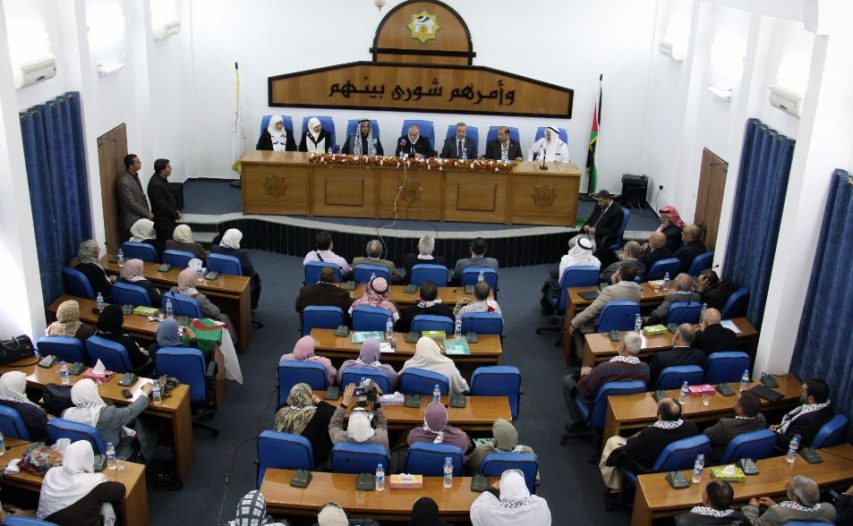
RAMALLAH – Israeli occupation forces (IOF) continue to target elected members of the Palestinian Legislative Council (PLC) in the West Bank, with 10 lawmakers currently held in Israeli prisons, despite the council having been effectively suspended for years by Palestinian Authority President Mahmoud Abbas.
Among the detainees are two of the longest-held Palestinian political prisoners: Marwan Barghouti and Ahmad Saadat, both serving life sentences. The oldest detainee is Jerusalem lawmaker Mohammad Abu Tir, 75.
Abu Tir was rearrested on November 24, 2025, after the IOF raided his home in Dar Salah, near Bethlehem. He is among several Jerusalem lawmakers whose residency IDs were revoked in 2006 and who have since faced repeated arrests and forced removals from the city.
He has spent nearly half his life in Israeli detention and is currently held in harsh conditions in an underground section of Nitzan prison in Ramla under a four-month administrative detention order.
On September 25, 2025, the IOF arrested lawmaker Yasser Mansour from his home in Nablus. Another PLC member, Nasser Abdul Jawad, 57, was detained on August 21, 2025, from Deir Ballut, west of Salfit. Abdul Jawad, an academic and political figure, has spent around 20 years in Israeli prisons.
Israeli forces also arrested lawmaker Anwar Zaboun, 58, from Bethlehem on August 17, 2025. Husni al-Bourini was detained in October 2024 after a raid on his home in Asira al-Shamaliya in Nablus, while Khaled Suleiman was arrested in Jenin in August 2024.
Lawmaker Mohammad Jamal al-Natsheh, 68, was detained in Al-Khalil in March 2025 and is considered one of the most serious medical cases in Israeli custody.
Senior Hamas figure and PLC member Sheikh Hassan Yousef, 73, was rearrested in October 2023. A prominent West Bank leader and one of the Marj al-Zohour deportees in 1992, he won his parliamentary seat while imprisoned and has spent more than 27 years in Israeli jails.
Rights groups say the detention of elected lawmakers lacks legal basis, constitutes political retaliation, and represents a grave violation of international law, democratic norms, and Palestinian self-governance.
The Gaza Ceasefire Has No Phase Two, Only a Permanent Limbo
By Robert Inlakesh | The Palestine Chronicle | February 7, 2026
Since the Gaza ceasefire took effect on October 10, 2025, repeated announcements about an imminent ‘Phase Two’ have created the impression of diplomatic progress. In reality, the agreement has not advanced beyond its initial stage, while shifting proposals and ongoing violations suggest the process was never designed to reach a definitive end to the war.
Key Takeaways
- The ceasefire remains trapped in Phase 1 because Phase 2 has never been clearly defined or operationalized.
- Monitoring mechanisms, particularly the CMCC, have failed to enforce the agreement despite thousands of violations.
- Successive reconstruction proposals replace political resolution with speculative planning detached from realities on the ground.
- Israel’s refusal to withdraw and demand for disarmament make any transition to Phase 2 structurally impossible.
- The ceasefire functions as a controlled pause in large-scale war rather than a genuine path to ending it.
A Ceasefire without a Second Phase
Since the initiation of the Gaza Ceasefire agreement on October 10, 2025, month after month, the media has speculated about the beginning of the second phase of the deal. However, despite small amendments to the situation on the ground, nothing substantive has emerged. This is all by design.
The original text of US President Donald Trump’s “Comprehensive End of Gaza War” proposal, as well as his corresponding “20-Point-Plan,” assert that the Gaza ceasefire’s first phase will begin immediately and that within a 72-hour-window all of the elements included within it are to be concluded.
Soon after the ceasefire was announced, there then emerged a different plan, one that stated there would be a five-day window in which a limited number of aid trucks could enter the Gaza Strip. Israel did not adhere to this agreement. From there, it took weeks for the minimum required aid to reach the civilian population.
There was also the formation of the Civil-Military Coordination Center (CMCC), which attracted over 20 countries and dozens of humanitarian aid organizations. The CMCC’s purpose was supposed to be the coordination of aid transfers, alongside monitoring efforts to stop ceasefire violations and maintain the stability of the agreement.
Instead, the CMCC became a command and control center led by the United States military, with the Israelis being the second in charge, before a range of Arab and international armed forces. The CMCC has watched on and done nothing to stop Israel’s daily ceasefire violations, which are around 3,000 in total at this point, including the murder of around 560 Palestinians.
Contrary to its stated mission, the CMCC made every nation involved fully complicit in Israeli war crimes, including round-the-clock home demolitions, the deliberate slaughter of children, and the propping up of five ISIS-linked militias in the territory.
Plans for Gaza without Ending the War
Ever since the ceasefire began, there has been a nearly weekly pivot in terms of what the future plans for Gaza are to be; all of these “plans”, “visions,” and “proposals” contradict the last.
For example, a proposal for “post-war Gaza”, exposed by the Washington Post in September, before the ceasefire was even implemented, was still reportedly being floated following the agreement that came into effect a month later. This was called the “Gaza Reconstitution, Economic Acceleration and Transformation Trust”, or GREAT Trust, fully drawn up by an Israeli. A 38-page document was even produced as a means of laying the groundwork for a model of AI-powered smart cities.
However, the GREAT Trust plan contradicted Donald Trump’s “20-point-plan” as it proposed paying Gaza’s civilian population 5,000 USD each to leave the territory. Under the Trump plan, the population was said to be allowed to stay in Gaza.
Enter Trump’s son-in-law, Jared Kushner, and suddenly there’s a “new plan” for post-war construction, presented on a slideshow called “Project Sunrise”, which was revealed in December of last year by the Wall Street Journal. This PowerPoint presentation, which is vague and consists of AI-generated images similar to the US President’s infamous “Trump Gaza” AI video, was published at the start of 2025.
The month prior to this, Kushner, along with US envoy Steve Witkoff, was floating countless vague proposals, appearing to only be offering reconstruction in the Israeli-controlled portion of Gaza, which was supposed to be 53% of the territory, but due to Israeli violations and seizure of more land is closer to 60%.
What also happened in mid-November was the passing of the United Nations’ de facto death certificate – UN Security Council resolution 2803 – which granted the US its legitimacy in creating the “Board of Peace” and “International Stabilization Force”.
UNSC resolution 2803 was supposed to help usher in the alleged Phase 2 of the ceasefire deal, something that still hadn’t been clearly defined. Then, in December, there were reports, citing US officials, that Phase 2 would start in January. Instead, all that happened was Jared Kushner delivered a speech and showed a PowerPoint presentation, depicted in the media as “the master plan”.
Yet, the slideshow was the same as the old one that had been floating around since December, except this time, Kushner was arguing his AI-powered super city model would cost 90 billion less than it was supposed to late last year.
The Managed Stalemate
Now the Israelis have allowed a partial opening of Rafah, which they decide to close whenever they choose and impose extreme restrictions on who leaves and enters. Contrary to the agreement, the Israelis are not withdrawing from Gaza at all and have publicly expressed their opposition to such a move.
Instead, Israel demands that the Palestinian resistance disarm, which they will not do. Therefore, the only option for the Israelis is to ramp up their genocide again and collapse the ceasefire if they want to achieve disarmament, something it hasn’t yet chosen to do.
In other words, there is no Phase 2. We don’t even have a definition of what Phase 2 actually is. There are no real plans for anything, just AI slop and unrealistic “visions”. Although it may seem as if there are attempts to bring about a change on the ground, which to some is the “start of Phase 2”, this is simply wishful thinking.
What is happening is precisely what I have predicted since October 8, 2025, when both sides signaled they had agreed to the ceasefire: the situation is stuck in limbo between “Phase 1” and “Phase 2”. Israel doesn’t stop killing civilians, and there is no real effort to develop meaningful plans that would actually result in the ceasefire’s ultimate success.
The genocide is not over; there is simply a glorified pause in place, one that allows the Israelis to focus on other fronts while the media pretends “the war is over”.
– Robert Inlakesh is a journalist, writer, and documentary filmmaker. He focuses on the Middle East, specializing in Palestine.
DOJ records show Jeffrey Epstein donated thousands to Israeli army, Jewish National Fund
The Cradle | February 6, 2026
Documents released by the US Department of Justice show that Jeffrey Epstein donated funds to the Israeli military and the Jewish National Fund (JNF), an organization that funds illegal Jewish settlements in occupied Palestine.
A 2005 IRS filings for one of Epstein’s charitable foundations, C.O.U.Q., show a $25,000 donation to the Friends of the Israel Defense Forces (FIDF).
The US-based charity raises funds in coordination with Israel’s military establishment to support Israeli soldiers and related military infrastructure.
In 2008, as Epstein was facing charges of sex trafficking minors, he traveled to Israel, taking a tour of military bases with the FIDF chairman, businessman Benny Shabtai.
The same IRS records also document a $15,000 donation to the JNF, which works to acquire Palestinian land for illegal settlements in occupied Palestine.
The JNF was founded at the 1901 Zionist Congress for the purpose of buying land in Ottoman Palestine. After Zionist militias violently expelled some 750,000 Palestinians to create Israel in 1948, the new state sold land stolen from Palestinians to the JNF.
Epstein’s C.O.U.Q. foundation also sent contributions to Harvard and Columbia Universities, as well as to Hillel International, which promotes Zionism and pro-Israel advocacy on university campuses across the US.
IN 2019, the New York Times (NYT) reported that C.O.U.Q. received about $21 million in stock and cash from the charities of Leslie H. Wexner, the billionaire retail magnate and owner of Victoria’s Secret.
Another of Epstein’s foundations, Gratitude America, received a $10 million donation in 2015 from a company tied to the private equity billionaire Leon D. Black.
Epstein used his foundations to improve his image as a philanthropist amid reports he was a pedophile and Mossad operative.
The NYT reported that a username apparently associated with Epstein edited the page for the J. Epstein Virgin Islands Foundation to claim it had made $200 million in donations to various causes.
“In reality, the foundation was worth a small fraction of that amount,” the NYT wrote, citing documents obtained from public records in the Virgin Islands.
The western press has sought to downplay Epstein’s ties to Israel and the Mossad, claiming instead that he was working for Russian intelligence.
Though Epstein has close ties to Russia, where the Jewish community has strong influence through the country’s oligarchs, the mafia, and the Chabad Lubavitch religious movement, Epstein’s own emails, released by the Department of Justice, have made his role in working for Israel clear.
How Objectivists Learned to Stop Worrying and Love Zionist Regime Change Wars
By Jose Alberto Nino – Occidental Observer – February 6, 2026
In 1964, Ayn Rand told Playboy magazine that any free nation had the moral right to invade Soviet Russia or Cuba. “Correct. A dictatorship — a country that violates the rights of its own citizens — is an outlaw and can claim no rights.” Instead, she preferred waging economic warfare against these rogue governments. “I would advocate that which the Soviet Union fears above all else, economic boycott. I would advocate a blockade of Cuba and an economic boycott of Soviet Russia, and you would see both those regimes collapse without the loss of a single American life.”
Six decades later, her disciples are advocates of a ground invasion of Iran, crushing Palestinian society, and not ruling out the use of nuclear weapons to bring the Islamic Republic of Iran to heel. A secular ideology devoted to laissez faire capitalism now sounds indistinguishable from the most hawkish neoconservatives and aligns with religious nationalist movements in Israel that openly advocate territorial expansion and Palestinian expulsion.
Rand, who is of Russian Jewish extraction, set the tone in her 1979 appearance on the Phil Donahue Show. “If you mean whose side should we be on, Israel or the Arabs? I would certainly say Israel because it’s the advanced, technological, civilized country amidst a group of almost totally primitive savages who have not changed for years and who are racist and who resent Israel because it’s bringing industry, intelligence, and modern technology into their stagnation,” Rand stated.
She doubled down. “The Arabs are one of the least developed cultures. They are typically nomads. Their culture is primitive, and they resent Israel because it’s the sole beachhead of modern science and civilization on their continent. When you have civilized men fighting savages, you support the civilized men, no matter who they are.”
Leonard Peikoff, Rand’s designated heir and also of Russian Jewish extraction, continued his predecessor’s hawkish legacy. published a full page advertisement in The New York Times on October 2, 2001. “Fifty years of increasing American appeasement in the Mideast have led to fifty years of increasing contempt in the Muslim world for the U.S. The climax was September 11, 2001.”
He identified Iran as the central threat. “The first country to nationalize Western oil, in 1951, was Iran.” Iran “is the most active state sponsor of terrorism, training and arming groups from all over the Mideast.” His analogy was stark. “What Germany was to Nazism in the 1940s, Iran is to terrorism today. Whatever else it does, therefore, the U.S. can put an end to the Jihad mongers only by taking out Iran.”
Peikoff demanded total war to address the issue of Iran. “Eliminating Iran’s terrorist sanctuaries and military capability is not enough. We must do the equivalent of de-Nazifying the country, by expelling every official and bringing down every branch of its government. This goal cannot be achieved painlessly, by weaponry alone. It requires invasion by ground troops, who will be at serious risk, and perhaps a period of occupation.”
The potential for mass civilian casualties was of no concern to Peikoff, who firmly believed that only full-fledged military force could put Iran in its place. “A proper war in self-defense is one fought without self-crippling restrictions placed on our commanders in the field. It must be fought with the most effective weapons we possess [a few weeks ago, Rumsfeld refused, correctly, to rule out nuclear weapons]. And it must be fought in a manner that secures victory as quickly as possible and with the fewest U.S. casualties, regardless of the countless innocents caught in the line of fire.”
In a 2006 podcast, Peikoff advocated using nuclear weapons against Iran if necessary. On Israel and Palestine, Peikoff’s 1996 essay dismissed Palestinian territorial claims entirely. “Land was not stolen from the nomadic tribes meandering across the terrain, any more than the early Americans stole this country from the primitive, warring Indians.” He called land for peace “a repugnant formula for Israel’s self-immolation.”
Yaron Brook, the current Ayn Rand Institute board chairman, extended these radical Zionist principles to the 21st century. After October 7, 2023, he called for Hamas’s total destruction. “Israel must destroy Hamas, everything about it. Its political leaders, wherever they are hiding must be assassinated, their entire military infrastructure destroyed, its supporters, brought to their knees.”
At a January 2024 event, Brook argued Israel should see “the Palestinian population at large as an enemy” and called for “a fundamental shift in Palestinian culture.” Such a scenario can only be achievable when Palestinians “have lost every ounce of hope that they can beat Israel.”
Brook would not allow aid, electricity, or internet into Gaza. He argued Israel shows excessive restraint despite death tolls exceeding 70,000, which includes at least 20,000 children. “So many Israeli soldiers are dying on the field because Israel refrains from defending them and places the lives of civilians on the other side as more valuable than its own soldiers: He described Gaza as “a primitive society” requiring fundamental transformation like Germany and Japan after World War II.
On Iran, Brook advocated for regime change as the only solution to this geopolitical dilemma. “Israel cannot take out the Iranian nuclear facility. So what is the only other way to stop the Iranians from getting a bomb? The only other way is regime change.” He specified acceptable outcomes for Israel in a confrontation against Iran. “It has to go for an internal revolution in Iran taking out the current mullahs, whether with more moderates who are committed to doing away with the nuclear program or whether it’s all out, you know, liberal democracy-type revolution but or whether it’s the shah coming back. Right the son of the shah, but it has to be regime change.”
Objectivists are a quirky bunch when it comes to their ideology, which may appear critical of mainstream political currents. Brook’s 2007 essay “Neoconservative Foreign Policy: An Autopsy” condemned neoconservatives for advocating democracy promotion rather than rational self-interest. Yet on Israel and Iran, Objectivists and neoconservatives find common ground. Both support unlimited Israeli military action, Iranian regime change, opposition to Palestinian statehood, and framing the conflict as civilization versus barbarism.
Israel Prime Minister Benjamin Netanyahu recently declared “absolute” support for Greater Israel, Jewish sovereignty from the Jordan River to the Mediterranean. Such a Jewish supremacist vision is suffused with religious rhetoric. At first glance, one would think that Objectivism’s atheistic nature would dismiss such religious appeals. But yet again, the Ayn Rand Institute’s positions end up aligning with the Greater Israel framework through the rejection of Palestinian statehood and framing Palestinian aspirations as illegitimate.
Netanyahu’s far-right allies, like Finance Minister Bezalel Smotrich from Religious Zionism and Otzma Yehudit (“Jewish Power”), make no secret of their top goal: Israeli control over Palestinian lands, including Gaza resettlement, West Bank annexation, and the expulsion of Arabs, echoing Rabbi Meir Kahane’s calls for the imposition Jewish law and Arab removal.
Many observers scratch their heads at this odd alliance between Objectivism—an atheistic, free-market creed that Ayn Rand branded as anti-mystical—and religious Zionists appealing to biblical land promises. But when one grasps the Jewish question and how Jews maneuver politically across divides, it all snaps into focus: the Jewish racial will to power drives Jews of all political stripes. Objectivists and religious Zionists clash on faith and domestic policy yet unite to subjugate gentiles like Palestinians and seize their territory.
Objectivism preaches against initiating force and upholds individual rights, yet Leonard Peikoff pushes for invading Iran and Yaron Brook calls for pulverizing Palestinian society to kill their hope. Strip away the lofty appeals to reason and rights, and Objectivism emerges as intellectual camouflage for Jewish racial dominance—a political vehicle that harmonizes Rand’s heirs with Smotrich’s zealots, prioritizing gentile dispossession over any philosophical consistency.
Featured Video
Pentagon insider says high US official Douglas Feith reported to Netanyahu
or go to
Aletho News Archives – Video-Images
Frlom the Archives
The Fiction of the Jewish History in Palestine
By Hasan Afif El-Hasan | The Palestine Chronicle | April 8, 2011
Prime Minister Benjamin Netanyahu told NNC Pierce Morgan on March 18, 2011 that he might agree to a Palestinian state through negotiations. And he added, “We will make territorial concessions although it is very painful to do that in our ancestral land.” Netanyahu was not talking about Poland where his ancestors lived. He was talking about Palestine where generations of its indigenous population ancestors lived, cultivated the land and are buried.
By the end of the nineteenth century, Zionism created a new Jewish identity of blood and soil. To mobilize their followers and supporters and appeal to their emotions, the Zionists created myths. Zionism started as a tribal religion without god, but in order to fulfill its function as a unifying force, Zionism required external religious and race symbols, not inner content. Its leaders regarded metaphysical religious belief and purity of race as having value in itself. They created a divine paradisiacal state of merger with the gods. Despite his non-religious ideology, Herzl’s writings were replete with religious references. The Jews should settle in Palestine because, in his words, “the Temple will be visible from long distance, for it is only our ancient faith that has kept us together”.
The Zionists and their supporters have invested tremendous financial and scholarly resources to work within the Hebrew Bible historical narratives to affirm the links between the intrusive Zionist population and the ancient Israelite past, and by doing so assert the right of that population to the land. The political end-game shaped the investigation and the outcome. Tracing the roots of Israel’s ethnic state in biblical antiquity is effectively to silence the indigenous Palestinian claim to the past and therefore to the land. The Biblical scholarship employs a bewildering array of terms for the region: “the Holy Land”, “the Land of the Bible”, “Eretz Israel”, “the Land of Israel”, or “Judah and Samaria.” To the casual reader these names appear interchangeable, but they all imply connection to ancient Israel.
Biblical narratives or poems that cannot be supported by archeology and common sense are treated by the Zionists and their supporters as historical language. … continue
Blog Roll
 Aletho News
- Pentagon insider says high US official Douglas Feith reported to Netanyahu
- The Sludging of Rural America
- Lawyers’ groups demand end to British military bases in Cyprus
- CIA Assessment: The Resistance Cannot Be Crushed
- Hezbollah Returns: It Didn’t Start a War, It Is Ending One
- EU states seek ‘talks’ with Iran for access to Strait of Hormuz: Report
- Trump on Hormuz: “Others must take care of it” after US falters
- Who Is closer to collapse?
- A War that Backfired: Why the US-Israeli Campaign Is Strengthening Iran
- How Zionist Control Is Hurting US Interests
- If Americans Knew
- As US-Israel war on Iran rages, Gaza faces massive dust storm – Not a ceasefire Day 156
- No let-up in attacks on Gaza as Israel takes on Iran, Lebanon – Not a ceasefire Day 155
- ‘Of Course’: IDF Drops Case Against Soldiers Accused of Raping Palestinian Prisoner
- Don’t Fall for the Regime Change Talk. Israel Is ‘Mowing the Lawn’ in Iran
- Will Israel and the US wreck the Gulf States along with Iran?
- US so far burned through ‘years’ of munitions in Iran war: Report
- How the Israeli Tail Wags the American Dog
- Outdated intel likely led to deadly U.S. strike on Iranian elementary school, sources say
- Pentagon insider says high U.S official Douglas Feith reported to Netanyahu
- In fond memory of Walid Khalidi, the historian of Palestine
- No Tricks Zone
- Storing Green Energy To Last Germany 10 Days Would Require A 60-Million Tonne Battery
- New Studies: UK Sea Levels Were 4 Meters Higher Than Today During The Mid-Holocene
- Destructive Green New Deal: German Energy And Metal Group Warns Of Drastic Crisis
- New Study Documents A 20-Year Pause In Arctic Sea Ice Decline – Driven By Internal Variability
- Wake-up Call: Survey Shows Majority Of Germans Now Favor Postponing Climate Targets!
- Televised! Leading German Political Candidate Tells Schoolchildren CO2 Makes Sun Hotter!
- New Study: A Century Warming Of 1.1°C Is ‘Commonplace’ And ‘Not Unusual’ During This Interglacial
- New Study: ‘Internal Noise’ And Volcanic Forcing Can Trigger 10-15°C Warming Within Decades
- Glaciers Worldwide Are Suddendly Surging, Experts Blame Warming!
- Surprising Discovery: Sahara Is Greening…Billions Of Trees Where Once Thought To Be Barren
 Aletho News