A recently-released Pentagon report admits to interrogating Guantanamo Bay prisoners after administering mind-altering treatments to them – often forcibly against their will – but stresses it was not done for the purposes of interrogation.
The report by the inspector general of the US Department of Defense obtained by truth-out.org under the Freedom of Information Act, found that some Gitmo inmates were questioned while receiving prescribed psychoactive treatments.
The Pentagon has tried to justify the facility staff’s actions, saying that “nowhere in the medical records did we find any evidence of mind-altering drugs being administered for the purpose of interrogation,” as the report states on page 13.
“The detainees were not given drugs as a means to facilitate interrogation,” insisted Pentagon spokesman Army Lt. Col. Todd Breasseale.
But the report does admit that “certain detainees, diagnosed as having serious mental health conditions being treated with psychoactive medications on a continuing basis, were interrogated.”
The inspector general also notes that “numerous” inmates have complained of being medicated against their will, but adds that wardens have used treatments known as “chemical restraints” to quell the aggressive individuals.
“Some detainees were involuntarily medicated to help control serious mental illnesses,” says a former commander of the Joint Medical Group at Guantanamo.
The report further admits that drugs administered “could impair an individual’s ability to provide accurate information.”
The medication under question, known as Haldol, has been used for over 50 years, and is often administered in psychiatric wards. Several side effects including depression, suicidal behavior and heart attacks are known to exist.
The Pentagon spokesman has refused to comment about how often such substances are used at the detention center, where the US has locked up nearly 170 men, writes the Washington Post.
Being drugged-up changes nothing?
After reviewing the report, David Remes, an attorney of one of the detainees, sounded an alarm saying that there is a vast possibility that statements and evidence obtained from those using psychoactive medication cannot be used in order to justify charging detainees held at the base.
The revelations in the study have raised numerous concerns among human rights activists.
“The inspector general’s report confirms that detainees whose mental deterioration and suffering was so great as to lead to psychosis and attempts at self-harm were given anti-psychotic medication and subjected to further interrogation,” Leonard Rubenstein, a medical ethicist at Johns Hopkins Center for Public Health and Human Rights, told truth-out.org.
However, some stipulate that evidence obtained through these methods would hold up in court.
Shayana Kadidal, from the Center for Constitutional Rights says that under the system set up by the US Court of Appeals for the District of Columbia, any statements detainees made during these interrogations would be presumed accurate “even if detainees took medication that could produce unreliable information.”
Kadidal added that “the burden ends up falling upon the detainee to prove what was said wasn’t accurate if they were challenging their detention in habeas corpus proceedings.”
Normally in the film making process, script changes are made all the time. But few realize it’s the Pentagon frequently calling the shots. RT talks to writer and former journalist for Daily Variety and The Hollywood Reporter, – David L. Robb. He shares his thoughts and sheds light on the approval process.
Recent months have seen a flurry of headlines about cuts (often called “threats”) to the U.S. defense budget. Last week, lawmakers in the House of Representatives even passed a bill that was meant to spare national security spending from future cuts by reducing school-lunch funding and other social programs.
Here, then, is a simple question that, for some curious reason, no one bothers to ask, no less answer: How much are we spending on national security these days? With major wars winding down, has Washington already cut such spending so close to the bone that further reductions would be perilous to our safety?
In fact, with projected cuts added in, the national security budget in fiscal 2013 will be nearly $1 trillion — a staggering enough sum that it’s worth taking a walk through the maze of the national security budget to see just where that money’s lodged.
If you’ve heard a number for how much the U.S. spends on the military, it’s probably in the neighborhood of $530 billion. That’s the Pentagon’s base budget for fiscal 2013, and represents a 2.5% cut from 2012. But that $530 billion is merely the beginning of what the U.S. spends on national security. Let’s dig a little deeper.
The Pentagon’s base budget doesn’t include war funding, which in recent years has been well over $100 billion. With U.S. troops withdrawn from Iraq and troop levels falling in Afghanistan, you might think that war funding would be plummeting as well. In fact, it will drop to a mere $88 billion in fiscal 2013. By way of comparison, the federal government will spend around $64 billion on education that same year.
Add in war funding, and our national security total jumps to $618 billion. And we’re still just getting started.
The U.S. military maintains an arsenal of nuclear weapons. You might assume that we’ve already accounted for nukes in the Pentagon’s $530 billion base budget. But you’d be wrong. Funding for nuclear weapons falls under the Department of Energy (DOE), so it’s a number you rarely hear. In fiscal 2013, we’ll be spending $11.5 billion on weapons and related programs at the DOE. And disposal of nuclear waste is expensive, so add another $6.4 billion for weapons cleanup.
Now, we’re at $636 billion and counting.
How about homeland security? We’ve got to figure that in, too. There’s the Department of Homeland Security (DHS), which will run taxpayers $35.5 billion for its national security activities in fiscal 2013. But there’s funding for homeland security squirreled away in just about every other federal agency as well. Think, for example, about programs to secure the food supply, funded through the U.S. Department of Agriculture. So add another $13.5 billion for homeland security at federal agencies other than DHS.
That brings our total to $685 billion.
Then there’s the international affairs budget, another obscure corner of the federal budget that just happens to be jammed with national security funds. For fiscal 2013, $8 billion in additional war funding for Iraq and Afghanistan is hidden away there. There’s also $14 billion for what’s called “international security assistance” — that’s part of the weapons and training Washington offers foreign militaries around the world. Plus there’s $2 billion for “peacekeeping operations,” money U.S. taxpayers send overseas to help fund military operations handled by international organizations and our allies.
That brings our national security total up to $709 billion.
We can’t forget the cost of caring for our nation’s veterans, including those wounded in our recent wars. That’s an important as well as hefty share of national security funding. In 2013, veterans programs will cost the federal government $138 billion.
That brings us to $847 billion — and we’re not done yet.
Taxpayers also fund pensions and other retirement benefits for non-veteran military retirees, which will cost $55 billion next year. And then there are the retirement costs for civilians who worked at the Department of Defense and now draw pensions and benefits. The federal government doesn’t publish a number on this, but based on the share of the federal workforce employed at the Pentagon, we can estimate that its civilian retirees will cost taxpayers around $21 billion in 2013.
By now, we’ve made it to $923 billion — and we’re finally almost done.
Just one more thing to add in, a miscellaneous defense account that’s separate from the defense base budget. It’s called “defense-related activities,” and it’s got $8 billion in it for 2013.
That brings our grand total to an astonishing $931 billion.
And this will turn out to be a conservative figure. We won’t spend less than that, but among other things, it doesn’t include the interest we’re paying on money we borrowed to fund past military operations; nor does it include portions of the National Aeronautics and Space Administration that are dedicated to national security. And we don’t know if this number captures the entire intelligence budget or not, because parts of intelligence funding are classified.
For now, however, that whopping $931 billion for fiscal year 2013 will have to do. If our national security budget were its own economy, it would be the 19th largest in the world, roughly the size of Australia’s. Meanwhile, the country with the next largest military budget, China, spends a mere pittance by comparison. The most recent estimate puts China’s military funding at around $136 billion.
Or think of it this way: National security accounts for one quarter of every dollar the federal government is projected to spend in 2013. And if you pull trust funds for programs like Social Security out of the equation, that figure rises to more than one third of every dollar in the projected 2013 federal budget.
Yet the House recently passed legislation to spare the defense budget from cuts, arguing that the automatic spending reductions scheduled for January 2013 would compromise national security. Secretary of Defense Leon Panetta has said such automatic cuts, which would total around $55 billion in 2013, would be “disastrous” for the defense budget. To avoid them, the House would instead pull money from the National School Lunch Program, the Children’s Health Insurance Program, Medicaid, food stamps, and programs like the Social Services Block Grant, which funds Meals on Wheels, among other initiatives.
Yet it wouldn’t be difficult to find savings in that $931 billion. There’s plenty of low-hanging fruit, starting with various costly weapons systems left over from the Cold War, like the Virginia class submarine, the V-22 Osprey tiltrotor aircraft, the missile defense program, and the most expensive weapons system on the planet, the F-35 jet fighter. Cutting back or cancelling some of these programs would save billions of dollars annually.
In fact, Congress could find much deeper savings, but it would require fundamentally redefining national security in this country. On this issue, the American public is already several steps ahead of Washington. Americans overwhelmingly think that national security funding should be cut — deeply.
If lawmakers don’t pay closer attention to their constituents, we already know the alternative: pulling school-lunch funding.
An amendment that would legalize the use of propaganda on American audiences is being inserted into the latest defense authorization bill, BuzzFeed has learned.
The amendment would “strike the current ban on domestic dissemination” of propaganda material produced by the State Department and the Pentagon, according to the summary of the law at the House Rules Committee’s official website.
The tweak to the bill would essentially neutralize two previous acts—the Smith-Mundt Act of 1948 and Foreign Relations Authorization Act in 1987—that had been passed to protect U.S. audiences from our own government’s misinformation campaigns.
The bi-partisan amendment is sponsored by Rep. Mark Thornberry from Texas and Rep. Adam Smith from Washington State.
In a little noticed press release earlier in the week — buried beneath the other high-profile issues in the $642 billion defense bill, including indefinite detention and a prohibition on gay marriage at military installations — Thornberry warned that in the Internet age, the current law “ties the hands of America’s diplomatic officials, military, and others by inhibiting our ability to effectively communicate in a credible way.”
The bill’s supporters say the informational material used overseas to influence foreign audiences is too good to not use at home, and that new techniques are needed to help fight Al-Qaeda, a borderless enemy whose own propaganda reaches Americans online.
Critics of the bill say there are ways to keep America safe without turning the massive information operations apparatus within the federal government against American citizens.
“Clearly there are ways to modernize for the information age without wiping out the distinction between domestic and foreign audiences,” says Michael Shank, Vice President at the Institute for Economics and Peace in Washington D.C. “That Reps Adam Smith and Mac Thornberry want to roll back protections put in place by previously-serving Senators – who, in their wisdom, ensured limits to taxpayer–funded propaganda promulgated by the US government – is disconcerting and dangerous.”
“I just don’t want to see something this significant – whatever the pros and cons – go through without anyone noticing,” says one source on the Hill, who is disturbed by the law. According to this source, the law would allow “U.S. propaganda intended to influence foreign audiences to be used on the domestic population.”
The new law would give sweeping powers to the State Department and Pentagon to push television, radio, newspaper, and social media onto the U.S. public. “It removes the protection for Americans,” says a Pentagon official who is concerned about the law. “It removes oversight from the people who want to put out this information. There are no checks and balances. No one knows if the information is accurate, partially accurate, or entirely false.”
According to this official, “senior public affairs” officers within the Department of Defense want to “get rid” of Smith-Mundt and other restrictions because it prevents information activities designed to prop up unpopular policies—like the wars in Iraq and Afghanistan.
Critics of the bill point out that there was rigorous debate when Smith Mundt passed, and the fact that this is so “under the radar,” as the Pentagon official puts it, is troubling.
The Pentagon spends some $4 billion a year to sway public opinion already, and it was recently revealed by USA Todaythe DoD spent $202 million on information operations in Iraq and Afghanistan last year.
In an apparent retaliation to the USA Today investigation, the two reporters working on the story appear to have been targeted by Pentagon contractors, who created fake Facebook pages and Twitter accounts in an attempt to discredit them.
(In fact, a second amendment to the authorization bill — in reaction to the USA Today report — seeks cuts to the Pentagon’s propaganda budget overseas, while this amendment will make it easier for the propaganda to spread at home.)
The evaporation of Smith-Mundt and other provisions to safeguard U.S. citizens against government propaganda campaigns is part of a larger trend within the diplomatic and military establishment.
In December, the Pentagon used software to monitor the Twitter debate over Bradley Manning’s pre-trial hearing; another program being developed by the Pentagon would design software to create “sock puppets” on social media outlets; and, last year, General William Caldwell, deployed an information operations team under his command that had been trained in psychological operations to influence visiting American politicians to Kabul.
The upshot, at times, is the Department of Defense using the same tools on U.S. citizens as on a hostile, foreign, population.
A U.S. Army whistleblower, Lieutenant Col. Daniel Davis, noted recently in his scathing 84-page unclassified report on Afghanistan that there remains a strong desire within the defense establishment “to enable Public Affairs officers to influence American public opinion when they deem it necessary to “protect a key friendly center of gravity, to wit US national will,” he wrote, quoting a well-regarded general.
The defense bill passed the House Friday afternoon.
Although President Obama’s top counter-terrorism adviser says caution is exercised when making drone attacks, official US announcements often state that suspects are killed. This very word betrays the fact that every drone attack is a crime because it is illegal in any civilized society to kill suspects. The Pentagon and CIA killings are murder, pure and simple. (Only last week, Washington announced it killed four “suspected militants” by drone attack in Pakistan, resulting in a formal protest from Islamabad “strongly condemning” the killings. “Such attacks are in total contravention of international law and established norms of interstate relations,” the Pakistan statement underscored.)
Moreover, the Washington Post quoted a Pakistani government official who reminded: “When a duly elected democratic Parliament says three times not to do this, and the U.S. keeps doing it, it undermines democracy.”
Presidential adviser John Brennan told a group of academicians at the Woodrow Wilson Center, “We only authorize a strike if we have a high degree of confidence that innocent civilians will not be injured or killed, except in the rarest of circumstances,” Charlie Savage of The New York Times reports in the April 30th edition.
But Brennan acknowledged “instances when — despite the extraordinary precautions we take — civilians have been accidentally injured, or worse, killed in these strikes. It is exceedingly rare, but it has happened. When it does, it pains us and we regret it deeply, as we do any time innocents are killed in war.”
Exceedingly rare? As Juan Cole of the University of Michigan observed in The Nation magazine, the Britain-based Bureau of Investigative Journalism(BIJ) found “not only are civilians routinely killed by U.S. drone strikes in northern Pakistan” but “often people rushing to the scene of a strike to help the wounded are killed by a second launch.” Presumably, some of these victims may include medical personnel and relatives.
The BIJ estimates the US has killed some 3,000 people in 319 drone strikes. Of these, 600 were civilian bystanders and approximately one in four of those were children.
“At the very time Brennan made his speech, there emerged further confirmation of CIA “signature strikes’ that were launched at people who allegedly may be engaged in a pattern of activity that could somehow suggest their involvement in some form of terrorism on the basis of dubious intelligence,” said Francis Boyle, the distinguished professor of international law at the University of Illinois, Champaign.
“These “signature strikes’ are indiscriminate and thus illegal and war crimes. And the fact that all these drone strikes constitute widespread and systematic war crimes mean they also constitute Crimes against Humanity as defined by the Rome Statute for the International Criminal Court and customary international criminal law,” Boyle added.
“Obama, Brennan, Petraeus and the CIA operatives involved must be held criminally accountable for these war crimes and Crimes against Humanity in Pakistan, Yemen, and Somalia, inter alia,” said Boyle, author of “Tackling America’s Toughest Questions” (Clarity).
Obama, who presents himself as the doting father of two daughters, is systematically and criminally taking the lives of other parents’ children in his blind passion to destroy his enemies. He has radically stepped up drone attacks over his predecessor, George W. Bush, and makes no apologies for their commission. The drones are now so “hot” in the Pentagon arsenal that manufacturers cannot keep pace with the demand for them. The US has 7,000 unmanned aerial vehicles, Cole writes, which it has deployed in strikes in six countries under direction of the CIA and Pentagon.
Cole points out the drone strikes are largely carried out in places where no war has been declared; neither has any Status of Forces Agreement been signed. “They operate outside the framework of the Constitution, with no due process or habeas corpus, recalling pre-modern practices of the English monarchy, such as declaring people outlaws, issuing bills of attainder against individuals who offend the crown and trying them in secret Star Chamber proceedings.”
“The only due process afforded those killed from the air is an intelligence assessment, possibly based on dubious sources and not reviewed by a judge,” Cole writes. “There is no consistency, no application of the rule of law. Guilt by association and absence of due process are the hallmarks of shadow government.”
Of the 3,000 slayings in Pakistan by drone strikes, writes Bill Van Auken, only 170 victims have been identified as “known militants.”
According to Van Auken, Brennan told his Woodrow Wilson Center audience, “The constitution empowers the president to protect the nation from any imminent threat of attack” but that assertion “is a lie.” Van Auken explained, “As US officials acknowledged, Sunday’s attack in Pakistan was directed at elements who were allegedly preparing not to attack the US, but rather to resist the US military occupation of Afghanistan.”
The accelerating drone strikes are only one aspect of the emerging covert operations that were once a minor arrow in the national security quiver, The Nation writer Cole states, but today are “the cutting edge of American power.”
“Drone strikes, electronic surveillance and stealth engagements by military units such as the Joint Special Operations Command, as well as dependence on private corporations, mercenary armies and terrorist groups, are now arguably more common as tools of US foreign policy than conventional warfare or diplomacy,” Cole writes.
Our army that now remains in Vietnam is in a state approaching collapse, with individual units avoiding or having refused combat, murdering their officers and noncommissioned officers, drug-ridden, and dispirited where not near-mutinous Conditions exist among American forces in Vietnam that have only been exceeded in this century by… the collapse of the Tsarist armies in 1916 and 1917.
– Armed Forces Journal, June 1971
The most neglected aspect of the Vietnam War is the soldiers’ revolt–the mass upheaval from below that unraveled the American army. It is a great reality check in an era when the U.S. touts itself as an invincible nation. For this reason, the soldiers’ revolt has been written out of official history.
The army revolt pitted enlisted soldiers against officers who viewed them as expendable. Liberal academics have reduced the radicalism of the 1960s to middle-class concerns and activities, while ignoring military rebellion. But the militancy of the 1960s began with the Black liberation struggle, and it reached its climax with the unity of White and Black soldiers.
A working-class army
From 1964 to 1973, from the Gulf of Tonkin resolution to the final withdrawal of U.S. troops from Vietnam, 27 million men came of draft age. A majority of them were not drafted due to college, professional, medical or National Guard deferments. Only 40 percent were drafted and saw military service. A small minority, 2.5 million men (about 10 percent of those eligible for the draft), were sent to Vietnam.
This small minority was almost entirely working-class or rural youth. Their average age was 19. Eighty-five percent of the troops were enlisted men; 15 percent were officers. The enlisted men were drawn from the 80 percent of the armed forces with a high school education or less. At this time, college education was universal in the middle class.
In the elite colleges, the class discrepancy was even more glaring. The upper class did none of the fighting. Of the 1,200 Harvard graduates in 1970, only 2 went to Vietnam, while working-class high schools routinely sent 20 percent, 30 percent of their graduates and more to Vietnam.
College students who were not made officers were usually assigned to noncombat support and service units. High school dropouts were three times more likely to be sent to combat units that did the fighting and took the casualties. Combat infantry soldiers, “the grunts,” were entirely working class. They included a disproportionate number of Black working-class troops. Blacks, who formed 12 percent of the troops, were often 25 percent or more of the combat units.
When college deferments expired, joining the National Guard was a favorite way to get out of serving in Vietnam. During the war, 80 percent of the Guard’s members described themselves as joining to avoid the draft. You needed connections to get in–which was no problem for Dan Quayle, George W. Bush and other draft evaders. In 1968, the Guard had a waiting list of more than 100,000. It had triple the percentage of college graduates that the army did. Blacks made up less than 1.5 percent of the National Guard. In Mississippi, Blacks were 42 percent of the population, but only one Black man served in a Guard of more than 10,000.
The middle-class officers corps
The officer corps was drawn from the 7 percent of troops who were college graduates, or the 13 percent who had one to three years of college. College was to officer as high school was to enlisted man. The officer corps was middle class in composition and managerial in outlook.
Superfluous support officers lived far removed from danger, lounging in rear base camps in luxurious conditions. A few miles away, combat soldiers were experiencing a nightmarish hell. The contrast was too great to allow for confidence–in both the officers and the war–to survive unscathed.
Westmoreland’s solution to the competition for combat command poured gasoline on the fire. He ordered a one-year tour of duty for enlisted men in Vietnam, but only six months for officers. The combat troops hated the class discrimination that put them at twice the risk of their commanders. They grew contemptuous of the officers, whom they saw as raw and dangerously inexperienced in battle.
Even a majority of officers considered Westmoreland’s tour inequality as unethical. Yet they were forced to use short tours to prove themselves for promotion. They were put in situations in which their whole careers depended on what they could accomplish in a brief period, even if it meant taking shortcuts and risks at the expense of the safety of their men–a temptation many could not resist.
The outer limit of six-month commands was often shortened due to promotion, relief, injury or other reasons. The outcome was “revolving-door” commands. As an enlisted man recalled, “During my year in-country I had five second-lieutenant platoon leaders and four company commanders. One CO was pretty good…All the rest were stupid.”
Aggravating this was the contradiction that guaranteed opposition between officers and men in combat. Officer promotions depended on quotas of enemy dead from search-and-destroy missions. Battalion commanders who did not furnish immediate high body counts were threatened with replacement. This was no idle threat–battalion commanders had a 30 to 50 percent chance of being relieved of command. But search-and-destroy missions produced enormous casualties for the infantry soldiers. Officers corrupted by career ambitions would cynically ignore this and draw on the never-ending supply of replacements from the monthly draft quota.
Officer corruption was rife. A Pentagon official writes, “the stench of corruption rose to unprecedented levels during William C. Westmoreland’s command of the American effort in Vietnam.” The CIA protected the poppy fields of Vietnamese officials and flew their heroin out of the country on Air America planes. Officers took notice and followed suit. The major who flew the U.S. ambassador’s private jet was caught smuggling $8 million of heroin on the plane.
The war was fought by NLF troops and peasant auxiliaries who worked the land during the day and fought as soldiers at night. They would attack ARVN (Army of the Republic of Vietnam) and American troops and bases or set mines at night, and then disappear back into the countryside during the day. In this form of guerrilla war, there were no fixed targets, no set battlegrounds, and there was no territory to take. With that in mind, the Pentagon designed a counterinsurgency strategy called “search and destroy.” Without fixed battlegrounds, combat success was judged by the number of NLF troops killed–the body count. A somewhat more sophisticated variant was the “kill ratio”–the number of enemy troops killed compared to the number of Americans dead. This “war of attrition” strategy was the basic military plan of the American ruling class in Vietnam.
For each enemy killed, for every body counted, soldiers got three-day passes and officers received medals and promotions. This reduced the war from fighting for “the hearts and minds of the Vietnamese” to no larger purpose than killing. Any Vietnamese killed was put in the body count as a dead enemy soldier, or as the GIs put it, “if it’s dead, it’s Charlie” (“Charlie” was GI slang for the NLF). This was an inevitable outcome of a war against a whole people. Everyone in Vietnam became the enemy–and this encouraged random slaughter. Officers further ordered their men to “kill them even if they try to surrender–we need the body count.” It was an invitation to kill indiscriminately to swell a tally sheet.
Rather than following their officers, many more soldiers had the courage to revolt against barbarism.
Ninety-five percent of combat units were search-and-destroy units. Their mission was to go out into the jungle, hit bases and supply areas, flush out NLF troops and engage them in battle. If the NLF fought back, helicopters would fly in to prevent retreat and unleash massive firepower–bullets, bombs, missiles. The NLF would attempt to avoid this, and battle generally only occurred if the search-and-destroy missions were ambushed. Ground troops became the live bait for the ambush and firefight. GIs referred to search and destroy as “humping the boonies by dangling the bait.”
Without helicopters, search and destroy would not have been possible–and the helicopters were the terrain of the officers. “On board the command and control chopper rode the battalion commander, his aviation-support commander, the artillery-liaison officer, the battalion S-3 and the battalion sergeant major. They circled…high enough to escape random small-arms fire.” The officers directed their firepower on the NLF down below, but while indiscriminately spewing out bombs and napalm, they could not avoid “collateral damage”–hitting their own troops. One-quarter of the American dead in Vietnam was killed by “friendly fire” from the choppers. The officers were out of danger, the “eye in the sky,” while the troops had their “asses in the grass,” open to fire from both the NLF and the choppers.
When the battle was over, the officers and their choppers would fly off to base camps removed from danger while their troops remained out in the field.
Of the 543,000 American troops in Vietnam in 1968, only 14 percent (or 80,000) were combat troops. These 80,000 men took the brunt of the war. They were the weak link, and their disaffection crippled the ability of the world’s largest military to fight. In 1968, 14,592 men–18 percent of combat troops–were killed. An additional 35,000 had serious wounds that required hospitalization. Although not all of the dead and wounded were from combat units, the overwhelming majority were. The majority of combat troops in 1968 were either seriously injured or killed. The number of American casualties in Vietnam was not extreme, but as it was concentrated among the combat troops, it was a virtual massacre. Not to revolt amounted to suicide.
Officers, high in the sky, had few deaths or casualties. The deaths of officers occurred mostly in the lower ranks among lieutenants or captains who led combat platoons or companies. The higher-ranking officers went unharmed. During a decade of war, only one general and eight full colonels died from enemy fire. As one study commissioned by the military concluded, “In Vietnam… the officer corps simply did not die in sufficient numbers or in the presence of their men often enough.”
The slaughter of grunts went on because the officers never found it unacceptable. There was no outcry from the military or political elite, the media or their ruling-class patrons about this aspect of the war, nor is it commented on in almost any history of the war. It is ignored or accepted as a normal part of an unequal world, because the middle and upper class were not in combat in Vietnam and suffered no pain from its butchery. It never would have been tolerated had their class done the fighting. Their premeditated murder of combat troops unleashed class war in the armed forces. The revolt focused on ending search and destroy through all of the means the army had provided as training for these young workers.
Tet–the revolt begins
The Tet Offensive was the turning point of the Vietnam War and the start of open, active soldiers’ rebellion. At the end of January 1968, on Tet, the Vietnamese New Year, the NLF sent 100,000 troops into Saigon and 36 provincial capitals to lead a struggle for the cities. The Tet Offensive was not militarily successful, because of the savagery of the U.S. counterattack. In Saigon alone, American bombs killed 14,000 civilians. The city of Ben Tre became emblematic of the U.S. effort when the major who retook it announced that “to save the city, we had to destroy it.”
Westmoreland and his generals claimed that they were the victors of Tet because they had inflicted so many casualties on the NLF. But to the world, it was clear that the U.S. had politically lost the war in Vietnam. Tet showed that the NLF had the overwhelming support of the Vietnamese population–millions knew of and collaborated with the NLF entry into the cities and no one warned the Americans. The ARVN had turned over whole cities without firing a shot. In some cases, ARVN troops had welcomed the NLF and turned over large weapons supplies. The official rationale for the war, that U.S. troops were there to help the Vietnamese fend off Communist aggression from the North, was no longer believed by anybody. The South Vietnamese government and military were clearly hated by the people.37
Westmoreland’s constant claim that there was “light at the end of the tunnel,” that victory was imminent, was shown to be a lie. Search and destroy was a pipe dream. The NLF did not have to be flushed out of the jungle, it operated everywhere. No place in Vietnam was a safe base for American soldiers when the NLF so decided.
What, then, was the point of this war? Why should American troops fight to defend a regime its own people despised? Soldiers became furious at a government and an officer corps who risked their lives for lies. Throughout the world, Tet and the confidence that American imperialism was weak and would be defeated produced a massive, radical upsurge that makes 1968 famous as the year of revolutionary hope. In the U.S. army, it became the start of the showdown with the officers.
Mutiny
The refusal of an order to advance into combat is an act of mutiny. In time of war, it is the gravest crime in the military code, punishable by death. In Vietnam, mutiny was rampant, the power to punish withered and discipline collapsed as search and destroy was revoked from below.
Until 1967, open defiance of orders was rare and harshly repressed, with sentences of two to ten years for minor infractions. Hostility to search-and-destroy missions took the form of covert combat avoidance, called “sandbagging” by the grunts. A platoon sent out to “hump the boonies” might look for a safe cover from which to file fabricated reports of imaginary activity.
But after Tet, there was a massive shift from combat avoidance to mutiny. One Pentagon official reflected that “mutiny became so common that the army was forced to disguise its frequency by talking instead of ‘combat refusal.’” Combat refusal, one commentator observed, “resembled a strike and occurred when GIs refused, disobeyed, or negotiated an order into combat.”
Acts of mutiny took place on a scale previously only encountered in revolutions. The first mutinies in 1968 were unit and platoon-level rejections of the order to fight. The army recorded 68 such mutinies that year. By 1970, in the 1st Air Cavalry Division alone, there were 35 acts of combat refusal. One military study concluded that combat refusal was “unlike mutinous outbreaks of the past, which were usually sporadic, short-lived events. The progressive unwillingness of American soldiers to fight to the point of open disobedience took place over a four-year period between 1968-71.”
The 1968 combat refusals of individual units expanded to involve whole companies by the next year. The first reported mass mutiny was in the 196th Light Brigade in August 1969. Company A of the 3rd Battalion, down to 60 men from its original 150, had been pushing through Songchang Valley under heavy fire for five days when it refused an order to advance down a perilous mountain slope. Word of the mutiny spread rapidly. The New York Daily News ran a banner headline, “Sir, My Men Refuse To Go.” The GI paper, The Bond, accurately noted, “It was an organized strike…A shaken brass relieved the company commander…but they did not charge the guys with anything. The Brass surrendered to the strength of the organized men.”
This precedent–no court-martial for refusing to obey the order to fight, but the line officer relieved of his command–was the pattern for the rest of the war. Mass insubordination was not punished by an officer corps that lived in fear of its own men. Even the threat of punishment often backfired. In one famous incident, B Company of the 1st Battalion of the 12th Infantry refused an order to proceed into NLF-held territory. When they were threatened with court-martials, other platoons rallied to their support and refused orders to advance until the army backed down.
As the fear of punishment faded, mutinies mushroomed. There were at least ten reported major mutinies, and hundreds of smaller ones. Hanoi’s Vietnam Courier documented 15 important GI rebellions in 1969. At Cu Chi, troops from the 2nd Battalion of the 27th Infantry refused battle orders. The “CBS Evening News” broadcast live a patrol from the 7th Cavalry telling their captain that his order for direct advance against the NLF was nonsense, that it would threaten casualties, and that they would not obey it. Another CBS broadcast televised the mutiny of a rifle company of the 1st Air Cavalry Division.
When Cambodia was invaded in 1970, soldiers from Fire Base Washington conducted a sit-in. They told Up Against the Bulkhead, “We have no business there…we just sat down. Then they promised us we wouldn’t have to go to Cambodia.” Within a week, there were two additional mutinies, as men from the 4th and 8th Infantry refused to board helicopters to Cambodia.
In the invasion of Laos in March 1971, two platoons refused to advance. To prevent the mutiny from spreading, the entire squadron was pulled out of the Laos operation. The captain was relieved of his command, but there was no discipline against the men. When a lieutenant from the 501st Infantry refused his battalion commander’s order to advance his troops, he merely received a suspended sentence.
The decision not to punish men defying the most sacrosanct article of the military code, the disobedience of the order for combat, indicated how much the deterioration of discipline had eroded the power of the officers. The only punishment for most mutinies was to relieve the commanding officer of his duties. Consequently, many commanders would not report that they had lost control of their men. They swept news of mutiny, which would jeopardize their careers, under the rug. As they became quietly complicit, the officer corps lost any remaining moral authority to impose discipline.
For every defiance in combat, there were hundreds of minor acts of insubordination in rear base camps. As one infantry officer reported, “You can’t give orders and expect them to be obeyed.” This democratic upsurge from below was so extensive that discipline was replaced by a new command technique called working it out. Working it out was a form of collective bargaining in which negotiations went on between officers and men to determine orders. Working it out destroyed the authority of the officer corps and gutted the ability of the army to carry out search-and-destroy missions. But the army had no alternative strategy for a guerrilla war against a national liberation movement.
The political impact of the mutiny was felt far beyond Vietnam. As H.R. Haldeman, Nixon’s chief of staff, reflected, “If troops are going to mutiny, you can’t pursue an aggressive policy.” The soldiers’ revolt tied down the global reach of U.S. imperialism.
Fragging
The murder of American officers by their troops was an openly proclaimed goal in Vietnam. As one GI newspaper demanded, “Don’t desert. Go to Vietnam, and kill your commanding officer.” And they did. A new slang term arose to celebrate the execution of officers: fragging. The word came from the fragmentation grenade, which was the weapon of choice because the evidence was destroyed in the act.
In every war, troops kill officers whose incompetence or recklessness threatens the lives of their men. But only in Vietnam did this become pervasive in combat situations and widespread in rear base camps. It was the most well-known aspect of the class struggle inside the army, directed not just at intolerable officers, but at “lifers” as a class. In the soldiers’ revolt, it became accepted practice to paint political slogans on helmets. A popular helmet slogan summed up this mood: “Kill a non-com for Christ.” Fragging was the ransom the ground troops extracted for being used as live bait.
No one knows how many officers were fragged, but after Tet it became epidemic. At least 800 to 1,000 fragging attempts using explosive devices were made. The army reported 126 fraggings in 1969, 271 in 1970 and 333 in 1971, when they stopped keeping count. But in that year, just in the American Division (of My Lai fame), one fragging per week took place. Some military estimates are that fraggings occurred at five times the official rate, while officers of the Judge Advocate General Corps believed that only 10 percent of fraggings were reported. These figures do not include officers who were shot in the back by their men and listed as wounded or killed in action.
Most fraggings resulted in injuries, although “word of the deaths of officers will bring cheers at troop movies or in bivouacs of certain units.” The army admitted that it could not account for how 1,400 officers and noncommissioned officers died. This number, plus the official list of fragging deaths, has been accepted as the unacknowledged army estimate for officers killed by their men. It suggests that 20 to 25 percent–if not more–of all officers killed during the war were killed by enlisted men, not the “enemy.” This figure has no precedent in the history of war.
Soldiers put bounties on officers targeted for fragging. The money, usually between $100 and $1,000, was collected by subscription from among the enlisted men. It was a reward for the soldier who executed the collective decision. The highest bounty for an officer was $10,000, publicly offered by GI Says, a mimeographed bulletin put out in the 101st Airborne Division, for Col. W. Honeycutt, who had ordered the May 1969 attack on Hill 937. The hill had no strategic significance and was immediately abandoned when the battle ended. It became enshrined in GI folklore as Hamburger Hill, because of the 56 men killed and 420 wounded taking it. Despite several fragging attempts, Honeycutt escaped uninjured.
As Vietnam GI argued after Hamburger Hill, “Brass are calling this a tremendous victory. We call it a goddam butcher shop…If you want to die so some lifer can get a promotion, go right ahead. But if you think your life is worth something, you better get yourselves together. If you don’t take care of the lifers, they might damn well take care of you.”
Fraggings were occasionally called off. One lieutenant refused to obey an order to storm a hill during an operation in the Mekong Delta. “His first sergeant later told him that when his men heard him refuse that order, they removed a $350 bounty earlier placed on his head because they thought he was a ‘hard-liner.’”
The motive for most fraggings was not revenge, but to change battle conduct. For this reason, officers were usually warned prior to fraggings. First, a smoke grenade would be left near their beds. Those who did not respond would find a tear-gas grenade or a grenade pin on their bed as a gentle reminder. Finally, the lethal grenade was tossed into the bed of sleeping, inflexible officers. Officers understood the warnings and usually complied, becoming captive to the demands of their men. It was the most practical means of cracking army discipline. The units whose officers responded opted out of search-and-destroy missions.
An Army judge who presided over fragging trials called fragging “the troops’ way of controlling officers,” and added that it was “deadly effective.” He explained, “Captain Steinberg argues that once an officer is intimidated by even the threat of fragging he is useless to the military because he can no longer carry out orders essential to the functioning of the Army. Through intimidation by threats–verbal and written…virtually all officers and NCOs have to take into account the possibility of fragging before giving an order to the men under them.” The fear of fragging affected officers and NCOs far beyond those who were actually involved in fragging incidents.
Officers who survived fragging attempts could not tell which of their men had tried to murder them, or when the men might strike again. They lived in constant fear of future attempts at fragging by unknown soldiers. In Vietnam it was a truism that “everyone was the enemy”: for the lifers, every enlisted man was the enemy. “In parts of Vietnam fragging stirs more fear among officers and NCOs than does the war with ‘Charlie.’”
Counter-fragging by retaliating officers contributed to a war within the war. While 80 percent of fraggings were of officers and NCOs, 20 percent were of enlisted men, as officers sought to kill potential troublemakers or those whom they suspected of planning to frag them. In this civil war within the army, the military police were used to reinstate order. In October 1971, military police air assaulted the Praline mountain signal site to protect an officer who had been the target of repeated fragging attempts. The base was occupied for a week before command was restored.
Fragging undermined the ability of the Green Machine to function as a fighting force. By 1970, “many commanders no longer trusted Blacks or radical whites with weapons except on guard duty or in combat.” In the American Division, fragmentation grenades were not given to troops. In the 440 Signal Battalion, the colonel refused to distribute all arms. As a soldier at Cu Chi told the New York Times, “The American garrisons on the larger bases are virtually disarmed. The lifers have taken the weapons from us and put them under lock and key.” The U.S. army was slowly disarming its own men to prevent the weapons from being aimed at the main enemy: the lifers.
Peace from below–search and avoid
Mutiny and fraggings expressed the anger and bitterness that combat soldiers felt at being used as bait to kill Communists. It forced the troops to reassess who was the real enemy.
In a remarkable letter, 40 combat officers wrote to President Nixon in July 1970 to advise him that “the military, the leadership of this country–are perceived by many soldiers to be almost as much our enemy as the VC and the NVA.
After the 1970 invasion of Cambodia enlarged the war, fury and the demoralizing realization that nothing could stop the warmongers swept both the antiwar movement and the troops. The most popular helmet logo became “UUUU,” which meant “the unwilling, led by the unqualified, doing the unnecessary, for the ungrateful.” Peace, if it were to come, would have to be made by the troops themselves, instituted by an unofficial troop withdrawal ending search-and-destroy missions.
The form this peace from below took came to be called “search and avoid,” or “search and evade.” It became so extensive that “search and evade (meaning tacit avoidance of combat by units in the field) is now virtually a principle of war, vividly expressed by the GI phrase, ‘CYA’ (cover your ass) and get home!”
In search and avoid, patrols sent out into the field deliberately eluded potential clashes with the NLF. Night patrols, the most dangerous, would halt and take up positions a few yards beyond the defense perimeter, where the NLF would never come. By skirting potential conflicts, they hoped to make it clear to the NLF that their unit had established its own peace treaty.
Another frequent search-and-avoid tactic was to leave base camp, secure a safe area in the jungle and set up a perimeter-defense system in which to hole up for the time allotted for the mission. “Some units even took enemy weapons with them when they went out on such search-and-avoid missions so that upon return they could report a firefight and demonstrate evidence of enemy casualties for the body-count figures required by higher headquarters.”
The army was forced to accommodate what began to be called “the grunts’ cease-fire.” An American soldier from Cu Chi, quoted in the New York Times, said, “They have set up separate companies for men who refuse to go out into the field. It is no big thing to refuse to go. If a man is ordered to go to such and such a place, he no longer goes through the hassle of refusing; he just packs his shirt and goes to visit some buddies at another base camp.”
An observer at Pace, near the Cambodian front where a unilateral truce was widely enforced, reported, “The men agreed and passed the word to other platoons: nobody fires unless fired upon. As of about 1100 hours on October 10,1971, the men of Bravo Company, 11/12 First Cav Division, declared their own private cease-fire with the North Vietnamese.”
The NLF responded to the new situation. People’s Press, a GI paper, in its June 1971 issue claimed that NLF and NVA units were ordered not to open hostilities against U.S. troops wearing red bandanas or peace signs, unless first fired upon. Two months later, the first Vietnam veteran to visit Hanoi was given a copy of “an order to North Vietnamese troops not to shoot U.S. soldiers wearing antiwar symbols or carrying their rifles pointed down.” He reports its impact on “convincing me that I was on the side of the Vietnamese now.”
Colonel Heinl reported this:
That ‘search-and-evade’ has not gone unnoticed by the enemy is underscored by the Viet Cong delegation’s recent statement at the Paris Peace Talks that Communist units in Indochina have been ordered not to engage American units which do not molest them. The same statement boasted–not without foundation in fact–that American defectors are in the VC ranks.
Some officers joined, or led their men, in the unofficial cease-fire from below. A U.S. army colonel claimed:
I had influence over an entire province. I put my men to work helping with the harvest. They put up buildings. Once the NVA understood what I was doing, they eased up. I’m talking to you about a de facto truce, you understand. The war stopped in most of the province. It’s the kind of history that doesn’t get recorded. Few people even know it happened, and no one will ever admit that it happened.
Search and avoid, mutiny and fraggings were a brilliant success. Two years into the soldiers’ upsurge, in 1970, the number of U.S. combat deaths were down by more than 70 percent (to 3,946) from the 1968 high of more than 14,000. The revolt of the soldiers in order to survive and not to allow themselves to be victims could only succeed by a struggle prepared to use any means necessary to achieve peace from below.
The army revolt had all of the strengths and weaknesses of the 1960s radicalization of which it was a part. It was a courageous mass struggle from below. It relied upon no one but itself to win its battles.
The only organizing tools were the underground GI newspapers. But newspapers became a substitute for organization.
The hidden history of the 1960s proves that the American army can be split. But that requires the long, slow patient work of explanation, of education, of organization, and of agitation and action. The Vietnam revolt shows how rank-and-file soldiers can rise to the task.
The first story was shaky from the start, that Sgt. Robert Bales “sneaked” off a combat outpost into hostile, landmined territory in the middle of the night, walked north a little over a half mile to a village, engaged in bloody murder, then walked back that half mile, past the base, and another mile south, killed more people, then turned himself in at the gate, all within an hour. Sharp-eyed bloggers did the math and recalled from other reports that Bales has part of a foot missing from a wound in Iraq, making the feat all the more remarkable.
Among the dead were a number of children, including a two-year-old.
Two weeks later the Pentagon’s story changed, and Bales had managed to sneak off the base twice over a longer timeline:
“Staff Sgt. Robert Bales, who is suspected in the shooting deaths this month of 17 Afghans, sneaked off his remote outpost twice during his alleged 90-minute rampage in two Afghan villages, two senior U.S. officials told CNN on Monday.
The officials said that, after the March 11 shootings in one village in Kandahar province, Bales sneaked back onto his base. They said Bales was seen at that point by fellow troops.
One official said investigators believe Bales told other soldiers he had just killed military-aged Afghan men. The officials said they did not know whether those troops told anyone else.
Then Bales sneaked out again and headed to the second village; he was apprehended by a search party as he attempted to re-enter the combat outpost the second time, the officials said.
Before this account, an Afghan guard was believed to have been the sole person who saw Bales that night. The guard alerted U.S. troops on base.”
“Members of the Afghan delegation investigating the killings said one Afghan guard working from midnight to 2am saw a US soldier return to the base around 1.30am. Another Afghan soldier who replaced the first and worked until 4am said he saw a US soldier leaving the base at 2.30am. It’s unknown whether the Afghan guards saw the same US soldier. If the gunman acted alone, information from the Afghan guards would suggest that he returned to base in between the shooting sprees.”
Never mind that this leaves open the question of whether security at a “hot” outpost is routinely left, in this era of attacks coming from inside the wire, to purely indigenous guard, while US troops sleep. Ho Chi Minh would have dreamed of this situation. CNN reported that a US official told them that Bales had returned to the base “unnoticed.”
“One U.S. official with knowledge of the investigation said an Afghan guard allegedly spotted Bales leaving his outpost around 1 a.m. It is not clear why Bales’ superiors weren’t alerted, and the official said Bales was not noticed when he allegedly returned to the compound an hour later.”
The NY Times report quoting one Afghan General Hameed seemed aimed at putting a bit of spin on how Bales could have sashayed on and off the base so easily, saying:
“In recent interviews, American and Afghan officials said that the outpost in the rural Panjwai district was guarded by Afghan soldiers that night, as it probably was on most nights, because there were relatively few American soldiers based there, possibly only a platoon. Platoons typically have between 25 and 40 soldiers. –“Details Offered on How Suspect Could Have Left Afghan Base”“
So let me get this straight. A base in one of the most hostile parts of a war zone is under indigenous guard at night because, out of 25 – 40 tough US soldiers, they all need to be get their beauty sleep? This isn’t the 21st Century Army. This is “F Troop.” If the Pentagon really wants to fool people, they should learn when to shut up.
Jefferson Morley of Salon.com was the first reliable American outlet to report President Karzai’s, and the members of an Afghan Parliament investigative team’s, insistence that there was more than one shooter:
“A group of Afghan parliamentary investigators has concluded that Bales was part of a group of 15-20 soldiers. As Outlook Afghanistan reported Monday, “The team spent two days in the province, interviewing the bereaved families, tribal elders, survivors and collecting evidences at the site in Panjwai district.” One of the parliamentarians told Pajhwok Afghan News that investigators believed 15 to 20 American soldiers carried out the killings.”
“After our investigations, we came to know that the killings were not carried out by one single soldier. More than a dozen soldiers went, killed the villagers and then burnt the bodies,” lawmaker Naheem Lalai Hameedzai claimed…..
“All the villagers that we talked to said there were 15 to 20 men (who) had conducted a night raid operation in several areas in the village,” said Hameedzai.”
Disputing this is the governor of the province and the local police chief. The provincial governor who upholds the one gunman scenario says:
“It is time for Afghanistan to calm down and not let the insurgents take advantage of this case. They want foreign troops to leave such areas like this so they can hold those areas. We should be aware of their intentions and try to help the government, not the insurgents.”
The governor does not say where in “try to help the government” the truth figures in.
Interestingly, the initial Reuters report on the scene immediately after the killings made numerous references to multiple shooters, in addition to reporting that one staff sergeant was in custody, and that US officials were insisting on one shooter
“Neighbors and relatives of the dead said they had seen a group of U.S. soldiers arrive at their village in Kandahar’s Panjwayi district at about 2 a.m., enter homes and open fire.
An Afghan man who said his children were killed in the shooting spree accused soldiers of later burning the bodies.
…
“They (Americans) poured chemicals over their dead bodies and burned them,” Samad told Reuters at the scene.
Neighbors said they had awoken to crackling gunfire from American soldiers, who they described as laughing and drunk.
“They were all drunk and shooting all over the place,” said neighbor Agha Lala, who visited one of the homes where killings took place.””
Now the first western reporter to gain access to child witnesses in the shooting, which she says the military tried to block, gives accounts of many men with “flashlights” on the ends of their rifles and on their helmets. As carried by MSNBC:
“”the children told Hakim [Yalda Hakim, a journalist for SBS Dateline in Australia] that other Americans were present during the rampage, holding flashlights in the yard.
Noorbinak, 8, told Hakim that the shooter first shot her father’s dog. Then, Noorbinak said in the video, he shot her father in the foot and dragged her mother by the hair. When her father started screaming, he shot her father, the child says. Then he turned the gun on Noorbinak and shot her in the leg.
“One man entered the room and the others were standing in the yard, holding lights,” Noorbinak said in the video.
A brother of one victim told Hakim that his brother’s children mentioned more than one soldier wearing a headlamp. They also had lights at the end of their guns, he said.
“They don’t know whether there were 15 or 20, however many there were,” he said in the video.
Army officials have repeatedly denied that others were involved in the massacre, emphasizing that Bales acted alone.”
The interesting thing here is that Afghan children don’t have videogames. They don’t have TV. In most parts of the country they don’t even have electricity. So night-raid equipment like weapons lights are not likely to arise from their imaginations.
From SureFire catalog “Weapon Lights”, Standard night-raid equipment for US forces
VIDEO: The SureFire Story
Hakim told MSNBC that the reason American investigators gave for trying to prevent her from interviewing the children was that her questions could “traumatize them.”
Stop the presses. In this war of nightly drone attacks on compounds known to have children present, in which hundreds if not thousands of children have been killed, and killed in night raids on such compounds, the interviews might “traumatize” them. I am rarely at a loss for words. This is one of those times.
One story floated about a week after the killings puts down the sighting of more than one soldier to possible confusion with the search party looking for Bales.
“About 3:30 a.m., the official said, a surveillance camera spotted Bales returning to the base, and the search team found him just outside the compound.”
The NY Times, quoting Afghan Gen. Abdul Hameed, the corps commander for the Afghan National Army in Kandahar, reported:
“When American commanders became aware that a soldier was missing, they first checked sleeping quarters, toilets and the kitchen area before organizing a patrol to look outside the compound, General Hameed said. But before the patrol left, a high-powered infrared camera on a small blimp spotted Sergeant Bales nearby.”
Salon.com’s Morley reports an “unnamed senior U.S. official’ telling the New York Times: “When it all comes out, it will be a combination of stress, alcohol and domestic issues,” leaving aside the question of how the senior official already knows how it will all “come out.”
Morley writes:
“The passing admission that two other soldiers face disciplinary action for drinking with Bales on the night of the massacre might cast doubt on the notion that no one else knew what Bales was going to do. Army spokeswoman Lt. Col Amy Hannah said in telephone interview that she could not confirm the Times’ account. “I am not aware of any releases of information” about other soldiers facing disciplinary action, Hannah said. If the U.S. official’s remarks to the Times were accurate, then the Army is refraining from disclosing how many soldiers are under investigation.
Then there is conflicting eyewitness testimony. In this CNN video, one man describes the actions of a group in carrying out the killings. “They took him my uncle out of the room and shot him,” he says. “They came to this room and martyred all the children.” But one boy seen on the tape says there was only a single gunman. Still other witnesses pointed out a place outside the home, where they said they found footprints of more than one U.S. soldier.
Journalists seeking to clarify the question have been thwarted. In Afghanistan, Pajhaowk Afghan News reports that Lewis Boone, the public affairs director for coalition forces, declined to answer questions about the massacre, saying that a joint Afghan-ISAF team was investigating the killings. As the Seattle Times noted yesterday, the Army has been struggling “to regulate information on the Afghanistan suspect.”
The laugh for the day in Morley’s report comes when Ryan Evans, who worked with ISAF in Afghanistan and is now a research fellow at the Center for National Policy in Washington, said he thought “a cover up is very unlikely.” Now why would anyone think that, after Lt. Col. Daniel Davis just told us in a major report on Afghanistan that:
“We seem significantly challenged to tell the truth in almost any situation.”
And in a fascinating McClatchy report, Karzai’s lead investigator seems to differ with the president’s conclusion of more than one shooter, but then apparently contradicts himself.
KABUL, Afghanistan — The chief Afghan investigator in last month’s slayings of 17 civilians says there’s strong evidence that only one killer was involved, a view that puts him at odds with Afghanistan’s president, Hamid Karzai.
….
Afghan army chief Gen. Sher Mohammad Karimi, whom Karzai sent to Kandahar to investigate the massacre, told McClatchy that two survivors he interviewed offered credible accounts that the killings were the act of a lone person.
“They told me the same thing,” Karimi said. “They both said there was (only) one individual who came to their house.”
….
At a meeting at the presidential palace with relatives of the victims days after the massacre, Karzai openly questioned the U.S. account of a lone gunman. The president pointed to one relative and said: “In his family, in four rooms people were killed — children and women were killed — and then they were all brought together in one room and then set on fire. That, one man cannot do.”
Karimi said he returned to Kabul to deliver his interim report but the villagers had spoken to Karzai before he did.
“And everybody said (to the president), ‘Sir, it was not one person. … How can one guy shoot people in four rooms, kill them, then lift them, bring them to one room and set them on fire?'”
Underscoring how the incident has become a political football, Karimi himself appeared to parrot Karzai’s line in an interview with an Australian television program broadcast last week, in which he said, “I’m guessing — assumption — that (the killer was) helped by somebody. One person or two persons.”
There are a couple of possibilities here. Karimi could be honestly saying, interpreted by McClatchy as a contradiction, that two survivors said “there was (only) one individual who came to their house.” This would not rule out other men going to other houses or taking positions outside, and McClatchy could be wrong in its interpretation. Or, as McClatchy suggests, Harimi could be trying to play both sides of the fence. However, the rest of Harimi’s witness to the Australian reporter is clear, and MSNBC views it differently than McClatchy:
“Gen. Karimi, assigned by Afghan President Hamid Karzai to investigate the murders, told Hakim that he, too, wonders whether Bales acted alone and how he could left the base without notice.
“Village elders said several soldiers took part and that there is boot prints in the area,” Karimi told Hakim. He said villagers told him that they saw three or four individuals kneeling and that helicopters were overhead during the rampage.
“To search for him?” Karimi said he asked them.
“No,” he said they told him. “They were there from the very beginning.””
Other soldiers who have been stationed at the same base paint a different picture of how hard it would be to sneak off the base. The NY Times tells us:
“A Green Beret who has spent time in Panjwai in the past year said the combat outpost would have been relatively small, protected by dirt-filled containers known as Hesco barriers, with guard towers and perhaps a blimp with a high-powered camera capable of capturing images more than a mile away. It would have been difficult, but not impossible, for Sergeant Bales to slip away at night unnoticed, as the Army says he did.”
Okay. Not impossible. But now it’s twice.
As if this brew needs anymore spice, Bales’ attorney claims the government is withholding evidence:
“UPDATE: The attorney representing the American soldier accused of slaughtering 17 Afghan civilians accused the U.S. government on Friday of withholding evidence that would be crucial to his defense.
Speaking to the Associated Press, lawyer John Henry Browne detailed what he said were numerous examples of the government going out of their way to “hide evidence,” including denying his team access to video allegedly taken from a surveillance blimp showing Staff Sgt. Robert Bales on the night of the killings.”
Perhaps most damning of all, one might ask, isn’t this a simple matter of interviewing the many wounded witnesses? After all, we know beyond doubt that they saw what happened first hand. But Bales’ attorney Brown issued the following statement at the end of March:
“We are facing an almost complete information blackout from the government, which is having a devastating effect on our ability to investigate the charges preferred against our client,” the defense team statement said.
“When we tried to interview the injured civilians being treated at Kandahar Hospital we were denied access and told to coordinate with the prosecution team. The next day the prosecution team interviewed the civilian injured. We found out shortly after the prosecution interviews of the injured civilians that the civilians were all released from the hospital and there was no contact information for them,” the statement said.”
“People on our staff in Afghanistan went to the hospital where there supposedly were eyewitnesses to this … and we were told by the prosecutors to come back the next day, which is fine. We went back the next day, and they’d all been released from the hospital and they’d all been scattered throughout Afghanistan. That was a violation of the trust we had in the prosecutors,”…
“We’ve been misled greatly…. They were promised to be there, and they were not,” he said, adding that there isn’t much hope of finding the witnesses now. “People just disappear into the Afghan countryside.”
Finally the Global Post, a project of long-time Boston Globe journalist Charles Sennott, turns in a report which seems to attempt to discount the value of Afghan witness testimony, but in the end relates detail from a witness which corroborates the behavior of soldiers intent on committing war crimes:
“Baran’s brother was killed in the shooting spree, but he didn’t see the shooting happen. Baran said he told Karzai what his sister-in-law, who was at the scene, had told him.
When GlobalPost asked Baran to speak directly with his sister-in-law, he initially refused.
“You don’t need to talk her,” Baran said. “I did, and I can tell you the story.”
Eventually Baran relented, allowing GlobalPost to interview her by phone.
Massouma, who lives in the neighboring village of Najiban, where 12 people were killed, said she heard helicopters fly overhead as a uniformed soldier entered her home. She said he flashed a “big, white light,” and yelled, “Taliban! Taliban! Taliban!”
Massouma said the soldier shouted “walkie-talkie, walkie-talkie.” The rules of engagement in hostile areas in Afghanistan permit US soldiers to shoot Afghans holding walkie-talkies because they could be Taliban spotters.
“He had a radio antenna on his shoulder. He had a walkie-talkie himself, and he was speaking into it,” she said.”
BBC says villagers say they heard helicopters in the night, explained by “correspondents” in the same report by the fact that helicopters are heard often in that part of the country. However helicopters in support of an operation would be distinctly closer and louder than those passing by at altitude.
“A woman in one of the targeted villages told the BBC she first heard helicopters at 02:00 and then gunfire. Others said helicopters and gunfire could be heard from midnight….Some villagers say that helicopters were flying overhead as the killings took place. Many locals appear to believe that they were in fact supporting the operation rather than trying to stop the gunman.
But correspondents say helicopters are frequently heard overhead in parts of the country.”
Reports of Bales’ testimony and behavior seem an intriguing mix of admissions to guilt and confusion. Reuters:
“Army Staff Sgt. Robert Bales initially asserted that he had shot several Afghan men outside a U.S. combat outpost in southern Afghanistan on March 11 and did not mention that a dozen women and children were among the dead, according to a senior U.S. official briefed on the case.
“He indicated to his buddies that he had taken out some military-aged males,” the senior official said. Soldiers normally use that term to denote insurgents.
But Bales’ story soon broke down when commanders on the base learned details of the pre-dawn shooting spree in which 16 Afghan civilians were killed in their homes. At that point, the 38-year-old Army veteran was taken into custody. He refused to talk further and soon asked for a lawyer, two officials said.”
Bales’ wife has stood steadfastly by her husband, saying that whatever he had done, he loved children and could never harm them.
“I’ve never been more proud to be a part of this unit … for the simple fact that we discriminated between the bad guys and the noncombatants,” he told the after a battle in Iraq in 2007. “Afterward we ended up helping the people that three or four hours before were trying to kill us.”
“The charges run contrary to Bales’ own words in the 2007 interview with his local newspaper as well, when he expressed disdain for any insurgent would could put “his family in harm’s way like that,” he said. “I think that’s the real difference between being an American as opposed to being a bad guy.””
Publicintellligence.net notes the irony of the current lack of evidence against Bales when forensics against insurgents in Afghanistan are highly developed:
“A presentation from the U.S. Army’s Office of the Provost Marshal General indicates that as of August 2011 there were three Joint Expeditionary Forensics Facilities (JEFFs) throughout Afghanistan including one in Kandahar, the same province where Staff Sgt. Bales reportedly committed the massacre. These forensics facilities are capable of DNA analysis, latent print identification, photographic forensics, as well as chemical and ballistic analysis.
——-
… it remains to be seen whether the U.S. military will present the same level of forensic evidence that it routinely collects and analyzes when attempting to prosecute suspected insurgents.”
The families of the dead have been paid $50,000 for each victim, an extraordinary sum for most Afghans who often take work, when it is available, which pays one dollar a day. The country is the fifth poorest in the world and suffers a 60% rate of child malnutrition, according to Save the Children. Typical victim compensation in cases of civilian deaths is on the order of $2,000.
Regina Dugan, the director of the Defense Advanced Research Project Agency (DARPA) is quitting her Pentagon funded post at the agency — trading it for a ‘senior executive’ position with internet giant Google.
It makes you wonder just how big and powerful Google is getting, and what are they actually into.
The company (Google) has just reported $8.58 billion in gross revenue for the first quarter of 2011, which represents a 27 percent increase over the first quarter of last year, but is actually a bit less than analysts were expecting. That figure also doesn’t include the company’s so-called traffic acquisition costs, however, which totaled $2.04 billion for the quarter and bring the company’s actual revenue down to “just” $6.54 billion. Net income for the quarter was $2.3 billion, which represents a more modest gain from $1.96 billion in the first quarter of 2010. Also cutting into profits quite a bit was Google’s operating expenses, which were up a hefty 33 percent to $2.8 billion — a sizable chunk of which went to the nearly 2,000 new employees the company hired during the quarter.
“There is a time and a place for daydreaming. But it is not at Darpa,” she told a congressional panel in March 2011 (.pdf). “Darpa is not the place of dreamlike musings or fantasies, not a place for self-indulging in wishes and hopes. Darpa is a place of doing.” For an agency that spent millions of dollars on shape-shifting robots, Mach 20 missiles, and mind-controlled limbs, it was something of a revolutionary statement.
The shift was only one of the reasons why Dugan was a highly polarizing figure within her agency, and in the larger defense research community. The Pentagon’s Office of Inspector General (OIG) is alsoactively investigating hundreds of thousands of dollars’ worth of contracts that Darpa gave out to RedX Defense — a bomb-detection firm that Dugan co-founded, and still partially owns. A separate audit is examining a sample of the 2,000 other research contracts Darpa has signed during Dugan’s tenure, to “determine the adequacy of Darpa’s selection, award, and administration of contracts and grants,” according to a military memorandum.
Results of the Inspector General’s work haven’t been released and, according to her spokesman, the work had “no impact” on Dugan’s decision, “The only reason she decided to leave the Pentagon was the allure of working at Google.”
So what will Dugan really be working on for Google? Only time will tell.
The United States will ensure Israel retains “military superiority” over its adversaries as the country faces the potential threat of a nuclear-armed Iran, Defense Secretary Leon Panetta said Tuesday.
“This is an ironclad pledge which says that the United States will provide whatever support is necessary for Israel to maintain military superiority over any state or coalition of states, as well as non-state actors,” Panetta told the top pro-Israel lobby in Washington, AIPAC.
He touted President Barack Obama’s record of security assistance to Israel, saying the administration has “dramatically” increased military aid since Obama entered the White House in 2009, despite the superpower’s ongoing economic woes.
“This year, the president’s budget requests US$3.1 billion in security assistance to Israel, compared to US$2.5 billion in 2009,” said Panetta, according to a prepared text of the speech delivered to the American Israel Public Affairs Committee.
Panetta cited advanced missile and rocket defenses and plans to deliver the new F-35 fighter jet to Israel, which he said would provide the country with “unquestioned” air superiority.
But amid growing speculation that Israel may conduct a preemptive strike on Iran’s nuclear sites, Panetta made no mention of more powerful “bunker buster” bombs that Israel would need to reach some deeply buried targets.
It remains unclear if the Pentagon has provided Israel with the most powerful conventional bomb in the US arsenal, the massive ordnance penetrator (MOP), which the Air Force says could strike facilities 200 feet underground.
The Pentagon chief echoed comments by Obama on Sunday, saying the United States would not tolerate Iran obtaining nuclear weapons and was ready to take military action if necessary.
“Let me be clear: We do not have a policy of containment – we have a policy of preventing Iran from acquiring nuclear weapons,” he said to applause from members of AIPAC.
US Special Operations forces rescue captured Private Jessica Lynch from Saddam Hussein Hospital hospital near Nasiriyah (see March 23, 2003). According to the Pentagon, the rescue is a classic Special Forces raid, with US commandos in Black Hawk helicopters blasting their way through Iraqi resistance in and out of the medical compound. [Baltimore Sun, 11/11/2003] The Associated Press’s initial report is quite guarded, saying only that Lynch had been rescued. An Army spokesman “did not know whether Lynch had been wounded or when she might return to the United States.” [Project for Excellence in Journalism, 6/23/2003]
‘Shooting Going In … Shooting Going Out’ – Subsequent accounts are far more detailed (see April 3, 2003). Military officials say that the rescue was mounted after securing intelligence from CIA operatives. A Special Forces unit of Navy SEALs, Army Rangers, and Air Force combat controllers “touched down in blacked-out conditions,” according to the Washington Post. Cover is provided by an AC-130 gunship circling overhead; a reconnaissance aircraft films the events of the rescue. One military official briefed on the operation says: “There was shooting going in, there was some shooting going out. It was not intensive. There was no shooting in the building, but it was hairy, because no one knew what to expect. When they got inside, I don’t think there was any resistance. It was fairly abandoned.” [Washington Post, 4/3/2003] CENTCOM spokesman General Vincent Brooks says he is not yet sure who Lynch’s captors were, but notes: “Clearly the regime had done this. It was regime forces that had been in there. Indications are they were paramilitaries, but we don’t know exactly who. They’d apparently moved most of them out before we arrived to get in, although, as I mentioned, there were buildings outside of the Saddam Hospital, where we received fire—or the assault force received fire—during the night.” [New York Times, 4/2/2003] ‘Prototype Torture Chamber’ – According to a military official, the Special Forces soldiers find what he calls a “prototype” Iraqi torture chamber in the hospital’s basement, equipped with batteries and metal prods. US Marines are patrolling Nasiriyah to engage whatever Iraqi forces may still be in the area. [Washington Post, 4/3/2003]
Debunking the tsunami of hype about biofuels doesn’t require much. A standard calculator will do. Alas, Thomas Friedman can’t be bothered to do the handful of simple calculations that prove the futility of the biofuels madness.
In a recent piece, the New York Times columnist and best-selling author praised the Navy and Marines for, as he put it “building a strategy for ‘out-greening’ Al Qaeda, ‘out-greening’ the Taliban and ‘out-greening’ the world’s petro-dictators.”
Hmm. I’ve never heard of Taliban fighters using tanks or F-15s. And if Osama bin Laden and his al-Qaeda operatives are worrying about the size of their carbon footprints, that revelation might eclipse the latest news about Lady Gaga – at least for a few hours.
Nevertheless, Friedman reports that the military is planning to “run its ships on nuclear energy, biofuels and hybrid engines, and fly its jets with bio-fuels.” Friedman goes on to say that the brass at the Pentagon is only pursuing “third generation” biofuels made from algae and non-food sources. But here’s the reality: the commercial viability of advanced biofuels is a lot like the Easter Bunny and the Tooth Fairy: lots of people believe in it but no one ever sees it.
To be sure, the logisticians at the Pentagon know that the US military’s profligate use of oil on the battlefield is a strategic liability. And while it’s obvious that the Defense Department could – given its nearly $700 billion in annual spending — make significant contributions in the development of new energy technologies, those advances are unlikely to happen on the biofuels front.
For decades, various pundits have been proclaiming that biofuels will displace our need for oil. Back in 1976, energy analyst Amory Lovins, a darling of the Green/Left, wrote a piece for Foreign Affairs in which he said that there are “exciting developments in the conversion of agricultural, forestry and urban wastes to methanol and other liquid and gaseous fuels.” He went on, saying that those fuels “now offer practical, economically interesting technologies sufficient to run an efficient U.S. transport sector.”
Today, 34 years after Lovins said that biofuels “now offer” the ability to run the transport sector, biofuels remain little more than a sinkhole for taxpayer dollars. According to the Congressional Budget Office, producing enough corn ethanol to match the energy contained in a single gallon of conventional gasoline costs taxpayers $1.78. Even with those subsidies, which total about $7 billion per year, corn ethanol still only provides about 3 percent of America’s oil needs. And by mandating the consumption of ethanol, Congress has created an industry that now gobbles up about one-third of America’s corn crop.
Those numbers are germane to Friedman’s claim that biofuels will be an essential part of the DOD’s new “green” future. The Pulitzer Prize-winning columnist lauded the Navy for its experiments with jet fuel derived from camellina, a plant in the mustard family. In April, the Navy flew an F-18 using a mixture of conventional jet fuel and camellina-based fuel. The cost of that biofuel: about $67.50 per gallon.
The fundamental problem with using plants to make liquid motor fuel isn’t want-to, it’s physics. We pump oil out of the earth because of its high energy density. That is it contains lots of stored chemical energy by both weight and volume. Camellina, like switchgrass, and nearly every other plant-based feedstock now being considered for “advanced” biofuel production, has low energy density. Thus, in order to produce a significant quantity of liquid fuels that have high energy density – such as jet fuel, diesel, or gasoline — from those plants, you need Bunyanesque quantities of the stuff.
Friedman would have understood that had he done a bit of math on soybean-based biodiesel. The US produces about 3.2 billion bushels of soybeans per year and each bushel can be processed into about 1.5 gallons of biodiesel. Thus, if it made sense to do so, we could convert all US soybean production into diesel with total output of about 4.8 billion gallons.
How much fuel is that? By Pentagon standards, it’s not much. In 2008, the DOD consumed 132.5 million barrels of oil products, or about 5.5 billion gallons. Put another way, even if the US decided to convert all of its soybean production into motor fuel, doing so would only provide about 87 percent of the Pentagon’s total oil needs.
Tim Searchinger, a research scholar at Princeton University’s Woodrow Wilson School who has written extensively about the problems with biofuels, says that biofuels don’t make much sense because it “takes a huge amount of land to produce a modest amount of energy.” The key issue, says Searchinger, is scale. He points out that even if we used “every piece of wood on the planet, every piece of grass eaten by livestock, and all food crops, that much biomass could only provide about 30 percent of the world’s total energy needs.”
Some crops can provide a relatively good feedstock for biofuels. For instance, Brazil utilizes sugar cane to produce ethanol. (Brazil is the world’s second-largest ethanol producer, behind the US.) But even if the US military commandeered all of Brazil’s ethanol production — which totaled 6.5 billion gallons in 2008 – that volume of energy still wouldn’t be enough to keep the Pentagon’s planes, trucks, and tanks moving. Recall that ethanol contains just two-thirds of the heat energy of gasoline. Therefore Brazil’s 6.5 billion gallons of ethanol is equal to 4.3 billion gallons of refined oil product, far less than the US military’s consumption of 5.5 billion gallons per year.
Going beyond Brazil, biomass-based fuels may be worthwhile on tropical islands, like Hawaii, that have lots of rainfall and plenty of arable land. Furthermore, fuels derived from photosynthetic algae might – repeat, might – someday become commercial.
Friedman ended his column by saying that “we might really get a green revolution in the military.” Sure, that’s a possibility. But before Friedman writes another article about the promise of biofuels he should invest in a calculator.
9/11 was the day steel-framed buildings fell like sandcastles, the law of physics worked in reverse and the United States Air Force went missing in action. So what is the real story?
Before attempting to identify “nine hundred and eleven reasons why 9/11 was an inside job”, I would like to briefly mention my own “where-were-you-on-9/11-moment” since it has a lot to do with my reasons for rejecting the official version of events that fateful day.
Introduction
On the evening of September 11, 2001, as fate would have it, I was sitting inside of Uncle Sam’s restaurant in the heart of Moscow, enjoying dinner with a Russian friend. In the middle of our now-forgotten conversation, some commotion on the overhead television caught my friend’s attention. I turned around just in time to see an airplane careening into the World Trade Center in a magnificent ball of fire.
And that was it: in that split second, a dividing line had been crudely carved down the middle of the world’s mind between “Before 9/11” and “After 9/11.” For the majority of people who saw those horrific images from various time zones around the planet, the world suddenly felt like a very different, even unrecognizable place. But thanks to the availability of those raw video images, as well as new-found physical and chemical evidence, the truth may finally rise up from the ashes of Ground Zero.
A group of diners that had gathered around the television heard the CNN anchor say that “the South Tower has just collapsed.” I asked one of the people standing close to the screen: “How much of the building is still standing?” He responded with barely a trace of emotion, “Nothing. It’s completely gone.”
In hindsight, news of the total collapse of the South Tower represented the first seed of doubt in my mind concerning 9/11. It seemed unfathomable that the seemingly indestructible North and South Towers, which I had just toured the summer before, had been reduced to a pile of dust and rubble level with the horizon line. Surely at least part of the building was left standing!
For many “9/11 truthers” that seed of doubt has grown into an oak tree that can no longer be ignored. If Internet traffic is any real indication, the movement is quickly outgrowing its electronic borders and eventually some serious questions will have to be answered by some serious people in the real world.
I excused myself from my dinner companion, who somehow failed to appreciate the global ramifications of two commercial jets slamming into America’s financial heart, and headed to yet another popular hangout for Moscow expatriates. I took a seat at the corner of the bar at the American Bar & Grill and watched until well past midnight as one analyst after another tried to make some sense of the wreckage still smoldering on the ground in New York, Washington and Pennsylvania.
Not surprisingly, the only suspect that was mentioned, before any investigation had begun, was Osama bin Laden. This announcement, predictable though it may have been, sparked a heated bar stool debate between me and my neighbor, who couldn’t understand how I could question the news that bin Laden was the culprit. “It’s too early to say anything with certainty,” was my only reply. The premature blame that was heaped on this admittedly evil guy (bin Laden) represented the second seed of doubt.
As it turned out, those red flags that popped up in my mind concerning the events as explained by “the experts” in the immediate aftermath of 9/11 were shared by many other individuals around the world. In fact, the only things that really added up on 9/11, for those who were keeping score, were the incredible number of inconsistencies.
Today, researchers from various walks of life are demonstrating that it was highly improbable that the upper sections of the North and South Towers were able to topple the massive, largely undamaged structures below without some sort of other variables in the equation. Meanwhile, large traces of thermite, an extremely rare and dangerous material used by the military and professional demolitionists, have been found in dust samples taken from the WTC buildings. This discovery itself warrants a criminal investigation.
But this is undoubtedly the greatest irony of them all: Osama bin Laden, the alleged mastermind of 9/11, does not even appear on the FBI’s most wanted list. Why? Officials at the Bureau admit that there is simply not enough evidence to arrest him! So if the FBI is not satisfied with the US government’s explanation for the events that transpired on 9/11, why should the public be satisfied?
The 9/11 Omission Commission
In short, 9/11 represented the world’s largest crime scene of modern times, but was never treated as one. In fact, the crime scenes at Ground Zero, the Pentagon and a patch of woods in Pennsylvania were cordoned off and scrubbed clean before any forensic work could occur. The steel from the WTC towers was quickly hauled to Asia and melted down, while photographs show workers hauling away large crates from the Pentagon site, the contents of which were never revealed to the public.
Meanwhile, US politicians assumed that by simply uttering the name “Osama bin Laden” 9/11 was a shut and closed case. After all, who would dare defend such a villainous creature? Not a criminal lawyer in the entire world, that’s for sure, especially given the paranoid, code-orange mindset that gripped the United States in the immediate aftermath of 9/11, which precluded any hope for investigating other plausible explanations.
Given the information as we have collected it, and researched by various parties, we can only conclude that the “investigative work” conducted on this crime scene – performed by government agencies, such as the National Institute of Standards and Technologies (NIST), as well as the 9/11 Commission – seems to have actually obstructed and derailed any real efforts at unraveling the true story behind 9/11. That is the real purpose of this article: to assist in the efforts to open a real criminal investigation and eventual trial for the culprits who were responsible for 9/11.
For those who think that such an article is a waste of time, or some sort of propaganda aimed at the United States, you need only consider the following: The 9/11 Commission (a government investigative committee that George W. Bush was forced to assemble) told reporters during their deliberations that the individuals who were responsible for protecting America continually provided false information.
According to an article in The Washington Post, “For more than two years after the attacks, officials with NORAD (North American Aerospace Defense Command) and the FAA (Federal Aviation Administration) provided inaccurate information about the response to the hijackings in media and testimony appearances.”
“Some of the panel’s staff members,” the paper continued, “believe that authorities sought to mislead the Commission and the public about what happened on Sept. 11.”
“To this day we don’t know why NORAD told us what they told us,” said Thomas H. Kean, the former New Jersey Republican governor who led the Commission. “It was just so far from the truth… It’s one of those loose ends that never got tied.”
Meanwhile, senior officials at the FAA deliberately destroyed air traffic controllers’ tapes made just hours after 9/11.
According to the Washington Post, “Six air traffic controllers provided accounts of their communications with hijacked planes on Sept. 11, 2001, on a tape recording that was later destroyed by a Federal Aviation Administration manager…But months after the recording was made… another FAA manager decided on his own to destroy the tape, crushing it with his hands, cutting it into small pieces and depositing the pieces into several trash cans.”
The article, which was published on May 7, 2004, went on to say that the manager who had the initiative to record the air traffic controllers, one Mike McCormick, had been reassigned to Iraq where he is “helping to set up an air traffic control system.” So much for contacting Mr. McCormick.
Finally, the families of the 9/11 victims called for the resignation of Executive Director Philip Zelikow, a Bush insider, and were duly snubbed. Commission member Max Cleland resigned, calling the entire exercise a “scam” and a “whitewash.”
If everything was so straightforward and transparent on 9/11, why would anybody need to twist the truth and destroy all of the available evidence? This is called obstruction of justice, which ranks as a federal offense in the United States. It should be little wonder, then, that the esteemed members of the 9/11 Commission wanted to wrap up their proceedings as fast as possible because, to quote a Republican senator participant, “the system needs fixed and another terrorist attack could happen at any moment.”
The bottom line is, if the public cannot place its trust in the very 9/11 Commission that was supposed to investigate the attacks, then how is it supposed to trust the official version of 9/11? But for most individuals, expressing any sort of doubt about the official version as to what occurred on 9/11 would mean confronting demons that few people are prepared for.
The Neoconservatives get their “Pearl Harbor”
Any discussion about the events of 9/11 must include those individuals who were responsible for preventing those attacks from occurring in the first place, namely, the neoconservatives who served under former president George W. Bush.
The neoconservative faction of the Republican Party, which believes it is America’s duty to police the planet and spread its own democratic values, out of the barrel of a gun if necessary, is a radical new political animal in the United States. In the aftermath of 9/11, that philosophy achieved a stranglehold on US politics that will be very hard to shake off in the years to come.
Based largely on the philosophy of a Washington-based neoconservative think tank known as the Project for a New American Century (PNAC), more than one commentator has made a direct link between 9/11 and the administration of George W. Bush
PNAC, which was in existence from 1997 to 2006, enthusiastically trumpeted the idea that “American leadership is both good for America and the world.”
William Kristol, one of the founding fathers of PNAC, betrayed the zeal and passion that his group had for the use of military force in resolving foreign policy problems in his numerous publications.
“Saddam Hussein must go,” was the blunt opening line of Kristol’s op-ed piece in The New York Times (“Bombing Iraq Isn’t Enough,” Jan. 30, 1998, co-written with Robert Kagan).
“This imperative may seem too simple for some experts and too daunting for the Clinton administration,” Kristol continued. “But if the United States is committed… to insuring that the Iraqi leader never again uses weapons of mass destruction, the only way to achieve that goal is to remove Mr. Hussein and his regime from power. Any policy short of that will fail.”
It should be remembered that, following Operation Desert Storm (a military campaign by coalition forces to oust Iraq from Kuwait, opened by Bush the Elder on August 2, 1990 and lasting until February 28, 1991) Iraq went from being one of the most advanced Arab nations to one of the most primitive.
In the course of that war, massive Allied bombing campaigns inflicted severe damage on the country, destroying power stations, major dams, even sewage treatment facilities. Indeed, Iraqi fighter pilots and troops, understanding that engaging “the enemy” meant certain death, abandoned their positions and fled to Iran. In other words, there were many more threshold nations to worry about than one that had already been pulverized several years earlier.
Despite overwhelming evidence (supported by UN weapons inspectors on the ground) that Iraq was not stockpiling weapons of mass destruction, the PNAC continued to beat the war drum for the use of military force against Saddam Hussein. Eventually the PNAC, whose members went on to fill top positions in the Bush administration (Paul Wolfowitz, Elliott Abrams, Richard Armitage, Dick Cheney, John Bolton, Richard Perle and Donald Rumsfeld, to name just a few), got exactly what it wanted with 9/11 when the “if you aren’t with us, you’re against us” mentality kicked in full throttle and “full spectrum dominance” was given a chance.
In fact, the PNAC prior to 9/11 actually seemed to be anticipating another catastrophic event when it wrote in a treatise (Rebuilding America’s Defenses) that “the process of transformation, even if it brings revolutionary change, is likely to be a long one, absent some catastrophic and catalyzing event – like a new Pearl Harbor.”
Many commentators point to this passage, as well as the inexplicable attack on Iraq, as proof that the neoconservatives must have had their fingerprints all over the events that transpired on 9/11. This article will not go that far. With that said, however, it is suggestive, at the very least, that the very individuals who fantasized over “another Pearl Harbor” just happened to find themselves in power when that once-in-a-lifetime event broke on 9/11.
Furthermore, the Bush administration will never win accolades for its outstanding moral behavior. Indeed, the crimes it has been found guilty of committing while pursuing its “war on terror” had the actual effect of creating some degree of sympathy for the enemy – no small task when we are talking about Osama bin Laden. Although it is reasonable to expect that the American military would be a bit overenthusiastic after what occurred on 9/11, this cannot excuse the transgressions of international law that followed in its wake.
America and the world are still grappling with the consequences of: attacking Iraq without a UN mandate; hauling suspected terrorists off to Guantanamo Bay, Cuba, where the detainees were “sensorily deprived” and stripped of all legal rights; black hole prisons that the US secret services operated somewhere in Eastern Europe (interesting that the locations of concentration camps and GULAGs are well known, but the site of these democratic dungeons remain veiled in a shroud of total secrecy) with the purpose of torturing prisoners shattered America’s hard-earned reputation as a country that stands for human rights and decency. Finally, the pure breakdown of discipline that was revealed inside the walls of Abu Ghraib prison at the hands of the US guardians appeared to be so systemic that some suggested it was reflective of the new atmosphere of immorality and decadence “that reigns in ‘The West.’”
With the events of 9/11 as the great justifier for anything and everything that follows, members of the Bush administration began to dream up the most deranged Orwellian schemes for “protecting America,” at the same time they were actually destroying civil rights and freedom. The Patriot Act, for example, rammed through by the Bush administration on October 26, 2001 after America blinked, greatly increases the power of the law enforcement agencies to search telephone, e-mails, and even library book withdrawals.
But this blatant disregard for any sort of limits to power cut in the other direction too. According to investigative reporter Seymour Hersh, an “executive assassination ring,” called the Joint Special Operations Command, was cooked up by the Bush administration.
“It’s a special wing of our special operations community that is set up independently,” Hersh said. “They do not report to anybody. Except in the Bush-Cheney days, they reported directly to the Cheney office.”
And then there was Defense Secretary Donald Rumsfeld’s Office of Strategic Influence, which “was created,” according to a report by the American Forces Press Service … “to aid U.S. efforts to influence countries overseas to help or at least support the war against global terrorism.”
Rumsfeld decided to ax the program after a report in The New York Times discovered evidence that the office was designed to “plant false press releases in foreign media outlets to manipulate public opinion.” So much for spreading democracy.
None of the above-mentioned things, however, proves that the Bush administration was somehow complicit with what occurred on 9/11. But it does provide us a strong clue as to their thought processes: how they responded to a crisis, how they craved secrecy, and how they managed to condone some of the most inhumane military practices – in complete violation of the Geneva Convention – in American history.
Pre-9/11, the neoconservatives were silently hoping for some kind of “Pearl Harbor”, while post-9/11, they managed quickly to forfeit the global support and sympathy that the world had awarded the United States by ushering in an epoch of fear, arrogance and incredibly poor judgment. Despite a growing mountain of evidence that suggests the public has been deceived as to the true nature of events on 9/11, politicians are now expending a lot of time and energy debating whether or not it was morally ethical or strategically expedient for the United States to authorize the use of torture against suspected terrorists. This debate only camouflages the real debate: The real debate and investigation should focus on 9/11, that watershed event that is responsible for getting our troops mixed up in the Middle East to begin with.
Getting back to PNAC, that shady organization eventually fell by the wayside, but the ideas that it nurtured and promoted continue to this day. Indeed, it is too early to say whether irreversible damage has been inflicted on the central tenets of the Republican Party.
Finally, individuals who reject alternative versions of events to the official one are accused of either “distorting the memory of the victims of 9/11,” or being “conspiracy theorists”. Personally, had I been a passenger on one of those ill-fated airplanes, I would probably be sitting in some faraway place, anxiously waiting for an honest investigation that would finally put my soul to rest; after all, there can be no greater tribute to the memory of the deceased than the truth.
As far as accusations of being “conspiracy theorists” goes, it seems that the real conspiracy, given the emerging facts, was concocted on the other side of the debate. Even the FBI has found no reason to arrest Osama bin Laden, yet our military is now fighting on two bloody fronts as a result of his purported crime.
I would like briefly to mention two individuals who have given me permission to quote and cite their exhaustive research for this article: First, Giulietto Chiesa, an Italian journalist and politician who produced the unmatched documentary film on 9/11 entitledZero, which has thus far failed to reach large audiences in the United States; Niels Harrit, a Professor from the University of Copenhagen whose patient emails helped me to understand chemistry a bit better. Finally, special thanks to the courageous work of David Chandler, a physics teacher who could certainly teach the government a lesson on how to construct viable mathematical models on a shoestring budget.
Never before or after 9/11 have steel-framed skyscrapers collapsed due to fire.
In February 2005, the 32-storey Windsor Building in the financial district of Madrid, Spain was completely engulfed by flames for 20 consecutive hours. I repeat: 20 consecutive hours. The structure did not collapse. In fact, after the fire was finally extinguished, a huge construction crane was seen perched on the roof of the building as raw testimony to the practical indestructibility of steel as a construction material.
Now compare the fire in Madrid that burned continuously for 20 hours, without compromising the structure, to two relatively low-temperature fires inside the formidably constructed WTC buildings. As the investigators would have us believe, those fires caused both structures to disappear, in mirror-image collapses, into their own footprints in less than one hour.
On October 18, 2004, an inferno gutted the top 20 floors of the 50-storey Parque Central Tower in Caracas, Venezuela. The fire burned for 17 consecutive hours, but the steel structure did not collapse.
By contrast, the fires burning inside of the World Trade Center buildings were textbook examples of oxygen-starved fires, visible by the dark gray smoke that emitted from both structures. Indeed, very few flames were visible at all. Furthermore, many tenants of the stricken buildings were able to walk down the emergency steps past the point of impact where the planes had struck.
Brian Clark, a South Tower survivor, was working in his office at Euro Brokers Inc. when, at 9:03am, United Airlines 175 crashed into the 78th Floor. Euro Brokers’ office was situated on the 84th floor, 6 storeys above the impact of the jetliner. Yet Clark, together with other fellow employees, managed to escape from the South Tower, walking down the building’s inside stairwell and past the point of impact.
“When I looked down there, I didn’t see flames,” Clark said in an interview for the film Zero. “We decided to go as far as we could until we would be stopped by flames. When we came to the 78th floor (the point of impact), there were flames licking up the other side of the wall… It wasn’t a roaring inferno. I sensed that the flames were maybe starved for oxygen right there. We kept going, and when we got to the 74th floor… normal conditions: the lights were on, and there was fresh air coming up from below.”
Another indication that the WTC fires were far below the temperatures needed for a catastrophic collapse was evident by the tragic image of office workers who were filmed standing inside the gaping mouth of the airplanes’ point of entry, desperately waiting to be rescued. Indeed, much of the jet fuel that both airplanes were carrying was immediately blown out of the buildings upon impact in magnificent orange fireballs.
Kevin Ryan is a former engineer from Underwriters Laboratory (UL), a highly reputable company that was subcontracted to test the hypothesis of the National Institute of Standards and Technology (NIST) as to how the WTC towers collapsed. Ryan and his colleagues used model replicas of the WTC towers to test the ability of the structures to remain standing in the event of a fire.
“We did test the floor models in August 2004,” Ryan said, “and those tests disproved the primary theory behind the collapse of the buildings.”
“The floor models didn’t collapse in the tests,” Ryan said, “and these (models) were in furnaces in much hotter temperatures, for a longer period of time (as compared with the temperature and endurance of the fires on 9-11). Yet, they still did not collapse.”
According to Ryan, in order for NIST to get the results they were looking for, they “manipulated the test parameters. They doubled one thing, and cut something else in half. They doubled the time their computer model exposed the columns to fire – 90 minutes, as opposed to 50 minutes.”
Eventually, NIST was forced to substitute the “pancake theory” (which wrongly hypothesized that the combined force of the upper floors began a domino effect downward) for the “inward bowing theory,” which argues that the floors and walls of the WTC buildings buckled to the point where they could no longer support the weight of the structure – an equally implausible explanation for the collapses, given the low temperatures inside the structures.
Ryan was fired from his job with Underwriters Laboratory one week after he challenged the results of the NIST report, the US government’s official version of the reasons for the WTC collapses.
It is important to remember that the WTC was specifically designed to withstand the impact of not one, but several airplanes crashing into it, as well as powerful winds that the architects understood would regularly pummel the structure.
The inner “core” of the World Trade Center towers, a mixture of steel and concrete that housed the elevator shafts and stairwells, can best be described as formidable. This inner supporting section, which measured an area of 87 by 135 feet (27 by 41 m), was composed of 47 steel columns packed in cement that ran the entire length of the structures. If left untouched, the towers were constructed to “outlive the pyramids,” as one engineer told me.
“We designed the buildings to resist the impact of one or more airliners,” said Frank De Martini, WTC construction manager.
Free-fall collapse time of the structures
One of the most perplexing aspects about the collapse of the WTC structures is that they tumbled to the ground in almost free-fall time. Researchers say this is a physical impossibility.
“One of the things that particularly struck me was the incredible speed in which the towers came down,” said Paolo Marini, a metallurgy researcher at the Italian Center for Materials Development.
“There was something truly inexplicable about the speed of the collapse. If we drop a weight from a height of around 400 meters, which was the height of the towers, the time it would take to reach the ground… would take approximately 9 seconds.”
“The impact (of the airliner) was about two-thirds of the way up the tower,” Marini continued. “But even if the section above collapsed suddenly due to the structure giving way, and even considering that the impact of the section above was enormous, and therefore somewhat weakened the resistance of the structure below, it’s clear that, due to the resistance of the undamaged part below, this tower should not have fallen at such a speed. But it fell as if there was nothing below it.”
David Chandler, a member of Architects and Engineers for 9/11 Truth, has created a video presentation that blows a gaping in hole in the official version of events.
Chandler focuses on the top 32 meters (equivalent to eight floors) of World Trade Center I, also known as the North Tower, which collapses and drops on top of the massive undamaged section below. It has been argued that the downward force of the upper section onto the lower section was what brought down the entire building into a mountain of dust and rubble.
Chandler tracks the rate of fall of the upper 32 meters at 64 per cent of free fall speed. In other words, once the upper structure begins to fall, the upward resistive force (that is, the undamaged section below) must be only 36 per cent of the weight of the falling section of the building, i.e. the difference in percentage (if the math seems fuzzy to some readers, you may want to find Chandler’s visual models, which are easily accessible over the Internet).
“So far, so good,” says Chandler, who has a knack for making physics sound simple. “But… Newton’s Third Law says that interaction between objects work both ways. The forces that two objects exert on each other are always equal and opposite. If the upward force acting on the falling block is 36 percent of the weight of the falling block, the downward force exerted by the falling block must be exactly the same: 36 percent of the weight of the falling block.”
“In other words,” Chandlers continues, “the top section of the building is exerting less force on the lower, stronger, undamaged structure than it would if it were simply sitting motionless.”
Chandler’s scientific conclusion: “The top section of the building, whatever its condition, cannot possibly be destroying the lower section of the building. The destruction of the building must be caused by something else.”
To summarize: Even if we accept the official explanation that fires from the jet fuel weakened the steel girders to the point that made the upper section collapse on to the bottom section, the free-fall speed that is clear for all to see cannot have happened by itself; something else must have been destroying the lower floors at the same time that the upper “block” was coming down. The force of the smaller 8-storey section of building above was not significant enough to bring down the entire North and South Towers as it allegedly did.
The inexplicable (and ignored) collapse of WTC 7
If the destruction of the World Trade Center’s North and South towers was nothing more than magicians pulling fluffy white rabbits out of silk black hats, World Trade Center 7 is where the cards tumbled out of their sleeves, revealing the invisible strings that brought this great illusion to life.
The horrifying images of two commercial jets slamming into the North and South Towers of the World Trade Center largely dominate our memories of 9/11. Yet many people forget about, or never heard of, World Trade Center 7, which was a 47-storey, 200-meter-high skyscraper that was never hit by a jet, yet crumpled to the ground like a house of cards a full 7 hours after the collapse of the North Tower. So let us reiterate: there were three destroyed skyscrapers on 9/11, but just two commercial jets.
And just like the first two towers, WTC 7 dropped at almost free-fall speed. Although this building was damaged by falling debris from the collapse of WTC North tower (a large gash was visible on the building’s exposed side), and was on fire in isolated sections for several hours, the extent of the physical damage seems entirely inconsistent with the final catastrophic result.
An increasing number of researchers are arriving at the conclusion that Building 7, like the towers, was brought down with thermitic material. Indeed, at the base of the WTC 7 towers, as was the case with the North and South towers, the presence of molten metal in large quantities was found. But more on that “theory” later.
David Chandler, a humble physics teacher armed with nothing more than inexpensive software and a zero budget, provided a far more realistic analysis of the collapse of the WTC 7 building than NIST did with its multimillion-dollar government budget.
Basically, Chandler accuses NIST of not only doing a “sloppy job” in its analysis of the collapse of WTC 7, but goes so far as calling it “beyond incompetence; it is a… blatant lie.”
“NIST’s method tells us nothing about the nature of the motion itself,” says the physicist. “They merely assume uniform acceleration over a time interval in which it is clear that the acceleration is not uniform. Mislabeling their assumption to be constant speed indicates sloppy work. But asserting uniform acceleration for an interval where the building sits nearly motionless for several seconds and then drops for several seconds in free fall is beyond incompetence, it is a… blatant lie.”
“The average acceleration is a meaningless quantity,” Chandler explains. “It is the instantaneous acceleration that is significant because the acceleration at any moment is an indication of the forces at work. To measure and publish a meaningless average acceleration, when sufficient data and a multimillion dollar budget are available… constitutes either gross incompetence or an attempt to obfuscate the issue.”
But even if we accept the official version, which says that WTC 7 was “compromised by falling debris” from the North and South Towers, as Popular Mechanics mechanically argued, how is it possible that the building came down in “elegant” (as one demolition expert put it to me) controlled-demolition fashion?
Demolishing a building is a veritable science that requires the precise placement of explosive charges at carefully selected points so that the targeted structure drops into its own footprint without damaging any other buildings in the vicinity. This is exactly what WTC 7, as well as the monstrous North and South towers, politely did with tremendous respect for their surroundings.
Having a large building drop in textbook fashion without the assistance of professionals must be to demolitionists what a monkey that sat down to a typewriter and hammered out perfect Shakespeare in a fortnight would be to literary agents. In other words, highly unlikely.
Compounding the mystery behind the inexplicable collapse of the 47-storey WTC 7 building, which housed Mayor Rudy Giuliani’s Office of Emergency Management, this major event (the collapse) is never mentioned once in the government’s 9/11 Commission report.
If anybody holds out hope that somebody someday will analyze the steel columns from the collapse for evidence of explosives, better not hold your breath: the wreckage was quickly whisked out of the United States to Asia where it was melted down. Indeed, we are probably buying Chinese-made toys made out of WTC evidence without even knowing it. Thus, NIST’s threadbare investigative efforts have been compared to “conducting an autopsy without the corpse.”
“Anyone serious about solving a crime,” comments Chandler, “knows the importance of physical evidence. Yet here (at Ground Zero), the crime scene has been scrubbed, the evidence destroyed, and the investigation delayed for years.”
“Destroying a crime scene is itself a criminal act,” Chandler concludes. “Destroying the steel has absolutely no justification except to cover up the cause of the collapse.”
The presence of molten metal
According to numerous witnesses, molten metal was clearly visible on the salvaged steel girders, as well as at Ground Zero. These claims are supported by video footage of the burning towers on 9/11, which clearly shows images of white-hot metal oozing out of the towers like volcanic lava shortly before catastrophic collapse occurs.
In the weeks and months after 9/11, there were many reports of “pools of molten metal” in the remains of the World Trade Center. In fact, the presence of these intensely hot pockets hampered the cleanup efforts until December 20 – over three months after the collapses!
“As of 21 days after the attack,” said Leslie Robertson, structural engineer responsible for the design of the WTC, speaking at the National Conference of Structural Engineers on Oct. 5, 2001, “the fires were still burning and the molten steel was still running.”
“The fires got very intense down there,” Richard Riggs, a debris removal specialist, told the History Channel. “It was actually melted beams, molten steel that was being dug up.”
Ken Holden, who was involved with the organizing of demolition, excavation and debris removal operations at Ground Zero told the 9/11 Investigative Committee, “Underground, it was still so hot that molten metal dripped down the sides of the walls from the (WTC) buildings.”
To the uninitiated in the murky field of chemistry, such phenomena (intensely burning fires that continue to burn for weeks and months) may seem somehow plausible given the extent of the damage at Ground Zero. But for (some) trained chemists and engineers, such physical phenomena are nothing short of a scientific impossibility without some degree of human trifling. Why? Because steel must be heated to 2,750 degrees Fahrenheit before it will melt, simple as that. Not even the planet Venus gets that hot. Yet researchers are practically unanimous in their belief that the temperatures inside of the buildings never got above 800 degrees.
So what was responsible for slicing through the steel columns like a hot knife through butter?
One of the unforgettable images of 9/11 was the amount of white soot that covered everything, making the stunned survivors resemble a menagerie of lost ghosts walking down the streets of New York City in the middle of a snowstorm.
Thousands of pounds of this dust clogged every nook and cranny of the Big Apple for weeks. And for the residents of New York, who were forced to cope with tiny mountains of white ash throughout their downtown apartments, this dust became a morbid keepsake, a grim souvenir of the day that shook the world. New Yorkers scooped up the fine powder and saved it, not knowing how important this act would turn out to be, because what researchers discovered in that dust has proven to be the single most disturbing discovery to date about 9/11.
The devil is in… the dust
“At the microscopic level, if you examine the granular structure of the steel, one can detect the presence of an element that is not normally present,” said Marini. “And it is there in substantial qualities. It is sulfur.”
Professor Steven Jones, a member of Scholars for 9/11 Truth, after examining samples of the dust collected from residents (from different locations around the city), provided the shocking reason for the high levels of sulfur found in the steel beams: the existence of thermite, a powerful material that is often employed in detonations.
“We are quite certain where this molten metal comes from,” the physicist explained in the documentary film Zero. “It comes from a material called thermite, which is made up of aluminum powder, iron oxide and sulfur.”
According to Jones, “the presence of thermite in the dust samples implies that someone had to place the thermite near the steel columns in order to cut through them.”
In other words, Jones is describing what is commonly known as a controlled demolition.
In addition to thermite, Jones said that his team detected large amounts of barium in the dust particles as well.
“This is very interesting,” he said, “because barium nitrate and sulfur are part of the military patent on what is known as thermate (thermite with sulfur and barium nitrate added). Barium is a very toxic metal, so one would not expect it to be present in the large concentrations that we see.”
In several of the available photos from Ground Zero, some of the protruding steel columns that survived the collapse have straight downward cuts that seem to lend credence to Jones’s chilling theory.
Danish scientists confirm presence of nano-thermite
In a separate study, Neils Harrit from the University of Copenhagen, together with eight of his fellow colleagues, provides conclusive evidence for the prevalence of explosive material in dust samples from 9/11.
The study (entitled “Active Thermite Material Discovered in Dust from the 9/11 World Trade Center Catastrophe”), draws the conclusion that “the red layer of the red/gray chips we have discovered in the WTC dust is active, unreacted thermitic material, incorporating nano-technology, and is a highly energetic pyrotechnic or explosive material.”
During an interview with RT in July, Harrit said he also believed that “conventional explosives were used in abundance” in the collapse of the buildings.
“We suggested… to the National Institute of Standards and Technology that they should look for traces of explosives and they have refused to do so every time,” said Harrit. “They have not investigated it.”
The simple question must be: why? After all, 9/11 represented the largest crime scene in modern history; should not all of the possibilities be thoroughly examined? Why is NIST not interested in knowing if explosives were used in combination with the suicide missions of the hijackers? After all, is it not plausible that the terrorists rigged the building with explosives just in case the airliners missed, or failed, to bring down their targets? Rigging a building with explosives, although certainly no simple feat, would not have been any more challenging than hijacking four aircraft with worse than amateur pilots suddenly in charge of navigating the aircraft.
Moreover, conventional explosives were tried once before. It could not have escaped NIST’s attention that on February 26, 1993, a 1,500 lb (680 kg) bomb was detonated in the underground garage section of the North Tower. The terrorists had anticipated that the force of the bomb would topple the North Tower onto the South Tower. The crude attempt failed, of course, but given the testimony of hundreds of witnesses who reported feeling explosions below the buildings during the attacks of 9/11, it seems incredible, and even suspicious, that this angle was never explored by the government agency.
Harrit then goes on to discuss the presence of molten iron in the collapse site.
“The thermite reaction produced molten iron. Now the molten iron was pouring out of one of the towers. Molten iron was in pools in the rubble after 9/11. For weeks and months the surface temperature was 735 degrees after three days of showers. It took them three months to put out the fire, which was declared officially extinguished on December 20. Now this is some kind of fire. This was a witch’s brew of nano-thermite chemistry for three months!”
Meanwhile, eyewitness accounts of pre-crash explosions inside of the buildings seems to lend credence to the theory that nano-thermite, perhaps, mixed with other explosives, may have been used to bring down both structures.
“It turns out that literally dozens of firefighters and emergency medical workers had given testimony that they had heard one, two, three, seven, eight, some said 10 explosions going off in the building,” said Professor David Ray Griffin, the author of “9-11 Commission Report: Omissions and Distortions.”
“Some of the people inside the buildings reported that they were banged around, knocked downstairs by explosions. Other people testified to seeing flashes. And many of them said: ‘It looked just like on TV when we see them bring down buildings with explosions.’”
RT asked Professor Niels Harrit in an exclusive interview (in fact, his first for an English-language media syndicate) what motivated him to research the collapse of the WTC buildings.
“I accidentally saw Building 7,” Harrit began. “And for those who do not know this… there were two airliners, but there were three skyscrapers (that were destroyed). Most people associate the World Trade Center with the twin towers… but Building 7 was a huge building, close to 200 meters high, 47 stories, with a footprint the size of a soccer field. And it came down 20 minutes after 5 in the afternoon; this was 7 hours after the North tower had collapsed.
“I saw this accidentally, and I said, ‘What is this?‘ “This is World Trade Center 7,’ I was told. ‘What?!’
“And it’s going down completely symmetrically, in 6.5 seconds,” says Harrit, gesticulating with his hands to demonstrate the movement. “It’s going down – zoop! And as a scientist, you are trained to watch your environment in an analytical fashion. You are always thinking ‘how does this happen, how does this happen.’ And this, I just could not understand it.
“It took me weeks actually to digest this… But once you have realized this, there is no way back. So you can either speak out, or you can live in shame. And from then on, I got more and more interested, and I found that the evidence for controlled demolition is overwhelming… ‘”
Andrews Air Force Base is a mere 10 miles away from the Pentagon, yet 1 hour and 20 minutes after the attacks began not a single fighter jet had been activated to intercept American Airlines Flight 77.
Consider the following: On October 25, 1999, a tiny Learjet 35 departed from Orlando, Florida that was carrying Payne Stewart, a professional American golfer. About 14 minutes after departing from the airport, the control tower lost contact with his plane. The air-traffic controllers, following rigid protocol regarding lost aircraft, immediately notified the US Air Force.
According to FAA official transcripts, “At 9:52 a U.S. Air Force F-16 from the 40th Flight Test Squadron at the Englin Air Force was vectored toward the aircraft.”
At 9:54 – just two minutes after the command to intercept had been ordered – the fighter jet had already spotted Payne Stewart’s wayward aircraft.
The pilot of the F-16 reported that both engines on the plane were working, but the cockpit windows were covered with condensation or frost, a sign that the cabin had depressurized without the necessary oxygen reserves. Things looked very bad for the occupants of the aircraft.
Both the Learjet and the F-16 were now over the state of Illinois, many miles from the departing point. The F-16 from Englin stopped pursuing the Learjet and landed at Scott Air Force Base in Illinois for refueling and probably a cigarette.
At this point, two Oklahoma F-16s (Codenamed, TULSA 13) were then vectored to intercept the “accident airplane” by the Minneapolis ARTCC (Air Route Traffic Control Center). Neither pilots of those two planes, which flew within meters of the disabled aircraft, noticed anything mechanically wrong with the tiny aircraft. But still the pilot of the Learjet did not respond.
Minutes later, the TULSA 13 jets handed off the plane to two F-16s stationed in North Dakota (Codenamed, NODAK 32). One of the pilots from this new sortie reported, “We’ve got two visuals on it… the cockpit window is iced over and there’s no displacement in any of the control surfaces…”
Twenty minutes later, one of the jets from the NODAK 32 team remained to the west of the Learjet, while the TULSA 13 F-16 followed the Learjet down.
“The target is descending and he is doing multiple aileron rolls, looks like he is out of control,” the TULSA 13 pilot radioed back to his command station. “It’s soon to impact the ground he is in a descending spiral.”
The plane crashes and all of the passengers, who probably died long before the plane had hit the ground, were killed.
Compare: On Sept. 11 at 9:37 a.m., one hour and twenty minutes after the hijackings were reported, American Airlines Flight 77 slams into the west wall of the Pentagon without ever being followed, intercepted or shot down by US fighter jets.
How does NORAD account for the fact that five (5) state-of-the-art F-16 fighter jets, activated from various air force bases, trailed a tiny wayward Learjet halfway across the United States, yet failed to vector a single aircraft to inspect four commercial jets that were carrying hundreds of passengers across many miles of heavily populated, strategically sensitive territory? It does not compute.
Despite possessing highly sophisticated aircraft that can fly faster than the speed of sound (2,400 km per hour), and shoot down targets from many miles away, the U.S. Air Force opted not to activate a single fighter jet to intercept, tag, or at least investigate, four lumbering commercial jets that had wandered off their courses for periods ranging from 20 to 90 minutes.
“Anytime an airliner goes off course,” says Robert Bowman, a pilot and decorated Vietnam veteran, “or loses radio communication, or loses its transponder signal – anytime any one of those three things happen, the aircraft is supposed to be intercepted.”
“On 9/11, all three of those things happen,” continues Bowman in the film Zero, “and still there was no intercept. Those planes flew for 20 minutes to an hour-and-a-half without ever being intercepted.”
But there was no shortage of fighter jets available, we must assume, since there are sixteen (16) Air Force bases located in the northeast of the United States. So why weren’t the large, slow-moving Boeing jets intercepted?
The official version of the story says that NORAD was notified too late; in other words, the air traffic controllers were not on the ball on 9/11. This argument seems equally implausible. John Judge, a 9/11 investigator for former Congresswoman Cynthia McKinney, said that 9/11 was the first time in the year 2001 that an air emergency went ignored.
“Sixty-seven times in that year, 2001,” says Judge, “there had been air emergencies. They can get a plane up in 6 to 10 minutes, and scrambled 67 times that year in air emergencies, but there was not an instance where an air emergency went ignored for long periods of time – until 9/11.”
One good explanation for the eerily empty skies over New York, Washington and Pennsylvania on 9/11 had a lot to do with a bizarre memorandum (entitled “Aircraft Piracy and Destruction of Derelict Airborne Objects”) that former Vice President Dick Cheney rammed through the Defense Department on June 1, 2001, exactly three months before 9/11.
Despite warnings from intelligence-collecting agencies that a terrorist strike was becoming an increasing threat (a presidential brief, for example, entitled “Bin Laden Determined to Strike in US” landed on George W. Bush’s desk from the FBI on August 6 that makes direct mention of the Al-Qaeda leader wanting to “hijack a US aircraft to… gain release of US-held extremists”), Cheney inexplicably relieves NORAD of its long-standing responsibility to intercept and shoot down hijacked airplanes that pose a major threat on the ground.
In other words, the U.S. generals had their hands tied on 9/11, and could not even scramble jets without a direct order from the Pentagon. That command, of course, never came.
It should be no surprise as to who failed to pick up the telephone at the Pentagon on the morning of Sept. 11. Yes, Donald Rumsfeld. Where was he? Strangely, nobody could find him. Indeed, the official 9/11 Commission report states that the Defense Secretary “was untraceable until 10:30a.m.”
Eventually, US Secretary of Defense Donald Rumsfeld was caught on film shortly after the crash of Flight 77, assisting with the rescue efforts on the lawn of the Pentagon. Although this humanly gesture must be commended, it seems to be completely at odds with Rumsfeld’s most critical job duty, which was to give clearance for NORAD to shoot down or intercept hijacked aircraft according to Cheney’s updated (and short-lived) memorandum mentioned above.
On the lawn of the Pentagon, tending to the wounded was not the right place for the Defense Secretary who should have been sitting near the phone, coordinating our national defenses. And how did Rumsfeld know for certain that another plane might not drop out of the sky, indeed as had been wildly rumored? Wouldn’t his expertise and command have been much more helpful inside of the Pentagon?
Or maybe the absence of any aircraft in America’s skies besides hijacked ones had something to do with a secret exercise that was based upon “the fiction” of a hijacked plane crashing into a building. When did that military exercise occur? Yes, on the very morning of Sept. 11.
“In what the government describes as a bizarre coincidence,” reports the Associated Press exactly one year after 9/11, “one US intelligence agency was planning an exercise last Sept. 11 in which an errant aircraft would crash into one of its buildings”
“Officials at the… National Reconnaissance Office had scheduled an exercise that morning in which a small corporate jet would crash into one of the four towers at the agency’s headquarters…,” the AP article revealed.
Is what follows just another coincidence? You be the judge: The National Reconnaissance Office, which operates many of the nation’s spy satellites, sits just four miles away from Washington’s Dulles International Airport. And it was from Dulles Airport where American Airlines Flight 77 – the Boeing 757 that was hijacked and crashed into the Pentagon – departed at 8:10 a.m. on Sept. 11, fifty minutes before the crash exercise at the intelligence agency was scheduled to begin.
If there was a better way to obfuscate the already high level of pandemonium that existed on Sept. 11 than to plan a terrorist hijacking exercise similar to the “real-world” one in progress, I personally cannot imagine it. Indeed, precious minutes were wasted as the agency and the air traffic controllers debated if it was the exercise they were witnessing on their radar screens, or “the real thing.”
Alright, so one of the most elite air forces in the world allowed a large, lumbering commercial jet to strike one of the world’s best protected military installations in the world. Fine, mistakes happen, even impossible mistakes, we could say with a shrug. But what about the batteries of surface-to-air missiles that reportedly surround the Pentagon? Surely the Pentagon’s defense ring would have intercepted American Airlines Flight 77 (Thierry Meyssan, the French journalist who caused a sensation with his book entitled “9/11: The Big Lie,” stated that the Pentagon is protected by “five missile batteries.” Some commentators refute that claim, saying there are no such batteries on the grounds of the Pentagon. Meyssan, however, defends his source of information: “The presence of these anti-missile batteries was testified to me by French officers to whom they were shown during an official visit to the Pentagon. This was later confirmed to me by a Saudi officer”).
April Gallop, a US Army administrative specialist, was working inside the Pentagon on 9/11. In response to a question presented by George Washington’s blog, Gallop responded that the real question is, “what is the probability or likelihood that no anti-aircraft defense, warning alarms or additional security mechanism functioned on that particular day?”
Gallop has since retired from the Pentagon due to her injuries sustained on 9/11.
Missing-in-action video camera footage
Although we may never know for sure if the Pentagon is surrounded with a surface-to-air missile defense system, we do know that the building employs a small contingency of video cameras – 85 to be exact – that dutifully capture every conceivable angle of the hallowed grounds. And according to a senior journalist from the US Department of Defense, the FBI collected all of the footage from these cameras shortly after the attacks.
“The FBI was immediately at the scene and took the surveillance tapes and confiscated 85 videotapes,” said Barbara Honegger, a senior journalist with the Department of Defense (DoD).
Although collecting the videos may be considered “routine intelligence gathering,” failing to share the footage with your fellow citizens for no apparent reason seems a bit odd, if not outright scandalous. But in yet another inexplicable move, that is exactly what the FBI did. Not until 2006 did the Department of Defense (DoD) back down to freedom of information requests, handing over four tapes from their stash of 85 available. Isn’t that being a bit stingy with the vintage video collection? Beggars can’t be choosers, apparently.
Anyways, two of the tapes released by the DoD show only a vague plume of smoke in the distance and so are of absolutely no use to researchers. The remaining two tapes, taken from the Pentagon’s parking lot entrance, show what appears to be the tip of some sort of approaching vehicle – and that is all – before a huge fireball is seen erupting against the wall of the building. Nothing remotely resembling a Boeing 757, or even the smallest airplane for that matter, is evident in the released video clip.
“Quite frankly, there’s not enough in those photographs to tell exactly what it was,” says Captain Russ Wittemberg, a pilot with 30 years experience in military and civilian aviation. “But you can tell what it wasn’t. It didn’t have the size… If it was a real 757-200 it would be much bigger than the vehicle we do see in the picture.”
The Pentagon explained that the lack of an airplane in the video clip was due to the speed of the aircraft; the lumbering commercial aircraft somehow managed to squeeze its formidable proportions right between the frames of the video! Yes, the Boeing 757-200 was just too tiny a target, it seems, to have been captured on those sophisticated surveillance cameras.
According to an affidavit by Jacqueline Maguire, Special Agent Counterterrorism Division of the FBI, “fifty-six (56) of these videotapes did not show either the Pentagon building, the Pentagon crash site, or the impact of Flight 77 into the Pentagon on Sept. 11, 2001.”
Maguire goes on to explain that “I personally viewed the remaining twenty-nine (29) videotapes.” Yet she concluded that there was “nothing of interest” for the public to gain from having access to those tapes.
Again, we are reduced to asking more silly “why” questions, which should have been provided from the beginning: If the Pentagon perimeter was ringed with security cameras, why were approximately three-fourths of the devices not aimed at the building itself? And if they were aimed away from the complex, as alleged, how could a Boeing 757-200 commercial jet fail to get captured by all of the video cameras? Finally, why did Maguire “personally view” just 29 of the available 85 tapes? Why did she not have privilege to all of them? Certainly she must have been curious. And if it was not Maguire who viewed the other 56 tapes, who did view them?
Boeing 757s (and amateur pilots) cannot perform acrobatic maneuvers
Perhaps the reason that the Pentagon’s army of video cameras failed to catch any sign of a commercial jet was because the hulking Boeing 757 was up in the air performing graceful acrobatic maneuvers before its final descent and crash. At least this is what the official version of the Pentagon crash would have us believe.
Before plowing into the Pentagon building, the Boeing 757 seems to have performed a death defying 270-degree turn at the speed of approximately 88 kilometers per hour, official data says. Experienced flight personnel, however, say “no way.”
“That is a really difficult maneuver,” commented Robin Hordon, a flight controller for 11 years at Boston Center. “And what I will say to you is that an experienced pilot with thousands of hours probably would have to take between 10 and 20 attempts… before they would be able to pull off that maneuver.”
“A 757 is not designed to do that,” Hordon continued. “The 757 is designed to be a cruise ship in the sky. It’s not acrobatic. So you just can’t do that with one of those big airplanes.”
“The speed, the maneuverability, the way that it turned,” commented Danielle O’Brien, air traffic controller from Dulles airport, “we all thought in the radar room, all of us experienced air traffic controllers, that that was a military plane.”
Then there is the assertion that the aircraft was flying at 6 meters above the ground at 580 kilometers per hour for one kilometer before hitting its target.
“The story is Flight 77 was going 530 miles per hour, 460 knots… it can’t go that fast down that low,” says Wittemberg. “The air is too dense at such low altitudes.”
“I challenge any pilot,” says Nila Sagadevan, a pilot and aeronautical engineer, “give him a Boeing 757 and tell him to do 400 knots 20 feet above the ground for half a mile. You can’t do it. It’s aerodynamically impossible.”
So given the extreme unlikelihood that even a seasoned pilot would be able to pull off such a maneuver, how could Hani Hanjour, who could not even negotiate a tiny Cessna 172, be the man who performed these next-to-impossible flying maneuvers before zeroing in on the Pentagon.
“I’m still to this day amazed that he could have flown into the Pentagon,” said one of Hanjour’s past flight instructors in an interview with The New York Times. “He could not fly at all.”
“His instructor described him as a terrible pilot,” admitted the 9/11 Commission report, quoting an FBI memorandum. Another flight instructor went so far as to call Mohamed Atta and Abdulaziz Al-Omari, the alleged hijackers of Flight 11, “dumb and dumber in an airplane.”
“For a guy to just jump into the cockpit and fly like an ace is impossible,” says Wittenberg, in an interview with Lewis News. “There is not one chance in a thousand.”
The ex-commercial pilot then recalled that when he made the jump from Boeing’s 727 to the much more sophisticated 737’s and then on to the 767’s it took him “considerable time” to feel comfortable with the changes.
So it is little wonder that the 9/11 commission report says that “the President (George W. Bush) was struck by the apparent sophistication of the operation and some of the piloting, especially Hanjour’s high-speed dive into the Pentagon.”
Yes, almost unbelievable.
Disappearance of Flight 77 after hitting the Pentagon
Whenever an airplane crashes, we are only too familiar with grim television news reports that show close-up footage of physical wreckage, including engines, seats, luggage, and wheel assemblies. But this is the truly inexplicable thing about the crash of Flight 77 into the Pentagon: there is practically no sign of a wrecked aircraft after the crash. All that remains of Flight 77 is about a dozen small pieces, most of which can be lifted by hand.
On September 9, 1994, US Air Flight 427 crashed into a wooded area outside of Pittsburgh, Pennsylvania. According to data retrieved from the plane’s black box, the plane went into a vertical roll at a height of 3,600 feet just after the captain announced an emergency. Witnesses at the scene told investigators that the plane “dove into the ground at full speed.”
Despite slamming into the ground at a great speed and distance and exploding, large remains of the aircraft were nevertheless discovered over a wide area.
“The largest part of the plane… believed to be the tail,” reported the EmergencyNet news Service. “Bits of baggage, shredded parts of the plane, and severed limbs are reportedly strewn over a large area.”
Compare this routine crash scene with that reported (once) by a CNN anchor from his “close-up inspection” at the Pentagon:
“From my close-up inspection, there’s no evidence of a plane having crashed anywhere near the Pentagon,” he commented live from the scene. “The only pieces left that you can see are small enough that you can pick up in your hand. There are no large tail sections, wing sections, a fuselage, nothing like that anywhere around which would indicate that the entire plane crashed into the side of the Pentagon.”
There was also a firsthand report from a fighter pilot who was ordered by Major General Larry Arnold, the commander of NORAD, the agency that is charged with protecting the airspace over North America.
According to Honegger, the senior journalist with the U.S. Department of Defense, the pilot made an overpass of the crash zone and reported back to command center that “there was no evidence, zero evidence, of an impact of a plane at the Pentagon.”
As questions over the whereabouts of the mysteriously disappearing aircraft began to mount, the Department of the Defense began to support the theory that Flight 77 simply “vaporized” due to the speed that it was traveling.
So, in addition to being forced to accept the new science that steel buildings collapse due to fire, we are also expected to swallow yet another “unprecedented event” that happened on that truly mysterious morning of September 11: all those practically indestructible components of an aircraft – engines, landing gear, tail and wings – just vaporized into thin air.
The engines of a Boeing 757-200 are about 9 feet long and composed of titanium, the strongest of metals that resists melting even at 3,000 degrees Celsius. So why was there no evidence of these engines against the wall of the Pentagon? The two big holes that we would expect to see are not there. There should have been a line of complete destruction before the collapse of the building’s external wall. It’s simply not there. Instead, where the wings of the aircraft should have struck the building, in cooperation with the mighty engines, there are unbroken windows clearly visible.
Only a small hole, 16 foot (5 meters) in diameter, was visible in the side of the Pentagon 45 minutes before the wall collapsed. Certainly, a Boeing 757-200, which weighs over 100 tons, carries a much larger footprint.
Boeing 757’s are 150 feet long. The engines of these monster aircraft are 9 feet long. The landing gear also contains huge metal components, made of titanium, that are virtually indestructible. How can 60 tons of airplane vanish into thin air with barely a trace?
“There’s no indication of the wings hitting anything at the Pentagon,” says Capt. Russ Wittemberg, a 30-year veteran of military and civilian aviation.
“Perhaps at a certain moment,” quipped Dario Fo, a Nobel Prize winner, “the airplane somehow closed up its wings, just as dragon flies do, and the plane entered the hole!”
“I look at the hole in the Pentagon,” said Maj. General Albert Stubblebine, whose former job was to measure pieces of Soviet equipment taken from photographs during the Cold War, “and I look at the size of the airplane that was supposed to have hit the Pentagon, and the plane does not fit in that hole.”
Stubblebine then asked, with no lack of emotion: “So what did hit the Pentagon? What’s going on?”
Whatever it was that hit the Pentagon on 9/11, it slammed through 6 massive walls before leaving a nearly perfect circular exit hole deep inside the military complex that measured approximately 12 feet across. In other words, nothing remotely resembling an airplane.
“With all the evidence readily available at the Pentagon crash site,” concludes Col. George Nelson, an aircraft accident investigator with the US Air Force, “any unbiased, rational investigator could only conclude that a Boeing 757 did not fly into the Pentagon.”
Not a single individual lost their job following the worst terrorist attacks to strike the United States; in fact, the military personnel directly responsible for protecting America’s skies all received promotions shortly after 9/11.
Osama bin Laden was suspect number one on 9/11, yet the U.S. authorities commit yet another inexplicable act: they release all members of the bin Laden family who were residing at the time in the US.
Let’s imagine that a mass murder has been committed in Smalltown, America and the suspect is at large. Where is the first place the investigators will invariably go to search for clues as to either the whereabouts of the killer or his or her motives? Yes, to the immediate families of the suspected killer.
So why did the US authorities let the immediate kin of bin Laden escape on planes out of Dodge?
“Even though American airspace had been shut down,” Sky News reported, “the Bush administration allowed a jet to fly around the US picking up family members from 10 cities, including Los Angeles, Washington DC, Boston and Houston.”
“Two dozen members of Osama bin Laden’s family were urgently evacuated from the United States in the first days following the terrorist attacks on New York and Washington,” CBS reported.
“Most of bin Laden’s relatives were attending high school and college,” the article continued. “Many were terrified, fearing they would be lynched after hearing reports of violence against Muslims and Arab-Americans.”
The skies over America in the days following 9/11 were in lock-down mode yet the entire family of America’s number one enemy is released without due question. Furthermore, not only are these individuals duly released, they are released on commercial jets, the very mode of transport that bin Laden allegedly used to wreak havoc on the northeastern United States.
This is truly amazing, and bears repeating: not a single American citizen could fly after 9/11, yet we give permission to the family of the evil mastermind who allegedly used commercial jets to damage four buildings to escape from the United States on commercial jets! This sort of irrational behavior on the part of the authorities almost makes it look as if the Bush administration knew that Osama bin Laden was not responsible for the attacks so releasing the bin Ladens would not mean much. Or maybe we are missing something here?
Let’s briefly imagine a reversal of roles: an American, who is believed to be hiding out in enemy territory overseas, is accused of killing thousands of innocent people in Jeddah one Tuesday morning. Meanwhile, dozens of his American relatives are attending university in Jeddah. How would the Saudi government, or any government for that matter, respond to that predicament? I think it would be a safe bet that the Saudi government might, at the very least, ask those Americans, who are probably innocent, of course, not to leave town until further notice. If nothing else, it seems to be normal protocol for any investigation, whatever the size. But the sheer size and brutal surprise of 9/11 allowed us to set aside our common sense and accept any explanation, however asinine.
Is there a better way to sabotage an in-depth investigation against the world’s premier evil mastermind than to release all of his family members before any in-depth question-and-answer session had taken place? Personally, I cannot imagine it. Think about it. What about possible phone calls to ( or from) bin Laden from family members that should have been examined? Or emails? (After all, bin Laden, despite spending most of his time in caves, is an allegedly tech-savvy guy). These take weeks to fully examine. Perhaps there was an incriminating clue somewhere, a hint, a code? There is even the possibility, despite the fact that the bin Ladens have apparently ostracized Osama, that at least one of them was sympathetic to his cause. But it would only have taken one to get mountains of valuable information. Finally, the decision seemed to be politically unattractive. Still, even that did not deter the authorities from giving the bin Ladens yet more frequent flier miles.
Moreover, the United States has proven itself to be somewhat adept at using “intense interrogation” techniques to extract information from co-conspirators. Did any official float the idea of applying a little bit of pressure, you know, in classic good cop, bad cop routines that we’ve seen a million times in Hollywood films, to one or two bin Laden family members in order to get one of the others to spill the beans? Apparently not.
Instead, former White House counter-terrorism czar Richard Clarke, who was supposedly one of the only individuals on the ball when it came to recognizing the terror threat sitting like a burning pile of manure on America’s doorstep, gave his stamp of approval to the White House initiative.
“Somebody brought to us for approval the decision to let an airplane filled with Saudis, including members of the bin laden family, leave the country,” Clarke told Vanity Fair magazine in an interview. “So I said, ‘Fine, let it happen.’”
Maybe this was simply Clarke’s last straw in attempting to focus the Bush administration’s attention on what appeared to be a major domestic threat. Clarke soon said his goodbyes to the dirty world of espionage and anti-terrorism to write books dedicated to the blundering Beltway.
So many videos, so little time
Another inexplicable thing about the morning of 9/11 involves yet more missing videotape evidence, this time involving the alleged leaders of the hijackers, Mohamed Atta and Abdulaziz Al-Omari.
But in order to appreciate the full scenario, we must back up to Sept. 10 when Mohamed Atta and Abdulaziz Al-Omari depart from sunny Florida in a rental car and drive all the way to distant Portland, Maine. This in itself makes no sense. Why not drive straight to Boston, if you really must drive 1,500 miles, where the hijacking would take place? Once in Portland, investigators tell us that the two men (Islamic fundamentalists, remember, who are about to commit suicide) go wild at a night club, attract attention to themselves with their revelry, and pay with credit cards in their name. In short, they do everything possible to leave behind proof of their presence in Portland.
At 6 a.m. on Sept. 11, the two men fly from Portland to Boston. This is really cutting things close, since the plane they are accused of hijacking departs just 30 minutes after their connecting flight lands.
In the nervous days after 9/11, the public is presented CCTV photos of Atta and al-Omari passing through a security check before boarding the plane. This is the authorities’ definitive evidence that the two men were on board ill-fated America Airlines Flight 11, the first plane to strike the WTC. The only problem is that the famous CCTV video shows the two men boarding at Portland, not Boston. In fact, there is no physical proof anywhere that Atta and al-Omari ever boarded the doomed planes from Dulles Airport.
“The Dulles airport video is unlike the Portland video in every way,” writes Paul Zarembka in his book, The Hidden History of 9-11-2001. “While the Portland video has sharp, clear resolution, the Dulles video’s resolution is poor and grainy. While the Portland video was released soon after 9/11, only heavily edited versions of the Dulles video with segments missing were not made available to the American public until almost three years later, on July 24, 2004, one day before the Commissions Report’s release. It took a lawsuit by families of the victims of the 9/11 attacks to pry the video loose from the government’s grip…”
Just like the military exercises involving a hijacked plane that were staged to occur at the same time as the real attacks on 9/11, it could be argued that having these two men fly out of Portland, Maine only served to cloud the picture. Indeed, it strongly suggests that Atta and Al-Omari never boarded Flight 11.
“These missing data,” Zarembka says, “are just one of five major problems identifiable in the Dulles video.” For those interested in reading further on this particular subject, and others, may click here.
Stolen Identities
Perhaps the biggest hole in the fairy tale of the 19 terrorists, who were “armed with nothing more than box cutters,” involves the not-insignificant fact that at least 10 of them are still walking the earth today.
“After at least ten named on the FBI’s final list of 19 have been verified to be alive,” writes Zarembka, “with proof that least one other, Ziad Jarrah, had his identity doubled and therefore fabricated, the FBI has nevertheless refused to make the necessary corrections to exonerate those falsely accused.”
Of the 11 individuals who had “stolen identities,” most of them are pilots or work in some capacity for the airlines.
For example. On Sept. 17, 2001, The Independent reported that a ‘suicide hijacker’ is really an airline pilot “alive and well in Jeddah.”
“Abdulrahman al-Omari, a pilot with Saudi Airlines,” the British newspaper reported, “was astonished to find himself accused of hijacking as well as being dead and has visited the US consulate in Jeddah to demand an explanation.”
Then, five days later, another Saudi Arabian pilot, Waleed Al Shehri, protests his innocence from his home in Casablanca, Morocco.
Saudi Airlines was reported saying it is considering legal action against the FBI for seriously damaging its reputation.
Yet the incredible revelations of alleged hijackers turning up alive continue unabated.
“Saudi Airlines pilot Saeed Al-Ghamdi and Abdulaziz Al-Omari, an engineer from Riyadh, are furious that the hijackers’ “personal details” – including name, place, date of birth and occupation – matched their own,” the Telegraph reported.
Al-Ghamdi faced further humiliation when CNN, the American television news agency, flashed a photograph of him around the world, calling him a hijack suspect.
But perhaps the wildest pretense of proof to fall from the skies like manna post-9/11 was the miraculous discovery of hijacker Satam Al-Suqami’s passport, lying a few blocks away from the crash site. The World Trace Center fires were fierce enough, we are told, to melt steel and destroy both virtually indestructible black boxes from the airplanes. Yet a flimsy passport from one of the terrorists survives the inferno and lands gently on a side street for all to behold.
As The Guardian put it best: “The idea that (the) passport had escaped from the inferno unsinged (tests) the credulity of the staunchest supporter of the FBI’s crackdown on terrorism.”
“We never saw this coming”
Finally, members of the Bush administration passionately defend themselves after 9/11, saying that the attacks had taken them completely by surprise. This is patently false.
“I don’t think anybody could have predicted that they would try to use an airplane as a missile,” national security advisor Condeleezza Rice told reporters.
Yet an attack involving hijacked airplanes is precisely what NORAD, the agency that failed to protect America’s skies on 9/11, was practicing for in 1999.
“In the two years before the Sept. 11 attacks,” reported USA Today (April, 2004), “the North American Aerospace Defense Command (NORAD) conducted exercises simulating what the White House says was unimaginable at the time: hijacked airliners used as weapons to crash into targets and cause mass casualties.”
“NORAD, in a written statement, confirmed that such hijacking exercises occurred. It said the scenarios outlined were regional drills, not regularly scheduled continent-wide exercises,” the daily continued.
But there is no need to go all the way back to 1999 for proof that at least some individuals were preparing for an attack against highly sensitive strategic targets in the United States.
First, there is the already-mentioned presidential brief (“Bin Laden Determined to strike in US”) that had landed on George W. Bush’s desk on August 6, 2001.
Here is one part from that brief:
“We have not been able to corroborate some of the more sensational threat reporting, such as that from a (—) service in 1998 saying that Bin Laden wanted to hijack a US aircraft to gain the release of… U.S. held extremists.
“Nevertheless, FBI information since that time indicates patterns of suspicious activity in this country consistent with preparations for hijackings or other types of attacks, including recent surveillance of federal buildings in New York.”
In addition to this red-hot potato that even Dan Quayle could have handled, members of the intelligence community had plans to hold a hijacking exercise on the very morning of 9/11, hosted by the National Reconnaissance Office.
“In what the government describes as a bizarre coincidence,” reported the Associated Press, “one U.S. intelligence agency was planning an exercise last Sept. 11 in which an errant aircraft would crash into one of its buildings.”
Ultimately, as discussed elsewhere in this story, that mission was cancelled when news of 9/11 broke. Yet given the fact that the exercise was “coincidentally” held on 9/11 added much unnecessary fuel to a September morning that was already smoking in overload.
Despite public declarations to the opposite, certain individuals were certainly aware about the possibility of a terrorist attack against the United States using commercial jets as weapons, yet claimed nothing could have prepared them for such a thing. We “never could have imagined it!” After all, we are inherently good, the script seemed to scream, and they are inherently bad.
Moreover, despite numerous such exercises, allegedly to thwart a terrorist hijacking, the US Air Force, which US taxpayers spend billions a year slush-funding, remained landlocked on the second day in American history that will live in infamy.
Although we could easily write a thousand more pages on the “coincidences” and inconsistencies involving the official version of events of 9/11, perhaps we should end this story on that note, before forwarding a question tailor-made for the likes of a modern-day Sherlock Holmes: “Who did it?”
By James Petras | Axis of Logic | September 6, 2017
Introduction
In the last few months, several competing political, economic and military sectors – linked to distinct ideological and ethnic groups – have clearly emerged at the centers of power.
We can identify some of the key competing and interlocking directorates of the power elite:
Free marketers, with the ubiquitous presence of the ‘Israel First’ crowd.
National capitalists, linked to rightwing ideologues.
Generals, linked to the national security and the Pentagon apparatus, as well as defense industry.
Business elites, linked to global capital.
This essay attempts to define the power wielders and evaluate their range of power and its impact. … continue
This site is provided as a research and reference tool. Although we make every reasonable effort to ensure that the information and data provided at this site are useful, accurate, and current, we cannot guarantee that the information and data provided here will be error-free. By using this site, you assume all responsibility for and risk arising from your use of and reliance upon the contents of this site.
This site and the information available through it do not, and are not intended to constitute legal advice. Should you require legal advice, you should consult your own attorney.
Nothing within this site or linked to by this site constitutes investment advice or medical advice.
Materials accessible from or added to this site by third parties, such as comments posted, are strictly the responsibility of the third party who added such materials or made them accessible and we neither endorse nor undertake to control, monitor, edit or assume responsibility for any such third-party material.
The posting of stories, commentaries, reports, documents and links (embedded or otherwise) on this site does not in any way, shape or form, implied or otherwise, necessarily express or suggest endorsement or support of any of such posted material or parts therein.
The word “alleged” is deemed to occur before the word “fraud.” Since the rule of law still applies. To peasants, at least.
Fair Use
This site contains copyrighted material the use of which has not always been specifically authorized by the copyright owner. We are making such material available in our efforts to advance understanding of environmental, political, human rights, economic, democracy, scientific, and social justice issues, etc. We believe this constitutes a ‘fair use’ of any such copyrighted material as provided for in section 107 of the US Copyright Law. In accordance with Title 17 U.S.C. Section 107, the material on this site is distributed without profit to those who have expressed a prior interest in receiving the included information for research and educational purposes. For more info go to: http://www.law.cornell.edu/uscode/17/107.shtml. If you wish to use copyrighted material from this site for purposes of your own that go beyond ‘fair use’, you must obtain permission from the copyright owner.
DMCA Contact
This is information for anyone that wishes to challenge our “fair use” of copyrighted material.
If you are a legal copyright holder or a designated agent for such and you believe that content residing on or accessible through our website infringes a copyright and falls outside the boundaries of “Fair Use”, please send a notice of infringement by contacting atheonews@gmail.com.
We will respond and take necessary action immediately.
If notice is given of an alleged copyright violation we will act expeditiously to remove or disable access to the material(s) in question.
All 3rd party material posted on this website is copyright the respective owners / authors. Aletho News makes no claim of copyright on such material.
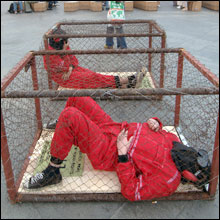


 Aletho News
 Aletho News