Two Australian Senators raised some serious vaccine issues during a recent debate in their parliament. As has been the case with questions raised by other parliamentarians from around the world, these speeches were made to an empty room. Fortunately, they are recorded for the world to listen too.
The first speech is by Malcolm Roberts, Senator for Queensland. He raised the issue of documented evidence and victim testimony of vaccine injuries which are hidden behind anonymous government data. The Senator says that the very least we can do for the victims is to say their names and he precedes to recall accounts of various individuals who have died after being vaccinated.
Senator Roberts says the Australian regulators have been bullying medical practitioners not to report or talk about vaccine harms. Furthermore, he claims 98% of the 800 vaccine deaths, reported by physicians, have been erased without autopsy or consideration of medical data.
He says data recently revealed in US court papers shows vaccine harm was apparent in the Pfizer clinical trials. This information should have resulted in the refusal of the application for provisional use. No data was provided on individuals in the trials and no independent analysis of the fundamental issues surrounding novel mRNA vaccines was conducted in Australia. Instead, the Secretary just took Pfizer, AstraZeneca and Moderna’s word for it.
The Senator goes on to list the fines that these same pharmaceutical companies have been issued with (for criminal behaviour) over the years. AstraZeneca had a US $355 million fine for fraud and US $550 million fine for making unfounded efficacy claims. Pfizer had a US $430 million fine for unfounded claims about efficacy and a US $2.3 billion fine for unfounded claims about efficacy and for paying kickbacks.
Indemnities have been made against any damage caused by the vaccines which he calls deceit and criminal incompetence. Some of the Australian political parties have accepted $1 million each from the pharmaceutical companies in this election cycle alone. Billions more are being set aside in the Australian budget to continue the pharmaceutical companies’ COVID-19 gravy train.
Senator Roberts says mention should be made to the decision to ban safe, fully approved and widely accepted alternatives to COVID-19 vaccines, including hydroxychloroquine, Ivermectin, vitamins, minerals, natural antivirals, healthy eating and lifestyles. This ban was taken to ensure the fastest and widest-possible adoption of the vaccines and the vaccines approval was funded by the same pharmaceutical companies that produce them.
He thinks the Australian Bureau of Statistics is culpable in this scandal and cover-up. It’s annual budget is $400 million but the most recent mortality data is from November 2021. The most recent breakdown of mortality by cause and age is from 2020 as is the most recent data on live births. Birth data used to be available six weeks after so he asks are they hiding miscarriages?
The Senator says peer reviewed and soon to be published data is to be released from outside the government which must require the secretary to cancel the provisional approval of the vaccines.
He recaps the extent to which we have been misled:
- Freedom of information documents show there has been a failure to assess the reproductive toxicology of the vaccines;
- Documents indicate a failure to assess the impact of micro RNA sequences and related molecular genetic issues on the human body;
- Peer-reviewed and published in-vitro research shows gene based vaccine generated spike proteins can migrate into human cell nuclei to disrupt DNA repair mechanisms;
- Vaccine derived RNA can be reverse transcribed leading to possible integration into the human genome, which is denied based on what the pharmaceutical companies say.
- Internal Pfizer data indicate they accepted 1,272 different adverse vaccine events, including paralysis and death. German and US insurance actuarial data suggests the Australian database of adverse events notifications is under reporting by nine fold. Documents show there are two databases, an official one and one for the public meaning vaccine injury is likely to be significantly higher than reported.
He reports on German pathologists describing pathological aggregates of spike proteins and lymphocyte infiltrations in inflamed organs in autopsies related to deaths post vaccination. Whistle-blowers to the British Medical Journal provide reports on inadequacies, irregularities and possible fraudulent practises in the Pfizer vaccine trials.
Too frequent vaccines for respiratory viruses runs the risk of desensitising the immune response to the virus and lead to hypo immunity, a worse illness than without the immunisation. He says repeated vaccination is doing more harm than good.
The Senator concluded by asking a question to all those who have gone along with the deceit, “how the hell do you expect to get away with it? We’re not going to let you get away with it, we won’t let you get away with it. We’re coming for you. We have the stamina to hound you down and we damn well will.”
The next speech was by Senator Gerard Rennick, another representative from Queensland.
He says, to date, government figures show there have been over 116,000 reported, suspected adverse events to the vaccines in Australia. This is more than all other drugs put together since 1971 and the number is still climbing. Is it any wonder the Australian health system is struggling?
Most of these cases are prepared by medical professionals and almost every one has ticked the box indicating that they suspect the injury was caused by the vaccine. Anyone who has failed to speak up is destroying the lives of so many Australian people.
March 31, 2022
Posted by aletho |
Science and Pseudo-Science, Timeless or most popular, Video, War Crimes | AstraZeneca, Australia, COVID-19 Vaccine, Moderna, Pfizer |
Leave a comment
Pfizer’s Bourla says we need a 4th shot. Pfizer sold $36.8 billion dollars’ worth of COVID vaccines in 2021, making its vaccine the top-selling pharmaceutical product in history. Pfizer has estimated its COVID vaccine sales for 2022 at $32 billion.
Albert Bourla says we need a 4th dose of his magic money-making elixir, but his company is also working on a universal coronavirus vaccine (a 2nd magic elixir), which we will only need once a year.
Albert Bourla, PhD, CEO of Pfizer, said a second booster shot of the COVID-19 vaccine is necessary for protection against infection, according to a March 13 interview with CBS News.
Dr. Bourla said the third dose of the COVID-19 vaccine provides protection from hospitalization and death, but “it’s not that good against infections” and the protection is relatively short-lived. Pfizer is preparing data for the FDA about the need for a fourth dose.
“Many variants are coming,” Dr. Bourla told CBS. “And omicron was the first one that was able to evade in a skillful way the immune protection that we were giving. But also, in all that the duration of the protection, it doesn’t last very long.”
… In February, the CDC published a study showing the efficacy of booster shots of Pfizer-BioNTech and Moderna vaccines waned after about four months, but still provided significant protection from hospitalizations during the omicron surge.
Dr. Bourla also told CNBC that Pfizer is developing a vaccine that will protect against all COVID-19 variants, including omicron, for at least a year. He expects to review data from trials on the long-term vaccine by the end of the month.
But Dr. Marco Cavaleri, a top regulator at Europe’s FDA, called the European Medicines’ Agency (EMA), says this may weaken the immune response. According to Reuters :
The European Union’s drug regulator on Tuesday expressed doubts about the need for a fourth booster dose of COVID-19 vaccine and said there is currently no data to support this approach as it seeks more data on the fast-spreading Omicron variant.
“While use of additional boosters can be part of contingency plans, repeated vaccinations within short intervals would not represent a sustainable long-term strategy,” the European Medicines Agency’s Head of Vaccines Strategy, Marco Cavaleri, told a media briefing.
The EMA official raised concerns that a strategy of giving boosters every four months hypothetically poses the risk of overloading people’s immune systems and leading to fatigue in the population.
Cavaleri also said more data on the impact of the new variant on vaccines and a better understanding of the evolution of the current wave were needed to decide whether an Omicron-specific vaccine was needed.
“It is important that there is a good discussion around the choice of the composition of the vaccine to make sure that we have a strategy that is not just reactive … and try to come up with an approach that will be suitable in order to prevent a future variant,” he said.
The EMA said it was currently in conversation with vaccine developers in case there is a need for an updated vaccine but added that any such change would need to be coordinated globally.
March 14, 2022
Posted by aletho |
Deception, Science and Pseudo-Science | COVID-19 Vaccine, Pfizer |
Leave a comment
The U.S. Food and Drug Administration (FDA) in December 2021 granted Emergency Use Authorization (EUA) to two COVID-19 early treatment oral drugs: Pfizer’s Paxlovid and Merck’s molnupiravir.
This was a major milestone, as until then, there were no FDA-endorsed pharmaceutical pill options for people diagnosed with COVID-19.
The standard medical therapy for a newly diagnosed person was: Go home, rest, drink water and go to the hospital if things get dire.
Now, after almost two years, people diagnosed with early stages of COVID-19 can be prescribed a pill!
As background, there are three stipulations a drug must meet in order to obtain EUA from the FDA:
- There must be an emergency.
- The treatment in consideration must be safe and offer 50% efficacy.
- There must not be an alternative available treatment that is safe and effective.
Pfizer and Merck oversaw clinical trials that attempted to prove their products were safe and effective. In the letters of authorization issued to Pfizer and Merck, the FDA outlined what tests were done, what the results were, what some of the limitations and concerns are, etc.
The FDA then generated more detailed advisories to healthcare providers (doctors) for Paxlovid and molnupiravir. These documents give more specifics about use restrictions (e.g., not to children), potentially adverse effects of each drug (e.g., not to be used by pregnant women, etc.), potential conflicts with other drugs (quite a few), etc.
Here are four key points to consider regarding the Paxlovid and molnupiravir data:
- The tests were conducted by the pharmaceutical companies themselves (not an unbiased entity).
- No long-term testing was done on either of these drugs (the trials lasted a few months).
- The effects on patients with many other diseases (e.g., Parkinson’s) were not evaluated and remain unknown.
- The reported effectiveness of each drug (hospitalization or death: 88% and 30%) are relative not absolute. (See this explanation about this important point.)
OK, kudos to the FDA for giving consumers some early treatment options for dealing with COVID-19. It’s especially good that they are non-hospital, take-at-home therapies.
However, the question remains: How do these FDA-endorsed drugs compare to other over-the-counter (OTC) and non-patented drugs — especially ivermectin (IVM) and hydroxychloroquine (HCQ) — that are reported to have some early treatment effectiveness against COVID-19?
As a scientist (physicist) I try to be careful in analyzing data, to not only be accurate but to present it objectively and understandably.
In that light, see this table where I juxtapose Paxlovid and molnupiravir to IVM, HCQ and three OTC drugs: curcumin, Vitamin D and zinc. The comparisons made are based on about 20 COVID-19 factors (effectiveness, safety, cost, etc.).
Comparison of Major COVID-19 Early Treatment Oral Pharmaceuticals
Click here to increase the size of the chart and access the hyperlinks.
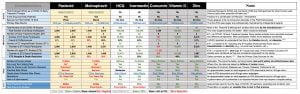
6 takeaways from comparison of Paxlovid and molnupiravir to IVM, HCQ, and OTCs
- Pfizer’s Paxlovid is reported to have very high effectiveness.
- HCQ and the curcumin have effectiveness comparable to Paxlovid.
- Merck’s molnupiravir has very low effectiveness.
- IVM, Vitamin D and Zinc have effectiveness far superior to molnupiravir.
- Paxlovid and molnupiravir have more serious side effects than the others.
- Paxlovid and molnupiravir cost considerably more than the non-patented options.
Are Pfizer and Merck oral treatment EUAs legal?
Remember, federal law stipulates that an EUA can not be granted unless: “There is no adequate, approved, and available alternative to the product for diagnosing, preventing, or treating the disease or condition.”
The data in this analysis indicate there are “adequate and available alternatives for treating” COVID-19. If the data are accurate, then these EUAs have questionable legality.
Adequate and available alternatives for treating COVID-19 do, in fact, exist — the FDA has no scientific justification for ignoring IVM, HCQ, Vitamin D and zinc.
Further, if these FDA-issued EUAs for Paxlovid and molnupiravir violate federal statutes, a closer examination of the FDA’s COVID-19 vaccine EUAs seems warranted.
If the Pfizer and Merck EUAs are legal, then why haven’t HCQ and IVM also been given EUAs?
Considering the six takeaways listed above — plus the fact, as noted in the above table, that there have been successful HCQ and IVM studies much larger (~10x) than those done for Paxlovid and molnupiravir — exactly why has the FDA not issued EUAs for IVM and HCQ?
The comparative in Table 1 adequately demonstrates there is no justification for the FDA’s refusal to grant EUAs to IVM and HCQ.
If the FDA had granted EUAs for HCQ and IVM a year ago, hundreds of thousands of COVID-19 deaths would have been prevented.
What FDA policy, procedure or precedent took priority over preventing hundreds of thousands of American deaths?
What about monoclonal antibody therapies?
Let us now expand our comparisons to include current monoclonal antibody therapies:
Comparison of Major COVID-19 Early Treatment Pharmaceuticals
Click here to increase the size of the chart and access the hyperlinks.
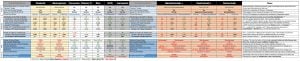
Note that the four key points identified above, regarding the Paxlovid and molnupiravir data, all apply here.
Some of the main takeaways from this comparison are:
- Sotrovimab has the highest effectiveness — but the least amount of data.
- HCQ and curcumin have effectiveness comparable to the bamlanivimab+ and casirivimab+ combinations.
- The first FDA EUA given to bamlanivimab turned out to be a mistake (as health issues were discovered).
- All the monoclonals have more serious side effects than the non-EUA options.
- All the monoclonals cost considerably more than the non-EUA options.
- All the monoclonals have much less safety data than the non-EUA options.
Again, this comparison shows that IVM, HCQ, curcumin, vitamin D and zinc compare very favorably to all of the early treatments that received EUA from the FDA.
John Droz, Jr. is an independent North Carolina physicist.
© 2022 Children’s Health Defense, Inc. This work is reproduced and distributed with the permission of Children’s Health Defense, Inc. Want to learn more from Children’s Health Defense? Sign up for free news and updates from Robert F. Kennedy, Jr. and the Children’s Health Defense. Your donation will help to support us in our efforts.
March 8, 2022
Posted by aletho |
Corruption, Deception, Science and Pseudo-Science, Timeless or most popular | Covid-19, FDA, Merck, Molnupiravir, Paxlovid, Pfizer, United States |
Leave a comment
Washington, DC, — In a 55,000-page set of documents released on Tuesday, the U.S. Food and Drug Administration’s (FDA’s) Center for Biologics Evaluation and Research (CBER) is for the first time allowing the public to access data Pfizer submitted to FDA from its clinical trials in support of a COVID-19 vaccine license. This follows U.S. District Judge Mark T. Pittman’s decision on January 6 to deny the request from the FDA to suppress the data for the next 75 years which the agency claimed was necessary, in part, because of its “limited resources.”
A 38-page report included in the documents features an Appendix, “LIST OF ADVERSE EVENTS OF SPECIAL INTEREST,” that lists 1,291 different adverse events following vaccination. The list includes acute kidney injury, acute flaccid myelitis, anti-sperm antibody positive, brain stem embolism, brain stem thrombosis, cardiac arrest, cardiac failure, cardiac ventricular thrombosis, cardiogenic shock, central nervous system vasculitis, death neonatal, deep vein thrombosis, encephalitis brain stem, encephalitis hemorrhagic, frontal lobe epilepsy, foaming at mouth, epileptic psychosis, facial paralysis, fetal distress syndrome, gastrointestinal amyloidosis, generalized tonic-clonic seizure, Hashimoto’s encephalopathy, hepatic vascular thrombosis, herpes zoster reactivation, immune-mediated hepatitis, interstitial lung disease, jugular vein embolism, juvenile myoclonic epilepsy, liver injury, low birth weight, multisystem inflammatory syndrome in children, myocarditis, neonatal seizure, pancreatitis, pneumonia, stillbirth, tachycardia, temporal lobe epilepsy, testicular autoimmunity, thrombotic cerebral infarction, Type 1 diabetes mellitus, venous thrombosis neonatal, and vertebral artery thrombosis among 1,246 other medical conditions following vaccination.
“This is a bombshell,” said Children’s Health Defense (CHD) president and general counsel Mary Holland. “At least now we know why the FDA and Pfizer wanted to keep this data under wraps for 75 years. These findings should put an immediate end to the Pfizer COVID vaccines. The potential for serious harm is very clear, and those injured by the vaccines are prohibited from suing Pfizer for damages.”
The U.S. government has already purchased 50 million doses of the Pfizer vaccine intended for children under five years of age to be delivered by April 30, 2022 although the FDA has yet to grant an Emergency Use Authorization (EUA) for this age group. The risk of serious injury or death from COVID to healthy children is practically nil and so far, the vaccine is not effective when used in young children.
According to The Guardian, “Pfizer made nearly $37bn (£27bn) in sales from its Covid-19 vaccine last year – making it one of the most lucrative products in history – and has forecast another bumper year in 2022, with a big boost coming from its Covid-19 pill Paxlovid.” President Biden advertised Paxlovid in his State of the Union address on Tuesday, the same day the Pfizer data was released to the public. “We’re launching the ‘Test to Treat’ initiative so people can get tested at a pharmacy, and if they’re positive, receive antiviral pills on the spot at no cost,” Biden said during his speech.
From mid-December, 2020 through February 18, 2022, the U.S. government’s database, the Vaccine Adverse Events Reporting System (VAERS), has received 1,134,984 reports of adverse events, including 24,402 deaths, following COVID vaccination. Additionally, there have been 4,021 cases of myocarditis and pericarditis in the U.S. with 2,475 cases associated with Pfizer, 1,364 cases with Moderna and 171 cases with J&J’s COVID vaccine. These include 643 reports of myocarditis and pericarditis in children aged 12 to 17.
“It would be criminal to expose infants and young children to this extremely risky product,” said Holland. “VAERS data show the catastrophic health impacts the vaccine is having on millions of people, yet Pfizer and other vaccine makers are raking in billions of dollars with no fear of being held accountable for injuries and deaths from their vaccines.”
The FDA’s attempt to suppress these data in support of the pharmaceutical industry’s bottom line isn’t a new phenomenon in this country’s public health system. For more information on pharmaceutical corruption and the tight relationship the industry has with government regulatory agencies, read The Real Anthony Fauci: Bill Gates, Big Pharma and the Global War on Democracy and Public Health by CHD Chair and lead counsel Robert F. Kennedy, Jr.
###
Children’s Health Defense is a 501(c)(3) non-profit organization. Its mission is to end childhood health epidemics by working aggressively to eliminate harmful exposures, hold those responsible accountable, and establish safeguards to prevent future harm. For more information, visit ChildrensHealthDefense.org.
March 4, 2022
Posted by aletho |
Deception | COVID-19 Vaccine, FDA, Pfizer |
Leave a comment
… Including Those Caused by COVID Vaccines
Two major pharmaceutical companies chose February, the month of love — or hearts — to launch an advertising campaign urging people experiencing heart issues for the first time to visit their doctors.
Pfizer and Bristol Myers Squibb (BMS) this month revived the “No Time to Wait” ad campaign, spending $1.28 million on TV ads alone.
The campaign warns anyone experiencing palpitations and shortness of breath that they may be at increased risk of developing atrial fibrillation (AF), deep vein thrombosis (DVT), other types of blood clots and strokes — the same types of cardiovascular ailments found among people who have received COVID-19 vaccines.
The campaign urges viewers to seek early medical attention in order to reduce the risk of these serious complications.
“Early medical attention” could include prescription drugs — including Eliquis, developed and marketed by none other than Pfizer and BMS.
According to industry publication Fierce Pharma :
“The aim is to get patients back into their doctors’ offices — and of course, if needed, be diagnosed with any relevant condition that may require them to take a blood thinner, such as Eliquis.”
Eliquis, described as a “blockbuster blood thinner and atrial fibrillation (AF) drug,” is a major revenue generator for the Pfizer-BMS alliance, delivering more than $9 billion in annual revenue — far more than competing drugs such as Xarelto (produced by Bayer in conjunction with Johnson & Johnson), and Pradaxa, produced by Boehringer Ingelheim.
Pfizer and BMS relaunched the “No Time to Wait” campaign in conjunction with several advocacy organizations and medical societies, including World Thrombosis Day, which expressed support for the Pfizer-BMS initiative as a means of “educating” the public.
Characterized as a “surround-sound campaign,” Pfizer-BMS use television, radio and social media to deliver the “No Time to Wait” message to the public.
As part of the campaign, a DVT and pulmonary embolism (PE) television advertisement debuted on Valentine’s Day, Feb. 14. The ad showed two patients describing how they “didn’t wait” to speak to their doctors about the AF, DVT and PE symptoms they had begun to experience while performing everyday activities.
Speaking to the camera, the two actors describe symptoms, such as shortness of breath and a racing heart, which are potential indicators of AF, DVT and PE.
Official campaign literature urges the public to take action:
“Right now, people may be weighing a decision to visit a healthcare provider. However, symptoms like swelling, pain, tenderness or redness in the leg, thigh or pelvis can possibly be related to a potentially serious condition such as deep vein thrombosis (DVT). It’s critical to not brush off these symptoms.”
BMS, via its spokesperson, described the reasons for relaunching the campaign:
“We received so much positive feedback from patients and advocates on the impact this campaign had on patients, we knew it was our responsibility to continue to evolve the program and further get the message out.
“In the middle of 2021, we decided to evolve the campaign, with new insight that symptomatic people at risk for AFib or DVT/PE can often dismiss their symptoms or misattribute [emphasis added] them to other health and lifestyle factors.”
Could “misattribute,” in this instance, actually refer to cases where those who had recently received a COVID vaccine experienced the onset of heart-related conditions, in some cases leading to their deaths?
Is Pfizer benefitting from vaccine-induced ailments?
Could the relaunching of the “No Time to Wait” campaign represent an effort by Pfizer to engage in damage control from the increase in vaccine-induced heart conditions — while benefiting from the sale of a drug used to address those same ailments?
There are several objectives Pfizer and BMS could accomplish with the campaign.
First, by launching an advertising campaign warning people they may be at risk of certain heart conditions, Pfizer and BMS are in a sense “naturalizing” heart ailments in young and/or healthy individuals.
Second, by “naturalizing” the prevalence and likelihood of such heart conditions, these companies may deflect blame for these conditions from COVID vaccines, including the Pfizer-BioNTech vaccine.
Third, by referring patients to their doctors, the Pfizer-BMS alliance may directly benefit financially from the increased prevalence of heart ailments and conditions in the vaccinated public — as doctors prescribe more Eliquis, the top-selling blood thinner and AF drug, to treat their symptoms.
‘Normalizing’ heart conditions in young and healthy
According to Pfizer and the Centers for Disease Control and Prevention (CDC), even “the healthiest athletes” are now at risk for blood clots, as stated in an urgent warning issued this month.
The media and health authorities in recent months have proffered multiple explanations for why healthy people are developing blood clotting and heart conditions, blaming everything from weather and energy bills to cannabis use — but not COVID vaccines.
Here are some examples:
- September 2021: The Times of India ran a story on a “doctors’ reminder” that “nobody is too young for a heart attack.”
- September 2021: A study indicated that cannabis use doubled the risk of heart attacks in young adults.
- October 2021: The New York Post reported on “[t]he little-known heart attack that’s striking ‘fit and healthy’ women as young as 22.”
- November 2021: British tabloid The Sun reported on “[t]he ways cold weather can affect your body — from winter vagina to blood clots.”
- November 2021: A Times of India report asked why heart attacks are “becoming common in ‘seemingly’ fit people.”
- November 2021: Healthline reported e-cigarettes can raise the risk of heart disease and stroke.
- December 2021: Another British tabloid, Express, warned about the “healthy” diet that “may ‘increase’ your risk of having a heart attack.”
- January 2022: Norton Health informed us that “[p]reventing heart disease in children is becoming more urgent as more kids develop heart disease.”
- January 2022: A report is published warning that “sports can break your heart in more ways than one.”
- January 2022: A report by CT (Connecticut) Insider indicated more people were suffering from heart disease and strokes “after COVID.”
- January 2022: The Daily Mail warned the “[r]isk of heart problems could be increased even if you drink less than NHS weekly units,” referring to recommendations made by the UK’s National Health Service.
- January 2022: The Sun ran a report claiming weather can “harm” one’s health, leading to heart attacks, stroke or gout.
- January 2022: Another report by The Sun warned 300,000 Brits were “living with [a] stealth disease that could kill within 5 years.” The “stealth disease” in question is aortic valve stenosis, a condition where the heart’s aortic valve narrows.
- February 2022: Nature magazine reported the risk of heart disease “soars after COVID — even with a mild case.”
- February 2022: A doctor interviewed on the UK’s ITV warned an increase in energy bill amounts may cause heart attacks and strokes.
Mark Crispin Miller, professor of media, culture and communication at New York University and founder of News from Underground compiled a list of reports like those listed above.
In looking at incidents and reports during the week of Feb. 8-14 alone, Crispin told readers:
“Before we note all those whose ‘sudden deaths’ made news just this past week — ‘unexpected deaths’ with no reported cause, or due to heart attacks, strokes, blood clots, cardiac arrest or swift, aggressive cancers (all known to be ‘adverse events’ post-‘vaccination’) — let’s review how this unprecedented global spike in sudden death has been deliberately obscured by ‘our free press.’”
Miller highlighted an ABC News report, “‘Broken heart’ cases surge during COVID, especially among women.”
In another example, Science magazine reported geneticists found the answer to “sudden unexplained child deaths.”
Downplaying of the connection between the COVID vaccines and serious heart conditions often has involved high-profile athletes.
For instance, 33-year-old soccer star Sergio Aguero of FC Barcelona was forced to announce his retirement in December 2021, after suffering chest pains and dizziness during a match in October 2021. He never played again.
According to Aguero’s cardiologist, the vaccine was not the reason for his ailment and retirement.
However, Aguero himself, in a Twitter question-and-answer session earlier this month, did not reject this possibility, stating: “I don’t know if Covid or [the] vaccine caused my retirement.”
Media, however, continue to promote the narrative that vaccines have nothing to do with the surge in sudden illnesses or deaths among athletes.
For example, Miller cited a Feb. 1 Washington Post article describing stories of athletes dying due to COVID vaccination as a “falsehood.”
Miller then compared what he described as the “disgraceful” Washington Post report with a documented timeline of athletes who suffered from heart failure between March 2021 and January 2022.
This string of incidents is further illustrated and detailed by the Real Science blog, which found 707 such incidents as of this writing and demonstrated in graphical form the sharp increase in heart failure incidents involving athletes over the course of 2021 and into 2022, as COVID vaccination uptake increased.
Nevertheless, Politifact, in December 2021, assured the public “[t]here’s no proof athletes collapsed with heart issues because of COVID-19 vaccination,” while in November 2021, U.S. News & World Report warned “COVID may trigger [a] heart condition in young athletes.”
As reports of vaccine-induced heart ailments rise, studies confirm link
Multiple studies and reports have confirmed a link between COVID vaccines and heart ailments.
These reports include:
- September 2021: A report found adolescent boys are at higher risk of hospitalization from the Pfizer vaccine than from COVID.
- November 2021: Renowned cardiologist Dr. Steven Gundry warned the Pfizer and Moderna COVID vaccines “dramatically increase” the risk of heart attacks.
- January 2022: Data from the Vaccine Adverse Event Reporting System (VAERS) indicates myocarditis tops the list of COVID vaccine injuries for 12- to 17-year olds.
Meanwhile, reports continue to grow of previously healthy people who develop heart conditions following COVID vaccines.
Here are just a few examples:
- June 2021: A 13-year-old Michigan boy died three days after receiving the second dose of the Pfizer COVID-19 vaccine.
- June 2021: An athlete who received the second dose of the Pfizer vaccine developed myocarditis, triggered by the vaccine.
- August 2021: A 14-year-old boy developed myocarditis after receiving the Pfizer vaccine.
- October 2021: A 17-year-old developed multisystem inflammatory syndrome and myocarditis after receiving the Pfizer vaccine.
- December 2021: A 26-year-old’s death from heart inflammation was found to have “probably” been caused by the Pfizer vaccine.
- January 2022: An autopsy found the death of another 26-year-old from myocarditis was the direct result of receiving the Pfizer vaccine.
- February 2022: A six-year-old developed vaccine-induced myocarditis, leaving him unable to walk.
- February 2022: Autopsies showed that the deaths of two teenage boys who died soon after receiving the Pfizer vaccine were directly caused by the vaccine.
Reports and studies like those listed above have led to increasing calls for the vaccination of minors to be reassessed or outright halted, including:
- January 2022: More than 30 experts called on UK regulators to reassess COVID vaccination for 12- to 15-year olds.
- January 2022: Data revealed reports of heart disease following COVID vaccines had increased 15,600% in young people under the age of 30, compared to the previous 31 years of heart injuries reported following receipt of FDA-approved vaccines.
They’ve also triggered calls for further scrutiny on the part of health authorities, which appear to have had some effect, at least in certain instances.
For example:
- October 2021: The U.S. Food and Drug Administration delayed a decision on green-lighting the administration of the Moderna vaccine to adolescents, citing heart problems (however, the Pfizer vaccine was nevertheless approved for the same age group).
- October 2021: Health authorities in Denmark and Sweden paused administration of the COVID vaccine to younger age groups, citing reports of myocarditis.
- December 2021: The CDC was monitoring eight cases of heart inflammation reported in 5- to 11-year-olds who received the Pfizer vaccine.
Nevertheless, in January 2022, the Centers for Disease Control and Prevention (CDC) refused to investigate the case of a 13-year-old who died of myocarditis days after receiving the Pfizer vaccine, while in August 2021, doctors “downplayed” the connection between the onset of myocarditis in a 25-year-old, and receipt of the Moderna vaccine.
‘No Time to Wait’ campaign spending indicative of broader Big Pharma marketing expenditures
Big-dollar ad spending is par for the course for Big Pharma companies such as Pfizer, as previously reported by The Defender.
For instance, a 2019 Forbes article reported Pfizer spent twice as much on marketing/selling as it spent on research.
Pfizer’s heavy advertising is also evident in its most recent quarterly report, for the fourth quarter of 2021. The report indicates a 10% increase — a total of $12.7 billion — in 2021 “SI&A expenses,” which include marketing and advertising, as compared to 2020, when there was no COVID vaccine available.
The report also projects Pfizer’s SI&A expenses will range between $12.5 and $13.5 billion in 2022.
BMS, in turn, spent $990 million in advertising and marketing in both 2020 and 2021 — after spending $633 million in 2019.
In sum, pharmaceutical ad spending totaled $6.58 billion in 2020, and was expected to surpass $11 billion by the end of 2021 — including $3.9 billion in spending on television advertisements alone.
In addition to “traditional” advertising and marketing campaigns, pharmaceutical companies adopted some more creative ways to promote their products — and perhaps purchase further goodwill on the part of media outlets.
In an October 2021 article, The Defender highlighted several examples of Pfizer sponsoring television news programs and segments, ranging from “Good Morning America” to “Anderson Cooper 360°” to “CBS HealthWatch.”
For example, an Oct. 4, 2021 tweet posted on CNBC’s official Twitter account portrayed Pfizer in glowing terms, accompanied by the text: “paid post for Pfizer.”
And a March 15, 2021 tweet by Pfizer expressed pride in the release of a National Geographic documentary, “Mission Possible: The Race for a Vaccine.”
Michael Nevradakis, Ph.D., is an independent journalist and researcher based in Athens, Greece.
© 2022 Children’s Health Defense, Inc. This work is reproduced and distributed with the permission of Children’s Health Defense, Inc. Want to learn more from Children’s Health Defense? Sign up for free news and updates from Robert F. Kennedy, Jr. and the Children’s Health Defense. Your donation will help to support us in our efforts.
February 25, 2022
Posted by aletho |
Mainstream Media, Warmongering, Deception | Pfizer, Bristol-Myers Squibb, Eliquis |
Leave a comment
On December 17, 2021, Pfizer announced that the clinical trial of its mRNA shot in kids under age 5 had failed. Rather than withdraw this product, Pfizer “amended” its clinical trial to add a third dose. So Pfizer kept the original trial going and subjected these little kids to yet another shot of genetically modified mRNA.
The drug dealers at the FDA said, ‘sounds great, let’s proceed with authorization even in the absence of data.’ That created a huge public backlash as parents rightly protested that the FDA should not approve a drug for kids that failed in a clinical trial.
Yesterday (Feb. 11, 2022), the FDA was forced to admit defeat and Pfizer pulled its Emergency Use Authorization (EUA) application to inject kids under age 5.
Pfizer and the FDA claimed that they were “waiting for more data” that would be available in early April. We now know that this was a lie.
Buried deep in an article on page A13 of the NY Times this morning we learned the real reason why Pfizer withdrew its EUA — the clinical trial had failed, again.
Remember, Pfizer kept the clinical trial going after December 17. So between then and yesterday’s announcement, there was now roughly 55 more days worth of data. And it was truly terrible.
From the NY Times :
Then, late on Thursday [Feb. 10], Pfizer alerted the F.D.A. that it had more recent data, from mid-January on, showing a more discouraging picture as the Omicron variant bore down. The new data revealed that two doses were not sufficiently effective in preventing symptomatic infection.
Read that again. They have the data. And the data show that this shot does not work.
But even here, I think there is reason to believe that they are still lying. We already knew that “two doses were not sufficiently effective” — Pfizer announced that in December. The “more recent data, from mid-January on” is not the two dose regimen anymore, that phase of the trial is finished.
I think there is every reason to believe that this is now the three dose trial that they are describing. If the three dose trial was on track and showing promising results, they would have proceeded with authorization. So now we likely have the first evidence that the three dose trial has failed as well.
(Here’s my math: Pfizer likely injected the third dose into these kids between Dec. 17 and mid-January. So “from mid-January on” (to Feb. 10) is looking at the data in the 25 days after the third injection. In the comments, please let me know if you interpret this differently.)
So it is definitely NOT the case that this is just an incomplete trial that they are waiting to finish up in early April. All of the existing data is bad. Pfizer is now scrambling to find ways to save this product even though the clinical trial has now failed twice. And what’s Pfizer’s plan going forward — to just hope that the data in the next 60 days (from now through early April) magically turns the corner!? Talk about wishful thinking!
Just when I think the cartel and its enablers in the mainstream media could not possibly get any more cynical they sink to new lows.
Janet Woodcock and Peter Marks at the FDA must be fired and prosecuted for reckless endangerment of children. Pfizer must stop this grotesque clinical trial immediately and permanently suspend any plans to inject genetically modified mRNA into children under 5. Anything less is savagery and barbarism.
February 12, 2022
Posted by aletho |
Deception, Science and Pseudo-Science, War Crimes | COVID-19 Vaccine, FDA, Janet Woodcock, Peter Marks, Pfizer, United States |
Leave a comment
Many experts have sounded the alarm that the COVID-19 pandemic was all about the shot1 and a larger agenda to impose totalitarian control worldwide.2 Already, one shot has turned into two doses and a third booster. A fourth booster is also being discussed, including by Moderna CEO Stéphane Bancel, who said that the efficacy of the third shot is likely to decline over several months, necessitating another shot soon thereafter.3
“I will be surprised when we get that data in the coming weeks that it’s holding nicely over time — I would expect that it’s not going to hold great,” Bancel said in an interview with Goldman Sachs.4 Conveniently, Moderna is working on an Omicron-specific jab that they hope to release as early as March 20225 — and this is only the beginning.
Writing on Substack, contributor Eugyppius explained, “Moderna, just one of multiple pharmaceuticals eager to exploit our new vaccine mania, are expanding their manufacturing capacity to produce as many as 6 billion mRNA vaccine doses per year.”6 The information came straight from the horse’s mouth, at a virtual meeting held the first day of the World Economic Forum’s (WEF) Davos Agenda 2022, at a session titled “COVID-19: What’s Next?”7
Along with Bancel, the meeting was attended by Dr. Anthony Fauci, director of the U.S. National Institute of Allergy and Infectious Diseases (NIAID), Richard Hatchett, CEO of the Coalition for Epidemic Preparedness Innovations (CEPI), and professor Annelies Wilder-Smith from the London School of Hygiene and Tropical Medicine, who together detailed their plans for “vaccine mania” to persist indefinitely.
Combined Shots Planned to Avoid ‘Compliance Issues’
During the discussion, Bancel states that Moderna is actively preparing for “what should the vaccine be in the fall of 2022, and what should it contain.” The company is “working with public health experts like Fauci’s team to figure this out. Because soon we’re going to have to decide what goes into the vaccine for fall of 2022,” he said.8
Fauci’s NIAID is part of the U.S. National Institutes of Health (NIH), which, some may be surprised to learn, actually owns half the patent for Moderna’s COVID-19 injection. In fact, the NIH owns thousands of pharmaceutical patents, and the U.S. Centers for Disease Control and Prevention spends $4.9 billion a year out of its $12 billion budget buying and distributing vaccines.
“Tony Fauci was able to choose, to designate, four of his high-level employees who each get individual patent shares,” according to Robert F. Kennedy Jr. in an interview with James Corbett.9 “They will collect $150,000 a year for life if the Moderna vaccine is approved, which it has been.”10
In addition to working closely with Fauci, Moderna is planning to combine multiple shots, such as a COVID-19 shot, a flu shot and a respiratory syncytial virus (RSV) shot, into one injection — coming in 2023 — to help avoid “compliance issues.” He said:11
“The other piece we’re working on is for 2023, is how do we make it possible from a societal standpoint that people want to be vaccinated?
And we’re going to do this by preparing combinations, we’re working on the flu vaccine, we’re working on an RSV vaccine, and our goal is to be able to have a single annual booster, so that we don’t have compliance issues, where people don’t want to get two to three shots a winter, but they get one dose, where they get a booster for corona, and a booster for flu and RSV, to make sure that people get their vaccine.”
When asked how soon this would occur, he continued:12,13
“So the RSV program is now in Phase 3, the flu program is in Phase 2 and soon in Phase 3, I hope as soon as second quarter of this year. So the best case scenario would be the fall of 2023, as a best case scenario, I don’t think it would [be available] in every country, but we believe it’s possible to operate in some countries next year.”
Vaccines for at Least 20 Pathogens in the Works
SARS-Cov-2 isn’t the only virus that Moderna and other pharmaceutical companies, along with health officials, are intent on targeting with more shots. Remember zika virus, which Kennedy described as another pandemic fabricated for the purpose of selling pharmaceuticals and advancing totalitarian control?14 There’s a vaccine on the way.
How about Nipah virus? Nipah virus, a zoonotic pathogen for which no treatments exist, is the inspiration for the film “Contagion.”15 The virus can only be experimented on in BSL-4 laboratories. As an aside, the National Bio and Agro-Defence Facility in Kansas will be the first biocontainment facility16 in the U.S. where research on Nipah (and Ebola) can be conducted on livestock.
In 2019, Nipah Malaysia was also among the deadly virus strains shipped17 from Canada’s National Microbiology Lab to the Wuhan Institute of Virology. If you haven’t heard of Nipah yet, you likely will soon — another vaccine is in the works for it. Bancel said:18,19
“We’re working with Dr. Fauci’s team, we’re working with Richard [Hatchett], to work on many more pathogens … The entire scientific community has known for years that there’s at least around 20-ish pathogens that are a risk for which we need vaccines, you know we have zika vaccine in Phase 2 … we’re working on a Nipah vaccine, those are viruses that not everybody has heard of.
Because we need to have the data. What dose, what construct from a genetic standpoint is required … so that if a new pathogen emerges from that family we can very quickly move into a Phase 3.”
More mRNA Shots Are Coming
Many other vaccines are also under development, including a Phase 3 study looking at combining Pfizer’s COVID-19 injection with their Prevnar 20™ (pneumococcal 20-valent conjugate vaccine) for adults aged 65 and older.20
In a related news release, Kathrin U. Jansen, Ph.D., senior vice president and head of vaccine research and development at Pfizer spoke about the importance of “raising awareness of the importance of adult” vaccinations, echoing Bancel in their desire to create combination shots so adults can get multiple vaccines at one doctor or pharmacy visit.
“As the COVID-19 vaccines and booster doses continue to be administered, we believe that health care providers have an opportunity to talk to their adult patients about other recommended vaccines in line with CDC guidance,” she said.21
An agreement between Pfizer and BioNTech to develop the first mRNA shingles vaccine was also reached in January 2022.22 According to a Pfizer news release, “While there are currently approved vaccines for shingles, there is an opportunity to develop an improved vaccine that potentially shows high efficacy and better tolerability, and is more efficient to produce globally, by utilizing mRNA technology.”23
A Phase 1 study by Moderna for its mRNA Epstein-Barr virus shot is also underway. The first dose of the experimental shot was given to a study subject January 5, 2022,. In a news release, Moderna detailed their intent on rolling out additional mRNA vaccines against a number of additional viruses as well:24
“The start of this Phase 1 study is a significant milestone as we continue to advance mRNA vaccines against latent viruses, which remain in the body for life after infection and can lead to chronic medical conditions. Moderna is committed to developing a portfolio of first-in-class vaccines against latent viruses for which there are no approved vaccines today, including vaccines against CMV [cytomegalovirus], EBV and HIV.
Our research team is working to bring even more vaccines against latent viruses to the clinic. We believe these vaccines could have a profound impact on quality of health for hundreds of millions of people around the world.”
Other mRNA shots also in development include:
- An mRNA cancer vaccine for non-small cell lung cancer (NSCLC)25
- mRNA influenza shots, which are under development by several companies, including Pfizer, Moderna, Sanofi and Translate Bio26
- An mRNA HIV vaccine, one of which is being studied by Moderna in collaboration with the NIH27
- Various additional mRNA cancer vaccines, including one targeting advanced melanoma — being developed by BioNTech and Regeneron Pharmaceuticals28 — and several being developed by Moderna, targeting melanoma, NSCLC, colorectal cancer and pancreatic cancer29
Ramping Up Production for Billions of Doses
In case there were any doubt that the powers that be intend to use injections as an increasingly integral part of your health care routine and daily life, Bancel described plans for billions of doses of shots to be manufactured in a matter of months. He said during the WEF session:30,31
“The other piece is manufacturing. If you look in 2020, we were able to ship 20 million doses to the U.S. government when the vaccine was authorized. That is not a lot.
But this year we’re going to have 2 to 3 billion doses of capacity in a six-month timeframe, which is what I believe it will take us to get authorization of a vaccine, if all the work has been done before … you could have 1.5 billion doses available in six months, and that’s just from Moderna. And you have other platforms, it could be a much bigger number …”
With censorship now so pervasive, and Big Tech colluding with dictators and pharmaceutical companies to bury the harms occurring through these experimental vaccines — including death — it’s now more important than ever to let your voice be heard in support of medical freedom and opposition of government health officials intimidating, threatening and coercing citizens to violate their conscientiously-held beliefs.
The ethical principal of informed consent to medical risk taking, which includes the legal right to make voluntary decisions about getting experimental injections, must be protected. For now, however, as Eugyppius explained:32
“The vaccinators are a great sword of Damocles over our heads. As I type this, they are scouring the earth for the novel pathogens their products require, and they, together with their bureaucratic and academic allies, will do their level best to call into being new pandemic scares and vaccination campaigns whenever possible — perhaps every flu season.”
Sources and References
February 5, 2022
Posted by aletho |
Science and Pseudo-Science, Timeless or most popular | COVID-19 Vaccine, Moderna, Pfizer, Sanofi, Translate Bio, WEF |
Leave a comment
The U.S. Food and Drug Administration (FDA) on Monday granted full approval of Moderna’s Spikevax COVID vaccine for people 18 and older.
Similar to the agency’s licensing last year of Pfizer’s Comirnaty vaccine, the approval raised a number of legal questions related to mandates and product availability.
Spikevax is a two-dose primary series, approved also for administration as part of a heterologous (“mix and match”) single booster dose for individuals who previously completed their original series of vaccinations with the Pfizer or Johnson & Johnson COVID vaccines.
According to the FDA, Spikevax “has the same formulation as the [Emergency Use Authorization (EUA)] Moderna COVID-19 Vaccine and … can be used interchangeably with the EUA Moderna COVID-19 Vaccine to provide the COVID-19 vaccination series.”
However, in its approval letter, the FDA said Spikevax is “legally distinct” from the Moderna EUA vaccine:
“The licensed vaccine has the same formulation as the EUA-authorized vaccine and the products can be used interchangeably to provide the vaccination series without presenting any safety or effectiveness concerns. The products are legally distinct with certain differences that do not impact safety or effectiveness.”
The FDA made the same distinction between the Pfizer-BioNTech EUA vaccine and the Pfizer Comirnaty vaccine, which the agency fully licensed in August, 2021, a move that raised questions about liability and the legality of vaccine mandates.
After Monday’s announcement, media outlets were quick to reassure the public the two Moderna vaccines are the same and that this was just a marketing ploy, where Moderna simply “rebranded” what is otherwise the same vaccine.
No ‘fully licensed’ COVID actually available
While Moderna’s Spikevax vaccine is now fully licensed, the original Moderna vaccine will remain under EUA. Indeed, the FDA on Jan. 7 reissued the EUA.
The FDA has also made it clear the Spikevax vaccine will not be available to the American public, announcing:
“Although SPIKEVAX (COVID-19 Vaccine, mRNA) and Comirnaty (COVID-19 Vaccine, mRNA) are approved to prevent COVID-19 in certain individuals within the scope of the Moderna COVID-19 Vaccine authorization, there is not sufficient approved vaccine available for distribution to this population in its entirety at the time of reissuance of this EUA.”
These claims parallel the chain of events that followed the FDA’s full approval of the Pfizer Comirnaty vaccine in August 2021.
At the time, Pfizer and the FDA claimed Comirnaty was not yet available, as there were sufficient stocks of the Pfizer-BioNTech EUA vaccine still available to be administered.
As of this writing, the FDA states, via its website, that Comirnaty products are “not orderable at this time.”
The FDA has not indicated when, or if, the Spikevax and Comirnaty vaccines will be available for distribution in the U.S.
Are EUA and fully licensed vaccines really interchangeable?
As reported by The Defender, there is a significant legal distinction between products authorized under EUA and those fully licensed by the FDA.
EUA products are experimental under U.S. law. Under the Nuremberg Code and federal regulations, no one can force a human being to participate in this experiment.
Specifically, under 21 U.S. Code Sec.360bbb-3(e)(1)(A)(ii)(III), “authorization for medical products for use in emergencies,” it is unlawful to deny someone a job or an education because they refuse to be an experimental subject. Instead, potential recipients have an absolute right to refuse EUA vaccines.
That’s an issue military members, unable to find any vaccination sites that offer the fully licensed Comirnaty vaccine, cited in various lawsuits challenging vaccine mandates.
Notably, on Nov. 12, 2021, a federal judge rejected an argument by the U.S. Department of Defense, in defending the military’s vaccine mandate, that the Pfizer Comirnaty and Pfizer-BioNTech vaccines are “interchangeable.”
U.S. law also requires the EUA designation be used only when “there is no adequate, approved and available alternative to the product for diagnosing, preventing or treating such disease or condition.”
This means that, in legal terms, all EUA products should be withdrawn once alternative products have received full approval.
Perhaps the most significant legal distinction, however, pertains to the legal protections afforded vaccine manufacturers, depending on how their product is classified.
Under the 2005 Public Readiness and Preparedness (PREP) Act, EUA-approved vaccines enjoy a significant liability shield. Specifically, vaccine manufacturers, distributors, providers, and government officials involved in the policymaking, approval, and distribution process are immune from any legal liability.
Under such regulations, the only way an injured party can sue is if he or she can prove willful misconduct, and if the U.S. government has also brought an enforcement action against the party for willful misconduct.
No such lawsuit has ever succeeded.
Conversely, fully licensed vaccines, such as Spikevax and Comirnaty, do not have a liability shield, and are instead subject to the same product liability laws as other products.
This means the Spikevax and Comirnaty vaccines could expose pharmaceutical companies to significant financial claims if individuals injured by the vaccines chose to sue the vaccine makers.
The rush to get COVID vaccines authorized for all ages — a ploy to avoid liability?
There’s another reason Pfizer and Moderna don’t want their fully licensed vaccines to be available yet — they’re waiting for the vaccines to be authorized, then licensed, for children as young as 6 months old.
Why? Because once a vaccine is fully licensed by the FDA, the only way its manufacturer can be shielded from legal liability is if the vaccine is added to the Centers for Disease Control and Prevention’s childhood vaccination schedule.
The National Childhood Vaccine Injury Act (NCVIA), passed into law in 1986, provides a legal liability shield to drugmakers if they receive full authorization for all ages and the vaccine is added to the mandatory schedule.
Reporting on the FDA’s approval of Spikevax, investigative journalist Jordan Schachtel wrote:
“Are Pfizer and Moderna waiting for full authorization for children’s shots to distribute Comirnaty and Spikevax to the masses? There’s plenty of litigators who have suggested that this is exactly what is going on in Big Pharma world.”
By creating the public perception that the Pfizer and Moderna EUA vaccines are fully approved, businesses, schools and other institutions are emboldened to impose vaccine mandates that violate existing law and allow the vaccines to be administered without informed consent.
It has also been argued that by relabeling the product, any previous data regarding vaccine injuries and side effects identified in association with the EUA vaccine are not counted in the safety studies for the approved vaccine.
The FDA approval of the Pfizer Comirnaty vaccine, its subsequent lack of availability and the continued administration of the Pfizer-BioNTech EUA vaccine led Children’s Health Defense (CHD) to file a lawsuit against the FDA and its acting director, Dr. Janet Woodcock, for their allegedly deceptive and rushed approval of the Comirnaty vaccine, arguing that the approval represented a classic “bait and switch” tactic.
CHD further alleged in its lawsuit that the FDA violated federal law when it simultaneously licensed Pfizer’s Comirnaty vaccine and extended Pfizer’s EUA — as the agency has now done with Moderna and Spikevax — for a vaccine that has the “same formulation” and that “can be used interchangeably,” according to the FDA.
FDA admits no safety data for Spikevax use among pregnant women
Beyond the legal questions raised by the FDA’s approval this week of Spikevax, the approval also raises safety questions.
For instance, the FDA admitted Spikevax was insufficiently tested on pregnant women, stating that “[a]vailable data on SPIKEVAX administered to pregnant women are insufficient to inform vaccine-associated risks in pregnancy.”
Furthermore, Spikevax was approved without having been tested for its ability to provide protection against the Omicron variant, which is reported to account for 99.9% of current U.S. COVID cases — it was approved only for providing protection against mutations that are no longer circulating.
And yet, the FDA cited the Omicron variant as the reason behind its decision to pull its EUA for monoclonal antibody products. The FDA claims that these products have not been shown to provide protection against the Omicron variant.
Michael Nevradakis, Ph.D., is an independent journalist and researcher based in Athens, Greece.
© 2022 Children’s Health Defense, Inc. This work is reproduced and distributed with the permission of Children’s Health Defense, Inc. Want to learn more from Children’s Health Defense? Sign up for free news and updates from Robert F. Kennedy, Jr. and the Children’s Health Defense. Your donation will help to support us in our efforts.
February 3, 2022
Posted by aletho |
Deception, Timeless or most popular, War Crimes | COVID-19 Vaccine, FDA, Moderna, Pfizer, Spikevax, United States |
Leave a comment
Days prior to today’s scheduled release of a tranche of documents related to the Pfizer COVID vaccine, the pharmaceutical company asked a federal court to let it intervene before any information is released.
It’s the latest development in an ongoing court case that began with a Freedom of Information Act (FOIA) request filed in August 2021 by Public Health and Medical Professionals for Transparency (PHMPT).
PHMPT asked the U.S. Food and Drug Administration (FDA) to release all documents related to its Emergency Use Authorization (EUA) of the Pfizer-BioNTech COVID vaccine and full approval of the Pfizer-Comirnaty COVID vaccine.
Judge Mark Pittman of the U.S. District Court for the Northern District of Texas on Jan. 6 issued an order requiring the FDA to release 12,000 pages of documents by Jan. 31 and an additional 55,000 pages per month thereafter, until the release of the nearly 400,000 pages of documents is complete.
Pfizer claims to support the disclosure of the documents, but asked to intervene in the case to ensure that information exempt from disclosure will not be “disclosed inappropriately.”
In a memorandum it submitted to the court, Pfizer said it:
“[S]eeks leave to intervene in this action for the limited purpose of ensuring that information exempt from disclosure under FOIA is adequately protected as FDA complies with this Court’s order.”
Attorneys for Pfizer also claimed while it was not asking the court to reconsider the Jan. 6 order, it would consider challenging the order at an unspecified later date, telling the court:
“Pfizer does not presently intend to move the Court to reconsider its January 6, 2022 order, but Pfizer is not in a position at this time to waive its ability to do so if circumstances change such that there is good cause at a later time to do so.”
Pfizer did not clarify what such a change of circumstances might entail.
Lawyers for PHMPT, in a brief submitted Jan. 25 to the court, asked Pittman to reject Pfizer’s motion and requested the judge ask Pfizer to clarify how, exactly, its intervention would help expedite the release of the documents, arguing that Pfizer:
“… provides no reason why it needs to intervene in this matter to render that purported assistance. Nor can Plaintiff discern why Pfizer needs to intervene in this matter to assist the FDA with expediting release of the requested documents—it can render this assistance without intervening.”
PHMPT, a group of more than 30 medical and public health professionals and scientists from institutions such as Harvard, Yale, and UCLA, in September 2021 filed a lawsuit against the FDA when the agency denied its original FOIA request.
In that request, PHMPT asked the FDA to release “all data and information for the Pfizer vaccine,” including safety and effectiveness data, adverse reaction reports, and a list of active and inactive ingredients.
The first batch of documents released in November 2021, which totaled a mere 500 pages, revealed there were more than 1,200 vaccine-related deaths within the first 90 days following the release of the Pfizer-BioNTech COVID vaccine.
Arguments regarding Pfizer’s motion are scheduled to be heard in court on Jan. 28, though as of this writing, no further updates regarding the case or this scheduled hearing have been publicly disclosed.
Pfizer represented by world’s third-largest law firm
Pfizer on Jan. 21 submitted two filings to the court: a motion to intervene in the case “for a limited purpose,” and an accompanying “memorandum of points and authorities” supporting the motion.
It remains unclear how Pfizer defines “inappropriately” or “for a limited purpose,” or why it waited two weeks after Judge Pittman’s order, and only days before the Jan. 31 scheduled release of 12,000 pages to file its motion.
Pfizer claims it was unaware of the case until executives read news reports about it in December 2021, despite the fact that the case garnered coverage from major news outlets, including Reuters, in November of that year.
Still, the company hired DLA Piper LLP, one of the world’s most high-powered law firms, to represent it. DLA Piper is headquartered in London and maintains offices in 40 countries.
In 2014, the firm had revenues totaling $2.48 billion, making it the third-largest law firm in the U.S. by revenue.
DLA Piper was the 12th largest donor to President Obama’s 2012 re-election campaign and the 9th largest donor to Hillary Clinton between 1999 and 2018.
Douglas Emhoff, spouse of U.S. Vice President Kamala Harris, was employed at the firm until 2020, earning $1.2 million in partnership income that year.
FDA supports Pfizer’s motion, requests extension
In a response to Pfizer’s motion, the FDA said it welcomed Pfizer’s “help,” claiming that this is “due to the unprecedented speed with which the Court has ordered [the] FDA to process the records at issue.”
In addition to supporting Pfizer’s motion, the FDA also requested an extension from the court that would further delay the scheduled release of the documents.
Aaron Siri of the Siri & Glimstad law firm, who is representing PHMPT in its lawsuit against the FDA, explained:
“The FDA now insists it must delay its first 55,000-page production until May 1, 2022 – four months after the Court entered its order.
“However, the FDA’s own papers seeking this delay make plain it can produce at a rate of 55,000 pages per month in February and March.”
The FDA claimed Pfizer is entitled to intervene in the case and the process of redacting the documents in question, due to the “Trade Secrets Act,” signed into law by President Obama in 2016, stating:
“FDA anticipates that coordination with Pfizer to obtain the company’s views as to which portions of the records are subject to Exemption 4, the Trade Secrets Act, 18 U.S.C. § 1905, or other statutory protections will be a necessary component of the agency’s endeavors to meet the extraordinary exigencies of this case.”
However, according to The Gateway Pundit, the Trade Secrets Act is being misinterpreted by the FDA and Pfizer:
“[T]he protections provided under that law allow for an owner of a trade secret to sue in federal court when its trade secrets have been misappropriated and does not even imply that a company could intervene in a public records request through the FOIA.”
PHMPT, in its Jan. 25 brief, also rejected the FDA’s continued claim that it cannot adhere to the disclosure schedule Pittman ordered on Jan. 6, arguing “the FDA has more than sufficient resources to expeditiously produce the requested documents.”
Siri, on his blog, also questioned this aspect of FDA’s argument, writing:
“The FDA … attests that over the coming weeks, it will have 28.5 full-time people reviewing the documents. Working 7.5 hours per day for 20 business days per month, 28.5 people reviewing 50 pages per hour can review a total of approximately 213,750 pages per month.
“The FDA affirms it has already ‘allocated the equivalent of nearly 11 full-time staff to this project’ and that ‘a review speed of 50 documents per hour was within the normal range for document review in a complex matter’ in private practice; and here the 50 document per hour rate would be faster since there is only a need to review for personally identifying information (‘PII’) for most pages. Hence, if the FDA’s 11 full-time reviewers work only 7.5 hours per day and review 50 pages (not documents) per hour, the FDA could review over 88,000 pages per month in February and March. That is more than sufficient to produce the 55,000 pages per month currently ordered for these two months.”
Instead of complying with this court’s “reasoned order,” Siri Wrote, the FDA claims these 11 reviewers can only review a total of 10,000 pages per month.
What the FDA does not say, and what basic math shows, according to Siri, is that a rate of 10,000 pages a month for 11 full-time reviewers amounts to only 5 pages per hour.
Siri also questioned the FDA’s commitment to transparency and hinted at a cover-up, stating:
“The Court is, other than Congress, the only check on the FDA. In a free country, transparency is paramount, and the FDA has chosen to thwart transparency and the requirements of FOIA by anemically understaffing the office it maintains to respond to FOIA requests.
“It is also incredible for the FDA to claim that compliance here would harm its health policy objectives. Even if the FDA really does need to spend $4 to $5 million which … is an absurd overestimate, that is an inconsequential amount of its overall $3.41 billion discretionary budget.
“It is understandable that the FDA does not want independent scientists to review the documents it relied upon to license Pfizer’s vaccine given that it is not as effective as the FDA originally claimed, does not prevent transmission, does not prevent against certain emerging variants, can cause serious heart inflammation in younger individuals, and has numerous other undisputed safety issues.”
Siri said the FDA’s “potential embarrassment” over its decision to license the Pfizer vaccine must take a back seat to the transparency demanded by FOIA and “the urgent need and interests of the American people to review that licensure data.”
Michael Nevradakis, Ph.D., is an independent journalist and researcher based in Athens, Greece.
© 2022 Children’s Health Defense, Inc. This work is reproduced and distributed with the permission of Children’s Health Defense, Inc. Want to learn more from Children’s Health Defense? Sign up for free news and updates from Robert F. Kennedy, Jr. and the Children’s Health Defense. Your donation will help to support us in our efforts.
BUY TODAY: Robert F. Kennedy, Jr.’s New Book — ‘The Real Anthony Fauci’
January 31, 2022
Posted by aletho |
Deception | Comirnaty, COVID-19 Vaccine, FDA, Pfizer, United States |
Leave a comment
Here is an Announcement from the American Academy of Pediatrics website (May 4, 2021):
“Children ages 2-11 could potentially be eligible for (the still-experimental) COVID-19 vaccine this fall. Pfizer Chairman and CEO Albert Bourla, D.V.M., Ph.D. (Doctor of Veterinary Medicine), said on a quarterly earnings call Tuesday he expects to request (experimental) Emergency Use Authorization (EUA) from the Food and Drug Administration (FDA) in September. Under his plan, an EUA request for ages six months to 2 years would follow in the fourth quarter.
“Pfizer and its partner BioNTech currently are waiting for an FDA decision on an EUA for adolescents ages 12-15 years.”
And here is a list of lawsuits related to sixteen Pfizer drugs that were FDA-approved before long-term safety studies were completed:
(And the CDC Wonders Why There is Such a Thing as “Big Pharma/Big Vaccine-hesitancy”)
List Collated by Gary G. Kohls, MD – March 10, 2021 – (1041 words)
Pfizer is one of the largest multinational drug companies on the planet – and one of the five largest vaccine manufacturers (the other four are Sanofi, Merck, GlaxoSmithKline and Johnson $ Johnson. AstraZeneca is # 10). Pfizer has faced thousands of lawsuits for fraudulent marketing and medical injuries caused by some of its most profitable, drugs.
Pfizer has also set a record for the largest fine paid for a health care fraud lawsuit filed by the U.S. Department of Justice. Pfizer paid $2.3 billion in fines, penalties, and settlement for illegal marketing claims.
Here is a partial list of 13 of Pfizer’s most dangerous, most litigated, most potentially lethal drugs. (NOTE: If any reader had adverse effects to any of the following Pfizer drugs, he/she might want to consult an attorney).
Celebrex,
Bextra,
Geodon,
Zyvox,
Lyrica,
Neurontin,
Protonix,
Prempro,
Chantix,
Depo-Testosterone,
Zoloft,
Effexor,
Feldene,
Viagra,
Lipitor,
Zithromax,
Etc.
Celebrex and Bextra
Prizer promoted its two COX-2 pain relievers Celebrex and Bextra which generated 7000 lawsuits and a $894 million settlement. Both medications were me-too drugs similar to Merck’s infamous Vioxx, which caused 50,000 lawsuits because of cardiovascular deaths and injuries. Merck settled most of the cases with a $4.85 billion settlement.
Geodon, Zyvox, and Lyrica
Pfizer paid $1 billion to resolve allegations under the civil False Claims Act that the company illegally promoted four drugs – Bextra; Geodon, an anti-psychotic drug; Zyvox, an antibiotic; and Lyrica, an anti-epileptic drug – and caused false claims to be submitted to government health care programs for uses that were not medically accepted indications.
Neurontin
Pfizer paid out $142 million for committing racketeering fraud in the marketing of Neurontin.
Protonix
As part of a larger group of proton pump inhibitor lawsuits, Pfizer faced a number of Protonix lawsuits after it acquired drug company Wyeth who had been accused of marketing the drug for unapproved uses. In 2013, Pfizer agreed to pay $55 million to settle illegal marketing claims but the company may still be facing lawsuits for kidney injuries caused by the medication.
Prempro
Nearly 10,000 Prempro lawsuits were filed by women who had been diagnosed with breast cancer. The lawsuits were largely settled by 2012 for about $1 billion.
Chantix
Pfizer faced about 3,000 Chantix lawsuits filed by people who claimed they experienced suicidal thoughts and psychiatric disorders after using Chantix for smoking cessation. Pfizer set aside about $288 million and at least some of the cases were settled.
Depo-Testosterone
Thousands of cases of medical injury due to testosterone replacement therapy have been filed. Other drug companies have paid $ billions to settle their cases, however some Pfizer testosterone lawsuits were dismissed.
Zoloft
About 250 Zoloft lawsuits were filed, claiming Pfizer actively promoted the use of Zoloft to pregnant women despite knowledge of birth defect risks from their research. These cases were largely dismissed in 2016 when a judge concluded that there was not enough evidence to prove a link between birth defects and Zoloft use.
Effexor
Effexor was a medication originally produced by Wyeth which has also been the cause of multiple lawsuits. People who filed Effexor lawsuits claimed that it caused birth defects, and separately, suicidal thoughts and behaviors. In September 2015, Effexor lawsuits were dismissed but may have been eligible to refile.
Lipitor
Pfizer’s drug that lowers cholesterol (but only minimally decreases heart attack risk) but causes serious muscle damage, diabetes and other unforeseen health defects has generated billions of dollars of lawsuits.
Xeljanz
Pfizer’s arthritis and ulcerative colitis drug was only belatedly acknowledged by Pfizer to cause cancer, serious cardiovascular events and venous thromboembolism (such as pulmonary embolism or deep vein thrombosis). Many lawsuits are in progress.
Feldene; Viagra, Zithromax, etc
____________________________________________________________________________________________________________________________
Environmental Pollution
In 1971 the Environmental Protection Agency (EPA) asked Pfizer to end its long-time practice of dumping industrial wastes from its plant in Groton, Connecticut in the Long Island Sound. The company was reported to be disposing of about 1 million gallons of waste each year by that method.
In 1991 Pfizer agreed to pay $3.1 million to settle EPA charges that the company seriously damaged the Delaware River by failing to install pollution-control equipment at one of its plants in Pennsylvania.
In 1994 Pfizer agreed to pay $1.5 million as part of a consent decree with the EPA in connection with its dumping at a toxic waste site in Rhode Island.
In 1998 Pfizer agreed to pay a civil penalty of $625,000 for environmental violations discovered at its research facilities in Groton, Connecticut.
In 2002 New Jersey fined Pfizer $538,000 for failing to properly monitor wastewater discharged from its plant in Parsippany.
In 2003, shortly after Pfizer acquired Pharmacia, the company (along with Monsanto) agreed to pay some $700 million to settle a lawsuit over the dumping of known-to-be-carcinogenic PCBs in Anniston, Alabama.
In 2005 Pfizer agreed to pay $22,500 to settle EPA claims that the company failed to properly notify state and federal officials of a 2002 chemical release from its plant in Groton that seriously injured several employees and necessitated a major emergency response.
Also in 2005, Pfizer agreed to pay $46,250 to settle charges that its Pharmacia & Upjohn operation had violated federal air pollution rules at its plant in Kalamazoo, Michigan.
In 2008 Pfizer agreed to pay a $975,000 civil penalty to resolved federal charges that it violated the Clean Air Act at its former manufacturing plant in Groton, Connecticut in the period from 2002 to 2005.
Environmental groups in New Jersey have criticized as inadequate a clean-up plan devised by Pfizer and the EPA for the American Cyanamid Superfund site in Bridgewater, which is considered one of the worst toxic waste sites in the country. Pfizer inherited responsibility for the clean-up through its 2009 purchase of Wyeth.
______________________________________________________________________________________________________________________________________________________________
Dr Gary G. Kohls lives in the USA and writes articles that deal with the dangers of fascism, corporatism, totalitarianism, militarism, racism, malnutrition, and Big Pharma’s over-drugging and over-vaccinating agendas. In addition, his columns deal with cultural movements that threaten democracy, war, civility, health, freedom, the future of the children and the sustainability and livability of the planet.
January 21, 2022
Posted by aletho |
Corruption, Deception, Environmentalism, Science and Pseudo-Science, Timeless or most popular | Pfizer |
Leave a comment
Nearly two years into the phenomenon labeled COVID-19, more and more people recognize that a global coup d’état is underway — a push by central bankers and technocrats for “totalitarian control of your transportation, your bank account, your movement, every aspect of your life,” said Children’s Health Defense Chairman Robert F. Kennedy, Jr. in a speech he delivered in November 2021 in Milan.
Now, a year’s worth of vaccine injury data (however imperfect) is telling “a very frightening story” about the dangers of the experimental COVID shots, and is exposing the immorality of administering them to children.
As Kennedy recently argued, “Forcing an entire population to accept an arbitrary and risky medical intervention is the most intrusive and demeaning action ever imposed by the U.S. government, and perhaps any government.”
Concerned about a rapidly advancing bio-surveillance state that would like to make participation in society dependent on vaccine passports and repeat injections, many people are wondering what they can do to resist.
Kennedy described one action that is obvious, if not necessarily easy: Say no “to buying products from the companies bankrupting and seeking to control us.”
In this instance, saying “no” requires casting a wide net, boycotting not just Big Pharma offenders like Pfizer and Johnson & Johnson (J&J) — whose products fill most Americans’ medicine cabinets — but also felonious big banks angling in the shadows for complete digital control over private resources.
Boycotts are not easy, and market analysts sometimes dispute their effectiveness. On the other hand, argues Catholic writer Dusty Gates, “When we complain about something with our lips, but continue to participate in it with our pocketbooks, our complaint loses its volume and clarity.”
Taking moral responsibility “for our personal exercise of purchasing power” and withdrawing support from entities that “degrade the common good” may not be sufficient to halt tyranny in the short term, but history shows such actions can pay long-term dividends.
Remembering the boycott’s origins
It is uncertain how many people know or remember the boycott’s 19th-century Irish origins, but the 1880 tale — one of resolute determination in desperate times — offers powerful lessons that are far from outdated.
At the time, Irish tenant farmers were in the throes of a severe famine and had hit a wall in attempting to renegotiate rents with English land agent Charles Cunningham Boycott.
When Irish nationalist Charles Stewart Parnell encouraged tenants, laborers and local shopkeepers to cut the intransigent Englishman off “from all economic and social relations with the rest of the population,” the nonviolent effort was so successful — and so devastating to Boycott’s day-to-day existence — that the man ended up fleeing Ireland in disgrace.
In his 2015 essay on “why we need boycotts,” Dusty Gates noted there is a difference between what a boycott “most often is” and what a boycott “ought to be.”
Referring to the 1880 events, Gates emphasized that the reason for the Irish tenant farmers’ actions and for the boycott’s resounding success “was specifically that people were being treated unfairly” and were losing their livelihood.
With so much at stake, the boycott was “for people, not publicity.”
Reasons to boycott Pfizer
From all appearances, few of the Americans who last year accepted novel coronavirus injections paid much attention to the corporations making the jabs, instead naively accepting the companies’ “frontrunner” status as a guarantee of trustworthiness.
But while Americans might be forgiven for knowing little about secretive upstart Moderna, the public’s willingness to overlook the known and published offenses of behemoths like Pfizer and J&J is a bit more surprising.
As law firm Matthews & Associates observed in November 2020, just prior to the rollout of Pfizer’s experimental injection, “it would seem reasonable to share all the information available on a company millions of people are expected to trust with their health, perhaps their very lives.”
The firm then outlined key elements of Pfizer’s checkered history, describing it as “rife with … subterfuge and under-the-table dealing.”
In 2010, in a published paper, Canadian health economist and policy analyst Robert G. Evans summarized Pfizer’s record as one of “persistent criminal behavior.”
In a similar assessment, a Pfizer whistleblower stated, “The whole culture of Pfizer is driven by sales, and if you didn’t sell drugs illegally, you were not seen as a team player.”
A small sampling of Pfizer’s unsavory track record includes:
- A settlement of $2.3 billion for fraudulent marketing practices in 2009 — at the time, “the largest health care fraud settlement in the history of the Department of Justice.”
- A lengthy history of dangerous products, including Zantac, Lipitor and many others.
- Additional settlements that reveal alleged patterns of racketeering and hiding important information about drug risks, sometimes for decades.
- An “illegal trial of an unregistered drug” in infants and children in Nigeria that killed 11 children and left others with brain damage and paralysis, ultimately resulting in a $75 million settlement; Pfizer tested the drug on the children without the parents’ informed consent.
- Recurrent problems with contamination and quality control, including disturbing reports from whistleblowers working in the plants manufacturing COVID shots.
Four years ago, Pfizer ranked dead last in a reputational rating of pharmaceutical companies and was considered one of the companies “most associated with arrogance and greed.”
But COVID shots have been very good for business. In 2020, before the Emergency Use Authorization of Pfizer’s vaccine, two products (the blood thinner Eliquis and the Prevnar-13 vaccine) accounted for more than one-fourth of the company’s total revenue.
In 2021, not only did Pfizer’s COVID injections become the year’s top-selling drug worldwide, but top executive Albert Bourla snagged CNN’s honorific of CEO of the Year.
Agreeing with Forbes “there is money to be made and influence to be gained by having people think positively of you,” Bourla gleefully told CNN, “we are enjoying high levels of corporate reputation right now. People like us.”
To keep it that way, Pfizer is now leading the charge to block legislation that would strengthen whistleblowers’ ability to expose corporate fraud. Pharmaphorum rates Pfizer as the sixth largest lobbying presence in Washington.
As recounted in The Intercept, if the whistleblower legislation were to pass, it would strengthen anti-retaliation protections “and make it more difficult for companies charged with fraud to dismiss cases on procedural grounds.”
Buttressed by a fleet of high-powered lawyers and lobbyists, Pfizer and other Big Pharma felons such as Merck, AstraZeneca, Amgen and Genentech — all of whom have a history of paying large settlements for healthcare fraud — are working to make sure the bill does not pass.
They may well succeed, given Pfizer stock is one of the most popular holdings of U.S. lawmakers.
Reasons to boycott J&J
By revenue, J&J was, as of 2020, the world’s largest healthcare company. The company’s combined consumer, pharmaceutical and medical devices groups have displayed steady growth since the mid-2000s, with 55% higher annual revenue in 2020 compared to 2006.
J&J, along with Pfizer, is one of U.S. lawmakers’ top stock holdings.
J&J’s growth occurred against the backdrop of an offensive history (outlined on numerous occasions by The Defender ) of civil and criminal fines and settlements related to Risperdal, opioids, surgical mesh products, asbestos-tainted baby powder as well as numerous other scandals that, pre-COVID, had finally begun to make a dent in the company’s brand and reputation.
In October 2021, eager to offload its talc liabilities, J&J created a subsidiary and then promptly filed for its bankruptcy protection. In November, meanwhile, J&J announced plans — billed by Reuters as “the biggest shake-up in the U.S. company’s 135-year history — to spin off its consumer health division to focus on the pharmaceutical and medical device division.
J&J is also betting big on “novel solutions” and technologies like robotics and artificial intelligence (AI). Back in 2015, J&J announced a partnership with Google to develop AI surgical robots.
Prior to COVID, J&J had virtually no experience developing vaccines, but COVID shots have been just as good for J&J’s bottom line as for Pfizer’s.
Despite the spate of negative publicity about vaccine-related blood clots and other adverse events, which plagued J&J throughout 2021, for the 12 months ending Sep. 30, 2021, the company reported a 13.1% year-over-year increase in revenue as well as a steadily climbing stock value.
The financial outlook for J&J’s COVID shot may change in 2022, however. In mid-December, the Centers for Disease Control and Prevention (CDC) told the public it “preferentially recommends” getting a Pfizer or Moderna injection rather than J&J’s, despite all three jabs carrying similarly worrisome risks of blood-clotting disorders.
CDC continues to endorse J&J’s shot for vulnerable prison and homeless populations (or when the other two are unavailable), but one of CDC’s advisors told the press she “wouldn’t recommend [her] own family take the J&J shot.”
In addition to adverse events, J&J’s COVID shots have attracted attention for “deficiencies” at its Baltimore production plant, where its notoriously subpar contractor “accidentally” mixed up ingredients and ruined doses.
J&J’s manufacturing woes are neither new nor unique to vaccine production, however. Back in 2013, describing “poppy-seed sized bits of plastic” in infant Motrin and injectable medications marred by mold, a reporter criticized J&J’s hypocritical “warm and fuzzy” marketing, concluding that the “out of control” company had “too many subsidiaries and outsourcing of products to third-party manufacturers for responsible oversight.”
Reasons to boycott felonious banks
In CHD.TV’s new weekly series, “Financial Rebellion,’ former investment banker and Solari Inc. President Catherine Austin Fitts explained the importance of reclaiming financial independence from the “monopolizing grip of the central banks and digital currency titans.”
Fitts argued central banks are using the pandemic to engineer an all-digital control system “that will allow them to extract tax without representation” while exerting 24/7 control over our ability to transact.
Fitts explained how members of the public have a powerful tool at their disposal to disrupt the central bankers’ plans: People can stop banking with the juggernauts that are the largest shareowners of the New York Fed — for example, JPMorgan Chase, Citigroup, Goldman Sachs, Morgan Stanley and Bank of New York Mellon (as well as other megabanks such as Bank of America, Wells Fargo and State Street) — and instead reward well-managed local banks and credit unions with their business.
The New York Fed is part of the Federal Reserve System, one of 12 Federal Reserve Banks established by Congress under the Federal Reserve Act of 1913.
It is the largest of the 12 “in terms of assets and volume of activity” and, unlike the other Reserve Banks, has “unique responsibilities” that include buying and selling U.S. Treasury securities on the open market to regulate the supply of money and intervening in foreign exchange markets.
The New York Fed has exercised “unprecedented powers” since the 2008 financial crisis and has used the cover story of the pandemic to steadily broaden those powers.
The New York Fed’s ringleader bank, JPMorgan Chase, is the largest U.S. bank (when ranked by total assets), owns 62% of all stock derivatives (valued at $3.3 trillion) held at federally-insured U.S. banks and is one of the top 10 stock holdings of U.S. lawmakers.
But, like Pfizer and J&J, JPMorgan Chase is a “criminal recidivist.” The five-count felon bank facilitated “the largest Ponzi scheme in history” (the Madoff scheme) and racked up $42 billion in civil and criminal penalties between 2002 and 2019. Recent whistleblower allegations describe a culture of fraud.
Nor is JPMorgan Chase alone as an admitted felon among New York Fed member banks. In 2015, Citigroup joined JPMorgan Chase in pleading guilty to rigging foreign exchange markets. In 2020, Goldman Sachs was charged with two felony counts.
Every action counts
Academic studies show the impact of boycotts is most significant when the companies in question already have a bad reputation and a history of frequent past scandals.
This suggests that boycotting Big Pharma, which before COVID had a long-standing reputation as “the most loathed industry in the country,” ought to be an easy sell.
Although companies like Pfizer and J&J may be benefiting from a short-lived “vaccine-led reputation boost,” their COVID injections’ nontrivial dangers are becoming so evident that even the complacent may have trouble discounting the risks.
Dr. Peter McCullough described the shots as the “most dangerous biological medicinal product rollout in human history.”
For some members of the public, connecting the dots to private central banks represents a more challenging conceptual leap.
However, it is vital to recognize the unfolding global coup as an effort coordinated across multiple sectors, not least of which is the financial sector. And — as central bankers step out of their financial silos and brazenly lecture the world about getting vaccinated — their role in the engineering of tyranny is becoming ever more obvious.
Ending tyranny will require action from each of us, beginning with saying “no” to the disastrous COVID shots.
Admittedly, it may be harder to have as immediate an impact on today’s mega-corporations and billionaire tyrants as was achieved when laundresses, postal messengers and blacksmiths so effectively shunned Charles Cunningham Boycott in the 19th century.
But severing our financial — and energetic — ties with the pharma and banking entities that are harming us is still a powerful place to begin.
Boycotts, if driven by a strong “moral impetus,” can have clout.
Products and subsidiaries you can boycott
For boycotting purposes, we include below a partial list of products manufactured by Pfizer and J&J, and a selected list of their numerous acquisitions and subsidiaries.
Leading Pfizer brands:
Advil, Bextra, Celebrex, Chantix, Depo-Testosterone, Diflucan, Effexor, Eliquis, EpiPen, Ibrance, Lipitor, Lyrica, Nexium, Norvasc, Prempro, Prevnar 13, Protonix, Viagra, Xanax, Xeljanz, Xtandi, Zithromax, Zoloft
Selected Pfizer acquisitions and subsidiaries:
1968: Quigley Company
2000: Warner-Lambert
2003: Pharmacia & Upjohn
2008: Serenex
2009: ViiV Healthcare (joint venture with GSK), Wyeth
2010: King Pharmaceuticals, Meridian Medical Technologies (sold to Altaris in Nov. 2021)
2014: InnoPharma, Redvax GmbH (controlling interest)
2015: Hospira
2016: Anacor, Medivation, Treerly
2018: GSK Consumer Healthcare (joint venture with GSK)
2019: Array Biopharma, Viatris (merger of Upjohn and Mylan)
2021: Amplyx Pharmaceuticals, Arena Pharmaceuticals, Trillium Therapeutics
Leading Johnson & Johnson brands:
Aveeno, Band-Aids, Concerta, Darzalex, devices for hip and knee replacements, Elmiron, Erleada, Imbruvica, Immodium, Invega, Invokana, Levaquin, Listerine, Opsumit, Pepcid, Remicaid, Reminyl, Risperdal, Stelara, surgical mesh products, Symtuza, Topamax, Tremfya, Tylenol, Uptravi, vision care products, Xarelto, Zyrtec, Zytiga
Selected J&J acquisitions and subsidiaries:
1947: Ethicon
1959: Cilag, McNeil
1961: Janssen Pharmaceuticals
1994: Neutrogena
1996: Cordis
1997: Biosense
1998: DePuy
2006: Animas Corporation, Pfizer Consumer Healthcare
2009: Acclarent
2010: Crucell, Micrus Endovascular
2012: Synthes
2017: Abbott Medical Optics, Actelion, TearScience
2019: Auris Health
2020: Momenta Pharmaceuticals, Verb Surgical
© 2022 Children’s Health Defense, Inc. This work is reproduced and distributed with the permission of Children’s Health Defense, Inc. Want to learn more from Children’s Health Defense? Sign up for free news and updates from Robert F. Kennedy, Jr. and the Children’s Health Defense. Your donation will help to support us in our efforts.
January 4, 2022
Posted by aletho |
Corruption, Deception, Economics, Science and Pseudo-Science, Solidarity and Activism | Johnson & Johnson, JPMorgan Chase, Pfizer |
Leave a comment
**Displays number of deaths and disabilities associated with each batch/lot number = indication of relative toxicity of one batch/lot compared to another
**No one currently knows the reason why some batches/lots are associated with excessive deaths, disabilities and adverse reactions (up to 50 x). Until we do know, it is best to be cautious
**[“Batch-code” = “Lot Number” = the number they write on your vaccination card.]
Check out your batch code (lot number)
Latest Info on Boosters
Variation in Toxicity
Do the Batch Codes Code for Toxicity?
VAERS Database
Data Source
All data is sourced from VAERS, a public database of over 700,000 adverse reaction reports for Moderna, Pfizer and Janssen Covid 19 vaccines in the USA.
Our intention is to present the VAERS data in an accessible and unadulterated form, that can be easily verified using the links below
Contact
Created by Craig Paardekooper ©2021 | covid.science@yahoo.com
Comments by Steve Kirsch – January 2, 2021 :
Did you get a jab from a “bad batch?”
There are two ways to find out:
How Bad is My Batch
Option 2: Created by Albert Benavides
“How To” video: https://www.bitchute.com/video/lAd325e6nF6n/
Dashboard: https://public.tableau.com/app/profile/alberto.benavidez/viz/WelcomeTheEaglesVAERSDashboardDec24/LotSearch
Are these sites accurate?
I haven’t written about this because some people who I rely on for advice believe that there are too many unknowns to make a determination as to whether increased adverse event reports are due to a bad “batch” or a bad “vial” or something else.
The unknowns include:
- were certain sites just reporting more reliably so any vials sent there would appear more dangerous?
- how many vials are in a particular lot?
- where did all the vials of a given lot go?
- could there have a been a problem in transit?
- could there have been a problem with storage?
- if a vial is not kept at the proper temperature, could it become dangerous?
- …
The inability for anyone to analyze these vials as well as the lack of transparency about each batch makes finding the answer to these questions very difficult.
I wonder if this is deliberate? Nah, couldn’t be!
January 1, 2022
Posted by aletho |
Deception, Science and Pseudo-Science, Timeless or most popular | COVID-19 Vaccine, Janssen, Modern, Pfizer |
Leave a comment


 Aletho News