Poland demands Ukraine resolves WWII massacre before joining EU
RT | July 24, 2024
Ukraine should not be allowed to join the EU until Kiev and Warsaw resolve their differences over a World War II massacre in which Ukrainian Nazi collaborators slaughtered tens of thousands of Poles, Defense Minister Wladyslaw Kosiniak-Kamysz has said.
The issue of the Volyn massacre has long been a flashpoint in Ukrainian-Polish relations, despite Warsaw’s support for Kiev in its conflict with Russia. Between 40,000 and 100,000 Poles are estimated to have been murdered by the Ukrainian Insurgent Army (UPA), which collaborated with the Third Reich, in the Volyn and Galicia Regions in 1943 and 1944.
In 2016, the Polish parliament declared the Volyn massacre a “genocide.” While Ukraine’s Vladimir Zelensky and Polish President Andrzej Duda jointly attended an event to honor the memory of Volyn victims in 2023, Kiev has so far been reluctant to call the massacre a genocide, arguing that such a crime can only be perpetrated by a state, while the atrocities were carried out by partisan units.
In an interview with the Polish broadcaster Polsat on Tuesday, Kosiniak-Kamysz said that while Poland intends to support Ukraine as much as possible, “not everything is perfect in our relations due to unresolved historical issues,” particularly when it comes to the atrocities committed by Ukrainian nationalists against Poles. “There will be no Ukrainian accession to the European Union if the Volyn issue is not resolved,” he stressed.
He reiterated that the fulfillment of Ukraine’s EU aspirations depends on whether it exhumes the bodies of the victims of the Volyn massacre. His remarks echoed a statement made by Polish Foreign Ministry Undersecretary of State Pawel Jablonski, who said in the autumn of 2023 that “without a solution to this issue… Ukraine cannot dream of joining the European Union,” while describing it as a condition for “long-term reconciliation with Ukraine.”
Zelensky promised to lift a moratorium on the exhumation effort in 2019, with searches resuming that same year in Ukraine’s western Lviv region after Poland agreed to restore a memorial to UPA guerrillas on its soil that had previously been destroyed by vandals.
Ukraine applied for EU membership in February 2022 after the escalation of the conflict with Russia and was granted EU candidate status in June of the same year. In June 2024, the EU opened official accession talks with Kiev, although its membership remains a distant possibility, with officials in Brussels demanding that Ukraine do more to combat rampant corruption and carry out a slew of other reforms.
NATO chief explains why Poland won’t intercept Russian missiles
RT | July 15, 2024
NATO Secretary General Jens Stoltenberg has ruled out the possibility of Poland intercepting Russian missiles over Ukrainian territory, insisting that the bloc does not want to become directly involved in the conflict with Moscow.
Kiev has urged NATO member Warsaw to use its air defense capabilities to protect western Ukraine without moving the systems away from Polish soil. The idea was floated in the context of a recent Polish-Ukrainian bilateral security agreement, and was reportedly discussed at last week’s NATO summit in Washington.
In an interview given on the sidelines of the event for Ukrainian state television, Stoltenberg said NATO’s position had not changed, and that the best that Kiev can expect is help in targeting Russian warplanes with weapon systems operated by Ukrainian forces.
The idea of NATO intercepting Russian missiles over Ukraine was previously rejected by member states, including Poland. Defense Minister Wladyslaw Kosiniak-Kamysz has said that Warsaw won’t engage Russian missiles without the backing of other members.
“If NATO does not make such a decision, Poland will not make it individually,” the minister stressed.
US national security adviser Jake Sullivan claimed that providing air defenses to Kiev is “by far and away the best method of stopping the Russian aerial attacks,” when asked about Poland’s stance last week.
Moscow has described the Ukraine conflict as part of a US-led proxy war, in which NATO nations are involved in every way except by directly fighting Russian forces on the battlefield. Being de facto parties to the hostilities means Western nations share responsibility for Ukrainian war crimes, Russian officials have argued.
As Zelensky visits Poland, Ukraine’s silence about the Volhynia massacre underscores one-sided alliance

BY GRZEGORZ ADAMCZYK | REMIX NEWS | JULY 11, 2024
July 11 marks the 81st anniversary of Bloody Sunday, the most tragic episode of the Ukrainian-perpetrated genocide of Poles in Volhynia, which was a Polish territory before the Second World War in the “borderland” region, but is now part of Ukraine. On this day, tens of thousands of people were slaughtered in 99 villages, and to this day, the exact number of victims remains unknown. These victims have yet to be exhumed and given a dignified burial, a process continuously blocked by Ukrainian authorities, including the current administration.
Last year, on the 80th anniversary of this horrific crime, Poland received not a single word from the Ukrainian president, much less any substantive discussion. The issue of exhuming the victims and providing them with a proper burial remains at a stalemate. Tragically, the steadfast guardian of this cause, Rev. Tadeusz Isakowicz-Zaleski, is no longer with us.
This year, just three days before the anniversary, Volodymyr Zelensky visited our country. His visits, typically centered on what more Poland can offer Ukraine, did not deviate from expectations. The fact that the Ukrainian leader did not mention the impending anniversary is unsurprising and is reflective of a “Kyiv standard.”
However, it is scandalous that this omission was mirrored by every Polish politician he met. Both the left-liberal Polish Prime Minister Donald Tusk and the conservative President Andrzej Duda seem to prefer that the Volhynia issue be forgotten, wishing away the uncomfortable problems of memory and the unburied dead.
Simultaneously, Poland signed an agreement with Ukraine on defense commitments that, in reality, encompasses much more. The format of this document is crucial: It is not formally an international treaty, thus it does not require legislative approval for ratification. If it were a treaty, such approval would be necessary given it involves a military alliance — a detail highlighted by the content of the agreement. The choice of agreement format also conveniently avoids parliamentary debate, which would likely raise uncomfortable questions about the benefits Poland receives from the arrangement and what it demands in return. Clearly, in this “bilateral” deal, Kyiv is practically the sole beneficiary.
The entirety of the 24-page document is staggering: a litany of Polish obligations to Ukraine, underpinned by a tally of what we have already done. The document does not address a single issue where Polish and Ukrainian interests might conflict, such as in agricultural production. In Poland, based on this agreement, a Ukrainian legion is to be formed, which we are of course expected to equip. No one has clarified how this will affect our security, especially given that Ukrainian soldiers will effectively be entering combat from Polish territory.
Tucked away at the very end of the agreement, on page 14, there is a vague mention of “enhancing cooperation in conducting searches, exhumations, and other activities aimed at the dignified burial of victims of conflicts, repression, and crimes.” Exactly which “conflicts, repressions, and crimes” are referred to remains unclear.
US Provides $2 Billion Military Aid Package to Warsaw
By Connor Freeman | The Libertarian Institute | July 8, 2024
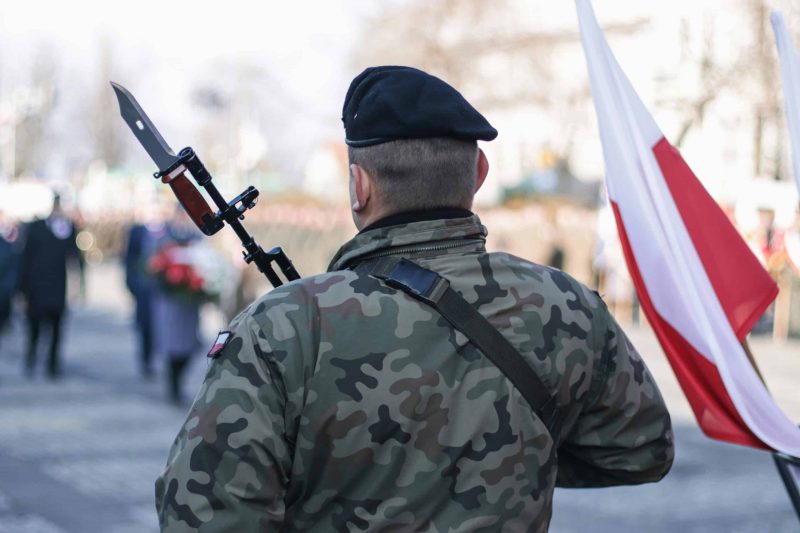
Washington is providing its NATO ally Poland with a second $2 billion foreign military financing (FMF) package in less than a year, Breaking Defense reports. In recent weeks, Warsaw has given Kiev a green light to use Polish-provided weapons to strike the Russian mainland as well as signed a bilateral military pact with Ukraine, agreeing to shoot down some Russian missiles.
A State Department official boasted to the outlet of how the two FMF loans are benefiting the US arms industry as well as strengthening the Washington-led bloc embroiled in its Ukraine proxy war with Moscow. “It’s impressive that it hasn’t even been a year and they [Poland] are moving out pretty quickly… We’re happy with the process. We see it as a success. We’re happy that they’ve been able to move out quickly — not only does it help NATO, it helps the US defense industry as well, the US economy. So, we’re definitely happy with the process.”
As with typical FMF loans, the funds furnished by the State Department to a foreign government must be spent on American-made weaponry and equipment. What makes this loan unique, however, is instead of a grant to purchase arms, this loan includes interest which Warsaw must repay. The US is putting up $60 million to guarantee the loan and cover initial fees. The official said details regarding how the funds will be spent, on what kinds of weapons, will not be shared during this week’s NATO summit. Instead, he insisted the Poles “[have] a list of things they want to achieve” and said to expect future announcements.
The official noted the previous FMF loan, issued last September, has either been totally spent or is earmarked for purchases including four aerostat-based early warning systems which accounts for approximately half the first loan. The unusual loan-based structure allows “the interagency to get FMF funding to foreign allies without needing to wait on the appropriations process,” the outlet notes, adding Congress extended the authority to issue these loans through the end of the 2025 fiscal year.
Asked if other countries will receive such loans, the official answered “We are looking at it, and there are other countries that remain competitive… The reason you’re seeing Poland is, of course, the situation with the ongoing war in Ukraine. They’re ready to move out.” The official emphasized that talks with multiple countries are ongoing, while repeatedly praising Warsaw’s high military spending and deeming Poland “the tip of the spear on this for us right now.”
The State Department stated “Poland is a leader in NATO, currently spending four percent of GDP on defense, the highest in the Alliance. Poland hosts thousands of U.S. and Allied forces, including U.S. V Corps Headquarters (Forward) in Poznan.” The US has roughly 10,000 troops stationed in Poland. Since Russian forces invaded Ukraine, Warsaw has announced plans to buy a myriad of American arms including Abrams tanks, Black Hawk and Apache helicopters, HIMARS rocket launchers. Poland is seeking more Patriot air defense batteries as well.
This latest financial and military infusion comes after Ukraine and Poland signed a bilateral military pact this week which includes a mechanism for Warsaw to shoot down Russian missiles and drones. This provision entails the potential to provoke a NATO-Russia war, something Ukrainian President Volodymyr Zelensky has long sought.
During a joint presser with Polish Prime Minister Donald Tusk on Monday, Zelensky declared “We are especially grateful for the special arrangements, and this is reflected in the security agreement. It provides for the development of a mechanism to shoot down [by Poland] Russian missiles and drones fired in the airspace of Ukraine in the direction of Poland.”
In November 2022, after a Ukrainian air defense missile killed two people in Poland, Zelensky and his top advisors said it was a Russian strike and demanded NATO take action. “Hitting NATO territory with missiles. … This is a Russian missile attack on collective security! This is a really significant escalation. Action is needed,” Zelensky railed in a video address.
This assessment was completely at odds with those made by the US, Poland, and NATO which determined the Polish casualties were not the result of a Russian missile strike. At the time, a diplomat from a NATO member state told Financial Times “The Ukrainians are destroying [our] confidence in them. Nobody is blaming Ukraine and they are openly lying. This is more destructive than the missile.”
New ‘Volunteer’ Legion in Poland: Blatant Scam to Force Ukrainians to Front Lines
Sputnik – 09.07.2024
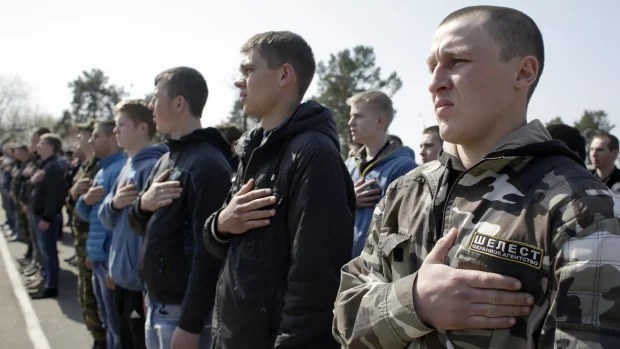
A security pact inked by Ukraine’s Volodymyr Zelensky and Polish Prime Minister Donald Tusk on Monday outlines the creation and training of a so-called Ukrainian Legion. This new formation will recruit Ukrainian “volunteers” living in Poland and other EU countries.
“Among the citizens of Ukraine who fled to EU countries, there are no volunteers seeking to participate in the hostilities,” Igor Korotchenko, editor-in-chief of the National Defense magazine, told Sputnik. “Everyone who theoretically had the motivation to participate in the conflict would have returned to Ukraine a long time ago and, accordingly, would have joined combat units on the contact line.”
“Therefore, I think that this is an artificial simulacrum. They will forcefully recruit Ukrainian draft dodgers into this legion, one way or another, under pressure from local intelligence services and police forces,” the pundit continued.
In April, Poland and Lithuania signaled that they would assist the Kiev regime by sending potential draft dodgers home, despite demonstrating reluctance to extradite conscript-aged Ukrainians last year.
Polish Defense Minister Wladyslaw Kosiniak-Kamysz asserted on April 24 that “Ukrainian citizens have obligations towards the state,” while his Lithuanian counterpart Laurynas Kasciunas insisted that evading conscription was “not fair to those citizens who are fighting for their country.”
For months, EU member states had rejected Kiev’s request for repatriating Ukrainian men eligible for mobilization, citing European conventions that do not permit extradition in cases of desertion or draft evasion.
Speaking to reporters in April, Kosiniak-Kamysz and Kasciunas asserted that there were multiple ways the authorities could repatriate Ukrainians without resorting to deportation. These included implementing bans on social benefits, work permits, and necessary documentation, in addition to enacting specific legislation aimed at Ukrainian refugees.
Apparently, the Ukrainian Legion is yet another “legal” loophole to send Ukrainian refugees to the battlefield, according to Korotchenko.
“We are not talking about forced extradition, we are talking about forced enlistment in this foreign legion,” he stressed. “Human rights activists will obviously not be interested in whether [Ukrainians] enlist voluntarily. These procedures would de facto mean forced extradition after they join the legion. The mechanism that is taking shape is absolutely illegal, but has a veneer of legitimacy,” he explained.
Poland to shoot down Russian missiles – Zelensky
RT | July 8, 2024
A newly signed pact between Warsaw and Kiev contains provisions that would allow Poland to shoot down Russian missiles and drones in Ukrainian airspace, Vladimir Zelensky has said.
Zelensky spoke in Warsaw on Monday, after signing the security deal with Polish Prime Minister Donald Tusk. The government in Kiev has been making bilateral pacts with NATO member states over the past several months, in lieu of formally joining the US-led bloc.
The agreement “provides for the development of a mechanism [for Poland] to shoot down Russian missiles and drones fired in the airspace of Ukraine in the direction of Poland,” Zelensky said, according to Ukrainian media.
He added that Warsaw and Kiev “will work together to work out how we can quickly implement this point” of the deal.
Tusk confirmed the existence of the provision but said it merely “indicates the need for talks on this matter,” according to Polish media.
“We need clear cooperation within NATO here, because such actions require joint NATO responsibility,” the Polish PM added, explaining that it would be in the interest of both Poland and Ukraine to get a “stamp” of international solidarity first.
“We will include other NATO allies in this conversation. So we treat the matter seriously as open, but not yet finalized,” Tusk said, according to Poland’s RMF24 Radio.
Zelensky has been asking NATO to shoot down incoming Russian missiles for several months already. He has compared it to what the US and UK did for Israel in mid-April, during an Iranian reprisal bombardment, and argued that it would not directly involve the bloc in the conflict.
“NATO will not become part of the conflict,” the bloc’s secretary-general, Jens Stoltenberg, replied at the time. “There are no plans to send NATO troops to Ukraine or to extend NATO’s air-defense shield to Ukraine,” he added.
While US and EU officials shot down Zelensky’s comparison with Israel, they agreed to other things he asked for, from additional Patriot missile launchers and rockets to permitting Ukraine to use the weapons they supplied to strike deep into Russian territory.
During his visit to Warsaw, Zelensky also announced that Poland would raise, train and equip a ‘Ukrainian Legion’, made up of volunteers. “Every Ukrainian citizen who decides to join the legion will be able to sign a contract with the Ukrainian armed forces,” he added.
Tusk did not comment on the legion business, but said that every word in the security pact meant something and that it’s about “practical mutual commitments, not empty promises.”
French PM reveals how countries like Poland will be flooded with migrants his country doesn’t want
‘They either accept migrants or pay’
BY GRZEGORZ ADAMCZYK | REMIX NEWS | MAY 27, 2024
French Prime Minister Gabriel Attal’s claim that the EU migration pact will mean illegal migrants will be transferred to Central Europe and will not go to France, has caused uproar on the Polish right.
“The migration pact introduces solidarity. We managed to force eastern countries to sign a document according to which they either accept migrants or pay,” said Attal during a television debate.
The leader of the Polish conservative Law and Justice (PiS), Jarosław Kaczyński, told the Polish Press Agency (PAP) over the weekend that his party would be calling for an emergency meeting of the Polish parliament to consider the remarks made by France’s Attal during a television debate.
Attal claimed that the French provinces are safe from being allocated migrants covered by the EU migration pact, as the migrants will in the first instance be sent to Central and Eastern Europe. Kaczyński contrasted Attal’s statement with Polish Prime Minister Donald Tusk’s claim that the migration pact will not affect Poland because it has taken in hundreds of thousands of Ukrainian refugees.
“It seems that Tusk once again is saying one thing in the EU and another in Poland,” said Kaczyński.
Conservatives in countries like Hungary and Poland have long warned that the EU’s recently passed migration pact was a ploy to transfer unwanted migrants to countries like Poland and Hungary, despite the West claiming that more migration and diversity was always a good thing and a source of “strength.”
Kaczyński said the parliamentary session on the EU migration pact should receive detailed information from PM Tusk with regard to the circumstances in which his government had failed to block the EU migration pact on the reallocation of migrants entering EU states.
Senior PiS MEP Jacek Saryusz-Wolski told independent television channel TV Republika that the migration pact will act as “a pump for migrants from Africa” and the Middle East who will see the pact as an invitation to come to Europe.
Saryusz-Wolski reminded that EU Commissioner for Home Affairs Ylva Johansson has admitted that Europe needs to have 4.5 million migrants coming every single year “to bridge the demographic gap, change society and provide the left with future voters.”
The Polish government did vote against the EU migration pact at a session of the Council of the European Union, the body in which decisions are made by qualified majority. Kaczyński and PiS have consistently argued that the decision on the pact should be made by the European Council, at which all decisions must be unanimous. In the Council of the European Union, Poland, Hungary and Slovakia voted against the migration pact, which will introduce migrant quotas, but the new law carried the day as most EU states backed it.
The most controversial aspect of the EU migration pact is the provision that should member states refuse to take their share of the reallocated migrants, they will have to pay up to €23,000 for every migrant refused.
Brussels should remember that Europeans are sovereign, not the EU treaties or the Eurocrats
BY GRZEGORZ ADAMCZYK | REMIX NEWS | MAY 17, 2024
In an interview with Tygodnik Solidarność weekly, Prof. Ryszard Piotrowski, a constitutional lawyer from the University of Warsaw, expressed his concerns over the legal challenges posed by the implementation of the European Green Deal. He believes that these challenges threaten the legal identity and autonomy of both the European Union and Poland.
The professor emphasized the foundational role of dialogue in Polish law, noting that European laws are becoming increasingly incomprehensible and detached from the real needs of European citizens.
He argued that the perception of Europeans as subordinates to the European Parliament and the European Council, rather than as sovereigns over the treaties, poses a significant threat. “The sooner we understand that we, as Europeans, are not servants to the treaties and the European Parliament, the better it will be for Europe,” he stated.
He also questioned whether the Green Deal’s objectives align with the Polish constitution, which mandates environmental protection guided by the principle of sustainable development. According to him, the current shape of EU climate policy contravenes this principle by jeopardizing overall economic growth and thereby the security of citizens.
Piotrowski additionally highlighted that the Green Deal threatens essential social rights guaranteed by the Polish constitution, such as housing, energy, and communication security.
“We have a right to energy security, and its violation threatens democracy itself because democracy without a socio-economic dimension is devoid of meaning,” said the professor. Furthermore, he noted that the Green Deal also threatens the principle of subsidiarity, which aims to empower citizens and their communities.
Adding to the urgency of his concerns, Professor Piotrowski pointed out that the implementation of the Green Deal might weaken Poland’s defensive capabilities at a time when a military conflict looms near its eastern border. He criticized Europe’s stance on the conflict in Ukraine, arguing that despite European treaties pledging to promote peace, the current approach could lead to tragic consequences for Europe.
“Contrary to what European treaties stipulate and what they commit Europe to, it has chosen to speak of war instead of striving for peace. Such actions have always ended tragically for Europe,” the professor warned.
Poland cancels talks with Ukraine over corruption fears
RT | May 13, 2024
Poland has called off negotiations with Ukraine on food imports after several of Kiev’s representatives were accused of corruption, the Dziennik Gazeta Prawna daily reported on Monday, citing the deputy minister of agriculture.
The talks were set to take place on May 14, to address trade disputes amid large-scale farmers’ protests in Poland over the import of cheap produce from Ukraine.
Explaining the cancellation, Michal Kolodziejczak told the newspaper that Warsaw “will not negotiate with individuals against whom charges of corruption have been brought.”
Kolodziejczak did not name specific individuals, but his statement follows the resignation of Ukrainian Agriculture Minister Nikolay Solsky, who – along with several accomplices – was accused last month by the National Anti-Corruption Bureau of illegally taking possession of state land.
It is unclear when the next round of talks between Warsaw and Kiev will take place, Kolodziejczak said, acknowledging that the Polish Agriculture Ministry has so far failed to resolve all issues relating to local farmers, and that “the situation is not easy.”
The Polish protests have been ongoing since February, with agriculture businesses demanding limits or a complete ban on cheap imports from Ukraine. Farmers have also requested more support for livestock farming and objected to the EU’s proposed Green Deal strategy, which would place limitations on producers in a bid to cut carbon emissions.
After the last round of Poland-Ukraine talks in March, Kolodziejczak accused Kiev’s representatives of violating “diplomatic principles.” He told the head of the All-Ukrainian Agrarian Council, Andrey Dykun, to stop mentioning the Russia-Ukraine conflict when discussing grain.
“One of the representatives of Ukraine began to use the theme of war, the front, a difficult situation. I replied that we know what the situation is… but economic negotiations have nothing to do with it,” the deputy minister told the news website Wirtualna Polska at the time.
In response, Ukraine accused Kolodziejczak of behaving “oddly” during the March negotiations by “constantly” leaving the room, scrolling his phone and verbally attacking Kiev’s representatives, ultimately hampering efforts to reach an agreement.
Lukashenko on Polish judge defector: ‘A completely normal person, patriotic Pole, Putin is interested in his story’
BY GRZEGORZ ADAMCZYK | REMIX NEWS | MAY 10, 2024
Belarusian President Alexander Lukashenko announced that he has instructed the police to protect Tomasz Szmydt, a former Polish judge who has fled Poland and asked for political asylum in Belarus.
Lukashenko addressed the issue of the Polish citizen seeking asylum after Thursday’s Victory Day celebrations, where he mentioned that the defection of officials from Poland is a “trend.”
He refuted claims that Belarus and Russia recruit such individuals, labeling these allegations as “complete nonsense.” According to Lukashenko, he only saw Tomasz Szmydt at a press conference and found him to be “a completely normal person.”
The Belarusian leader learned about Szmydt’s situation the day before from the KGB and initially ordered a background check on him. Describing the judge’s escape as a blow to Polish authority, Lukashenko commented: “And then they start: traitor, this and that. He is not a traitor, but he really looks at everything, compares Poland with Belarus and draws conclusions.”
Lukashenko also revealed that Russian President Vladimir Putin has taken an interest in Szmydt’s story, indicating the significance of the matter. He dismissed accusations of recruitment by Belarus as “complete stupidity,” challenging Warsaw to present facts to support their claims.
In his interview with the state news agency BełTa, Lukashenko further stated that he had ordered the judicial authorities to ensure Szmydt’s protection, expressing concern for his safety. “So these scoundrels don’t kill the man, although he says: ‘I know what I am heading towards.’ A brave man. A normal man, as far as I am informed now.”
Tomasz Szmydt was until recently a judge at the Second Department of the Administrative Court in Warsaw and has held various positions within the Polish judiciary. On Monday, during a press conference in Minsk, he announced his request for political asylum in Belarus, citing it as a protest against Poland’s policies towards Belarus and Russia.
On Thursday, the president of the Supreme Administrative Court accepted Szmydt’s declaration of immediate resignation from his judicial position, meaning he is no longer a judge.
Poles taking to the streets against EU Green Deal
By Olivier Bault | Remix News | May 9, 2024
On Friday, May 10, Poles will be taking to the street in a protest organized by the legendary Solidarity trade union. Solidarity, which was the main dissident social movement against communism in Eastern Europe in the 1980s, is now demanding a referendum on the EU Green Deal. Its current leader, Piotr Duda, has even called the EU Green Deal a new “red plague,” in reference to communism.
The protest is supported by Law and Justice (PiS), the main opposition party in Poland, and also by the other parties of its United Right coalition as well as by the Confederation, an alliance of Christian nationalists and libertarians to the right of the United Right. The trade union, however, makes “the whole political class” in Poland responsible for the EU’s climate policy and notes that it warned from the outset of the threats linked to that policy, which means it makes the United Right leaders responsible too, as the EU Green Deal was adopted during their eight years in power.

“The solutions implemented under the Green Deal in the future will translate into, among other things, increases in electricity and heating bills, new taxes on energy and fuel, a ban on heating with fossil fuels, as well as increases in food prices and the country’s food insecurity. NSZZ Solidarity has decided to loudly express its opposition to such policies,” Solidarity’s leaders wrote in a press release published in mid-March.
They also wrote:
“The Solidarity trade union, which won Poland’s freedom in the past and later used it many times for just causes, has again decided to reach for the highest form of direct democracy, which is a nationwide referendum in which citizens will be asked about the continuation of the implementation of the Green Deal. The referendum will be preceded by an information campaign. This will allow for a broad awareness-building public debate on the real effects of the EU’s climate policy so that every citizen of Poland will be able to express his or her opinion on the subject based on reliable knowledge. After all, EU policy should not be determined by officials in Brussels, but based on the consent of the citizens of member states.”
The May 10 protest will start at noon on the Plac Zamkowy Square in central Warsaw, when farmers are expected to turn up en masse as they did on March 6 when a large farmer protest was brutally repressed by Donald Tusk’s left-liberal government.
However, it is not only farmers who are going to be very negatively affected by the EU Green Deal. As the Ordo Iuris legal think tank stresses in an EU-wide petition against the Green Deal it has just launched, not only is European agriculture facing a catastrophe, but car drivers and homeowners will have to pay a high price for plans dictated not by reason and based not on consultations, but driven by ideology.
We can still “Stop the Green Deal” in its current form, we remind people in our petition, as it is a matter of the political decisions made by the heads of state and government in the European Council that can be later translated into new EU law processed through the EU Council (where ministers of the EU-27 meet) and the European Parliament.
This is why we demand not only that there should be a referendum in Poland on the Green Deal, but that an EU summit should be convened to work through the demands of farmers and other actors from across Europe.
We should all have in mind that under the current plans, the production of food and many intermediate and industrial goods will not stop, but will only be transferred outside the European Union, where the EU’s absurd climate regulations do not apply. This will only make matters worse for our planet and it will push millions of Europeans toward poverty and destroy the European Union’s economic competitiveness.
We encourage all citizens of EU countries to sign the petition against the EU Green Deal here.
Featured Video

or go to
Aletho News Archives – Video-Images
From the Archives
Israel Would Have No Qualms About USS Liberty-Style FALSE FLAG If Iran Campaign Falters – Analysts
By Ilya Tsukanov – Sputnik – 18.06.2025
Donald Trump is mulling whether or not to join Israel’s aggression against Iran as Tel Aviv faces problems sustaining its defenses against growing counterstrikes, and apparently lacks a realistic game plan for an end to hostilities after failing to achieve its goals. Analysts told Sputnik how the US could be ‘nudged’ into the conflict.
“The US is already assisting Israel with supplies, intel, refueling support, etc. One of the many US posts in the region could be attacked for a casus belli,” former Pentagon analyst Karen Kwiatkowski explained.
“If Trump doesn’t comply with Israel’s demand” and join its aggression voluntarily, “a false flag may be needed” to drag the US in, Kwiatkowski, retired US Air Force Lt. Col.-turned Iraq War whistleblower, fears.
Netanyahu has a diverse array of options at his disposal, according to the observer, including:
- a false flag against US assets abroad blamed on Iran or one of its Axis of Resistance allies, like the Houthis
- a US domestic attack or assassination blamed on Iran
- Iranian air defenses ‘accidentally’ hitting a civilian jetliner carrying Americans
- use of a dirty bomb or nuclear contamination somewhere in the region blamed on Iran
- even blackmailing by threatening to use nukes against Iran if the US doesn’t join the fight
Kwiatkowski estimates that Israel probably has “enough blackmail power” against President Trump and Congress to avoid the necessity of a false flag operation, but a “USS Liberty-style” attack, targeting the soon-to-be-retired USS Nimitz supercarrier that’s heading to the Middle East, for example, nevertheless cannot be ruled out entirely, she says. … continue
Blog Roll
 Aletho News
- Top PMU commander, over a dozen fighters killed in new US strikes on Iraq
- Is Netanyahu’s war gamble threatening the future of ‘Israel’?: FT
- Smotrich calls for annexation of South Lebanon to Litani River
- Echos of Gallipoli? Hormuz and the Geography of Hubris
- Pakistan PM backs Iran’s right to self-defense amid tensions
- Hungary blasts ‘fake’ EU accusation
- SAFE Debt Trap: Poland’s €43.7 Billion Bet on Unipolar Illusion
- War on Iran threatens global Gulf capital flows: FT analysis
- Mossad De Facto Admits To Inciting Riots In Iran
- Tehran: World grown thoroughly exhausted with US-Israeli ‘false flag storylines’
- If Americans Knew
- Israel poised to take over southern Lebanon; settlers wreak havoc in West Bank – Not a ceasefire Day 165
- From Sde Teiman, the truth about Israel’s military justice system has been set free
- Child denied life-saving bone marrow transplant by Israel ‘because he is from Gaza’
- Raffi Berg: BBC Middle East Editor Exposed as CIA, Mossad Collaborator
- Jerusalem Archbishop Rebukes Netanyahu’s Statements on Christianity
- US to embed Palantir AI across entire military: Report
- Israeli-US war on Iran to drag on “a few more weeks” – Not a ceasefire Day 164
- Lebanon deaths top 1,200; Palantir AI to be embedded across US military – Not a ceasefire Day 163
- Israel’s assassination game: Take all pragmatists off the board
- Food shortages return to Gaza as Israel tightens aid restrictions under the cover of its war on Iran
- No Tricks Zone
- Devastating Assessment Of Comirnaty Vaccine By Former Senior Pfizer Europe Toxicologist
- New Study: CO2 Is ‘Effectively Negligible’ As An Explanatory Climate Change Factor Since 2000
- Former Pfizer Toxicologist Dr. Helmut Sterz Tells Bundestag Hearing Pfizer Vaccine Should Have Never Been Approved
- Energy Expert: Germany’s Nuclear Phaseout Was A “500 Billion Euro Mistake”
- New Research: South Australia’s Mid-Holocene Sea Surface Temperatures Were 4°C Warmer Than Today
- Storing Green Energy To Last Germany 10 Days Would Require A 60-Million Tonne Battery
- New Studies: UK Sea Levels Were 4 Meters Higher Than Today During The Mid-Holocene
- Destructive Green New Deal: German Energy And Metal Group Warns Of Drastic Crisis
- New Study Documents A 20-Year Pause In Arctic Sea Ice Decline – Driven By Internal Variability
- Wake-up Call: Survey Shows Majority Of Germans Now Favor Postponing Climate Targets!
 Aletho News