New ‘Volunteer’ Legion in Poland: Blatant Scam to Force Ukrainians to Front Lines
Sputnik – 09.07.2024
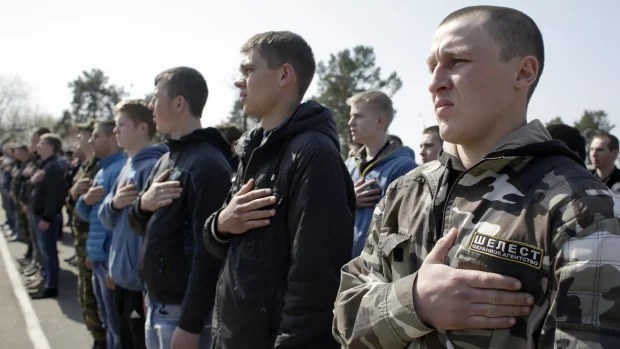
A security pact inked by Ukraine’s Volodymyr Zelensky and Polish Prime Minister Donald Tusk on Monday outlines the creation and training of a so-called Ukrainian Legion. This new formation will recruit Ukrainian “volunteers” living in Poland and other EU countries.
“Among the citizens of Ukraine who fled to EU countries, there are no volunteers seeking to participate in the hostilities,” Igor Korotchenko, editor-in-chief of the National Defense magazine, told Sputnik. “Everyone who theoretically had the motivation to participate in the conflict would have returned to Ukraine a long time ago and, accordingly, would have joined combat units on the contact line.”
“Therefore, I think that this is an artificial simulacrum. They will forcefully recruit Ukrainian draft dodgers into this legion, one way or another, under pressure from local intelligence services and police forces,” the pundit continued.
In April, Poland and Lithuania signaled that they would assist the Kiev regime by sending potential draft dodgers home, despite demonstrating reluctance to extradite conscript-aged Ukrainians last year.
Polish Defense Minister Wladyslaw Kosiniak-Kamysz asserted on April 24 that “Ukrainian citizens have obligations towards the state,” while his Lithuanian counterpart Laurynas Kasciunas insisted that evading conscription was “not fair to those citizens who are fighting for their country.”
For months, EU member states had rejected Kiev’s request for repatriating Ukrainian men eligible for mobilization, citing European conventions that do not permit extradition in cases of desertion or draft evasion.
Speaking to reporters in April, Kosiniak-Kamysz and Kasciunas asserted that there were multiple ways the authorities could repatriate Ukrainians without resorting to deportation. These included implementing bans on social benefits, work permits, and necessary documentation, in addition to enacting specific legislation aimed at Ukrainian refugees.
Apparently, the Ukrainian Legion is yet another “legal” loophole to send Ukrainian refugees to the battlefield, according to Korotchenko.
“We are not talking about forced extradition, we are talking about forced enlistment in this foreign legion,” he stressed. “Human rights activists will obviously not be interested in whether [Ukrainians] enlist voluntarily. These procedures would de facto mean forced extradition after they join the legion. The mechanism that is taking shape is absolutely illegal, but has a veneer of legitimacy,” he explained.
Poland to shoot down Russian missiles – Zelensky
RT | July 8, 2024
A newly signed pact between Warsaw and Kiev contains provisions that would allow Poland to shoot down Russian missiles and drones in Ukrainian airspace, Vladimir Zelensky has said.
Zelensky spoke in Warsaw on Monday, after signing the security deal with Polish Prime Minister Donald Tusk. The government in Kiev has been making bilateral pacts with NATO member states over the past several months, in lieu of formally joining the US-led bloc.
The agreement “provides for the development of a mechanism [for Poland] to shoot down Russian missiles and drones fired in the airspace of Ukraine in the direction of Poland,” Zelensky said, according to Ukrainian media.
He added that Warsaw and Kiev “will work together to work out how we can quickly implement this point” of the deal.
Tusk confirmed the existence of the provision but said it merely “indicates the need for talks on this matter,” according to Polish media.
“We need clear cooperation within NATO here, because such actions require joint NATO responsibility,” the Polish PM added, explaining that it would be in the interest of both Poland and Ukraine to get a “stamp” of international solidarity first.
“We will include other NATO allies in this conversation. So we treat the matter seriously as open, but not yet finalized,” Tusk said, according to Poland’s RMF24 Radio.
Zelensky has been asking NATO to shoot down incoming Russian missiles for several months already. He has compared it to what the US and UK did for Israel in mid-April, during an Iranian reprisal bombardment, and argued that it would not directly involve the bloc in the conflict.
“NATO will not become part of the conflict,” the bloc’s secretary-general, Jens Stoltenberg, replied at the time. “There are no plans to send NATO troops to Ukraine or to extend NATO’s air-defense shield to Ukraine,” he added.
While US and EU officials shot down Zelensky’s comparison with Israel, they agreed to other things he asked for, from additional Patriot missile launchers and rockets to permitting Ukraine to use the weapons they supplied to strike deep into Russian territory.
During his visit to Warsaw, Zelensky also announced that Poland would raise, train and equip a ‘Ukrainian Legion’, made up of volunteers. “Every Ukrainian citizen who decides to join the legion will be able to sign a contract with the Ukrainian armed forces,” he added.
Tusk did not comment on the legion business, but said that every word in the security pact meant something and that it’s about “practical mutual commitments, not empty promises.”
French PM reveals how countries like Poland will be flooded with migrants his country doesn’t want
‘They either accept migrants or pay’
BY GRZEGORZ ADAMCZYK | REMIX NEWS | MAY 27, 2024
French Prime Minister Gabriel Attal’s claim that the EU migration pact will mean illegal migrants will be transferred to Central Europe and will not go to France, has caused uproar on the Polish right.
“The migration pact introduces solidarity. We managed to force eastern countries to sign a document according to which they either accept migrants or pay,” said Attal during a television debate.
The leader of the Polish conservative Law and Justice (PiS), Jarosław Kaczyński, told the Polish Press Agency (PAP) over the weekend that his party would be calling for an emergency meeting of the Polish parliament to consider the remarks made by France’s Attal during a television debate.
Attal claimed that the French provinces are safe from being allocated migrants covered by the EU migration pact, as the migrants will in the first instance be sent to Central and Eastern Europe. Kaczyński contrasted Attal’s statement with Polish Prime Minister Donald Tusk’s claim that the migration pact will not affect Poland because it has taken in hundreds of thousands of Ukrainian refugees.
“It seems that Tusk once again is saying one thing in the EU and another in Poland,” said Kaczyński.
Conservatives in countries like Hungary and Poland have long warned that the EU’s recently passed migration pact was a ploy to transfer unwanted migrants to countries like Poland and Hungary, despite the West claiming that more migration and diversity was always a good thing and a source of “strength.”
Kaczyński said the parliamentary session on the EU migration pact should receive detailed information from PM Tusk with regard to the circumstances in which his government had failed to block the EU migration pact on the reallocation of migrants entering EU states.
Senior PiS MEP Jacek Saryusz-Wolski told independent television channel TV Republika that the migration pact will act as “a pump for migrants from Africa” and the Middle East who will see the pact as an invitation to come to Europe.
Saryusz-Wolski reminded that EU Commissioner for Home Affairs Ylva Johansson has admitted that Europe needs to have 4.5 million migrants coming every single year “to bridge the demographic gap, change society and provide the left with future voters.”
The Polish government did vote against the EU migration pact at a session of the Council of the European Union, the body in which decisions are made by qualified majority. Kaczyński and PiS have consistently argued that the decision on the pact should be made by the European Council, at which all decisions must be unanimous. In the Council of the European Union, Poland, Hungary and Slovakia voted against the migration pact, which will introduce migrant quotas, but the new law carried the day as most EU states backed it.
The most controversial aspect of the EU migration pact is the provision that should member states refuse to take their share of the reallocated migrants, they will have to pay up to €23,000 for every migrant refused.
Brussels should remember that Europeans are sovereign, not the EU treaties or the Eurocrats
BY GRZEGORZ ADAMCZYK | REMIX NEWS | MAY 17, 2024
In an interview with Tygodnik Solidarność weekly, Prof. Ryszard Piotrowski, a constitutional lawyer from the University of Warsaw, expressed his concerns over the legal challenges posed by the implementation of the European Green Deal. He believes that these challenges threaten the legal identity and autonomy of both the European Union and Poland.
The professor emphasized the foundational role of dialogue in Polish law, noting that European laws are becoming increasingly incomprehensible and detached from the real needs of European citizens.
He argued that the perception of Europeans as subordinates to the European Parliament and the European Council, rather than as sovereigns over the treaties, poses a significant threat. “The sooner we understand that we, as Europeans, are not servants to the treaties and the European Parliament, the better it will be for Europe,” he stated.
He also questioned whether the Green Deal’s objectives align with the Polish constitution, which mandates environmental protection guided by the principle of sustainable development. According to him, the current shape of EU climate policy contravenes this principle by jeopardizing overall economic growth and thereby the security of citizens.
Piotrowski additionally highlighted that the Green Deal threatens essential social rights guaranteed by the Polish constitution, such as housing, energy, and communication security.
“We have a right to energy security, and its violation threatens democracy itself because democracy without a socio-economic dimension is devoid of meaning,” said the professor. Furthermore, he noted that the Green Deal also threatens the principle of subsidiarity, which aims to empower citizens and their communities.
Adding to the urgency of his concerns, Professor Piotrowski pointed out that the implementation of the Green Deal might weaken Poland’s defensive capabilities at a time when a military conflict looms near its eastern border. He criticized Europe’s stance on the conflict in Ukraine, arguing that despite European treaties pledging to promote peace, the current approach could lead to tragic consequences for Europe.
“Contrary to what European treaties stipulate and what they commit Europe to, it has chosen to speak of war instead of striving for peace. Such actions have always ended tragically for Europe,” the professor warned.
Poland cancels talks with Ukraine over corruption fears
RT | May 13, 2024
Poland has called off negotiations with Ukraine on food imports after several of Kiev’s representatives were accused of corruption, the Dziennik Gazeta Prawna daily reported on Monday, citing the deputy minister of agriculture.
The talks were set to take place on May 14, to address trade disputes amid large-scale farmers’ protests in Poland over the import of cheap produce from Ukraine.
Explaining the cancellation, Michal Kolodziejczak told the newspaper that Warsaw “will not negotiate with individuals against whom charges of corruption have been brought.”
Kolodziejczak did not name specific individuals, but his statement follows the resignation of Ukrainian Agriculture Minister Nikolay Solsky, who – along with several accomplices – was accused last month by the National Anti-Corruption Bureau of illegally taking possession of state land.
It is unclear when the next round of talks between Warsaw and Kiev will take place, Kolodziejczak said, acknowledging that the Polish Agriculture Ministry has so far failed to resolve all issues relating to local farmers, and that “the situation is not easy.”
The Polish protests have been ongoing since February, with agriculture businesses demanding limits or a complete ban on cheap imports from Ukraine. Farmers have also requested more support for livestock farming and objected to the EU’s proposed Green Deal strategy, which would place limitations on producers in a bid to cut carbon emissions.
After the last round of Poland-Ukraine talks in March, Kolodziejczak accused Kiev’s representatives of violating “diplomatic principles.” He told the head of the All-Ukrainian Agrarian Council, Andrey Dykun, to stop mentioning the Russia-Ukraine conflict when discussing grain.
“One of the representatives of Ukraine began to use the theme of war, the front, a difficult situation. I replied that we know what the situation is… but economic negotiations have nothing to do with it,” the deputy minister told the news website Wirtualna Polska at the time.
In response, Ukraine accused Kolodziejczak of behaving “oddly” during the March negotiations by “constantly” leaving the room, scrolling his phone and verbally attacking Kiev’s representatives, ultimately hampering efforts to reach an agreement.
Lukashenko on Polish judge defector: ‘A completely normal person, patriotic Pole, Putin is interested in his story’
BY GRZEGORZ ADAMCZYK | REMIX NEWS | MAY 10, 2024
Belarusian President Alexander Lukashenko announced that he has instructed the police to protect Tomasz Szmydt, a former Polish judge who has fled Poland and asked for political asylum in Belarus.
Lukashenko addressed the issue of the Polish citizen seeking asylum after Thursday’s Victory Day celebrations, where he mentioned that the defection of officials from Poland is a “trend.”
He refuted claims that Belarus and Russia recruit such individuals, labeling these allegations as “complete nonsense.” According to Lukashenko, he only saw Tomasz Szmydt at a press conference and found him to be “a completely normal person.”
The Belarusian leader learned about Szmydt’s situation the day before from the KGB and initially ordered a background check on him. Describing the judge’s escape as a blow to Polish authority, Lukashenko commented: “And then they start: traitor, this and that. He is not a traitor, but he really looks at everything, compares Poland with Belarus and draws conclusions.”
Lukashenko also revealed that Russian President Vladimir Putin has taken an interest in Szmydt’s story, indicating the significance of the matter. He dismissed accusations of recruitment by Belarus as “complete stupidity,” challenging Warsaw to present facts to support their claims.
In his interview with the state news agency BełTa, Lukashenko further stated that he had ordered the judicial authorities to ensure Szmydt’s protection, expressing concern for his safety. “So these scoundrels don’t kill the man, although he says: ‘I know what I am heading towards.’ A brave man. A normal man, as far as I am informed now.”
Tomasz Szmydt was until recently a judge at the Second Department of the Administrative Court in Warsaw and has held various positions within the Polish judiciary. On Monday, during a press conference in Minsk, he announced his request for political asylum in Belarus, citing it as a protest against Poland’s policies towards Belarus and Russia.
On Thursday, the president of the Supreme Administrative Court accepted Szmydt’s declaration of immediate resignation from his judicial position, meaning he is no longer a judge.
Poles taking to the streets against EU Green Deal
By Olivier Bault | Remix News | May 9, 2024
On Friday, May 10, Poles will be taking to the street in a protest organized by the legendary Solidarity trade union. Solidarity, which was the main dissident social movement against communism in Eastern Europe in the 1980s, is now demanding a referendum on the EU Green Deal. Its current leader, Piotr Duda, has even called the EU Green Deal a new “red plague,” in reference to communism.
The protest is supported by Law and Justice (PiS), the main opposition party in Poland, and also by the other parties of its United Right coalition as well as by the Confederation, an alliance of Christian nationalists and libertarians to the right of the United Right. The trade union, however, makes “the whole political class” in Poland responsible for the EU’s climate policy and notes that it warned from the outset of the threats linked to that policy, which means it makes the United Right leaders responsible too, as the EU Green Deal was adopted during their eight years in power.

“The solutions implemented under the Green Deal in the future will translate into, among other things, increases in electricity and heating bills, new taxes on energy and fuel, a ban on heating with fossil fuels, as well as increases in food prices and the country’s food insecurity. NSZZ Solidarity has decided to loudly express its opposition to such policies,” Solidarity’s leaders wrote in a press release published in mid-March.
They also wrote:
“The Solidarity trade union, which won Poland’s freedom in the past and later used it many times for just causes, has again decided to reach for the highest form of direct democracy, which is a nationwide referendum in which citizens will be asked about the continuation of the implementation of the Green Deal. The referendum will be preceded by an information campaign. This will allow for a broad awareness-building public debate on the real effects of the EU’s climate policy so that every citizen of Poland will be able to express his or her opinion on the subject based on reliable knowledge. After all, EU policy should not be determined by officials in Brussels, but based on the consent of the citizens of member states.”
The May 10 protest will start at noon on the Plac Zamkowy Square in central Warsaw, when farmers are expected to turn up en masse as they did on March 6 when a large farmer protest was brutally repressed by Donald Tusk’s left-liberal government.
However, it is not only farmers who are going to be very negatively affected by the EU Green Deal. As the Ordo Iuris legal think tank stresses in an EU-wide petition against the Green Deal it has just launched, not only is European agriculture facing a catastrophe, but car drivers and homeowners will have to pay a high price for plans dictated not by reason and based not on consultations, but driven by ideology.
We can still “Stop the Green Deal” in its current form, we remind people in our petition, as it is a matter of the political decisions made by the heads of state and government in the European Council that can be later translated into new EU law processed through the EU Council (where ministers of the EU-27 meet) and the European Parliament.
This is why we demand not only that there should be a referendum in Poland on the Green Deal, but that an EU summit should be convened to work through the demands of farmers and other actors from across Europe.
We should all have in mind that under the current plans, the production of food and many intermediate and industrial goods will not stop, but will only be transferred outside the European Union, where the EU’s absurd climate regulations do not apply. This will only make matters worse for our planet and it will push millions of Europeans toward poverty and destroy the European Union’s economic competitiveness.
We encourage all citizens of EU countries to sign the petition against the EU Green Deal here.
Hamas calls on 18 countries signing hostage release initiative to expose Israel’s crimes
MEMO | April 27, 2024
Poland ready to help Ukraine hunt down military-aged men
RT | April 25, 2024
Polish Defense Minister Wladyslaw Kosiniak-Kamysz has said that Warsaw would be willing to “help” Kiev repatriate men of fighting age, an unspecified portion of some 950,000 Ukrainians granted temporary sanctuary in Poland.
Earlier this week, the Ukrainian Foreign Ministry banned all men between the age of 18 and 60 from getting or renewing their documents, including passports, at consular offices outside of the country. The Polish defense chief told the Polsat broadcaster on Wednesday that he was “not surprised” and supports Kiev’s move.
“The Ukrainian authorities are doing everything to provide new soldiers to the front, because the needs are huge,” Wladyslaw Kosiniak-Kamysz said.
The Polish official said that Warsaw had previously offered to help Kiev track down those who dodge their “civic duty,” but noted that “the form of assistance depends on the Ukrainian side.”
“I think that many of our compatriots were and are outraged when they see young Ukrainian men in cafes and hear about how much effort it takes us to help Ukraine,” he added. Kosiniak-Kamysz also echoed Kiev’s official narrative that Ukrainians who could not avoid the draft have “justified grievances against their peers who have scattered around the world.”
Foreign Minister Dmitry Kuleba claimed on Tuesday that the decision to strip Ukrainian men of their rights was “fair” and in line with the controversial military mobilization reforms, which President Vladimir Zelensky signed into law this month.
Zelensky’s reforms, set to come into force next month, will lower the draft age from 27 to 25, tighten exemptions and oblige all men, regardless of eligibility, to report to a conscription office to “update” their personal data.
According to EU officials, an estimated 650,000 Ukrainian men of fighting age are living in the bloc. Kiev has identified that pool as a significant untapped source of manpower for the armed forces. However, asked in early April how many troops Kiev intended to mobilize, Zelensky dodged the question.
There’s bad news from Brussels for Polish homeowners
BY GRZEGORZ ADAMCZYK | REMIX NEWS | APRIL 19, 2024
Every new-build home in Poland must be net-zero compliant on carbon emissions from 2030 onwards, thanks to a new law from Brussels.
All other buildings are expected to achieve this status by 2050; by 2040, there will also be a ban on heating homes with coal and gas, and in just three years these fuels will become more expensive to use in homes.
Deputy Minister of Finance Paweł Karbownik, representing Poland at the Council of the European Union, abstained from voting. Last week, the Council adopted the directive on the energy efficiency of buildings, imposing the obligation to renovate and universally install solar panels, as well the removal of coal and gas furnaces.
Four others also abstained, including those from the Czech Republic and Slovakia, while ministers from Italy and Hungary expressed their opposition. The regulations were supported by 20 countries in all.
Now, Donald Tusk’s government has two years to develop detailed legislation that will implement one of the most controversial and expensive EU directives.
It’s not only a problem of the huge cost of the renovations for old houses, apartment blocks, and public buildings, but also about the stringent deadlines for implementing the regulations and the requirements to install heat pumps and solar panels.
Former Minister of Climate and Environment Anna Łukaszewska-Trzeciakowska noted that the former conservative government in Warsaw led by Mateusz Morawiecki appealed against the draft directive to the European Court of Justice. But the left-liberal Tusk government’s representative did not dare to vote against it, so the question arises whether the government is even aware of what is happening and what the consequences of implementing all these measures will be for the economy and society.
These regulations are unenforceable, unrealistic, and very expensive. I am only afraid that before we realize that it is impossible to implement them, we will have spent hundreds of billions of zlotys anyway.
The implications are that Poland only has nine years to renovate its oldest and most emissive housing. The challenge is enormous, since even in Polish metropolises there are entire estates of uninsulated houses, and in smaller towns and villages, many houses date back to the 1950s and 1960s and are heated by coal.
A similar scale of challenges and the requirement to reduce energy consumption apply to non-residential buildings, such as offices and schools, cinemas and theaters, but also health centers.
Taking into account the rising costs of building materials, thoroughly modernizing a house or block of flats will be expensive. Installing a heat pump in a single-family house, depending on its type, costs at least 40-70,000 zlotys (approximately €9,300-16,300), and solar panels at least 20-30,000 zlotys (approximately €4,600-7000). Therefore, the owners of a house now heated with coal or gas will have to spend well over 100,000 zlotys (over €23,200) to comply with the directive.
NATO Mulls ‘Shooting Down’ Missiles Straying Close to Its Borders – Report
By Svetlana Ekimenko – Sputnik – 27.03.2024
On March 24, the Polish Armed Forces Operational Command claimed that a Russian cruise missile had breached the country’s airspace overnight near the village of Oserdow, close to the Ukraine border, remaining in Polish airspace for 39 seconds.
NATO members are reportedly considering the possibility of shooting down missiles that fly in close proximity to the alliance’s borders.
“Various concepts are being analyzed within NATO, including for such missiles to be shot down when they are very close to a NATO member’s border,” Polish Deputy Foreign Minister Andrzej Szejna stated, speaking on the radio station RMF24.
He noted, however, that this would have to happen with the consent of the Ukrainian side, and taking into account the international consequences, as then NATO missiles would be targeting Russian missiles outside the territory of the alliance.
On Sunday, the Polish Armed Forces Operational Command in a statement said that there was a violation of Polish airspace at 4:23 a.m. (03:23 GMT) by “a Russian cruise missile.” The missile was said to have breached the country’s airspace near the village of Oserdow, close to the Ukraine border, and remained in flight there for 39 seconds.
However, there was no evidence offered in the text to support these claims.
According to Polish Defense Minister Wladyslaw Kosiniak-Kamysz, the missile would have been shot down had there been “any signs that this object was heading for a certain target located on the territory of the Republic (of Poland).” Poland scrambled its fighter jets over the incident.
Oserdow is located in Lublin province in the southeastern part of the country, which borders the Volyn and Lvov regions of Ukraine.
Russian Ambassador to Poland Sergey Andreev later told Sputnik that he skipped a meeting at the Polish Foreign Ministry over the “missile incident” because Warsaw had failed to present any evidence on the issue.
After being summoned to the Polish Foreign Ministry to meet with one of the deputy ministers, Andreev asked if the Polish side intended to provide Russia with any evidence of the allegations. However, as he did not receive an answer from the Polish side, Andreev decided not to attend the meeting.
At the end of last year, Poland announced a similar incident. The Polish military claimed that a missile belonging to Russia performed a maneuver in Polish airspace and then returned to Ukraine. While Chief of the Polish General Staff Wieslaw Kukula told reporters that according to Polish radar control systems the missile belonged to Russia, Moscow’s Ambassador to Warsaw Sergey Andreev said that Poland had not provided evidence to substantiate the claims.
After a missile crashed on Polish territory in an incident on November 15, 2022, Polish investigators later came to the conclusion that it was a stray Ukrainian anti-air projectile.
Meanwhile, it is worth noting that ever since the Ukraine conflict intensified, there has also been a surge in incidents involving NATO aircraft flying near Russia’s maritime borders. Warships from the United States and other NATO countries have also increased provocative forays into the Black Sea.
The alleged Sunday incident came as Russia was carrying out strikes targeting Ukraine’s military-industrial complex, energy facilities, railway junctions, and ammunition depots between March 16 and 22 in response to the shelling of its territory and attempts to break through and seize Russian border settlements, according to Russia’s Ministry of Defense.
The Russian Aerospace Forces subsequently carried out high-precision missile and drone strikes on Ukrainian power facilities on March 24. The combined strike with long-range airborne precision weapons and unmanned aerial vehicles targeted “electric power facilities, gas production facilities, and assembly and testing sites for unmanned boats,” the MoD said.
At the same time, Russian air defenses destroyed 172 Ukrainian drones, 11 Storm Shadow cruise missiles, and three Neptun anti-ship missiles, as well as 22 multiple launch rocket system shells and other targets, the military said.
Poland: the Biggest Army in the EU And the Biggest Risks in the Making
By Dmitry Babich – Sputnik – 11.03.2024
The Polish ministers love surprises. This week, Polish Foreign Minister Radoslaw Sikorski stunned the public when he said “several NATO countries already have their troops in Ukraine.”
Sikorski represents the pro-EU “liberal” party Civic Platform, which recently replaced the “anti-European” nationalists from the Law and Justice (PiS) party. By voicing the shocking remark, Sikorski was effectively attempting to outdo the media star of the previous cabinet formed by the PiS.
That media star was Mariusz Blaszczak, the former minister of defense who promised Poland would have “the strongest army in Europe” in two years.
In fact, Sikorski’s statement about NATO troops in Ukraine was not much of a secret for Russia. Even Sikorski’s attempt to create intrigue by saying he would not reveal the troops’ countries of origin was a failure.
Maria Zakharova, the official representative of Russia’s Foreign Ministry, acknowledged that Russia knew about the presence of Western servicemen and which countries they came from. She said: “It does not make sense for NATO to deny it’s sending soldiers to Ukraine any more.”
However, German Defense Minister Boris Pistorius again denied the presence of NATO troops in Ukraine recently, in this way one more time exposing himself or Sikorski as a liar.
Sikorski made his revelation about NATO troops at a celebration devoted to the 25th anniversary of Poland joining the NATO alliance alongside Hungary and the Czech Republic in 1999.
In his speech, Sikorski also said that sending Western troops to Ukraine was a “creative” move, and that “the West should pursue the policy of asymmetrical escalation” in Ukraine.
Through the official’s commentary and by ignoring Russia’s warnings of the inevitable retaliation for the escalation, Sikorski is – again – following in Blaszczak’s footsteps. It was under him that Poland, indeed, became Europe’s fastest growing military power, and the Civic Platform does not show any willingness to stop the project.
According to official data from Blaszczak’s defense ministry, in 2023 alone, Poland bought 1,000 K2 tanks from South Korea and 673 K9 howitzers from the same supplier. From the United States, Poland purchased 366 Abrams tanks and 32 F-35A fighter jets.
“If Blaszczak’s plans are fulfilled, by 2030 Poland will have more tanks than the combined forces of the UK, Germany, France, Italy, Netherlands and Belgium,” the Wall Street Journal reported in an article headlined, “Poland Hardens Its Defenses Against Russia.”
In 2023, Poland spent $ 23 billion on defense purposes, a sum that makes up 4% of the country’s GDP against the NATO-required 2%.
But is spending tens of billions of dollars from a poor country’s budget for preparations of war against the historically and ethnically close eastern neighbor a wise policy?
Not so, say cooler heads.
“NATO is acting like a fireman, who sets on fire more and more buildings in order to show the community how much it needs him,” Mateusz Piskorski, a well known journalist and former leader of Zmiana party, told Sputnik.
In Piskorski’s opinion, NATO and Polish aggressive elite bear at least a part of the responsibility for the fire which is now devouring Ukraine. Ironically, these same elites point to Ukraine as the proof of Russia’s belligerence.
These same Polish elites try to talk Poles into spending more money on arms for Ukraine and on increasing the power of the native Polish army. Blaszczak’s plan was to increase the staff of the Polish army from the current 172,000 men to 300,000. The timeframe for the reform is intended to proceed between two and three years, and this is one of the few initiatives of the outgoing PiS party, which the new “liberal” Polish Prime Minister Donald Tusk promises to continue.
So, the dangerous military machine is set in motion, and the new foreign minister, Sikorski, is acting in a way that makes risky confrontations inevitable. In his speech before the US’ Atlantic Council in February, Sikorski claimed that “negotiations with [Russian President Vladimir] Putin are impossible.”
“And if you ask me whether we are going to war with Russia, my answer will be – not yet,” Sikorski added in his address before a panel of experts at the Atlantic Council.
In their comments, some of those present pointed out that Sikorski spoke “flirtatiously.” However, ‘irresponsibly’ would be an even more appropriate word.
Featured Video

Iran’s Next Strike May Not Explode. It Could Shut You Down
or go to
Aletho News Archives – Video-Images
From the Archive
Zionism’s Violent Legacy
By Donald Neff | Washington Report On Middle East Affairs | January 1996
On January 4, 1948, Jewish terrorists drove a truck loaded with explosives into the center of the all Arab city of Jaffa and detonated it, killing 26 and wounding around 100 Palestinian men, women and children.[1] The attack was the work of the Irgun Zvai Leumi – the “National Military Organization,” also known by the Hebrew letters Etzel – the largest Jewish terrorist group in Palestine. The Irgun was headed by Revisionist Zionist Menachem Begin and had been killing and maiming Arabs, Britons and even Jews for the previous ten years in its efforts to establish a Jewish state.
This terror campaign meant that at the core of Revisionist Zionism there existed a philosophical embrace of violence. … continue
Blog Roll
 Aletho News
- Trump’s Iran war is on an Israeli leash
- Saudi oil boss issues global supply warning
- Riyadh Says Its Oil System Is Intact. The Numbers Say Otherwise.
- Trump and Netanyahu Want to “Finish the Job” on Iran
- US ‘one-sided dictation’ not Iran’s beliefs makes rational talks impossible: Baghaei
- Iran’s Next Strike May Not Explode. It Could Shut You Down /Col Doug Macgregor
- Iran: US political targets legitimate if assassinations return
- Iraq shuts key border crossing with Iran under US pressure: Report
- Undersea Internet cables could be targeted in retaliation for attacks on Iran: IRGC deputy chief
- EU sending ‘biased’ observers to interfere in Serbian election – president
- If Americans Knew
- The Israel Lobby’s Changing Fortunes
- AIPAC has become such a political liability that it’s shifting to a more “nimble” approach to buying politicians
- At least 160 Israeli settler attacks in 2 weeks
- Will Gaza’s Ancient Christian Community Disappear Forever?
- Israel’s vision of regional security rests on keeping Arab states weak
- Heidi Levine recounts how Palestinian youths helped save her in settler attack
- DAILY UPDATE: Latest essential news on Palestine, Israel, & region
- Trump’s Intensifying Sabotage of the ICC, for Israel’s Sake
- Israeli military detain US and UK volunteers in West Bank including Democratic NY politician Brad Lander
- Americans at National Conservatism Conference held in Israel this year criticize Israel
- No Tricks Zone
- E-Cars Reduce CO2 Emissions By Only 41% Compared To Internal Combustion Engine Vehicles
- Predictions Made By Renowned Climate Professor Over Past Decades Have Been Proven To Be Poor
- New Study Suggests Large Regions Of The Pacific Ocean Have Been Cooling For The Last 80 Years
- Germany’s Green Energy Debacle: High Energy Costs Force Kahla Porzellan to Close After 182 Years!
- New Study: 50 Years Of The Most Aggressive ‘Net Zero’ Policies Can Only Affect The Global Climate By 0.03°C
- US September “Heat” Was No Record…Many Records Set Decades Ago
- Latest European Green Energy Debacle; Portugal’s Largest Flagship Solar Park Insolvent!
- Green Energy Debacle: German Expert Professor Fritz Vahrenholt Warns Of Severe Economic And Social Consequences
- Two More Paleo Reconstructions Affirm Meters-Higher Sea Levels Across Ireland, Brazil 7000-6000 Years Ago
- New Study: Earth And Venus Surface Warmth Largely Explained By Convection And Lapse Rate, Not CO2 Or Radiation

