American cities installing ominous surveillance tech despite NSA scandal
RT | November 11, 2013
Mass surveillance isn’t something only being conducted by the likes of the National Security Agency anymore. Despite growing concerns brought on by the Summer of Snowden, cities around America are adopting high tech spy tools.
Never mind the negative press the NSA has received in recent weeks after Edward Snowden began leaking top-secret documents to the media pertaining to the United States’ spy group’s broadly scoped surveillance programs. Law enforcement agencies and local leaders in major American cities are nevertheless signing on to install new systems that are affording officials the power to snoop on just about anyone within range.
Seattle, Washington and Las Vegas, Nevada are among the latest locales in the US to acquire surveillance tools, the likes of which were both discussed in regional media reports over the weekend that are making their rounds across the Web and causing privacy advocates around the world to raise their voice.
Neither West Coast city has announced plans to acquire telephone metadata or eavesdrop on email traffic, and combined their operations likely pale in comparison to what the NSA has accomplished. Civil liberties activists are sounding the alarm regardless, however, after new reports revealed what kind of information city officials could collect using newly installed equipment.
In Seattle, a city of around 635,000, the police department recently used a Department of Homeland Security grant for $2.6 million to purchase and put up a number of wireless access devices that together create “mesh networks” which law enforcement officials can connect to and in turn more quickly share large chunks of data, such as surveillance camera recordings and other high-res information.
Those access points, or APs, do more than just transfer data from one node to another, though, and actually spend large amounts of time scouring for every Internet-capable device in the area that may be searching for a Wi-Fi signal — such as any smart phone that can connected to the Web. Although the mesh network is being made for emergency responders to be able to interact with ease and provide them with a widespread wireless system to share information, the APs acquire basic information about every electronic device that even momentarily makes a connection, in theory allowing officials to see much more than the average Washingtonian might want to willfully hand over.
The Stranger, a Seattle alternative-weekly, spoke to the city’s police department about the recently installed mesh network but wasn’t given many answers. Law enforcement officials insisted that the system isn’t fully functioning yet — and little more — but the Stranger learned that authorities can log the MAC (media access control) address of any iPhone, Android, laptop or Internet-able device that’s within reach of its signal, which could then provide authorities with information that even a seasoned investigator might have a hard time obtaining otherwise. Just as how telecommunication companies ping devices almost constantly from nearby towers to test signals, learning the specific location of a MAC address at any given date and time can then be coupled with other location data in order to triangulate a subject’s movements up to even just a few inches away.
Speaking to the Stranger, the Seattle Police Department admitted it does not yet have a policy to govern the use of the multi-million dollar system, but said it is “actively collaborating” with the American Civil Liberties Union, contrary to claims made by the ACLU that the SPD has been anything but speedy when responding to its questions and concerns.
“We definitely feel like the public doesn’t have a handle on what the capabilities are,” Jamela Debelak of Seattle’s ACLU office said to The Stranger. “We’re not even sure the police department does.”
Should a policy not be put in place quickly enough, many fear the results could be ravaging for the privacy of the city’s half-a-million-plus residents, many of whom surely wouldn’t suspect that the phone in their pocket it silently sending personalized information to the Seattle Police Department anytime they walk within reach of an AP’s signal.
In Las Vegas, the latest tool there might be even more Orwellian.
Sin City is one of the latest locales to purchase a line of highly-functional lampposts sold by Michigan’s Illuminating Concepts under the branding of “IntelliStreets.” As RT has reported in the past, however, the devices do much more than light up sidewalks. These lampposts are also Wi-Fi-ready to stream passers-by localized information and even audio and graphics, but it’s what Intellistreets collect that’s really shocking. In addition to broadcasting information, the lampposts are equipped with microphones and cameras that can record anything within an earshot and send it to a server to be analyzed.
On the IntelliStreets website, the company says, “Intellistreets provides a platform and many developed applications to assist DHS in protecting its citizens and natural resources.”
“We want to develop more than just the street lighting component,” Neil Rohleder of the city’s Public Works Department told KSNV News. “We want to develop an experience for the people who come downtown.”
As the technology spreads in cities unopposed, however, it could lead the other towns to journey down a slippery slope that ends with relinquishing even more personal information down the road.
“This technology, you know is taking us to a place where, you know, you’ll essentially be monitored from the moment you leave your home till the moment you get home,” local civil rights activist Daphne Lee told the network.
“At what point do we say this is the land of the free,” Lee said. “People have a right to a reasonable amount of privacy.”
As the NSA scandal has shown the world, however, one person’s idea of privacy might vastly differ from another’s. Revelations made possible through Mr. Snowden’s leaks have shown that the US government routinely collects information about the dialer and recipient of nearly every phone call made in the country, and even America’s allies, such as German Chancellor Angela Merkel, are subject to NSA-issued surveillance.
Meanwhile, other cities along the West Coast are seeing a surge in surveillance tools that started before the first Snowden leak but are still being set in place. Federal grants totaling around $7 million to Oakland, California are being used to ensure that the city has an eye on seemingly everything by next summer, and requests by a growing number of law enforcement agencies for spy drones is expected to involve eventually equipping bureaus across the country with unmanned aerial vehicles by the dawn of the next decade.
Related article
US hospital bills man for rectal search he was forced to undergo by police
RT | November 5, 2013
A minor traffic stop went nightmarishly wrong for a New Mexico man who was detained by police and forced to undergo a series of anal probes and other medical examinations against his will.
David Eckert had just finished shopping at Walmart in Deming, New Mexico when an officer pulled him over for failing to make a complete stop at a stop sign. According to the local KOB TV station, federal documents claim that police noticed Eckert clenching his buttocks when they asked him to step outside of the car, indicating that he may have been carrying drugs in his anal cavity.
After detaining Eckert and requesting a search warrant from a judge, police took him to a local hospital for doctors to perform a search. The doctor refused, saying the search was unethical. Police then took Eckert to the Gila Regional Medical Center, where doctors agreed to cooperate.
The doctors then performed a wide array of procedures, all without the consent of Eckert, who protested each one. First, doctors took an X-Ray of his abdomen, which revealed no narcotics hidden inside the body. Then, doctors performed two anal exams with their fingers, both of which failed to uncover any drugs.
After the failure of these searches, Eckert underwent three different enemas and was forced to defecate in front of doctors and police officers. He watched as each stool search failed to uncover any narcotics.
Another X-Ray was taken, and, finally, doctors sedated Eckert and performed a colonoscopy. Again, no drugs were found.
“The thought that they could do this to a man in our country is terrifying,” Shannon Kennedy, Eckert’s attorney, said to KOB. “Our community should be outraged … This is like something out of a science fiction film, anal probing by government officials and public employees.”
According to Kennedy, not only was the issued search warrant overly broad and lacking in probable cause, but it was also only valid in Luna County, where Deming is located and Eckert was arrested. After the first hospital refused to perform the anal search, police took Eckert to Gila, which is located in a separate county altogether. If that is the case, then doctors performed all eight of the previously mentioned procedures illegally and without the consent of the patient.
To make matters worse, the search warrant expired at 10 p.m. while doctors didn’t even begin prepping Eckert for the colonoscopy until 1 a.m. the next morning, when the warrant had been expired for hours.
The hospital even billed Eckert for the procedures and is threatening to take him to collections if he doesn’t pay.
Deming Police Chief Brandon Gigante refused to comment on the incident due to a pending lawsuit, but said, “We follow the law in every aspect and we follow policies and protocols that we have in place.”
Eckert is suing the city of Deming, Hidalgo County, the police officers behind the incident, the deputy district attorney, and the Gila Regional Medical Center, including Robert Wilcox, M.D. and Okay Odocha, M.D.
“If the officers in Hidalgo County and the City of Deming are seeking warrants for anal cavity searches based on how they’re standing and the warrant allows doctors at the Gila Hospital of Horrors to go in and do enemas and colonoscopies without consent, then anyone can be seized and that’s why the public needs to know about this,” Kennedy said.
Related articles
Welcome to the United Police States of America
By John W. Whitehead | Ron Paul Institute for Peace and Prosperity | November 5, 2013
“There are always risks in challenging excessive police power, but the risks of not challenging it are more dangerous, even fatal.”
-Hunter S. Thompson, Kingdom of Fear: Loathsome Secrets of a Star-Crossed Child in the Final Days of the American Century
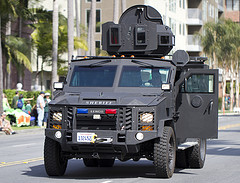 No longer is it unusual to hear about incidents in which police shoot unarmed individuals first and ask questions later. What is unusual is our lack of outrage, the relative disinterest of our elected representatives, the media’s abysmal failure to ask questions and demand answers, and our growing acceptance of the status quo in the United Police States of America-a status quo in which “we the people” are powerless in the face of the heavy-handed tactics employed by the government and its armed agents.
However, as I document in my book A Government of Wolves: The Emerging American Police State, it’s all part of the larger police state continuum. Thus, with each tragic shooting that is shrugged off or covered up, each piece of legislation passed that criminalizes otherwise legal activities, every surveillance drone that takes to the skies, every phone call, email or text that is spied on, and every transaction that is monitored, the government’s stranglehold over our lives grows stronger.
We have been silent about too many things for too long, not the least of which is the deadly tendency on the part of police to resort to lethal force. However, as Martin Luther King Jr. reminded us, “There comes a time when silence is betrayal.”
For the sake of 13-year-old Andy Lopez, we can be silent no more. The Santa Rosa teen was shot dead after two sheriff’s deputies saw him carrying a toy BB gun in public. Lopez was about 20 feet away from the deputies, his back turned to them, when the officers took cover behind their car and ordered him to drop the “weapon.” When Lopez turned around, toy gun in his hand, one of the officers-a 24-year veteran of the force-shot him seven times. The time span between the deputies calling in a suspicious person sighting and shooting Lopez was a mere ten seconds. The young boy died at the scene. Clearly, no attempt was made to use less lethal force.
Rationalizing the shooting incident, Lt. Paul Henry of the Santa Rosa Police Department explained, “The deputy’s mindset was that he was fearful that he was going to be shot.” Yet as William Norman Grigg, a commentator for LewRockwell.com, points out, such a “preoccupation with ‘officer safety’ … leads to unnecessary police shootings. A peace officer is paid to assume certain risks, including those necessary to de-escalate a confrontation with someone believed to be a heavily armed suspect in a residential neighborhood. A ‘veteran’ deputy with the mindset of a peace officer would have taken more than a shaved fraction of a split-second to open fire on a small male individual readily identifiable as a junior high school student, who was carrying an object that is easily recognizable as a toy-at least to people who don’t see themselves as an army of occupation, and view the public as an undifferentiated mass of menace.”
Unfortunately, this police preoccupation with ensuring their own safety at all costs-a mindset that many older law enforcement officials find abhorrent in light of the more selfless code on which they were trained-is spreading like a plague among the ranks of police officers across the country, with tragic consequences for the innocent civilians unlucky enough to be in the wrong place at the wrong time. Yet the fatality rate of on-duty patrol officers is reportedly far lower than many other professions, including construction, logging, fishing, truck driving, and even trash collection. In fact, police officers have the same rate of dying on the job as do taxi drivers.
Nevertheless, according to the Bureau of Justice Statistics, 400 to 500 innocent people are killed by police officers every year. That does not include the number of unarmed individuals shot and injured by police simply because they felt threatened or feared for their safety. This is the danger of having a standing army (which is what police forces, increasingly made up of individuals with military backgrounds and/or training, have evolved into) that has been trained to view the citizenry as little more than potential suspects, combatants and insurgents.
Consider what happened in Cleveland, when two police officers mistook the sounds of a backfiring car for gunfire and immediately began pursuing the 1979 Chevrolet Malibu and its two occupants, a woman driver and a man in the passenger seat. Within 20 minutes, more than 60 police cars, some unmarked, and 115 officers had joined the pursuit, which ended in a full blown-out firefight in a middle school parking lot that saw 140 bullets fired in less than 30 seconds. Once the smoke cleared, it quickly became evident that not only had the officers been mistakenly firing at each other but the “suspects”-dead from countless bullet wounds-were unarmed. As the Plain Dealer reports:
Despite varying levels of experience, all 13 officers who fired their guns-and many who did not-told investigators they thought deadly force was needed to stop a violent encounter with two suspects who they believed were armed. “I’ve never been more afraid in my life,” said Officer Michael Brelo, who fired 49 shots that night. “I thought my partner and I were being shot and that we were going to be killed.”
Incredibly, no officers were injured in the shooting. Nor was any apparent effort made to resolve the situation using less lethal force. Sixty-three of the officers involved in the fatal shooting have since been suspended.
I doubt the police officers involved in this massacre are bad cops in the sense of being corrupt and on the take, or violent and abusive, or bloodthirsty and trigger happy. Nor are they any different from most of the cops who patrol communities large and small across the country. Just like you and me, these officers have spouses and children to care for, homes to maintain, bills to pay, and worries that keep them up at night. Like most of us, they strive to do their jobs as best as they know how, but that’s where the problem arises, because they have clearly been poorly trained in how to distinguish what is a real threat. They have also been indoctrinated into the mindset that they have a right to protect themselves at all cost and empowered to shoot first and ask questions later with a veritable arsenal of military artillery, much of which has been provided by the federal government.
These shootings are occurring with such frequency now that they are quickly forgotten, lost in the morass of similarly heartbreaking, tragic incidents. It was barely a month ago, for example, that police in Washington, DC, shot and killed 34-year-old Miriam Carey after she collided with a barrier leading to the White House, then fled when pursued by a phalanx of gun-wielding police and cop cars. Carey’s 1-year-old daughter was in the backseat. Seventeen gun shots later, Carey was dead and her toddler motherless. It was what is known as a “bad shoot.” As James Mulvaney, a professor of law and police science, explains: “A ‘good shoot’ in police lingo is one in which officers use deadly force to prevent a suspect from inflicting serious harm. A ‘bad shoot’ is one in which there might have been a nonlethal alternative.”
Even the suggestion that there are nonlethal alternatives is misleading. Nonlethal weapons such as tasers, stun guns, rubber pellets and the like, introduced with a government guarantee of safety for the public and adopted by police departments across the country purportedly because they would help restrain violent individuals, have resulted in police using them as weapons of compliance more often and with less restraint-even against women and children-and in some instances, even causing death.
These “nonlethal” weapons also enable police to aggress with the push of a button, making the potential for overblown confrontations over minor incidents that much more likely. Case in point: the fact that seven-months pregnant Malaika Brooks was tased three times for refusing to sign a speeding ticket, while Keith Cockrell was shot with a taser for jaywalking.
Researchers have discovered that dehumanizing weapons like guns or tasers, which do not require the aggressor (police) to make physical contact with his victim, are aggression-eliciting stimuli. One study found that simply showing an image of a gun to students caused them to clench their fists faster (a sign of aggressive effect) when presented with an aversive situation. If a simple handgun can noticeably increase violent behavior, one can only imagine what impact the $500 million dollars’ worth of weapons and armored vehicles (provided by the Pentagon to local police in states and municipalities across the country) have on already tense and potentially explosive situations.
So what is the answer?
How should we as a society respond when we hear about the Las Vegas police officer who shot an unarmed man at a convenience store whom he “thought” was a homicide suspect, or the Los Angeles cop who shot an unarmed man seen leaving a convenience store where an ATM had been robbed of $40 or the DC cops who killed a young mother in a hail of gunfire? As John Grant notes for Counterpunch: “The ignominious and unnecessary public killing of Miriam Carey should be a human marker that triggers our cultural meaning machine to honestly consider what’s wrong with the picture of a howling pack of cops shooting down a troubled young mother … like a dog.”
The current practice is to let the police deal with it themselves by suspending the officer involved with administrative pay, dragging out the investigation until the public forgets about the incident, and then eventually declaring the shooting incident justified based on the officer’s fear for his safety, and allowing him to go back to work as usual. Meanwhile, the epidemic of police violence continues to escalate while fear of the police increases and the police state, with all its surveillance gear and military weaponry, expands around us.
If ever there were a time to de-militarize and de-weaponize local police forces, it’s now. The same goes for scaling back on the mindset adopted by cops that they are the law and should be revered, feared and obeyed. As for the idea that citizens must be compliant or risk being treated like lawbreakers, that’s nothing more than authoritarianism with a badge. As Grant points out: “As the public killing of Miriam Carey should make clear, a significant part of the problem is cops and the pack mentality they too often resort to. These men and women are encouraged to see themselves on “the front line” protecting us, the people. They are pumped up with post-911 fears and adrenaline and, when it hits the fan, relentlessly determined to get their man or woman. A lot of reality can get lost in this process.”
In other words, it’s time for a reality check, for both the police and the citizens of this nation, and a good place to start is with the words of that gonzo journalist Hunter S. Thompson, who warned: “Coming of age in a fascist police state will not be a barrel of fun for anybody, much less for people like me, who are not inclined to suffer Nazis gladly and feel only contempt for the cowardly flag-suckers who would gladly give up their outdated freedom to live for the mess of pottage they have been conned into believing will be freedom from fear.”
Related articles
Federal Appeals Court Rules Warrant Required for GPS Tracking
By Nathan Freed Wessler | ACLU | October 23, 2013
Today the Third Circuit Court of Appeals ruled that law enforcement agents must obtain a warrant based on probable cause to attach a GPS device to a car and track its movements. The case, United States v. Katzin, is the first in which a federal appeals court has explicitly held that a warrant is required for GPS tracking by police. The ACLU submitted an amicus brief in the case (joined by the ACLU of Pennsylvania, Electronic Frontier Foundation, and National Association of Criminal Defense Lawyers) and presented oral argument to the court in March.
In this case, police suspected three brothers, Harry, Mark, and Michael Katzin, of robbing several pharmacies. Without getting a warrant from a judge, FBI agents attached a GPS tracking device to Harry Katzin’s car in order to follow its movements. The government used the GPS device to track the Katzins as they drove to and from another pharmacy, and arrested them as they drove away. Before trial, the Katzins argued that police had violated their Fourth Amendment rights by using the GPS tracker without a warrant, and the district court agreed. Today’s ruling affirms that decision.
Last year, in United States v. Jones, the Supreme Court unanimously held that attaching a GPS tracker to a car to follow its movements is a search under the Fourth Amendment. The Court did not decide whether police need a warrant to conduct such a search, however, and the government argued in this case that an exception to the usual requirement of a warrant should apply. The Third Circuit rejected the government’s arguments, explaining that GPS tracking is a “vastly broader endeavor” than the kinds of limited searches that courts have allowed without warrants. In particular, the court held that the “automobile exception” to the warrant requirement does not apply to GPS tracking. The exception is designed to permit warrantless searches of cars to reveal contraband before the cars can drive away. But, as the court explained, that narrow exception does not “permit [police] to leave behind an ever-watchful electronic sentinel in order to collect future evidence” without judicial oversight.
The court also rejected a second argument made by the government: that the so-called “good faith” exception should permit use of evidence derived from the GPS tracking, even if it violated the Fourth Amendment. Because the GPS tracker was attached to the Katzins’ car before the Supreme Court decided Jones, and before the Third Circuit had addressed the issue, the government argued that FBI agents couldn’t have known that using a GPS device might raise questions under the Fourth Amendment, and therefore they acted in good faith by choosing not to seek a warrant. The court explained that this does not excuse police from the requirement of getting a warrant:
Where an officer decides to take the Fourth Amendment inquiry into his own hands, rather than to seek a warrant from a neutral magistrate — particularly where the law is as far from settled as it was in this case — he acts in a constitutionally reckless fashion. Here, law enforcement personnel made a deliberate decision to forego securing a warrant before attaching a GPS device directly to a target vehicle in the absence of binding Fourth Amendment precedent authorizing such a practice. . . . Excluding the evidence here will incentivize the police to err on the side of constitutional behavior and help prevent future Fourth Amendment violations.
Today’s opinion offers a full-throated defense of the Fourth Amendment, and installs an important safeguard against unjustified government surveillance. As courts around the country consider challenges to warrantless location tracking by police (whether using GPS devices or cell phone signals), they would do well to follow the Third Circuit’s lead.
Oakland dedicating anti-terrorism funding to surveillance supercenter
RT | October 14, 2013
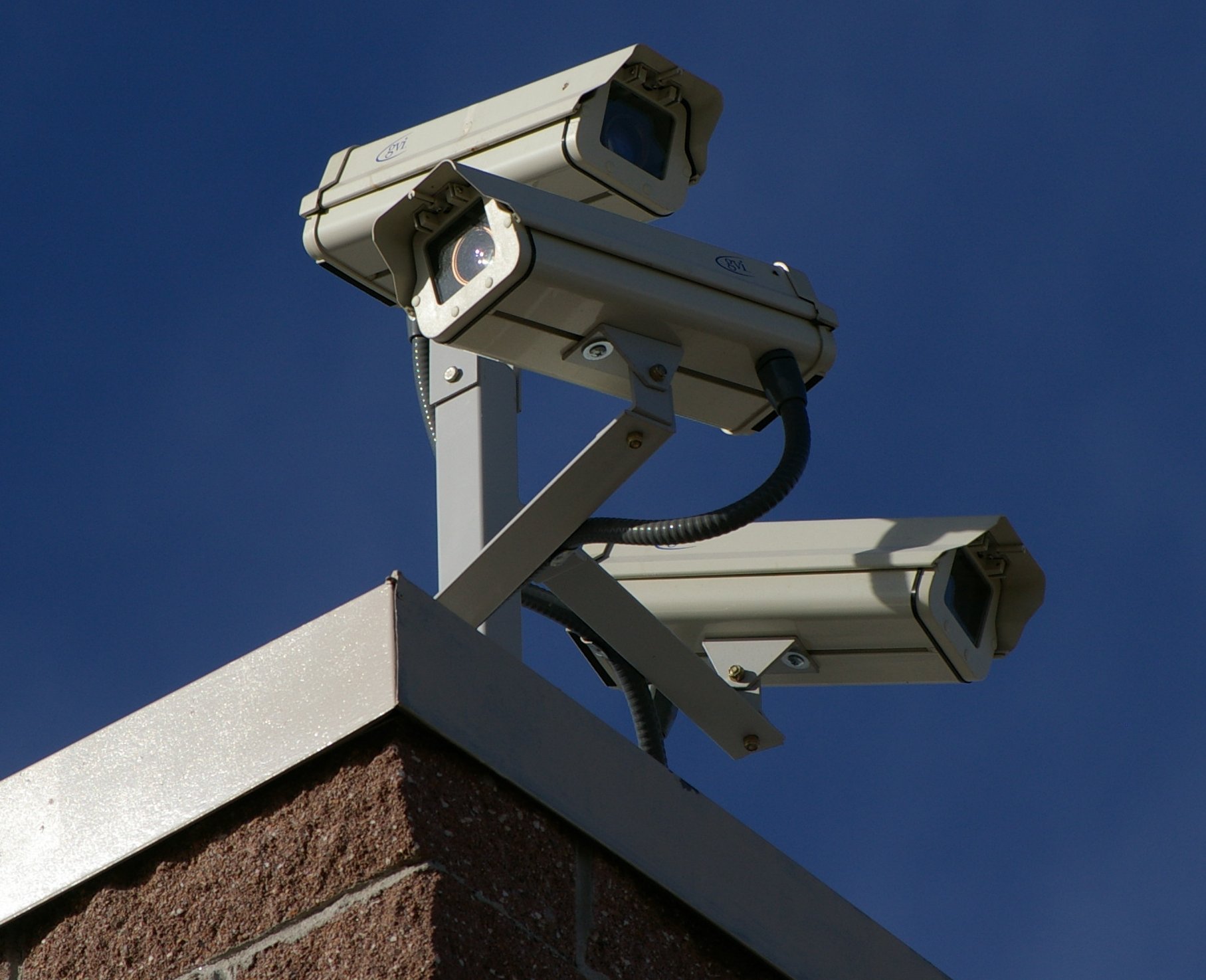 Lawmakers in Oakland intend to spend millions of dollars awarded to the California city in a federal grant to a police dragnet that promises to examine surveillance footage, riling critics who assert the intention of the grant was to stop terrorism.
When the new program debuts in approximately one year police will be able to track drivers as they travel through tolls, scan license plates with the roughly 3,000 surveillance cameras placed throughout the city, and monitor social media platforms to learn about crimes before they occur.
The Oakland program, officially referred to as the Domain Awareness Center, according to the New York Times, comes at a time when police departments across the US are using federal money to launch similar surveillance efforts modeled after the New York Police Department. The NYPD, which operates within New York City as well as far outside, has used federal grants to build a massive surveillance network capable of linking cameras and license plate readers to criminal and suspected terrorist databases.
The Domain Awareness Center also plans to plant gunshot detection sensors through Oakland, which is consistently ranked among the most dangerous cities in the US. Forbes magazine reported that violent crime affects 1,683 of every 100,000 residents in the city, making it the third most dangerous city in America with a population between 100,000 and 499,000 in 2013.
The Oakland City Council voted unanimously on July 31 to adopt the plan to build the surveillance center, which officials have said will be staffed 24 hours a day. Lawmakers voted at the same meeting to ban hammers and spray paint cans at protests in fear that the items will be used as weapons. Waiting outside, protesters admonished council members with chants of “Shame! Shame! Shame!”
“The Domain Awareness Center is the guard tower which will watch over every person in the city of Oakland,” shouted demonstrator Mark Raymond, as quoted by the San Francisco Chronicle. “This program is an attempt to criminalize and imprison all people who live and pass through Oakland.”
All told, the surveillance center’s costs are expected to total $10.2 million in federal grants, and while legislators said they were cognizant of residents’ security while drafting the bill some representatives were shouted down.
“We have tried our best to find the sweet spot where are going to take advantage of the tools that we have at hand to make our city safe… We have done everything we can to safeguard privacy,” said councilwoman Libby Schaaf before she was cut off by jeers and one protester who suggested she “go home to your mansion and kill yourself.”
Schaaf did admit that, while police have traditionally needed just a small evidence sample to arrest a suspect, the new center will have the capability to “paint a pretty detailed picture of someone’s personal life, someone who may be innocent.”
Oakland was awarded a federal grant to ramp up security near the Port of Oakland, a thriving cargo center that is one of the busiest in the US. The 19-mile waterfront is the fifth-busiest container port in the US, with 1,800 ships arriving every year, according to the San Francisco Chronicle. Over $14 billion in goods were exported from the bustling hub in 2012.
To protect the port, and watch civilians throughout the region, Oakland signed a contract with Science Applications International Corporation (SAIC) to build the Domain Awareness Center. The company, which earns most of its $12 million in annual revenue from military contracts, also worked with the NYPD but later paid $500 million to avoid a federal prosecution for receiving illegal kickbacks.
The Times reported that this project is not the first time Oakland has sought to develop such technology. A city audit viewed by the paper revealed that lawmakers spent nearly $2 million in 2012 alone on police tools that did not work or could not be used for a variety of reasons.
Linda Lye, an attorney with the American Civil Liberties Union, said this project might work as intended, but that mere intention already creates a scary problem.
“What they did is approve a vast surveillance center without understanding the implications,” she said earlier this year. “The privacy policies would be drafted only after the center is built. At that point, what opportunity will there be for to determine if the safeguards are sufficient?”
Related article
North Carolina police shoot dead unarmed car crash victim
RT | September 15, 2013
A North Carolina policeman has been detained after shooting dead an unarmed African-American man, who was trying to get help following a car crash.
On Saturday morning, three police officers in Charlotte, NC responded to a 911 call from a woman, who said that an unknown male was knocking on the door of her house, the local media reports.
When the patrol arrived at the scene, the man – later identified as Jonathan Farrell, 24 – rushed at the officers, making them believe that he may be dangerous.
The policemen tried to neutralize the suspect with a tazer, but when it didn’t work out, one of them used his gun, firing several shots.
Farrell died of his wounds on site. The body search revealed that he had no weapon on him.
Several hours later a wrecked car belonging to the deceased man was discovered at a nearby embankment.
The crash was serious as Farrell had to climb out of the back window of the vehicle, Charlotte-Mecklenburg Police Chief, Rodney Monroe, said.
Monroe stressed at a news conference that he didn’t think that the victim was trying to rob the woman, who called the police.
“I don’t believe threats were made,” the law enforcement chief is cited as saying by AP.
The investigators suggest that Farrell, who used to be a football player at Florida A&M University, may have been involved in an accident and was knocking on a nearby houses in order to get help.
Officer Randall Kerrick, 24, was arrested and charged with voluntary manslaughter for shooting the unarmed victim.
Kerrick, who has been with Charlotte-Mecklenburg Police since April 2011, is “pretty shook up” and “devastated” by what has happened, Monroe added.
The two other policemen on the scene have been placed on paid administrative leave until the investigation of the tragic incident concludes.
Cellphone tracking cases highlight privacy concerns in digital age
Rt | August 20, 2013
In recent weeks, two cert petitions were filed seeking review of whether the Fourth Amendment covers police searches of cellphone records upon arrest.
From mobile phone and GPS tracking to license plate reading and domestic surveillance drones — not to mention recent revelations of widespread abuse of surveillance capabilities by the National Security Agency — these cases and many others highlight major questions that remain unanswered regarding how privacy rights of Americans can co-exist with the use of rapidly evolving technologies.
State and federal law enforcement agencies have wasted no time seizing on gaps and omissions in established legal precedent to justify vast, routine surveillance of the American public which tests Fourth Amendment rights.
On July 30, a petition was filed in Riley v. California challenging a previous ruling in a California appellate court that affirmed the petitioner’s convictions, which stemmed in part from a questionable search of his smartphone in 2009 following a traffic stop for expired license plates. And late last week, the US Department of Justice filed a petition in United States v. Wurie asking for review of a First Circuit Court of Appeals ruling that police needed a warrant to access a suspect’s phone records. Regarding Wurie, the government contends a cell phone is no different from any other item on a suspect at the time of arrest. The search pertaining to Wurie occurred in 2007.
On the surface, the two cases have much in common. But in Riley, the phone in question is a smartphone – a Samsung Instinct M800. In Wurie, the cellphone was a Verizon LG flip-phone incapable of maintaining the breadth of information – including internet searches, email, photos and other media – that a smartphone can store.
As of May, Pew Research Center found that 91 percent of Americans own cellphones, and 61 percent of those cellphones are smartphones.
GPS technology has received more scrutiny from courts than cellphones have in recent years. Last week, the Justice Department appeared before a federal court defending its right to shield legal memos that provide guidance to federal prosecutors and investigators for how to use GPS devices and other surveillance technologies from the public. In a sense, the memos were released upon a Freedom of Information Act request by the American Civil LIberties Union (ACLU), though their contents were heavily redacted.
The memos (read here and here) were legal interpretations of a January 2012 Supreme Court ruling in United States v. Jones in which the court ruled the use of GPS technology to track a car’s movements constitutes a “search” within the parameters of the Fourth Amendment. Upon release of the indecipherable legal memos, the ACLU filed a lawsuit seeking the full, uncensored guidelines.
“While we agree that executive branch lawyers should be able to freely discuss legal theories, once those opinions become official government policy the public has an absolute right to know what they are,” wrote Brian Hauss, legal fellow with the ACLU’s Speech, Privacy and Technology Project. “Otherwise, the government is operating under secret law that makes accountability to the people impossible.”
The ruling in United States v. Jones left many unanswered questions regarding the use of other location-monitoring technologies pertaining to, for example, the tracking of cellphones or the use of license-plate readers – not to mention the use of surveillance drones in the US. In addition, the Jones ruling fell short of even determining whether a warrant is necessary to use GPS devices.
Building on the Jones decision, New Jersey recently became a state ahead of the curve in defining rules for law enforcement and privacy rights in the digital age. The New Jersey Supreme Court ruled in July that state police must have a search warrant before obtaining tracking information from cellphone providers.
“Using a cellphone to determine the location of its owner can be far more revealing than acquiring toll billing, bank, or internet subscriber records,” Chief Justice Stuart Rabner wrote in the case’s opinion. “Details about the location of a cellphone can provide an intimate picture of one’s daily life and reveal not just where people go – which doctors, religious services and stores they visit – but also the people and groups they choose to affiliate with. That information cuts across a broad range of personal ties with family, friends, political groups, health care providers and others.”
In June, Montana became the first state to require police to obtain a warrant before tracking a suspect’s cellphone.
In March 2012, the ACLU reviewed records from over 200 local police departments, finding vast, aggressive use of cellphone tracking for emergency and nonemergency uses.
Another ACLU report, released in July of this year, queried around 600 local and state police departments (and other state and federal agencies) via public records requests to assess how these agencies use automatic license plate readers. The civil liberties organization found massive databases of innocent motorists’ location information gleaned through hundreds of millions of “plate reads” by the ubiquitous readers. Data is often stored for an indefinite period of time, revealing just how easy it is for law enforcement – as well as many private companies – to track any license plate with few legal restrictions in place to stop them.
For example, for every one million plates that were read in the state of Maryland in the first half of 2012, 2000 (0.2 percent) were hits, mostly regarding registration or emissions issues. Of those 2000 hits, less than 3 percent (47) were potentially connected to more serious crimes.
In addition, much of this network of readers throughout the nation is in place thanks to a large amount of federal funding – $50 million in the last five years.
Approval of licenses for domestic drones has begun, as RT has reported, even though solid rules for their eventual use in American skies have yet to materialize from either Congress or the Federal Aviation Administration. The FAA expects as many as 30,000 drones in American airspace by 2020.
For now, many local law enforcement agencies are leading the quest for drone-use approval, though requests for commercial drones are mounting. As of February 15, 2013, there were 327 active drone certifications despite there being no regulatory framework in place. However, the FAA did get around to certifying two types of unmanned aircraft for civilian use in the US in late July.
In the meantime, federal government agencies have used drones domestically both out in the open and in secret. The Federal Bureau of Investigation has admitted to already using surveillance drones despite no established law or guidelines for their use. The US Department of Homeland Security has used surveillance-capable drones along the border for years, even allowing other federal agencies to use its fleet to the tune of 250 times in 2012 alone, The New York Times reported.
Detroit police arrest news photographer, lock her up with suspect
RT | July 16, 2013
Police in Detroit, Michigan have launched an internal investigation after a Detroit Free Press photographer was detained for filming a group of officers as they arrested a suspect on a public street on Thursday, July 11.
 Mandi Wright was traveling to an assignment with a newspaper reporter when the pair came upon eight officers making an arrest. The video, since posted online, shows Wright capturing a pat-down before she is approached by an officer, who orders Wright to “back up” before covering the camera lens and demanding she “turn it off.”
Wright identifies herself as a photographer for the Free Press, to which the officer responds with “I don’t care who you are.” He then reaches for the camera and Wright can be heard asking “Are you touching me?” before the images cut off. Witnesses say the two tussled before uniformed officers put Wright in handcuffs for interfering with an arrest.
Wright, 47, has accused the police of wrongfully confiscating her iPhone and briefly leaving her locked up alone with the suspect she filmed being arrested. She has also asserted that the memory card from her newspaper-issued cell phone camera went missing after an officer wrestled the device away from her, according to the Free Press.
“I was just surprised at how quickly it escalated,” Kathleen Gray, the reporter traveling with Wright, told the Free Press. “There was no effort to try to figure out who we were or what we were doing. It was just immediately going for the phone.”
The photographer was held in police custody for over six hours. Wright has said that at least part of that time was spent alone in an interrogation room with the original suspect. Deputy Chief James Tolbert said, if the latter claim is verifiable, “that could be a serious breach of department policy.”
Missing – along with a satisfactory explanation – was Wright’s SIM card, which stores files on a cell phone. The video was preserved on Wright’s iPhone’s internal memory.
Tolbert, speaking to the Free Press, refused to name the officer who first accosted Wright but said the internal investigation will examine “the whole incident, from start to end. What we did, what she did, the whole nine.”
The deputy chief told editors of the Free Press the incident had already become a point of embarrassment for the department and he reminded officers they are not authorized to impede an individual from filming.
While putting the onus on police, Free Press Editor Paul Anger was conciliatory about the incident.
“First, our photographer was doing what any journalist – or any citizen – has a right to do in a public place,” he said. “All she knew was that someone had grabbed her and her phone. We understand the difficult job that police officers do and we understand how tensions can rise. Yet some of the police actions all through this incident need scrutiny – not the actions of our photographer.”
image by @DetroitMandi
Featured Video

Marandi: Threat of Seizing Kharg Island & the Use of Nuclear Weapons
or go to
Aletho News Archives – Video-Images
Frlom the Archives
Provoking a Path to Persia
The Saban Center’s prescient paper on war with Iran
By Maidhc Ó Cathail | October 20, 2011
In June 2009, the Saban Center for Middle East Policy published “Which Path to Persia?—Options for a New American Strategy toward Iran.” Writing in a tone strikingly reminiscent of the Project for a New American Century’s infamous pre-9/11 paper “Rebuilding America’s Defenses,” the six co-authors noted that, “It seems highly unlikely that the United States would mount an invasion without any provocation or other buildup.” For a think tank specifically established by media mogul Haim Saban to protect Israel, this could prove to be a formidable obstacle impeding their desired march—of U.S. troops—to Tehran.
“In fact, if the United States were to decide that to garner greater international support, galvanize U.S. domestic support, and/or provide a legal justification for an invasion, it would be best to wait for an Iranian provocation, then the time frame for an invasion might stretch out indefinitely,” Saban’s think-tankers ruefully observed.
“With only one real exception, since the 1978 revolution, the Islamic Republic has never willingly provoked an American military response, although it certainly has taken actions that could have done so if Washington had been looking for a fight. Thus it is not impossible that Tehran might take some action that would justify an American invasion. And it is certainly the case that if Washington sought such a provocation, it could take actions that might make it more likely that Tehran would do so (although being too obvious about this could nullify the provocation). However, since it would be up to Iran to make the provocative move, which Iran has been wary of doing most times in the past, the United States would never know for sure when it would get the requisite Iranian provocation. In fact, it might never come at all.”
Seemingly undeterred by Iran’s frustrating unwillingness to provide the requisite provocation, the analysts continued to examine this option… continue
Blog Roll
 Aletho News
- Ukrainian Embassy in Beirut sheltering top Mossad agent
- Palestinian family displaced after settlers violently attack them in Humsa, Jordan Valley
- The EU never learns – except for the wrong lessons
- Iran attacks on UAE leaves RSF militia high and dry
- Hosting Washington’s war: Bahrain faces the consequences
- The US fell for its own Iran propaganda
- Seyed M. Marandi: Threat of Seizing Kharg Island & the Use of Nuclear Weapons
- Is there even an off ramp?
- Michael von der Schulenburg: Europe’s Self-Defeating Iran War Policy
- Sorry, The New Republic, Climate Change Isn’t Causing Somali Migration. Blame Civil Strife and Poverty.
- If Americans Knew
- ‘Of Course’: IDF Drops Case Against Soldiers Accused of Raping Palestinian Prisoner
- Don’t Fall for the Regime Change Talk. Israel Is ‘Mowing the Lawn’ in Iran
- Will Israel and the US wreck the Gulf States along with Iran?
- US so far burned through ‘years’ of munitions in Iran war: Report
- How the Israeli Tail Wags the American Dog
- Outdated intel likely led to deadly U.S. strike on Iranian elementary school, sources say
- Pentagon insider says high U.S official Douglas Feith reported to Netanyahu
- In fond memory of Walid Khalidi, the historian of Palestine
- 6 more Americans killed, as Israel ‘mows the lawn’ in Iran – Not a ceasefire Day 154
- Are we on the precipice of World War III?
- No Tricks Zone
- New Studies: UK Sea Levels Were 4 Meters Higher Than Today During The Mid-Holocene
- Destructive Green New Deal: German Energy And Metal Group Warns Of Drastic Crisis
- New Study Documents A 20-Year Pause In Arctic Sea Ice Decline – Driven By Internal Variability
- Wake-up Call: Survey Shows Majority Of Germans Now Favor Postponing Climate Targets!
- Televised! Leading German Political Candidate Tells Schoolchildren CO2 Makes Sun Hotter!
- New Study: A Century Warming Of 1.1°C Is ‘Commonplace’ And ‘Not Unusual’ During This Interglacial
- New Study: ‘Internal Noise’ And Volcanic Forcing Can Trigger 10-15°C Warming Within Decades
- Glaciers Worldwide Are Suddendly Surging, Experts Blame Warming!
- Surprising Discovery: Sahara Is Greening…Billions Of Trees Where Once Thought To Be Barren
- New Research Reaffirms Clouds, Aerosols, And Surface Solar Radiation Are ‘Driving The Climate System’
 Aletho News