Boycott of Israeli universities angers NY lawmakers
Press TV – December 31, 2013
Two New York legislators say they will introduce a bill to strip state aid from universities that take part in a recent movement to boycott Israeli academic centers.
State Sen. Jeff Klein, a Bronx Democrat, and Assemblyman Dov Hikind, a Brooklyn Democrat who is also a former member of the Jewish Defense League that was classified as a “terrorist group” by the FBI in 2001, say they want to cut off state aid to universities affiliated with the American Studies Association’s movement to boycott Israeli institutions.
Earlier this month, members of the ASA overwhelmingly voted to ban Israeli universities from collaborations with their campuses.
The organization said the reason behind its decision was that the Israeli institutions were “a party” to policies “that violate human rights” as Israel’s “violation of international law and UN resolutions” continues and the “impact of the Israeli occupation on Palestinian scholars and students” is well-documented.
“The American Studies Association is carrying on a long and proud tradition of American academics by engaging in an academic boycott much like many professors did during apartheid South Africa,” Michael Shallcross, a member of Students for Justice in Palestine at Temple University in Philadelphia, told Press TV.
However, the move, which is part of a larger international effort to win boycotts of Israeli institutions, angered some US politicians both at state and federal level.
Rep. Eliot Engel (D-New York) has urged the ASA to end the boycott, saying he was surprised by the organization’s decision.
And now, two pro-Israel Democrats in New York’s state legislature, Klein and Hikind, are trying to cut state aid to universities affiliated with the movement.
“[It] is a shameless attempt at censorship by powerful Zionist politicians in New York State by cutting off economic life lines that make higher education possible,” Shallcross said.
The ASA is the largest and oldest association involved in interdisciplinary studies of American culture and history.
Egypt’s constitution to grant immunity to military
Press TV – November 30, 2013
Egypt’s constitution-drafting committee has agreed to an article that grants immunity to the Supreme Council of the Armed Forces (SCAF).
According to a draft published in Egypt’s state media on Thursday, the new constitution would grant more powers to the SCAF and could ban Islamic parties completely.
The 50-member assembly is scheduled to finish the draft of the constitution this week. The constitution will then be put to a referendum in December.
Earlier this month, it was revealed that General Abdel Fattah el-Sisi, the army chief and minister of defense, had been seeking immunity for the military council for a period of five to ten years.
It has also been leaked that he asked for a media campaign to lobby for a specific clause to be included in the constitution. The clause would allow Sisi to retain his post as defense minister in the event he loses in the presidential election.
The military representatives of the committee also called for the constitution to allow the military to name the defense minister during the next two presidential terms. The move has been widely criticized by legal experts, who say this would give the military more power than the president.
Egypt has been experiencing unrelenting violence since July 3, when the army ousted President Mohamed Morsi’s government, suspended the constitution, and dissolved the parliament. It also appointed the head of the Supreme Constitutional Court, Adly Mahmoud Mansour, as the new interim president.
The government of Mansour has launched a bloody crackdown on Morsi supporters and arrested more than 2,000 Muslim Brotherhood members, including the party’s leader, Mohamed Badie, who was detained on August 20.
About 1,000 people were killed in a week of violence between Morsi supporters and security forces after police dispersed their protest camps in a deadly operation on August 14. The massacre sparked international condemnation and prompted world bodies to call for an independent investigation into the violence.
Spain sets new stiff fines for illegal protests
Press TV – November 29, 2013
The Spanish government has approved a new draft law which imposes harsh penalties on Spaniards taking part in unauthorized anti-government demonstrations, a move criticized by the opposition as trying to silence protests.
The draft law, presented by Interior Minister Jorge Fernandez Diaz on Friday, sets fines of up to 30,000 euros ($40,800) for offenses like torching the national flag, affronting the state or causing serious troubles outside parliament.
Fines of up to 1,000 euros will be imposed on people insulting or intimidating police officers.
Four “very serious” offenses, including interfering in electoral processes and illegal protests at strategic facilities such as airports or nuclear power plants, could be fined up to 600,000 euros (about $1,000,000).
The opposition says the bill is meant to prevent demonstrations against the government as the country struggles with a debt crisis and high unemployment.
“When more than 20 percent of people are unemployed, I don’t think this legislation is what we require,” said Alejandro Tourino, from law firm Ecija.
The government, however, has defended the bill, saying it will create discipline and safeguard public freedoms.
It will help “regulate and protect public freedoms,” said Deputy Prime Minister Soraya Saenz de Santamaria.
Madrid’s harsh spending cuts and rising unemployment have sparked massive anti-government protests across the country in recent years. Protesters argue that the government-imposed measures have failed to curb rising poverty or help extricate the country from its worst recession in years.
The draft law must be approved by parliament, where it may change to some extent. However, it will probably be ratified as the governing party has an absolute majority in the parliament.
Spain has seen numerous protests in recent years. On November 20, students gathered in front of the Education Ministry in Madrid to show their anger at the government’s austerity cuts, rising fees and other changes to the education system.
The Spanish government has been sharply criticized over the austerity measures that are hitting the middle and working classes the hardest.
Battered by the global financial downturn, the Spanish economy collapsed into recession in the second half of 2008, taking with it millions of jobs.
Related articles
PSA Peugeot Citroen, Renault ready to return to Iran market
Press TV – November 30, 2013
French automakers PSA Peugeot Citroen and Renault are planning to return to Iran’s market following a recent nuclear deal reached between Tehran and six major world powers in Geneva which will ease sanctions on auto industry.
According to the Geneva deal, the EU and US sanctions on Iran’s petrochemical export, gold and precious metals and auto industry as well as the supply of spare parts for the Iranian airplanes would be suspended.
French auto giants are poised to resume vehicle sales in Iran to reclaim their share of the huge Iranian market they lost after the implementation of sanctions against Tehran over its nuclear energy program in 2011.
Peugeot and Renault are among Western companies sending representatives to a crucial auto conference that was to open in the Iranian capital, Tehran, on Saturday.
Their participation in the conference has been interpreted by the media as a sign to mark their early return to the Iranian market before other competitors.
Renault and Peugeot have been production partners of Iran’s domestic majors – Iran Khodro and SAIPA.
Official data show the sanctions against Iran led to the unemployment of 100,000 workers and undermined the output of the two French giants.
A day after the nuclear deal between Iran and the six countries, Peugeot’s shares soared 4.50 percent to 10.69 euros and Renault rose 1.43 percent to 65.35 euros.
Iran used to be Peugeot’s second-biggest market in car sales volumes before Western sanctions against Tehran were toughened. In 2011, Iran accounted for 13 percent of Peugeot’s annual sales.
Peugeot has experienced an estimated four billion euros in lost sales after cutting ties with Iranian automaker Iran Khodro in February 2012 under pressure from its American partner company General Motors.
On July 26, Renault reported a huge fall in profits for the first half of 2013 after writing off the entire value of its business in Iran due to the US-led sanctions against Tehran.
The firm took a 512-million-euro (680-million-dollar) charge after halting its activities in Iran.
Last year, Renault sold a total of 100,783 vehicles in Iran, and had a 10-percent market share. The Middle Eastern country was Renault’s eighth-biggest global market by sales, above Italy where Renault sold 96,144 units and Spain where it sold 83,366 cars.
On November 24, Iran and the five permanent members of the United Nations Security Council – Russia, China, France, Britain and the US – plus Germany sealed an interim deal in the Swiss city of Geneva to lay the groundwork for the full resolution of the West’s decade-old dispute with Iran over its nuclear energy program.
Related article
- Iran Accord Sparks Race to Tehran as Automakers Target Deals (bloomberg.com)
US, Israel to threaten Iran with war game
Press TV – November 28, 2013
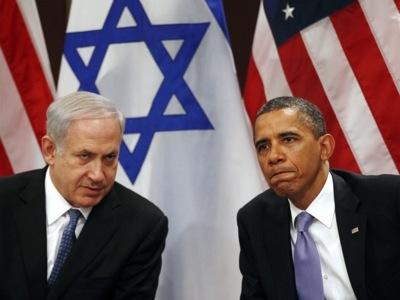
The US and Israel are planning to conduct a joint military drill in an effort to threaten Iran towards the end of the six-month period when an interim deal between Iran and the five permanent members of the UN Security Council plus Germany expires.
The drill is aimed at sending a threatening message to Iran while US President Barack Obama says “we cannot commit ourselves to an endless cycle of conflict.”
Time magazine broke the story of the planned US-Israeli military exercise on Thursday, citing a top Israeli official who said, “The strategic decision is to continue to make noise.”
“In May there’s going to be a joint training exercise with the Americans,” said the official who spoke on condition of anonymity. “It’s going to be big.”
The planned war game comes after the interim nuclear deal between Iran and the P5+1 intensely angered Israelis.
As part of the interim deal, which was announced on November 24, Iran has agreed to limit certain aspects of its nuclear activities, and the United States and its allies have agreed to lift some of the economic sanctions and offer access to a portion of the revenue that Tehran has been denied through these sanctions. No additional sanctions will be imposed.
The deal infuriated Israeli Prime Minister Benjamin Netanyahu who called it “a historic blunder.”
The American Israel Public Affairs Committee (AIPAC), the most powerful pro-advocacy group in the US, also called on US Congress to impose new sanctions on Iran.
Meanwhile, a recent Reuters/Ipsos poll has shown that the American people support the deal over Iran’s nuclear energy program by a 2-to-1 margin.
Related articles
Iranian channels targeted 66 times in 3 years: IRIB
Press TV – November 7, 2013
The head of the Islamic Republic of Iran Broadcasting (IRIB) says Iranian channels have been taken off air from 27 satellites 66 times over the past three years by those claiming to be the advocates of freedom of speech.
Ezzatollah Zarghami made the remarks in an interview with Iran’s Young Journalists’ Club (YJC) on Thursday.
Zarghami noted that in addition to this, the channels have been repeatedly blocked or distorted through jamming of their transponders.
“This is while the Islamic Republic of Iran has been falsely accused of jamming [foreign radio and TV broadcasts] and sometimes it is claimed that the source [of the jamming] is outside Iran,” he stated.
The head of the IRIB said that in the modern world the free flow of information and enlightenment by independent media cannot be blocked.
He noted that the move against the Iranian channels by those who claim to be the advocates of freedom of speech and free flow of information comes as thousands of TV and satellite channels are currently broadcasting their programs onto the Iranian territory.
Iranian channels have come under an unprecedented wave of attacks by European governments and satellite companies since January 2012.
They have been taken off the air in several Western countries, including Britain, France, Germany and Spain.
European companies say they are abiding by the US-engineered sanctions against Iran. However, Michael Mann, the EU foreign policy chief’s spokesman, has told Press TV that sanctions do not apply to media.
In June, in another illegal act against Iranian alternative channels, Intelsat said that it will no longer provide services to Iranian channels, including Press TV.
Press TV later learned that the Office of Foreign Assets Control (OFAC) — an agency of the US Treasury Department — was behind the pressure on Intelsat.
Media activists call the attacks on Iranian channels a campaign against free speech launched by the same European governments that preach freedom of expression.
Related articles
Americans against backing Syria militants: poll
Press TV – November 6, 2013
The results of a new poll show that most Americans are opposed to supporting foreign-backed Takfiri militants fighting the Syrian Government.
The poll was conducted by HuffPost/YouGov between October 7 and 10 and its results were published on October 29. The aim of the study was to discover the American respondents’ view on providing militants with arms.
The findings of the poll revealed that 62 percent of the American respondents were against backing militants by supplying arms to them. This is while only 13 percent believed the militants should be provided with weapons.
The remaining 25 percent of the respondents had answered, “I don’t know.”
The results also indicated that around 66.6 percent of the Americans were against the US policies toward the Middle Eastern country.
Media reports indicate that the US trains the foreign-sponsored militants in the crisis-hit country, in addition to coordinating arms shipments to them.
Syria has been gripped by deadly unrest since 2011 in which more than 100,000 people have been killed. According to reports, the Western powers and their regional allies — especially Qatar, Saudi Arabia, and Turkey — are supporting the militants operating inside Syria.
Related article
- Western “Help” to Militants Cost Syria 100,000 deaths – Expert (syrianfreepress.wordpress.com)
Bahraini court sentences four activists to life
Press TV – November 3, 2013
A court in Bahrain has sentenced four anti-regime activists to life in prison and six others to 15-year jail terms, as the country’s prosecutors begin interrogation of opposition leader Sheikh Ali Salman.
Bahraini opposition sources said on Sunday that the activists were handed prison sentences for taking part in anti-regime protests.
Earlier this week, ten protesters were also imprisoned over similar charges.
The court rulings are issued at a time when Bahraini regime forces have intensified their crackdown on opposition leaders.
Reports say the Manama regime has begun the interrogation of Sheikh Ali Salman, the secretary-general of the main opposition group, al-Wefaq.
The Saturday summoning of Sheikh Salman sparked protests across Bahrain.
The demonstrators expressed solidarity with the al-Wefaq leader.
The Bahraini opposition group believes the summoning of Salman “to be part of the political blackmail and revenge against the peaceful opposition that is asking for democracy.”
The Manama regime is under fire for its heavy-handed crackdown on protests.
On October 30, Bahraini regime forces stormed and shut down an exhibition, dubbed the revolution museum, which was opened by al-Wefaq.
The party says it will lodge a complaint with the United Nations over the raid on the exhibition, which had been organized in an effort to portray the brutal regime clampdown on peaceful protests.
In September, Wefaq’s deputy leader, Khalil al-Marzouq, was arrested on charges of “inciting protests” against the ruling Al Khalifa family. The opposition party said the detention was “a clear attack on political activism in Bahrain.”
Scores have been killed, many of them under torture while in custody, and thousands more detained since the popular uprising began in Bahrain in early 2011.
US preparing for $400bn nuke upgrade
Press TV – November 2, 2013
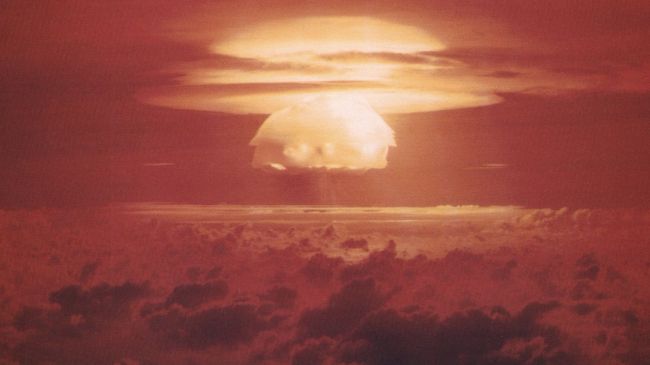
Pentagon officials have said the US nuclear arsenal needs an overhaul over the coming decade which could cost hundreds of billions of dollars.
In a meeting with US lawmakers on the House of Representatives Armed Services Committee on Tuesday, Assistant Defense Secretary Madelyn Creedon said Washington has to spend at least a decade to modernize its aging nuclear weapons.
“Modernization work of this kind is expensive, but there is no doubt that the investment … is necessary,” Reuters quoted Creedon as telling US congressmen.
“There is not a cost-effective alternative that meets the military requirements and policy objectives.”
Last year, the non-partisan Stimon Center think-tank estimated that modernizing the US nuclear arsenal, including weapons, infrastructure, and delivery systems, over the next decade would cost American taxpayers up to $400 billion.
On Monday, US Secretary of State John Kerry emphasized that nuclear weapons form an important part of Washington’s defense doctrine.
“It ensures that a strong nuclear deterrent remains the cornerstone of US national security and that of our allies and our partners,” he said during a speech at the US Institute of Peace in Washington.
In September, US Air Force tested two nuclear-capable missiles. The first one was launched on Sep. 22, one day after the International Day of Peace, and the second one was launched on Sep. 26, the same day heads of states and foreign ministers from around the world held a high-level meeting on nuclear disarmament at the United Nations headquarters in New York.
At the UN’s high-level meeting on nuclear disarmament on Sep. 26, Iranian President Hassan Rouhani stressed that “no nation should possess nuclear weapons.”
The US is the only country in the world that has used atomic bombs in war. US atomic bombs were dropped on Hiroshima and Nagasaki in Japan in August 1945.
Related articles
Activists to continue fight against UK drone secrecy
Press TV – October 31, 2013
Campaigners have vowed to continue fighting for greater transparency over the use of deadly British drones overseas despite losing an appeal calling for the UK involvement to be disclosed.
Anti-drone campaigners said they would pursue an end to the “culture of secrecy” surrounding London’s drone attacks in Afghanistan.
This came after the Information Tribunal agreed the Ministry of Defence’s (MoD) refusal to reveal information on the deployment of remote- controlled unmanned warfare in the Asian country.
The appeal body said that the MoD can withhold basic details about its drone strikes in Afghanistan.
“The MOD referred to the disclosure of the requested information as involving ‘risk to life and limb’, the Commissioner used the phrase ‘life and death,’” the ruling stated.
However, strategy director of legal charity Reprieve Cori Crider described the ruling as “disappointing”, saying “the US-UK drone wars must be brought out of the shadows.”
“We know that the UK is closely involved in supporting the CIA in carrying out these illegal strikes, yet they are still refusing to come clean,” Crider said.
Recently, it was revealed that the UK’s Royal Air Force (RAF) assassination drones, used in missions over Afghanistan, are controlled from British soil for the first time.
The MoD confirmed that its new aircraft, known as XIII Squadron, started flying missions over Afghanistan earlier in April from RAF Waddington base in Lincolnshire.
According to media reports, Britain has spent more than £2 billion over the last five years, developing its unethical assassination drones.
The deployment of assassination drones by the US and its allies has led to deaths of at least hundreds of innocent civilians, including many women and children, in the Middle East.
Related article
Poll: Obama’s job approval declines to 44.5 percent
Press TV – October 21, 2013
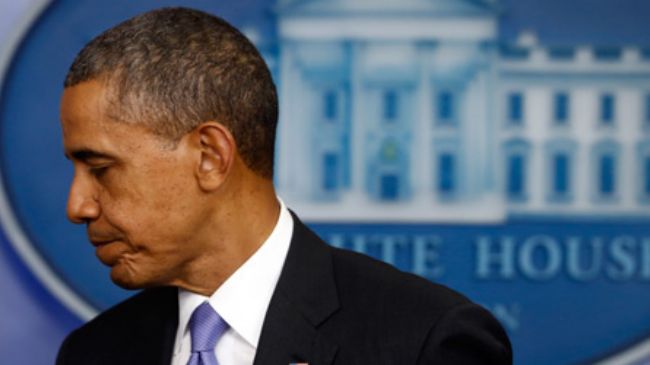
US President Barack Obama’s job approval rating has suffered one the largest quarter-to-quarter declines of his presidency, according to the latest Gallup poll.
The survey indicates that Obama averaged a 44.5 percent job approval rating during his 19th quarter in office, a decline of more than three percentage points from his 18th quarter.
The 19th quarter, which ran from July 20 through October 19, is now the third in a row in which Obama’s approval rating has declined, the poll showed.
The approval rating decreased in the middle part of the 19th quarter when he was pushing for military action against Syria, something the American public did not favor.
Furthermore, the legislative battles over the federal budget and the Affordable Care Act, as well as the federal debt limit took a toll on the president’s popularity, Gallup said.
According to a survey by Pew Research, the 16-day government shutdown pushed public trust in government near record lows, with fewer than two in 10 Americans saying they trust Washington to do what is right most of the time.
The survey also found that only 14 percent of Americans are satisfied with the way things are going in the US, and 81 percent said they were dissatisfied.
Recent estimates by the economists show that the US government’s policy blunders in recent years have significantly slowed economic growth and kept roughly 2 million people out of work.
On Sunday, US Treasury Secretary Jack Lew said the recent fiscal fight between Republicans and Democrats had a bruising impact on the country’s economy and eroded the confidence of both businesses and consumers.
Featured Video

Yemen joins the war – Red Sea could be blocked next – Saudi regime at risk
or go to
Aletho News Archives – Video-Images
From the Archives
A superpower and “the world’s sickest warrior state”
By Paul J. Balles | March 8, 2010
Living through five or six major wars has hardened me to what I thought were the extremes of inhuman cruelty and brutality.
Two things made those extremes almost bearable: the brutality always revealed – at least according to the media coverage – the viciousness of the enemy. It was therefore quite understandable when our “brave men and women” pulverized the enemy.
Films of Japanese torturing captive Americans somehow justified holding Japanese Americans in internment camps during World War II; and only a small percentage of Americans found the bombing of Hiroshima and Nagasaki unreasonably vengeful at best, at worst, depraved.
The media giants in America portrayed the North Koreans as barbaric beasts with their captives, quite unlike their southern counterpoints – our allies during the Korean War. No one ever felt the need to explain how the South Koreans were a civilized breed while the North Koreans were absolute savages, at least according to the official line.
In Vietnam, our warriors justifiably (or so the media made us believe) dropped napalm on the North Vietnamese who had the gall to hide in villages and tunnels to ravage our invaders. At least it was accepted practice until some rogue photojournalist filmed a young girl screaming down a Vietnamese road in flames. … continue
Blog Roll
 Aletho News
- Russian tanker approaches Cuba despite US oil blockade
- Marandi: Yemen joins the war – Red Sea could be blocked next – Saudi regime at risk
- Pro-Palestinian French member of European Parliament denied entry to Canada
- Pakistan to Host US-Iran Talks
- How Indonesia’s tilt toward the US left it stranded in the Strait of Hormuz
- US has no choice but to retreat from Iranian borders: Top commander
- Iran Retaliation Strikes Chemical Plant Near Dimona
- AWACS’ Destruction is a Major Loss for US Military – Ex-DoW Analyst
- Israel’s Iran Strategy Uses US Military & Gulf States as Its Pawns
- Iran: Trump wanted regime change, now just begging for Hormuz to open
- If Americans Knew
- Israeli police block Catholic cardinal from entering Church of the Holy Sepulchre on Palm Sunday
- Israel is assassinating journalists again, more than any other nation, anywhere, ever – Not a ceasefire Day 170
- Over 300 US service members wounded, majority have brain injuries – Not a ceasefire Day 169
- Researchers at Human Rights Watch Resign Over Blocked Report on Palestinian Refugee Return
- Jewish Groups Are Backing a War Americans Don’t Want
- Eric Fingerhut Thinks He’s the President of the Jews
- Top Jewish Philanthropists, Rabbis Urge Israeli President to Take Action Against ‘Jewish Extremists’
- Don’t Be Fooled. Zionist Leaders Have Always Wanted to Control Southern Lebanon
- Israel’s widespread use of torture is a core element of its genocide against the Palestinian people
- In Israel’s War on Iran, Many Middle East US Bases Rendered “All But Uninhabitable”
- No Tricks Zone
- German Science Blog Accuses PIK Climate Institute Of Hallucinating Climate Tipping Points
- Devastating Assessment Of Comirnaty Vaccine By Former Senior Pfizer Europe Toxicologist
- New Study: CO2 Is ‘Effectively Negligible’ As An Explanatory Climate Change Factor Since 2000
- Former Pfizer Toxicologist Dr. Helmut Sterz Tells Bundestag Hearing Pfizer Vaccine Should Have Never Been Approved
- Energy Expert: Germany’s Nuclear Phaseout Was A “500 Billion Euro Mistake”
- New Research: South Australia’s Mid-Holocene Sea Surface Temperatures Were 4°C Warmer Than Today
- Storing Green Energy To Last Germany 10 Days Would Require A 60-Million Tonne Battery
- New Studies: UK Sea Levels Were 4 Meters Higher Than Today During The Mid-Holocene
- Destructive Green New Deal: German Energy And Metal Group Warns Of Drastic Crisis
- New Study Documents A 20-Year Pause In Arctic Sea Ice Decline – Driven By Internal Variability
 Aletho News