French Researchers Identify ‘Improbably High Rate of Deaths’ in Newborns Who Received New RSV Shot
By Michael Nevradakis, Ph.D. | The Defender | January 2, 2024
French researchers identified possible safety signals in babies coinciding with the rollout of Beyfortus, a recently approved monoclonal antibody treatment for respiratory syncytial virus (RSV) in newborns.
The discovery comes as public health authorities ramp up warnings about the spread of respiratory viruses and step up their promotion of the drug.
In interviews with The Defender, the researchers — French independent scientist and author Hélène Banoun, Ph.D., and French statistician Christine Mackoi — explained that data from France’s National Institute of Statistics and Economic Studies (INSEE) indicates an improbably high rate of deaths of babies between 2 and 6 days old in France during September and October 2023.
INSEE is the authority that compiles official birth and death data in France.
This increase, the researchers said, coincides with the introduction of Beyfortus in French hospitals, which began on Sept. 15, 2023. In an interview with cardiologist Peter McCullough, M.D., MPH, Banoun said that over 200,000 newborn babies in France have been injected with Beyfortus since that date.
The Centers for Disease Control and Prevention (CDC) recommended Beyfortus in August 2023, while the European Medicines Agency (EMA) authorized the drug in September 2022.
Beyfortus was developed jointly by AstraZeneca and Sanofi.
The drug is offered as a “one-time shot for infants born just before or during the RSV season and for those less than 8 months old before the season starts,” and for some high-risk 8- to 19-month-old infants.
According to The Associated Press, “In the U.S., about 58,000 children younger than 5 are hospitalized for RSV each year and several hundred die.” CNBC reported that “RSV is the leading cause of hospitalization among infants in the U.S.” According to the CDC, nearly all children are infected with RSV before the age of 2.
But the French researchers and other medical experts who spoke with The Defender warned that no long-term studies have been conducted involving Beyfortus and newborns and that the administration of monoclonal antibodies on this population is unprecedented. They also pointed to data indicating RSV’s low risk to babies.
Dr. Meryl Nass, an internist, biological warfare epidemiologist and member of the Children’s Health Defense (CHD) scientific advisory committee, told The Defender, “Giving newborns any drug or biologic should be done with extreme caution, let alone a novel, injected monoclonal antibody. You cannot tell if the infant is damaged by the shot, when you don’t yet know how healthy the newborn is and how it normally behaves. This should be a huge red flag for manufacturers as well as parents.”
According to Banoun, “The French government is recommending that Beyfortus be injected into newborns before they leave the maternity ward, from Sept. 15, 2023, even though the product has not been tested on this age group,” Banoun said.
Nass pointed out that the CDC published a paper in 2021 on all U.S. RSV deaths over the preceding 12 years. The CDC reviewed death certificates, and found there were only 26 deaths per year with RSV, and only 17 deaths per year in the entire U.S. caused by RSV in babies under one year old.
According to McCullough, “Among the 22.4 million children under age 5 years, the annual risk of RSV hospitalization is well under 1%.”
Excess deaths among newborns ‘alarming,’ ‘disturbing’
Mackoi told The Defender, “There is an excess of deaths for the months of September and October. The excess deaths in October are very alarming. It is very worrisome that this happened in two consecutive months.”
According to Mackoi, the increase in these excess deaths coincides with the introduction of Beyfortus in France.
“There is a strong concomitance with the Beyfortus injection since Sept. 15, 2023,” she said. “In France, babies receive injections of Beyfortus before leaving the maternity hospital. They leave the maternity hospital three or four days after their birth … These excess deaths are abnormal.”
According to Mackoi, the data show “a 50% increase in deaths of babies between 2 and 6 days of life compared with what would be expected,” noting that “the reference is obtained by dividing the number of deaths by the total number of births in 2018 and 2019; the result is 0.69 deaths between 2 and 6 days per 1,000 births.”
In September, the observed mortality rate was 0.97 deaths per 1,000 births, and in October, it was 1.05 deaths per 1,000 births, Mackoi said. “It is anomalous that this very significant increase should be found two months in a row. It may well be due to the injection of Beyfortus since Sept. 15, 2023.”
“Although of no scientific value, I have received testimonials from relatives and via the internet from families of healthy babies who were hospitalized in intensive care with respiratory distress syndrome immediately after the injection,” Banoun added.
Mackoi said that using the official INSEE data, which she described as “reliable [but] underestimated,” she “calculated for each month, the rate of babies born the month in question and died between 2 and 6 days of life,” and used a Poisson distribution to identify abnormal mortality rates, compiling the findings on her website.
According to the INSEE data, 54 deaths were recorded for 55,489 births in France in September 2023, despite the average number of expected deaths being 38, based on historical averages.
For October 2023, the data showed 61 deaths out of 57,940 births, despite the average number of expected deaths being 40.
Mackoi said that the probability of the September 2023 death figure occurring by chance is 0.9%, while the probability of the increased mortality in newborns in October 2023 is even lower, at 0.1%. She also noted that “there are no excess deaths less than 48 hours after birth,” and that this is “one more indication” that Beyfortus is causing the deaths, because they are not receiving the monoclonal for the first 48 hours of life.
“The coincidence of Beyfortus injections with excess infant deaths is disturbing,” Mackoi said.
Monoclonal antibodies may exacerbate symptoms rather than prevent them
These revelations came as the White House announced on Dec. 14, 2023, that it would make 230,000 additional doses of Beyfortus available last month, in addition to 77,000 doses that were released in November 2023.
A study published in the New England Journal of Medicine (NEJM) on Dec. 28 concluded, “Nirsevimab protected infants against hospitalization for RSV-associated lower respiratory tract infection and against very severe RSV-associated lower respiratory tract infection in conditions that approximated real-world settings.”
The study was funded by AstraZeneca and Sanofi.
According to Banoun, official data do not indicate that Beyfortus is effective. The data do, however, indicate a high prevalence of adverse reactions — including bronchiolitis — even though the treatment is supposed to protect recipients from respiratory illness.
“The most frequently reported adverse events are upper respiratory tract infections, including bronchiolitis,” she said.
Banoun added that data from the French National Authority for Health (HAS) do not “support a possible impact of Beyfortus in terms of reduced length of hospital stay, transfer to intensive care units, and mortality.”
“According to HAS, in the trials, the absolute risk of RSV infection was reduced by 3.8% in the five months following injection, and the absolute risk of hospitalization was reduced by 1% to 2% over the same period,” she said.
Banoun said the trials were not conducted on newborns, whereas the French government recommends injection from the first days of life in the maternity ward.
According to EudraVigilance, as of Dec. 24, 2023, there were 64 adverse events related to Beyfortus in those 1 month old or younger, and 68 for those between 2 months and 2 years of age. One death, that of a baby below 1 month old, was recorded, as were 60 records containing the word bronchiolitis. And according to VigiAccess, there were 104 adverse events reported, including 57 infections and respiratory disorders.
Another study, concerning premature babies and newborns suffering from heart or lung disease that compared Beyfortus with monoclonal antibodies previously used on high-risk babies, recorded six deaths — five due to bronchiolitis. Of the six babies that died, five had been treated with Beyfortus.
Yet, “these bronchiolitis cases are not attributed to the treatment by the investigator, who is also the manufacturer of the products,” Banoun said. “All this suggests that nirsevimab [generic name for Beyfortus] could facilitate and aggravate bronchiolitis: these injections take place during periods when the virus is circulating.”
“Let’s not forget that this whole bronchiolitis ‘prevention’ campaign is supposed to avoid overcrowding hospitals with babies suffering from the disease,” Banoun said. “If this product doesn’t significantly reduce hospital admissions, what’s the point?”
According to NTD, “Monoclonal antibodies are copies of an antibody that seek out foreign material to destroy them,” but the treatments come with a “risk that the body might trigger a strong reaction to the antibodies.”
Complications may be serious and can include “acute anaphylaxis or life-threatening massive allergic reactions and cytokine release syndrome that can result in organ damage.” This phenomenon is one of the adverse effects of Beyfortus.
In his interview with Banoun, McCullough said, “Antibody-dependent enhancements [ADE] have always been something we’ve been worried about because if antibodies bind the virus but not very tightly, that means they don’t neutralize the virus. And then, [a] fragment [Fc] of the antibody binds to a cell receptor. In a sense, the antibody can bring the virus into the cell.”
McCullough told The Defender, “The antibodies will invariably affect the development of natural immunity with repeated exposures to RSV during childhood. Beyfortus-resistant strains can be expected with indiscriminate use.”
Banoun cited a study in which “two of the 25 subjects in the nirsevimab group with RSV … had an RSV isolate containing substitutions associated with resistance to nirsevimab,” while “No subject in the placebo group had an RSV isolate containing substitutions associated with resistance to nirsevimab.”
Banoun also referred to a September 2022 EMA report, which found that during failed RSV vaccine trials in the past, children died of severe bronchiolitis in the vaccinated groups, but none from the control groups died.
“This ADE is due to the deleterious effect of antibodies which, instead of neutralizing the virus, facilitate its entry into the cell via the receptor of the Fc fragment of immunoglobulins. And it’s precisely this Fc region of nirsevimab … that industry has seen fit to modify,” Banoun said.
“Manufacturers are looking for the beneficial effects of this phenomenon and are wary of deleterious effects, which is why they have investigated the risk of ADE with Beyfortus in animal models,” Banoun added. “They claim not to have detected it, but the EMA points out, unmoved, that no histopathological evaluation of rats was carried out after treatment and infection with RSV: This is the only recognized marker of ADE.”
On his Substack, McCullough wrote that this effect may be triggered by aerosolized RSV virions present in hospitals.
“This means as ambient aerosolized RSV virions are present in hospitals, clinics, and home, the monoclonal antibody may backfire and enable the inhaled virion to gain access to the bronchial epithelial lining and cause worse bronchiolitis than the baby would have with their own developing natural immunity,” he wrote.
Beyfortus administered on newborns despite being tested on older babies
During the clinical trial leading up to approval of Beyfortus by the CDC and the U.S. Food and Drug Administration (FDA), a total of 12 infant deaths were recorded. However, the FDA claimed the deaths were “unrelated” to the antibody.
CNBC reported in June that of the 12 infants, “Four died from cardiac disease, two died from gastroenteritis, two died from unknown causes but were likely cases [of] sudden infant death syndrome, one died from a tumor, one died from COVID, one died from a skull fracture, and one died of pneumonia.”
“Fact-checkers” were quick to respond to any stories indicating that the infants’ deaths were related to Beyfortus, with factcheck.org writing in August 2023, “There isn’t evidence the [Beyfortus] shots have killed any babies, contrary to social media claims.”
But according to Banoun, “According to the HAS and EMA, 11 deaths were reported in the nirsevimab groups, one death in the pavilizumab (former equivalent drug) group and three deaths in the placebo groups. The FDA counted 12 deaths in all treated groups versus three in the placebo groups, not including the one that occurred after the follow-up period.”
“It should be noted that all deaths in the placebo groups concerned premature babies in the Griffin study,” Banoun said. “In trials involving full-term babies, all deaths involved treated subjects.”
Banoun said:
“The FDA has added one death in the placebo groups which occurred after the end of follow-up, but no mention is made of any deaths in the treated groups which occurred after this same period. Similarly, a significant number of babies are withdrawn from the trials and therefore no longer followed up after their withdrawal. This imbalance is therefore potentially more serious than published.”
Other studies also showed infant deaths connected to Beyfortus. McCullough told The Defender, “I am concerned about 3 versus 0 deaths with Beyfortus and placebo respectively in the MELODY trial published in NEJM, 2022.”
Nass pointed out another such anomaly in clinical trial results where “The deaths were said to be disproportionate between the placebo and nirsevimab groups.”
“I don’t trust the data as being reliable,” Nass said, “For instance, in this NEJM-published trial, 9.5% of babies who did not receive nirsevimab wound up with pneumonia and ‘lower respiratory tract’ RSV infections.”
“This seems awfully high,” Nass continued, “Especially when the CDC’s own study showed only 17 babies per year die from RSV. I find it hard to rely on the NEJM data.”
“The problem is that, with potentially billions of dollars riding on the outcome of a few clinical trials, there may be tremendous pressure to come up with the desired results. And there are many ways in which the desired results can be achieved,” she added.
Banoun also pointed out that while Beyfortus is administered to newborns, clinical studies tested the drug on older babies.
If we refer to the descriptions of the deceased babies, in the Domachowske study, “Only 1 was less than a month old at the time of injection (23 days), while all the others were between 1 and 7.5 months old,” she said. “We find the same panel of babies in all the other studies … in the Griffin study, the babies have a median age of over 6 months, in the Hammitt and Domachowske studies, only half the babies are under 3 months old … in the Hammitt study, the median age is 2.6 months (range 1.05 to 4.5 months).”
According to Banoun, public health authorities are aware of this discrepancy, noting that in the HAS Transparency Commission’s report on Beyfortus, Sylvie Chevret, M.D., Ph.D., professor of public health and biostatistics at France’s Université Paris Cité, said:
“In these trials, they included children who were essentially said to be in good health, so tomorrow, do you intend to give this drug to all newborns, bearing in mind that the studies did not include newborns?
“They included children who were less than three months old, of course, but up to more than 6 months.”
“The FDA and the American Association of Pediatrics jumped the gun in 2023 and were reckless in the approval and recommendation of Beyfortus for mass deployment in babies without carefully considering these issues,” McCullough told The Defender.
‘Expectant mothers should be prepared to resist’ Beyfortus for their babies
Despite these indications and possible safety signals, Banoun said that there has been no reaction so far from public health authorities in France or elsewhere.
“The only reaction to my posts was censorship and a video that was supposed to debunk my claims but actually confirmed them,” she said. “Like all critical scientists, I am censored: strict control over social networks, in particular Twitter, where we have been rendered virtually invisible since December 2023, when the European Digital Commissioner threatened Twitter with heavy fines.”
“When all debate is censored, all criticism discredited, even penalized and ostracized, can we still speak of ‘science’?” Banoun questioned, tying the censorship she’s experienced and the promotion of drugs such as Beyfortus to the concept of biopolitics.
Banoun explained that biopolitics was theorized by French philosopher Michel Foucault “to explain how power is exercised over human populations … on a global level” and “which, in our time, tends to impose health standards on all human populations [and] increasingly relies on vaccination as an alternative to care in infectiology.”
“Biopower today is exercised by an alliance of governments and health agencies with big industry. Biopolitics [also] concerns the control of populations in fields other than health: digital identity and climate,” she added.
For Banoun, financial interests are a key reason for this stance on the part of public health authorities and pharmaceutical companies.
“The market for bronchiolitis prevention will therefore represent several billion dollars for Big Pharma in the years to come. Why such a large market for a disease that is benign in the vast majority of cases? … The giants of the pharmaceutical industry are in permanent financial difficulty because of the fines and compensation they have to pay.”
“To compensate for these fines, manufacturers have to launch ‘blockbusters’ — highly profitable products that sell very well,” Banoun said, adding that the vaccine liability shield afforded to vaccines by laws such as the National Childhood Vaccine Injury Act of 1986 may be extended to treatments and drugs other than vaccines.
“It is feared that this exemption from liability will be extended to preventive therapies such as Beyfortus,” Banoun said, pointing out that U.S. and European authorities have mixed the classification of Beyfortus, considering it a vaccine in some instances and not in others.
In the U.S., the CDC’s Advisory Committee on Immunization Practices recommended adding Beyfortus to the childhood vaccine schedule, providing its manufacturers with a waiver of liability, but also recommended coding it as a drug for insurance purposes and leaving it out of the National Vaccine Injury Compensation Program (NVICP).
In addition to this liability shield, Banoun said that, in France, midwives and nurses reportedly “receive a bonus for each injection — Sanofi pays a sum to each hospital, which is then redistributed to the injectors.”
Experts advised parents and physicians to be wary of Beyfortus.
“Physicians and parents should be conservative in deciding on Beyfortus. I do not recommend it for parents who are expecting healthy newborns or babies without severe pulmonary disease,” McCullough told The Defender.
Banoun said “Expectant mothers should be prepared to resist,” noting the White House’s and CDC’s efforts to promote Beyfortus and pressure placed on new mothers in French hospitals, where “nursing staff insist on giving it to the mother up to four or five times during her stay in the maternity ward.”
Michael Nevradakis, Ph.D., based in Athens, Greece, is a senior reporter for The Defender and part of the rotation of hosts for CHD.TV’s “Good Morning CHD.”
This article was originally published by The Defender — Children’s Health Defense’s News & Views Website under Creative Commons license CC BY-NC-ND 4.0. Please consider subscribing to The Defender or donating to Children’s Health Defense.
Dr. Pierre Kory: New York Times Guide to Fall Vaccine Shots Is ‘Disinformation’
By Michael Nevradakis, Ph.D. | The Defender | September 6, 2023
The New York Times on Sept. 1 published a “guide to fall vaccine shots,” which included recommending the general public get COVID-19, flu and RSV (respiratory syncytial virus) vaccines, and infants 6 months and older receive COVID-19 shots this fall.
Written by Times senior writer David Leonhardt, the guide warns about rising COVID-19 cases and the approaching flu season, before offering, “The good news is that there are vaccines and treatments that reduce risks from all major viruses likely to circulate this season.”
According to the Times, “This year, we should take a broader approach,” rather than “obsess over COVID.”
Peter Hotez, M.D., Ph.D., dean of the National School of Tropical Medicine at the Baylor College of Medicine — described by the Times as a “vaccine expert” — echoed that appeal. “It’s not only COVID you have to think about,” he said.
Hotez, Nirav Shah, M.D., J.D., principal deputy director of the Centers for Disease Control and Prevention (CDC), and other public health officials and experts quoted by the Times recommended Americans prepare for the upcoming fall and winter by getting the trio of COVID-19, flu and RSV vaccines.
None of these experts, however, addressed any of the potential safety risks posed by these vaccines.
Medical and public health experts who spoke with The Defender took a different view and questioned the Times’ guide, citing concerns about the safety and efficacy of vaccines for respiratory illnesses.
“Vaccines against respiratory illnesses have failed miserably,” said cardiologist Peter McCullough M.D., MPH. “America is wary of vaccines at this point, wanting to get on with life free of menacing vaccines, and are willing to seek early treatment, which is always the best way to handle infections, vaccinated or not.”
Pediatrician Dr. Liz Mumper, president and CEO of the Rimland Center for Integrative Medicine, told The Defender, “There have been no studies examining the effects of giving RSV vaccine, flu vaccine and COVID vaccine at the same time.”
“If you follow the advice in The New York Times article,” Mumper said, “be aware that your child will be part of post-marketing experimentation.”
Times still pushing vaccine propaganda
According to the Times, “The best defenses against COVID haven’t changed: vaccines and post-infection treatments,” which are “especially important for vulnerable people, like the elderly and immunocompromised.”
The federal government is “on track” to approve updated COVID-19 shots, designed to combat recent variants, in mid-September, the Times reported. Once they are available, “all adults should consider getting a booster shot.”
“COVID can still be nasty even if it doesn’t put you in the hospital,” the Times states. “A booster shot will reduce its potency.”
Hotez resurrected a claim heard often during 2021 and 2022, telling the Times, “Overwhelmingly, those who are being hospitalized are unvaccinated or undervaccinated.”
Experts who spoke with The Defender disagreed.
Harvey Risch, M.D., Ph.D., professor emeritus and senior research scientist in epidemiology (chronic diseases) at the Yale School of Public Health, citing data from U.K. Public Health, said, “All-cause deaths ages 18+ are disproportionately among vaccinated people, whether one, two or three doses, compared to unvaccinated people.”
“The statistic quoted by Dr. Hotez is false,” Risch said.
Brian Hooker, Ph.D., senior director of science and research for Children’s Health Defense (CHD) said, “The new booster simply hasn’t been tested to affirm any assertion of protection. The original trials on children were laughable as they looked at antibody titers rather than actual disease prevention.”
McCullough told The Defender, “The COVID-19 vaccines have been a safety debacle with record cases of myocarditis, blood clots, stroke, and all-cause mortality.”
Despite the injury and mortality reports and the Times’ admission that the risk of COVID-19 to young children is “very low,” Shah nonetheless recommended children as young as 6 months of age get the COVID-19 booster shots this fall.
“Do you want to see your grandpa … [and] grandma?” Shah asked in the Times. “Are you really sure you’re not going to give COVID to them?”
Experts who spoke with The Defender refuted Shah’s advice.
Dr. Pierre Kory, president and chief medical officer of the Front Line COVID-19 Critical Care Alliance (FLCCC), said “There is no medical justification for a healthy 6-month-old or older child to be vaccinated for COVID-19,” adding:
“There is so little data available on the safety of the COVID-19 vaccine in children that to give blanket recommendations like Shah is doing creates an unnecessary risk to children’s health.
“We simply do not know enough about the COVID-19 vaccines to make such broad recommendations. Additionally, COVID-19 is highly treatable in children and poses very little risk to a healthy child.”
Mumper told The Defender, “Any official who advocates that children take a vaccine to protect grandparents has not read the medical literature carefully.” She said, “After doing a deep dive on the risks and benefits of COVID vaccines in children, I remain steadfastly opposed to their use in healthy children,” adding:
“Any immunity from COVID shots is short-lived and follows a period of immune suppression. Very worrisome adverse events like inflammation of the heart, triggering autoimmunity, interfering with autonomic functions and reproductive toxicity are well described in the medical literature.”
Not all countries following suit
Some countries began limiting COVID-19 vaccination for children last year. In April 2022, Denmark ended its blanket COVID-19 vaccination recommendation, including for children.
Now, Denmark recommends “booster-vaccination” only for people “aged 50 years and above and selected target groups.”
Earlier in 2022, public health authorities in Sweden and Norway opted not to recommend COVID-19 vaccines for children between the ages of 5 and 11.
Sweden now recommends COVID-19 vaccination only for those 50 and above (18 and above for high-risk groups), while Norway is still only recommending COVID-19 vaccines for those 65 and older (and as young as 5 for high-risk groups).
In March of this year, the World Health Organization (WHO) said healthy children and adolescents ages 6 months to 17 years have a “low disease burden” and are therefore low priority for vaccination.
In June, Australian public health officials said Moderna’s COVID-19 vaccine is “no longer available” for children under 12, and in January, U.K. public health authorities ended their booster program for those under 50.
COVID vaccine recommendations ‘not science, not medicine, not public health’
Dr. Meryl Nass, an internist and member of CHD’s scientific advisory committee, told The Defender that while public health authorities and the media continue to recommend COVID-19 vaccines, none of them have been fully licensed in the U.S., as all such vaccines are available under Emergency Use Authorization (EUA) only.
In May 2022, the U.S. Food and Drug Administration (FDA) said that COVID-19 vaccines for kids under 6 would not have to meet the agency’s 50% efficacy threshold required to obtain an EUA.
CDC data released in September 2022 showed that more than 55% of children between 6 months and 2 years old had a “systemic reaction” after their first dose of the Pfizer-BioNTech or Moderna COVID-19 vaccines.
“The CDC, criminally, claims the (authorized) vaccines are ‘safe and effective,’” Nass said, adding:
“That is a term of art that is only allowed to be used for licensed vaccines and drugs. No licensed COVID-19 vaccine is available in the U.S. Public health is supposed to balance benefit and risk.
“This is not science. Not medicine. Not public health.”
Flu vaccines have demonstrated ‘declining efficacy’
According to the Times, “The most immediate step worth considering involves R.S.V.” On Sept. 5, the CDC issued a health advisory warning of rising RSV cases in parts of the U.S., particularly among children and babies.
Last month, the CDC signed off on the first-ever monoclonal antibody vaccine Beyfortus for the prevention of RSV, for babies up to 8 months old.
Also last month, the FDA approved an RSV vaccine for pregnant women, despite concerns raised by some medical experts about premature births identified during clinical trials. In May, the FDA approved Pfizer’s Abrysvo and GlaxoSmithKline’s Arexvy RSV vaccines for people 60 and older.
The Times quoted Ashish Jha, M.D., MPH, former White House COVID-19 adviser and now dean of Brown University’s School of Public Health, who said, “If you’re 60 or over, you don’t want to get into November without having an RSV vaccine.”
And though there is no RSV vaccine approved for administration to children, the Times said that “parents may want to ask their pediatrician” about monoclonal antibody treatment for children under 8 months of age.
According to Hooker, “the RSV vaccine given to pregnant women could not even make a 20% threshold for protection (as specified by the FDA) against lower respiratory RSV infection.”
Supporting the push for the flu vaccine, the Times and experts such as Jha said, “The flu officially kills about 35,000 Americans in a typical year,” but “the flu’s toll would be lower if more people got a vaccine shot,” noting that “In recent years, less than half of Americans have done so.”
Jha added, “We underestimate the impact that respiratory viruses have on our population. The flu can knock people out for weeks, even younger people.” Jha pointed out that flu can make heart attacks and strokes more common as well.
Kory, however, told The Defender that the COVID-19 vaccines have made people more susceptible to other respiratory illnesses, like the flu and RSV:
“In my practice, we treat many vaccine-injured patients who are now more susceptible to the flu, RSV and many other viruses. The COVID vaccines cause many to present as if they have an autoimmune disease and now respond with more severe symptoms to common viruses like the flu.”
Risch, meanwhile, said, “Traditional flu vaccines are considered to be safe for most people” and may be a “reasonable” option for them, but “this should be discussed with one’s healthcare provider.”
“The flu vaccines seem to have had declining benefit over the last 10-15 years, to the point now that they may confer only a 30% benefit,” Risch added.
And according to Hooker, “The flu shot is also notoriously bad at protection against the flu and there are very few data regarding this season’s flu shot efficacy.”
‘Ludicrous’ public health messaging
Shah’s recommendation that children as young as 6 months get a COVID-19 shot this fall follows in a long line of questionable advice and claims disseminated by public health officials, some of which were later contradicted.
In a May 2021 MSNBC interview, Dr. Anthony Fauci, then-head of the National Institute of Allergy and Infectious Disease (NIAID), said:
“Although you don’t like to see breakthroughs, the fact is, this is one of the encouraging aspects about the efficacy of the vaccine. It protect you completely against infection. If you do get infected, the chances are that you’re going to be without symptoms, and the chances are very likely that you’ll not be able to transmit it to other people.”
Fauci’s statements, however, failed to account for the many examples of breakthrough infections with severe symptoms and hospitalization.
After years of official “safe and effective” claims, in YouTube’s new “medical misinformation” policy introduced Aug. 15, “Claims that any vaccine is a guaranteed prevention method for COVID-19” are prohibited. Fauci’s videos from 2021, notably, are still up on YouTube.
In April 2020, Fauci said that remdesivir will become the “standard of care” for treating COVID-19. But numerous victims of COVID-19 hospital protocols prescribed by the CDC have come forward in recent months claiming that remdesivir was administered without permission of the patients or their families and contributed to further injury or death.
Similarly, former CDC Director Rochelle Walensky said in March 2021 “Our data from the CDC today suggests … that vaccinated people do not carry the virus, don’t get sick … can’t transmit it to others.” She doubled down on these statements during a House Select Subcommittee on the Coronavirus Pandemic hearing in June, asserting that her statement “was generally accurate.”
Hooker said these statements were “obviously patently false, as the vaccines distributed in the U.S. at that time [in 2021] were not tested for transmission and there was evidence of ‘breakthrough’ infections even in the clinical trials.”
“This obviates any protection to ‘Grandma and Grandpa’ through children getting vaccinated against COVID-19,” Hooker added.
Also in 2021, Walensky recommended wearing pantyhose over a mask to ensure a tight fit.
Nass called such public health messaging “ludicrous,” noting that Walensky’s pantyhose recommendation “quickly disappeared” because it “had connotations the CDC was not willing to deal with.”
Kory criticized the Times’ fall vaccine guide, characterizing it as an example of “disinformation.”
“The New York Times is carrying the disinformation that continues to come from the CDC and other government health agencies,” he said. “This is one of the reasons that the public continues to lose trust in the media and our government.”
As a result, public health officials “create a mockery of how medical and scientific evidence is used to inform patient care decisions and public health policy,” Kory said.
Other experts who spoke with The Defender suggested taking vitamins to boost one’s immune system, rather than a series of vaccinations.
“For the immune system to defend against respiratory viruses, all people should take daily vitamin D to achieve blood levels of 50 or greater,” Risch said. “This is typically 5,000 units per day for a 150-lb person, but can be adjusted up or down according to body weight.”
“Serious RSV infections generally occur only in the youngest young and the oldest old. People in these categories should discuss this with their doctors,” he added.
Michael Nevradakis, Ph.D., based in Athens, Greece, is a senior reporter for The Defender and part of the rotation of hosts for CHD.TV’s “Good Morning CHD.”
This article was originally published by The Defender — Children’s Health Defense’s News & Views Website under Creative Commons license CC BY-NC-ND 4.0. Please consider subscribing to The Defender or donating to Children’s Health Defense.
FDA Approves First RSV Vaccine, But Some Experts Say Weak Safety, Efficacy Data Suggest Benefits Don’t Outweigh Risks
By Michael Nevradakis, Ph.D. | The Defender | May 4, 2023
Describing it as a “long-sought scientific achievement,” the U.S. Food and Drug Administration (FDA) on Wednesday approved Arexvy, the first vaccine for respiratory syncytial virus (RSV).
GlaxoSmithKline Biologicals (GSK) developed Arexvy under the FDA’s Priority Review designation. The FDA approved it for people ages 60 and older.
According to CNBC, the U.S. “suffered an unusually severe RSV season” this past winter. The New York Times reported on a “tripledemic” involving RSV, flu and COVID-19, “that swamped children’s hospitals and some I.C.U. wards.”
One U.S. county — Orange County, California — declared a local health emergency and issued a proclamation of local emergency in November 2022, citing rising RSV cases among children in the region.
GSK described results from clinical trials for Arexvy as “positive,” and the company said the U.S. launch of the vaccine is planned before the 2023-24 RSV season.
Other RSV vaccines, including one produced by Pfizer, are in the pipeline and expectations are that the FDA will approve them.
During clinical trials for both the GSK and Pfizer vaccines, several participants were diagnosed with rare conditions such as Guillain-Barré syndrome (GBS) and acute disseminated encephalomyelitis (ADEM). One of the individuals who developed ADEM later died, according to the FDA.
Aside from concerns over potential serious adverse events related to RSV vaccines, some experts have questioned the need for such a vaccine in the first place.
According to the journal Science, “RSV is a common respiratory infection” with symptoms “similar to a cold,” adding that “The majority of individuals recover within a few days from an uncomplicated RSV infection, although occasionally the virus can cause lower respiratory infections requiring medical attention.”
Dr. Peter McCullough, a cardiologist, told The Defender:
“Respiratory syncytial virus is a negligible threat to even the most frail elderly adults. The effort of widespread vaccination is simply not worth it. Even rare side effects will outweigh any theoretical benefit.”
And in a November 2022 episode of “RFK Jr. The Defender” podcast, several medical and public health experts expressed concerns about RSV vaccines.
“We have to stop these shots,” said Dr. Meryl Nass, an internist and biological warfare epidemiologist. “It’s just extraordinary that we’re still vaccinating people … we have a lot of work to do.”
Robert F. Kennedy Jr., then-chairman and chief litigation counsel for Children’s Health Defense (now chairman on leave), described RSV as “a vehicle for re-implementing the COVID-19 playbook all over the country and responding with vaccines.”
And according to the National Vaccine Information Center (NVIC), “Cost analysis data presented to the ACIP [Advisory Committee on Immunization Practices] did not show the RSV vaccines to be cost-effective at reducing the burden of costs associated with RSV illness.”
Nevertheless, more RSV vaccines are expected to receive FDA approval this year — including a Pfizer RSV vaccine for pregnant women that led to a high incidence of adverse events for both the women and their infants during clinical trials, as well as several deaths and stillbirths.
Arexvy approval ushers in new ‘highly competitive and lucrative vaccine market’
The RSV vaccine market is estimated to be worth up to $10 billion by 2030.
According to Endpoints News, the FDA’s approval of Arexvy ends “half a century of failed efforts against the elusive, shape-shifting virus” and “officially start[s] what analysts expect will be a highly competitive and lucrative new vaccine market.”
In getting Arexvy approved, “GSK beat a crowded field of competitors to cross the finish line first.”
Arexvy “showed strong efficacy in stopping lower-respiratory tract infections as well as more severe disease” and will be administered as a single dose, according to Endpoints News.
STAT reported that a “vaccine that was developed by Pfizer and aimed at the same demographic [adults 60 and over] is expected to be approved by the end of the month,” while other RSV vaccines and therapeutics, including some intended for children and pregnant women, are in the pipeline and also are close to receiving FDA approval.
The FDA’s approval of Arexvy came after an FDA advisory panel reviewed data from GSK’s and Pfizer’s clinical trials on March 1. The panel unanimously agreed that GSK’s vaccine is effective and, in a 10-2 vote, deemed it “safe,” according to The Washington Post.
The same panel also approved Pfizer’s candidate vaccine, Abrysvo, but with a 7-4 vote.
On June 21 or 22, ACIP, which advises the Centers for Disease Control and Prevention (CDC), will convene to “make recommendations on the appropriate use of the vaccine in the U.S.,” according to GSK’s announcement. The ACIP must recommend the vaccines before they are marketed.
According to STAT, there is a likelihood that ACIP may not approve Arexvy for its intended age group, stating:
“Though Arexvy’s approval is for adults 60 and older, it remains to be seen if the CDC will recommend it for that entire group.
“At an advisory committee meeting in February, members of a work group studying the adult vaccines that will soon come before ACIP indicated that at present, they don’t believe the vaccine would be cost-effective in people aged 60 to 64 and they would not recommend to the wider committee that it include people 60 to 64 in its recommendation for the use of the vaccine. (The group held the same position for the Pfizer RSV vaccine.)”
In April, the European Medicines Agency (EMA) issued its own recommendation for Arexvy, for adults 60 and over, according to the Times. However, a final EMA regulatory decision is anticipated later this year. GSK is also awaiting licensure for Arexvy in Australia, China, Japan and other countries, STAT reported.
In an earnings presentation April 26, GSK said it has “millions of doses” of Arexvy “ready to be shipped.”
“GSK’s RSV vaccine works by using a small piece of the virus: a protein that sticks out on its surface called the fusion, or F, protein, which helps the virus glom onto and infect cells in the body’s upper airways. The protein pieces in the vaccine are made in a lab, using cells specially programmed to manufacture them.”
CNN noted that the vaccine “builds on a pivotal discovery made a decade ago” by National Institutes of Health researchers, “including some of the same scientists who helped make the COVID-19 vaccines.” Specifically, the researchers figured out how to freeze the otherwise “wiggly” F protein, “in the shape it takes before it fuses onto a cell.”
STAT, quoting Phil Dormitzer, GSK senior vice president and global head of vaccines research and development, reported that although Arexvy “contains only one of the two RSV subtypes, RSV A,” studies showed that it is “virtually equally protective against both RSV A and RSV B” as the F protein on both subtypes is similar.
Dormitzer acknowledged natural immunity, telling STAT, “because older adults have all had RSV probably multiple times by the time they get [the vaccine], they’re primed against both A and B. So you’re able to get very solid boosting against both subtypes with a single adjuvanted F antigen.”
According to GSK, the Arexvy vaccine does not use mRNA technology, but “contains a recombinant subunit prefusion RSV F glycoprotein antigen (RSVPreF3) combined with GSK’s proprietary AS01E adjuvant.”
GSK, FDA claim Arexvy clinical trial data show vaccine is ‘safe and effective’ but annual shot may be needed
The FDA announcement stated:
“The safety and effectiveness of Arexvy is based on the FDA’s analysis of data from an ongoing, randomized, placebo-controlled clinical study conducted in the U.S. and internationally in individuals 60 years of age and older.”
According to the FDA, “approximately 12,500 participants … received Arexvy and 12,500 participants … received a placebo. Among the participants who have received Arexvy and the participants who have received a placebo, the vaccine significantly reduced the risk of developing RSV-associated LRTD [lower respiratory tract disease] by 82.6% and reduced the risk of developing severe RSV-associated LRTD by 94.1%.”
LRTD was “defined as two or more symptoms including shortness of breath, wheezing, cough, increased mucus production, crackles, low oxygen saturation, or need for oxygen supplementation,” according to CNBC, while according to CNN, “People were considered to have severe disease if they needed supplemental oxygen or needed mechanical help to breathe, like a ventilator.”
According to the FDA, half of the 25,000 participants received Arexvy, while the other half received a placebo.
The results of GSK’s clinical trials for Arexvy were published in the New England Journal of Medicine on Feb. 16.
FDA and GSK officials provided glowing reviews of the new vaccine. Peter Marks, M.D., Ph.D., director of the FDA’s Center for Biologics Evaluation and Research, said in a statement:
“Older adults, in particular those with underlying health conditions, such as heart or lung disease or weakened immune systems, are at high risk for severe disease caused by RSV.
“Today’s approval of the first RSV vaccine is an important public health achievement to prevent a disease which can be life-threatening and reflects the FDA’s continued commitment to facilitating the development of safe and effective vaccines for use in the United States.”
Tony Wood, GSK’s chief scientific officer, described Arexvy’s approval as “a turning point in our effort to reduce the significant burden of RSV,” adding that “Our focus now is to ensure eligible older adults in the U.S. can access the vaccine as quickly as possible and to progress regulatory review in other countries.”
In turn, Dormitzer said, “There’s just the broad excitement of finally, after all these years, having good options emerging for RSV,” describing this as a “triumph of the basic science.”
While GSK is first out of the gate in the RSV vaccine race with Arexvy, Pfizer’s candidate vaccine has also completed clinical trials, which found it to be “nearly 67 percent effective in preventing R.S.V. – related illness,” according to the Times.
The FDA and GSK announcements did not mention the vaccines’ waning effectiveness. An analysis by the NVIC found that the effectiveness of the GSK vaccine peaked after two months and offered no protection after one year. This may result in recommendations for adults to receive annual doses of the vaccine.
Trial participant died from a rare inflammatory condition, others developed GBS
Despite positive comments from FDA and GSK officials, clinical trial data for Arexvy revealed instances of GBS and other rare conditions.
In its announcement Wednesday, GSK claimed:
“The vaccine was generally well tolerated with an acceptable safety profile. The most frequently observed solicited adverse events were injection site pain, fatigue, myalgia, headache, and arthralgia. These were generally mild to moderate and transient.”
The announcement did not mention GBS.
According to the FDA announcement Wednesday:
“The most commonly reported side effects by individuals who received Arexvy were injection site pain, fatigue, muscle pain, headache and joint stiffness/pain.
“Among all clinical trial participants, atrial fibrillation within 30 days of vaccination was reported in 10 participants who received Arexvy and 4 participants who received placebo.”
However, the FDA noted that in two other Arexvy studies involving approximately 2,500 participants 60 and over, “two participants developed acute disseminated encephalomyelitis (ADEM), a rare type of inflammation that affects the brain and spinal cord, seven and 22 days, respectively, after receiving Arexvy and the influenza vaccine.”
“One of the participants who developed ADEM died,” according to the FDA.
In another Arexvy study conducted by GSK, “one participant developed Guillain-Barré syndrome (a rare disorder in which the body’s immune system damages nerve cells, causing muscle weakness and sometimes paralysis) nine days after receiving Arexvy,” the FDA stated.
According to an FDA briefing document cited by CNBC:
“A 78-year-old woman in Japan was diagnosed with Guillain-Barré syndrome nine days after receiving GSK’s vaccine … She was hospitalized for six months before being released.”
CNBC reported that GSK claimed in February “There is insufficient evidence to confirm the woman got Guillain-Barre as a result of GSK’s shot.” However, the FDA “considers the case to be related to GSK’s vaccine.”
According to the FDA’s announcement:
“The FDA is requiring the company to conduct a postmarketing study to assess the signals of serious risks for Guillain-Barré syndrome and ADEM. In addition, although not an FDA requirement, the company has committed to assess atrial fibrillation in the postmarketing study.”
According to the Times, “Once the shots become available to the public, the agency said it would require GSK to monitor the incidence of Guillain-Barré and another rare condition that was possibly related to the shot.”
The FDA similarly flagged GSK “as a potential safety issue with Pfizer’s RSV vaccine for older adults,” CNBC reported after two clinical trial participants developed GBS. According to the Post, both participants — one man and one woman — were 66 years old.
CNBC in February reported that Pfizer “will conduct a safety study to further address Guillain-Barré syndrome if the FDA approves its vaccine.”
GSK’s chief commercial officer, Luke Miels, said the vaccine would cost upwards of $120 a dose, according to the Post, which also reported that private insurers may cover “many costs” associated with the vaccine, while Medicare patients with Part D coverage “won’t pay anything out of pocket” for the vaccine.
“Shares of GSK rose nearly 2% Wednesday following the approval,” CNBC reported.
GSK is also pressing forward with “A clinical trial that aims to expand the population who may benefit from RSV vaccination into adults aged 50-59, including participants with underlying comorbidities,” according to the company’s Wednesday announcement, with results “expected in 2023.”
Is there a need for an RSV vaccine?
According to the FDA:
“RSV is a highly contagious virus that causes infections of the lungs and breathing passages in individuals of all age groups. RSV circulation is seasonal, typically starting during the fall and peaking in the winter.
“In older adults, RSV is a common cause of lower respiratory tract disease (LRTD), which affects the lungs and can cause life-threatening pneumonia and bronchiolitis (swelling of the small airway passages in the lungs).”
The FDA cited CDC figures claiming each year in the U.S., RSV leads to approximately 60,000-120,000 hospitalizations and 6,000-10,000 deaths among adults 65 years of age and older.”
STAT reported that “RSV season has been unpredictable in the wake of the COVID-19 pandemic, though some experts believe RSV activity is moving back toward the seasonality seen in the pre-COVID days,” noting that “there was little transmission in 2020, when people were wearing masks and social distancing.”
But RSV “returned abnormally early in 2021,” STAT reported, but without an explanation for why this occurred, despite widespread masking and social distancing that year, too.
In the U.S., pediatric deaths from RSV are not common but the infection is the No. 1 cause of hospitalizations for children under the age of 1, STAT reported. Globally, however, it is the second leading cause of death in children under 1, after malaria.
According to STAT, “All but the youngest of children have had RSV multiple times, but few of us would know with any certainty that this bad cold was caused by that bad virus.”
Nevertheless, Pfizer is proceeding with the development of an RSV for infants as young as 6 months — “the age group at highest risk of being hospitalized with RSV,” STAT reported, noting that the vaccine for this age group is expected to gain FDA approval later this year and will be administered to pregnant women “to generate antibodies that protect both the pregnant person and their newborn.”
Data reported by Pfizer to the CDC indicated that 14% of pregnant women who participated in Pfizer’s trial sustained an adverse event, with 4.2% sustaining a “serious” adverse event, 1.7% experiencing a “severe” adverse event and 0.5% suffering a “life-threatening” adverse event.
Similarly, the same data showed that 37.1% of infants whose mothers received the experimental Pfizer vaccine experienced adverse events within one month of birth — with 15.5% classified as “serious,” 4.5% as “severe” and 1% as “life-threatening,” while efficacy waned within months of vaccination.
According to the NVIC, “The RSV clinical trial data also included the death of one pregnant woman, 18 still births (10 in vaccinated pregnant women and 8 in unvaccinated pregnant women), and 17 infant deaths (five from the vaccinated pregnancy group and 12 in unvaccinated pregnancy group).”
In its report to the CDC, Pfizer claimed the deaths were unrelated to the vaccine.
The FDA’s Vaccines and Related Biological Products Advisory Committee will meet virtually on May 18 to discuss approval of this vaccine. The meeting is open to the public, and a public comment period is open until May 17. A final FDA decision is expected in August.
According to the Times, “Moderna is also developing an RSV vaccine for adults 60 and over, with authorization expected in the first half of this year. The Times referenced clinical trial data released by Moderna claiming 82% efficacy, with “no safety concerns identified.”
Bavarian Nordic, known for its development of a vaccine in response to last year’s monkeypox outbreak, is also developing an RSV vaccine for adults 60 and over,” expecting to release Phase 3 clinical trial data by midyear, according to the Post and CNN.
AstraZeneca and Sanofi also are seeking FDA approval, but for nirsevimab, a monoclonal antibody treatment for RSV that would be administered to infants and toddlers up to age 2, according to the Times, which referenced clinical trial results claiming a reduction of illness of up to 75%.
According to the Post, nirsevimab “is already approved in Europe, the United Kingdom and Canada.”
However, the NVIC reported that the effectiveness of nirsevimab “is not known beyond 150 days” and it is unclear if the drug prevents ICU stays or deaths. It is being reviewed by ACIP, which according to the NVIC, is “a federal advisory committee charged with making vaccine use recommendations.”
“It is unclear why the ACIP … has chosen to go beyond its charge of making vaccine use recommendations,” NVIC states.
Safety concerns related to RSV vaccines nevertheless linger. According to CNN, an RSV vaccine developed in the 1960s for children initially delivered promising results during trials in children and animals.
However, once administered to children in the general population, “many of the children who were vaccinated required hospitalization and got more severe RSV disease than what would have normally occurred” — and two of the initial trial participants died.
Michael Nevradakis, Ph.D., based in Athens, Greece, is a senior reporter for The Defender and part of the rotation of hosts for CHD.TV’s “Good Morning CHD.”
This article was originally published by The Defender — Children’s Health Defense’s News & Views Website under Creative Commons license CC BY-NC-ND 4.0. Please consider subscribing to The Defender or donating to Children’s Health Defense.
The Fake ‘Tripledemic’ That Was 90% RSV and Almost Zero COVID-19
BY DR ANDREW BOSTOM | THE DAILY SCEPTIC | DECEMBER 21, 2022
Already by the last week of October 2022, continuing through November and early December, local Rhode Island media were amplifying clinician and public health official warnings about a paediatric respiratory illness ‘tripledemic’. The ‘tripledemic’ that prompted this tocsin of looming calamity in children was an alleged convergence of COVID-19, influenza and respiratory syncytial virus (RSV).
Serious paediatric illness is best gauged by the actual number of children hospitalised, as opposed to ‘respiratory virus test positivity’. The latter is especially misleading because of the unique, ongoing phenomenon of continued mass COVID-19 testing for minimal symptoms. Curiously, almost two months later, I could find no local media follow-up coverage elucidating the feared paediatric ‘tripledemic’ by this most germane metric: a direct comparison of children hospitalised for COVID-19, influenza or RSV.
With the cooperation of Rhode Island Department of Health (RIDOH) spokesman Joseph Wendelken, and an academic paediatrician at Hasbro Children’s Hospital, I can now present those hospitalisation data, per the table below. Given time lags in compilation and transmission, the hospitalisation record only covers all of October, and November 2022.
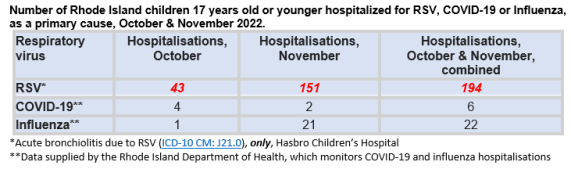
Despite the anguished media declarations, there was no Rhode Island paediatric ‘tripledemic’, at least through October and November. RSV, alone, accounted for around 90% (194 ÷ 222 = 87.4%) of so-called ‘tripledemic’ hospitalisations among Rhode Island children, and the rate of RSV hospitalisations (97 per month), was around seven-fold the rate of COVID-19 and influenza hospitalisations combined (14 per month). Moreover, the surrogate for RSV hospitalisations, a single International Classification of Diseases (ICD) RSV code (bronchiolitis, an inflammation of the smaller lung airways) omits RSV pneumonia and bronchitis coded hospitalisations. Certainly, omitting these ICD codes underestimates true paediatric RSV admissions.
The rate of primary (or ‘suspected‘ primary) COVID-19 pediatric hospitalisations mirrored what I discovered about the receding ‘Omicron wave’ from February to early June 2022. After weeks of wrangling, requiring an Access to Public Records Act submission to the Rhode Island Department of Health (RIDOH), supported by two state legislators, my query on paediatric COVID-19 hospitalisations in the first half of 2022 was answered on August 5th 2022. These data revealed that during the 16-week period from February 13th 2022 through June 4th 2022 there were a total of only 15 primary COVID-19 paediatric hospitalisations (for ages 0 to 17 years-old), as determined by RIDOH criteria. Notwithstanding this clinically insignificant, low ebb trickle of COVID-19 paediatric hospitalisations, RIDOH issued two memos recommending Rhode Island public schools re-institute compulsory masking (see RIDOH memos dated May 19th 2022 and May 20th 2022) for all school children in so-called “high COVID-19 transmission” districts.
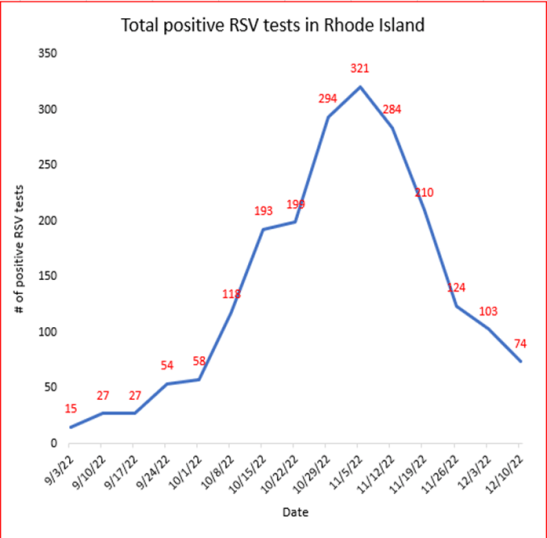
Present ‘tripledemic’ nonoccurrence aside, the overwhelmingly RSV-driven rate of increased paediatric respiratory illness hospitalisations in Rhode Island during October and November should decline significantly in December and January as RSV infection rates peaked in early November and declined precipitously through early December (see data from RIDOH, plotted below).
Additional reassuring national data from the Centers for Disease Control and Prevention (CDC) indicate the early influenza spike this year may be peaking in the U.S. overall as well, albeit not yet in New England. The third leg of the non-‘tripledemic’, COVID-19 paediatric infections, are not spiking in Rhode Island above rates observed since the summer and early autumn, while primary COVID-19 hospitalisation rates in children (see earlier table) remain exceedingly low.
Predictably, those Rhode Island medical thought leaders ginning up unwarranted concerns about the ‘tripledemic’ are once again, ad nauseum, pushing non-evidence-based masking and vaccination in children.
They ignore uniformly negative randomised controlled trials (RCTs) on community masking for the prevention of either influenza (12 RCTs; 10 here; also here and here) or COVID-19 (two RCTs; here, here), complemented by a small RCT in healthcare workers which demonstrated masks also failed to prevent RSV. While acknowledging the absence of a viable vaccine for RSV (but failing to mention the catastrophic failure of historical RSV ‘immunisation’), such thought leaders also ignore the absence of RCT data demonstrating either influenza or COVID-19 vaccines prevent hospitalisation from these respiratory illnesses in children.
The high rate of paediatric RSV hospitalisations alone in October-November should not be shrilly exploited by the media or so-called medical authorities to make counterfactual claims of an RSV, COVID-19 and influenza ‘tripledemic’. Instead, RSV, and now influenza, far more than COVID-19, should be accepted for what they are, i.e., part of the natural cycle of paediatric respiratory infections, and treated calmly, and with caring.
Dr. Andrew Bostom is a physician currently affiliated with the Brown University Center for Primary Care and Prevention, and was an Associate Professor of Medicine and Family Medicine at the Warren Alpert Medical School of Brown University from 1997 until June 2021. As a clinical trialist and epidemiologist he designed and completed the largest randomised controlled trial conducted in chronic kidney transplant recipients.
First RSV Emergency Declared as Pfizer and GSK Race to Get Vaccines Approved

By Michael Nevradakis, Ph.D. | The Defender | November 8, 2022
Southern California’s Orange County Health Department this month declared a local health emergency over concerns around the rising number of pediatric cases of Respiratory Syncytial Virus (RSV).
County officials also declared a Proclamation of Local Emergency, allowing them to access state and federal resources in response to the spread of RSV.
The news came amid media warnings of a looming “tripledemic” of RSV, influenza and COVID-19 and news that Pfizer and GlaxoSmithKline (GSK) are close to securing regulatory approval for their RSV vaccine candidates — including Pfizer’s RSV vaccine for pregnant women.
RSV was first identified in 1956, and frequently affects children, with a majority of childhood cases occurring before age 2. For most children, symptoms are similar to those of the common cold, according to the Centers for Disease Control and Prevention (CDC).
It can, however, cause serious symptoms in the very young and the elderly, although childhood deaths are infrequent, according to CDC data.
According to California attorney Rita Barnett-Rose, there’s no evidence to support claims that Orange County hospitals are overextended, or to justify a state of emergency.
In an interview with The Defender, Barnett-Rose drew parallels between Orange County’s emergency declaration for RSV and other state, local and federal emergency declarations for COVID-19:
“One of the other alarming things that happened with COVID is when [Gov. Gavin] Newsom declared the state of emergency in COVID. He also waived the 30 and 60-day review periods for all local governing boards.
“So, yeah, so that’s what everyone is concerned about, this perpetual state of emergency.
“And the other thing that it triggers is it asks, once they declare a state of emergency, aside from getting the funding, it also triggers a request to Governor Newsom to declare a statewide state of emergency and then also to have Newsom ask President Biden to declare a national state of emergency.”
That could lead to Emergency Use Authorization (EUA) of RSV vaccines, according to Barnett-Rose, who told The Defender there may be an avenue to challenge the legality of the latest Orange County emergency declaration.
Is pharma using the COVID playbook to push RSV vaccines?
Dr. Regina Chinsio-Kwong, Orange County’s health officer, said in a press release county officials issued the declaration due to “rapidly spreading virus infections causing record numbers of pediatric hospitalizations and daily emergency room visits.”
The declaration will allow the county to access state and federal resources and to allow non-pediatric hospitals to offer beds to sick children, Chinsio-Kwong said.
Children’s Health Defense (CHD) California Chapter notes that this declaration was unanimously ratified “over the objections by members of the public who showed up to speak against the declarations.”
Dr. Melaine Patterson, chief nursing officer for Children’s Health Orange County, said area hospitals are seeing an “unprecedented” volume of children visiting their emergency rooms — approximately 400 per day, with wait times of “four to 12 hours.”
She also said that, as of Nov. 1, there were 285 patients in her hospital, compared to 188 on that date last year, adding that 11 of those current patients were placed in ICU as a result of RSV infections. RSV cases also are on the rise nationally.
Chinsio-Kwong advised the public to remain “up to date with other vaccinations such as flu and COVID-19” to “reduce the burden on hospitals this fall and winter.”
“Our best shot at protecting ourselves and our children from respiratory illnesses continues to be the same things we practiced throughout the pandemic including the use of masks when indoors around others and staying home when you are sick,” Chinsio-Kwong said.
However, Barnett-Rose said hospitals in Orange County may be overextended not due to an unusually high number of admissions, but due to unvaccinated staff having been let go.
She told The Defender :
“I do think that has a big role in it, and a lot of people pointed that out during the hearings and public comments were made about that.
“They were trying to claim … there were not enough pediatric experts or pediatric-trained doctors and medical professionals, so they needed to go outside of the county. And I do think a big part of that is that they did let go of many pediatric nurses and pediatric physicians that refused to take the vaccines. So I do think that this is a crisis of their own making … if there is even a crisis.”
San Diego County also issued a warning to its residents Nov. 4 over rising RSV cases but stopped short of declaring an emergency.
CHD California questioned why Orange County would declare a “Local Health Emergency” now — even though local COVID-19 states of emergency haven’t been lifted.
Despite claims that the purpose of these new declarations is exclusively meant to help county hospitals, CHD California said, “the language of the emergency Resolutions says something else entirely”:
“Both the Resolution to ratify the Local Health Emergency under Health & Safety Code section 101080 and the Proclamation of a Local Emergency under Government Code section 8630 declare the need for these local emergencies not only based on the asserted need to handle allegedly rising cases of RSV — but also because of other unnamed ‘other respiratory illnesses’ that were not discussed during the special meeting or otherwise disclosed to the public.”
Barnett-Rose provided insights into the legal meaning underlying these declarations. She told The Defender :
“There’s a local health emergency, which is declared by the public health officer as opposed to the [county] board … and that is when the health officer says … ‘I’ve been talking to the hospitals and we’ve done some assessments and there’s an increasing rate of respiratory illnesses and the children’s hospitals, and so, because of this, I am asking to declare a local health emergency.’ …
“But her authority to declare a local health emergency only lasts for seven days unless it’s ratified by our board of supervisors. And so, on Nov. 2, our board ratified that, which means now it’s in place and it needs to be renewed or looked at every 30 days, unless Governor Newsom waives that condition.”
CHD California argued that the “overly broad language used in these emergency declarations should be deeply concerning to anyone wary of a repeat of the “public health” measures ordered under COVID-19,” noting that adding the vague statement referring to “other respiratory viruses” creates “plenty of room for further abuse.”
Barnett-Rose told The Defender that, during the Nov. 2 meeting, Chinsio-Kwong said, “No restrictions are currently [emphasis added] in place,” a statement that “caused … a little bit of an uproar during the hearing because of her wording, which suggests that indeed they may end up rolling out mask mandates or some other mandates.”
Under this type of “slippery language,” argued CHD California, even the common cold could be used to issue an emergency declaration.
Barnett-Rose agreed:
“How do you measure that? How do you dispute it? How do you examine it? How do you end it?
“If you’re going by one infectious disease, at least you can try to find some data on hospitalizations or cases or deaths or ICU beds. But when it’s everything, it can still include COVID, flu, cold, COPD, a whole bunch of things that would qualify as respiratory illnesses.”
Barnett-Rose said that attempts will be made to legally challenge these declarations as “overbroad,” noting, however, that while case law precedent exists to challenge overbroad legislation, there is no such precedent in place for states of emergency.
Barnett-Rose she’s looking into whether there’s some way to litigate against these broad states of emergency.
When statutes are overbroad, she said, sometimes you can challenge them for being overley broad or too vague, but she’s not sure if there’s a similar precedent for challenging an overly broad state of emergency.
Declaring a local state of emergency at the county level could trigger a chain of events leading all the way to a national declaration of emergency, according to CHD California:
“By ratifying and/or declaring these local emergencies, the Board has now triggered an official request to Governor Newsom that he also declare a state-wide state of emergency on the same overly broad basis — and to ask the President of the United States to declare a national state of emergency.”
“A nationally declared state of emergency may trigger all of the same measures that have already deeply divided our country: masks on airplanes, business and school closures, and coercive school and employee mandates for experimental ‘vaccines’ offered as the ‘only solution’ back to Freedom,” CHD California argued.
Barnett-Rose said the emergency declaration in Orange County may be tied to the fact that there are multiple RSV vaccines already in the pipeline:
“The reason this is becoming really huge news is because this is what happened with the COVID state of emergency, too, it kind of went like that in dominoes.
“Once Biden declares a national state of emergency, then that triggers all of the emergency use authorizations that allowed the so-called vaccines for COVID. And I’m sure you already know that there’s vaccines in the works now for RSV that they’re floating out there in the news as well.”
Recounting events that occurred in relation to COVID-19, Barnett-Rose told The Defender that Orange County and some other counties in California declared a state of emergency, “then it went to the state, then it went national, and then, of course, once there’s a national emergency, you can go into Iowa.”
“So I do think that this is very suspicious timing, the articles that we are seeing in the news about being close to this RSV vaccine,” Barnett-Rose said. “And so, I do think that they’re trying to repeat the same playbook.”
Up to 30 RSV vaccine candidates already in pipeline
Pharmaceutical industry publication FiercePharma reported that Pfizer and GSK “moved closer to regulatory approvals” in the past week, and “could each see the first-ever approvals for an RSV vaccine in 2023.”
GSK’s candidate will be reviewed May 3, 2023, while Pfizer is “eyeing an approval filing by year-end.”
In all, up to 30 RSV candidate vaccines have been identified by the National Institutes of Health (NIH).
GSK has secured priority review status for its RSV vaccine following the submission of data from its AReSVi-006 phase 3 trial. The candidate vaccine exclusively targets adults 60 and older, and the data reportedly “showed high overall vaccine efficacy against RSV lower respiratory disease” at a rate of 82.6%, Fierce Biotech reported.
GSK initially intended to develop an RSV vaccine for older adults and for infants, but plans for the latter were shelved due to a “safety concern.” Nevertheless, GSK CEO Emma Walmsley in a call last week with investors described GSK’s new vaccine as “a very significant scientific achievement.”
Previous efforts to develop an RSV vaccine have failed because they “had a persistent tendency to cause worse disease,” due to “a phenomenon known as antibody-dependent enhancement (ADE).”
Dr. Ruth Karron, a pediatrician and professor of international health at the Johns Hopkins Bloomberg School of Public Health, said, “The difference this year is the general public for the first time is probably eagerly awaiting an RSV vaccine, because they’re seeing firsthand just how much of a problem RSV can be,” in a statement drawing a clear connection with the reported increase in RSV cases this year.
Pfizer announced Nov. 1 that its own candidate RSV vaccine wrapped up its phase 3 trial for efficacy early. Unlike GSK’s candidate vaccine, Pfizer’s vaccine targets pregnant women. The vaccine is designed to be administered early in the third trimester with the intent that the vaccine-induced antibodies be passed from the mother to her newborn.
Pfizer, in its Nov. 1 announcement, claimed that its bivalent RSV prefusion vaccine candidate RSVpreF, also known as PF-06928316, delivered “broadly positive” results — namely, a significant reduction in the rate of respiratory illness in newborns and their mothers.
Pfizer claimed 81.8% efficacy against severe cases of RSV for babies up to three months, and 69.4% efficacy after six months.
Pfizer’s MATISSE (MATernal Immunization Study for Safety and Efficacy) trial involved 7,400 pregnant women and their newborns, tracking the infants for one year following birth, and some for two years. It was conducted in 18 countries beginning in June 2020.
Pfizer’s vaccine trial did not deliver statistically significant results regarding the prevention of infant medical visits caused by RSV, including for non-severe cases.
Nevertheless, Pfizer said there are “no major safety concerns” with its product, adding:
“At the recommendation of the DMC [Data Monitoring Committee], and in consultation with the U.S. Food and Drug Administration (FDA), Pfizer has stopped enrollment in the study.
“Based on these positive results Pfizer plans to submit a Biologics License Application (BLA) to the FDA by the end of 2022 for the vaccine candidate followed by other regulatory authorities in the coming months.”
Pfizer’s phase 3 trial data has not yet been vetted by independent experts, and has not been peer-reviewed or published.
On March 2, 2022, Pfizer’s candidate vaccine received a Breakthrough Therapy Designation from the FDA, while previously, in November 2018, the FDA granted it Fast-Track status, according to the Pfizer release.
“Pfizer’s investigational RSV vaccine candidate builds on foundational basic science discoveries including those made at the National Institutes of Health (NIH),” the vaccine maker said in its press release.
The NIH research in question also was “key to the hugely successful COVID-19 vaccines,” according to ABC 7 Los Angeles.
Others looking to develop an RSV vaccine include Moderna and AstraZeneca and Sanofi, in a joint initiative. Moderna received fast-track designation from the FDA on Aug. 3, 2021, for its mRNA-1345 RSV vaccine for older adults, while AstraZeneca and Sanofi are developing a viral vector RSV vaccine by the name of “nirsevimab.”
An August 2021 article in The Defender predicted that RSV would represent the “new frontier for vaccine development,” as pharmaceutical companies would be “lured by the prospect of a large untapped global RSV vaccine market,” leading to a vaccine development “gold rush.”
Media tout benefits, ignore safety concerns
Online news portal Vox described the development of new RSV vaccines as “very, very good news” in a recent article.
Coupled with media coverage about “rising” RSV cases nationwide, it appears the stage is being set to create an emergency in the public consciousness, which could lead to EUAs being granted to the new vaccines and a rush to get the public vaccinated.
Blogger James Roguski, however, called into question the results of the Pfizer phase 3 trial, raising many safety concerns that are indicated in the company’s own data but were downplayed by Pfizer in its public proclamations. In a recent post, he wrote:
“In the Phase II study, researchers found that women who received RSVpreF vaccine containing aluminum hydroxide had a higher incidence of local reactions than those who received RSVpreF vaccine without aluminum hydroxide.
“It seems like 1 of the 117 infants in the placebo group suffered fetal death and 6 infants in the ‘vaccinated’ group are unaccounted for.”
Roguski also highlighted the many adverse events that were recorded for both infants and pregnant mothers who participated in the study, none of which were recorded for the placebo group.
For infants, some of these adverse events included acute respiratory failure, bronchiolitis, cardiac murmur, chordee (bent penis), conjunctival hemorrhage, hypoglycemia, jaundice, low birth weight, neonatal hypoxia, neonatal respiratory failure, seizure, sepsis, upper respiratory tract infection and vascular malformation.
Pregnant women, in turn, experienced adverse events including fetal growth restriction, fetal tachycardia, gestational diabetes, nonreassuring fetal heart rate pattern, premature labor, premature separation of placenta, vaginal hemorrhage and thrombocytopenia.
For some, these safety concerns are conjuring up memories of previously failed attempts to develop an RSV vaccine.
A vaccine tested in 1966 led to the deaths of two toddlers as a result of “enhanced disease symptoms,” while many infants “suffered worse symptoms than usual, and needed to be hospitalized.”
As previously reported by The Defender, RSV itself originated in monkeys housed in a Maryland facility where they were used to conduct polio vaccine research. Remarking on this and the connection to RSV vaccine development today, Brian Hooker, CHD’s chief scientific officer, told The Defender, “It is incredible that the vaccine industry can create a disease — RSV from the polio vaccine — and then create another vaccine to ‘prevent’ that disease. Talk about a business proposition!”
Michael Nevradakis, Ph.D., based in Athens, Greece, is a senior reporter for The Defender and part of the rotation of hosts for CHD.TV’s “Good Morning CHD.”
This article was originally published by The Defender — Children’s Health Defense’s News & Views Website under Creative Commons license CC BY-NC-ND 4.0. Please consider subscribing to The Defender or donating to Children’s Health Defense.
Pfizer to fast-track more vaccines for pregnant moms, despite mounting evidence rushed COVID shots harmed babies
The Defender | November 9, 2022
On Nov. 1, Pfizer issued a press release about an investigational vaccine for pregnant women the company said will protect babies from respiratory syncytial virus (RSV).
Not coincidentally, RSV is the latest viral bugaboo to hit the headlines, with frantic news accounts of “overwhelmed” hospitals sounding eerily reminiscent of the early coronavirus fear-mongering.
Buoyed by the successful global marketing of its COVID-19 jabs — an estimated 49% of pregnant women worldwide reportedly views the vaccines favorably and almost 1 in 4 pregnant women in the U.S. took them — Pfizer is hoping to hit another home run with the RSV vaccine.
The vaccine maker said it intends to seek U.S. Food and Drug Administration (FDA) approval by the end of the year.
The FDA, meanwhile, has been busy handing out “Breakthrough Therapy” designations to Pfizer as if they were papal dispensations, signaling a regulatory willingness to speed up approval not only for Pfizer’s RSV vaccine but also for a maternal Group B Streptococcus (GBS) vaccine the company is developing.
To this expedient end, the FDA allowed Pfizer to “stop the [RSV] study short,” halting enrollment at about 7,400 participants — though the trial was supposed to involve 10,000 pregnant women.
Researchers devoted to vaccine orthodoxy pay lip service to the need for an extra-high evidentiary bar for pregnancy vaccines — stating that such vaccines should not only prove they reduce illness, with minimal reactogenicity in the woman, the fetus and the neonate, but should also “demonstrate safety or lack of evidence of harm.”
However, those turn out to be empty words.
In fact, the influenza and Tdap (tetanus-diphtheria-acellular pertussis) vaccines that public health agencies have long recommended for pregnant women never underwent any clinical trial safety testing in that population, and the FDA never licensed those vaccines specifically for pregnant women.
Moreover, flu shots and Tdap shots have never even resulted in any statistically significant reduction in the outcomes they are supposed to address.
With the advent of Emergency Use Authorization COVID-19 vaccines, the FDA, Pfizer and other manufacturers barely made any pretense of assessing maternal safety, and likely “colluded together to conceal damaging data” about high rates of fetal death.
Other researchers, however — and even vaccine insiders — began to speak out in 2021.
For example, Canadian researchers writing in late 2021 worried that many of the systemic reactions commonly reported after COVID-19 vaccination might be “sufficient to affect fetal/neonatal development.”
Those authors included vaccinologist Byram Bridle, Ph.D., who earlier in 2021 characterized the COVID-19 vaccines’ disturbing biodistribution and accumulation in vital organs as “a big mistake,” and neurology professor Dr. Steven Pelech, who expressed repeated concerns about myocarditis and the vaccines’ risks to young people.
Now, as horrified pregnant women who took the COVID-19 jabs experience skyrocketing miscarriages, stillbirths and fetal malformations, they are wondering why regulators issued no warnings.
But as Pfizer’s exuberant RSV press release and the FDA’s complacent endorsement of clinical trial shortcuts suggest, vaccine makers and regulators not only intend to ignore or bulldoze even the most outsized safety signals but are clearly positioning themselves to go after pregnant women in an even bigger way.
‘Quibbles’ and questions
The details provided — or omitted — about Pfizer’s RSV clinical trial exemplify manufacturers’ and regulators’ cavalier approach toward pregnant women.
Commenting on Pfizer’s announcement, family physician Dr. Buzz Hollander — who clarified that he is predisposed to celebrate the new RSV vaccine offering — nonetheless noted a number of serious criticisms:
- Pfizer released “just a press release” but no data, making it “impossible to pick [the vaccine’s declared efficacy] apart.”
- Pfizer offered no explanation as to how it defined “severe” disease, its primary endpoint.
- A year into the trial, Pfizer fishily altered an important endpoint, defying a fundamental clinical trial design principle that “involves setting out in advance the endpoints that will be assessed.”
- In Hollander’s words, Pfizer “switched their secondary (critical!) endpoint of RSV hospitalizations to 360 days from 180 days… and then inspired my suspicion by not reporting any hospitalization data, interim or otherwise, in their breathless press release.”
- Researchers have published only one small safety study for the RSV shot, about which Hollander said: “I quibble with studies finding >40% of placebo participants reporting systemic symptoms; when queried enticingly enough, half of us might recall a headache or some fatigue the day after our placebo shot, and that can bury a difference in real adverse reactions compared to the vaccine group.”
- Curtailing study enrollment was unwise, Hollander said, because “bigger is better when it comes to … finding safety signals.”
- Earlier this year, GlaxoSmithKline (GSK) “stopped cold” a three-times-bigger trial of a similar RSV vaccine for pregnant women after detecting a safety signal, yet there has been no discussion as to why Pfizer’s maternal RSV vaccine is “fine” while GSK’s was deemed “untouchable.”
Hollander’s modest conclusion: “We should have all learned by now that even the appearance of cutting corners in the vaccine approval process will carry its own unknown costs.”
Readers reacting to Hollander’s post were less circumspect. One acerbically remarked, “The problem here is Pfizer. They’ve paid billions in fines for shady practices and data manipulation. And that was before the Covid vaccines (for which they’re indemnified).”
Another reader expressed his reservations even more succinctly: “Trust Pfizer numbers? You must be joking.”
Adverse pregnancy outcomes after COVID vaccination — no joke
As Pfizer, with the FDA’s help, tees itself up to “dominat[e] the maternal RSV vaccine market,” OB-GYNs on the front lines of maternal care are stepping forth to sound the alarm about the COVID-19 shots’ infanticidal fallout.
Dr. Kimberly Biss recently tweeted, “Since the vaccine rollout started, we have seen in our practice a decrease in new OB numbers, which would be infertility, by about 50%; we’ve also seen an increase in miscarriage rate by about 50%, and … probably about a 25% increase in abnormal pap smears as well as cervical malignancies.”
Similarly, Dr. James Thorp, in multiple interviews, described an “off-the-charts” rise in sudden fetal death and other adverse outcomes, including fetal malformation and fetal cardiac arrest.
Asked to comment on information recently leaked from a California hospital, Thorp characterized the uptick in fetal deaths — from under 6 per 1,000 in 2020 to more than 29 per 1,000 following the rollout of COVID-19 injections — as being “way way beyond” what the Centers for Disease Control and Prevention ordinarily would consider a safety signal.
Thorp published a preprint in September (along with co-authors who include Children’s Health Defense’s Megan Redshaw) describing “significantly more frequent” pregnancy-related adverse events reported to the Vaccine Adverse Event Reporting System, or VAERS, after COVID-19 shots than in the aftermath of flu shots — which themselves are far from benign.
Cataloging significant increases in “miscarriage, fetal chromosomal abnormalities, fetal malformation, fetal cystic hygroma, fetal cardiac disorders, fetal arrhythmia, fetal cardiac arrest, fetal vascular mal-perfusion, fetal growth abnormalities, fetal abnormal surveillance, fetal placental thrombosis, low amniotic fluid, and fetal death/stillbirth” and also menstrual abnormalities, Thorp and co-authors called for a “worldwide moratorium on the use of COVID-19 vaccines in pregnancy.”
For children who survive, Thorp suggested they may suffer from lifelong “vaccine-induced acquired immune deficiency syndrome.”
In Scotland, meanwhile, the government ordered an investigation into the “spike in newborn baby deaths” in 2021 and 2022, an increase “larger than expected from chance alone.”
Even in a gerrymandered study clearly designed to exonerate the COVID-19 shots during pregnancy — focusing on immediate reactions after a first or second dose and hampered by “limited perinatal outcome assessment” — researchers found that 4.4-7.5% of pregnant women reported obstetrical symptoms.
Careless and worse
As Substack writer Etana Hecht wrote last May, “The topic of pregnant and nursing moms getting vaccinated under encouragement and coercion is painful,” particularly once one becomes aware of “how carelessly the most precious among us are being treated.”
That carelessness is evident as we witness some of the same players involved in the COVID-19 vaccine fiasco now circling back around to help build the case for Pfizer’s RSV vaccine.
That includes figures such as Dr. Robert Frenck, the Pfizer-beholden principal investigator of the Cincinnati Children’s Hospital clinical trial that tested the company’s COVID-19 shot in children. Frenck reported 12-year-old Maddie de Garay’s serious vaccine injuries to the FDA as a mere “stomachache.”
Graphs clearly show that none of the vaccines pushed on pregnant women are safe for babies or moms — but given that from one-fourth to one-half of pregnant women acquiesce to getting them, those who know the truth need to work even harder to get the word out.
This article was originally published by The Defender — Children’s Health Defense’s News & Views Website under Creative Commons license CC BY-NC-ND 4.0. Please consider subscribing to The Defender or donating to Children’s Health Defense.
Featured Video

Theodore Postol: Iran’s Missiles & Drones Were Underestimated
or go to
Aletho News Archives – Video-Images
From the Archives
What is the Israeli Lobby in Australia Doing in Interfaith Dialogue?
By Ali Kazak | Dissident Voice | October 11, 2015
For years Israel and its lobby around the world have been trying to normalise their relations with Arabs and Muslims without solving the Palestine Question.
One of the methods they resorted to in the last few years is using human rights and community organizations such as interfaith dialogue and Multiculturalism to achieve this objective and to: isolate the Palestinians, marginalise the Palestine question, end Israel’s isolation, and prevent criticism of Israel, knowing that these organisations will be the first to stand against Israel’s violations, racial and religious discrimination.
The group responsible for this task in Australia is The Australia/Israel & Jewish Affairs Council (AIJAC); its Director of International & Community Affairs, Jeremy Jones is in charge of lobbying religious community organizations, specifically Muslims and Christians. Consequently he convened the Faith Communities for Reconciliation, founding participant in the Australian Partnership of Religious Organisations and the Australian National Dialogue of Christians, Muslims & Jews.
AIJAC is a private political propaganda group. It is recognised as the main Israeli lobby in Australia. It coordinates its activities and works intimately with the Israeli embassy in Canberra and different institutions in Israel. It is privately funded by some Jewish businessmen. It monitors closely Australian politicians, the media, ethnic and religious groups, (especially Arabs and Muslims), unions and academics on their stands towards Israel and the Palestine question. … continue
Blog Roll
 Aletho News
- The Most Important Bet You’ve Never Heard Of
- The killing of three Indonesian soldiers in Lebanon should remind Jakarta that Israel does not want peace
- Defeated and delusional: Netanyahu’s remarks reveal $80bn war failure, says analyst
- Iran’s friends are about to make life much more difficult for Israel and the US
- The war of liberation of the Arab and Islamic peoples expands across the Gulf
- Envoy warns UN on Trump’s threat to ‘obliterate’ Iran’s civilian infrastructure
- The Larak Corridor: Iran’s Rial Gate With No US, No Israel, and No Way Around
- ‘Economic terrorism’: Steel facilities hit again in US-Israeli strike
- ‘War Crime’: Iran condemns attacks on Arak, Ardakan nuclear sites
- Two-thirds of Americans want quick end to Iran war even if goals unmet
- If Americans Knew
- Gaza families reunite years after babies evacuated amid Israel’s war
- International Rescue Committee warns Gaza’s children face grave protection risks
- Iran’s Alleged 47-Year War on America: Debunking the 1,050 American Deaths Canard
- Israel wants US to bomb more of Iran’s civilian structures (113,000 is not enough) – Not a ceasefire Day 173
- Ann Coulter Rips Into Fox News for Iran War Coverage
- Joe Kent Urges Americans To Call White House and Congress To Object To Sending Troops Into Iran
- DNC Resolution to Reject AIPAC Funding Puts Democratic Leaders in the Hot Seat
- Swedish foundation to build 400 schools as over 650,000 Gaza children remain without education for 2 years
- Israeli army admits photshopping image of slain Lebanese journalist
- This is how Israel is systematically killing health workers under the cover of war in Lebanon
- No Tricks Zone
- New Study Finds Warming Saves Lives…Cold Temperatures 12 Times More Deadly Than Excess Heat
- German Science Blog Accuses PIK Climate Institute Of Hallucinating Climate Tipping Points
- Devastating Assessment Of Comirnaty Vaccine By Former Senior Pfizer Europe Toxicologist
- New Study: CO2 Is ‘Effectively Negligible’ As An Explanatory Climate Change Factor Since 2000
- Former Pfizer Toxicologist Dr. Helmut Sterz Tells Bundestag Hearing Pfizer Vaccine Should Have Never Been Approved
- Energy Expert: Germany’s Nuclear Phaseout Was A “500 Billion Euro Mistake”
- New Research: South Australia’s Mid-Holocene Sea Surface Temperatures Were 4°C Warmer Than Today
- Storing Green Energy To Last Germany 10 Days Would Require A 60-Million Tonne Battery
- New Studies: UK Sea Levels Were 4 Meters Higher Than Today During The Mid-Holocene
- Destructive Green New Deal: German Energy And Metal Group Warns Of Drastic Crisis
 Aletho News