Why US Scheme to Kill Russia’s Arctic LNG 2 is Dead in the Water
By Ekaterina Blinova – Sputnik – 16.04.2024
The US is trying to upend Russia’s Arctic LNG 2 project and do whatever it takes to ensure it is “dead in the water.” Will Washington succeed in killing Russia’s bold energy endeavor?
The US plans to use sanctions to asphyxiate the Arctic LNG-2 gas liquefaction project by the Russian company Novatek, the Wall Street Journal reported on Sunday, citing US Assistant Secretary of State for Energy Geoffrey Pyatt.
In particular, Washington is trying to prevent Moscow from receiving specialized ice-class tankers needed for transporting liquefied natural gas (LNG). As a result, the South Korean shipbuilder Hanwha Ocean, assigned with building six gas carriers for the project, has ceased cooperation with the customer.
Washington’s actions go well beyond international law or free market rules, according to Stanislav Mitrakhovich, leading expert of the National Energy Security Foundation and the Financial University under the Government of the Russian Federation.
“The Americans simply use their clout in the world, that is, their financial, political, and technological influence, to force the whole world to act in the way they want,” Mitrakhovich clarified.
When it comes to Russia’s energy trade, the US has a long history of trying to squeeze the nation out of the European market under various pretexts. Eventually, Washington managed to force the EU into severing energy ties with Russia (to Europe’s detriment) after the beginning of the special military operation in Ukraine in February 2022.
In September 2022, the Nord Stream pipelines carrying natural gas from Russia to Europe were destroyed by “unknown perpetrators”, believed by Pulitzer Prize-winning journalist Seymour Hersh to be American and Norwegian operatives acting on Team Biden’s orders.
Thus, it was hardly surprising that the US emerged as the largest supplier of liquefied natural gas (LNG) to Europe (EU-27 and the UK) in 2022 and 2023, as per the US Energy Information Administration (EIA). Nonetheless, Russia remained Europe’s third-largest LNG supplier. According to some estimates, EU imports of Russian LNG have soared by 40% since February 2022.
Arctic LNG-2 is Russia’s third LNG project. According to expectations, once the endeavor is completed, it would encompass three liquefaction trains producing a total of 19.8 million tons per annum (MTPA) of LNG and up to 1.6 MTPA of stable gas condensate (SGC). Apparently, that does not fit into the US energy market expansion plans.
West No Longer Trustworthy
Russian President Vladimir Putin repeatedly stated that Western restrictions against Russia violate the principles of the World Trade Organization (WTO) and are unfair methods of competition.
According to Mitrakhovich, the US and its allies have demonstrated that they cannot be trusted neither as guarantors of the global economy, nor as standard-bearers, or responsible partners.
“It’s hard to trust the West as a banker because they can seize those assets. It is difficult to trust the West as a technological partner because it can say: ‘I will no longer provide technologies, despite existing contracts.’ The West cannot be trusted as a country that honors contracts; on the contrary, the West has shown in every possible way over the past couple of years that contracts mean little to them, thereby violating the basic principle of Roman law that contracts must be respected,” he pointed out.
Western Sanctions Catalyzed Russia’s Development
That said, Western sanctions have triggered Russia’s re-industrialization and import substation, Mitrakhovich noted.
The expert has no doubts that the work on Arctic LNG-2 will be continued despite Western pressure. It will take time and effort to launch the production of suitable ice-class gas tankers at Russia’s shipbuilding facilities instead of those stuck in South Korea, acknowledged Mitrakhovich, adding that Moscow has another technological partner in Asia.
“I would be glad to see Russian-Chinese cooperation in the field of shipbuilding,” the expert said, referring to vast untapped opportunities in the sphere.
In addition, there are several alternatives of how to proceed with the project without significant delays, Mitrakhovich continued:
“One option is to move the second and third lines of Arctic LNG-2 to the Murmansk region, near the locations where these lines are being technologically built. What is interesting about the transfer to the Murmansk region is that from there gas can be exported to world markets. For example, it can be exported to Asia without going through the ice barrier. In other words, regular tankers will be needed, instead of ice-class ones.”
Western Options are Limited
On top of that, the West’s capabilities of hindering Russia’s flagship LNG projects are limited, according to Sputnik’s interlocutor. Even though the EU Parliament has recently approved legal options to block Russian LNG imports to the Old Continent and the US has vowed to introduce new sanctions as well, other global players are continuing to boost energy cooperation with Moscow, the expert stressed.
“Thirty years ago, in 1994, when there was a US unipolar moment, the Americans could do almost anything in the world, and few people could withstand them,” Mitrakhovich noted. “Now the situation has changed. There are countries that are acting independently on the world arena. These are Russia, China and India. And they can use their technologies, expand mutual trade, and so on. Therefore, America will not be able to completely stifle the independence of these countries,” he pointed out.
Furthermore, Washington’s aggressive actions on the world stage are accelerating the pace of rapprochement between major Eurasian players, the expert highlighted.
“The Chinese see how unceremoniously the Americans are acting. And in fact, all these American attacks against Russia are being actively studied in China. I think this will ultimately push the Chinese to focus more on cooperation with Russia instead of that with America,” he said.
“I think that the [Russo-Chinese] project Power of Siberia-2 needs to be accelerated, because in the event of a mess in Taiwan the Americans could limit the supply of all sorts of commodities to China by sea. And if there is a pipe from Russia, [China wouldn’t suffer from a possible energy blockade]. Russia’s LNG exports could also be redirected to China (…) along the safe Northern Sea Route,”he said.
The West can throw sand in Russia’s gears, but it cannot stop the nation’s industrial and technological development based on its vast resources, expertise, and international links, the expert concluded.
What you need to know about the Iranian attack on Israel but will not find in mainstream news
By Gilbert Doctorow | April 15, 2024
Iran’s weekend massive drone, cruise missile and ballistic missile attack on Israel has now been covered in the global media, with the headlines announcing that 99% of the barrage was shot down by Israeli, U.S. and other friendly air defense systems. The question these media pose is what will be the Israeli response, as if that were a matter strictly to be decided by Prime Minister Netanyahu’s cabinet.
In fairness, I note that The Financial Times has also published a front page article setting out what it considers to be the Iranian perspective on the attack, namely that it was successful insofar as it demonstrated their country is not shying away from direct military confrontation with Israel and is confidently prepared to prosecute a full scale war if it comes to that. See “We’re crazier than you realize”: Iran delivers its message with attack on Israel. Tehran believes calibrated missile and drone barrage is enough to restore deterrent and bolster image.”
However, the Iranian position is much more nuanced and contains far greater threat not only to Israel but also to the entire United States presence in the region than the FT suggests. I say this on the basis of an analysis provided on last night’s edition of the Vladimir Solovyov talk show on Russian state television by a regular panelist, Semyon Arkadievich Bagdasarov, who is a leading Russian specialist on the region.
For those who wish to see and hear Bagdasarov’s 14 minutes on air in the original Russian, the link is https://all-make.su/22174-vecher-s-solovyovym-14-04-2024/ minutes: 27 – 41.
In what follows I offer a brief biographical sketch of Bagdasarov so that the seriousness of his remarks can be better appreciated. Then I will summarize what he said on air.
Aged 69, Bagdasarov was born in Central Asia in the Ferghana Valley, which passes through Uzbekistan, Tadjikistan and Kyrgyzstan. Accordingly, he has the proper birthright to his position since 2014 as director of the think tank called the Center for the Study of the Countries of the Near East and Central Asia. However, Bagdasarov reached this academic plateau after passing through a succession of military and civilian government posts, including the 5 years starting in 2007 as a Duma member from the ‘For a Just Russia opposition party of Sergei Mironov, which might be described as slightly to the Left of the ruling United Russia party.
Bagdasarov’s professional education was in a military academy and he ultimately retired with the rank of colonel. He then moved into government service first at the regional level and then as an expert to the Duma, to which, as I said above, he was later elected.
In line with what the FT article has said, Bagdasarov calls the Iranian attack on Israel a limited strike intended as a warning, but also yielding both specific tactical and strategic results.
On the tactical side, the swarming of drones was intended to activate the Iron Dome and other levels of Israeli air defense and to reveal the location of their component parts as well as to deplete the Israeli stock of relevant missiles.
Per Bagdasarov, Israeli claims to have shot down 99% of the incoming barrage should be taken with a grain of salt. The Iranians’ key targets in the attack were the Israeli air force base in the south of the country from which the Israeli strike on Iran’s consulate in Damascus was launched two weeks ago and a military intelligence compound which had prepared that deadly strike. The actual extent of damage from Iranian missiles remains to be evaluated.
Bagdasarov explains that the Iranian attack was ‘limited’ because it consisted of rather slow moving drones and of missiles with small warheads. These were not Iran’s most advanced and lethal attack materiel, which has been held in reserve for any possible Round Two.
How many drones, ballistic missiles and cruise missiles does Iran have? Bagdasarov says no one knows exactly but it may well be 10,000 or more and includes several hundred highly advanced missiles which also have multiple warheads and so are very difficult to defend against. Over the past 20 years, Iran has bet its defense budget on missiles and drones, and it has a large-scale serial production of both. Meanwhile, Iran’s regional allies also have large stocks of these weapons, some of which are also fairly sophisticated. In particular, Hizbollah in Lebanon may have 1500 high quality missiles in its arsenal.
At the strategic level, Iran demonstrated its ability to coordinate a missile and drone attack on Israel with its regional proxies so as to maximize the threat coming from all directions.
Iran used the attack to achieve a political and military objective that has long eluded it. Teheran has now issued threats against Persian Gulf states to bomb any and all that allow the Americans to use their air space or otherwise facilitate Israel’s possible revenge attack on Iran from their territories. These states all fear a war and have now agreed to Iran’s demand. In effect, this negates decades of U.S. unchallenged domination in the Gulf.
Iran has specifically threatened the U.S. regional command in Qatar and the base of the 5th fleet in Bahrain.
The latter point is reflected in Biden’s latest urging restraint on Israel. Washington has understood that its forces in the region are now hostage to whatever Netanyahu may do against Iran as follow-up to this weekend’s barrage.
Furthermore, at the threat level, Iran has a still unused but clearly visible ace in the hole: its ability at will to blockade the Straits of Hormuz and thereby cut off nearly all export shipments of gas and oil from the region. The Straits are just 50 km wide and are easily controlled by Iran’s anti-ship missiles ashore. Such a closure would create havoc on global energy markets. We were reminded of Iran’s dominant position there several days ago when they captured a container ship owned by an Israeli millionaire which was traveling through and directed it to their own coast.
And what about Israel’s alleged plans to attack Iran’s nuclear installations? Bagdasarov insists that this is an impossible objective. Firstly, because the Iranian nuclear program is distributed among 200 centers spread across the vast country and many of these locations are in desert areas buried under 40 meters of sand. The Israelis might only destroy a couple of the best known nuclear centers. Secondly, because to reach their targets in Iran, the Israeli jets would require in-air refueling by American tankers, and it is scarcely credible that Biden will give his consent considering how the U.S. regional bases are under threat.
Iran fired this time only on military objects, but if they use not 300 but 10,000 missiles and drones then Israel will be obliterated. Hizbollah alone have 1,500 advanced missiles. Iran surely has real missiles and drones that are still more powerful. No one knows exactly how many. Over the past 20 years Iran placed its bets on drones and missiles. In the assortment, they have some very sophisticated multi warhead missiles that are unstoppable.
Later in the program (at 1 hour 36 minutes) a military commentator who is a frequent panelist on the Solovyov show, Lt General (retired), Yevgeny Buzhinsky, head of the Center of Applied Military Research of Moscow State University, seconded the estimation of Bagdasarov that this was just a warning, a PR exercise by Iran. As for the shoot-down, he noted that with its S400 and other systems Russia has probably the best air defense in the world, and yet they strain to reach the 99% interception that Israel has blithely claimed.
As host Vladimir Solovyov commented at the opening of the program, the principal fact is that the Iranians did it. They spat on the U.S. and its allies, and they just did what they believed was necessary. In consequence the world ‘built on rules’ counts for nothing.
©Gilbert Doctorow, 2024
Russia Slams UNSC for Ignoring Attack on Iranian Consulate, Calls for End to Bloodshed
Sputnik – 14.04.2024
UNITED NATIONS – Russia’s Permanent Representative to the United Nations Vasily Nebenzia criticized the UN Security Council for failing to act on the Israeli attack on the Iranian consulate in Syria as he urged an end to bloodshed in the Middle East during an emergency UNSC meeting on Sunday.
“It is regrettable that unlike the meeting today, you did not propose to bring it to brief the Council on the 2nd of April,” he said, adding that Russia called an emergency briefing to discuss the Israeli strike against the consular premises in Damascus.
Nebenzia criticized Israel for not complying with the UN Security Council resolutions, which he said was “an obvious disrespect shown to the Council, to all of you who are here in the members seats, and a complete disregard to the decisions made by the Security Council.”
“This high level confrontation and bloodshed must be stopped We think it’s urgent for the entire international community to undertake all the efforts necessary to de-escalate the situation,” Nebenzia said.
Iran’s attack on Israel did not happen in a vacuum – it was a response to the shameful inaction of the UN Security Council, the Russian ambassador stressed.
“What happened on the night of April 14 did not happen ‘in a vacuum.’ Iran’s steps were a response to the shameful inaction of the United Nations Security Council [and] a response to Israel’s blatant attack on Damascus… by no means the first. Syria is constantly being bombed by Israel,” Nebenzia said.
On April 3, the US and UK refused to discuss Russia’s proposed draft UN Security Council statement on the Israeli strike on the Iranian consulate in Damascus. London and Washington then cited the fact that there was no unity in the meeting’s assessment of what happened. On Sunday, an urgent meeting of the UN Security Council is taking place in connection with the retaliatory strike that Iran carried out on the territory of Israel. Meanwhile, shortly before that, Iran’s mission to the UN said that if the Security Council had condemned the Israeli strike on the Iranian consulate and brought the perpetrators to justice, the need for Iran to punish the Israeli side “could have been eliminated.”
Russia calls for restraint on all sides involved in the incident with Iran’s attack on Israel, Russia’s permanent representative to the UN highlighted.
Russia calls on Israel to follow the example of Iran, which has said it does not want further escalation, Nebenzia said.
“We note Tehran’s signal of unwillingness to further escalate hostilities with Israel. We urge West Jerusalem to follow its example and abandon the practice of provocative forceful actions in the Middle East, fraught with extremely dangerous risks and consequences on the scale of the entire region, already destabilized as a result of the escalation of the Palestinian-Israeli confrontation,” Nebenzia emphasized.
End of Escalatory Ladder in Ukraine & MidEast – John Mearsheimer, Alexander Mercouris & Glenn Diesen
The Duran | April 12, 2024
All for One and One for All
By William Schryver – imetatronink – April 13, 2024
Russia, China, and Iran have now formed a de facto military and economic alliance — what they prefer to call a “partnership”.
In the case of Russia and China, a comprehensive full-spectrum partnership has emerged: military, economic, and monetary.
Trade between Russia and China has exploded both quantitatively and qualitatively.
Importantly, trade settlement is overwhelmingly denominated in rubles and renminbi. Use of the dollar and its international mechanisms is being aggressively deprecated.
Russia and China now conduct regular joint naval and air patrols of the western Pacific, from Alaska to the South China Sea.
Russia, China, and Iran conduct regular joint exercises in the Arabian Sea. Those exercises have increased in both scope and frequency in recent years.
Both Russia and China are investing vast sums of capital in Iran, much of it in the energy sector and in ambitious transportation projects aiming to construct fast and efficient trade corridors linking China, Iran, and Russia as primary nodes of Eurasian commerce.
Arms and technology transfers between the three countries have reached unprecedented levels.
Russian foreign minister Sergey Lavrov just concluded several days of talks with Chinese leaders, including both Wang Yi and Xi Jinping. In its report of the talks, the Chinese government’s flagship media organ, Global Times, summarized (in the words of prominent CPC commentator Li Haidong) the current state of the Russia/China relationship:
“China and Russia will not target any third party, but if hegemonic forces threaten China and Russia, or threaten world peace, China and Russia will stand together and fight to protect their own interests and safeguard world peace together.”
It is increasingly evident that Russia, China, and Iran recognize that an attack against any one of them would constitute an existential threat to them all. The strategic interests of all three countries are now inextricably intertwined.
Most importantly, they are united in a single overriding strategic objective: to dismantle the dominion of the long-reigning Anglo-American empire.
Naturally, the rapidly waning global hegemon is not inclined to relinquish its throne without a fight. What form that fight takes remains to be seen. But if the empire attempts to preserve its so-called “rules-based international order” via force of arms, it is essential to understand this incontrovertible reality:
In order for the United States to make war against any ONE of Russia, China, or Iran, it would be necessary to effectively vacate every major US base on the planet in order to concentrate enough military power to undertake the mission.
In a putative war between the United States and Iran, both Russia and China would actively support Iran. I’m not suggesting Russian or Chinese forces would fight alongside Iranians — although that could happen. But it would likely not be necessary. Iran would simply be supplemented with arms and other logistical necessities from both its partners — and quite possibly taken under their nuclear umbrella in an explicit act of deterrence.
Additionally, in consequence of the US weakening its force posture in Europe and the western Pacific in a bid to militarily subdue Iran, Russia and China would be enabled to apply immense pressure to western logistics, trade, and political influence in those regions. This is not to suggest that China would invade Taiwan or Russia would invade the Baltics or Poland. They would need only to exert their dominant influence in what were previously considered to be unassailable American imperial domains in east Asia and Europe.
The empire is stretched so thin and its potential for power projection is so diluted that undertaking even one Big War would be enough to bring the entire house of cards tumbling down.
This is the harsh reality the Masters of Empire are now facing, and no amount of mythologizing about the “limitless” power at their disposal can change it.
There is a vast difference between imagined power and the actual ability to project and sustain power against the adversaries the United States military must now face and defeat in order to prevent or even meaningfully delay the end of American global hegemony.
And, to the extent Russia, China, and Iran are determined to act all for one and one for all, they represent a combination of global military and economic power that cannot be defeated.
US has ‘no viable plan’ for Ukraine – senator
RT | April 12, 2024
Kiev cannot win against Moscow because it has run out of men and needs more weapons and ammunition than Washington could possibly provide, US Senator J.D. Vance said on Friday.
Earlier this week, Senate Majority Leader Chuck Schumer argued that “the biggest reason Ukraine is losing the war is because the hard-right in the Congress has paralyzed the US from acting.” The New York Democrat claimed that a small group of Republicans have been holding up a vital $60 billion aid package for Kiev.
In an op-ed published by the New York Times, Vance addressed Schumer’s claim and accused President Joe Biden of having “failed to articulate even basic facts” about what Ukraine needs and the reality on the ground.
“The Biden administration has no viable plan for the Ukrainians to win this war,” Vance argued.
“Ukraine’s challenge is not the GOP; it’s math,” the Ohio Republican wrote. “Ukraine needs more soldiers than it can field, even with draconian conscription policies. And it needs more matériel than the United States can provide.”
Not only is $60 billion a fraction of what Ukraine would need to turn the tide, Americans “lack the capacity to manufacture the amount of weapons Ukraine needs us to supply to win the war,” Vance argued.
He pointed to the fact that the US can make 360,000 shells for 155mm artillery per year, “less than a tenth of what Ukraine says it needs,” and that’s after doubling prewar production capacity.
Vance also took aim at the White House’s messaging that funding Kiev is good for US military industry.
“The notion that we should prolong a bloody and gruesome war because it’s been good for American business is grotesque. We can and should rebuild our industrial base without shipping its products to a foreign conflict,” he wrote.
The US insistence on not negotiating with Russia is “absurd” and Ukrainian President Vladimir Zelensky’s goal of restoring Ukraine’s 1991 borders is “fantastical,” Vance added. He urged Kiev to dig in and hold until some kind of peace can be brokered by Washington.
Earlier this week, however, Zelensky said Ukraine was planning yet another counteroffensive – after the costly failure of last summer’s operation – but needed even more weapons and ammunition from the West.
Ukrainian Defector’s Car Explodes in Moscow, Owner Sustains Minor Injuries – Assistant
Sputnik – 12.04.2024
MOSCOW – A car belonging to Vasily Prozorov, former lieutenant colonel of the Security Service of Ukraine (SBU), has exploded in Moscow while he was inside the vehicle, Prozorov’s assistant told Sputnik on Friday.
Earlier in the day, a source in the city’s emergency services told Sputnik that an unidentified explosive device had gone off on Friday under a Toyota Land Cruiser in northern Moscow, injuring the owner. A criminal case has been opened in connection with the incident, the source added.
“Don’t worry. He is alive and fine. He will continue his work. No matter how hard they tried [to kill him], they failed,” the assistant said, when asked about the circumstances of the incident.
The assistant confirmed that Prozorov was admitted to a medical facility and was receiving treatment.
“He has been injured, but fortunately not severely, so he is now conscious and able to communicate,” the assistant said, adding that Prozorov was waiting for investigators to be questioned in connection with the incident.
Prior to fleeing to Russia, Prozorov worked in the SBU department for the Zaporozhye Region. After the 2014 coup in Ukraine, he moved to Kiev to serve in the so-called Anti-Terrorism Center of the SBU and has been commandeered to the so-called Anti-Terrorist Operation Zone in Donbass several times.
In 2018, Prozorov moved to Russia and has since participated in investigating crimes believed to have been committed by the Ukrainian government. He has recently been working on a documentary about the events of May 2, 2014, in Odessa.
Zelensky’s New Counteroffensive Will Spell Disaster for Ukraine – Senior Russian MoD Source
Sputnik -11.04.2024
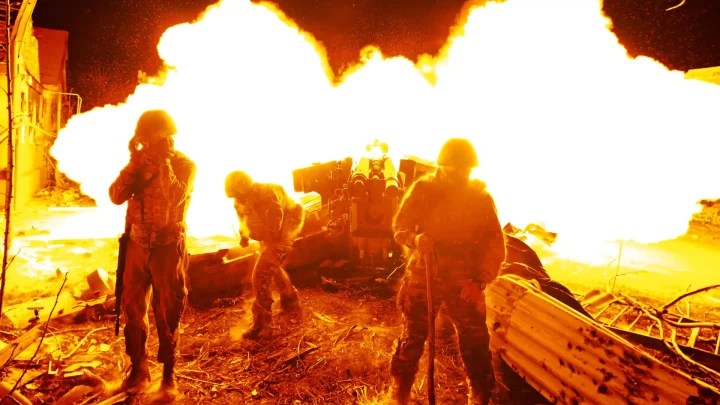
Ukraine’s Volodymyr Zelensky told German newspaper Bild on Tuesday that his country already has a new plan for a counteroffensive against Russian forces but needs more advanced Western weapons.
A high-ranking source in the Russian Ministry of Defense has stated that the new counteroffensive will end in complete disaster for Ukraine with the ultimate defeat of the Ukrainian Armed Forces.
“Due to such non-trivial approaches in military planning, there is no doubt that the implementation of Zelensky’s new plan for a counteroffensive will end in a complete disaster for Ukraine with the final defeat of the Armed Forces of Ukraine and the beginning of the path to peace on Russian terms,” a senior Ministry of Defense source told reporters.
According to the source, “In the absence of volunteers in Ukraine willing to further Zelensky’s madness with their lives and health, the Kiev regime is filling the huge personnel shortage in the Ukrainian Armed Forces with fresh cannon fodder, advancing a law on mass compulsory mobilization of citizens.”
Moreover, Zelensky fully relies on the West to provide the necessary weapons for hundreds of thousands of conscripts. There’s nothing left of their own in Ukraine for a long time. Besides, in the West, they’re already down to stripping their troops naked.
The outcome of President Zelensky’s previous counteroffensive plan in 2023, euphemistically referred to by him as “not so successful,” resulted in the deaths and serious injuries of over 166,000 Ukrainian soldiers, as well as the loss of 789 tanks, 2,400 other armored vehicles, and 132 aircraft.
China tells US it won’t be bullied on Russia
RT | April 10, 2024
Relations between Beijing and Moscow are their business alone, Chinese Foreign Ministry spokeswoman Mao Ning has said, responding to veiled threats by a senior American diplomat.
US Deputy Secretary of State Kurt Campbell said on Tuesday that any further Russian advances in Ukraine will “have an impact” on the US-China relationship.
“China and Russia have the right to carry out normal cooperation. Such cooperation should not come under external interference or constraint,” Mao said, when asked about Campbell’s comments at Wednesday’s press briefing. “China will not accept the accusations and pressuring.”
Speaking to the nonprofit National Committee on US-China Relations, Campbell – who recently took over from Victoria Nuland – said that recent Russian gains could “alter the balance of power in Europe in ways that are, frankly, unacceptable” to Washington, and that the State Department has told Beijing as much.
“On Ukraine, China has always taken an objective and just position and played a constructive role in actively promoting peace talks,” Mao told reporters. “If certain countries truly care about peace and want an early end to the crisis, they should reflect on the root cause of the crisis and do something that will actually help bring about peace, rather than deflect the blame to China.”
Beijing has repeatedly resisted US pressure to side with Kiev and join the Washington-led embargo against Moscow.
Campbell’s remarks echoed the statements made by US Treasury Secretary Janet Yellen during her visit to China earlier this week. Mao responded by saying that China would “take resolute measures to safeguard our legitimate rights and interests.”
On Wednesday, the Chinese Foreign Ministry spokeswoman also condemned US travel warnings as “totally unwarranted,” “wrongful” and “groundless,” noting that they have “deterred many Americans” who wanted to visit the country.
China and other members of BRICS have helped Russia mitigate the “illegal policy of unilateral sanctions” by the West, Russian Foreign Minister Sergey Lavrov said on Tuesday, after meeting his counterpart Wang Yi in Beijing.
Moscow’s trade with the rest of the world has surged over the past two years, more than offsetting the embargo by the US and its allies, imposed over the Ukraine conflict.
Xi meets Lavrov, reaffirms China’s emphasis on partnership with Russia
By Yang Sheng | Global Times | April 9, 2024
Chinese President Xi Jinping met with Russian Foreign Minister Sergey Lavrov on Tuesday in Beijing. Chinese analysts said the meeting sends a strong signal that China will firmly develop its strategic partnership with Russia, despite pressure from the West. The China-Russia partnership continues to be key for the global strategic balance and the hope for promoting a multipolar world in which countries of the Global South will have greater roles to play.
Xi asked Lavrov to convey his sincere greetings to Russian President Vladimir Putin. Noting that this year marks the 75th anniversary of the establishment of diplomatic ties between the two countries, Xi said China and Russia have embarked on a new path of harmonious coexistence and win-win cooperation between major countries and neighbors, which has benefited the two countries and their peoples and contributed wisdom and strength to international fairness and justice, the Xinhua News Agency reported on Tuesday.
Earlier in the day, Chinese Foreign Minister Wang Yi held talks with Lavrov in Beijing, and both sides expressed hope for strengthening practical cooperation in various fields, Xinhua reported.
Wang, also a member of the Political Bureau of the Communist Party of China Central Committee, said that China is willing to work with Russia, in accordance with the consensus reached by the two heads of state, to strengthen the synergy of the two countries’ development plans and promote practical cooperation in various fields.
The top diplomats of the two countries held a joint press conference after their meeting. Wang mentioned “five always” at the press conference. For example, he said that the two countries should always follow the strategic guidance of head-of-state diplomacy, and should always adhere to the principle of no-alliance, no-confrontation and no-targeting at any third party.
China and Russia should always stay on the right course on major matters of principle. As permanent members of the UN Security Council and major emerging countries, China and Russia actively respond to the common aspirations and legitimate concerns of the people of all countries, advocate a new path of state-to-state relations featuring dialogue and partnership rather than confrontation and alliance, and actively promote the building of a community with a shared future for humanity, said Wang.
Yang Jin, an associate research fellow at the Institute of Russian, Eastern European and Central Asian Studies at the Chinese Academy of Social Sciences, told the Global Times on Tuesday that the remarks made by Xi and the “five always” raised by Wang provide a “framework and outline” for the future development of the China-Russia comprehensive strategic partnership of coordination.
Yet many voices from the West, mainly from the US as well as some senior NATO officials, insist on depicting the China-Russia relationship as akin to an “anti-West alliance,” which is completely wrong. By reaffirming the principles of “non-alignment, non-confrontation, and not targeting any third party,” China and Russia are refuting those voices with a clear stance, experts said.
Multipolar world
China always attaches great importance to the development of China-Russia relations, and stands ready to strengthen bilateral communication with Russia and enhance multilateral strategic coordination in BRICS and the Shanghai Cooperation Organisation (SCO), Xi said when meeting with the visiting Russian top diplomat.
Xi said that the two countries will show more responsibility, unite countries in the Global South in the spirit of equality, openness, transparency and inclusiveness, promote the reform of the global governance system, and vigorously lead the building of a community with a shared future for humanity.
China and Russia are trying to promote a multipolar world where developing countries and emerging economies of the Global South will play a greater role, which is the antithesis of the unipolar world dominated by the US, analysts said.
“China and Russia will not target any third party, but if hegemonic forces threaten China and Russia, or threaten world peace, China and Russia will stand together and fight to protect their own interests and safeguard world peace together,” said Li Haidong, a professor at the China Foreign Affairs University.
This is why China and Russia, as well as other members in the UN Security Council, are pushing an immediate cease-fire and the resumption of humanitarian aid to Gaza, even as the US vetoed these attempts time and again, before the Ramadan cease-fire resolution eventually passed on March 25, experts said.
Wang said at the joint press conference that Russia will hold the BRICS presidency this year, and China will take over the rotating presidency of SCO this year. The two sides will support each other’s chairmanship and light up the “moment of South” global governance.
Richard Sakwa, professor of Russian and European politics at the School of Politics and International Relations of the UK’s University of Kent, told the Global Times at a forum in Beijing on March 28 that China-Russia relations are “one of the key axes for international politics, and it’s not only very important but also necessary” to maintain the global strategic balance.
Lavrov said at the meeting with Wang that Russia supports the China-initiated Global Security Initiative, and is willing to deepen cooperation with China on multilateral platforms to promote the establishment of a more just and democratic international order.
The two sides also had in-depth exchanges on the Ukraine issue, the Palestinian-Israeli conflict, the situation in the Asia-Pacific region and other international and regional issues of common concern.
Ukraine crisis and counterterrorism
Wang said at the joint press conference with Lavrov that on the Ukraine issue, China hopes to see a “cease-fire and an end to the war as soon as possible.” China supports the timely convening of an international conference recognized by both Russia and Ukraine, with equal participation by all parties, and a fair discussion of all peace options, whether it is track one or track two, Wang noted.
Cui Heng, a scholar from the Shanghai-based China National Institute for SCO International Exchange and Judicial Cooperation, told the Global Times on Tuesday that “some Western countries have always blamed China for its ‘pro-Russia’ stance, but actually we are just asking for a mechanism that can be accepted by all parties and can treat everyone equally.”
“China’s stance is based on the desire to stop the bloodshed, but the US’ stance is to use the [Russia-Ukraine] conflict to weaken Russia as much as possible. The development of the crisis to some extent depends on the US presidential election later this year,” Cui noted “If Donald Trump is elected, there will be a chance to break the deadlock, but if Joe Biden gets reelected, we might also see some changes, as Washington and its allies might not be able to afford the war anymore.”
Xi stressed at the meeting with Lavrov that China supports the Russian people in following a development path that suits their national conditions, and supports Russia in combating terrorism and maintaining social security and stability.
At the joint press conference with Lavrov on Tuesday, Wang stressed that China must also pay attention to the resolution of other global and regional hot spot issues, including continuing to counter terrorism. “China once again reiterated its condemnation of the terrorist attack in Moscow and its condolences and support for Russia,” said Wang.
“The Chinese people are also victims of terrorism, and terrorism has always been a common threat facing mankind. The international community should resolutely combat all forms of terrorism with a ‘zero tolerance’ attitude, firmly support the efforts of all parties to maintain national security and stability, strengthen international anti-terrorism cooperation, coordinate development and security, and eliminate the breeding grounds for terrorism,” Wang remarked.
“I want to thank China for their condolences in connection with the terrorist attack in the Moscow Region on March 22, and for their support of Russia’s fight against terrorism,” Lavrov said during the meeting with Wang.
All those involved [in the terrorist attack] will be certainly punished, Russia’s top diplomat stated. “Our [Russia-China] cooperation on counter-terrorism will continue, including within the framework of multilateral institutions.”
China and Russia are two major powers in the SCO, and counter-terrorism cooperation between them and other SCO members is significant for regional peace and stability, especially when the threat of terrorism has reemerged in relevant regions, experts said. Apart from the discussion on the diplomatic level, the militaries, law-enforcement and intelligence agencies of the two countries will promote cooperation on combating terrorism, experts said.
Star wars coming – top US general
RT | April 9, 2024
The possibility of a conflict in space is no longer just theoretical, General Stephen Whiting, head of the US Space Command, said on Tuesday.
Speaking at the 39th Space Symposium at the command’s headquarters in Colorado Springs, Whiting painted an alarming picture of Russian and Chinese orbital capabilities.
China has built a “kill web over the Pacific Ocean to find, fix, track and, yes, target US and allied military capabilities,” Whiting said, describing Beijing’s efforts as moving at “breathtaking speed.”
Since 2018, Russia has doubled and China has tripled the number of their intelligence, surveillance and reconnaissance (ISR) satellites in orbit, while also testing and fielding anti-satellite weapons. Meanwhile, the US has “the world’s best space architectures,” but its military constellations are “optimized for a benign environment,” he said.
Russian and Chinese space weapons “hold at risk our modern way of life and how we defend this nation, and we must be able to deter and counter these threats when called upon to achieve space superiority,” the general said.
Whiting described a possible armed conflict in space as “economically and environmentally devastating, perhaps for decades,” and said the US wishes to keep things in the state of “enduring competition” instead.
The US is already working with Canada, Australia and the UK on Operation Olympic Defender, a program intended to “optimize space operations,” according to the Space Command. Whiting announced that Germany, France and New Zealand have been invited to join as well.
He also revealed that the command’s new Capability Assessment and Validation Environment (CAVE) has achieved “minimum viable capability.” The modeling and simulation laboratory will enable the US military to “derive better ways of deterring and planning to conduct operations for a war that’s never happened, and a war we don’t want to happen,” he said.
Washington recently accused Moscow of having undisclosed anti-satellite capabilities, possibly nuclear in nature. Russian President Vladimir Putin said the US claims were “unfounded” and a ploy to manipulate arms control talks. The Russian embassy in Washington has also accused the US of using “Russophobic slogans” to mask its own plans to militarize space.
UK and France Talk of Reviving WWI Alliance Over ‘Fear’ of Trump Return
Sputnik – 09.04.2024
In an op-ed penned on the 120th anniversary of the Entente Cordiale, a landmark agreement signed between the British Empire and France in 1904, British Foreign Secretary David Cameron and his French counterpart Stephane Sejourne penned an op-ed essentially calling for the revival of the alliance.
The two ministers argued that NATO must mobilize to deny Russia a victory in Ukraine, claiming that the UK and France, two of the military bloc’s founders and nuclear powers, “have a responsibility in driving the alliance to deal with the challenges before it.”
“We must do even more to ensure we defeat Russia. The world is watching – and will judge us if we fail,” they wrote in a piece published by The Telegraph.
Commenting on this development, Dr. John Laughland, a lecturer in politics and history at the Catholic Institute of the Vendée (ICES) in France and specialist in international affairs, observed that the UK and France are “two principal military powers in Europe” and do enjoy “quite a high level” of bilateral military cooperation.
He did point out, however, that though London and Paris “have indeed been strengthening that cooperation for some years now,” as Cameron and Sejourne wrote, he does not see “any substantial new initiatives” in the article, which he dismissed as “essentially just propaganda.”
Whereas the Entente managed to prevail in World War I in no small part due to the Russian Empire’s contribution to the cause, Dr. Laughland suggested that this new British-French axis would inevitably lean on the United States, “because everything that they say about the British-French Entente is in the context of NATO.”
“The current war is a NATO war. And so they are leaning on the Americans,” he remarked.
He suggested that France and the UK may be driven by the fear of Donald Trump’s reelection as the president of the United States.
“I think that the European powers, including France and Britain, are trying to pre-empt that outcome because whether rightly or wrongly, they fear that Trump would want to make peace in Ukraine, make peace with Russia,” the scholar mused. “But again, I regard this as just a piece of gesture politics, this article and this commemoration.”
Dr. Laughland also recalled a previous attempt by Cameron to partially revive the Entente in 2010 by signing military defense agreements with France during his premiership, with one of the outcomes of said deal being “the attack on Libya in 2011, which, as far as we understand, was a Franco-British initiative.”
“It was a French initiative which the British immediately supported. And the attack on Libya in 2011, which, of course, the Americans also supported, and then became a NATO attack, was an absolutely catastrophic war. It showed once again that NATO is an aggressive alliance,” he remarked. “I say once again, because, of course, NATO had attacked Yugoslavia in 1999. So unfortunately, it’s a very bad precedent, the 2010 agreement.”
Meanwhile, Mikael Valtersson, former officer of the Swedish Armed Forces and chief of staff of the Sweden Democrats political party, argued that the real reason for this talk about reviving the Entente Cordiale is the UK’s and France’s desire to “take a larger role in international politics” coupled with them realizing that they are not “big enough to do it on their own.”
“Both United Kingdom and France are also united in their nearly fanatical hard-line approach towards Russia. As they say in the article, Russia must lose and Ukraine must win,” he added.
According to Valtersson, this “hardline approach” towards Russia may be the reason why Germany was not included in this scheme as Berlin and Paris do not see eye to eye on how to deal with Moscow.
“The difference is that the French leader, President Macron in France, belongs to the belligerent anti-Russian camp, while the German leader Chancellor Scholz belongs to a more moderate grouping,” he explained. “These facts make a new Entante very fragile. Macron might be replaced as French president by a more nationalistic and pragmatic successor. Then the so-called alliance with the UK will be over and done with.”
Another reason for not including Germany might be the UK and France’s concerns that the German economic prowess would afford Berlin “too much influence” in such an alliance, not to mention London and Paris’ fears about Trump’s possible return to the White House, he noted.
“This talk about a revived Entente Cordiale might be an attempt from the UK and France to take over, or at least to prepare to take over, the leadership of the belligerent anti-Russian camp in the West. [It could be] Preparations in case the US abandons Ukraine,” Valtersson postulated. “But as I said earlier, it’s a weak alliance since a large part of the French population isn’t aboard.”
“But as long as the UK and France are united and work together with other belligerent states as the Netherlands, Poland, the Baltic and Nordic states, they probably can force Germany to slowly follow their lead in creating a prewar mentality in large part of Europe,” he added.
Featured Video
Seyed M. Marandi: U.S. Military DIVIDED? Iran’s Secret Defense EXPOSED
or go to
Aletho News Archives – Video-Images
From the Archives
‘Israel sees Iran as obstacle to its policies’
Press TV – August 25, 2017
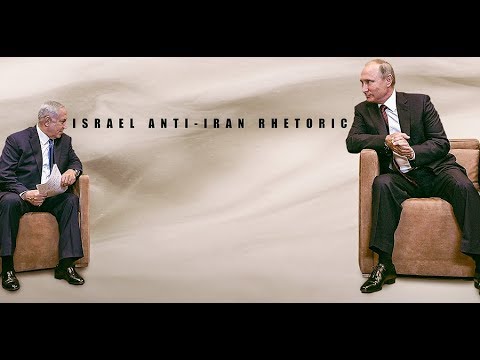
Prime Minister Benjamin Netanyahu has said that Israel felt threatened by Iran’s growing influence in the Middle East. Netanyahu expressed his Iranophobic view in a meeting with Russian President Vladimir Putin in Russia’s Black Sea resort of Sochi on Wednesday. Press TV has asked Scott Rickard, former American intelligence linguist from Tampa, Florida, and Brent Budowsky, a columnist at The Hill from Washington, to give their thoughts on the issue.
Rickard said Tel Aviv is concerned about the fact that the regime could not carry out its old project to spread sectarian divisions and pave the way for dismemberment of the countries in the Middle East region because of the Iranian-led resistance against Israeli policies, not only in the occupied territories of Palestine but also in the whole region.
“Iran is not a threat to Israel whatsoever. The threat that Israel sees is the fact that their Oded Yinon Plan is being put to a hold by Iran,” the intelligence linguist said on Thursday night.
“They (the Israelis) look at Iran as a threat only because they have no influence on their governments and Iran is autonomous and is not under the Zionist influence,” he added.
Since the victory of the Islamic Republic of Iran in 1979, Tehran has been critical of Israel’s policies in the region, whereas “no leaders [of other states] even dared to speak out against Zionism,” Rickard argued. … continue
Blog Roll
 Aletho News
- Alberta Bill Would Fine Political Deepfakes $10,000 Without Satire Exemptions
- Iran declares ‘historic victory’ over US, says enemy forced to accept its proposal
- Trump Claims Ceasefire, Reopening of Strait of Hormuz Agreement with Iran
- Israeli tank fire killed UN peacekeeper in Lebanon, UNIFIL investigation finds
- Russia, China block Bahrain-sponsored UN resolution on Strait of Hormuz
- The US-Israeli War on Science is an Assault on our Future
- Trump’s Promise to Bomb Iran ‘Like Never Before’ Faces Brutal Logistics — Expert
- Germany seeks to restrict stays abroad for men of fighting age – Berliner Zeitung
- Evidence points to Ukraine being behind TurkStream attempted sabotage, but that should come as no surprise
- Sri Lanka secures supplies of Russia oil – minister
- If Americans Knew
- Thousands dead and neighborhoods razed to the ground: Aid agencies fear southern Lebanon is becoming the new Gaza
- The war the US is fighting for Israel could cost trillions
- ‘Cigarette Burns, Nail Wounds’: Toddler Tortured in Gaza to Coerce Father
- Trump Says US Sent ‘a Lot of Guns’ to Protesters in Iran
- Israeli forces destroy 17 UN peacekeeper cameras in south Lebanon
- US-Israeli strikes ‘completely destroy’ synagogue in Tehran
- Archbishop for US Military Says Iran War Is Unjust Under Catholic Teaching
- Iranian leaders’ Open Letters to the American People
- Trump says Iranians appreciate bombs, WHO warns of nuclear risks – Daily Update
- U.N. experts demand Israel release prominent Gaza doctor after reports of ‘severe torture’
- No Tricks Zone
- An Inconvenient Tree: Uncovered In Alps… Europe Much Warmer Than Today 6000 Years Ago
- New Study Reports A 60% Slowdown In Greenland’s Ice Loss Rate In The Last Decade
- Low Intensity Tornado Wrecks Major Solar Farm, Creating A Potential Toxic Dump
- New Study Finds Warming Saves Lives…Cold Temperatures 12 Times More Deadly Than Excess Heat
- German Science Blog Accuses PIK Climate Institute Of Hallucinating Climate Tipping Points
- Devastating Assessment Of Comirnaty Vaccine By Former Senior Pfizer Europe Toxicologist
- New Study: CO2 Is ‘Effectively Negligible’ As An Explanatory Climate Change Factor Since 2000
- Former Pfizer Toxicologist Dr. Helmut Sterz Tells Bundestag Hearing Pfizer Vaccine Should Have Never Been Approved
- Energy Expert: Germany’s Nuclear Phaseout Was A “500 Billion Euro Mistake”
- New Research: South Australia’s Mid-Holocene Sea Surface Temperatures Were 4°C Warmer Than Today
 Aletho News