US ‘involved’ in deadly Ukrainian attack on Russian bakery – envoy
RT | February 7, 2024
Washington is partially responsible for Ukraine’s missile strike on a bakery in the city of Lisichansk in Russia’s Lugansk People’s Republic (LPR) last week that killed over two dozen civilians, Moscow’s permanent envoy to the UN Vassily Nebenzia stated on Tuesday.
On February 3, the Armed Forces of Ukraine used high-power precision weaponry, presumably US-supplied HIMARS missiles, to target the bakery. The attack almost completely destroyed the two-story building and left some 40 people buried in the rubble, according to Nebenzia. Some 28 civilians died in the strike, including a pregnant woman and her five-year-old child. LPR Minister of Emergency Situations Aleksey Poteleschenko was among those killed in the attack.
Speaking at an emergency meeting of the UN Security Council initiated by Russia in response to the strike, Nebenzia stressed that the US is to be considered an accomplice in the attack, which Moscow has described as an “act of terrorism.”
“If someone undertakes to argue that Western countries have nothing to do with it and that Kiev picks its own targets for strikes, they should be reminded of the confession of Vadim Skibitsky, a representative of the Defense Intelligence (Service) of Ukraine,” the diplomat said.
Nebenzia recalled that in August 2022, Skibitsky admitted that in order to use the HIMARS systems, Kiev must first obtain target clearance from Washington. “So it is quite obvious who was involved in the Lisichansk attack,” the ambassador said. This also applies to the “dozens if not hundreds” of other crimes committed by Kiev using Western weapons, such as the recent downing of a Russian Il-76 aircraft carrying Ukrainian POWs, he added.
The diplomat also pointed out that the time and place of Kiev’s attack on Lisichansk were chosen deliberately, as Ukraine’s forces were aware that there are not many recreational places left in the city. “The neo-Nazis deliberately waited for the moment when families went for a walk on their day off, and cynically attacked almost the only place of leisure in Lisichansk,” Nebenzia said.
Тhe Russian envoy reiterated calls on the members of the UN Security Council and the UN leadership to “strongly condemn the attack on Lisichansk and all other terrorist acts by the Kiev regime.”
“The Bandera junta views your silence as a carte blanche to commit more crimes. For our part, we confirm that all those involved – the organizers and the perpetrators of this crime – will be identified and held accountable,” Nebenzia added. Russia will achieve its goals of demilitarizing and denazifying Ukraine through either diplomatic or military means, he insisted.
Warmongers react to Tucker Carlson’s supposed ‘Putin interview’
By Lucas Leiroz | February 6, 2024
American journalist Tucker Carlson was spotted in Moscow in recent days, generating a series of controversies on social media. There are rumors that Carlson went to Russia to interview President Vladimir Putin. Although there is no confirmation yet about the case, expectations have been enough to encourage all kinds of negative reactions in the West, with public calls for Carlson to be expelled from the US for “treason”.
After leaving Fox News, Carlson launched a TV show on X (formerly Twitter) and has recently done a series of interviews with political leaders around the world, mainly presidents. Previously, he had already announced his personal interest in interviewing Putin, further stating that American authorities began spying on him and threatening him due to this intention. According to Carlson, the NSA hacked his computer and leaked his emails to the media, revealing his plan to go to Russia to interview Putin.
At first it was believed that the coercion from the American state was enough to stop Carlson’s plans, but recently the journalist finally traveled to Russia, sparking rumors about a possible interview with Putin. There is still no confirmation on the veracity of such allegations. The rumors were strengthened by images and videos circulating on social media showing what is believed to be Carlson team’s car leaving the Kremlin facilities.
However, the situation remains doubtful and unclear for now. Neither Russian authorities nor Tucker’s team confirmed or denied that an interview took place. What is known is that the journalist has actually spent a few days on Russian soil, visiting tourist attractions and having confirmedly attended a ballet performance at the Bolshoi Theatre. If there was any more important event on the journalist’s schedule, it will certainly be revealed soon.
However, it is interesting to analyze the reaction in the West to Carlson’s visit to Russia. Pro-war militants on the American political scenario are absolutely upset by this trip – and seem even angrier about the mere possibility of Tucker interviewing Putin. All sorts of hysterical reactions have arisen among American neoconservatives and liberals. Tucker has been called a “traitor” by several public figures. More than that, in a controversial statement, neoconservative writer Bill Kristol went to the extreme of calling for Tucker’s banishment from American soil, aimed at preventing him from returning to the US from Russia.
There are some special reasons for this reaction. Carlson is currently the most popular American journalist on social media. With more than 11 million followers on his X account and running a show whose audience is continually growing, Carlson represents a “threat” to Western Big Media. For example, Carlson’s recent interview with former American President Donald Trump reached an impressive 267 million views on X alone – having also been broadcast on other digital platforms. Carlson’s popularity is the reason why American elites are so afraid of him interviewing Putin.
The Russian president certainly has a lot to say to Western public. Since 2022, censorship on Russian media has prevented Western citizens from hearing the Russian side in the ongoing conflict. Putin’s words, when they reach an English-speaking audience, come in a distorted and biased way, with ordinary people in Western countries not having the opportunity to really understand Russia’s concerns and reasons.
More than that, Russian denunciations of war crimes, human rights abuses, promotion of neo-Nazism and the production of ethnic biological weapons rarely reach Western public opinion. In a direct interview with the Russian president, this scenario would completely change. This is why, even without any confirmation that the interview happened, the mere possibility of such an event is already causing panic among American warmongers.
Furthermore, even if there is no interview, the visit of a popular American journalist to Russia in current times is also important. Tucker could show his audience the reality on the ground in Russia, showing that there is no effect of the illegal sanctions imposed by the West and that the Russian people are in fact living well, contrary to the scenario of social catastrophe described by the mainstream media. Also, being an election year in Russia, Carlson’s coverage could also show that, contrary to what the big outlets say, the Russian government is actually popular, being supported by the majority of the people – with Putin not being elected in “fraudulent elections“, as said in the West, but in real democratic procedures.
In practice, Tucker has a lot to say to his millions of followers about Russia. Whether or not there is an interview with Putin, it is certain that Carlson’s trip will have a strong impact on Western journalism. The case is serving to unmask the real nature of “American democracy”. More than ever, it seems clear that concepts such as freedom of speech and media no longer mean anything to the decadent political structure of the contemporary US.
Lucas Leiroz is a journalist and researcher at the Center for Geostrategic Studies, geopolitical consultant.
You can follow Lucas on X (former Twitter) and Telegram.
Ukrainian official tries to justify the killing of 28 civilians in Russian bakery
RT | February 5, 2024
The emergencies minister of Russia’s Lugansk People’s Republic (LPR), Aleksey Poteleschenko, was confirmed on Monday as being among the victims of the recent Ukrainian strike on a bakery in the city of Lisichansk. The attack claimed the lives of 28 civilians.
While the strike has been squarely described by Moscow as a “terrorist attack” perpetrated by Kiev, the death of the regional cabinet minister actually legitimizes the strike, Petr Andryuschenko, an aide to the Ukrainian mayor of Mariupol (who fled the city in early 2022) has suggested. Mariupol, located in the Donetsk People’s Republic (DPR), was liberated by Russian forces early in the ongoing conflict, and joined Russia after a referendum in late 2022.
“At the end of the week, late in the evening, heavenly punishment visited Lisichansk in a restaurant near a bakery, where the top collaborators had already celebrated two birthdays,” Andryuschenko wrote on Telegram, claiming that only the restaurant was destroyed, while the bakery itself remained “intact.”
It was not immediately clear where he’d come by his information, given that the bakery and the restaurant were effectively a single establishment, located in the same building. Its structure ended up heavily damaged in the Ukrainian strike, partially collapsing and burying dozens of civilians under the rubble. Additionally, the strike did not exactly happen “late in the evening” as Andryuschenko claimed, occurring shortly after 5pm local time.
The official also urged the Ukrainian side to brag about such attacks in the future, arguing that Kiev should have broke the news on the strike first, while describing the bakery as an “assembly point” of “collaborators,” and therefore depriving Russia of the “information field advantage.”
The death of Poteleschenko was confirmed by the acting head of the LPR, Leonid Pasechnik. According to the latest official tally, the strike on the bakery left 28 people dead, including one child.
“He was a courageous man with an iron character and great fortitude. He defended the Lugansk People’s Republic within the ranks of the People’s Militia, then worked in the Ministry of Emergency Situations of the LPR. For a year, he headed the Lisichansk fire and rescue squad,” Pasechnik wrote, eulogizing the fallen official on Telegram.
Russian troops secured the city of Lisichansk in early July 2022, making it one of the last municipalities in the LPR to be liberated. However, the city, which remains close to the front line, has been a frequent target of Ukrainian artillery and missile attacks ever since. Saturday’s strike, however, was reportedly the deadliest to date in the community in terms of civilian casualties.
West totally wrong about Ukraine – Orban
RT | February 4, 2024
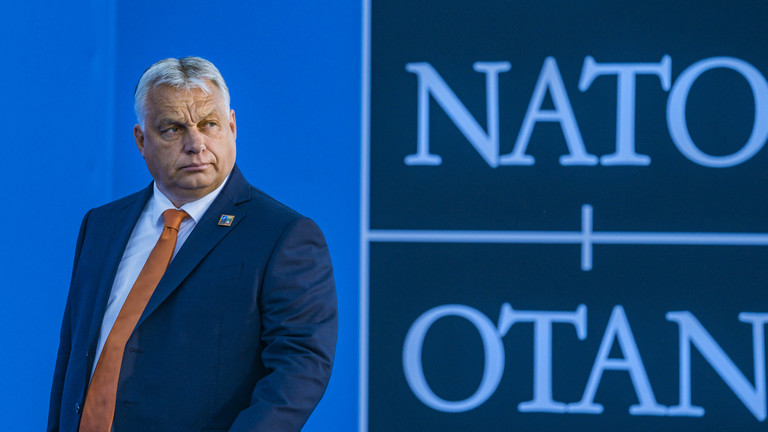
Hungarian Prime Minister Viktor Orban has expressed hope that the newly-approved €50 billion ($54 billion) package of aid will be used to support civilians by preventing the collapse of the bankrupt Ukrainian state, rather than to fund more weapons and bloodshed.
Orban has repeatedly called for a ceasefire in Ukraine and peace talks between Moscow and Kiev, arguing that Ukraine cannot possibly hope to defeat Russia on the battlefield. This position, as well as Budapest’s opposition to sanctions on Russia and blocking of EU military aid to Ukraine, has seen Hungary vilified in Kiev and threatened with sanctions by its EU allies.
“The West still thinks that time is on our side. Yet, I think the opposite is true. I think that time is on the side of the Russians, and the longer the war goes on, the more people will die, and the balance of power will not change in Ukraine’s favor,” Orban told Kossuth Radio on Friday.
According to Russia’s estimates, Kiev has lost more than 400,000 service members killed, wounded, and missing since the conflict began in February 2022. Ukraine’s top commander, General Valery Zaluzhny, has repeatedly insisted in recent weeks that the armed forces are critically understaffed, and even President Vladimir Zelensky admitted on Sunday that combat operations on the ground have reached a “stalemate.”
The Hungarian leader went on to insist that “peace will come when there is change in Brussels,” and that after almost two years of failed hopes to defeat Russia militarily “everything in Brussels should revolve around achieving a ceasefire as soon as possible.”
The EU approved the new aid package on Thursday, having pressured Orban into lifting his veto. The Hungarian painted the decision as a victory for Budapest, claiming that otherwise Brussels “would have taken away the funds earmarked for Hungary and sent that to Ukraine as well.”
“We are not sending weapons, we get our money from Brussels, and we will contribute to the civil financing of Ukraine,” Orban said on Friday, reiterating his firm position that the only way to end the Ukrainian crisis was through negotiations.
Possible NATO Corps Deployment to Ukraine May Become ‘Suicide Mission for Those Troops’
By Oleg Burunov – Sputnik – 04.02.2024
The UK has urged its NATO allies to consider sending the alliance’s expeditionary force to Ukraine, an informed source told Sputnik. According to the source, the alleged move came “in connection with the unfavorable developments in the Ukrainian theater of military operations for Kiev”.
The insider added that Britain also called on NATO to consider imposing a no-fly zone over the territory controlled by the Zelensky regime and to increase military aid to Ukraine.
”The UK’s reported plans about deploying NATO’s expeditionary corps to Ukraine is “a fantastical delusion on the part of the Brits and has no foundation in reality,” retired CIA intelligence officer and State Department official Larry Johnson told Sputnik.
“But just because the Brits are insane does not mean Russia can ignore them. It is a serious proposal,” he added.
Johnson was partly echoed by Matthew Gordon-Banks, an international relations consultant, former member of Parliament and retired senior research fellow at the UK Defence Academy, who said he didn’t think the rumors of a NATO force in Ukraine should be taken seriously.
“The suggestions I have heard are quite unrealistic at present,” Gordon-Banks stated.
Asked to comment on the “unfavorable development of events” for Kiev on the battlefield, he emphasized that “things are collapsing in Kiev quite quickly”.
“[Ukrainian President Volodymyr] Zelensky has not been able to fire his top general, and I think he is now very much a ‘lame duck’ president,” Gordon-Banks argued, referring to the commander-in-chief of Ukraine’s armed forces, Valery Zaluzhny.
The same tone was struck by Earl Rasmussen, a retired US Army lieutenant colonel turned geopolitical and military affairs consultant, who warned that if the information about London’s plans is true, and “if this is somebody’s dream, it could quickly become a nightmare for British and NATO forces.
“But it is not a realistic solution or proposal. Russia has complete air dominance, escalatory dominance, logistical dominance, ammunition dominance. This would be catastrophic for any UK forces and definitely would show a symbol of direct NATO involvement, which could really be dangerous, as far as escalation goes,” Rasmussen emphasized, noting that “the British forces would probably be wiped out, fairly rapidly.”
The US Army veteran suggested that someone in the UK military might be having “some type of delusional experience” for even suggesting such a scenario. “It’s a suicide mission for those troops. And it definitely would pull NATO into a much more dangerous situation and direct confrontation [with Russia],” Rasmussen concluded.
Nuland leaves sense of foreboding in Kiev
BY M. K. BHADRAKUMAR | INDIAN PUNCHLINE | FEBRUARY 4, 2024
The commencement of political upheavals in world affairs sometimes lies with a seemingly obscure event. This is not to say that the shooting down of a Russian Ilyushin-76 military transport plane carrying dozens of Ukrainian prisoners of war over the territory of Belgorod Region by two missiles fired from the area of Liptsy, in Kharkov Region (Ukraine) on January 24 is anything like the spark that set off World War I when a Serbian patriot shot and killed Archduke Franz Ferdinand in the city of Sarajevo in 1914 and within a month, the Austrian army invaded Serbia.
That said, the downing of the Russian plane would have far-reaching consequences now that Russian investigators found irrefutable proof that the plane was shot down with a US-made Patriot surface-to-air system. President Vladimir Putin disclosed this himself.
Russia sought an emergency meeting of the UN Security Council in the matter but France as the president disallowed the request, which would have cast the West in bad light. The fact of the matter is that the US and Russia are not at war and the Americans would have no hesitation to call such an outrageous incident as an act of war if a Pentagon plane were to be shot down with a Russian missile in the US airspace.
To be sure, Russia will draw appropriate conclusions and formulate a measured reaction. This is an escalation spiral as Russia’s election approaches.
Indeed, all indications are that the US strategy through this year is to ‘hold, build and strike’ at Russia, as outlined in an article in the War on the Rocks co-authored by Michael Kofman, a leading American military analyst and the director of the Russia Studies Program at the Center for a New American Security. Basically, the strategy is predicated on the premise that Russia is still far from its official goal of seizing the entire Donbas and therefore, what happens in 2024 is likely to determine the future trajectory of the war.
Kofman identified three elements as crucial: one, a well- fortified frontline in Ukraine which stalls Russian offensives; two, pressing ahead with reconstituting the battered Ukrainian military; and, three, most important, degrading the Russian advantages and “creating challenges for Russian forces far behind the front lines”, while doubling down on rebuilding capacity to resume offensive operations. In a nutshell, the strategy is to reach a level of capability where Ukraine can absorb Russian offensives while minimising casualties and positioning itself to retake the advantage over time. [Emphasis added.]
Russia is unlikely to remain passive without a counter-strategy. In fact, there is a perceptible acceleration of Russian operations lately. The factors of advantage largely lie with Russia which holds material, industrial, and manpower advantages, and therefore, recreating another opportunity to deal Russia a battlefield defeat is virtually impossible.
Washington should be aware that there is very little realistic chance of the West being able to outlast Russia and force it to accept peace on Ukrainian terms. Time is not on Ukraine’s side, either, militarily or economically. The noted American strategic thinker of the realist school and Harvard academic Prof. Stephen Walt is to the point when he wrote in FT recently, “Both [Biden and Trump] administrations will try to negotiate an end to the war after January 2025, and the resulting deal is likely to be a lot closer to Russia’s stated war aims than Kyiv’s.”
But that is the whole point. The new war strategy — which was outlined in a recent article in the Washington Post — takes into account the possibility of Ukraine becoming a dysfunctional state. But so long as Ukraine remains a cauldron boiling with nationalism that lends itself as a base for hostile moves to destabilise Russia and lock it in permanently in a confrontation with the West, the purpose is served —from Washington’s viewpoint.
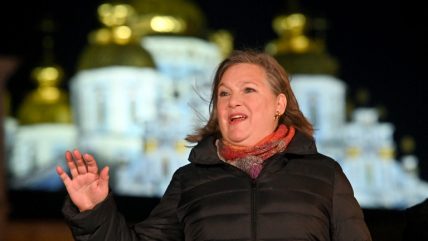
The final act of the power struggle playing out in Kiev is, therefore, of decisive importance and is being supervised by none other than Biden’s agent in the administration ever since the Maidan coup in Ukraine in 2014 — Victoria Nuland, Undersecretary of State. Nuland’s two-fold mission has been, first, to put in place a calculus of power in Kiev that is firmly under US control and, second, to steer the transition from war to insurgency when the need arises.
The probability being talked about is that President Zelensky who has burnt his bridges with Moscow will remain in power while the army chief Valeri Zaluzhni may be replaced. That said, the outcome of high-stakes power struggles, as the one Kiev is witnessing, is also hard to predict. Gen. Zaluzhni’s nuanced op-ed in the CNN on the day after Nuland left Kiev leaves no one in doubt that the redoubtable general is in a defiant mood.
Chief of Defense Intelligence Kyrylo Budanov’s biggest qualification is that although a man of very limited military experience, his forte is intelligence and covert operations who did brilliantly well to create a network of field operatives within Russia for subversive work — just the man to navigate Ukraine’s transition from attritional war to a full-bodied insurgency against Russia.
The US agenda to weaken Russia in a long-drawn out insurgency is very much in the cards. This agenda enjoys the support of the transatlantic alliance, is “cost-effective” and allows the US to focus on Asia-Pacific, while keeping Russia down for the foreseeable future. No doubt, Russia’s reaction to the downing of the IL-86 military plane by Patriot missiles in Russian air space was anything but an accident.
Moscow’s best option would be to create a buffer that keeps Russian territories out of reach of game-changing western medium and long-range missiles that are capable of degrading Russian logistics and command and control nodes and make large swathes of territories in the east and south of Ukraine, including Crimea, untenable for Russian forces.
But that necessitates a full-fledged Russian offensive to take control of the entire region to the east of Dnieper river. Russia may face the same dilemma that Americans faced in Vietnam stemming from the requirement to expand the theatre of operations into Laos and Cambodia (aside North Vietnam.) For Russia, that involves colossal drain of human and material resources and the erosion of its international standing.
The only feasible alternative will be to end the war — through negotiations or militarily — in 2024. But Biden’s interest in negotiations is zero. That leaves the military option as the only choice. The strategy to degrade the Ukrainian military in the meat grinder was highly successful, but going forward, in reality, the US-led western alliance, especially key functionaries like Nuland (an ex-ambassador to NATO) with a long record of being Russophobic, are showing no signs of attrition.
Now that the US has broken the glass ceiling by enabling a military attack on Russian territory, Moscow should brace for more incidents like the downing of the IL-76 plane. The authorities will be keeping a beady eye. Nuland’s sudden appearance in Kiev as a psychopomp from Greek mythology at this inflection point needs to be factored in.
While in Kiev, Nuland forecast Ukrainian military successes in 2024 and that Moscow “is going to get some nice surprises on the battlefield”. The day before Nuland’s arrival in Kiev, Budanov had said that the Ukrainian military is in “active defence” but somewhere in the spring, Russia’s ongoing offensive “will be exhausted completely… and I think ours will start.” The tone of triumphalism is unmistakable, but how far it is rooted in reality time only can tell.
The Anglo-American War on Russia – Part Thirteen (Putin’s Special Military Operation)
Tales of the American Empire | February 1, 2024
This series has explained how senseless NATO expansion caused a war in Ukraine. Ever since American President George W. Bush announced plans to add Ukraine and Georgia to NATO in 2008, Russian leaders said this third expansion of NATO would not be allowed. Since most people of Ukraine and its President didn’t support joining NATO, the United States organized a coup in 2014 and replaced its democratic government with one supportive of becoming an American vassal state. This never occurred as several NATO members stalled efforts to add Ukraine, so the United States began making Ukraine a de facto member by providing billions of dollars to greatly expand, train, and equip its army. Despite its small army, everyone knew that Russia could expand it if necessary. It has four times the population of Ukraine, ten times its economic power, and more advanced military equipment. Yet even the ominous arrival of Russian military forces on Ukraine’s border failed to encourage implementation of signed peace agreements. Russian President Vladimir Putin reluctantly ordered Russian troops into the Donbas to help local militias expel Ukrainian troops in what he called a “Special Military Operation.”
_________________________________
“Not About NATO” | “Never About NATO” | “Nothing to Do With NATO” | UKRAINE WAR; Matt Orfalea; YouTube; October 2, 2023;  • “Not About Nato” | “Never About NATO”…
Related Tale: “Poland Lost World War II”; • Poland Lost World War II
Related Tales: “The Anglo-American War on Russia”; • The Anglo-American War on Russia
Good Money After Bad: Where Will EU Funds for Ukraine Come From?
By Ekaterina Blinova – Sputnik – 02.02.2024
European Union (EU) member states have agreed on a €50 billion ($54 billion) support package for Ukraine over four years, overcoming Hungary’s resistance. But where will the EU get that money?
The EU could commandeer interest paid on frozen Russian assets to fund Ukraine during its war with Moscow.
Europe’s economy is facing stagnation, with zero economic growth for October-to-December period reported by EU statistics agency Eurostat.
The Eurozone inflation rate has yet to fall below the target two percent threshold, with consumer prices still remaining high.
Against that backdrop EU member states are cutting subsidies, reducing energy consumption and diminishing industrial production. Protests by farmers have rocked the continent since early January.
Nonetheless, Brussels has found €50 billion ($54 billion) to support the embattled Kiev regime for four more years. But where will this money come from?
According to the European Council, the bloc has set up the so-called Ukraine Facility for the period 2024-2027 to “contribute to the recovery, reconstruction and modernization of the country, foster social cohesion and progressive integration into the Union, with a view to possible future Union membership.”
To that end the EC has allocated €50 billion, of which:
€33 billion ($35.9 billion) comes “in the form of loans guaranteed by extending until 2027 the existing EU budget guarantee, over and above the ceilings, for financial assistance to Ukraine available until the end of 2027,” the document sets out.
€17 billion ($18.5 billion) comes “in the form of non-repayable support, under a new thematic instrument the Ukraine Reserve, set up over and above the ceilings of the MFF 2021-27.” The EC document specifies that revenues “could be generated under the relevant Union legal acts, concerning the use of extraordinary revenues held by private entities stemming directly from the immobilized Central Bank of Russia assets.”
On February 1, CNN claimed that the EU had taken a step towards seizing billions of dollars in interest payments generated by Russian assets frozen in European accounts. Media reported that roughly €200 billion ($218 billion) remain in the EU, mainly in Euroclear, a Belgium-based financial services company.
The media outlet highlighted that the EU approved the €50 billion Ukraine package as it “came closer to finalizing a plan” of using the profits from the Russian Central Bank’s sequestred assets — indicating that it has yet to gain access to the funds. Euroclear revealed on Thursday that the frozen Russian assets had yielded €5.2 billion ($5.6 billion) in interest on income assets since 2022.
On Monday, EU member states “agreed in principle” that profits from the Russian assets will be set aside and not be paid out as dividends to shareholders until the bloc’s members decide to set up a “financial contribution to the [EU] budget that shall be raised on these net profits to support Ukraine”, according to a draft document quoted by Euroactive.
The document claimed that the levy will be “consistent with applicable contractual obligations, and in accordance with [EU] and international law.” After that the EC would transfer the money to the EU’s accounts and then to Ukraine, the media noted, specifying that the proposal targets future profits and would not be applied retrospectively. It is believed that Russia’s frozen assets in the EU could generate an estimated €15-17 billion over four years, which would be transferred to Ukraine, according to the press.
Speaking to Sputnik last October, Jacques Sapir, director of studies at the School for Advanced Studies in the Social Sciences (EHESS) in Paris, argued that any attempt by the EU to grab Russia’s frozen assets or revenues from them could turn into a legal nightmare for the EU leadership and particular member states where the money is being stored.
“As a matter of fact, if assets belong to the Russian state legally, you will have to prove that this state is a ‘failing state,’ something impossible,” Sapir told Sputnik on October 29, 2023. “If assets belong to private persons, you need a legal conviction against these persons. If you can’t do both and that you take away revenues to divert them to a third party (Ukraine) this is no less than a theft. Then you will be liable to legal action. But, what is even more important, you will probably discourage all foreign investors from investing in the EU.”
Brussels Wants European Farmers to Tighten Belts
While allocating tens of billions of euros for Ukraine, Brussels has yet to solve its farming crisis caused by inflation, a spike in production costs, economic slowdown, politically-motivated decoupling from Russia’s energy market, an influx of cheap agricultural goods from Ukraine and the bloc’s aggressive climate policies.
Farmers’ protests have been gaining pace since early January, engulfing France, Belgium, Germany, Italy, Poland, Romania and the Netherlands.
Commenting on the provision of €50 billion to Kiev, French member of the European Parliament Thierry Mariani warned that the package could cost France at least €8 billion ($8.7 billion) in taxpayers’ money since Paris contributes 16 percent of the EU budget.
“Another €50 billion for Ukraine (17 in donations plus 33 in loans… which will never be repaid). Do the French realize that they will have to pay €8 billion since we contribute 16 percent of the EU spending? Eight billion that our farmers would dream of,” Mariani posted on X on Thursday.
By January 31, the number of farmers protesting across France against the Macron government’s agricultural policies had reached 10,000, French Interior Minister Gerald Darmanin admitted. French farmers are protesting against unfair competition from cheaper imports, draconian environmental rules and the government’s push to bring down food inflation by artificially suppressing prices.
In a bid to calm the protests, the French government has proposed €150 million in tax and social support — small change compared to the multi-billion aid for Ukraine paid for by Paris.
Will EU Money be Spent Appropriately or Wasted in Ukraine?
Aid to Ukraine would be provided under certain conditions, the European Council said.
“A precondition for the support for Ukraine under the Facility shall be that Ukraine continues to uphold and respect effective democratic mechanisms, including a multi-party parliamentary system, and the rule of law, and to guarantee respect for human rights, including the rights of persons belonging to minorities. In implementing the Facility, the Commission and Ukraine shall take all the appropriate measures to protect the financial interests of the Union, in particular regarding the prevention, detection and correction of fraud, corruption, conflicts of interests and irregularities,” the document read.
Those rules have already been broken by Ukrainian President Volodymyr Zelensky, who has refused to hold general elections this year under the pretext of the ongoing conflict, despite top US and EU officials repeatedly urging Kiev to go ahead with the vote.
Washington and its European allies have grown concerned by Ukraine’s endemic corruption, as Pulitzer Prize-winning investigative journalist Seymour Hersh remarked in his latest op-ed on Substack. Washington and Western Europe want Zelensky to carry out financial reforms.
“According to the knowledgeable American official, the first step of the new concept is a long-standing issue: financial reform,” Hersh wrote. “Zelensky must be told: ‘You’ve got to get rid of corruption before we do anything more.’ The second step is something that does not exist today in Ukraine: a serious audit of all government funding. The official said Zelensky should consider the billions he needs ‘as our money, as an investment with all of the rules’ for its disbursement ‘to be laid out and followed’.”
The investigative journalist recalled that last year CIA Director William Burns secretly travelled to Kiev to warn the Ukrainian president that Washington was aware of his and his entourage’s corruption. Hersh noted that Burns reportedly also told Joe Biden that Zelensky’s subordinates were outraged by their leader personally taking too large a cut of the US aid.
In order to get Ukraine’s spending under control, “the Council will play a key role in the governance of the Ukraine Facility,” according to the EC press release.
“In this sense, a Council Implementing Decision shall be adopted by a qualified majority for the adoption and amendments of the Ukraine Plan and for the approval and the suspension of payments based on the relevant assessments and proposals by the Commission. On the basis of the Commission annual report on the implementation of the Ukraine Facility, the European Council will hold a debate each year on the implementation of the Facility with a view to providing guidance. If needed, in two years the European Council will invite the Commission to make a proposal for review in the context of the new Multiannual Financial Framework (MFF).”
Time will tell whether the EU’s funds allocated for Ukraine at a time of economic stagnation and looming crisis would be used by the Kiev regime properly — or whether it will result in yet another economic and military failure.
Americans likely part of crew that shot down Ukrainian POWs – TASS
RT | February 1, 2024
American specialists may have been part of the crew that operated the US-made Patriot air defense system that shot down a Russian military aircraft carrying Ukrainian prisoners of war last week, TASS news agency reports.
The plane, a Russian Il-76, crashed over Belgorod Region last Wednesday while carrying 65 captured Ukrainian servicemen who were set to take part in a prisoner swap later that day. All of the POWs, as well as three Russian officers and six crew members, died in the crash.
On Thursday, Russia’s Investigative Committee released a report claiming that the plane was brought down using two MIM-104A surface-to-air missiles launched from a Patriot missile system deployed at a staging area in Kharkov Region, Ukraine near the village of Liptsy, around 10km from the Russian border.
Following the Investigative Committee’s report, a source within Russia’s security services told TASS that it is very likely that the crew operating the Patriot system represented a mix of Ukrainian and American specialists.
The agency’s source explained that Ukrainian officers are likely placed in lower positions while “Western specialists, including Americans, sit at the control and missile guidance stations.” They added that Ukrainian servicemen are often only allowed to be involved with these systems as drivers or operators of transport-loading vehicles.
The TASS report noted that the Russian authorities are still in the process of identifying the exact people who were involved in the attack and were operating the Patriot system.
Russian Foreign Ministry spokeswoman Maria Zakharova said the use of a US-made system in the killing of Ukrainian POWs means that US President Joe Biden and his administration have made regular American citizens “complicit in the bloody tragedy.”
West refusing to cooperate with Ukrainian POW plane crash investigation – Kremlin
RT | February 1, 2024
The US and its allies have shown little interest in launching an international probe into last week’s crash involving a Russian aircraft that was carrying Ukrainian captives, Kremlin spokesman Dmitry Peskov told journalists on Thursday. President Vladimir Putin called for an investigation on Wednesday.
A Russian Il-76 military transport aircraft with 65 Ukrainian POWs on board crashed in Belgorod Region on January 24. All of the Ukrainians, as well as six crew members and three Russian military personnel, died in the crash. Moscow immediately blamed Kiev for the incident.
On Wednesday, Putin said Moscow had asked “for international experts to be deployed [here] to conduct an analysis, assess the existing material evidence” as part of an international probe.
According to Peskov, Western nations have demonstrated no interest in the Russian initiative. “The president stated it publicly and openly yesterday that we are ready for an international investigation,” he said, adding that the US and its allies were demanding official written requests and refusing to consider the issue without such documentation.
The West’s position came as no surprise for Russia, since it is a “direct participant” in the ongoing conflict, Peskov said. “It is clear that not one of them [the US and its allies] would be interested in conducting a probe and stumbling upon themselves as a result,” he added.
Earlier, Ukrainian President Vladimir Zelensky had disputed Moscow’s claims and called for an international probe into the incident as well.
On Thursday, the Russian Investigative Committee confirmed that the aircraft had been shot down by a US-made Patriot air-defense system. Such systems have been provided to Kiev’s troops by the Western backers.
Richard Sakwa Explains How We Ended Up In A New Cold War
By Ted Snider | The Libertarian Institute | January 31, 2024
 The war in Ukraine is a complicated tangle of three wars in one. It is a civil war between Ukraine’s European leaning west and its Russian leaning east. It is a war between Ukraine and Russia. And it is a war between Russia and NATO.
Ben Abelow’s book, How the West Brought War to Ukraine, is a clear and valuable introduction to the decisions and events that led up to the war between Ukraine and Russia. Nicolai Petro’s The Tragedy of Ukraine is a comprehensive and masterful account of the history of the ethnic tension between the monist and pluralist visions of Ukraine that led to civil war and made Ukraine vulnerable to being caught up in the larger war between Russia and NATO.
Richard Sakwa’s new book, The Lost Peace, valuably fills the gap by addressing the larger war between Russia and NATO. It is a tour de force analysis of the wasted opportunity for peace at the end of the Cold War.
When Mikhail Gorbachev declared the end of the Cold War on December 7, 1988, a brief window for peace opened. But by the negligent failure to construct a new security structure in Europe that overcame the flaws of the previous one, the window Gorbachev opened was quickly closed. When Gorbachev received his peace prize in 1990, the Nobel Prize committee declared that “the two mighty power blocs, have managed to abandon their life-threatening confrontation” and confidently expressed the “hope that we are now celebrating the end of the Cold War.” But “The Cold War,” as U.N. Secretary General António Guterres has funereally said, “is back.”
How was that window of opportunity wasted? Why was the road from the Nobel Committee’s hope to the United Nations’ eulogy such a short one?
If the second cold war that we now find ourselves in is to end more hopefully, that failure will have to be deconstructed in order to find the clues for constructing a lasting and inclusive security structure upon which real peace can be built. Richard Sakwa, who has been called the preeminent Russia scholar of our day, provides timely help with his deconstruction of that failure.
There are two strengths that set The Lost Peace apart. The first is the wealth and depth of Sakwa’s knowledge. The second is that the book doesn’t just start with the shattering of the peace in Ukraine in 2014 that broke the dam for the new Cold War. In The Lost Peace, Sakwa analyzes the post Cold War world and identifies the conflicts and decisions that wasted the peace and led, once again, to war.
Sakwa argues that with the end of the first Cold War, there was a genuine chance for a very different world than the actual one being painfully played out in Ukraine; there was a genuine chance for a real peace.
But an arrogant America misunderstood Gorbachev’s offering of an international order that now transcended blocs and declared the victory of the American-led bloc and the dawn of a unipolar world. “By the grace of God, America won the cold war,” President George H.W. Bush arrogantly and misleadingly boasted in 1992. The young American hegemon, newly bloated with hubris, led the political West, hand in hand with NATO, on a global expansion that would soon close the cold peace and open the door to a new Cold War.
The U.S. rejected the opportunity it had been offered to build a new security structure. Instead, the U.S. declared not only the victory of the political West’s worldview, but its universality, and set out on a mission of enlargement that expanded to fill the whole world.
That is, the whole world but Russia, who alone was left out of the new security arrangement and ostracized as the new dividing lines in Europe moved ever closer to its borders and red lines until the whole strategy exploded in Ukraine, ending the possibility of peace and cementing the new Cold War.
Sakwa deconstructs the necessary security apparatus that was never constructed and demonstrates how, without that framework, the structure of the possible new peace so quickly collapsed. He identifies three crucial contradictions: sovereign internationalism versus liberal internationalism, international law versus the rules-based order, and freedom to choose versus indivisibility of security.
Russia was committed to sovereign internationalism, which emphasizes state sovereignty and the acceptance that different states develop different cultures and are at different stages of development of different forms of government. All are acceptable until they violate international law or human rights. The United States, however, took the perceived victory of the political West to mean the victory of the cultural West and set out on a mission to spread those values across the globe. They favored liberal hegemony over sovereign internationalism, asserting the universality of their beliefs. Russia, China, and the Global South resented that “great substitution” of the values of sovereign internationalism with liberal hegemony and the colonial missionary spread of the universal values of the West.
When the American policy of spreading Western values lacked the necessary approval of the Security Council, the U.S. enlarged the great substitution, usurping the authority of the Security Council and acting unilaterally without its approval. International resentment grew at this replacement of international law anchored in the UN with the rules-based order. The essence of international law is that written laws are applied universally. The rules-based order promoted by the West is composed of unwritten laws whose source, consent and legitimacy are unknown. To Russia and other countries not in the political West, they have the appearance of being invoked when they benefit the U.S. and its partners and not being invoked when they don’t. To those not in the political West, it appeared, disturbingly, that the U.S. and NATO had supplanted the U.N. as the arbiter of international law.
This belief was reinforced in Iraq and, especially, in Kosovo and Libya where the United States acted without Security Council approval in precisely the way they insisted that the rest of the world do not. Russia bristled at the double standard.
As long as liberal internationalism confined itself to the UN based international system, there was much about it that was attractive. But when the U.S. and NATO began their missionary project of spreading those universal values in ways that dismissed sovereign internationalism and international law, other nations felt their sovereignty and security being threatened.
And that led to the third contradiction. The U.S. insists on the free and sovereign right of states to choose their own partners and security alignments; Russia insists on the indivisibility of security, which insists that the security of one state cannot be purchased at the cost of the security of another. Both principles are enshrined in international law and in international agreements, and, with imagination and understanding, they could have been made compatible. But the United States, Russia argues, exclusively pursued the first in disregard of the second.
That conflict came to a head in Ukraine. American and NATO insistence, in violation of verbal promises made at the close of the Cold War, on NATO’s open-door policy and, especially, on Ukraine’s right to join NATO and NATO’s right to expand right up to Russia’s border was perceived by Russia as a security threat that crossed its reddest of lines.
The U.S. and NATO restated their promise of eventual NATO membership for Ukraine and increased military support. Russia felt that its security concerns were being ignored and that Ukraine was being built into a platform for threatening its existence. The U.S. overreached, Russia overreacted, and the second Cold War was a certainty.
If there is a weakness to Sakwa’s book, it is not in its argument nor in its evidence. It is in its reach to an audience. The Lost Peace is not an easy book. It is a book by a scholar steeped in the story that assumes at least a little of that knowledge by its audience. The Lost Peace is not a book for beginners. But for those with an interest in international relations, the book is an invaluable addition.
The Lost Peace despairs of the wasted opportunity to build a security structure that would have provided the architecture for a possible peace at the end of the Cold War. But it also ends with the hope that, having analyzed the contradictions, conflicts and failures to recognize the interests of others, we are able to find “new ways of thinking about old problems” and do better in the face of a new Cold War. Sakwa’s book is an invaluable contribution to that hope.
Featured Video
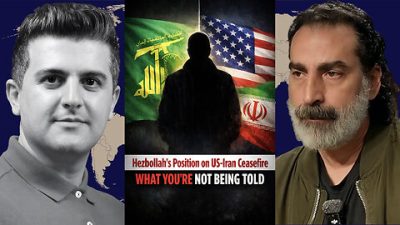
Laith Marouf: Hezbollah’s position on US-Iran ceasefire
or go to
Aletho News Archives – Video-Images
From the Archives
Is Israel to blame for the Iraq War?
American Goy | March 10, 2008
I am so tired of this old canard that “Israel had nothing to do with USA’s war with Iraq – in fact, it officially advised America against it”.
Bullshit. … continue
Blog Roll
 Aletho News
- Laith Marouf: Hezbollah’s position on US-Iran ceasefire: What you’re not being told
- Israel’s priority lies in destroying chances of peace between Iran, US: Ex-UN nuclear chief
- Ceasefire for all or for none: Iran shuts Hormuz over Lebanon attacks
- Strait of Hormuz is Iran’s ‘nuclear weapon’ that forced US retreat: Medvedev
- Energy crisis will last for months – Kremlin envoy
- Europe’s quiet role in the war on Iran
- Forty days that shook the Empire: How Iran turned the tables on US and prevailed
- Netanyahu unilaterally declares Lebanon outside of ceasefire deal
- Israeli leaders: ‘Not a single goal’ achieved in war with Iran
- What on earth just happened? Trump, Iran, and the unlikely ceasefire
- If Americans Knew
- Gazans face a triple crisis: severe shortages of water and bread, healthcare in tatters
- NY Times reports how Netanyahu took the US into Iran War
- A sigh of relief over Iran, but Gaza and Lebanon in dire straits – Daily Update
- Thousands dead and neighborhoods razed to the ground: Aid agencies fear southern Lebanon is becoming the new Gaza
- The war the US is fighting for Israel could cost trillions
- ‘Cigarette Burns, Nail Wounds’: Toddler Tortured in Gaza to Coerce Father
- Trump Says US Sent ‘a Lot of Guns’ to Protesters in Iran
- Israeli forces destroy 17 UN peacekeeper cameras in south Lebanon
- US-Israeli strikes ‘completely destroy’ synagogue in Tehran
- Archbishop for US Military Says Iran War Is Unjust Under Catholic Teaching
- No Tricks Zone
- An Inconvenient Tree: Uncovered In Alps… Europe Much Warmer Than Today 6000 Years Ago
- New Study Reports A 60% Slowdown In Greenland’s Ice Loss Rate In The Last Decade
- Low Intensity Tornado Wrecks Major Solar Farm, Creating A Potential Toxic Dump
- New Study Finds Warming Saves Lives…Cold Temperatures 12 Times More Deadly Than Excess Heat
- German Science Blog Accuses PIK Climate Institute Of Hallucinating Climate Tipping Points
- Devastating Assessment Of Comirnaty Vaccine By Former Senior Pfizer Europe Toxicologist
- New Study: CO2 Is ‘Effectively Negligible’ As An Explanatory Climate Change Factor Since 2000
- Former Pfizer Toxicologist Dr. Helmut Sterz Tells Bundestag Hearing Pfizer Vaccine Should Have Never Been Approved
- Energy Expert: Germany’s Nuclear Phaseout Was A “500 Billion Euro Mistake”
- New Research: South Australia’s Mid-Holocene Sea Surface Temperatures Were 4°C Warmer Than Today
 Aletho News