The US Is Playing A Dangerous Game Of Nuclear Chicken With Russia
BY ANDREW KORYBKO | MAY 26, 2024
Polish Foreign Minister Radek Sikorski revealed in his latest interview with The Guardian that “The Americans have told the Russians that if you explode a nuke, even if it doesn’t kill anybody, we will hit all your targets [positions] in Ukraine with conventional weapons, we’ll destroy all of them. I think that’s a credible threat.” If true, and there’s no reason to suspect that he simply made that up, then this amounts to the US playing a dangerous game of nuclear chicken with Russia.
As was explained in this analysis here about why Russia is presently undertaking tactical nuclear weapons exercises, it hopes to deter NATO from a conventional military intervention in Ukraine, barring which it wants to signal that it could resort to these arms if those forces cross the Dnieper. From Russia’s perspective, the reportedly 100,000-strong force that NATO is preparing to invade Ukraine if its “red lines” are crossed could pose a threat to its territorial integrity if they attack its newly unified regions.
So long as they stay on the western side of the Dnieper, then there’d be no reason for Russia to countenance using tactical nuclear weapons, but they could realistically be employed in the event that they cross the river and credibly appear to be approaching that country’s new borders. In that scenario, Russia would have reason to drop them on the invading forces as a last resort out of self-defense to preemptively neutralize this threat in accordance with its nuclear doctrine.
Having brought the reader up to speed about the context within which Sikorski shared the US’ planned response to Russia potentially exploding nukes in Ukraine, it should now be easier to understand why this amounts to a dangerous game of nuclear chicken. Essentially, the US wants Russia to stand down from its signaled intent of possibly using tactical nuclear weapons if NATO’s reportedly 100,000-strong invasion force crosses the Dnieper, which could occur if Russia achieves a military breakthrough.
If this sequence of events unfolds – the front lines collapse, NATO conventionally intervenes in Ukraine, its reportedly 100,000-strong invasion force crosses the Dnieper, Russia drops tactical nukes on them, and then the US hits all of its forces in the newly unified regions – then World War III would break out. There’s no way that Russia would sit back and let the US directly attack any target within its borders since it’ll either respond in a tit-for-tat fashion or jump to the chase by launching a nuclear first strike.
The only way to avoid this worst-case scenario is for NATO to eschew its invasion plans under any circumstances, including a potential Russian military breakthrough. If they still go through with them, however, then they should keep their forces on the western side of the Dnieper and ideally rely on a neutral mediator like India to convey to Russia that they don’t intend to cross even if they approach it. Anything less is a dangerous game of nuclear chicken that could literally provoke the apocalypse.
Orban Foresees Dire Consequences If EU Militarism Continues Unchecked
Sputnik – 26.05.2024
BUDAPEST – Hungarian Prime Minister Viktor Orban said on Sunday that he had never seen greater irresponsibility than Europe getting involved in the conflict in Ukraine without calculating what it would cost.
“Europe is becoming so involved in the war that it does not even have an estimate of the scale of the costs and means necessary to achieve its military objective. I have never seen anything more irresponsible in my life,” Orban said in an interview with the Patriota YouTube channel.
He added that, in his opinion, NATO wanted to become a party to the conflict in Ukraine and “the chances that the alliance can be kept from doing so are limited.”
Budapest is against having decisions on the service of Hungarian citizens made “in Brussels or Germany,” Orban emphasized.
“We don’t want anyone else to be able to make decisions about conscription and sending our young men of draft age anywhere. We have to forget about a European army with compulsory conscription, this is a crazy idea,” the prime minister stressed.
Earlier in May, Manfred Weber, the leader of the European People’s Party, the largest one in the European Parliament, suggested reinstating compulsory military service across the entire European Union.
If Weber’s idea was implemented, “Hungarian families would be told from Brussels or Germany that their children would be compulsorily conscripted into the European army and told where they would go,” Orban added.
In the years to come, current events may be seen as a prelude to World War III or even its first episode if Brussels’ militarism is not countered, the Hungarian prime minister warned.
“Perhaps in 10 years the current processes will be called a prelude to World War III. It cannot be ruled out that if things go badly and we fail to control the military psychosis developed in Brussels, the history of these years will also be an episode of the first years of the big world war,” Orban said in an interview with the YouTube channel Patrióta.
Although European politicians see nuclear weapons as a deterrent, unforeseen worst-case scenarios could come to life, the Hungarian prime minister emphasized.
“In my opinion, European politicians think of the nuclear bomb as a tactical deterrence tool and not as something that should really be used, but what they don’t consider at the beginning of a war can still happen at the end, thus worst-case scenarios can come to life,” Orban explained.
Previously, Polish Foreign Minister Radoslaw Sikorski said in an interview with The Guardian newspaper that the United States threatened Moscow with the “destruction” of Russian forces in the special military operation zone if Russia uses nuclear weapons in Ukraine.
Deputy chairman of the Russian Security Council Dmitriy Medvedev said Poland should understand that an American strike on Russian troops would mean the beginning of a world war.
Ukraine attacked key element of Russia’s nuclear umbrella — Russian senator
RT | May 25, 2024
The US should be seen as directly responsible for a Ukrainian strike on a key element of Russia’s nuclear umbrella, Senator Dmitry Rogozin has said, warning that such attacks could lead to the collapse of the entire global nuclear security architecture.
In a statement on Telegram on Saturday, Rogozin, a senator who previously headed up the Russian space agency Roscosmos and is now in charge of a military technical center called Tsar’s Wolves, said that the attack targeted a nuclear early warning system in the southern Krasnodar Region. The Russian Defense Ministry has yet to comment on the matter, while the extent of the damage remains unclear.
Rogozin suggested that it was extremely unlikely that the strike, which Ukrainian media reported involved several drones, was carried out at Kiev’s sole initiative and without US involvement.
According to the senator, Washington has always sought to achieve military superiority over Moscow since the very dawn of the nuclear age, but this rivalry was mostly limited to a battle of minds between scientists, strategists, and policymakers.
This seems to have changed, however, as “the US has commissioned a crime by hiring an irresponsible bandit” to attack Russia’s early warning system, the official said, apparently referring to Vladimir Zelensky.
Rogozin claimed that Washington’s “deep involvement in the armed conflict and total control over Kiev’s military planning means that the version that the US does not know about Ukrainian plans to strike Russia’s missile defense system can be discarded.”
Thus, we stand not on the precipice, but on the very edge… If such enemy actions are not stopped, an irreversible collapse of the strategic security of nuclear powers will begin.
The attack apparently targeted an advanced Voronezh radar station in the city of Armavir, which went into operation in 2013. The system can detect incoming cruise and ballistic missiles at a range of 6,000km and can track up to 500 targets. During the inauguration of the system, Russian President Vladimir Putin said that it would significantly increase the country’s defense capabilities in the southern and southwestern directions.
Prelude to WWIII: Italy Slams NATO Chief’s Proposal to Allow Ukraine to Strike Deep Into Russia
By Sergey Lebedev – Sputnik – 26.05.2024
NATO’s chief Jens Stoltenberg earlier urged Western nations to lift restrictions on allowing Ukraine to conduct attacks deep into Russia using Western weapons.
The Italian government has slammed NATO Secretary General Jens Stoltenberg’s plea to lift restrictions on the use of Western weapons supplied to Kiev regime.
“We will not send a single Italian soldier to Ukraine, and the military equipment that Italy sends should be used on the territory of Ukraine,” Italian Foreign Minister Antonio Tajani was quoted as saying by the Adnkronos news agency on Saturday.
He added that Italy “must always work for peace and lower the tone.” While Italy is a part of NATO, “every decision must be made collectively,” he pointed out.
Italy’s Deputy Prime Minister and leader of the Lega party Matteo Salvini voiced the same position, stressing that no one seeks a “prelude to a Third World War”.
“Italy is not at war with anyone, and while it was right to assist Ukraine militarily, lifting the ban on Kiev to strike military targets in Russia is out of the question. Similarly, I reiterate that Lega opposes sending even a single soldier to fight in Ukraine. We seek peace, not a prelude to a Third World War,” he underscored.
Earlier, NATO’s Secretary General Jens Stoltenberg urged partners to formally allow Kiev to use Western-supplied long-range missile systems to strike deep into Russian territory.
Russian officials repeatedly warned against military supplies to the Kiev regime, stressing that this move only fuels the conflict with no chance of affecting the ultimate course of the special operation.
Moscow’s Foreign Ministry Spokeswoman Maria Zakharova stressed that everyone who goes “to the so-called ‘peaceful conference’ in Switzerland” on Ukraine should be well aware of Stoltenberg’s recent words.
Russian parliamentary representative from the Crimea region in turn dubbed Stoltenberg’s words an “obsession with war” and “desire to harm Russia at any cost with no regard to catastrophic consequences for the population of Western nations.”
NATO Cries Wolf Over Finnish Islands to Hype ‘Russian Threat’ Narrative

Finland’s autonomous Aland Islands. © AFP 2023 / ALESSANDRO RAMPAZZO
By Svetlana Ekimenko – Sputnik – 25.05.2024
Western-peddled fears of an alleged potential threat posed to NATO by Moscow have become the norm amid the alliance’s relentless expansion closer to Russia’s borders and hiked up military spending benefiting the military-industrial complex.
NATO is increasingly crying wolf over an archipelago in the Baltic Sea as part of its “Russian threat” propaganda.
The Åland Islands have been dubbed the “Achilles’ heel” of the alliance’s newest member — Finland — Bloomberg reported.
The self-governing, demilitarised Swedish-speaking region of Finland sits at the crossroads of major trade routes worth an estimated $160 billion annually. Key energy and communication infrastructure, undersea electricity and internet cables are located in the area.
But what has NATO stymied is the fact that “Russia is tasked with enforcing an accord that has banned any military presence on its shores for over a century,” the news site pointed out.
Now the Nordic country is a NATO member, warmongering hawks see the archipelago as a huge blind spot, “giving Moscow an open field should it ever decide to invade.”
“If you have all the Åland Islands, you can block maritime traffic both to the Gulf of Bothnia and to the Gulf of Finland… Then we are pretty screwed,” claimed Pekka Toveri, a former major general in Finland’s armed forces.

Finland’s demilitarized Aland Islands. © Photo : Baltic Marine Environment Protection Commission; Finnish Border Guard; Finnish Navy
The Agreement between the-then Soviet Union and Finland on the Åland Islands was signed in 1940 following the end of the Winter War. The Finnish side pledged “to demilitarise the Åland Islands, not to fortify them, and not to put them at the disposal of the armed forces of foreign states.” A Soviet Consulate was established in Åland’s capital, Mariehamn.
According to Toveri, the Russian consulate on the Åland Islands needs to be shut down, and Finnish forces must begin training there.
The member of parliament for the center-right National Coalition Party added that archipelago is more important to Finland than Gotland Island is to Sweden. As with Gotland, control of Åland is perceived as key to military dominance in Baltic waters.
In the summer of 2022, Sweden hosted NATO’s BALTOPS 22 exercises on Gotland Island. After Stockholm joined NATO, abandoning long-standing neutrality, Sweden’s prime minister Ulf Kristersson expressed openness to “reinforcing” Gotland’s defenses, in a nod to NATO plans for the Baltic. Sweden’s plans to create a NATO base on the island of Gotland were slammed as provocative by the Russian Foreign Ministry.
After a recdnt review of the Åland islands’ status, the Finnish government saw no need to make any changes. That stance is backed by recent polls among Åland’s residents.
Bloomberg acknowledged that shredding any international demilitarization agreements would be a time-consuming feat, and is unlikely to happen, “for now.”
Developments around both Gotland and the Åland Islands fit the ongoing “Russia threat” narrative NATO has been pushing — while continuing its eastward expansion.
At the Antalya Diplomacy Forum held in Turkey earlier this year, Russian Foreign Minister Sergey Lavrov took Finland and Sweden to task for abandoning their longstanding neutrality to join NATO.
He said that their decision marked the end of “decades of good neighborliness.” Lavrov also warned that Russia would respond by taking additional measures “appropriate to the threats that could appear on the territory of Finland and Sweden.”
Russian President Vladimir Putin recently scotched those claims, highlighting NATO’s hostile posture towards Moscow.
“They’re trying to intimidate their own population with an imaginary Russian threat. This is an obvious fact,” Putin noted in his interview with Tucker Carlson, adding that “smart people understand perfectly well that this is a fake.”
Russia Muting Musk’s Starlink Satellites Using Sophisticated Electronic Warfare Tools
By Ilya Tsukanov – Sputnik – 24.05.2024
The Russian military possesses perhaps the most comprehensive, multilayered and multi-domain electronic warfare capabilities in the world, using an array of short, medium, long and ultra-long range systems to effect throughout the course of the proxy war with NATO in Ukraine.
The Russian military continues to ramp up its ability to disrupt the Starlink internet capabilities Ukraine’s troops use to coordinate their forces, collect intel and launch drone attacks on Russian frontline positions, causing mass “outages” in the Kharkov area of the front and playing a role in the rapid pace of Russia’s recent advances.
That’s according to Ukrainian officials, soldiers and electronic warfare specialists queried by the New York Times to find out why Russia’s EW operations had slowed frontline troops’ ability to communicate using Starlink internet to a crawl, forcing troops to resort to simple text messages.
NYT warned that if Russia’s massed efforts to disrupt Starlink “continue to succeed, it could mark a tactical shift in the conflict, highlighting Ukraine’s vulnerability and dependence on the service provided by Mr. Musk’s company,” while raising “broader questions about Starlink’s reliability against a technically sophisticated adversary.”
“We’re losing the electronic warfare fight,” a deputy commander from the Ukrainian 92ndAssault Brigade’s drone battalion told the newspaper. “One day before the attacks, it just shut down. It became super, super slow,” he complained.
A Ukrainian drone operator confirmed the connectivity issues. “During the first hours the front line was very dynamic. The enemy was moving. And we were moving as well. We needed to be to be fast in communicating,” the soldier said, complaining that the loss of Starlink connectivity “made everything more complicated” and “time consuming.”
Starlink, which operates by beaming internet down to portable Earth-based terminals using vast constellations of satellites, has been in Russia’s crosshairs since the early months of the Ukrainian crisis.
Sputnik has detailed the technical minutiae of some of the tools Russia has at its disposal to jam Starlink’s operations in Ukraine without breaking international law – including the use of ground-based radars to detect the operation of and pinpoint the location of Starlink terminals, and jamming signal transmission directly. The Borshchevik is one such system.
Ukrainian Minister of Digital Transformation Mykhailo Fedorov told the NYT that Russia’s latest attacks against Starlink appeared to be using more advanced technology, saying the Russians were “testing different mechanisms to disrupt the quality of Starlink connections because it’s so important for us.”
Fedorov did not elaborate on the nature of these “powerful” Russian EW systems, but said Kiev has maintained constant communication with Starlink to try to resolve the problems.
Experts from NATO countries aren’t entirely certain what’s causing the signal loss – improved and more precise Russian jamming equipment, or a new breed of special electronic warfare weapons mounted on drones to confuse the GPS signals. NYT also didn’t rule out that “solar storms” may be responsible for random outages.
Russia has demonstrated a mounting technological advantage over Ukraine in recent months, blasting through heavily fortified defensive lines in the Donbass – which Ukraine’s military had spent nearly a decade building up with NATO’s help, and advancing rapidly in the Kharkov region to create a “sanitary zone” after repeated Ukrainian attacks on Russian civilian infrastructure, including the border city of Belgorod.
Retired US Army Lieutenant General and former spec ops commander Mike Nagata warned last week that America was “falling behind” its adversaries in electronic warfare despite its best efforts.
“The gap between where the United States should be and where we are, in my judgement, continues to expand not everywhere, but in far too many places,” Nagata said at a Special Operations Forces Week conference in Tampa, Florida.
The former commander’s assessment was echoed by Hudson Institute senior fellow Daniel Patt in recent Congressional testimony. Patt warned in March that Russian EW systems had resulted in a dramatic drop in the effectiveness of some US GPS-guided munitions sent to Ukraine from 70 percent to as low as six percent.
Over the past two years, Russia has fine-tuned its electronic warfare capabilities to jam NATO artillery shells and JDAMs, heavy and long-range strike drones, and missiles. An informed source told Sputnik last October that Russia’s EW troops were preparing equipment to suppress F-16s when they arrive in Ukraine.
Electronic warfare has been a traditional Russian strong suit going back to Soviet days, when doctrines emphasized the “total integration of electronic warfare and physical destruction resources” on the battlefield.
US Should Quit Sending Money to Ukraine, Try to Negotiate Peace — Congressman Massie
Sputnik – 25.05.2024
WASHINGTON – The United States should stop sending money to Ukraine and attempt to negotiate peace as soon as possible, US Congressman Thomas Massie told Sputnik on Friday.
“I think we should quit sending money there. I think we should try to negotiate peace as soon as possible,” Massie said on the sidelines of the 2024 Libertarian National Convention.
US lawmakers are showing dwindling support for sending military aid to Ukraine each time the matter comes to a vote, Massie highlighted.
“The support for sending weapons to Ukraine is weakening in the US Congress, as you can see with each subsequent vote,” the congressman emphasized.
There should be some effort made to bring both Ukraine and Russia to the upcoming conference in Switzerland as it is hard to imagine negotiations without Russia, Massie stressed.
“This sounds kind of hard to negotiate a peace if they don’t have Russia at the table. So I think there should be some effort to have Ukraine and Russia there,” the congressman said.
Talks Must Go On
Talks between Russian President Vladimir Putin and US President Joe Biden could help solve the conflict in Ukraine, and even lower-level discussions between top diplomats could help achieve progress, Massie highlighted.
“I think it could help,” Massie said when asked whether talks between Biden and Putin could help solve the ongoing crisis in Ukraine. “Although, even lower-level negotiations would help as well, I think.”
When asked at what level such discussion should be held, the congressman said, “Maybe at the secretary of state level, for instance.”
Massie expressed his view that it is “wrong” that communications between the US and Russia are limited.
“I think there should be talks,” he said.
‘Very Short-Sighted Policy’
The US government freezing of foreign assets, including those of Russia, is a very short-sighted policy and sends a message to the international community that the United States may stop honoring transactions, the congressman emphasized.
“I think it’s very short sighted of our government to freeze for instance, Treasury assets, that are held by other countries, such as Russia, because it sends a message to the world that if you buy our debt, then we may not honor the transaction at some point,” Massie explained.
The representative added that US moves to freeze foreign assets are “extremely dangerous” because they will increase the price that Washington has to pay to finance its debt.
“I’m sure that our closest allies will still trust that we’ll be good on our word, but other sovereign funds will have a diminished appetite for financing our debt,” Massie said. “So, I think it’s very short-sighted of us to do that.”
Moscow has maintained that any attempt to confiscate its frozen assets would violate international law, with the Russian Foreign Ministry labeling such an action as theft.
No More Money to Ukraine
The congressman argued that he opposes the US government sending more money to Ukraine unless such assistance achieves peace.
“I told our own speaker – if you want to send $60 billion and the goal is to achieve some kind of peace, I might be compelled to vote for it. But I’m not voting for $60 billion that will then only necessitate another $60 billion,” the representative clarified.
Massie also said that both sides to the conflict in Ukraine will eventually run out of people if fighting continues.
“I think it’s immoral to grind up people in this war on both sides,” Massie added.
Earlier on Friday, US Secretary of State Anthony Blinken announced that the United States was providing a new weapons package for Ukraine worth $275 million.
US Defense Secretary Lloyd Austin said on Monday the United States has already delivered many of Ukraine’s “top-priority requirements” and much more assistance is on the way.
Austin added that he expects a steady flow of US assistance for Ukraine on a weekly basis.
Russia has consistently warned against continued arms deliveries to Ukraine by the collective West, saying they would only prolong the conflict but would not change the situation on the ground.
Russia proposes global space monitoring system
RT | May 24, 2024
Russia has floated the idea of creating a global space monitoring system to provide early warning about celestial threats, Yury Borisov, the head of Russian space agency Roscosmos, has revealed.
The proposal was made during a two-day summit of the space agency chiefs of the BRICS member states in Moscow, Borisov told RT on the sidelines of the event on Friday.
“The Russian proposal to create a global space monitoring system to determine threats, from both natural and artificial objects, has sparked genuine interest. We’re talking about protection from debris, asteroids,” the space boss explained.
The proposed system would not be limited to BRICS states only, as creating it would require the joint effort of many countries around the world, Borisov suggested.
“Such a system can be built only as a global system, since a lot of sensors are needed on the ground all around the globe, as well as space components to ensure reliability for decision making in case of close encounters with any dangerous objects,” he stressed.
The system would involve a “joint informational environment,” with participants contributing the readings from installations located in their countries and receiving in return access to the aggregated data from the whole project.
“The system is an open one, we are not seeking to seclude ourselves. We will call upon all the nations that will deem it possible to participate to join the system, and we will accept them,” Borisov said.
The official also spoke about the summit itself, hailing the event as an important milestone for the group in the field of space cooperation. The BRICS member states are expected to adopt a joint declaration on the matter during the summit of leaders in September, Borisov revealed, a statement that will reaffirm the group’s commitment to peaceful exploration of space and rejection of it being militarized.
“Almost all the participants of our forum have already confirmed their commitment to making such a statement,” he added.
China and Brazil Offer Their Own Peace Plan as Western ‘Ukraine Summit’ Fumbles
By Svetlana Ekimenko – Sputnik – 25.05.2024
Moscow was not invited to participate in the “peace conference” that Switzerland will host on June 15-16. Russian officials have noted that it was conceived as another effort to “push through the unworkable ‘peace formula’ that ignores Russian interests.” Furthermore, any negotiating process on Ukraine without Russia’s involvement is “meaningless.”
The upcoming gathering dubbed a Ukraine “peace summit” in Switzerland is being undercut on all sides.
Brazil and China announced a rival initiative on Friday, further demoting Ukrainian President Volodymyr Zelensky’s conference aimed at pushing through his unworkable “peace formula.”
The two countries support an international peace conference “held at a proper time that is recognized by both Russia and Ukraine, with equal participation of all parties as well as fair discussion of all peace plans,” they said in a statement.
The joint document was signed by Celso Amorim, special adviser to Brazilian President Luiz Inacio Lula da Silva, and Chinese Foreign Minister Wang Yi, and stated:
- Dialogue and negotiation are the only viable solution to the Ukraine crisis.
- Conditions should be created for resumption of direct dialogue, with de-escalation until a comprehensive ceasefire is in effect.
- An international peace conference should be held with participation of both Russia and Ukraine.
- Attacks on civilians and civilian facilities must be avoided.
- Targeting nuclear power plants and other peaceful nuclear facilities must be opposed.
- Use of weapons of mass destruction, particularly nuclear weapons and chemical and biological weapons, must be opposed.
- All possible efforts must be made to prevent nuclear proliferation and avoid nuclear crisis.
- The world should not be divided “into isolated political or economic groups,” the two countries stated.
The initiative from Brazil and China came after their presidents refused to attend the Ukraine “peace summit” set for June 15 to 16. The event in Lucerne is plagued by major no-shows. Joe Biden’s attention has been diverted to more pressing issues such as rubbing elbows with Hollywood celebs at his fundraiser.
Besides the leaders of Brazil and China, South Africa has also refused to attend the event. Moscow has dismissed the conference, to which it was not invited, as “meaningless.” Kremlin spokesman Dmitry Peskov said that the conference is clearly not result-oriented, as it is impossible to have effective talks on Ukraine without Russia’s participation.
As far as the upcoming talks in Switzerland are concerned, Russia’s President Vladimir Putin suggested that they constitute an effort by the Kiev regime’s patrons to confer legitimacy on Zelensky now that his legal term as president has expired.
Putin emphasized at Friday’s press conference that Russia remains ready to resume peace negotiations with Ukraine, including based on the draft agreements inked during talks in Belarus and Turkiye in the spring of 2022, but accounting for the current realities on the ground.
Regarding Zelensky’s 10-point peace plan, it is nothing but an ultimatum to Russia, Foreign Minister Sergey Lavrov noted on Wednesday as he chaired a meeting of BRICS sherpas and sous-sherpas in Moscow. He added that the US was imposing Zelensky’s formula on everyone, inviting countries of the Global South to its platforms, such as the upcoming Lucerne meeting.
Russia’s top diplomat also revealed that the Ukrainian president “hysterically” demanded that other nations back his proposed “peace formula” ahead of the gathering.
UK ‘fueling flames’ of Ukraine conflict – China
RT | May 23, 2024
The UK and its allies should stop “fueling” the Ukraine conflict instead of shifting the blame onto others, Chinese Foreign Ministry spokesman Wang Wenbin said on Thursday. His comments came after London accused Beijing of providing “lethal aid” to Russia in its military effort against Kiev.
UK Secretary of State for Defense Grant Shapps claimed on Wednesday that Russia and China are “collaborating on combat equipment for use in Ukraine.” Shapps further alleged that he has “new evidence” provided by the US and British intelligence services which shows “lethal aid is now flying from China to Russia.”
Responding on Thursday Chinese Foreign Ministry spokesman Wang said Beijing “condemns the groundless and irresponsible smear campaign against China by British politicians,” noting that Shapps’ remarks have not been supported by Washington. Speaking at a daily White House press briefing on Thursday, the US national security adviser, Jake Sullivan, said Washington had not seen evidence of China directly providing weapons to Russia.
“It is the UK, not China, that is adding fuel to the flames on the Ukrainian issue… As early as two years ago, Russia and Ukraine were close to reaching an agreement on ending the conflict, but it was precisely because of the hurdles placed by the UK and other parties that the conflict continues to this day,” Wang stated. He urged London to rethink its own role in the conflict instead of “attacking China without reason.”
Wang reiterated that Beijing has “always stood on the side of peace and dialogue,” and vowed that China will continue its work to promote a diplomatic solution for the conflict.
Beijing has adhered to a policy of neutrality on the Ukraine conflict, and has firmly rebuffed Western calls to impose sanctions on Russia, opting instead to boost trade with its neighbor. This has led to accusations from the UK and its NATO allies that Beijing is fueling Russia’s military effort by supplying it with dual-use components that can be used for weapons production.
Beijing has repeatedly denied the accusations, stating that Russia and China have a right to trade. Wang earlier accused the West, which itself supplies the bulk of Kiev’s military equipment, of hypocrisy. He suggested that the US, UK, and other Western powers should work on bringing Russia and Ukraine to the negotiation table, instead of “shifting the blame” onto China for the continued hostilities.
Moscow has consistently spoken out against Western military aid for Kiev, arguing that it merely prolongs the conflict without changing its eventual outcome. During an official visit to China earlier this month, Russian President Vladimir Putin issued a joint statement with Chinese leader Xi Jinping in which they reiterated their stance that the Ukraine conflict “must be resolved by political means.”
WRITING AND READING
BY PAUL ROBINSON | IRRUSSIANALITY | MAY 22, 2024
In case anybody is interested in the inputs and outputs of my intellectual life, here is a little update on what I have been writing and reading.
Reading
Here are a few things I have read recently that might be of interested to purveyors of this site:
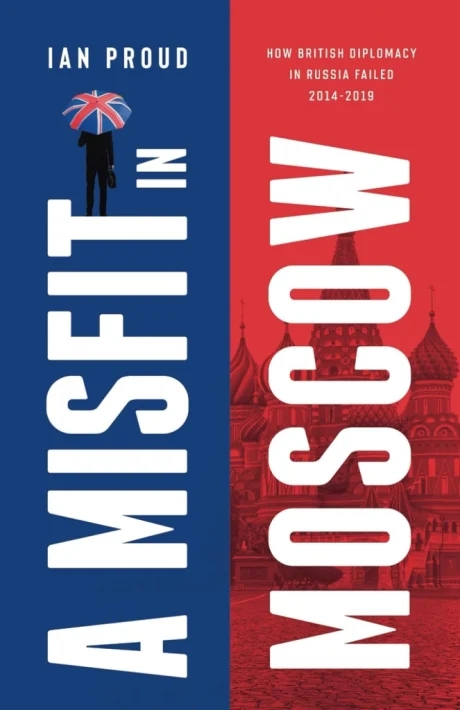
Ian Proud is a former British diplomat who served in the UK’s embassy in Moscow and was also responsible for organizing British sanctions against the Russian Federation. He has since left the Foreign Office, written his memoirs. and started a blog on which he regularly criticizes British policy towards Russia and declares the sanctions he enacted to be a total failure. You can read his blog here.
The memoirs are written in a light, engaging style, but contain a serious message. Proud argues that successive British governments have for a long time been totally uninterested in talking to Russia. He also paints a picture of British diplomats who not only mostly didn’t speak Russian but also weren’t interested in doing so. Dispatches to London, he claims, consisted largely of bits cut and paste out of media articles. One has to wonder about the quality of the intelligence that London was receiving.
Worth a read.
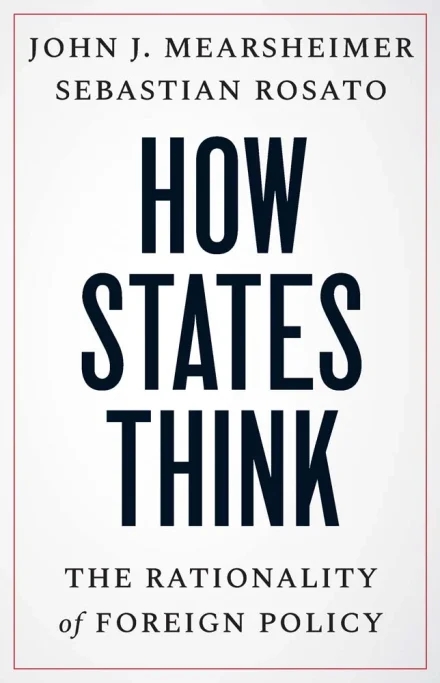
I used to teach a course titled ‘Irrationality and Foreign Policy Decision-Making’, which looked at all the ways that foreign policy decision processes deviated from the kind of rational actor models that public policy students are taught to follow.
It’s interesting, therefore, to come across a book that claims that all the stuff I taught is wrong and foreign policy is for the most part a rational endeavour. I can’t say that I was 100% convinced by this book, which I found a bit repetitive, and perhaps worthy more of an extended article than a full-length book. Still, if I ever teach that course again, I will have to bear what this says in mind and suggest it to my students.
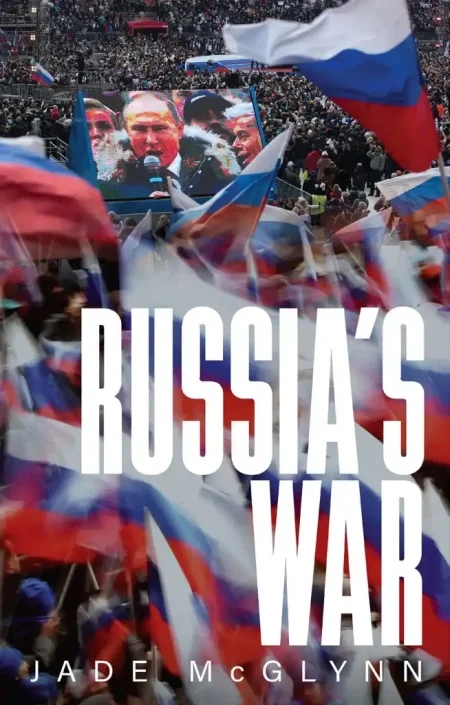
This one got a stinker of a review from Joy Neumeyer in the New Left Review, in which, among other things, Neumeyer accused author Jade McGlynn of plagiarizing her work. You can read that review here.
McGlynn’s basic argument is that the war in Ukraine is not Putin’s war but Russia’s war, as Putin and the war have broad support from the Russian population. I would generally agree, but the problem is that McGlynn then goes beyond this and tries to explain this phenomenon by recourse to a sort of Homo Sovieticus argument, namely that the reason why the Russian masses support Putin and the war is that they are psychologically retrograde.
Personally, I don’t see why it’s even necessary to write a whole book explaining the phenomenon. Populations everywhere tend to rally around the flag. It’s natural. And when they do, we don’t have to resort to explanations of the masses’ psychological failings. Why does Russians’ support for Putin mean that Russians are psychologically twisted in a way that Americans’ support for George W. Bush or Britons’ support for Tony Blair during the war in Iraq doesn’t?
By all means read ‘Russia’s War’ if you want, but I can’t say that I got anything useful from it.
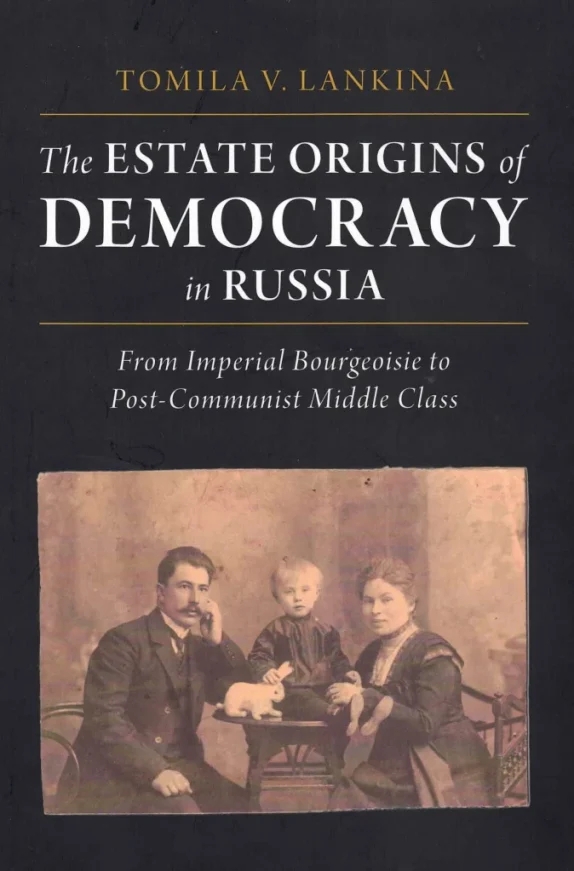
This one I haven’t actually read yet. It’s on my shelf awaiting a moment when I have spare time on my hands. The reason I got it is that the description of the book’s thesis seems fascinating. If I am understanding it right, author Tomila Lankina is claiming that there was an astonishing lack of social mobility in the upper middle classes in Russia in the twentieth century. It was more or less the same families who made up that class in Imperial Russia, Soviet Russia, and post-Soviet Russia. This existed alongside a newer, ‘inferior, second-class middle-class’ (as Lankina calls it) made up of ex-workers and peasants and their children, who rose up in the Soviet era. The two middle classes remained distinct, however, and it was the former that transmitted liberal values from the late Imperial era into the early post-Soviet one.
If true, this casts enormous doubt on the ability of governments of any hue to promote social mobility. Wealth and privilege, it seems, have a way of surviving even regimes dedicated to destroying them. Is it true? I guess I’ll have to read the book to find out.
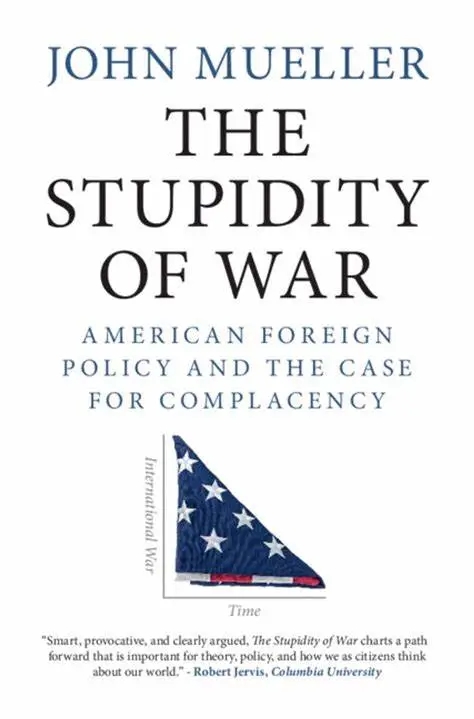
The title of this book – also still to be read – says it all. ‘The Stupidity of War’. Amen to that!
Writing
Some good news! I have another book on the way. It’s title has been confirmed as Russia’s World Order: How Civilizationism Explains the Conflict with the West. It will be published by Northern Illinois University Press (now an imprint of Cornell Univesity Press) on 15 April next year. It will be published as a trade book, and thus should be available at an easily affordable price. I will post the cover once it is available.
The latest Democracy Perception Index reveals shifts in global perceptions
By Ramzy Baroud | MEMO | May 21, 2024
The Democracy Perception Index (DPI) issued its 2024 report on 8 May, revealing important and interesting shifts in global perceptions about democracy, geopolitics and international relations. The conclusions in the report were based on the views of over 62,000 respondents from 53 countries, representing roughly 75 per cent of the world’s total population.
The survey was conducted between 20 February and 15 April this year, when the world was largely transfixed by the Israeli war against the Palestinians in the Gaza Strip.
It is important to note that the DPI, although informative, is itself conceived in a biased context as it is the product of a global survey conducted by western-based companies and organisations.
The DPI results were published ahead of a scheduled 2024 Copenhagen Democracy Summit, whose speakers will include Hillary Clinton, US Republican Senate leader Mitch McConnell and President of the European Council Charles Michel. The first speaker listed on the conference website is Anders Fogh Rasmussen, the Founder and Chairman of the Alliance of Democracies Foundation, which commissioned the DPI.
All of this is reflected in the kind of questions which are being asked in the survey, placing greater emphasis on whether, for example, ties should be cut with Russia over Ukraine, and China over a war that is yet to take place in Taiwan. Such major shortcomings notwithstanding, the outcome of the research remains interesting and worthy of reflection.
There are some major takeaways from the report. For a start, there is growing dissatisfaction with the state of democracy, and such discontent is not limited to people living in countries perceived as non-democratic; it also includes people in the US and Europe.
What’s more, democracy, in the collective awareness of ordinary people, is not a political term often infused as part of official propaganda. When seen from the viewpoint of the people, democracy is a practical notion, whose absence leads to dire implications. For example, 68 per cent of people worldwide believe that economic inequality at home is the greatest threat to democracy.
On the question of “threats to democracy”, there is growing mistrust of Global Corporations (60 per cent), Big Tech (49 per cent) and their resulting Economic Inequality (68 per cent), and Corruption (67 per cent). This leads to the unmistakable conclusion that western globalisation has failed to create the proper environment for social equality, empower civil society or build democratic institutions. The opposite, based on people’s own perceptions, seems to be true.
Then we have global priorities which, as seen by many nations around the world, remain committed to ending wars, poverty, hunger, combating climate change, etc. However, this year’s top priority among European countries, 44 per cent, is also centred on reducing immigration, a significant number compared with the 24 per cent who prioritise fighting climate change.
Although the world appears to be divided about cutting ties with Russia and China, the selection of the question again reeks with bias.
The respondents in western countries, who are subjected to relentless media propaganda, prefer cutting such ties, while most people in the rest of the world prefer keeping them. Consequently, due to China’s positive perception in Asia, the Middle East and North Africa, the DPI gave Beijing a “net positive”. Russia, on the other hand, is on the “path of image rehabilitation in most countries surveyed with the exception of Europe,” reported Politico.
The greatest decline was suffered by the United States, largely due to Washington’s support for Israel in its ongoing war in the Gaza Strip. “Over the past four years… perceptions of the US’s global influence became more positive – peaking in 2022 or 2023 – and then declined sharply in 2024,” the report concluded.
The large drop took place in the Muslim countries that were surveyed: Indonesia, Malaysia, Turkiye, Morocco, Egypt and Algeria. Some western European countries are also becoming more critical of the US, including Switzerland, Ireland and Germany.
Most people (55 per cent compared with 29 per cent) believe that social media has a positive effect on democracy. Despite growing social media censorship, many in the Global South still find margins in these platforms which allow them to escape official or corporate media censorship. Growing criticism of social media companies, however, is taking place in western countries, according to the survey.
Despite official propaganda emanating from many governments, especially in the west, regarding the greatest threats to world peace, the majority of people want their governments to focus on poverty reduction, fight corruption, promote economic growth, and improve healthcare and education, while working to reduce income inequality. “Investing in security and defence,” came seventh on the list.
Finally, people in countries which have an overall negative perception of the United States include some of the most influential global and regional powers, such as China, Russia, Indonesia, Austria, Turkiye, Australia and Belgium.
Despite massive media propaganda, censorship and scaremongering, people around the world remain clear on their collective priorities, expectations and aspirations, which are real democracy, social equality and justice. If these collective yearnings continue to be denigrated and ignored, we should expect more social upheaval, if not outright insurrections and military coups in coming years.
Featured Video

Racist Seinfeld Dances for Joy as Bibi Unveils His New Map
or go to
Aletho News Archives – Video-Images
TV Drama Review
Japanese drama projects Japan’s wartime atrocities onto Chinese characters

Global Times | October 25, 2026
By portraying Chinese characters as perpetrators of ruthless violence while casting Japanese Self-Defense Forces (SDF) intelligence operatives as defenders, the season 2 of the Japanese drama Vivant has recently drawn criticism from Chinese netizens, who argue that its depiction turns historical reality on its head while ignoring Japan’s wartime atrocities.
The TBS drama series – a spy suspense story in which an alleged unofficial intelligence unit of the SDF operates across the globe — has attracted a passionate fanbase. Its currently airing season 2 opened with a household rating of 18.8 percent, the highest for a TV drama this year, according toa commentary article by Japanese media Toyo Keizai.
What draws attention is the portrayal of the enemies in the series, the article noted. Scenes in which the Chinese organization subjects kidnapped members of the SDF unit to brutal torture are repeated with unrelenting intensity.
It is rare for Japanese TV dramas to explicitly portray a real-life country as the enemy, the article noted.
Japanese Prime Minister Sanae Takaichi also made a reference to the drama, saying that she has been recording Vivant and hopes to binge-watch it over the year-end and New Year holidays, according to Japanese media outlets.
China’s CCTV News report on Sunday revealed that the drama features scenes in which Chinese personnel cut off the fingers of and stab Japanese intelligence operatives in the abdomen. Such acts bear striking similarities to the torture inflicted on Chinese nationals by invading Japanese troops during the World War II.
The drama distorts the truth by attributing these atrocities to modern Chinese characters. Beneath the surface, it subtly glorifies Japan’s cross-border overseas operations, blurs the functional boundaries of the SDF and implicitly promotes an expansionist narrative, per CCTV News. … continue
Blog Roll
 Aletho News
- Iran FM Araghchi: “Hormuz Will No Longer Be the Same”
- EU facing trillion-euro debt hole while seeking more cash for Kiev
- How US, Europe, Persian Gulf states exhausted missile stockpiles, splurged billions to defend Israel
- Up in arms… Koreans reject U.S. empire’s plan to make South Korea the next Ukraine
- Iran, Turkey, Pakistan, Saudi Arabia could advance region-led security framework in Tehran: FM spox
- Netizens condemn Japanese drama for projecting Japan’s wartime atrocities onto Chinese characters
- Racist Seinfeld Dances for Joy as Bibi Unveils His New Map
- A West Bank War for Netanyahu’s Election Campaign, Could It Backfire?
- Yemen denounces European Parliament’s ‘hypocritical’ push to blacklist Ansarullah
- Qalibaf: UAE’s UN bid aims to ‘clear the runway’ for ‘Greater Israel’, whitewash genocide
- If Americans Knew
- An error has occurred; the feed is probably down. Try again later.
- No Tricks Zone
- Sudden Stratospheric Warming, Powerful El Niño Combination May Lead To Extreme Europe Cold, Energy Crisis!
- Two New Studies Find Thwaites Glacier Melt Cannot Be Driven By Human Activity Or A Warming Ocean
- E-Cars Reduce CO2 Emissions By Only 41% Compared To Internal Combustion Engine Vehicles
- Predictions Made By Renowned Climate Professor Over Past Decades Have Been Proven To Be Poor
- New Study Suggests Large Regions Of The Pacific Ocean Have Been Cooling For The Last 80 Years
- Germany’s Green Energy Debacle: High Energy Costs Force Kahla Porzellan to Close After 182 Years!
- New Study: 50 Years Of The Most Aggressive ‘Net Zero’ Policies Can Only Affect The Global Climate By 0.03°C
- US September “Heat” Was No Record…Many Records Set Decades Ago
- Latest European Green Energy Debacle; Portugal’s Largest Flagship Solar Park Insolvent!
- Green Energy Debacle: German Expert Professor Fritz Vahrenholt Warns Of Severe Economic And Social Consequences

