Russia proposes global space monitoring system
RT | May 24, 2024
Russia has floated the idea of creating a global space monitoring system to provide early warning about celestial threats, Yury Borisov, the head of Russian space agency Roscosmos, has revealed.
The proposal was made during a two-day summit of the space agency chiefs of the BRICS member states in Moscow, Borisov told RT on the sidelines of the event on Friday.
“The Russian proposal to create a global space monitoring system to determine threats, from both natural and artificial objects, has sparked genuine interest. We’re talking about protection from debris, asteroids,” the space boss explained.
The proposed system would not be limited to BRICS states only, as creating it would require the joint effort of many countries around the world, Borisov suggested.
“Such a system can be built only as a global system, since a lot of sensors are needed on the ground all around the globe, as well as space components to ensure reliability for decision making in case of close encounters with any dangerous objects,” he stressed.
The system would involve a “joint informational environment,” with participants contributing the readings from installations located in their countries and receiving in return access to the aggregated data from the whole project.
“The system is an open one, we are not seeking to seclude ourselves. We will call upon all the nations that will deem it possible to participate to join the system, and we will accept them,” Borisov said.
The official also spoke about the summit itself, hailing the event as an important milestone for the group in the field of space cooperation. The BRICS member states are expected to adopt a joint declaration on the matter during the summit of leaders in September, Borisov revealed, a statement that will reaffirm the group’s commitment to peaceful exploration of space and rejection of it being militarized.
“Almost all the participants of our forum have already confirmed their commitment to making such a statement,” he added.
China and Brazil Offer Their Own Peace Plan as Western ‘Ukraine Summit’ Fumbles
By Svetlana Ekimenko – Sputnik – 25.05.2024
Moscow was not invited to participate in the “peace conference” that Switzerland will host on June 15-16. Russian officials have noted that it was conceived as another effort to “push through the unworkable ‘peace formula’ that ignores Russian interests.” Furthermore, any negotiating process on Ukraine without Russia’s involvement is “meaningless.”
The upcoming gathering dubbed a Ukraine “peace summit” in Switzerland is being undercut on all sides.
Brazil and China announced a rival initiative on Friday, further demoting Ukrainian President Volodymyr Zelensky’s conference aimed at pushing through his unworkable “peace formula.”
The two countries support an international peace conference “held at a proper time that is recognized by both Russia and Ukraine, with equal participation of all parties as well as fair discussion of all peace plans,” they said in a statement.
The joint document was signed by Celso Amorim, special adviser to Brazilian President Luiz Inacio Lula da Silva, and Chinese Foreign Minister Wang Yi, and stated:
- Dialogue and negotiation are the only viable solution to the Ukraine crisis.
- Conditions should be created for resumption of direct dialogue, with de-escalation until a comprehensive ceasefire is in effect.
- An international peace conference should be held with participation of both Russia and Ukraine.
- Attacks on civilians and civilian facilities must be avoided.
- Targeting nuclear power plants and other peaceful nuclear facilities must be opposed.
- Use of weapons of mass destruction, particularly nuclear weapons and chemical and biological weapons, must be opposed.
- All possible efforts must be made to prevent nuclear proliferation and avoid nuclear crisis.
- The world should not be divided “into isolated political or economic groups,” the two countries stated.
The initiative from Brazil and China came after their presidents refused to attend the Ukraine “peace summit” set for June 15 to 16. The event in Lucerne is plagued by major no-shows. Joe Biden’s attention has been diverted to more pressing issues such as rubbing elbows with Hollywood celebs at his fundraiser.
Besides the leaders of Brazil and China, South Africa has also refused to attend the event. Moscow has dismissed the conference, to which it was not invited, as “meaningless.” Kremlin spokesman Dmitry Peskov said that the conference is clearly not result-oriented, as it is impossible to have effective talks on Ukraine without Russia’s participation.
As far as the upcoming talks in Switzerland are concerned, Russia’s President Vladimir Putin suggested that they constitute an effort by the Kiev regime’s patrons to confer legitimacy on Zelensky now that his legal term as president has expired.
Putin emphasized at Friday’s press conference that Russia remains ready to resume peace negotiations with Ukraine, including based on the draft agreements inked during talks in Belarus and Turkiye in the spring of 2022, but accounting for the current realities on the ground.
Regarding Zelensky’s 10-point peace plan, it is nothing but an ultimatum to Russia, Foreign Minister Sergey Lavrov noted on Wednesday as he chaired a meeting of BRICS sherpas and sous-sherpas in Moscow. He added that the US was imposing Zelensky’s formula on everyone, inviting countries of the Global South to its platforms, such as the upcoming Lucerne meeting.
Russia’s top diplomat also revealed that the Ukrainian president “hysterically” demanded that other nations back his proposed “peace formula” ahead of the gathering.
UK ‘fueling flames’ of Ukraine conflict – China
RT | May 23, 2024
The UK and its allies should stop “fueling” the Ukraine conflict instead of shifting the blame onto others, Chinese Foreign Ministry spokesman Wang Wenbin said on Thursday. His comments came after London accused Beijing of providing “lethal aid” to Russia in its military effort against Kiev.
UK Secretary of State for Defense Grant Shapps claimed on Wednesday that Russia and China are “collaborating on combat equipment for use in Ukraine.” Shapps further alleged that he has “new evidence” provided by the US and British intelligence services which shows “lethal aid is now flying from China to Russia.”
Responding on Thursday Chinese Foreign Ministry spokesman Wang said Beijing “condemns the groundless and irresponsible smear campaign against China by British politicians,” noting that Shapps’ remarks have not been supported by Washington. Speaking at a daily White House press briefing on Thursday, the US national security adviser, Jake Sullivan, said Washington had not seen evidence of China directly providing weapons to Russia.
“It is the UK, not China, that is adding fuel to the flames on the Ukrainian issue… As early as two years ago, Russia and Ukraine were close to reaching an agreement on ending the conflict, but it was precisely because of the hurdles placed by the UK and other parties that the conflict continues to this day,” Wang stated. He urged London to rethink its own role in the conflict instead of “attacking China without reason.”
Wang reiterated that Beijing has “always stood on the side of peace and dialogue,” and vowed that China will continue its work to promote a diplomatic solution for the conflict.
Beijing has adhered to a policy of neutrality on the Ukraine conflict, and has firmly rebuffed Western calls to impose sanctions on Russia, opting instead to boost trade with its neighbor. This has led to accusations from the UK and its NATO allies that Beijing is fueling Russia’s military effort by supplying it with dual-use components that can be used for weapons production.
Beijing has repeatedly denied the accusations, stating that Russia and China have a right to trade. Wang earlier accused the West, which itself supplies the bulk of Kiev’s military equipment, of hypocrisy. He suggested that the US, UK, and other Western powers should work on bringing Russia and Ukraine to the negotiation table, instead of “shifting the blame” onto China for the continued hostilities.
Moscow has consistently spoken out against Western military aid for Kiev, arguing that it merely prolongs the conflict without changing its eventual outcome. During an official visit to China earlier this month, Russian President Vladimir Putin issued a joint statement with Chinese leader Xi Jinping in which they reiterated their stance that the Ukraine conflict “must be resolved by political means.”
WRITING AND READING
BY PAUL ROBINSON | IRRUSSIANALITY | MAY 22, 2024
In case anybody is interested in the inputs and outputs of my intellectual life, here is a little update on what I have been writing and reading.
Reading
Here are a few things I have read recently that might be of interested to purveyors of this site:
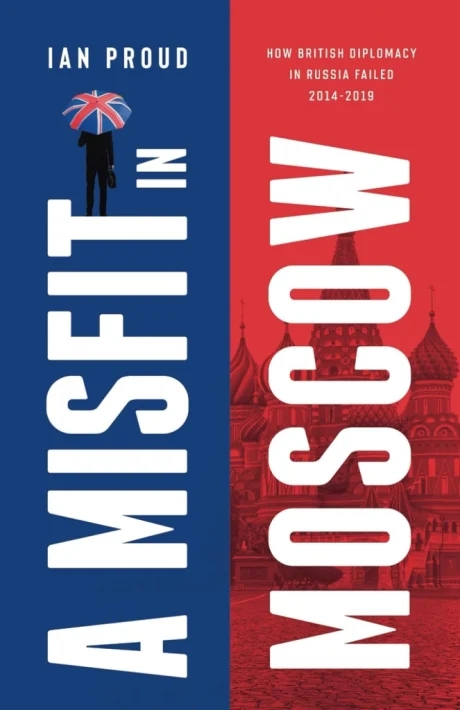
Ian Proud is a former British diplomat who served in the UK’s embassy in Moscow and was also responsible for organizing British sanctions against the Russian Federation. He has since left the Foreign Office, written his memoirs. and started a blog on which he regularly criticizes British policy towards Russia and declares the sanctions he enacted to be a total failure. You can read his blog here.
The memoirs are written in a light, engaging style, but contain a serious message. Proud argues that successive British governments have for a long time been totally uninterested in talking to Russia. He also paints a picture of British diplomats who not only mostly didn’t speak Russian but also weren’t interested in doing so. Dispatches to London, he claims, consisted largely of bits cut and paste out of media articles. One has to wonder about the quality of the intelligence that London was receiving.
Worth a read.
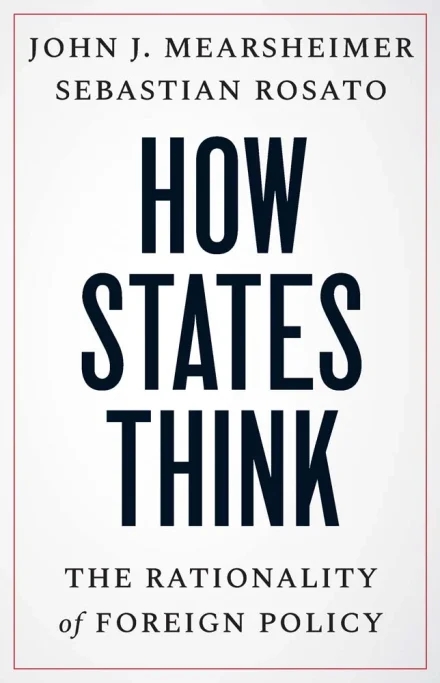
I used to teach a course titled ‘Irrationality and Foreign Policy Decision-Making’, which looked at all the ways that foreign policy decision processes deviated from the kind of rational actor models that public policy students are taught to follow.
It’s interesting, therefore, to come across a book that claims that all the stuff I taught is wrong and foreign policy is for the most part a rational endeavour. I can’t say that I was 100% convinced by this book, which I found a bit repetitive, and perhaps worthy more of an extended article than a full-length book. Still, if I ever teach that course again, I will have to bear what this says in mind and suggest it to my students.
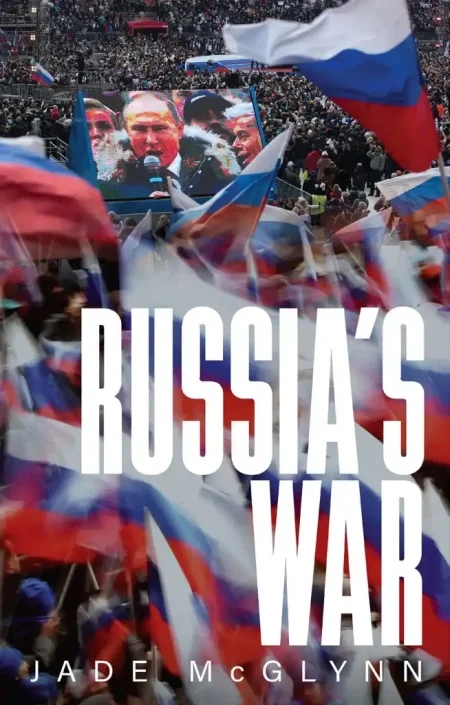
This one got a stinker of a review from Joy Neumeyer in the New Left Review, in which, among other things, Neumeyer accused author Jade McGlynn of plagiarizing her work. You can read that review here.
McGlynn’s basic argument is that the war in Ukraine is not Putin’s war but Russia’s war, as Putin and the war have broad support from the Russian population. I would generally agree, but the problem is that McGlynn then goes beyond this and tries to explain this phenomenon by recourse to a sort of Homo Sovieticus argument, namely that the reason why the Russian masses support Putin and the war is that they are psychologically retrograde.
Personally, I don’t see why it’s even necessary to write a whole book explaining the phenomenon. Populations everywhere tend to rally around the flag. It’s natural. And when they do, we don’t have to resort to explanations of the masses’ psychological failings. Why does Russians’ support for Putin mean that Russians are psychologically twisted in a way that Americans’ support for George W. Bush or Britons’ support for Tony Blair during the war in Iraq doesn’t?
By all means read ‘Russia’s War’ if you want, but I can’t say that I got anything useful from it.

This one I haven’t actually read yet. It’s on my shelf awaiting a moment when I have spare time on my hands. The reason I got it is that the description of the book’s thesis seems fascinating. If I am understanding it right, author Tomila Lankina is claiming that there was an astonishing lack of social mobility in the upper middle classes in Russia in the twentieth century. It was more or less the same families who made up that class in Imperial Russia, Soviet Russia, and post-Soviet Russia. This existed alongside a newer, ‘inferior, second-class middle-class’ (as Lankina calls it) made up of ex-workers and peasants and their children, who rose up in the Soviet era. The two middle classes remained distinct, however, and it was the former that transmitted liberal values from the late Imperial era into the early post-Soviet one.
If true, this casts enormous doubt on the ability of governments of any hue to promote social mobility. Wealth and privilege, it seems, have a way of surviving even regimes dedicated to destroying them. Is it true? I guess I’ll have to read the book to find out.
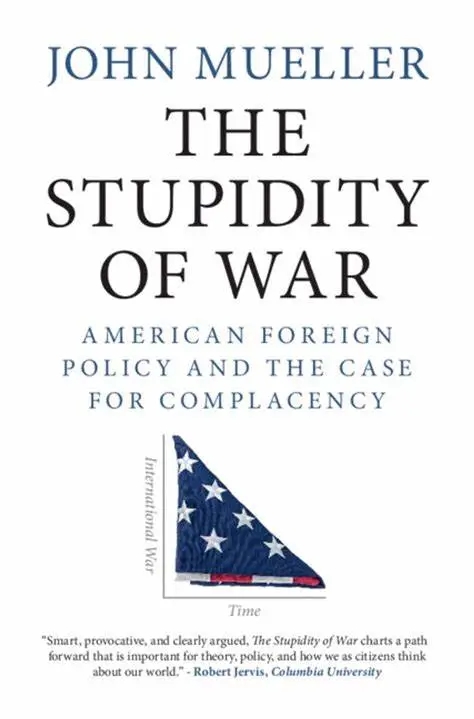
The title of this book – also still to be read – says it all. ‘The Stupidity of War’. Amen to that!
Writing
Some good news! I have another book on the way. It’s title has been confirmed as Russia’s World Order: How Civilizationism Explains the Conflict with the West. It will be published by Northern Illinois University Press (now an imprint of Cornell Univesity Press) on 15 April next year. It will be published as a trade book, and thus should be available at an easily affordable price. I will post the cover once it is available.
The latest Democracy Perception Index reveals shifts in global perceptions
By Ramzy Baroud | MEMO | May 21, 2024
The Democracy Perception Index (DPI) issued its 2024 report on 8 May, revealing important and interesting shifts in global perceptions about democracy, geopolitics and international relations. The conclusions in the report were based on the views of over 62,000 respondents from 53 countries, representing roughly 75 per cent of the world’s total population.
The survey was conducted between 20 February and 15 April this year, when the world was largely transfixed by the Israeli war against the Palestinians in the Gaza Strip.
It is important to note that the DPI, although informative, is itself conceived in a biased context as it is the product of a global survey conducted by western-based companies and organisations.
The DPI results were published ahead of a scheduled 2024 Copenhagen Democracy Summit, whose speakers will include Hillary Clinton, US Republican Senate leader Mitch McConnell and President of the European Council Charles Michel. The first speaker listed on the conference website is Anders Fogh Rasmussen, the Founder and Chairman of the Alliance of Democracies Foundation, which commissioned the DPI.
All of this is reflected in the kind of questions which are being asked in the survey, placing greater emphasis on whether, for example, ties should be cut with Russia over Ukraine, and China over a war that is yet to take place in Taiwan. Such major shortcomings notwithstanding, the outcome of the research remains interesting and worthy of reflection.
There are some major takeaways from the report. For a start, there is growing dissatisfaction with the state of democracy, and such discontent is not limited to people living in countries perceived as non-democratic; it also includes people in the US and Europe.
What’s more, democracy, in the collective awareness of ordinary people, is not a political term often infused as part of official propaganda. When seen from the viewpoint of the people, democracy is a practical notion, whose absence leads to dire implications. For example, 68 per cent of people worldwide believe that economic inequality at home is the greatest threat to democracy.
On the question of “threats to democracy”, there is growing mistrust of Global Corporations (60 per cent), Big Tech (49 per cent) and their resulting Economic Inequality (68 per cent), and Corruption (67 per cent). This leads to the unmistakable conclusion that western globalisation has failed to create the proper environment for social equality, empower civil society or build democratic institutions. The opposite, based on people’s own perceptions, seems to be true.
Then we have global priorities which, as seen by many nations around the world, remain committed to ending wars, poverty, hunger, combating climate change, etc. However, this year’s top priority among European countries, 44 per cent, is also centred on reducing immigration, a significant number compared with the 24 per cent who prioritise fighting climate change.
Although the world appears to be divided about cutting ties with Russia and China, the selection of the question again reeks with bias.
The respondents in western countries, who are subjected to relentless media propaganda, prefer cutting such ties, while most people in the rest of the world prefer keeping them. Consequently, due to China’s positive perception in Asia, the Middle East and North Africa, the DPI gave Beijing a “net positive”. Russia, on the other hand, is on the “path of image rehabilitation in most countries surveyed with the exception of Europe,” reported Politico.
The greatest decline was suffered by the United States, largely due to Washington’s support for Israel in its ongoing war in the Gaza Strip. “Over the past four years… perceptions of the US’s global influence became more positive – peaking in 2022 or 2023 – and then declined sharply in 2024,” the report concluded.
The large drop took place in the Muslim countries that were surveyed: Indonesia, Malaysia, Turkiye, Morocco, Egypt and Algeria. Some western European countries are also becoming more critical of the US, including Switzerland, Ireland and Germany.
Most people (55 per cent compared with 29 per cent) believe that social media has a positive effect on democracy. Despite growing social media censorship, many in the Global South still find margins in these platforms which allow them to escape official or corporate media censorship. Growing criticism of social media companies, however, is taking place in western countries, according to the survey.
Despite official propaganda emanating from many governments, especially in the west, regarding the greatest threats to world peace, the majority of people want their governments to focus on poverty reduction, fight corruption, promote economic growth, and improve healthcare and education, while working to reduce income inequality. “Investing in security and defence,” came seventh on the list.
Finally, people in countries which have an overall negative perception of the United States include some of the most influential global and regional powers, such as China, Russia, Indonesia, Austria, Turkiye, Australia and Belgium.
Despite massive media propaganda, censorship and scaremongering, people around the world remain clear on their collective priorities, expectations and aspirations, which are real democracy, social equality and justice. If these collective yearnings continue to be denigrated and ignored, we should expect more social upheaval, if not outright insurrections and military coups in coming years.
Dubious Eagle: Why Has Pentagon Pumped $756 Mln Into Hypersonic Missile That Doesn’t Fly?
By Ilya Tsukanov – Sputnik – 22.05.2024
The US Army has been teasing the deployment of its ground-based Long-Range Hypersonic Weapon (LRHW) system since 2021, with the system touted as the Pentagon’s first nearly operational hypersonic missile amid development delays and cancellations plaguing nearly a dozen similar projects for and by the Army, Air Force, Navy, and DARPA.
The US Army has awarded Lockheed Martin another $756 million for its delay-plagued LRHW “Dark Eagle” program, with the contract involving the provision of battery equipment, unspecified logistics, systems, and software engineering support.
In development since 2017, the LRHW’s $41 million apiece truck-launched missiles are expected to be able to accelerate to speeds up to Mach 17, and boast a 3,000 km operational range. The system uses the common All Up Round (AUR) munition also used in the Navy’s Conventional Prompt Strike (CPS) program.
But like other US hypersonic missile efforts to date, Dark Eagle has become a somewhat “Dubious Eagle” after a string of testing issues. The Congressional Research Office has counted at least five failures to date:
- In October 2021, an LRHW test failed when the Common-Hypersonic Glide Body (C-HGB) did not deploy.
- In June 2022, the complete LRHW missile system suffered another test failure.
- A scheduled LRHW test was canceled in October 2022 to “assess the root cause” of the June 2022 failure.
- In March 2023, a scheduled test launch from the Cape Canaveral Space Force Station in Florida was scrapped.
- A second planned test at Cape Canaveral was canceled in September 2023, followed by an Army statement that it would not be able to meet the goal of deploying Dark Eagle in the current fiscal year.
- A November 2023 review by Army and Navy acquisition execs blamed the delays on unspecified “problems” with the Lockheed-made launcher, and said the issues would take “months” to iron out.
The poor track record of US hypersonic missile programs to date has been surprising, given the tens of billions of dollars in research and development funding lavishly doled out by Congress in annual defense budgets – which typically outpace the defense spending of all of Washington’s major adversaries combined.
Last month, veteran Russian defense observer and missile expert Dmitry Drozdenko told Sputnik that the reason hypersonic weapons are so difficult to develop comes down not to the ability to accelerate vehicles to hypersonic speeds (which has been possible since virtually the dawning of the missile age), but creating materials that can withstand the ultra-hot temperatures hypersonic missiles encounter during flight – when they are covered by clouds of plasma. The USSR was leagues ahead of the US in the study of plasma physics during the Cold War, with Russia inheriting this invaluable knowledge and putting it to good use to field its first-in-the-world hypersonic missiles.
“Technologies are developed by people,” Drozdenko explained. “Money is one means of developing a technology, but it can happen that a technology is created with a minimum amount of funds. It can turn out that you have a lot of money, but the technology doesn’t work out. Therefore, money is not the main thing here. The main thing is people, and having the appropriate academic knowledge,” the observer said.
Failure in Ukraine presents the West with a clear yet difficult choice
By Sergey Poletaev | RT | May 22, 2024
In our last article, we analyzed Kiev’s military prospects in light of its new mobilization law. Here we consider the West’s options in the proxy war it’s using the Armed Forces of Ukraine (AFU) to fight.
Western officials have been talking about sending troops to Ukraine since the beginning of the year. French President Emmanuel Macron said that he is ready to consider “any scenario,” including a ground operation. Government officials in Estonia and Lithuania (including Prime Minister Ingrida Simonyte) were quick to support him. And the Leader of the House Democratic Caucus Hakeem Jeffries became the first US politician who didn’t exclude the possibility of sending troops.
Formally, Ukraine hasn’t requested Western troops – Kiev has only demanded more weapons. But now, the New York Times reports that Kiev has officially asked the US and NATO to send military instructors to train 150,000 recruits on its territory, closer to the front line. Though the US has refused to comply with the request, the chairman of the Joint Chiefs of Staff, General Charles Q. Brown Jr, has said that a NATO deployment of trainers appears inevitable, and that “we’ll get there eventually, over time.”
The subject of sending troops to Ukraine comes up quite often but, so far, Western countries have steered clear. Why? Is a full-fledged NATO intervention in Ukraine possible and what would happen if it took place? And how else might the West turn the course of the conflict in its favor?
A larger-than-life bet
Western doctrine in regard to Russia was defined even before the start of the full-scale conflict: the idea was to fight Russia “with the hands of” Ukraine and on Ukrainian territory. The goal was to force Russia to play by Western rules (ideally, by defeating it on the battlefield) and reassert the US-led bloc’s shaky global hegemony. But, at the same time, officials wanted to minimize their own risks and avoid being drawn into a direct military confrontation that could result in a nuclear war.
The second staple of this doctrine – a total trade war – has not yielded the desired results. In 2022, it became clear that the West overestimated the degree of its control not only over the international financial system, but even over its own financial flows. Despite certain losses and additional costs, Russia has been able to replace old trade ties with new ones and to do so with a minimal loss of revenue. The severe sanctions imposed by the West on its own companies turned out to be quite useless, since for the most part Russia continues to receive the latest Western products and technologies.
As for the idea of defeating Russia on the battlefield, the turning point occurred in the summer of 2023. After the failure of Ukraine’s counteroffensive, it became clear that the AFU would not be able to impose peace on its own terms. The problem is that in the conflict with Russia, the West has gone ‘all in’ and any military outcome that could be regarded as beneficial for Moscow – even negotiations on an equal footing – would now be regarded as a defeat. The whole world would realize that they can stand up to the hegemon and not just avoid becoming an outcast, but even gain some benefits. The West cannot allow this, since it could cause a chain reaction on a global scale.
Two options
By the beginning of 2024, Western countries faced a dilemma: In the current proxy war it was clear that they were losing and Ukraine was getting weaker, while Russia was growing stronger. Western leaders realized that the situation will continue to get worse until the middle or end of 2025 – by which time their own military production should gain momentum and Moscow may begin to experience a shortage of volunteers at the front. In other words, the worst-case scenario meant that Russia would be able to conduct at least three more successful military campaigns (summer and winter ‘24, and summer ‘25) with superior military forces.
The logic of the conflict is pushing the West towards the choice that we wrote about back in May 2022 – either intervening directly and fighting Russia on its own, or starting serious negotiations with Russia on the topic of Ukraine’s NATO membership and, more broadly, security in Eastern Europe.
Paradoxically, though, the West has chosen a third option: doing nothing. And it’s not just because of inertia, but also down to the weakening position of globalist elites, who have many unsuccessful ‘crusades for democracy’ behind them, from Vietnam to Afghanistan.
As of now, the AFU is growing weaker, the scale of the hostilities is growing, and the chances of the West directly entering the war, with potentially catastrophic consequences, are increasing every day. In the fall of 2022, before the limited mobilization in Russia, 10-15 NATO brigades could have turned Ukraine’s notable but rather meaningless victories near Kharkov and Kherson into a strategic success – for example, they could’ve ensured a breakthrough to the Azov Sea and a subsequent blockade of Crimea – but now it would take a lot more effort to simply support the front.
Fooling the system
The reason for the West’s indecisiveness is clear: it fears an escalation of the conflict. Russia is the world’s largest nuclear power and President Vladimir Putin has repeatedly stated that he will not tolerate a widespread NATO intervention, which will result in a nuclear war.
Moscow’s warnings have challenged Western countries, headed by the US, to find ways “to intervene without intervening” and to enable Ukraine to win (or at least save face) without directly defeating Russia. In short, Western countries are forced to walk the thin line between defeat and nuclear war, without a clear end goal in sight.
After the failure to cut open a land corridor to Crimea, the West has not been able to find an alternative military strategy. Moreover, it has no idea how to get out of the war of attrition which, even in the case of a positional deadlock and a ‘static’ front, will result in Ukraine’s defeat, since an opponent that is many times weaker (Ukraine’s current population is at least five times less than that of Russia) will inevitably lose. We see plenty of such examples in history.
In this situation, the only thing that Western strategists have managed to come up with is to continue supporting the AFU and “increase costs” for Russia in the hope that Putin will get tired of fighting. Of course, no one in the West takes Ukraine’s suffering into account. It takes for granted the fact that Ukrainians will continue to die en masse just so that the West can save face. Neither do they care about Ukraine’s demographic and social collapse (unprecedented in post-WWII Europe) or the destruction of its infrastructure, which will prevent not only a normal economy but even normal life in these territories for many decades. Such issues are simply ignored or considered collateral damage.
The West may not explicitly state its strategy in regard to Russia, but it is clearly expressed in various publications and statements: the goal is to support the AFU at the front and at the same time move the conflict deeper into Russian territory in the hope that Putin will beg for mercy before Ukraine collapses.
It is unlikely that Western leaders still hope to see a victory for Kiev on the battlefield. The more likely goal now is either the “Korean scenario” where no one wins and Ukraine is kept as Russia’s opponent, or the “Palestinian scenario,” ie, eternal war on Ukraine’s former territory. What is clear is that the West will do anything it can to avoid holding serious negotiations with Russia.
War of the cities
Despite the growing escalation and the West’s increasing involvement in the conflict, one red line still exists: Ukraine is not allowed to hit Russia’s”old” territories – ie, those territories which the West recognizes as part of Russia – with Western missiles.
However, the ways in which Ukraine (with the West’s approval) circumvents this ban resemble the methods of an ingenious lawyer who finds the most unexpected loopholes in laws. For example, if “territory” is interpreted as “land” then air targets are not considered “territory” and Ukraine may hit air targets in internationally recognized Russian airspace; if a long-range drone has Western components and Western targeting, but was assembled in Ukraine, this also doesn’t count; and if Western weapons are used under a false flag (for example, by the Ukraine-based paramilitary group Russian Volunteer Corps) – this is fine, too. Of course, there are many such examples.
Why so? It is unknown whether any clear agreements regarding this issue exist but, in any case, Moscow has clearly stated that any obvious attacks on its “old” territories will allow Russia to retaliate and hit Western cities directly – not through proxies.
In military terms, the AFU will hardly benefit from such an escalation. Firstly, by resorting to such strikes, the Ukrainian army won’t change the strategic situation at the front, just as bombing Russia’s “new territories” and Crimea with all sorts of weapons hasn’t helped.
Secondly, the supply of Western missiles is not enough to overload Russian missile defense systems and achieve real military goals. Even though occasional missiles hit its territory, Moscow has adapted to the situation, takes measures to prevent future attacks, and carries out retaliatory strikes.
In other words, by striking Russian cities, (an unheard-of idea even in the most intense years of the Cold War), the West will not achieve anything but will only face increased risks and an escalation which it wishes to avoid.
However, it is possible that the desperate situation at the front and the need for some kind of propaganda success will sooner or later force the West to take such a step – and perhaps this may happen very soon. So far, this seems to be the most likely scenario that may lead to an escalation of the conflict beyond the zone of the Ukrainian “sandbox.”
Boots on the ground
And what about sending troops to Ukraine – will the West actually do it? This is unlikely. As pointed out already, in the past two years the scale of the conflict has changed and, in order to achieve success, NATO would now need to send dozens of brigades to Ukraine (at least 100,000-150,000 people), several hundred aircraft, and launch huge cruise missile attacks (hundreds of volleys per day).
Finally, even though such efforts might stabilize the situation at the front and save the AFU (supposing that the Kremlin does not declare a greater or even full mobilization in response), it would not guarantee Russia’s defeat but would only bring nuclear war closer.
In a direct intervention, NATO ground forces (just like Ukrainian ones today) will eventually face a shortage of ammunition and, in the air, NATO forces will suffer damage from Russian missile defense systems and will be exposed to attacks (currently, NATO reconnaissance operates over the Black Sea without any obstacles). Moreover, conflict with China also looms on the horizon and, if NATO empties its arsenals in Ukraine, China may either watch the situation unfold or offer Russia direct assistance.
As a result, NATO countries would find themselves in a positional conflict with heavy losses and unclear goals. Eventually, though, this may help to resolve the contradictions between Russia and the West, since, like a stubborn child, the US-led bloc may feel it has to try all means of resistance before giving in.
Another option for the West would be to move troops to Ukraine “symbolically”– for example, to send one or two brigades that would serve as instructors for AFU recruits (though it must be said that, two years into the war, the veterans on both sides of the front line are the ones who should teach the rest of the world, including NATO, how to fight), or just maintain aircraft.
Of course, it goes without saying that any third-country troops stationed in Ukraine will become a military target for Russia.
***
In conclusion, we may say that the Western doctrine – ie, the combination of a total trade war and a proxy war – has failed to bring about victory and has put its “client” (Ukraine) at risk of a major defeat. The West is still afraid to get directly involved in the conflict, even when it comes to striking “old” Russian territories or operating missile defense systems under its own flag, not to mention directly sending troops.
At the same time, the West avoids serious negotiations with Russia and prefers to go with the flow, consoling itself with the idea that Russia will eventually get burned by growing costs and retreat.
Meanwhile, Moscow is adapting to the situation, rebuilding its economy, trade relations, and society in order to live and successfully develop in the reality of a long conflict. The West’s strategy (or rather, the absence of such) has been clearly unsuccessful – especially considering the current level of involvement in the conflict, Ukraine may exhaust its forces long before Russia experiences any major inconvenience at the front.
Sergey Poletaev is an information analyst and publicist, co-founder and editor of the Vatfor project.
The failure of Western financial sanctions
By Mauricio Metri | Strategic Culture Foundation | May 21, 2024
On March 24, 2024, some newspapers reported the 25th anniversary of the plane’s U-Turn over the Atlantic, with the then-Russian foreign minister, Yevgeny Primakov, due to the kick-off NATO bombings over Serbia, without approval from the UN Security Council. Amid the onslaught against Belgrade, NATO forces deliberately struck the Chinese embassy. Beijing hasn’t forgotten the date, and on May 7, 2024, President Xi Jinping was in the capital of Serbia to pay his respects to the dead and pass a message to the West. These events determined the beginning of Russia’s reconstruction, the acceleration of the Chinese rise process, and the deepening of Sino-Russian partnerships (1).
During this period, starting from economic fragility and a military delay position concerning the USA, Russia established a strategic advantage in weapons in 2018 by developing hypersonic weapons. It also rebuilt its national economy, circumventing unprecedented economic sanctions against it. Despite the sanctions, Russia’s economy expanded significantly in 2023 compared to other North Atlantic countries. This year, the IMF corrected its forecasts for Russia, doubling its estimates upward.
The financial sanctions policy is one of the expressions of the monetary power of the dollar in the international system, especially after the Bush Doctrine of 2002 (2). However, the effectiveness of Washington’s economic sanctions regarding its foreign policy objectives has been very low, not to say null. For example, despite the severe sanctions introduced in 2007, Iran has acquired the ability to resist and develop an adequate offensive military capacity, allowing it to change the balance of forces in Southwest Asia. A month ago, on April 12, 2024, Tehran abandoned its “policy of strategic patience” and revealed to the world, through the missile attack, its ability to pierce the Israeli anti-aircraft defense system.
The main targets of U.S. sanctions (Russia, Iran, North Korea, Venezuela, and Cuba) have generally succeeded in withstanding this kind of violence, and one of the most relevant reasons for this is China’s rise to the status of the largest economy, surpassing the U.S. one. In 2023, China’s share of world GDP based on purchasing power parity reached 18.73%, while that of the USA was 15.56%. Due to its dynamism, size, and sophistication, the Chinese economy made bypassing the payment systems controlled by Washington possible. For instance, after the start of Russian military intervention in Ukraine, when one imposed unprecedented sanctions, Sino-Russian trade grew 64%, reaching a record U.S. $240 billion in 2023.
Not for any other reason, on April 8, 2024, U.S. Treasury Secretary Janet Yellen, visiting Beijing, threatened Chinese companies, stating, “There will be significant consequences for companies that provide material support to Russia. Those who do not comply will face the consequences”.
The Chinese response came a few days later when Russian Foreign Minister Sergey Lavrov visited Beijing. Both countries committed to maintaining the stability of the industrial supply chain, including Chinese material support for Russia’s war against Ukraine and the Russian defense industrial base. According to the Chinese Ministry of Foreign Affairs, Moscow and Beijing “reinforced calls for their two countries to work more closely together against ‘hegemonism.’”
A few weeks later, once again in Chinese territory, a U.S. authority reiterated Washington’s threats. The U.S. Secretary of State, Antony Blinken, in a statement during his official visit to China, stated, “The United States is ready to take new measures and impose sanctions against China and the background of the situation in Ukraine. (…) If China does not take measures to solve this problem, the U.S. will do it.”
Washington’s persistent threats reveal a well-established consensus in the North Atlantic that, on the one hand, the dollar’s power as an instrument of economic sanctions has been eroding continuously. On the other hand, China is the main reason for this. One talks openly about the topic. On April 29, 2024, the chair of the House of Commons Treasury Select Committee of the United Kingdom and member of the NATO Parliamentary Assembly, Harriet Baldwin, stated, “There is a consensus that sanctions are not working in terms of their stated intent – causing real trouble for the Russian economy.” A few days later, in the same way, Italy’s defense minister, Guido Crosetto, expressed that “economic sanctions against Russia had failed and called on the West to try harder to negotiate a diplomatic solution with President Vladimir Putin to end the war in Ukraine. (…) the West had wrongly believed its sanctions could stop Russia’s aggression, but it had overestimated its economic influence in the world.” A few days ago, on May 6, 2024, after meeting with the Chinese president at the French capital, the president of the European Commission, Ursula von der Leyen, returned to the topic. She stated, “We have also discussed China’s commitment not to provide any lethal equipment to Russia. More effort is needed to curtail the delivery of dual-use goods to Russia that find their way to the battlefield. And given the existential nature of the threats stemming from this war for both Ukraine and Europe, this does affect the EU-China relations.”
Therefore, in the North Atlantic power structures, the perception has already been consolidated that a kind of “debasement” of the dollar as an instrument of violence via financial sanctions exists. However, another understanding continues to prevail in Washington concerning the privilege to command the global reference currency: the enlargement of its spending capacity without apparent limits and the imposition on the world of the financial burden of its global wars. This privilege, unlike sanctions, goes on operating at full strength, as in the case of the U.S.$95 billion aid package for Ukraine, Israel, and the Indo-Pacific recently approved by the U.S. House of Representatives.
(1) For more details, see: Metri, M. “História e Diplomacia Monetária”. Ed. Dialética, São Paulo, 2023. (cap. 15).
(2) For more details, see: Nascimento, Maria A. W. V. do. “A Doutrina Bush e a Institucionalização do Poder Coercitivo do Dólar”. Dissertação de Mestrado. PEPI, IE-UFRJ, 2024
Russia Dismisses US Claims of Counterspace Weapon Satellite as Misinformation
Sputnik – 22.05.2024
MOSCOW – The recent statement by the US Department of Defense alleging that Russia launched a satellite carrying a counterspace weapon is misinformation and Moscow will not respond to it, Russian Deputy Foreign Minister Sergei Ryabkov said on Wednesday.
On Tuesday, US Defense Department spokesperson Maj. Gen. Pat Ryder said that Russia launched last week a satellite carrying a counterspace weapon that is presumably capable of attacking other satellites in low Earth orbit. Ryder claimed that Russia deployed the satellite without communicating this fact to the United States.
“I do not think we should respond to any misinformation from Washington. The Russian space program is developing as planned, launches of spacecraft for various purposes, including devices that solve the problem of strengthening our defense capability, are also not news. Another thing is that we always consistently oppose the deployment of strike weapons in low-Earth orbit,” Ryabkov told reporters.
If the United States wanted to ensure the safety of space activities, it should have reconsidered its approach to Russia’s space proposals, the senior diplomat added.
Last week, the Wall Street Journal reported that US officials said Russia launched a research spacecraft into space in February 2022 intended to test components for a potential nuclear anti-satellite weapon.
In February, the US government claimed that Russia was developing a space-based anti-satellite weapon that poses a serious threat to US national security.
Russian President Vladimir Putin has said Russia has always been categorically opposed to deploying nuclear weapons in space. Russia’s activities in space are no different from those of other countries, including the US, Putin added.
Speaking about introduction of the Bulava ICBM into service, Ryabkov said that Russia does not violate the limits set by the New START Treaty.
The R30 3M30 Bulava (RSM-56 for use in international treaties, SS-NX-30 according to NATO classification) is a Russian three-stage solid-fuel intercontinental ballistic missile, designed to arm the advanced Borei-class nuclear-powered strategic missile submarines. It was officially reported that the missile is capable of carrying several hypersonic nuclear warheads with individual guidance. The Bulava is expected to form the basis of Russia’s strategic nuclear forces grouping until 2040-2045, according to Russian military statements.
West Confirms Its Intention to Militarize Space – Nebenzia
Sputnik – 20.05.2024
UNITED NATIONS – Having prevented the UN Security Council from adopting Russia’s draft resolution, the West has confirmed its intention to continue militarization of space, Russian Permanent Representative to the UN Vasily Nebenzia said at a meeting of the Security Council.
Earlier, due to the position of Western countries, the UN Security Council did not adopt Russia’s resolution on preventing an arms race in space. Russia, China, Algeria, Guyana, Ecuador, Mozambique, Sierra Leone voted in favor of the resolution. Switzerland abstained. The United States, France, Britain, Japan, Slovenia, the Republic of Korea, and Malta voted against.
Nebenzia recalled how in April the US and its allies in the UNSC were loudly assuring everyone of their commitment to peaceful space.
“Today, after they have confirmed their real intentions to continue militarizing space and creating appropriate weapons, attempts to justify their actions by the allegedly non-consensual nature of our project look especially cynical and hypocritical,” Nebenzya said.
According to him, Russia is generally satisfied with the result of today’s vote. “In addition to the numbers, it has demonstrated the watershed between those who seek peaceful space exploration and those who are leading the way towards its militarization. Western countries found themselves today essentially isolated in the Council. And this is symptomatic,” the permanent representative emphasized.
According to the permanent representative, it is deeply regrettable that these countries did not allow the Security Council to make a balanced “and urgently needed decision in favor of preserving space exclusively for peaceful use.”
“Thus, today they finally threw off their masks, self-disclosed themselves and showed us what they really are,” Nebenzia noted.
“The reason why you did not support our project is trivial and simple. You just want to leave yourselves free hands to use space for military purposes and to place any kind of weapons there,” the permanent representative concluded.
The militarization of space by the West will require analysis and retaliatory steps by Russia, but Moscow will remain committed to its obligations under international law, Nebenzia highlighted.
“Of course, the current situation will require analysis and response steps from our side. At the same time, Russia will remain committed to its obligations in outer space in accordance with international law,” the diplomat stressed.
“We have repeatedly confirmed and reaffirm our commitment. Despite the aggressive attitude of the United States and its allies, we will continue to work in this direction and make every effort together with responsible UN member states to keep space peaceful,” he emphasized.
Stop taking advantage of Ukraine crisis, China warns US
RT | May 20, 2024
Washington is deliberately prolonging the Ukraine conflict and seeking to profit from it, while “smearing” Beijing with false accusations, the Chinese deputy envoy to the UN told the Security Council on Monday.
During the meeting about the Ukraine conflict, Ambassador Geng Shuang addressed US claims that China was supplying Russia with weapons components, calling them “groundless” and “totally unacceptable.”
“China is not the creator, or a party to the Ukraine crisis,” said Geng. “Nor have we provided lethal weapons to any party in the conflict. We have not done… what the US has done, which is to deliberately prolong the fighting and profit from the crisis. We will not do that.”
The Chinese diplomat warned that the fighting in Ukraine is being prolonged by large quantities of weapons and ammunition of “expanding variety and scope,” supplied to Kiev by the US and its allies. Meanwhile, Beijing has consistently advocated for a ceasefire and a diplomatic settlement of the crisis.
“Weapons may end wars, but they do not bring about lasting peace,” Geng told the Security Council.
He reiterated Beijing’s position that US and EU sanctions on Chinese companies doing business with Russia are unilateral and illegitimate.
“China has a right to carry out normal economic and trade cooperation with all countries in the world, including with Russia, and such cooperation should not be interfered with or undermined,” the diplomat said. “We urge the US to stop attacking, smearing, and slandering China and spreading fabrications, and stop unilateral sanctions against, and unreasonable suppression of, Chinese enterprises.”
While the US and its allies have poured over $200 billion worth of weapons, equipment and ammunition into Ukraine – while insisting that does not make them party to the hostilities – they have repeatedly accused China of helping the Russian military by exporting dual-use goods, and threatened Beijing with sanctions.
The Chinese Foreign Ministry addressed the accusations directly last week, telling Washington that “diverting attention and shifting the blame is not the right way” to solve the conflict.
On Monday, Geng added that the US needs to “stop taking advantage of the Ukraine crisis to advance its geopolitical strategy, provoke bloc confrontation, and serve its own agenda.”
Featured Video

Trita Parsi: Middle East Unraveling — Are We on the Path to World War?
or go to
Aletho News Archives – Video-Images
New Book
Trans agenda is ‘normalization of sadism’ – US author

RT | September 23, 2026
The US Democratic Party has embraced a transgender agenda that amounts to “the normalization of sadism,” author A.J. Rice has said, warning that radical trans policies would return if the party is allowed to regain power.
Speaking to RT’s America First host Scotty Nell Hughes about his new book, ‘The Curse of the Bearded Lady: How the Trans Mafia Whacked American Sanity’, Rice argued that activists have gained significant influence in schools, medicine, and corporate America while people who questioned the agenda have faced pressure to stay silent.
The author described the “trans mafia” as the sprawling network of people and institutions that have helped the movement gain influence. He singled out parts of academia, wealthy backers, and corporations, and stated that providers of transition-related treatment also have a financial incentive to keep young people in their care indefinitely.
Rice argued that the consequences of these policies ultimately fall on children who are being drawn toward gender-affirming medical treatments and on girls who are expected to share locker rooms or compete in sports with biological males.
He noted that while voters rejected the Democrats’ approach to gender in 2024, the party, which has been “captured by madness,” has since only doubled down and is seeking what is effectively “the normalization of sadism.” … Full report
Blog Roll
 Aletho News
- German chemicals giant reveals details of downsizing
- Refaat Al-Areer Was The Canary In The Coal Mine In Israel’s War On The Truth
- Israeli election committee bars candidate from Knesset race over Gaza war opposition
- French-Lebanese man files war crimes complaint over Israeli attacks
- Mahan Air Flight Lands in China Despite US Threat against Iranian Airlines
- US eyes $10bn fund to rebuild war-battered Gulf infrastructure
- Trump meets Rodríguez near Maduro’s prison as Venezuela’s oil flows to US
- Trita Parsi: Middle East Unraveling — Are We on the Path to World War?
- Iran FM meets with US envoy on UN meeting’s sidelines at American side’s insistence: Report
- Qatar PM calls for Gulf security framework with Iran, says war must be ‘wake-up call’
- If Americans Knew
- Caught on Tape: AIPAC CEO Boasted of Controlling Trump’s National Security Officials
- Why Hamas Attacked Israel in October 2023 – Israeli professor Ilan Papé
- They see them, then kill them: Israeli quadcopters track, deliberately target civilians in Gaza
- Winter could turn Gaza’s treacherous, war-damaged buildings into deathtraps
- Majority of Democratic Voters Want to Prosecute Both Biden and Trump Administration Officials Over Gaza
- As Gaza languishes, world leaders gather at the UN – Daily Update
- Sanctions are collective punishment: immoral and self-defeating
- Phosphorus Munitions Fired by Israel Burn Groves, Orchards in Southern Lebanon
- Israel Carries Out New Ceasefire Violations Across Gaza
- AI – Emphasis on the ‘I’: Israel Is Funding AI Chatbot Propaganda
- No Tricks Zone
- New Study: Earth And Venus Surface Warmth Largely Explained By Convection And Lapse Rate, Not CO2 Or Radiation
- 2025 Nature Paper Claiming Worsening Global Drought Gets RETRACTED …Heavily Flawed
- New Study: ‘Global Drought Shows No Detectable Recent Acceleration Under Climate Warming’
- Economic Masterminds: German Socialists Suggest Taxing Productivity Gains Stemming From Using AI
- The South China Sea Has Not Been Cooperating With The Climate Change Narrative
- Energy Crisis: Germany Enters Heating Season With Historically Low Gas Reserve Fill Levels
- New Study: The Antarctic Ice Sheet Gained Mass From 2020-2024 Due To Staggering Snow And Ice Accumulation
- Study: Ocean Heating Rates From Thousands Of Years Ago ‘Dwarf’ Modern Ocean Heating Rates
- Climate Extremists Target, Attack Large-Scale Power Grid Infrastructure In Germany!
- New Study: Antarctic Ice Melt Has Contributed Less Than 1 Centimeter To Sea Level Rise In The Last 30 Years

